
Summer Hair Style: Best Cuts and Easy Looks for Women, Men, Boys and Girls
Best Summer Hairstyle
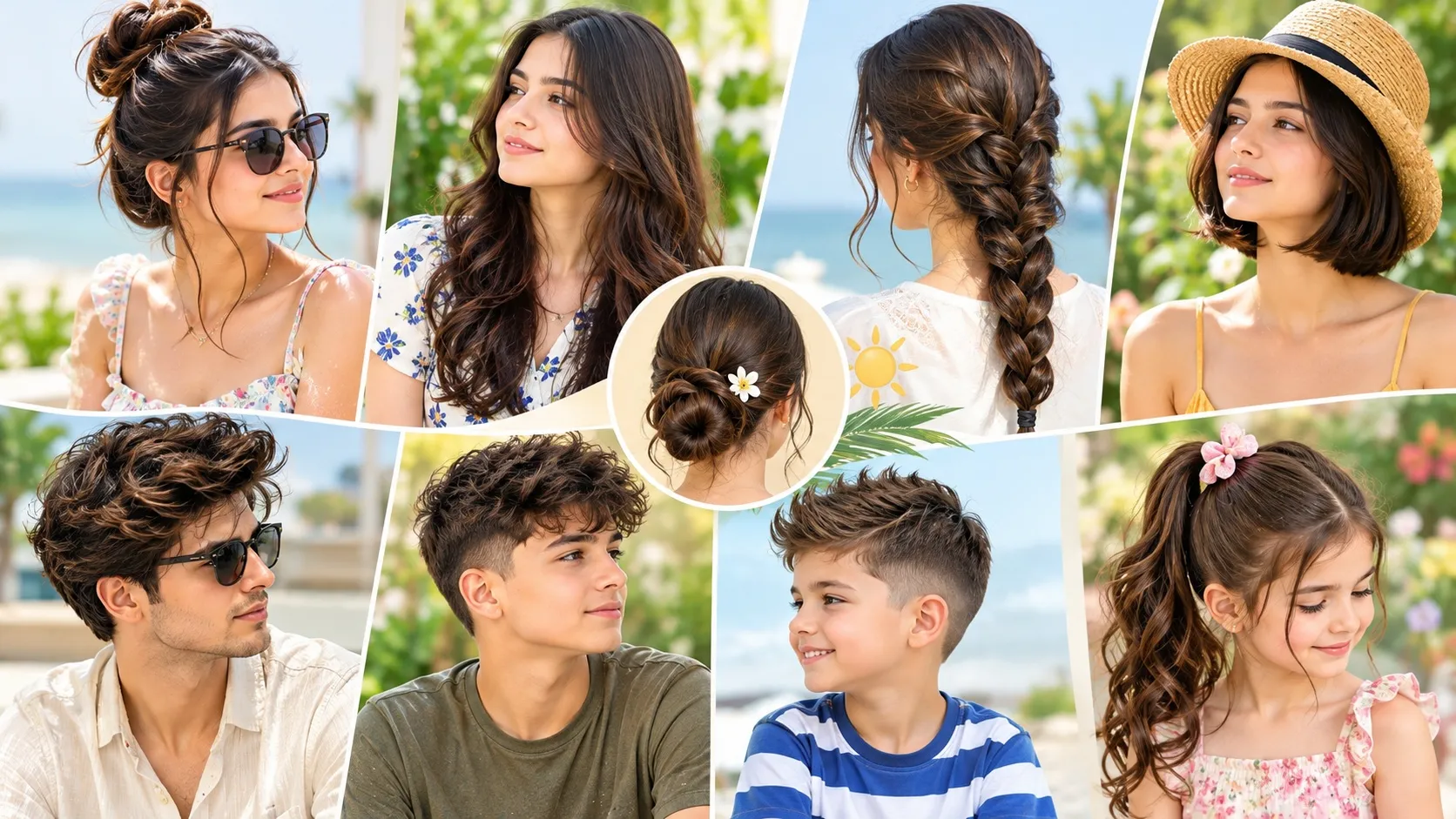
The best summer hairstyle keeps hair off your neck, dries quickly without heat, holds its shape against humidity, and takes under five minutes to set each morning. Cropped cuts work best for short hair, while layered cuts or simple updos give longer lengths the exact same heat relief.
To make a style summer-proof, focus on four key traits:
Neck clearance: Exposing the nape allows sweat to evaporate instead of soaking into your hair.
Short drying time: Air-drying replaces heavy blow-drying, reducing daily heat exposure and keeping your scalp cool.
Humidity control: Styles that work with your natural texture will not collapse or turn frizzy when humidity rises.
Low daily effort: Minimal product and fast styling mean your look stays intact from morning heat to evening outdoor events.
Match your length and audience to find the right look:
Short Hair: Pixie cuts and buzzes clear the neck entirely—see Short Hair Options for full details.
Medium Hair: Shoulder-grazing bobs and shags balance airflow with flexibility—see Medium Hair Options for full details.
Long Hair: High ponytails, claw-clip updos, and protective braids prevent tangles—see Long Hair Options for full details.
Men & Boys: Taper fades and textured tops keep sides tight—see Men’s & Boys’ Cuts for full details.
Girls: Quick braids and soft updos stay neat through play—see Girls’ Styles for full details.
These options were picked and tested by the team at HairStylesUSA to help you choose the cleanest, easiest cut for hot weather.
What Hairstyles and Hair Trends Are In for Summer 2026?
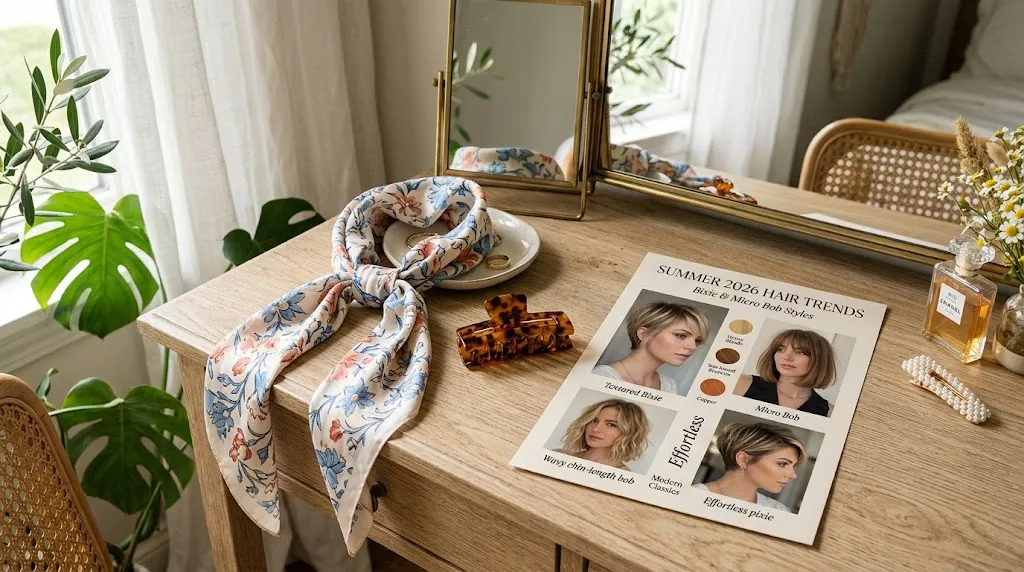
Are you wondering which cuts and accessories are actually worth trying when the temperature starts climbing? Summer 2026 trends focus on light texture, reduced weight, and quick styling that holds up against humidity. Instead of heavy layers or high-maintenance sleek lines, this season favors cuts that work with natural movement and soft accessories that protect your scalp without adding heat.
Here are the six major hairstyle and accessory trends dominating this summer, along with a honest verdict on how well each one survives real summer heat:
The Bixie Cut – Combining the shortness of a pixie with the shape of a bob, this crop keeps your neck clear while leaving enough length on top for soft texture.
Practical in heat: Yes. It clears your shoulders completely and dries in minutes without heavy blow-drying.
The Soft Shag (Sachel) – A hybrid between a classic shag and Rachel Green’s iconic layered cut, offering piecey face-framing layers and crown volume.
Practical in heat: Depends. While the heavy texturizing removes internal weight, longer variations can still stick to a sweaty neck unless pinned up.
The Italian Bob – A neck-grazing bob cut with subtle internal layers and soft, blunt ends that can be flipped from side to side.
Practical in heat: Yes. It is short enough to stay off your back, yet long enough to tuck behind your ears or pin back with clips when sticky weather hits.
The Micro Bob – Lip-length or cheekbone-length bob with minimal layering, offering a sharp profile that clears the neck entirely.
Practical in heat: Yes. With zero hair touching your collarbones or shoulders, heat air-flows freely, making it one of the coolest cuts available.
The Curly Face-Framing Lob – A shoulder-length bob specifically tailored for wavy, curly, or coily textures, cut with targeted layers so curls bounce up naturally.
Practical in heat: Depends. Humidity expands curly texture, which gives great natural volume, but high dew points can cause extra frizz if not properly hydrated.
Head Scarves – Silk, satin, or lightweight cotton scarves folded into headbands, bandanas, or wrapped around the hairline.
Practical in heat: Yes. A head scarf shields your part from sunburn, tames baby hairs on humid days, and absorbs sweat around the hairline without relying on heat tools.
How to Choose Your Summer Hair Style
Imagine two people stepping outside on a July morning. One has fine, straight hair in humid Miami; within twenty minutes, moisture weighs her roots down until her hair sits completely flat against her scalp. The other has thick, tight curls in dry Arizona heat; the lack of moisture bakes her ends, leaving her hair brittle and thirsty by midday. Neither person needs a total hair overhaul—they just need a cut and routine built for their environment. To explore all your options after reading this guide, you can browse the full collection on our hairstyles hub to find a look tailored to your daily routine.
Start With Your Climate: Humid Heat vs Dry Heat
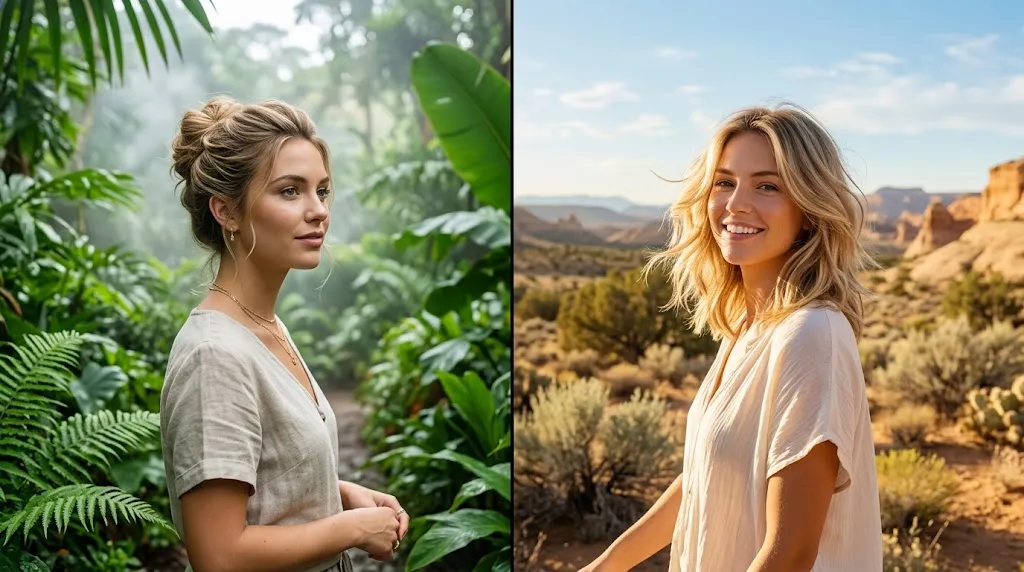
Humidity fills the air with moisture, causing the hair shaft to swell. High-volume, heavy layers often turn frizzy or collapse under the weight of damp air. For muggy summer climates, cropped cuts, tailored short layers, and slicked-up styles keep hair off your neck and maintain a intentional shape. Sealed protective styles like neat braids also lock out excess ambient moisture.
Arid climates act like a sponge, pulling water straight out of your hair. Broad, heavy cuts trap heat on your scalp, while loose ends split under direct sunlight. Dry heat favors mid-length layered cuts that allow air to circulate, along with protective updos that keep fragile ends tucked away from parching winds.
Match the Style to Your Hair Type
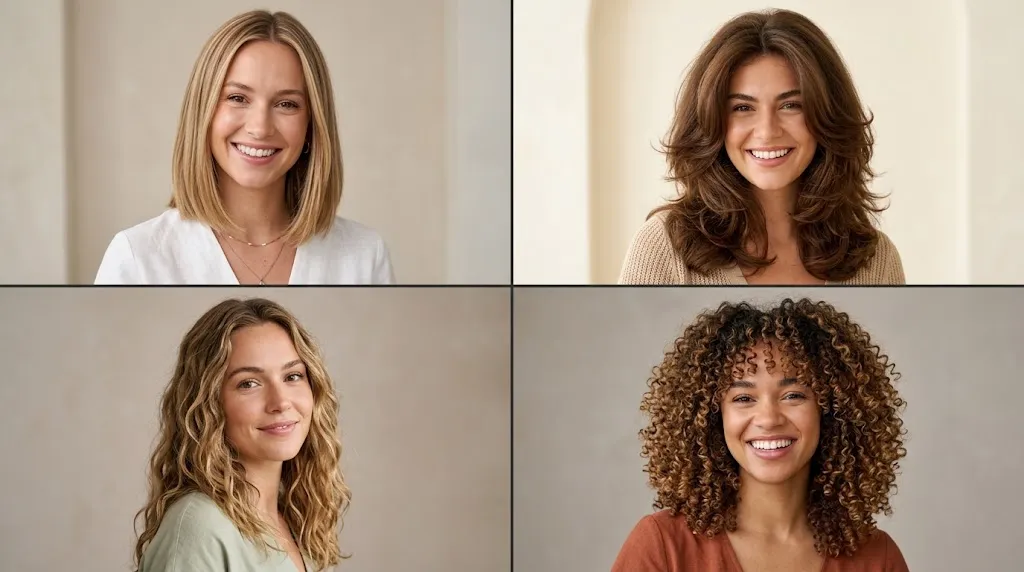
Fine Hair: Tends to lie flat when sweat hits the scalp. Opt for light, blunt-edged chops or airy crops that create built-in density without needing heavy styling products.
Thick Hair: Traps heat at the nape of the neck. Deep weight-removal layers, texturized lob cuts, or undercut styles let your scalp breathe while keeping bulk manageable.
Straight Hair: Shows grease and dampness quickly. Short, textured pixies or clean bob variations require minimal heat tools and bounce back after a rinse.
Wavy Hair: Responds well to natural air-drying in warmth. Medium-length shags, layered lobs, and soft curtain bangs encourage natural pattern movement without heat styling.
Curly Hair: Seeks moisture and shrinks under heat. Rounded shoulder-length cuts, tapered shapes, and hydrated updo styles maintain pattern spring without trapping heat.
Coily Hair: Benefits from protective structures that shield fragile strands from UV damage and moisture loss. Neat box braids, cornrows, and soft faux locs give your hair a full rest through the hot months.
Match the Style to Your Face Shape
For Women:
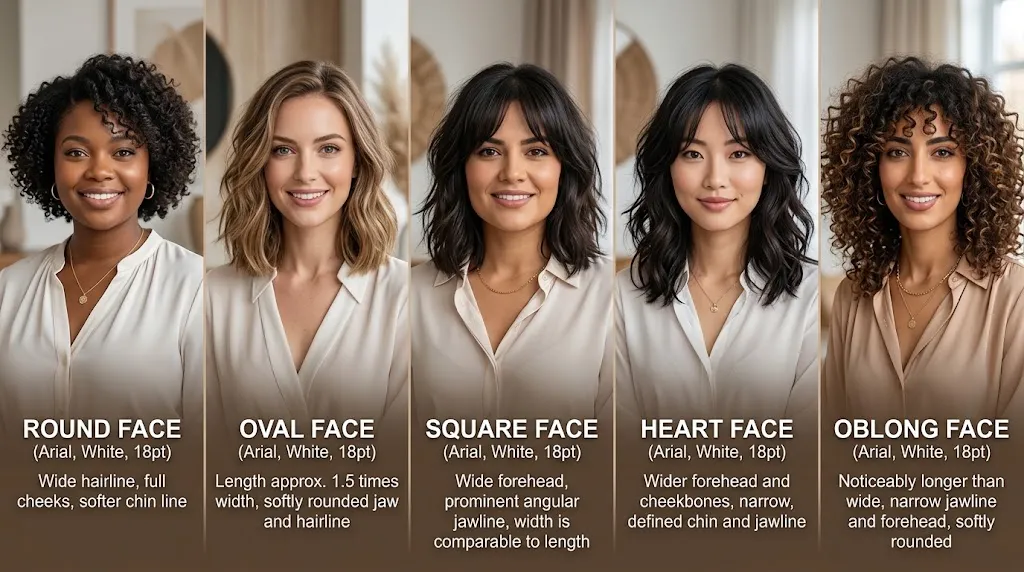
Round: Soft, face-framing angles or longer cuts create a lengthening effect. A targeted round-shape haircut adds height at the crown, while a tailored slim-face haircut removes bulk around the cheeks. For longer lengths, try chubby-face long-layered haircuts to elongate your profile.
Oval: Balance is built-in, making oval shapes suited for almost any crop, blunt bob, or pixie.
Square: Strong jawlines pair well with soft, piecey layers or wispy curtain fringes that break up sharp lines.
Heart & Diamond: Wider cheekbones or foreheads benefit from soft side fringes or chin-length bobs. Adding a soft hairstyle for wide forehead helps balance wider upper facial features.
Oblong: Chin-length chops and wide, wave-enhancing layers add helpful side volume.
For Men:
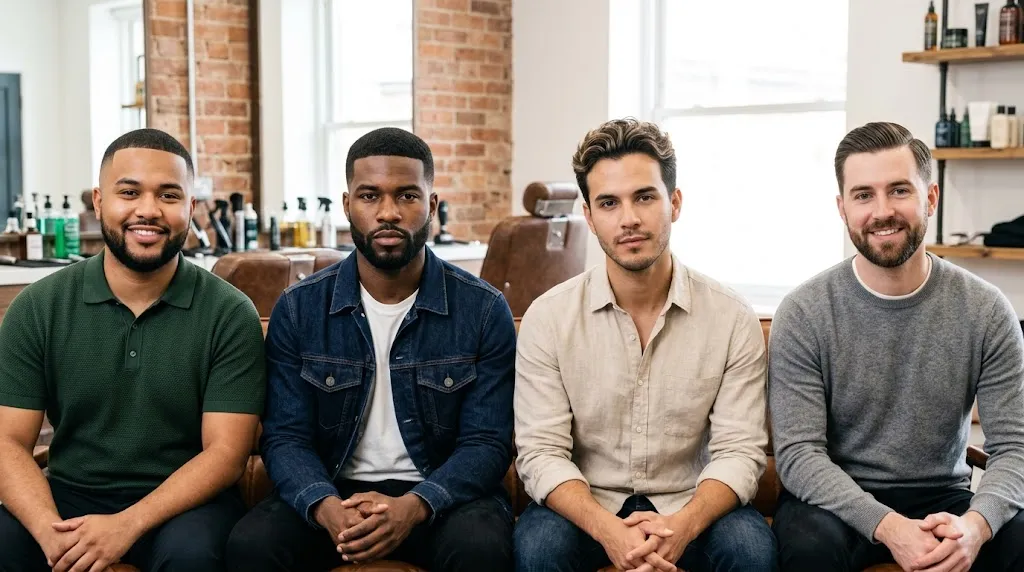
Round: Sharp side fades with volume on top help visually lengthen your features. Explore targeted round face hairstyles men prefer for clean edges.
Square: Angular jawlines suit classic crew cuts or textured buzz variations. Check out structured haircuts for square faces for tailored options.
Heart: Quiffs and textured crops add balance across narrower chin lines. Look through a curated hairstyle for heart-shaped face male option to soften sharp chins.
Oblong: Neat side-tapers with moderate length on top prevent adding excess vertical height. Browse balanced long face hairstyles male cuts designed to broaden your profile.
Should You Cut Your Hair Short for Summer?
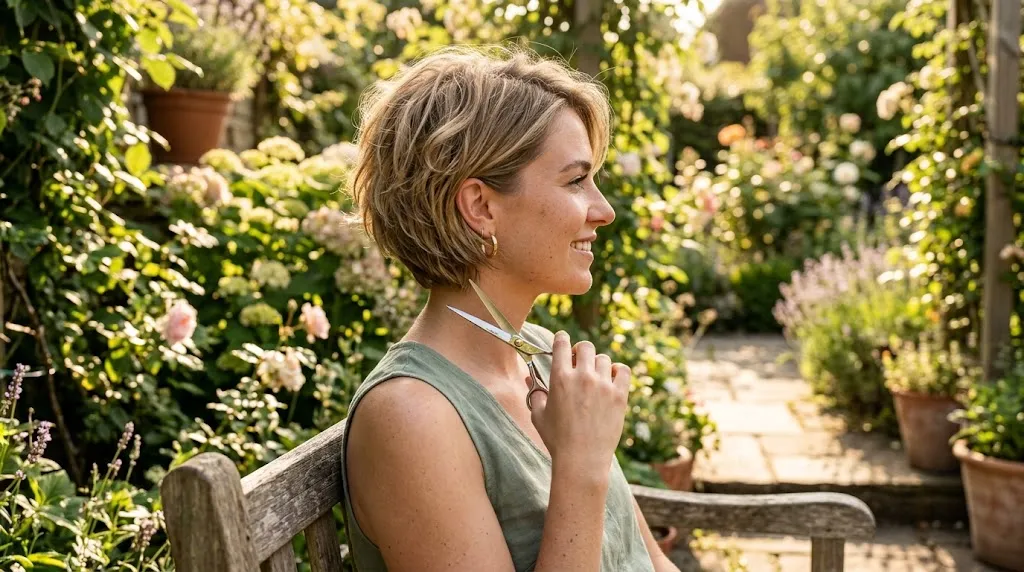
No, you do not need to cut your hair short for summer unless you want to spend less time washing, drying, and detangling heavy strands. Going short reduces styling time and instantly cools down your neck and back, but you give up the quick convenience of pulling long hair into a casual topknot or clip when you step outside.
Before taking off several inches, walk through three quick checks:
Styling commitment: Short hair requires zero neck-sweat, but it often needs daily water-restyling or product to look intentional in the morning.
Growth transition: Are you prepared for average hair growth rate in months of mid-length growing-out stages once autumn arrives?
Maintenance schedule: Short cuts lose their balance fast, requiring trims every short haircut maintenance trim interval in weeks.
If you want to test the shorter look without committing to a full chop, pin your long hair into a faux-bob updo for a afternoon, or transition gradually using a bixie—a textured hybrid cut that sits right between a pixie and a bob.
Common Summer Hair Problems and the Style That Fixes Each
My Roots Look Oily by Day Two
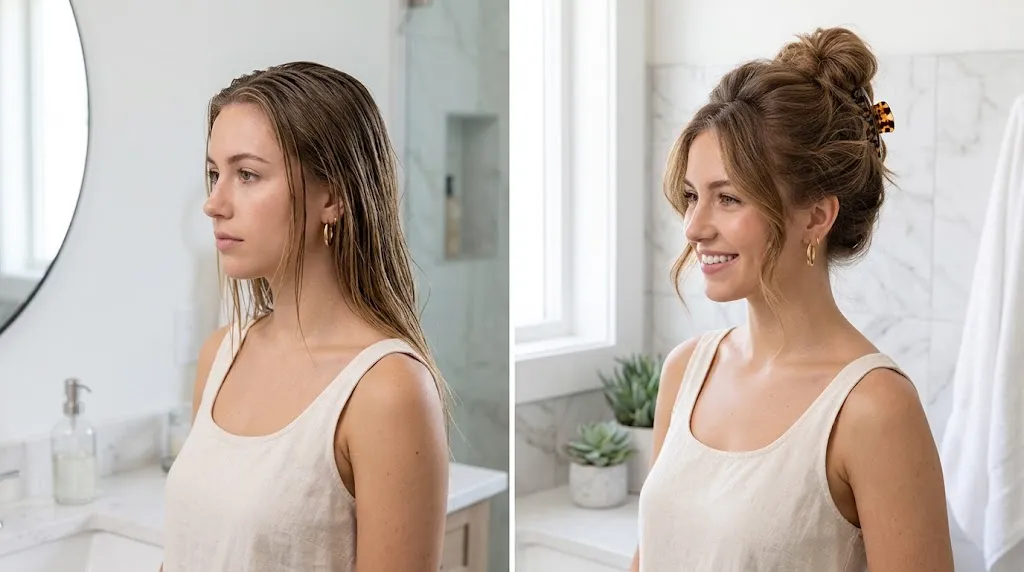
Scalp oil speeds up in summer heat, making clean hair look flat and greasy at the roots within 24 hours. The fastest fix is a high claw-clip updo or a textured topknot, which pulls the front sections back and hides separation at the crown. Before pinning your hair up, spray dry shampoo directly onto the roots, let it absorb for 30 seconds, and massage it in with your fingertips to restore lift.
[IMAGE: split screen showing limp second-day roots alongside a lifted claw-clip updo | ALT: flat oily hair roots next to a styled summer claw clip updo | FILE: second-day-oily-roots-claw-clip.webp]
If you prefer to leave your length down, try a deep side part or a half-up style to cover shiny areas. For more ideas on managing length without daily washing, see our guide on long hair summer styles.
My Thick Hair Feels Too Heavy and Hot
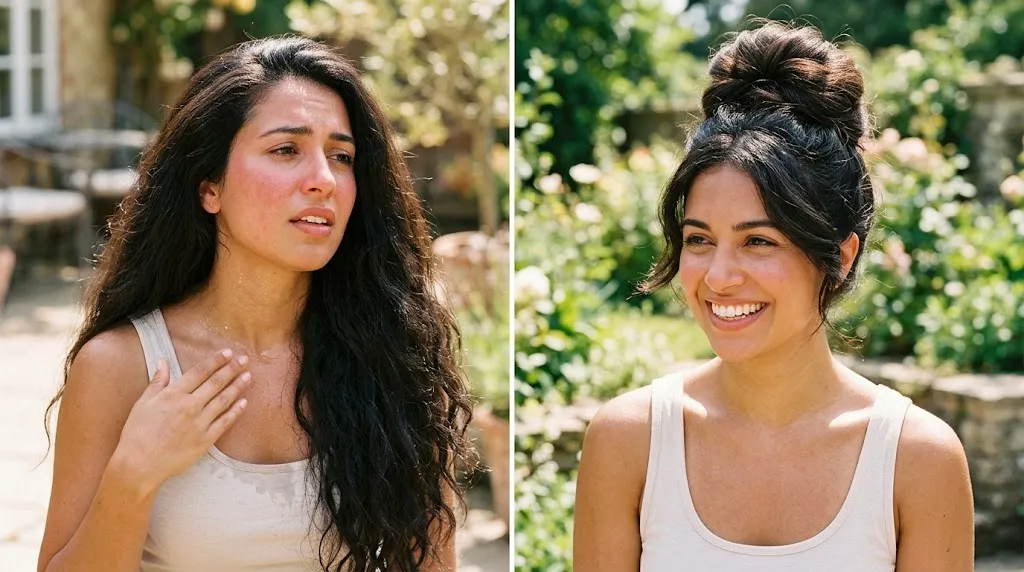
Thick hair traps heat against your scalp like a winter hat, making humid days miserable. The most effective fix is requesting internal layering, undercut details, or texturizing from your stylist to remove weight without sacrificing length. Updos like French braids, space buns, or a high pony keep heavy sections secure and off your shoulders.
Avoid blunt perimeter cuts, which leave maximum bulk right where your neck collects sweat. If you want a cut that slims down dense texture naturally, check our breakdown of medium summer haircuts.
My Fine Hair Goes Flat in the Heat
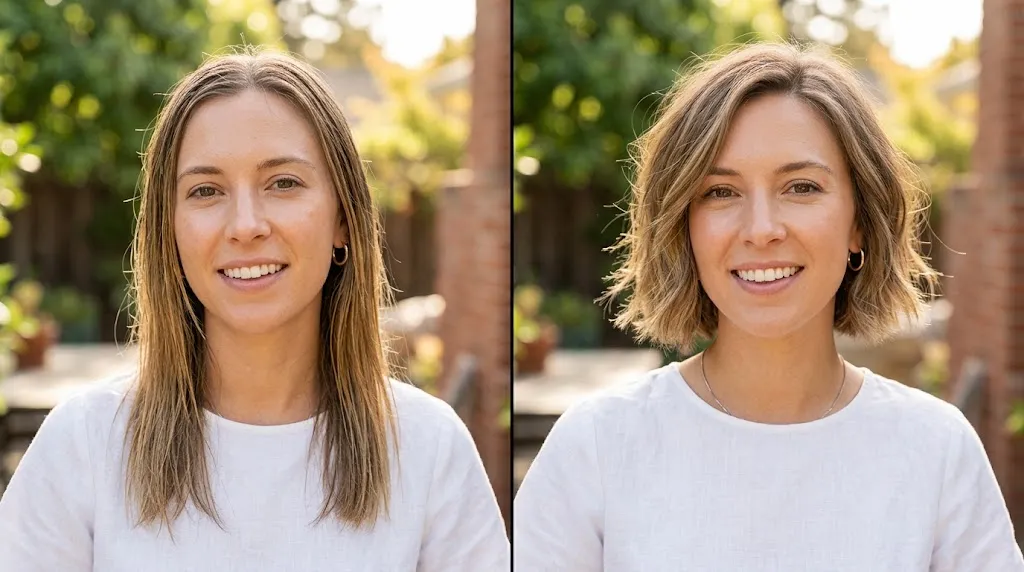
Humidity adds weight to delicate strands, causing fine hair to lose volume and cling to the scalp. A chin-length blunt bob or a layered pixie adds natural structure and lift that holds up against sweat and moisture. To style it, work a lightweight volumizing mousse into damp roots and air-dry or blow-dry upside down for instant body.
Skip heavy silicones, oils, and rich leave-in conditioners, which weigh down fine strands instantly. For more cuts designed to boost fine texture, explore our picks for short summer haircuts.
I Want to Go Short but I’m Afraid I’ll Regret It
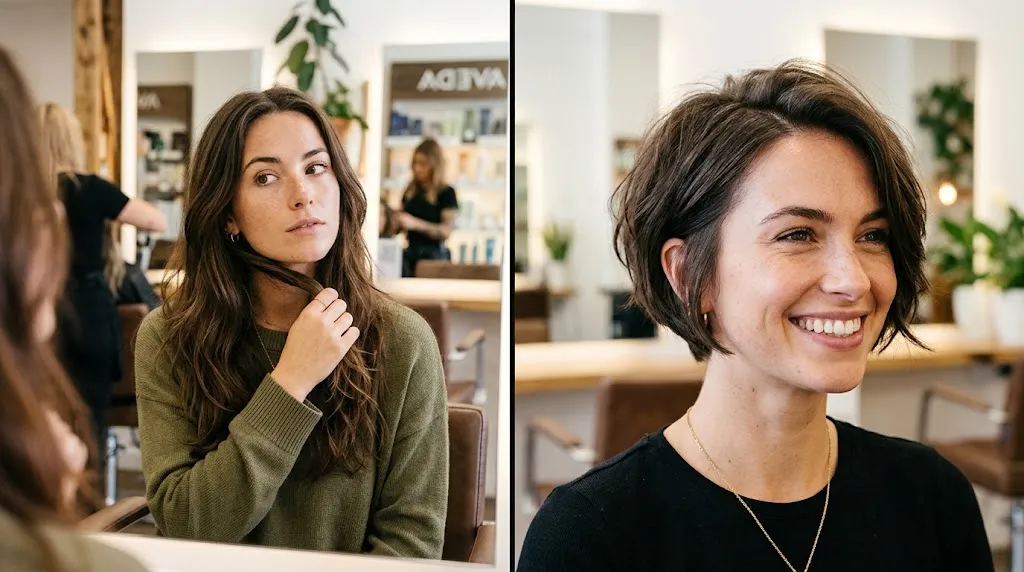
Chopping your hair short in summer feels intimidating if you worry about awkward grow-out phases or difficult daily styling. You can minimize risk by choosing a transitional cut that gives you short-hair air flow while keeping enough length to tuck behind your ears or pin back.
Start with a versatile hybrid cut like a bixie haircut guide or a soft micro bob styling guide. Both cuts allow you to test short hair during peak heat while growing out gracefully into a classic bob by autumn. If you dislike the result, headbands and small claw clips easily manage the transition.
My Neck and Hairline Are Always Sweaty
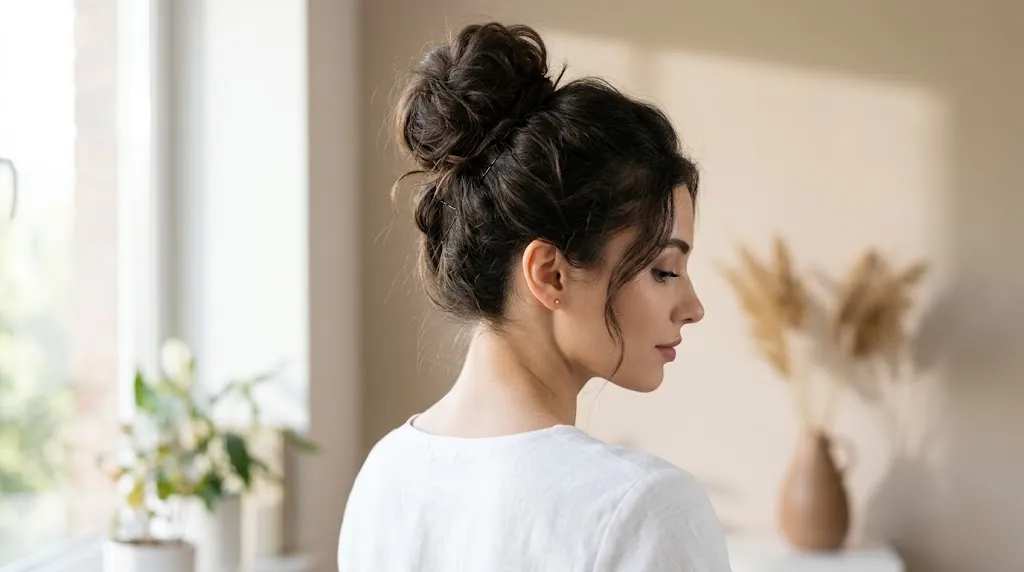
Sweat along the hairline and nape ruins down-styles and creates damp, matted sections by mid-afternoon. High updos, topknots, box braids, and classic French braids clear both problem areas completely by keeping hair secure and suspended away from skin.
Avoid low ponytails, low buns, and heavy fringe bangs. Low styles leave hair resting directly against damp skin, while front bangs absorb forehead sweat and separate within an hour.
I Only Have Five Minutes in the Morning
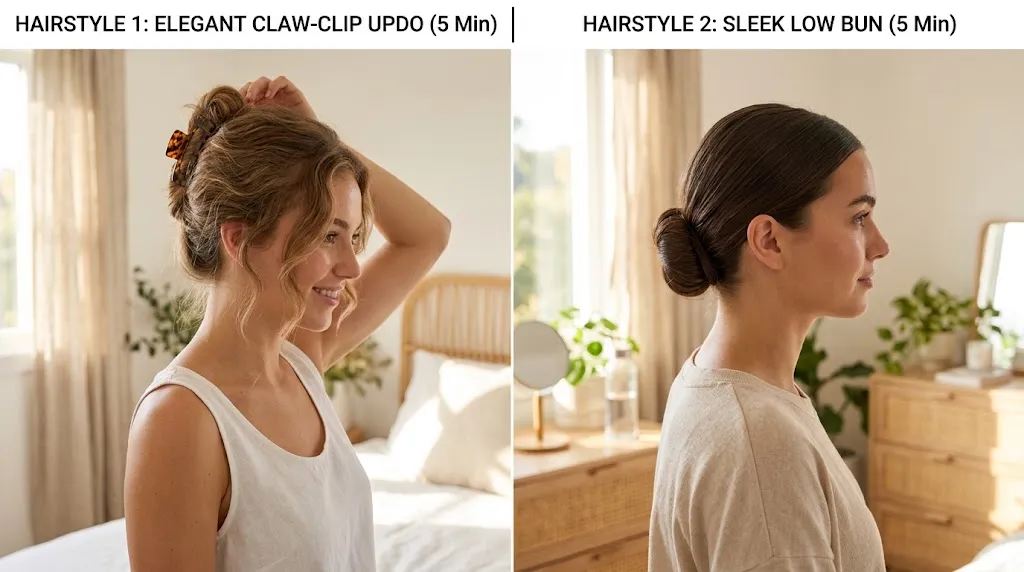
You do not need a lengthy hot-tools routine to look polished on busy summer mornings. Quick, low-effort options include a sleek low bun using a touch of light gel, a three-strand side braid, or a claw-clip twist.
Based on routine morning prep, a claw-clip twist takes under timed updo test result to secure, while a simple side braid takes roughly timed braid test result. Dampen any unruly morning flyaways with water, sweep hair back into place, and let it air-dry as you head out the door.
Summer Hairstyles for Short Hair
A pixie leaves the neck and ears completely open, making it the coolest short cut for hot days, but it requires frequent trips to the salon to keep its shape. A bixie gives you that same lightweight feel around the nape while keeping softer, longer pieces around the face that you can tuck away. A micro bob sits right at or above the jawline, giving you the clean lines of a classic bob without any hair resting on your shoulders to trap sweat. Choose a pixie if you want zero drying time, a bixie if you are transition-testing short hair, or a micro bob if you prefer a sharp, classic outline.
Pixie with Bangs
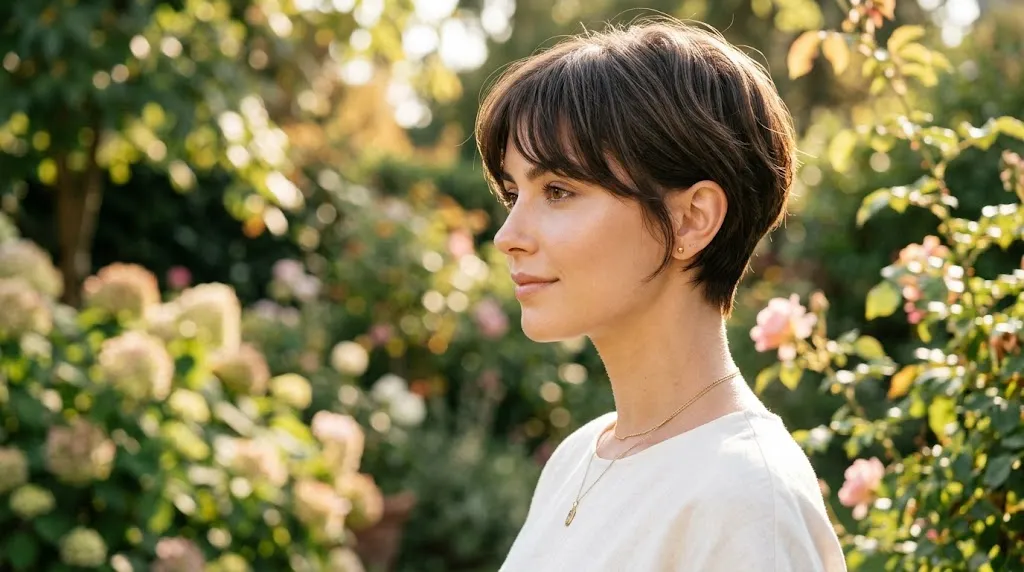
A pixie cut with bangs removes weight from the back and sides while keeping softness around your forehead. The exposed neck keeps you cool, and because there is so little hair to hold water, it dries in minutes.
This cut suits fine to medium hair types and anyone who wants a cropped style with versatility around the face. Curtain bangs offer a softer, low-maintenance finish that parts down the middle or sweeps to the side, whereas a blunt fringe creates a bold line across the forehead that needs daily styling.
To style a pixie with bangs:
Towel-dry wet hair gently without rubbing to keep the cuticle smooth.
Wrap-dry the fringe using a small flat paddle brush, sweeping the hair left and right under low heat.
Warm a pea-sized amount of lightweight styling cream between your palms and work it lightly through the ends to define the fringe.
Tell your stylist you want a short cropped nape and sides, but ask to leave extra length through the fringe and crown so you can adjust the bangs. A classic pixie requires a trim every to keep the sides crisp. Avoid applying heavy pomades or thick waxes directly to your bangs; sweat on your forehead will combine with heavy products, causing the hair to look greasy by noon.
Wavy Pixie
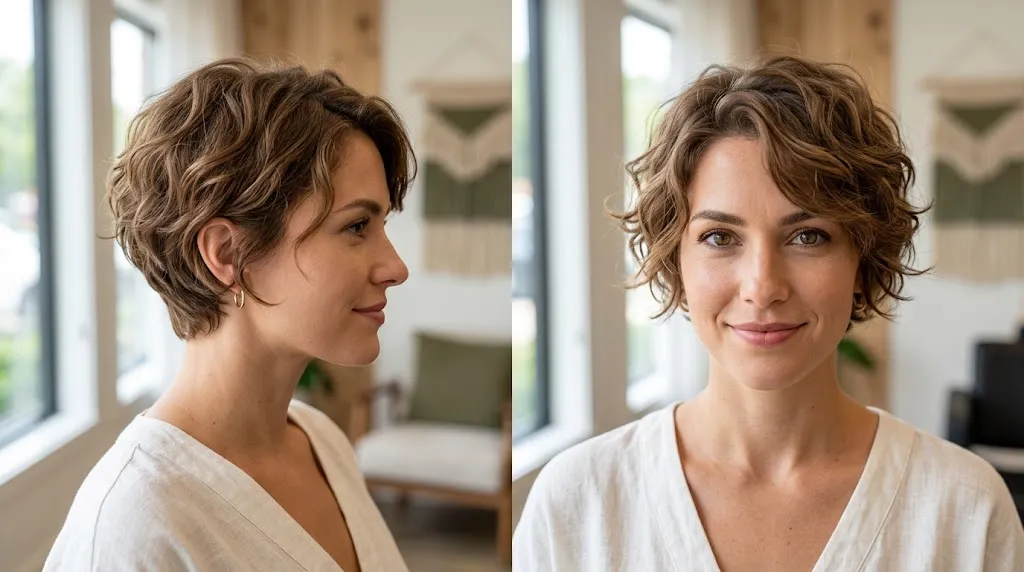
A wavy pixie uses your natural curl to build shape and volume without relying on hot tools. It keeps hair off your back while letting wave patterns add movement on top.
This style works best for naturally wavy or curly hair that is cut short. LOOSER wave patterns lay flatter and benefit from a light salt spray, while tighter curls expand upward and need a hydrating leave-in product to hold their shape in heavy summer humidity.
To style it, squeeze out excess water with a microfiber towel right after showering. Work a light curl-defining foam through the longer top sections using your fingers, then let the hair air-dry completely without touching it.
Schedule a maintenance trim every to prevent the top from becoming top-heavy. Avoid letting a stylist over-thin your hair with texturizing shears; taking out too much internal density strips away the structure your curls need to bounce, leaving you with frizzy ends.
Bixie
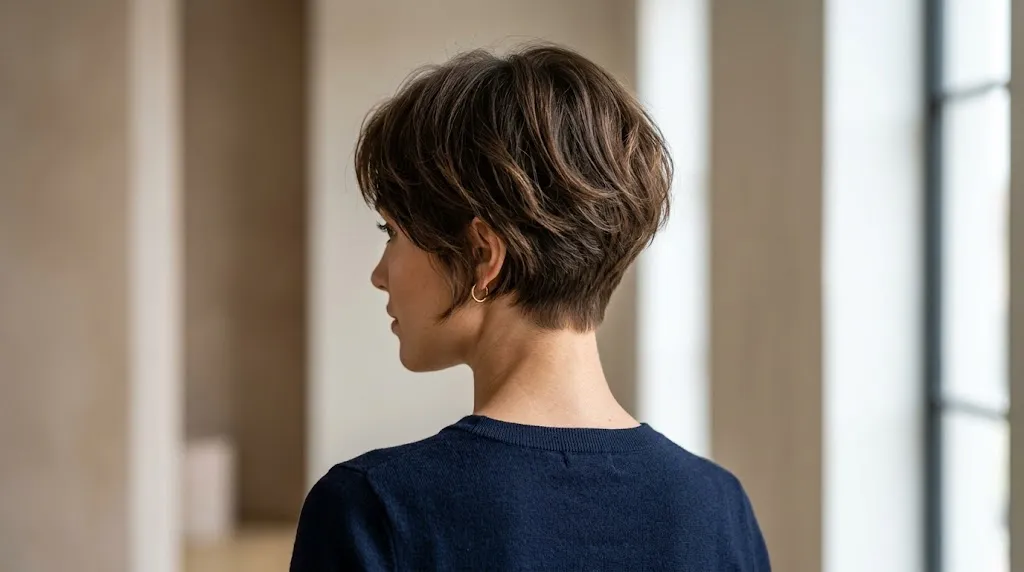
The bixie blends the short nape of a pixie with the longer face-framing pieces of a bob. It keeps the heavy hair off your neck while giving you enough length on top to tuck behind your ears or pin back.
It is ideal if you are growing out a cropped pixie or want to test short hair without committing to a full chop. Compared to a pixie, which relies on close cropping, and a micro bob, which creates a level baseline at the jaw, the bixie sits right between them—giving you the light weight of a short cut with the softer perimeter of a bob.
When talking to your stylist, bring a clear photo showing where you want the front pieces to land relative to your cheekbones. Ask for a tapered nape with textured, soft layers through the crown.
You can expect this shape to grow out smoothly for before it loses its structure. Avoid expecting a razor-sharp, uniform finish every morning; the bixie is designed to look piecy and relaxed rather than structured.
Micro Bob
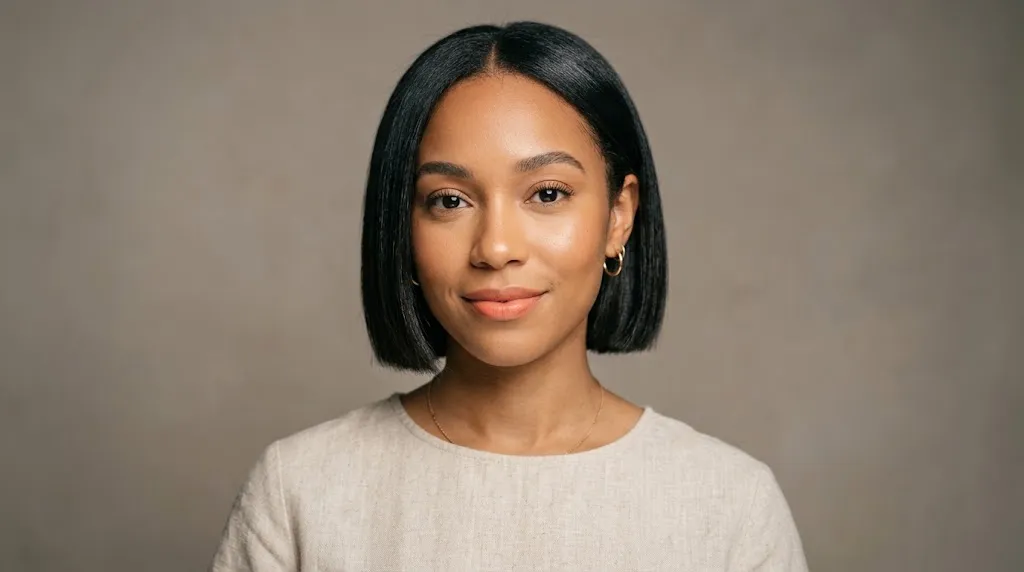
A micro bob ends right at or above the jawline, keeping your hair off your shoulders entirely so heat does not get trapped against your neck.
This cut works best for straight or fine hair that needs the appearance of density. If you prefer a solid line, ask for a classic blunt bob variant, which keeps all the weight at the perimeter. If your hair is thicker, ask for subtle internal layering to prevent the bottom from flaring out into a triangle shape.
To style a micro bob:
Apply a light heat protectant spray to clean, damp hair.
Blow-dry using a medium round brush, turning the ends slightly inward or letting them fall straight down.
Smooth a drop of hair oil through the ends to tame any flyaways.
The sharp baseline of a micro bob begins to soften around as it grows down toward the neck. Avoid relying on a flat iron every day; high heat combined with summer sun weakens short hair quickly along the exposed edges.
Italian Bob
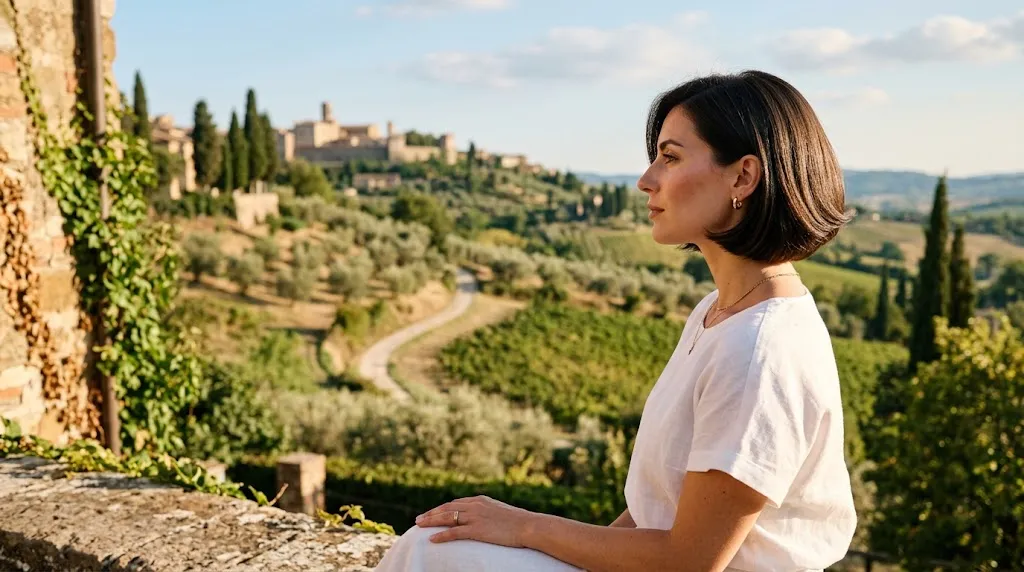
An Italian bob features chin-grazing lengths cut with heavy, swingy ends that encourage your hair’s natural wave. It delivers a full, effortless shape that you can flip from side to side when temperatures rise.
It works best for straight to wavy hair with medium density. Unlike the French bob, which features an above-the-chin length and a short fringe, the Italian bob sits right at the chin, uses longer layers, and is typically worn without full bangs so you can easily tuck it back.
Ask your stylist for a chin-length bob with blunt perimeter lines and subtle, hidden interior weight removal. After washing, scrunch a light texturizing cream into damp strands and let it air-dry.
Plan on a maintenance trim every to keep the weight from pulling down the crown. Avoid over-thinning the ends, as removing too much weight makes the bottom look sparse rather than thick and swingy.
Asymmetric Bob
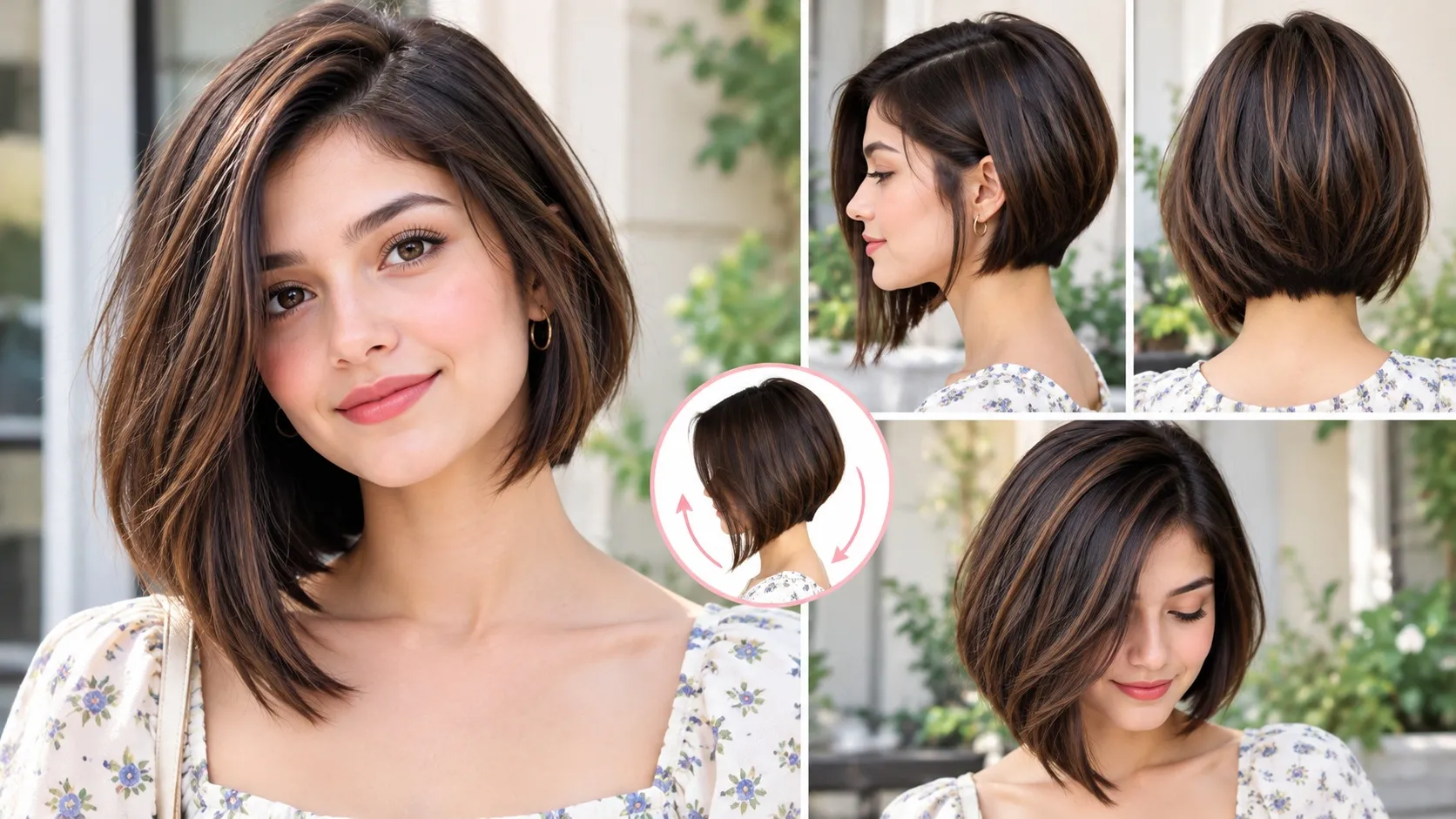
An asymmetric bob is cut intentionally longer on one side of the face than the other, giving you a distinct, structured shape that holds its look even when air-dried.
This style fits straight to wavy hair types and works well if you consistently wear your hair in a deep side part. Placing the parting line on the shorter side allows the longer side to sweep across the face, while parting it down the middle balances the two lengths out into a subtle angle.
To style, direct the airflow from your dryer downward along the hair shaft on both sides, using a flat paddle brush to keep the sides sleek and flat against the head.
Because the two sides are different lengths, this cut grows out at an angle; expect to visit your stylist every to keep the balance clean. Avoid taking the length difference to an extreme on your first cut—start with a subtle one-inch variation to see how your hair settles before going shorter.
Summer Hairstyles for Medium Hair
Medium hair lands anywhere between the chin and the collarbone, making it long enough to sweep back into an updo but short enough to keep weight off your shoulders. Choosing the right summer hairstyles for medium hair comes down to balance: you want cuts that breathe during warm days without requiring endless heat styling.
Shag and Soft Shag (Sachel)
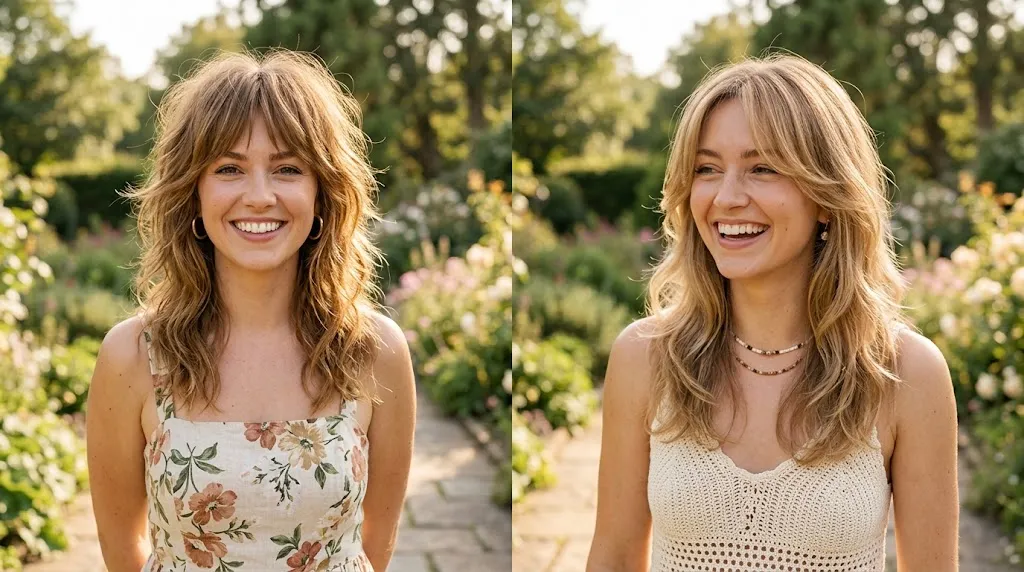
The shag and its gentler cousin, the sachel, use internal layers to remove weight and increase airflow around your neck and face. This makes both cuts exceptional for hot days because the piecey ends dry quickly and naturally with minimal coaxing.
If you have thick, straight, or natural wave through the mid-lengths, a traditional shag creates instant texture. The soft shag (or sachel) works better if you want a subtle, seamless grow-out with face-framing pieces that blend smoothly into your length. Bring a reference photo to your stylist showing exactly where you want the shortest layer to land—usually around the cheekbones or jawline—to ensure the weight removal fits your face shape. After washing, scrunch a lightweight sea-salt spray or air-dry cream through the middle and ends, then let the sun do the rest.
A soft shag holds its shape well as it grows, making it a low-maintenance option that requires only an occasional trim interval. Avoid heavy, choppy crown layers if your hair is extremely fine, as this can make the bottom lengths look sparse rather than full. If you want even more lift at the crown, consider exploring a targeted volume haircut to complement your layers.
Baby Layers
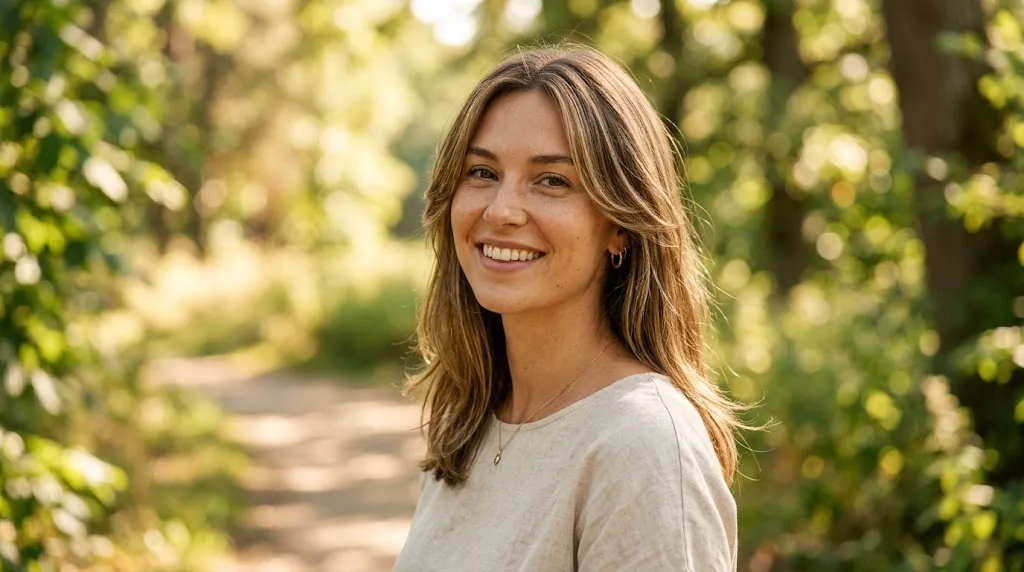
Baby layers are subtle, micro-thin cuts placed around the face and collarbone that add movement without sacrificing your overall length or weight. They provide the effortless movement of a shorter cut while letting you pull everything back into a secure ponytail when the heat picks up.
This cut adapts well to almost every hair texture. Unlike a full butterfly cut—which requires heavy sectioning, blow-drying, and constant styling to maintain its sweeping shape—baby layers require almost no daily effort. To style, apply a few drops of light hair oil or leave-in conditioner to wet strands, tuck the front pieces behind your ears while damp to set a soft bend, and let them air-dry.
Because these delicate cuts blend softly into the rest of your hair, you can go a comfortable duration between touch-ups. The main trap to avoid is letting your stylist cut the shortest baby layers above the cheekbones, which makes them hard to tuck away on high-humidity days. To see how these micro-cuts build on traditional shape, check out our gallery of layer cut pics for additional visual inspiration.
Hourglass Cut
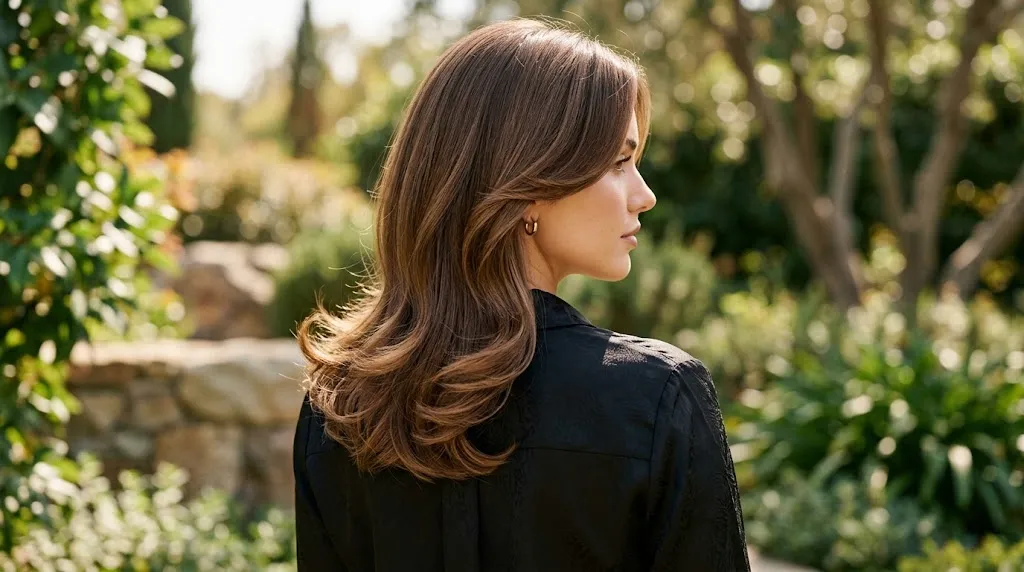
The hourglass cut features narrow, contoured layers through the cheekbones that widen out into soft, flipped ends at the collarbone. Stylists often favor this structure for summer because the outward flick at the bottom helps the style hold its defined shape even in heavy humidity.
Wavy and curly textures naturally highlight the silhouette of this cut. On looser waves, the outward flick creates a breezy, vintage-inspired flip; on tighter curls, the internal shaping removes bulk around the ears while allowing the ends to expand naturally. To style, apply a light curl mousse to wet hair, scrunch from the ends upward, and either air-dry or use a diffuser attachment on low heat.
Because this shape relies on clean geometry, plan on scheduling regular maintenance trims. Avoid applying heavy waxes or thick pomades, as excess product drags down the ends and flattens the signature hourglass curve.
Wavy Lob with Middle Part

A wavy long bob (lob) cut right at the collarbone clears your back and shoulders, letting breeze circulate to keep you cool. Pairing this length with a crisp middle part creates a balanced, clean frame that works equally well for casual days or summer events.
This style performs best on straight to naturally wavy hair. After washing, set your center part while strands are still damp using a tail comb. Mist a fine-mist texture spray from mid-shaft to ends, scrunch gently, and let the hair air-dry completely.
Keep up with routine trims to prevent the blunt ends from resting too heavily on your collarbone. Avoid thick styling creams directly on or near the part line, as sweat and scalp oils will quickly make the hair look flat and greasy. Because an open middle part exposes direct skin to sunlight, remember that sweat and UV exposure can irritate an unprotected scalp—pair this style with protective sun habits or hat wear when spending long hours outdoors.
Undone Mid-Length Cut
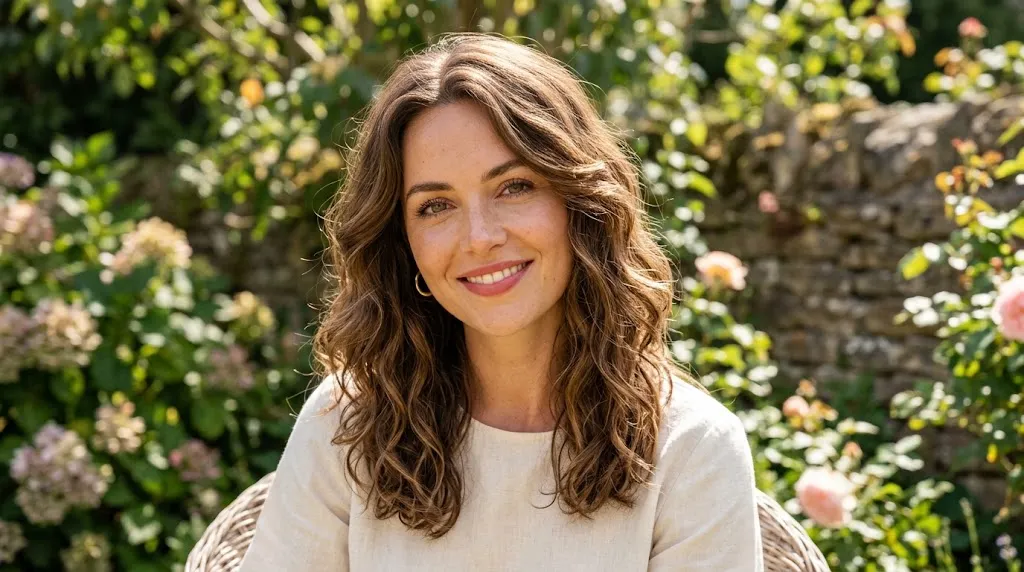
The undone mid-length cut relies on long, invisible internal layers that encourage your natural texture to wave and bend without looking messy. It is designed specifically for anyone who wants to skip heat tools completely during the hottest months of the year.
This cut is ideal if you prefer a fast, hands-off morning routine. You can complete the entire post-shower styling process in under two minutes:
Rinse and towel-blot: Gently press excess water out of your hair with a microfiber towel rather than rubbing.
Apply product: Work a nickel-sized amount of lightweight leave-in conditioner evenly through damp mid-lengths and ends.
Set and leave: Shake out your roots with your fingers, scrunch the ends once, and let your hair dry as you head out the door.
This relaxed shape is forgiving, allowing for a generous gap between salon visits. The biggest mistake is over-conditioning the roots, which weighs down the crown and prevents the internal layers from creating natural lift.
Summer Hairstyles for Long Hair
Long hair holds heat against your neck and shoulders all summer, making updos and strategic cuts essential for staying cool. You do not need to chop your length to beat the humidity—you just need styles that lift hair off your skin and hold up against sweat. If you want our complete collection of cuts, updos, and heat-free tutorials, visit our detailed guide to summer long hairstyles.
If you prefer keeping your length down, asking your stylist for a u cut for long hair removes weight from the back while keeping the front manageable. Another option for removing bulk without sacrificing length is a layer step cut for long hair, which allows air to reach your neck while maintaining shape.
Twisted Ponytail
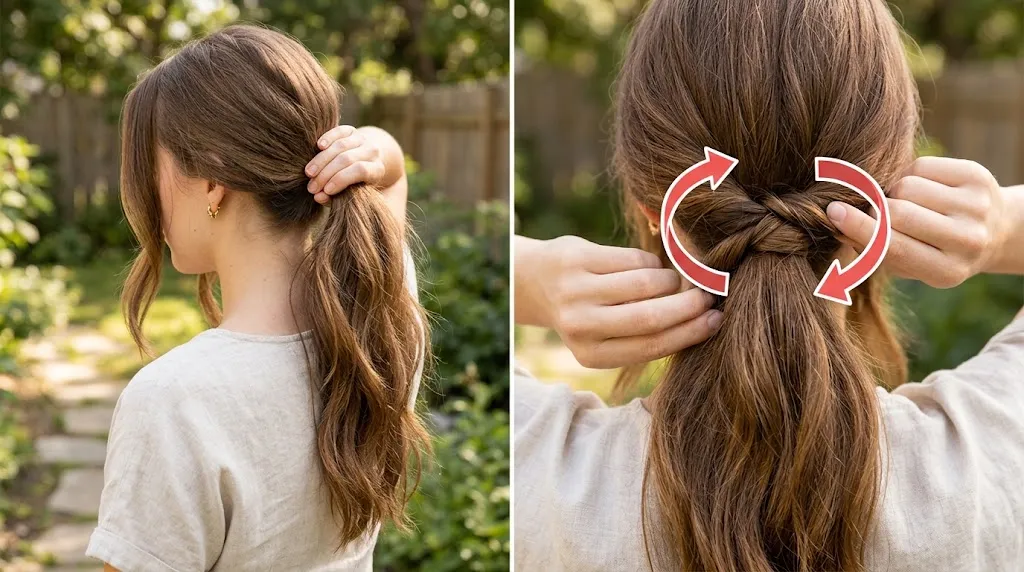
A twisted ponytail wraps two outer sections of hair around a central tail, locking the length into place so it stays off your neck longer than a traditional elastic allows. It works best on long, second-day hair because natural oils give the strands enough grip to hold the twist without slipping down by mid-afternoon.
Gather the middle section of your hair into a mid-height ponytail, leaving two equal sections free above each ear.
Cross the left side section over the top of your ponytail base, loop it underneath, and pin it securely underneath the main elastic.
Take the right side section, stretch it across the top of the knot, wrap it around the base, and secure it with a second hairpin.
Smooth any loose flyaways at the crown using a light dab of damp styling cream.
This style maintains its shape for hours of regular daily activity. Avoid yanking the side sections tight against your scalp while twisting, as pulling too hard creates tension headaches once sweat accumulates along your hairline.
Depending on your hair texture, you can adapt the twist for different levels of activity:
Single Cross-Over: Best for fine hair; keeps the base flat and prevents heavy sagging.
Double Rope Twist: Ideal for thick hair; winds both side sections around the length of the ponytail to shorten total hang time on your back.
Top-Down Dutch Twist: Works best for coarse or textured hair; weaves the sides into the head before gathering at the nape, keeping short front pieces from falling out during high humidity.
Long-Hair Styles at a Glance
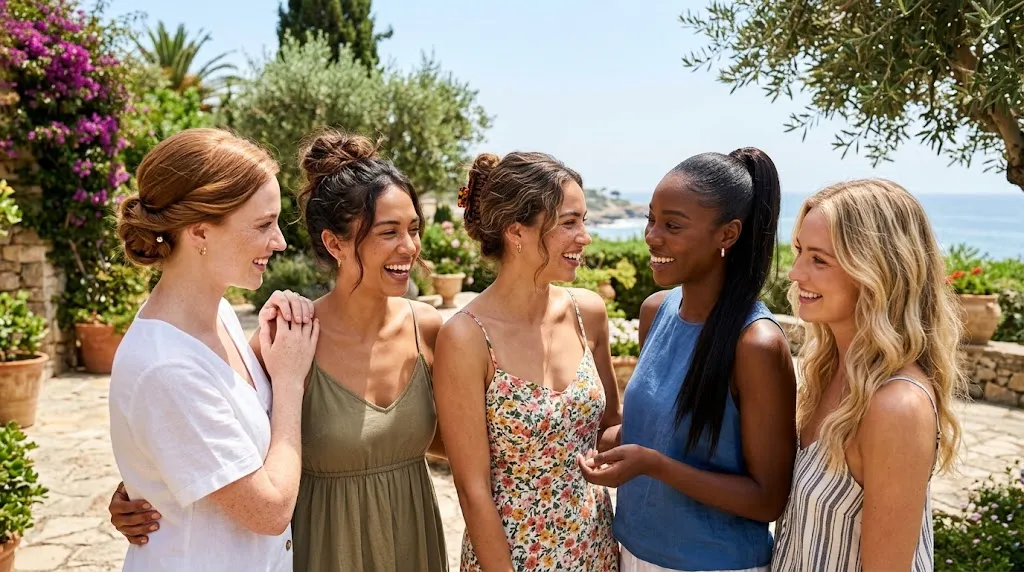
Twisted Chignon: Choose this low, gathered knot when you need a neat updo that shields the ends of your hair from sun damage and keeps your neck entirely clear—explore setup tips in our summer long hairstyles guide.
Messy Buns (including loose and tousled buns): Pick this casual style when you want a quick, weightless pile on top of your head that allows airflow along your hairline—see variations in our summer long hairstyles feature.
Claw Clip Styles: Select this option on humid days when you want to twist your hair up in seconds without creating elastic dents or pulling on your roots—learn more in our summer long hairstyles collection.
Low Ponytails and Slicked-Back Buns: Use this sleek look when high humidity causes damp frizz, securing hair firmly at the nape or crown—read our full breakdown in the summer long hairstyles article.
Beach Waves: Go with this texture when you prefer wearing your hair down, using natural air-drying to embrace body while avoiding blow-dryer heat—check out details in our summer long hairstyles overview.
Summer Hair Styles with Braids
Which braid actually keeps you cool when the heat ramps up? The answer comes down to airflow: a braid that lifts hair away from your nape keeps you significantly cooler than a loose weave resting against damp skin. If you want length framing your face without trapping heat on your neck, pick a style that controls the front while securing or elevating the back.
Waterfall Braid
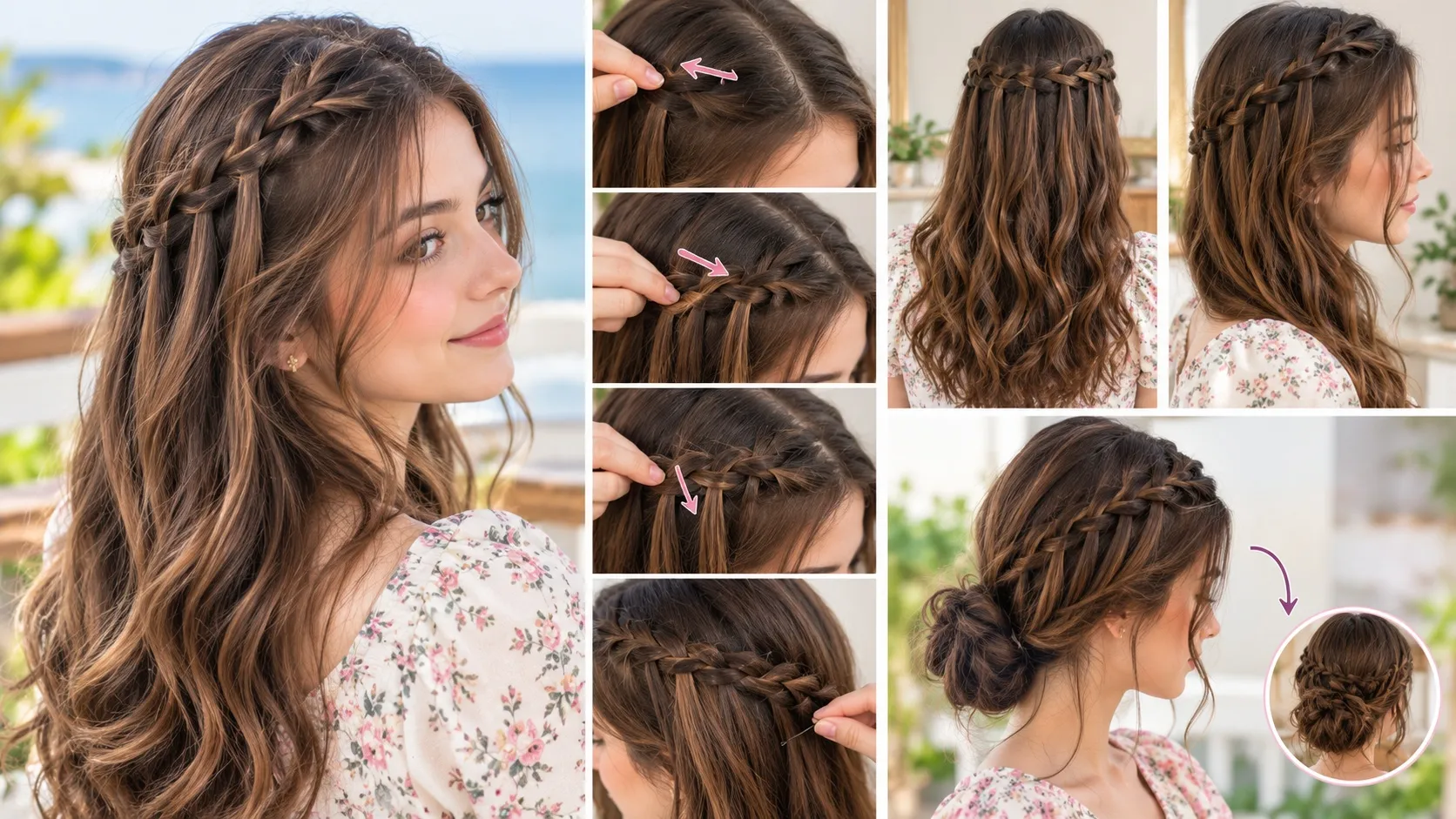
A waterfall braid weaves across the crown, cascading individual strands downward while keeping front pieces out of your eyes. It works exceptionally well in summer because it controls face-framing layers during breezy beach days without forcing you to pull all your hair up.
This style suits medium to long hair best, particularly hair with slight wave or texture that gives the cascading strands something to grip.
How to style it:
Start on the thinner side of your part, taking a one-inch section near the hairline.
Begin a standard three-strand braid, moving horizontally toward the heavier side of your part.
Drop the bottom strand after each crossover, letting it hang down, and pick up a new section directly behind it to continue the pattern.
Pin the end securely behind your ear on the opposite side.
Expect a hold time of before strands begin to slip, especially in high humidity. Avoid pulling the sections too tight as you braid; extreme tension flattens the crown and creates harsh gaps.
For maximum summer comfort, try finishing the loose lengths into a low messy bun at the nape. This single adjustment converts a half-down look into a total off-the-neck style while preserving the delicate braided detail across the crown.
Plait Pony
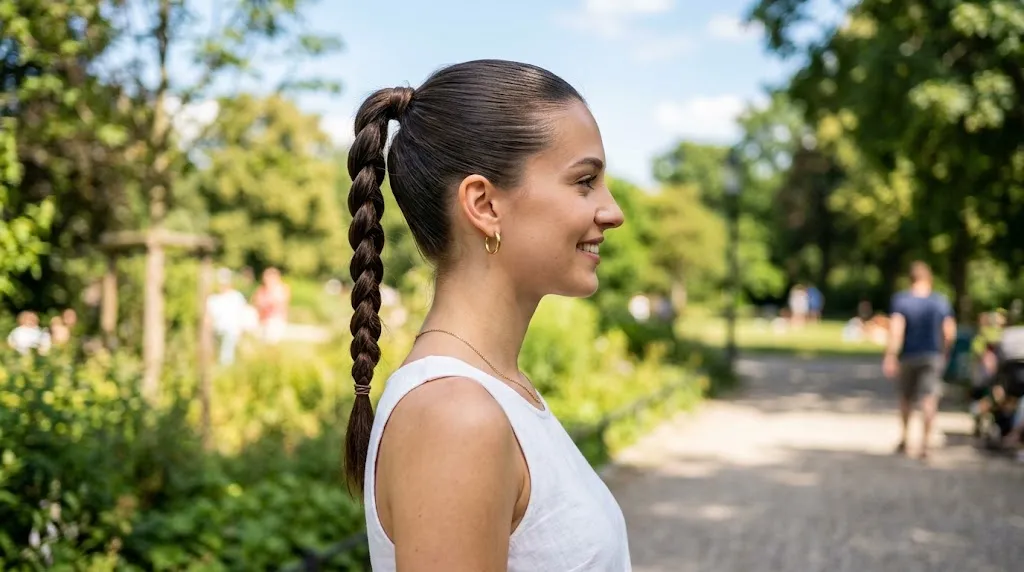
The plait pony combines the secure lift of a high or mid-height ponytail with the neat structure of a classic three-strand braid. It is built for active days, travel, and second-day hair because securing the base first prevents the braid from sagging when you move.
This is ideal for medium and long hair lengths, especially when natural oils on second-day hair provide extra traction.
To create it, gather your hair into a ponytail at your desired height and secure it tightly with an elastic. Divide the ponytail tail into three equal sections, braid straight down to the ends, and fasten with a second small elastic.
You can count on a hold time of before flyaways appear. Avoid over-tightening the base elastic to the point of scalp discomfort, which can cause headaches in the heat.
For a sleek, sporty finish, keep the braid firm and smooth. If you prefer a softer look for a summer evening, gently tug the outer edges of each braid turn (a technique called pancaking) to double its visual thickness without losing control.
Braided Bun
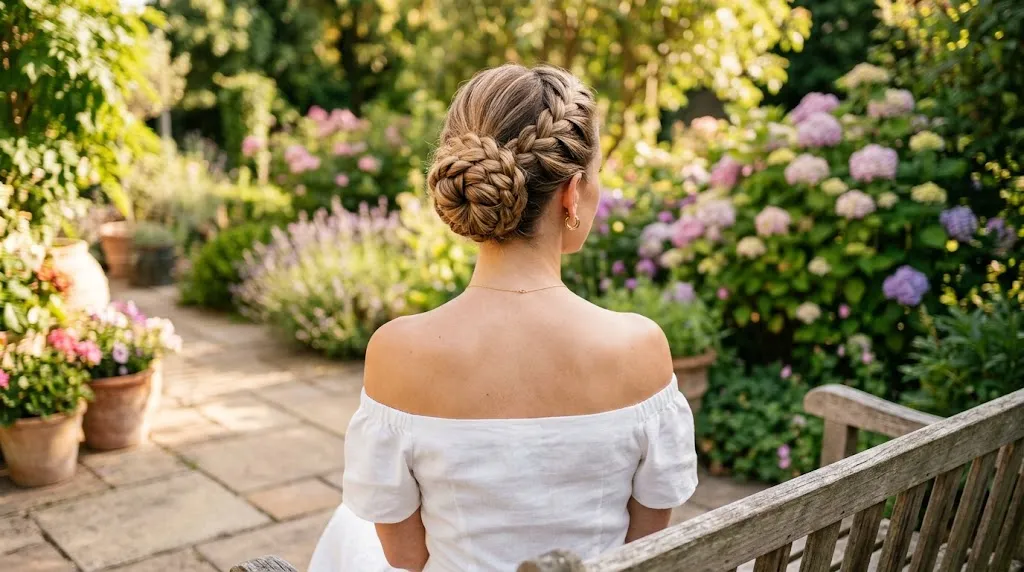
A braided bun anchors your hair at the crown or nape by turning a simple braid into a compact, coiled topknot. It excels in summer because zero hair touches your neck, and the woven structure resists wind far better than a standard twist.
Medium to long hair offers enough length to form a full, sturdy shape.
How to style it:
Sweep your hair back into a secure ponytail.
Braid the ponytail straight down to the ends and tie it off with a thin band.
Wrap the braided length around the base ponytail elastic to form a flat coil.
Insert hairpins around the entire perimeter, pushing them inward toward the center elastic.
A well-constructed braided bun delivers a hold time of. The main mistake to avoid is using too few pins; four or five loose pins will slide out as soon as the wind picks up.
When prepping for extra windy days, crisscross your bobby pins in an “X” pattern directly through the core of the bun. Pushing pins opposite to the direction of the coil locks the anchor firmly against your scalp.
Braided to One Side
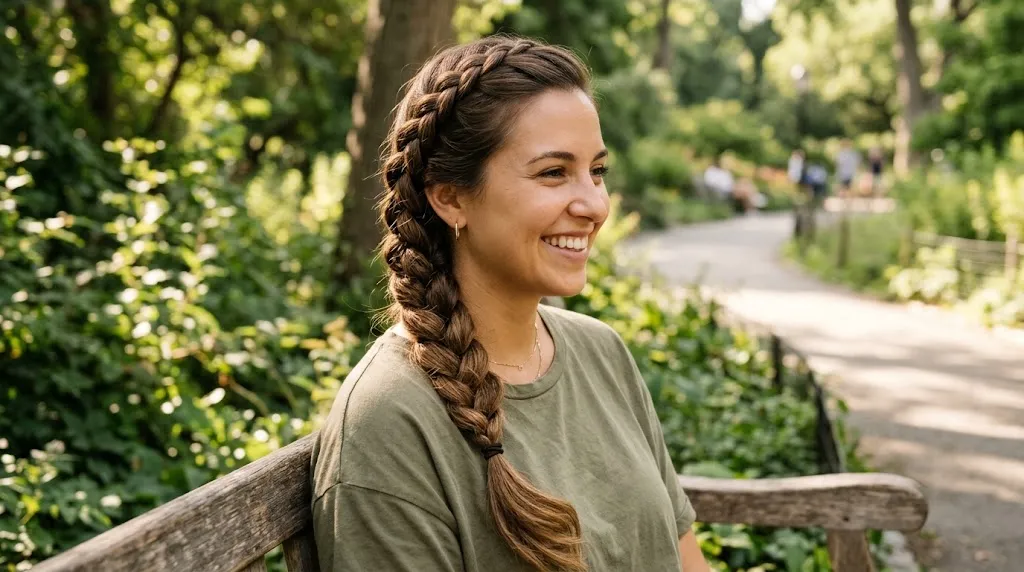
This style uses a subtle directional braid along the nape to anchor all your hair over a single shoulder. It leaves one side of your neck completely exposed to the breeze while letting your length rest neatly in front.
It suits shoulder-length and longer hair, making it a great option if your hair is just long enough to gather to one side without pieces dropping out.
To create it, start braiding tightly along the hairline at the nape of your neck, moving from behind one ear across to the opposite side. Once all hair is gathered over that target shoulder, finish with a standard braid down the length and secure the end.
Expect a hold time of before shorter layers start to work free. Avoid leaving the base nape braid too loose, or the hair will slip back across your shoulders within an hour.
To transition from casual daytime wear to a formal evening look, make two simple tweaks: polish the front hairline with a lightweight smoothing cream to eliminate flyaways, and tuck a decorative pin or fresh flower directly above the anchor point behind your ear. Unlike the full, dramatic side plaits detailed in our long hair summer guide, this variation relies on a hidden base braid specifically engineered to keep short nape hairs anchored on hot days.
Fulani Braids
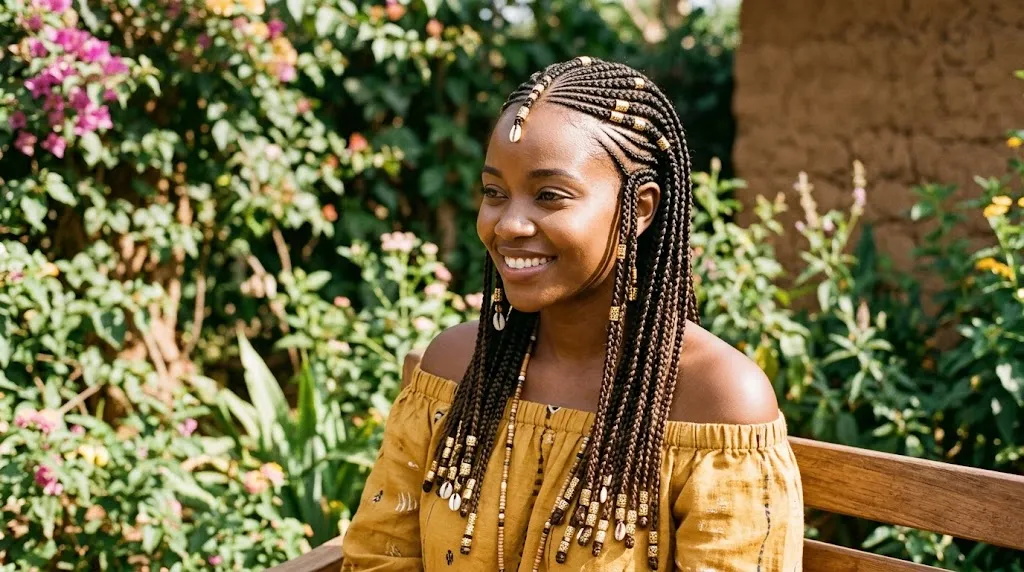
Fulani braids feature a signature pattern of a central cornrow braided front-to-back, side cornrows braided toward the face, and longer braids hanging down the back and sides. They offer a stylish, low-maintenance protective option for hot weather that keeps natural hair safe from sun damage and dryness.
This style works best for textured, afro-kinky, or coily hair types.
Because this is a precise, professional installation, bring a clear checklist to your salon appointment:
Confirm your stylist uses light, non-greasy tension on your hairline.
Request lightweight extension hair if adding length, to prevent heavy pulling when it gets hot.
Clarify your preferred parting pattern for the front and sides.
A professional installation has a protective lifespan of weeks before needing maintenance. Avoid skipping scalp cleansing while wearing this style; sweat buildup underneath can lead to irritation and itchiness.
To keep your scalp healthy, spray a diluted leave-in scalp cleanser along your parts and pat dry with a microfiber towel. When heat strikes, you can easily style your Fulani braids into three elevated looks: a high topknot that clears your shoulders completely, a half-up crown wrap, or twin space buns. For more protective styling ideas tailored to textured hair, explore our dedicated section on braids for Black hair.
Summer Hairstyles for Black Hair and Curly Textures
Your curl pattern dictates how hair responds to heat and humidity, which completely changes what works for a summer hairstyle. S-shaped waves and loose spirals (types 2A to 3A) tend to stretch out and drop when sweat hits the scalp, while tight coils and zig-zag patterns (types 3B to 4C) shrink quickly and pull tight toward the head. Finding a great cut or style comes down to picking a shape that works with your specific shrinkage level rather than fighting it all season. If you want lightweight options for loose textures, check out these light curly hairstyles, or see how a layer cut for frizzy hair removes bulk. Note that Fulani braids are covered earlier in this guide.
Curly 'Fro

The curly ‘fro sits up and away from the shoulders, allowing air to reach your neck and back while letting your natural pattern expand. It gives you a striking shape that actually thrives on warm-weather volume instead of fighting it.
This look works best on tight corkscrews and dense coils (typically types [CONFIRM: curl type range, such as 3B to 4C]). It suits anyone who wants a mid-length or short option that requires zero hot tools once the shape is cut.
Starting on clean, thoroughly detangled damp hair, rake a leave-in conditioner through small sections from root to tip. Define your pattern using a rowed styling brush or your fingers, then let the hair air-dry completely or use a diffuser on a cool setting. Once dry, insert a wide-tooth pick at the roots and lift upward—stopping just short of the ends—to build height.
Because this is a daily natural style, the shape resets every wash day, though you can expect the picked-out shape to hold its volume from morning until evening.
Avoid layering heavy butter-based creams over the canopy of your hair during humid stretches. They weigh down the crown and create a greasy coating that attracts dust and sweat.
To refresh mid-day: Lightly mist your roots with water mixed with a few drops of lightweight oil, then gently fluffed with your fingertips.
Curly Face-Framing Lob
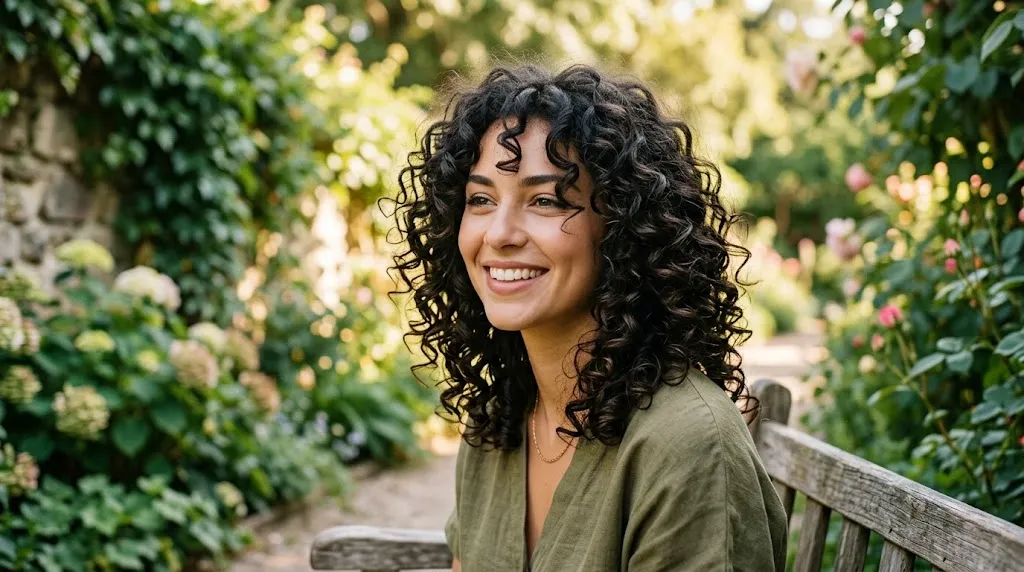
A curly face-framing lob rests right at the collarbone, offering enough length to pull back while keeping weight off your upper back. The angled perimeter prevents the bottom from flaring out into a heavy block of hair.
Looser waves and open spirals benefit most from this cut. It gives finer strands room to bounce without getting weighed down by excess length.
When sitting in the salon chair, ask your stylist for a dry cut that follows your natural curl cluster rather than a wet, straight-pulled trim. Request subtle perimeter layers around the cheekbones and jawline to encourage lift without sacrificing density at the bottom.
Plan for a maintenance trim every to keep the weight balanced around your face.
Avoid any cutting technique that relies heavily on a razor or thinning shears. These tools fray textured ends, causing the canopy to turn frizzy within a few washes.
Stylist-ready explanation: Tell your stylist, “I want a shoulder-grazing lob cut dry in its natural pattern, with face-framing layers starting at the cheekbones to prevent a triangular shape.”
Curly Layers
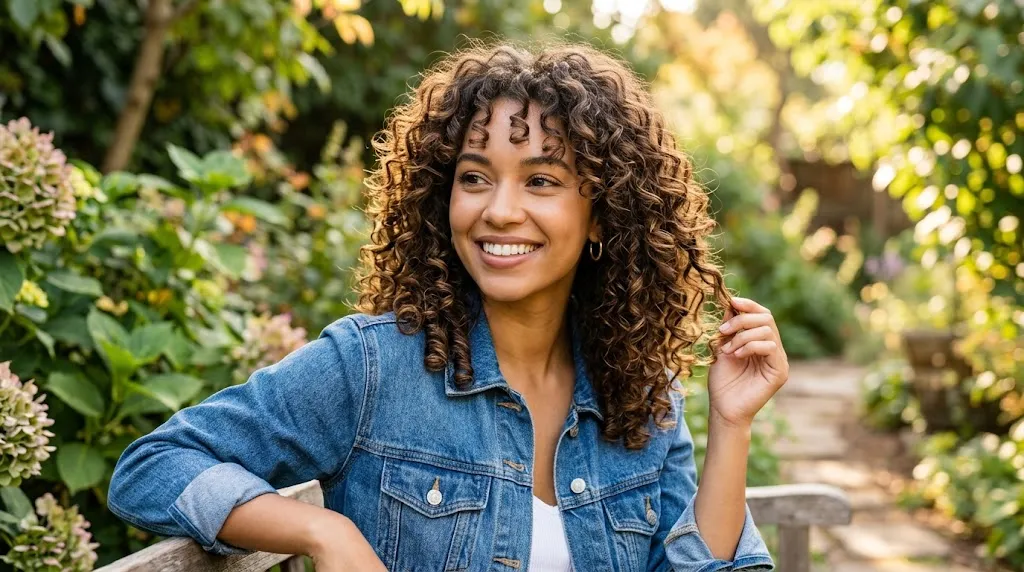
Curly layers remove internal weight from the crown so your curls can stack neatly without collapsing under their own weight. Adding curly bangs introduces soft texture across your forehead that stays put even when the back is tied up.
This cut suits medium-to-long curly hair that feels too heavy or hot when left all one length.
Apply a light foam or gel evenly to wet hair, scrunching upward from the ends toward the scalp.
Form your bangs while the hair is soaking wet by twirling small sections around your index finger.
Air-dry without touching the hair to allow a light gel cast to form.
Gently scrunch the dry hair with dry hands to release the stiff cast, revealing soft, bouncy layers.
Keep the shape looking intentional with a regular trim every.
Avoid cutting your top layers too short in comparison to the base. Short layers on dense hair can create an unnatural “mushroom” effect at the crown.
The curly bangs variant: Cut bangs slightly longer than your target length while dry, because high humidity will cause them to shrink upward toward your brows.
Twist-Out
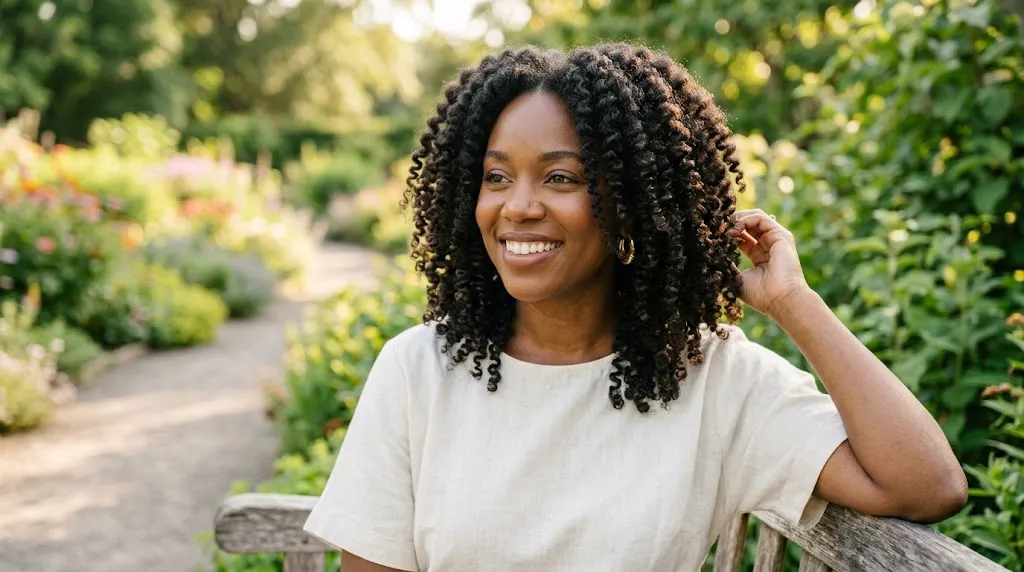
A twist-out gives you uniform, defined curls without applying a single second of heat. Twisting damp strands locks in moisture and sets a smooth wave pattern that holds up remarkably well against muggy air.
This setting method works best on tight waves, curls, and coily patterns (types 3 through 4).
Divide damp, conditioned hair into equal one-inch sections.
Coat each section with a lightweight setting lotion or curling gel.
Split the section into two strands and wrap them tightly over each other from root to tip.
Let the twists dry 100% overnight.
Coat your hands with a light oil and carefully unravel each twist, separating the strands gently.
A well-set twist-out typically lasts before needing to be re-twisted.
Avoid unraveling your twists while any part of the core remains damp. Removing them early causes immediate frizz and ruins the pattern definition.
Humidity tip: The oil coating applied during unraveling acts as a moisture barrier, sealing the hair shaft so external humidity cannot break the set.
Head Scarves
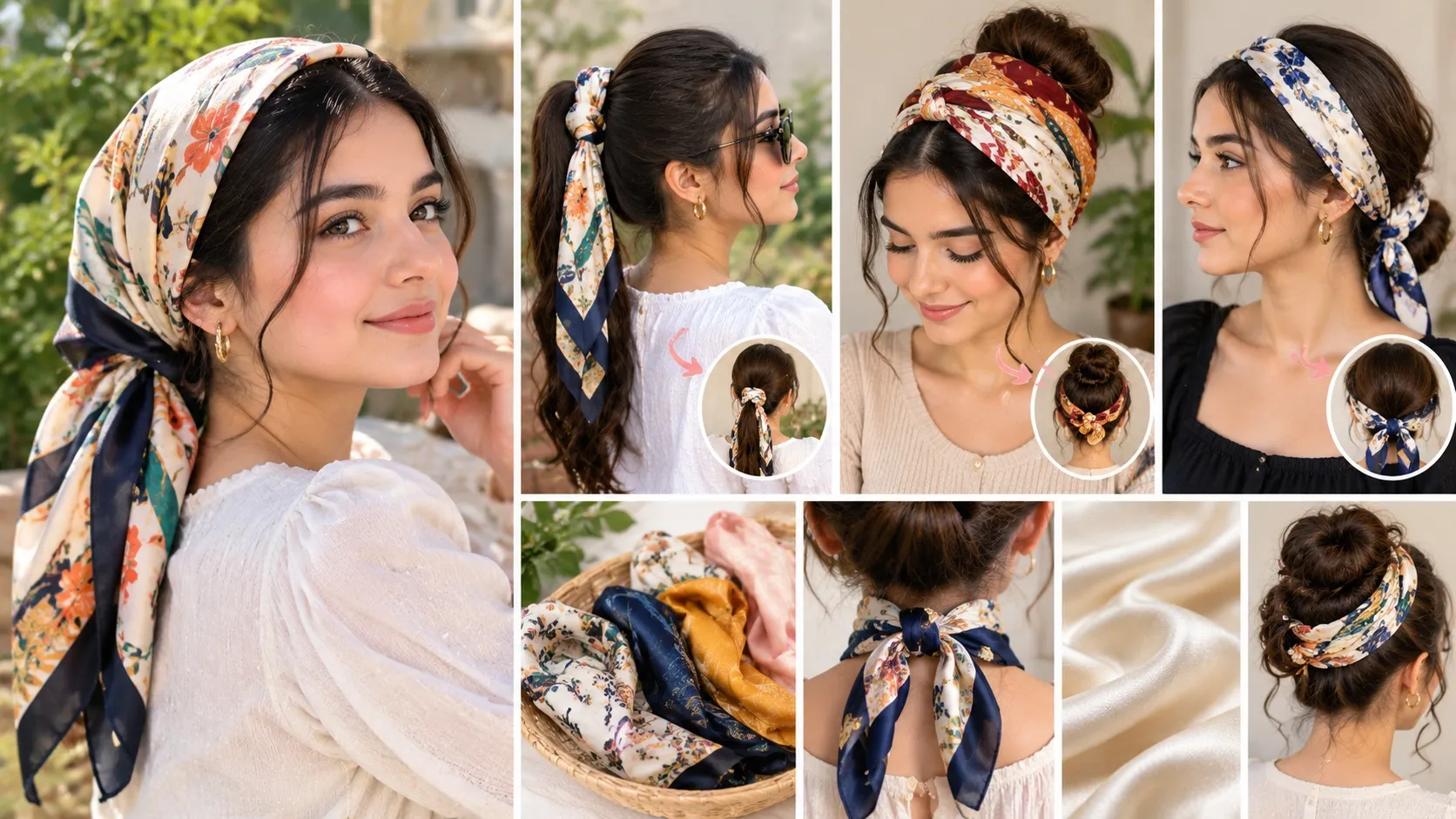
Head scarves protect your scalp from direct sun, shade your delicate hairline, and keep long hair completely off your sweaty neck. They turn a messy hair day into a intentional style in under two minutes.
This accessory works on every single hair type and length, from short natural cuts to waist-length locks.
The Scarf-Wrapped Ponytail: Gather hair into a mid-level ponytail, tie the scarf around the base once, and wrap the long ends down the length of the tail.
The Scarf Bun: Cover your head with the scarf folded into a triangle, sweep the ends back with your hair into a high bun, and tuck the loose tail under the knot.
The Hairline Band: Fold the scarf into a wide strip, wrap it around your hairline to cover your ears, and tie a firm double knot at the nape of your neck.
A properly tied scarf stays secure all day without requiring touch-ups or extra pins.
Avoid pulling the scarf too tight across your edges. Constant tension combined with summer sweat can cause irritation and break delicate hairline hairs.
Fabric note: Smooth silk or satin linings reduce friction against your hair strands, preserving your natural curl pattern while stopping moisture loss.
Summer Hair Style for Man
A buzz cut strips away maintenance, a taper fade keeps the neck cool while leaving length on top, and a textured crop adds movement without heavy styling. Choosing a summer hair style for man comes down to how much effort you want to put in each morning and how your scalp handles direct heat. A full crop needs light product to hold its shape, while a short fade relies strictly on regular barber visits to stay sharp.
You can browse full galleries for extra ideas in our guide to men’s haircuts. If you prefer to keep some length through the warmer months, look through our breakdown of medium-length-hairstyles-men.
Buzz Cut

A buzz cut clips the hair to one uniform, extremely short length across the whole head, maximizing airflow and drying instantly after a swim. It works best if you want a zero-effort routine or need to keep cool during outdoor workouts, regardless of your hair’s natural texture.
To get it, ask your barber for a consistent guard size all over—a number 2 or 3 is a safe starting point if you want to avoid showing too much scalp. If you have facial hair, consider a buzz-cut-with-beard-indian style to balance the short length on top.
A fresh buzz cut typically maintains its shape for, after which the hair loses its clean edge. The main mistake guys make is forgetting that a visible scalp burns quickly in the sun, so applying light sunscreen or wearing a hat outdoors is essential.
Crew Cut
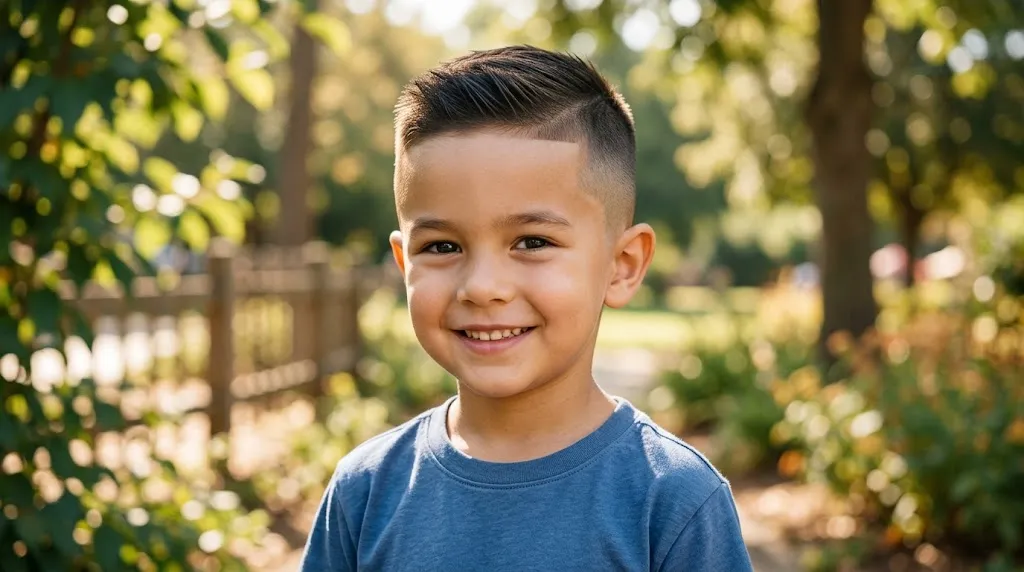
A crew cut features short, tapered sides with slightly longer hair on top that subtly lengthens toward the front hairline. It fits professional environments and athletic activities where you need a neat appearance that requires minimal morning styling.
For a classic summer look, comb the front slightly to one side while the hair is damp. The key difference between a crew cut and a buzz cut is that extra inch or two on top, giving you enough length to style while keeping the sides tight. Use a tiny dab of lightweight cream or check our guide on pomade-hairstyles-for-short-hair to find a product that will not melt in the heat.
Expect to visit the barber every to keep the sides crisp. Avoid cutting the top too short on your first try, or you end up with a standard buzz cut instead of a style you can comb
Taper Fade
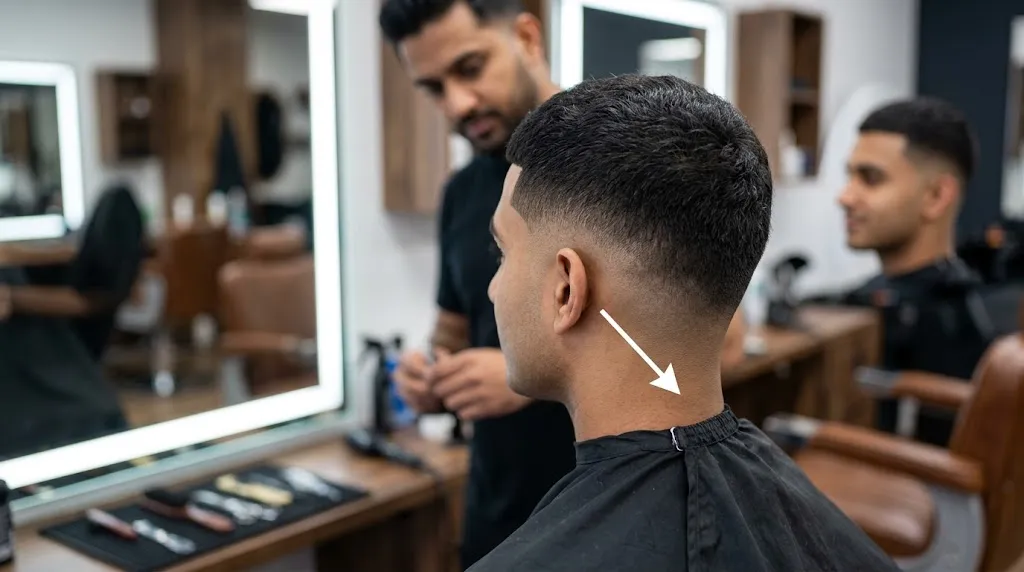
A taper fade blends short hair down to the skin around the ears and nape, removing bulk where sweat gathers fastest. This cut flatters straight, wavy, and coily textures, keeping the back of the neck bare while preserving your natural pattern on top.
When speaking to your barber, specify where you want the blend to start:
Low fade: Begins just above the ears and stays close to the hairline.
Mid fade: Starts at eye level for a balanced drop.
High fade: Blends high up near the crown for maximum cooling.
If you have tight coils, keeping the top short and clean pairs well with protective styles, which we cover in our guide to Short Twists for Men. Because the blended hair grows out quickly, a fade requires touch-ups every. Avoid jumping straight to a high fade if you have never tried one before, as taking the hair short so high up drastically changes your head shape.
Textured Crop
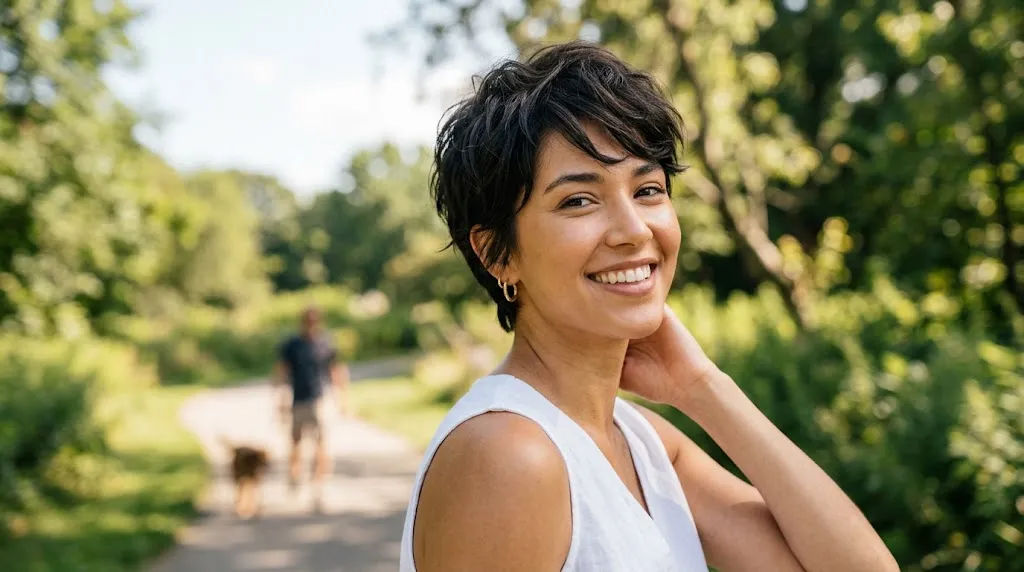
A textured crop combines short, faded sides with forward-swept, choppy layers on top. It keeps hair off your neck while providing enough texture up top to disguise fine or thinning spots in humid weather.
Rub a dime-sized amount of matte clay or dry powder between your palms, then work it through dry hair from crown to front, taking care not to crush the natural lift. A French crop variant uses this same structure but features a straight, blunt-cut fringe across the forehead. For detail on how much product to use, read our tips on how-to-set-hair.
Plan on getting a trim every to stop the top from turning heavy. Avoid using shine waxes or oil-based pastes, as summer sweat makes heavy products separate and look greasy.
Undercut
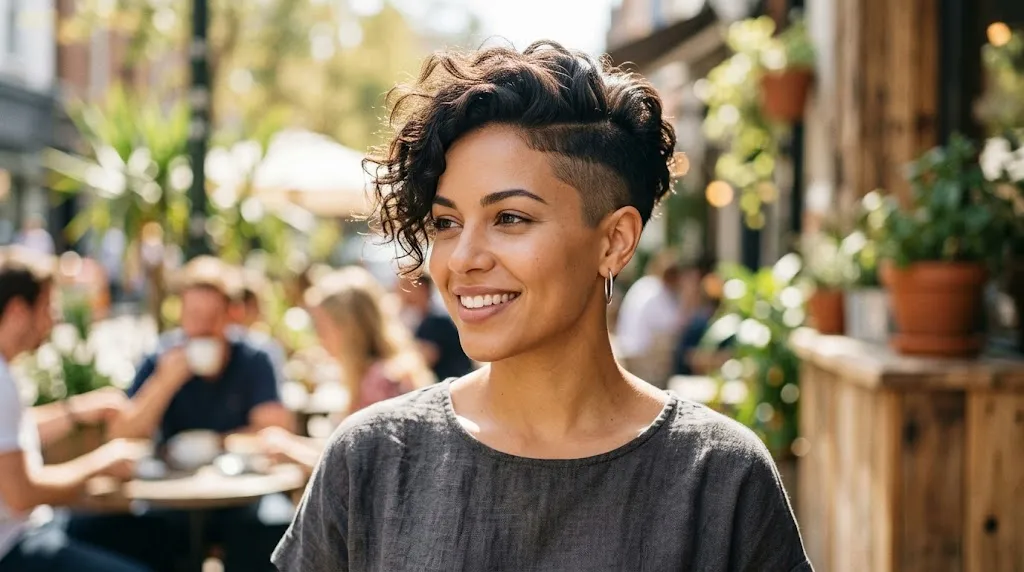
An undercut creates a sharp contrast by clipping the sides extremely short while leaving significant length on top. It suits guys with thick hair who want to drop the weight from the sides without giving up their longer style.
Sweep the top hair back or off to one side using a blow dryer on a cool setting to set the direction. When growing an undercut out later, lower the length on top first before letting the sides catch up so you avoid a mushroom shape.
The sides require trimming every to preserve the sharp line. Avoid using heavy, oil-based pomades in warm weather; sweat softens the product, causing long hair to fall into your eyes by mid-afternoon.
Surfer Waves
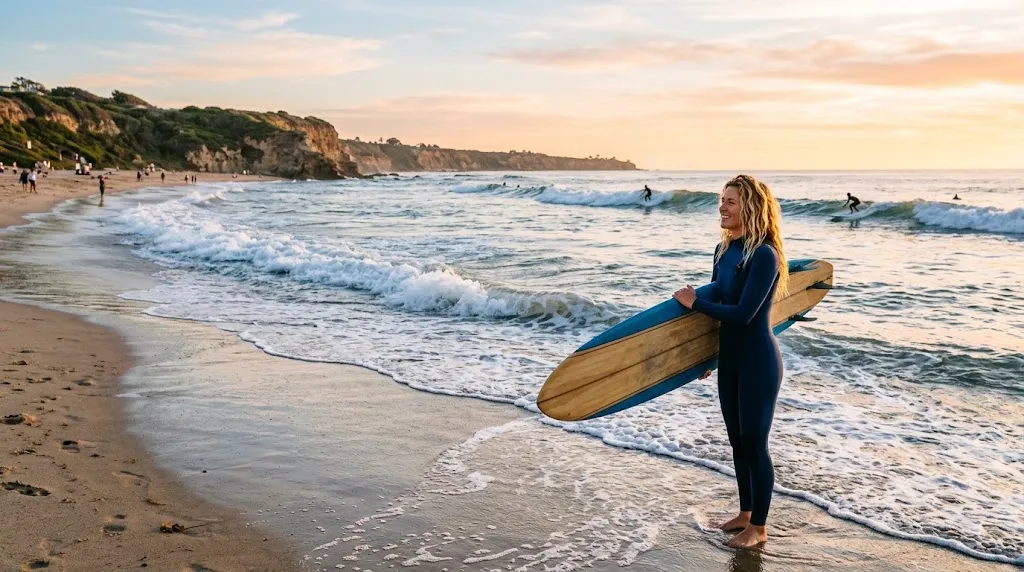
Surfer waves embrace natural texture, allowing medium-length hair to move freely while staying light and airy. This look works best on naturally wavy or slightly coarse hair that reacts well to salt and moisture.
Spritz a sea-salt spray evenly onto damp hair, scrunch the ends upward with your hands, and let it air-dry. The hold easily lasts, giving you a casual shape that withstands outdoor activity. If you want to build this texture from scratch, check our guides on how-to-get-wavy-hair-men, mens-flow-hairstyle, and long-wavy-hairstyles-men.
Rinse your hair thoroughly with fresh water after swimming in ocean salt or chlorine to prevent drying out the strands. Avoid spraying salt water product on your hair every day, as overusing dry salt formulas leads to brittle ends and a flaky scalp.
Man Bun
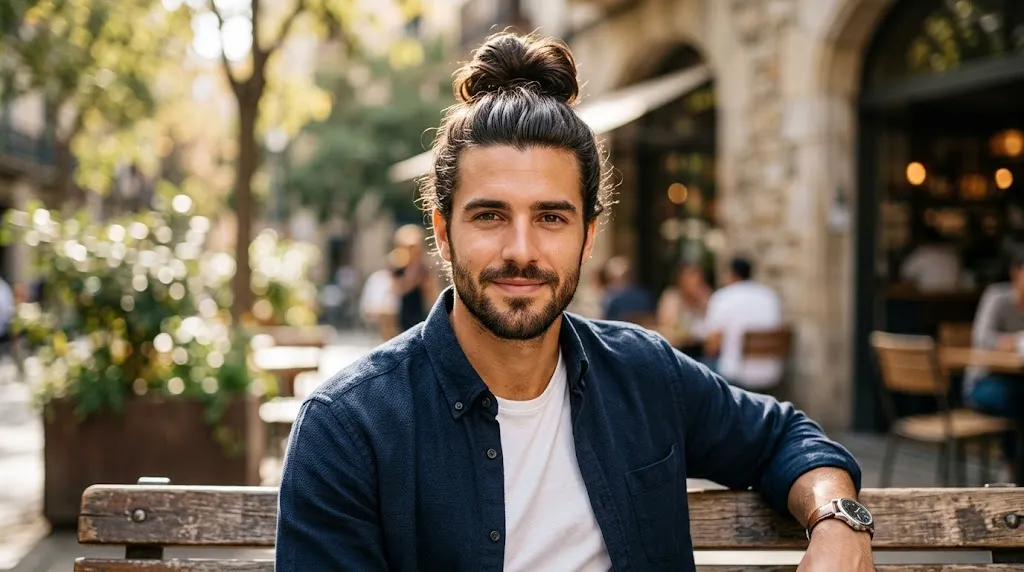
A man bun sweeps long hair up and secures it at the crown, keeping your neck fully exposed and dry on humid days. It requires shoulder-length hair or longer to hold together without falling loose.
Gather your hair with your hands—avoid using a fine-toothed comb so you do not pull the roots too tight—and loop a soft cloth hair tie around the bundle twice. If your hair is not quite long enough for a full bun, a low ponytail at the base of the neck provides a similar cooling effect with less tension on the forehead.
A properly tied bun maintains its grip for [CONFIRM: hold time with wear test] during routine daily movement. Avoid pulling the hair tie so tight that your scalp feels pulled back, as repeated tension along the front hairline can cause breakage and hair loss over time.
Summer Hairstyles for Boys
School holidays mean long days outside, constant running around, and sweaty scalps. Picture a parent sitting in a barber chair next to an eight-year-old who cannot hold still for more than five minutes: the main goals are keeping hair out of his eyes, making morning routines fast, and getting a cut that stays within school dress codes when September arrives. Kids have sensitive scalps and limited patience for clippers, so a good summer cut needs to be quick to execute and easy to maintain. Explore more ideas on our guide to boys’ summer hairstyles.
Normal Slope Haircut

The normal slope is a traditional, neat cut that tapers naturally down the back and sides while leaving just enough length on top to comb side-to-side. It keeps hair short and tidy around the ears and neck, preventing sweat from building up during outdoor play without stripping away all the length.
This style fits school-age boys whose parents want a clean, classic look that works for both summer camp and formal events. It suits straight to wavy hair textures best.
Tell the barber you want a classic taper on the back and sides that slopes down naturally to the neckline.
Ask to leave about an inch to an inch and a half on top, soft-blended into the sides without hard lines.
Request a soft, natural hairline at the nape rather than a harsh squared block so it grows out smoothly.
Because the hair tapers down gradually, this cut maintains its shape for a reasonable stretch before needing maintenance.
Avoid cutting the top too short if your child spends hours in direct sunlight, as exposed scalp skin burns easily without thick cover or a hat.
Buzz Cut for Boys

A buzz cut clips the entire head down to a uniform, short length, making it the coolest and lowest-maintenance haircut available for hot weather. Sweat wipes away instantly, and morning styling disappears entirely.
It works best for highly active kids, young athletes, and boys who dislike the feeling of hair sticking to their forehead or neck when playing sports.
Setting the right guard length keeps the process quick and comfortable:
Ask the barber for an all-over buzz using a longer guard like a number 3 or 4 to leave enough density to protect the skin.
If your child is sensitive to clipper vibration, request a quick pass over the top first to build comfort before moving to the sensitive areas around the ears.
Clean up the neck hairline with soft trimmers.
A buzz cut grows out noticeably faster than longer cuts, requiring frequent visits to keep it tight.
Avoid leaving a fresh buzz cut exposed to the sun without protection. Because skin shows directly through short hair, always apply kid-safe sunscreen to the scalp or have him wear a light mesh hat outside.
Short Taper for Boys

A short taper keeps the hair around the ears and lower neck cropped short while leaving a bit more bulk and length through the crown and top. It offers a slightly more modern shape than a classic slope without going down to bare skin.
This option suits older boys and pre-teens who want to style their hair with a small dab of light cream or water while keeping their neck cool.
When getting this cut, ask the barber to taper the lower neck and around the ears using a mid-range guard, leaving enough length on top to sweep to the side or push forward. Unlike a men’s high skin fade—which strips hair right down to the skin and creates a harsh contrast—a boy’s short taper keeps a softer, age-appropriate transition that grows out cleanly without constant maintenance.
This structured shape holds up well for several weeks between barber visits.
Avoid asking for sharp, high-contrast skin fades on younger children. Skin fades require close razor work and frequent touch-ups that can irritate young scalps and require more time in the barber chair than most kids can comfortably endure.
What to Tell the Barber for a Boy’s Summer Haircut
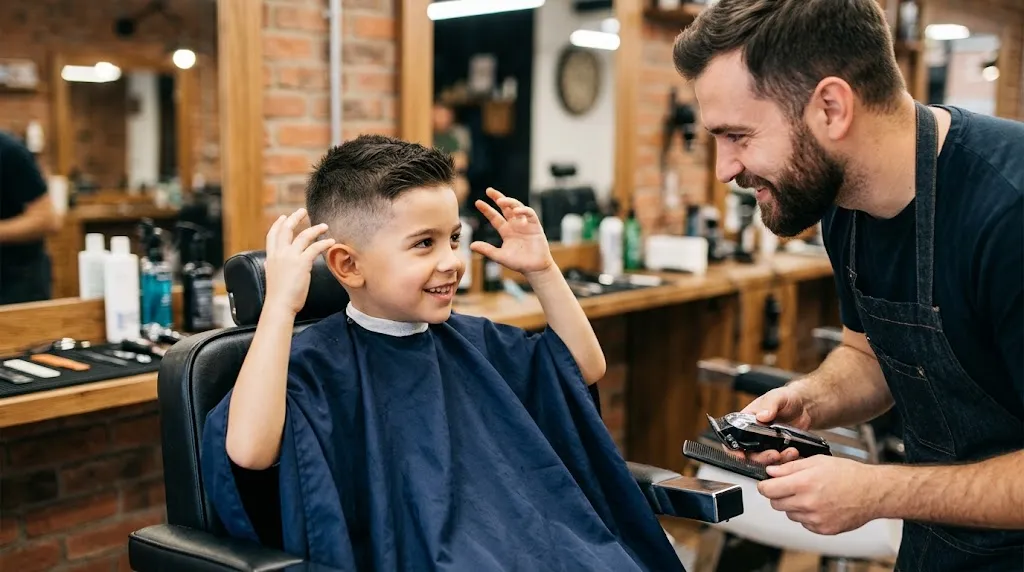
Bringing clear directions to the barbershop saves time and prevents misunderstandings. Use this quick reference checklist before your child sits in the chair:
Bring a clear reference photo: Show a photo of the cut on a boy with a similar hair texture rather than describing it with vague terms like “short on top.”
Know your guard numbers: If you know a previous guard number that worked well (such as a #3 on the sides), tell the barber immediately.
Specify outdoor activity: Mention if your boy plays outdoor sports so the barber can keep the neckline high enough to prevent sweat irritation.
Ask for soft edges: Request tapered or natural hairlines at the neck so the cut looks natural as it grows out over summer break.
Summer Hair Style for Girl
Keeping hair managed during hot months means balancing comfort with styles that survive active days. For young girls and teens, a good summer haircut or style keeps strands away from the face, prevents tangles after swimming, and withstands heat without requiring hours of effort. Look for options that adapt easily between school, camps, and pool days.
Space Buns

Space buns stack two high buns on top of the head, lifting all hair completely off the neck so heat escapes easily. They work best on medium to long hair that has enough length to wrap without excessive pins.
To keep them balanced, split the hair down the center from the hairline to the nape of the neck using the tail of a comb. Secure each side into a high ponytail first, then twist the length of the hair around the base and pin the ends underneath. This double-ponytail step prevents one bun from sitting higher than the other.
Hold Time: Expect this style to stay secure for before needing touch-ups.
Precaution: Avoid pulling the front sections too tightly around the temples, as delicate hairline strands break easily under tension.
For more inspiration on keeping heat off the neck, explore these cool hairstyles for girls.
Pigtail Braids

Pigtail braids partition hair into two woven sections that lie flat against the back, keeping loose strands from matting when sweating or running. They suit kids and teens with medium-to-long hair, especially those with thicker textures that get heavy when worn loose.
Dampen the hair slightly or apply a light leave-in conditioner to control flyaways.
Part the hair evenly down the middle into two equal sections.
Clip one side out of the way while working on the other.
Divide the section into three equal strands at the nape of the neck and cross the outer strands over the middle strand until reaching the ends.
Secure with a soft fabric elastic rather than a bare rubber band.
These braids stay intact for the whole day, making them a reliable choice for long outdoor trips. Avoid braiding too close to the scalp; keeping the weave slightly relaxed near the base stops tension headaches and prevents scalp irritation.
If your child prefers leaving their length loose on cooler days, check out these cute open hairstyles, or consider a shorter shape like a medium hair cut for girls to reduce styling time altogether.
Occasion, Sun and Water: What Most Summer Hair Guides Miss
Choosing the right hairstyle for warm weather isn’t just about what looks good in the morning; it is about how that style holds up against humidity, ocean waves, office air conditioning, and direct sunlight. Match your look to your environment and protect your scalp so your hair stays healthy all season long.
Which Summer Hairstyle for Which Occasion
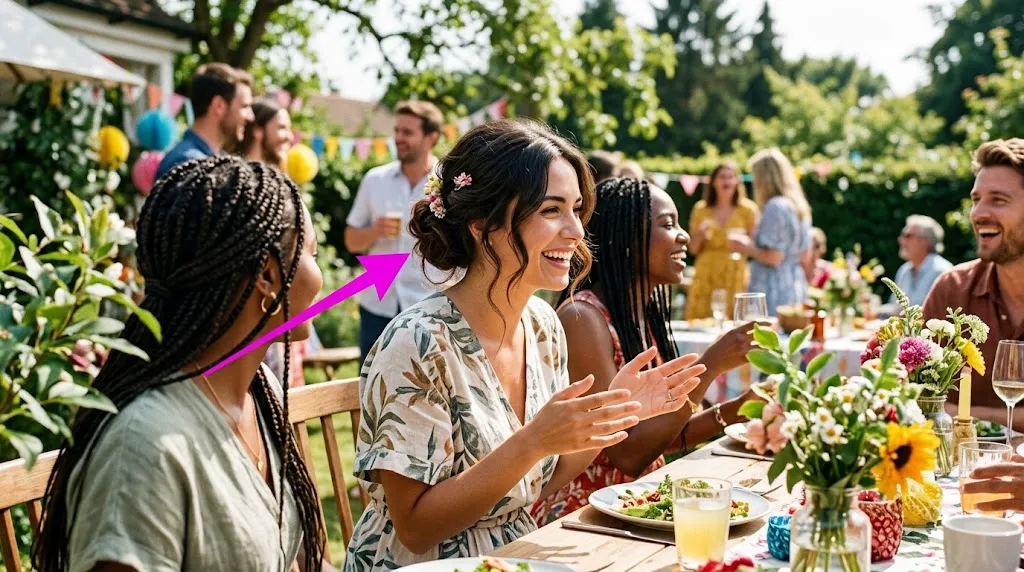
Different summer settings demand different levels of hold, protection, and polish. Matching your hairstyle to your setting prevents mid-day sagging, heat discomfort, and constant touch-ups.
Beach or Pool: A high braided ponytail or tight crown braid keeps length secure against wind and water, preventing severe tangles from salt or chlorine.
Vacation & Travel: A low claw-clip twist or heatless beach waves let you go from sightseeing to dinner without needing hot tools in your hotel room.
Summer Wedding: An elegant low bun with soft face-framing pieces stays put through outdoor heat while maintaining a refined look. Explore options for a function hairstyle or review ideas for an elegant hairstyles look.
Office: A sleek middle-part low ponytail keeps hair off your neck during your commute while looking neat for meetings. Check out our guide on office hairstyles for professional ideas.
Festivals & Outdoor Parties: Space buns or accent braids with colorful bands hold up through hours of movement and humidity. See more inspiration under hair style woman party.
For detailed recommendations tailored specifically to longer lengths across different events, read our full breakdown on occasion choices in our dedicated guide for long hair.
Sun, Chlorine and Salt Water: Protecting Your Style and Your Scalp
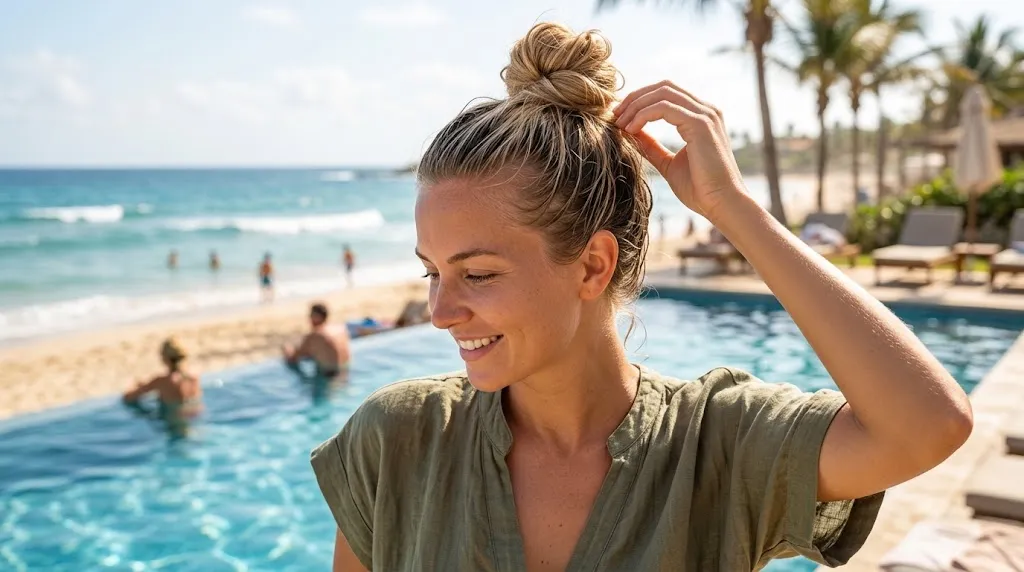
Direct sun rays weaken hair proteins, while salt water draws out moisture and chlorine strips natural protective oils. Furthermore, your hair only partially shields your scalp, leaving visible parts, cowlicks, hairline edges, and thinning areas vulnerable to sunburn.
According to a Skin Cancer Foundation dermatologist, you should apply sunscreen to your scalp when your hair is completely dry to ensure even coverage and prevent product sliding. Choose scalp-friendly formulas based on your hair texture and routine:
Powder Sunscreen: Best for fine hair or visible parts; absorbs oil without flattening volume.
Spray Sunscreen: Quick application for full-head coverage, braids, or exposed hairlines.
Stick Sunscreen: Ideal for precise application along part lines and tight hair edges.
When it comes to pool water, a Cleveland Clinic dermatologist explains that chlorine strips natural oils from the hair shaft, leaving strands dry and brittle. Wearing a well-fitted swim cap provides the most effective barrier. If you prefer swimming without a cap, thoroughly wet your hair with clean tap water before entering the pool so your strands absorb less chlorinated water, and wash your hair immediately after getting out. Note that chlorine itself does not turn lighter hair green; that discoloration is caused by oxidized copper minerals dissolved in pool water binding to the hair protein.
For salt water, our stylist recommends coating damp ends with a light protective barrier like a leave-in conditioner before stepping onto the sand. The salt draws moisture out of the hair shaft, so rinsing with fresh water as soon as you exit the ocean helps prevent extreme dryness and breakage.
What Each Style Needs: Product Types and What They Do
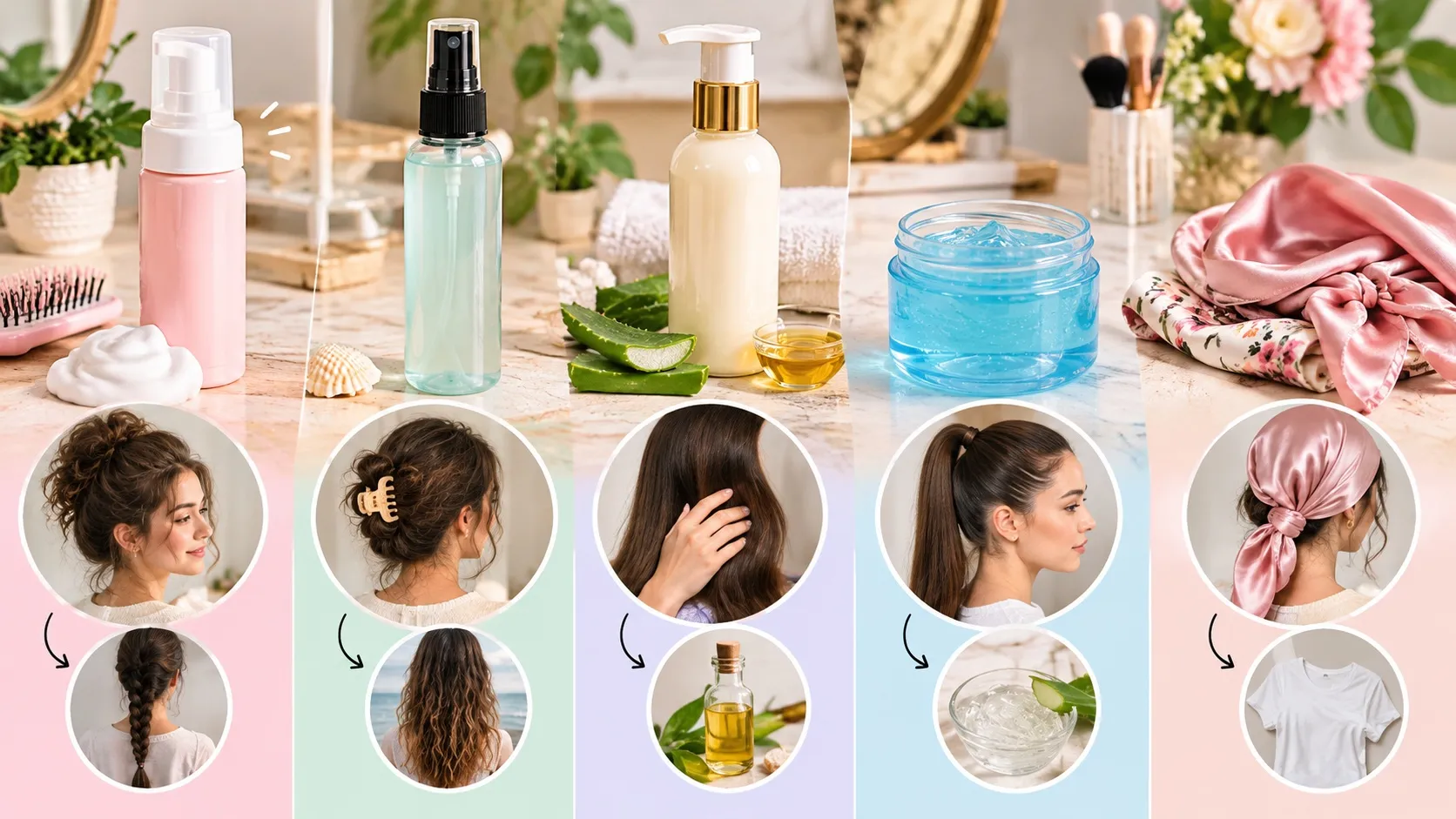
Using the right styling product keeps your hair intact without adding heavy buildup that melted summer heat turns greasy. Focus on lightweight formulas designed to add grip, retain moisture, or seal out humidity.
Mousse: Adds airy volume and subtle structure to damp hair without weighing down fine strands. No-product alternative: Damp braid or twist set overnight.
Texturizing Spray: Provides dry grip and matte hold to smooth hair, making updos, braids, and claw clips stay in place. No-product alternative: Light ocean-water air dry or salt-water mist.
Leave-In Conditioner: Delivers continuous hydration to dry or coarse ends and guards against moisture loss from sun exposure. No-product alternative: Pure jojoba oil applied strictly to the very tips of the hair.
Lightweight Gel: Controls flyaways and smooths down edges for sleek ponytails or tight buns without flaking. No-product alternative: A tiny dab of water mixed with aloe vera gel.
Silk or Satin Scarf: Preserves braids and updos overnight, reduces friction while sleeping, and protects the scalp from direct sun when wrapped as an accessory. No-product alternative: A clean, soft cotton T-shirt used as a wrap.
Frequently Asked Questions
Answers to common queries about summer hair colours, cuts, and youthful styling tips.
Multi-tonal shades with warm undertones (like soft balayage, honey, bronze, or golden ribbons) soften face contrast and restore warmth to your complexion, avoiding the heavy look of flat dark dyes or washed-out platinum tones.
Cuts that remove dead weight and encourage natural movement work best. Top picks include:
- The Layered Bob: Clears weight off shoulders and highlights cheekbones.
- Curtain Bangs: Softly frame the face and sweep past cheekbones effortlessly.
- Textured Shag: Interior layers add natural crown volume with easy air-drying.
These warmer tones naturally complement UV exposure and sun-fading instead of fighting against it, keeping your hair looking vibrant without fast brassiness or harsh root lines.
While preference is subjective, informal polls suggest unconventional fantasy colours (like bright green or blue) receive less initial interest than classic shades. However, healthy, reflective, well-maintained hair matters far more in person.
You can safely test vivid colors by following four simple steps:
- Use a semi-permanent formula that washes out in a few shampoos.
- Perform a strand test near the nape of your neck to view in sunlight.
- Plan for sun fade with a color-protecting wash regime.
- Prepare for root grow-out or consider a shadow-root style.
Prioritise hair hydration with deep-conditioning treatments and lightweight oils to maximize light reflection, maintain clean scalp health for stronger growth, and match your hair shade’s undertone to your natural skin tone.
Related Reads
Explore additional guides and curated directories across our hair inspiration library.
Women’s Guides
Hairstyles for Straight Hair
Read Guide →Haircuts for Women
Read Guide →Long Thick Hair
Read Guide →Long Hairstyles for Girls
Read Guide →Haircuts for Girls with Long Hair
Read Guide →Simple Indian Hair Style
Read Guide →Korean Front Hair Cut
Read Guide →Haircut Without Losing Length
Read Guide →Girl Hairstyle Cutting Photo
Read Guide →Hair Style Pic
Read Guide →Women's Hairstyles Hub
Explore Directory →Men’s Guides
Straight Hair Men
Read Guide →Long Hair and Beard Styles
Read Guide →Hairstyle for Silky Hair
Read Guide →Celebrity Hairstyles Men
Read Guide →Normal Hair Style Men
Read Guide →Hairstyles for Older Men
Read Guide →Short Pompadour
Read Guide →Japanese Hairstyle Men
Read Guide →Hair Guides
References
- Skin Cancer Foundation, “Ask the Expert: How Can I Protect My Scalp Better?” https://www.skincancer.org/blog/ask-the-expert-how-can-i-protect-my-scalp-better/
- Cleveland Clinic, “Protect Your Hair From Chlorine the Next Time You Go Swimming” https://health.clevelandclinic.org/how-to-protect-your-hair-from-chlorine
- To be sourced: a named survey for the colour-attractiveness claim (if used), and named stylist interviews as primary sources.