Korean Boy Hairstyle: Best Korean Haircuts & Hairstyles for Men in 2026
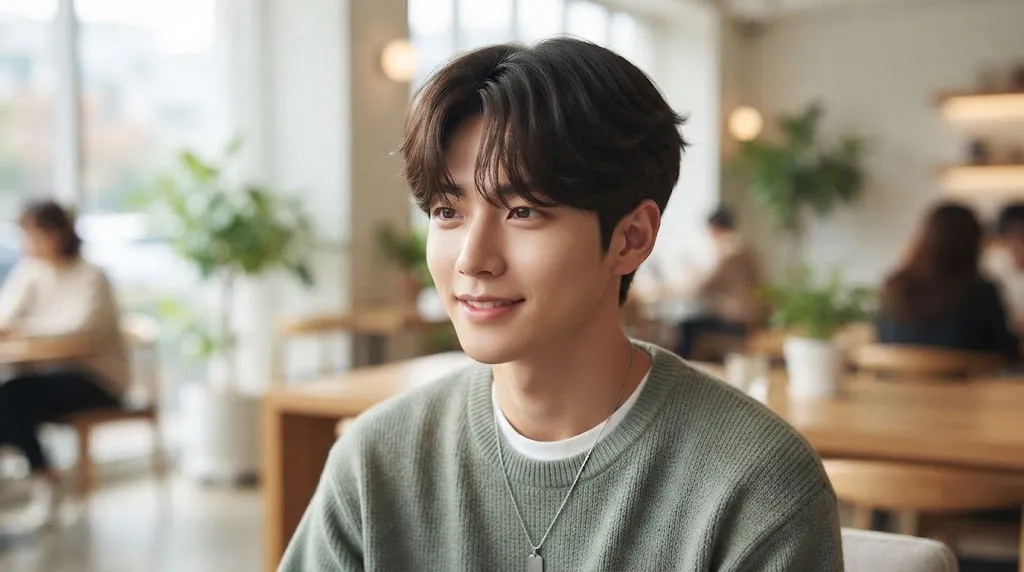
Korean boy hairstyles are men’s haircuts and styling looks known for soft shapes, longer top sections, face-framing fringe, natural movement, texture, and controlled volume. They can range from short, easy cuts to medium or long styles with layers, parting, waves, or a more defined fringe.
A Korean hairstyle is not one specific haircut. It is a broad group of haircut and styling approaches, including two-block, curtain, comma, middle-part, side-part, layered, textured, fringe, and Korean-inspired perm styles. The same basic cut can also look different depending on hair density, natural texture, length, and styling technique.
This guide helps you choose a Korean hairstyle based on your hair type, face shape, hair length, desired look, maintenance level, and styling ability. It also explains what to show or tell your barber, how to style the cut at home, and what to do when your natural hair doesn’t behave like the reference photo.
What Is a Korean Boy Hairstyle?
A Korean boy hairstyle is not a single haircut but a range of men’s hairstyles influenced by contemporary Korean haircutting and styling trends. Common features include a longer top or fringe, softer transitions, face-framing pieces, movement, texture, and controlled volume rather than an extremely sharp or rigid finish.
Popular examples include the Korean two-block, soft two-block, curtain hairstyle, comma hair, middle part, side part, layered haircut, textured hairstyle, and Korean-inspired fringe styles. The best option depends on your natural hair, face shape, preferred length, and how much time you want to spend styling it.
What Makes a Hairstyle Look Korean?
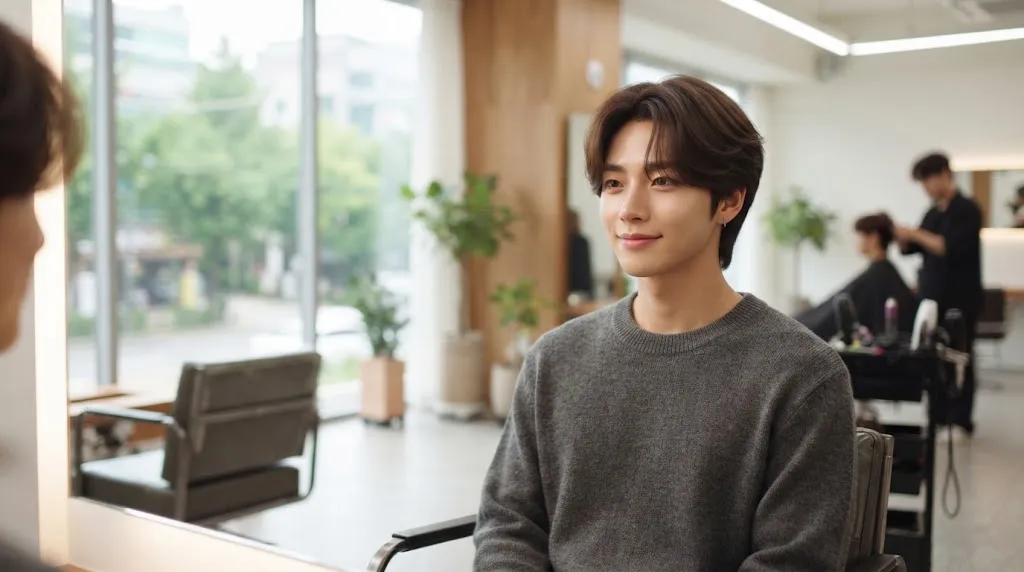
Several features commonly create the Korean-inspired appearance:
- Soft structure: The haircut usually has a softer, more natural silhouette rather than looking overly rigid.
- Longer top or fringe: Many Korean styles retain enough length on top to create movement, parting, or face-framing.
- Face-framing pieces: Fringe and front layers can be shaped to follow or visually balance the face.
- Natural movement: Hair is often styled with flow instead of being completely slicked or fixed in place.
- Controlled volume: Volume is usually placed deliberately at the top, crown, or sides rather than creating uniform fullness everywhere.
- Texture and layers: Layers can add movement and make medium or longer hair look lighter and more dynamic.
- Parting: Middle parts, curtain parts, side parts, and softer off-center parts are common ways to change the overall shape.
- Adaptability: The same Korean-inspired cut can be modified for straight, wavy, curly, thick, or fine hair.
The important point is that “Korean” describes an overall haircut-and-styling aesthetic, not one fixed formula. Two people can both have Korean-inspired hairstyles while having very different lengths, fringe shapes, textures, and side profiles.
Are Korean Boy Hairstyles Only for Straight Hair?

No. Straight hair is often easy to shape into many Korean hairstyles, but Korean-inspired cuts can also be adapted for wavy, curly, thick, and fine hair.
The main difference is how the haircut is adjusted to the hair’s natural behavior. For example, thick hair may need careful weight removal so the sides do not become bulky, while fine or very straight hair may benefit from layering or styling techniques that create the appearance of more movement and volume.
Wavy and curly hair can also work well with Korean-inspired shapes, but the final result will naturally have a different silhouette from a straight-hair reference. Instead of forcing the hair to look identical to a photo, the cut should account for the hair’s natural curl pattern, density, direction, and shrinkage.
That means the better question is not: “Can I have a Korean hairstyle with my hair type?”
but:“Which Korean-inspired shape works with the way my hair naturally behaves?”
What Is the Korean Boy Haircut Called?
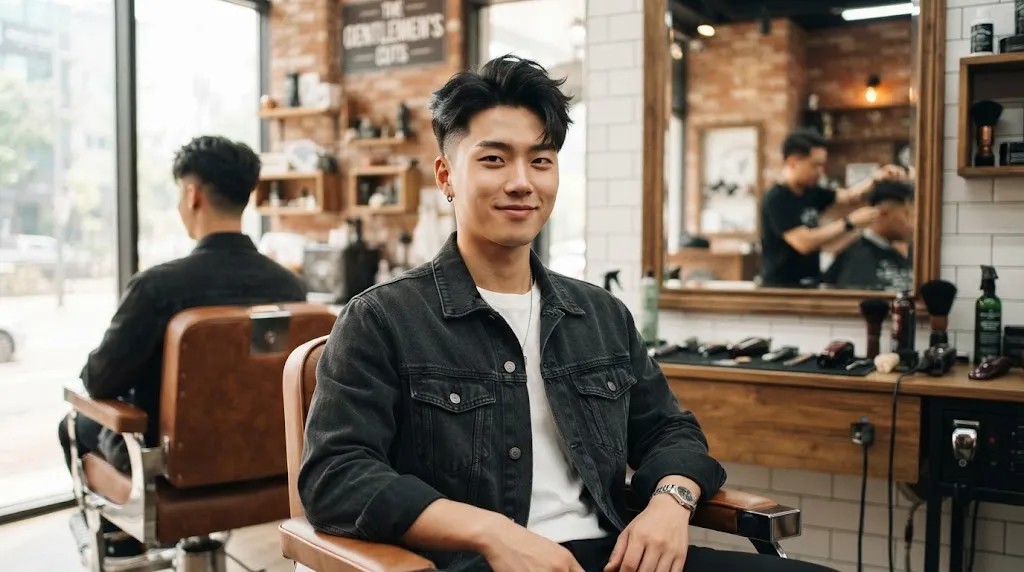
There is no single haircut officially called “the Korean boy haircut.” Korean men’s hairstyles include several different haircut structures and styling variations.
The two-block haircut is one of the best-known Korean-inspired haircut structures. It generally keeps the top longer while the sides and back are cut shorter, creating separation between the sections. Depending on the desired result, the transition can look soft and natural or more visibly disconnected.
Other common Korean-inspired styles include:
- Curtain hairstyle — longer front sections parted around the face.
- Comma hair — a curved front fringe that creates the characteristic comma-like shape.
- Middle-part hairstyle — hair divided around the center with length and movement through the front.
- Side-part hairstyle — hair directed to one side for a more structured look.
- Layered Korean haircut — layers used to create movement and lighter shape.
- Textured Korean hairstyle — added texture for a less flat, more natural finish.
- Korean fringe styles — different lengths and shapes of front fringe used to frame the face.
- Korean-inspired perm styles — texture or waves added to create volume and movement.
So if you tell a barber only “I want a Korean haircut,” that may not be specific enough. A better approach is to show a reference photo and explain the top length, side length, fringe shape, desired volume, natural hair texture, and how much daily styling you are willing to do.
Best Korean Boy Hairstyles for 2026
Korean hairstyles are not limited to one haircut. The most useful way to choose one is to look at the shape, length, hair texture, face shape, styling effort, and maintenance required. The styles below focus on distinct Korean-inspired looks rather than repeating slightly different versions of the same haircut.
Korean Two-Block Haircut
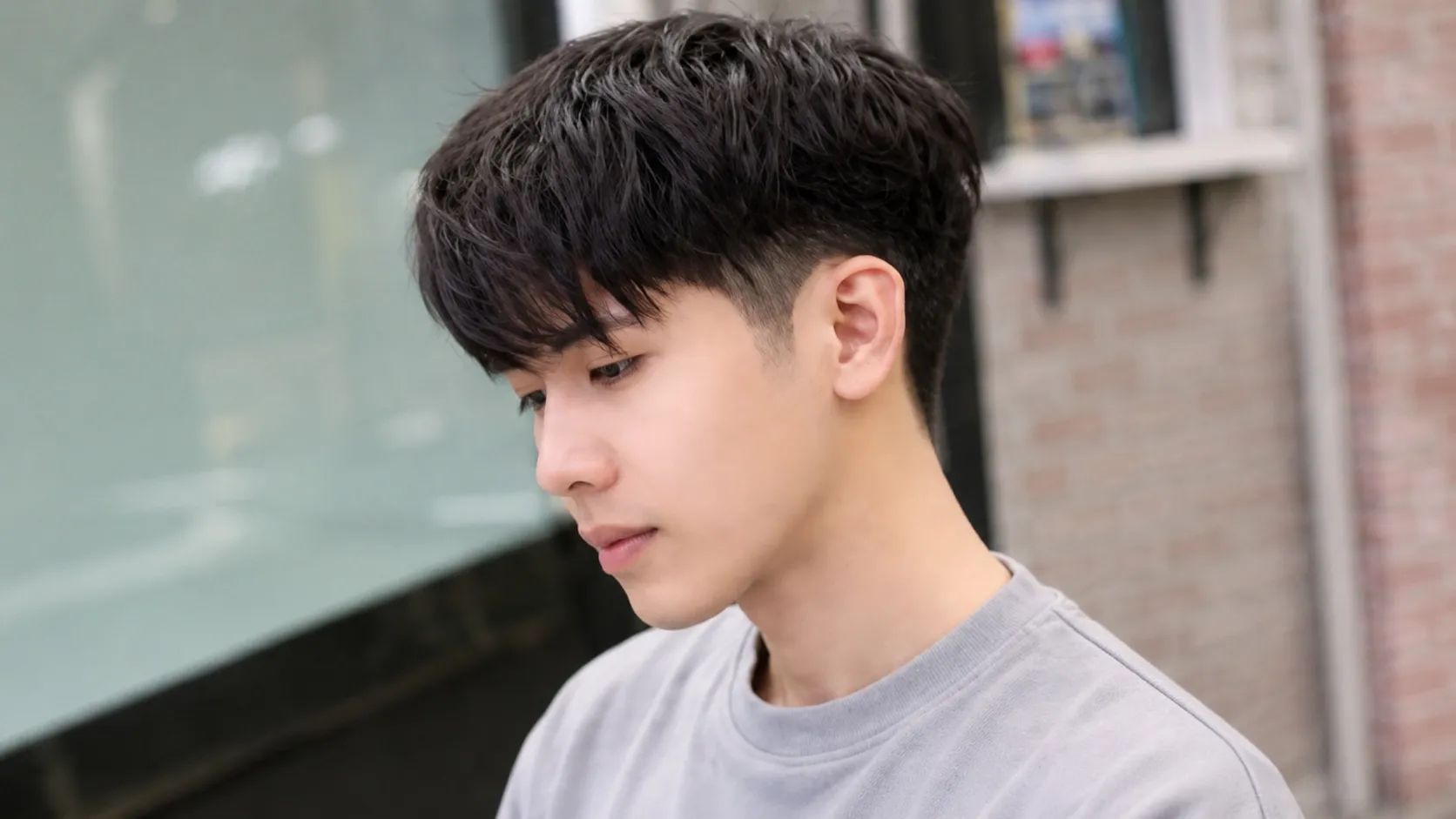
What It Is The Korean two-block is one of the most recognizable Korean-inspired men’s haircuts. It keeps the top noticeably longer than the sides and back, creating separation between the two sections. The top can then be worn forward, parted, textured, or swept back depending on the desired look.
Best For Men who want a recognizable Korean-inspired shape with enough length to experiment with different styling options.
Key Suitability
Best Face Shapes: Works particularly well with oval, square, heart, and longer face shapes, although the fringe and side volume can be adjusted to suit different proportions.
Best Hair Types: Best suited to straight and slightly wavy hair. Thick hair can also work well when excess bulk is controlled.
Length: Usually requires medium length on top with shorter sides and back. The exact length depends on whether you want a soft or more defined two-block.
Maintenance: Medium. The sides and back may need regular trimming to preserve the contrast, while the longer top requires enough length to style.
Styling & Barber Guide
How to Style: Blow-dry the top into the desired direction, then use a small amount of lightweight styling product to control the fringe and add separation. Avoid using too much product if you want the soft, natural Korean finish.
What to Tell Your Barber: Ask for a longer top with shorter sides and back, then show a reference photo and specify whether you want the transition soft or visibly disconnected. Also explain how much length you want around the ears and fringe.
Pros & Limitations
Why Choose It: It is versatile—the same haircut can be styled as a fringe, middle part, side part, or textured look.
Possible Limitation: If your hair is extremely thick or grows outward at the sides, the shorter section can become bulky as it grows out and may require more frequent shaping.
Soft Two-Block Haircut
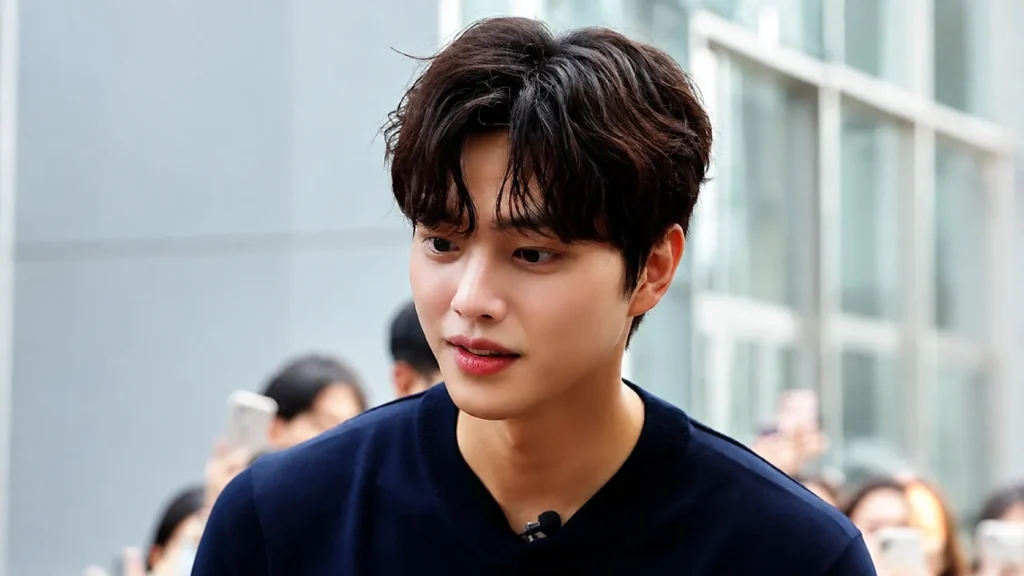
What It Is The soft two-block keeps the basic two-block structure but makes the overall transition less harsh and more blended-looking. It is designed to retain the Korean-inspired contrast without making the sides appear extremely disconnected.
Best For Anyone who likes the two-block idea but wants a more natural, wearable finish.
Key Suitability
Face Shapes: Especially adaptable for round, oval, square, and heart-shaped faces because the top and fringe can be adjusted to change the visual proportions.
Hair Type: Works well with straight, slightly wavy, fine, or medium-density hair. Thick hair may need additional weight removal.
Length: Medium top with shorter sides and back.
Maintenance: Medium to low-medium, depending on how soft the sides are kept.
Styling & Barber Guide
How to Style: Use a blow dryer to create natural direction and a small amount of styling cream or lightweight wax. The goal is movement rather than a stiff finish.
What to Tell Your Barber: Say that you want a soft Korean two-block rather than a very sharp disconnected undercut, and show a side-profile reference.
Pros & Limitations
Why Choose It: It gives you the Korean two-block silhouette without requiring an especially dramatic contrast.
Possible Limitation: If you want a very sharp, high-contrast haircut, the softer transition may look too subtle.
Korean Curtain Hairstyle
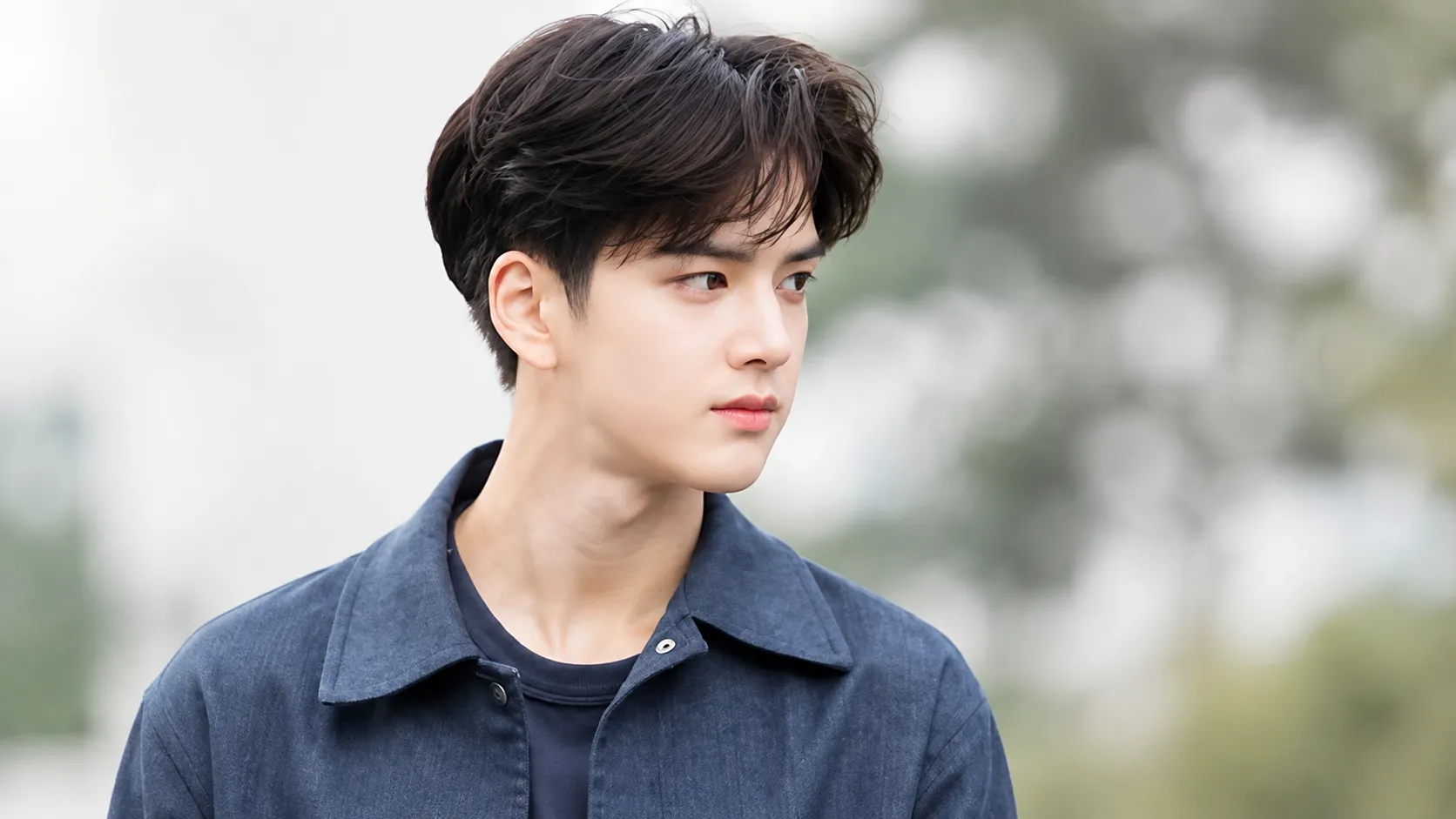
What It Is The Korean curtain hairstyle uses a longer front section divided around the face. The fringe creates two curtain-like sections that can fall naturally or be styled with more volume.
Best For Those who want a soft, face-framing Korean look rather than a very short haircut.
Key Suitability
Face Shapes: Often flattering on round, square, heart, and oval faces. The width and length of the curtain can be adjusted according to face proportions.
Hair Type: Best with straight or wavy hair that has enough length to separate naturally.
Length: Usually medium to medium-long.
Maintenance: Medium. The front needs enough length and regular shaping to maintain the curtain effect.
Styling & Barber Guide
How to Style: Create the part while the hair is damp, then blow-dry the front sections away from the face. A lightweight product can help maintain the shape without making the fringe look greasy.
What to Tell Your Barber: Ask for longer face-framing fringe with enough length to part in the center or slightly off-center. Show exactly where you want the front sections to fall.
Pros & Limitations
Why Choose It: It provides a softer appearance and allows the wearer to change the parting and fringe direction.
Possible Limitation: Very short or stubbornly straight fringe may not naturally stay separated without blow-drying.
Korean Comma Hair
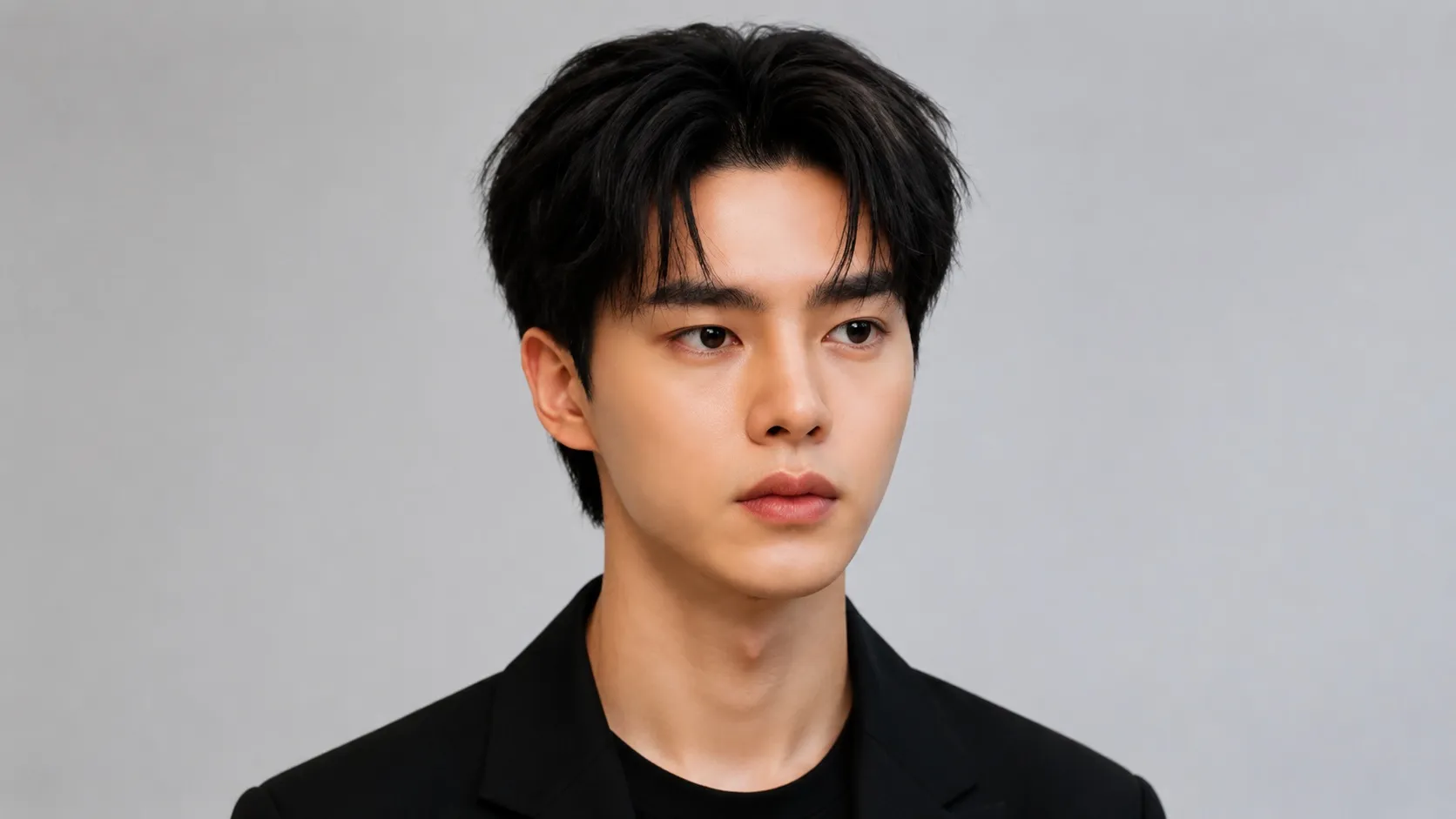
What It Is Comma hair is recognized by its curved front fringe, which bends inward or to one side to create a comma-like shape. The rest of the haircut can remain relatively natural and flexible.
Best For Anyone who wants a polished Korean-inspired hairstyle with a noticeable but controlled fringe.
Key Suitability
Face Shapes: Works well with oval, square, heart, and longer face shapes. The direction and size of the curved fringe can be adjusted.
Hair Type: Best for straight or slightly wavy hair with enough length in front to form the curve.
Length: Medium top with sufficient fringe length.
Maintenance: Medium to medium-high, because the signature fringe shape usually needs styling.
Styling & Barber Guide
How to Style: Blow-dry the fringe in the desired direction and use a small amount of lightweight product to create the curve. A round brush can help when additional shape is needed.
What to Tell Your Barber: Ask for enough front length to create a curved, side-directed fringe rather than cutting the bangs too short.
Pros & Limitations
Why Choose It: The fringe gives the hairstyle a recognizable Korean-inspired detail without requiring an extremely complicated haircut.
Possible Limitation: If your hair naturally falls in the opposite direction, achieving the comma shape may require daily blow-drying.
Korean Middle-Part Hairstyle
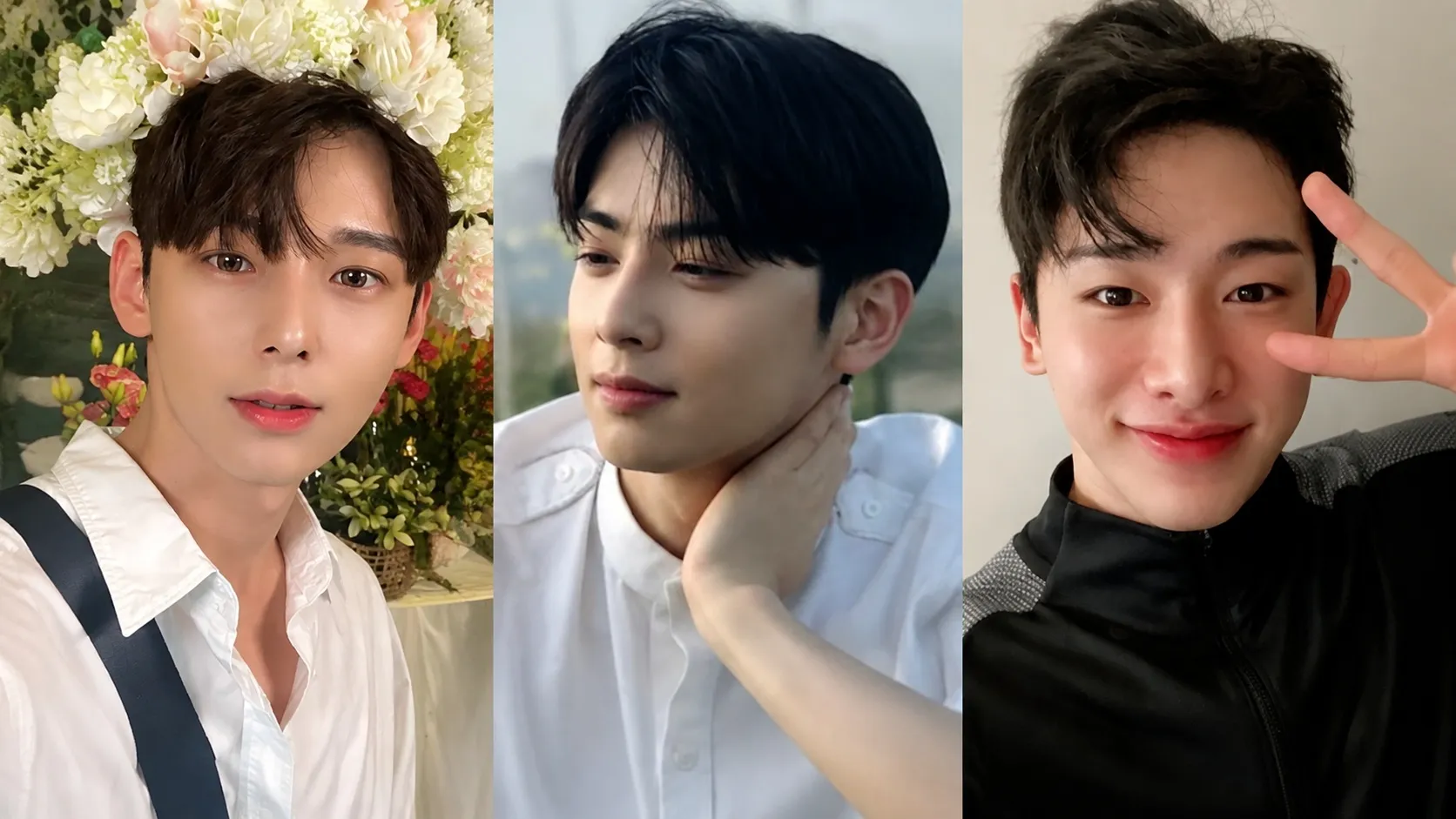
What It Is A Korean middle part divides the longer top around the center, allowing the hair to fall naturally toward both sides of the face.
Best For Men who prefer medium-length hair, face-framing movement, and a softer appearance.
Key Suitability
Face Shapes: Often works well with oval, heart, square, and longer faces. For round faces, the amount of height and side volume can be adjusted.
Hair Type: Straight and wavy hair are generally easiest to manage.
Length: Medium to medium-long.
Maintenance: Medium.
Styling & Barber Guide
How to Style: Create the center part while the hair is damp. Blow-dry each side away from the face and use a lightweight product to control flyaways.
What to Tell Your Barber: Tell the barber that you want enough length at the front to part naturally in the center and avoid cutting the fringe too short.
Pros & Limitations
Why Choose It: The center part gives you flexibility and can make medium-length hair look intentional without requiring a highly structured cut.
Possible Limitation: If your hair has a strong natural growth pattern or refuses to separate evenly, maintaining a clean middle part can take extra styling.
Korean Side-Part Hairstyle
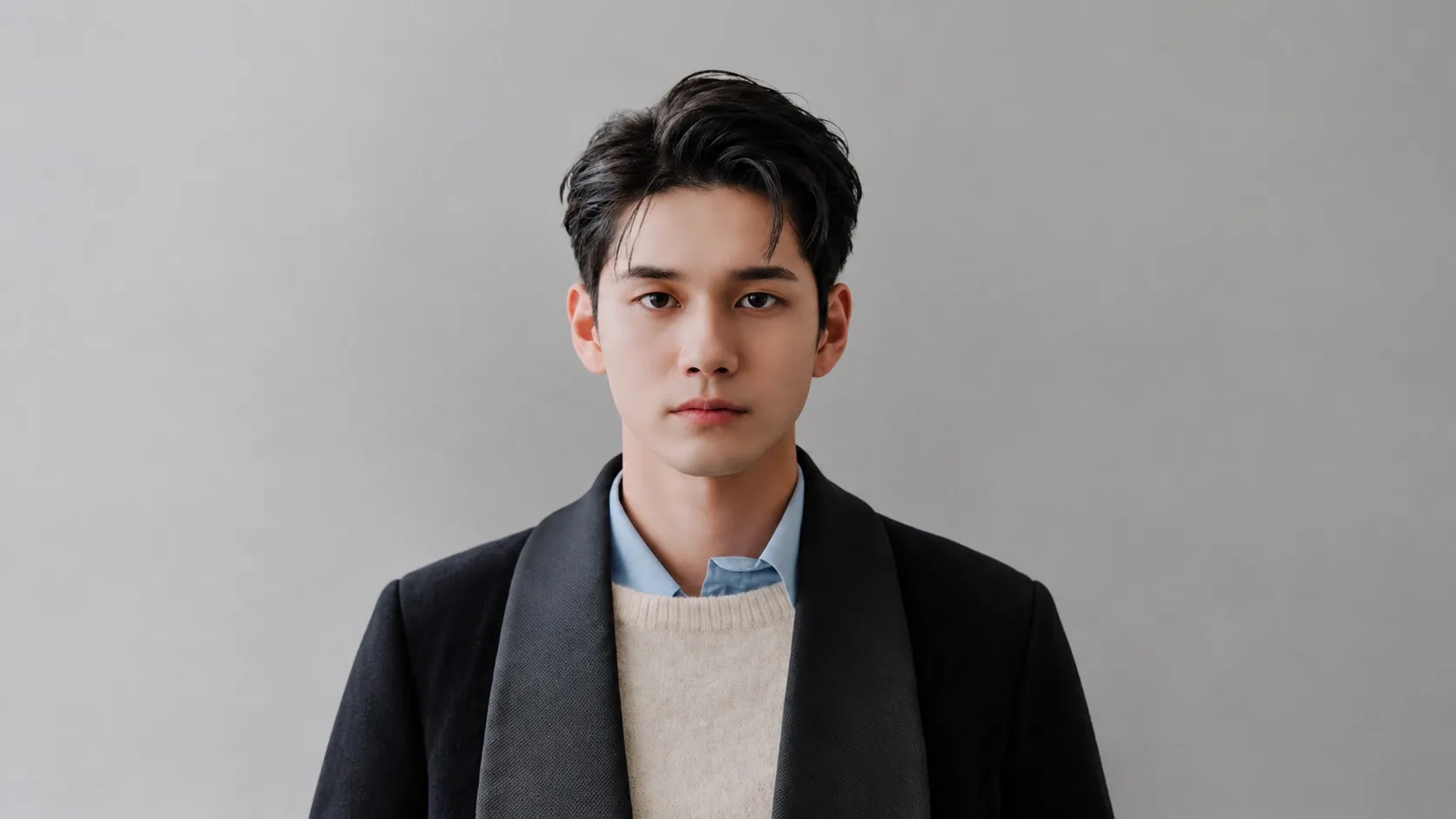
What It Is
This style uses a side part to direct the top and fringe toward one side, creating a more structured but still soft Korean-inspired appearance.
Best For
Men who want something neater and more defined than a loose middle part.
Key Suitability
Face Shapes: Can work across many face shapes because the part and volume can be adjusted.
Hair Type: Particularly suitable for straight and slightly wavy hair.
Length: Medium top with enough front length for directional styling.
Maintenance: Medium.
Styling & Barber Guide
How to Style: Create the part while damp, blow-dry the hair in its direction, and finish with a small amount of flexible product.
What to Tell Your Barber: Specify the preferred parting side and ask for enough top and fringe length to maintain the shape.
Pros & Limitations
Why Choose It: The side part is versatile and can move between casual and more polished styling.
Possible Limitation: A strong natural hair part may make it difficult to consistently style the hair on the opposite side.
Korean Layered Haircut
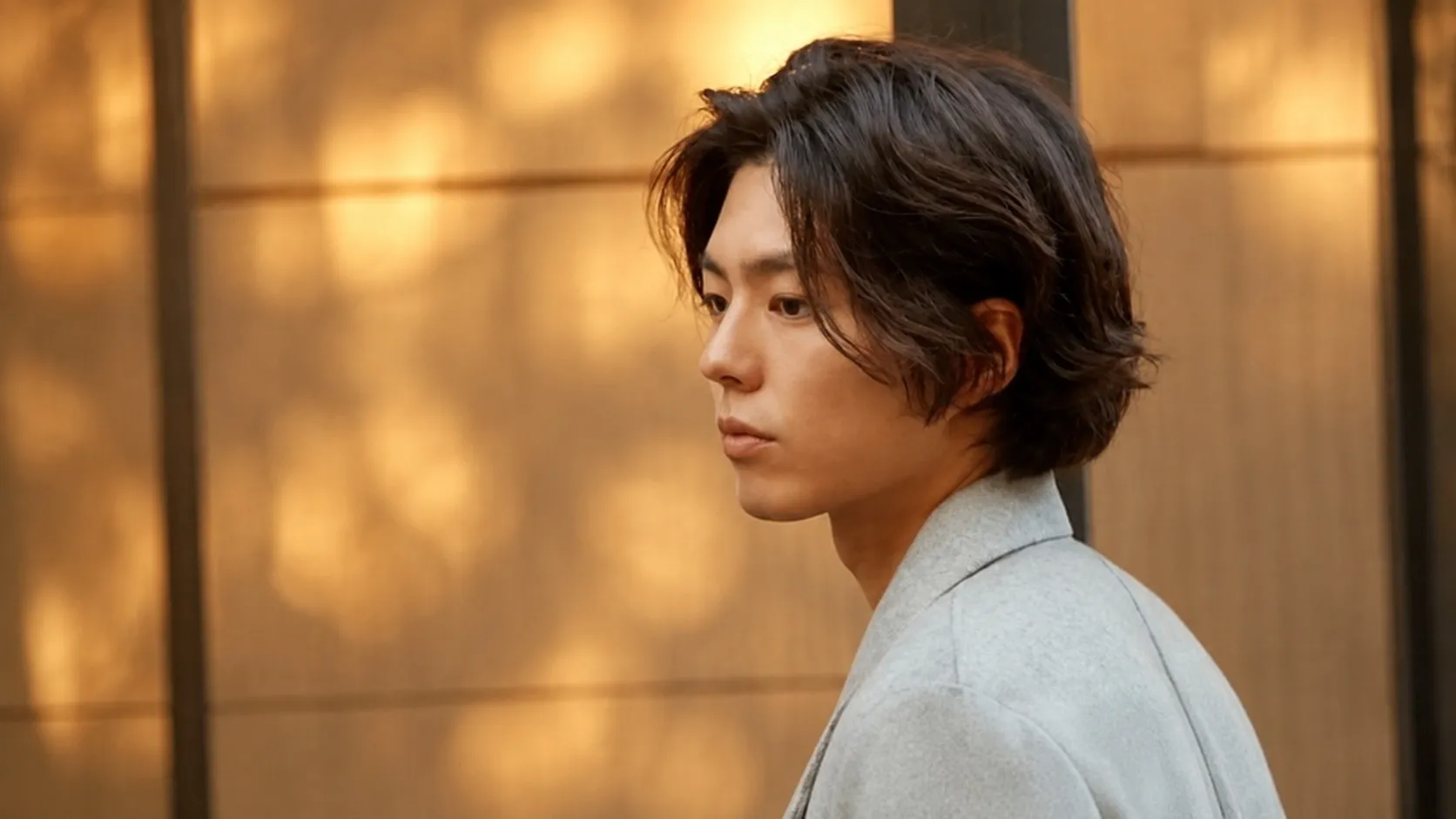
What It Is
A Korean layered haircut uses different lengths through the top and sides to create movement, shape, and lighter-looking volume.
Best For
Men who find one-length hair too flat or heavy and want more movement.
Key Suitability
Face Shapes: Highly adaptable because layers can be positioned to balance different face proportions.
Hair Type: Works especially well with medium-to-thick straight or wavy hair.
Length: Usually medium to medium-long.
Maintenance: Medium.
Styling & Barber Guide
How to Style: Blow-dry the layers in their natural direction and use a lightweight styling product to separate the ends.
What to Tell Your Barber: Explain that you want movement rather than simply shorter hair, and show where you want the layers to begin.
Pros & Limitations
Why Choose It: Layers can make medium-length hair feel lighter and create a more dynamic silhouette.
Possible Limitation: Too many or overly short layers can make fine hair appear less dense.
Korean Textured Hairstyle
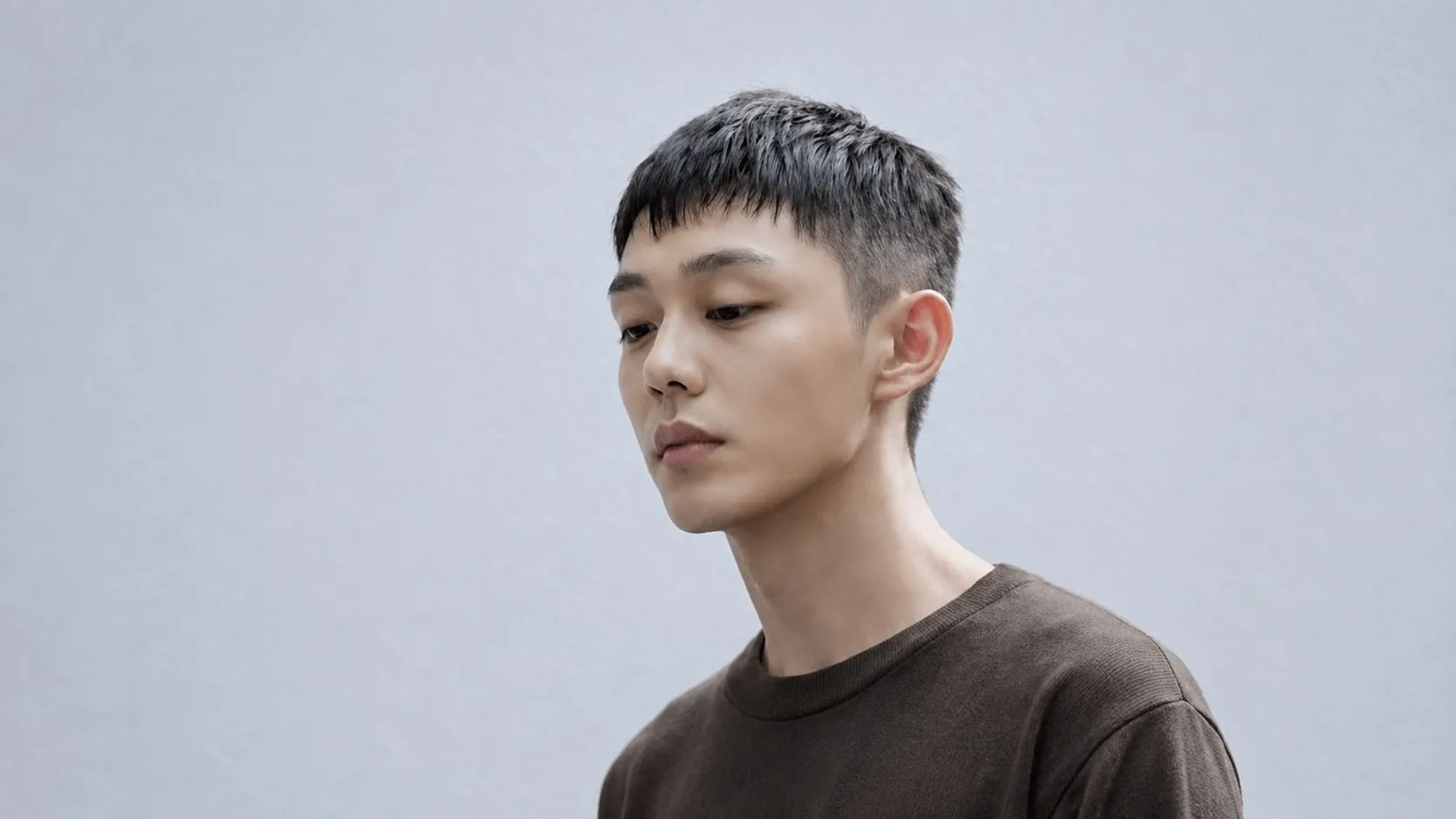
What It Is
A textured Korean hairstyle focuses on separation and movement rather than a perfectly smooth finish. Texture can come from the haircut, natural hair pattern, or styling.
Best For
Men who want a relaxed, contemporary appearance without completely flat hair.
Key Suitability
Face Shapes: Adaptable to most face shapes when the volume and fringe are positioned appropriately.
Hair Type: Works well with straight, wavy, and medium-to-thick hair.
Length: Usually short-medium to medium.
Maintenance: Medium.
Styling & Barber Guide
How to Style: Use a small amount of matte or flexible styling product, working it through the hair rather than coating the surface.
What to Tell Your Barber: Ask for natural texture and movement, not excessive thinning or very short choppy layers.
Pros & Limitations
Why Choose It: It can make a simple haircut look more dimensional without requiring a dramatic shape.
Possible Limitation: Over-texturizing can make fine hair look thinner or make thick hair difficult to control.
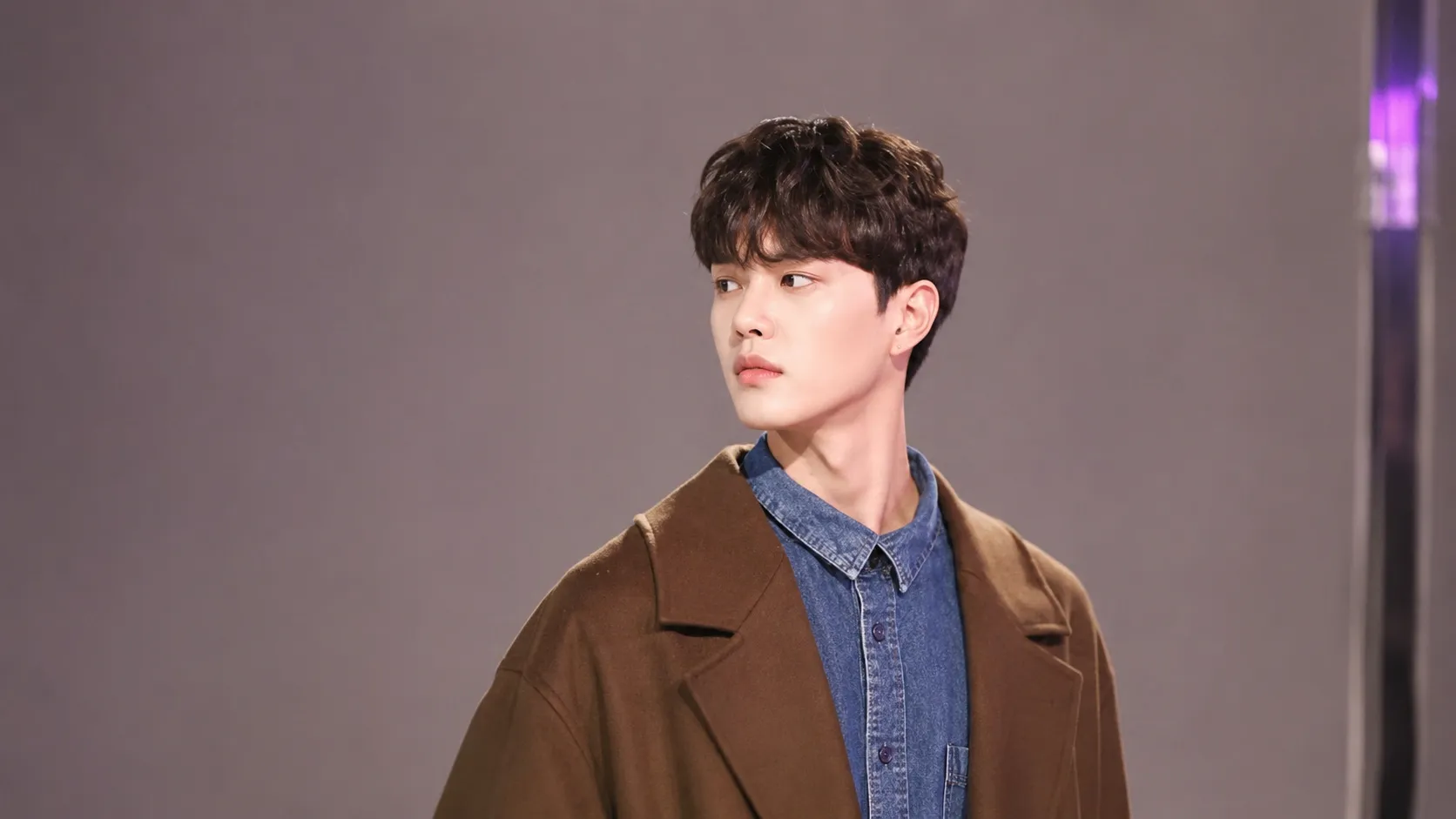
Korean Fringe Hairstyle
What It Is
This category focuses on a longer, soft fringe that frames the forehead and face. The fringe can be straight, parted, swept, or slightly textured.
Best For
Men who want the fringe to be one of the main features of their hairstyle.
Key Suitability
Face Shapes: Particularly useful for balancing longer, oval, heart, and some square face shapes.
Hair Type: Works with straight and wavy hair; curly hair requires a shape designed around the natural curl.
Length: Short-medium to medium, depending on the fringe design.
Maintenance: Medium.
Styling & Barber Guide
How to Style: Dry the fringe into its intended direction and use minimal product to avoid making it heavy.
What to Tell Your Barber: Be specific about fringe length and where you want it to sit on the forehead.
Pros & Limitations
Why Choose It: The fringe can dramatically change the appearance of a haircut without requiring major changes to the rest of the hair.
Possible Limitation: Long fringe can become irritating or require frequent adjustment if you prefer hair completely away from your face.
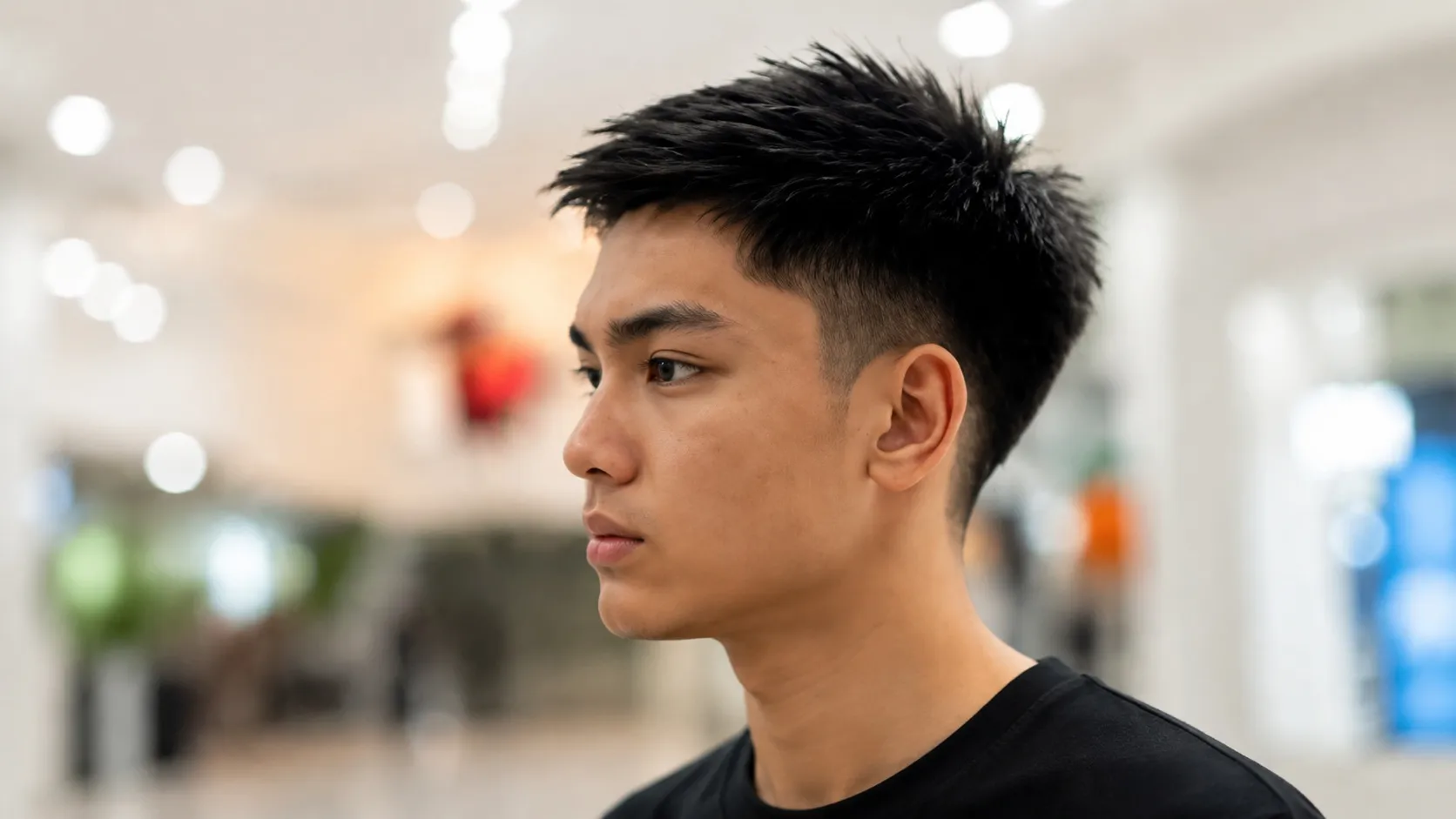
Korean Short Hairstyle
What It Is
A short Korean hairstyle keeps the overall length controlled while retaining softer shaping, texture, fringe, or volume associated with Korean styling.
Best For
Men who want a cleaner, easier-to-maintain option without moving into a very traditional short haircut.
Key Suitability
Face Shapes: Can be adapted to most face shapes through fringe and side proportions.
Hair Type: Suitable for straight, slightly wavy, thick, and fine hair when the cut is adjusted appropriately.
Length: Short to short-medium.
Maintenance: Low to medium.
Styling & Barber Guide
How to Style: Use a quick blow-dry and a small amount of lightweight styling product if additional texture or direction is needed.
What to Tell Your Barber: Explain whether you want the top textured, the fringe retained, or the sides kept softer rather than simply asking for a generic short cut.
Pros & Limitations
Why Choose It: It offers a Korean-inspired appearance with less daily styling than many longer options.
Possible Limitation: The shorter length gives you fewer options for changing the style between a fringe, curtain, and middle part.
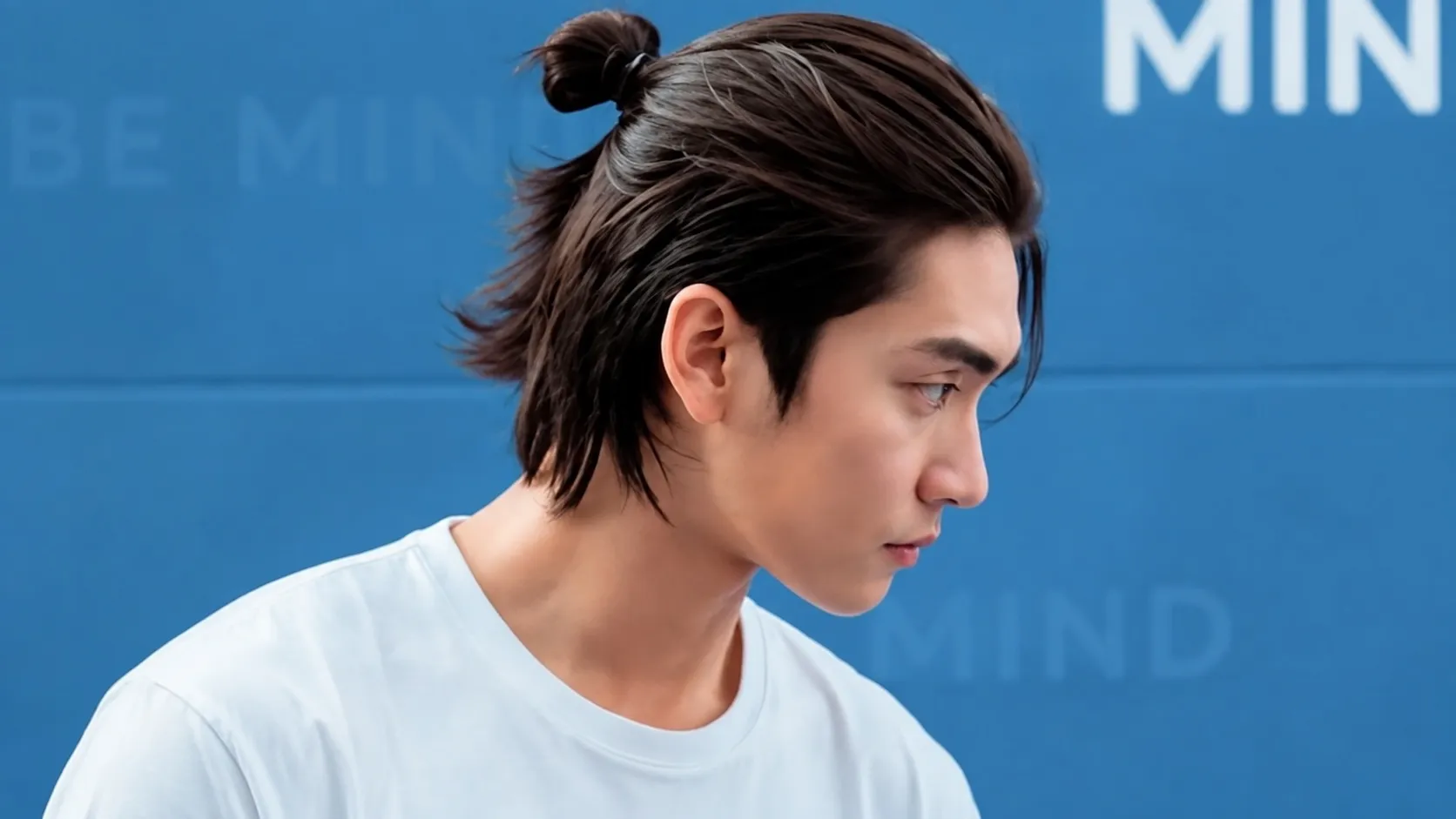
Korean Medium-Length Hairstyle
What It Is
Medium-length Korean hairstyles retain enough length for parting, fringe, layers, and movement without reaching long-hair territory.
Best For
Men who want versatility and enough length to experiment with several Korean-inspired styles.
Key Suitability
Face Shapes: Highly adaptable because the front and side volume can be customized.
Hair Type: Works particularly well with straight and wavy hair.
Length: Medium, generally around the range where the hair can reach or move around the ears and forehead depending on the cut.
Maintenance: Medium.
Styling & Barber Guide
How to Style: Use a blow dryer to establish direction and shape, then finish with a flexible product if needed.
What to Tell Your Barber: Explain how much length you want around the ears, fringe, sides, and back, rather than relying only on the phrase “medium Korean haircut.”
Pros & Limitations
Why Choose It: It offers one of the best balances between styling flexibility and manageable length.
Possible Limitation: Medium hair can become awkward during the growing-out phase if the sides and back are not reshaped.
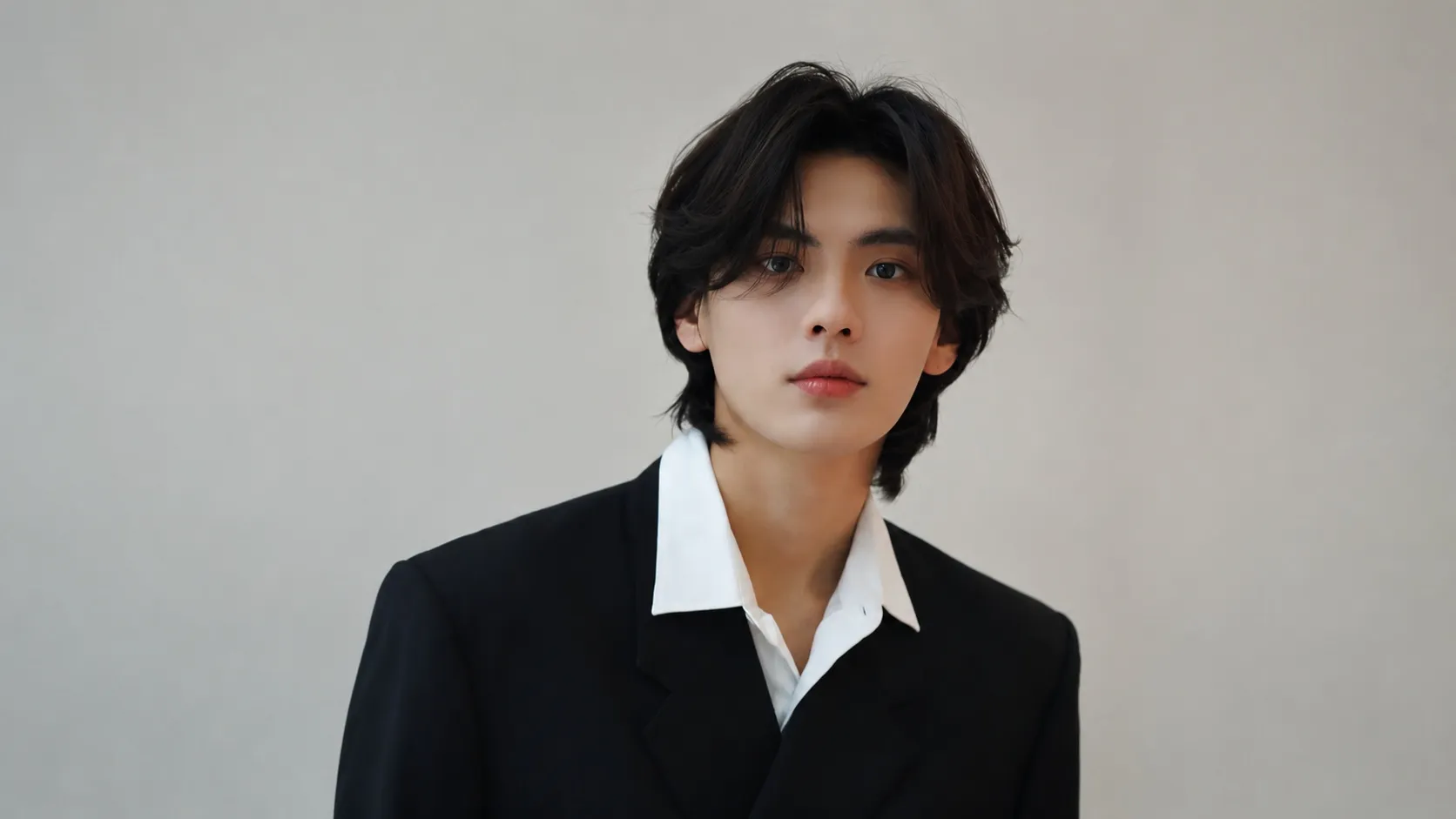
Korean Long Hairstyle for Boys/Men
What It Is
Long Korean-inspired hairstyles use additional length, layers, fringe, or natural movement to create a softer, flowing silhouette.
Best For
Men who prefer longer hair and more visible movement rather than a short structured haircut.
Key Suitability
Face Shapes: Can work with many face shapes, particularly when layers and front sections are positioned carefully.
Hair Type: Straight and wavy hair are easiest to adapt, while curly hair needs a shape designed around the curl pattern.
Length: Medium-long to long.
Maintenance: Medium to high, depending on length and styling.
Styling & Barber Guide
How to Style: Use controlled blow-drying and lightweight products. Avoid excessive product that weighs longer hair down.
What to Tell Your Barber: Ask for the desired overall length, layer placement, fringe length, and shape around the face. If growing your hair longer, explain that goal before the haircut.
Pros & Limitations
Why Choose It: Longer hair gives more opportunities for layers, movement, parting, and styling changes.
Possible Limitation: It generally requires more washing, drying, detangling, and patience during the growing-out process.
Korean Wavy Hairstyle
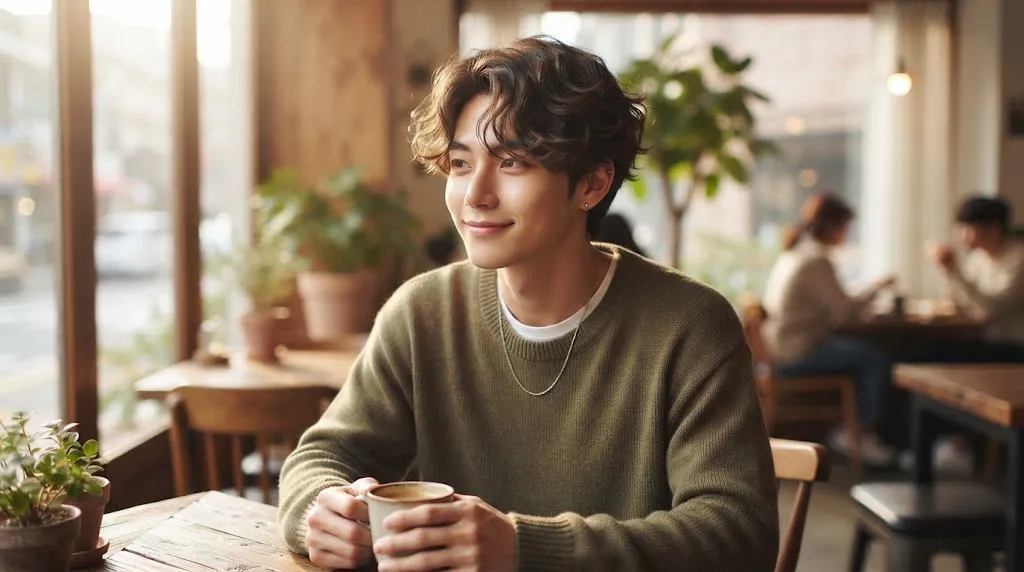
What It Is
A Korean wavy hairstyle works with the hair’s natural wave or a deliberately created wave to produce soft movement and volume.
Best For
Men whose natural hair already has some wave or who prefer a less rigid finish.
Key Suitability
Face Shapes: Adaptable; volume should be positioned according to the face shape rather than added uniformly.
Hair Type: Naturally wavy hair is the easiest starting point.
Length: Usually medium to medium-long.
Maintenance: Medium.
Styling & Barber Guide
How to Style: Apply a lightweight curl or wave-enhancing product to damp hair, then dry while preserving the natural pattern.
What to Tell Your Barber: Tell the barber to work with your natural wave rather than cutting it as if the hair were completely straight.
Pros & Limitations
Why Choose It: Natural waves can provide movement without requiring the same amount of styling needed to create texture from completely straight hair.
Possible Limitation: Humidity can change the amount of wave, frizz, and volume, so the hairstyle may not look identical every day.
Korean Curly Hairstyle for Men
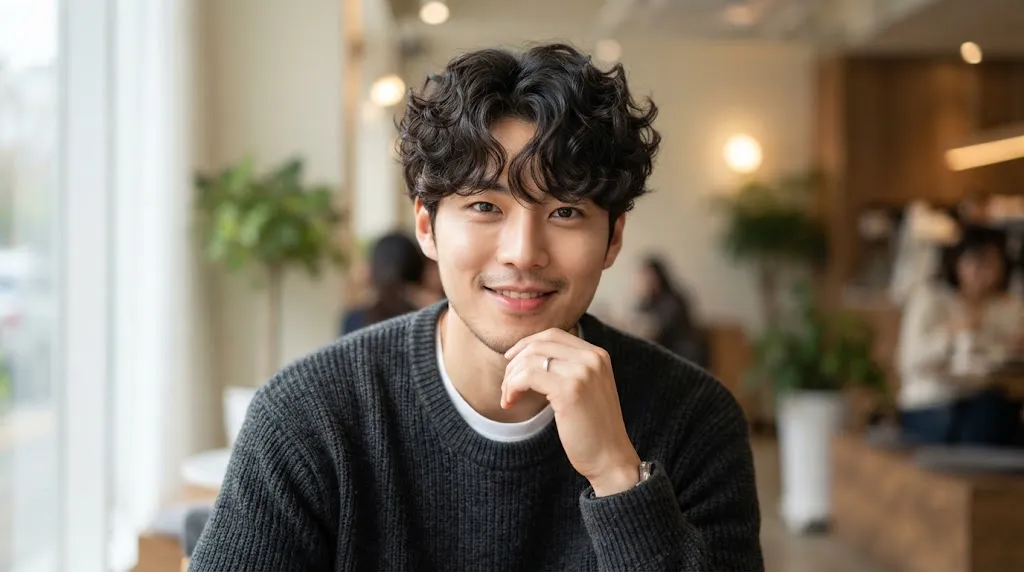
What It Is
This is a Korean-inspired hairstyle adapted to naturally curly hair rather than trying to make curls behave like straight Korean hairstyle references.
Best For
Men with natural curls who want Korean-inspired shape, fringe, layering, or volume while keeping their natural texture.
Key Suitability
Face Shapes: The amount and placement of curl volume should be adjusted according to face proportions.
Hair Type: Naturally curly or coily hair, with the exact haircut determined by curl pattern and density.
Length: Medium and longer lengths generally provide more room for curl shape.
Maintenance: Medium to high, depending on curl pattern and desired definition.
Styling & Barber Guide
How to Style: Work with damp hair, use a suitable curl-enhancing product, and avoid excessive brushing once the curl pattern has formed.
What to Tell Your Barber: Tell the barber your natural curl pattern, how much shrinkage you experience, desired length when dry, and whether you want more volume or a controlled silhouette.
Pros & Limitations
Why Choose It: It allows you to take inspiration from Korean styling without sacrificing your natural texture.
Possible Limitation: A reference photo created on straight hair may not translate directly to curly hair. The final silhouette will naturally be different.
Korean Perm-Inspired Hairstyle
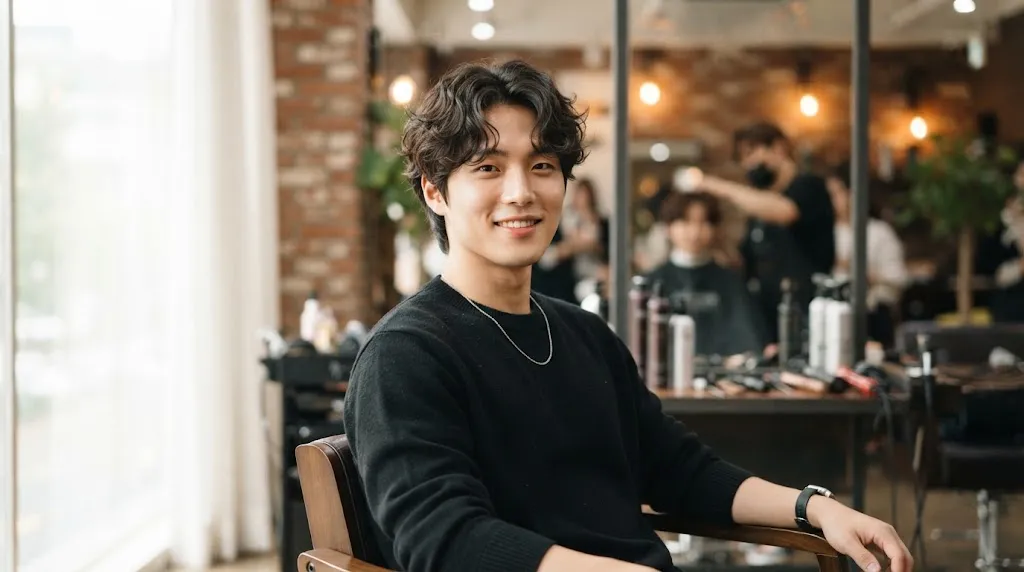
What It Is
A Korean perm-inspired hairstyle adds or enhances waves, curls, volume, or movement so the hair has a more styled shape.
Best For
Men with very straight or flat hair who want additional movement or volume.
Key Suitability
Face Shapes: The amount of volume can be adjusted to complement different face shapes.
Hair Type: Often considered by people with straight or low-volume hair, but suitability depends on the hair’s condition and the desired result.
Length: Usually medium or longer, depending on the perm style.
Maintenance: Medium to high. The result changes as the hair grows and the treatment gradually loses its effect.
Styling & Barber Guide
How to Style: Follow the stylist’s instructions for drying and product use. Avoid treating a chemically processed hairstyle like untreated hair.
What to Tell Your Barber or Stylist: Explain whether you want subtle waves, more visible curls, volume at the roots, or movement through the lengths and show a reference photo.
Pros & Limitations
Why Choose It: It can create movement and volume that may be difficult to achieve naturally with very straight hair.
Possible Limitation: A perm is not necessary for every Korean hairstyle, and the result depends heavily on hair condition, length, technique, and maintenance.
Korean Actor-Inspired Hairstyle
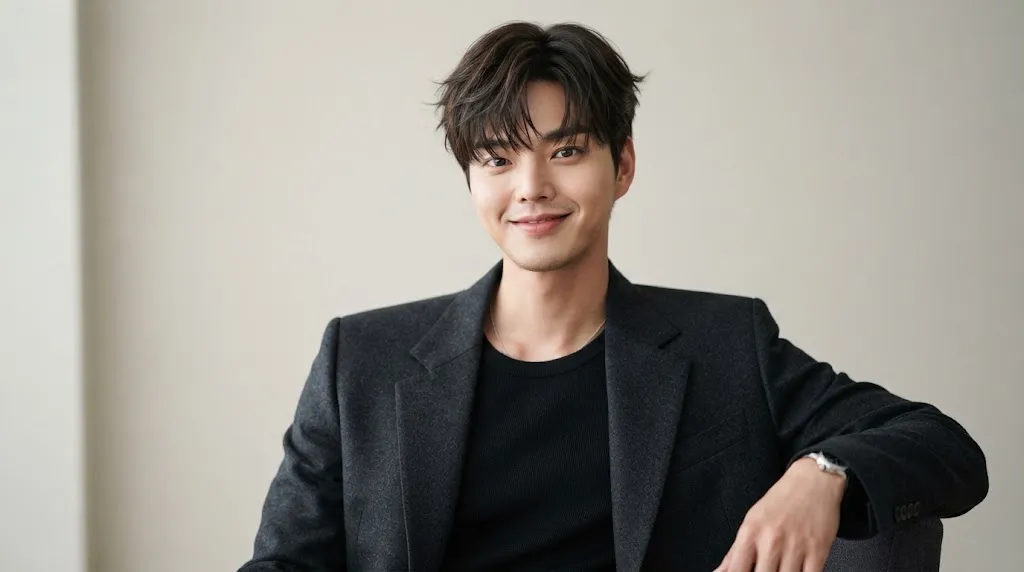
What It Is
Actor-inspired Korean hairstyles take inspiration from the overall shape, fringe, parting, layers, or styling seen in Korean entertainment, rather than treating one celebrity’s exact haircut as a universal style.
Best For
Users who have found a hairstyle through a Korean drama, film, or entertainment image and want to translate that look into something suitable for their own hair.
Key Suitability
Face Shapes: Depends on the specific reference. The haircut should be adapted rather than copied blindly.
Hair Type: Depends on the reference hairstyle and your natural texture.
Length: Can range from short to long.
Maintenance: Varies.
Styling & Barber Guide
How to Style: Break the reference image down into its actual components: length, fringe, part, layers, volume, texture, and finish.
What to Tell Your Barber: Instead of saying only “Give me this actor’s haircut,” show the image and explain which parts of the style you actually want to keep.
Pros & Limitations
Why Choose It: A reference image can communicate a desired shape much more clearly than a hairstyle name alone.
Possible Limitation: The original hairstyle may have been professionally styled, altered for filming, or suited to a different hair type, so an identical result is not always realistic.
Cute Korean Boy Hairstyle
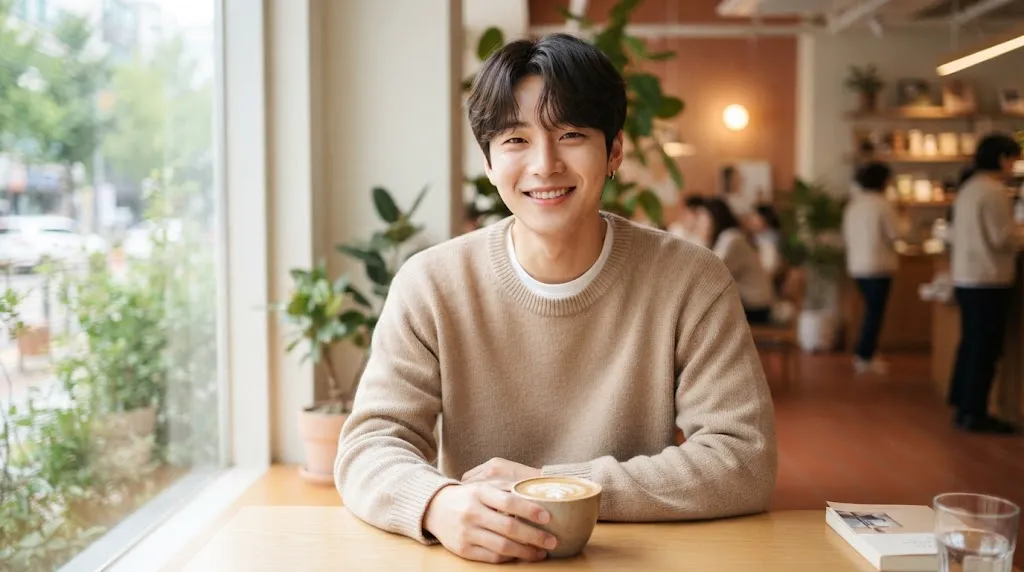
What It Is
Cute Korean-inspired hairstyles generally use softer fringe, rounded movement, gentle layers, and less severe lines to create a youthful appearance.
Best For
Boys and younger men who want a softer, approachable Korean-inspired look.
Key Suitability
Face Shapes: The fringe and volume can be adjusted for round, oval, heart, and longer faces.
Hair Type: Straight and slightly wavy hair are generally easiest to style.
Length: Short-medium to medium.
Maintenance: Low to medium, depending on the fringe.
Styling & Barber Guide
How to Style: Keep the finish light and natural. Blow-dry the fringe into position and avoid excessive product that makes the hair look stiff.
What to Tell Your Barber: Explain that you want a soft shape with a natural fringe, rather than a very sharp or heavily disconnected haircut.
Pros & Limitations
Why Choose It: The softer silhouette can give a youthful appearance without requiring an elaborate hairstyle.
Possible Limitation: A longer fringe may require regular adjustment during the day, especially if your hair naturally separates.
Easy Korean Boy Hairstyle
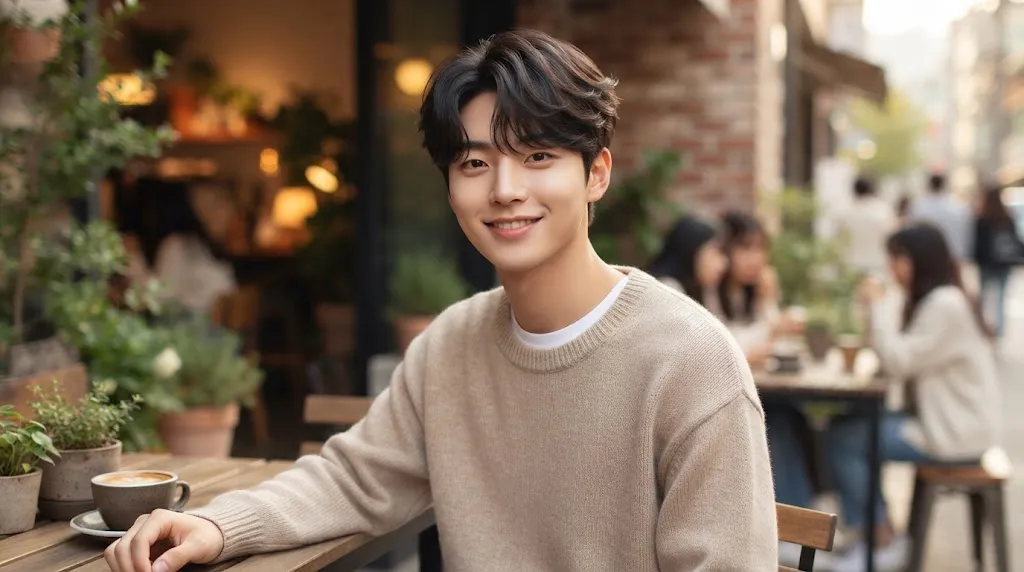
What It Is
An easy Korean hairstyle prioritizes a manageable shape that still has Korean-inspired elements without requiring extensive daily styling.
Best For
Anyone who likes Korean hairstyles but does not want to spend a lot of time blow-drying or reshaping their hair every morning.
Key Suitability
Face Shapes: Choose the specific cut according to your face shape rather than assuming every low-maintenance style works equally well.
Hair Type: Straight to slightly wavy hair is generally easiest, although the right cut can make other textures manageable.
Length: Short to medium.
Maintenance: Low to medium.
Styling & Barber Guide
How to Style: A quick towel dry followed by a short blow-dry may be enough. Use a small amount of flexible product only where control is needed.
What to Tell Your Barber: Tell your barber how much time you realistically spend styling your hair. Ask for a shape that works with your natural growth pattern rather than one that requires daily correction.
Pros & Limitations
Why Choose It: It gives you a Korean-inspired appearance without making styling a daily project.
Possible Limitation: The easier the hairstyle is to maintain, the fewer dramatic styling changes you may be able to make compared with longer, more structured cuts.
A Better Way to Choose From These Styles
Don’t choose a Korean hairstyle only because the reference photo looks good. Start with four questions:
- What is my natural hair type and density?
- How much length do I actually want?
- How much time will I spend styling it each day?
- What shape works best with my face and natural hair growth?
A good Korean-inspired haircut should look intentional without requiring you to fight your natural hair every morning.
Korean Hairstyles at a Glance
| Hairstyle | Best For | Hair Type | Length | Maintenance | Styling |
|---|---|---|---|---|---|
| Korean Two-Block Haircut | Classic Korean look with a clear top-and-side contrast | Straight, wavy, thick | Medium | Medium | Medium |
| Soft Two-Block Haircut | A softer, less disconnected Korean look | Straight, wavy | Medium | Medium | Easy–Medium |
| Korean Curtain Hairstyle | Face-framing, relaxed and youthful looks | Straight, wavy, medium-density | Medium–Long | Medium | Medium |
| Korean Comma Hair | Defined fringe and polished styling | Straight, wavy | Medium | Medium | Medium–High |
| Korean Middle-Part Hairstyle | Balanced, face-framing appearance | Straight, wavy | Medium–Long | Medium | Medium |
| Korean Side-Part Hairstyle | Neat, versatile styling with a more structured finish | Straight, wavy | Short–Medium | Low–Medium | Easy–Medium |
| Korean Layered Haircut | Movement, softness and added dimension | Straight, wavy | Medium–Long | Medium | Medium |
| Korean Textured Hairstyle | Natural movement and less rigid styling | Straight, wavy, thick | Short–Medium | Low–Medium | Easy–Medium |
| Korean Fringe Hairstyle | Face-framing looks with noticeable bangs | Straight, wavy | Short–Medium | Medium | Medium |
| Korean Short Hairstyle | Simpler Korean-inspired styling and easier upkeep | Straight, wavy, thick | Short | Low | Easy |
| Korean Medium-Length Hairstyle | Versatility, movement and multiple styling options | Straight, wavy | Medium | Medium | Medium |
| Korean Long Hairstyle | Longer, layered and flowing Korean-inspired looks | Straight, wavy | Long | Medium–High | Medium |
| Korean Wavy Hairstyle | Natural texture with a softer Korean silhouette | Wavy, straight-to-wavy | Medium–Long | Medium | Medium |
| Korean Curly Hairstyle for Men | Korean-inspired looks adapted to naturally curly hair | Curly, coily depending on cut | Medium | Medium–High | Medium–High |
| Korean Perm-Inspired Hairstyle | Added texture, movement and volume | Straight, fine, medium-density | Medium | Medium–High | Medium |
| Korean Actor-Inspired Hairstyle | Users looking for polished celebrity-style inspiration | Depends on the chosen cut | Short–Long | Varies | Medium |
| Cute Korean Boy Hairstyle | Softer, youthful and approachable looks | Straight, wavy | Short–Medium | Low–Medium | Easy–Medium |
| Easy Korean Boy Hairstyle | Users who want minimal daily styling | Straight, wavy | Short–Medium | Low | Easy |
How to use this table
- Want the classic Korean haircut? Start with the Two-Block or Soft Two-Block.
- Want a softer face-framing look? Compare Curtain, Middle-Part and Fringe styles.
- Want a defined, styled fringe? Look at Comma Hair.
- Want less daily effort? Start with the Short, Textured or Easy Korean options.
- Have naturally wavy or curly hair? Go directly to the Wavy or Curly Korean Hairstyle sections before choosing a cut.
- Want more movement and length? Compare the Layered, Medium-Length and Long options.
Important: Maintenance and styling levels are practical editorial guidance, not universal rules. They can change substantially with hair density, natural texture, haircut execution and how closely the desired look matches the reference photo.
Which Korean Hairstyle Should You Choose?
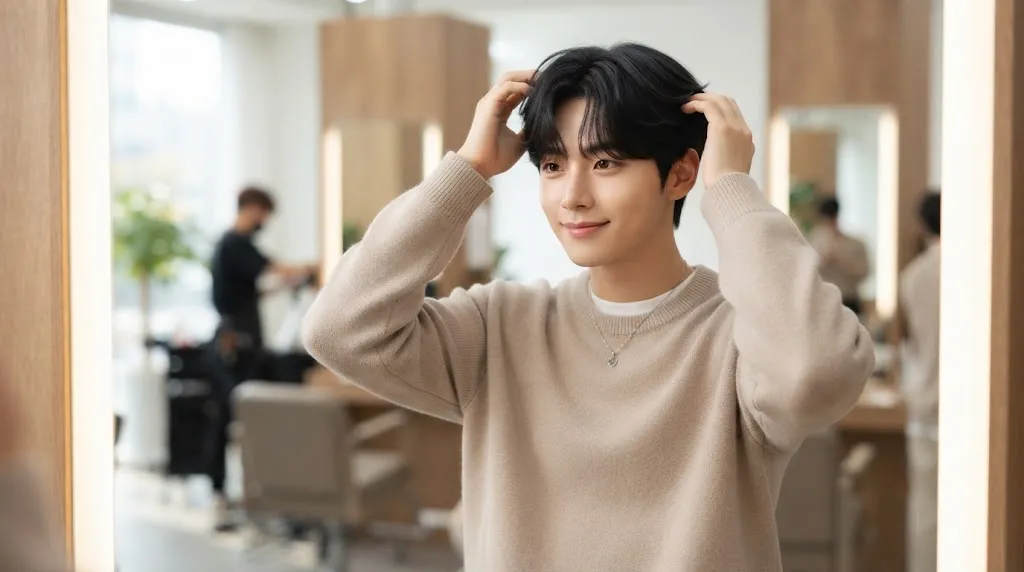
Choosing a Korean hairstyle is easier when you start with your desired look, hair length, styling time, and natural hair texture rather than choosing a cut from a photo alone. Use the options below to narrow the list before reading the detailed hairstyle guides.
Best Korean Hairstyle for a Low-Maintenance Look
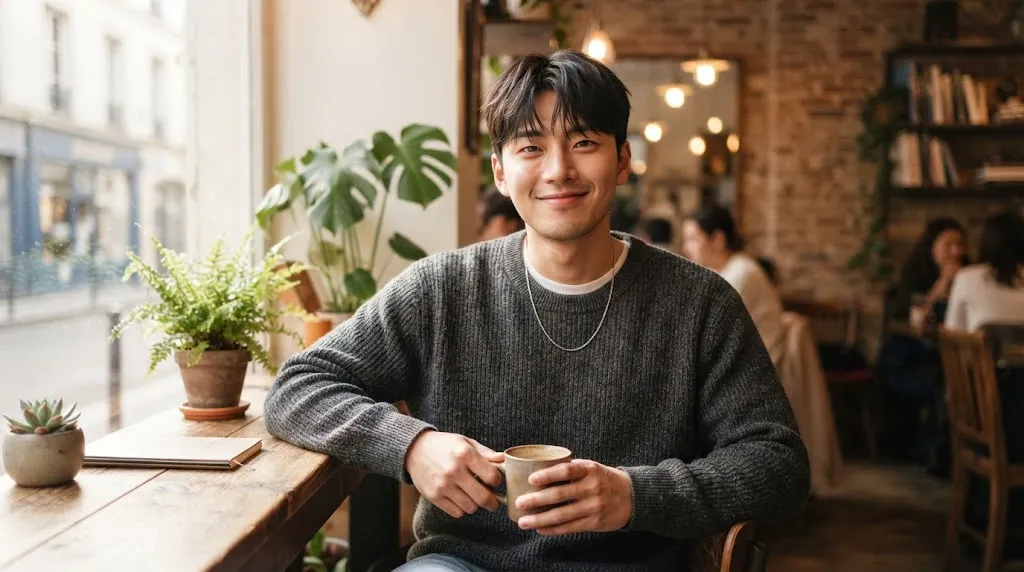
For the least daily upkeep, start with a Korean short hairstyle, textured hairstyle, or easy two-block. These options can keep the Korean-inspired shape without depending heavily on a carefully styled fringe or long layers.
Best choice: Korean Short Hairstyle
Also consider: Textured Hairstyle, Soft Two-Block
Avoid if you want low maintenance: highly defined Comma Hair or long curtain styles that need regular styling.
Best Korean Hairstyle for a K-Pop-Inspired Look
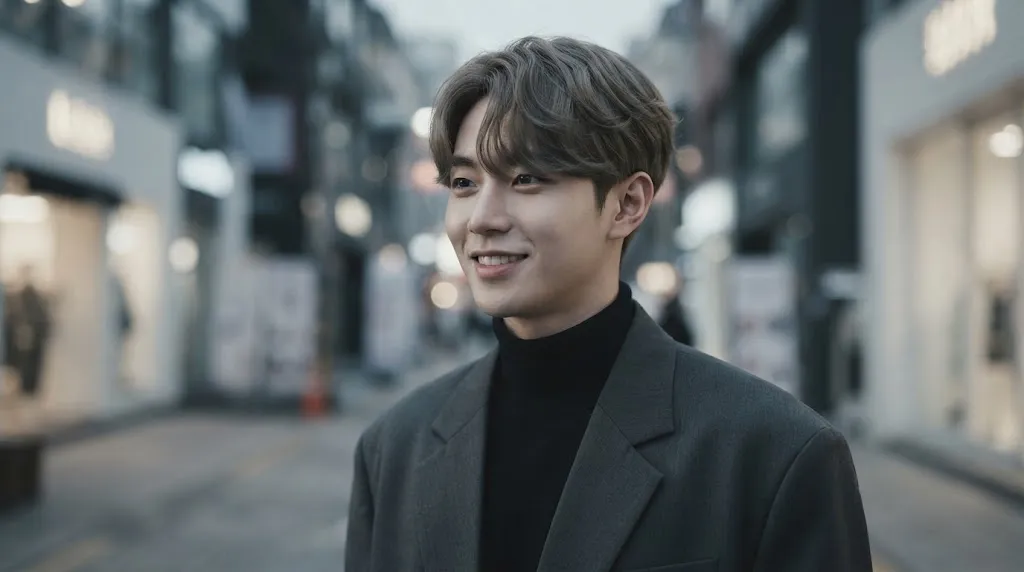
For a more recognizable K-pop-inspired appearance, consider a Two-Block, Curtain Hairstyle, Comma Hair, or layered medium-length cut. The right choice depends on whether you want a defined fringe, softer face framing, or more movement.
Best choice: Korean Two-Block
For a softer idol-inspired finish: Curtain Hairstyle
For a more styled fringe: Comma Hair
A reference photo is especially useful here because “K-pop hairstyle” can describe many different cuts rather than one specific haircut.
Best Korean Hairstyle for a Soft, Natural Look
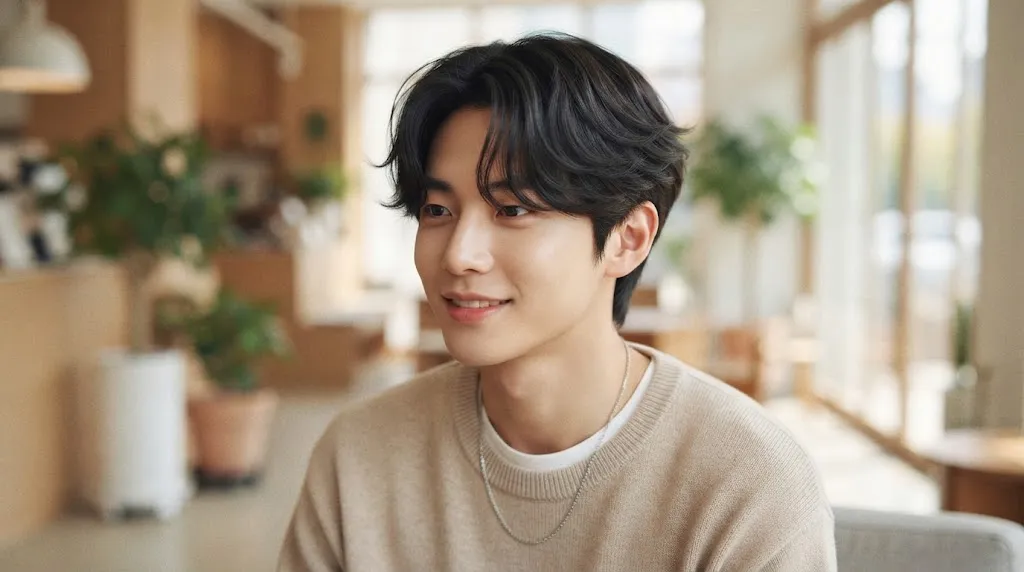
Choose a Soft Two-Block, Korean Curtain Hairstyle, or lightly layered haircut if you want movement without a sharply disconnected or heavily structured appearance.
These styles generally work best when the haircut follows the hair’s natural direction instead of requiring strong daily manipulation.
Best Korean Hairstyle for Medium-Length Hair
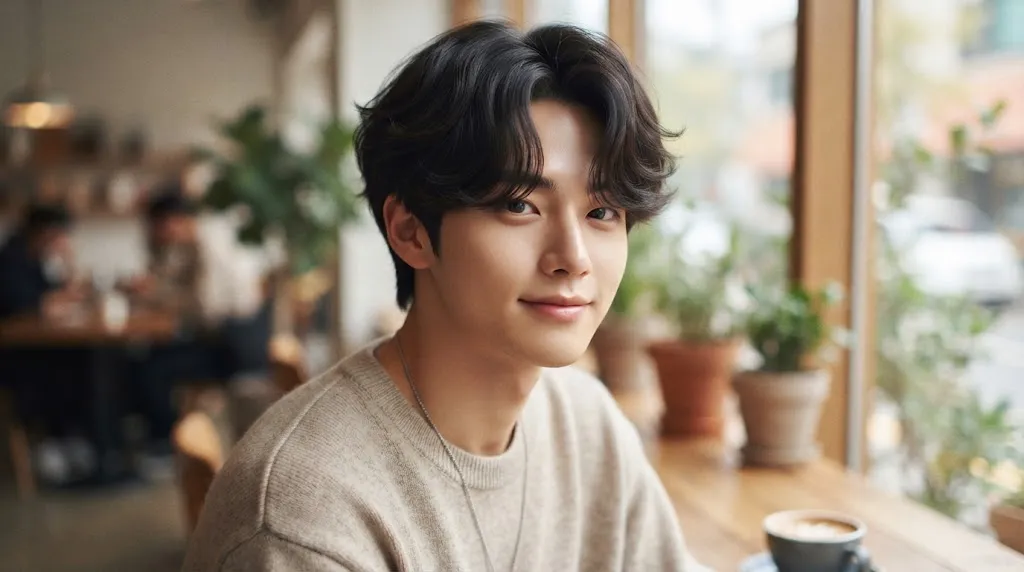
Medium hair gives you the widest range of Korean-inspired styling options. Consider a Two-Block, Curtain, Middle-Part, Layered, or Textured Korean hairstyle.
Best all-around choice: Soft Two-Block
For face framing: Curtain Hairstyle
For movement: Layered Haircut
For a cleaner part: Middle-Part Hairstyle
Best Korean Hairstyle for Long Hair
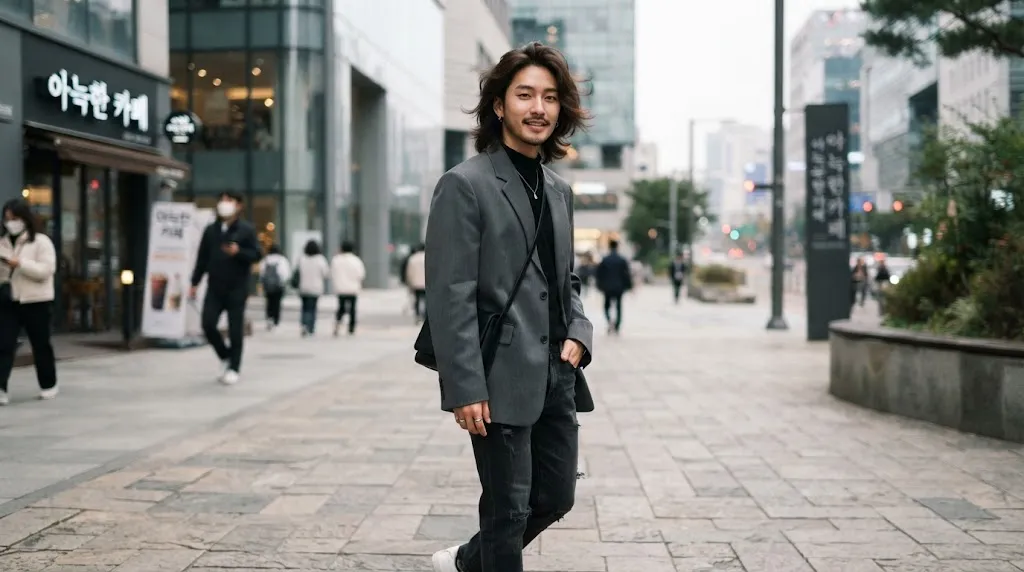
For longer hair, look at Korean Long Layered, Curtain, Middle-Part, or Korean Actor-Inspired styles.
Longer Korean hairstyles usually benefit from intentional layering so the hair does not simply hang straight down. Before choosing one, consider whether you’re comfortable with the additional drying, styling and maintenance that longer hair can require.
Best Korean Hairstyle for Short Hair
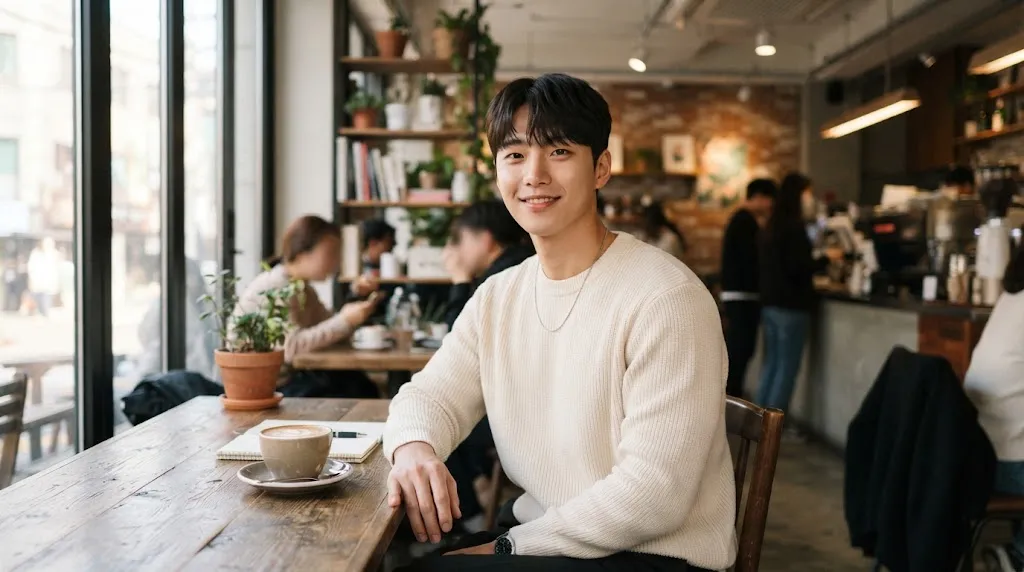
If you prefer shorter hair, consider a Korean Short Hairstyle, Short Textured Hairstyle, or shorter Two-Block variation.
These are useful when you want some Korean-inspired shape while keeping the sides and overall length easier to manage.
Best for simplicity: Korean Short Hairstyle
For more texture: Korean Textured Hairstyle
For a recognizable Korean structure: Shorter Two-Block
Best Korean Hairstyle for a Fringe
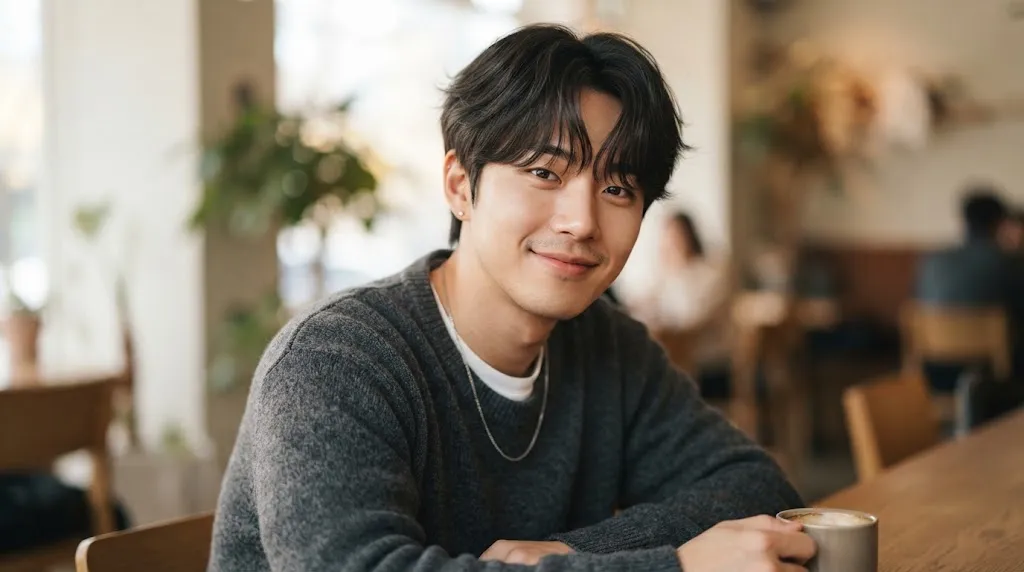
If the fringe is the main feature you want, compare Korean Curtain, Comma Hair, and Korean Fringe Hairstyles.
- Curtain: split or parted fringe with face framing
- Comma: more deliberately shaped curved fringe
- Straight/soft fringe: fuller coverage across the forehead
Your natural hair direction matters here. A fringe that looks effortless in a reference image may require blow-drying or product to stay in the same position.
Best Korean Hairstyle for More Volume and Movement
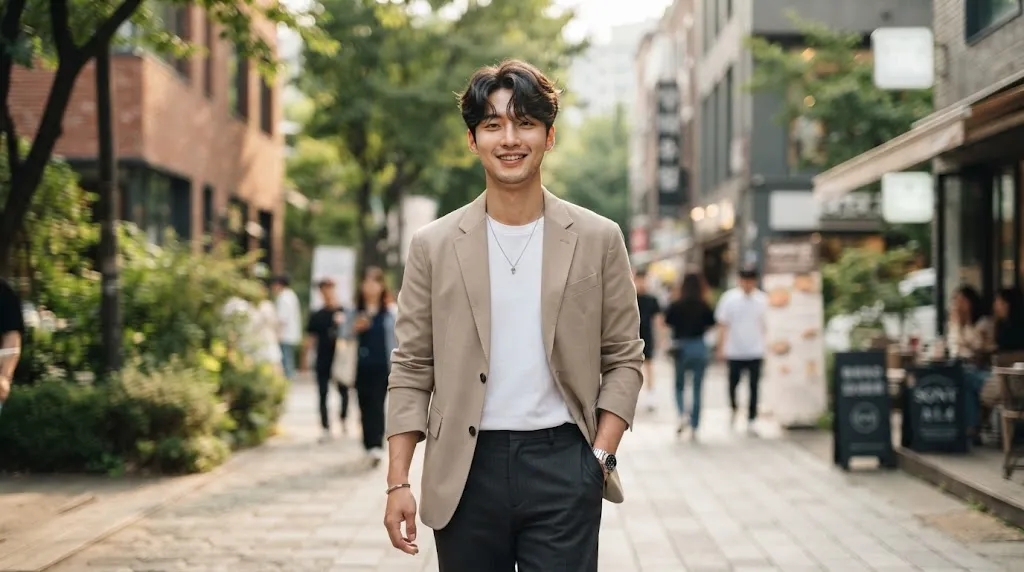
Choose a Layered Korean Hairstyle, Textured Hairstyle, or Perm-Inspired Hairstyle when your priority is movement rather than a flat, uniform shape.
Fine or very straight hair may benefit from controlled layering or texture, while thick hair may need weight removal in specific areas to prevent excessive bulk.
Important: More layers do not automatically mean more volume. The result depends on hair density, length and how the layers are placed.
Best Korean Hairstyle If You Do Not Want Daily Styling
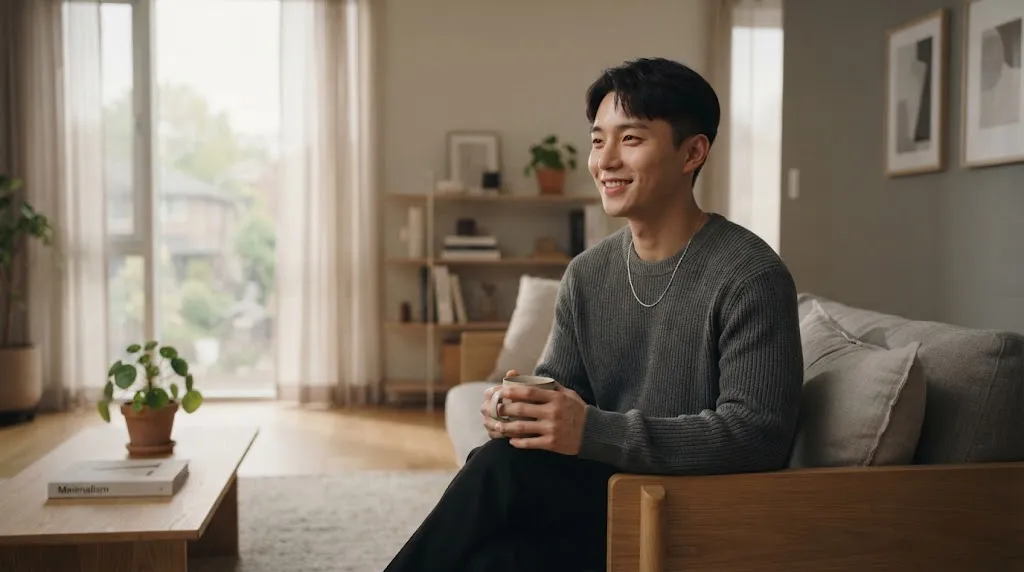
If you want your hair to look reasonably good with minimal effort, prioritize a shorter textured cut, easy Korean hairstyle, or softer two-block that works with your natural texture.
Avoid choosing a style solely because it looks good in a heavily styled photo. Long curtains, defined comma fringes and certain perm-inspired looks can require more daily shaping.
Best approach: Tell your barber that your priority is low daily styling, then show the reference image and ask how much of the look can realistically be achieved with your natural hair.
Decision rule: The best Korean hairstyle is not necessarily the most popular one. It is the style whose shape, length, hair requirements, maintenance level and styling demands match what you can realistically maintain.
Best Korean Hairstyles by Hair Type
The best Korean hairstyle depends partly on how your hair naturally behaves. Instead of choosing a cut from a photo alone, match the shape, length, texture, density, and styling requirements to your own hair.
Korean Hairstyles for Straight Hair
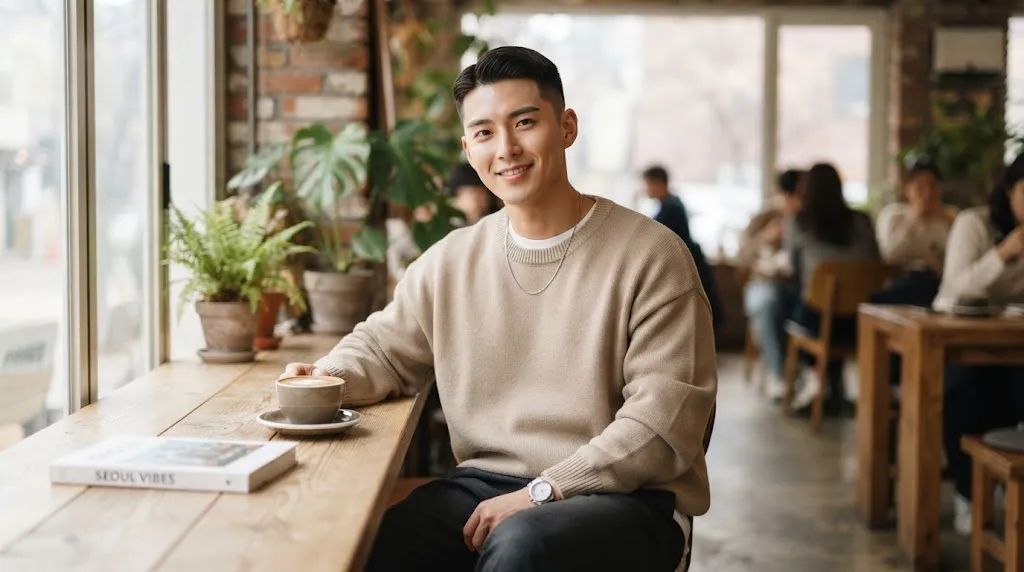
Straight hair is particularly versatile for Korean-inspired cuts because it can show clean parting, defined fringe, layered movement, and the shape of a two-block clearly.
What usually works: Two-block cuts, curtain styles, middle parts, comma hair, layered cuts, and textured styles can all work well. Medium-length hair is especially useful when you want movement around the face.
What to avoid: Extremely blunt or overly heavy shapes if your hair is very dense, as they can make the sides or fringe look bulky.
Suitable hairstyle types: Two-block, soft two-block, curtain, comma, middle-part, and layered Korean hairstyles.
Styling adjustment: If your hair falls completely flat, use directional blow-drying at the roots rather than relying on heavy product. If it is naturally straight but thick, controlled layering can remove excess weight while preserving the overall shape.
Korean Hairstyles for Wavy Hair
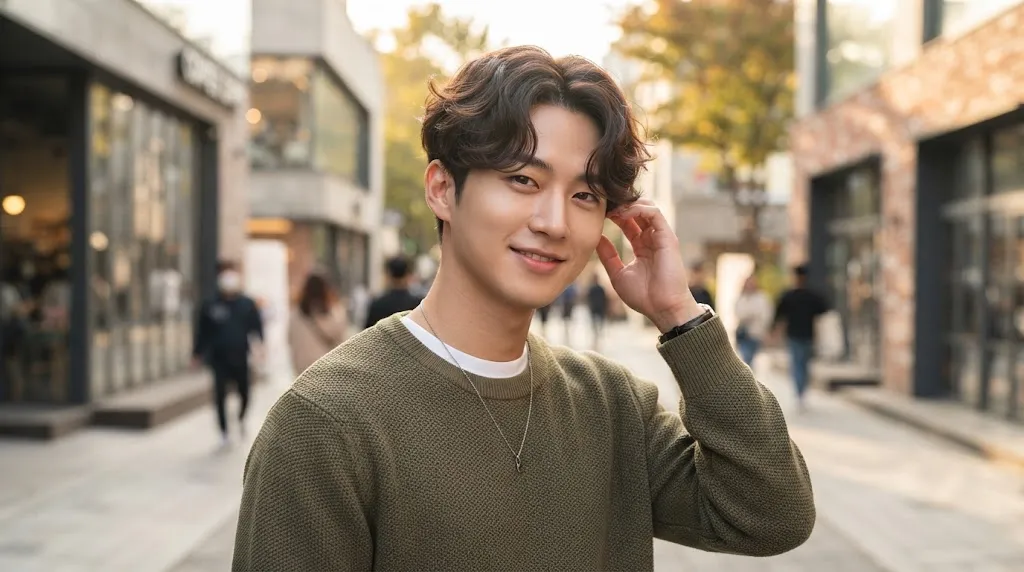
Natural waves can add movement and texture to Korean hairstyles without requiring as much artificial styling. The key is choosing a shape that works with the wave pattern rather than fighting it.
What usually works: Soft two-blocks, layered cuts, textured styles, curtain hairstyles, and medium-length shapes can work particularly well.
What to avoid: Very precise fringe shapes if your waves naturally push the hair in another direction. A highly controlled reference may require considerably more styling than expected.
Suitable hairstyle types: Wavy two-block, layered Korean haircut, textured hairstyle, curtain hairstyle, and longer flowing styles.
Styling adjustment: Style while the hair is slightly damp and use gentle directional drying. Preserve some natural movement instead of trying to make every strand perfectly straight.
Korean Hairstyles for Curly Hair
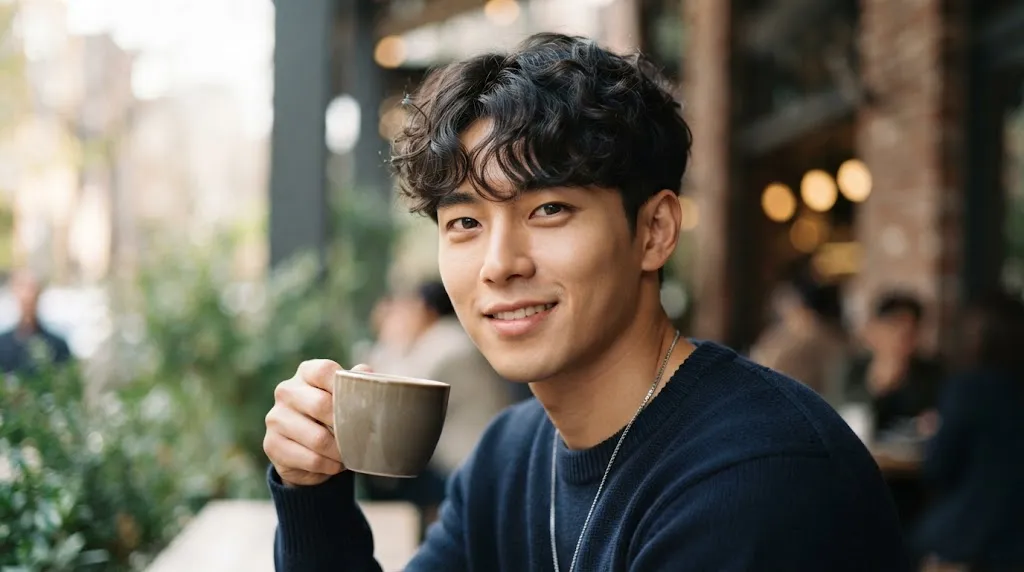
Curly hair can absolutely be adapted to a Korean-inspired look, but the finished shape will not necessarily look identical to a straight-hair reference. Curl changes both the apparent length and the amount of volume.
What usually works: Layered, textured, medium-length, and softer Korean-inspired shapes that allow the curls to contribute to the silhouette.
What to avoid: Choosing a reference that depends on long, straight fringe without considering how much the curls will shrink or expand.
Suitable hairstyle types: Curly textured styles, layered Korean cuts, longer Korean-inspired shapes, and adapted two-block variations.
Styling adjustment: Judge the haircut based on the hair in its natural state. Ask the barber to account for curl pattern and shrinkage rather than cutting solely from a straight-hair reference.
Korean Hairstyles for Thick Hair
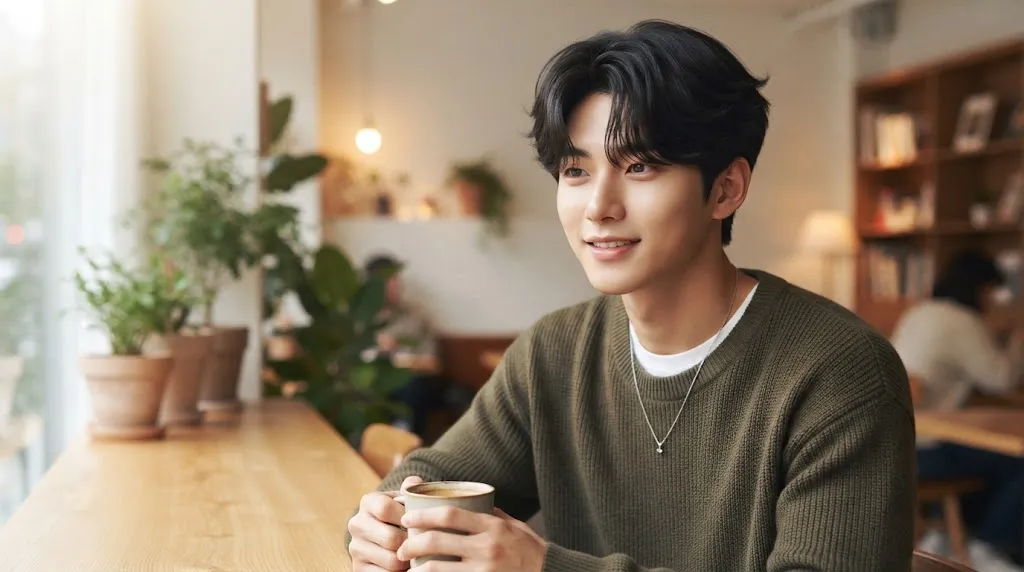
Thick hair can create excellent Korean-style volume, but excess density can also make the sides expand and the overall shape look heavier than the reference.
What usually works: Two-block cuts, controlled layers, textured styles, and medium-length cuts where the internal weight can be managed.
What to avoid: Excessive length and bulk around the sides if your hair naturally grows outward.
Suitable hairstyle types: Soft two-block, textured Korean haircut, layered medium cut, and controlled fringe styles.
Styling adjustment: Ask your barber where the hair feels too heavy rather than simply requesting aggressive thinning everywhere. The goal is controlled weight removal while preserving the desired shape.
Korean Hairstyles for Fine or Thin Hair
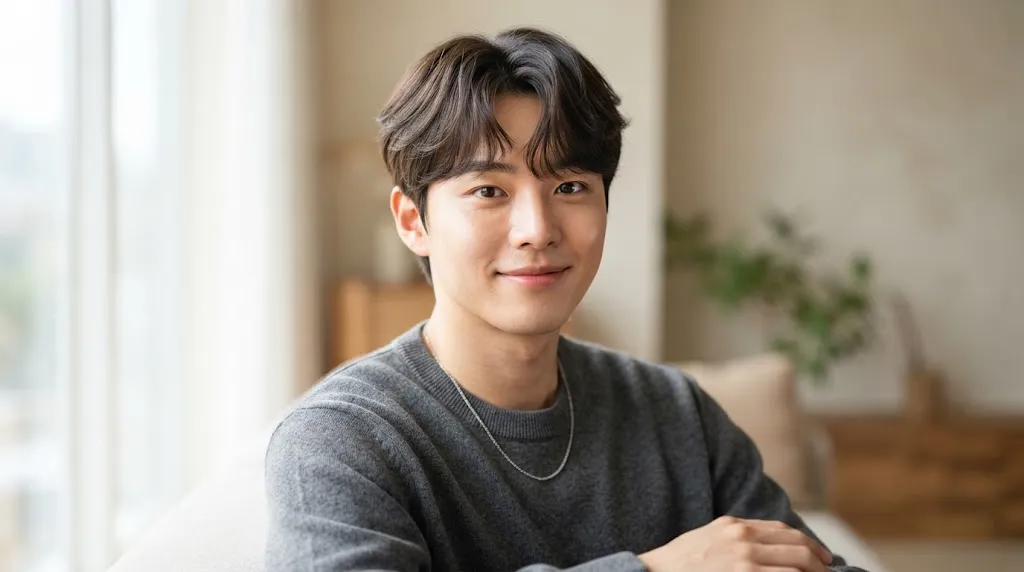
Fine hair can work well with Korean hairstyles, particularly styles that use controlled layers, texture, or a fuller fringe to create visual density.
What usually works: Soft two-blocks, textured cuts, curtain styles, and moderate layers that do not remove too much weight.
What to avoid: Excessive layering or aggressive thinning, which can make already-fine hair appear even less dense.
Suitable hairstyle types: Soft two-block, textured hairstyle, curtain hairstyle, and selected fringe styles.
Styling adjustment: Create lift at the roots with directional blow-drying. Keep product lightweight and concentrate it where definition is needed rather than coating the entire head.
Korean Hairstyles for Hair That Falls Flat
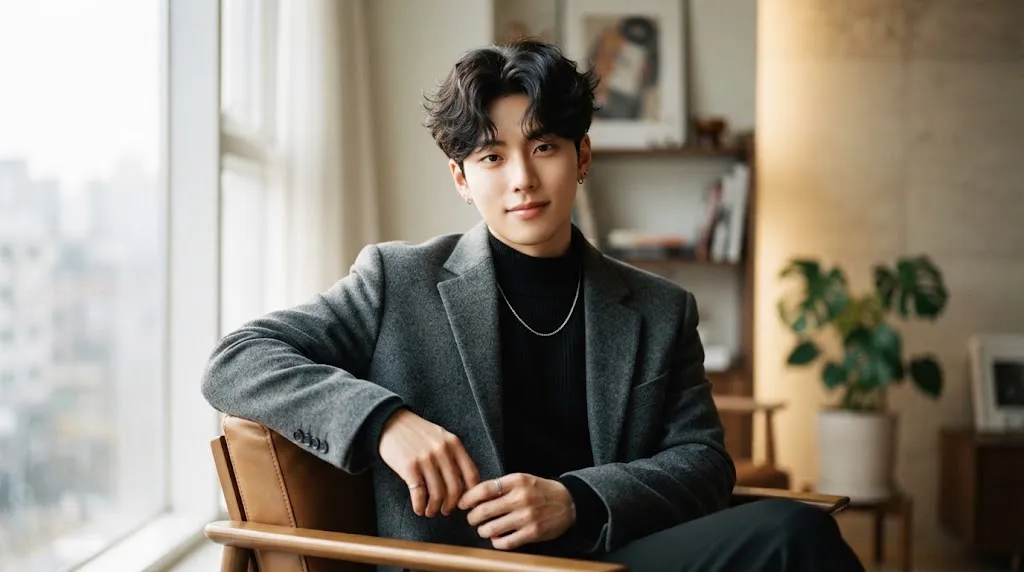
If your hair naturally collapses against the head, the main issue is usually direction and root volume, not simply a lack of product.
What usually works: Layered, textured, curtain, and medium-length Korean hairstyles that allow controlled movement.
What to avoid: Heavy products, excessive length, and overly dense shapes that pull the roots downward.
Suitable hairstyle types: Textured Korean hairstyle, layered cut, soft two-block, and curtain hairstyle.
Styling adjustment: Blow-dry the roots in the opposite direction from where they naturally fall, then guide the hair into its final position. Use a small amount of lightweight finishing product only after the shape is established.
Korean Hairstyles for Hair That Puffs Out at the Sides
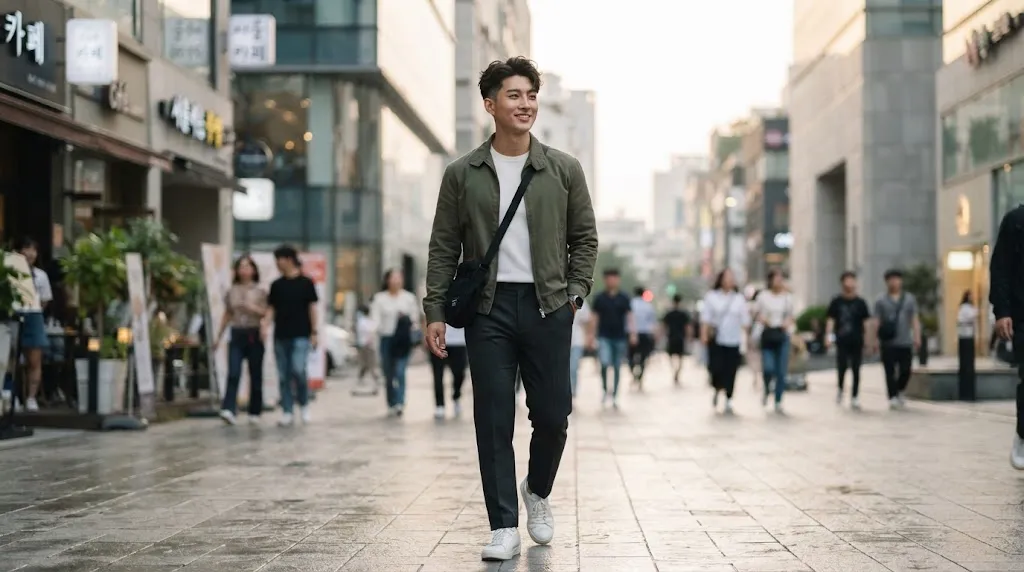
Side bulk can make a Korean haircut look wider and less controlled than the reference image. This is particularly common with thick or coarse hair.
What usually works: Two-block variations and shapes where the sides are deliberately controlled while enough length remains on top to create balance.
What to avoid: Leaving excessive side weight simply because the reference photo has longer sides. The same length can behave very differently depending on density and growth direction.
Suitable hairstyle types: Two-block, soft two-block, controlled short Korean styles, and selected medium-length cuts.
Styling adjustment: Tell your barber that your sides naturally expand outward. The solution may involve adjusting the side shape and weight rather than simply making everything shorter.
Best Korean Hairstyles by Face Shape
Face shape should guide where volume, length, fringe, and face-framing elements are placed. It should not be treated as a strict rule that eliminates every other hairstyle.
Korean Hairstyles for Round Faces
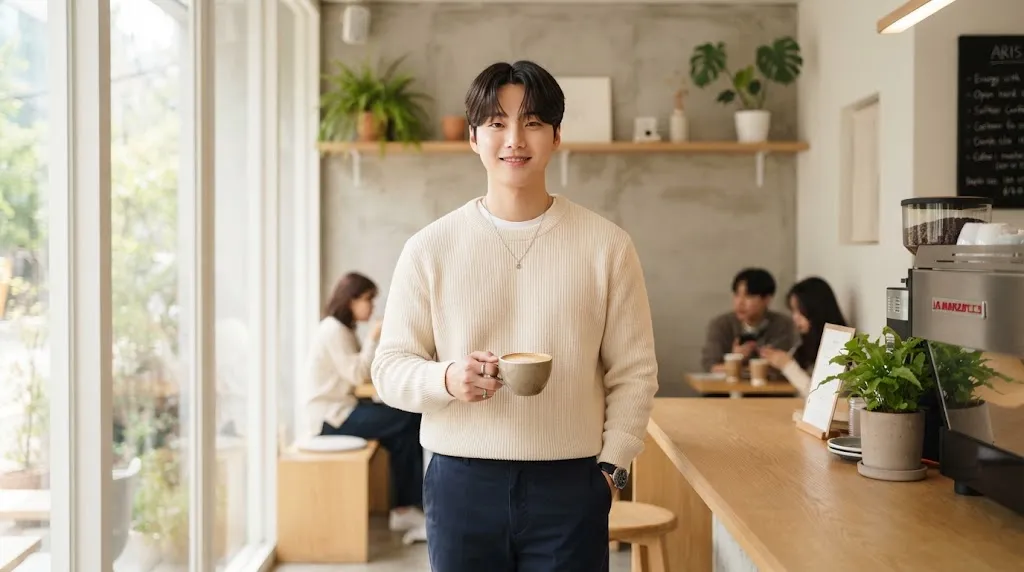
The goal is usually to create some visual height and avoid unnecessary width around the widest part of the face.
Focus on: Moderate height at the top, controlled sides, and longer or slightly angled fringe.
Suitable shapes: Two-blocks with controlled sides, textured styles, side parts, and selected curtain or layered styles.
Be careful with: Very wide side volume or heavy rounded fringe that visually emphasizes facial width.
Korean Hairstyles for Oval Faces
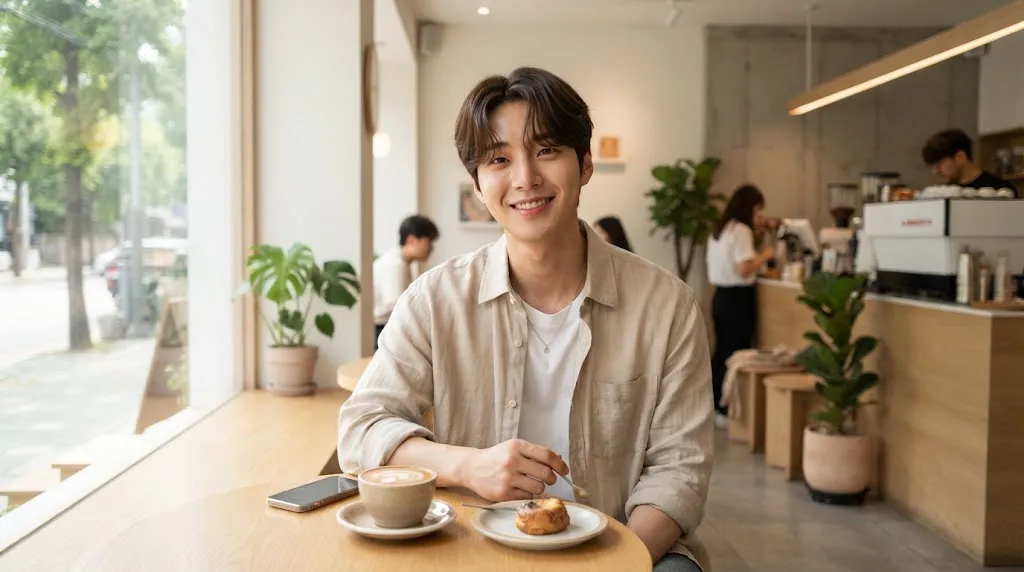
Oval faces are generally flexible because their proportions can accommodate a wide range of Korean-inspired shapes.
Focus on: Choosing the hairstyle according to hair type and desired appearance rather than trying to correct a major proportion imbalance.
Suitable shapes: Two-block, curtain, comma, middle-part, side-part, layered, textured, short, medium, and longer styles can all be considered.
Be careful with: There is no need to add unnecessary height or width simply because a hairstyle guide recommends it for another face shape.
Korean Hairstyles for Square Faces
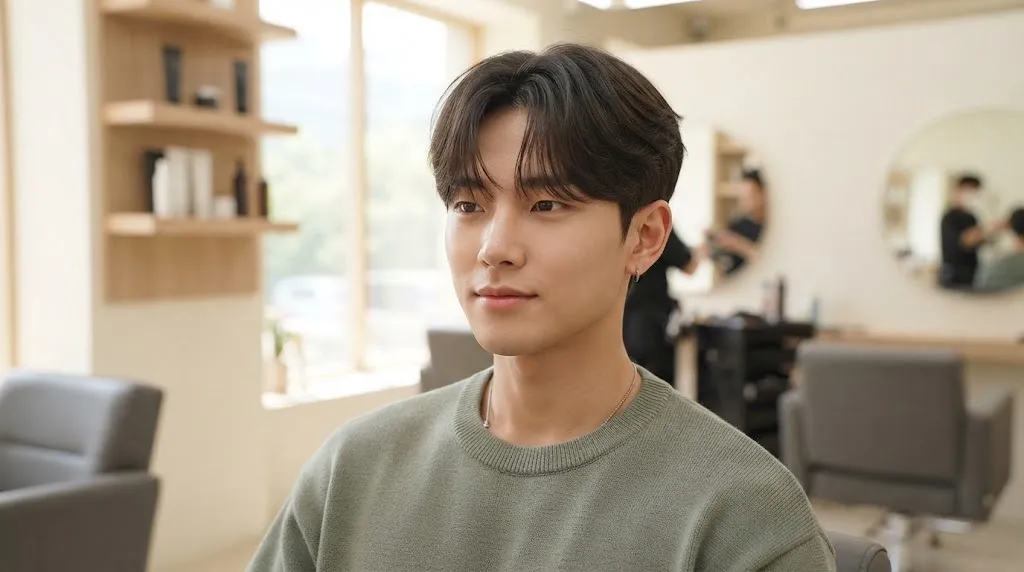
A square face has naturally noticeable jaw and forehead structure. Softer lines and controlled movement can complement those features.
Focus on: Texture, softer fringe, layers, and movement around the face.
Suitable shapes: Soft two-block, curtain, layered, textured, and medium-length Korean hairstyles.
Be careful with: Extremely rigid, boxy shapes if you want a softer overall appearance.
Korean Hairstyles for Heart-Shaped Faces
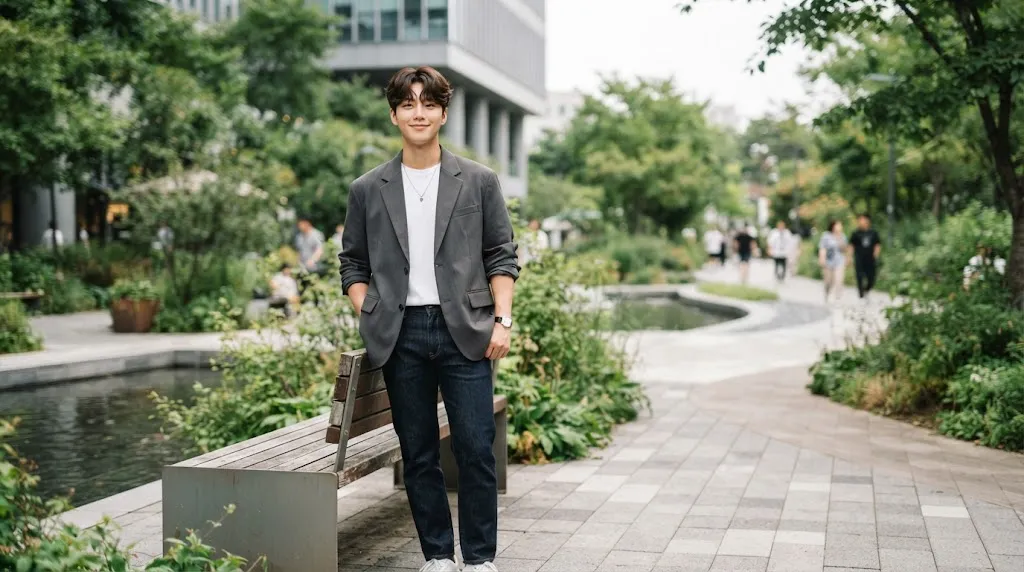
A heart-shaped face can benefit from styles that balance a relatively broader upper face with a narrower lower portion.
Focus on: Soft face-framing, appropriate fringe length, and some visual weight around the sides or lower sections rather than excessive height at the top.
Suitable shapes: Curtain hairstyles, medium-length layers, softer two-blocks, and textured styles.
Be careful with: Excessive top volume combined with very tight sides if that combination makes the upper face appear disproportionately wide.
Korean Hairstyles for Long or Oblong Faces
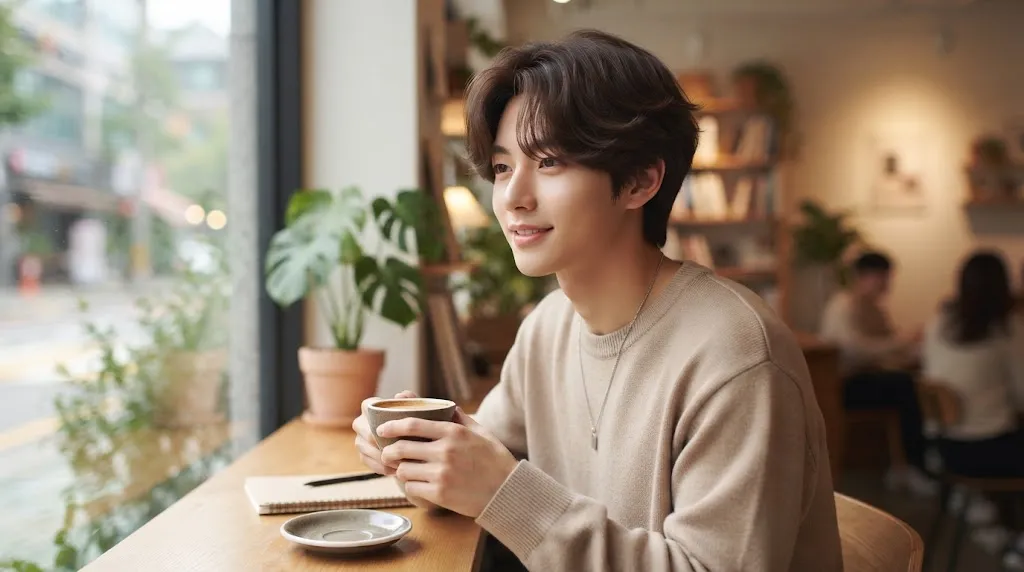
For a longer face, the aim is generally to avoid adding unnecessary vertical length.
Focus on: Moderate volume, suitable fringe coverage, and some width around the sides.
Suitable shapes: Curtain, fringe, layered medium-length, textured, and side-part Korean hairstyles.
Be careful with: Very tall top volume combined with extremely tight sides, which can visually lengthen the face further.
Best Korean Hairstyles by Hair Length
Hair length determines which Korean shapes are realistically achievable and how much styling flexibility you have.
Short Korean Hairstyles
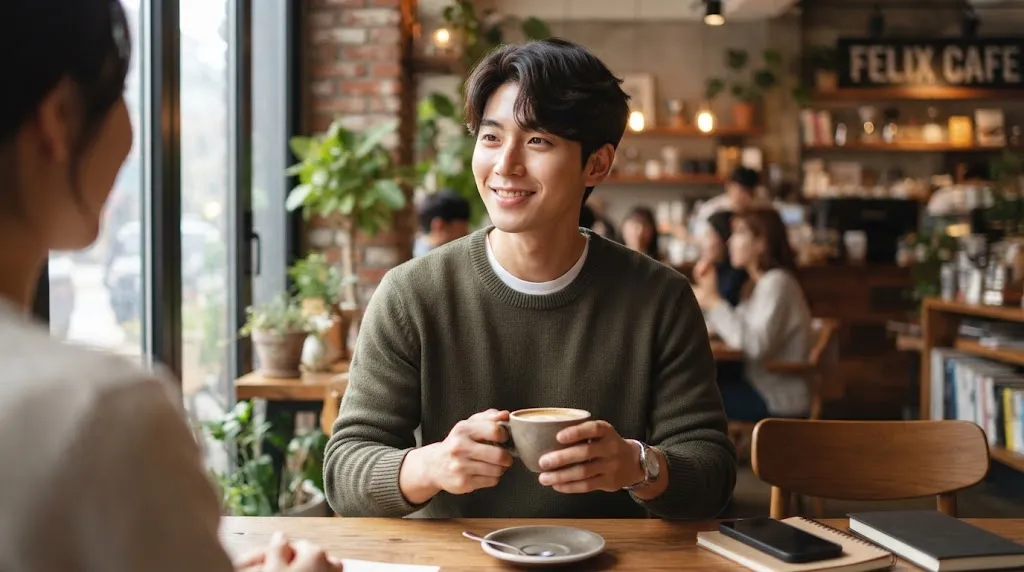
Short Korean hairstyles are suitable when you want a cleaner silhouette and less daily hair management.
Common options include shorter two-block variations and textured Korean cuts. They can retain Korean-inspired details through controlled fringe, texture, or top volume without requiring long hair.
Best for: Lower maintenance, shorter hair preferences, and users who do not want extensive daily styling.
Consider: Your natural hair growth direction, particularly around the sides and crown.
Medium-Length Korean Hairstyles
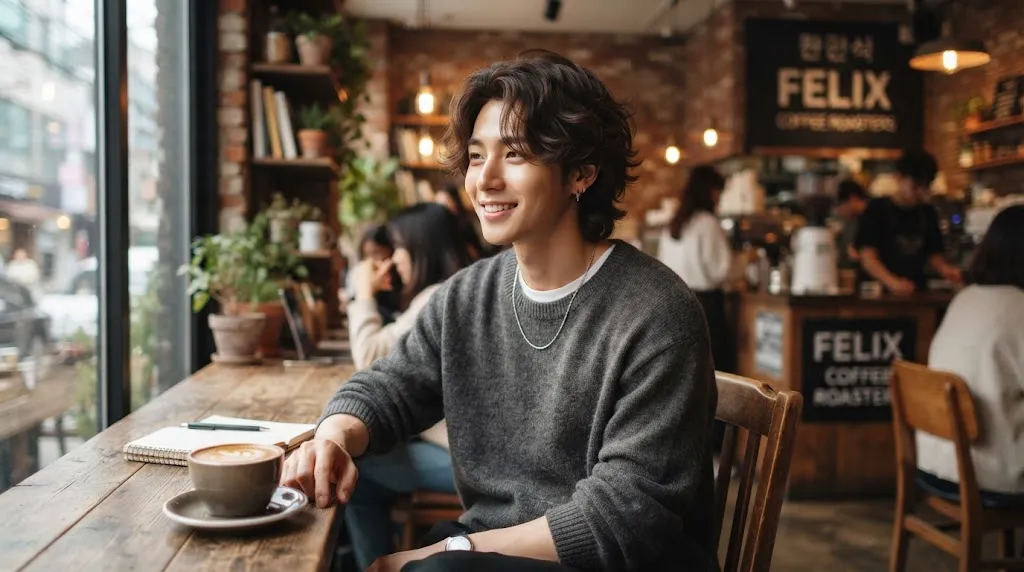
Medium length offers one of the broadest ranges of Korean styling options. It provides enough length for curtains, middle parts, layered movement, fringe, and two-block variations without requiring the commitment of very long hair.
Best for: Users who want versatility, movement, face framing, or multiple styling options.
Consider: Whether you are willing to style the fringe and top regularly, because medium-length Korean looks can change considerably depending on how they are dried.
Long Korean Hairstyles
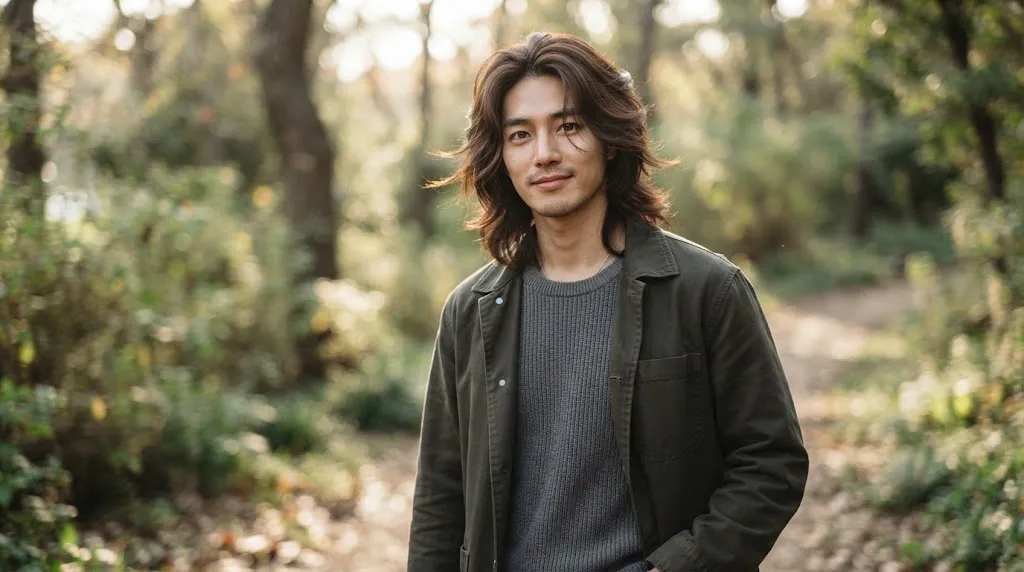
Long Korean hairstyles allow more movement, layering, and face-framing but require greater commitment to maintenance and styling.
Layer placement becomes particularly important because simply growing the hair longer does not automatically create a Korean hairstyle.
Best for: Users who want flowing movement, longer fringe, layers, or a softer silhouette.
Consider: Drying time, growing-out stages, hair condition, and how much daily styling you are prepared to do.
How to Choose a Korean Hairstyle From a Photo
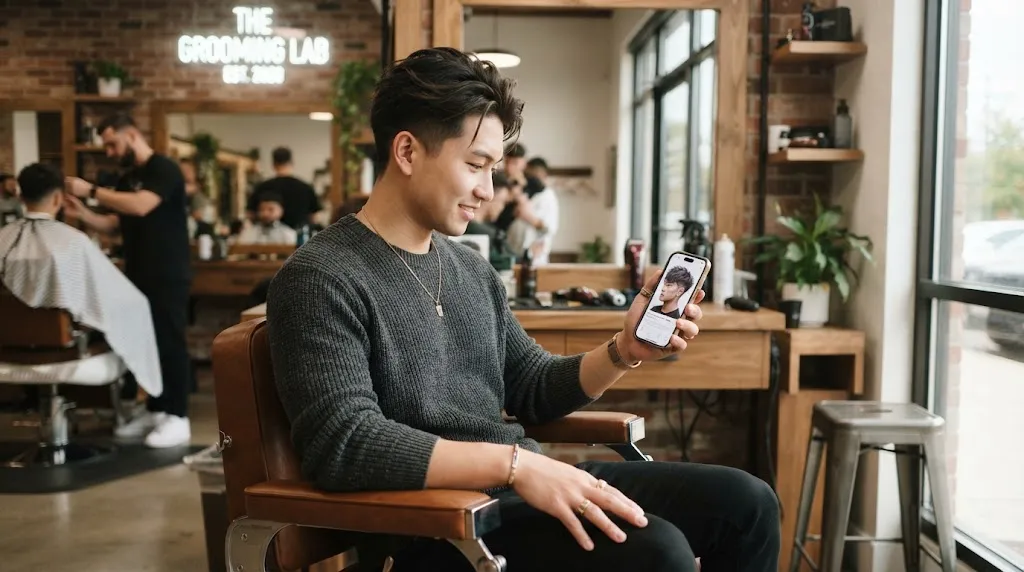
A hairstyle photograph is a useful reference, but it should be treated as a shape reference, not a promise that the same result will appear on every head of hair.
What to Look for in a Korean Hairstyle Photo
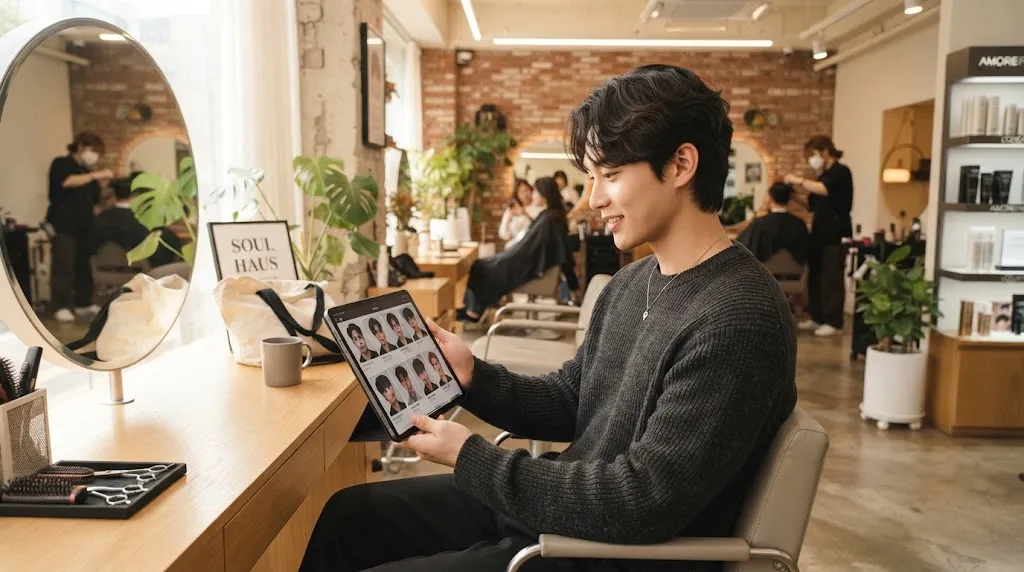
Before showing a photo to your barber, examine the details that actually create the haircut.
- Front: Look at the overall silhouette and how the fringe frames the face.
- Side: Check how far the top extends and how the sides transition.
- Back: Look at the shape and length around the nape and rear sides.
- Fringe: Notice whether it is straight, parted, swept, curved, or layered.
- Top length: Estimate whether the hair is short, medium, or long.
- Side length: Check whether the sides are tight, soft, layered, or left longer.
- Volume: Identify where the hairstyle has height or fullness.
- Texture: Look for natural waves, layers, curls, or deliberately created texture.
These details are more useful to a barber than simply saying, “I want this Korean haircut.”
Why One Reference Photo May Not Be Enough
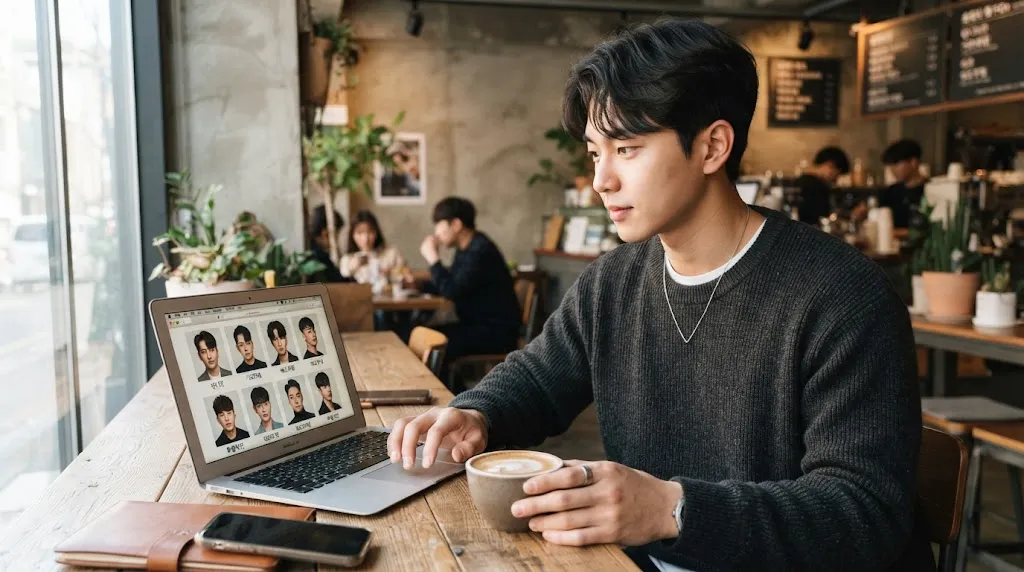
A single front-facing image can hide important haircut details. You may be able to see the fringe but not the side length, back shape, or amount of volume.
When possible, use front, side, and back references of the same or very similar hairstyle. If those views are unavailable, tell your barber which parts of the image matter most to you.
How to Choose a Reference Photo That Matches Your Hair
Look for a reference with a similar:
- Hair texture
- Hair density
- Current length
- Fringe length
- Natural wave or curl pattern
- Side growth pattern
- Desired maintenance level
A reference with completely different hair can still provide inspiration, but your barber may need to modify the shape to make it realistic for your hair.
What to Show Your Barber
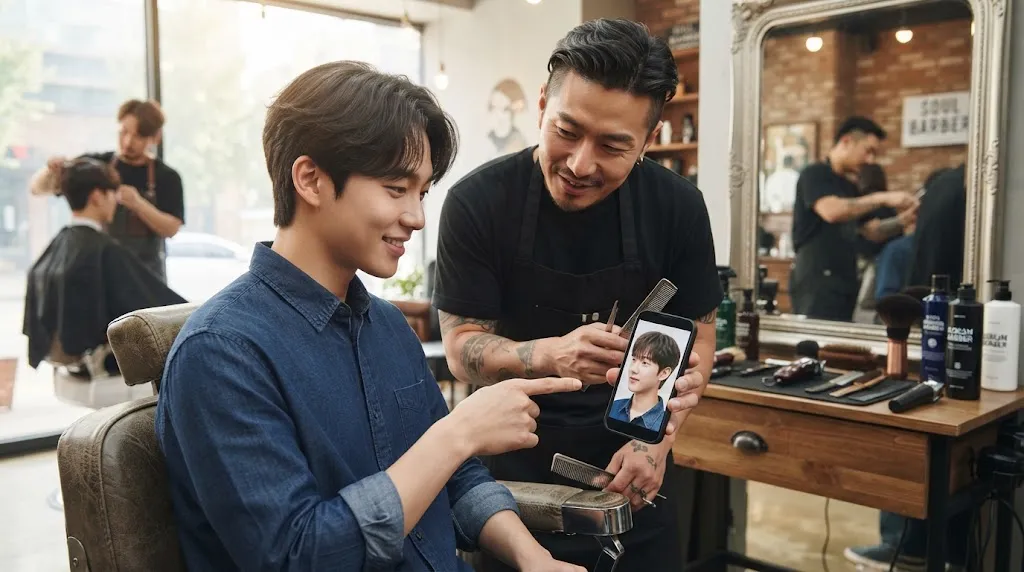
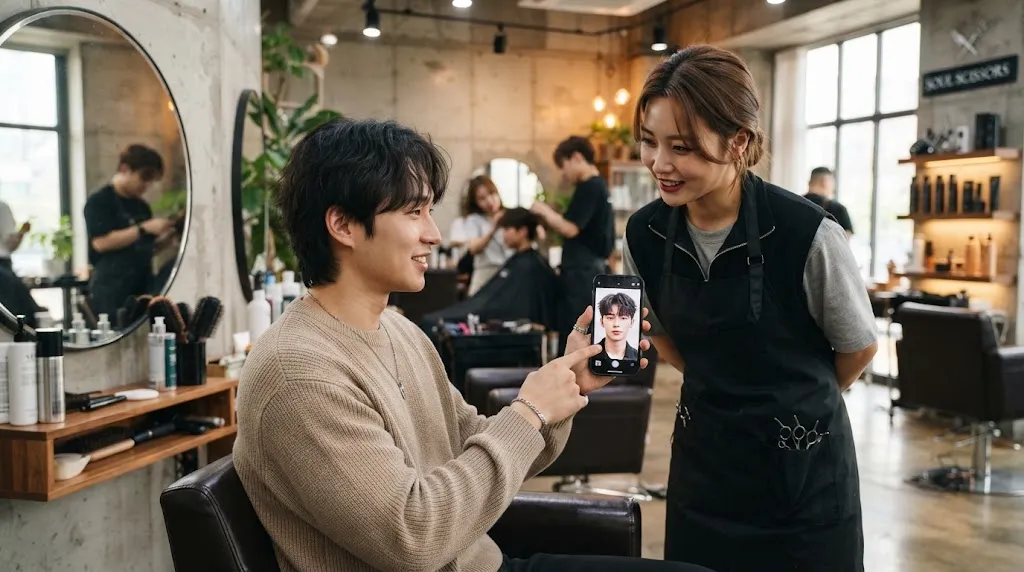
Take the clearest reference images you can find and point out the specific features you want:
“I like this top length, this fringe shape, and the way the sides are controlled.”
Also explain what you do not want. For example, you can say that you want movement but do not want very short sides, or that you want a fringe but do not want it covering the entire forehead.
What to Tell Your Barber to Get a Korean Hairstyle
“Korean haircut” is not a complete technical specification. It does not automatically tell a barber the exact top length, side length, fringe shape, layering, or finish you want.
Tell Your Barber the Desired Overall Shape
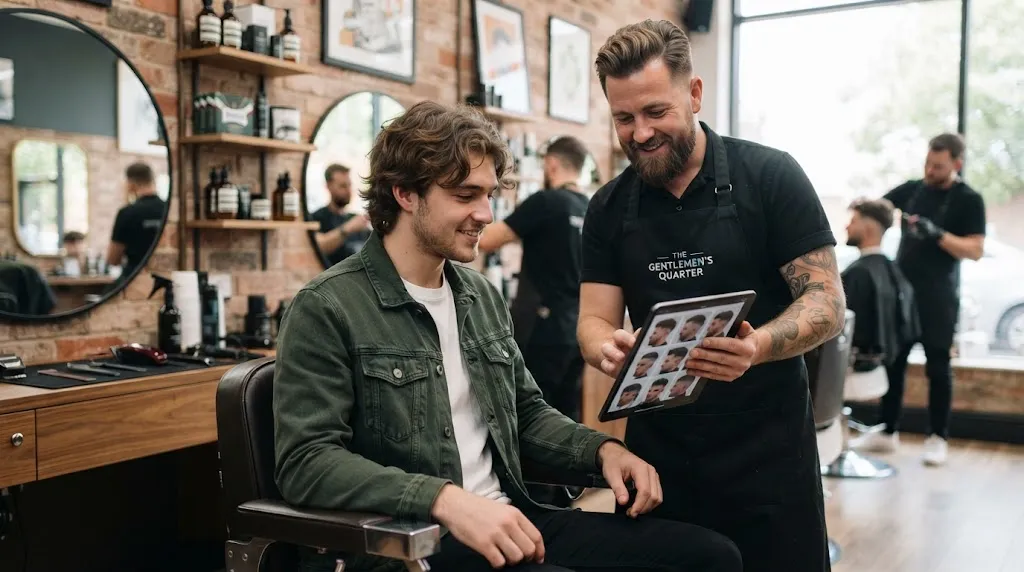
Start with the silhouette you want: soft and natural, clean and short, layered and flowing, textured, or more defined.
This gives the barber a starting point before discussing individual lengths
Explain the Top Length
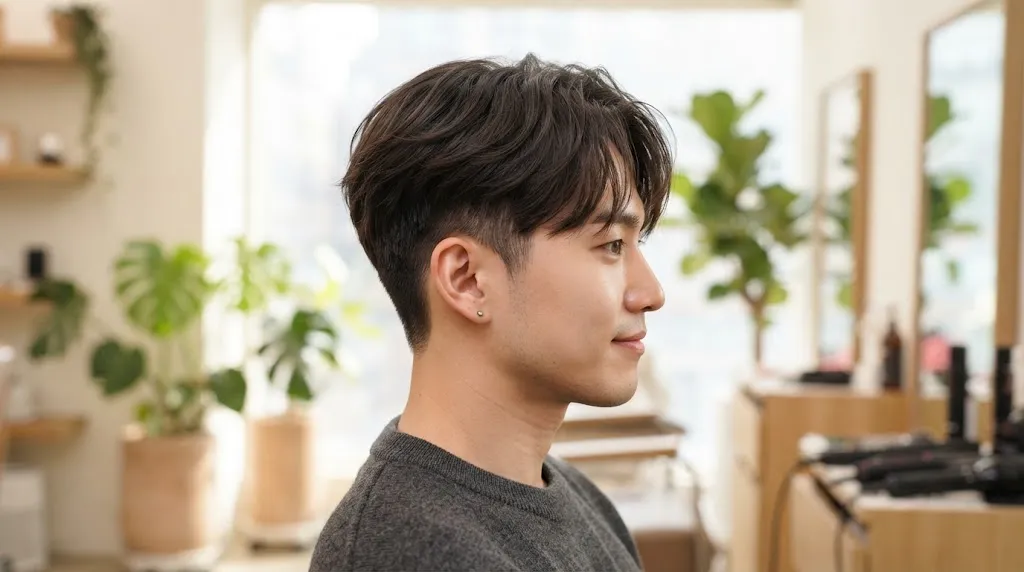
Specify the Desired Overall Shape: State the silhouette you want first—whether it is soft and natural, clean and short, layered and flowing, textured, or more defined—to give your barber a starting point before discussing lengths.
Explain the Top Length: Tell your barber approximately how much length you want to retain and show a reference image, making it clear if you want to keep sufficient top length for styles like a two-block or medium-length cut.
Explain the Side and Back Length: Avoid assuming the barber will interpret “Korean” as meaning a specific side length; instead, show whether you want your sides short and controlled, softly blended, longer and natural, or clearly separated from the top while also clarifying the desired back and nape shape.
Detail Your Fringe or Bangs: Describe whether you prefer a curtain-shaped parted fringe, a comma-shaped fringe, a side-swept fringe, a fuller straight fringe, or longer face-framing bangs to control the final appearance.
Share Your Natural Hair Type: Inform your barber if your hair is straight, wavy, curly, fine, thick, dense, prone to falling flat, or prone to puffing out, as cutting patterns behave differently across hair types.
Communicate Your Daily Styling Commitment: Be honest about your routine—whether you want a quick two-minute style or are comfortable blow-drying and styling every morning—to ensure your choice is practical for your day-to-day life.
Bring Reference Photos From Multiple Angles: Use front, side, and back views to communicate the complete shape, or combine a single photo with a written breakdown of your desired top, sides, fringe, and styling level.
What Not to Assume From the Words “Korean Haircut”

Not a Single Preset: Saying “Korean haircut” does not automatically mean a two-block, short sides, long fringe, middle part, perm, or a specific top length.
Varying Styles: Korean hairstyles encompass many different shapes, meaning your reference photos and precise instructions must define the final cut.
How to Style Korean Boy Hair at Home
The haircut creates the foundation, but drying direction and finishing technique often determine whether the style actually resembles the reference.
How to Style a Korean Hairstyle
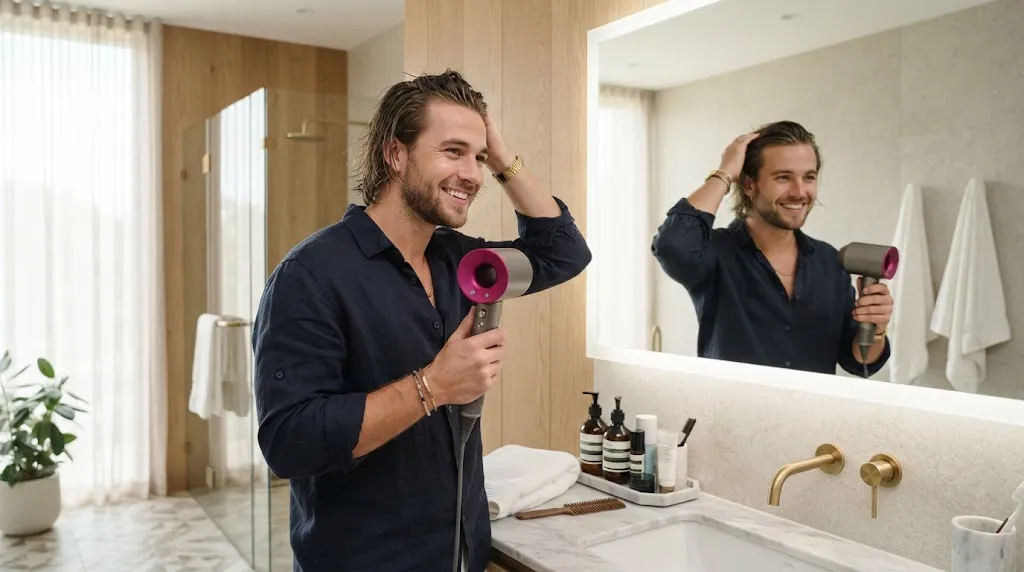
Prepare the Hair Properly: Start with clean, damp hair rather than soaking wet hair, gently towel-drying without aggressive rubbing before arranging the strands in your target direction.
Blow-Dry for Direction and Volume: Establish the main shape with heat first by lifting roots for volume, guiding the fringe to its spot, directing parted sections away from the center, and smoothing puffy sides flat against the head.
Form the Part or Fringe Shape: Separate hair naturally for curtain styles, or shape comma and swept fringes while the hair is still slightly damp so the curves set naturally as it dries.
Add Texture and Definition: Apply just enough product to define piecey strands or waves, keeping soft styles light and movable rather than stiff.
Avoid Weighing Down the Hair: Use a minimal, pea-sized amount of product to keep fine hair from flattening out or creating greasy, overly separated fringe strands.
Hair-Type Specific Styling Techniques

Straight Hair: Focus primary effort on directional blow-drying and building root lift.
Wavy Hair: Work with your natural wave pattern instead of trying to blow-dry every section straight.
Curly Hair: Preserve the natural curl pattern and shape the style according to your hair’s natural, dry curl length.
Thick Hair: Concentrate on controlling bulk and smoothing the side sections flat.
Fine Hair: Stick to lightweight products like sea salt spray or light dust to avoid weighing down the roots.
Understanding Daily Maintenance Needs
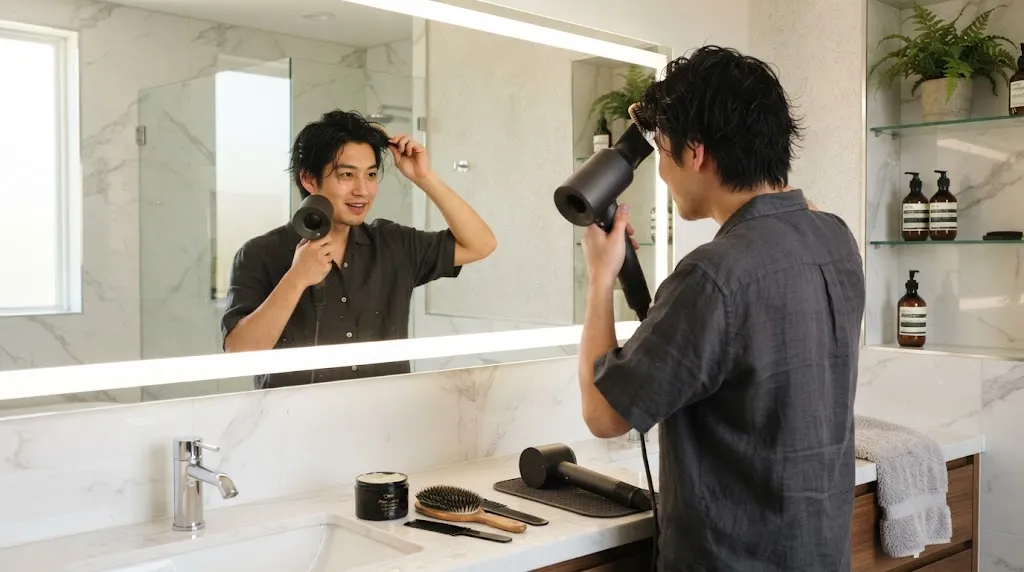
Style Variations: Low-maintenance options like short textured crops need almost no daily effort, whereas longer layered cuts or comma fringes require daily blow-drying.
Realistic Expectations: Compare the effort required for a professionally styled reference photo against your actual morning routine before picking a haircut.
Korean Hairstyle Maintenance and Growing Out
Maintenance depends on the haircut’s structure rather than simply whether it is labeled Korean. Tight sides, defined fringe, and precise shapes usually become noticeable as they grow.
How Often to Refresh a Korean Haircut
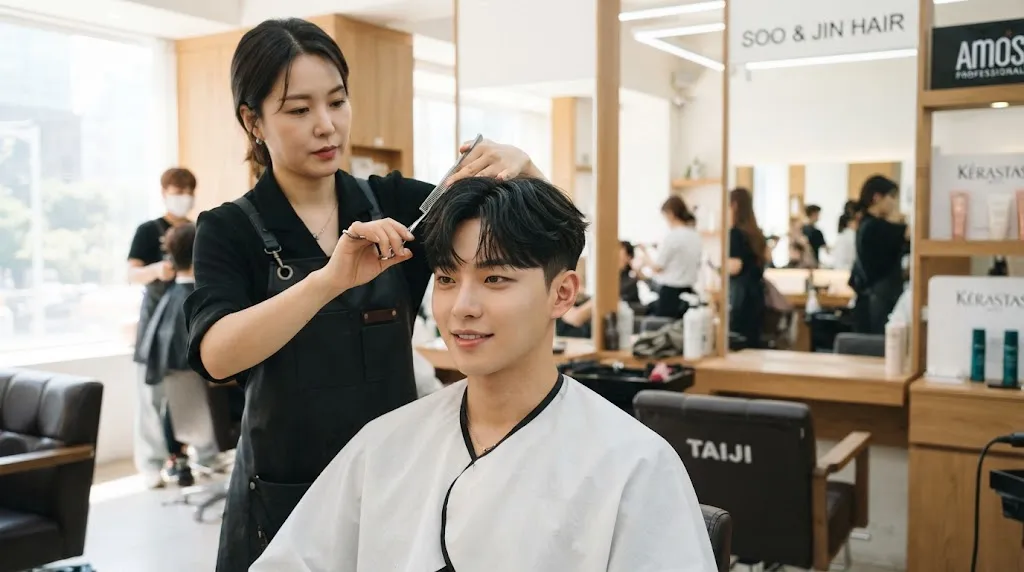
Haircut Refresh Timing: Shorter, sharply defined haircuts show growth faster than longer, soft-layered cuts; schedule a trim when your sides lose shape, your fringe gets out of control, or the overall silhouette collapses.
Effects of Hair Growth: As hair grows, top-to-side proportions shift—a two-block cut can quickly build up excess side bulk, and fringes grow too heavy to hold their original position.
Low-Maintenance Styles: Softly layered cuts and longer curtain styles grow out gracefully, whereas skin fades, sharp undercuts, and precise fringes demand frequent upkeep.
Signs Your Sides Need Attention: Schedule a cut when your side hair begins sticking outward, you lose your original profile silhouette, or the contrast between the top and sides disappears.
Managing Fringe Growth: Stick to consistent blow-drying directions rather than piling on heavy product to tame extra length; if your bangs constantly block your eyes, get a minor maintenance trim.
Updating Your Style: Always bring a fresh reference photo to your barber if you want to alter your cut’s shape, fringe, or length, rather than assuming they remember your previous target.
Common Korean Hairstyle Problems & Solutions
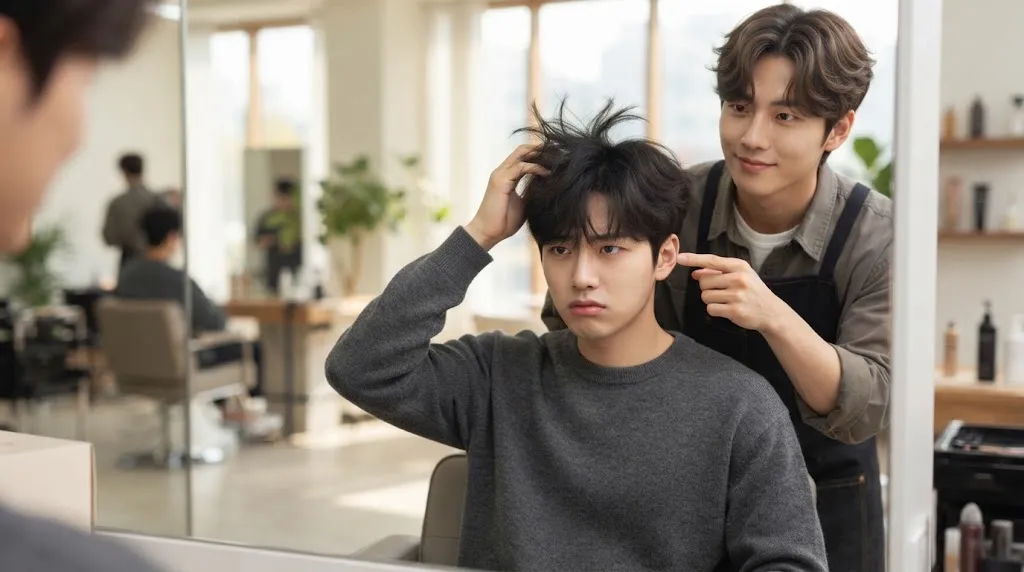
“My Hair Is Too Thick for the Reference Style”: Thick hair can create unwanted bulk, particularly around the sides and crown. Ask your barber to control the areas creating excess width while preserving enough weight to maintain the intended shape, avoiding automatic, aggressive thinning throughout the entire haircut.
“My Hair Is Too Fine or Flat”: Fine hair can lose volume quickly, especially under heavy products. Choose a shape that does not depend on excessive length or weight, and use directional blow-drying at the roots with lightweight styling rather than relying entirely on product for volume.
“My Fringe Keeps Splitting”: A splitting fringe can result from natural growth direction, uneven moisture, or insufficient control during drying. Dry the fringe into its intended direction while damp, and inform your barber if it repeatedly separates in the same place instead of continually adding more product.
“My Sides Puff Out”: This is common when dense hair grows outward. The solution is not always simply making the sides shorter; your barber may need to adjust the side shape and remove or redistribute weight while maintaining enough length to support the overall haircut.
“The Hairstyle Looks Good in the Photo but Not on Me”: Compare the reference with your own hair texture, density, length, face proportions, natural growth direction, and styling routine. The hairstyle may still work, but it may need modification—a good reference should communicate the desired shape, not require an identical copy.
“My Hair Looks Different at Home Than It Did at the Salon”: Professional styling can temporarily create more volume, direction, and texture than your normal routine. Ask your barber to explain how the hair was dried and styled, or consider a version of the cut that works with less styling if you cannot reproduce that routine.
“My Curly Hair Does Not Look Like the Straight-Hair Reference”: That does not necessarily mean the haircut failed, as curls alter apparent length, volume, and fringe shape. Ask for a Korean-inspired version designed around your natural curl pattern rather than trying to make curly hair behave exactly like straight hair.
“The Hairstyle Needs More Daily Styling Than I Expected”: This usually means the reference and your maintenance expectations were mismatched. Tell your barber that daily styling time is a priority, as a slightly simpler version of the overall shape may offer a much more practical result.
“The Haircut Looks Good at First but Loses Its Shape Quickly”: Consider whether the sides, fringe, or top are growing out faster than the rest of the haircut. If the shape changes quickly, ask your barber which areas need more frequent maintenance and whether a softer version would grow out better.
“I Do Not Know What to Ask My Barber”: Do not rely on the phrase “Korean haircut” alone. Show your reference photo and clearly explain four key things: the overall shape you want, the approximate top and side length, the fringe or parting you prefer, and how much daily styling you are willing to do.
Korean Hairstyle Styling Mistakes to Avoid
Choosing a Style Without Considering Natural Hair Texture
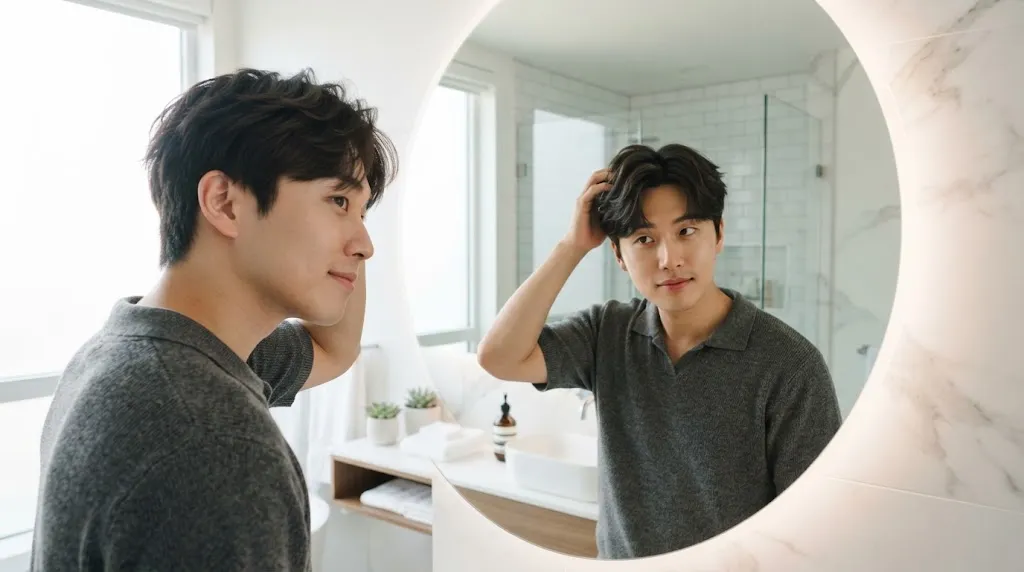
Ignoring Your Natural Hair Texture: A reference designed around straight hair may behave very differently on wavy or curly hair, so always consider your natural hair texture before choosing the exact cut.
Copying the Photo Without Matching Hair Length: If your hair is significantly shorter or longer than the reference photo, the same silhouette may not be immediately achievable, so give your barber the actual length needed to create the target shape.
Asking for a “Korean Cut” Without Explaining the Shape: Using “Korean haircut” as a broad category rather than a precise haircut specification fails to guide the barber, making it essential to clearly communicate the top, sides, fringe, and overall silhouette you want.
Over-Styling the Hair: Too much product or excessive manipulation can destroy the soft, natural appearance many Korean hairstyles are designed to create; build the shape with proper drying first, then apply only the exact amount of product required.
Ignoring the Sides and Back: A front-facing reference photo can hide crucial structural details, causing a haircut that looks right from the front to feel completely wrong if the sides or back are left too bulky, cut too short, or shaped incorrectly.
Choosing a High-Maintenance Style Without Wanting Daily Styling: A hairstyle should fit your daily routine as well as your appearance goals, so if you do not want to blow-dry, reshape, or style your fringe every morning, select a cut that maintains its basic silhouette with minimal effort.
Frequently Asked Questions
There is no single haircut called the “Korean boy haircut.” Korean men's hairstyles include several different shapes, such as the two-block, curtain, comma, middle-part, side-part, layered, and textured cuts.
The two-block is one of the most recognizable Korean haircut structures, but the exact result depends on the top length, sides, fringe, layering, texture, and styling.
Popular Korean-inspired options include the two-block, soft two-block, curtain hairstyle, comma hair, middle part, layered haircut, textured hairstyle, and Korean fringe styles.
The best choice depends on your hair type, face shape, desired length, and how much styling you want to do. Popularity alone does not mean a particular cut will work well with your hair.
Start with clean, damp hair and use a blow-dryer to establish the direction, part, fringe, and root volume. Once the basic shape is dry, use a small amount of lightweight styling product to add texture or definition.
The technique changes with hair type. Straight hair may need root lift, thick hair may need side control, while wavy or curly hair often looks better when its natural movement is incorporated rather than completely removed.
There is no single haircut that represents every Gen Z hairstyle. The term is commonly used for a range of contemporary cuts featuring elements such as textured tops, fringe, curtain or middle parts, tapered or controlled sides, and medium-length movement.
Several Korean-inspired hairstyles overlap with this aesthetic, particularly two-block, curtain, textured, and layered styles.
The two-block is one of the most recognizable Korean-inspired men's haircut structures and has had widespread visibility through Korean entertainment and men's hairstyle trends. Other styles can become popular depending on current fashion and social-media trends.
Rather than choosing a haircut simply because it is viral, compare its length, fringe, side shape, hair-type requirements, and maintenance with your own needs.
“F-boy haircut” is an informal internet term rather than a precise professional haircut category. It can refer to several fashion-oriented men's styles, often involving textured or longer hair, fringe, volume, fades or controlled sides, and a deliberately styled finish.
Because the term is not technically specific, it is better to show a barber a reference photo and explain the exact shape you want rather than asking for an “F-boy haircut” alone.
Final Korean Hairstyle Quick-Pick Guide
| If you want... | Start with... |
|---|---|
| Soft Korean look | Soft Two-Block or Curtain Hairstyle |
| Low maintenance | Short Korean Hairstyle or Textured Hairstyle |
| Medium length | Two-Block, Curtain, or Layered Korean Hairstyle |
| Long hair | Long Layered or Korean Middle-Part Hairstyle |
| Fringe | Curtain, Comma, or Korean Fringe Hairstyle |
| More volume | Layered, Textured, or Perm-Inspired Hairstyle |
| Curly/wavy adaptation | Curly/Wavy Layered or Textured Korean Hairstyle |
| K-pop-inspired look | Two-Block, Curtain, Comma, or Layered Medium Hairstyle |