
Haircuts for Square Faces: Best Hairstyles for Women & Men
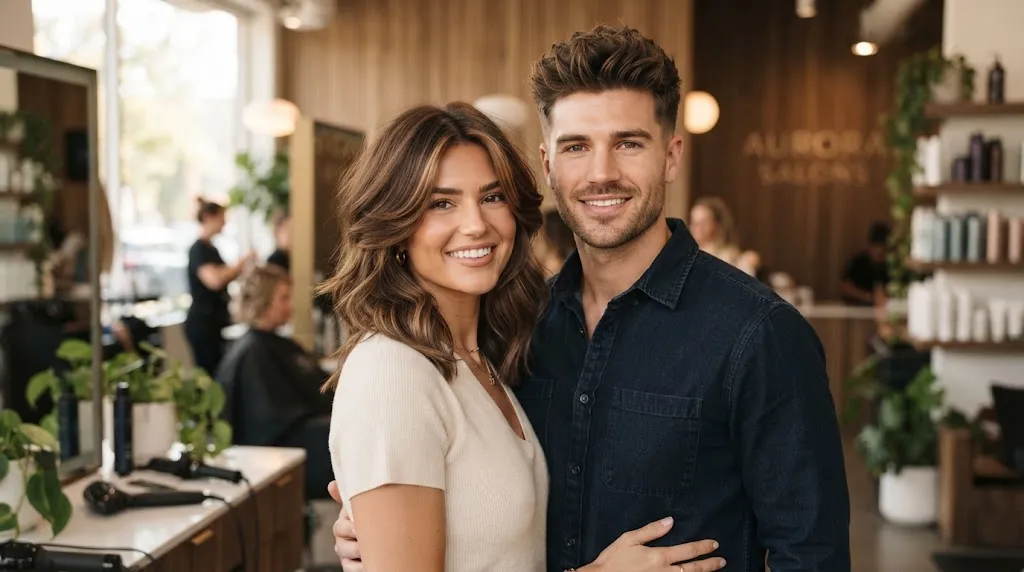
A square face typically has a broad forehead, defined cheekbones, and a strong, angular jawline, with the face often appearing similar in width from the forehead through the jaw. The most flattering haircut is not determined by face shape alone; hair length, texture, density, and how much daily styling you want to do all affect how a cut will look.
This guide covers the best haircuts for square faces across short, medium, and long lengths, along with options for straight, wavy, curly, fine, and thick hair.
To explore how styles for square faces fit into the complete spectrum of lengths, shapes, and hair textures, explore our main hairstyles & haircuts directory.
What Haircuts Look Best on a Square Face?
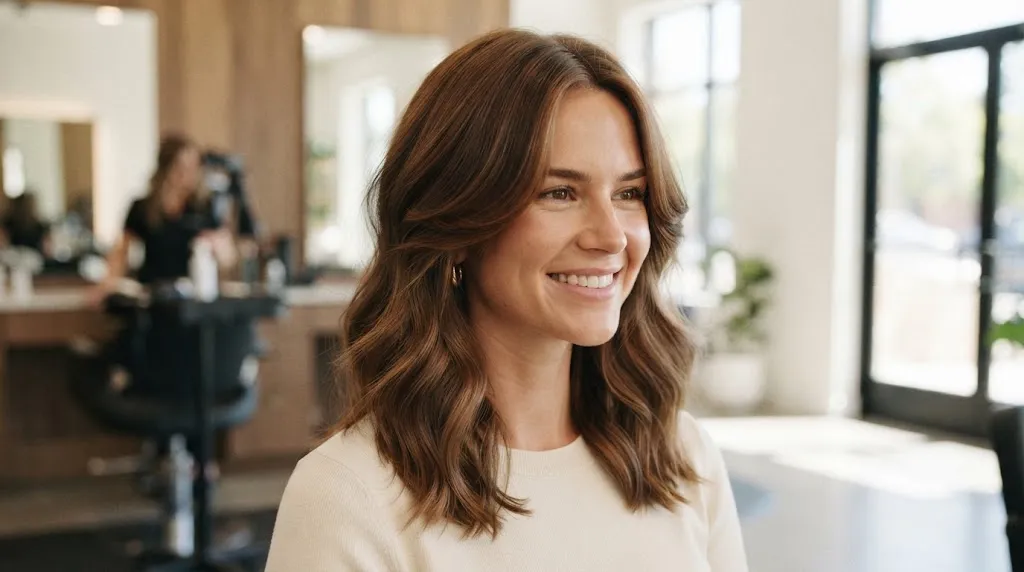
The best haircuts for square faces generally use movement, texture, and thoughtful weight placement to complement the face’s strong angles. Face-framing layers, long layers, soft waves, layered medium-length cuts, curtain bangs, and textured short styles can all work well when their shape is adapted to the person’s hair and proportions.
Some of the strongest options include:
- Face-framing layers — create movement around the face without adding unnecessary width at the jaw.
- Long layers — keep length while breaking up a heavy, one-length silhouette.
- Soft waves with layers — add natural movement and a less rigid outline around angular features.
- Curtain bangs with layers — can introduce softness around the forehead and connect naturally into face-framing pieces.
- Textured medium-length cuts — provide versatility while avoiding a completely boxy shape.
- Short textured cuts — styles such as a textured pixie or bixie can work when the shape and volume are placed deliberately.
- Men’s textured, side-swept, and tapered cuts — can complement a square face while giving control over where volume and movement sit.
There is no single haircut that is automatically best for every square face. The same cut can look very different on fine straight hair, dense curly hair, or naturally wavy hair. The goal is to choose a shape that works with your face proportions, natural texture, hair density, desired length, and styling routine rather than following a one-size-fits-all rule.
How to Tell If You Have a Square Face

Before choosing a haircut, it helps to confirm that your face shape is actually square. A square face is generally defined by similar width through the forehead, cheek area, and jaw, combined with a noticeably angular jawline and relatively straight sides. Your face does not need to match every feature perfectly; face shapes naturally vary and can fall between categories.
Key Features of a Square Face

Look for these characteristics when viewing your face from the front:
- Broad forehead: The forehead tends to have noticeable width rather than narrowing sharply toward the temples.
- Defined, angular jawline: The jaw is one of the clearest features, with more pronounced corners rather than a softly rounded curve.
- Similar overall width: The forehead, cheek area, and lower face can appear relatively similar in width.
- Straighter sides: The sides of the face tend to look more vertical instead of curving outward and inward like a rounder face.
- Strong facial corners: The temples, cheek area, and especially the jaw can create a more structured, geometric outline.
A useful clue is the overall combination rather than any single feature. A strong jaw by itself does not necessarily mean you have a square face.
Square Face vs. Round Face
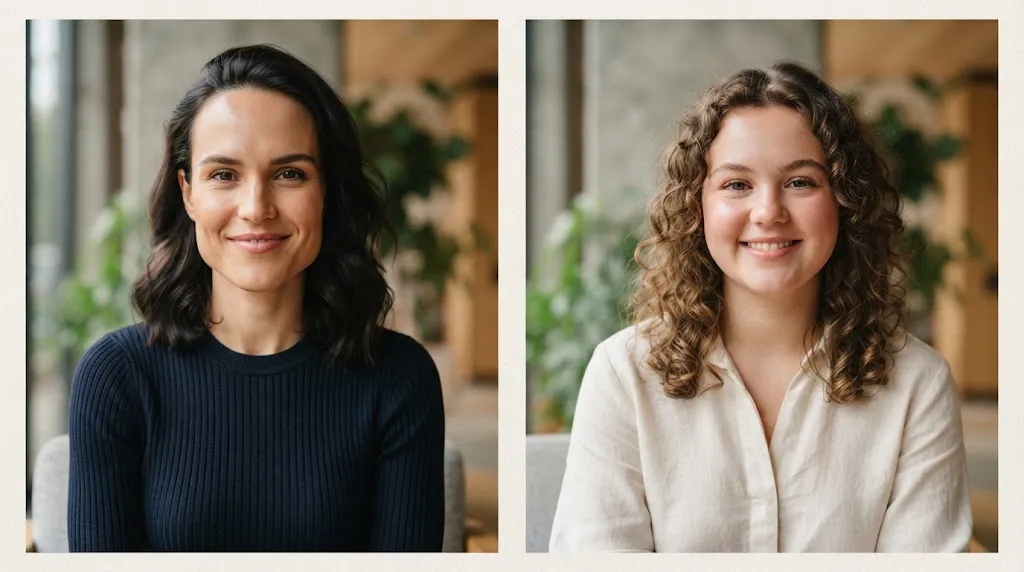
| Feature | Square Face | Round Face |
|---|---|---|
| Overall outline | More angular | More curved |
| Jawline | Defined and structured | Softer and rounded |
| Face width | Often relatively consistent | Often widest around the cheeks |
| Facial angles | Noticeable corners | Fewer visible angles |
| Length | Usually not dramatically longer than its width | Often similar to its width |
Square Face vs. Long or Oblong Face
| Feature | Square Face | Long/Oblong Face |
|---|---|---|
| Face length | Relatively balanced with width | Noticeably longer than width |
| Overall proportion | More compact | More elongated |
| Jaw | Often broad and angular | Can be straight, rounded, or angular |
| Main visual impression | Wide and structured | Long and narrow |
Why this matters for your haircut: once you know whether your face is genuinely square, you can choose haircut shapes based on the features you want to complement—such as the jawline, forehead width, overall proportions, and your natural hair texture—rather than choosing a style simply because it is labeled “for square faces.”
Best Haircuts for Square Faces
The most flattering haircuts for square faces are not about hiding the jawline. They are about choosing length, layers, texture, and movement that work with the face’s naturally defined structure. The options below cover different lengths and hair textures, so you can compare a style based on how it will actually behave on your hair.
Face-Framing Layers

What it is: Face-framing layers are shorter pieces that gradually blend into the rest of the haircut, creating movement around the sides of the face without removing all of the overall length.
Why it works for a square face: The layers can break up a very straight outline and introduce movement around the forehead, cheeks, and jaw rather than creating one solid block of hair beside the face.
Best for: Straight, wavy, or moderately curly hair; particularly useful for medium-to-thick hair when some weight needs to be redistributed.
Styling: Style the front pieces away from the face or with a soft bend so they follow the natural contours rather than sitting heavily against the jaw.
Maintenance: Moderate. The face-framing pieces need occasional reshaping as they grow.
Possible limitation: If the shortest layers are placed too heavily around the jaw, they can add unwanted width instead of reducing it. Their placement should be adapted to the individual’s proportions.
Long Layered Haircut

What it is: A long haircut with graduated layers that preserve overall length while removing some of the heaviness of a one-length shape.
Why it works for a square face: Long layers create vertical movement and prevent thick, straight hair from forming a heavy horizontal line around the lower face.
Best for: Medium to thick straight or wavy hair, although the layer pattern can be adjusted for other textures.
Styling: Soft bends or loose waves emphasize the movement of the layers. Straight styling can also work when the layers are blended well.
Maintenance: Moderate, depending on how defined the layers are.
Possible limitation: Too many short layers can remove valuable density from fine hair, so finer hair usually benefits from fewer, carefully placed layers.
Soft Waves With Layers

What it is: A layered haircut styled with loose, relaxed waves rather than a completely straight finish.
Why it works for a square face: Waves introduce movement and a softer visual outline, which can complement a defined forehead and angular jaw without making the haircut look overly rigid.
Best for: Naturally wavy hair or straight hair that holds a wave; works particularly well with medium or longer lengths.
Styling: Create loose bends rather than tight curls, keeping the movement distributed through the lengths.
Maintenance: Moderate if the waves require heat styling; lower for naturally wavy hair.
Possible limitation: Excessive volume directly at jaw level can make the lower face appear wider, so wave placement matters.
Curtain Bangs With Layers

What it is: Curtain bangs part around the center or slightly off-center and blend into longer face-framing layers.
Why it works for a square face: The parted shape can soften the transition around the forehead while the longer sides create movement toward the cheek area.
Best for: Straight, wavy, and some curly hair, provided the bang shape is adapted to the natural texture.
Styling: Blow-dry the bangs away from the face or use a soft round-brush movement to create the characteristic open shape.
Maintenance: Moderate to high because bangs usually require more frequent trimming than the rest of the haircut.
Possible limitation: Curtain bangs are not completely wash-and-go for every hair type. Cowlicks, strong curls, or very fine hair may require a customized shape and styling routine.
Layered Lob
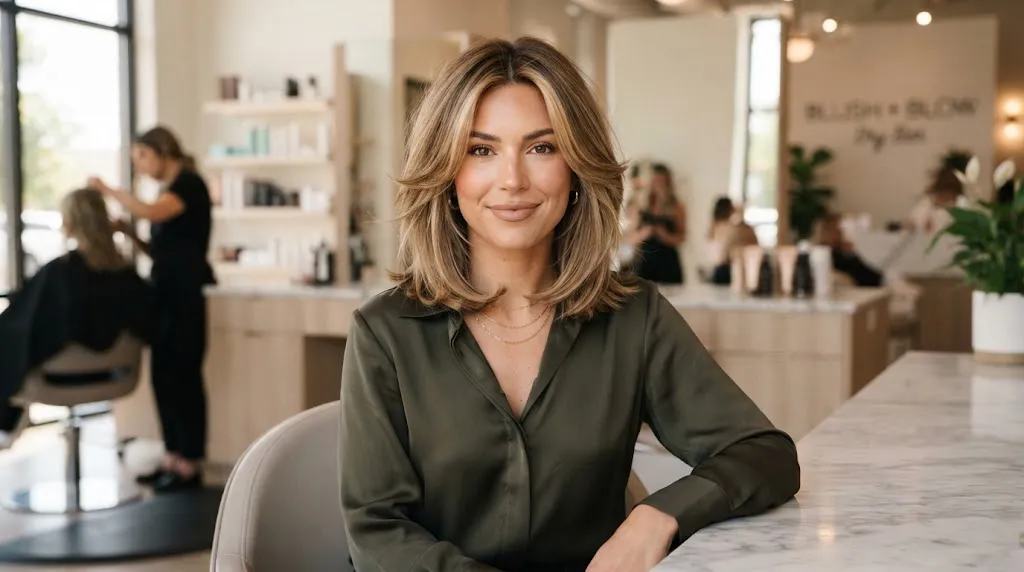
What it is: A long bob that generally sits around the shoulders or collarbone, with layers added to create movement.
Why it works for a square face: The added texture prevents the lob from becoming a completely rigid block while keeping enough length to give the face a balanced vertical element.
Best for: Straight and wavy hair, especially medium-density hair.
Styling: Wear it smooth, softly waved, or with textured ends. Face-framing pieces can be directed away from the jaw.
Maintenance: Moderate. The shape is relatively manageable but needs regular trims to maintain its proportions.
Possible limitation: A completely blunt lob ending exactly at the widest part of the jaw can emphasize width. A slightly adjusted length or softer texture can change the effect.
Medium-Length Layered Haircut
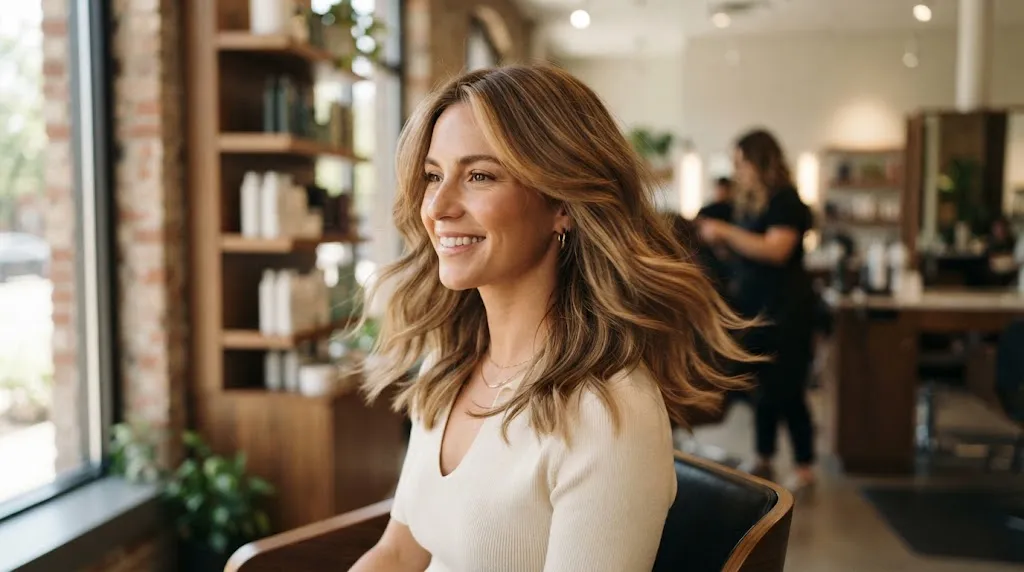
What it is: A mid-length haircut with strategically placed layers, usually falling between the shoulders and upper chest.
Why it works for a square face: It gives enough length to create movement while allowing layers to reduce a heavy, one-length silhouette.
Best for: Most hair textures, with the amount and placement of layering adjusted according to density.
Styling: Works straight, wavy, or with loose bends. Face-framing layers can be styled outward to create movement.
Maintenance: Moderate and generally versatile.
Possible limitation: Over-layering fine hair can make the ends look sparse, while insufficient layering in very thick hair may leave too much bulk.
Textured Bob

What it is: A bob with deliberately softened or textured ends rather than an entirely rigid, geometric finish.
Why it works for a square face: Texture can prevent the haircut from visually reinforcing the straight lines of the jaw.
Best for: Fine to medium-density straight or wavy hair; the technique can also be adapted to thicker hair.
Styling: Add light texture through the lengths and keep the finish loose rather than perfectly flat.
Maintenance: Moderate to high because shorter bob shapes lose their intended proportions more quickly as they grow.
Possible limitation: A very blunt bob ending directly at the jaw can emphasize the jawline. The length and texture should therefore be chosen carefully.
Feathered Haircut

What it is: A layered haircut in which the ends taper and sweep outward, creating a light, flowing appearance.
Why it works for a square face: Feathering introduces directional movement rather than leaving the hair as one solid shape around the face.
Best for: Medium to thick hair with enough length for the layers to move; particularly effective on straight or wavy textures.
Styling: Blow-dry the layers with a rounded brush or use a light bend to encourage the feathered movement.
Maintenance: Moderate. Defined feathered layers need periodic reshaping.
Possible limitation: Very fine hair may not have enough density for dramatic feathering without making the ends appear thinner.
Bixie

What it is: A bixie combines characteristics of a bob and pixie, giving you a shorter shape while retaining more length and movement than a traditional pixie.
Why it works for a square face: The additional texture and movement can keep a short haircut from becoming overly solid around the jaw while allowing the face’s natural structure to remain visible.
Best for: Straight, wavy, and some curly hair, depending on the cutting technique.
Styling: Use texture to separate the layers and avoid making the sides excessively flat or bulky.
Maintenance: Moderate to high because the shape depends on relatively precise proportions.
Possible limitation: It is still a short haircut. If you prefer a longer style or want minimal styling, another option may be easier to manage.
Textured Pixie Cut
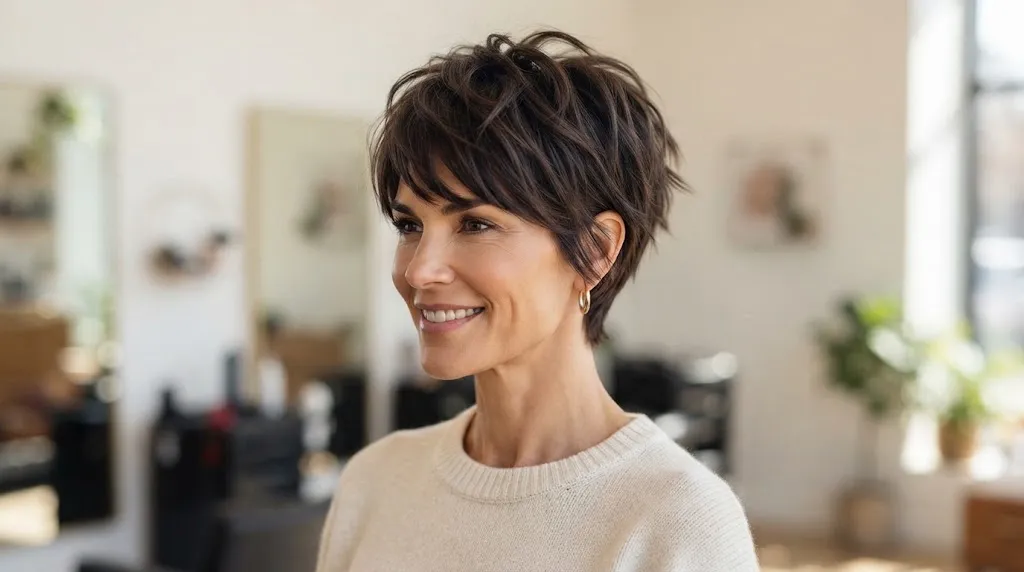
What it is: A short pixie with layers and texture that create movement rather than a smooth, uniform shape.
Why it works for a square face: Texture can add visual movement and lift while avoiding an overly boxy outline.
Best for: Straight, wavy, and some curly textures; particularly suitable when the wearer is comfortable with short hair.
Styling: Work with the natural direction of the hair and use texture to create separation and movement.
Maintenance: High compared with longer styles because short shapes need regular trimming to retain their structure.
Possible limitation: A very tight or extremely geometric pixie may make angular features more prominent. The cut should be tailored rather than copied exactly from a reference photo.
Curly Layered Haircut

What it is: A curly haircut shaped with layers that allow individual curls to form movement instead of creating one heavy mass.
Why it works for a square face: Properly distributed curls can soften the overall silhouette while maintaining the natural volume and character of curly hair.
Best for: Naturally curly and coily hair, with the layering adapted to curl pattern and shrinkage.
Styling: Style curls in their natural pattern and pay attention to where volume develops around the face and jaw.
Maintenance: Moderate, although curly haircuts require a stylist who understands how the hair behaves when dry and how much it shrinks.
Possible limitation: Poorly positioned layers can create excessive width or a triangular/boxy shape. Curl shrinkage also means the finished length may look shorter than expected.
Long Hair With Face-Framing Layers

What it is: Long hair that keeps most of its length while adding graduated pieces around the face.
Why it works for a square face: It is a strong option for someone who wants to keep long hair without leaving the entire perimeter as one heavy, uniform shape.
Best for: Straight, wavy, and curly hair, with the face-framing pattern customized to the texture.
Styling: Keep the longest lengths relatively natural and use a soft bend or outward movement in the face-framing pieces.
Maintenance: Moderate. The overall length can remain low-maintenance while the front layers need occasional shaping.
Possible limitation: If the face-framing pieces are cut too short or end at an unhelpful point, they may draw attention toward the jaw rather than creating the intended movement.
Best Short Haircuts for Square Faces
Short hair can work very well with a square face, but the shape of the cut matters more than simply choosing a short length. Textured ends, controlled volume, and movement can prevent the haircut from creating an overly rigid outline around an already defined jawline.
Bixie

A bixie is a useful choice if you want short hair but still want more movement and length than a traditional pixie.
- Jawline interaction: Keep the sides textured rather than creating a solid, heavy line directly at the jaw.
- Volume placement: Volume and texture through the upper sections can create movement without adding excessive width at the lower face.
- Best textures: Straight, wavy, and some curly hair, depending on how the layers are cut.
- Styling & maintenance: Moderate maintenance; use the natural texture or add light definition to separate the layers.
- When to modify it: If your jaw is particularly prominent, avoid a very blunt, boxy bixie that finishes heavily around the jawline.
Textured Pixie
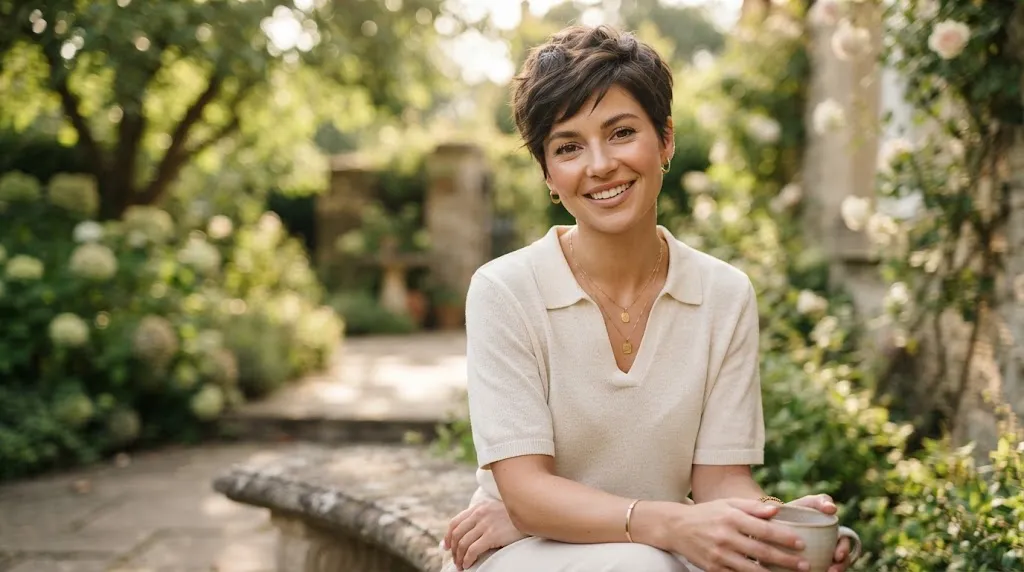
A textured pixie keeps the hair short while using layers and separation to create movement.
- Jawline interaction: Because there is less hair around the jaw, the haircut puts more emphasis on the face itself. Texture helps prevent the overall look from becoming overly geometric.
- Volume placement: Keep controlled height and movement toward the top rather than building unnecessary width at the sides.
- Best textures: Straight and wavy hair are particularly straightforward to adapt; curly hair can also work with an experienced stylist.
- Styling & maintenance: Higher maintenance than longer cuts because the shape needs regular trimming. Daily styling can range from minimal to moderate depending on the texture.
- When to modify it: Avoid copying an extremely tight or sharply geometric pixie if your goal is to soften the appearance of angular features.
Textured Bob

A textured bob gives you short-hair versatility without requiring the very short length of a pixie.
- Jawline interaction: The most important consideration is where the bob ends. A heavy, blunt line directly across the widest part of the jaw can emphasize its width, while softer texture can break up that effect.
- Volume placement: Keep the shape from becoming excessively wide at the lower sides of the face; movement through the crown and upper lengths can create a more balanced silhouette.
- Best textures: Straight and wavy hair work particularly well, while thick or curly hair may need more individualized shaping.
- Styling & maintenance: Moderate maintenance. It can be worn smooth, tousled, or softly waved.
- When to modify it: If you want to reduce emphasis on the jaw, consider a softer or slightly longer version rather than an extremely blunt jaw-length bob.
Short Layered Cut

A short layered cut uses varying lengths to create movement instead of relying on one solid perimeter.
- Jawline interaction: Layers can prevent the sides from forming a rigid frame around the jaw and allow the haircut to move away from the face.
- Volume placement: Strategic volume around the crown and upper sections can work better than excessive width directly beside the jaw.
- Best textures: Straight, wavy, and curly hair can all use layering, but the amount of layering should match the hair’s density and natural movement.
- Styling & maintenance: Moderate maintenance, with the exact styling requirement depending on texture and how defined the layers are.
- When to modify it: Fine hair should not be over-layered because removing too much density can make the ends look thin. Very thick hair may need strategic weight removal to prevent a bulky shape.
Short-hair rule for square faces: Don’t choose a cut simply because it is labeled “flattering for square faces.” Pay attention to where the sides end, where volume is created, how much texture the haircut has, and how the shape behaves with your natural hair texture. That is what determines whether a short haircut complements your particular face.
Best Haircuts for Square Faces by Hair Type
Your hair texture and density can change how the same haircut looks on a square face. Instead of choosing a cut based on face shape alone, adjust layering, length, and weight distribution to work with the way your hair naturally falls.
Straight Hair
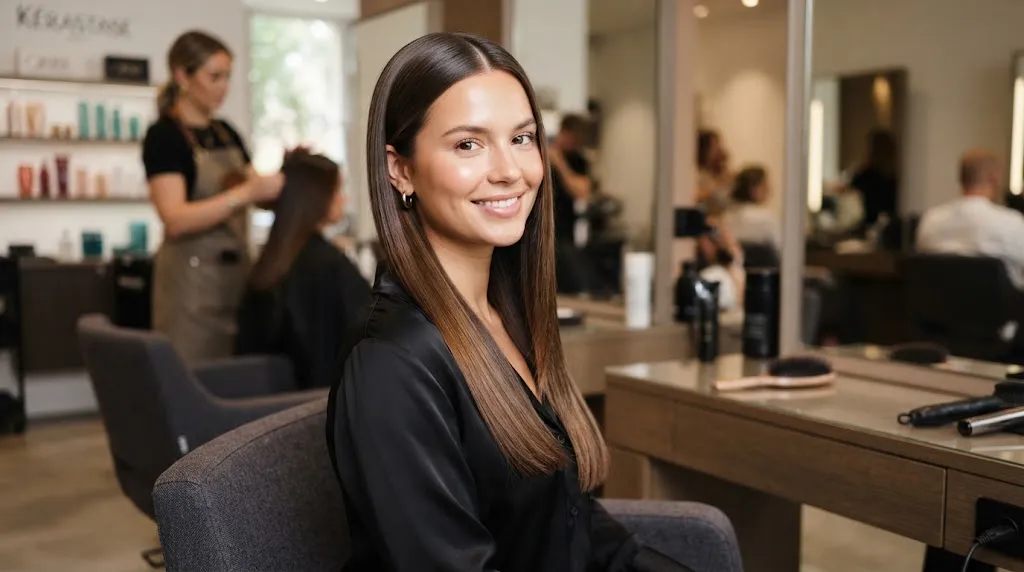
Straight hair can show the outline of a haircut very clearly, so the shape and layer placement matter.
- Suitable shapes: Face-framing layers, long layers, layered lobs, textured medium cuts, and soft feathered shapes can add movement without making the haircut look rigid.
- Layer placement: Keep layers purposeful rather than removing too much weight. Face-framing pieces can create movement around the front, while longer layers distribute weight through the lengths.
- Preventing a flat or boxy appearance: Avoid leaving very thick, completely one-length hair concentrated around the jaw. Subtle texture or movement through the ends can create a softer silhouette.
Best approach: If your straight hair is thick, controlled layering can remove excess weight. If it is fine, use fewer, longer layers so the hair still looks full.
Wavy Hair

Natural waves already provide movement, making them a useful starting point for a square-face haircut.
- Using natural movement: Let the wave pattern create softness rather than cutting the hair into a completely rigid outline.
- Suitable lengths: Medium and long lengths work particularly well when the waves have enough room to form naturally.
- Layer placement: Layers should follow the natural wave pattern and distribute volume rather than allowing excessive width to build up beside the jaw.
- Styling: Enhance the existing wave pattern where possible instead of repeatedly straightening it.
Best approach: A layered medium or long haircut can allow natural waves to frame the face while keeping the overall shape fluid.
Curly Hair

Curly hair needs more individualized cutting because curl pattern and shrinkage can significantly change the finished length and shape.
- Layer placement: Layers should be positioned according to the curl pattern and desired volume. The goal is controlled movement rather than a solid mass around the face.
- Account for shrinkage: Curly hair can appear considerably shorter when dry and fully contracted, so the finished shape should be planned with natural shrinkage in mind.
- Preventing triangular or boxy volume: Avoid removing weight without considering where the curls will expand. Poorly placed layers can make the sides become excessively wide or create an uneven triangular silhouette.
- Styling: Work with the natural curl pattern and allow the haircut to form its intended shape rather than forcing every section into the same direction.
Best approach: Curly layered cuts can work particularly well when the stylist understands the hair’s natural curl behavior and cuts accordingly.
Thick Hair
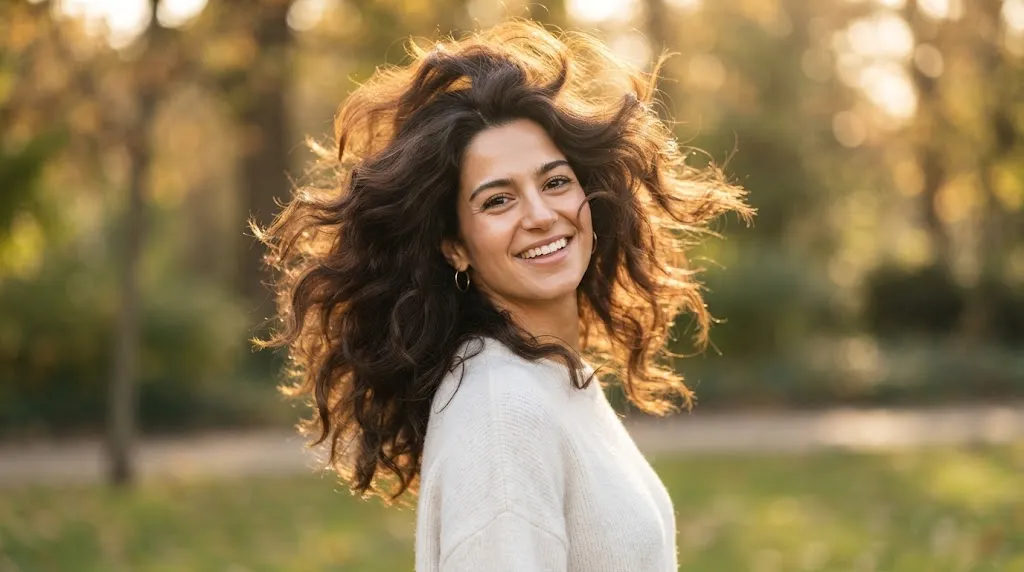
Thick hair gives you plenty of density to work with, but excess weight can make a haircut look heavy around the lower face.
- Managing weight: Strategic layering can redistribute excess density while maintaining the desired overall length.
- Preventing jaw-level bulk: Avoid allowing too much weight to accumulate exactly around the jawline if it makes the face appear visually wider.
- Suitable shapes: Long layers, face-framing layers, layered lobs, and textured medium cuts can help control density while maintaining movement.
- Layer carefully: Removing too much hair can create unwanted volume in other areas, so weight should be managed deliberately rather than simply thinned everywhere.
Best approach: Ask for controlled weight distribution rather than excessive thinning. The goal is movement and manageability without sacrificing the fullness that makes thick hair look healthy.
Fine Hair
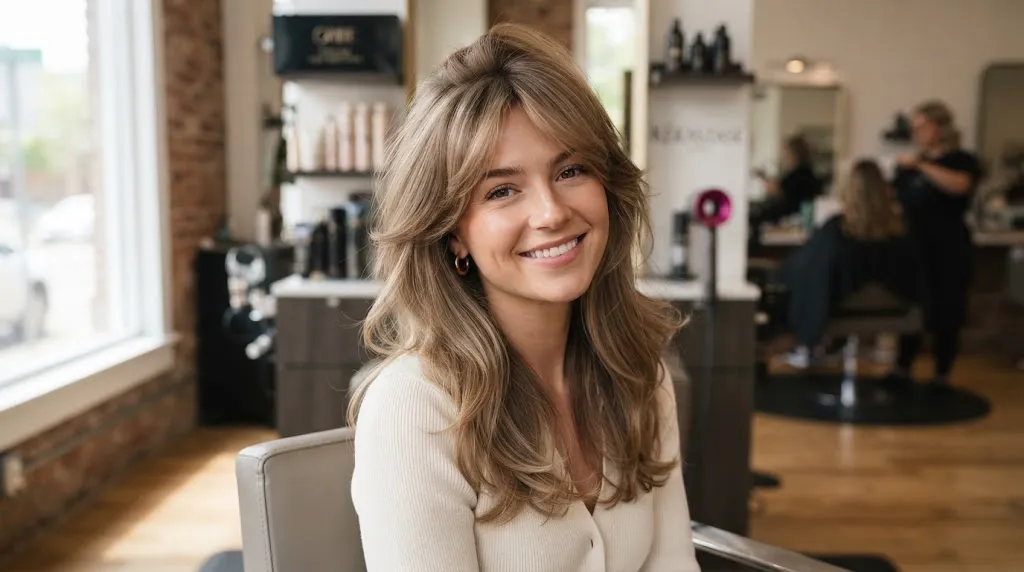
Fine hair needs the opposite approach: preserving enough density while adding movement.
- Preserve density: Avoid excessive layering that removes too much of the hair’s visual fullness.
- Create movement carefully: Subtle face-framing pieces or a small amount of long layering can add shape without making the ends appear sparse.
- Suitable shapes: A layered lob, medium-length cut with restrained layers, or long hair with minimal face-framing can provide movement while retaining density.
- Avoid over-layering: Too many short layers can make fine hair look thinner and may prevent the haircut from maintaining a strong overall shape.
Best approach: Keep the main perimeter relatively full and use strategically placed layers rather than removing large amounts of density.
Best Haircuts for Men With Square Faces
Men with square faces can wear a wide range of cuts, but the most useful approach is to consider hair texture, natural density, desired length, and where the haircut creates volume. Textured, side-swept, and tapered shapes can add direction and movement while working with the naturally defined jawline of a square face.
Textured Crop
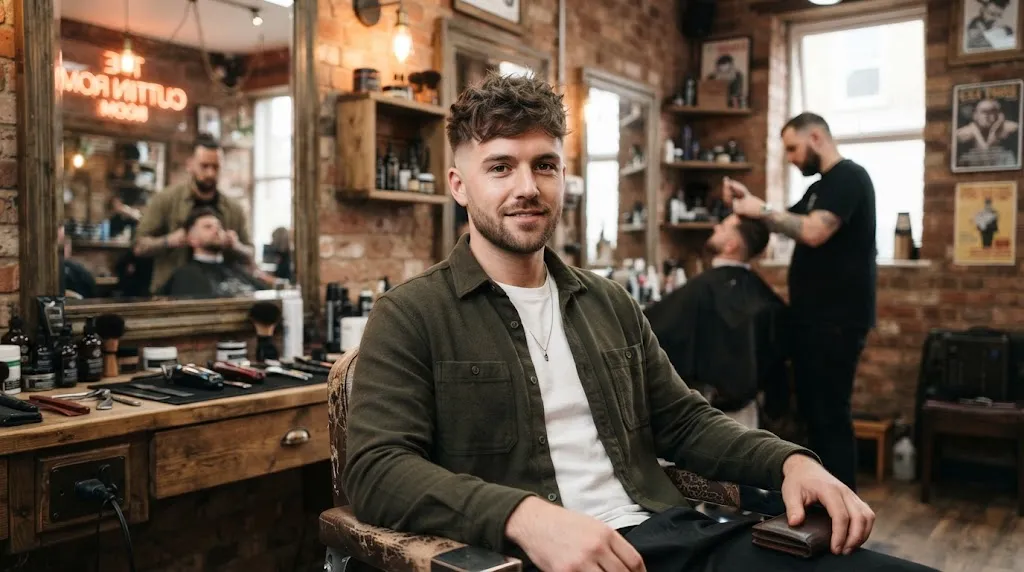
A textured crop keeps the sides relatively controlled while using texture through the top to give the haircut movement.
Why it works: The textured top adds visual direction without creating unnecessary width around the jaw.
Best for: Straight, slightly wavy, or moderately thick hair.
Volume/length: Keep enough length on top to create visible texture while keeping the sides controlled.
Styling: Work the top forward or slightly upward with your natural texture. Avoid making the sides excessively bulky.
What to ask your barber:
“Keep the sides controlled, leave enough length on top for texture, and create a natural, slightly separated finish rather than a completely flat top.”
Side-Swept Haircut
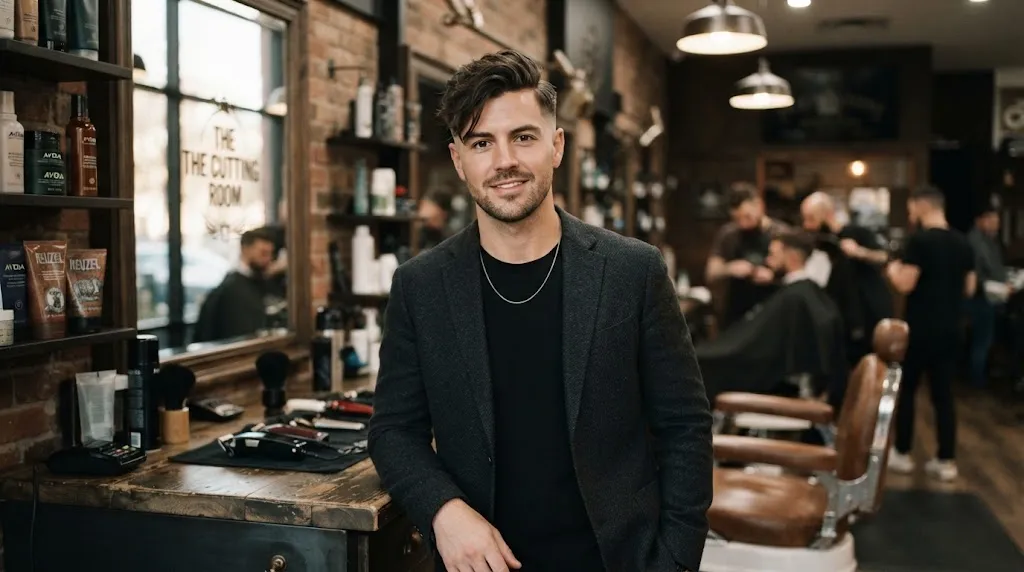
A side-swept style directs the hair diagonally rather than creating a completely symmetrical shape.
Why it works: The directional movement can break up the strong horizontal appearance of a broad forehead and defined jaw.
Best for: Straight and wavy hair, particularly medium-density hair.
Volume/length: Keep moderate length on top so the hair can naturally sweep to one side.
Styling: Blow-dry or comb the hair in the direction you want it to fall, then use light styling to maintain the shape.
What to ask your barber:
“Leave enough length on top for a natural side sweep, keep the sides neat, and blend the transition without making the haircut too boxy.”
Classic Taper
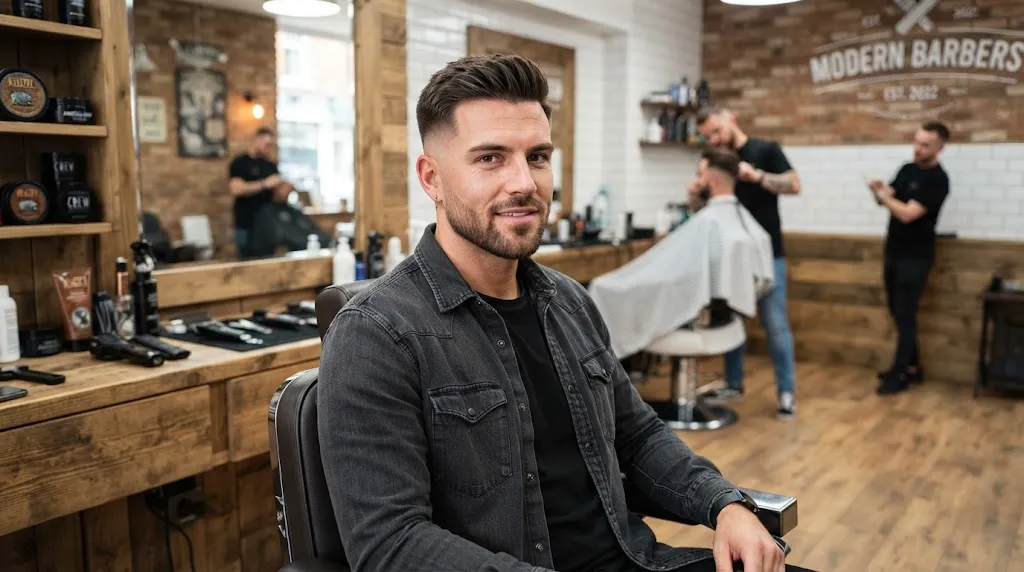
A classic taper gradually reduces the hair around the sides and back without creating the very short contrast of some fade styles.
Why it works: It keeps the sides controlled while allowing the natural structure of a square face to remain visible.
Best for: Straight, wavy, and curly hair.
Volume/length: Keep enough length on top to suit the hair texture and personal styling preference.
Styling: Can be worn neatly combed, textured, or naturally depending on hair type.
What to ask your barber:
“Give me a gradual taper on the sides and back while keeping enough length on top for my natural texture.”
Low Fade for a Square Face
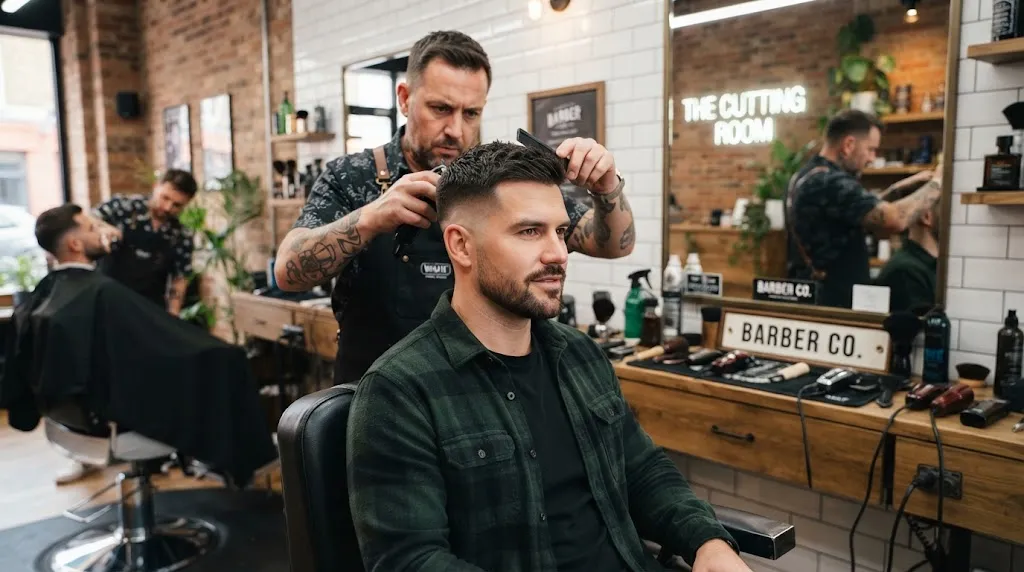
A low fade begins its shortest section relatively close to the lower sides of the head, leaving more hair above the fade.
Why it works: It keeps the lower sides clean while avoiding an unnecessarily high transition that can dramatically change the proportions of the haircut.
Best for: Most straight, wavy, and curly hair types.
Volume/length: The top can remain medium or relatively short depending on the desired style. The important point is controlling the relationship between the top and sides.
Styling: Pair the fade with a textured crop, side sweep, curls, or another top style that suits the hair.
What to ask your barber:
“Keep the fade low and gradual, and leave enough length on top to work with my natural texture.”
Medium-Length Men's Haircut

Medium-length hair gives men more flexibility to use direction, texture, and movement rather than relying entirely on short sides.
Why it works: Extra length allows the hair to be swept, layered, or styled with movement, which can complement the defined structure of a square face.
Best for: Straight, wavy, and curly hair when the length is adapted to the natural texture.
Volume/length: Keep enough length to create movement without allowing excessive bulk to build up around the sides of the face.
Styling: Wear it naturally, side-swept, loosely textured, or with controlled waves depending on the hair type.
What to ask your barber:
“Keep the length long enough for movement, shape the sides so they don’t become bulky, and work with my natural texture rather than forcing the hair completely flat.”
Curly Haircut for a Square Face

Curly hair can work especially well when its natural volume and curl pattern are incorporated into the haircut rather than treated like straight hair.
Why it works: Natural curls add movement and variation, while appropriate shaping can keep the overall silhouette balanced.
Best for: Naturally curly and coily hair.
Volume/length: The amount of length and volume should be based on curl pattern, density, and shrinkage. Avoid creating uncontrolled width at the sides.
Styling: Enhance the natural curls and maintain their definition rather than repeatedly straightening them.
What to ask your barber:
“Shape the haircut around my natural curl pattern and shrinkage, keep the sides controlled, and make sure the finished shape doesn’t become too wide.”
Common Hair Problems With Square Faces—and How to Fix Them
Choosing a haircut that suits a square face is only part of the process. A cut can look excellent in a salon but behave differently at home because of hair density, natural texture, growth pattern, or styling technique. The practical solution is usually to adjust the haircut’s shape or styling rather than simply choosing a different hairstyle.
“My Hair Makes My Jaw Look Wider”

Problem: Your hair may be creating too much horizontal volume or ending with a strong, heavy line around the jaw.
Likely haircut/shape issue: A blunt perimeter, excessive side volume, or layers that finish directly at the widest part of the jaw can visually reinforce that width.
Specific adjustment: Ask for softer movement through the sides and consider face-framing or longer layers that continue past the jaw rather than stopping directly on it.
Practical styling solution: Direct the front sections slightly away from the face and keep the sides from becoming overly full at jaw level.
“My Thick Hair Looks Too Heavy Around My Face”

Problem: Dense hair can accumulate too much weight around the sides and lower face.
Likely haircut/shape issue: The haircut may be carrying too much solid weight around the jaw instead of distributing it through the lengths.
Specific adjustment: Use strategic layers or controlled weight removal rather than simply thinning the entire haircut. The goal is to redistribute bulk while retaining enough density for the hair to look full.
Practical styling solution: When drying, direct the hair away from the face and avoid creating additional volume directly beside the jaw.
“My Fine Hair Looks Flat”
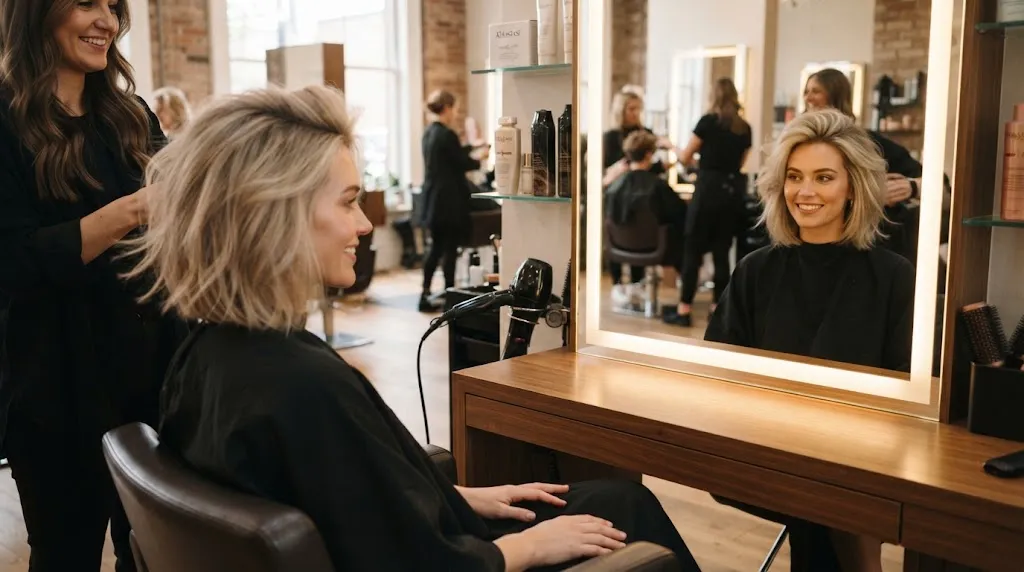
Problem: Fine hair may lack enough density or movement to hold the intended shape.
Likely haircut/shape issue: Too much layering may have removed valuable density, while a completely one-length cut may leave the hair looking flat.
Specific adjustment: Keep the main perimeter relatively full and use restrained face-framing or longer layers rather than numerous short layers.
Practical styling solution: Create lift at the roots and use light movement through the mid-lengths and ends. Avoid heavy styling products that can weigh fine hair down.
“My Curly Hair Looks Too Boxy”
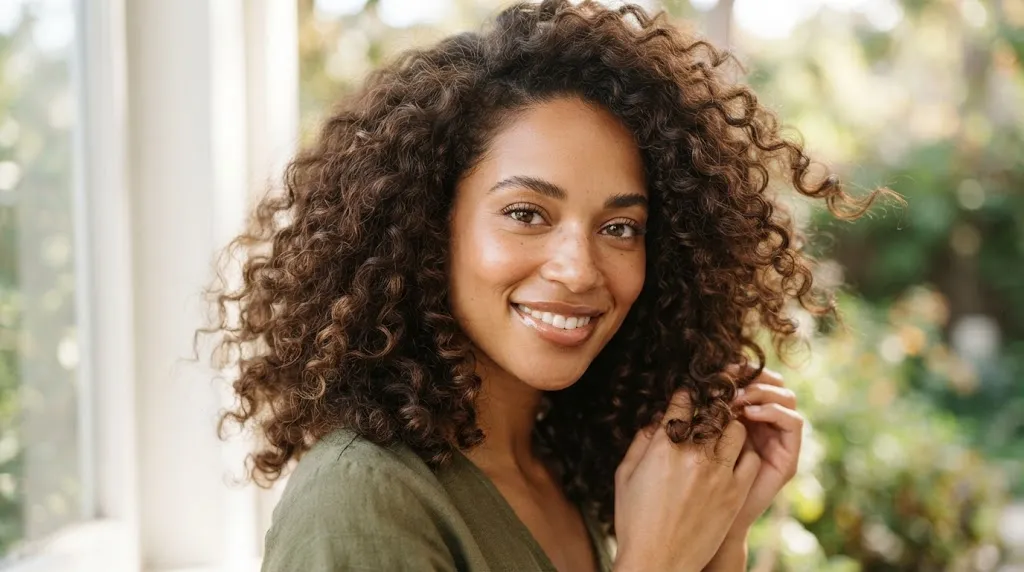
Problem: Curly hair can expand outward and create excessive width when the layers or overall shape do not work with the curl pattern.
Likely haircut/shape issue: Uneven layer placement, insufficient weight distribution, or cutting the curls without accounting for shrinkage can produce a boxy or triangular silhouette.
Specific adjustment: Use curl-aware layering that follows the natural curl pattern and controls where the hair expands. The stylist should consider how much the curls contract when dry.
Practical styling solution: Encourage the curls to form naturally and define them without pushing additional volume toward the sides of the jaw.
“I Want Short Hair Without Emphasizing My Jaw”

Problem: You want a shorter haircut but are concerned that reducing the length will make the jaw appear more prominent.
Likely haircut/shape issue: A very blunt short cut that ends directly at the jaw or creates strong horizontal width can emphasize the lower face.
Specific adjustment: Consider a textured pixie, bixie, or textured short cut with controlled sides and movement through the top.
Practical styling solution: Keep the sides from becoming excessively wide and use texture or directional styling to create movement rather than a rigid outline.
“My Haircut Looks Good at the Salon but Not at Home”

Problem: The haircut may depend on professional blow-drying, heat styling, or techniques that you do not normally use.
Likely haircut/shape issue: The cut may not have been designed around your natural texture, daily routine, or realistic styling time.
Specific adjustment: Tell your stylist exactly how you normally wear your hair before the cut. Ask how the haircut will behave when air-dried or styled with your usual routine.
Practical styling solution: Learn the specific direction in which the face-framing pieces, bangs, or layers should be dried. If a style requires more daily work than you want to do, adjust the haircut rather than fighting your natural hair every morning.
“I Want to Keep My Hair Long”

Problem: You do not want to sacrifice length just because you have a square face.
Likely haircut/shape issue: Long hair itself is not the problem; excessive weight or a completely solid shape around the lower face can be.
Specific adjustment: Keep the overall length while adding long layers or carefully placed face-framing pieces.
Practical styling solution: Create movement through the lengths with soft waves or natural texture, while avoiding excessive bulk directly around the jaw.
“I Don't Want to Hide My Strong Jawline”

Problem: You may like the defined structure of your square face and do not want a haircut designed to make it look less angular.
Likely haircut/shape issue: The issue is not necessarily your jawline; it may simply be a mismatch between the haircut’s shape and the look you want.
Specific adjustment: Choose whether you want to soften, balance, or emphasize your natural facial structure. A more structured or cleaner haircut can intentionally complement a strong jaw rather than trying to disguise it.
Practical styling solution: Keep the haircut intentional and controlled. If you want to emphasize your facial structure, avoid adding unnecessary volume solely to “soften” the face. The best haircut is ultimately the one whose shape matches both your proportions and the look you want to achieve.
How to Choose the Right Haircut for Your Square Face

The best haircut depends on more than face shape. Use length, texture, density, maintenance needs, and your desired result to narrow down the right option without choosing a style that is difficult to manage.
Choose by Hair Length
Short: Choose a textured or layered shape if you want a lighter, more structured look while keeping the sides controlled.
Medium: A good middle ground if you want flexibility, movement, and easier length management.
Long: Best when you want to keep your length while using layers or face-framing to control weight and movement.
Choose by Hair Texture
Straight: Favor controlled layering and texture to prevent a rigid or overly boxy outline.
Wavy: Use the natural movement of the hair rather than fighting it with excessive styling.
Curly: Choose layering based on your curl pattern and shrinkage so the finished shape does not become excessively wide.
Choose by Hair Density
Fine: Preserve density and avoid excessive layering that can make the hair appear thinner.
Medium: Most haircut shapes can be adapted easily; choose based mainly on desired length and styling routine.
Thick: Prioritize controlled weight distribution so excessive bulk does not collect around the face or jaw.
Choose by Maintenance
Low-maintenance: Choose a shape that works with your natural texture and requires minimal daily styling.
Styling-dependent: If you are comfortable blow-drying, using heat, or reshaping your hair regularly, you have more flexibility with bangs, waves, and directional styles.
Choose by Styling Goal
Want softer movement? Look for layering, natural texture, or controlled waves.
Want more volume? Keep volume strategically placed rather than adding excessive width beside the jaw.
Want to keep your length? Use long layers or face-framing instead of removing substantial overall length.
Want to reduce bulk? Use strategic weight distribution, particularly if your hair is thick.
Want to emphasize your natural features? Choose a structured haircut that works with your defined jawline instead of trying to disguise it.
Quick Rule Start with the haircut length you actually want, then adapt the layers, volume, and texture to your hair type and the way you want your square-face features to look.
What to Ask Your Hairstylist or Barber
Taking a clear plan to your appointment makes it easier to get a haircut that works with your square face shape, natural hair texture, density, and daily routine. Instead of showing a photo and asking for an exact copy, explain what you like about the reference and how you normally wear your hair.
What to Tell Your Hairstylist

Tell your stylist:
- That you have a square face and which features you want to soften, balance, or emphasize.
- Your natural hair texture: straight, wavy, or curly.
- Whether your hair is fine, medium, or thick.
- How much length you want to keep.
- How much time you realistically spend styling your hair each day.
- Whether you normally air-dry, blow-dry, or style your hair with heat.
- Any problem areas, such as excessive bulk around the jaw, flat roots, or difficult-to-control curls.
For example: “I want to keep my length, but I need movement around my face without creating extra width around my jaw. My hair is thick and naturally wavy, and I usually want a low-maintenance style.”
What to Show in a Reference Photo
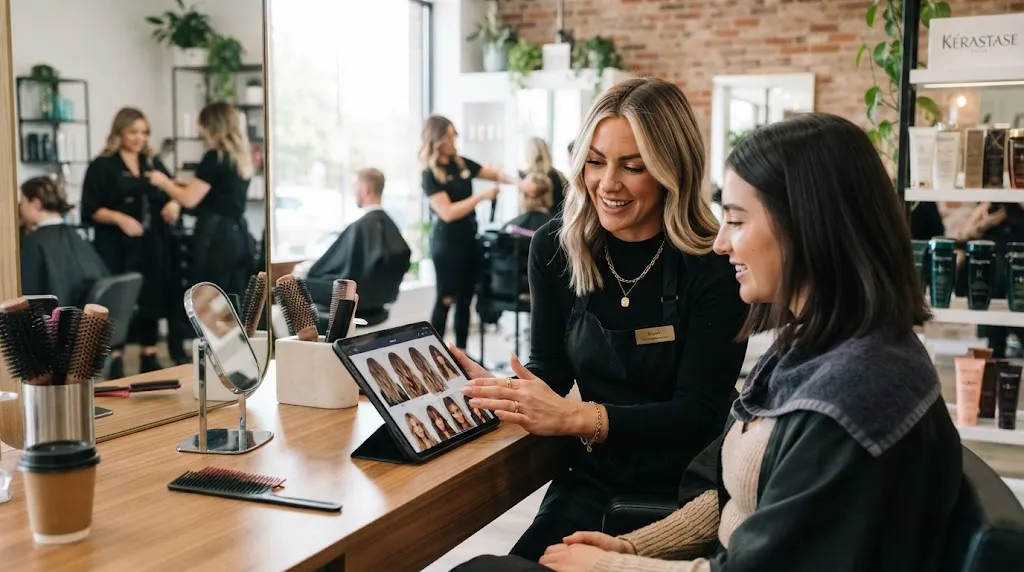
Bring a photo that shows the haircut clearly from the front and, when possible, the side or back.
Don’t focus only on the model’s face shape. Instead, point out the specific details you want:
- Overall haircut length
- Face-framing layer placement
- Amount of layering
- Bang length
- Side volume
- Texture or wave pattern
- Overall silhouette
Also tell your stylist what you don’t want. A reference photo is a guide, not a guarantee that the exact haircut will behave the same way on different hair textures or densities.
Questions to Ask Before the Cut
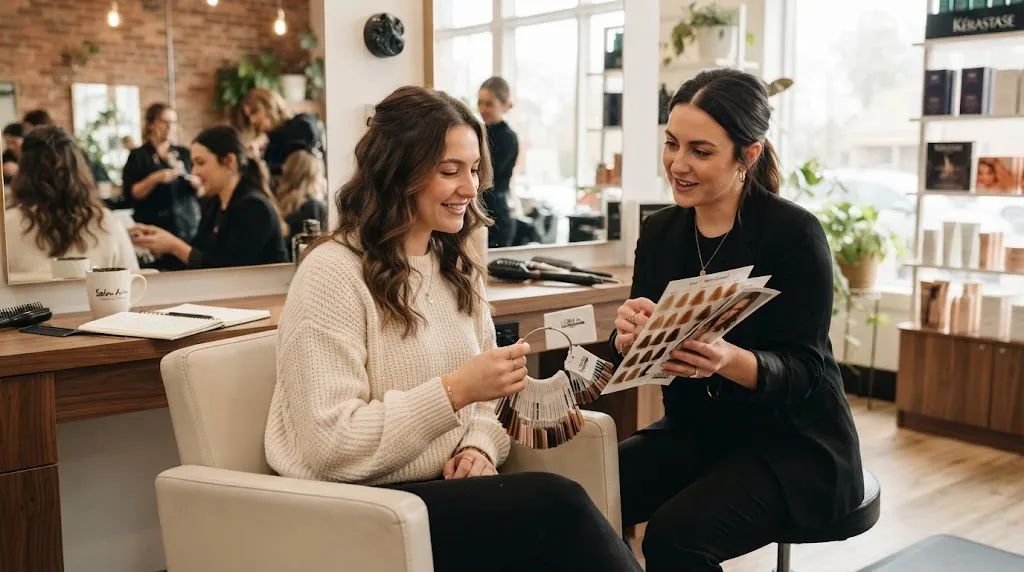
Ask these questions before the scissors come out:
- Where should my face-framing layers start for my face shape?
- Will removing weight make my hair look too thin?
- Will this haircut work with my natural texture?
- How will my curls or waves change the finished length?
- Will this shape create too much width around my jaw?
- How much daily styling will this haircut require?
- Can I wear it successfully without heat styling?
- How will the haircut look as it grows out?
- How often will I need a trim to maintain the shape?
The goal is not simply to ask for a “haircut for a square face.” Give the stylist enough information to adapt the length, layering, weight, and styling requirements to your actual hair and the result you want.
Frequently Asked Questions About Haircuts for Square Faces
Soft layered cuts, textured lobs, and styles with side-swept elements generally look best on a square face shape.
However, the ideal choice depends on your styling goal:
- Add movement: Long layers and textured ends prevent static weight around the jaw.
- Soften the outline: Face-framing layers or side bangs balance sharp angles.
- Retain length: Long wavy cuts draw the eye downward, lengthening overall proportions.
- Emphasize angular structure: A sharp, blunt bob or strong line-up boldly highlights a strong jawline.
There is no single "best" length; instead, different lengths interact with the jawline in distinct ways:
- Short lengths: Pixies and cropped cuts work exceptionally well when top volume and side texture draw attention upward away from the jaw.
- Medium lengths: Lobs that fall just past the collarbone clear the jawline entirely, offering a softening vertical effect.
- Long lengths: Hair reaching below the shoulders adds natural weight and vertical flow, balancing strong facial width.
Both long and short hair can look flattering on a square face. The key decision factors are:
- Weight placement: Ensuring hair mass does not sit directly at the widest point of the jawline.
- Movement: Incorporating waves, texture, or soft layers rather than solid, rigid blocks of hair.
- Personal preference: Whether you prefer a softer, elongated appearance or want to highlight strong facial features.
Cuts that create rigid, boxy silhouettes or concentrate width right at the jawline tend to be harder to wear. Examples include chin-length blunt bobs and thick, straight-across full bangs without soft edges.
However, simple modifications—such as adding interior texture, a subtle side sweep, or extending the length slightly below the jaw—can make these exact cuts work beautifully.
You can create a visually slimmer and more elongated effect by incorporating specific design elements:
- Vertical movement: Gentle waves and long vertical layers draw the eye up and down.
- Face-framing pieces: Soft wisps starting below the cheekbones break up broad width.
- Strategic volume: Adding height at the crown elongates the vertical line of the face.
- Avoiding jaw-level volume: Keeping sides sleek or tapered near the jaw avoids adding extra width.
For mature women with a square face shape, cuts that prioritize easy manageability, soft movement, and natural texture work best.
Styles with crown volume, soft face-framing angles, and minimal daily styling time—such as a textured pixie, layered bob, or soft shag—provide a fresh, flattering lift that softens angular features.
Yes, layers are generally excellent for square faces because they remove bulk and add fluidity.
However, execution matters based on hair density and placement:
- Thick hair: Long, blended layers remove weight and soften the outer silhouette.
- Fine hair: Subtle, light layering prevents the ends from looking sparse.
- Placement rule: The shortest layer should start either above or below the jawline, rather than ending exactly at the corner of the jaw.
Yes, bangs can be very flattering on a square face, provided their shape and width are tailored carefully.
- Curtain bangs: Softly frame the forehead and cheekbones while blending smoothly into the rest of the hair.
- Side-swept bangs: Break up symmetry and create diagonal lines that soften a broad forehead.
- Wispy/textured bangs: Allow the forehead to show through, keeping the overall look light and balanced.
Yes. Short hair works remarkably well on a square face when designed with intentional texture, top volume, and soft directional movement rather than a severe, rigid perimeter at the jawline.
Final Takeaway
There is no single haircut that works identically for every square face. Choose your cut according to your face proportions, hair texture, density, desired length, and maintenance preference. For the best match, return to the haircut section that fits your hair length and texture, then choose the style whose shape and styling needs suit you best.