
Haircut Without Losing Length: The Complete Guide to Deep Layers for Long Hair
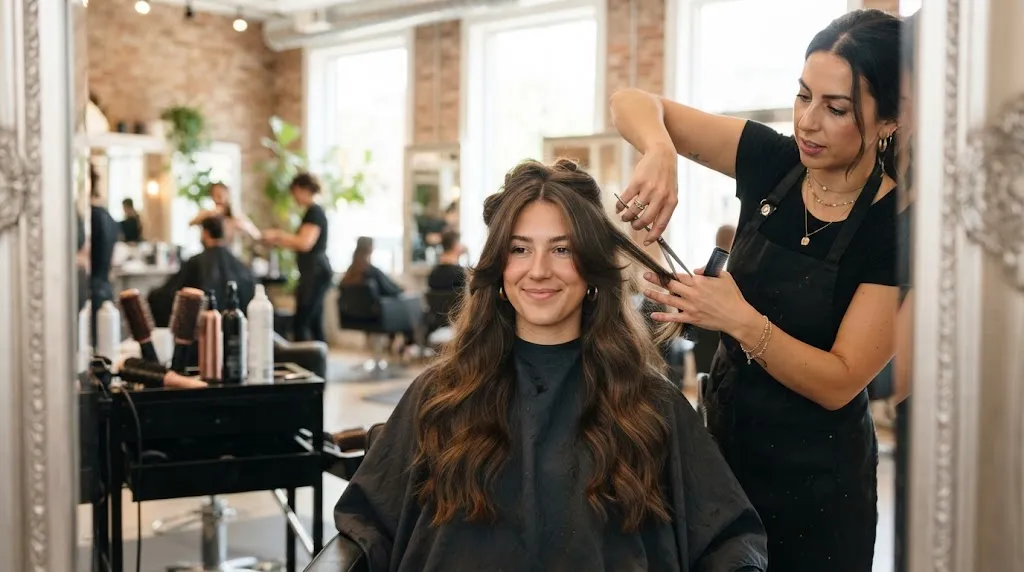
Yes — Here's How to Refresh Your Hair Without Cutting Length

You can easily refresh your style and ditch dead ends without sacrificing a single inch of overall length by shifting the focus to internal weight and shape. I’ve had clients sit in my chair clutching their ends in panic, terrified of losing their hard-earned growth, only to walk out feeling completely light and bouncy because we worked entirely with texture and framing instead of the hemline.
A dust trim removes a microscopic quarter-inch of only the split, frayed ends rather than taking off a blunt chunk, preserving your length down to the millimeter.
Face-framing layers carved softly around the cheekbones and jawline instantly lift your look and add movement up front without touching the long lengths in the back.
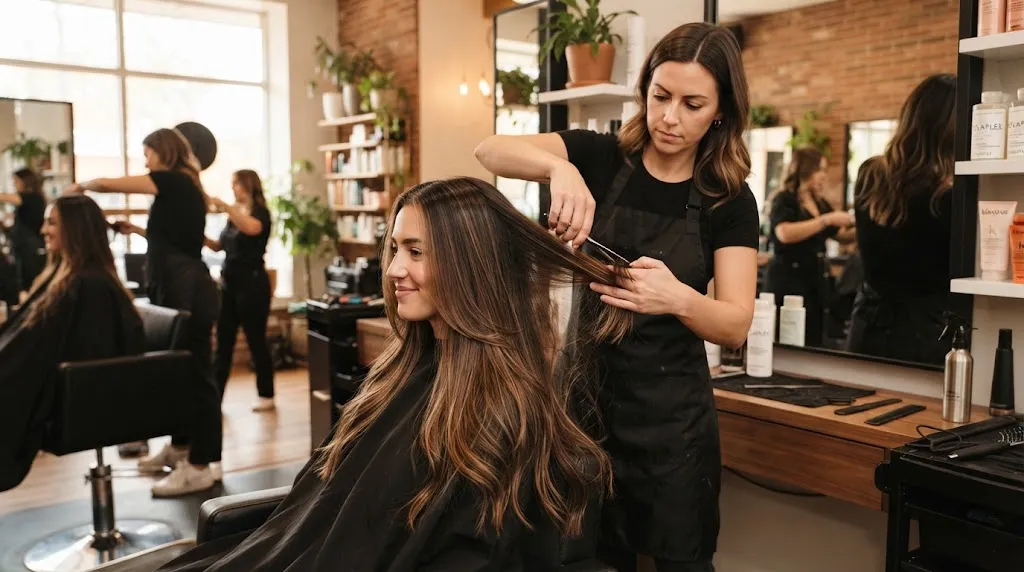
Integrating a deep layer haircut for girls with long hair pulls weight out from the interior of thick manes, which stops the hair from looking blocky or dragging you down.
Using slide or point cutting techniques instead of a heavy blunt chop softens the perimeter so your hair falls naturally without a harsh shelf effect.
Shaping the back into a subtle U-cut or V-cut removes corner bulk while keeping your longest bottom strands completely untouched.
For more cuts and styling ideas beyond this guide, browse our full hairstyles collection on hairstylesusa.com.
What "Haircut Without Losing Length" Actually Means
When a client sits in my chair and panics at the mention of scissors, I always remind them that getting a haircut without losing length is entirely about carving out shape rather than hacking off inches. You are changing the silhouette, weight distribution, and movement of your hair while keeping your overall hemline right where it is.
Why a Small Trim Feels Like a Big Loss (But Isn't)
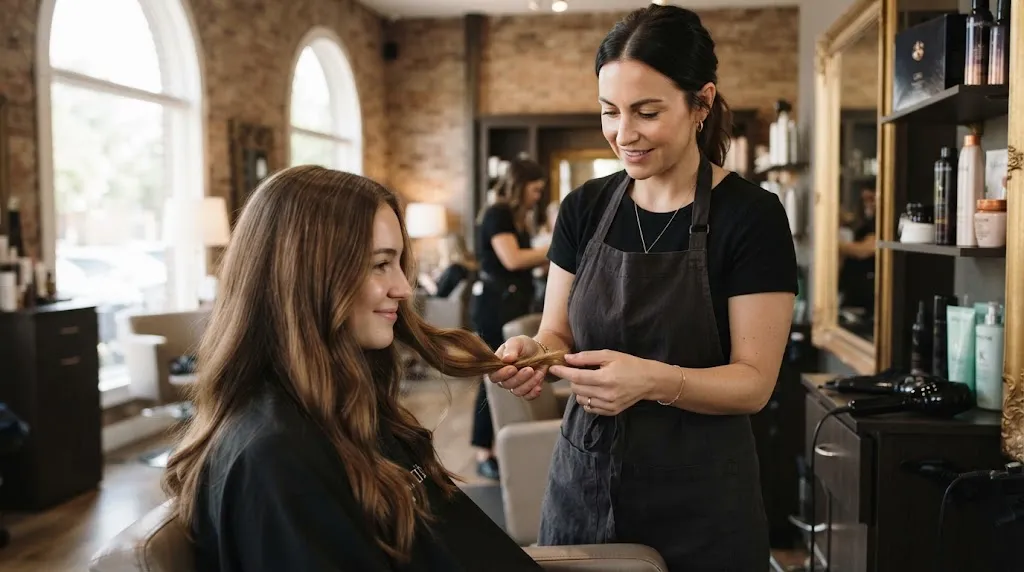
We’ve all experienced that drop in the stomach when a stylist snips past the point you agreed on, which is why a minor cleanup often feels like a disaster. That psychological panic usually stems from bad past experiences where “just a half-inch” turned into three, rather than the physical reality of what’s happening to your ends.
In technical terms, a blunt cut stretches a single horizontal line across the bottom, making every strand hit the exact same perimeter and instantly exposing dry or thin ends. Layering, on the other hand, works vertically by elevating sections at different angles—typically 90 to 180 degrees—to remove bulk from the interior and crown. This means you can carve out a deep layer haircut for girls with long hair to instantly boost bounce and eliminate the dreaded triangle head shape, all while your longest pieces stay grazing your lower back.
Real Concerns Women Have Before Getting This Haircut

If you’re hesitating in the salon chair because you’re worried your stylist will take off three inches instead of a half-inch, you’re not alone. I’ve heard every fear in the book from clients sitting in front of my mirror. Here is the reality behind those worries:
“My stylist always cuts more than I asked for”: This usually happens because of wet vs. dry measurement confusion. Wet hair stretches significantly, making it look longer than it actually is. Always request a dry cut or insist your stylist check the final length on dry hair before finishing up.
“Will layers make my hair look thinner?”: If you have fine hair, a deep layer haircut for girls long hair can actually create the illusion of fullness by removing heavy bottom weight—just avoid overly disconnected cuts.
“Will layers work with braids and ponytails?”: Shorter pieces might slip out of tight styles, but strategic long layers blend smoothly into casual ponytails without causing messy fallout.
“I don’t know how to explain what I want”: Skip vague terms like “a trim.” Bring two distinct reference photos: one showing the length you want to keep, and another showing where you want the shortest piece to fall.
“Layers look awkward while growing out”: Expect a maintenance trim every 8 to 12 weeks to keep the graduation soft and seamless.
“I’m scared to try layers on curly hair”: Cutting curls requires shaping them curl-by-curl rather than pulling them straight, ensuring no awkward ledges or shelf-like steps appear as your curl pattern bounces back.
6 Techniques That Add Volume Without Cutting Length
Getting a haircut without losing length comes down to precision texturing and removing weight right where your hair needs it most.
1. Dust Trim (Dusting)
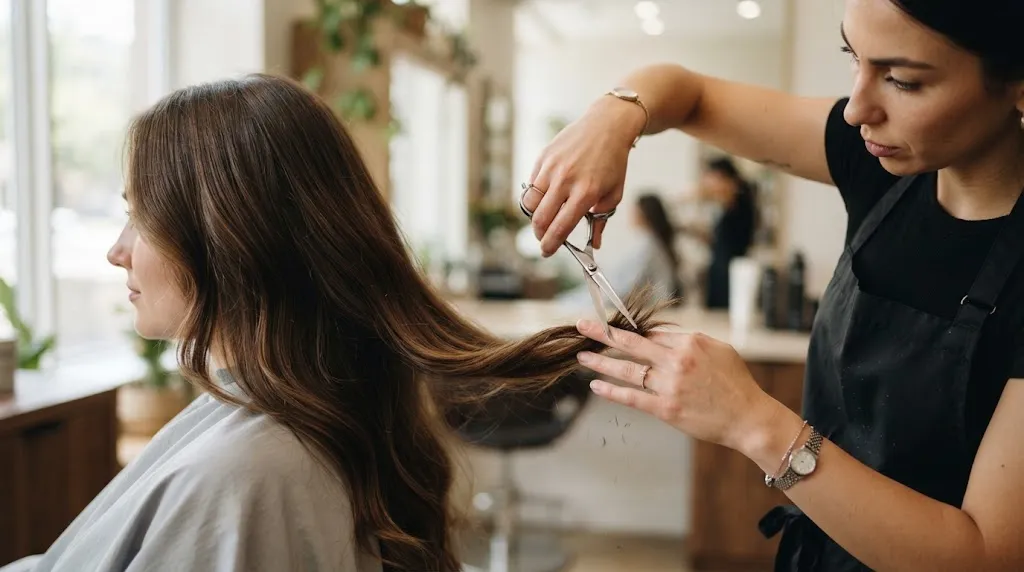
A dust trim removes only the absolute tips—less than a quarter-inch—to eliminate frayed split ends before they travel up the hair shaft. It’s ideal for fine or medium long hair that feels dry at the ends. Tell your stylist: “I want a true dusting, taking off no more than a quarter-inch of dead ends only.”
2. Face-Framing Layers
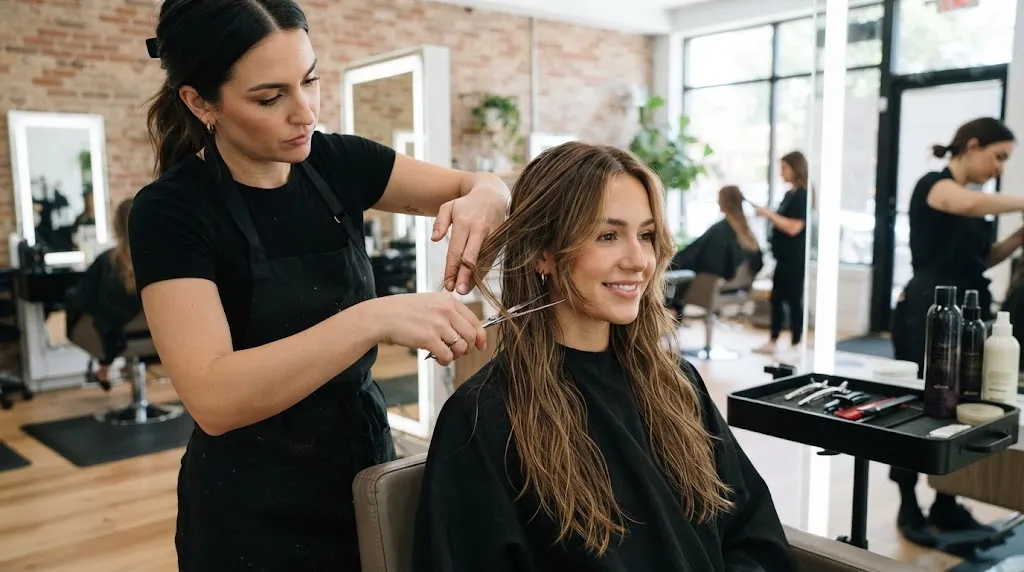
Face-framing layers kick off movement around the cheekbones or jawline while leaving your back length entirely untouched. This method works wonders for heavy, one-length cuts that drag down round or oval face shapes. Tell your stylist: “Add soft face-framing layers starting right below my chin, but keep the overall length in the back solid.”
3. Deep / Long Layers
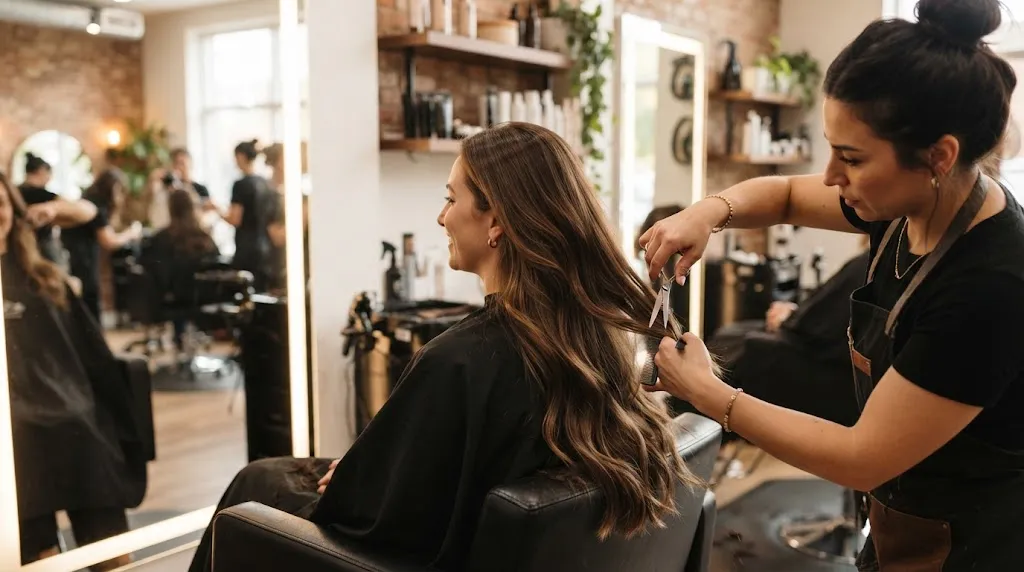
A deep layer haircut for girls long hair builds vertical lift and airy separation by blending longer, cascading tiers through the interior. It’s best suited for thick or dense hair types prone to triangle head. Tell your stylist: “I’d love long, blended layers that start low near my collarbone to remove bulk without sacrificing my length.
4. Slide Cutting & Point Cutting
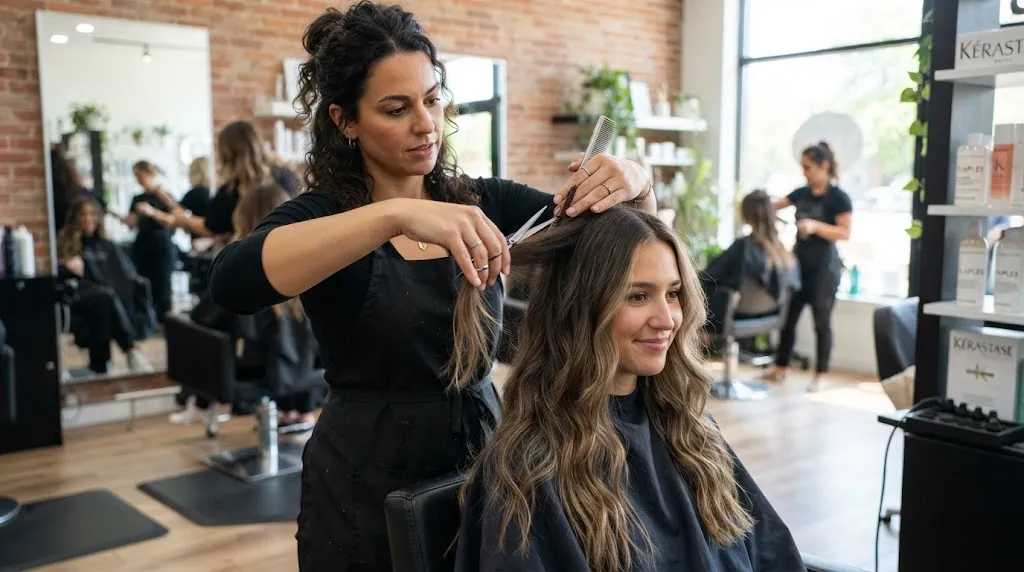
Slide cutting glides open shears down the hair strand to create a seamless taper, while point cutting carves into the ends vertically for soft texture. These methods suit straight to wavy textures craving less bulk. Tell your stylist: “Use slide cutting and deep point cutting through the ends for a lighter, shattered finish.
5. U-Cut vs. V-Cut
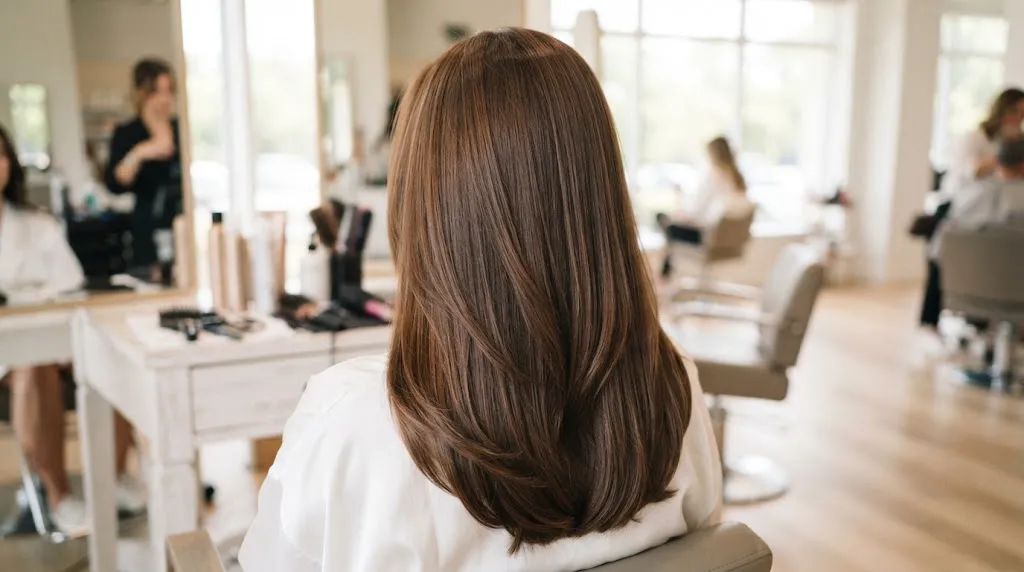
Shaping the perimeter into a curved U-shape or a sharper V-shape removes heavy corners at the bottom while preserving maximum length down the spine. This is a game-changer for thick or coarse manes. Tell your stylist: “Cut the back perimeter into a soft U-shape to maintain my length while softening the bottom corners.
6. Internal / Invisible Layers
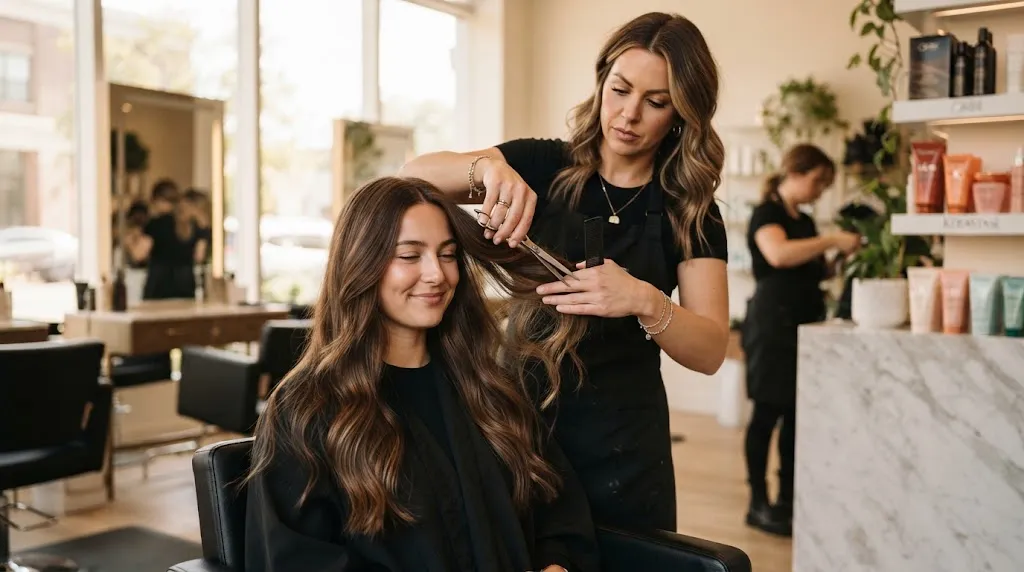
Internal or invisible layers carve out weight from the middle of your hair section without changing the outer silhouette or shortening your longest strands. It’s the ultimate fix for flat roots on medium-to-thick hair. Tell your stylist: “Can you debulk with internal texturing layers so my hair feels lighter without changing my length?
How Many Inches Do You Actually Lose?
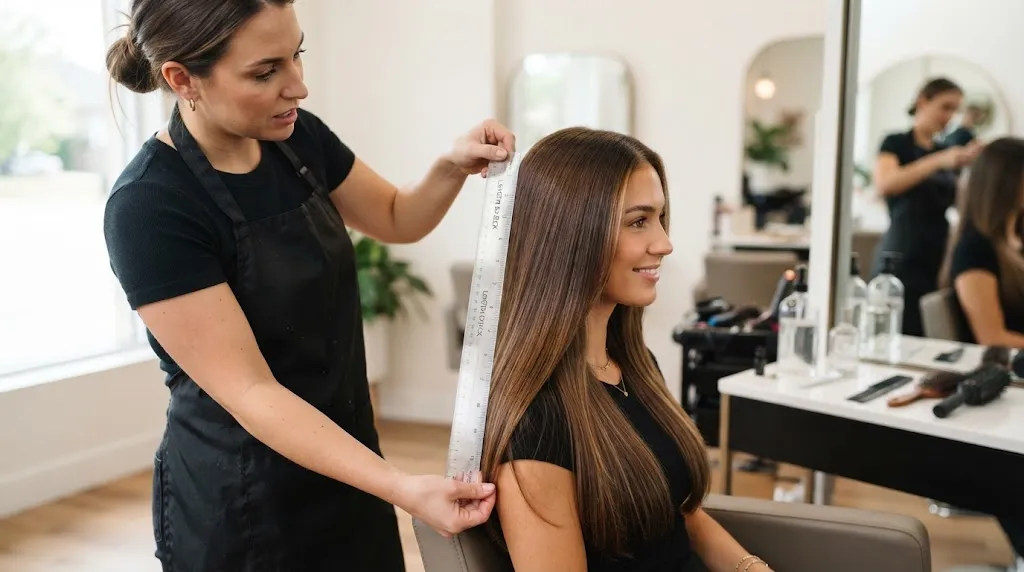
| Technique | Length Lost | Best For |
|---|---|---|
| Dust Trim | ¼"–½" | Split-end removal only |
| Face-Framing Layers | 0" (back untouched) | Face movement |
| Deep/Long Layers | 1"–2" (only where layers start) | Volume for long hair |
| Slide/Point Cutting | Minimal, texture only | Softening blunt ends |
| U-Cut/V-Cut | ½"–1" at edges | Rounding/shaping ends |
Best Layer Style for Your Face Shape and Hair Type
Getting a haircut without losing length all comes down to tailoring your layers to your exact bone structure and texture, rather than copying a generic trend. When I’m behind the chair, I always tell clients that placement is everything—where your layers start can completely change how your face shape is framed.
By Face Shape
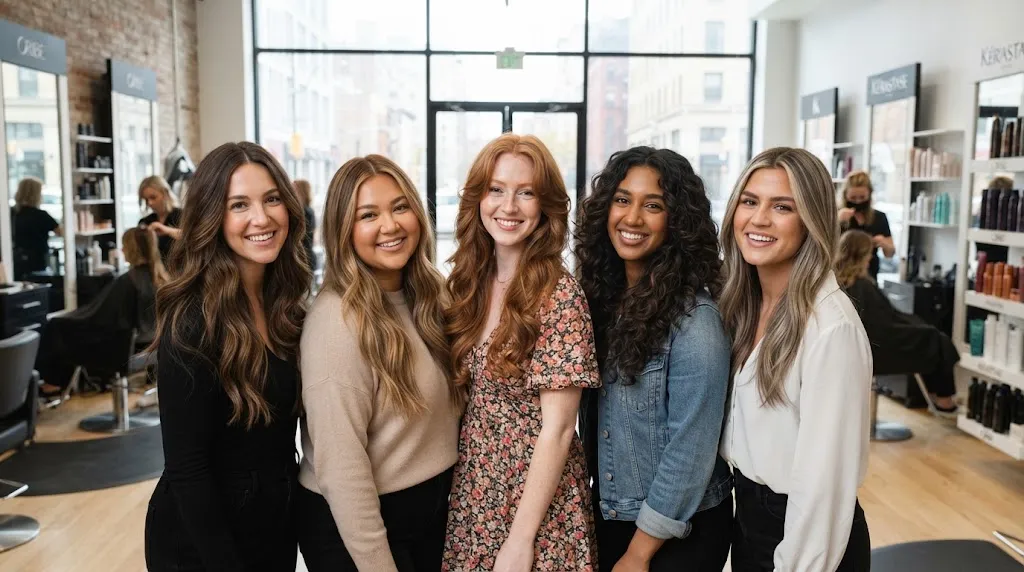
If you have a round face or a chubby face, you’ll want layers starting below the chin to draw the eye downward and elongate your features. On the flip side, if you’re working with a slim face or a wide forehead, starting your layers higher up near the cheekbones or brow adds width and balanced softness without sacrificing your overall length.
| Face Shape | Best Layer-Start Point & Technique |
| Round Face | Start layers below the chin to elongate and create vertical lines. |
| Slim Face | Begin layers near the cheekbones to add width and fullness around the cheeks. |
| Chubby Face | Drop the starting point past the jawline to create a slimming, draping effect. |
| Wide Forehead | Incorporate face-framing pieces starting near the eyes to soften the upper proportions. |
By Hair Type

Your natural texture dictates how those layers will actually behave once they’re cut. Fine strands need a delicate touch, while thick manes require tactical weight removal to avoid looking triangular.
| Hair Type | Layering Strategy & Execution |
| Fine Hair | Keep things light with subtle, wispy layers that preserve density at the ends. |
| Thick Hair | Focus on internal weight removal and long, cascading layers to debulk without thinning the perimeter. |
| Curly Hair | Cut long layers dry to ensure individual curls bounce up evenly without disrupting your overall length. |
Curly Hair vs. Straight Hair: Different Length-Loss Math
Getting a deep layer haircut for girls with long hair requires entirely different strategies depending on your natural texture, because curls and straight strands behave completely differently under the shears. Straight hair shows length loss immediately; what hits the floor is the exact amount missing from your ends, leaving zero room for optical illusions.
With curls, the math changes drastically due to shrinkage. I’ve had clients panic in my chair when wet curls look three inches shorter, only to watch them spring right back up into a bouncy shape once they dry. The real trick here is dry cutting. When I cut curly hair in its natural, dry state, I can see exactly how each spring reacts and where the weight lives without guessing how much it’ll coil up later.
Straight hair, on the other hand, demands precision wet cutting to keep those perimeter lines crisp and clean. If you have curls, trimming a quarter-inch can visually translate to a loss of an inch or more of length once the spring pattern resets. Always remind your stylist to factor in your dry bounce factor before they make the first cut, especially if preserving your overall length is your top priority.
Exactly What to Say to Your Stylist

Getting a great haircut without losing length comes down to clear communication in the chair. Stylists aren’t mind-readers, and vague requests often lead to shorter locks than you wanted.
Use this ready-to-copy script during your consultation:
“I want to keep my exact length. Please only dust the ends for split ends. If adding layers, start them below my collarbone. Remove weight from the interior only, not the length.”
Mistakes That Cut More Length Than You Wanted

Getting a haircut without losing length comes down to clear communication and understanding how hair behaves as it dries. When you ask for “just a trim” without giving a specific measurement, you leave room for interpretation. I always tell my clients to bring in a physical photo or specify an exact number of inches—like half an inch or one inch—because what feels like a micro-trim to a stylist might mean two or three inches to you.
Another common trap is measuring or evaluating length only while your hair is wet. Water stretches hair fibers, making them look significantly longer in the chair than they actually will once dry and styled. Always check your dry length before any shears touch your ends.
Finally, be cautious if you have fine or delicate strands. Heavy layering on already-thin hair removes crucial weight at the bottom, which often results in stringy ends and an accidental illusion of a much shorter, thinned-out cut.
Vague requests: Saying “clean up the ends” instead of asking for a precise half-inch dusting.
Wet-hair stretching: Letting a stylist cut based on wet-length drape rather than natural dry bounce.
Over-layering fine textures: Adding aggressive stacked layers that compromise your baseline density.
Real Before-and-After Results
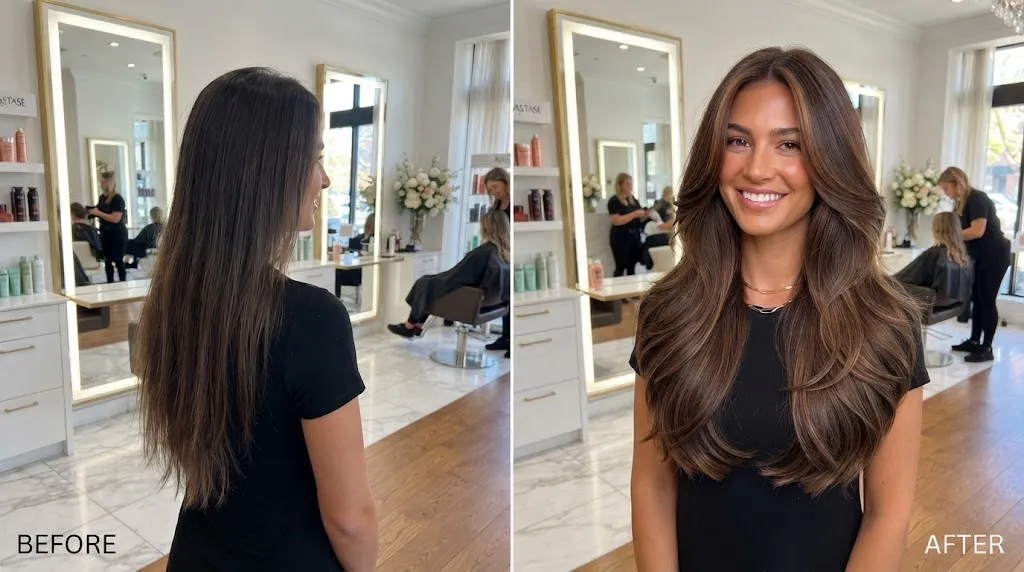
Seeing a deep layer haircut on long hair in action makes all the difference when you’re terrified of losing your overall length. Take Maya, a client who came into the salon with heavy, blunt past-chest hair that felt like a thick heavy blanket. She wanted massive movement without sacrificing an inch of her 26-inch length.
By utilizing internal texturizing shears and face-framing chin-length cascading layers, we removed roughly 1.5 pounds of bulk from the interior while keeping every single millimeter of the perimeter intact. Her ends look dense and healthy, yet her ponytail instantly dropped in weight by half.
How to Maintain Layers Without Losing Shape
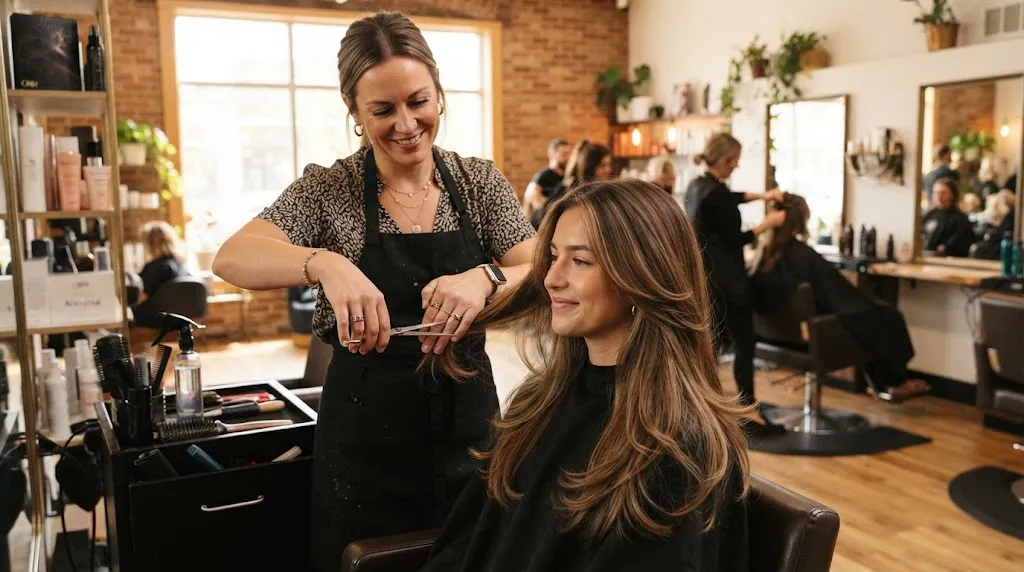
You can preserve your long layers without sacrificing overall length by scheduling micro-trims every 6 to 8 weeks to dust off split ends before they travel up the hair shaft.
In the salon chair, I always tell clients that keeping movement alive in a deep layer haircut for girls with long hair comes down to your daily maintenance routine rather than just the initial cut. Once your shape is set, you need the right structural support at home so the layers don’t fall flat or look piece-y at the ends.
To keep your layers sitting right between appointments, focus on these essentials:
Micro-dusting schedule: Book a half-inch trim every 6 to 8 weeks just to clean up the perimeter and keep the heaviest weight off your shoulders.
Targeted cleansing: Wash with a volumizing shampoo focused at the roots, paired with a lightweight conditioner applied strictly from mid-length to the ends to prevent limp layers.
Thermal defense: Always layer a lightweight heat-protectant spray through damp strands before reaching for a blowout brush or curling wand to protect those vulnerable face-framing pieces.
Best Length-Preserving Cuts by Hair Length
Medium-Length Hair
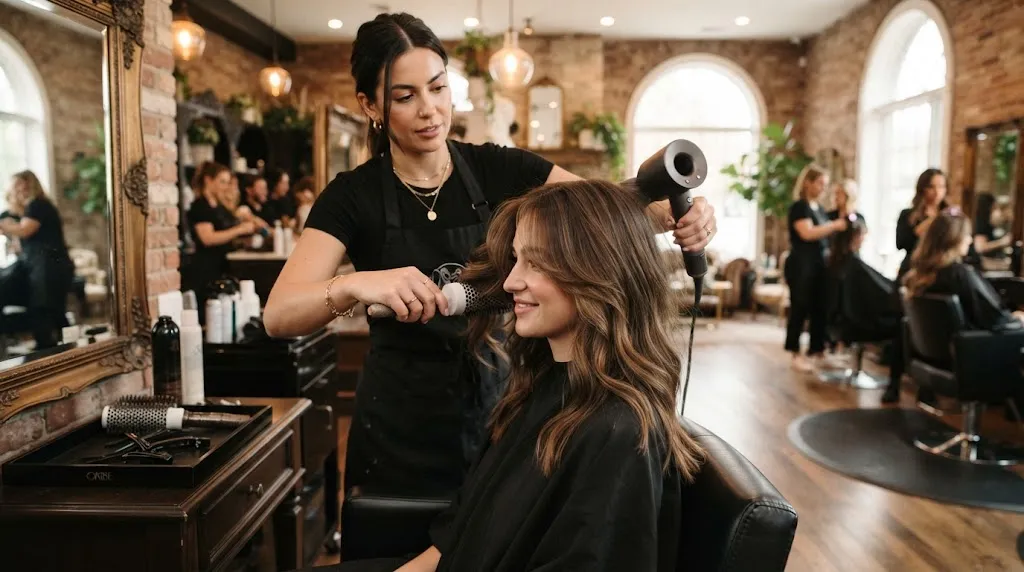
If you’re rocking a medium hair cut for girls and want zero drop in overall length, ask your stylist for internal texturizing rather than traditional stacked layers. I always tell clients hovering around the collarbone that we can carve out bulk from the interior using thinning shears or slide cutting two inches off the ends. This immediately boosts volume for medium hair styles for women without sacrificing that crisp bottom perimeter you love.
Long Hair
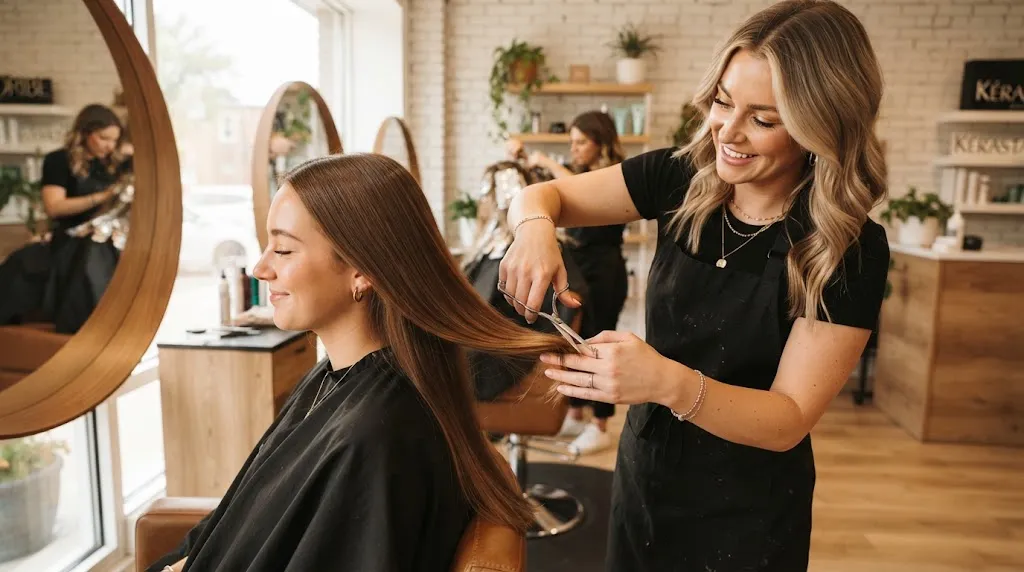
Maintaining a long haircut without losing length comes down to subtle face-framing and subtle micro-dusting. When clients sit in my chair asking for a deep layer haircut for girls long hair, I start the shortest face-framing piece right at the collarbone, blending downward in gradual increments. This creates massive movement and bounce while keeping 95% of your total length completely untouched in the back.
Pros and Cons of Layering to Preserve Length
| Pros | Cons |
|---|---|
| Adds volume and movement | Needs more styling time |
| Removes bulk without shortening | Can accentuate frizz in humidity |
| Refreshes the look instantly | Growing out uneven layers takes patience |
Frequently Asked Questions
Can you get a haircut without losing length? Yes, you can refresh your style, remove split ends, and gain incredible movement without sacrificing a single inch of your overall length. When clients sit in my chair terrified of losing their growth, I always suggest face-framing pieces or internal texturizing rather than cutting the perimeter.
Which haircut is best without reducing length? A deep layer haircut for girls with long hair works wonders because it takes bulk out of the interior while leaving the bottom hemline completely untouched.
How do you cut hair without losing length? Stylists rely on techniques like hair dusting (snipping only the absolute tips that stick out of a twist) or point-cutting vertically into the ends to diffuse weight.
What is the 3-inch hair rule? It’s a quick diagnostic method popularized by stylists to see if short hair suits your face shape by measuring the distance from your earlobe to your chin, though it doesn’t restrict long hair maintenance.
What is the prettiest length of hair? Beauty is subjective, but collarbone-length lobs and mid-back layered cuts consistently rank as the most universally flattering across face shapes.
What does the 7-day haircut rule mean? This is a salon guideline giving you one week to return for minor adjustments if your cut feels uneven or won’t cooperate after your first home wash.
What is the most flattering hair length for over 50? A textured bob hovering right at the collarbone adds instant volume and softness around the jawline, lifting mature features effortlessly.
What is the 3:2:1 rule for haircuts? A proportion guideline sometimes used in editorial styling to balance facial thirds, though everyday stylists rarely reference it in the salon chair.
What is the difference between dusting and trimming? Dusting removes less than a quarter-inch of frayed ends strictly to stop breakage, whereas a standard trim takes off a half-inch to an inch to clean up a blunt line.
What is the average cost of a deep-layer haircut? You can expect to pay anywhere from $60 to $150 depending on your city, salon tier, and whether washing and blow-drying are included.
Do layers make curly hair frizzy? Not if they are cut properly with shears by someone who understands curl patterns; however, heavy-handed thinning shears on coarse curls can definitely create unwanted puffiness.
Your Next Salon Visit
To pull off a haircut without losing length, you just need to communicate clearly with your stylist about dusting your ends while restructuring your shape internally. Ready to see more options? Explore our full hairstyles hub or head back to hairstylesusa.com for more styling guides.