
Round Face Hairstyles Men — The Complete 2026 Guide Best Cuts, Barber Scripts & Big Head Fixes
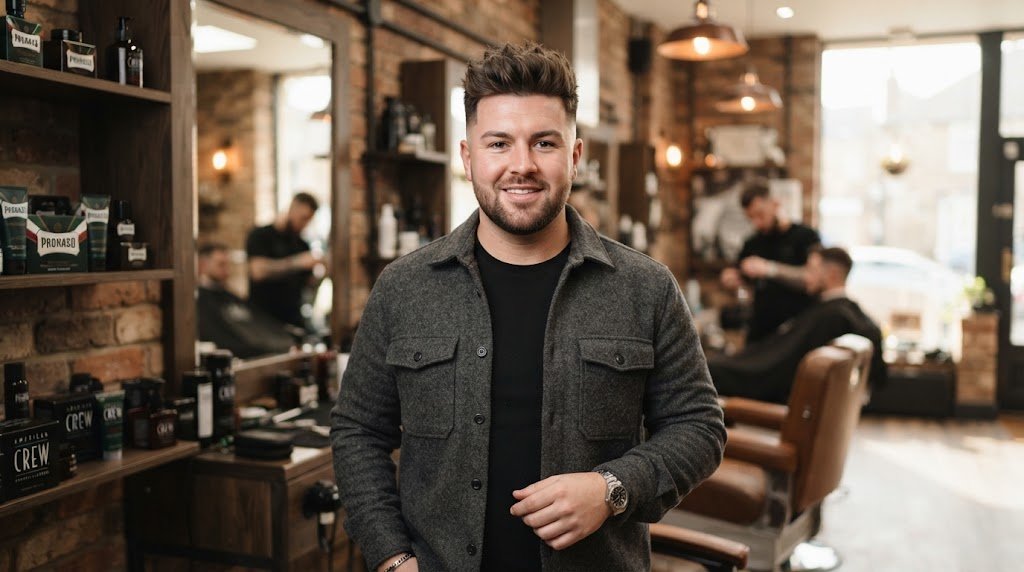
A round face shape is defined by equal width and length across the cheekbones and jawline, with soft curves and minimal angularity. Finding the right cut requires building height on top and keeping the sides tight to elongate your profile, which is why this guide goes beyond basic lists to cover specific barber instructions, styling techniques, and fixes for wider proportions and younger guys. Whether you are dealing with a broader structure or just need a fresh direction, you can explore more tailored options as part of our complete hairstyle guide library.
How to Know If You Have a Round Face
Characteristics of a Round Face (equal width/length, soft jawline, full cheeks)

A round face shape features equal vertical and horizontal proportions, meaning the measurement from your hairline to your chin closely matches the distance from cheekbone to cheekbone. Instead of sharp, angular angles, you will notice a soft jawline with minimal definition and full, prominent cheeks that create a circular perimeter. The widest point of the face is typically across the cheekbones rather than the forehead or jaw. Recognizing these traits ensures you select cuts that visually elongate your head rather than amplifying width.
2 The 3-Inch Hair Rule
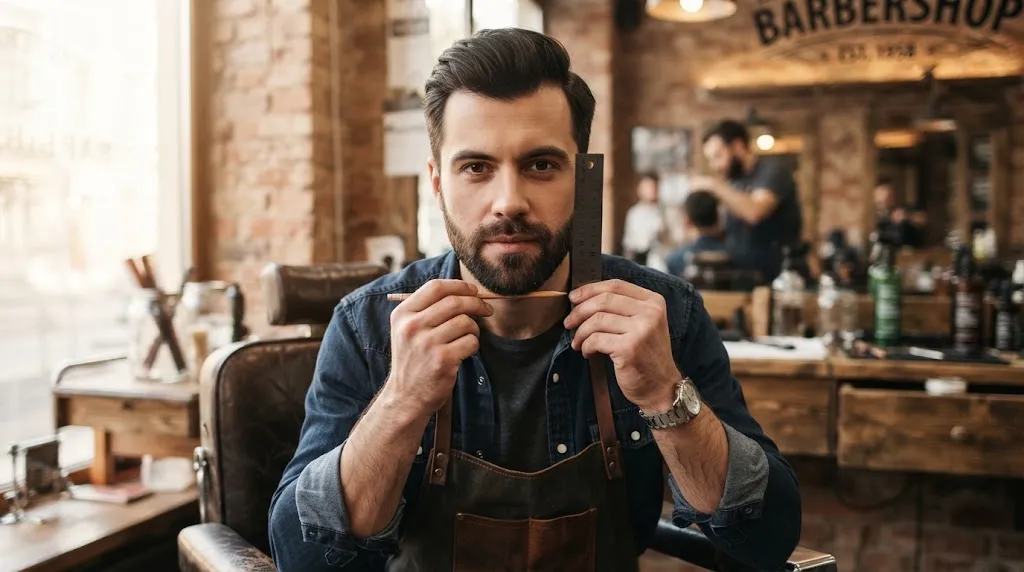
The three-inch hair rule is a quick, reliable self-measurement method used by barbers to determine if your face shape genuinely benefits from height on top and tight sides. Stand in front of a mirror and hold a horizontal pencil directly underneath your chin. Place a vertical ruler flat against your face right under your ear, positioning it so the zero mark meets the bottom of the pencil. Measure the distance straight up to the bottom of your earlobe.
If that vertical measurement is under three inches, your face falls into the compact, round category, meaning your styling goal is adding vertical volume. If the measurement is over three inches, your face leans longer, and height on top can make it look disproportionate. Treat this metric as a structural guideline rather than an absolute rule, as bone structure and hairline placement also influence the final haircut choice. If your measurements point to a longer or squarer shape instead, see our long face hairstyles or square face haircuts guides.
The 3 Styling Goals for a Round Face
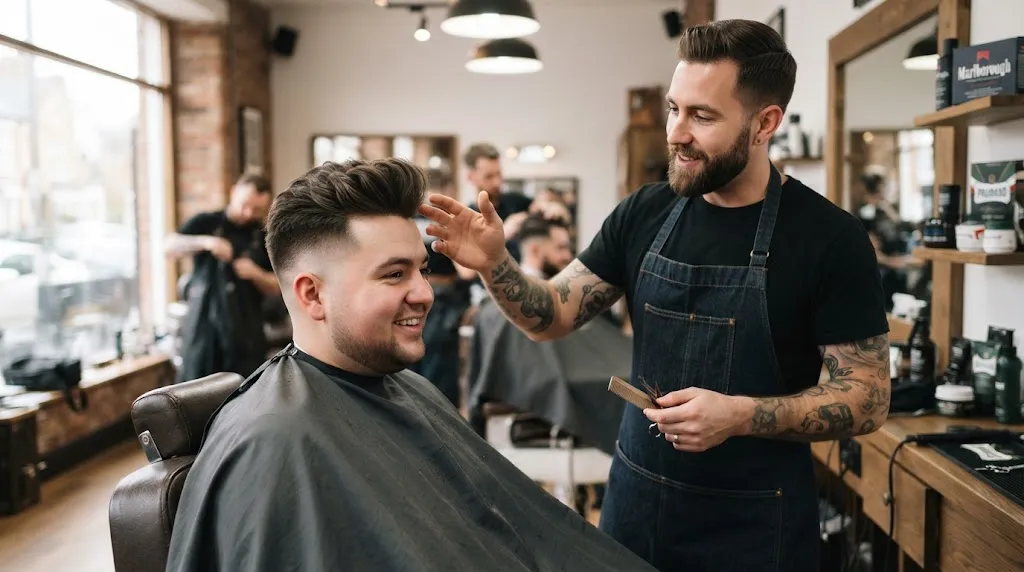
A round face shape features equal width and length with soft, curved jawlines and minimal natural angles. To balance these proportions, every haircut and styling routine relies on a distinct three-part framework designed to create the illusion of an oval structure.
Add Height: Build volume directly on top of the head using vertical styling products and high-lift cuts. This draws the eye upward, visually elongating a circular jawline and forehead.
Create Angles: Introduce sharp lines, hard parts, and skin fades on the sides to counteract round cheeks. Structure is achieved by keeping the temple areas tight and building geometric definition.
Avoid Width: Keep the hair close to the sides of the head and avoid adding volume around the ears or cheeks. Expanding the sides only emphasizes facial roundness, which works against the goal of elongation.
Myth vs. Reality: Do Buzz Cuts and Undercuts Actually Work?
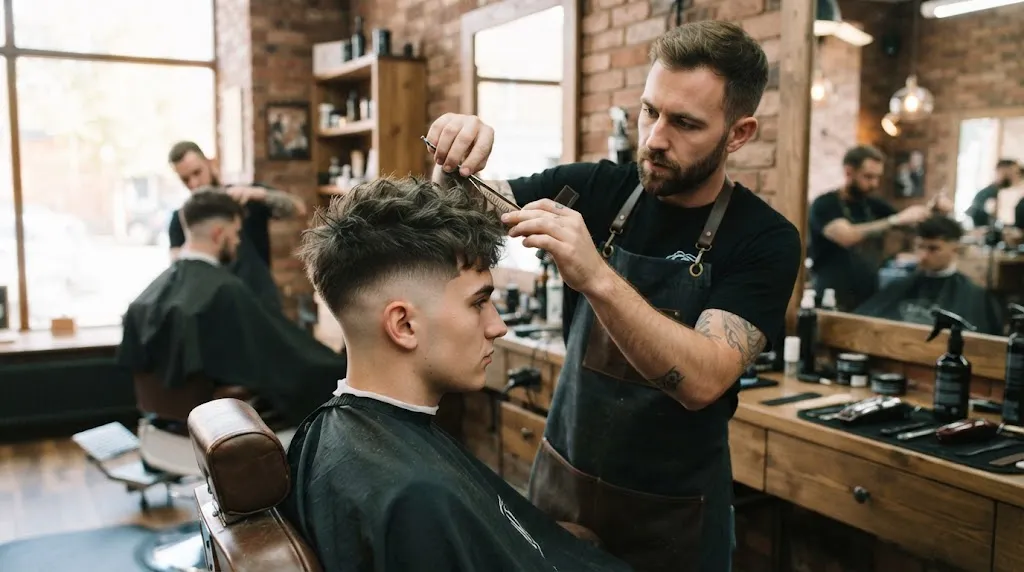
A buzz cut or undercut works for a round face only when engineered with deliberate vertical contrast, whereas flat, uniform lengths or heavy side bulk will accentuate cheek width. The primary contradiction across style guides stems from failing to distinguish between a disconnected, high-contrast silhouette and a flat, unstyled crop. When a barber cuts the sides down to a skin fade or high tight drop fade while leaving enough weight on top to lift the crown, it draws the eye upward and slims full cheeks. Conversely, a single-guard all-over buzz or a heavy-sided disconnected undercut left unstyled creates a boxy horizontal frame that widens the face.
To make a buzz cut work for a round face shape, avoid a uniform length and mandate a high skin fade that compresses the parietal ridge. Ask your barber for a tight skin or drop fade starting high above the temples, leaving a #3 or #4 guard length on top to maintain a hint of density. This structure creates an illusion of height and prevents the head from looking spherical.
For an undercut, ensure the disconnection sits high on the head rather than dropping low near the ears. Style the longer top section straight up using a matte clay or high-hold styling paste to build vertical spikes or a forward-swept texture. Never slick an undercut flat back against a round head shape, as flat styling mimics the natural curvature of the skull and defeats the geometric contrast needed to elongate your profile.
Best Hairstyles for Round Face Men
Classic & Timeless Styles (side part with fade, Ivy League, Caesar crop)

Why It Works: A sharp side part introduces diagonal lines and a clean structural break that disrupts the natural symmetry of a round face, while tight sides visually narrow the width of the cheeks.
How to Cut: Drop the sides using a #1 or #2 guard, tapering cleanly up into the parietal ridge. Keep 2 to 3 inches of length on top near the front, gradually decreasing toward the crown to maintain a flat, structured profile.
What to Ask Your Barber: “Give me a classic side part with a skin taper on the sides, maintaining length on top with a hard part etched in to create clean structural angles.”
How to Style at Home: Work a dime-sized amount of matte styling paste through towel-dried hair, using a fine-tooth comb to direct the hair away from your face and create a clean, sharp parting line.
Low Fade & Taper Styles
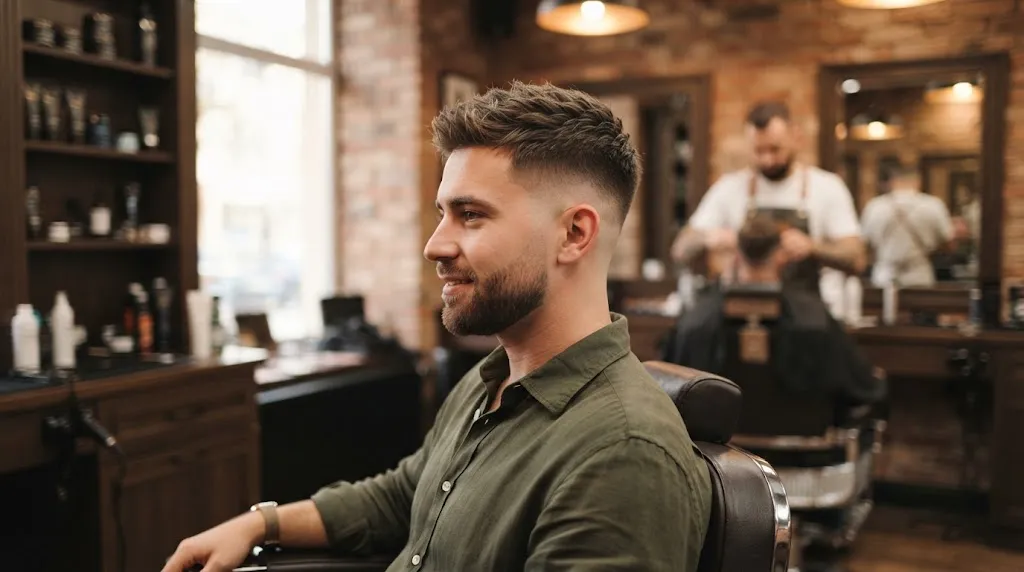
Why It Works: A low fade keeps weight low on the head without adding unwanted width above the ears, preventing the sides of a round face from looking wider.
How to Cut: Begin the blend just above the ear using a closed clipper blade, fading up to a #3 or #4 guard within a one-inch vertical window. Leave the upper parietal ridge dense to preserve vertical volume.
What to Ask Your Barber: “I need a low drop fade that tapers cleanly around the nape and ears, leaving the bulk on top untouched to elongate my face shape.”
How to Style at Home: Blow-dry the top hair straight up using a vent brush to maximize vertical lift, then lock it in place with a lightweight styling cream.
Quiff & Pompadour Styles
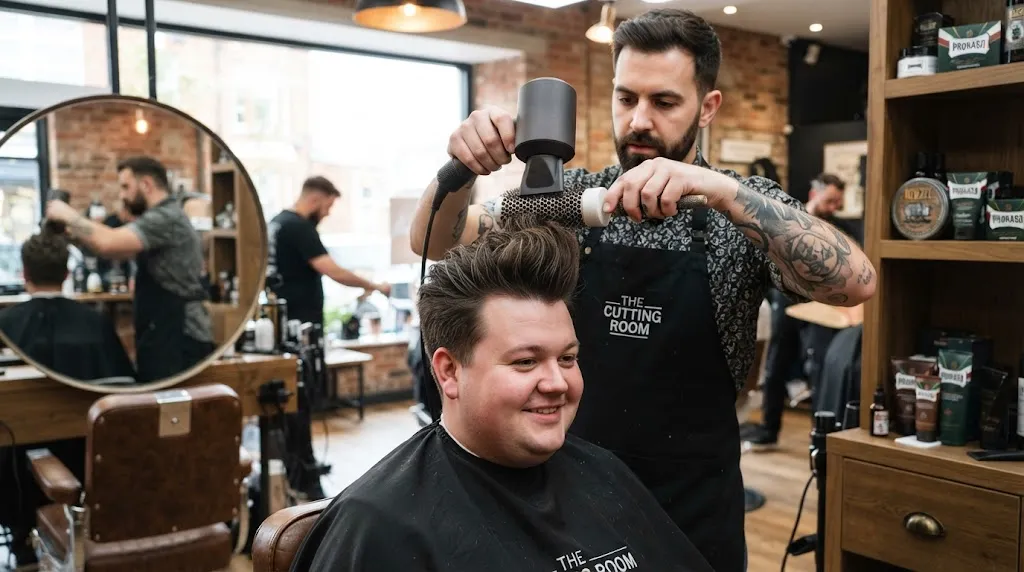
Why It Works: Vertical elevation is the absolute best way to combat roundness, drawing the eye upward and visually stretching a short or chubby face into an oval proportion.
How to Cut: Keep the sides cropped tight with a #2 or #1.5 guard, leaving at least 3 to 4 inches of length at the fringe to allow for upward and backward sweeping tension.
What to Ask Your Barber: “Cut a high-volume quiff with tight scissors-over-comb sides, keeping maximum length at the front hairline for an aggressive upward sweep.”
How to Style at Home: Apply a firm-hold styling mousse to damp hair, blow-dry the front section straight up and back using a round brush, and finish with a matte styling clay for dry, lasting elevation.
Textured Crop & Undercut Styles
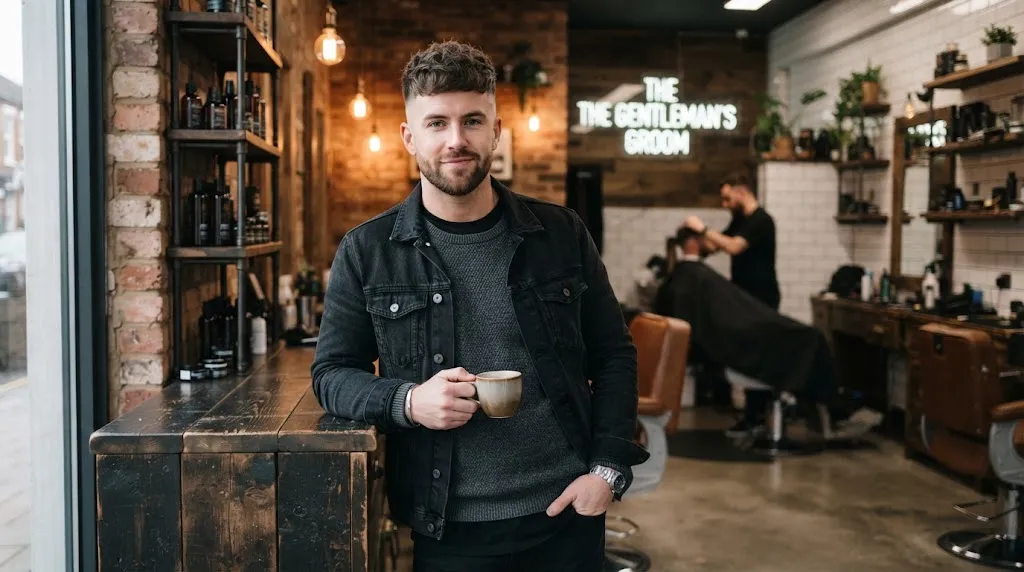
Why It Works: Choppy, forward-swept texture creates micro-shadows and angular disruption across the forehead, breaking up roundness while disconnected sides shrink the silhouette.
How to Cut: Disconnect the top completely from the sides using a #0 or #1 guard all the way up to the temples. Texturize the top heavily with point-cutting shears to create varied lengths between 1.5 and 3 inches.
What to Ask Your Barber: “Give me a disconnected undercut paired with a heavy textured crop on top, point-cut deeply to remove weight and add jagged fringe lines.”
How to Style at Home: Rub a matte styling clay between your palms until warm, scrunch it aggressively through dry hair, and pull the front forward into a textured, broken fringe.
Buzz Cut Styles

Why It Works: Clean clipper work relies entirely on sharp line-ups and faded temples to inject structure into soft jawlines and full cheeks.
How to Cut: Run a uniform #2 or #3 guard across the top, dropping down to a skin fade on the temples and sideburns to create an illusion of angular length.
What to Ask Your Barber: “I want a uniform buzz cut on top with high skin-faded temples and a sharply edged-up hairline to define my face structure.”
How to Style at Home: Zero styling product required; simply maintain the look by scrubbing a scalp tonic in the shower and visiting your barber every two weeks for edge cleanups.
Mohawk & Faux Hawk Styles
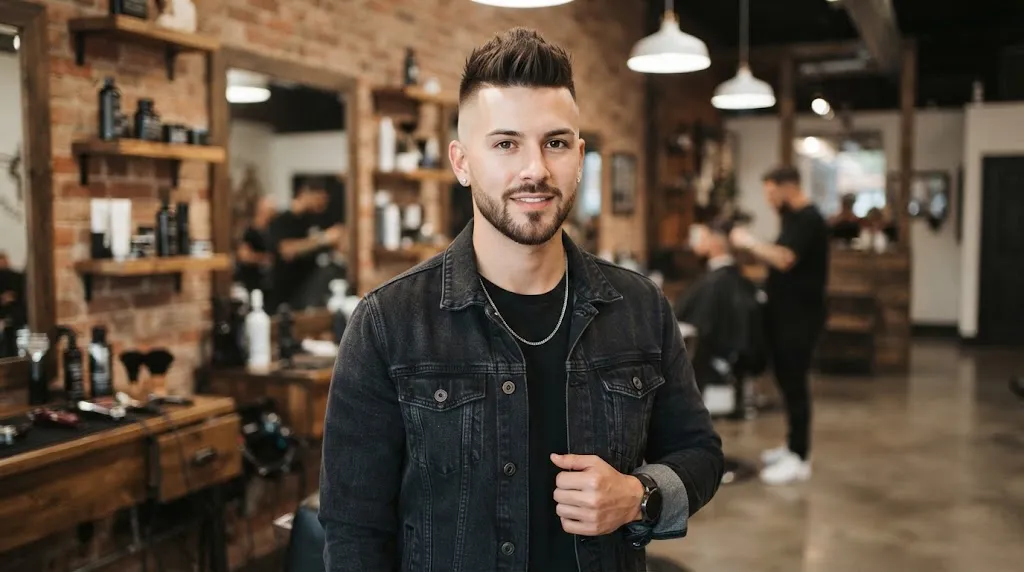
Why It Works: Concentrating all hair volume down the exact center of the head creates an intense vertical column that instantly counterbalances a wide, circular face.
How to Cut: Taper the sides down closely using a #1 guard while leaving a 2-inch wide strip of graduated length running from the front hairline straight back to the crown.
What to Ask Your Barber: “Sculpt a faux hawk with tight faded sides and a central ridge of textured length that tapers slightly shorter toward the back.”
How to Style at Home: Work a high-hold styling paste through damp hair, pushing the sides inward toward the center while pulling the top upward to form a sharp central ridge.
Curly Hair Styles for Round Face

Why It Works: Natural curls provide organic height and springy volume, but keeping the sides short ensures the curls build upward rather than puffing outward.
How to Cut: Tighten the sides and back with a mid fade down to a #2 guard, leaving the top curls at 3 to 4 inches so they coil upward with natural loft.
What to Ask Your Barber: “Keep my natural curls on top with plenty of layered height, but fade the sides down tightly to stop my head from looking wider.”
How to Style at Home: Apply a curl-defining cream to soaking wet hair, scrunch gently with a microfiber towel, and diffuse on low heat to lock in vertical coil volume without frizz.
Straight & Silky Hair Styles
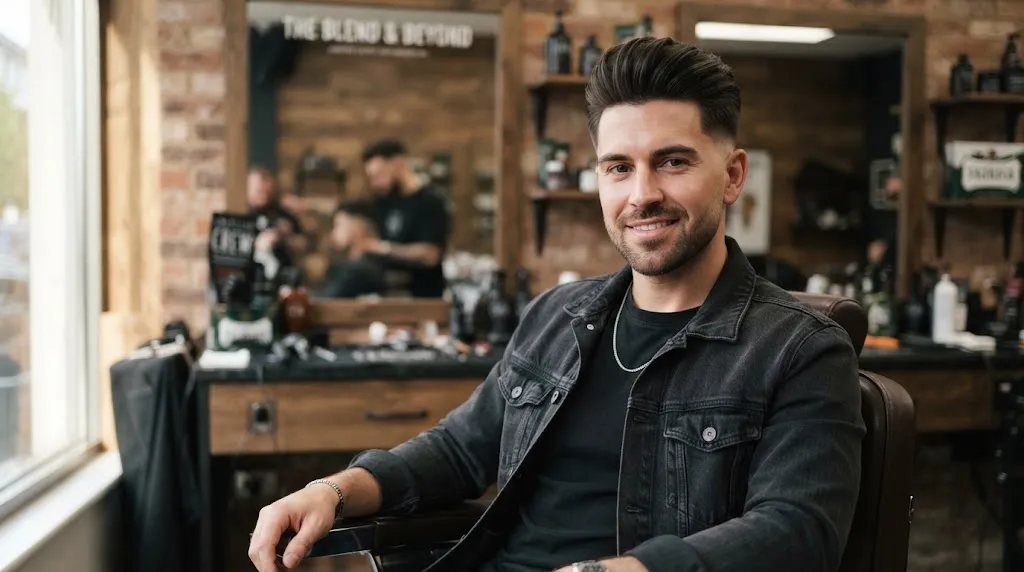
Why It Works: Sleek, fine hair can easily lie flat and cling to a round head shape, so it requires directional blow-drying and root lift to create a structured, aerodynamic silhouette.
How to Cut: Layer the crown slightly to prevent the hair from collapsing flat against the scalp, paired with a clean mid taper on the sides and back.
What to Ask Your Barber: “Layer the top to build natural root volume for straight hair, and finish with a clean mid taper on the sides.”
How to Style at Home: Spray a root-lifting tonic onto damp hair, blow-dry backward using a paddle brush to direct the strands away from the face, and finish with a lightweight styling paste for movable hold.
Long Hair Styles for Round Face Men

Why It Works: Pulling long hair back or wearing it past the shoulders creates vertical framing lines that draw the eye downward past the jawline, elongating the face. For more length inspiration, browse our long wavy hairstyles for men.
How to Cut: Keep length uniform past the shoulders while adding subtle face-framing layers starting below the chin to prevent heavy bulk around the cheeks.
What to Ask Your Barber: “Trim the split ends while keeping the overall length past my shoulders, and add subtle long layers around the front to frame my face.”
How to Style at Home: Apply a lightweight smoothing serum to damp ends, gather the top half of the hair into a loose man bun or sleek slick-back, and let the remaining length hang straight down.
Medium-Length Styles

Why It Works: Medium-length flow creates natural movement and vertical angles that soften heavy jawlines and distract from facial width. See our full medium-length hairstyles for men guide for more options.
How to Cut: Maintain 4 to 6 inches of length across the top and sides, using slide-cutting techniques to remove internal bulk and create sweeping, feathered movement.
What to Ask Your Barber: “Leave medium length all over with heavy texturizing shears used to create sweeping flow away from the face.”
How to Style at Home: Work a flexible-hold styling cream through damp hair, comb it back away from the face, and let it air-dry into a natural, flowing shape.
Professional & Office-Appropriate Cuts

Why It Works: A neat, structured side sweep maintains a professional appearance while introducing clean asymmetrical lines that break up a round face shape. Prepping for a big day? Our groom hairstyle guide covers formal styling in more depth.
How to Cut: Keep the sides neatly trimmed with a #3 scissors-over-comb taper, leaving 3 inches on top parted cleanly to one side with softened edges.
What to Ask Your Barber: “Give me a conservative business cut with a clean scissor taper on the sides and enough length on top to comb neatly to the side.”
How to Style at Home: Comb a low-shine styling paste through damp hair, sweep the top neatly to your preferred side, and pat down any stray flyaways for a polished finish.
Best Hairstyles for Fat Face / Chubby Face Men
Sharp, vertical lines are the primary tool to offset extra fullness in the cheeks and jaw, making the face appear instantly leaner. High-contrast fades and tight side profiles remove horizontal bulk, keeping the focus centered upward where height can be added.
Mid Drop Fade with Textured Crop
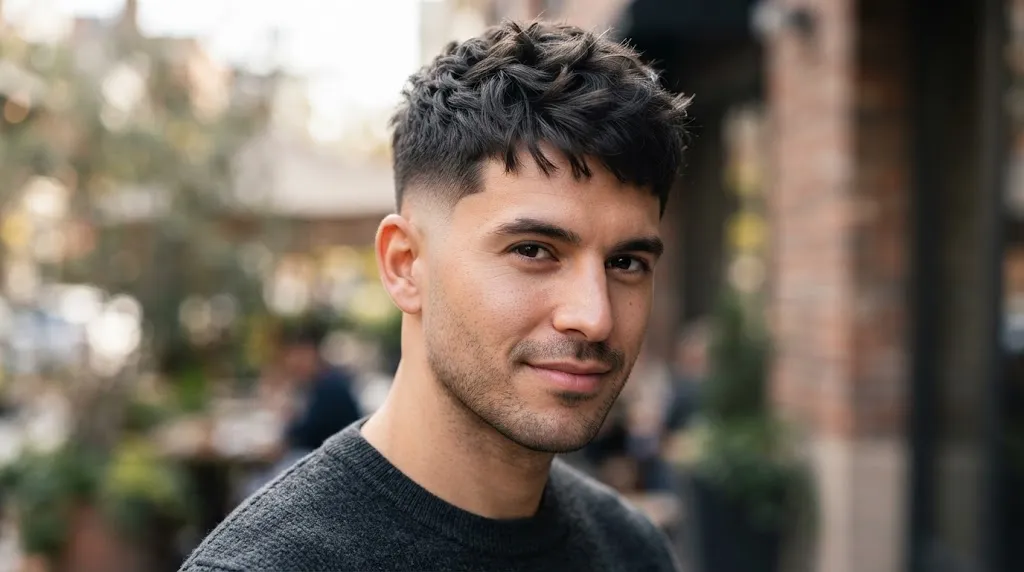
A tight drop fade keeps the weight off the sideburns and behind the ears, while a forward-swept textured top adds angular movement over the forehead. Ask your barber for a mid drop fade starting at a skin-zero, leaving two inches of length on top with point-cutting to create jagged ends. Style by working a matte clay with high hold into damp hair, pulling the fringe slightly forward and upward to break up a round hairline.
Hard Part Comb Over
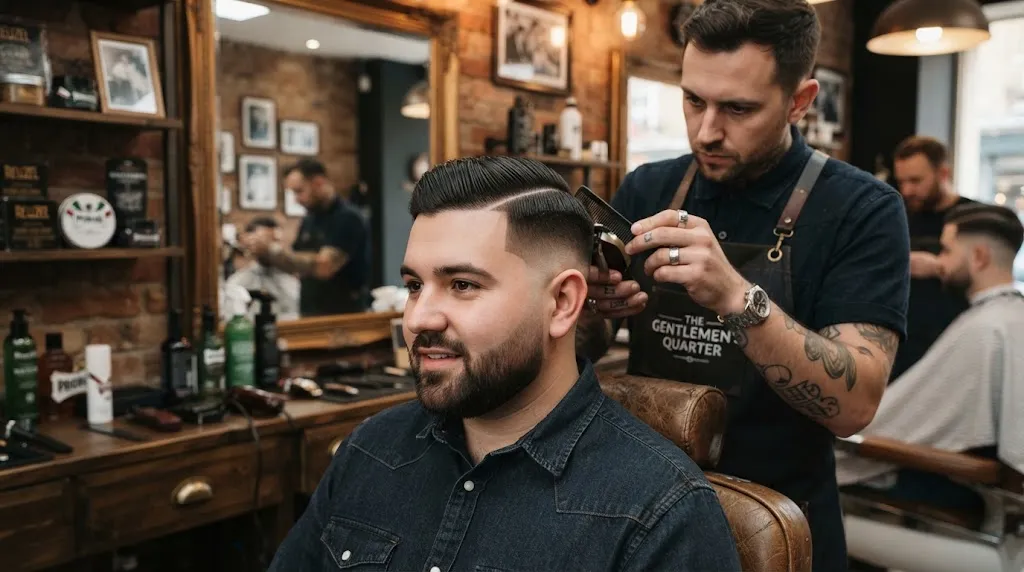
The sharp diagonal line of a hard part draws the eye upward and across the head rather than outward across the cheeks. Request a side part carved in with a trimmer, a low-to-mid skin fade on the sides, and scissors-cut length on top that graduates longer toward the front. Blow-dry the hair back and to the side using a round brush to build root lift, then finish with a firm-hold styling paste.
Short Quiff with Tapered Temples
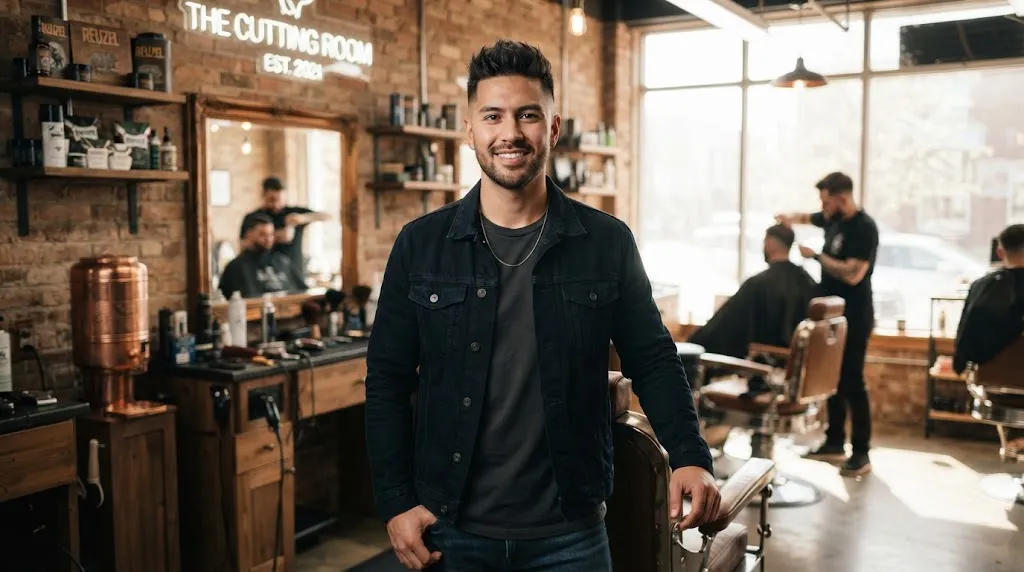
A voluminous quiff builds vertical height that elongates a fuller jawline. Tell your barber to taper the sideburns and neckline tightly while keeping three inches of height at the front hairline, blending down toward the crown. Apply a lightweight styling mousse to damp hair, blow-dry straight up from the roots, and lock it in place with a low-shine styling paste.
Avoid heavy, rounded fringes or one-length buzz cuts that sit evenly around the head, as these mimic and accentuate facial width rather than countering it. When managing longer lengths, keep the sides strictly flat against the skull using a medium-hold cream while letting volume build exclusively on top.
Big Head & Big Face Hairstyles

Finding the best hairstyles for big heads requires managing overall physical volume so your hair doesn’t amplify your skull’s natural width. When you have a larger cranium combined with a circular bone structure, heavy mushroom cuts or flat, scalp-hugging buzz cuts will only make your head look wider and rounder.
The primary trick is creating vertical lift at the crown while keeping the sides tightly compressed. Ask your barber for a mid-to-high skin fade using a 1 or 1.5 guard, which visually slims down the widest parts of the parietal ridge. Leave at least three to four inches of length on top so you can brush it upward and slightly back away from the forehead, breaking up the symmetry of a large face.
When you sit down in the chair, tell your barber: “Give me a high-and-tight skin fade on the sides, but keep the weight off the temples and leave enough length on top to build height without adding extra width.” This exact phrasing stops them from leaving bulk on the sides, which is the number one mistake barbers make when cutting hair for a big face hairstyle male.
Style your hair at home by working a nickel-sized amount of a high-hold matte clay through damp hair. Blast it upward with a blow dryer on high heat while pulling the strands straight up with a vent brush to maximize vertical lift. Finish by raking your fingers through the top to create piecey texture, ensuring the sides stay flat and tight against your head.
Round Face Hairstyles for Boys
Finding the best hairstyle for a round face boy means keeping the sides tight to streamline the silhouette while leaving enough movement on top to add subtle height. Unlike adult styling that relies heavily on stiff pomades and high-maintenance blow-drying, boys’ cuts need to survive playground activity while naturally breaking up a circular jawline.
Textured Mini Crop
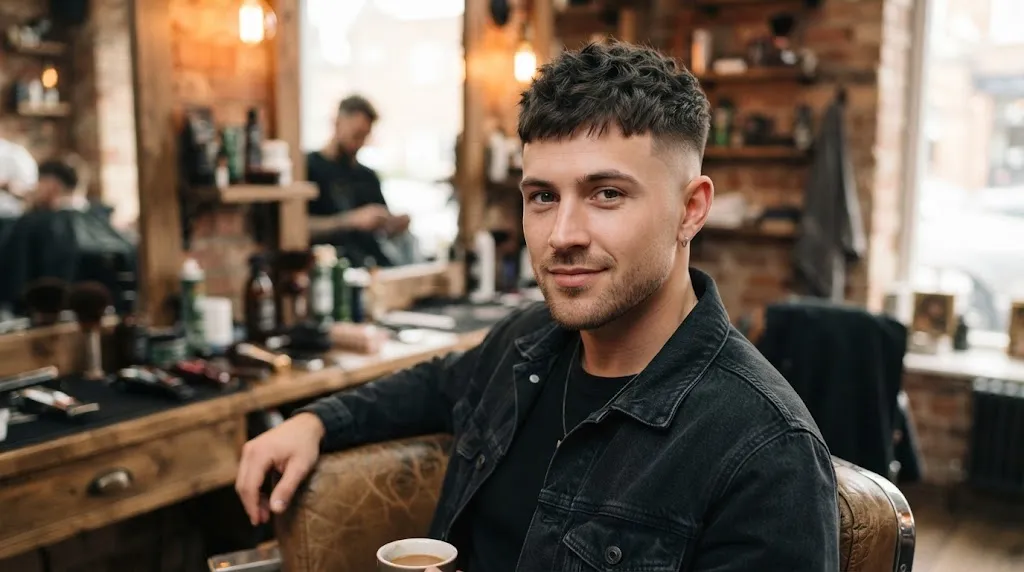
Why It Works: Short, choppy fringe angled across the forehead creates diagonal lines that visually minimize round cheeks without requiring daily product.
How to Cut: Drop the sides down with a number 3 clipper guard, fading cleanly above the ears while leaving about two inches of length on top with point-cut ends to remove bulk.
What to Ask Your Barber: “Give him a textured crop with a blunt, piece-y fringe angled to one side, and blend a mid-skin fade on the sides.”
How to Style at Home: Work a pea-sized amount of lightweight styling paste through damp hair, pushing the top forward and directing the fringe sideways with your fingers.
Casual Messy Spikes

Why It Works: Vertical texture draws the eye upward rather than outward, creating the illusion of a longer, more oval face shape.
How to Cut: Keep a tight low taper using a number 2 guard on the lower half, leaving roughly an inch and a half of graduated length through the crown to allow natural upward movement.
What to Ask Your Barber: “Keep the top around two inches with plenty of internal texturizing for movement, and finish with a clean low taper on the sides.”
How to Style at Home: Towel-dry the hair until damp, rub a small dab of water-based styling cream between your palms, and scrunch upward to form soft, upright texture.
Receding Hairline + Round Face
When temple recession meets a round face shape, standard styling rules break down because you are managing two opposing forces: you need height to elongate a circular jawline, but high-volume styles like slick-backs or high pompadours expose thinning corners and make the forehead look overly exposed.
The strategy shifts from adding height to building controlled forward texture and narrowing the sides. Ask your barber for a textured crop with a forward-swept fringe, using a #1.5 or #2 guard on a low skin fade to keep the sides tight without exposing the widest part of the skull. The forward movement physically covers the receding temple corners, while the tight sides prevent the head from looking wider.
Avoid wet-look gels or heavy pomades that clump the hair together and reveal the scalp underneath. Instead, work a dime-sized amount of a dry matte clay into towel-dried hair, pushing the top forward and down toward the brow with your fingertips to create an uneven, dense canopy that completely masks the hairline while keeping the silhouette slim.
Will a Mullet Suit a Round Face?
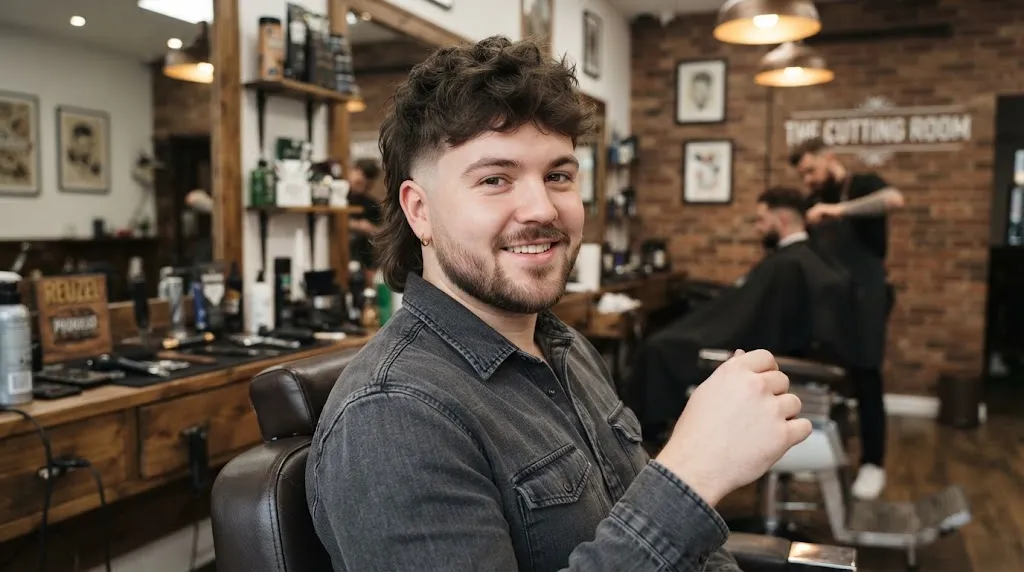
A modern mullet can suit a round face shape, provided the sides are kept tight to break up lateral width while leaving length and volume at the crown and nape. This silhouette creates vertical lines that visually elongate a broader bone structure, offsetting the circular proportions of the face.
Why It Works: Leaving heavy, full hair on the sides will only widen a round face, so the key is contrast. Tapering or fading the temples pulls the eye upward and inward, making the head appear narrower. Meanwhile, the length at the back adds vertical dimension without adding undesirable width to the cheekbones.
How to Cut: Request a high-fade or a skin-tight drop fade on the sides, starting with a number 1 or 1.5 guard to expose the scalp and contract the widest part of the head. Keep the top textured with point-cutting to build height, and leave the back disconnected or softly graduated down the neck starting around 3 to 4 inches of length.
What to Ask Your Barber: Tell your barber, “Give me a modern modern mullet with a skin drop fade on the sides, leaving height on top for a textured quiff effect, and keep the back flowing down to the collar without any heavy bulk behind the ears.”
How to Style at Home: Work a matte styling paste or low-shine clay through damp hair on top, working it upward and slightly forward to maximize height. Finish the sides with a firm-hold styling cream to keep them pinned down tight against the head, ensuring the profile remains sharp and vertical.
11. Beard Styles That Balance a Round Face

A heavy, rounded beard that matches the curve of your jaw only makes a round face look wider. To counteract that, you want to build an angular, boxy shape that carves out a sharper chin and creates clean vertical lines.
The Boxed Beard with a Defined Bottom Line
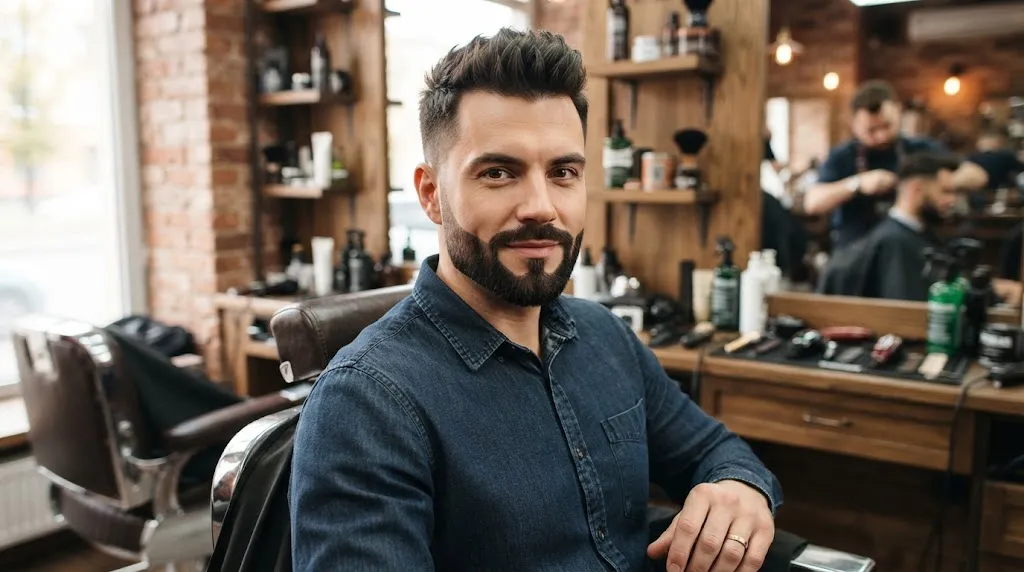
Keep the hair on your cheeks trimmed close—using a #3 or #4 guard—while letting the hair grow longer and denser right at the chin. Ask your barber to square off the bottom edge horizontally beneath your jawline rather than following your natural curve, which instantly adds a sharp illusion of length.
The Extended Goatee or Anchor Beard
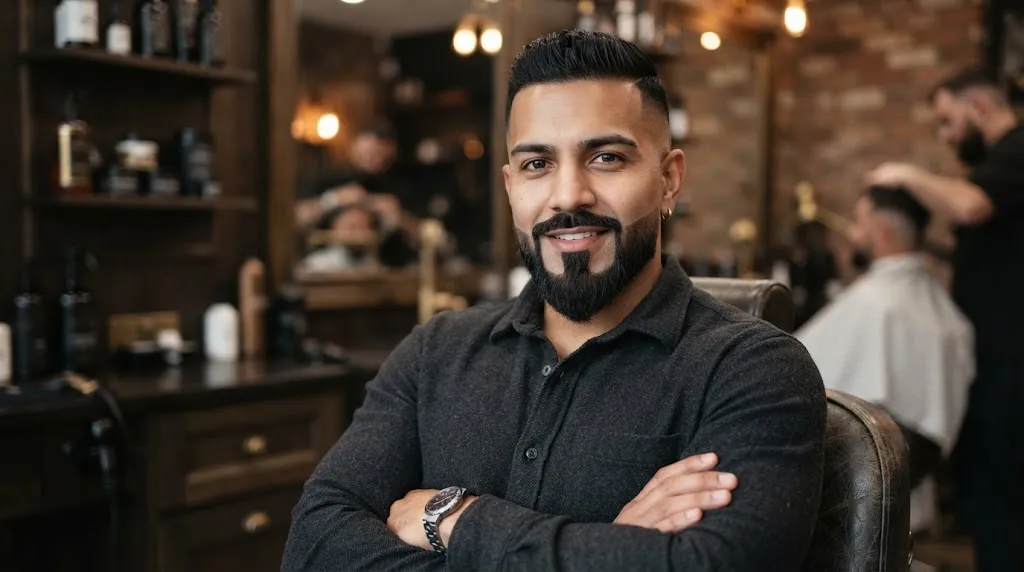
This style keeps the cheeks entirely bare while concentrating weight on the chin and upper lip. The vertical focus draws the eye downward, making the lower half of the face appear narrower and more defined.
For a full look, pair your cut with our buzz cut with beard guide.
To maintain this shape at home, use a trimmer without a guard to edge out clean, sharp 90-degree angles at the jaw corners. Apply a lightweight beard oil to soften the hair, then lock the vertical structure in place with a medium-hold beard balm, brushing the chin hair straight down to maximize the lengthening effect.
Haircut Style & Maintenance Matrix
| Haircut Style | Best For | Ideal Hair Type | Maintenance Level |
|---|---|---|---|
| Textured Crop with High Skin Fade | Chubby faces, Boys | Straight, Wavy, Thick | Medium (re-fade every 2 to 3 weeks) |
| Modern Pompadour | Big heads, Professional | Straight, Thick | High (daily blow-drying and firm hold product) |
| Side-Parted Ivy League | Professional, Boys | Straight, Fine, Medium | Low to Medium |
| Messy Fringe with Tapered Sides | Chubby faces, Boys | Wavy, Curly | Low |
| Angular Fringe with Hard Part | Big heads, Professional | Straight, Wavy | Medium |
How to Talk to Your Barber
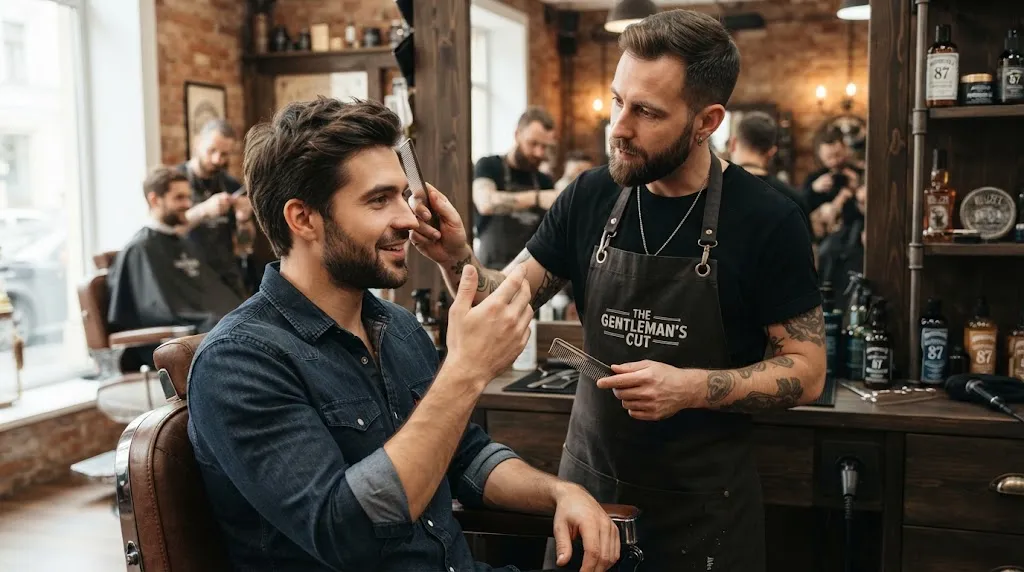
Bring a reference photo showing a haircut with tight sides and vertical height on top, specifically from a model with a similar facial structure. Avoid pulling up photos of men with narrow jawlines or oval faces, because replicating their cut will only make a round face look wider. Look for images where the temples are closely cropped and the crown has at least two to three inches of lift.
Tell your barber directly: “I want to keep the sides tight using a guard number two or three, and I need to preserve all the length and weight straight up through the crown to elongate my profile.” Emphasize that you want to avoid any bulky rounding above the ears. Give them explicit permission to texturize and point-cut the top so it stands up cleanly without collapsing outward.
Test your cut virtually beforehand by uploading a well-lit frontal selfie into an AI haircut-preview app to visualize how different crown heights alter your face shape. These simulation tools let you experiment with high fades and textured crops digitally before a clipper touches your head.
Want to see the styling steps in action? Our how to set hair guide breaks down the basics.
What to Look for in Styling Products
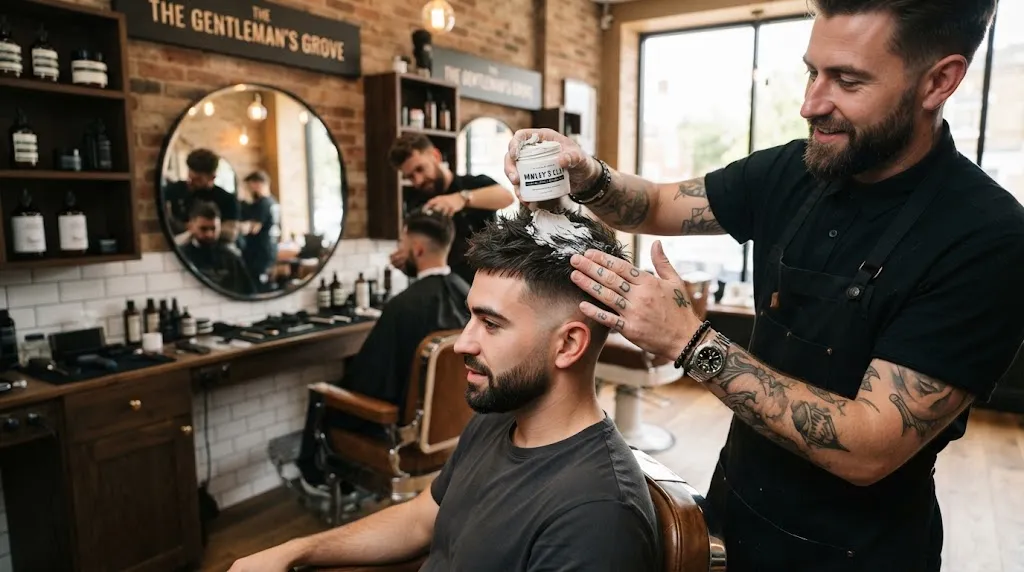
Finding the right styling product for a round face comes down to controlling weight and building vertical lift rather than gluing hair flat to the scalp. If your hair lacks structure, round faces easily look wider because heavy, greasy products collapse under their own weight. Choosing the correct formulation determines whether your haircut maintains that crucial elongation throughout the day.
Matte Clays: Best for thick, coarse, or unruly hair requiring strong hold with zero shine. The kaolin or bentonite clay base absorbs natural oils, creating a dry, chalky friction that adds maximum volume at the crown without making the sides look bulky.
Styling Powders: Ideal for fine or thinning hair types that need instant root lift. Silica silylates powder liquefies momentarily upon friction and dries instantly, gripping individual strands to expand volume instantly without heavy grease.
Fiber Pastes: Suited for medium-length cuts needing pliable hold and moderate separation. These offer a natural satin finish that allows you to rework textured fringe or messy quiffs throughout the day.
Water-Based Pomades: Designed for classic cuts requiring clean definition and high shine, though use sparingly. High-shine formulas can draw unwanted attention to the scalp or sides, so stick to low-sheen or matte versions to keep focus strictly on the top height.
If you’re new to styling, our pomade hairstyles for short hair guide has more product context. Rub a nickel-sized amount completely clear between your palms before application to distribute the product evenly from root to tip. Always work from the back of the head forward, saving the front hairline for last so you do not overload the fringe with excess product weight.
Real Problems Men With Round Faces Actually Face
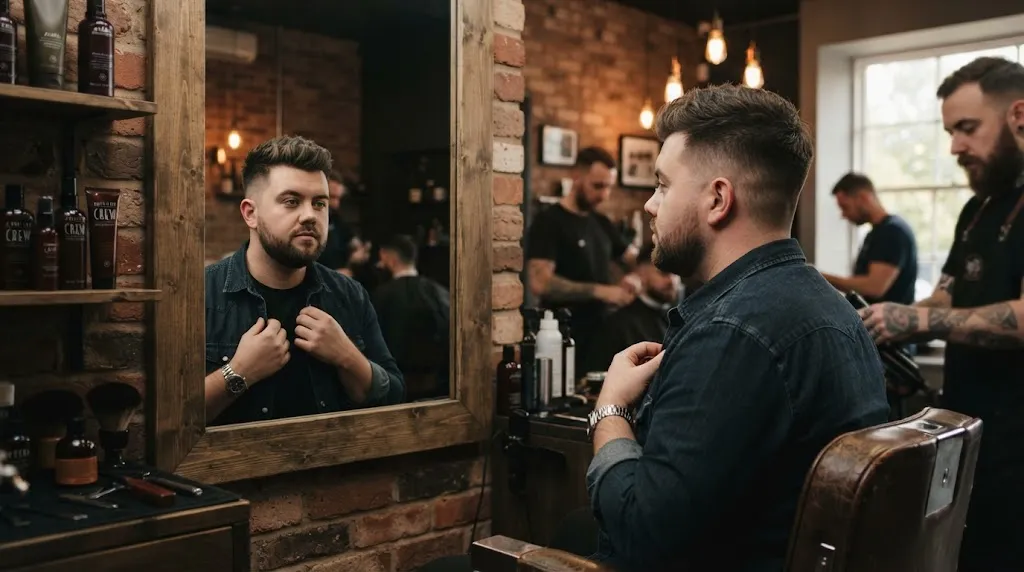
Most grooming advice assumes every guy effortlessly knows his bone structure and can blindly trust any pair of shears in town. In reality, figuring out how to pick a round face haircut when your jawline is soft often leads to trial-and-error disasters.
Mistaking Face Shape
A lot of men think they have a round face simply because they carry a bit of extra weight or have naturally full cheeks, when they actually have an oval or square structure underneath. Staring straight into a mirror with markers or tracking your jaw angles against your cheekbones clarifies whether you genuinely need vertical elongation or just side-deflation.
Vague Barber Instructions
Walking into a shop and asking a stylist to “make my face look slimmer” usually results in a generic low taper that does nothing for your proportions. You have to communicate in specific architectural terms like keeping weight high on the crown, maintaining tight vertical lines above the ears, and avoiding rounded bulbous bulges on the sides.
Managing Curly Textures
Most standard guides completely ignore how tightly coiled or wavy hair naturally expands outward like a mushroom, worsening fullness. Taming curls on a round face requires debulking weight from the parietal ridge with thinning shears while leaving length strictly on top to pull the eye upward.
Balding and Receding Hairlines
Losing hair at the temples while maintaining soft, circular features creates a tricky balancing act that standard short crops will only emphasize. Lean into structured, textured crops with a slight forward push or a high-fade combination that adds hard geometric lines where nature pulled back.
Round Face Haircut FAQs
What haircut is best for round face men?
Does a round face look good with a fade?
What should round-faced men avoid?
Are round faces attractive on men?
What's a good round face hairstyle for Indian, Asian, or Black hair types?
What's the best round face hairstyle with naturally straight hair?
Final Hairstyle Selection
- Barbering & Facial Structure Standards: Industry methodology on proportion balance, geometric head-shape mapping, and vertical elongation principles for round facial contours derived from professional vocational licensing manuals. Barbering Techniques for Hairstylists — The Design Consultation
- Clipper Guard and Blade Mechanics: Standardized taper specifications, cutting angles, and millimeter-to-inch guard conversion metrics established by professional grooming and tool manufacturing standards. Clipper Guard Sizes Chart — Haircut.info
- Hair Product Formulation and Performance Chemistry: Functional categorization of styling polymers, waxes, clays, and water-soluble binding agents based on cosmetic industry raw ingredient performance data. Advances in Hair Styling — Cosmetics & Toiletries