
Best Hairstyles for Men with Straight Hair (2026 Guide)
This guide is part of our full hairstyle library at hairstylesusa.com, where we cover every hair type from straight to curly to wavy across our hairstyles hub.
When you sit down in the chair with straight hair, the biggest challenge isn’t a lack of options — it is fighting that naturally flat, limp tendency that makes styles fall completely flat by noon. Straight hair requires structure and lightweight control rather than heavy pomades that weigh the crown down.
Key Takeaways
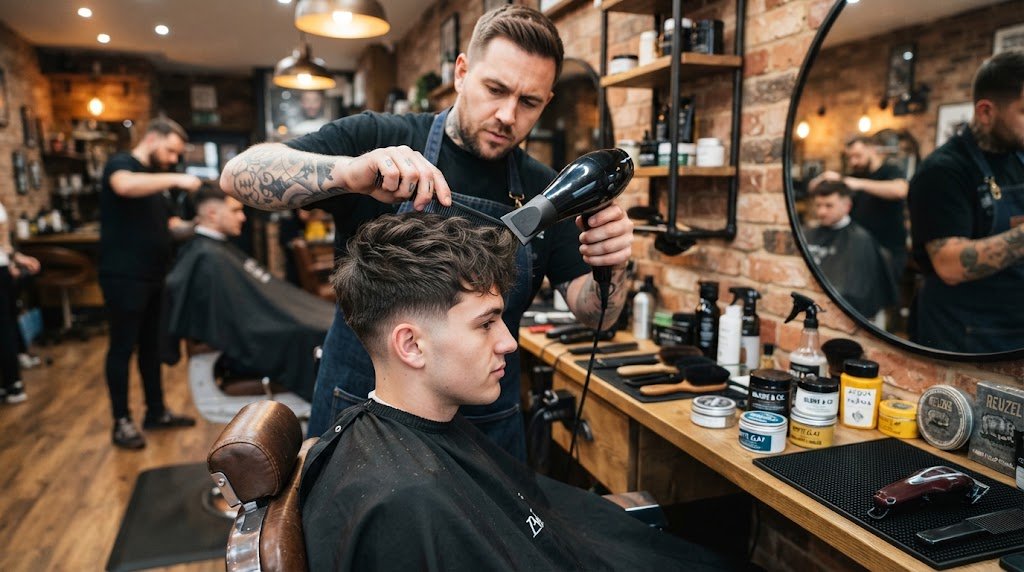
Straight hair men achieve the best results with structure-focused cuts like textured crops, low fades, or classic pompadours that combat the hair type’s natural tendency to lie flat. The single biggest hurdle in the barber chair is lifeless volume, which is instantly corrected by combining a lightweight sea salt spray on damp hair with a directional blow-dry.
- Top Cut Picks: Textured crops, fringe-heavy styles, and clean low tapers add natural movement and prevent the helmet-head look common with straight textures.
- The Quick Volume Fix: Work a dime-sized amount of matte clay through damp hair before blow-drying upward and forward to build lasting root lift without grease.
- Managing Cowlicks: Direct airflow downward onto stubborn cowlicks while they are wet to lock growth patterns flat before applying any styling product.
- Heat Straightening Option: For ultra-resistant waves or kinks, running a mini ceramic flat iron over dry, heat-protected sections delivers a razor-sharp, sleek finish.
Straight strands reflect light uniformly, meaning any lack of volume or uneven thinning shows up instantly under harsh lighting. Beyond standard styling routines, adding a weekly clarifying wash strips away silicone buildup from heavy supermarket shampoos, instantly restoring the natural bounce and porosity needed for styling products to actually grip the hair.
What Is Straight Hair in Men?
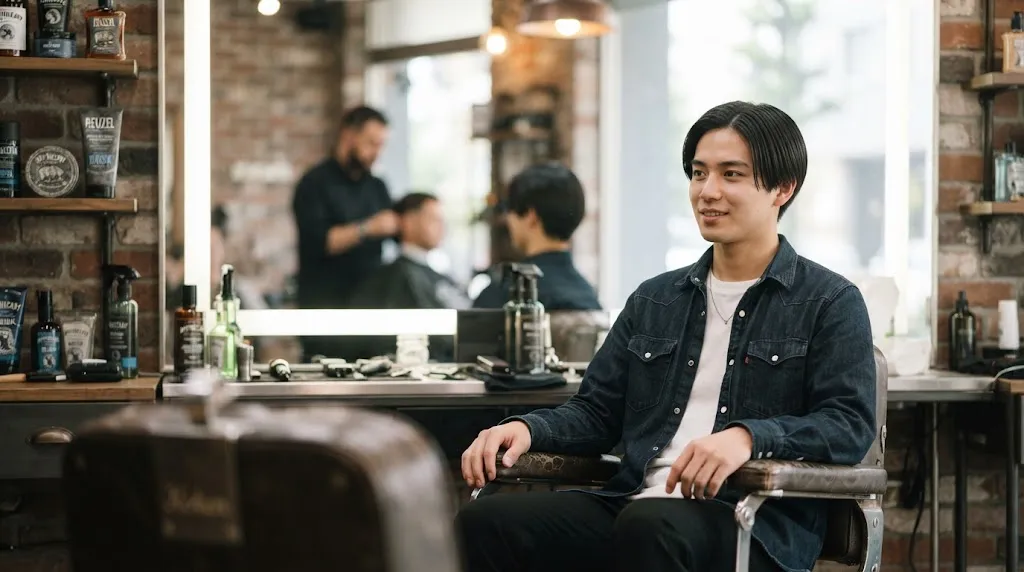
Straight hair in men is defined by follicles that grow straight out from the scalp without significant bend or curl, resulting in a smooth, linear strand shape from root to tip. Because the cross-section of a straight hair follicle is round rather than oval or flat, sebum travels smoothly down the entire shaft without encountering structural kinks, which is why straight hair naturally reflects light better and appears shinier than curly or coily textures. At the same time, this lack of natural internal bend means straight hair tends to lie flat against the scalp, often making it prone to looking limp or losing volume if not cut and styled with the right techniques.
Fine/Thin Straight Hair vs. Thick Straight Hair
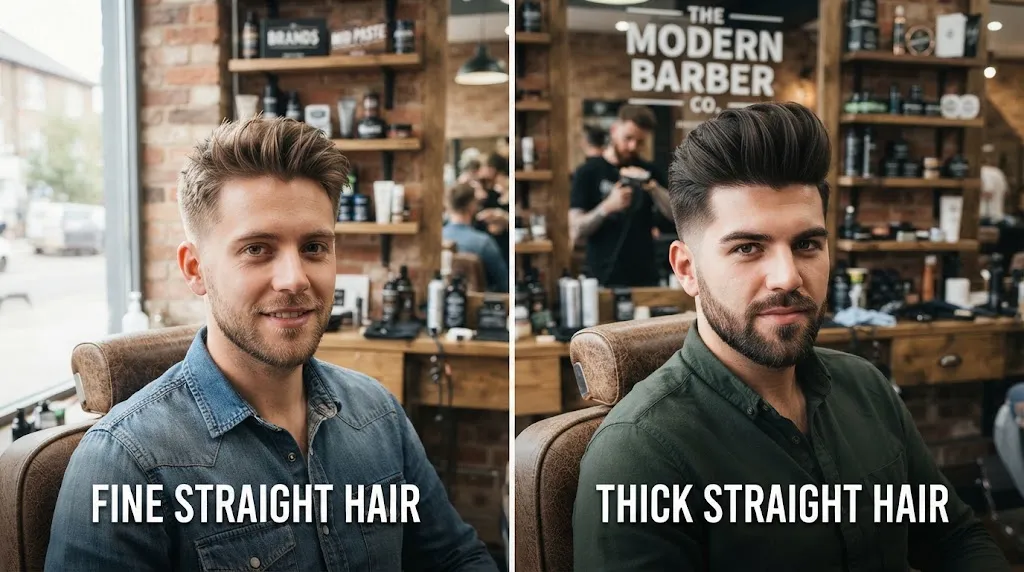
Fine or thin straight hair features a smaller individual strand diameter and lower density, meaning it lacks structural backbone and clings directly to the scalp, making any oil buildup immediately obvious. Styling fine straight hair requires lightweight products like a sea salt spray or a low-shine styling powder applied directly at the roots to create separation and lift without weighing the strands down, paired with blunt or light-textured scissor work to maintain maximum perceived density. In contrast, thick straight hair features coarse, dense strands that resist movement, often acting like a heavy, rigid helmet or sweeping forward uncontrollably if left too long. Thick straight hair needs weight-reduction techniques such as interior texturizing and point-cutting to prevent the dreaded shelf or mushroom effect, along with a matte texture clay or medium-hold styling paste to lock heavy sections into place without excessive grease
Why Straight Hair Looks Flat or Oily

Straight hair looks flat and oily because the scalp’s sebaceous glands continuously secrete sebum that glides unimpeded down the straight, round hair shafts from root to tip without any natural curls or waves to trap the oil or absorb it along the way. When washing hair too frequently with harsh detergents, the scalp overcompensates by producing even more sebum, which quickly coats fine or medium straight hair and weighs it down into a greasy, plastered appearance within hours. Managing this requires spacing out washes with a balancing shampoo, avoiding heavy silicones or oil-based pomades that mimic natural grease, and utilizing dry shampoos or lightweight texturizing powders to instantly absorb excess oil at the scalp while restoring natural lift.
Best Straight Hairstyles by Face Shape
Round Face
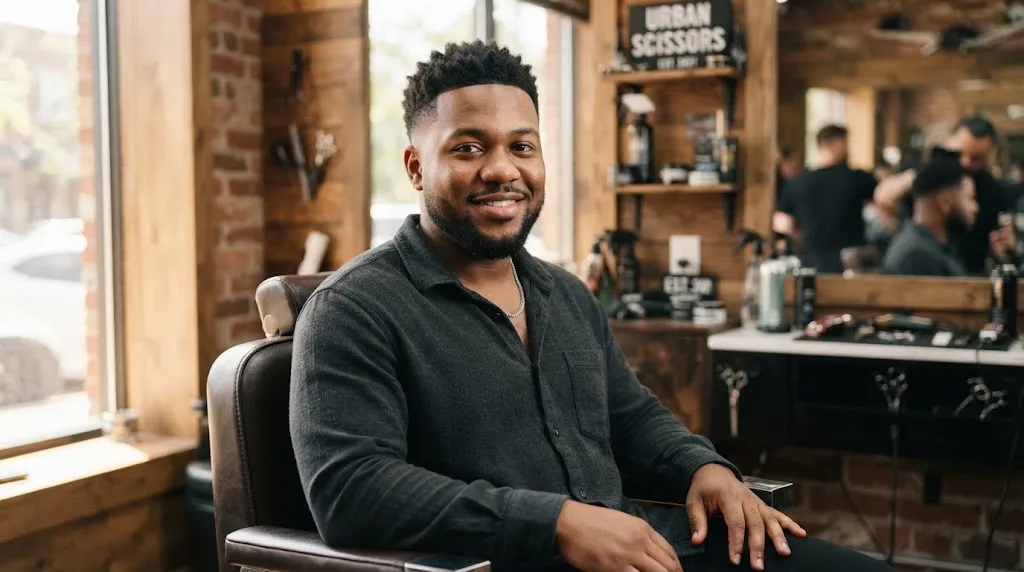
The goal with a round face is to add vertical volume and tighten the sides to elongate your profile.
- The Modern Pompadour: Height on top paired with a clean skin fade draws the eye upward, slimming out soft cheeks.
- The Textured Crop with a High Fade: Keeps the sides extremely tight while leaving choppy texture up front to create angles.
These styles work because straight hair naturally holds volume when supported by the right blow-drying technique, allowing you to build sharp structure that contrasts with curved jawlines. Refer to the pompadour and textured crop entries below for step-by-step cutting instructions.
Square Face
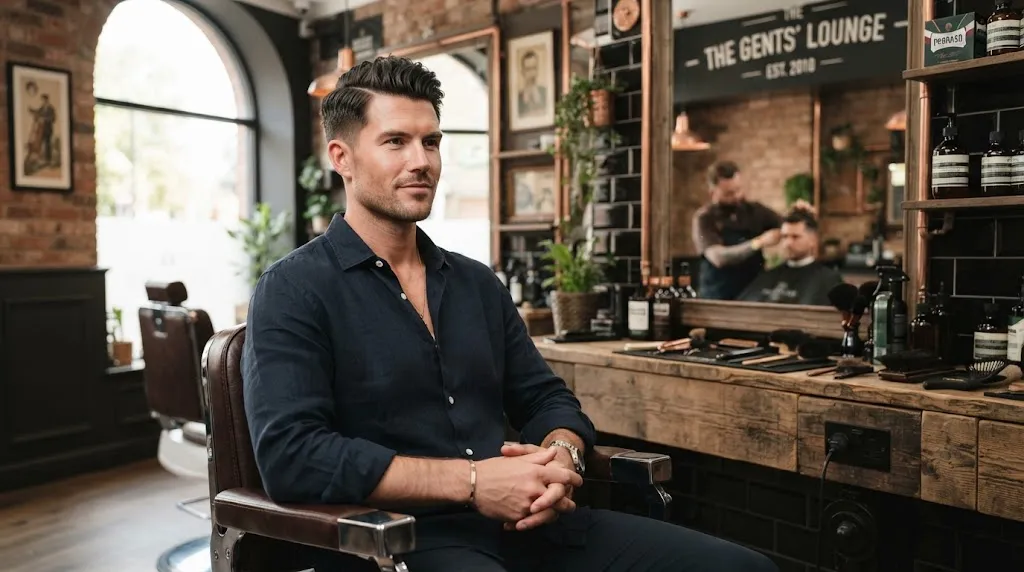
Square faces feature strong, angular jaws and broad foreheads, meaning you can either soften the geometry or lean entirely into the classic, masculine shape.
- The Side Part (Ivy League): A neat, structured side part respects your natural bone structure while adding a clean, sophisticated edge.
- The Medium-Length Flow: Letting straight hair grow past the ears and flow backward softens a very heavy, rigid jawline.
- The Buzz Cut: An ultra-short crop highlights strong facial symmetry without requiring heavy daily styling.
These cuts work by either complementing sharp angles or adding natural movement to balance square proportions. Check the detailed styling breakdowns for the side part and flow cut below for exact product pairings.
Oval Face
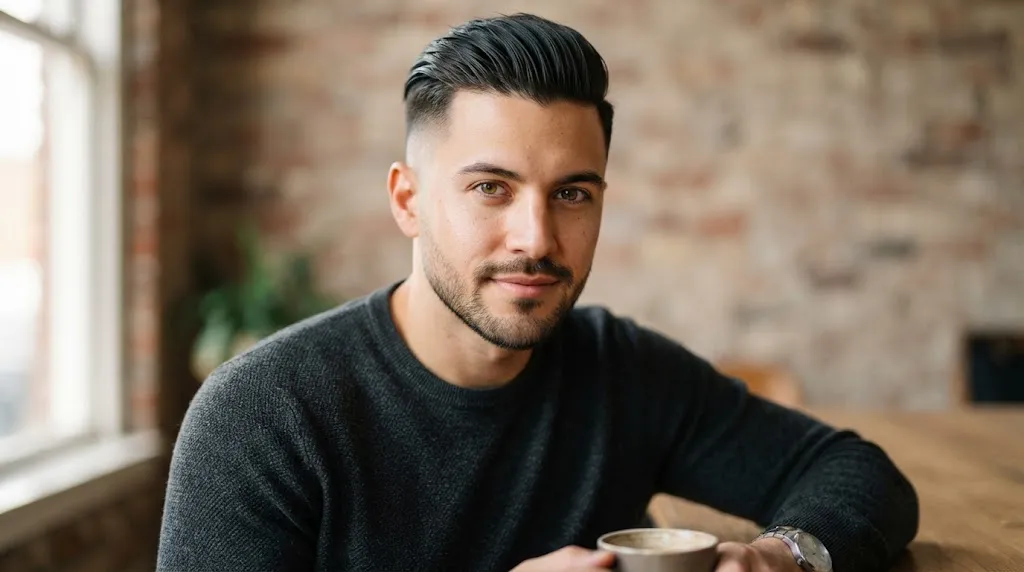
Oval faces are well-proportioned and versatile, meaning almost any straight hair style will sit naturally without needing to correct structural imbalances.
- The Slicked-Back Undercut: Keeps the sides tidy while showing off the balanced proportions of your forehead and chin.
- The Messy Fringe: Adds a relaxed, casual forward movement that breaks up the symmetry of an even face shape.
- The Classic Taper with Natural Texture: A low-maintenance cut that lets straight hair fall neatly into place with minimal product.
These options work because an oval shape does not require optical illusions of width or height, giving you the freedom to experiment with different lengths. See the undercut and fringe guides below for complete length specifications.
Long Face

A long face needs width on the sides and a lower profile on top to avoid making your head appear stretched out.
- The Textured Quiff with a Mid Taper: Keeps height controlled on top while adding width and movement across the forehead.
- The Messy Fringe (Forward Sweep): Bringing straight hair forward over the brow visually shortens the length of the forehead.
- The Side-Swept Layered Cut: Directs hair horizontally across the head rather than straight up, balancing vertical proportions.
How to Get Straight Hair — Straightening Methods for Men
Transforming wavy, curly, or unruly texture into a sleek, straight finish requires choosing the right method based on your natural hair structure, desired duration, and daily maintenance commitment. Straight hair styling for men ranges from temporary at-home pressing to permanent chemical restructuring.
Keratin Treatment
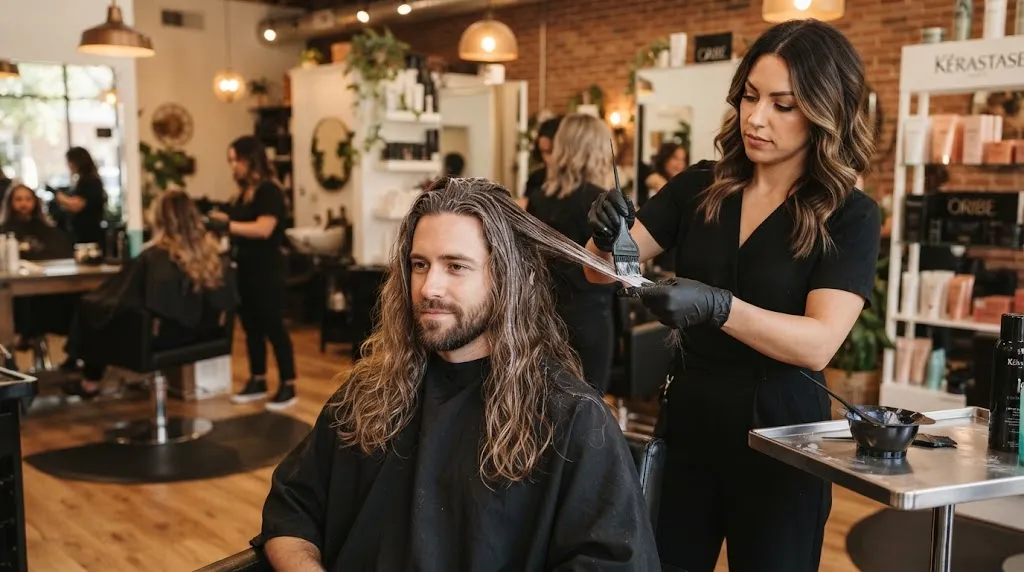
A keratin treatment is a semi-permanent smoothing process that infuses liquid keratin into the hair cuticle, sealing it with heat to eliminate frizz and loosen curl patterns for up to three to five months. * Best suited for: Thick, frizzy, or moderately wavy hair types that require manageable daily styling without losing all natural volume. * Maintenance reality: Requires sulfate-free shampoo to prevent premature stripping of the protein coating, alongside occasional blow-drying to reactivate the smoothness after washing. * Pros: Significantly cuts down daily styling time, blocks humidity-induced frizz, and leaves hair feeling conditioned. * Cons: Professional salon application is time-consuming and expensive, and the process involves chemical bonding agents that require careful aftercare.
Chemical Relaxer
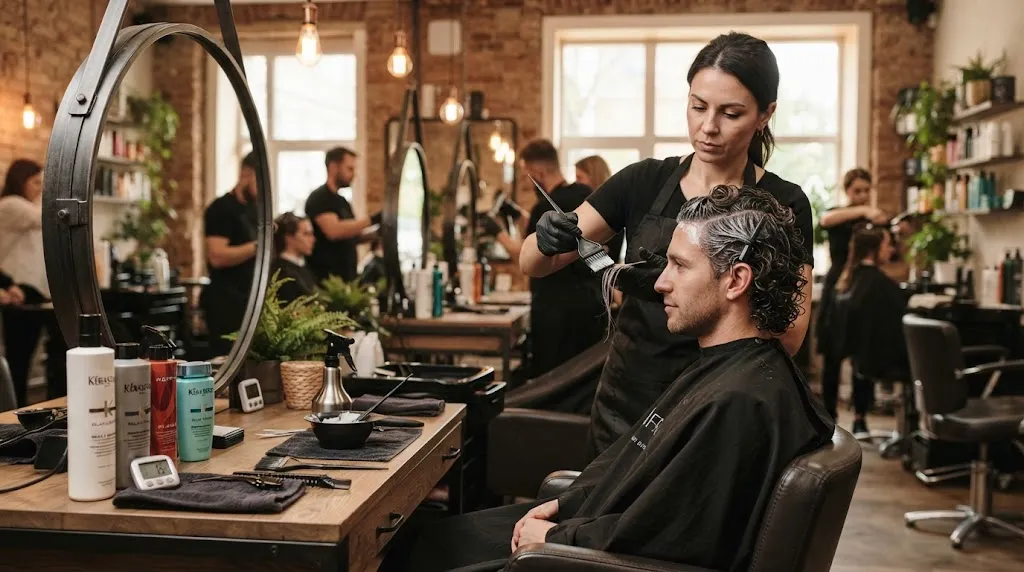
A chemical relaxer breaks the disulfide bonds within the hair shaft, permanently altering the internal structure to straighten tightly coiled or extremely curly hair. * Best suited for: Men with very tight curls, coils, or coarse texture who want permanent straightness and do not mind regular root touch-ups as new growth appears. * Maintenance reality: Requires strict scalp monitoring, deep conditioning treatments every week, and root touch-ups every six to eight weeks to manage incoming natural texture. * Pros: Delivers permanent straightening results that completely eliminate daily styling friction for coarse hair types. * Cons: High risk of chemical damage, scalp irritation, and hair breakage if left on too long or applied incorrectly by an inexperienced hand.
Flat Iron / At-Home Heat Straightening
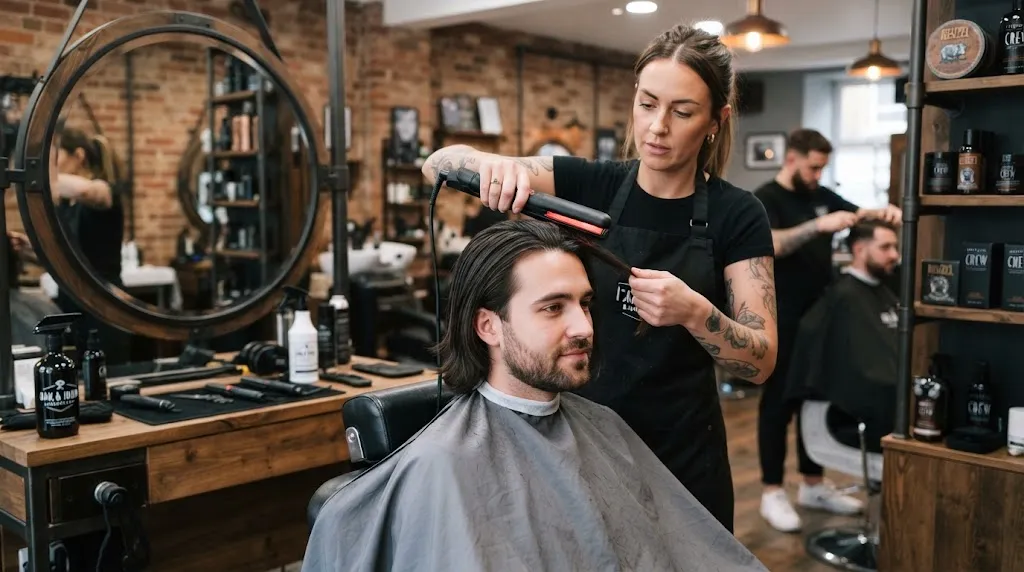
Using a high-temperature flat iron paired with a blow dryer provides a fully controllable, temporary way to press straight styles into damp or dry hair on demand. * Best suited for: Men who want straight hair for a specific day or outfit without committing to long-term chemicals, working best on short to medium lengths. * Maintenance reality: Demands daily application of heat and washing cycles, meaning you must rebuild the style from scratch every time you shower. * Pros: Complete flexibility to switch between natural texture and pin-straight finishes whenever desired, with zero chemical commitment. * Cons: Daily thermal styling strips natural moisture, leading to split ends and heat damage if you skip a lightweight heat protectant spray prior to pressing.
Best Hairstyles for Straight Hair — By Length
Straight hair provides a clean, natural structure that works with multiple lengths, provided the cut matches your growth pattern and daily routine. Managing straight hair successfully comes down to matching your maintenance tolerance with the right cut, as straight strands expose awkward growth lines and cowlicks much faster than textured or wavy hair types.
Short Straight Hair Styles
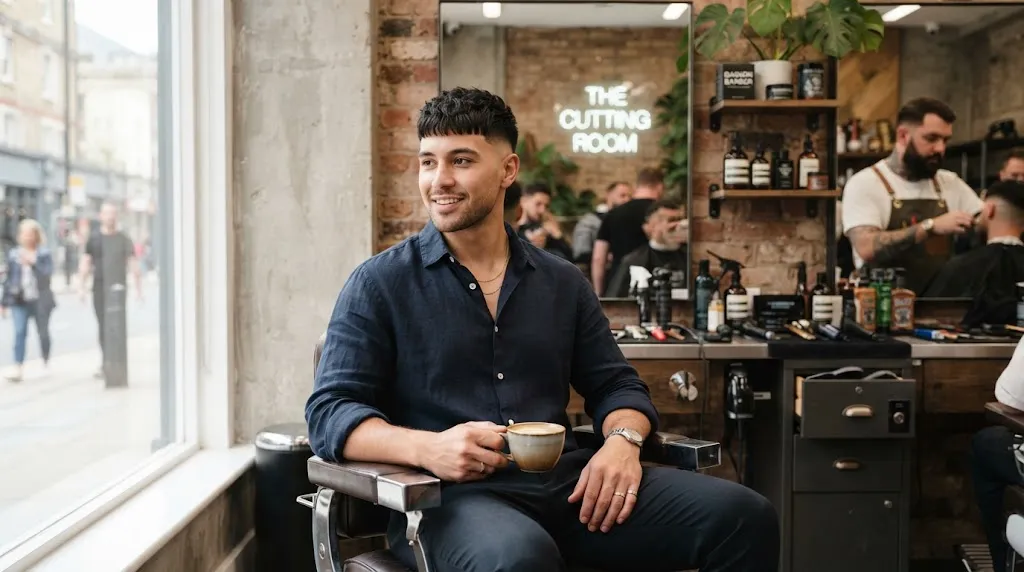
Short straight hair styles rely entirely on clean perimeter work and precise graduation to keep flat hair from looking lifeless. A tight low fade combined with a textured crop or a structured side part works exceptionally well because short straight strands naturally lay flat, giving you an instantly sharp silhouette without needing heavy product manipulation.
Medium Length Straight Hair Styles
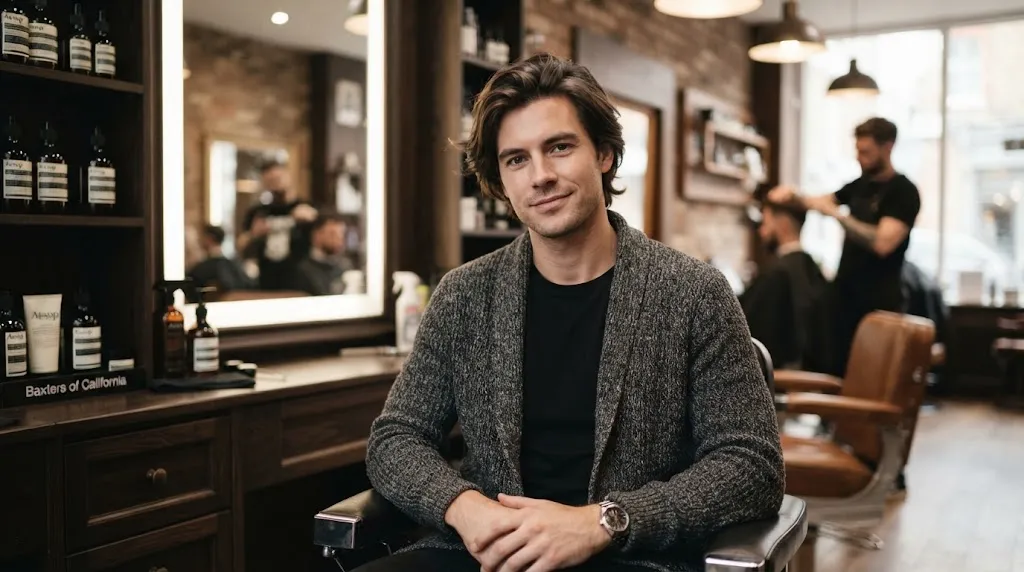
Medium length straight hair styles offer maximum versatility, moving easily between a slicked-back executive finish or a relaxed flow. The main challenge at this length is weight distribution, since straight hair tends to stack heavily and lose volume around the crown if left unlayered. A classic medium-length taper or a brushed-back pompadour utilizes the natural alignment of straight strands to create clean sweep lines and smooth elevation.
Long Straight Hair Styles
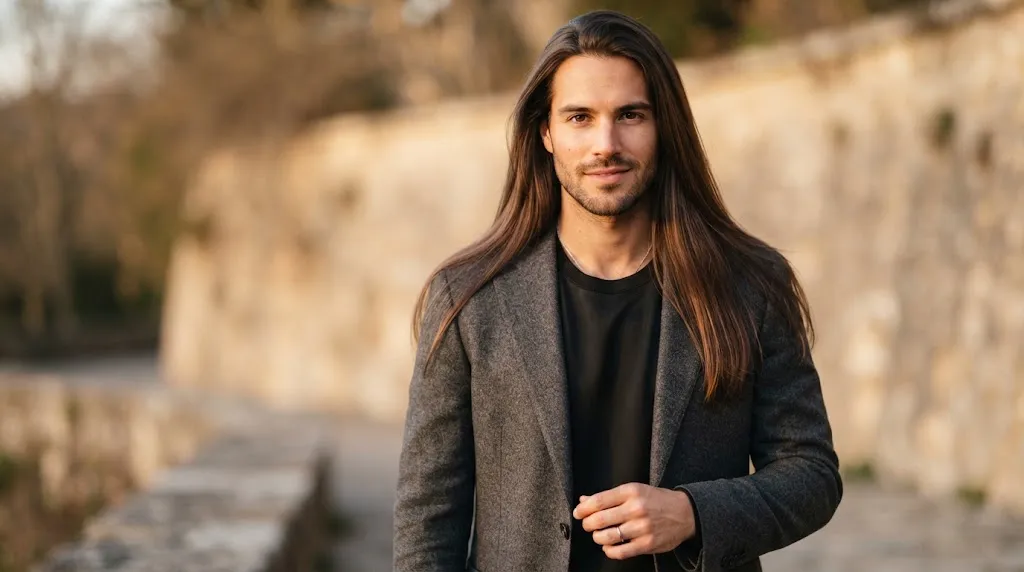
Long straight hair styles require intentional weight removal and subtle layering to avoid looking heavy or triangular at the shoulders. A lived-in, shoulder-length cut with subtle face-framing layers allows straight hair to drop cleanly while retaining natural movement rather than looking blocky.
Straight Hairstyles for Boys

Straight hair on school-age boys and pre-teens naturally wants to lie completely flat or stick straight out in awkward cowlicks, making practical, low-maintenance cuts essential for parents trying to minimize morning styling. The key is choosing age-appropriate styles that control fine straight strands without requiring high-heat tools or heavy gels. [IMAGE: front-facing photo of a pre-teen boy with a clean low taper fade and textured short top on a neutral background] [ALT TEXT: Low taper fade haircut for straight hair boys — clean short sides and textured top]
- The Short Textured Crop: This cut leaves about one to two inches of length on top with point-cut ends to break up the natural bluntness of straight hair, paired with a neat low taper on the sides. It stays out of the eyes during school and sports, requiring just a dime-sized amount of a water-based styling cream worked through damp hair with the fingers.
- The Classic Crew Cut: For maximum ease, a crew cut keeps the back and sides short with a slightly longer, uniform length on top. Straight hair stands up well to this military-inspired shape because it naturally forms a clean, uniform finish with zero daily styling required.
- The Soft Side-Swept Fringe: Great for boys who resist shorter cuts, this style leaves length across the front to be brushed casually to one side. Pairing it with tight, clean edges around the ears and neckline keeps the overall look tidy enough for school dress codes while stretching out the time between barber visits.
Messy Haircuts for Guys with Straight Hair
Straight hair naturally tends to lay flat and follow a uniform growth direction, which means achieving a genuinely casual, tousled finish requires strategic cutting and the right styling mechanics rather than just skipping your morning routine. The secret behind a convincing messy style on straight locks is built right into the haircut structure: your barber needs to break up the weight using point-cutting and internal layering so the individual strands have room to move independently instead of clumping together.
Key Variations and Styling Execution
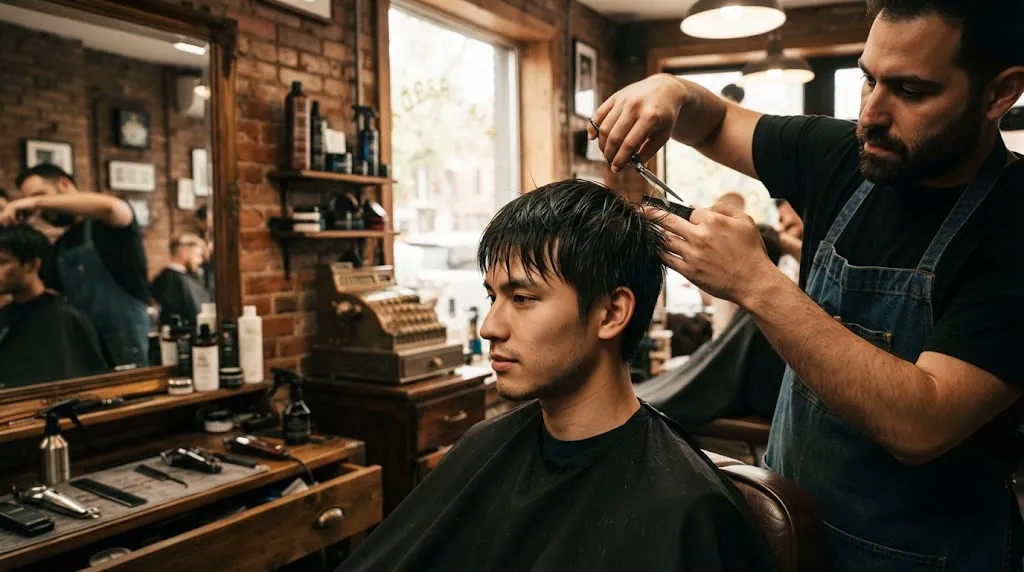
The Messy Textured Crop: This style keeps the top short and choppy, pushed forward toward the forehead with a broken fringe line.
Styling steps: Work a lightweight sea salt spray into damp hair to build foundational grit, then blow-dry forward using your fingers to direct the airflow. Rub a dime-sized amount of matte texture clay between your palms until it disappears, rake your hands through the hair from back to front, and pinch individual end sections to separate them.
Real Problems Straight-Haired Guys Face
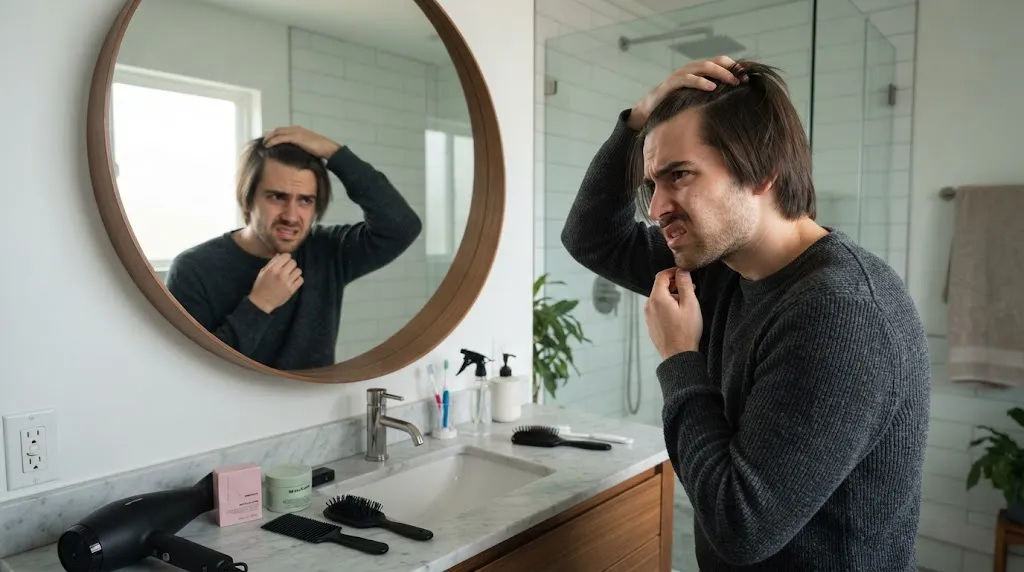
Straight hair sits flat against the scalp because the follicle shape allows natural sebum to travel directly down the hair shaft without interference. Every single day in the shop, clients sit in the chair dealing with the exact same four structural frustrations that standard styling advice ignores.
Hair Going Flat by Midday

When a style completely collapses by lunch, the culprit is almost always heavy product weighing down fine, straight strands or a lack of root elevation during blow-drying. Gravity wins when hair products contain too much moisture or oil. * The Fix: Apply a lightweight volumizing mousse to damp roots, then direct airflow upward with a blow-dryer before adding any finishing product. Finish with a dry texture spray rather than a heavy pomade to lock in lift without the weight.
Managing Natural Oil and Shine
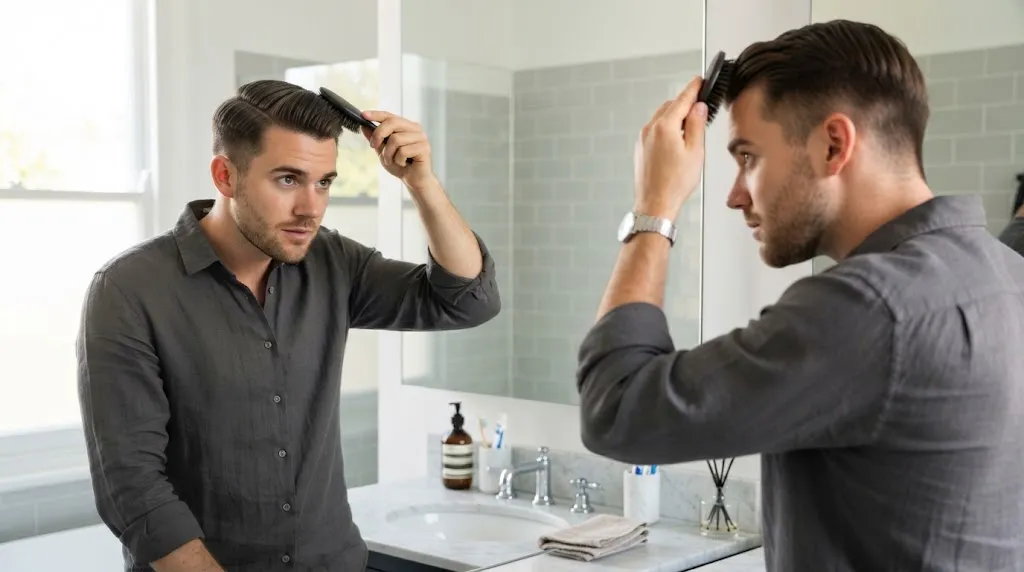
Because straight hair lacks bends or texture, sebum accumulates visibly near the scalp much faster than it does on curly or wavy hair, turning a clean style into a greasy look within hours. * The Fix: Wash hair with a clarifying shampoo no more than twice a week to strip buildup without triggering overproduction of sebum, and keep a translucent styling powder on hand to absorb excess oil midday.
Frizz in Humidity (for Straightened Hair)

Chemically or thermally straightened hair behaves differently in humid weather, absorbing moisture from the air and reverting back to its natural swelling or frizzing tendencies. * The Fix: Coat damp hair with a silicone-free smoothing serum and seal the cuticle completely using a nozzle-attachment blow-dryer on a medium heat setting, moving downward from root to tip.
Styling Around a Receding Hairline
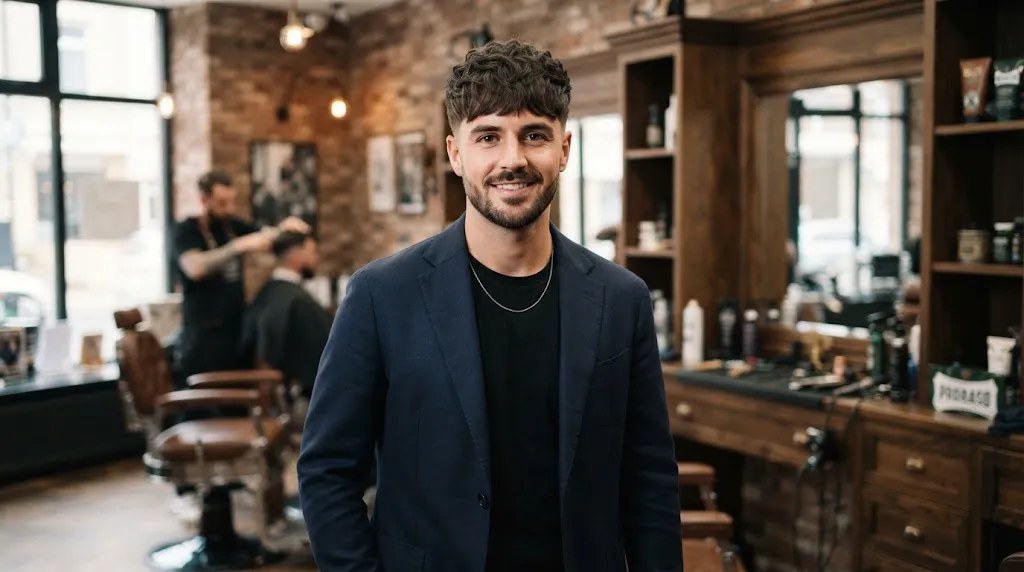
Straight hair parts sharply and exposes the scalp easily, making a receding hairline look more pronounced when hair is pushed straight back or weighed down flat. * The Fix: Avoid heavy gels that clump straight hairs together and expose the skin underneath. Instead, use a matte styling clay to push hair forward or across the forehead in a textured crop that naturally conceals temples.
How to Style Straight Hair — Step by Step
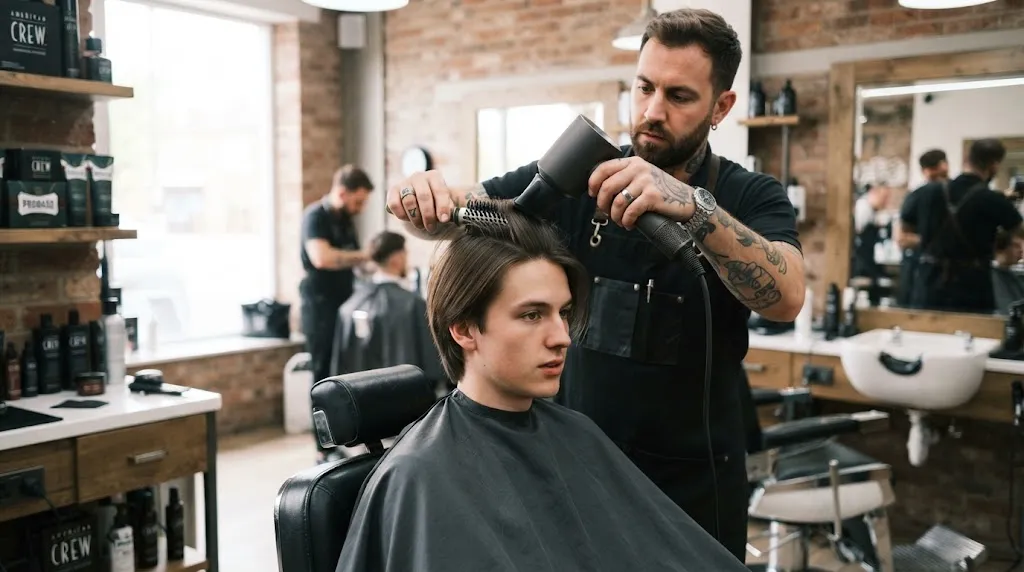
Straight hair needs a deliberate approach to avoid looking flat or lifeless. To get maximum control and longevity out of your styling routine, follow this four-step method: * Wash and Prep: Start with a clean slate using a lightweight, daily-cleansing shampoo that won’t leave a heavy residue. Towel-dry until damp, then work a few pumps of a lightweight sea salt spray evenly through the strands from roots to ends to build natural grip and workable texture. * Add Volume at the Roots: Straight hair naturally hugs the scalp, so building lift right at the crown and front is essential. Direct your fingers upward against the grain while lifting sections to encourage root elevation before applying direct heat. * Blow-Dry Technique: Attach a nozzle to your blow-dryer to concentrate airflow. Using a vent brush or your fingers, direct the airflow downward and in the direction you want the hair to fall, alternating between medium heat and a shot of cool air to lock the shape into place. * Finish with Product: Warm a small fingernail-sized amount of a matte texture clay thoroughly between your palms until it disappears. Work it into the hair starting from the back and moving forward, using your fingertips to piece out ends and define your final shape without adding grease or unwanted shine.
How to Ask Your Barber for a Straight Haircut
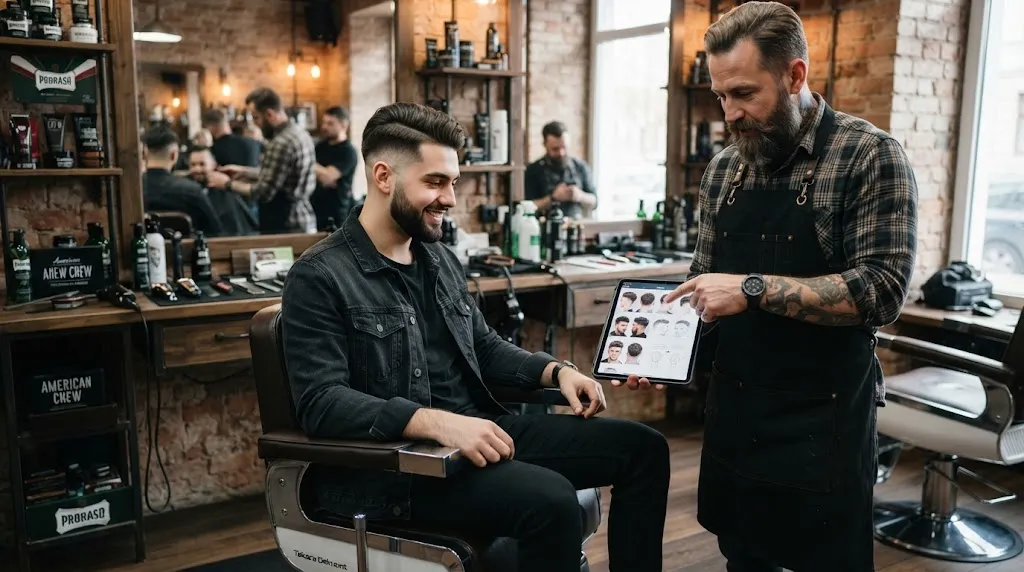
Bring a clear, high-resolution reference photo showing the exact sides, back, and top length you want. Point out specific features you like, such as a low skin fade or a textured crop, and tell your barber how much daily styling time you are willing to commit to so they can adjust the weight and layering accordingly.
Maintenance — How Often to Trim
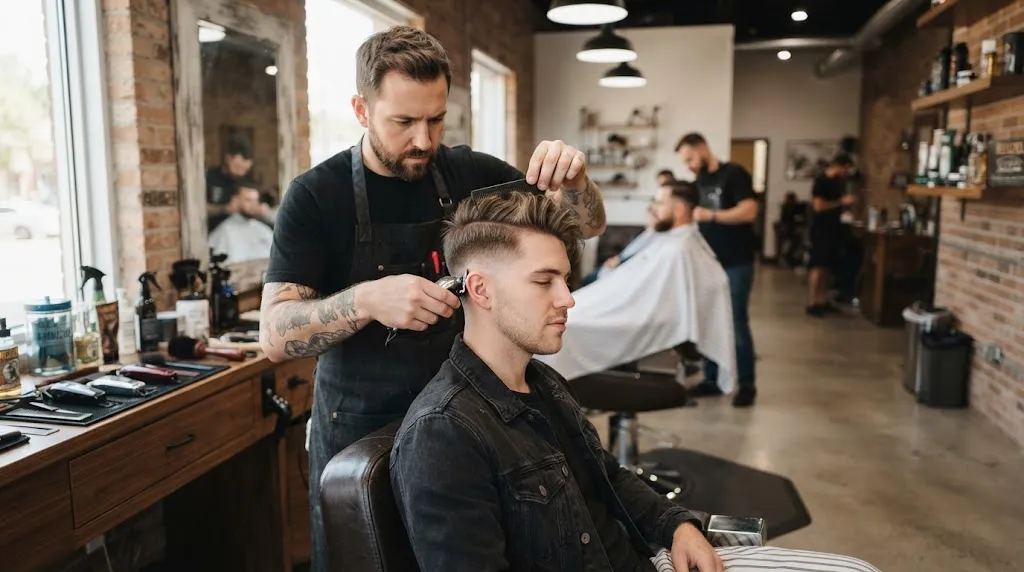
Straight hair highlights structural geometry and weight lines faster than curly or coily textures, meaning minor growth completely changes how a cut sits. Keeping straight hair sharp requires syncing your visit schedule directly with your chosen length and fade intensity.
Short Fades and Crop Cuts (Every 2 to 3 weeks): Skin fades, tight tapers, and textured crops lose their definition rapidly. Straight hair stands straight up as it grows out, causing the blended sides to puff outward and blur the contrast against the skin within half an inch of growth.
Medium-Length and Classic Styles (Every 3 to 5 weeks): Side parts, quiffs, and medium flows require a monthly reset. At the four-week mark, straight hair at the crown and temple weight-lines starts to collapse or flip outward, fighting your regular styling product and losing internal layering.
Longer Flow and Layered Cuts (Every 6 to 8 weeks): If you wear your straight hair past the ears or down to the shoulders, stretch your visits to every six to eight weeks. The primary goal here is dusting off split ends and thinning out bulk at the ends rather than changing the silhouette, preventing the hair from looking frayed.
Straight Hairstyles Compared
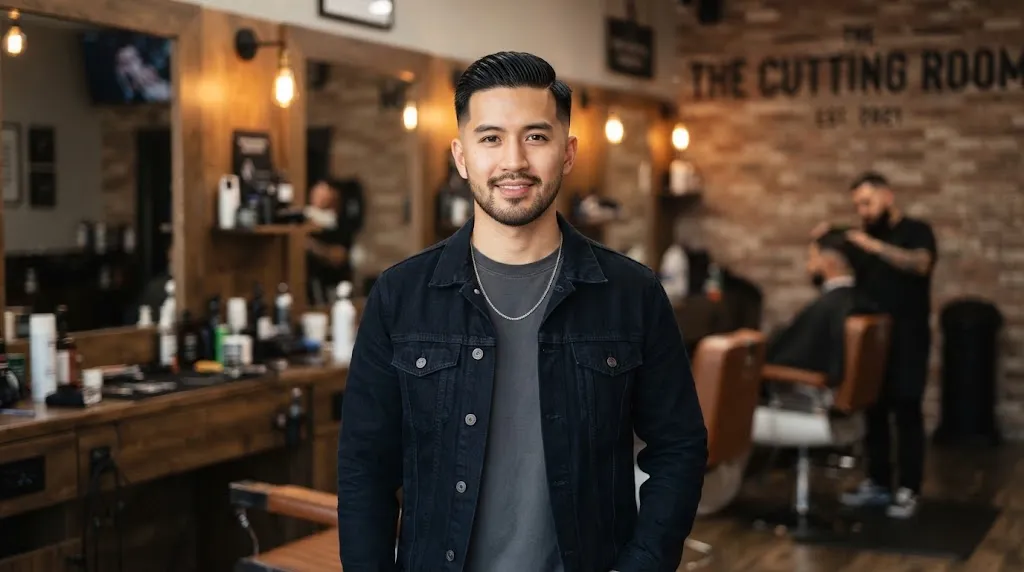
Choosing the right cut for straight hair comes down to matching your hair's natural fall, growth patterns, and daily upkeep tolerance with the right structure. In the chair, clients often bring in photos of styles that fight their crown growth or cowlicks, leading to daily frustration in front of the mirror. Below is a direct breakdown comparing the top straight hair men options by length, face shape compatibility, upkeep, and overall aesthetic.
| Style | Length | Best Face Shape | Maintenance Level | Vibe |
|---|---|---|---|---|
| Textured Crop | Short (1-2 inches on top, faded sides) | Oval, Square, Round | Low to Medium | Modern, sharp, athletic |
| Classic Quiff | Medium (3-4 inches on top) | Oval, Diamond, Triangle | Medium | Timeless, polished, versatile |
| Slicked Back | Medium to Long (4+ inches) | Oval, Oblong | High | Sleek, bold, traditional |
| Low-Maintenance Buzz | Very Short (Grades 1-3 all over) | Square, Oval | Very Low | Clean, rugged, utilitarian |
| Natural Flow / Medium Layers | Medium to Long (5+ inches) | Heart, Square | Medium | Relaxed, effortless, indie |
Frequently Asked Questions
- Is straight hair attractive for men?
Yes, straight hair is exceptionally versatile and naturally catches light better than curly or coily hair types, giving it a clean, healthy appearance. The key is managing volume and adding texture so it does not lie completely flat against the skull. - What can I do with straight hair men?
Straight hair works as a blank canvas for a wide range of styling directions. You can wear it ultra-clean with a low-fade pompadour, keep it effortless with a textured fringe, or split it down the middle for a relaxed 90s-inspired look. - What is the hottest hair cut for boys?
Textured crops with a blunt or choppy fringe currently dominate modern styling trends. These cuts rely heavily on removing interior bulk rather than stacking short layers, keeping the overall shape movable and modern.
- What is the best haircut for men with straight hair?
The best option depends heavily on your daily styling commitment, but mid-fade textured crops and modern taper cuts rank among the most practical. They offer clean lines around the ears and neckline while leaving enough top length to play with matte styling products. - What is an F boy haircut?
This colloquial term typically refers to high-contrast, sharp hairstyles characterized by a skin fade on the sides and a longer, heavily gelled or textured mop on top—often styled into a messy fringe or heavy side-sweep. - Who can pull off a middle part?
Men with oval, heart, or diamond face shapes pull off the middle part best, especially if their straight hair has medium density and natural movement. If you have a very angular or elongated jawline, a center part can sometimes exaggerate length, so adding subtle wave or texture with a lightweight sea salt spray helps soften the frame. - What is the Gen Z boy haircut called?
The modern Gen Z favorite is generally known as the textured fringe, French crop, or floppy middle-part flow. These styles embrace natural movement and a somewhat undone finish rather than rigid, high-shine pomades. - What is a no. 1 haircut / number 1 haircut for boys?
A number 1 haircut uses a clipper guard measuring roughly one-eighth of an inch (3mm), resulting in a very short, scalp-revealing buzz cut. It is commonly used on the back and sides for a tight taper or fade. - What age to cut boys’ hair?
There is no fixed age for a first haircut; it entirely depends on when the child’s hair begins obstructing their vision, tangling severely, or growing unevenly. Many parents schedule a first trim anywhere between six months and two years old.
Explore More Hairstyles
Looking for more style inspiration? Browse our full hairstyles hub or head back to our homepage for guides across every hair type and length.