
Long Wavy Hairstyles for Men — Best Styles, Cuts & Styling Guide

What Is Wavy Hair for Men?

Wavy hair falls into the Type 2 category on the Andre Walker Hair Typing System, sitting right in the sweet spot between bone-straight strands (Type 1) and full-on tight curls (Type 3). It’s characterized by S-shaped bends rather than tight coils or spirals. While straight hair lies flat against the scalp and curly hair springs upward, wavy hair creates natural volume, motion, and texture that changes as it grows longer.
How to Identify Your Wavy Hair Type:
Type 2A (Fine, Loose Waves): Your hair grows relatively straight near the roots, then forms gentle, soft S-bends through the mid-lengths and ends. It tends to lie flat and can easily be weighed down by heavy pomades or waxes.
Type 2B (Medium Waves): The S-shape is more defined and starts closer to the scalp. The hair has noticeable body and natural volume, but it’s prone to slight frizz, especially in humid conditions.
Type 2C (Thick, Coarse Waves): Deep, distinct waves that start right at the root. The texture is resilient and thick, often bordering on loose curls, and requires proper moisture to control puffiness and unwanted bulk.
How to Check Your Wave Pattern:
Wash your hair with a gentle shampoo and skip blow-drying or towel-scrubbing.
Gently squeeze out excess water with a microfiber towel or an old cotton t-shirt.
Rake a wide-tooth comb through once to detangle, then let your hair air-dry naturally without touching it.
If your hair forms distinct “S” curves as it dries instead of falling stick-straight or springing into tight spirals, you have wavy hair.
Long Wavy Hairstyles Men

How Wavy Hair Looks

Wavy hair is defined by its distinct “S” shape pattern. Unlike straight hair that falls flat, wavy hair naturally bends and curves along the shaft, creating volume, texture, and natural movement. The wave pattern usually becomes more noticeable from the mid-lengths down to the ends, while the roots often stay relatively flat or loose. It gives off a relaxed, textured appearance without forming complete 360-degree loops.
Key Differences From Curly Hair
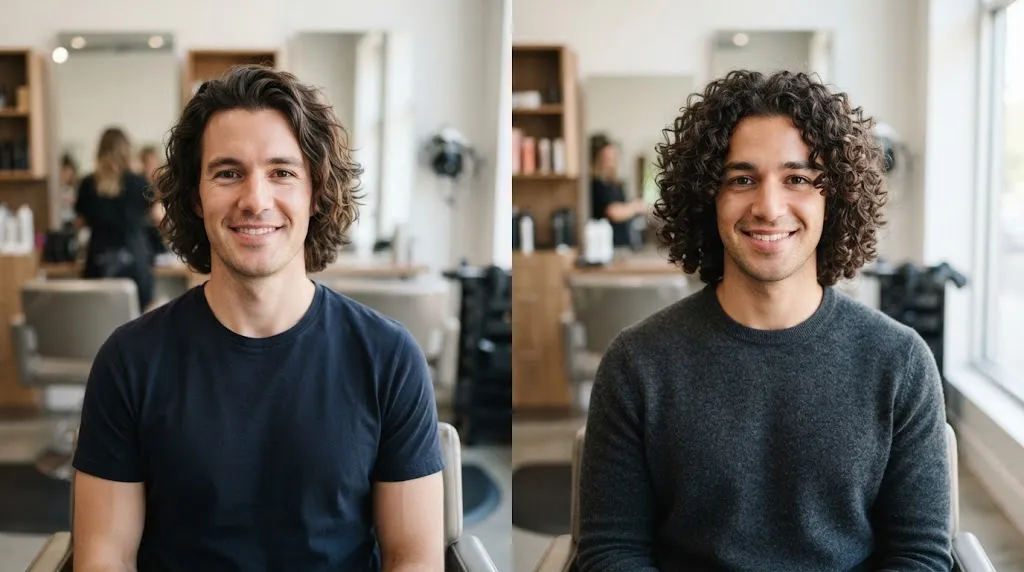
While wavy and curly hair both add texture and volume, they behave quite differently and require different care routines:
Pattern Structure: Wavy hair (Type 2) bends in an S-shape, whereas curly hair (Type 3) forms complete, spring-like “O” shapes, spirals, or tight ringlets from the root to the tip.
Volume and Lift: Curly hair grows outward and upward from the scalp, creating immediate height and circumference. Wavy hair grows downward first, expanding outward primarily through the body and ends.
Moisture Needs: Natural scalp oils travel easily down loose waves, making wavy hair less prone to extreme dryness. Curly hair’s tight twists block these oils from reaching the ends, making it significantly drier and more dependent on deep conditioners and leave-ins.
Frizz and Weight: Wavy hair easily loses its pattern and becomes weighed down if you use heavy oils or dense pomades. Curly hair thrives on richer, heavier creams that hold tight ringlets together.
Straight-Wavy Hair (The In-Between Type)

Straight-wavy hair—often categorized as Type 2A—sits directly on the line between Type 1 (Straight) and Type 2 (Wavy).
Appearance: It looks almost completely straight when wet or cut short, but displays subtle, sweeping bends as it grows past 3 to 4 inches.
Behavior: It lies flat at the crown with slight movement around the ears and neck.
Styling Note: This hair type is exceptionally versatile. It can be easily blown out straight or enhanced into defined waves using a light sea salt spray or a lightweight curl mousse applied to damp hair.
Best Long Wavy Hairstyles for Men

Long wavy hair offers an unbeatable mix of natural volume, flow, and effortless versatility. Choosing the right cut comes down to how your hair carries its weight and how much daily styling effort you want to put in.
Long Wavy Layers

Long wavy layers are the ultimate structural foundation for men with medium-to-thick wave patterns. Without layers, long wavy hair tends to grow into a triangular “pyramid” shape, where the bottom gets overly wide and heavy while the top stays flat against the head.
The Cut: Your stylist will remove weight internally while keeping overall length, creating soft cascading sections that allow the waves to lift and stack naturally.
Best For: Men with dense, heavy hair who want motion and natural lift without losing length.
Styling Routine: Apply leave-in conditioner to damp hair, scrunch upwards, and let it air-dry. If you are transitioning from shorter lengths, read our guide on medium length hairstyles men to manage the awkward growth phase.
Wavy Surfer Hair

The classic surfer cut embraces a sun-bleached, undone aesthetic that thrives on piecey texture, natural separation, and effortless flow. It relies on loose Type 2A or 2B waves that sit around collar-length or hit past the shoulders.
The Cut: Cut with point-cutting scissors to avoid sharp, blunt edges. The ends are intentionally textured to give a lived-in, windblown finish.
Best For: Men with medium or fine waves looking for a low-maintenance style that requires almost no morning heat-styling.
Styling Routine: Mist towel-dried hair liberally with sea salt spray. Scrunch gently to activate the wave pattern, then let it dry naturally to achieve that matte, ocean-breeze texture.
Long Wavy Hair with Bangs

Adding fringe or bangs to long wavy hair brings strong framing to the eyes and cheekbones while shortening the visual vertical length of the face.
The Cut: Curtain bangs or textured forward fringes work best here. Instead of a solid straight line across the forehead, waves fall into curtain-like sweeps that part softly down the middle or off to one side.
Best For: Oval, heart-shaped, or long face shapes looking to balance proportions or cover a higher hairline.
Styling Routine: Work a lightweight styling cream or curl mousse into damp fringe sections, directing them outward away from the center of the face with your fingers as they dry.
Wolf Cut Wavy Hair

A modern hybrid between a 70s shag and a modern mullet, the wolf cut features heavy volume at the crown, choppy layers throughout, and longer, wispy lengths cascading down the back and neck.
- The Cut: Short, heavily textured layers on top transition into longer, thinned-out perimeter lengths. The natural bend of wavy hair makes this cut explode with texture and grit.
- Best For: Men with Type 2B or 2C waves who want a bold, edgy, rock-and-roll look with high built-in volume.
- Styling Routine: Distribute a light matte paste or texture powder near the roots to boost crown height, then scrunch a hydrating cream through the ends to prevent frizz.
Watch: a barber's step-by-step guide to cutting and styling long wavy hair for men.
Best Wavy Hairstyles by Hair Texture

Hair density and strand diameter dictate how waves fall, hold volume, and react to products. Tailoring your cut to your specific texture prevents common issues like triangular volume, flat roots, or frizzy flyaways.
Thick Wavy Hair Men

Thick wavy hair possesses natural strength and impressive volume, but its sheer bulk can quickly turn unruly or blossom into a heavy, helmet-like silhouette as it grows out.
The Best Cuts: Long textured layers, undercut sweeps, or medium-to-long shags. The goal is internal weight removal—having your barber use slithering or channel-cutting techniques to hollow out bulk without cutting short, blunt layers on top that pop up into unwanted volume.
Management & Control: Focus on hydration to weigh down excess puffiness. Heavy-density waves need rich moisture to stay soft and pliable.
Product Match: Medium-hold styling creams, leave-in conditioners, and grooming creams. Apply products when the hair is thoroughly wet to lock in wave grouping and control expansion.
Curly Wavy Hair Men (Mixed Texture)

Mixed-texture hair usually features tight Type 2C waves near the nape and crown, alongside looser Type 2A/2B waves around the sides or front. This combination yields high volume and unpredictable spring-back lengths.
The Best Cuts: A mid-length textured crop, a cascading curtain cut, or a soft taper fade with longer, free-flowing waves on top. Keeping the perimeter tailored cleans up the lower half while letting the mixed textures shine on top.
Management & Control: Hydration consistency is critical here, as drier sections will friz outward while softer sections lie flat. Hydrate uniform strands to unify the overall wave pattern.
Product Match: Curl-defining gels mixed with a drop of hair oil, or a hydrating curl cream. Work product evenly from root to tip, then use the “praying hands” method to smooth out coarse patches and create defined wave clusters.
Fine/Thin Wavy Hair Men

Fine or thin wavy hair breaks easily and gets weighed down rapidly by products. However, its natural bend provides built-in movement that makes fine hair appear significantly fuller than fine straight hair when cut properly.
The Best Cuts: Blunted-end shoulder-length cuts, light perimeter layering, or a classic side-parted flow. Avoid aggressive thinning or texturizing shears, which strip away necessary density and leave the ends looking sparse and wispy.
Management & Control: Build structure at the root while keeping the lengths clean. Avoid heavy oils, silicones, and butter-based products that flatten fine strands against the scalp.
Product Match: Sea salt sprays, weightless volumizing mousses, and light matte pastes. Apply mousse or salt spray to damp roots, then scrunch lightly to encourage wave lift without adding weight.
Best Fade & Taper Cuts for Wavy Hair
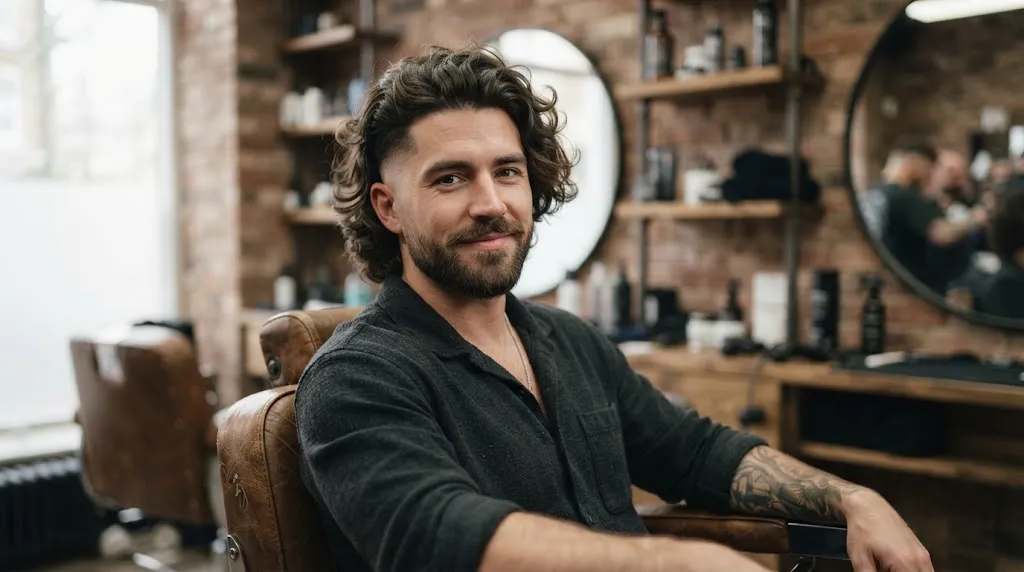
Pairing natural wave texture with a fade or taper creates a clean, modern contrast. Fading the sides removes side bulk while allowing the top and back to retain flow and movement.
Low Fade Wavy Hair
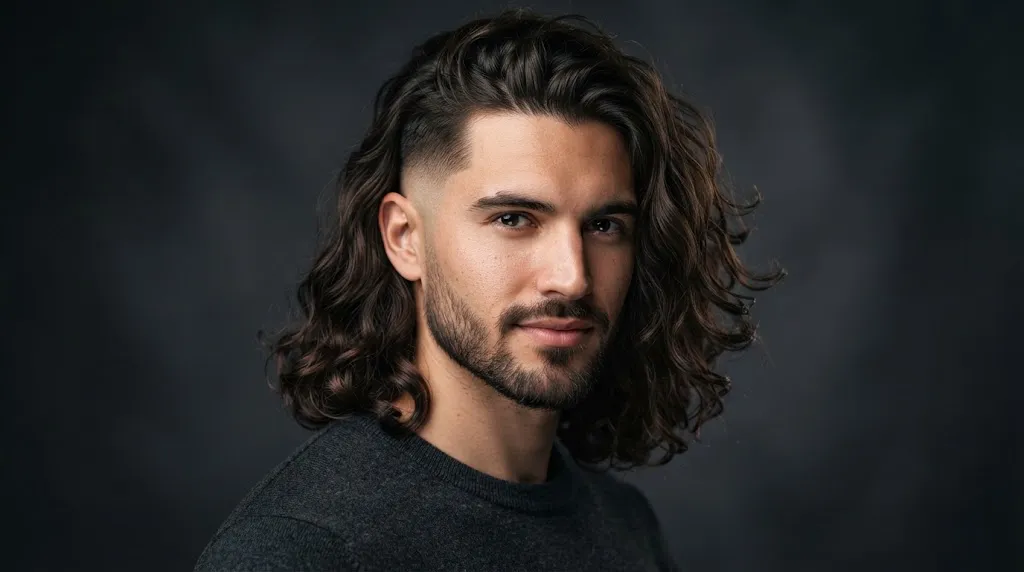
A low fade drops down close to the ear and follows the natural curve of the hairline around the nape. Because the fade sits so low, it leaves plenty of hair along the parietal peak (the sides of your head), making it an ideal choice for transitioning into long, flowing top waves.
The Cut: The taper begins just above the ear and drops lower behind it. The top transitions smoothly into mid-to-long waves without a harsh disconnect.
Best For: Men who want a tailored, professional perimeter while keeping max length and volume on top.
Styling Routine: Work a light styling cream through the top waves when damp, then brush the faded sides down flat with a soft bristle brush.
Wavy Fade (General)
A general wavy fade balances structural precision on the sides with soft texture up top. Depending on your preference, mid or high fades remove side weight rapidly, drawing all visual focus directly to the wave pattern on top.
The Cut: The sides are faded down to the skin or a short guard (0.5 to 2), creating a sharp background that makes the top waves pop. Barbers typically use point-cutting on top to blend the wave lengths smoothly into the fade line.
Best For: Guys who want a high-contrast, low-maintenance daily look that stays cool and manages heavy side volume.
Styling Routine: Apply a sea salt spray or light matte clay to damp top hair. Blow-dry on low speed while scrunching the top waves to build natural texture.
Fade Haircut for Curly Hair
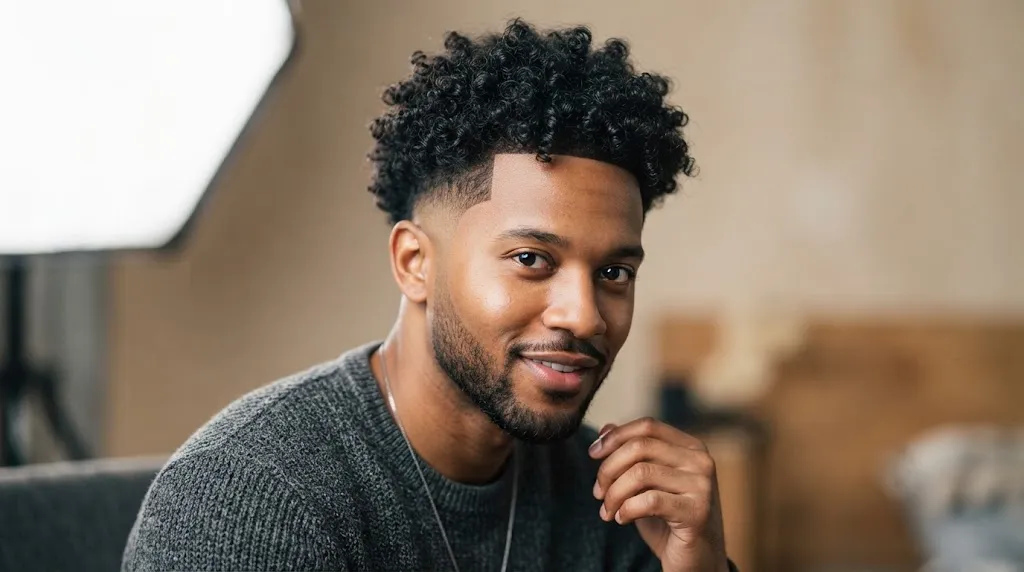
For men whose waves lean heavily into tight Type 2C or Type 3A territory, a fade provides essential structure. It prevents the sides from puffing outward while allowing the crown and top to show off natural coils and deep bends.
The Cut: A drop fade or temp fade works best here. The barber keeps the top longer to accommodate the natural spring-back of tighter waves, while neatly trimming the temples and neckline.
Best For: Coarser, denser wave types that expand horizontally if the sides grow too long.
Styling Routine: Apply a leave-in conditioner or hydrating curl cream immediately after showering. Leave the sides clean and scrunch the top sections upward to form defined, frizz-free clusters.
Best Haircuts for Curly Hair Men

Choosing the right cut for curly hair comes down to managing spring-back length, distribution of weight, and maintaining healthy curl definition. Unlike straight or loosely wavy hair, curls expand outward as well as downward, making strategic shape and structure essential.
Short Curly Fade
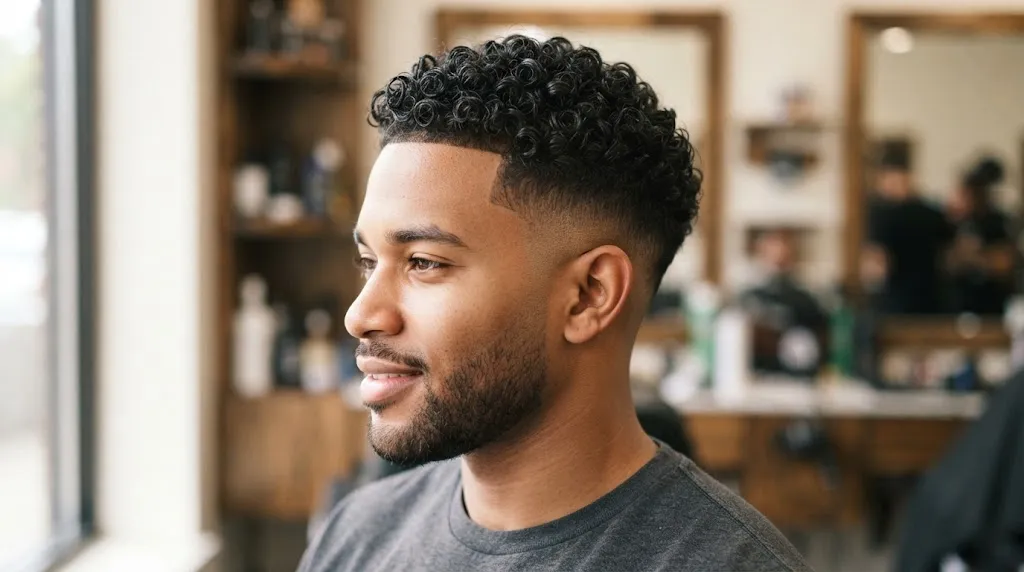
The short curly fade offers maximum contrast with minimal daily maintenance. By keeping the back and sides closely cropped, all the focus stays on the texture up top without the hassle of managing side volume or puffiness.
The Cut: A mid or high skin fade on the sides that blends cleanly into 1 to 2 inches of defined curls on top. The top is rounded to complement the natural shape of the skull.
Best For: Men who want a sharp, clean, low-maintenance style that looks polished for work or formal settings while keeping natural curl texture.
Styling Routine: Work a dime-sized amount of leave-in conditioner or light curl cream into damp hair on top, then let it air-dry. Keep the sides neat with a quick brush-down.
Short Curly Crop / Curly Top Haircut

The curly crop brings a forward-leaning, modern silhouette that works with your hair’s natural growth pattern rather than fighting it. It features short, textured curls on top that push forward into a soft fringe over the forehead.
The Cut: Faded or tapered sides with 2 to 3 inches of length on top, layered lightly to allow individual ringlets to form without bulk. The fringe line is left textured rather than blunt-cut.
Best For: Oval, square, or longer face shapes looking to shorten visual face height or conceal a receding hairline.
Styling Routine: Apply a sea salt spray or curl-defining mousse to damp hair. Use your fingers to rake the curls forward toward your face, scrunching slightly at the front to build defined texture.
Best Overall Cuts for Curly Hair

For men who want to showcase their full curl pattern with versatility, balanced mid-length cuts deliver the best mix of shape, volume, and character.
The Shoulder-Length Flow: Long, cascading curls layered around the perimeter to prevent the “pyramid effect.” This allows tight ringlets to weight themselves down naturally while maintaining body throughout.
The Curly Shag / Wolf Cut: A heavily layered cut featuring crown height, soft face-framing curls, and longer lengths at the nape. It embraces natural volume and gives an effortless, lived-in feel.
The Tapered Curly Afro: Designed for tight Type 3B and 3C curls, this cut maintains a rounded, full shape on top with clean tapers at the temples and neckline to keep the perimeter sharp.
Wavy & Curly Hairstyles for Boys

Younger hair textures tend to be fine, fast-growing, and active—meaning cuts for kids and teens need to balance natural wave definition with durable, low-effort daily wear.
Easy Wavy Cuts for Boys

Simple cuts that work with the hair’s natural growth pattern save time in the morning and keep waves looking organized throughout the day.
The Textured Medium Crop: Keeps 2 to 3 inches of length on top with soft, tapered sides. The top waves naturally fall forward or to the side without needing heavy styling products or heat tools.
The Classic Surfer Shag: A collar-length cut with light perimeter layering that lets natural loose waves flow freely around the ears and neck. It looks intentionally styled even straight out of bed.
The Tapered Side Part: A neat, timeless cut where the sides are kept clean with a #3 or #4 guard, leaving just enough length on top to comb back or sweep over to reveal a soft wave pattern.
Low-Maintenance Styles for Kids/Teens

Teenagers and young boys need haircuts that withstand sports, hats, and minimal morning effort while still looking sharp.
The Short Buzz-Fade with Textured Top: Keeps the sides tightly faded (#1 or #2 guard) with a short 1-inch wave crop on top. It offers the ease of a short cut while retaining subtle wave texture up front.
The Long-Top Drop Fade: A popular choice for teens that pairs a clean skin or low fade on the sides with 3+ inches of waves on top. It keeps hair off the ears and neck, requiring only a quick rinse and scrunch to style.
The Casual Flow Cut: Designed for medium-to-long wavy hair that tucks naturally behind the ears. It uses soft point-cutting on the ends to prevent bulk and requires zero daily product—just a quick comb after showering.
Best Hairstyles for Men with Big Ears

Having prominent or wide-set ears doesn’t mean hiding behind a baseball cap. Wavy hair gives you a distinct aesthetic advantage—its built-in volume and horizontal body naturally soften facial proportions, drawing visual attention toward your overall hair texture rather than your ears.
Wavy Cuts That Balance Big Ears

The Mid-Length Flow (Tucked or Free-Falling): Grown out to 4 to 6 inches around the sides, mid-length waves drape soft S-curves directly over the upper rim of the ears. This partially conceals the ear cartilage while creating a relaxed, natural silhouette.
The Wavy Bro Flow: Keeping length continuous from front to back allows your waves to sweep backward over the tops of your ears. The resulting lateral fullness balances out the head shape so prominent ears no longer stick out past the hairstyle line.
The Modern Shag / Wolf Cut: A heavily layered cut that distributes texture all around the head. The choppy wave layers around the temples and sideburns break up hard lines and disguise protruding ear tips seamlessly.
The Low Taper with Long Wavy Top: If you prefer clean edges, avoid high skin fades—they remove side weight completely and expose the ears. A low taper keeps the temple area clean while leaving ample wave density right above the ear line to maintain proportion.
General Hairstyle Tips for Big Ears

Whether you prefer short, medium, or long lengths, applying strategic haircut rules ensures your proportions stay balanced.
- Avoid High Fades and Buzz Cuts: Extremely tight side cuts (like high skin fades, buzz cuts, or disconnected undercuts) strip away side density. This leaves your ears completely framed by bare skin, making them appear significantly larger.
- Build Lateral Volume, Not Just Height: Adding height only on top stretches the face vertically and makes prominent ears stand out more. Ensure your stylist leaves enough length on the sides and parietal ridge to expand your hair outward.
- Use Texture and Motion to Divert Focus: Matte, textured waves draw the eye across the entire head rather than fixing on a single feature. Use sea salt sprays or light texturizing clays instead of sleek, slicked-back pomades that flatten hair against the skull.
- Grow Out Facial Hair: Pairing a balanced wavy haircut with a full, well-groomed beard or stubble creates visual weight along the jawline, anchoring the bottom half of your face and harmonizing your overall look.
How to Choose the Right Wavy Hairstyle for You
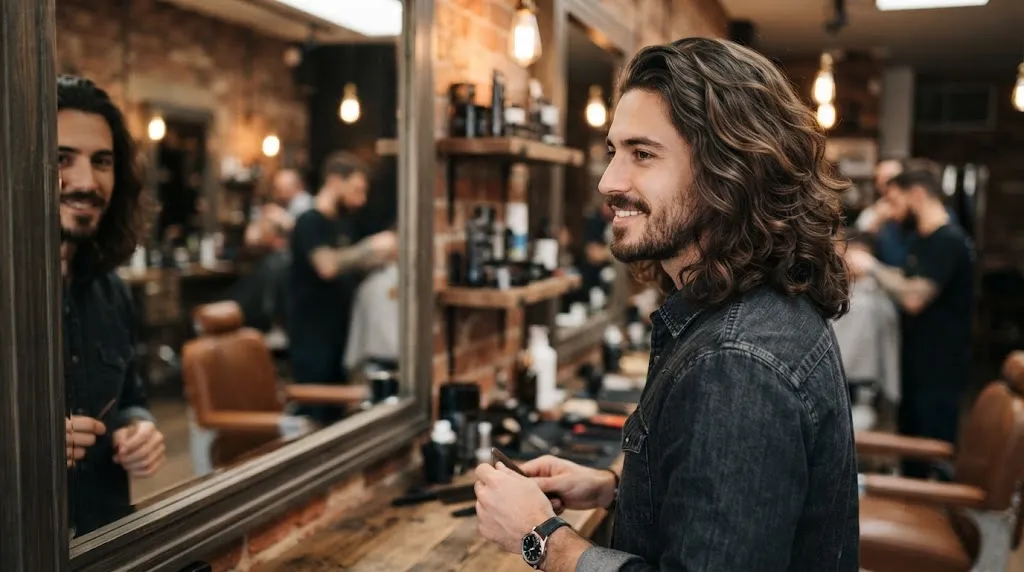
To explore more haircut options and broad styling inspiration beyond wavy patterns, check out our primary hairstyles directory to find the best cuts for every hair type and face shape.
By Face Shape

Oval Face Shape: Highly versatile with balanced proportions. Almost any wavy style works well—from shoulder-length flowing layers to a cropped wavy fade. Keep length off your forehead to highlight symmetric cheekbones.
Square Face Shape: Features a prominent jawline and sharp angles. Soften hard lines with sweeping mid-length waves, a wavy bro flow, or a textured wolf cut that adds movement around the temples.
Round Face Shape: Characterized by equal width and length with softer cheek contours. Opt for styles that build height at the crown while keeping the sides tapered—like a wavy quiff or low-taper wave crop—to visually elongate the face.
Heart/Diamond Face Shape: Narrow jawline with wider cheekbones or forehead. Medium-to-long wavy cuts falling past the chin add volume around the jaw, balancing out a pointed chin.
By Hair Length

Short Waves (1–3 Inches): Low maintenance with crisp definition. Best paired with fades, tapers, or textured crops. Ideal if you prefer a quick 2-minute morning routine using light sea salt spray or matte clay.
Medium Waves (4–7 Inches): The sweet spot for natural movement. Perfect for bro flows, curtain parts, and modern shags. Gives you enough length to showcase wave bends while remaining manageable.
Long Waves (8+ Inches): Maximum flow and presence. Perfect for shoulder-length layers or surfer styles. Requires a dedicated hydrating routine (leave-in conditioners and curl creams) to prevent frizz and split ends.
By Hair Thickness

Fine/Thin Waves: Strands weigh down easily. Choose blunted ends and soft perimeter layers to preserve visual density. Stick to light mousses and volumizing sprays; avoid heavy oils and pomades.
Medium Waves: Highly adaptable with good natural strength. Holds shape well in both short cropped cuts and long layered styles without puffing out excessively.
Thick/Coarse Waves: Prone to excess bulk and triangular shape. Requires internal texturizing, channel cutting, or slithering from your barber to hollow out weight while keeping length intact.
Quick-Reference Decision Table
| Face Shape / Goal | Recommended Cut | Hair Length | Ideal Hair Thickness | Key Styling Product |
|---|---|---|---|---|
| Square / Jawline | Wavy Bro Flow | Medium (4–6") | Medium to Thick | Lightweight Sea Salt Spray |
| Round / Elongation | Wavy Quiff with Low Fade | Short to Mid (3–5") | All Thicknesses | Matte Styling Paste |
| Oval / Balanced | Long Wavy Layers | Long (8"+) | Medium to Coarse | Hydrating Leave-in Cream |
| Heart / Narrow Chin | Shoulder-Length Flow | Long (7–10") | Fine to Medium | Curl-Defining Mousse |
| Thin Hair / Density | Blunted Medium Crop | Short to Mid (2–4") | Fine / Thin | Volumizing Root Spray |
How to Style Wavy Hair for Men (Step-by-Step)

Styling wavy hair requires working with your hair’s natural wave pattern rather than fighting against it. Following a structured step-by-step approach ensures long-lasting shape, natural movement, and zero frizz throughout the day.
Prep on Damp Hair

Start with Clean, Towel-Dried Hair: Wash your hair with a hydrating shampoo and conditioner. Gently squeeze out excess water using a microfiber towel or a cotton t-shirt instead of aggressively rubbing, which roughs up the hair cuticle and causes immediate frizz.
Detangle Gently: Use a wide-tooth comb or your fingers to detangle from ends to roots. Avoid fine-tooth combs, as they break apart natural wave clusters into a frizzy mass.
Establish Your Part: While your hair is still thoroughly damp, set your natural part or comb your hair into the general direction you want it to fall.
Product Application

Choose the Right Styling Base: For loose waves needing texture, opt for a sea salt spray. For thicker waves or curls needing definition and moisture, use a dime-to-nickel-sized amount of leave-in conditioner or a curl cream.
Emulsify Thoroughly: Rub the product evenly between your palms and fingers before applying it to your hair.
Distribute with the Scrunching Technique: Rake the product evenly through your mid-lengths to ends. Next, cup your hair in your palms, push upward toward your scalp, and squeeze gently to activate and lock in the S-shaped wave pattern.
Drying Technique
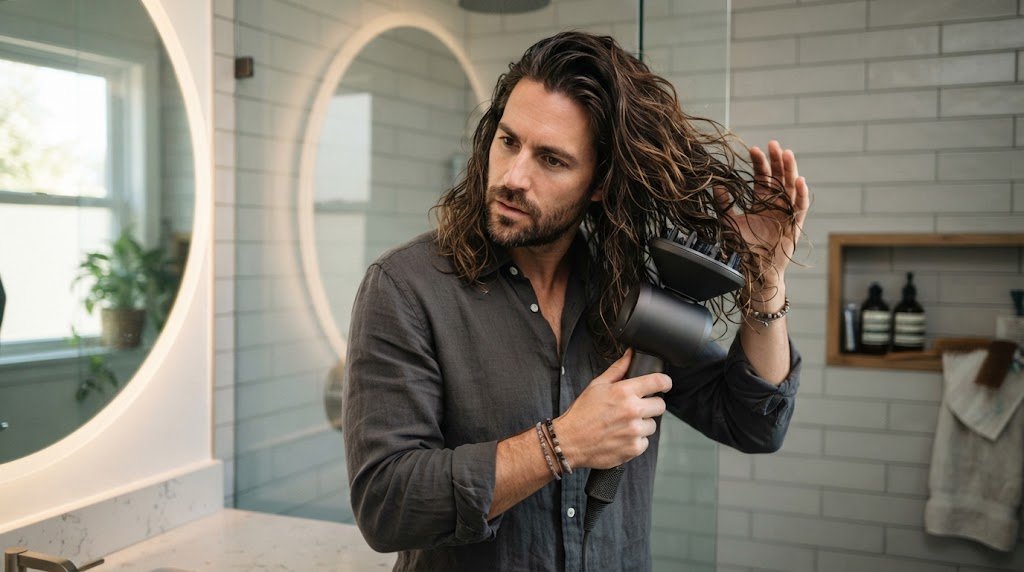
Air-Drying (Natural Flow): Allow your hair to air-dry completely without touching it while wet. Disturbing damp hair while it dries breaks the wave clumps apart and creates flyaways.
Blow-Drying with a Diffuser (Maximum Volume & Speed): Attach a diffuser head to your blow dryer. Set the heat to warm/medium and the airflow to low. Rest sections of your waves into the diffuser bowl, lift toward the scalp, and hold for 10–15 seconds per section until 80–90% dry.
Avoid Direct Airflow: Never use a standard blow dryer nozzle on high speed directly against wavy hair without a diffuser, as high velocity flattens wave bends and blows them out into a frizzy puff.
Finishing Touch
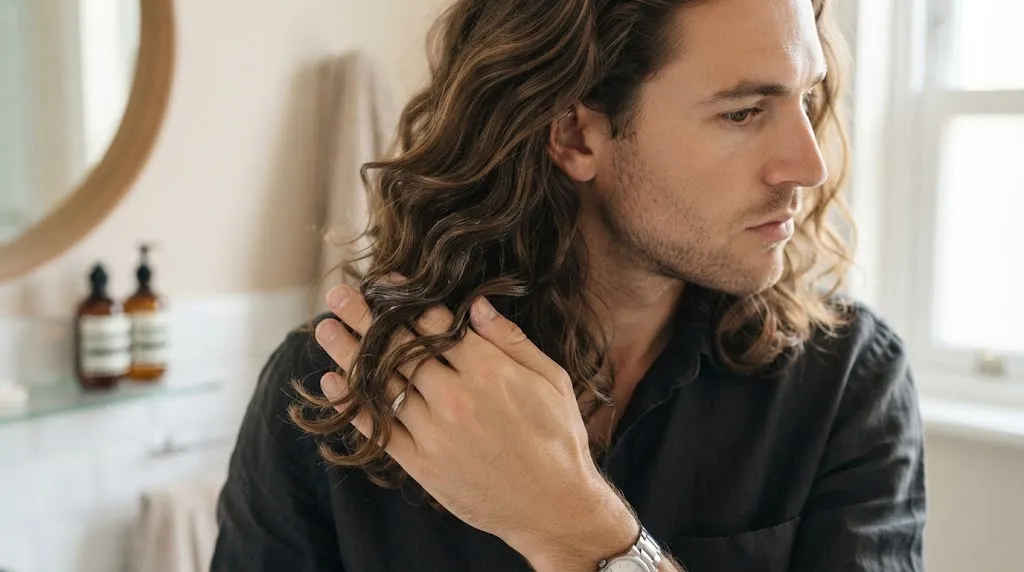
Break the Product Cast: If your curl cream or mousse dries with a slightly stiff “cast,” gently scrunch your hair upward with dry hands or a drop of hair oil to break the cast and reveal touchably soft waves.
Lock in Hold & Sheen: Apply a tiny dab of lightweight matte paste or a few drops of argan oil to tame any stray flyaways around your crown and perimeter.
Set and Hands-Off: Once styled, avoid running your fingers through your hair constantly throughout the day to keep your wave clusters intact and frizz-free.
How to Ask Your Barber for a Wavy Haircut
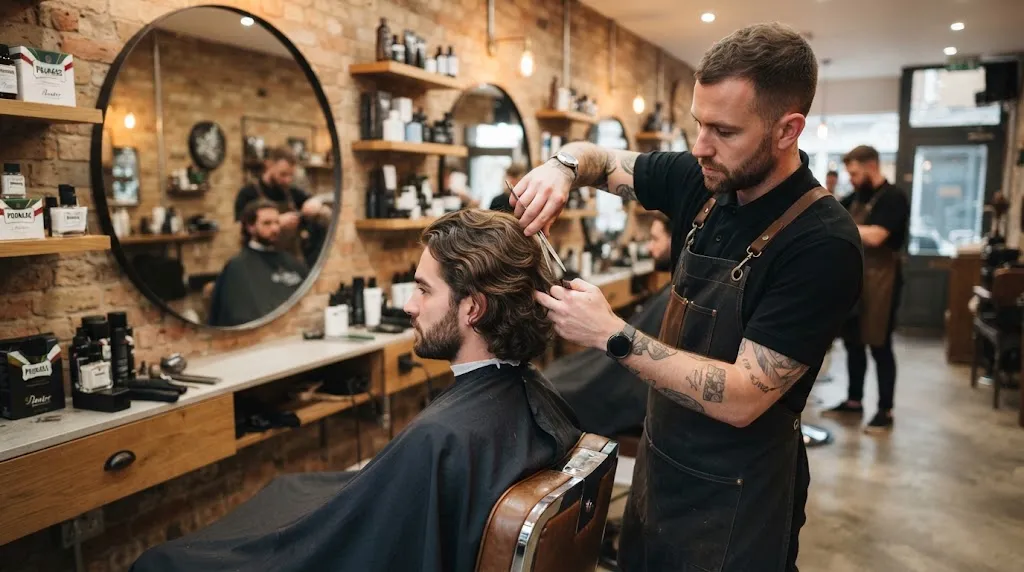
Communicating clearly with your barber or stylist is the difference between getting a tailored cut that enhances your natural texture and leaving the chair with flat, mushroomed hair.
What to Say
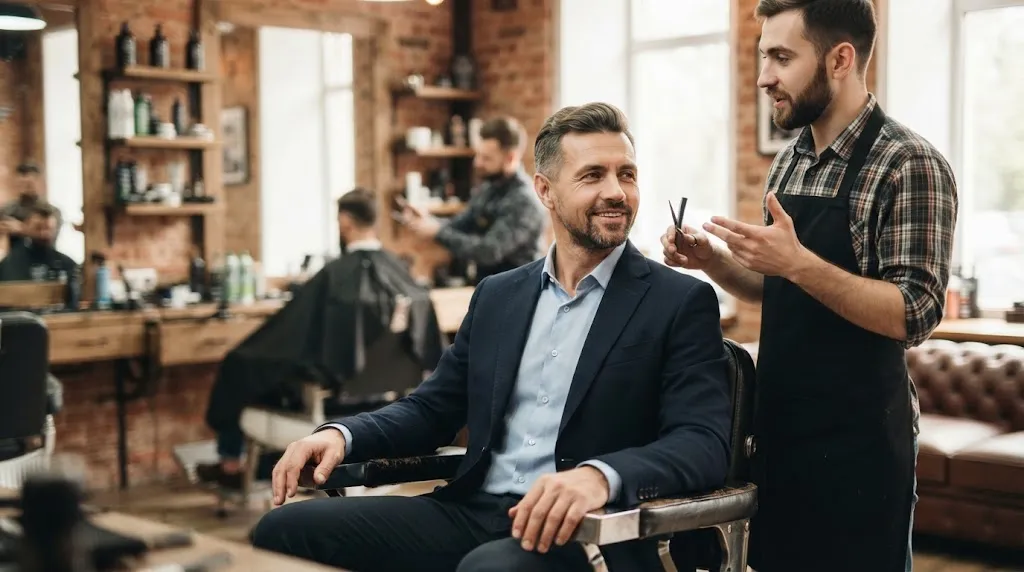
Specify Your Desired Length and Perimeter: State clearly how long you want to keep the top, back, and sides. Rather than vague numbers (“short on the sides”), give exact references like “collar-length in the back” or “cleared off the tops of my ears.”
Ask for Weight Removal, Not Thinning: Tell your barber: “I want to preserve my wave pattern while removing internal bulk.” Request point-cutting, channel-cutting, or slithering techniques. Ask them not to use thinning shears high on the crown, as short thinned hairs sprout up and cause severe frizz.
Discuss How You Style Daily: Let them know if you air-dry, blow-dry with a diffuser, or use minimal product. A good barber will shape the cut to accommodate your realistic daily routine.
Clarify the Transition Zone: Specify whether you want a soft, blended taper into the top or a modern disconnected cut where the waves overhang the sides.
Photo Reference Tips
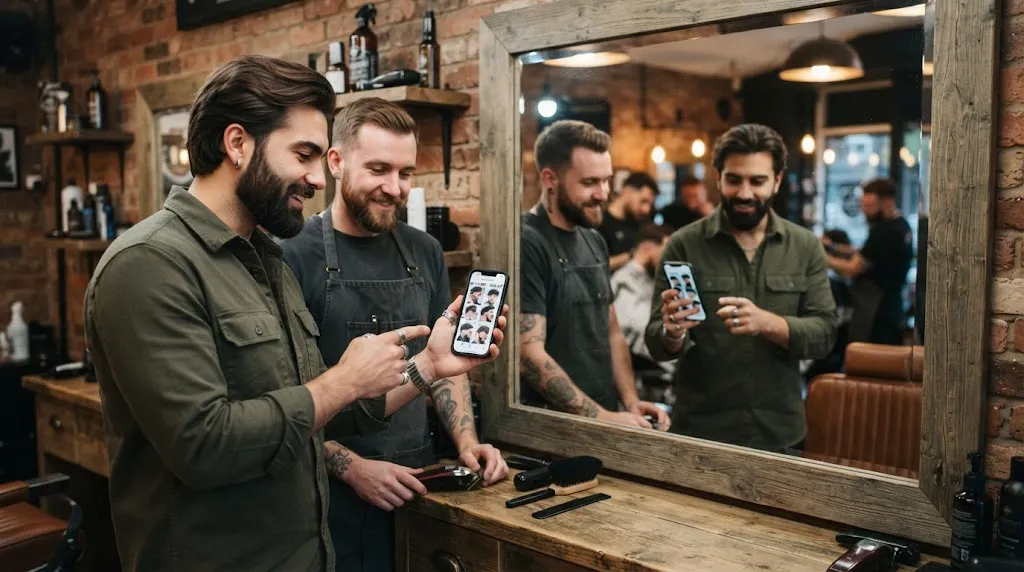
Bring 2–3 Photos of Similar Hair Textures: Show pictures of models or clients who have a wave pattern, density, and hairline similar to yours. Showing tight 2C curls when you have loose 2A waves will lead to unrealistic expectations.
Include a Photo of What You Don’t Want: Bringing one clear picture of a shape or length you dislike helps your barber avoid cuts that don’t fit your personal preference.
Show Different Angles: Bring at least one front view and one side/back profile photo so your barber understands how the hair should flow around your crown and nape.
Focus on the Hairline and Sides: Point out specific details in your reference photos—such as how low the fade sits or how long the sideburns are kept—rather than just showing the top length.
Common Wavy Hair Problems & Fixes
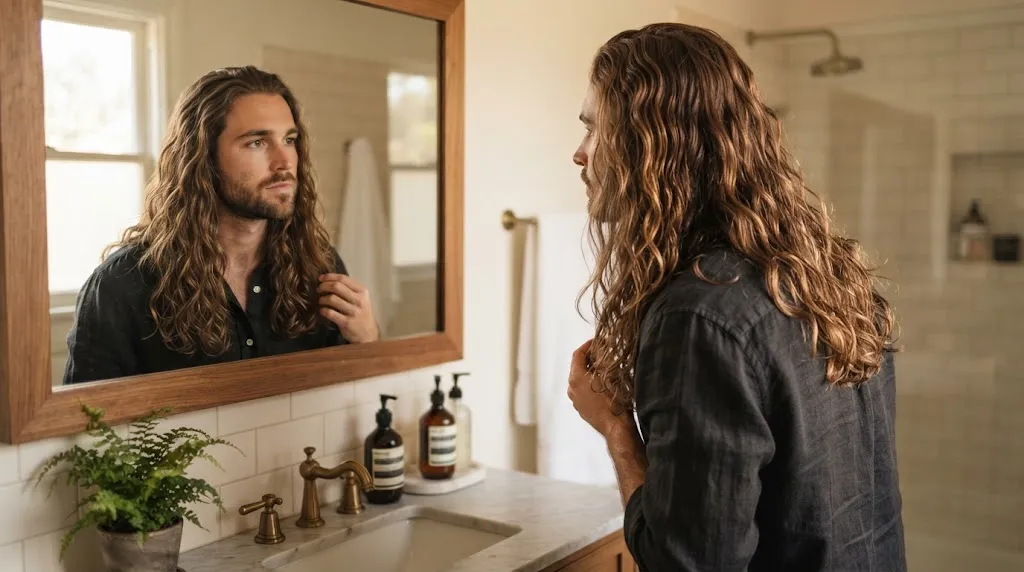
Long wavy hair looks incredible when balanced, but its natural structure makes it vulnerable to specific growth and texture challenges. Here is how to diagnose and solve the three most common issues men face.
Hair Getting Too Heavy When Long

As wavy hair grows past 5 or 6 inches, the sheer weight of the strands pulls the natural “S” bends downward. This flattens the crown and causes the bottom lengths to flare outward into an unflattering triangular shape.
The Cause: Unmanaged density accumulating toward the perimeter without structural layering to support the top.
The Fix: Ask your barber for internal weight removal using point-cutting or slithering techniques rather than blunt horizontal cuts. Removing weight from the interior allows the waves to lift, stack, and spring back without losing your overall perimeter length.
Routine Adjustment: Avoid heavy, butter-based creams or dense waxes. Switch to lightweight, water-based styling milks or sea salt sprays that define texture without adding downward pull.
Frizz Control

Frizz happens when raised hair cuticles absorb atmospheric moisture, causing individual hair strands to expand independently rather than grouping together into neat wave clusters.
The Cause: Lack of moisture, aggressive towel-scrubbing, touching hair while drying, or over-washing with harsh sulfates.
The Fix: Switch to a sulfate-free hydrating shampoo and use a silicone-free leave-in conditioner every time you wash. Apply product to thoroughly wet hair using the “scrunching” technique to lock wave clumps together before frizz can start.
Routine Adjustment: Replace abrasive terrycloth towels with a smooth microfiber towel or a clean cotton t-shirt. Squeeze excess water out gently—never rub your hair back and forth.
Flat Roots Fix
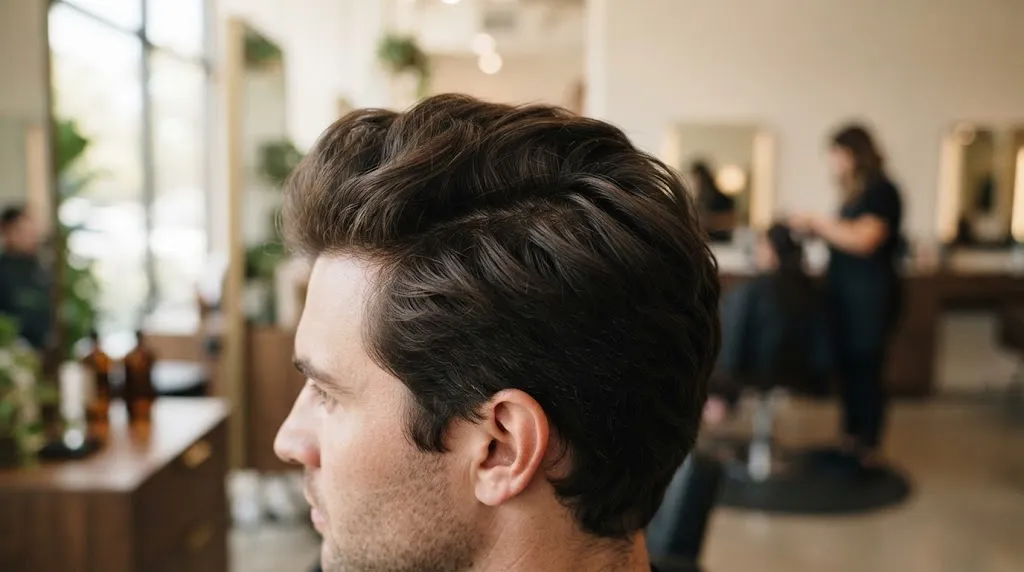
It is common for men with wavy hair to experience high volume at the sides and ends while the crown and top sit completely flat against the scalp.
The Cause: Water and product weight pressing damp hair against the scalp while drying, combined with gravity pulling down on top strands.
The Fix: Root clipping or diffusers. While your hair is damp with product, insert small metal double-prong curl clips right at the roots along your part line to hold the hair elevated while it air-dries.
Routine Adjustment: Blow-dry your roots using a diffuser attachment on warm heat with low airflow. Flip your head upside down or direct the air upward at the roots for 30–45 seconds to set maximum height and volume before letting the lengths dry naturally.
How to Maintain Wavy Hair
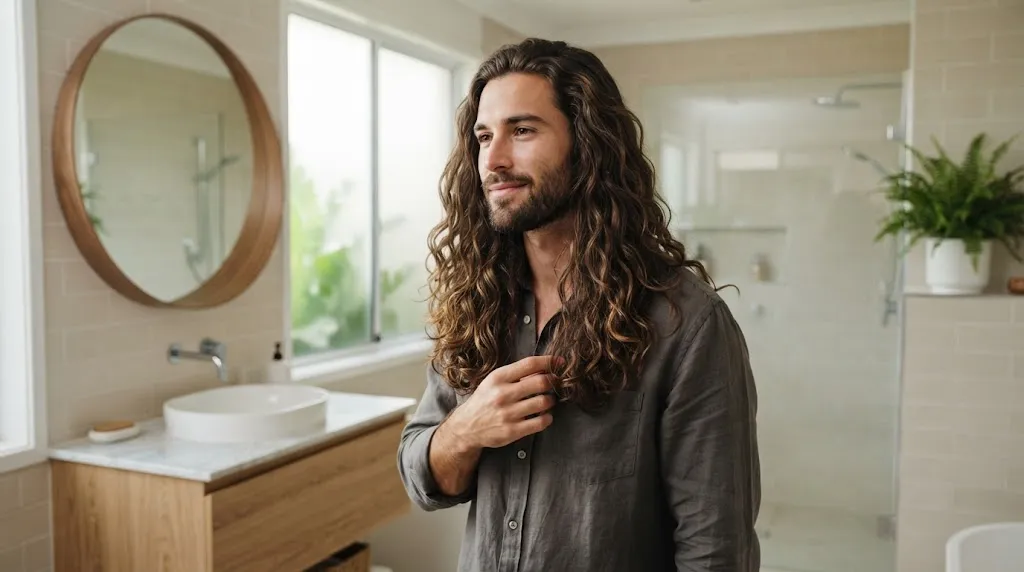
Maintaining healthy, defined waves requires a consistent care routine focused on preserving moisture and preventing structural damage. Keeping a regular maintenance schedule ensures your hair stays soft, manageable, and full of natural movement.
Trim Schedule
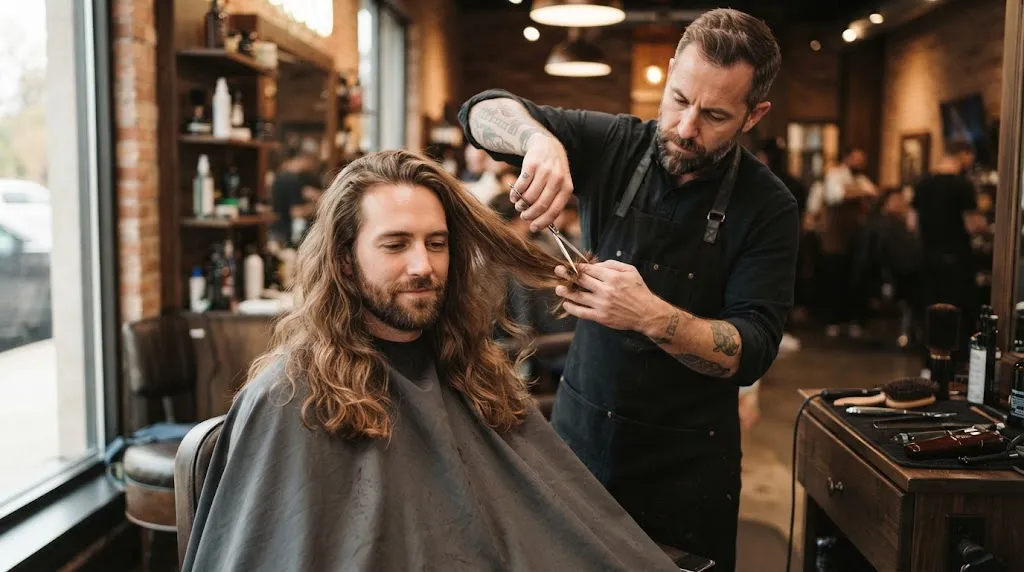
Every 8 to 12 Weeks: Schedule routine maintenance trims to remove split ends and keep your hairstyle’s shape intact.
Signs You Need a Trim: If your ends feel rough, tangle easily, or if your waves start looking flat and lifeless at the bottom, it is time for a cleanup.
Preserving Growth: If you are actively growing your hair long, ask your stylist for a “dusting”—trimming only the outer quarter-inch of damaged tips without reducing overall length.
Washing Frequency

2 to 3 Times per Week: Avoid washing wavy hair daily, as frequent shampooing strips away natural scalp oils needed to keep wave patterns hydrated and smooth.
Use Sulfate-Free Shampoos: Choose mild, sulfate-free cleansers that remove dirt and scalp buildup without drying out your strands.
Condition Every Time: Always apply a hydrating conditioner after shampooing, focusing on the mid-lengths and ends to replenish lost moisture.
Rinse with Cool Water: A final cool water rinse helps seal the hair cuticle, boosting natural shine and reducing post-wash frizz.
Best Practices

Switch to a Microfiber Towel: Ditch rough terrycloth towels in favor of smooth microfiber towels or a clean cotton t-shirt to gently blot out moisture without roughing up the hair cuticle.
Sleep on Satin or Silk: Swap your standard cotton pillowcase for a satin or silk one. The reduced friction prevents morning frizz, tangles, and breakage while you sleep.
Hands-Off Drying: Refrain from running your fingers through your hair or combing it while it dries. Allowing wave clusters to dry undisturbed keeps your wave pattern defined and cohesive.
Deep Condition Monthly: Apply a deep conditioning mask once or twice a month to deliver deep hydration, strengthen the hair shaft, and restore elasticity to your waves.
FAQs About Long Wavy Hairstyles for Men
Is long wavy hair attractive on guys?
Yes. Long wavy hair consistently ranks among the most attractive men's hairstyles because it combines natural volume, texture, and movement with an effortless, relaxed look. Its natural body softens facial features and creates a strong, distinct silhouette that stands out.
How to have long wavy hair as a guy?
Growing and maintaining long wavy hair requires patience and moisture-focused care:
- Be Patient: Hair grows roughly half an inch per month, so growing it past your shoulders takes about 1 to 1.5 years.
- Prioritize Moisture: Use a sulfate-free shampoo 2–3 times a week and always follow up with a hydrating conditioner or leave-in cream to prevent frizz.
- Avoid Heat Damage: Let your hair air-dry or use a diffuser attachment on low heat rather than blasting it with direct blow-dryer heat.
- Get Routine Trims: Visit your barber every 10–12 weeks to dust off split ends and rebalance heavy, triangular weight buildup.
What is the 2.25 rule for hair?
The 2.25-inch rule is a classic face-proportion measurement created by celebrity hairstylist John Frieda to determine whether short or long hair flatters your jawline structure.
How to measure: Hold a pencil horizontally under your chin and place a ruler vertically under your earlobe. Measure the distance from the bottom of your earlobe to where the pencil intersects the ruler.
The Verdict: If the distance is less than 2.25 inches, short haircuts tend to suit your jawline best. If the distance is greater than 2.25 inches, longer hair and shoulder-length styles will complement your facial proportions better.
What does the 3:2:1 haircut rule mean?
The 3:2:1 rule is a barber guideline for fading or blending hair to create a smooth, natural transition from the top down to the neckline:
- 3 Parts Length on Top: The crown and top section carry the most length and density (e.g., 3 inches or a longer wave length).
- 2 Parts Length on the Mid-Sides: The middle section along the parietal ridge transitions into half to two-thirds of that top length (e.g., a #3 or #4 guard).
- 1 Part Length at the Perimeter: The lowest section around the ears and nape is tapered down tightest (e.g., a #1 or #2 guard) to keep the edges sharp and clean.
What is the seven day haircut rule?
The 7-day rule is a practical grooming guideline stating that a fresh haircut usually looks its absolute best about one week after you leave the barber chair. During the first few days, freshly cut hair can look slightly stiff or overly sharp. By day 7, your natural scalp oils return, the hair settles into its growth pattern, and your styling products blend in much more naturally.
What is the 3 inch rule for hair?
In men's styling, the 3-inch rule refers to the ideal threshold length needed to achieve natural wave definition, slick-backs, or textured sweeps without relying on heavy hold products. Once hair reaches 3 inches on top, individual strands have enough weight and length to complete a full "S" curve bend or fall into a natural side part, rather than sticking straight up.
Is a $5 tip good for a $40 haircut? / Is $20 a good tip for a $100 haircut?
A standard, respectful tipping rate for a barber or hair stylist is 15% to 20% of the total service cost.
- For a $40 haircut: A $5 tip equals 12.5%, which is acceptable for a quick, basic cut. However, an $8 tip hits the standard 20% mark for solid service, and $10+ is ideal if your barber spent extra time detailing long waves or beard edges.
- For a $100 haircut: A $20 tip equals exactly 20%, making it an excellent, generous tip for high-end styling, extensive layering, or custom chemical/texture work.