
Men's Flow Hairstyle: 39 Flow Haircuts, Length Guide, Grow-Out Timeline and How to Style Them

A men’s flow hairstyle is a medium-to-long layered haircut where hair sweeps naturally back and away from the face, typically living in a 4 to 6 inch length range while taking anywhere from 3 to 16 months to grow out depending on your starting point. As part of the men’s guides on HairStylesUSA, this breakdown gives you the exact blueprint for managing the grow-out and wearing the cut right.
What Is a Men's Flow Hairstyle?
A flow haircut is a medium-to-long layered style designed to move naturally away from the face while maintaining weight and shape. Instead of relying on stiff products or strict parting lines, this cut lets hair sweep back and fall freely around the ears and neck.
Flow vs Bro Flow: Which One Are You Actually Asking For?

Flow is the broad family of layered medium-to-long cuts, while bro flow is just one specific member of that family. Flow covers any medium-to-long style built for movement, whereas a bro flow is the relaxed, swept-back version that sits past the ears with minimal structure.
To figure out which one belongs in your chair, run this quick 3-step test:
Does the hair reach past the ears?
Is it swept back with minimal styling?
Is there a fade or hard structure? If yes, you are looking at a flow variant rather than a true bro flow.
People often search for these looks using aliases like the hockey flow or a European flow cut, but the core mechanics remain the same: length and natural sweep.
Flow vs Wings, Mod, Surfer, Mullet and Wolf Cut

A true flow cut relies on balanced layering around the crown and sides, separating it from heavier or more disconnected styles. Wings share a similar sweeping action around the ears—and some sources even treat them as interchangeable—but wings often flare out more aggressively at the tips. A mod cut stays shorter and sits closer to the head with a heavy fringe, while a surfer style leans into natural wave and sun-bleached texture without heavy layering. Mullets and wolf cuts introduce extreme length contrast at the back, whereas a flow cut keeps a more uniform, transitional shape from front to nape.
Is a "Free-Flowing" Hairstyle the Same as a Flow Cut?

A free-flowing hairstyle is just unshaped, loose length, whereas a flow cut is a structured haircut engineered to sit a specific way. Free-flowing hair happens when you simply stop getting haircuts and let growth take over, often resulting in heavy bulk and uneven weight distribution. A flow cut uses targeted scissor work to remove weight so that same length sweeps back cleanly instead of collapsing over your forehead or eyes. They overlap once your hair gets long enough to drop past the collar, but the flow cut maintains deliberate shape along the way.
How Long Does Hair Need to Be for a Flow?

Hair needs to be at least 2 to 3 inches on top before it can begin to sweep backward or outward without standing straight up. If your hair is shorter than that, it lacks the weight required to naturally curve away from the face.
Short, Medium and Long Flow Length Chart
| Flow Category | Target Length Range | Why This Length Works |
|---|---|---|
| Short Flow | 2 to 3 inches | Clears the forehead and starts catching the wind, though it still relies on product support [VERIFY with reviewer]. |
| Where Flow Starts | Roughly 3 inches | The tipping point where strands gain enough gravity to bend backward instead of sticking straight out [VERIFY with reviewer]. |
| Classic Flow Zone | 4 to 6 inches | The signature sweep that tucks easily behind the ears and moves naturally with every turn of the head [VERIFY with reviewer]. |
| Thin-Hair Range | 2 to 4 inches | Keeps density concentrated so the style doesn't look stringy or split apart at the scalp. |
Conflicting competitor figures happen because hair texture changes how length behaves. Coarse or curly hair curls up faster at shorter measurements, while straight, fine hair needs extra inches to build the weight necessary for a smooth wave.
The Ear, Brow and Collar Test
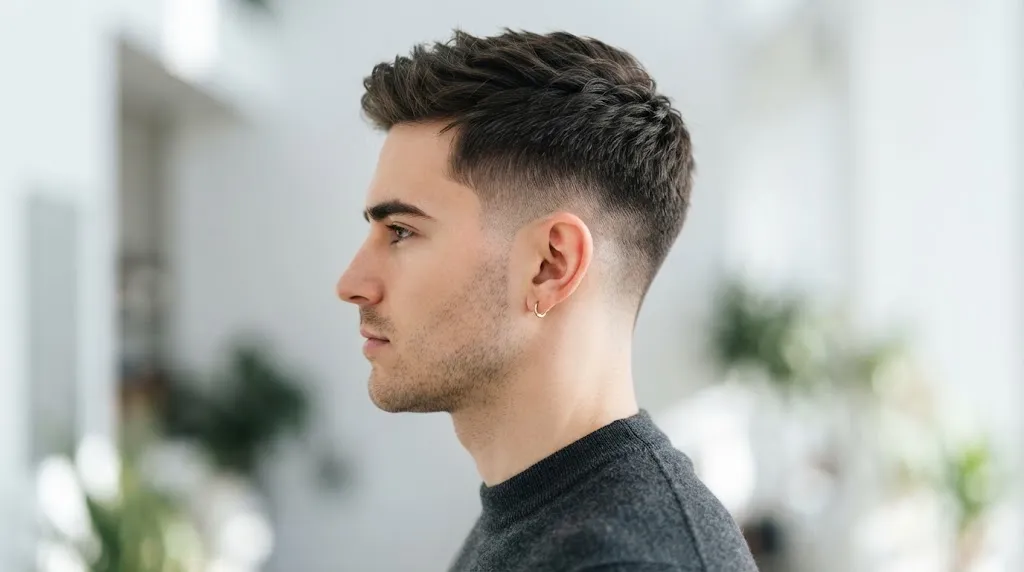
You do not need a ruler to figure out where your hair sits in the growing process; you just need three physical landmarks on your head.
Check the sides to see if the strands comfortably tuck behind the ear without popping right back out.
Check the front to see if the fringe drops below the brow line when combed straight down.
Check the back to see if the lower edge stays above the collar rather than curling over your shirt.
If you find yourself stuck right between two categories, lean toward the shorter measurement and wait another two to three weeks before trying to style a full sweep.
Find Your Flow: Hair Type, Face Shape and Hairline

A flow hairstyle relies heavily on natural movement, meaning your hair type and bone structure dictate whether the cut falls into place or fights you daily. Oval and square face shapes naturally balance medium-length swept-back hair, whereas round or long faces require deliberate adjustments to volume and side taper. If flow isn’t the right fit, the hairstyles hub has other cuts by face shape and hair type.
| Hair Type | Best Approach for Flow |
| Straight | Needs texture spray or salt spray to hold swept-back movement without falling flat. |
| Wavy | Natural bend makes this the ideal hair type for an effortless bro flow. |
| Curly | Requires moisture control and slightly longer lengths to weigh down tight coils. |
| Coily | Best styled with looser stretched flow styles or paired with tapered edges. |
| Thick | Thins out with internal layer removal so the sides do not puff outward. |
| Thin | Works best at shorter lengths (roughly 2 to 4 inches) to avoid a stringy look. |
Face Shape Guide

Oval and square faces handle almost any flow variation because balanced jawlines and cheekbones complement swept-back locks. Round faces need height on top and tight sides to elongate the profile, keeping the hair from widening the cheeks. Long faces should avoid excessive top height and instead build width around the temples using layered medium lengths. Heart and diamond face shapes benefit from keeping hair near the ears to soften narrower chins and sharp cheekbones.
Hairline and Growth Patterns

A receding hairline can actually enhance a classic flow, as the natural recession at the temples creates a sweeping arc that pulls hair back cleanly. If you have a prominent widow’s peak, let the hair part naturally around it rather than forcing a straight-back comb which exposes the point too sharply. Cowlicks and crown whorls dictate your parting direction; fighting a stubborn growth pattern at the crown leads to persistent cowlick spikes. Work with your natural growth direction by letting the hair fall where it naturally bends, using a lightweight cream to keep unruly cowlicks flat.
Core Flow Haircuts by Length
Classic Flow Hairstyle

The classic flow is the default benchmark for the style: a medium-length cut featuring soft layers that naturally sweep back away from the face. Every other variation of the look is measured directly against this baseline structure. Best for: Tops of 4+ in, any wave pattern. How to get it: Ask for medium length with internal layers, sides left to blend. How long it holds: Baseline. Avoid: One uniform length with no shape.
Effortless Bro Flow Haircut

The bro flow is the relaxed, extended version of the style that sits comfortably past the ears with minimal internal structure. It delivers that laid-back, wind-swept movement without looking overly sculpted. Best for: Guys who want a no-fuss look. How to get it: Ask for length past the ears with light layering and no fade. How long it holds: Baseline. Avoid: Tidying the sides so short the hair stops reaching past the ears.
Short Flow Haircut
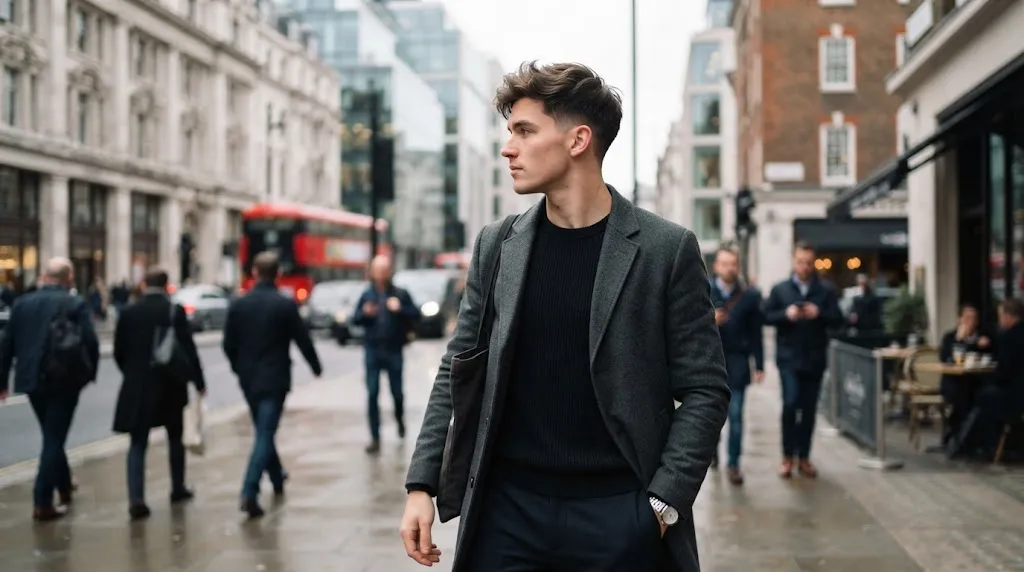
The short flow serves as the ideal entry-level option, offering subtle movement and direction without requiring a lengthy transition period . It bridges the gap between traditional short cuts and full medium-length styles. Best for: 2–3 in tops office settings. How to get it: Ask for top length kept and sides blended with scissors. How long it holds: The 2–4 in trim band. Avoid: Clipper-short sides that turn the cut into a quiff rather than a flow.
Medium Length Flow Haircut

This is the most requested length in the chair, where the hair gains enough weight and reach to tuck smoothly behind the ears. It hits the sweet spot for natural wave and bounce. Best for: 4–6 in tops. How to get it: Ask for layers that remove weight while keeping length. How long it holds: Baseline. Avoid: Trimming length to “fix” the ends.
Long Flow Haircut

The long flow pushes the style to its maximum movement, utilizing shoulder-length layers to keep heavy hair from collapsing flat. It requires patience to grow out but yields high visual impact. Best for: 6+ in, wavy hair. How to get it: Ask for ends dusted only and long layers. How long it holds: The longer 8–12 week band. Avoid: Ends that thin out and look stringy.
Flow Haircuts by Hair Type
Flow Haircut for Straight Hair

Straight hair lacks natural bend, meaning it moves only when you build in internal weight reduction and train the roots to sweep backward. While some styling advice warns against straight or fine hair for a flow because it can fall flat or cling to the skull, it works well if you use proper layering to break up the sheet-like weight.
Best for: medium-density straight hair.
How to get it: Ask for layers that create movement instead of one uniform length, keeping the ends textured rather than blunt.
How long it holds: baseline.
Avoid: cutting the sides too short while the top is still growing, which forces straight hair to stick straight out from the head curve.
Bro Flow for Wavy Hair

Wavy hair provides built-in texture and natural movement, so the cut needs to follow the actual wave pattern rather than fighting it. You get the classic swept-back look with minimal styling effort because the bend in the hair holds the shape naturally.
Best for: wavy hair, 4+ in.
How to get it: Ask the barber to check your natural wave pattern before cutting, ensuring the layers match where your hair naturally bends.
How long it holds: baseline.
Avoid: judging length on wet hair, because waves spring up significantly higher once dry.
Bro Flow for Curly Hair

Curls need enough length to let gravity pull them down into a loose shape instead of puffing outward into a round dome. Weight control is the main challenge here, as curls naturally want to stack up rather than flow backward.
Best for: loose to tight curls.
How to get it: Ask for shaping that removes internal bulk while preserving overall length around the crown and nape.
How long it holds: baseline.
Avoid: cutting the sides and top too short, which leads directly to unwanted bulk or frizz.
90s Inspired Curly Flow Hairstyle

This style relies on a pronounced center part that lets curly texture frame the face with nostalgic volume. The shape sits longer around the ears and eyes, leaning into a relaxed vintage silhouette.
Best for: curls of 5+ in.
How to get it: Ask for curtain-like length around the face with balanced graduation toward the back.
How long it holds: baseline.
Avoid: dry brushing curls into a flat shape, which destroys the natural curl grouping and causes frizz.
Flow Haircut for Thick Hair

Thick hair has plenty of volume, but without proper thinning it acts like a solid helmet that refuses to sweep back. Removing density allows heavy hair to drape naturally behind the ears instead of pushing outward.
Best for: dense hair.
How to get it: Ask for weight removal by scissors or thinning shears through the interior, keeping the exterior length intact.
How long it holds: baseline.
Avoid: skipping weight removal, which makes thick hair sit wide and boxy instead of falling back smoothly.
Flow Hairstyle for Thin Hair

Fine or thin hair struggles to maintain a heavy, shoulder-length look, which tends to appear stringy and sparse. A shorter version of the style keeps the silhouette compact and creates the illusion of fullness.
Best for: fine or thin hair.
How to get it: Ask for shorter layers in the 2 to 4 inch range to add natural lift at the root.
How long it holds: baseline.
Avoid: chasing extra length that stretches thin hair into a stringy shape.
Flow for Coily and Afro-Textured Hair

Flow on coily hair relies on shape, moisture management, and intentional stretch to create a fluid silhouette. [REVIEWER NOTE: confirm specific maintenance routines and product pairing for coily textures with a named expert reviewer].
Best for: coily and afro-textured hair.
How to get it: Ask for shaping at length and choose a barber experienced with textured hair who understands shrinkage.
Avoid: dry combing, which disrupts the coily pattern and leads to breakage.
Flow Haircuts by Part, Layers and Texture
Side Part Bro Flow

The polished flow, also known as the men’s wing haircut, sweeps hair away from the face while maintaining a clean division. This cut bridges the gap between classic short styling and longer movement by anchoring the sweep to a distinct part line.
Best for: straight to wavy hair, work settings.
How to get it: ask for the part to follow your natural fall. Request enough length to tuck behind the ear without losing tension at the crown.
How long it holds: baseline.
Avoid: forcing the part against a cowlick, which causes the hair to spring up awkwardly.
Middle Part Flow Haircut

The symmetrical flow with a 90s feel splits down the center to frame the face evenly on both sides. This style relies on natural balance and lets medium-length strands fall outward past the temples.
Best for: oval and square faces, wavy hair.
How to get it: ask for balanced length on both sides of the part, ensuring the front hits just below the brow line.
How long it holds: baseline.
Avoid: a ruler-straight part, which looks too rigid for a relaxed flow.
Layered Flow Haircut

Layers are what let a flow move by removing bulk and creating natural lift. Layers sit through the top, crown, and ends to keep heavy hair from collapsing flat against the scalp.
Best for: heavy or straight hair.
How to get it: ask for long, blended layers with length preserved at the nape and sides.
How long it holds: baseline.
Avoid: choppy layers on fine hair, which leave the ends looking stringy and weak.
Flow with Blended Layers

The refined finish features layers that blend smoothly, with no visible steps or weight lines. This version keeps the silhouette cohesive while allowing individual strands to shift freely.
Best for: dressier settings.
How to get it: ask for seamless blending between layers using slide-cutting techniques.
How long it holds: baseline.
Avoid: disconnected layers with visible lines that break up the sweep.
Flow Hairstyle with Jagged Layers

An edgier, grow-out-friendly cut uses intentional variation at the ends to give the hair a choppy, lived-in edge. This technique keeps the overall length intact while breaking up solid weight.
Best for: thick or wavy hair.
How to get it: ask for jagged, point-cut layers that keep the length while thinning out the bulk at the tips.
How long it holds: baseline.
Avoid: jagged cutting on fine hair, which thins the ends until they lose their density.
Textured Flow Haircut

Texture comes from the cut first and the finish second, using internal thinning to create natural separation. This approach allows the hair to bend and stack without heavy product.
Best for: any hair type that needs separation.
How to get it: ask for point-cut texture through the mid-lengths to encourage natural wave patterns.
How long it holds: baseline.
Avoid: over-texturizing until the shape falls apart and frizzes out.
Messy Layered Flow Haircut

The relaxed, low-effort look embraces a slightly undone aesthetic while maintaining enough structure to look intentional. Loose layers allow the hair to fall where it wants without heavy styling constraints.
Best for: casual, everyday wear.
How to get it: ask for loose layers that encourage natural movement.
How long it holds: baseline.
Avoid: zero structure, which reads as unkempt rather than styled.
Windswept Bro Flow

Lifted, pushed-back movement gives this style a dynamic, forward-facing sweep that reacts well to air and motion. It builds height at the root before letting the hair trail backward.
Best for: medium to long hair.
How to get it: ask for lift at the front with graduated length tapering toward the back.
How long it holds: baseline.
Avoid: stiff, gel-like hold that freezes the hair in place.
Combed Back Wavy Flow

The dressier flow is combed with the wave pattern to create a sleek, uniform sweep away from the face. It channels classic medium-length polish while respecting the natural bend of the hair.
Best for: events, wavy hair.
How to get it: ask for length that combs back without gaps, keeping the sides tight enough to stay neat.
How long it holds: baseline.
Avoid: combing against the wave, which creates resistance and frizz.
Flow Cut with Quiff and Side Parting

Front height combined with a side parting gives this cut a distinctive lift above the forehead while the sides sweep back. It adds vertical presence to the standard flow silhouette.
Best for: dense hair.
How to get it: ask for extra length at the front to support a natural lift paired with a defined side part.
How long it holds: baseline.
Avoid: too little front length, which prevents the quiff from holding its shape.
Flow Haircuts With Tapers and Fades
Pairing a flow on top with a taper or fade on the sides gives you cleaner edges without losing the sweep that defines the cut. The rule is simple: a softer taper keeps the flow moving naturally, while a harsh, high fade cuts off the momentum and leaves the top looking disconnected.
Mid Taper Flow Cut

A mid taper flow features a longer top swept back with a soft taper dropping down the sideburns and nape. This cut keeps the ears and neckline neat while letting the sides naturally blend into the movement of the hair above.
Best for: Men who want clean, professional-looking sides without losing their length or the free-flowing shape.
How to get it: Ask your barber for a “taper, not a skin fade” on the sides, making sure the transition from short to long remains soft and connected.
How long it holds: The sides will need tidying up first; interval to be confirmed by the reviewer. [VERIFY: 3 to 4 weeks for the sides]
Avoid: Tight fades and disconnected sides that ruin the seamless transition required for a classic flow.
Middle Part Flow with Low Taper

A middle part flow with a low taper splits the longer top down the center while keeping the perimeter tight and clean right above the ears. This version relies on deliberate length contrast rather than a uniform blend, giving the style a sharper structural frame.
Best for: Textured, thicker hair that naturally holds a middle part without falling flat against the scalp.
How to get it: Ask your barber for a low taper that hugs the ear line and a clear length contrast between the parted top and the sides.
How long it holds: Avoid: Blending the sides too high, which flattens the distinctive contrast of the middle part.
Burst Fade Flow

A burst fade flow uses a rounded, sunburst-shaped fade curved precisely around the ear while leaving the length at the crown and back untouched. This creates an aggressive, high-contrast silhouette that stands out from standard tapered cuts.
Best for: Bolder looks that mix modern razor work with traditional longer hair on top.
How to get it: Ask your barber for the fade to curve in a tight circle around the ears only, leaving the weight in the back.
How long it holds: Reviewer to confirm. [VERIFY: 2 to 3 weeks]
Avoid: A fade that climbs too high up the temples and completely disconnects the top from the back.
Undercut Flow

An undercut flow is the ultimate contrast cut, keeping the sides buzzed short underneath while a heavy, longer section of hair drapes directly over the transition line. It removes bulk entirely from the sides to put all the visual weight onto the sweep of the top.
Best for: Very thick hair that needs the weight taken out completely to stay manageable.
How to get it: Ask your barber for a defined undercut line with disconnected, heavy length left on top.
How long it holds:
Avoid: Letting the undercut grow out unchecked, which creates an awkward, heavy shelf line.
Classic Hockey Hair

Classic hockey hair focuses length primarily at the back and top while keeping the sides relatively short and tight. It offers a rugged, athletic look that moves freely during physical activity.
Best for: Sportsmen and guys with naturally wavy hair who want a low-maintenance, wind-swept aesthetic.
How to get it: Ask your barber to tidy up the sideburns and temples while leaving the back length completely alone.
How long it holds: Baseline.
Bold and Trend-Led Flow Styles
Faux Hawk Flow Hairstyle

Lifting the hair toward the center creates a bold hybrid between a vertical cut and a swept-back style. This look adds strong height while keeping the classic movement along the back and sides. Best for: thick hair. How to get it: ask for length concentrated on top. Keep the sides tighter to emphasize the central ridge, then sweep the remaining length back. How long it holds: baseline. Avoid: over-lifting the center so high that it loses the natural sweeping flow of the back sections.
Flow with Curtain Bangs

Parting the fringe down the middle lets the hair fall naturally away from the forehead, creating a frame that softens the face. This version balances out sharper jawlines and adds a relaxed aesthetic. Best for: oval and long faces. How to get it: ask for a middle-part fringe with length left around the temples. Tell your barber to point-cut the ends so the fringe separates naturally without clinging to the skin. How long it holds: baseline. Avoid: a fringe cut too short, which causes the hair to stick straight out instead of sweeping gracefully to the sides.
Wolf Cut Flow

Mixing heavy top volume with shaggy, disconnected layers gives this variation a wild, high-texture finish. It relies on chaotic movement rather than a clean sweep. Best for: thick or wavy hair. How to get it: ask for choppy layers. Request thinning through the mid-lengths to encourage natural bend and separation. How long it holds: baseline. Avoid: over-layering thin hair, which strips away the density needed to support the shaggy silhouette.
Mullet Flow with Faux Hawk

Blending extended back length with vertical top lift creates an aggressive profile that stands out from standard medium cuts. It pairs a tight perimeter on the sides with maximum contrast at the crown and nape. Best for: bold stylers. How to get it: ask for short sides, long back, and a lifted top. Make sure the transition between the short sides and the longer back remains gradual rather than step-cut. How long it holds: [VERIFY: 4 to 6 weeks for the sides while the back grows out]. Avoid: ignoring workplace dress codes, as the extreme contrast between the front and back draws immediate attention.
Baseball Flow Haircut

Keeping the length medium allows the hair to peek out from beneath a hat while maintaining a clean fit around the ears. This cut is built for active days when you still want movement around the neckline. Best for: athletes and casual wearers. How to get it: ask for length that tucks cleanly behind the ears. Ensure the weight sits evenly so the hair bends naturally under the brim of a hat. How long it holds: baseline. Avoid: length that flips out awkwardly from under the cap instead of resting flat against the neck
Old Money Flow

Sweeping the hair cleanly to the side with a tapered finish gives this style a polished, upscale feel. It ditches the messy surfer look for clean lines and controlled direction. Best for: formal settings. How to get it: ask for tidy sides with a smooth top. Request a light taper around the ears to keep the perimeter sharp while preserving length on top for the sweep. How long it holds: baseline. Avoid: messy texturizing that breaks up the smooth, uniform surface required for this polished aesthetic.
Asian Flow

Removing heavy bulk from straight, dense hair allows it to adopt a soft, middle-part silhouette that frames the face without puffing outward. This approach tames natural resistance in straight hair by relying on internal thinning and weight distribution. Best for: straight, dense hair. How to get it: ask for weight removal with a soft face-framing shape. Instruct your barber to thin out the interior bulk so the hair drops downward instead of pushing outward. How long it holds: baseline. Avoid: leaving weight in, which makes hair sit like a helmet instead of draping around the face.
Flow Haircuts With a Beard
Short Flow Haircut with Beard

A short flow needs a compact beard so neither feature dominates your face. Balancing the top length against trimmed facial hair keeps your overall proportions sharp.
Best for: shorter hair with stubble.
How to get it: Ask your barber for a neat beard line and connected sides that transition smoothly into the short flow on top.
How long it holds: baseline.
Avoid: letting the beard grow heavier than the flow.
Bro Flow with Short Beard

A short beard keeps attention focused squarely on the sweep of the flow. Trimming the beard close creates clean lines that contrast against the relaxed movement of longer hair.
Best for: medium flows.
How to get it: Keep the beard in proportion to the hair length by asking for a tight fade or trim on the cheeks.
How long it holds: baseline.
Avoid: overshadowing the flow with an overly bushy beard.
Side Part Flow Hairstyle with Beard

The side sweep balances the beard and keeps your face from looking overwhelmed. Directing the hair away from your part creates an open look that contrasts with facial hair.
Best for: full or short beards.
How to get it: Ask your barber for the part on the side that opens the face and tapers the sides neatly.
How long it holds: baseline.
Avoid: a part that adds weight on the same side as a fuller beard.
Heavily Textured Flow with Beard

Swept-back texture pairs best with a defined beard to anchor the head. Chopping extra weight out of the top allows the hair to move freely while the beard stays crisp.
Best for: dense hair.
How to get it: Ask for strong texture up top using point-cutting, combined with a tidy beard line below the jaw.
How long it holds: baseline.
Avoid: letting the texture and the beard both go unkempt at once.
Flow with Thick Beard

A well-kept flow keeps a thick beard looking intentional rather than wild. Maintaining clean edges around the sideburns bridges the gap between your hair and your beard.
Best for: full beards.
How to get it: Ask for a shape that stays tidy next to the beard and leaves enough weight on top to sweep back naturally.
How long it holds: baseline.
Avoid: leaving both the hair and the beard completely unshaped.
How to Get Your Hair to Flow: Grow-Out Guide

Growing your hair into a flow requires letting go of short-cut maintenance and managing the middle stages where hair sticks out instead of sweeping back. Picture showing your barber a photo of your target length and agreeing to stop cutting the top while only cleaning up the neck and sideburns.
[IMAGE: A series of three side-profile photos showing male hair at 2 inches, 4 inches, and 6 inches, illustrating the transition from a short cut to a sweeping flow | ALT: Side profile view showing male hair growth progression from short crop to medium flow]
Hair grows at an average rate of about half an inch per month, though total timelines vary based on your starting point and the length you want to reach. To calculate your timeline, take your target length in inches, subtract your current length, and divide that number by half an inch per month. If you are starting from a cropped cut and aiming for a classic medium flow around 4 to 6 inches, expect the process to take anywhere from 3 to 16 months depending on how short you begin and how much natural wave you have to work with.
Grow-Out Timeline: Month by Month
| Month | Average Hair Length | What to Expect | Maintenance Action |
|---|---|---|---|
| Month 1–2 | 1 to 2 inches | Hair stands up stiffly; sides start building bulk over the ears | Clean up the neckline only; leave the top alone |
| Month 3–4 | 2 to 3.5 inches | Weight begins pulling hair down; initial sweep backwards becomes possible | Shape up sideburns; maintain texture with a light cream |
| Month 5–6 | 3.5 to 5 inches | Hair reaches the top of the ear and starts tucking naturally | Clean up split ends; ask the barber for interior thinning if weight builds up |
| Month 7+ | 5+ inches | Full flow established past the ears with natural movement | Regular shaping to keep weight balanced |
Starting From a Buzz Cut: What a No. 4 and a Military Buzz Cut Look Like
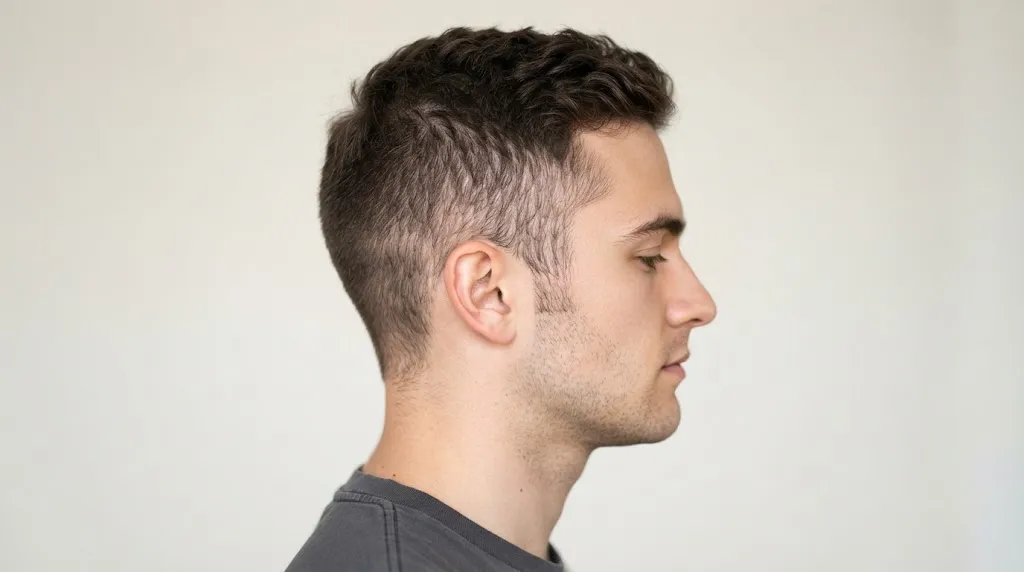
Starting a flow from a buzz cut means you are beginning at zero and will need patience to clear the initial upright sticking phase. A No. 4 clipper guard leaves the hair at roughly half an inch [VERIFY against a clipper chart], which creates a tight, uniform canvas across the scalp. Military buzz cut standards differ by service and country [VERIFY with an official source], but they generally enforce strict regulation lengths that sit even shorter than a standard No. 4 on the sides and back. From either of these starting points, reaching the 4-inch mark required for a basic flow takes roughly 8 months of uninterrupted growth on top, assuming a steady growth rate of half an inch per month.
The Awkward Stage

The awkward stage typically hits between weeks 6 and 12, or months 3 and 5, when hair is too long to stay neat as a short cut yet too short to lie flat behind the ears. Surviving this phase requires a month-by-month approach: during month three, rely on lightweight styling creams to tame side flare-ups, and by month four, start tucking the sides behind your ears while visiting the barber every 4 to 6 weeks strictly for neckline cleanups and ear-line trimming without touching the length on top.
What to Tell Your Barber for a Flow Haircut
Getting the right flow haircut starts with clear communication rather than vague terms. You need to give your barber exact instructions on where to keep the length and where to remove bulk so you do not walk out with a standard corporate cut.
A Word-for-Word Barber Script
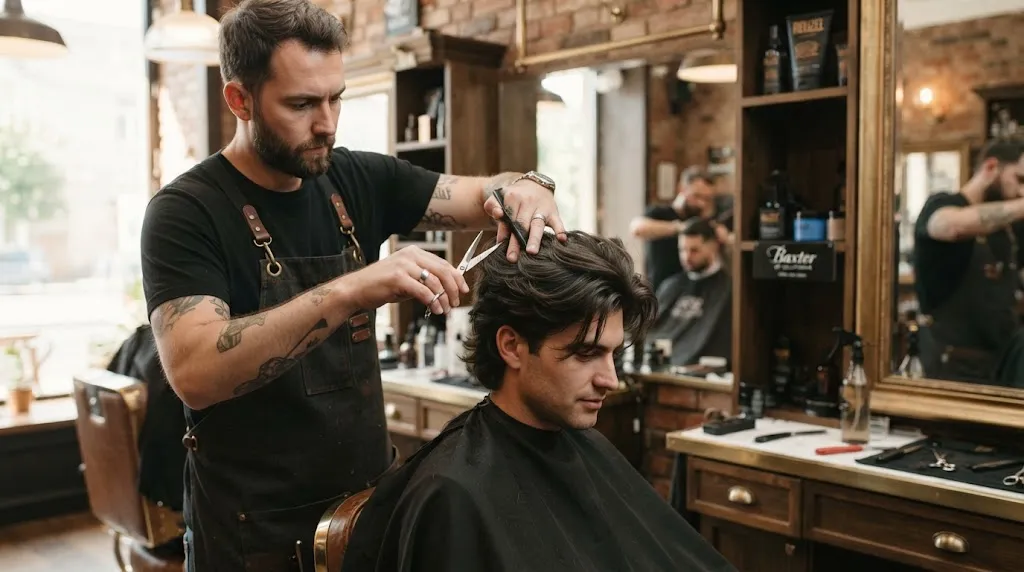
Telling a barber you want a flow haircut can lead to misinterpretation unless you break it down by your current length. Use these direct scripts depending on where your hair sits right now.
For a short flow starting around 2 to 3 inches on top, say: “I am growing my hair out into a flow style. Keep the top at least 3 inches so it starts sweeping back, blend the sides down without skin fading them too high, and use point-cutting on top to remove weight instead of taking off length.” Do not say: “Just trim the sides and leave the top alone,” because that creates an awkward mushroom shape as it grows.
For a medium flow sitting around 4 to 6 inches, say: “I want a classic flow that tucks behind the ears. Keep the length on top and through the crown, clean up around the neckline and ears with scissors rather than clippers, and layer the sides so it sweeps backward instead of puffing out.” Do not say: “Cut it short on the sides and long on top like an undercut,” because a flow requires a gradual, connected transition.
For a long free-flowing style, say: “I am maintaining my length, so just clean up split ends, thin out the bulk behind the ears using slide cutting, and keep the perimeter natural without a blunt line.” Do not say: “Take off two inches all over,” as barbers measure differently and you risk losing your hard-earned sweep.
Reference Photo Angles
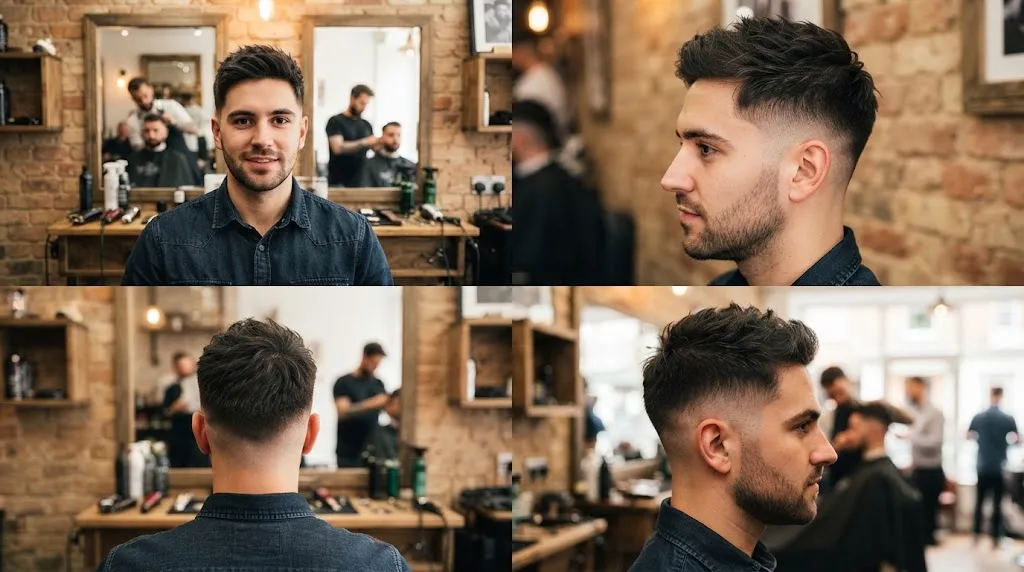
Showing three distinct angles prevents your barber from guessing what you mean by a sweep-back. Bring photos that display the front sweep off the forehead, the side profile showing how the hair sits past the ear, and the back where the neckline tapers naturally without a harsh line. The photo should match your exact hair type, whether straight or wavy, because fine straight hair behaves entirely different under scissors than thick wavy hair.
Scissors, Clippers and Fades: What to Allow
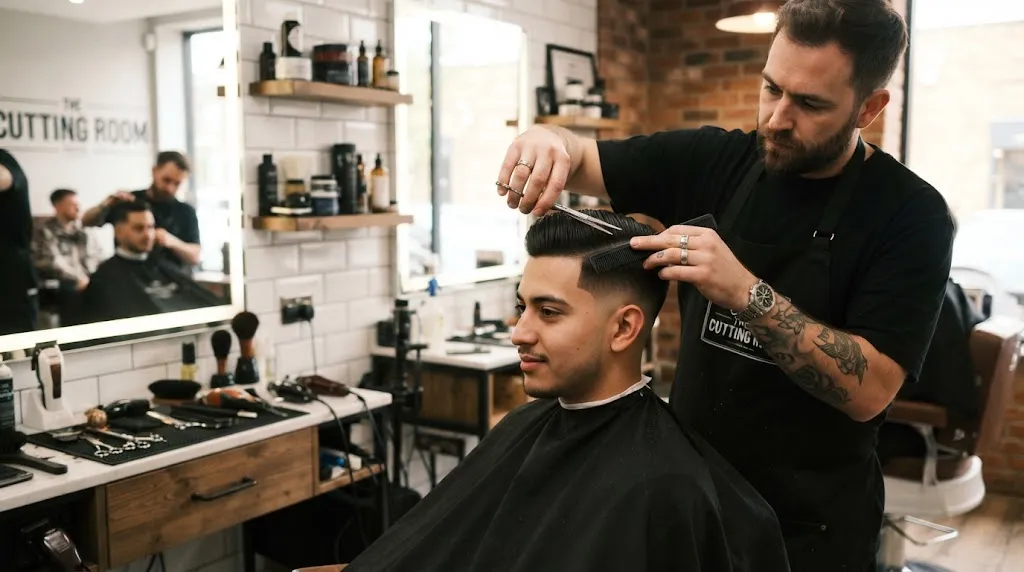
Weight removal must happen primarily through scissors rather than heavy clipper work to maintain that soft, swept-back movement. Allow your barber to use thinning shears or slide-cutting techniques to debulking the sides so the hair sweeps back smoothly instead of sticking straight out. When discussing fades, keep them low or tapered rather than high and tight, ensuring the side hair retains enough weight to fold backward over the ears.
What Is the 3:2:1 Haircut Rule?
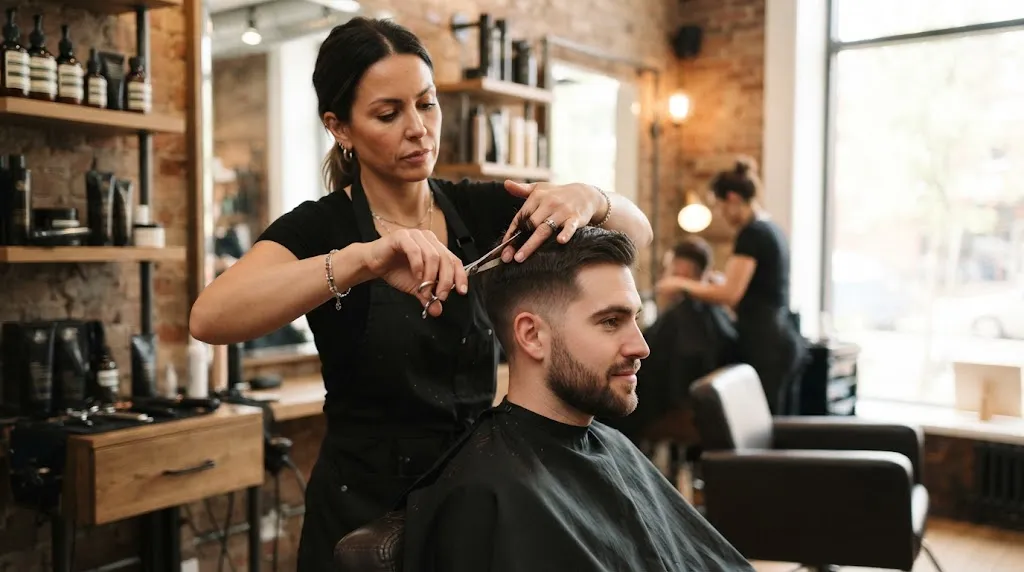
The 3:2:1 haircut rule has two distinct interpretations in the barbershop, and understanding both prevents a bad fade. The first interpretation refers to clipper guard sizes, typically meaning a number 3 guard on top, a number 2 on the sides, and a number 1 at the edges. The second interpretation is a length ratio where the top stays longest, the sides are moderate, and the neckline stays tight. For a flow haircut, standard clipper guards do not apply to the top section because you need length there to sweep backward, meaning the rule only dictates how tight the lower sides and neckline should go.
What Is the 3-Inch Rule for Haircuts?
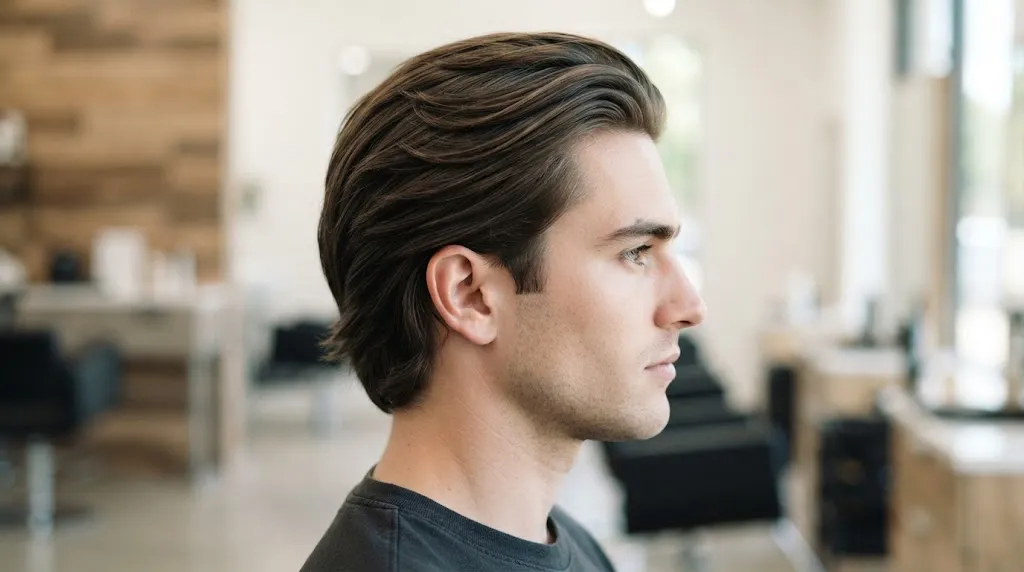
The 3-inch rule is primarily a social-media trend based on an ear-to-chin measurement to determine whether short or long hair suits your face shape. Treat it as a casual guideline rather than a strict barber standard when planning your cut. It remains separate from the flow’s own length threshold, which typically requires hair to reach at least 3 inches before it begins to sweep naturally.
What Is the 2.25 Rule for Hair?

The 2.25 rule is a measurement popularized by John Frieda using a pencil under the chin and a ruler from the earlobe down to see if short hair flatters your face structure. Most stylists warn that this measurement is far too simplistic for determining a modern flow haircut since face shapes interact with medium-length layered hair in diverse ways.
How Much to Tip for a Flow Haircut

Standard tipping for a quality men’s haircut runs about 15 to 20 percent, with some sources mentioning up to 25 percent for exceptional detail work. To put exact numbers to it, leaving $5 on a $40 service works out to 12.5 percent, while leaving $10 on a $50 service equals 20 percent.
How to Style a Flow Haircut
Getting a natural-looking sweep requires working with your hair’s natural tendencies rather than fighting them. The routine depends entirely on whether you are reaching for volume or letting a natural wave set on its own.
Step-by-Step Blow-Dry Routine
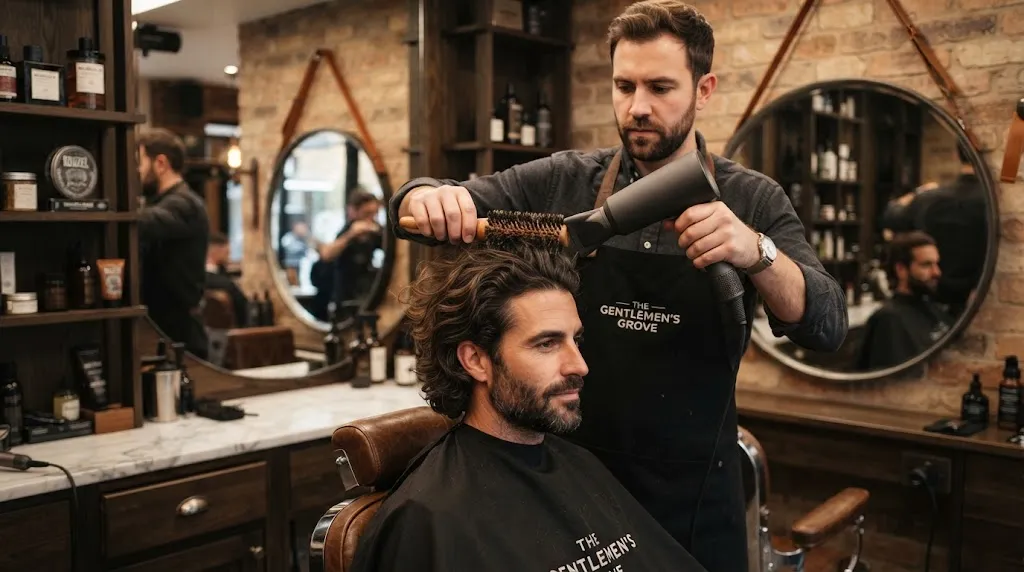
Start with towel-dried hair that is damp to the touch rather than dripping wet. Direct the airflow backward and slightly upward from the front hairline to encourage the hair to sweep away from the face. Keep the heat moving continuously to prevent hot spots and smooth the cuticle down the shaft. Stop drying when the hair is about 90% dry so the remaining moisture can settle naturally. Finish by letting the ends air-dry completely to keep the movement soft and flexible rather than stiff.
The Air-Dry Method

Skip the blow-dryer entirely if your hair has natural waves or tight curls that tighten up under forced heat. Let towel-dried hair settle on its own while you get dressed, keeping your hands away from it once it starts to dry to avoid frizz. This preserves your natural pattern and gives the cut an easy, relaxed finish.
Cream, Salt Spray, Clay or Pomade: Product Types Explained

Styling products change how hair behaves throughout the day without altering its actual length. Salt spray adds lightweight grit and definition to damp hair before drying, making it ideal for building initial volume. Styling cream offers a soft hold with a natural finish, keeping stray hairs in place without stiffness. Clay provides a matte finish with strong hold, which works well for thicker textures that need extra control. Pomade styles for short hair typically rely on waxes or oils that deliver high shine and slick control for tighter, more structured shapes.
Flow Haircut Maintenance and Trim Schedule
| Hair Length | Recommended Trim Interval | What to Focus On |
|---|---|---|
| Under 2 inches | Every 4 to 6 weeks | Maintaining clean lines at the edges and tapering the sides |
| 2 to 4 inches | Every 6 to 8 weeks | Managing bulk around the ears and shaping the top |
| 6 inches and longer | Every 8 to 12 weeks | Dusting the split ends and balancing weight distribution |
Flow Haircut Problems Real Guys Run Into

My Flow Keeps Parting Down the Middle
A flow haircut naturally splits right where gravity takes over, leaving you with an unwanted center part. To fix this, change your drying direction immediately after washing by sweeping all the top hair backward and slightly to one side rather than straight down. [REVIEWER NOTE: add personal experience with the offset-front-inch styling technique to break the natural split].
My Hair Sticks Straight Out at the Sides
Hair that flares outward like wings usually means the sides are cut too short relative to the weight on top, creating a ledge at the parietal ridge. Wait out the grow-out phase until the hair gains enough weight to drop flat, and ask your barber to soften the bulk around the temples with point-cutting instead of blunt lines.
My Curly Flow Goes Bulky or Frizzy
Wavy or curly hair puffs out into a triangle when it is cut into uniform medium lengths without internal thinning. Keep the weight distributed through longer layers that allow the curl pattern to elongate instead of stacking up on itself.
My Barber Cut Off My Length
Losing too much length at a routine trim happens when you use vague terms like clean it up instead of giving exact boundaries. Protect your progress by pulling a single strand down to show the exact point where the scissors should stop, and tell the barber to touch up only the split ends and clean the neckline.
My Thin Hair Looks Stringy
Fine hair loses its density and looks see-through once it grows past a certain threshold. Stick to a shorter flow range with shorter internal layers that build natural texture and volume without exposing the scalp.
My Ends Flip Out
Flaring or curling ends at the bottom of a flow usually stem from heavy weight hitting the shoulders or collar combined with random drying angles. Ask your barber to lighten the perimeter weight using slide-cutting, and direct the airflow straight down the hair shaft while blow-drying.
A Cowlick or Crown Whorl Fights the Flow
A stubborn crown growth pattern forces the hair in directions you do not want it to go, disrupting the smooth sweep backward. Work with the natural growth direction by establishing your part or sweep slightly off-center, and use tension with a round brush while blow-drying to override the whorl.