
Old Hairstyles: 60+ Vintage & Classic Looks by Decade Women's & Men's Guide
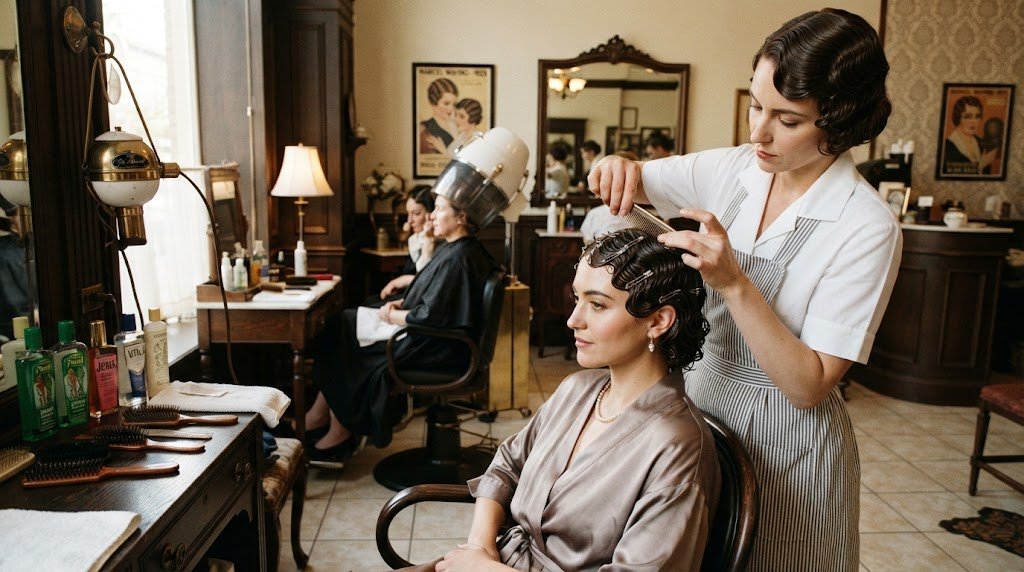
“Old hairstyle” usually means a decade-defining look — from 1920s finger waves to 1990s layered cuts — that’s making a comeback today. This guide from hairstylesusa.com hairstyles collection covers every era, for both women and men, with real styling guidance.
What Is an Old Hairstyle?
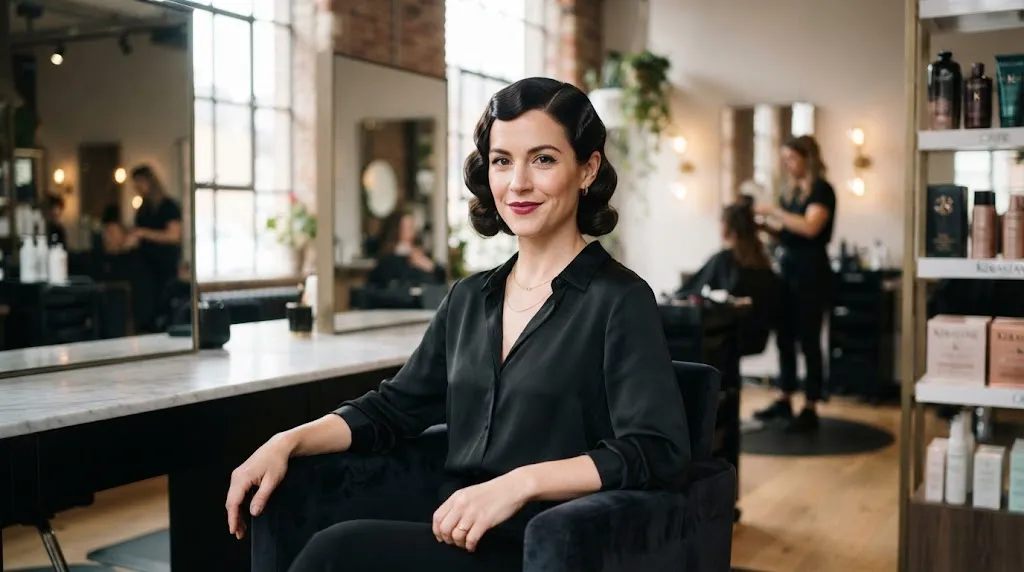
An old hairstyle is a vintage or classic cut from previous decades—ranging from the 1920s to the 1990s—that carries a distinct cultural era. These styles rely on specific shapes, setting patterns, and cutting techniques that differ heavily from today’s lived-in textures.
Top decades: 1920s (finger waves), 1950s (pin-curl bombs and pompadours), 1970s (feathered shags), and 1990s (grunge layers).
Women’s examples: The 1920s bob, 1940s victory rolls, and 1950s poodle cut.
Men’s examples: The 1950s greaser pompadour, 1960s mod mop-top, and 1920s slicked-back side part.
2026 revival note: Modern salons see heavy demand for authentic 1970s face-framing shags cut with a razor rather than slide-cutting shears.
What Counts as an "Old Hairstyle"? (Vintage vs Retro vs Classic vs Old-School)
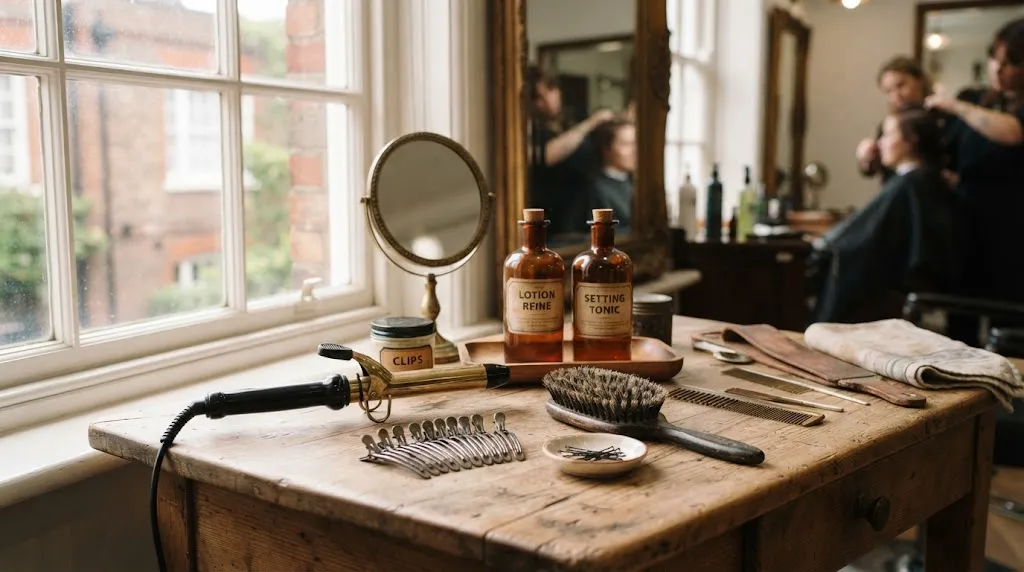
An old hairstyle falls into one of four distinct categories based on its age and cultural staying power: vintage, retro, classic, or old-school. Knowing the difference stops you from asking a stylist for a 1950s look when you actually want a 1970s shag.
Vintage: A cut or style originating from a specific era at least 20 to 100 years ago, worn authentically within that period (such as a 1940s victory roll or a 1920s finger wave).
Retro: A modern reproduction or imitation of a style from a past decade, often built using contemporary tools like ceramic curling wands instead of pin curls.
Classic: A timeless cut that transcends decades without ever truly going out of fashion, like a clean-cut side-part pompadour or a blunt chin-length bob.
Old-School: A colloquial term usually reserved for nostalgic, working-class barber shop staples from the mid-to-late 20th century, such as a high-and-tight crew cut.
When you sit in my chair and say you want an “old hairstyle,” we first figure out if you want a historically accurate museum piece (vintage), a modern nod to the past (retro), a safe bet that has worked for fifty years (classic), or a sharp barber shop staple (old-school).
Old Hairstyles by Decade: 1920s to 1990s
1920s: Finger Waves & the Eton Crop
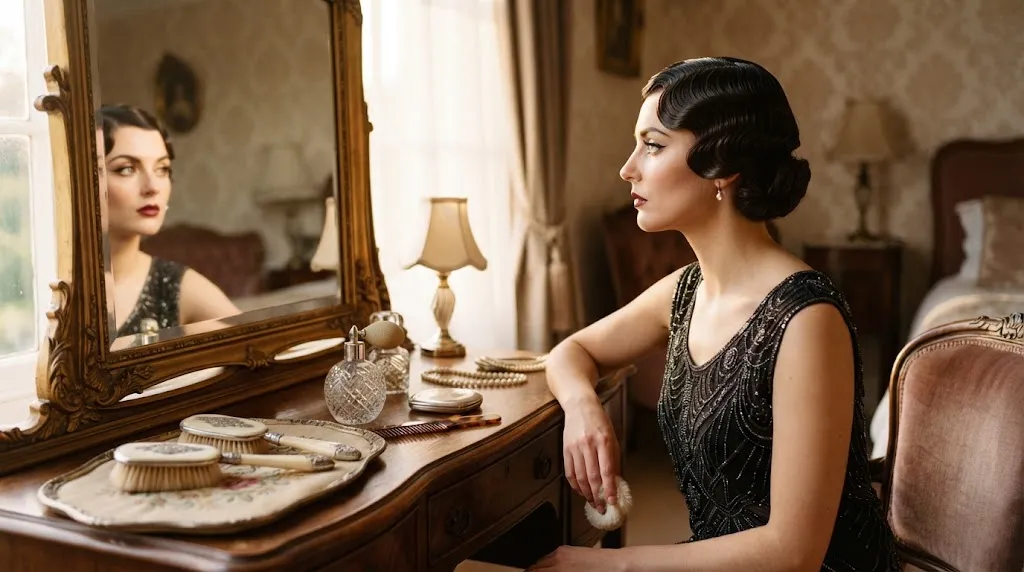
The 1920s defined old hairstyles through sharply molded finger waves and the ultra-short Eton crop, breaking away from long Victorian hair traditions. Women originally set wet hair using sugar water or heavy gum tragacanth to make the sculpted ridges stay rigid all night. Zendaya frequently channels this exact era on modern red carpets with sculpted crown waves.
Best for: Fine to medium straight hair
Time: 45 minutes to 1 hour
Difficulty: High (requires precision clip placement)
1940s: Victory Rolls & Peek-a-Boo Waves
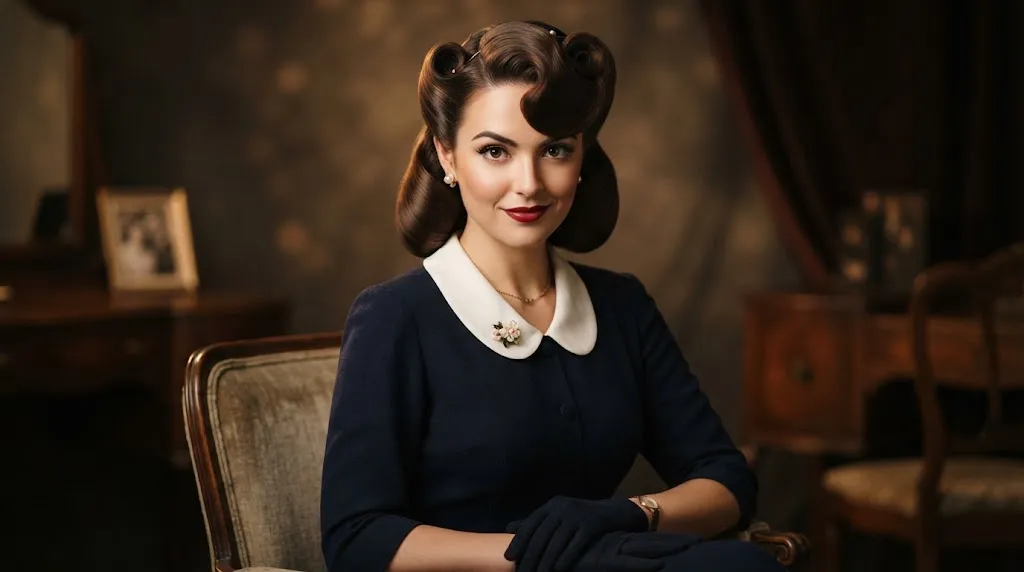
Fourties retro hair relies on structural volume like victory rolls and heavy, sweeping side waves that frame one eye. These dramatic rolls were originally named after wartime victories and required wiring or cardboard inserts when hair length fell short. Katy Perry regularly brings back these precise barrel-rolled styles for vintage-themed performances.
Best for: Medium to thick hair with long layers
Time: 30 to 45 minutes
Difficulty: Medium-High
1950s: Poodle Cuts, French Twists & Barrel Curls
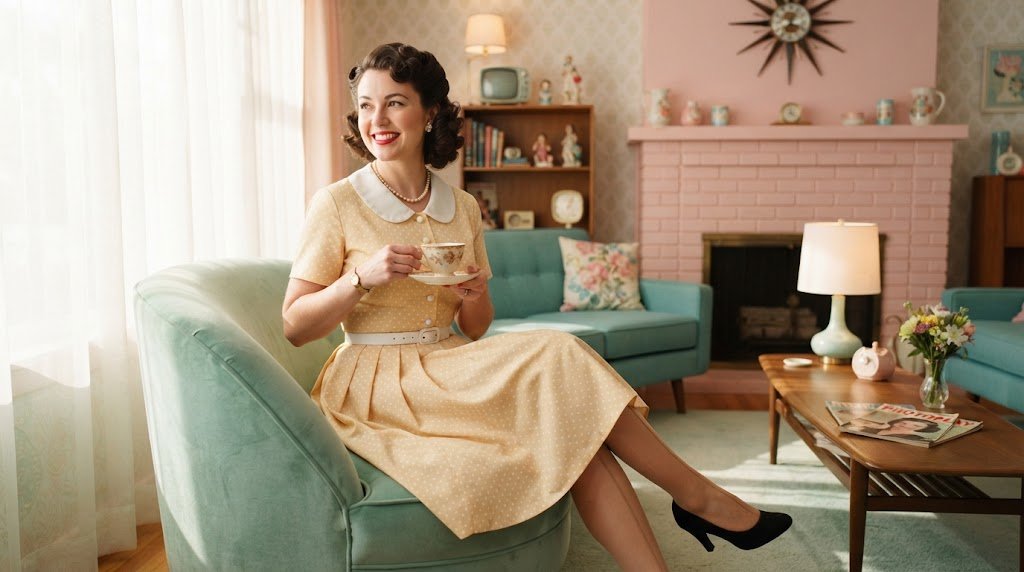
Mid-century hairstyling centers on structured tightness, featuring the tight ringlets of the poodle cut, sleek French twists, and bouncy barrel curls. Stylists back then relied on heavy-duty lacquer and brush rollers because chemical hairspray formulas had just hit the commercial market. Taylor Swift often rocks modern interpretations of these polished mid-century shapes.
Best for: Naturally wavy or permed hair
Time: 40 minutes
Difficulty: Medium
1960s: Beehives, Bouffants & the Flip
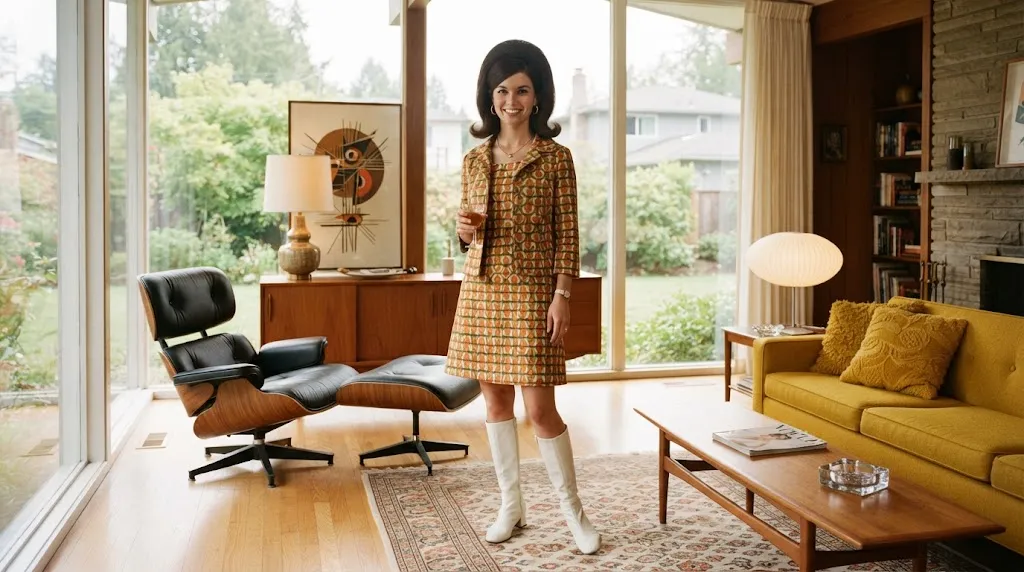
Sixties hairstyles demand extreme height at the crown through aggressive backcombing and massive geometric shapes like the beehive and the flipped ends bouffant. Women often slept in large juice-can rollers to preserve the massive volume for days without washing. Lana Del Rey defines her signature aesthetic using this exact sky-high retro silhouette.
Best for: Thick, coarse hair that holds teasing well
Time: 35 minutes
Difficulty: Medium
1970s & 1980s: Shag, Feathered Layers & Perms
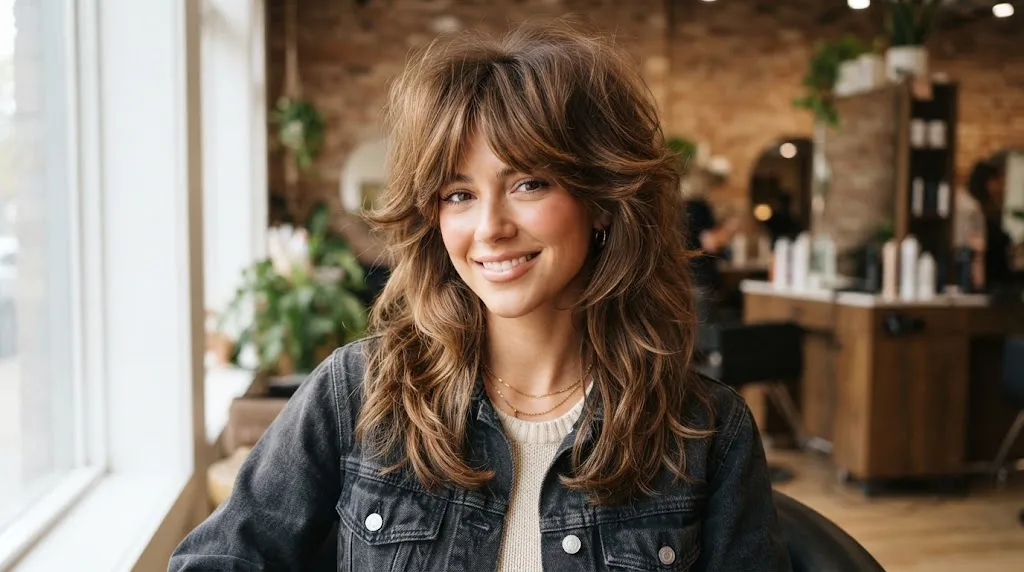
Seventies and eighties vintage hair prioritizes heavy texture, from the piece-y movement of the classic shag and winged feathered layers to tight, chemical-processed curls. These cuts were originally designed to give flat hair massive body and air-dried movement using a razor cutting technique. Jenna Ortega brings major seventies shag energy back to current trends.
Best for: Naturally textured, wavy, or thick hair
Time: 20 to 30 minutes
Difficulty: Low-Medium
1990s: The Rachel, Blunt Bobs & Face-Framing Layers
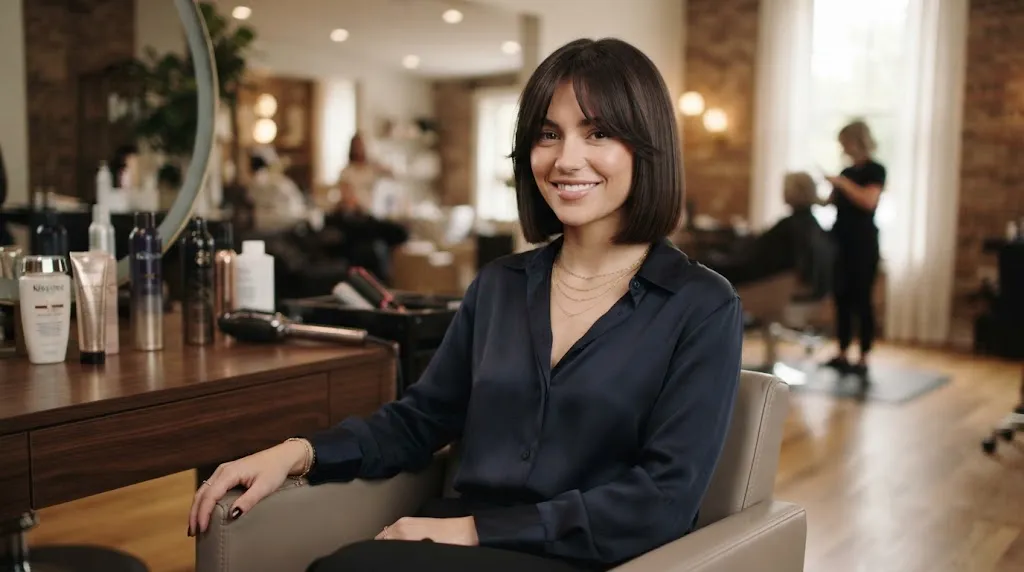
Nineties throwback looks are defined by choppy face-framing layers, ultra-straight blunt bobs, and dimensional highlights. This decade moved away from stiff hairspray and towards lightweight styling lotions and round-brush blowouts. Hailey Bieber frequently sports exact cuts and styles pulled straight from late-90s runways.
Best for: Straight to slightly wavy hair textures
Time: 15 to 25 minutes
Difficulty: Low
Old & Classic Hairstyles for Men, Decade by Decade
1920s–30s: Classic Side Part & Gentleman's Cut
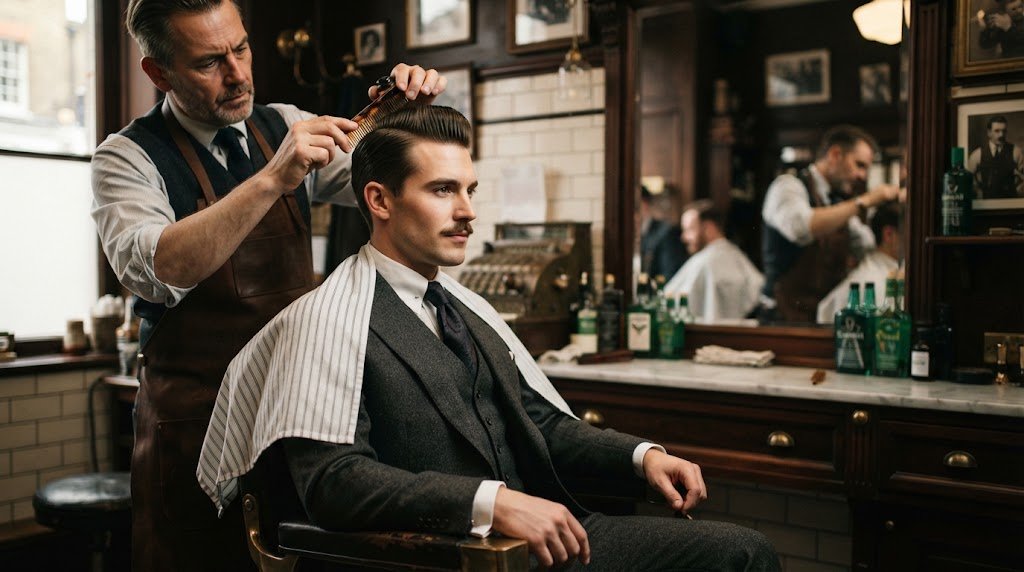
The 1920s and 30s gentleman’s cut relies on a hard side part paired with tapered sides and a slicked-top finish achieved using heavy pomade. To get this look, ask your barber for a scissor-over-comb taper on the back and sides, leaving at least three to four inches of length on top so it can be combed flat across the scalp. In the chair, I always tell clients with cowlicks on their crown that they need to part their hair in the direction it naturally falls, otherwise the style will spring up by noon. Avoid water-based gels that dry crunchy; instead, use an oil-based pomade like Murray’s or Suavecito Firm Hold to get that authentic high-shine, molded look without midday flaking.
1950s: Pompadour, Ducktail (DA) & Crew Cut
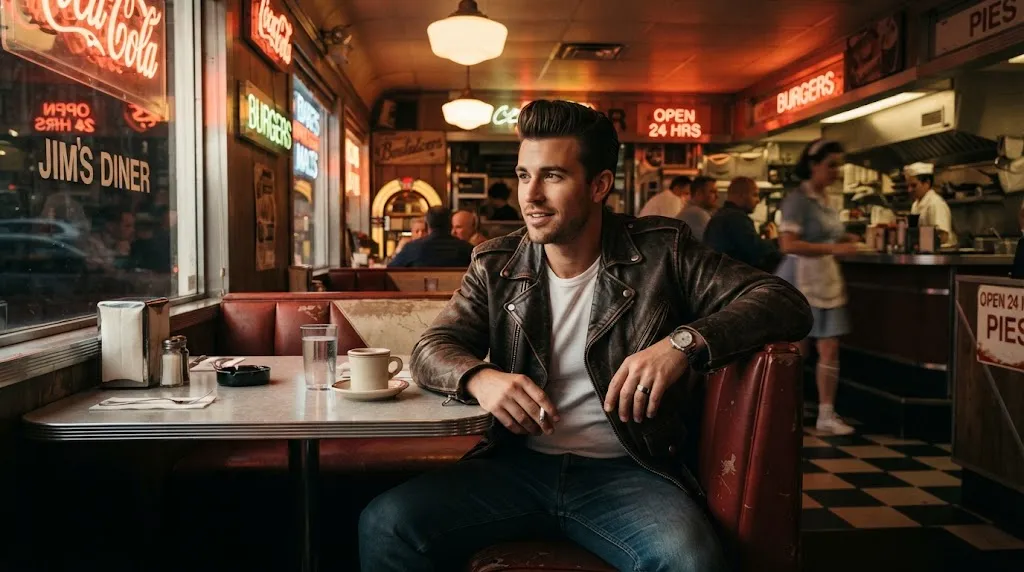
Fifties men’s style centers around height and structure, featuring the volume-heavy pompadour, the swept-back ducktail, and the short-back-and-sides crew cut. To build a proper pompadour, you need a boar bristle round brush, a blow dryer on high heat, and a strong-hold styling clay applied to damp hair to lock the front wave in place. The biggest mistake guys make with a ducktail is cutting the back too short; you need at least two inches of length at the nape to brush the sides inward so they meet neatly down the center spine.
1960s: Ivy League, Flat Top & Mod Cuts
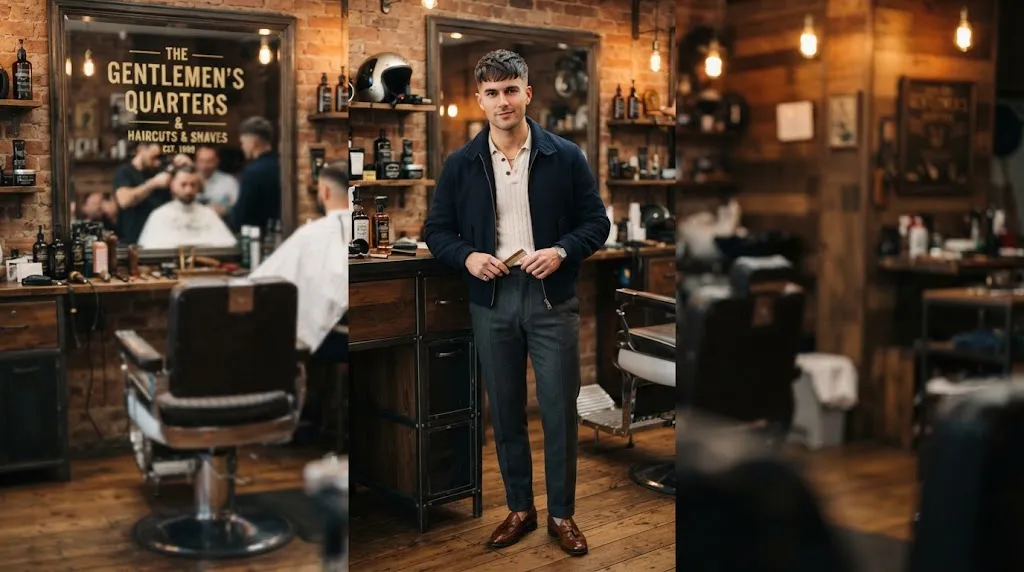
Sixties men’s grooming transitions toward cleaner Ivy League brush-ups, squared-off flat tops, and textured, scissor-cut Mod styles that sit closer to the brow. A proper flat top requires clippers with a flat-top comb guide to ensure the horizontal deck is completely level across the parietal ridge. If you wear a Mod cut, ditch the heavy pomades and use a matte styling paste or sea salt spray to give fine hair grit and natural movement without flattening out.
Old Hairstyles for Older Men & Gray Hair
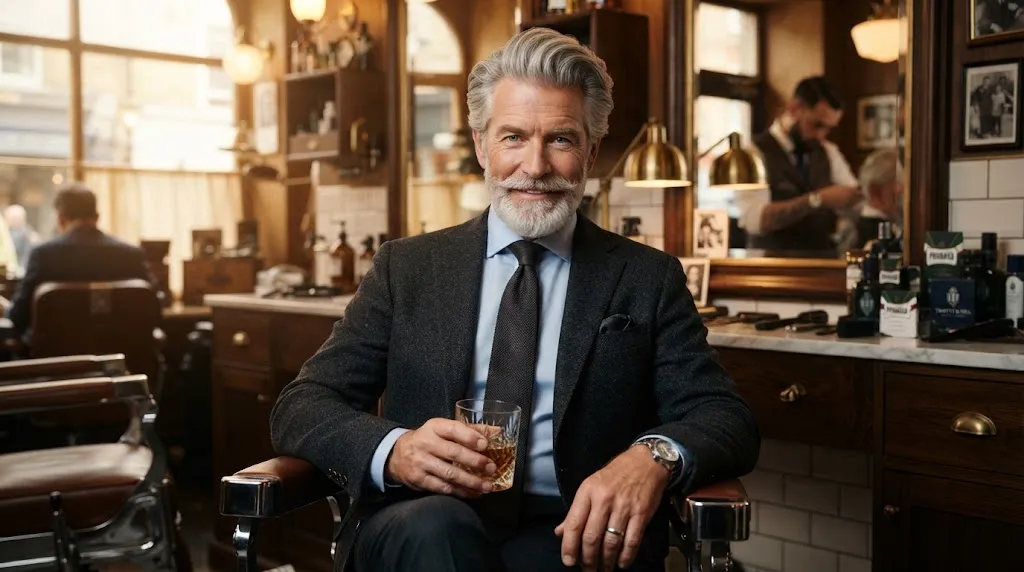
Embracing silver hair with a classic cut requires managing coarse texture and dryness by using specialized moisturizing shampoos and lower styling heat. For more inspiration on how to style silver strands, check out our guide on hairstyles for older men to find a shape that matches your hair’s natural thinning patterns. Older hair loses its natural elasticity, so swap out stiff gels for lightweight styling creams that offer control without weighing down finer areas at the temples.
How to Ask Your Barber for a Classic Cut

Getting an authentic vintage cut requires bringing reference photos and using precise terminology like “skin taper,” “scissor-cut crown,” and “two inches on top.” Your face shape dictates the ideal variation of these classic styles, so if you have a round face, ask your barber to keep the sides tight and add height on top to elongate your profile. For those with a square face, a tight side part softens strong jawlines, whereas a long face benefits from wearing the hair slightly lower on the forehead rather than piled straight up.
Find Your Old Hairstyle: By Length, Texture & Occasion
Vintage-Inspired Styles for Short, Medium & Long Hair
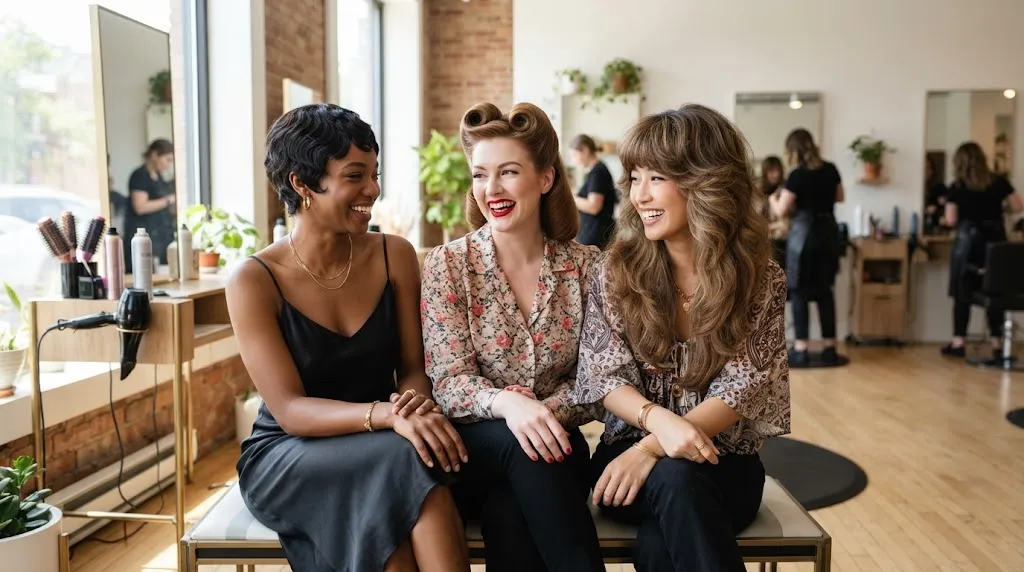
Choosing a vintage cut depends entirely on your current length and pattern, matching pixie crops and 1920s bobs to short cuts, while layered 1970s shags or sculpted 1940s rolls excel on medium hair. If you are working with long hair, Victorian Gibson tucks or 1960s Brigitte Bardot cascades deliver the right vintage silhouette. For straight hair, precision 1960s geometric Vidal Sassoon bobs hold their sharp lines best, whereas natural curly texture comes alive in 1970s disco fros or 1950s pin-curl sets. Refer back to the decade breakdown for exact cutting and setting instructions for each length.
Old Hairstyles by Face Shape
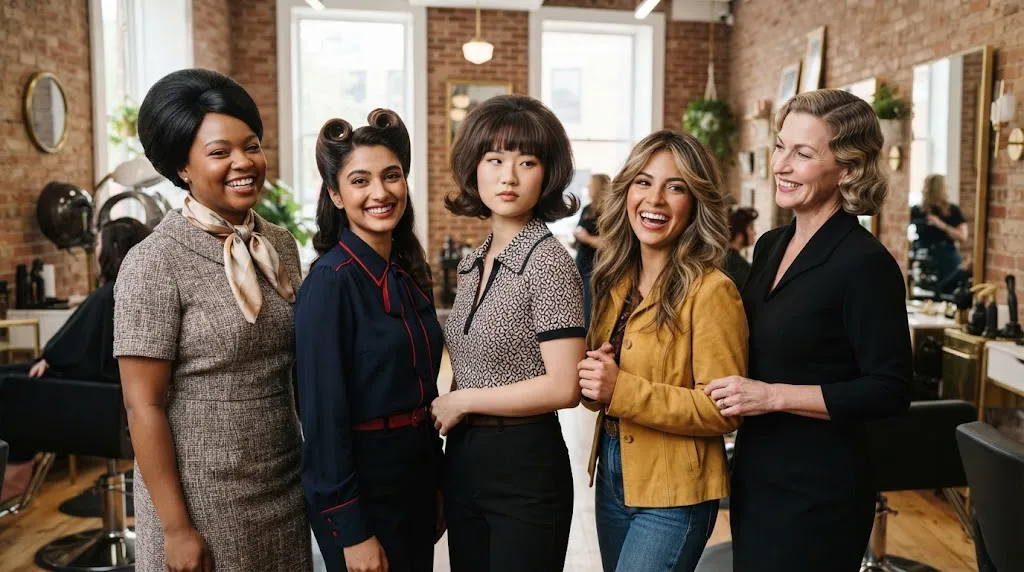
Selecting a classic look requires balancing your bone structure, using a 1950s bouffant to elongate a round face or soft 1940s shoulder-length waves to add width to a slim face. If you need to camouflage a wide forehead, authentic 1950s Bettie Page pin-up bangs or 1970s feathered fringe work instantly. For a fuller face, vertical height on top combined with cheekbone-skimming waves creates a slimming optical illusion, as detailed in the chronological era guides.
Old Hairstyles for Weddings, Parties & Everyday Wear
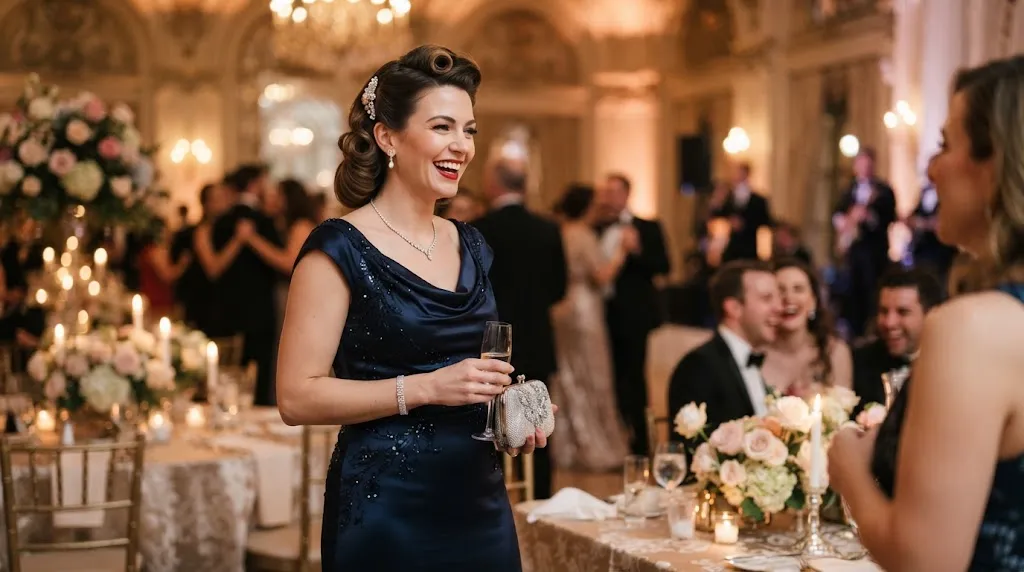
Wearing a vintage look for formal events means matching the era to the dress code, styling a structured 1920s finger wave for a high-end party or a polished 1960s French twist for any formal function/event. Men should opt for a crisp 1950s high-shine pompadour or a classic side-part as a sharp wedding (men) choice. Everyday vintage styling relies on relaxed versions of these same cuts, which are fully cataloged by decade above.
Real Problems With Old Hairstyles (And How to Fix Them)
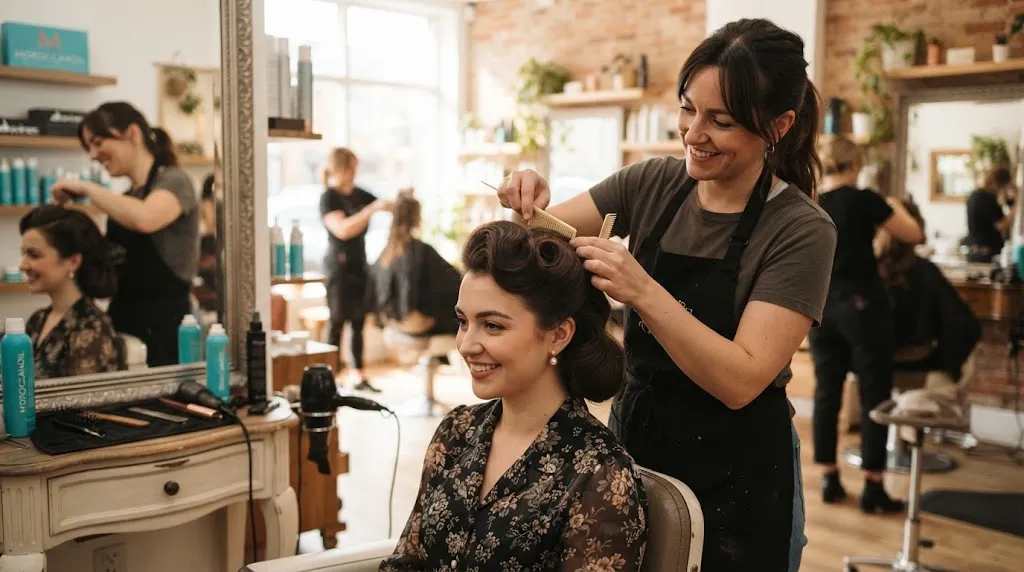
Trying to recreate a vintage look often fails because modern hair products and shortcuts do not interact with classic structural techniques the same way. Behind the chair, the five most frequent complaints clients bring in about old hairstyles usually stem from a mismatch in prep work, hair texture, or time management.
My Curls Fall Flat Within an Hour
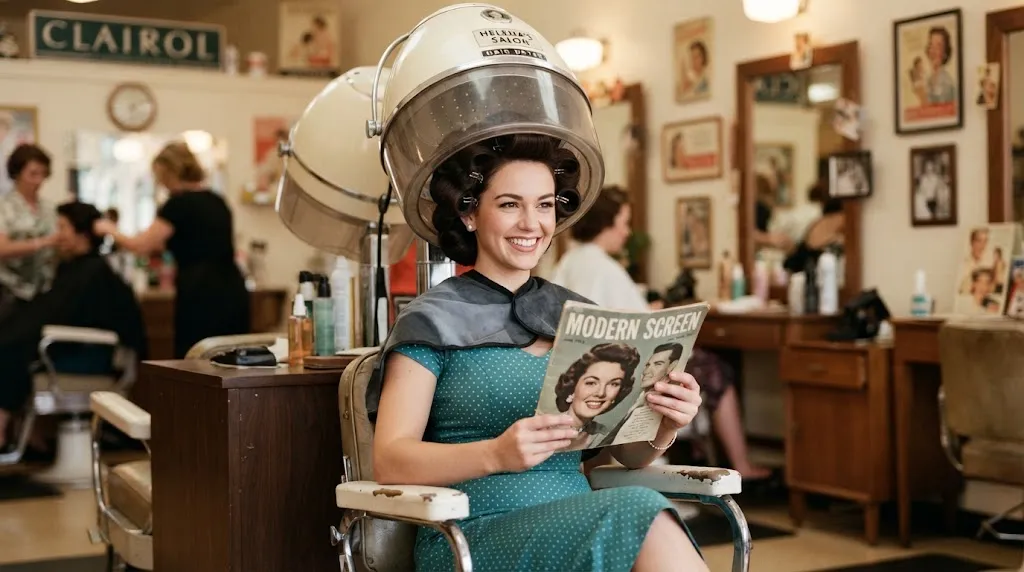
Vintage curls collapse quickly because they are set while dry or left to cool down under tension, which fails to break and reform the hydrogen bonds in the hair shaft. To make a set last all day, apply a strong-hold setting lotion to damp hair, roll it up while wet, and do not touch or brush out the curls until they are completely, 100 percent dry—ideally after sitting under a hooded dryer for at least 30 minutes, followed by a 15-minute cool-down period.
My Hair Is Too Fine or Thin for These Styles
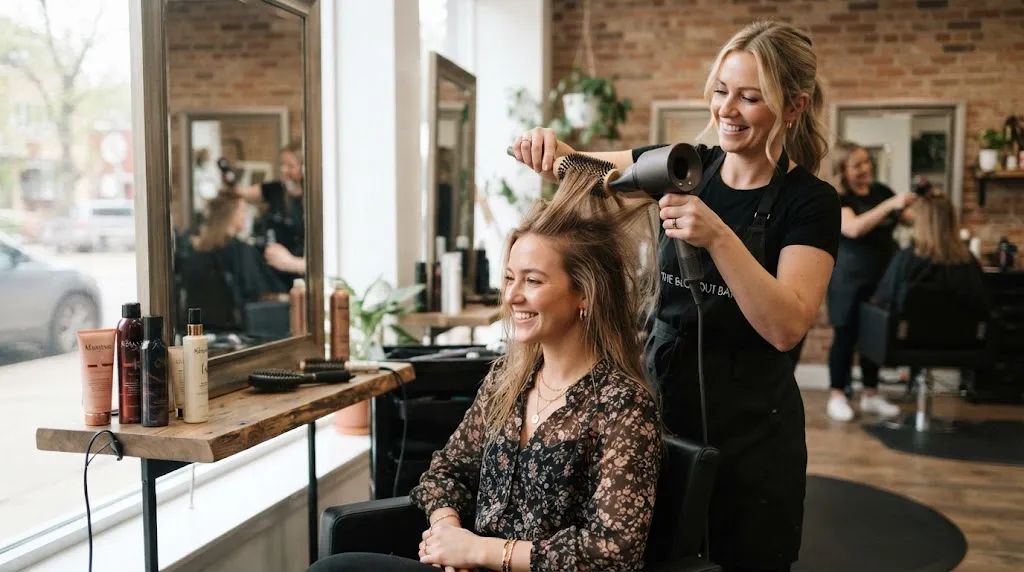
Fine hair lacks the density to hold heavy retro shapes like Gibson tucks or stacked 1960s bouffants without slipping out of place. Counteract this by rough-drying your hair with a texturizing powder or a volumizing mousse right at the roots, and use crimping pliers underneath the top layer of hair to create a hidden structural grid that bobby pins can actually grip.
I Don't Have Time for a 45-Minute Style Every Day

Classic silhouettes require structure that takes time to build from scratch every single morning, making daily upkeep unrealistic for most schedules. Cut your styling time down to ten minutes by setting your hair in large hot rollers or pin curls the night before, sleeping in a satin bonnet, and simply dropping the pins, smoothing the surface with a boar-bristle brush, and misting with hairspray in the morning.
I Feel Like I'm Wearing a Costume, Not a Hairstyle
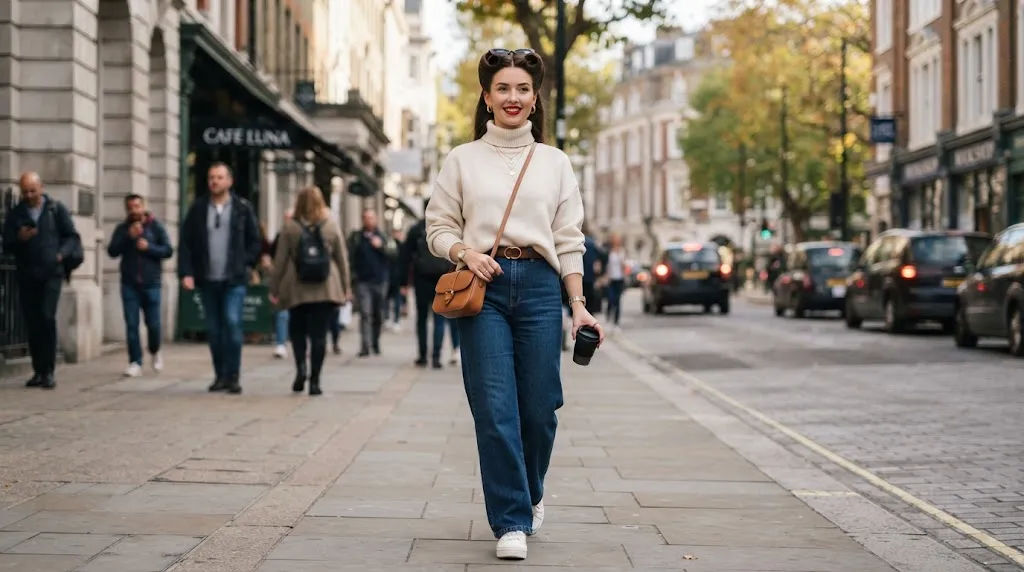
A vintage look feels costume-like when it is paired with head-to-toe period clothing and overly shellacked, stiff makeup from that exact decade. Ground the hairstyle in the present by pairing a 1940s victory roll or a 1950s poodle cut with a completely modern wardrobe, minimal contemporary makeup, and a messy breakdown of the silhouette using your fingers instead of a fine-tooth comb.
These Styles Don't Seem to Work on Curly or Coily Hair
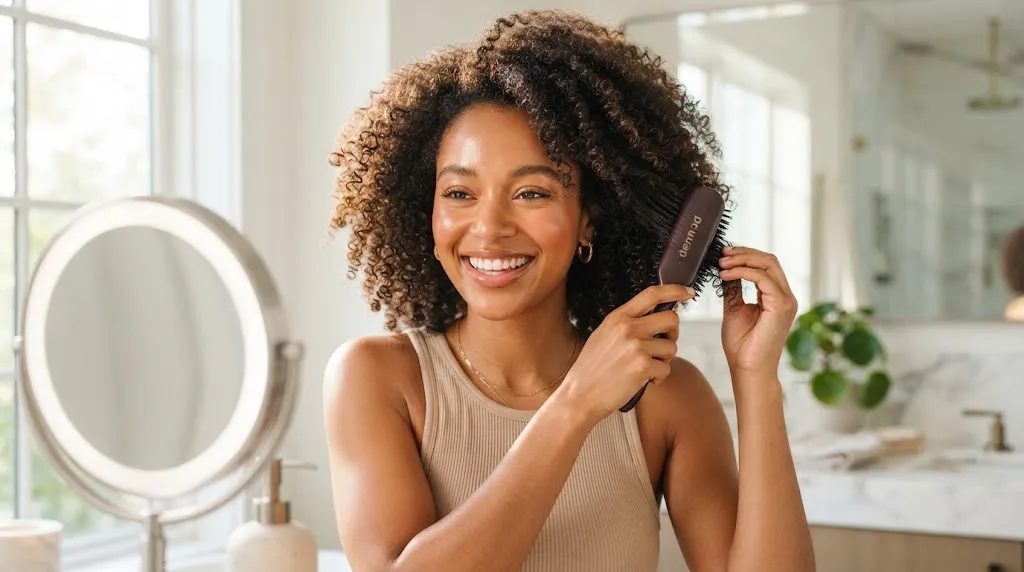
Most mainstream vintage tutorials assume a straight or wavy hair texture, which leaves natural type 3 and 4 hair frustrated when trying to force flat iron smoothing or traditional roller sets. Instead of fighting your natural curl pattern, lean into the iconic shapes of the 1970s afro or use threading and banding techniques to stretch tight coils into smooth, voluminous 1960s-inspired shapes that respect your hair’s natural elasticity.
Old Hairstyles Compared: Quick-Pick Table
Style Decade Best For Time Difficulty Finger Waves 1920s Short to medium hair, fine textures 45 minutes Advanced Pin Curl Bob 1930s Chin-length cuts, natural movement 30 minutes Intermediate Victory Rolls 1940s Medium to long hair, thick volume 25 minutes Intermediate Poodle Cut 1950s Natural curls, short crops 15 minutes Beginner The Beehive 1960s Long hair, high-density strands 35 minutes Advanced Feathered Layers 1970s Medium-to-long hair, face-framing 20 minutes Beginner Crimped Volume 1980s All textures, high-texture looks 30 minutes Beginner Classic Pompadour 1950s (Men) Short tapered sides, thick top hair 10 minutes Beginner The Quiff 1950s/60s (Men) Medium-length top, textured crops 10 minutes Beginner Slicked-Back Undercut 1920s/30s (Men) Straight or wavy hair types 5 minutes Beginner
Finger WavesDecade:1920sBest For:Short to medium hair, fine texturesTime:45 minutesDifficulty:AdvancedPin Curl BobDecade:1930sBest For:Chin-length cuts, natural movementTime:30 minutesDifficulty:IntermediateVictory RollsDecade:1940sBest For:Medium to long hair, thick volumeTime:25 minutesDifficulty:IntermediatePoodle CutDecade:1950sBest For:Natural curls, short cropsTime:15 minutesDifficulty:BeginnerThe BeehiveDecade:1960sBest For:Long hair, high-density strandsTime:35 minutesDifficulty:AdvancedFeathered LayersDecade:1970sBest For:Medium-to-long hair, face-framingTime:20 minutesDifficulty:BeginnerCrimped VolumeDecade:1980sBest For:All textures, high-texture looksTime:30 minutesDifficulty:BeginnerClassic PompadourDecade:1950s (Men)Best For:Short tapered sides, thick top hairTime:10 minutesDifficulty:BeginnerThe QuiffDecade:1950s/60s (Men)Best For:Medium-length top, textured cropsTime:10 minutesDifficulty:BeginnerSlicked-Back UndercutDecade:1920s/30s (Men)Best For:Straight or wavy hair typesTime:5 minutesDifficulty:Beginner
| Style | Decade | Best For | Time | Difficulty |
|---|---|---|---|---|
| Finger Waves | 1920s | Short to medium hair, fine textures | 45 minutes | Advanced |
| Pin Curl Bob | 1930s | Chin-length cuts, natural movement | 30 minutes | Intermediate |
| Victory Rolls | 1940s | Medium to long hair, thick volume | 25 minutes | Intermediate |
| Poodle Cut | 1950s | Natural curls, short crops | 15 minutes | Beginner |
| The Beehive | 1960s | Long hair, high-density strands | 35 minutes | Advanced |
| Feathered Layers | 1970s | Medium-to-long hair, face-framing | 20 minutes | Beginner |
| Crimped Volume | 1980s | All textures, high-texture looks | 30 minutes | Beginner |
| Classic Pompadour | 1950s (Men) | Short tapered sides, thick top hair | 10 minutes | Beginner |
| The Quiff | 1950s/60s (Men) | Medium-length top, textured crops | 10 minutes | Beginner |
| Slicked-Back Undercut | 1920s/30s (Men) | Straight or wavy hair types | 5 minutes | Beginner |
Tools You'll Need & How to Protect Your Hair
Essential Vintage Hair Toolkit
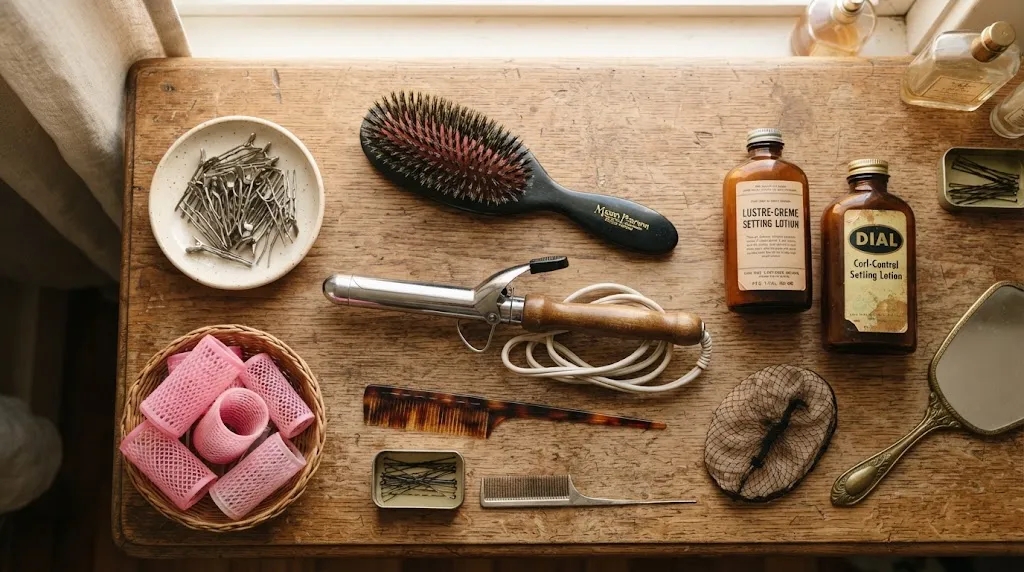
Replicating an old hairstyle relies entirely on having the correct equipment rather than standard modern brushes. A standard ceramic straightener will flatten the dimension out of a 1940s roll or a 1950s poodle cut.
Double-prong metal curl clips: Essential for pinning wet or hot-rolled curls flat against the scalp without leaving creases.
Boar bristle teasing brush: Unlike plastic paddle brushes, natural boar bristles smooth the outer cuticle layer during backcombing to create clean structure without ripping the hair shaft.
Ceramic marcel iron (3/8-inch or 1/2-inch): Required for tight, uniform finger waves and classic pin curls that modern clamp irons cannot replicate.
Mesh roller set: Available in jumbo and small sizes to set volume at the crown for 1960s beehives.
Setting lotion: Water-soluble styling liquids like Lottabody or setting foam that reactivate with moisture and dry hard to lock vintage wave patterns in place.
When you master these specific tools, learning how to style/set hair becomes a systematic process instead of guesswork in front of the mirror.
Does Heat Styling Damage Hair? What to Know
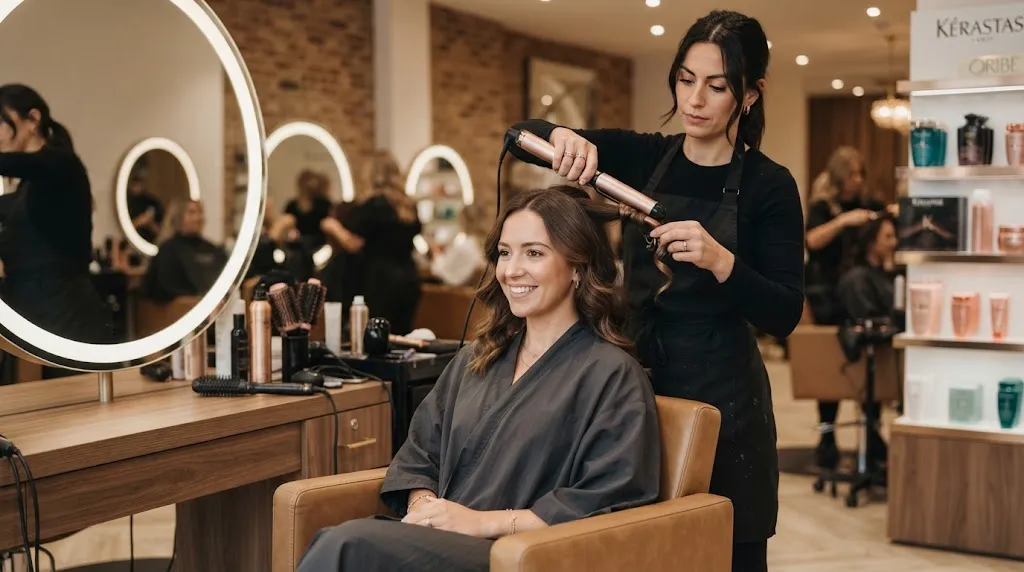
Frequent heat styling and heavy setting lotions compromise the hair cuticle, leading to brittleness and split ends if you skip thermal protectants. Because vintage sets rely on repeated curling iron use, hot rollers, and daily teasing, hair dries out rapidly compared to air-dried modern styles.
Apply a silicone-free thermal spray before using any hot irons, and limit high-heat settings to under 350°F to prevent melting the outer protein bonds. On days when you want to maintain a set without applying fresh heat, pin the hair back up at night using silk bonnets to preserve the shape and reduce mechanical friction. If your strands feel gummy or stretch too far when wet, pause the hot styling entirely and switch to cold pin-curling wet sets with setting lotion until moisture levels recover.
Frequently Asked Questions
Everything you need to know about historic and vintage hairstyles.
Ultimate Hairstyle Hub
Explore professional hairstyle guides, cuts, and style ideas for everyone.