
Hairstyle for Heart Shaped Face Male: Best Haircuts, Styles to Avoid and What to Ask Your Barber
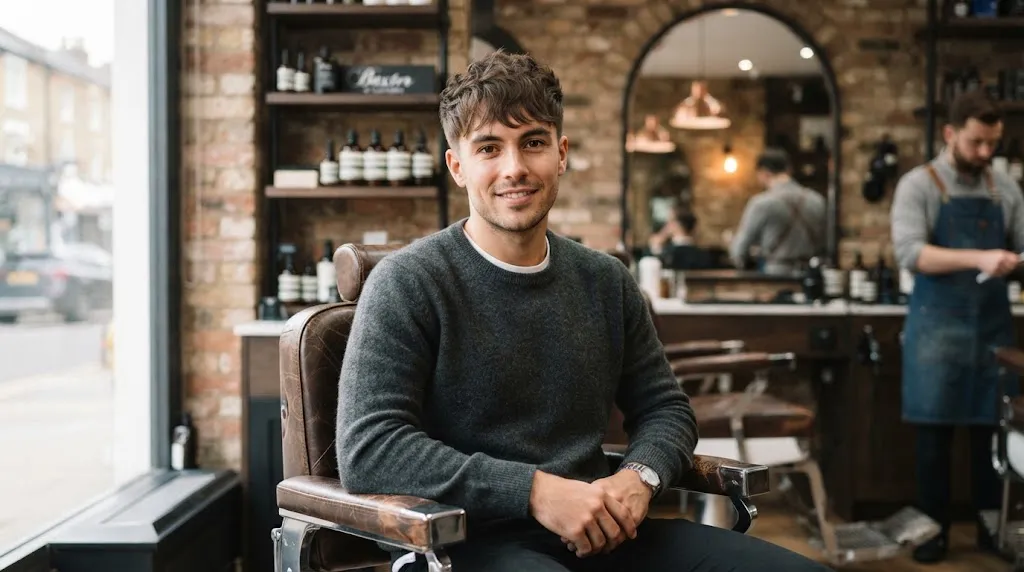
Heart-shaped faces feature a broad forehead paired with a narrow, pointed chin, creating an inverted triangle silhouette. The primary goal of a flattering haircut is to minimize the visual dominance of the upper face while adding subtle width or balance near the lower jaw. Excessive height on top or ultra-tight fades tend to exaggerate the wide temples, making the chin look sharper by comparison. Opting for side-swept styles, textured fringes, and medium-length layers helps break up harsh horizontal lines across the forehead.
Best Hairstyle for Heart Shaped Face Male: Quick Answer
A heart-shaped face features a broad forehead and cheekbones paired with a narrow, pointed chin. The right hairstyle balances these proportions by softening the upper half while adding subtle width or visual weight around the jawline.
A textured crop with a fringe works well to disguise a wider forehead. Medium-length styles with movement, such as a layered side sweep or a curtain cut worn with soft volume near the ears, help fill out the lower portion of the face. Conversely, ultra-short buzz cuts or high-volume pompadours tend to accentuate the width of the temples and make the chin appear sharper.
Low fades or scissor-cut taper fades are generally more flattering than high, skin-tight fades, as they prevent the top of the head from looking disproportionately heavy. Facial hair, such as heavy stubble or a short, squared beard, adds natural balance to a narrow chin. For readers exploring a wider range of options beyond this guide, a comprehensive overview of cuts can be found on HairstylesUSA.
The Short Answer, With a Barber-Chair Example
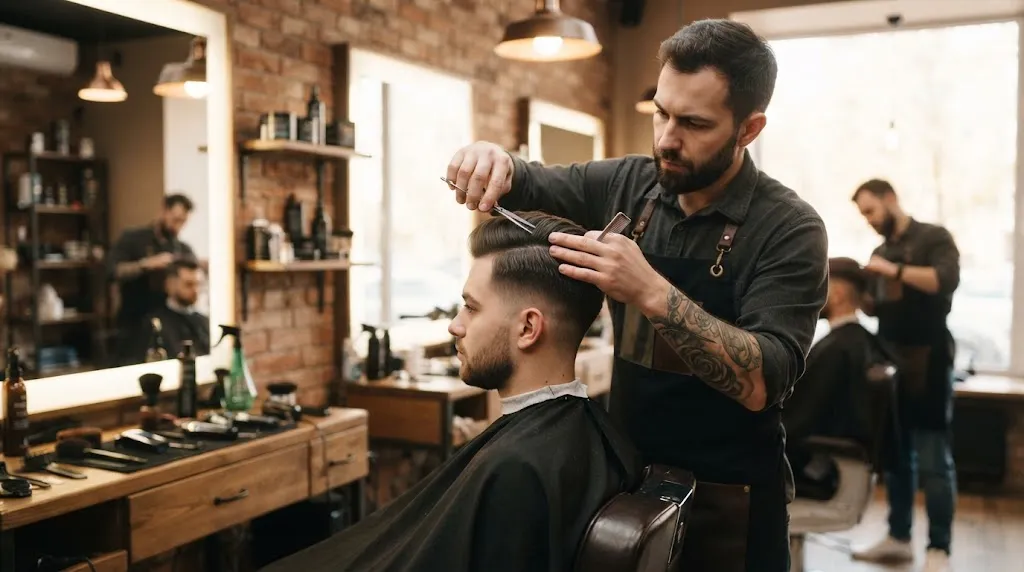
Balancing a heart-shaped face comes down to managing visual weight between a broad forehead and a narrow, pointed chin. Four reliable cuts achieve this: the side-swept fringe, textured quiff, curtain hairstyle, and medium layers. Two styles require caution—tight skin fades or buzz cuts that expose the upper width, and tall slicked-back or pompadour styles that elongate the top while narrowing the lower face. Two external supports help stabilize the overall balance: a short beard or heavy stubble to add width at the jaw, and matte texture products to prevent the hair from looking flat.
Say a man walks into a shop and tells the barber he wants a short, clean look. The barber might take the sides down to a tight skin fade and leave the top tall, which leaves the forehead looking wider and the chin sharper. If that same man walks in and asks to keep the sides at a low taper to maintain width around the temples while keeping a textured fringe across the forehead, the result softens the upper angles and widens the visual impression near the jaw.
What to Tell Your Barber
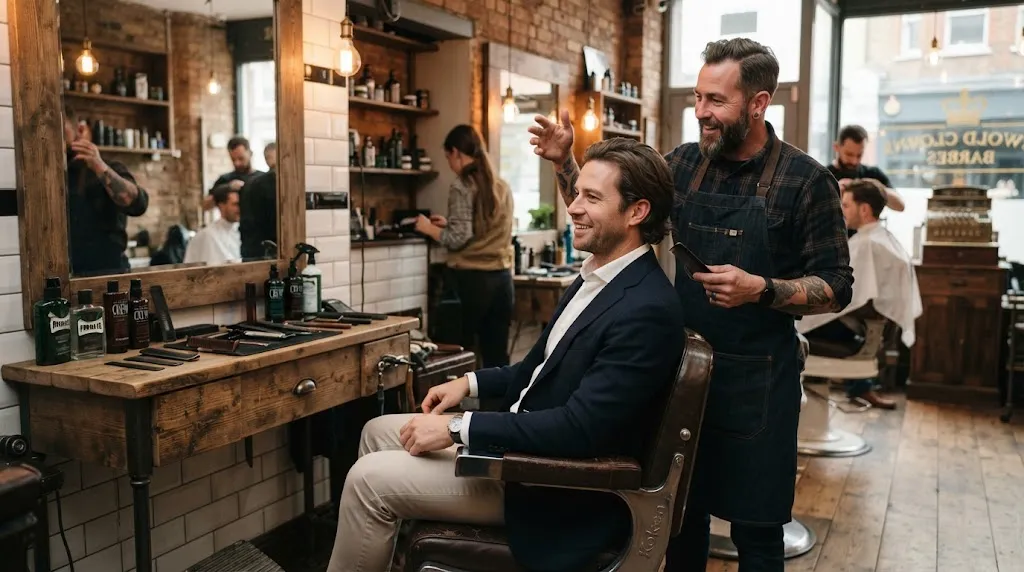
For a short cut, ask for a low taper with scissors on the sides, two inches of messy texture on top left longer at the front for a fringe, and a matte paste finish.
For a medium cut, request a low fade that preserves bulk above the ears, a layered top styled forward or swept to the side, and a textured, natural dry look.
For a long cut, ask for chin-length layers with curtain styling around the temples, a scissor-tapered neckline, and a lightweight styling cream finish.
How to Know If You Have a Heart Shaped Face
Identifying your facial structure prevents choosing haircuts that exaggerate a wide forehead and narrow chin. A heart shape relies on clear proportions across the upper and lower halves of the head.
Four Measurements and One Worked Example
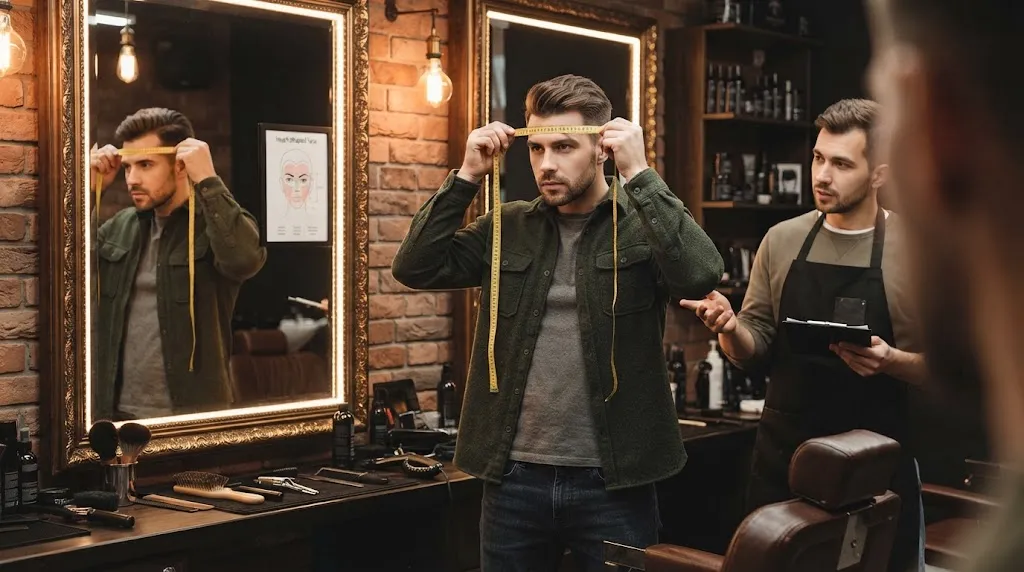
Checking your bone structure requires a flexible tape measure and a mirror, using four distinct points across the face. Measure the widest part of the forehead near the temples, the distance across the cheekbones, the jaw width from the angle below the ear to the center of the chin, and the total length from the hairline to the tip of the chin.
Take an example of these proportions in practice: a forehead measuring eight inches, cheekbones at seven and a half inches, a jaw width of five inches, and a total face length of ten inches. This specific spread shows the widest part at the top that tapers down to a sharp chin. A widow’s peak hairline often accompanies this shape, though it remains an optional detail rather than a strict requirement.
Heart vs Oval, Diamond and Inverted Triangle Faces
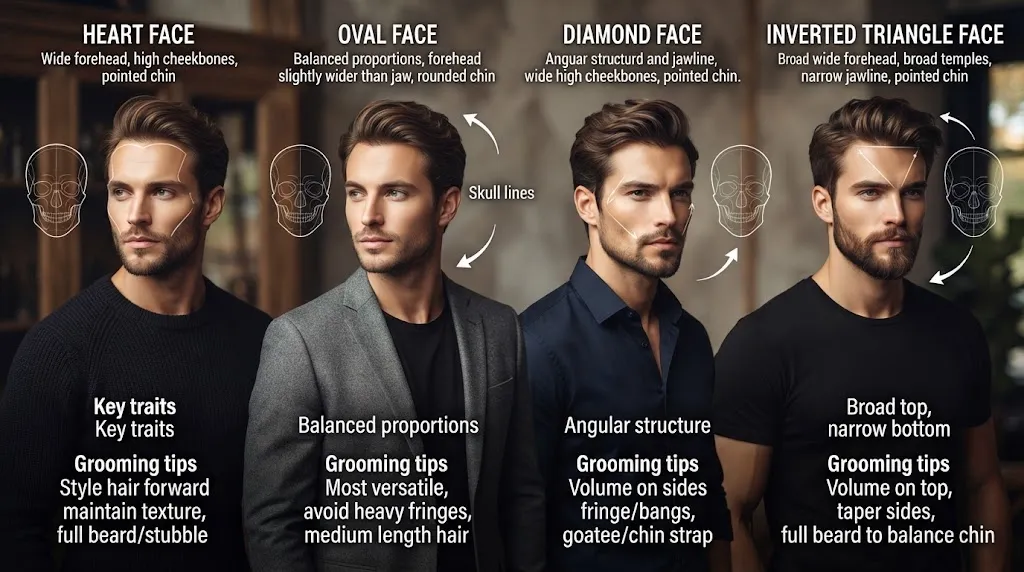
Differentiating similar face shapes depends on examining the cheekbones, jawline, and hairline angles. An oval face features balanced proportions where the forehead and jaw are nearly equal in width with rounded features. A diamond face shares a narrow forehead and chin, but the cheekbones stand out as the widest part by a clear margin. An inverted triangle features a wide forehead just like a heart shape, but the jawline is sharp and angular rather than softly tapered toward a pointed chin. If your measurements point to another shape, consult the round face guide or the square face guide for targeted options.
Why Certain Haircuts Work on a Heart Shaped Face
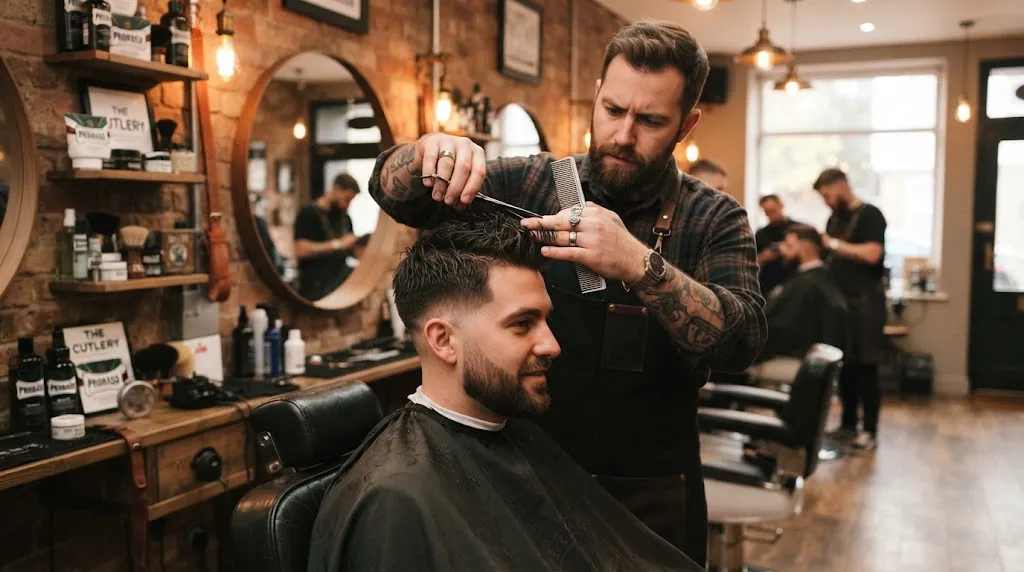
The balance rules for a heart-shaped face rely on managing three core levers: forehead coverage, side fullness, and top height. A heart shape features a wide forehead and cheekbones that taper down to a narrow, pointed chin, which means the overall goal is to draw attention away from the upper half of the head while adding visual weight near the jaw.
Forehead coverage works by breaking up the wide expanse of the hairline with a fringe, side part, or texture that softens the temples.
Regarding side fullness, sources often disagree on whether the sides should be kept short or left fuller. Excessively tight high skin fades tend to make the upper head look disproportionately wide by contrast, whereas leaving some weight on the sides helps balance the width of the cheekbones . A low taper or medium-length scissor crop typically provides the right middle ground without widening the top.
Top height requires careful management because vertical volume elongates the face and accentuates a pointy chin. Keeping the hair on top moderate or textured rather than standing in a tall pompadour prevents the head from looking top-heavy.
Best Short Hairstyles for Heart Shaped Face Male
Short cuts work for a heart-shaped face when the sides stay fuller than a tight fade, preventing the forehead from looking overly wide.
Textured Crop
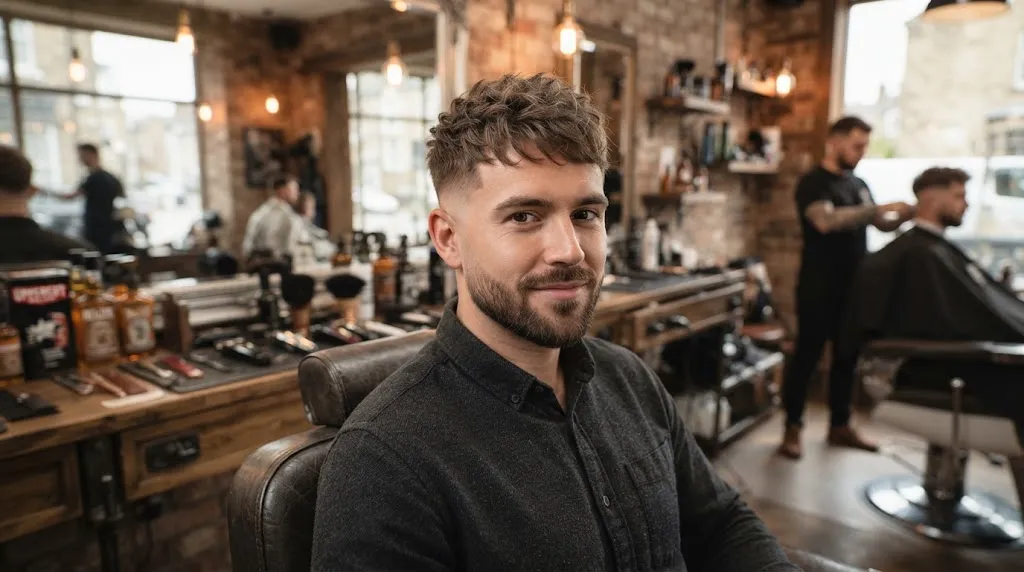
A choppy top combined with a forward fringe breaks up the width of the forehead without requiring heavy length. This cut suits short lengths, straight to wavy textures, and medium hair density .
Ask the barber for a choppy texture on top, a fringe pushed forward, and a low-to-mid taper rather than a harsh skin fade. To style at home, dry the hair completely, work in a small amount of matte clay, and push the fringe forward.
The fringe loses its clean shape first, typically requiring a trip to the barber every three to four weeks [VERIFY: 3-4 weeks]. Avoid skin-tight sides and flat finishes, as both accentuate the upper third of the head.
To gauge the right coverage, use the finger test: place two fingers horizontally across the forehead. The fringe should cover roughly the upper third to half of the forehead space, leaving enough brow visible to balance the narrow chin.
French Crop
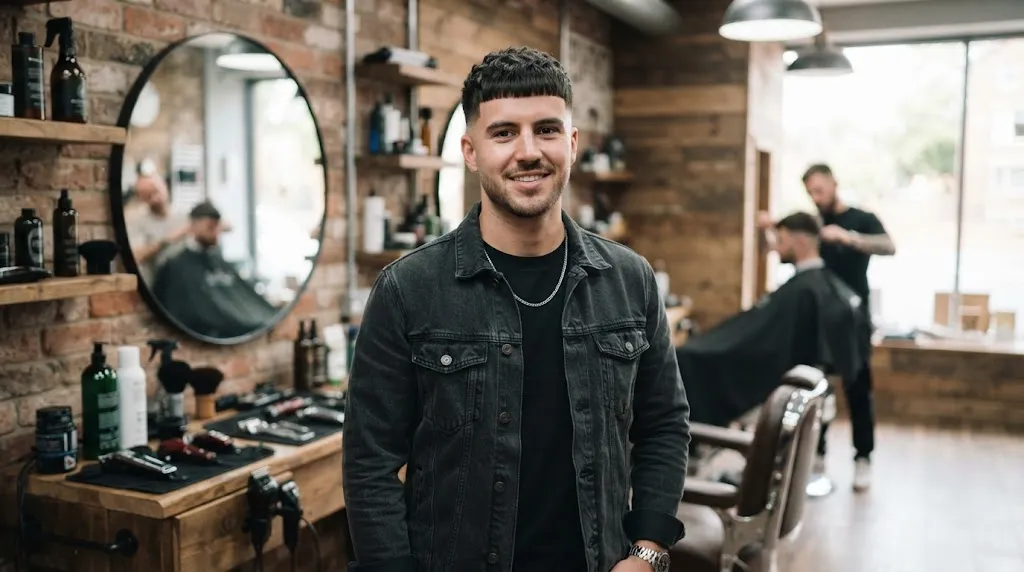
A short horizontal fringe visually cuts forehead height by placing a sharp, clean horizontal line right across the upper brow. This style suits short straight hair with a prominent forehead prominent forehead.
Request a scissor-cut texture on top, specify the desired fringe length directly to the barber, and ask for a low fade instead of a harsh clipper finish.
The precise, blunt fringe line grows out and loses definition within a few weeks. requiring minor cleanup. Avoid a heavy, perfectly flat, blunt fringe, which can make the upper head look boxy.
Unlike the Textured Crop, which relies on a broken, piece-y finish to soften the brow, the French Crop uses a sharper line that works best on a moderately high forehead rather than an extremely wide hairline.
Crew Cut with Low Taper
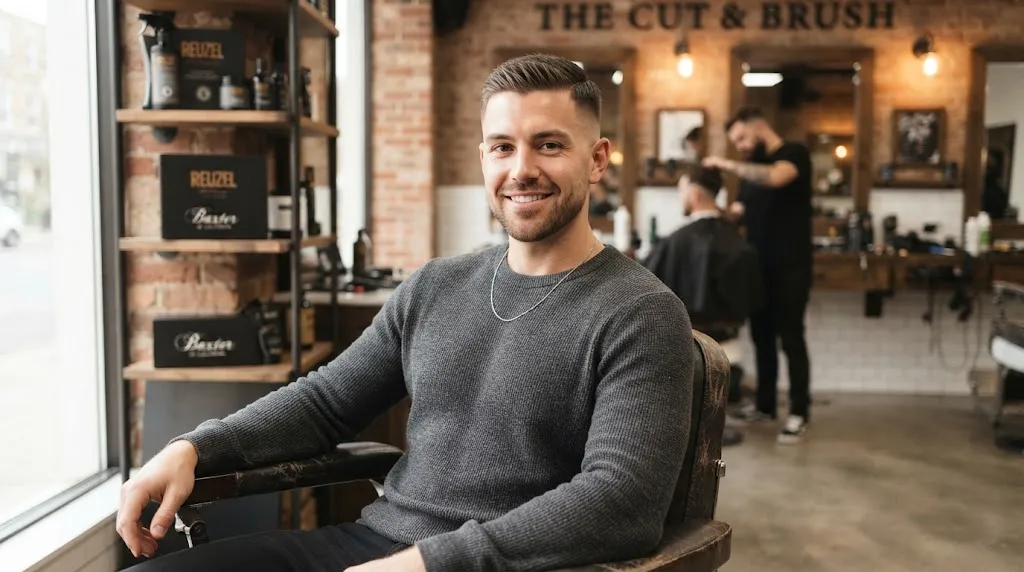
A crew cut provides a low-effort short option that keeps the sides fuller than a traditional fade, balancing the upper and lower face. This style suits fine hair and busy routines fine hair.
Ask the barber for a taper rather than a fade, and request a slight side sweep on top instead of leaving the crown completely flat.
Maintenance requires a trim every four weeks [VERIFY: 4 weeks] to keep the taper neat. Avoid a high fade or skin-tight sides, which pull focus straight back to the wide brow.
For quick variations, a Butch Cut works if the head shape is even and you prefer minimal morning styling, while an Ivy League Cut provides slightly more length on top for men who want a subtle side part.
Short Quiff with Taper
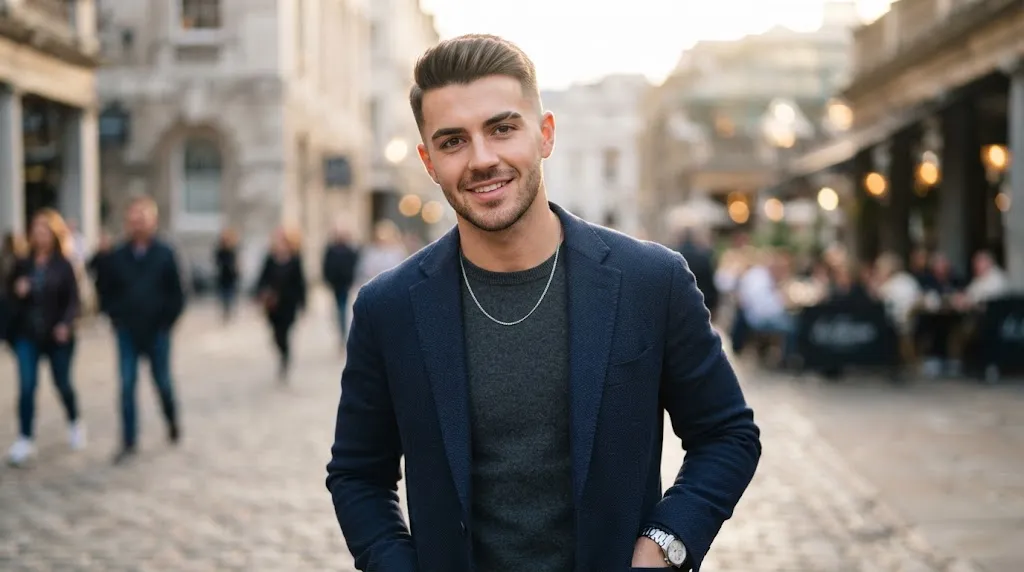
A moderate forward lift adds top volume without overly elongating the face. This style works best for medium to thick hair types.
Ensure you keep a minimum length at the front for lift, ask for a taper instead of a skin fade, and blow-dry the hair upward and slightly back.
As the hair grows, the quiff loses its hold and the sides begin to flare, signaling the need for a trim every three to five weeks 3-5 weeks. Avoid a tall, rounded front, which adds unnecessary height and widens the upper forehead line further.
To check for excess height, view your profile in the mirror: the lift at the front should not exceed the width of your cheekbones.
Short Faux Hawk
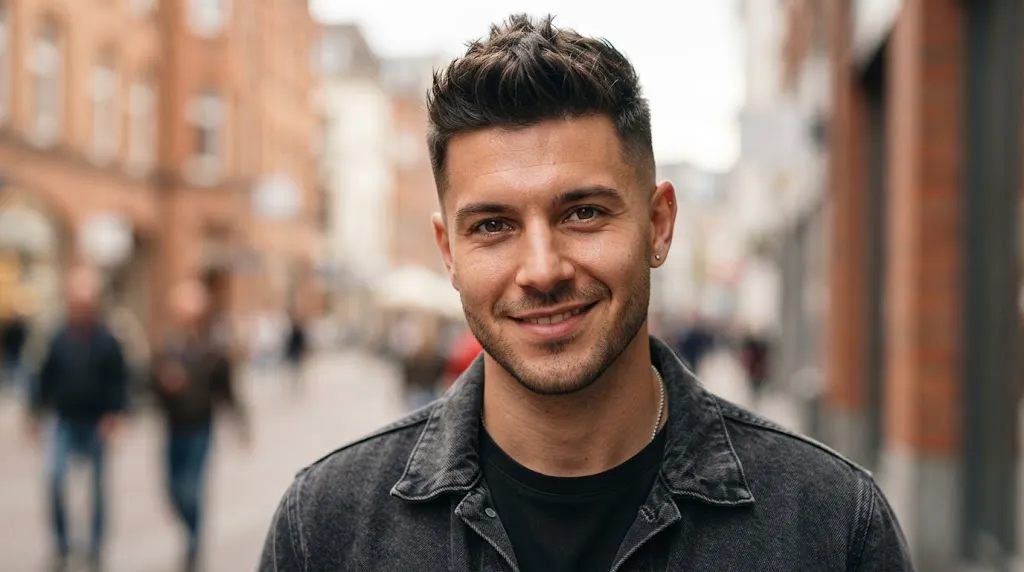
Centre volume pulls the eye upward rather than across the wide expanse of the forehead. This style suits thick, dense hair.
Ask for a mid fade or taper, a controlled centre strip width, and plenty of soft texture on top.
The sides lose definition quickly, needing a cleanup every two to three weeks . Avoid a stiff, spiky finish paired with a high skin fade, as sharp spikes create an inverted triangle effect that emphasizes a narrow chin.
A soft, textured version diffuses the lines around the crown, whereas a sharp, spiky version hardens the upper silhouette too much for this face shape.
Curly Top with Low Fade
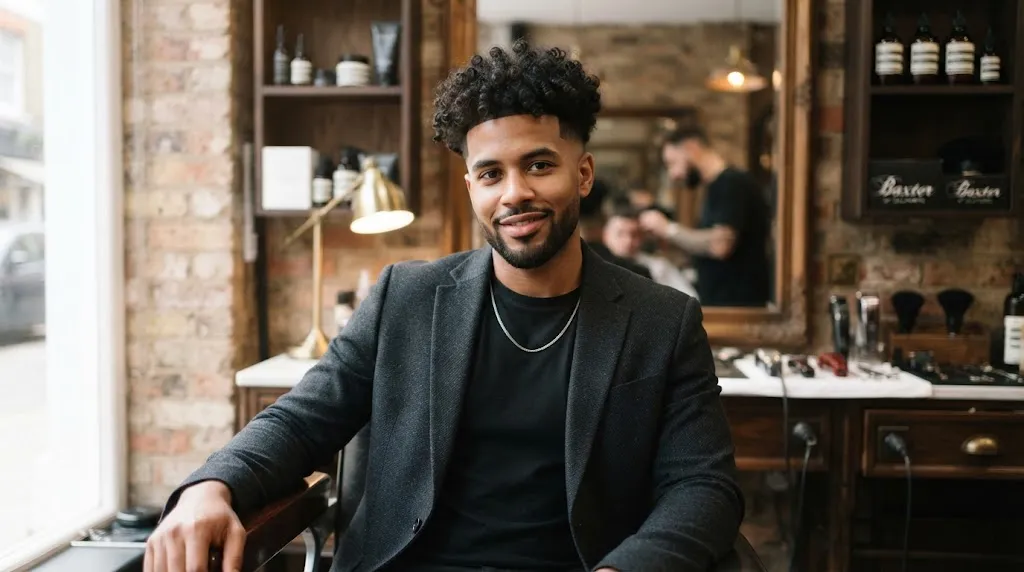
Natural curl volume adds width near the jaw and mid-face, while the low fade keeps the sides clean without looking hollow. This cut suits wavy to tight curls .
Ask for a low fade with blended sides, apply a leave-in conditioner to damp hair, and either diffuse or air-dry to lock in natural shape.
Curl definition depends heavily on your daily wash and moisture routine, with barber refreshes needed every four to six weeks. Avoid a very high top paired with tight skin sides.
For shorter variants, Short Curls work well if the top length is kept proportional to the curl pattern, using a general rule of thumb where tighter coils need less height than looser waves.
Best Medium Length Hairstyles for Heart Shaped Face Male
Say you want a cut that balances a wide forehead and a narrow chin without losing natural movement. Medium-length options give you more medium cuts to work with since the extra length lets you adjust volume where the face needs it most.
Side-Swept Fringe
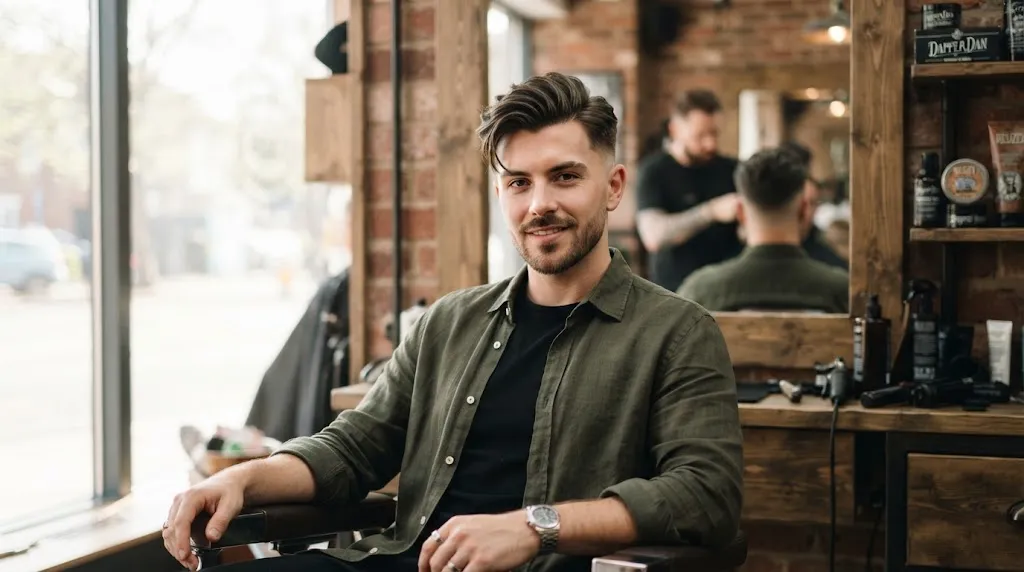
The diagonal sweep breaks the forehead’s width and moves attention to the eyes. This style tends to work well on straight, wavy, or fine hair.
To get it, grow the front out, dry the hair in one direction, and finish with a light-hold product. The sweep direction usually fades first, so you may need to reset it through the day. Avoid a heavy blunt fringe, which can make the forehead look wider by drawing a hard horizontal line.
Check your natural growth pattern to pick which side to sweep to by following the hairline direction. For similar options, a Side Part Fringe offers a structured alternative, while a Long Fringe lets the hair fall past the brow line for a softer frame.
Classic Side Part
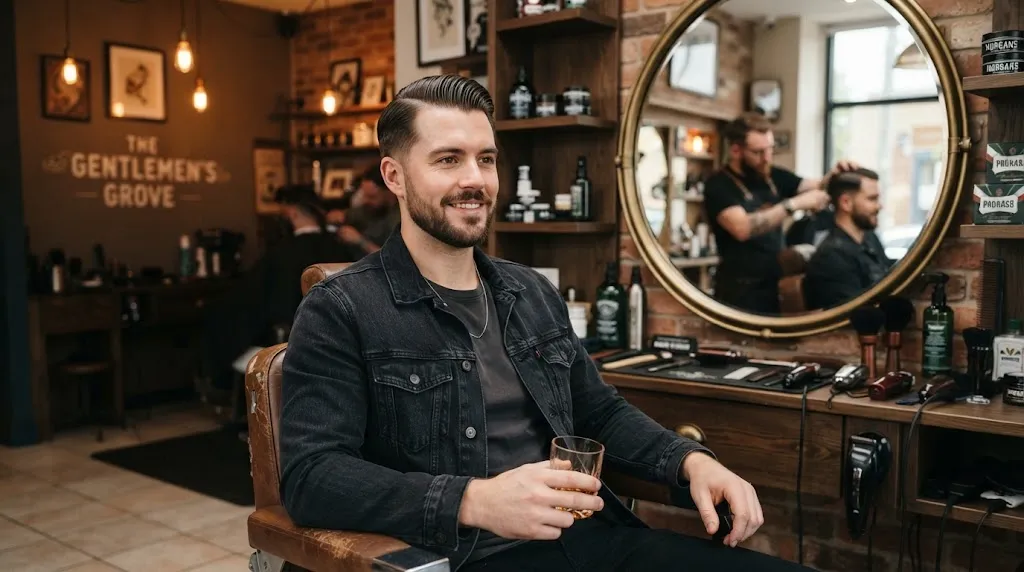
Asymmetry shifts attention away from the full forehead width. This look is typically suited for formal use and works on straight to wavy hair.
Ask your barber for a natural soft part with medium length and a matte finish. Matte beats glossy on this face shape because gloss catches the light and emphasizes the sharp angles of the upper face, whereas matte absorbs light and softens the overall silhouette. Expect to return for a trim on a barber-confirmed interval. Avoid razor-hard part lines and high-gloss finishes. A Comb Over acts as a clean variation if you want slightly more coverage across the top.
Curtain Hairstyle
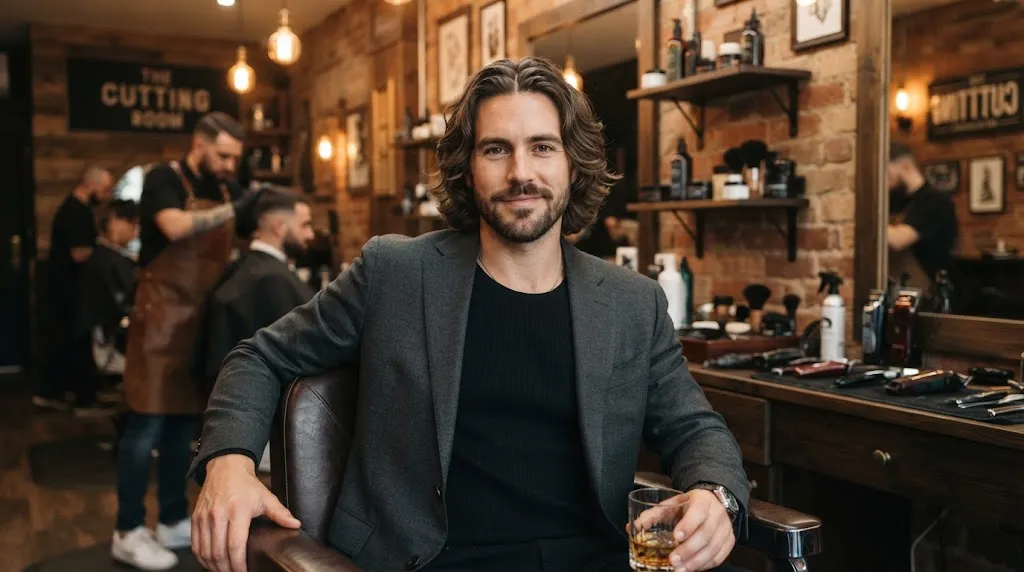
Curtain hair frames the forehead from both sides at once, balancing out the width near the temples. You might also see this family of cuts searched as curtain bangs. It suits medium straight or wavy hair.
To style it, create an off-centre part, let the hair dry naturally, and skip heavy hold products that flatten the roots. The grow-out phase tends to be forgiving, making maintenance straightforward. Avoid a very short length paired with a centre part, which can expose too much of the upper forehead. If you have a widow’s peak, let the hair fall naturally around the point rather than forcing a straight part, as the natural growth pattern helps break up the symmetry.
Medium Layers

Layers add jaw-level width without piling volume on top. This approach works best for wavy and thick hair.
Ask your barber for layers throughout the cut and a texturising product to keep the ends light, ensuring there is no blunt line at the chin. The shape is forgiving and generally allows for longer gaps between cuts [verify]. Avoid a blunt cut ending right at chin level, which accentuates a narrow jaw. If your hair is fine, try a root-lift spray at the crown to add subtle volume without widening the top. A Medium-Length Textured Cut or shaggy layers work well as similar variations that keep the ends soft and unstructured.
Medium-Length Waves

A natural wave gives width and breaks up the forehead without requiring heavy styling effort. This style suits naturally wavy hair.
To get the look, apply sea salt spray to damp hair, then air dry or use a diffuser. For guidance on building the texture, see how to get wavy hair. Hold time depends entirely on your product routine. Avoid over-applying products that weigh waves down and flatten the sides. If your hair is straight, you can approximate the look by using a curling wand on random sections and setting them with a light sea salt spray.
Textured Quiff
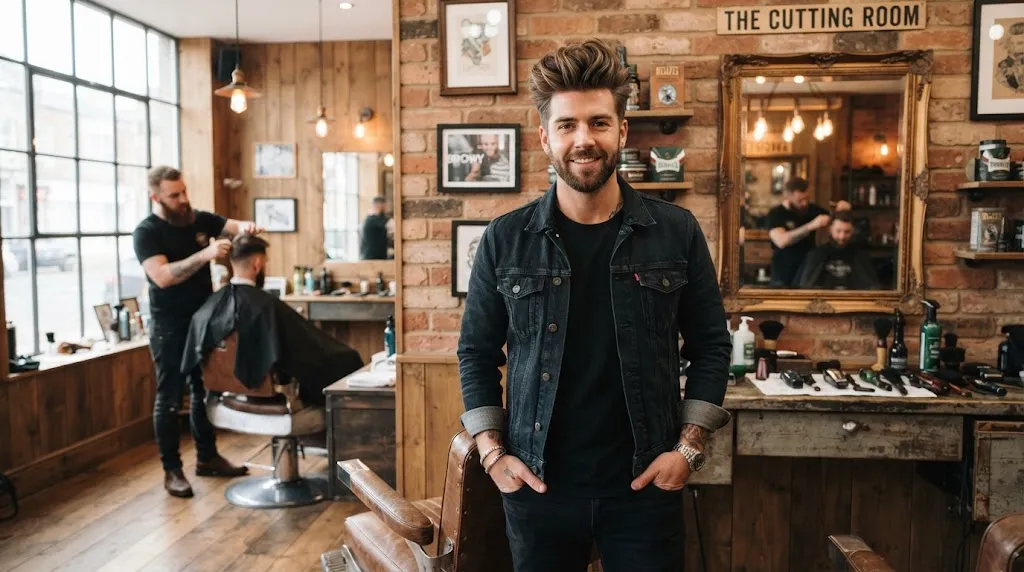
Controlled height with texture and tapered sides keeps the forehead from looking larger. This cut is suited for medium to thick, wavy hair.
Ask your barber for tapered sides and use a matte clay to define the texture on top. Keep to a barber-confirmed maintenance interval to maintain the shape. Avoid tall, sharp quiffs that stretch the face upward. Keep the height moderate as a general rule—aim for a few inches at most. A Classic Quiff provides a cleaner shape, while a Long Quiff offers a more relaxed, extended top.
Messy Quiff

A relaxed, asymmetric finish breaks the forehead line while keeping height moderate. This style suits medium-density hair well.
To style it, towel-dry the hair, work in a matte clay, and finger-separate the sections without using a comb. It grows out more gracefully than a structured quiff because the loose finish hides minor length unevenness. Avoid stiff, over-defined styling. Unlike a structured quiff, a Messy Quiff relies on undone, natural separation rather than defined product clumps.
Low Fade with Messy Top

A low fade keeps the sides fuller while a loose top softens the forehead. This cut works best for medium-density hair.
Ask your barber for a fade set just above the ear, paired with a loose textured top and a matte finish. Low fades grow out slowly, making intervals between barber visits manageable. Avoid raising the fade higher, as skin-tight high fades expose the temples and widen the upper face. Pairing this cut with light stubble helps add visual weight back to the jaw and chin.
Fringe with Tapered Sides
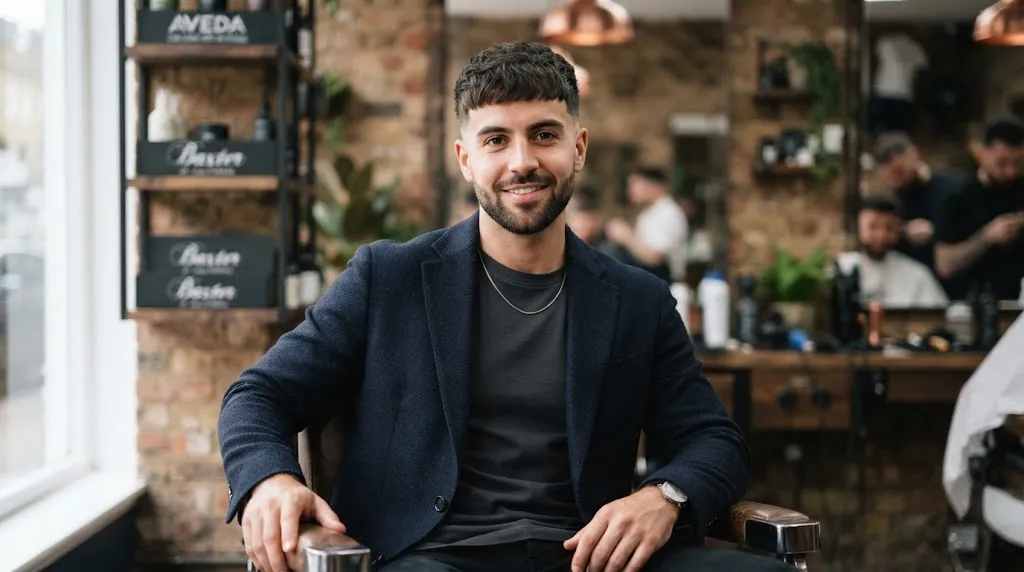
A soft forward fringe shortens the forehead while a side taper keeps jaw-level fullness. This style suits straight hair and a high forehead.
Ask your barber for a fringe that sits longer than a French Crop, pushed forward, and specify a taper rather than a fade on the sides. The fringe needs regular trims to keep it out of the eyes. Avoid a fringe cut too blunt, which creates a harsh line. Adjusting the fringe length changes your forehead coverage: letting it graze the eyebrows hides the upper face entirely, while wearing it slightly above the brow leaves a bit more skin exposed.
Best Long Hairstyles for Heart Shaped Face Male
Long hair doesn’t automatically fail on a heart face, provided the cut accounts for a wide forehead and a narrower chin rather than hanging lifelessly around the jaw. Adding more long wavy cuts to the mix reveals that length can actually balance proportions when shaped correctly.
Long Layers / Bro Flow

Long layers distribute weight right at jaw and chin height, which visually widens the lower half of the face to match a broader brow. This cut tends to work best for wavy hair . Ask the barber for long, graduated layers throughout the mid-lengths and ends to remove bulk near the temples, and use a lightweight styling cream at home to keep the flow natural.
Work a dime-sized amount of texturising cream through damp hair.
Comb hair backward away from the face while blow-drying on medium heat.
Use fingers to tousle the ends once dry for a relaxed finish.
Expect long gaps between cuts since this style relies on continuous growth, though occasional dustings of the ends keep split ends at bay. Avoid flat, blunt, layer-free length, which clings to the cheeks and emphasizes the point of the chin. Managing the awkward grow-out phase involves tucking the sides behind the ears and using a matte pomade to control stray hairs around the temples. For another option in this category, look at the classic men’s flow hairstyle.
Wolf Cut
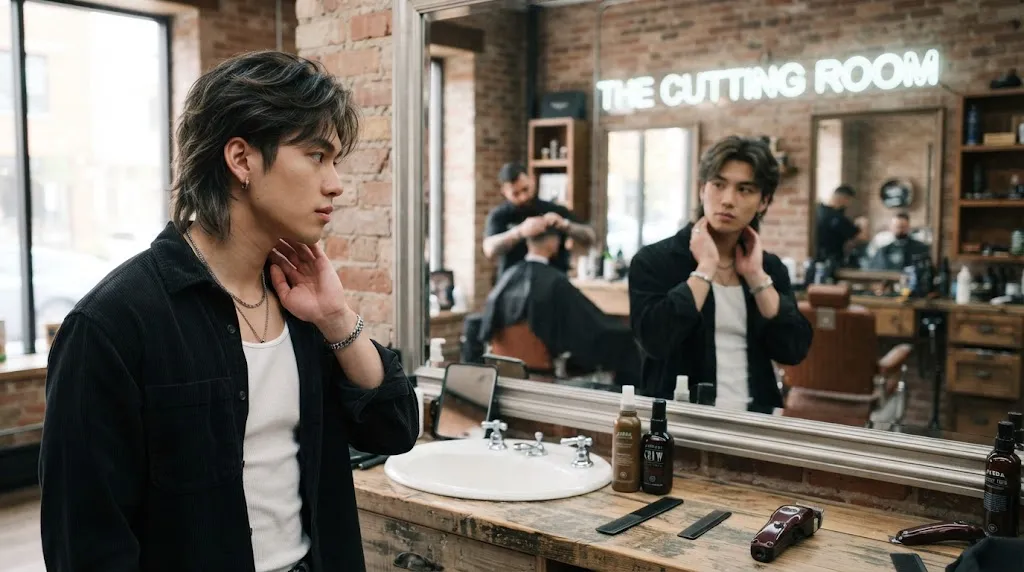
A layered top combined with a longer back frames a heart-shaped face from below, softening a prominent forehead without shrinking the overall silhouette. This cut suits wavy and curly hair naturally, while straight hair usually requires extra texturising products . Request a heavily layered crown, shorter textured sides, and longer wispy layers falling past the collar.
Hold times depend on individual growth rates, though most versions require a reshape every six to eight weeks . Avoid blunt lines anywhere on the head, as rigid angles clash with the soft texture needed to balance facial proportions. To adapt this style for straight, thick hair, ask the stylist to point-cut the ends extensively to prevent the sides from sticking straight out.
Modern Mullet

Keeping less bulk on top while maintaining length behind draws the eye away from a wide forehead and creates downward vertical lines. This approach tends to work best for wavy textures [verify]. Tell the barber to give you a low taper rather than a skin fade to keep width around the sides, leaving the top textured and the back distinctly longer.
The shape is often lost within four to six weeks as the back grows faster than the top. Avoid a bulky top, which adds unwanted height and exaggerates the triangular shape of a heart face. Wearing this cut in a workplace usually requires applying a medium-hold matte paste to keep the top neat and flattening the sides slightly with a comb.
Man Bun / Top Knot

Gathered volume sitting above the face draws the eye upward, shifting focus away from a narrow chin and widening jawline. This style suits long straight or wavy hair. Ensure you have at least six to eight inches of top length to tie comfortably, and ask for tapered sides rather than a complete skin shave to maintain softness near the temples.
The sides need regular tidying every three weeks to keep the contrast clean. Avoid tying the hair back with excessive tension, which stresses a receding hairline and pulls harshly at the temples. For thinner hairlines, leave a few strands loose around the front to frame the forehead rather than pulling everything back tightly.
Long Hair Side Part
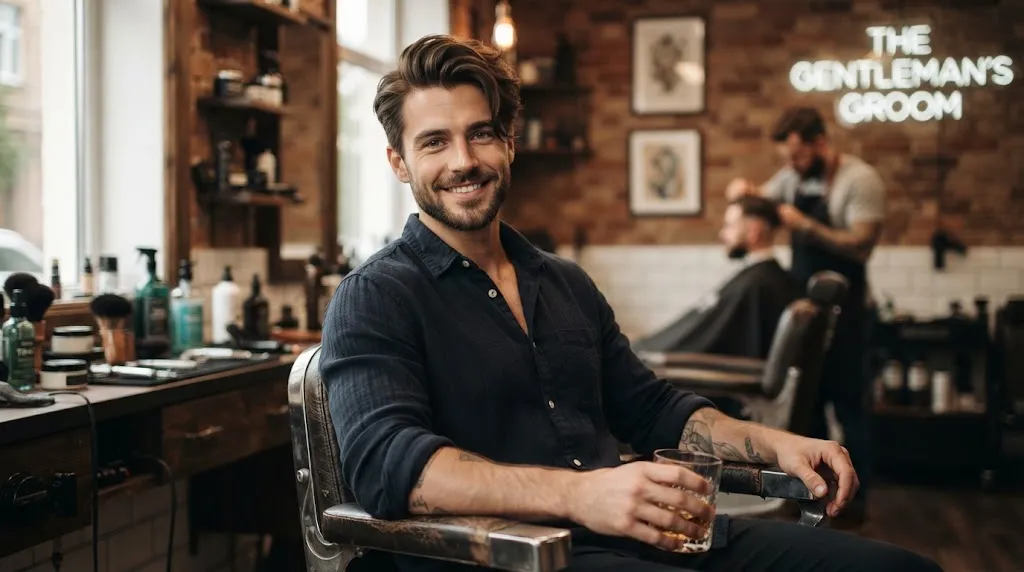
A deep side part adds diagonal movement across the forehead, breaking up the width of the brow line and balancing the lower face. This works well for long straight or wavy hair. Request a side part that aligns with the outer arch of your eyebrow, then blow-dry the hair across to the side and finish with a matte styling clay.
Hold time depends entirely on scalp and hair care routines, though a trim every eight weeks keeps the ends healthy. Avoid dry, product-free hair that hangs flat against the face, as it highlights the narrowness of the chin. For casual styling, let the hair fall naturally with a bit of texture; for formal occasions, comb it smoothly with a light-hold cream. Swept Back Long works as a variation here by pulling the sides straight back while maintaining a slightly looser top volume to keep the forehead from looking overly exposed.
Hairstyles That Work Only Under Certain Conditions
Buzz Cut with Beard
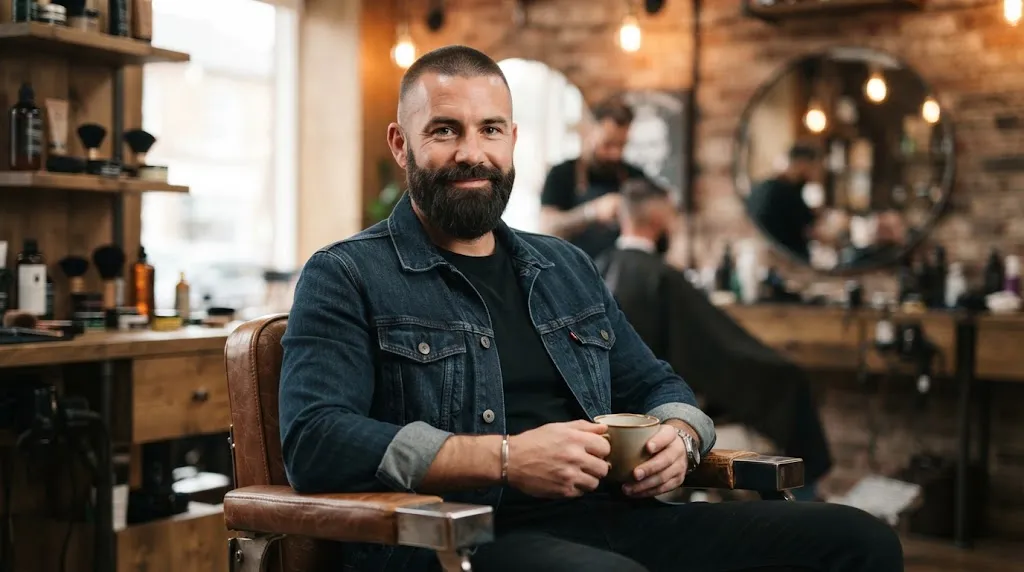
A buzz cut on a heart shaped face only works when paired with facial hair, because the beard adds essential visual weight to a narrow chin. Without facial hair, a very short crop exposes the width of the forehead and accentuates a pointed jaw, throwing off the natural balance of the face.
This option suits men who want a low-maintenance short haircut and are willing to maintain facial hair. To get this cut, ask the barber for an even guard length on top and a low fade or taper on the sides, making sure to leave the jawline and chin covered by a shaped beard. Apply a small amount of beard oil daily to keep the facial hair neat.
The hold time is short, meaning it requires a refresh cycle every two to three weeks to keep the edges sharp. Avoid wearing a clean-shaven buzz cut unless the goal is to highlight the forehead and narrow chin. Stubble length changes the balance significantly, as heavier stubble broadens the lower face, while a completely Shaved Head creates a bold look that relies entirely on head shape rather than hair styling to balance the proportions. For more details on this look, see buzz cut with beard for Indian men.
Slick Back
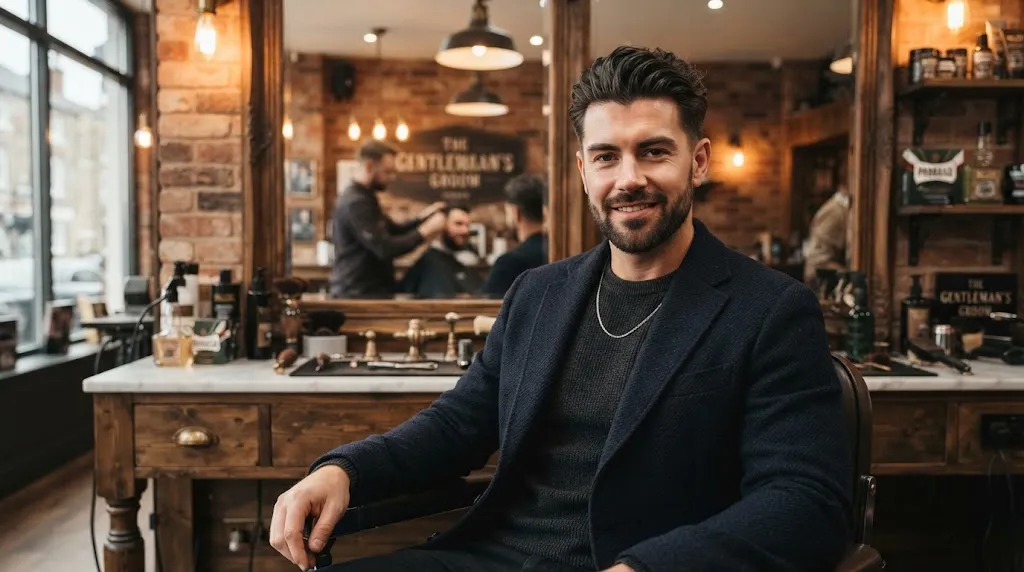
A slick back works on a heart shaped face only when the hair has natural texture and the sides are left relatively full, preventing the top from looking too heavy.
This style is best for thick hair paired with tapered sides. Ask the barber for a low taper on the sides while keeping the top long enough to sweep backward, and request a point-cut finish to remove bulk. At home, work a matte styling clay through damp hair, comb it straight back, and use fingers to break up the surface for a non-flat finish.
The hold time depends on the product used, and product build-up requires regular washing to avoid greasy-looking hair. Avoid a tight, shiny finish combined with skin-tight sides, which widens the upper head and narrows the lower jaw. To determine if this style works, apply a three-point test: check that the sides have fullness, the finish is matte rather than glossy, and the fringe is not pulled entirely flat against the scalp. Explore related ideas through swept-back styles.
Pompadour
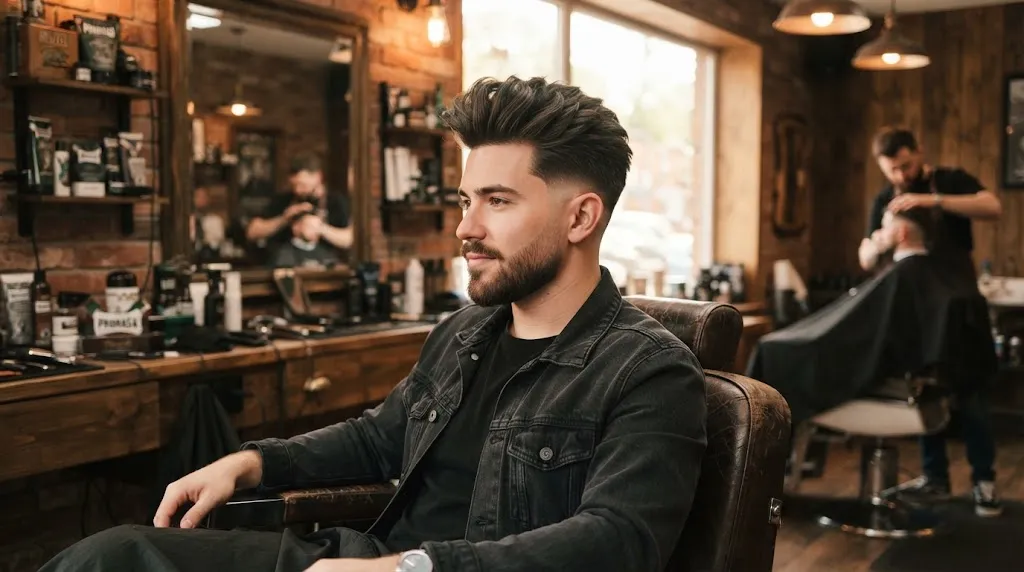
Height at the front of a pompadour only helps a heart shaped face when the sides stay full enough to balance the upper head.
This cut suits thick hair types that hold volume well. Tell the barber to leave length at the front, build moderate height that angles backward, and keep the sides at a low taper rather than a high skin fade. Blow-dry the hair upward and backward using a round brush, then rub a matte pomade between the palms and work it through the hair to set the shape.
This style requires daily styling time to maintain the front volume. Avoid making the pompadour too tall or too round at the front, as excessive height stretches the face vertically and emphasizes a wide forehead. The classic version features a high-shine, structured finish, whereas the modern version relies on a softer, textured look with less product weight. Learn more about variations via short pompadour.
Middle Part vs Side Part: Which Hair Part Suits a Heart Shaped Face?
A side part generally flatters a heart-shaped face better than a middle part because it breaks up the symmetry and visually narrows a wide forehead, whereas a middle part requires medium length hair to drape naturally across the temples without drawing excess attention to the upper face. Choosing between the two comes down to hair length and daily styling preference. A side part creates an asymmetrical line that balances the narrow chin, making it a reliable default for short to medium crops.
To achieve a middle part, hair needs to reach at least chin length so the sections fall past the cheekbones rather than bunching outward and widening the upper head. Request a natural split that follows the bone structure rather than a rigid line down the center. Let the hair air-dry or blow-dry it backward with minimal tension to maintain movement.
Grow-out is straightforward since the part naturally softens as length increases. Avoid a center part on very short hair, which exposes the full width of the forehead and exaggerates the heart shape. This option differs from a curtain hairstyle because a true middle part divides the hair symmetrically from front to back, whereas curtains focus specifically on framing the eyes and cheekbones with longer, swept-forward layers.
Undercut
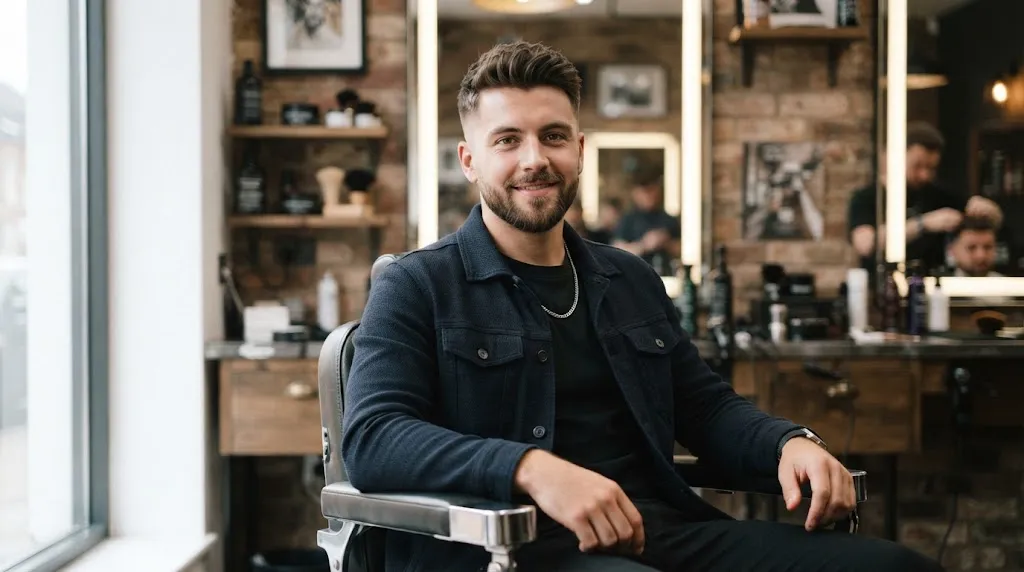
An undercut works on a heart-shaped face when the sides are kept low and blended rather than taken too high up the head, which prevents the upper temples from looking excessively wide. This cut tends to pair well with men who wear a beard, as the facial hair adds the necessary visual weight to balance a narrow chin .
Ask the barber for a low undercut with a soft fade that transitions smoothly into the longer hair on top, avoiding a harsh line of demarcation. Maintain the style by trimming the sides every two to four weeks to keep the contrast clean.
Avoid high, disconnected sides that expose the widest part of the skull, as this makes the forehead appear broader and the chin sharper. A low undercut preserves enough weight at the sides to keep the head proportions balanced, whereas a high undercut accentuates the inverted triangle shape of the face.
Temple Fade with High Top
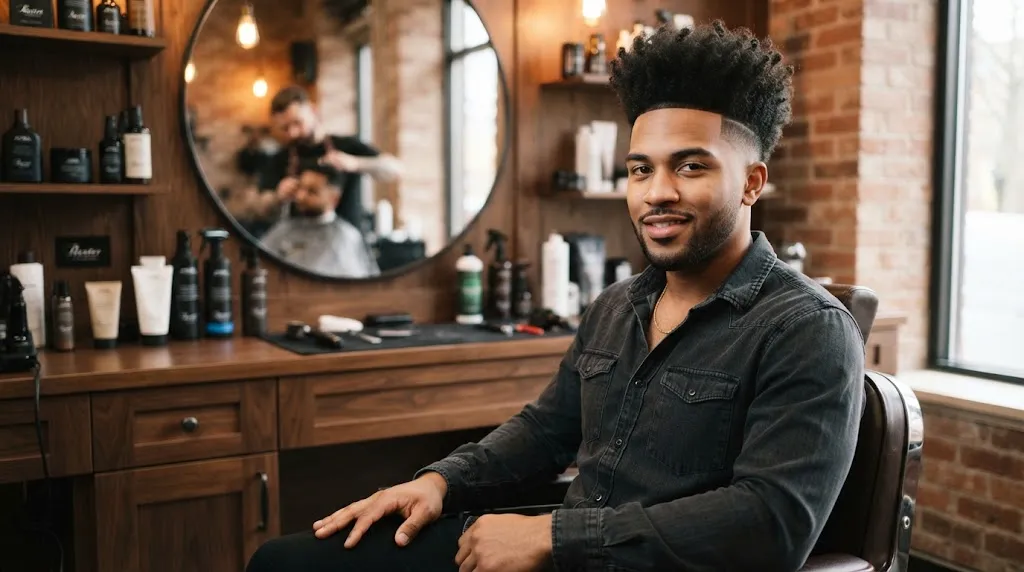
A temple fade with height on top suits a heart-shaped face only if the rest of the sides retain some fullness to offset the tight perimeter. This style is often effective for thick or curly hair textures that naturally hold volume without requiring heavy product .
Instruct the barber to fade only the immediate temple area and hairline, leaving the mid-sides and back with scissor-cut density. The temple lines tend to blur and lose their sharp definition within a few weeks, requiring regular touch-ups.
Avoid fading the entire side down to the skin, which strips away the width needed to balance a prominent forehead. For coily hair textures, keep the height on top moderate and let the natural curl pattern soften the transition at the temples.
Flat-Top
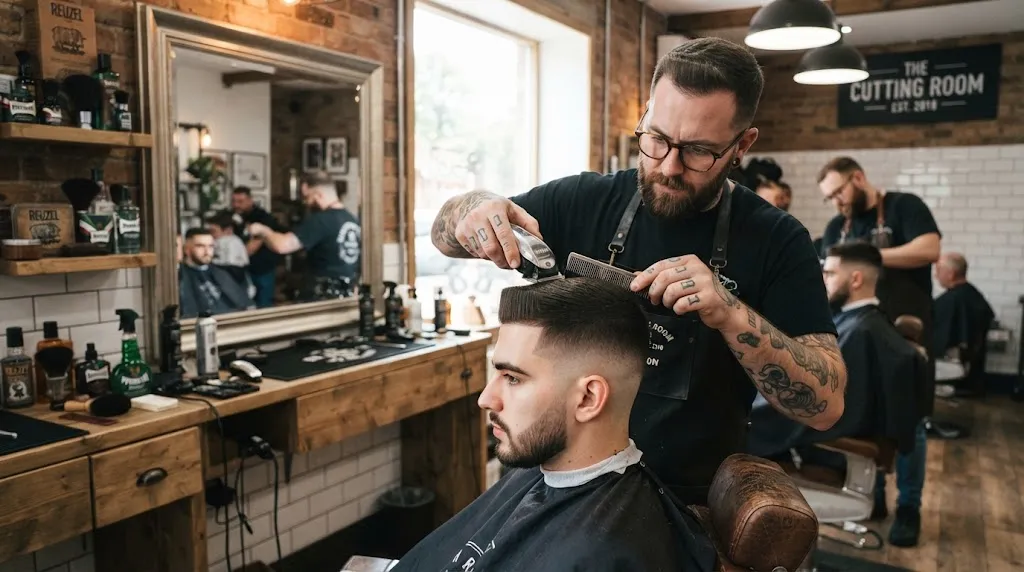
A flat-top controls the overall height of the haircut, but the traditionally short sides can expose a wide forehead and narrow chin if not tapered carefully. This cut provides a strong, structured look that tends to suit individuals with sharp facial features .
Ask the barber for a level top combined with tapered, scissor-cut sides rather than a skin-tight finish. The top requires frequent shaping to maintain its geometric precision.
Avoid skin-tight sides, which widen the visual impact of the upper forehead. A flat-top makes sense when paired with facial hair that softens the jawline, but it tends to fail when the sides are taken too short without any lower facial balance.
Spiky Haircut
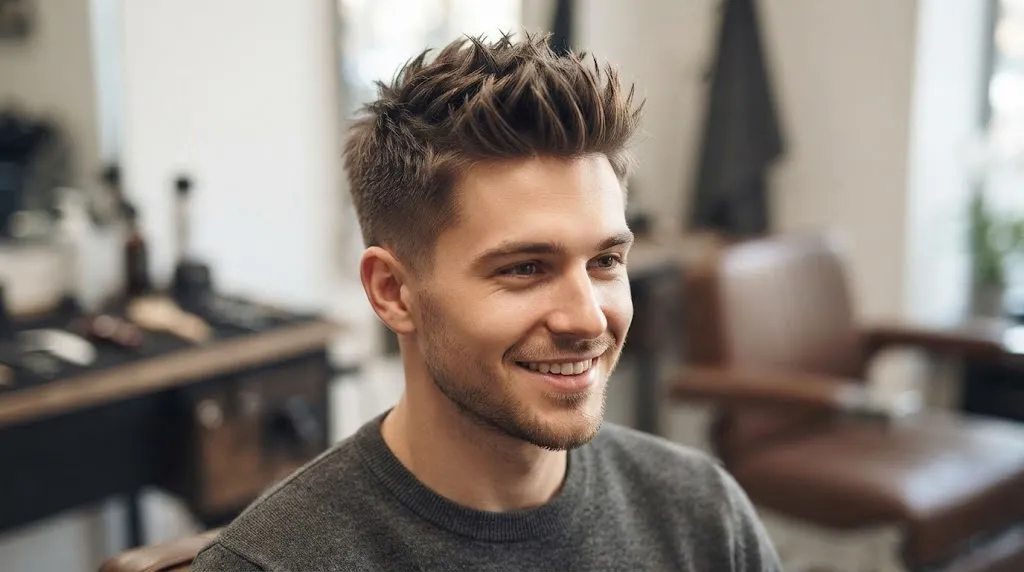
A spiky haircut works on a heart-shaped face only when the finish is soft and textured rather than stiff and vertical. This style suits shorter hair lengths and provides a casual, youthful look.
Ask the barber for short, tapered sides and enough length on top to work with. Rub a small amount of matte paste or clay between the palms, work it through damp hair, and push the strands in varied directions to create loose, piece-y texture.
Hold time and maintenance depend entirely on daily styling habits since fine or straight hair requires product to maintain lift. Avoid sharp, stiff spikes that draw the eye upward and emphasize a wide forehead. The finish matters more than the cut itself; a matte, textured surface diffuses light and softens the upper face, whereas glossy, rigid spikes magnify the sharp angles of a heart-shaped face.
Taper Fade vs Low Fade vs Skin Fade: Choosing Your Fade Height
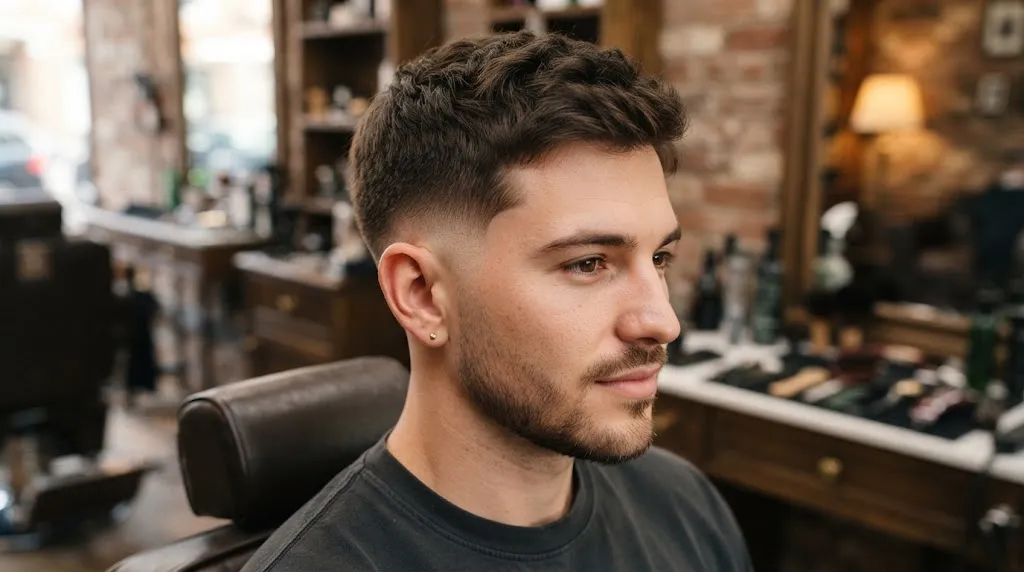
Choosing the right fade height for a heart shaped face comes down to balancing a wide forehead and a narrow chin without exposing too much width at the temples. A low taper or a low fade works as the safest default because it keeps enough weight at the sides to anchor the upper half of the head.
A low taper leaves the hair around the sideburns and neckline mostly natural while cleaning up the edges, which suits men who want minimal scalp exposure. A low fade drops just above the ear, offering a clean, structured finish that maintains side density. Skin fades and high fades remove weight high up on the sides, which can exaggerate the width of the forehead unless balanced by facial hair.
To get these results in the chair, give the barber specific instructions rather than relying on generic terms. Ask for a low taper by requesting that the sideburns and neckline fade out naturally while leaving the hair behind the ear intact. For a low fade, ask the barber to drop the fade line just above the ear and keep the lowest guard at a number two or higher unless a shorter finish is desired. For a high-and-tight, ask for the sides to be taken high up toward the crown while leaving length strictly on top.
Fade grow-out speed varies by height and skin contact. A skin fade usually requires a cleanup every two weeks to maintain the sharp contrast, while a low taper or low fade can stretch to three or four weeks before losing its shape.
Avoid high or skin fades when wearing a clean-shaven face, as the lack of side weight and facial hair leaves the upper head looking too heavy. Pair skin fades with stubble or a short beard to add visual width near the jaw and restore balance to the lower face.
Haircuts to Avoid with a Heart Shaped Face
Bowl Cut and Blunt Chin-Length Cuts
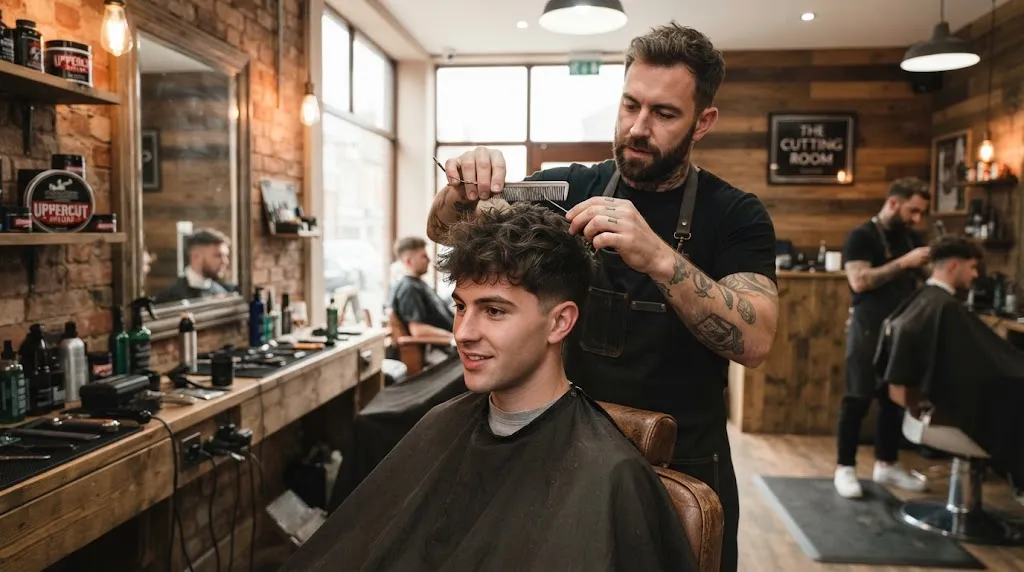
Bowl cuts and blunt chin-length cuts tend to fail because they work directly against the geometry of a heart-shaped face by adding bulk right at the widest part of the forehead while creating a harsh horizontal line that makes a narrow chin look even smaller. This shape draws the eye upward to the temples and leaves the lower half of the face looking disproportionately pointed. Choosing a cut with softer lines around the forehead and avoiding blunt edges near the jaw helps maintain better visual balance.
Mohawk and Very Angular Cuts
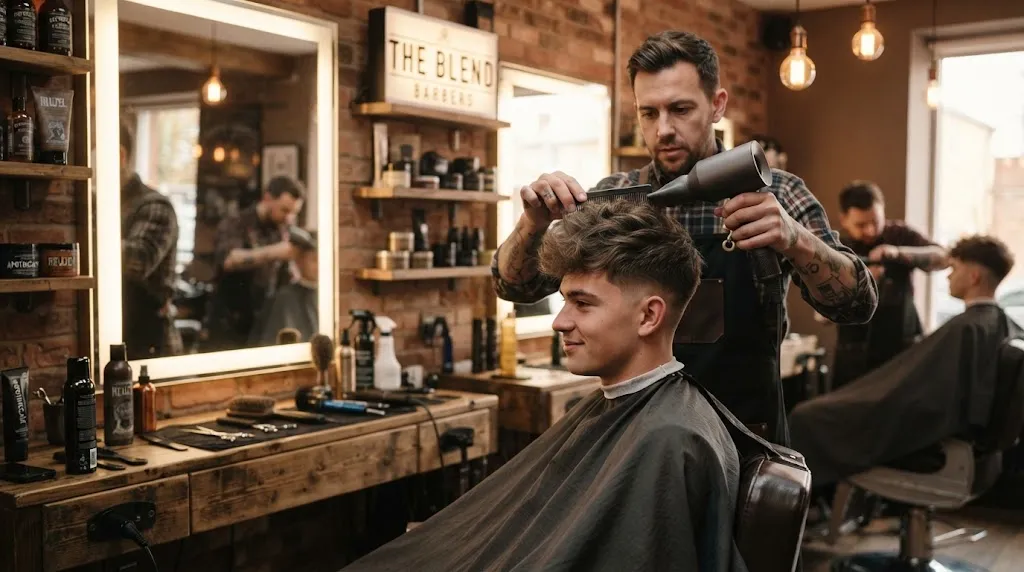
Mohawks and very angular cuts often amplify the natural imbalance of a wide forehead and a narrow chin by pulling attention straight up the center of the head and leaving the sides exposed. The extreme contrast of shaved or very short sides with a spiked top draws the eye to the widest points of the head while ignoring the lower jawline. Keeping the sides slightly fuller and avoiding extreme height on top tends to create a much more harmonious silhouette.
Long Hair with No Layers

Long hair with no layers tends to fall completely flat against the head, which fails to add any necessary visual weight near the narrow jaw and chin. Without texture or movement around the lower face, straight unlayered strands frame the wide forehead and cling to the cheeks, leaving the lower half of the face looking sparse. Adding soft layers or allowing for natural wave helps build fullness around the jawline rather than drawing all the focus downward in a straight, heavy drop.
Flat, Heavy Product Finishes
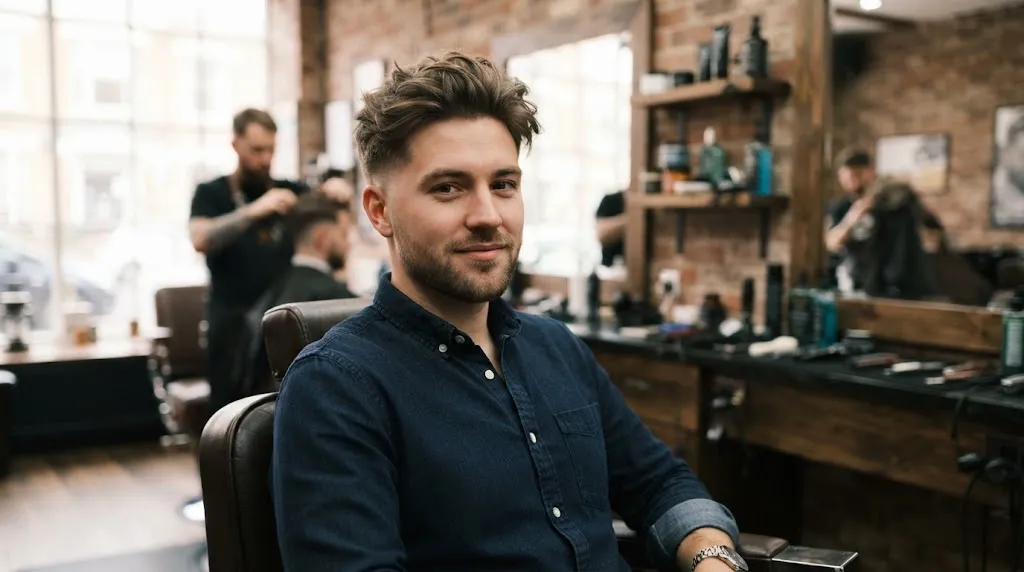
Flat, heavy product finishes remove the natural texture needed to soften a prominent forehead line. Slicking hair straight down or plastering it flat against the scalp exposes the temples and emphasizes the sharp taper toward the chin. Using a matte finish with light control instead of heavy gels helps create a softer, more diffused outline around the upper head.
Heart Shaped Face Hairstyles for Straight and Silky Hair
Silky, straight hair falls flat on a heart-shaped face unless it has internal texture to break up the weight. Fringes and directional movement work best because they pull attention across the forehead and balance the wide upper zone with the narrow jawline.
Heart Shaped Face Hairstyles for Wavy Hair

Wavy hair works well for a heart shaped face because natural movement fills out the narrow chin area while breaking up the width of the forehead.
The side-swept fringe tends to be one of the most reliable choices for this face shape. It sits across the forehead to minimize the width at the temples while letting natural waves add horizontal volume near the jawline. This cut suits medium-thick hair types with a natural wave pattern. Ask the barber for a low taper on the sides, leaving length through the top and front, and point-cutting to remove weight from the ends. To style, work a matte styling clay into damp hair, push the fringe across the forehead, and scrunch the top to encourage natural texture. Hold tends to last through the day with a light hairspray. Trims are typically needed every three to four weeks to keep the neckline clean. Avoid heavy pomades that weigh waves down flat against the scalp.
A textured quiff offers another strong direction for wavy hair, provided the sides are kept moderately full rather than shaved down to the skin. This style lifts hair away from the forehead, which balances the facial structure when paired with a light beard or stubble to add weight to the lower jaw. It suits hair with a medium wave length that holds shape easily. Tell the barber to maintain length on top, blend the sides with a medium-scissor crop, and leave enough bulk in the front to sweep upward and back. Blow-dry the hair upward using a diffuser attachment, then apply a fiber paste for hold. Maintenance involves a cleanup every four weeks. Avoid extreme skin fades on the sides, as they exaggerate the width of the forehead and make the chin appear narrower.
Heart Shaped Face Hairstyles for Indian Men with Thick, Coarse Hair
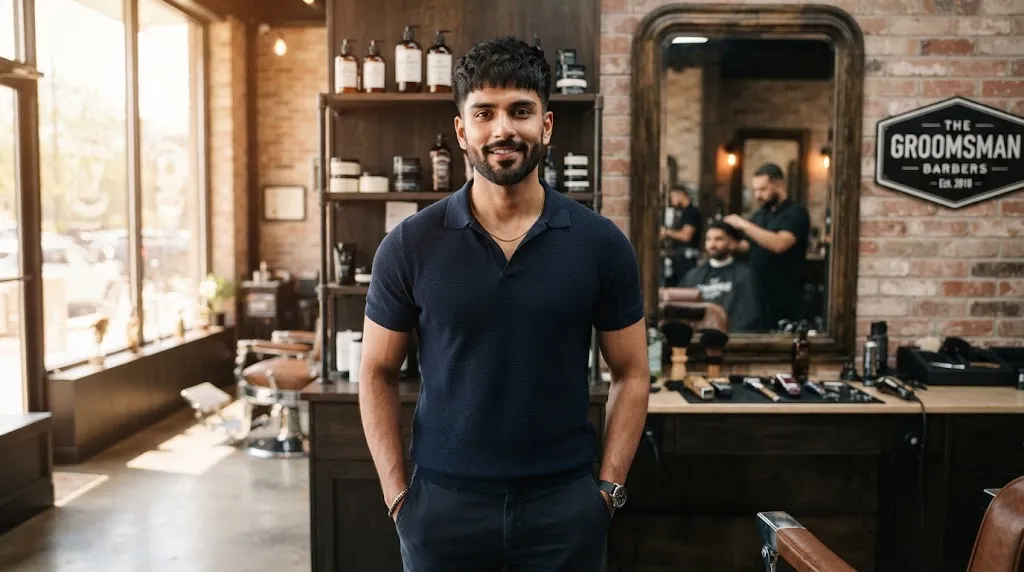
Thick, coarse hair paired with a heart-shaped face requires weight management to prevent the sides from expanding like a helmet while keeping enough volume near the jaw to balance a sharp chin and wide forehead. Heavy, dense hair naturally resists tight fading and tends to puff outward if cut too short on the sides, which exaggerates the top-heavy proportions of a wide brow.
Managing high-density hair starts with internal weight reduction rather than simply taking length off the top. Asking a barber for point-cutting, texturizing shears through the interior, and a square silhouette prevents the hair from sitting like a heavy block above the temples.
Favour styles that rely on natural texture, such as a textured crop, a side-swept fringe, or a medium-length flow that uses the hair’s natural weight downward. Avoid severe skin fades or flat, ultra-short buzz cuts unless paired with a full beard, because a high-contrast fade combined with thick hair accentuates the width of the forehead and leaves the narrow chin looking isolated.
When communicating with the barber, request a low taper rather than a high fade to maintain fullness around the middle of the head, and ask to debulk the density behind the ears. At home, apply a matte styling clay or styling cream to damp hair while blow-drying it forward or downward to control coarse volume. Avoid high-shine pomades that flatten thick hair into a glossy, rigid shape, as movement and separation help soften the facial angles of a heart-shaped face. Trims are typically needed every to keep the sides from flaring outward as the density grows back.
Beard and Stubble Pairings for a Heart Shaped Face
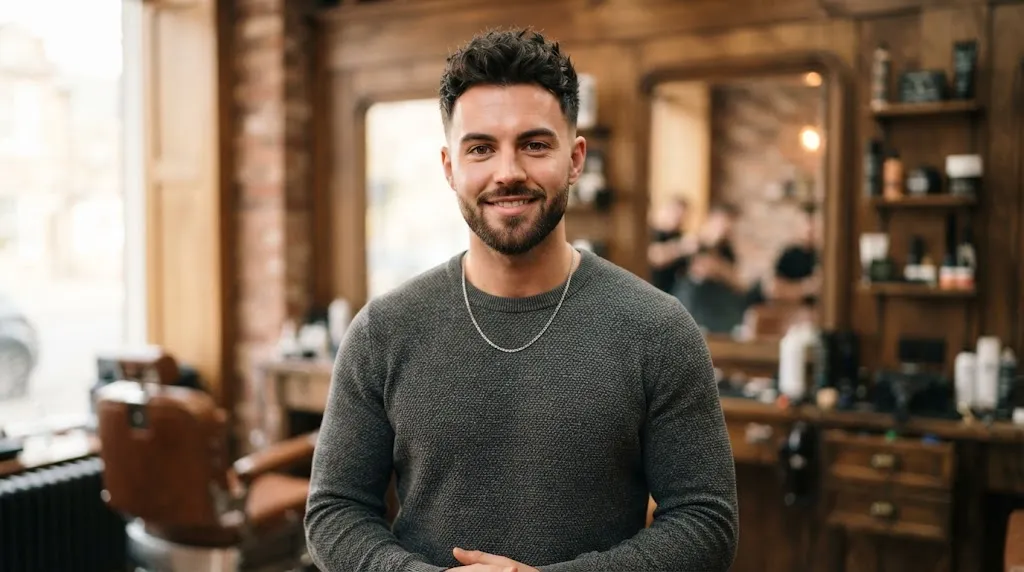
Facial hair works as structural support for a heart-shaped face by adding visual weight to the narrow chin and balancing a wide forehead. Stubble provides a subtle shadow that widens the lower third of the face without adding heavy bulk, which suits men who want minimal upkeep. A short, full beard fills out a pointed chin when kept rounded rather than squared off, as rounded lines soften sharp angles. An extended goatee also works when it connects the mustache to chin hair, but it requires careful shaping to keep the sides from hugging too close to the jaw, which can make the chin look narrower. Avoid narrow goatees and pointed soul patches because vertical lines draw the eye downward and emphasize the sharp point of the chin rather than widening it.
When pairing facial hair with longer cuts, a managed beard prevents the overall silhouette from looking top-heavy Link: long hair and beard styles. Trimming frequency depends on growth speed, though maintaining even stubble usually requires attention every few days, while a short beard typically needs line clean-ups once a week.
Real Problems Men with Heart Shaped Faces Run Into

Haircuts for heart-shaped faces often run into trouble because standard styling advice assumes an oval or square structure. A heart-shaped face features a pronounced, wide forehead coupled with a sharply tapering, narrow chin and jawline. Many common cuts throw this geometry out of balance by adding bulk to the temples or tightening the sides too aggressively, which makes the upper head look even wider while leaving the chin completely exposed.
Choosing a cut that works relies on redistributing visual weight. Keeping the sides with a low taper or scissor-crop instead of a skin-tight fade prevents the upper half from appearing top-heavy. Introducing texture on top breaks up the hard line of the forehead, while keeping the fringe slightly forward or swept across softens the temples. When a cut fails, the culprit is usually excessive height combined with zero bulk near the jaw, drawing immediate attention to a narrow chin. Pairing the haircut with light stubble or a short beard changes the dynamic entirely by filling out the lower third of the face, turning a tricky proportion into a balanced frame.
Quick Answers to Common Questions
Is a Heart Shaped Face Attractive in Men?
Attractiveness is subjective, so no face shape comes with a fixed verdict. A heart shaped face typically has a broad forehead and a narrower chin, and the right haircut and a bit of chin-area grooming simply keep those proportions balanced instead of top-heavy.
Which Face Shape Is Most Attractive?
There isn't a single answer. Taste, grooming, expression and overall proportions shape how a face is perceived far more than its shape label does. A cut that suits your forehead, hairline and hair type will usually do more for you than chasing a "best" shape.
Does Shorter Hair Make You Look Younger or Older?
Length alone doesn't decide it. The cut, your hairline, hair density and how you style it matter more. A short cut with some texture and movement tends to look fresh, while a very flat or tightly cropped one can look harsher, and on a heart shaped face, skin-tight sides also expose the forehead. For ideas by age group, see our guide to hairstyles for older men.
Related Reads
Browse More Men's Hairstyles
- Hub Men's Hairstyles Browse every men's hairstyle category in one place. Explore the hub
- Gallery Hairstyle Photo Gallery See more hairstyle photos for visual ideas before your next haircut. View the photos
Guides to Keep Reading
- Guide Medium Length Hairstyles for Men More medium-length cuts to compare with the styles in this guide. Read the guide
- Guide Long Wavy Hairstyles for Men Long wavy styles if you plan to grow your hair out. Read the guide
- Face Shape Round Face Hairstyles for Men If your measurements point to a round face, start here. Read the guide
- Face Shape Haircuts for Square Faces If your jawline is the widest part of your face, see these cuts. Read the guide