
How to Get Wavy Hair Men: The Complete Method, Product & Style Guide
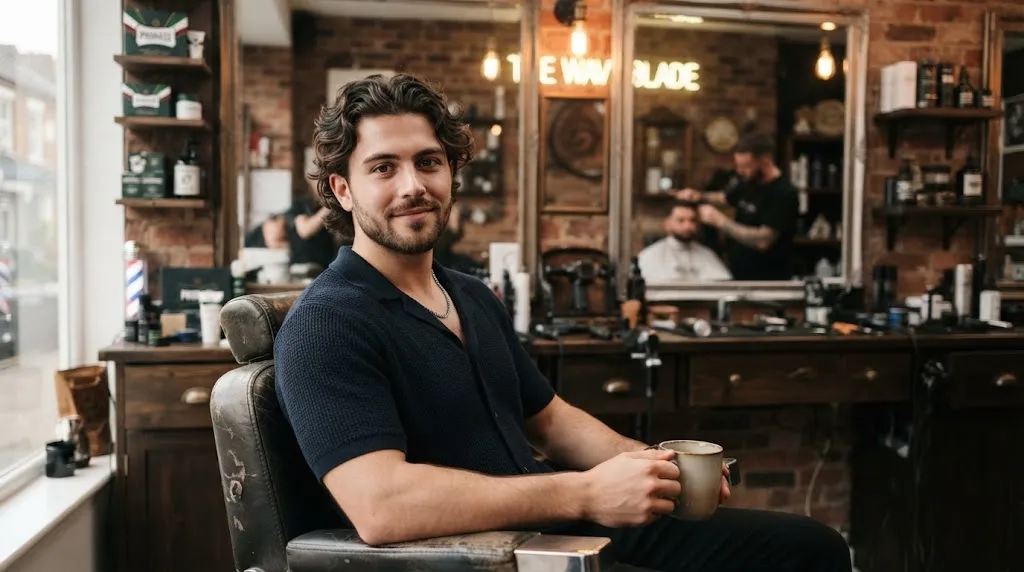
How Men Get Wavy Hair

If your hair grows straight, you can create natural-looking waves by combining the right moisture balance, a texture-enhancing styling product like a sea salt spray or a lightweight mousse, and mechanical manipulation like scrunching or heatless curling techniques while damp. For instance, if you have fine, straight hair that normally falls completely flat, misting damp strands with a salt spray, scrunching upward toward the scalp, and letting it air-dry or diffusing it on low heat will break up the stiffness and coax out a loose, piecey bend. For deeper insights into daily maintenance and grooming routines tailored to various lengths, you can explore the comprehensive styling guides available right here on Hairstyles USA.
Understanding Your Hair Before You Start
Hair Type Chart — From Straight (1A) to Coily (4C)
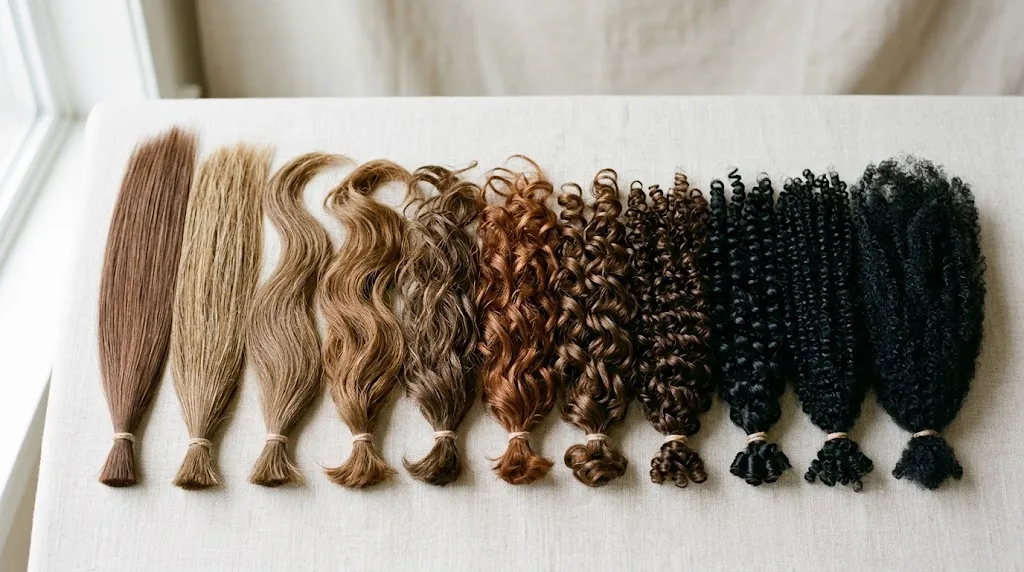
Wavy hair sits right in the middle of the spectrum, spanning from type 2A (loose, barely-there bends) to 2C (defined, tight S-waves that start right at the crown). If you are wondering about the extremes, coily 4C hair is statistically the rarest hair type overall due to its tight zig-zag pattern and density, whereas straight 1A hair is the most common globally. Knowing exactly where your texture falls on this chart dictates every styling product and drying technique you choose next.
Is Your Hair Actually Straight or Already Slightly Wavy? (Self-Check)
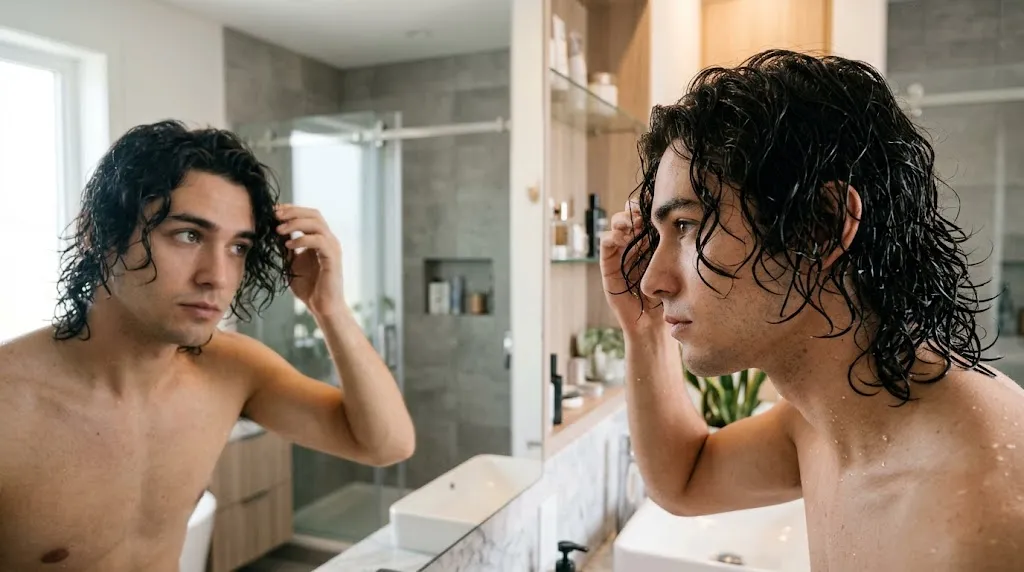
Most guys with “stubborn straight” hair actually have underlying waves that are being weighed down by heavy shampoo residue, incorrect cuts, or daily towel-rubbing. Try this simple test: wash your hair with a clarifying shampoo, skip the heavy conditioner, and let it air dry completely without touching it or running a comb through it. If any bends, puffs, or loose loops form by the time it is dry, your hair isn’t straight—it is just trapped under the wrong routine.
Why Hair Texture Changes With Age, Hormones & Genetics
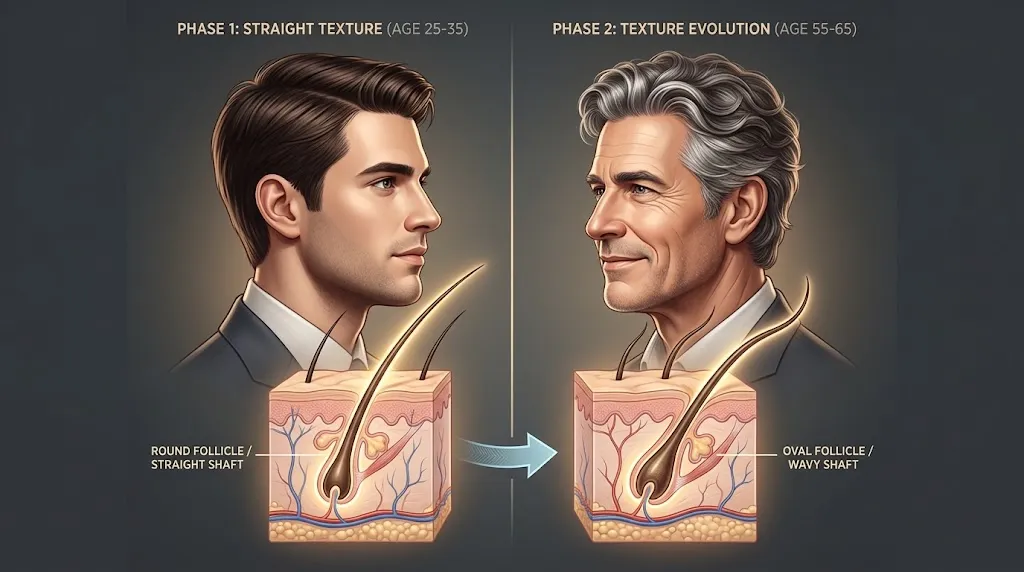
Your DNA dictates your hair follicle shape—oval follicles produce wavy or curly hair, while round ones produce straight hair. But that pattern is not set in stone forever. As men age, shifts in hormone levels, particularly testosterone and DHT fluctuations, can alter the follicle shape over time, turning once-straight hair into a wavy texture or causing tight curls to loosen up. Scalp tension, medication changes, and even moving to a climate with different humidity levels can also trigger a noticeable shift in how your hair behaves from one year to the next.
Hair Length Matters: What Works for You
Short Hair (1–3 Inches): What's Realistic
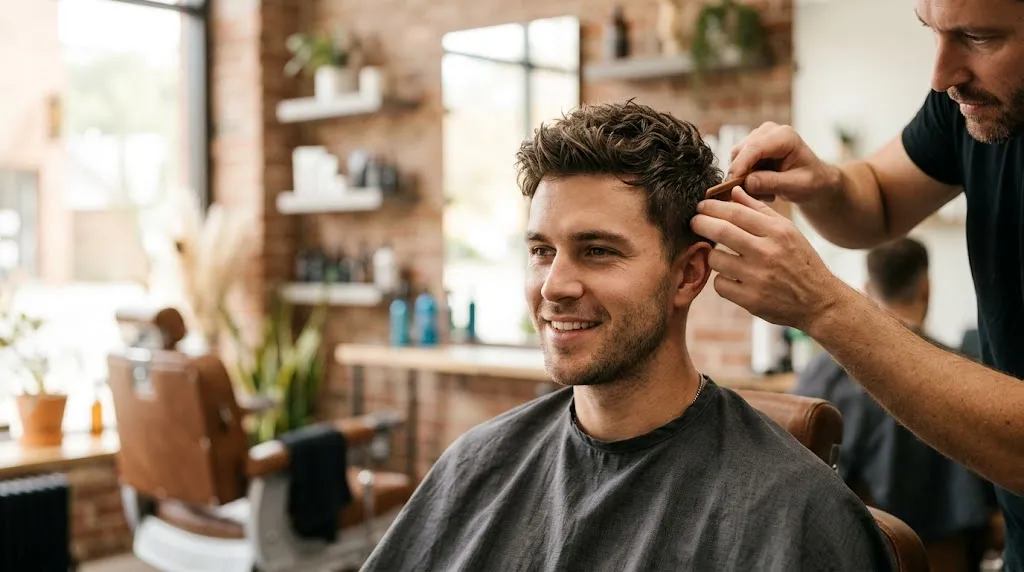
At one to three inches, your hair doesn’t have enough distance to complete a full curve, so you are working with texture and bend rather than cascading locks. If your hair is naturally straight, you will get a choppy, piecey look with subtle bends rather than defined waves.
To fake it at this length, use a sea salt spray on damp hair, scrunch it upwards with your palms, and hit it with a diffuser on low heat until dry. Finish with a matte clay worked firmly through the roots to lock in that messy, piecey texture. Avoid heavy waxes or high-shine pomades; they weigh short hair down instantly and make your scalp look greasy instead of textured.
Medium Hair (3–6 Inches): The Easiest Zone for Waves

This is the sweet spot where natural wave patterns actually show up and hold their shape without needing a mountain of styling product. At this length, hair has enough weight to drop into a natural bend, but it’s not heavy enough to pull itself completely straight.
Start with towel-dried hair, apply a lightweight curl-defining cream from roots to ends, and scrunch upward. Twist random sections around your fingers in alternating directions to create natural-looking clumps, then let it air-dry completely without touching it. Once dry, shake your fingers through the roots to break up the cast and soften the finish.
Long & Mid-Long Hair: Techniques That Hold Best
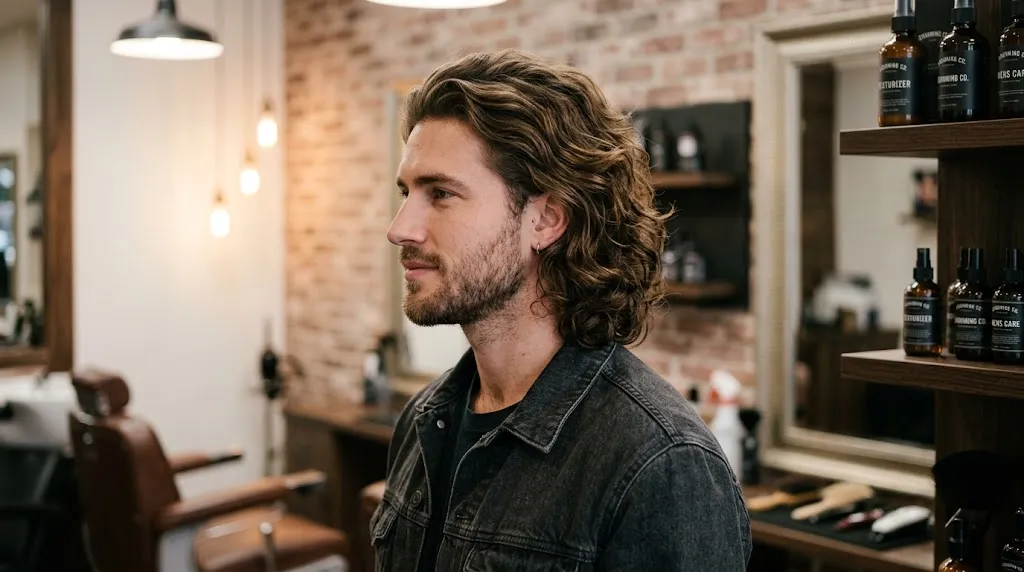
Once your hair pushes past six inches, gravity becomes your main enemy, pulling those waves flat at the crown while leaving the ends doing all the work. To keep the top from going limp, you need to build volume at the root before styling the lengths.
Wash with a lightweight, volumizing shampoo, skip heavy conditioning on the roots, and apply a bodifying mousse directly to the scalp while damp. Twist your hair into loose vertical sections while damp, or use a large-barrel curling wand on random middle sections to reinforce a uniform pattern. Finish with a flexible-hold hairspray misted from a distance so the hair keeps its natural bounce instead of turning into a stiff helmet.
Wavy Hair for Black Men: Coily-to-Waves Considerations
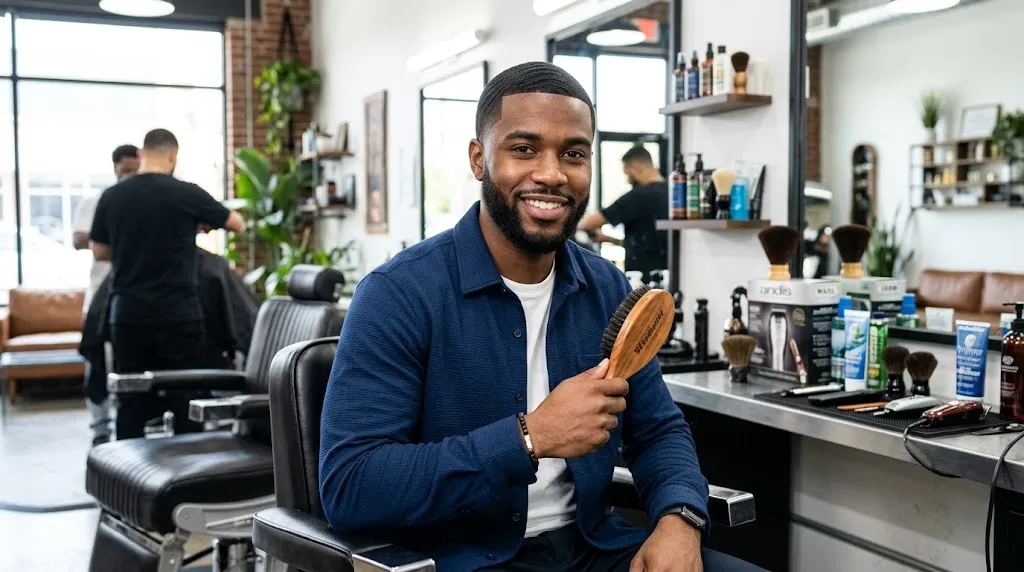
Coily hair textures require a completely different approach because tightly wound coils need moisture and directional training rather than just scrunching and sea salt. Trying to force loose beach waves onto a tight 4-type curl pattern with standard styling products will just lead to dryness and breakage.
Instead, start with clean, deeply conditioned hair and apply a rich leave-in cream or styling butter to soften the texture. Use a medium-bristle brush designed for wave training on damp hair, pulling consistently from the crown down in the direction you want your pattern to lay. Secure your hair with a silky durag overnight to compress the coils and set the wave pattern flat against the scalp.
No-Heat Methods to Get Wavy Hair Naturally
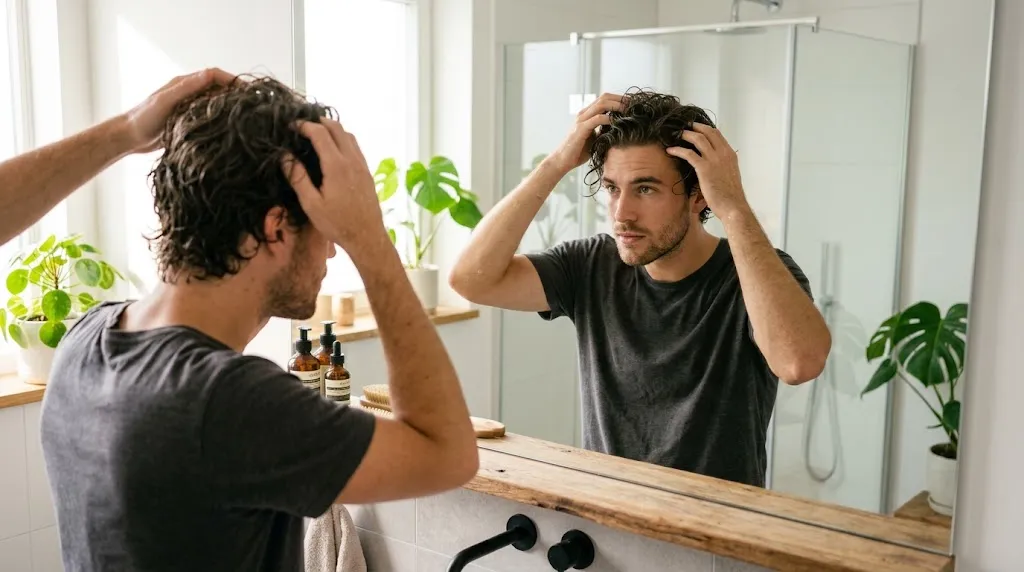
Getting texture into straight hair doesn’t require a hot tool or frying your strands. Working with your hair’s natural moisture and structure creates bends and waves that hold up all day without heat damage.
The Sea Salt Spray & Scrunch Method

Mist damp, towel-dried hair evenly from roots to ends with a homemade mixture of warm water and sea salt, then tilt your head forward and scrunch the hair upward in sections using your palms.
Stylist Insight: Most guys spray the product and immediately touch their hair too much, which breaks up the wave pattern before it sets. Apply the spray to damp hair, scrunch it once thoroughly, and then literally leave it alone until it is completely dry.
The Overnight Braiding Method

Start with slightly damp hair, split it into two or three loose sections, and braid each section down loosely before going to bed. The tighter the braid, the tighter the resulting wave pattern, so keep the tension relaxed if you want loose, natural-looking movement rather than heavy crimps. In the morning, untie the braids and shake the hair out with your fingers instead of running a brush through it, which turns waves into a frizzy mess.
The Twisting Method
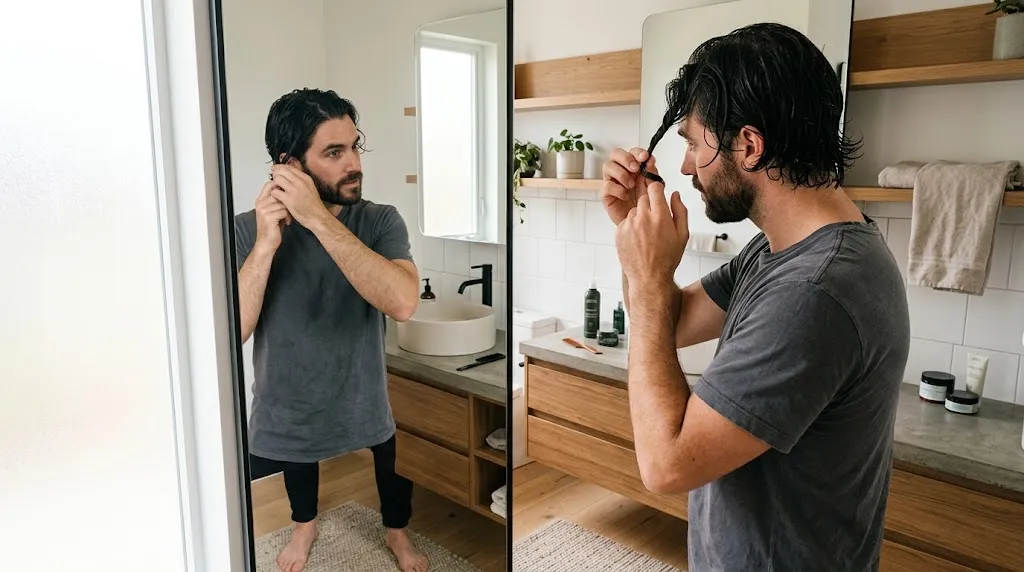
Take small sections of damp hair, twist each one tightly around your finger from root to tip until it coils on itself, and pin the root-bound coil flat against your scalp. Repeat this across the entire head, let the hair dry completely, and then unpin and unwind each section in the opposite direction it was twisted.
Heat Styling for More Defined Waves
Using a Curling Wand or Iron
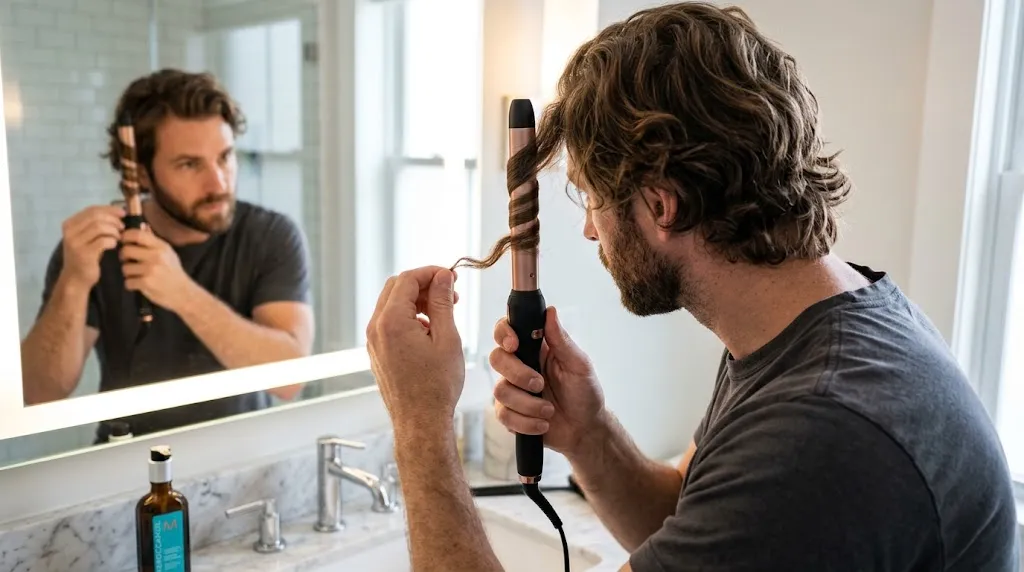
If your natural texture refuses to cooperate or you need specific pieces to bend on command, heat styling bypasses the waiting game. Grab a small-barreled curling wand—around three-quarters of an inch to an inch works best for men’s lengths—and set it to a medium heat setting. Never skip a heat-protectant spray before the iron touches your strands, as baking unprotected hair leads to brittle split ends fast. Take random, vertical half-inch sections rather than uniform chunks, wrap the hair around the barrel for just a few seconds, and alternate the direction you wrap each piece to keep the final look organic instead of uniform.
Stylist Insight: Don’t clamp the ends inside the iron. Leave the last half-inch of your hair loose outside the barrel to avoid sharp, unnatural crimps that scream “prom night” instead of effortless movement. Once the hair cools completely, break the shapes apart by running your fingers through your scalp with a tiny drop of lightweight styling oil.
Diffuser Blow-Drying Technique
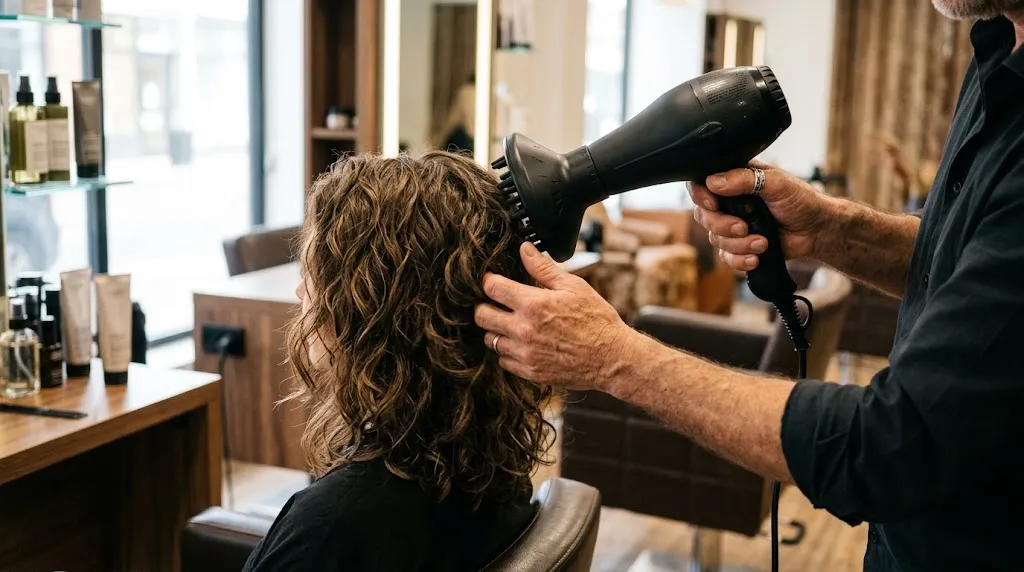
For guys who already have a natural bend that needs a heavy push, the diffuser attachment on a blow dryer locks in volume and definition without frying individual strands. Apply a lightweight mousse or curl-enhancing cream to damp hair, then tilt your head sideways or forward. Cup sections of your hair directly into the bowl of the diffuser attachment, push the tool upward toward your scalp, and turn the dryer on a medium-heat, low-speed setting. Let the prongs support the weight of the hair while the circulating air encourages the natural wave pattern to tighten up. Finish off the drying cycle with a blast of the cool shot button for thirty seconds to seal the cuticle and cut down on frizz before you walk out the door.
Best Ingredients & Product Types for Wavy Hair Men
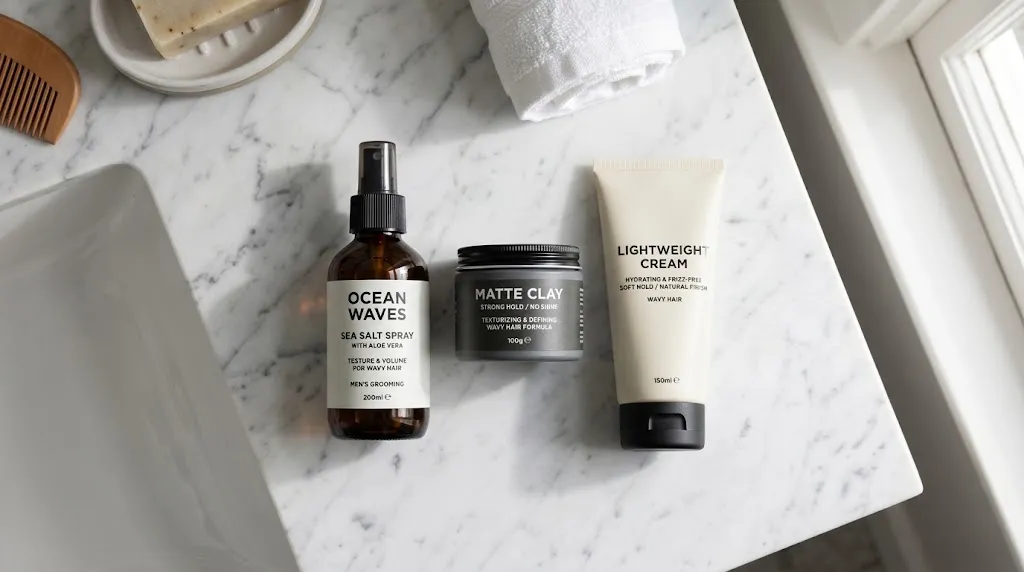
Straight hair needs a structural roadmap to hold a wave, which means product choice makes or breaks your routine. If you reach for heavy gels or stiff pomades, you will just end up with greasy, weighed-down strands that fall flat by noon. Instead, you need the right mix of grit, moisture, and flexible hold depending on your hair’s natural density and texture.
Here is how the three heavy-hitting product categories stack up against each other for creating and holding waves:
Sea Salt Sprays (The Texture Builder): Powered by magnesium sulfate or sea salt, these sprays dry out the hair shaft just enough to mimic the coarse, textured feel you get after spending a day at the ocean. This is your foundation product. Spray it into damp hair before styling to give straight or limp hair the traction it needs to grip a wave pattern. If your hair leans on the dry side, look for formulas infused with aloe vera or glycerin to keep it from getting brittle.
Styling Creams and Lotions (The Moisture and Definition Definer): If your hair tends to puff out into frizz the second you add texture, a lightweight styling cream is your best friend. These rely on nourishing oils and humectants to clump individual hairs together into defined, touchable waves without any stiffness. Work a dime-sized amount through towel-dried hair after your salt spray to lock in a softer, more natural wave bend.
Clays and Pastes (The Hold and Finish): Once your hair is dry and you need to lock the shape in place without a helmet-head effect, reach for a matte clay or a light paste. Kaolin or bentonite clay absorbs excess oil while providing a dry, gritty hold that keeps waves from unraveling throughout the day. Scoop up a small amount, rub it completely clear between your palms, and scrunch it upward into dry hair to set the final look.
Stylist Insight: Most guys make the mistake of using just one product and expecting miracles. The real secret to faking natural waves on straight hair is layering: a salt spray on damp hair for the skeleton structure, a cream for soft definition if you get frizzy, and a touch of matte clay at the very end to keep everything from sagging.
Can You Make Wavy Hair Permanent?
Perms & Chemical Texturizing: What Actually Works
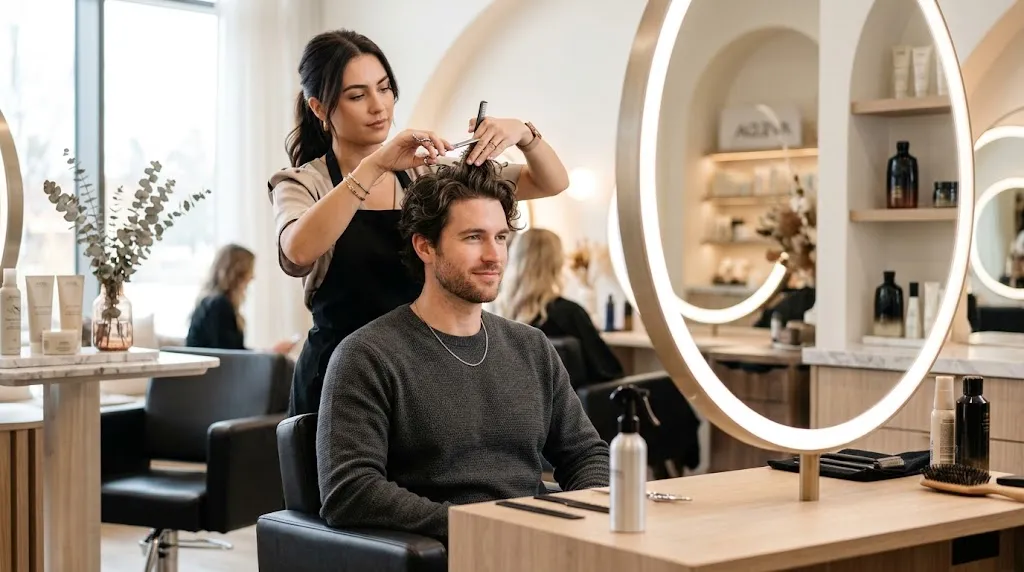
If you have straight hair and are tired of scrunching sea salt spray into your damp locks every single morning just to get a hint of bend, chemical texturizing is usually the route people ask about. A modern hair perm uses chemical solutions to break down the internal bonds of your hair, reshape it around smaller rods or rollers, and rebuild those bonds in a wavy pattern. It is not your grandfather’s tight, 1980s poodle ringlets; current techniques rely on larger rods and looser configurations specifically tailored to create natural-looking, effortless movement.
Gen Z guys have driven a massive resurgence in perms over the last few years, frequently walking into barbershops requesting loose, textured waves paired with a clean skin fade on the sides.
The Process: Your stylist wraps sections of damp hair around cylindrical rods depending on how loose or tight you want the wave, applies a waving lotion to restructure the hair, rinses it, and finishes with a neutralizer to lock the new shape in place. Expect to sit in the chair for about two hours.
The Pros: Once it settles, you wake up with built-in texture. You wash your hair, apply a bit of curl cream or mousse, scrunch, and go. It completely eliminates daily styling friction for straight hair types.
The Cons: Chemicals are harsh. If your hair is already bleached, heavily processed, or fine and brittle, a perm can fry it into straw. You also have to deal with the grow-out phase; as your natural straight roots come in after a couple of months, you will have a distinct texture transition at the scalp that requires either another chemical treatment or a gradual trim.
Stylist Insight: If you decide to get a perm, stop using drugstore shampoos loaded with heavy sulfates immediately afterward. Chemical texturizing sucks out your hair’s natural moisture, so swapping to a sulfate-free, hydrating cleanser and a weekly deep conditioner is non-negotiable if you want your waves to look soft instead of frizzy and fried.
Why "Permanent" Natural Methods Don't Really Exist (Reality Check)
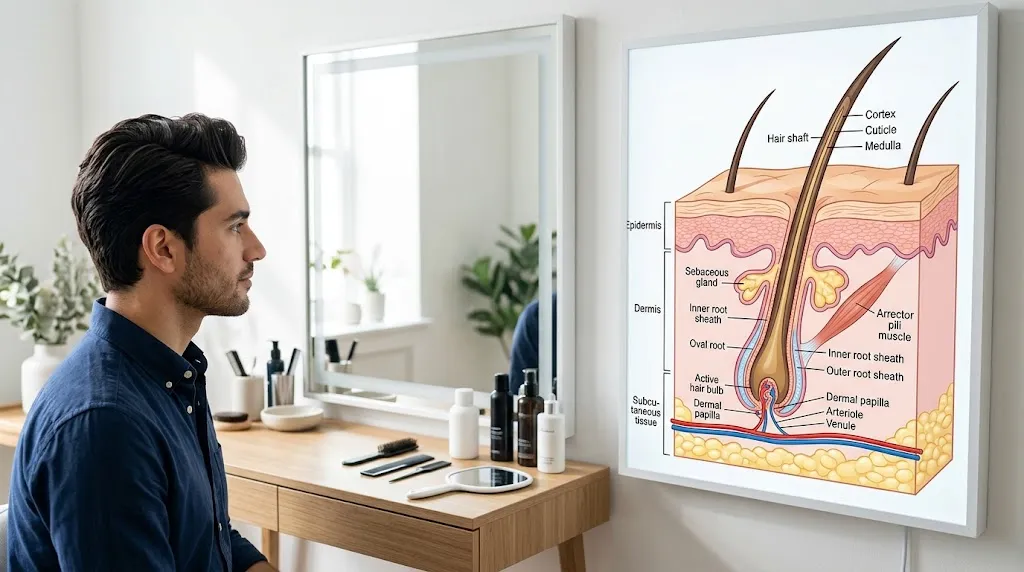
Straight hair cannot be permanently altered into natural waves through non-chemical routines, products, or training. You can manipulate the texture temporarily using heat styling, salt sprays, braiding damp hair overnight, or finger-coiling, but none of these methods permanently rewrite your hair’s genetic structure.
The physical shape of your hair shaft is determined entirely by the shape of your hair follicles under the scalp—round follicles produce straight hair, while oval or asymmetrical follicles produce wavy and curly hair. Because topical products, training techniques, and mechanical styling only affect the hair strand above the surface, they cannot change how new hair grows out of your follicles.
Every single time your hair goes through a full wash cycle, gets wet, or is exposed to high humidity, the hydrogen bonds inside the hair shaft reset. Temporary styling methods force those bonds into a temporary wave pattern, but water breaks those bonds right back down, causing your hair to revert entirely to its natural growth state. If a product or online guide claims it can permanently train straight hair to become wavy without altering the chemical bonds, it is simply marketing fiction.
Wavy Hairstyles Men Should Try Once You Have the Texture

If you have built up your natural wave pattern using the techniques found on our hairstyles hub, it is time to match your cut to your new texture instead of fighting it with heavy pomade.
The Wavy Crop
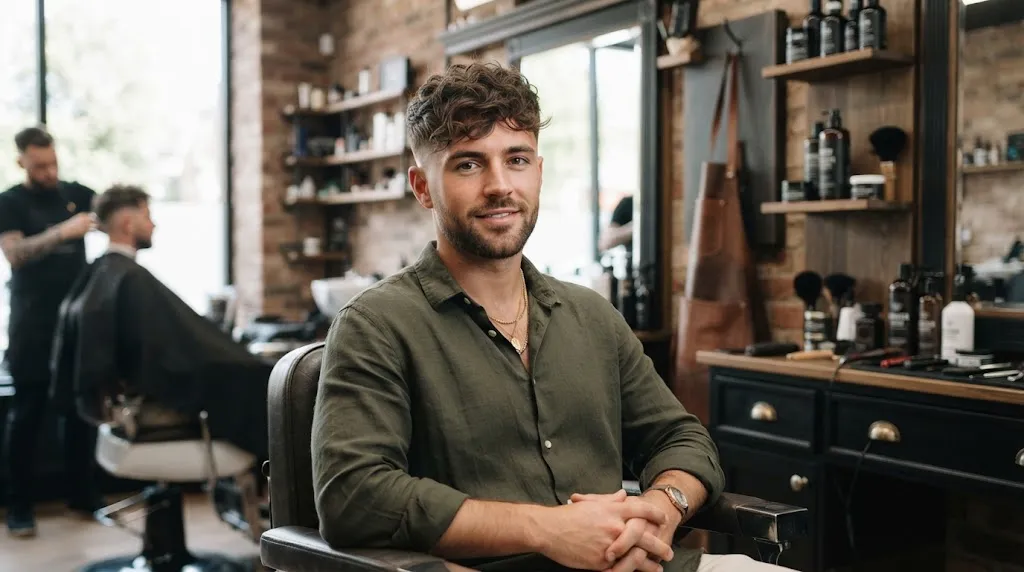
The wavy crop takes the guesswork out of morning styling by keeping the sides short and tight while letting your natural wave build volume right up front. This look works best for guys with thick, coarse hair who want a low-maintenance cut that still has plenty of movement. Ask your barber for a mid-fade with at least two to three inches of length left on top, specifically asking them to point-cut the ends to remove weight so your waves can spring up. Expect this style to hold solid all day with just a dab of matte clay worked into damp hair. Avoid heavy gel unless you want your crop to look crunchy and weighed down.
The Messy Quiff

A messy quiff gives you height and shape without looking like you spent forty minutes in front of the mirror with a round brush. It suits guys with medium-length hair on top and straight-to-wavy textures that need a little directional push to stay off the forehead. Blow-dry your damp hair upward while raking your fingers through it, then scrunch in a lightweight sea salt spray followed by a pinch of styling powder at the roots. This style usually holds for about six to eight hours before it starts to relax into a flatter look. Do not use heavy oil-based pomades here, or gravity will pull your quiff flat by lunchtime.
The Wavy Undercut
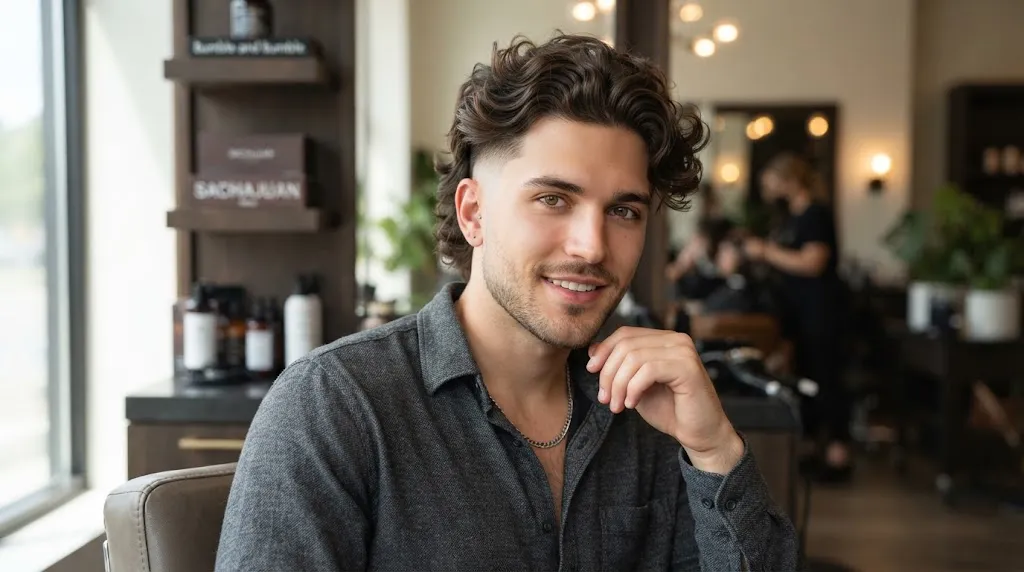
The wavy undercut creates a sharp contrast by keeping the back and sides buzzed short while leaving the top long enough for full wave formation. It is ideal for oval or square face shapes and thick hair types that tend to get too wide and puffy on the sides if left uncut. To get this look, run a defining cream through towel-dried hair and push it back or let it fall naturally to one side. A solid styling paste will keep this secure for a full workday without needing midday touch-ups. Watch out for letting the back of the top section blend too short into the fade, as you want a distinct shelf of waves hanging over.
Medium-Length Loose Waves

Medium-length loose waves lean into a laid-back, effortless aesthetic that looks best when your hair has plenty of natural moisture. This length is tailor-made for guys with fine to medium hair density who can pull off a surfer or skater vibe without looking messy. Apply a lightweight curl-defining cream to soaking wet hair, scrunch upwards, and let it air-dry completely without touching it to prevent frizz. This style holds well from morning to night as long as you avoid running your dry fingers through it. Skip high-heat blow-drying on this cut, because excessive heat will instantly turn your loose waves into a frizzy cloud.
The Wavy Bro Flow

The wavy bro flow is the ultimate set-it-and-forget-it cut for guys growing their hair out past the awkward medium stage. It fits well on guys with strong jawlines and hair that naturally wants to sweep backward and away from the face. Work a lightweight moisturizing cream through damp hair, comb it straight back out of the shower, and let it air-dry into its natural sweeping pattern. You can expect this style to hold its general shape all day, though it will loosen up into softer waves by evening. Never use stiff-holding gels for a bro flow, or you will lose that natural, touchable movement that makes the style work.
Wavy Fringe / Textured Crop Combo
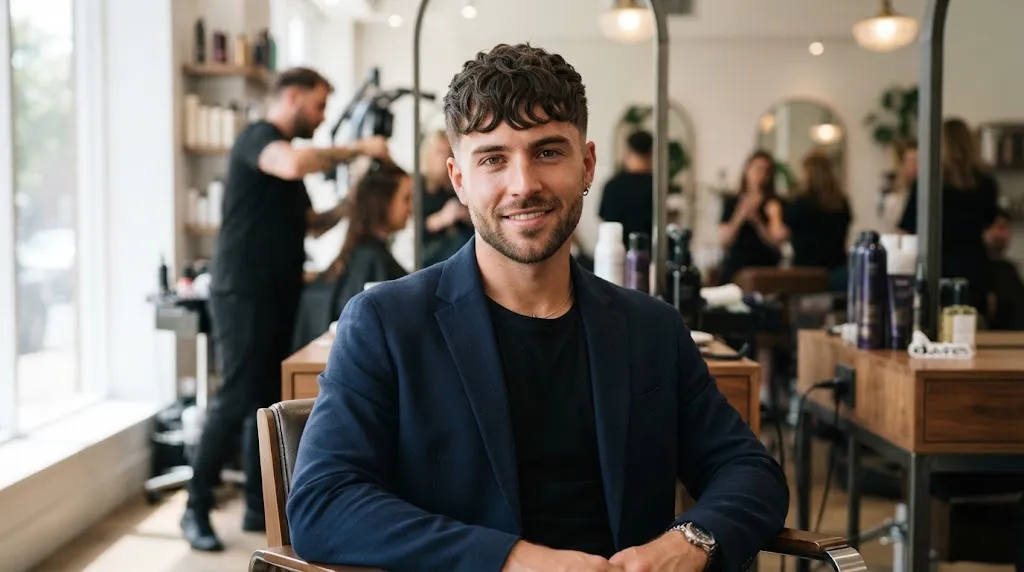
The wavy fringe and textured crop combo brings your waves forward over the forehead to frame the face while keeping the back and sides cropped clean. This is a lifesaver for guys with higher hairlines or prominent foreheads who want to keep the focus on their texture. Ask your barber for a blunt texture cut across the front and heavy texturizing shears through the crown to encourage the waves to clump together. Rub a matte styling paste between your palms and rake it forward through damp hair, guiding the front into place with your fingertips. This cut holds its shape for a solid workday, but avoid using heavy styling oils that will cause the fringe to clump together into greasy strands.
How to Maintain Your Wavy Hair
Washing & Conditioning Routine

If your waves look frizzy by noon, your shower routine is usually the culprit. Stop shampooing every single day; stripping out all your natural sebum leaves wavy hair dry, poofy, and impossible to control. Swap to washing two to three times a week with a sulfate-free shampoo that cleans without dehydrating the strand. On the days you skip shampoo, soak your hair and use a lightweight, silicone-free conditioner, working it through with your fingers from mid-length to ends. Before you rinse, take a wide-tooth comb and detangle while the conditioner is still in your hair—this locks in moisture and prevents the breakage that causes frizz.
Sleeping and Protecting Your Waves Overnight

Waking up with flat, bent-out-of-shape hair on one side is the standard punishment for sleeping on cotton pillowcases. Swap that standard cotton pillowcase for a silk or satin one, which cuts down on friction and keeps your wave pattern intact while you toss and turn. If your hair is on the longer side, gather it loosely on top of your head into a high, gentle pineapple using a soft silk scrunchie before bed. In the morning, don’t brush your hair dry—that turns waves into an instant afro. Instead, spritz it lightly with water from a spray bottle to reactivate the product from yesterday, scrunch gently with your palms, and let it air dry.
Common Maintenance Mistakes That Ruin Waves

The fastest way to ruin a good wave pattern is drying your hair with a standard terrycloth towel, which roughs up the cuticle and creates instant frizz. Ditch the towel entirely and squeeze out excess water using an old clean cotton t-shirt or a smooth microfiber towel instead. Another massive mistake is touching your hair constantly while it dries; your hands deposit oils and break up the wave clumps before they can set. Finally, stop relying on heavy, alcohol-heavy gels that turn your hair crunchy—switch to lighter styling creams or sea salt sprays that let your hair move naturally while keeping the shape locked down.
What Competitors Missed (And This Guide Covers)

Most styling guides repeat the exact same generic advice—spray some salt water, scrunch your damp strands, and hope for the best. That approach completely falls apart if your hair is pin-straight, thick and coarse, or naturally coily.
This guide fills those gaps by tackling the practical details other sites skip over:
Length-based breakdowns: Specific instructions tailored to short crops, medium flow, and longer locks instead of a one-size-fits-all approach.
The permanence reality check: Clear distinctions between temporary styling tricks and semi-permanent chemical treatments, along with realistic maintenance expectations.
Textured hair care: Targeted techniques specifically for Black men and tighter curl patterns that require moisture retention and different manipulation methods.
Genetics and age changes: Why your hair texture shifts over time and how to adapt your routine as your hair matures.
Troubleshooting real problems: Fixes for common gripes like greasy buildup from styling products, flat crowns, and midday frizz.
Real Problems Men Face With Wavy Hair (And Fixes)
Frizz in Humidity

Moisture in the air sneaks into the hair shaft, lifting the cuticle and turning a clean wave pattern into a fuzzy mess. Stop leaving the house with damp hair unless you lock it down with product first. Apply a lightweight mousse or a dollop of curl cream while your hair is still soaking wet, then scrunch it with a microfiber towel. Once it dries, keep your hands off it—touching the hair while it dries breaks the cast and invites frizz right back in.
Waves Dropping by Afternoon

If your hair is on the heavier side, gravity wins by midday and pulls those fresh waves completely flat. You are probably using products that are too heavy or failing to lock the texture in place. Swap your regular conditioner for a lighter, volumizing formula, and mist damp hair with a sea salt spray before blow-drying on a cool setting. Finish the routine with a flexible-hold styling clay to keep the hair structure supported without weighing it down.
One Side Wavier Than the Other

Asymmetry usually comes down to your sleeping habits, cowlicks, or the way you naturally towel-dry and part your hair. If you sleep on your side, one side of your head gets compressed and flattened out while the other retains its bounce. Fix the imbalance by misting the flat side with water until damp, reworking the wave pattern with your fingers using a tiny amount of styling paste, and hitting it briefly with a diffuser attachment on your blow dryer.
Greasy-Looking Waves From Over-Product

Applying too much cream, pomade, or oil turns natural-looking waves into an oily, stringy helmet. You only need a pea-to-nickel-sized amount of product depending on your hair length, and it should always be rubbed completely between your palms before touching your head. Focus the product on the mid-lengths and ends rather than dumping it directly onto your scalp, where natural oils already build up.
What to Expect in Your First Week of Trying These Methods
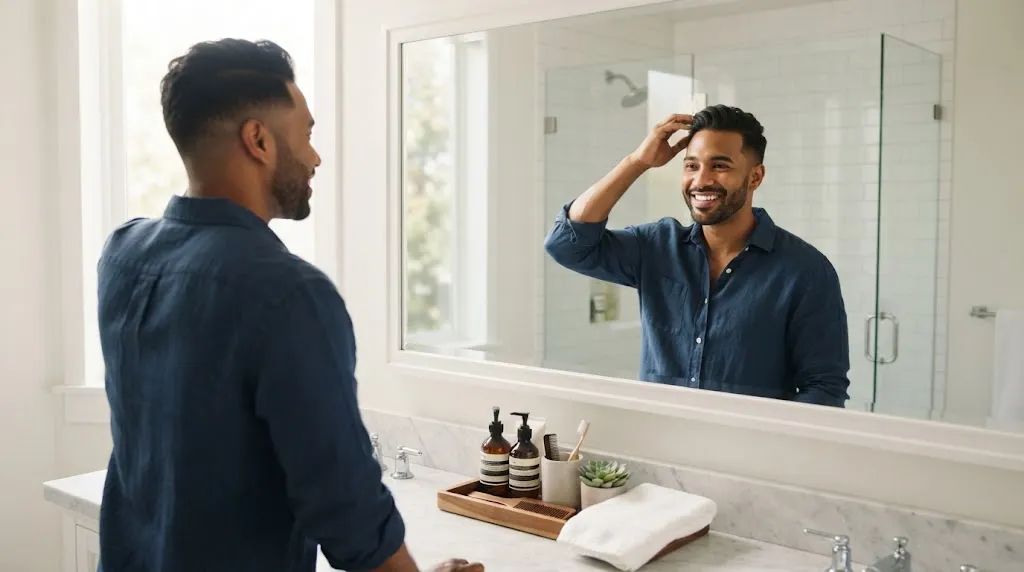
Your hair is not going to cooperate right away on day one. For the first few days, your scalp is adjusting to new wash schedules, and your strands are figuring out how to hold a curl pattern they aren’t used to. You might notice some awkward frizz, weird bends in the wrong direction, or hair that feels slightly drier than normal as you cut back on heavy silicones. Stick with it, give your hair a good clarifying wash if product starts building up, and watch the wave definition start locking in consistently by day seven or eight.
How to Ask Your Barber for a Wavy-Friendly Cut
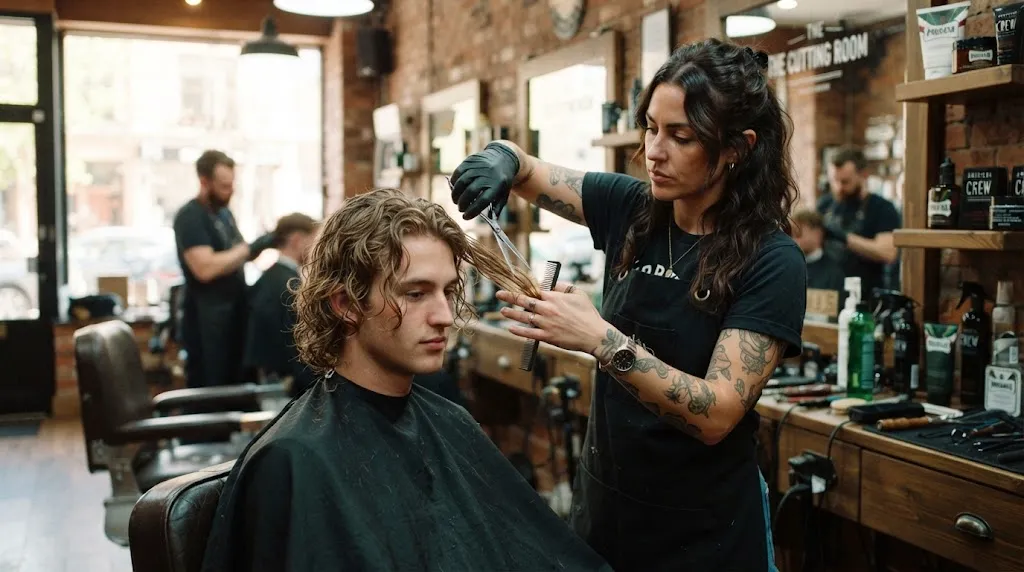
“Just take a little off the sides and leave the top textured.” That phrase right there is the fastest way to walk out of a barbershop with a haircut that fights your natural wave pattern instead of working with it.
Picture this: you sit down in the chair, scroll through your phone for three seconds, show a picture of a guy with completely different hair density, and mutter something about wanting volume. Twenty minutes later, your hair is too short on top to form a wave, and the sides are sheared so high that your head looks boxy.
If you want a cut that actually encourages waves to form, you need to speak your barber’s language. Here is how that conversation actually needs to go.
Bring a Reference Photo That Matches Your Actual Hair

Show your barber a picture of someone whose hair density and curl pattern look similar to yours when it is wet or damp. If you have fine, straightish hair that only waves when it’s long, don’t bring a photo of someone with thick, coarse 3C curls. Be realistic about your texture so your barber knows what foundation they are working with.
Ditch the Thinning Shears
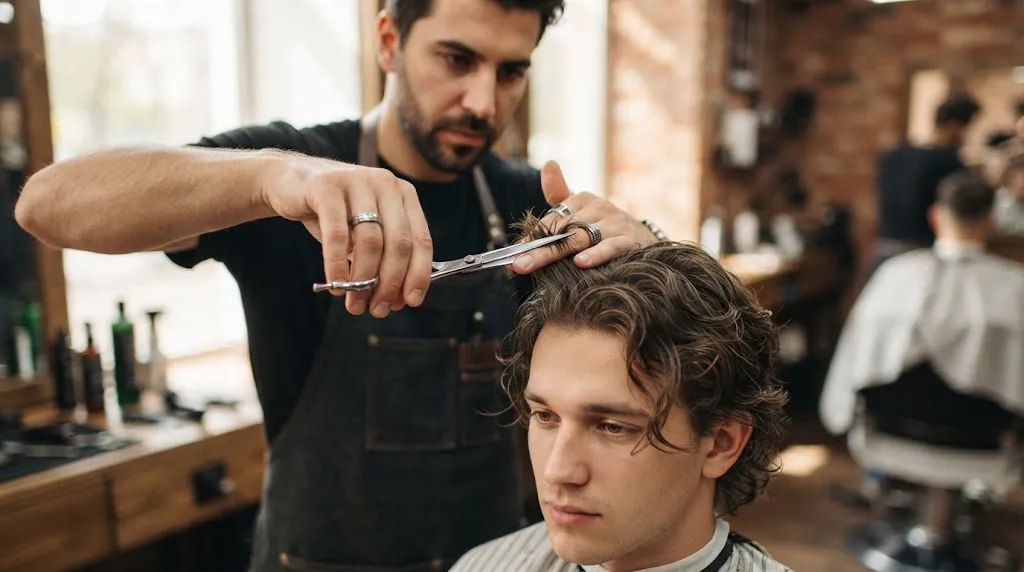
Ask your barber to avoid heavy thinning shears on top. Thinning out wavy hair too aggressively creates erratic frizz and destroys the weight it needs to clump together into uniform waves. Instead, ask for point-cutting or slide-cutting. These techniques remove bulk while keeping the ends of your hair heavy enough to bend into a clean wave shape rather than sticking straight out.
Establish the Right Weight Lines
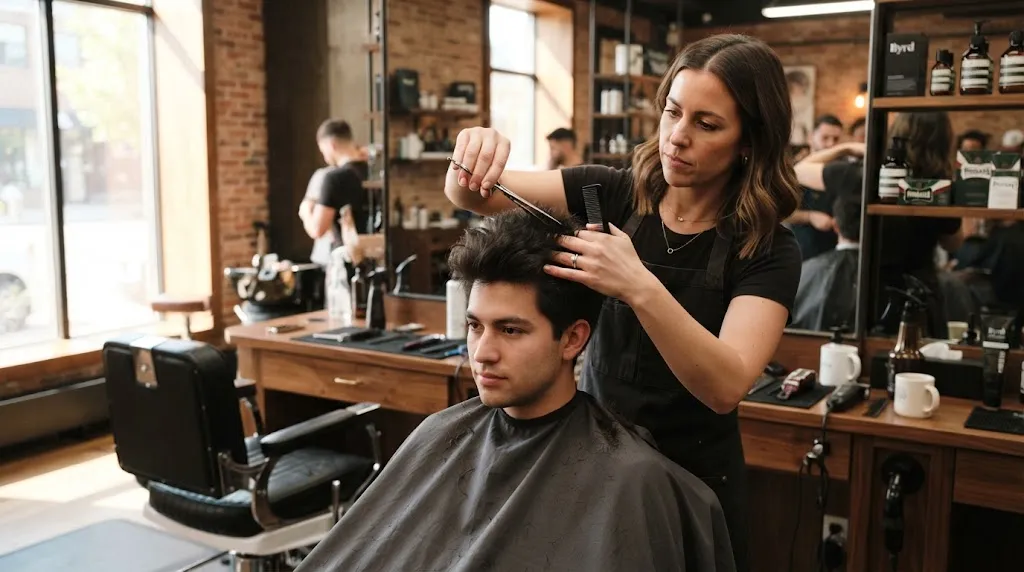
Tell your barber you want to maintain length and weight around the crown and mid-lengths, especially if you are trying to encourage horizontal movement. If you are getting a fade on the sides, make sure the drop or taper leaves enough transition room so the longer hair on top flows naturally into the shorter sides instead of creating a harsh shelf.
Stylist Insight: If your barber reaches for clippers on the top of your head without asking, stop them immediately. Wavy hair needs scissor work on top to preserve the natural wave architecture. Clippers create blunt, uniform ends that make waves look choppy and uncooperative.
How to Ask Your Barber for a Wavy-Friendly Cut
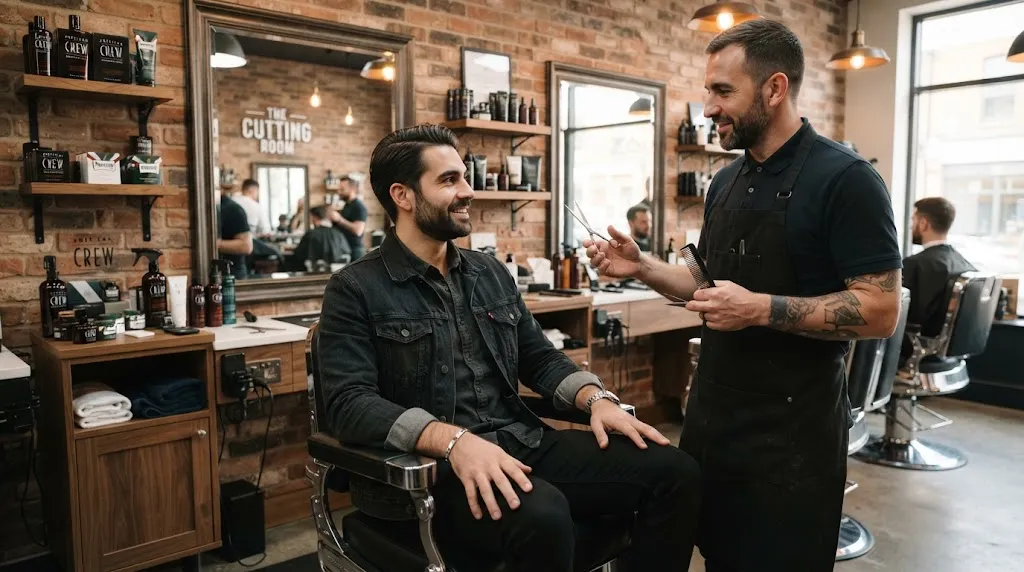
“Just take an inch off the sides and texture the top” is usually how a decent haircut turns into a straight, puffy disaster for anyone trying to build waves. Instead, walk into the shop with a clear picture and a specific vocabulary. Put your phone on the chair ledge, pull up a photo of someone with your exact hair density and head shape, and point directly at the temple area.
Tell your barber you want to keep weight off the parietal ridge so the hair collapses inward rather than sticking straight out like a helmet. If you have fine hair, ask to point-cut the ends to build natural separation without thinning out the volume you actually need. For thick or coarse hair, ask for slide cutting through the interior to debulk heavy zones, keeping the curls from stacking up into triangles.
Which Wavy Hair Method Is Right for You?
| Method | Effort Level | Duration | Best For |
|---|---|---|---|
| Sea Salt Spray & Scrunching | Low (2 minutes) | Half day | Naturally wavy hair needing a boost, fine textures, or casual beachy volume. |
| Finger Coiling / Twirling | Medium (10 minutes) | Full day | Straight or loose-wavy hair that needs defined, uniform pattern creation. |
| Diffuser Blow-Drying | Medium-High (15 minutes) | Full day to next wash | Flat hair, adding serious root lift, and locking in maximum wave longevity. |
| Heat Styling (Wand/Flat Iron) | High (20+ minutes) | Until next wash | Straight hair requiring a precise, customized wave shape that resists humidity. |
Frequently Asked Questions
Everything men ask about hair texture, waves, and getting the look right.
Which Is the Rarest Hair Type?
Straight hair and tightly coiled or afro-textured hair are actually much more common globally than natural waves and loose curls. True Type 2 wavy hair sits in the minority worldwide, making up roughly twenty to thirty percent of the global population, while red hair paired with waves or curls is the rarest color and texture combination.
Do Gen Z Boys Get Perms?
Yes, modern chemical curling treatments have seen a massive surge in popularity among younger guys chasing heavily textured, voluminous cuts. Unlike the tight, uniform coils of the 1980s, modern salon treatments use softer rods and looser curl patterns to replicate a natural, messy surfer or skater aesthetic without looking overly processed.
How to Make Your Hair Wavy Naturally?
You can encourage natural bend by applying a sea salt spray to damp strands, scrunching them upward from the ends, and diffusing on a low, warm heat setting. Skipping daily shampooing also preserves the natural oils that give straight or limp strands the grit and weight needed to hold a bend.
Can Straight Hair Turn Wavy in Men?
Genetics dictate your baseline follicle shape, but major hormonal shifts, aging, and significant shifts in health can alter the cross-section of your hair strands over time. If your follicles change from round to oval, hair that once grew completely straight can start emerging with a noticeable wave or curl.
Can Testosterone Make Hair Curly?
Androgens like testosterone do not rewrite your genetic code, but they can trigger changes in hair thickness, follicle shape, and growth phases as men age. These physiological shifts can cause fine or straight hair to grow out with more texture and bend than it had during puberty.
Is Curly Hair Determined by DNA?
Genetics completely control the shape of your hair follicles, which are asymmetrical and oval-shaped if you have waves or curls, and round if you have straight hair. Because follicle shape is inherited, texture patterns strongly run in families across generations.
Why Did My Hair Become Curly Over Time?
Follicles frequently shift their shape during major hormonal milestones, such as puberty or later in adulthood, altering how hair strands emerge from the scalp. Additionally, long-term changes in health, medications, or scalp tension can gradually modify your hair texture over the years.
Why Is My Hair Becoming Curlier With Age?
As men age, hormonal fluctuations and changes in cellular regeneration can cause hair follicles to narrow or become slightly misaligned, resulting in a tighter bend. This is why many guys who had straight hair in their twenties notice a distinct wave or frizziness by the time they hit their forties.
Is My Straight Hair Actually Wavy?
Many men with straight-looking hair actually have a dormant Type 2 texture that is simply weighed down by heavy daily shampoos and a lack of proper moisture. If you stop using harsh cleansers, add a lightweight curl cream, and start scrunching instead of brushing, a hidden wave pattern often emerges within a couple of weeks.
How Long Does It Take to Get Wavy Hair?
Training straight hair to hold a temporary wave takes about ten to fifteen minutes of daily styling with sea salt sprays and blow-dryers. Growing your hair out from a short cut to a length where natural waves can actually form and loop usually takes three to six months of uninterrupted growth.
What's the Best Product Type for Beginners?
A lightweight sea salt spray paired with a matte styling paste gives beginners the easiest entry point for adding texture without weighing the hair down. Spritzing the salt spray into damp hair creates instant grit, while a pea-sized amount of paste locks in definition without leaving a greasy or stiff shine.
Related Reads
Explore more hairstyle guides on HairstylesUSA.
References
Sources used to fact-check the hair science covered in this guide.
-
1
Popular Science — FYI: What Makes Hair Curly?
Explains how follicle shape and keratin distribution determine whether hair grows straight, wavy, or curly.
-
2
How It Works — The Human Body: What Makes Hair Curl?
Breaks down how straight, wavy, and curly hair follicles differ in cross-sectional shape.
-
3
NaturallyCurly — Why Does Hair Texture Change Over Time?
Covers how puberty, hormonal shifts, and follicle changes can alter hair texture throughout life.
-
4
Hims — How Hair Texture Changes With Age
Discusses hormonal factors, including androgens, that influence hair thickness and texture as men age.