
Hairstyle for Wide Forehead — The Complete Guide (Women, Men, Thin Hair & Every Face Type)

Finding the right cut when you feel like your forehead takes up half the mirror can be frustrating. Whether you’re hunting through hairstylesusa.com’s hairstyles hub or just tired of pulling your hair back into a ponytail out of panic, the goal isn’t hiding your face—it’s about building balance.
What to Do About a Wide Forehead

The fastest way to balance a wide forehead is to break up the horizontal line of the hairline using soft, angled bangs, side-swept parting, or face-framing layers that draw attention inward toward your eyes and cheekbones.
Add Fringe: Soft curtain bangs or a textured fringe instantly shorten the upper face by covering the temples and top corners.
Shift Your Part: Move your natural part off-center; a deep side part creates an asymmetrical frame that naturally narrows a broader brow.
Build Crown Volume: Adding slight lift at the crown balances facial proportions, ensuring your forehead doesn’t look heavier than the lower half of your face.
Keep Sides Fuller: Avoid slicked-back styles or extreme volume on the upper sides of the head, which can accidentally make the upper forehead look wider.
The 4-Finger Self-Check

Wondering if your forehead actually leans wider or if it’s just standard proportions? Place your fingers horizontally starting from your eyebrows up toward your hairline. If it takes four fingers to cover the space, your proportions are standard. If you can fit five or more fingers in that same space, you have a wide forehead, and incorporating directional parting or fringe will instantly create visual balance.
Is Your Forehead Wide or High? Know the Difference
Width vs Height — Quick Visual Test

Most people lump a wide forehead and a high forehead into the exact same category, but they require totally different styling tricks to balance out. A wide forehead means the distance between your temples is broader, often giving your face a square or heart-shaped appearance. A high forehead, on the other hand, simply means your hairline sits further back from your brows, stretching the vertical length of your face rather than the sides.
The Horizontal Check: Place your fingers horizontally right above your eyebrows, stacking them up toward your hairline. If it takes four or more fingers to span the gap, you’re dealing with height.
The Temple Check: Look straight into a mirror and check where the outer edges of your hairline drop down toward your ears. If your temples flare outward past the outer corners of your eyes, your main focus is width.
Styling Secret: If your forehead is wide, you need cuts that narrow the outer edges using fringe or side-swept layers. If it is high, you need styles that break up the vertical expanse right in the center without hiding your cheekbones.
Mixing up these two dimensions is the main reason a haircut that looks amazing on your friend falls flat on you. Once you figure out whether your canvas is broad or deep, choosing the right cut becomes completely foolproof.
Best Hairstyles for a Wide Forehead — Women
Curtain, Bottleneck & Side-Swept Bangs — Step by Step
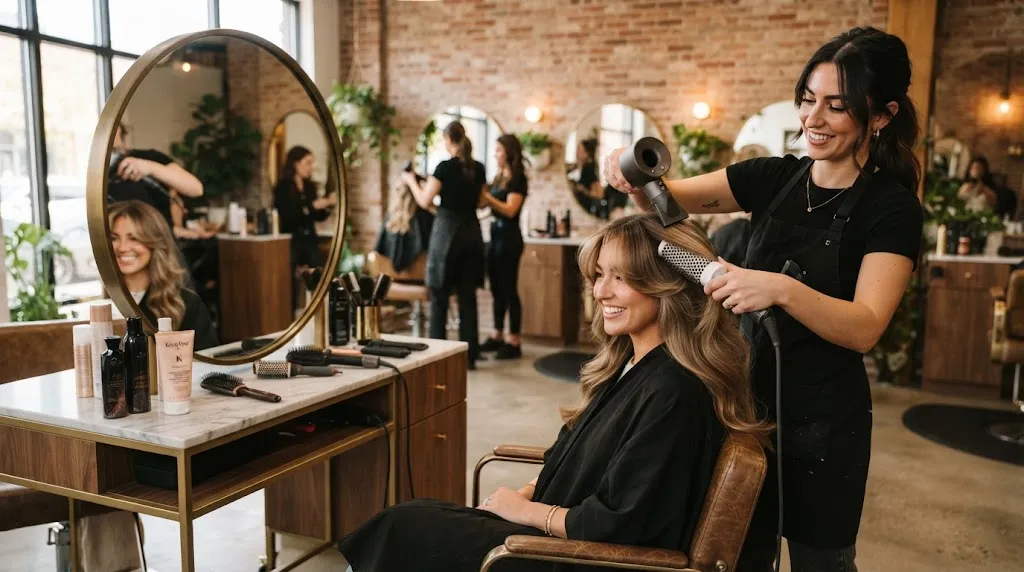
Curtain bangs and their cousins (bottleneck and side-swept styles) are the absolute gold standard for balancing facial proportions without hiding behind a wall of blunt fringe. Instead of completely blocking the forehead, these cuts sweep outward or across, creating natural diagonal lines that visually narrow the upper third of your face while keeping the center open.
Here is how to style them in your bathroom in under five minutes:
Prepping damp hair: Apply a pea-sized amount of lightweight volume cream or a root-lifting spray right at the parting line before drying.
The blowout technique: Take a medium-sized round brush, place it under your bangs, and pull forward while directing your blow-dryer downward to smooth the cuticle.
Setting curtain bangs: Roll the brush backward toward your crown, hold for five seconds with heat, and let it cool before releasing so the hair sweeps outward toward your cheekbones.
Finishing touch: Pinch the ends with a tiny dab of matte texture paste to piece them out so they don’t clump together.
Face-Framing Layers & Shag Cuts

If you prefer to skip bangs entirely, face-framing layers and modern shags do heavy lifting by drawing attention downward toward your cheekbones and jawline. When a haircut introduces its shortest layers right around the cheek or chin, it breaks up the horizontal expanse of a broad hairline.
Soft Face-Framing Layers: These start around the chin and cascade downward, blending seamlessly into the rest of your layer-cut-pics. They draw the eye away from the upper temples and add natural movement.
The Modern Shag: This cut brings heavy, textured volume through the crown and sides while keeping pieces wispy around the face. It creates a diamond silhouette that naturally balances out a wider upper face.
Korean-Inspired Front Cut: This technique leaves a few wispy, delicate strands falling straight down in front of the ears, a popular korean-front-hair-cut trick that visually shaves inches off temple width.
To style these cuts at home, skip the heavy straightening irons that leave hair flat and lifeless. Instead, spritz a texturizing mist into dry hair and use a curling wand to bend random sections away from your face. If you are also working with fuller cheeks, pairing these choppy textures with a round-shape-haircut framework keeps the overall finish soft and proportional rather than blocky.
Best Hairstyles for a Wide Forehead — Men
Textured Fringe, Crop & Side Part — Step by Step
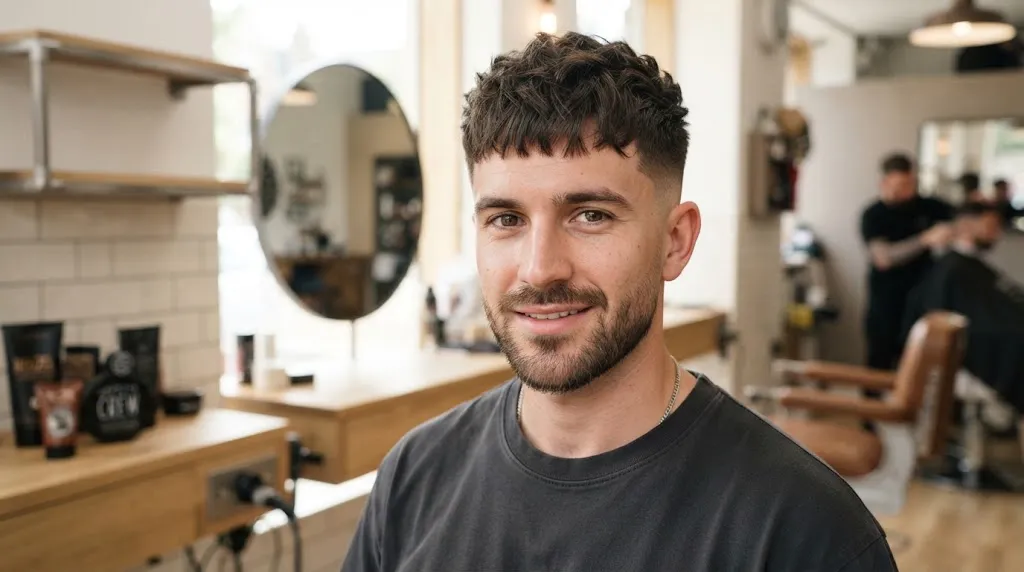
When you’re dealing with a broader upper face, the goal is always balance. You want to soften the corners of the hairline without making your head look boxed in. Let’s walk through three distinct cuts that nail this balance, along with the exact way to style them in the chair or at home.
The French Crop with a Blunted Fringe
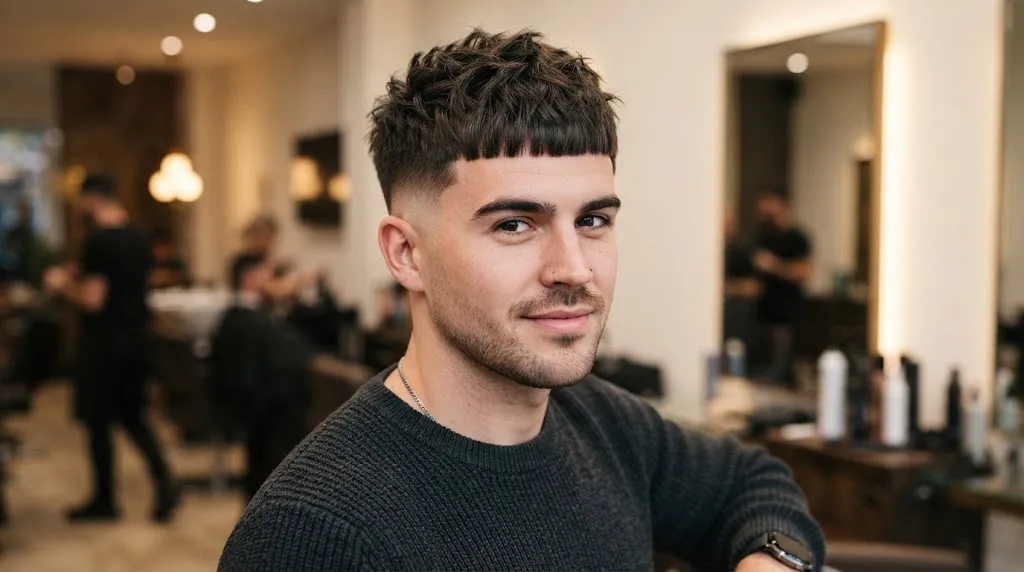
What it looks like: Short back and sides with heavily textured hair on top pushed forward into a blunt or slightly choppy fringe that sits right across the upper forehead. It suits guys with straight to wavy hair and stronger jawlines.
Why it works: Bringing hair forward physically covers the upper corners of the hairline, instantly cutting down the apparent width of a broad forehead.
Styling tip: Work a matte texture paste through damp hair, push the top forward and down using your fingers, and use a blow-dryer on medium-cool to set the front pieces in place so they don’t separate too much.
The Textured Quiff with Soft Sides

What it looks like: Tapered or fade sides with medium-length hair on top that lifts upward and slightly forward, rather than straight back. This style works well for guys looking to balance a wide forehead alongside [round-face-hairstyles-men] proportions.
Why it works: A traditional slick-back exposes a wide hairline, but a textured quiff adds height while keeping some volume near the temples to soften sharp angles.
Styling tip: Apply a light volume mousse to damp roots, blow-dry upward and forward using a vent brush, and finish with a pinch of dry styling powder for grit and hold.
The Deep Side Part

What it looks like: A classic gentleman’s cut parted significantly off-center, creating a strong diagonal sweep across the brow. It’s a go-to choice if you lean toward [long-face-hairstyles-male] structures or need something sharp for the office.
Why it works: A deep part breaks up symmetry, drawing the eye diagonally across the face instead of straight across the broad expanse of your upper brow.
Styling tip: Comb wet hair directly following your natural growth pattern, carve out a clean part using a tail comb, and use a water-based pomade for a polished finish that still has flexibility.
Watch Styling Short
Watch the styling technique live right here on the page before trying it out yourself.
Wide Forehead + Thin Hair (Female & Male)
When your hair lacks density, trying to cover a wider brow can easily backfire. Heavy, blunt bangs often separate and expose the scalp underneath, while limp strands cling flat against the temples and make the forehead look even more prominent. The goal here isn’t to build a solid wall of hair, but to create the illusion of density while breaking up harsh horizontal lines.
Why Thin Hair Bangs Needain Different Approach

If you have fine strands, standard heavy bangs steal too much volume from the rest of your scalp, leaving the crown looking completely flat. Instead of a thick, straight-across fringe, you want to use a diffused, piece-y curtain bang or a feathered wispy fringe.
The Face Proportion Reason: A heavy fringe on thin hair creates a stark horizontal line that accentuates a wide upper face. Wispy strands blur the transition point between the hairline and the temples.
The Density Reality: Pulling hair forward from further back on the crown borrows density you can spare, creating the illusion of a thicker fringe without thinning out your sides.
The Styling Trap: Avoid flat-ironing fine bangs straight down. A slight bend outward with a small round brush expands the visual width of the fringe, keeping the scalp hidden.
Volume Fix — Root-Lift & Shag-Style Trim
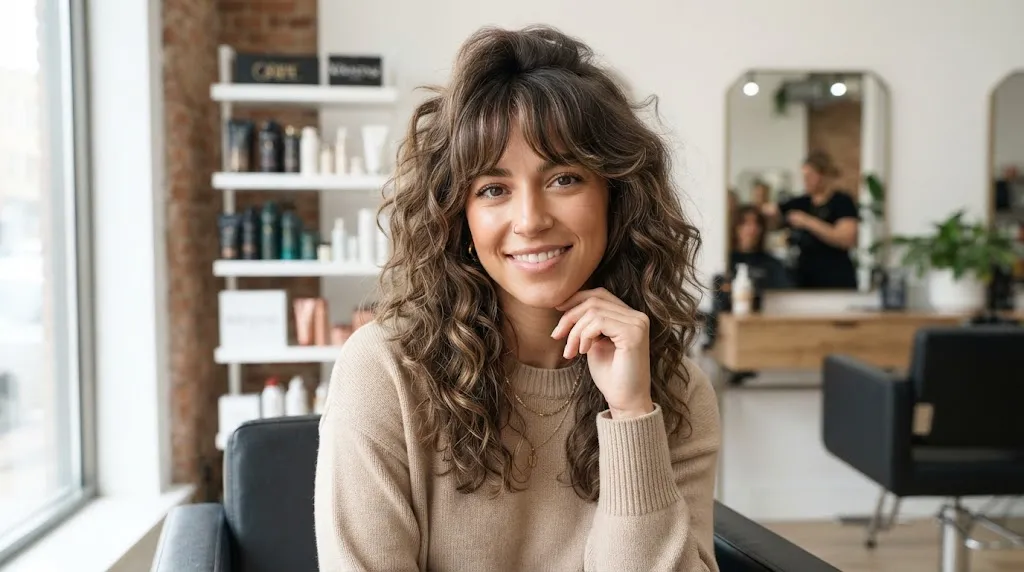
Fine hair needs internal structure to hold any style away from the scalp. If your hair sits limp, your forehead shape takes center stage. A modern, textured chop combined with targeted root support changes everything.
The Cut: Ask for razor-cutting or point-cutting through the top and front. Removing blunt weight allows fine hair to spring upward and piece together naturally.
The Root Lift: Work a lightweight volume mousse or a texturizing powder directly into damp roots at the hairline before blow-drying upward and forward.
The Finish: Skip heavy oils and waxes that weigh fine hair down instantly. Lock the shape in with a flexible-hold hairspray that keeps texture airy and mobile.
Wide Forehead + Chubby Face Combo
Best Styles for This Exact Combo

When you’re dealing with a wider forehead alongside fuller cheeks, the main goal is drawing the eye vertically rather than horizontally. You want cuts that add length and create natural shadow lines along the jaw and temples.
Long Layers with Face-Framing Pieces

What it looks like: Layers starting below the chin paired with soft strands that drape right past the cheekbones. It suits medium-to-thick hair textures best.
Why it works: The vertical lines of long layers elongate a rounder face shape, while the pieces framing the front gently carve out the sides of a wide forehead without adding bulk at the cheeks.
Styling tip: Hit the face-framing pieces with a round brush while blow-drying, pulling them slightly forward and inward to create a subtle curtain effect.
Asymmetrical Side-Parted Lob

What it looks like: A collarbone-skimming cut where one side is slightly longer, styled with a deep, dramatic side part.
Why it works: A deep side part instantly breaks up the symmetry of a wide forehead by covering a portion of it. Meanwhile, the asymmetrical length pulls the eye downward, making the lower half of the face look leaner.
Styling tip: Blow-dry your hair opposite to your natural part first for maximum volume at the root, then flip it over to your preferred deep side for an instant lift.
Wide Forehead — Big Head, Indian Hair, and By Length
Big Head Adjustment

When you’re dealing with both a wide forehead and a larger head shape overall, the biggest styling trap is adding width right at the temples or sides. That only creates a blocky, heavy silhouette. Instead, you want to draw the eye vertically rather than horizontally.
Keep the sides closely cropped, tucked behind the ears, or layered cleanly downward to slim the profile.
Build subtle volume strictly through the crown to elongate the shape.
Avoid ultra-flat center parts that emphasize both width and roundness.
Indian Hair Texture Considerations

Thick, dense, and naturally dark Indian hair behaves completely differently than fine, straight textures. You’ve got built-in volume and weight, which can either work heavily in your favor or cause massive triangular bulk right where you don’t want it. If you have natural waves or curls, a blunt fringe can puff up instantly in humidity.
Ask for internal thinning or slide-cutting through the mid-lengths to remove heavy bulk around the face.
Use a lightweight smoothing serum on damp hair to control frizz before styling bangs or face-framing layers.
Opt for piece-y, textured curtain bangs rather than a heavy, blunt fringe that requires constant flat-ironing.
Short vs Long Length Differences
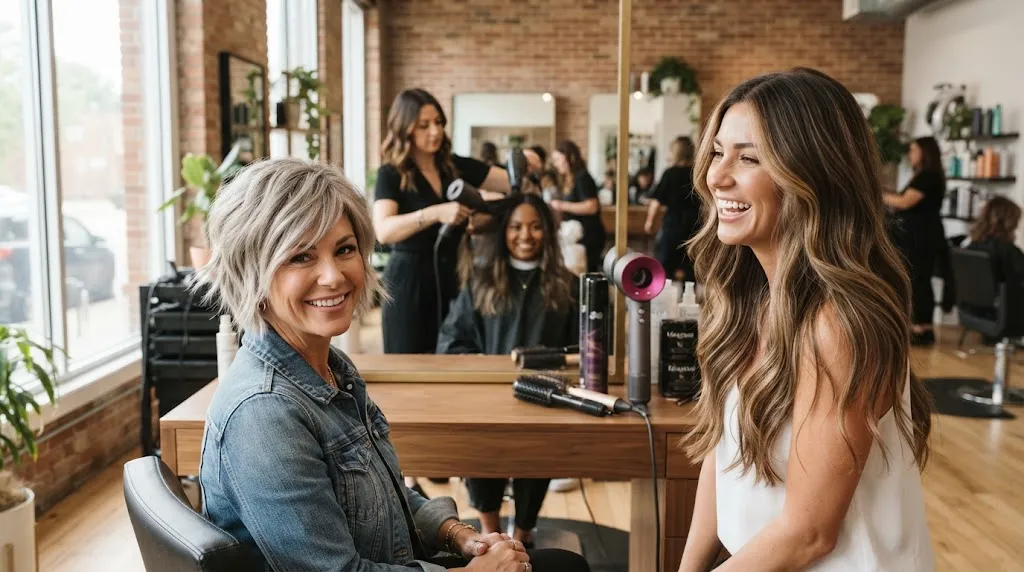
Hair length dictates how weight distributes around your face, changing how a wide forehead is framed. Short cuts like textured crops or bobs need careful attention to the front hairline so they don’t expose too much skin on top. On the flip side, very long hair can drag the face down and look lifeless if it lacks movement around the cheekbones.
Short Hair: Keep a longer, sweeping top section or asymmetrical side fringe to break up the horizontal line of the forehead.
Medium Hair: Introduce collarbone-length layers that start right at the jawline to draw attention downward. For styling inspiration tailored to this length, check out medium hair styles for women.
Long Hair: Add face-framing pieces starting near the chin to fill in the sides while keeping the forehead partially covered. For specific styling approaches suited to textured hair routines, explore simple indian hair style.
Easy, Quick Styling for Everyday Wear
2-Minute Styling Method

When you’re running out the door, spending twenty minutes on your hair isn’t realistic. You need something that takes literally two minutes, hides the forehead, and still looks intentional rather than lazy.
The secret to pulling this off is working with your natural texture rather than fighting it. Start by mistaking a light root-lifting spray or a bit of sea salt spray into damp or dry hair, focusing heavily on the crown and the front hairline. Use your fingers—never a brush at this stage—to push a section of hair across your forehead at a diagonal while hitting it with a blow dryer on a warm setting for thirty seconds to lock the sweep in place.
Finish by rubbing a dime-sized amount of a lightweight texture clay between your palms and gently raking your fingers up through the sides while piece-mouthing the fringe forward to break up any harsh lines. It’s fast, it creates soft face-framing coverage that completely masks the width of the forehead, and it holds up all day without needing a helmet of hairspray.
Big Forehead Easy & Kawaii Hairstyle
Watch this quick, step-by-step styling guide directly on the page to see how to easily frame and balance a prominent forehead with confidence!
Source video by alena. View original on YouTube.
Advanced Fixes

Most styling guides stop at getting you a bang or a side-part and call it a day. But if you’re dealing with cowlicks, fine hair that collapses, or a hairline that refuses to cooperate, standard cuts aren’t always enough. Here is how we fix those stubborn details behind the chair without changing your haircut.
Non-Cutting Solutions

Sometimes you don’t need a pair of scissors to fix a disproportionate hairline; you just need to trick the eye using styling tricks and accessories.
The Zig-Zag Parting Trick: Move your part away from your usual straight line and create a soft zig-zag using the tail of a comb. This breaks up the harsh line of a high forehead and forces the roots at the crown to cross over one another, instantly adding volume where hair usually falls flat.
Strategically Placed Headbands: Skip tight athletic bands that push everything back and expose your temples. Instead, choose a slightly padded or textured fabric headband and wear it right where your forehead meets your hairline, pulling out a few wispy baby hairs in front of it to soften the edge.
The Root-Flip Technique: While your hair is damp, blow-dry the front section in the exact opposite direction of how you want it to fall. Once it’s completely dry, flip it back to your preferred side; this creates natural lift at the scalp that bridges the gap over wider temples.
Color Techniques to Balance a Wide Forehead
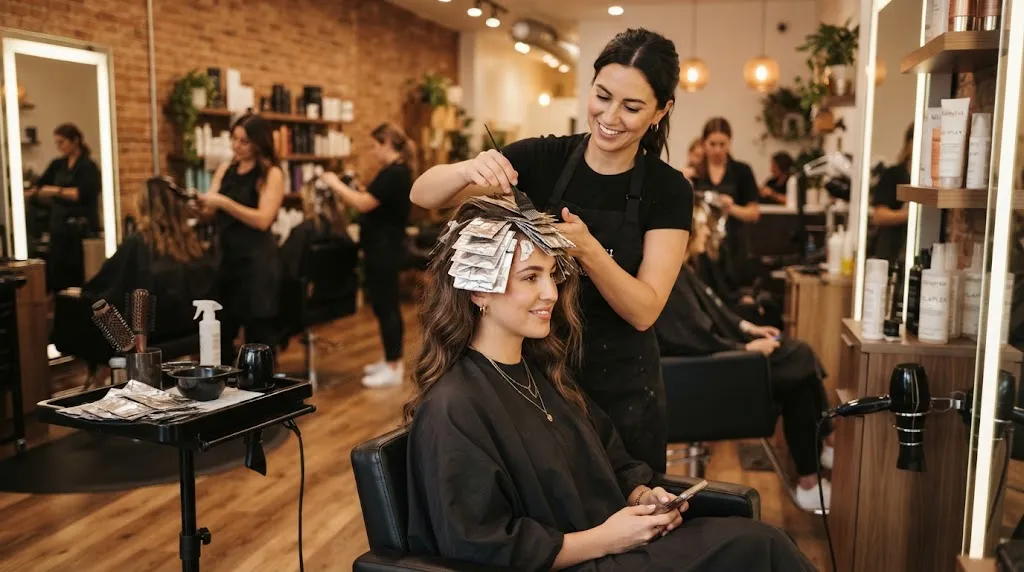
Strategic hair coloring is one of the most powerful tools for manipulating face shape without touching your length. It’s all about creating visual weight and shadow exactly where you want it.
Face-Framing Shadow Roots: Keeping your roots a shade or two deeper right around your temples creates a natural shadow effect, tricking the eye into seeing a narrower upper face.
The Perimeter Diminish (Lowlights): If you have very light or highlighted hair, the brightness can actually make a wide forehead look wider by bouncing light off the edges of your face. We weave darker lowlights strictly around the hairline and temples to visually recess those areas.
The Reverse Balayage Around the Part: Keeping the hair right at your parting line rich and dimensional prevents the scalp from showing through too starkly against dark or thick hair, which is a common giveaway that accentuates a high forehead.
Watch Hair Styling Short
Directly watch and explore style inspiration right from YouTube.
Real Problems Real People Face
"I Tried Bangs and Regretted It" — Why This Happens & How to Avoid It
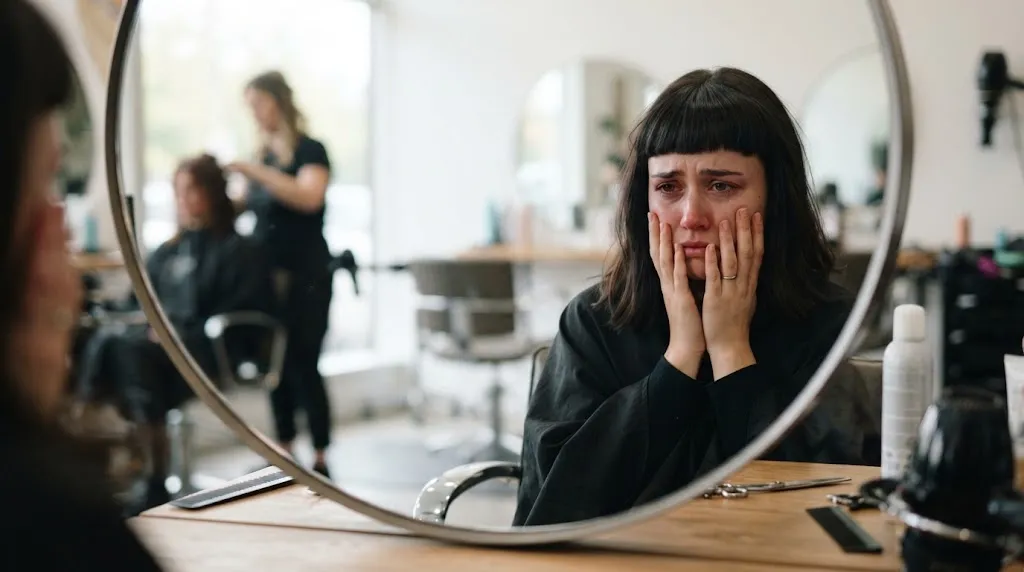
Every week in my chair, I hear some version of this exact story: someone with a wide forehead wants to hide it, gets a heavy, blunt fringe cut in, and immediately panics. Instead of looking chic, the haircut traps heat, makes their face look shorter or wider, and requires way more maintenance than they bargained for.
This happens because people treat bangs as a mask rather than a framework. If you have a wider hairline paired with fine hair density, a thick, straight-across fringe will separate at the crown, exposing bald patches of scalp underneath and drawing a harsh horizontal line right across your face.
To avoid this regret, you need to look at your hair’s natural growth pattern and cowlicks first. If your hair grows forward easily, a soft, textured curtain fringe or a piece-y, side-swept fringe will break up the width without sealing you in. If your hair wants to push backward, forcing it into a heavy front fringe is a daily styling battle you’ll lose by noon. Instead, opt for longer, face-framing layers that start lower down near your cheekbones, which camouflage the temples naturally while letting your forehead breathe.
When Embracing Your Forehead Is the Right Answer
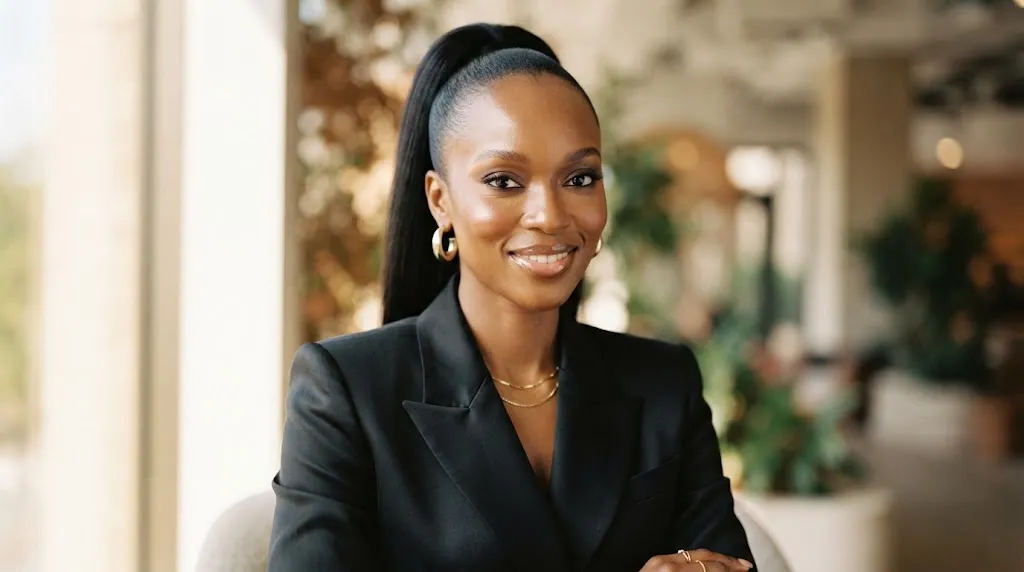
Sometimes the absolute best fix for a wide forehead isn’t hiding it at all—it’s shifting the focus so your proportions look completely intentional. A lot of people spend years fighting their natural bone structure, pulling hair across their face out of habit, only to realize that pulling it back actually gives them a striking, regal look.
If you have strong jawlines, high cheekbones, or expressive eyes, a wide forehead is actually a classic hallmark of high-fashion facial symmetry. Trying to mask it with piece-y, stringy strands often looks like you’re hiding, whereas a clean, high ponytail, a slicked-back bun, or a deep side part with volume on top turns that feature into a focal point of confidence.
The secret to pulling this off without feeling exposed is building balance through your silhouette and texture rather than coverage. If you wear your hair completely off your face, add height at the crown using a root-lifting spray or opt for statement earrings that pull the eye outward and downward. When your styling has strong overall geometry, your forehead stops feeling like a flaw and starts looking like part of a powerful, balanced look.
How Long Do Loose Curls Actually Last?

| Facial Structure | Defining Feature | Main Styling Goal | Best Approach |
|---|---|---|---|
| Wide Forehead | Greater distance from temple to temple | Soften the outer corners and visually balance width | Side-swept bangs, face-framing layers, or side parts |
| High Forehead | Greater distance from eyebrows to hairline | Reduce the vertical height of the face | Full fringes, blunt bangs, or volume at the crown |
| Chubby-Face Combo | Fuller cheeks combined with a wider upper face | Create vertical lines and narrow the overall silhouette | Height on top, tight sides, and long angled layers |
Forehead Styling & Cut FAQs
Yes, bangs cut straight across or worn as soft side-swept fringe instantly shorten the visual expanse of the upper face. This technique creates a hard horizontal line that masks the upper hairline and draws attention down toward the eyes.
A textured shag haircut with choppy layers around the cheekbones works best to slim the face while balancing proportions. This style adds height on top and breaks up width at the sides and forehead simultaneously.
Middle parts can sometimes accentuate the width of a broad forehead by framing both upper corners symmetrically. If you love a middle part, pair it with face-framing waves or curtain bangs to soften those sharp angles.
Men can style thinning hair by using a textured crop with a forward-swept fringe to disguise a receding hairline. Applying a matte styling clay adds density and keeps the hair in place without weighing it down.
Short hairstyles like a textured pixie cut or a cropped fringe work wonderfully as long as they include height on top or pieces falling forward. The secret is avoiding completely slicked-back or ultra-flat styles that expose the full upper perimeter.
Leaving a few loose tendrils or face-framing pieces out around your temples softens the severe pull of a high ponytail. You can also tease the crown slightly before tying it back to add balanced volume.
Naturally curly hair provides built-in volume and random movement that naturally breaks up stark forehead lines. A curly fringe or layered curls falling near the temples create an effortless, balanced frame.
A deep side part creates an asymmetric line that naturally draws the eye diagonally across the face instead of straight across the forehead. This diagonal shift minimizes the apparent width of the upper face.
Strategic layers starting around the cheekbones or jawline draw visual weight downward away from the upper forehead. Avoid layers that start too high near the temples, as this can make the crown look too narrow.
Embracing a side-swept fringe or a textured quiff helps soften the sharp point of a widow's peak while managing upper volume. These styles disguise the stark corners of the hairline while keeping the focal point balanced.
Final Verdict / Action Plan
If there’s one thing to take away from all of this, it’s that a wide forehead isn’t a flaw to fix — it’s a proportion to work with. Start with the self-check from the top of this guide so you know exactly what you’re working with, then pick your fix based on your hair type and density rather than just copying a celebrity photo: fine hair needs shorter, shag-cut bangs for volume, thicker hair can carry a fuller fringe, and if you’d rather skip a haircut altogether, a deep side part and the right parting habits will do most of the work. Whatever you choose, bring one clear reference photo to your next appointment and describe the coverage you want in simple terms — that single step avoids almost every regret people mention in the “real problems” section above.
Expanding Your Styling Options
Wide foreheads rarely come with just one styling question — explore more tailored guides and lookbooks below.
Face Shape & Slimming Guides
If a rounder or fuller face shape is part of your concern too, our guide to hairstyles for a chubby face with long layers goes deeper into that specific combination.
And if slimming the face is your main goal, the slim face haircut guide covers it in full.
Men's Care & General Browsing
Men figuring out the same forehead concern alongside an aging hairline can check our hairstyles for older men guide.
Browsing for your next look? Explore our function hairstyles, cute open hairstyles, boys' box cut hairstyle, and the hair cutting style photo gallery.
References
- Cosmoderma — Canons of Ideal Facial Dimensions and Facial Beauty — used for the horizontal facial-thirds concept behind the wide-vs-high forehead distinction.
- PMC/National Library of Medicine — Enhancing Mid-Upper Facial Contours: Hairline Transplant Solutions for East Asian Women With High and Wide Foreheads — used for context on high/wide forehead proportions and their real facial-aesthetic impact.