
Seven Hairstyle: The Complete Guide to the Trendy "7" Fade Haircut
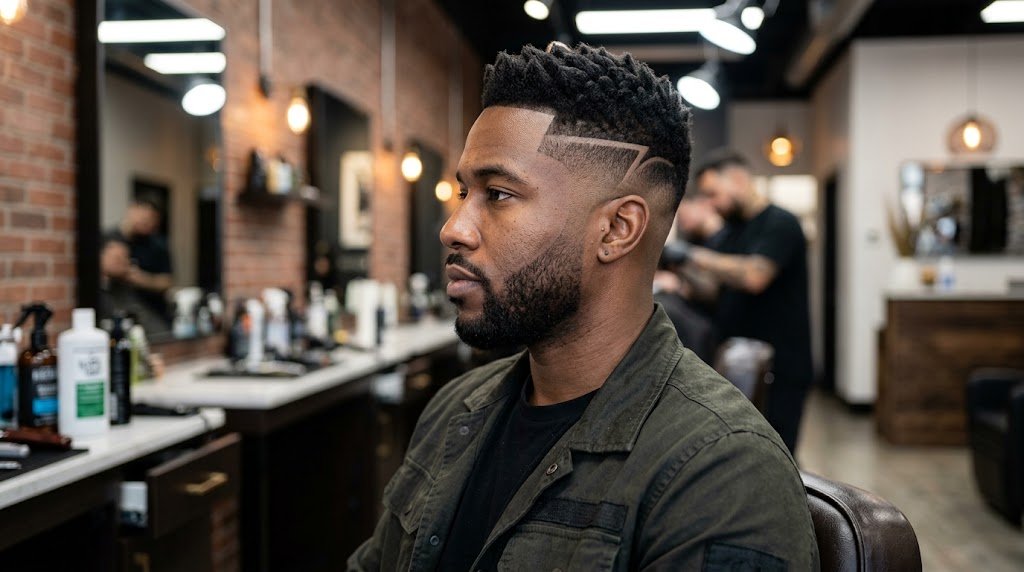
The “seven hairstyle”—commonly known as the 7 cut or 7 fade—is a modern barbering trend defined by a sharp, curved line-up near the temple or sideburn that traces the distinct shape of the number 7, paired with clean faded sides and a textured top. At hairstylesusa.com, we cover every trending cut across our main hub, and this specific geometric edge-up has quickly become a go-to request for clients wanting a sharp, customized look that stands out from a standard low or mid fade.
What it is: A precision fade haircut featuring a signature curved “7” line-up etched near the temples or sideburns, combined with a textured crop, quiff, or slick back on top.
Who it suits best: Best suited for guys with strong, straight hair types and defined facial structures, particularly those who prefer short, high-contrast cuts that highlight clean lines.
Maintenance level: High. Because the geometric 7-line relies entirely on crisp edges and a tight fade, you will need a barber touch-up every 10 to 14 days to keep the shape from growing out and blurring.
Difficulty level: Advanced. This style requires steady hands with a trimmer and straight razor; it is definitely not recommended for DIY home trimming.
What Is a Seven Hairstyle?
The seven hairstyle is a modern modern barber trend defined by a curved, sharp “7-shaped” geometric line-up carved into the temple area, paired with clean faded sides and a textured top. It stands out because of its precise, architectural edge near the sideburn and eyebrow tail, giving a distinct geometric break to standard fades.
The Signature "7" Line-Up Explained
The defining feature of this cut is the razor-sharp corner etched into the temple, mimicking the numeric shape of a 7. Barbers use a precision trimmer and straight razor to carve a sharp downward angle that bends horizontally across the temple recess.
The Angle: The line starts high near the recession, drops down at a sharp diagonal, and kicks out horizontally toward the outer eyebrow or corner of the eye.
Precision Maintenance: Because this design relies heavily on clean skin contrast, it requires touch-ups every 7 to 10 days to keep the geometric lines from blurring as hair grows back.
Hair Density: It works best on dark or medium hair colors with thick density, as the contrast against the scalp makes the 7-shape pop clearly.
Fade Types Used (taper vs burst fade)
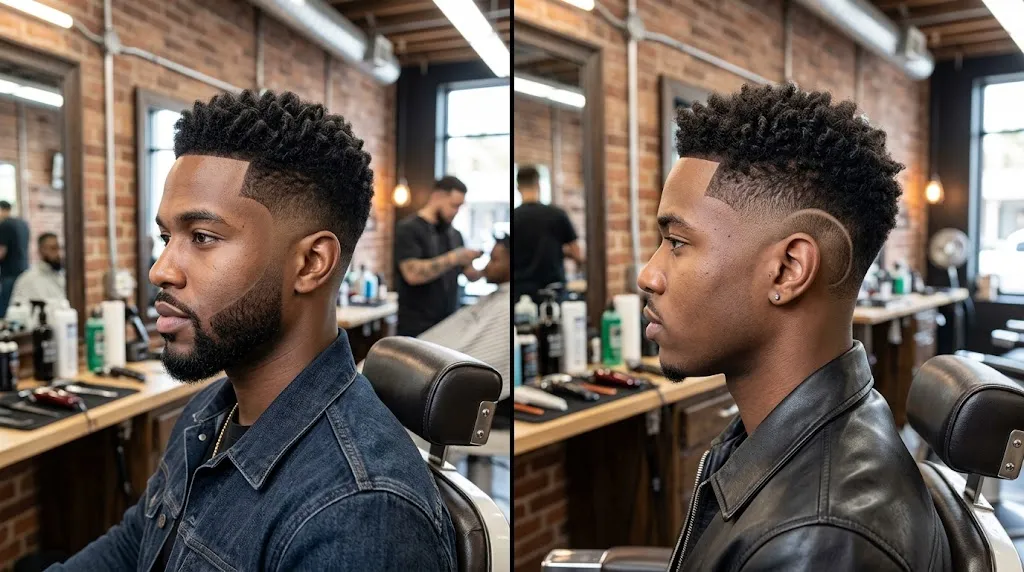
Choosing the right fade foundation determines how the seven shape flows with the rest of the head shape.
Burst Fade: This creates a circular, sunburst-like fade radiating outward behind the ear and around the temple. It leaves more weight behind the ear while dropping the neckline, which accentuates the curve of the 7-line right above the ear.
Low Taper Fade: For a more subtle, professional look, a low taper cleans up just the sideburns and the absolute lower neckline. This keeps the focus squarely on the temple area where the 7-line is carved, offering a cleaner transition for school or professional settings.
Mid Drop Fade: A popular middle ground that drops lower toward the back of the head, framing the occipital bone and allowing the temple artwork to stand alone as the primary focal point.
Textured Top Styling
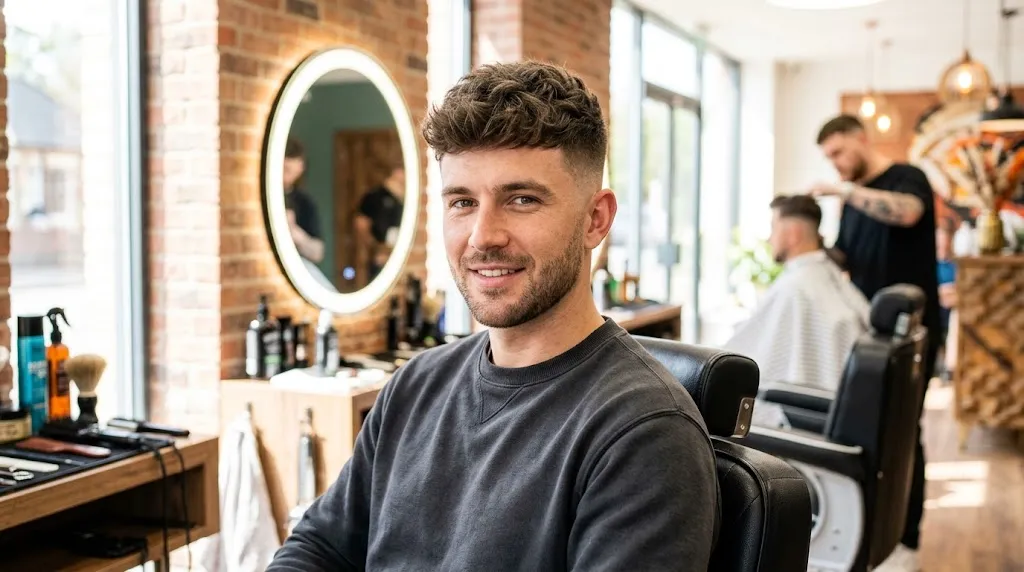
The upper section balances the sharp, geometric lines of the temple with organic movement and volume.
The Cut: Barbers typically use point-cutting and texturizing shears on top to remove bulk, creating choppy ends that look piece-y rather than flat or uniform.
Application Technique: Work a small amount of matte styling clay or low-shine paste through damp hair, rubbing it from roots to ends to build separation.
Directional Flow: Use your fingers to push the hair forward and slightly to one side, or pull it up into a messy crop depending on your forehead shape. Avoid heavy gels or high-shine pomades, as a dry, matte texture contrasts best with the crisp lines of the fade.
Other Meanings of "Seven Haircut" (Disambiguation)
While the modern “seven hairstyle” usually refers to the sharp geometric temple line-up, the term can occasionally cause confusion in the barbershop. Depending on who you are talking to, it might point to a specific clipper guard size or a classic 1990s cinematic look.
Number 7 Clipper Guard Length (7/8 inch)
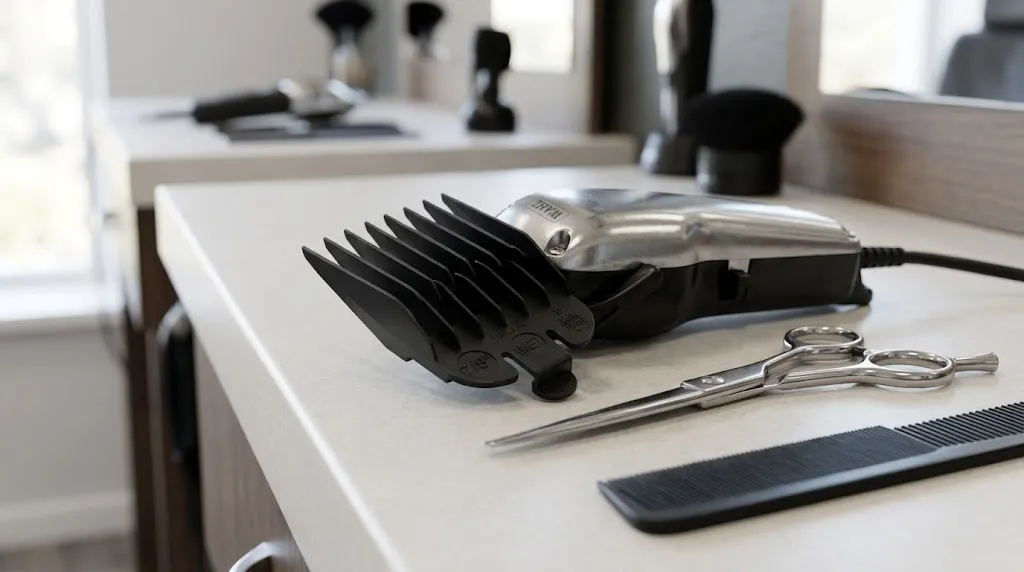
A number 7 clipper guard cuts the hair down to a length of 7/8 of an inch, which translates to roughly 22 millimeters. Barbers use this guard when a client wants a short, clean, structured scissor-over-comb effect or a tapered back and sides that still retains noticeable length and finger-coverage. It sits squarely between a medium-length crop and a traditional buzz cut, offering enough weight to lay flat while keeping the sides neat and tidy.
Brad Pitt's "Se7en" Movie Hairstyle

In the 1995 crime thriller Se7en, Brad Pitt sports a quintessential mid-90s military-inspired buzz cut that detective David Mills wears throughout the film. This look features a short, uniform length all over the head with a slightly heavier crop on top, closely resembling a standard number 2 or number 3 burr cut. Fans searching for this specific aesthetic are usually looking for a retro, low-maintenance military crop rather than the modern curved temple line-up.
How Barbers Create the Seven Haircut (Step-by-Step)
Creating the Seven Haircut requires precision, sharp eye coordination, and careful handling of detailing trimmers to carve the signature temple arc. Executing this look cleanly demands a methodical approach that separates the structural foundation from the fine-line geometry.
Setting the Base Fade
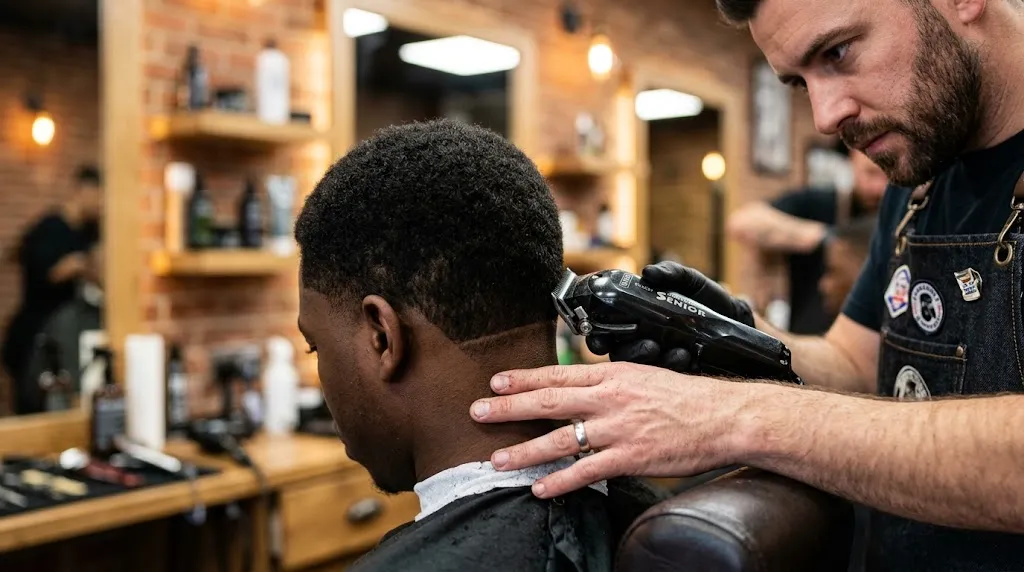
The foundation of the look begins by establishing a clean baseline around the ears and nape using a zero-gap trimmer. Clear out the bulk below the primary guideline with a foil shaver to skin-level, ensuring a high-contrast transition. Set the next transition line with clippers open at about one inch wide, keeping the motion curved upward to complement the shape of the skull.
Blending Technique
Work backward through the guard increments, starting with the 1.5 guard followed by the 1 guard, closing the lever incrementally to erase lines without chewing into the weight line. Use the corners of the clipper blade to flick out stubborn shadows rather than flat-palming the tool against the head. Maintain consistent spooning motions to bridge the gap between the skin base and the textured length sitting on top.
Carving the Signature "7" Arc
Switch to a slim, zero-gapped detail trimmer to draft the sharp angular drop near the corner of the forehead and temple. Carefully pivot the corner of the blade to etch a distinct, sharp curve that resembles the numeral seven, angling it down toward the sideburn. Clean up the edges of the arc with straight razor precision, stretching the skin tightly to lock in absolute crispness.
Mastering a precise burst fade or intricate geometric design requires advanced clipper control, patience, and meticulous technique. In this visual guide, the barber walks through transitioning from a number four down to lower guards, mapping out complex shapes like a back "v", and adding the final texturizing styling touches.
Guard Length Chart — Understanding Fade Numbers
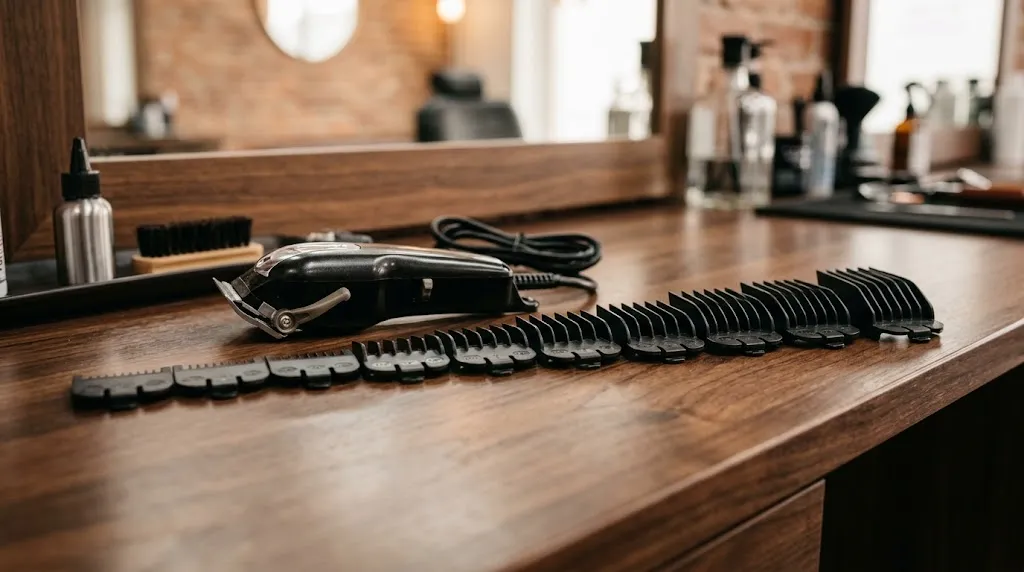
Clipper guard numbers indicate the length of hair left behind by the blade, scaling upward from a completely bare skin shave (0 guard) to one inch of length (8 guard). Each full guard number typically increases the remaining hair length by one-eighth of an inch. Using a standardized numbering system allows barbers to map out precise gradient transitions, blending shorter sides into longer lengths on top without uneven patches.
0 Guard: 1/16 inch (1.5mm) — Used for skin fades and clean-shaven baselines.
1 Guard: 1/8 inch (3mm) — The standard starting point for tight fading work.
2 Guard: 1/4 inch (6mm) — Creates a low-exposure look that still shows scalp.
3 Guard: 3/8 inch (10mm) — Offers a short, dense crop with minimal scalp visibility.
4 Guard: 1/2 inch (13mm) — The mid-point length, ideal for a classic medium-short taper.
5 Guard: 5/8 inch (16mm) — Transitions well into longer scissor-cut styles on top.
6 Guard: 3/4 inch (19mm) — Retains substantial weight for a conservative, brushed back look.
7 Guard: 7/8 inch (22mm) — A longer clipper setting that bridges short backs and full-length tops.
8 Guard: 1 inch (25mm) — The longest standard guard, commonly used for heavy scissor-over-comb blending.
6 vs 7 vs 8 Guard — Direct Comparison
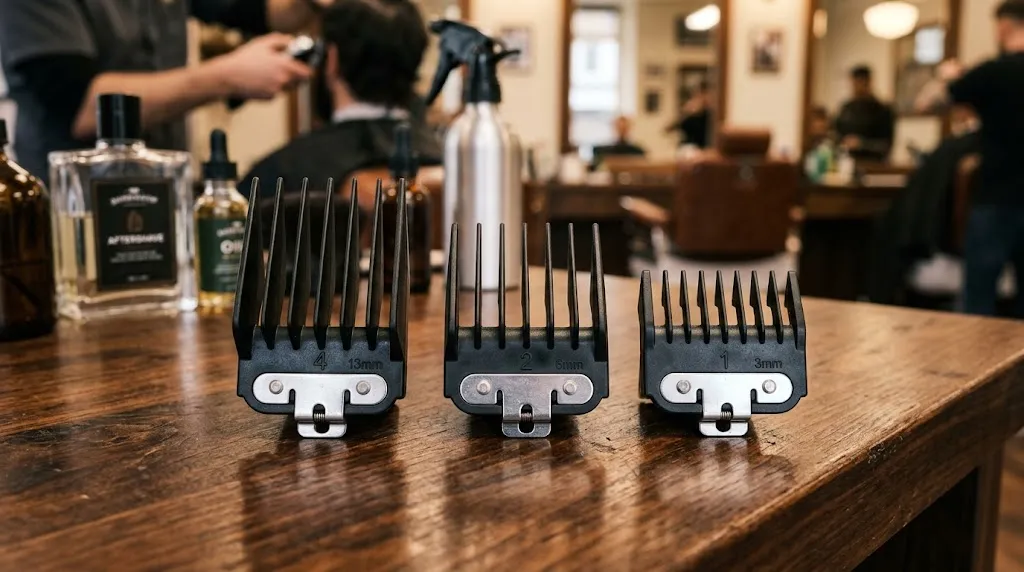
Choosing between the 6, 7, and 8 guards depends entirely on how much weight you want to keep on the sides before transitioning to your fade hairstyles or longer top sections. The 6 guard leaves three-quarters of an inch of hair, making it the best option of the three for a tighter, more structured taper that keeps the sides firmly tucked in.
Stepping up to the 7 guard leaves seven-eighths of an inch, providing a fuller appearance that works exceptionally well for guys with thicker hair who want to avoid showing too much scalp near the crown or parietal ridge. The 8 guard leaves a full inch of length, acting as the absolute upper limit of clipper guards before switching exclusively to shears. It behaves less like a traditional fade guard and more like a uniform trim, making it ideal for maintaining a heavy side-part or a slicked-back style with substantial bulk above the ears.
Seven Hairstyle by Face Shape

The Seven Hairstyle works across most face shapes by adjusting how the signature curved temple line-up and top volume frame your structure. Because the cut features sharp geometric detail near the temples combined with faded sides, small tweaks to the top length and fringe angle completely change how it flatters your bone structure.
Round Face: Keep the top textured and standing high while keeping the sides cut to a tight skin fade. This adds vertical height to elongate your face, balancing out softer jawlines and fuller cheeks.
Square Face: Balance a strong, angular jaw and broad forehead by softening the transition at the temples. A slightly lower fade keeps the silhouette proportional. For detailed styling approaches tailored to this structure, check out haircuts-for-square-faces.
Oval Face: This balanced proportion handles almost any variation of the look. You can pull off a high fade or a mid drop fade with ease, letting you experiment freely with the height and direction of the textured top.
Oblong or Long Face: Avoid adding too much height directly on top, as it stretches your features further. Instead, wear the top more forward or textured horizontally to break up vertical lines. Learn more about proportional adjustments in long-face-hairstyles-male.
Heart Face: A narrower chin pairs best with a bit of width on the sides rather than an extreme skin fade. Keep the temple line-up clean without taking the sides down too aggressively.
Diamond Face: Accentuate wide cheekbones and a narrow forehead by keeping volume concentrated on top while maintaining a sharp taper at the temples to frame the cheek structure cleanly.
Diffuser Method for Natural Curls

Enhancing naturally curly hair into soft, elongated loops requires low airflow and high patience. Start by applying a lightweight curl cream or mousse to soaking wet hair, scrunching upward to encourage the curl pattern to clump.
Attach a deep-bowl diffuser to your blow dryer, set the heat and speed to medium, and cup sections of your hair up toward the scalp. Hold the dryer in place for twenty seconds without moving it around to lock the curl shape before turning it off and moving to the next section. Never shove the diffuser straight up into the roots of soaking hair, as this blasts the cuticle open and creates instant frizz. Once the hair is completely dry, scrunch a pea-sized amount of lightweight hair oil into the ends to soften any residual crunch from your styling products.
Seven Hairstyle Variations by Audience
Seven Cut for Boys — Straight Hair
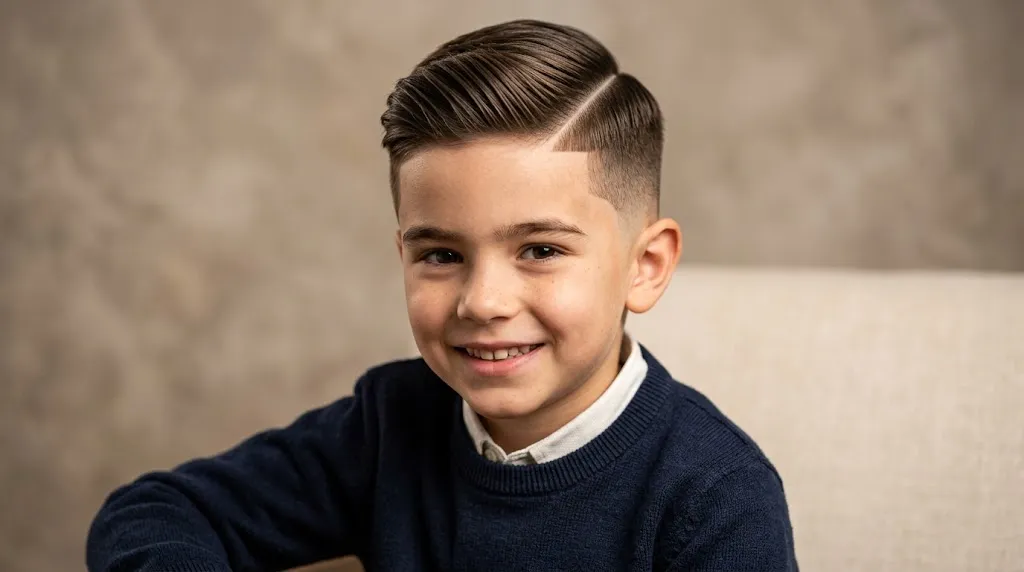
The seven cut on straight hair relies on clean geometric edges to contrast against flat, smooth locks. On fine or straight textures, the signature curved “7” line-up at the temple must be cut with a trimmer tip held at a sharp ninety-degree angle to keep the lines crisp. Pair this with a low drop fade on the sides to let straight hair lie flat on top without sticking out awkwardly at the crown.
Seven Cut for Boys — Short Hair
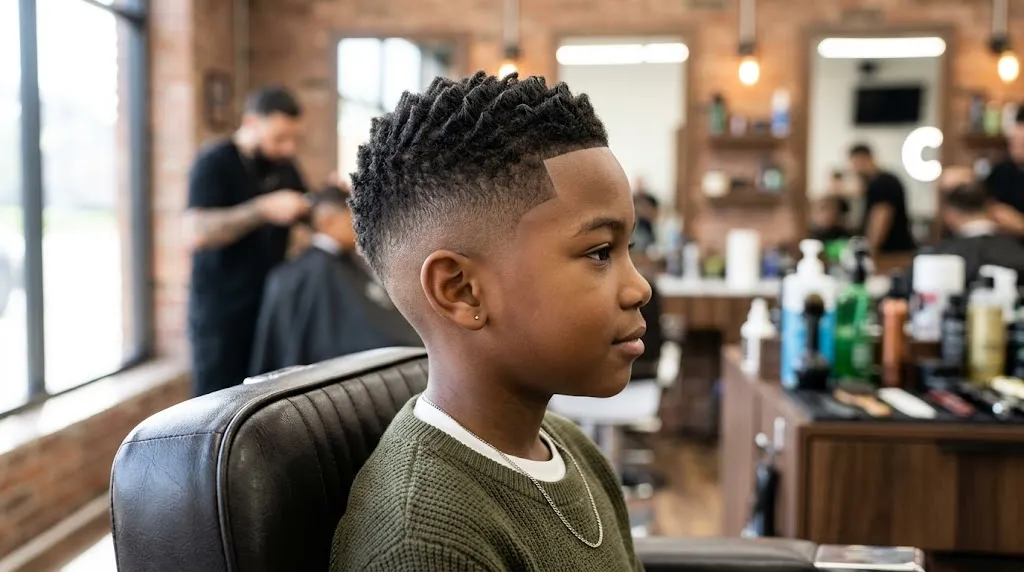
Short variations of the seven haircut pair a tight crop or buzz cut with an exaggerated, razor-sharp temple arch. Because there is less length on top to work with, the focus shifts entirely to the precision of the line-up and the contrast of a high skin fade. This version requires touch-ups every week and a half to maintain the sharp angle of the seven shape before hair grows back over the skin line.
Seven Cut for Boys — Long Hair

Longer top variations adapt the seven cut by maintaining flow and movement while keeping the temples cleanly exposed. Keeping length on top allows you to style the hair back or let it fall naturally over the forehead, reminiscent of modern korean-boy-hairstyle trends. For boys who prefer a bit more structure at the edges rather than a loose flow, a box-cut-hairstyle offers a similarly rigid geometric alternative.
Mullet 7 Haircut
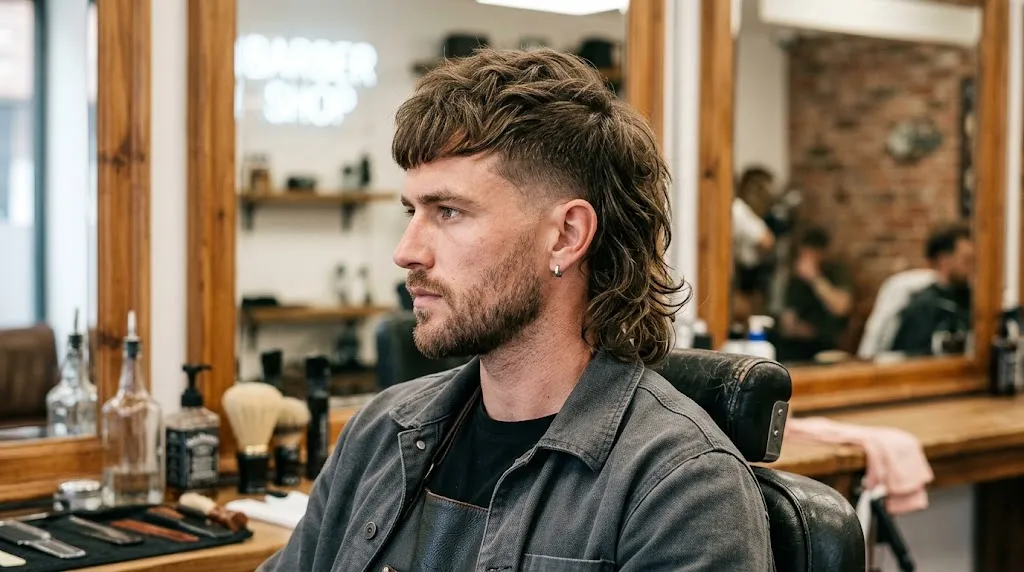
The mullet 7 haircut blends the disconnected length of a classic back flow with the distinct temple shaping of the modern seven cut. Keep the hair at the nape long and textured while taking the sides down to a mid or high fade that cuts sharply into the curved “7” pattern near the sideburns. This fusion works best with natural wave or texture through the back to prevent the transition from looking too blocky.
Siete Haircut for Girls

The siete haircut adapts the sharp temple line-up for shorter feminine cuts, such as textured pixie crops or undercut bobs. Stylists carve the curved line near the ear or temple to create an asymmetric focal point while leaving the crown softer and more fluid. This creates a striking juxtaposition between aggressive geometric lines and softer, touchable movement on top.
How to Ask Your Barber for a Seven Haircut
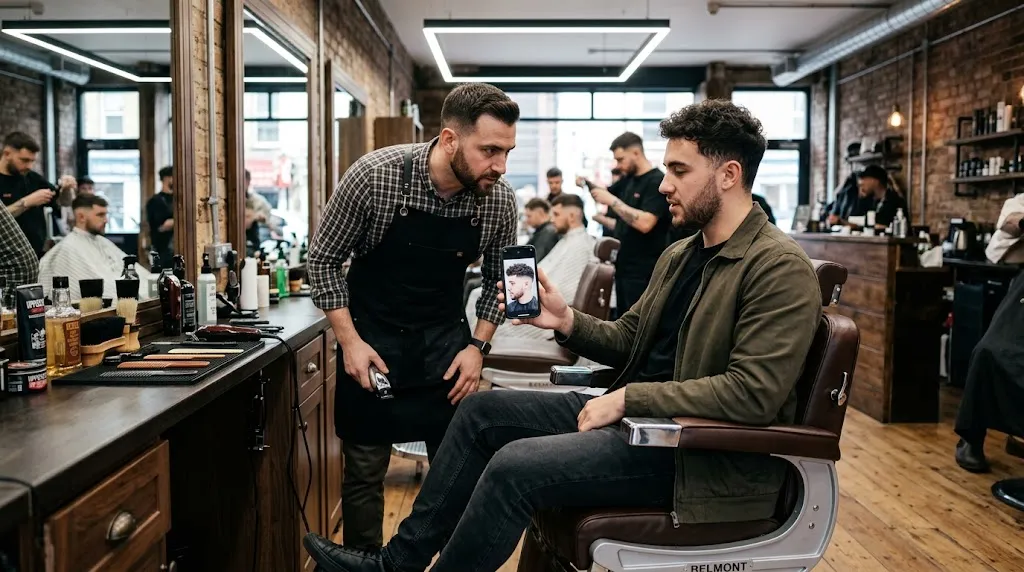
Getting the seven haircut right requires precise communication with your barber, specifically regarding the signature curved line-up and your preferred fade height. Use a direct, technical description along with a clear reference photo to ensure the temple arch matches your expectations.
Specify the fade type: Tell your barber whether you want a low, mid, or high fade on the sides and back (such as a skin fade or drop fade).
Define the top length and texture: State how many inches you want left on top and whether you prefer it cropped short for a textured crop or styled with length for a classic flow.
Request the 7-shaped line-up: Explicitly ask for a clean, curved architectural line-up that hooks sharply around the temple or sideburn area, forming the distinct number seven shape.
Bring a visual reference: Show your barber a clear picture of the cut, as visual guides prevent miscommunication about the exact angle and thickness of the curved line.
For more detailed advice on communicating your vision during a cut, check out this guide on groom-hairstyle.
[IMAGE: Close-up profile view of a barber using a trimmer to carefully carve a sharp, curved 7-shaped line into the temple fade of a client]
Styling & Maintenance
Products to Use

Managing the textured top and keeping the sharp geometry of the Seven Hairstyle requires a precise combination of styling agents, starting with a lightweight sea salt spray applied to damp hair to build natural volume and separation before blow-drying. For the final finish, work a matte-finish styling clay containing kaolin or bentonite into dry hair to lock in a strong hold without adding greasy shine or weighing down the crop. If you prefer a looser, more natural movement on top, substitute the clay with a water-based styling paste that offers medium hold and flexibility throughout the day. Finish the sides and the curved temple area with a tiny drop of lightweight argan or jojoba-based grooming oil patted lightly over the skin if dryness occurs around the fresh line-up.
Touch-Up Schedule

Maintaining the distinct 7-shaped curved line-up and clean fade requires a strict barber visit every 10 to 14 days, as temple details and skin fades lose their crisp edge very quickly as hair grows back. Between professional appointments, you can extend the look by using a detail trimmer to clean up stray hairs below the ear and neckline, but leave the complex temple curve to your barber to avoid altering the geometry. When your style begins to lose its shape or daily hold, knowing how-to-set-hair properly with the right drying technique will keep the top textured and structurally sound until your next cut.
Corte el siete para principiantes paso a paso
Real User Problems With the Seven Haircut
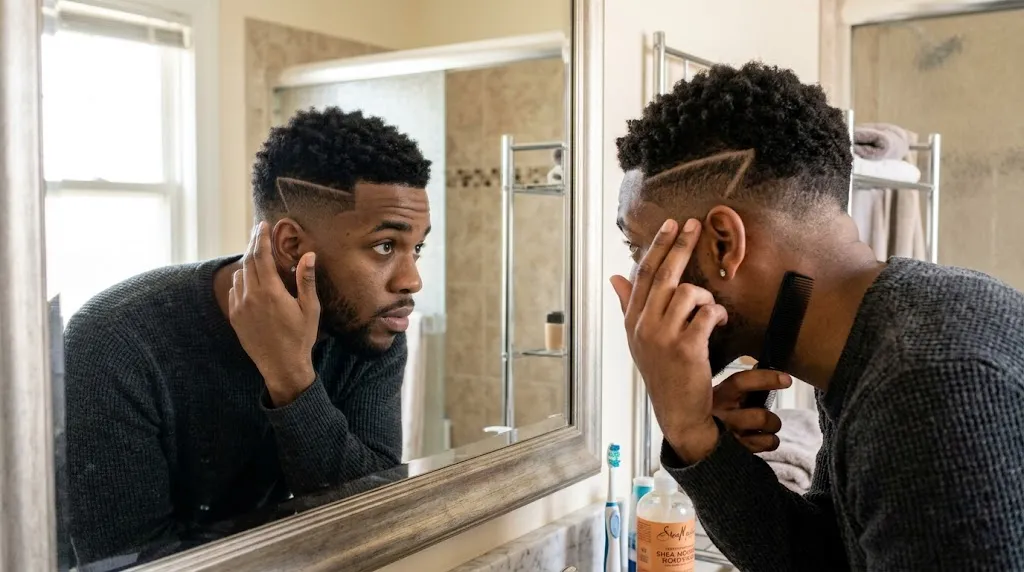
The Seven haircut requires strict upkeep because the distinct curved line-up at the temple leaves zero room for error as hair begins to grow back. Managing this style involves navigating a few very specific daily hurdles:
Uneven Line-Up Regrowth: Within ten to fourteen days, the sharp geometry of the seven-shaped edge starts to blur as stray follicles sprout, making the crisp angle look muddy if not constantly maintained.
Temple Sensitivity and Irritation: The skin around the temples and sideburns is remarkably thin, meaning tight razor work or aggressive clippers in this zone frequently trigger razor burn, redness, or ingrown hairs.
The Awkward Grow-Out Phase: Transitioning away from this cut or simply letting the sides grow out creates an awkward middle ground where the curved shaved track looks disjointed against longer surrounding hair.
At-Home Touch-Up Mistakes: Trying to fix the curved template independently with a trimmer often leads to an accidental over-arch or a widened gap, completely throwing off the symmetry of the face.
Preventing these issues comes down to spacing professional clean-ups every two weeks and avoiding the temptation to dig the corners of a trimmer too deeply into the temple skin at home.
What specific part of the grow-out phase or maintenance routine are you finding the most frustrating?
Seven Haircut vs Other Popular Fades
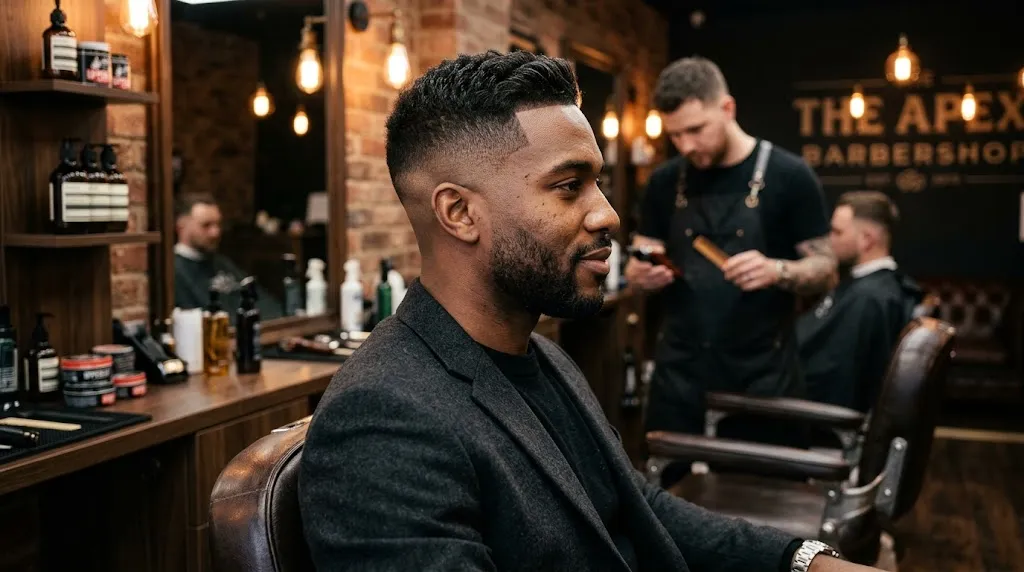
The Seven Haircut distinguishes itself from other popular fades through its signature angular, curved “7-shaped” line-up near the temple, whereas standard fades rely on soft, circular, or drop gradients without geometric edge accents. Understanding how the Seven Fade stacks up against other contemporary cuts clarifies which shape best fits your head structure and styling routine.
Comparison: Seven Fade vs Burst Fade vs Taper Fade vs Mullet
| Cut Style | Fade Mechanism | Defining Feature | Best Suited For |
|---|---|---|---|
| Seven Fade | Low to mid fade with tight sideburn taper | Curved geometric "7" shape carved into the temple area | Sharp, modern styling and angular face shapes |
| Burst Fade | Radial, circular fade centered directly behind the ear | Semicircular shape radiating outward like a sunburst | Mohawks, back-hair-style variations, and textured crops |
| Taper Fade | Minimalist fade restricted strictly to the sideburns and neckline | Keeps length on the sides while cleaning up the edges | Professional looks and traditional normal-slope-haircut styles |
| Mullet | Disconnected fade on the sides with heavy length retained in the back | High contrast between short sides and a long back | Bold statement cuts and wavy or curly hair textures |
Practical Selection Guide

Precision vs. Subtlety: Choose the Seven Fade if you prefer razor-sharp architectural lines that draw attention to the eye and brow structure. Opt for a taper fade if you need a low-maintenance corporate look that grows out cleanly.
Head Shape Considerations: Burst fades and mullets widen the visual profile around the ears and back, making them ideal for narrow faces. The clean vertical drop of a Seven Fade helps slim down rounder face shapes by emphasizing clean vertical lines at the temples.
Maintenance Requirements: The geometric precision of the Seven Cut requires a barber visit every two weeks to keep the sharp angle crisp. Softer fade variations like standard tapers allow for an extra week of growth between touch-ups.
Frequently Asked Questions
Final Verdict — Who Should Get a Seven Haircut
The seven haircut works best if you want a fade that makes a statement without needing a full head of length to pull it off. It suits short-to-medium hair, thrives on sharp maintenance, and rewards anyone willing to keep up with a touch-up every one to two weeks.
If you have thick, coarse hair that holds a clean line well, or naturally straight-to-wavy texture, this cut will look crisp with minimal daily styling. If your hair is very fine or you're not ready for frequent barber visits, you may want to soften the line-up into a simpler taper fade instead — the core shape still works, just with less upkeep pressure.
For boys and younger clients, the same fade logic applies, just scaled down in sharpness for lower maintenance. For anyone still deciding between this and a more classic option, the guard chart and comparison table above should make the choice straightforward.