
Hair Cutting Style Photo: Haircut Names With Photos for Women, Men, Girls & Boys
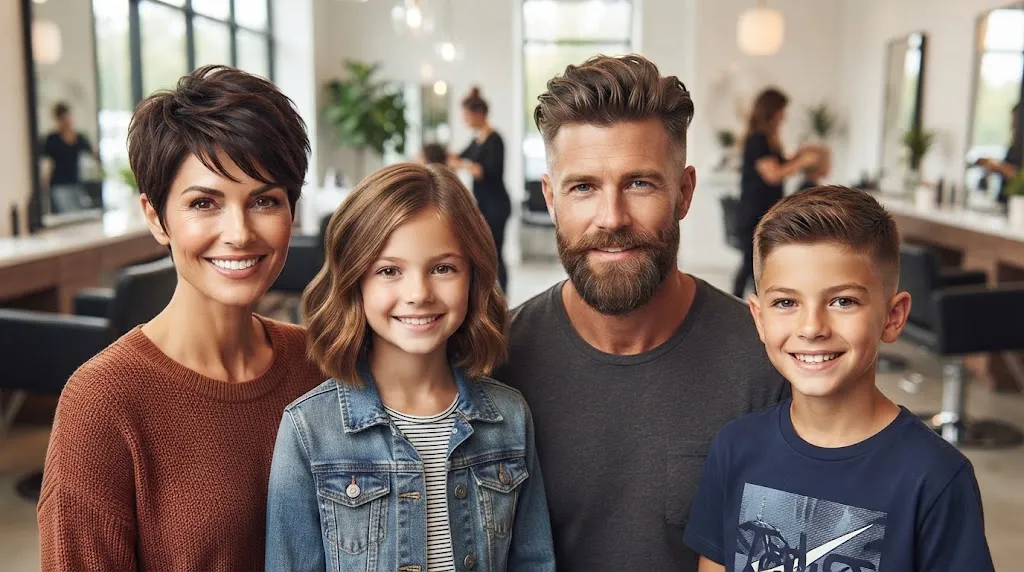
Finding the right haircut is easier when you can see the style and know exactly what it is called. This Hair Cutting Style Photo guide brings together named haircut ideas for women, men, girls, and boys, including short, medium, long, simple, and current styles. You can also explore more haircut inspiration across Hair Styles USA as you compare the looks that interest you.
Along with each key haircut, you’ll find practical details that go beyond the photo, including suitable hair textures, density considerations, maintenance level, and what to discuss with your stylist or barber. If you want to browse styles more broadly by length, texture, face proportions, and other categories, our Hairstyles & Haircuts Directory provides a structured place to continue your search.
Hair Cutting Style Photos at a Glance
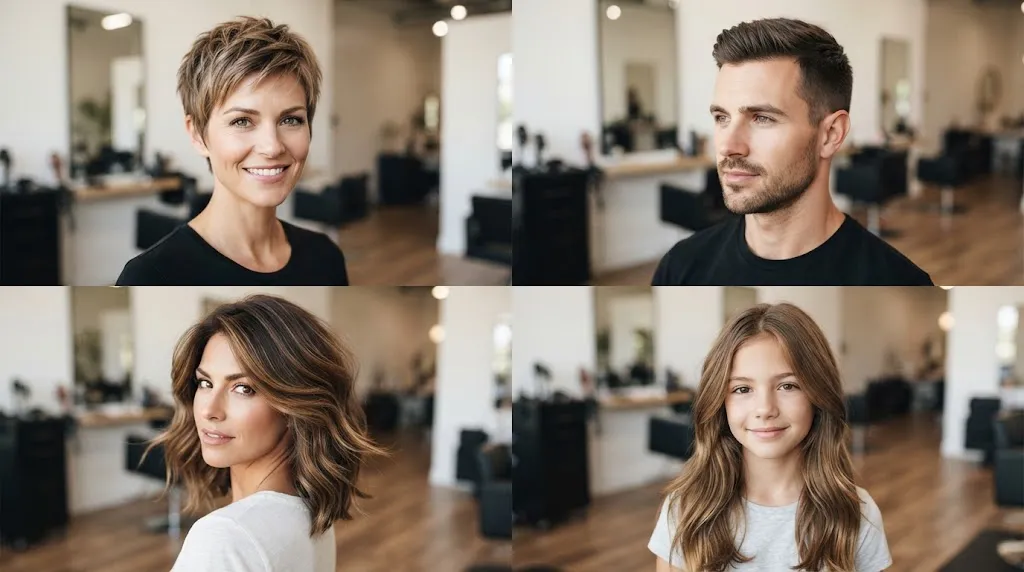
Start with the type of haircut you want to see. Browse by who the style is for, hair length, texture, maintenance preference, or current 2026 trends, then jump directly to the relevant photos and haircut names.
Browse Haircut Photos By Category:
- Women’s Haircuts
- Men’s Haircuts
- Girls’ Haircuts
- Boys’ Haircuts
- Short Haircuts
- Medium Haircuts
- Long Haircuts
- Curly & Textured Haircuts
- Simple Haircuts
- New 2026 Haircuts
For a quick comparison, the table below shows the basic length, overall shape, and typical maintenance level of several widely recognized haircut styles.
| Haircut | Length | Main Look | Maintenance |
|---|---|---|---|
| Pixie | Short | Cropped and defined | Medium |
| Bob | Short–Medium | Clean, structured shape | Medium |
| Lob | Medium | Versatile longer bob | Low–Medium |
| Butterfly | Medium–Long | Layered with movement | Medium |
| Buzz Cut | Very short | Clean and minimal | Low |
| Taper | Short | Gradually shorter sides | Low–Medium |
Hair Cutting Style Photos for Women With Names
Knowing the name of a haircut makes it much easier to compare photos and explain the look you want at the salon. The styles below are organized by length, with quick details about texture, density, maintenance, and the shape each cut creates.
Short Haircuts for Women

Pixie Cut

A pixie is a short haircut with closely cropped sides and back, usually paired with slightly more length through the top or fringe.
Best length: Short
Hair texture: Straight, wavy, curly
Hair density: Fine to thick
Maintenance: Medium
Creates: Definition and a light, cropped shape
Ask your stylist for: A short cut around the sides and back with enough top length to suit your preferred texture and styling.
Bixie Cut

A bixie combines the shortness of a pixie with some of the length and movement of a bob, especially around the sides and back.
Best length: Short
Hair texture: Straight, wavy, lightly curly
Hair density: Fine to medium
Maintenance: Medium
Creates: Movement, softness, and visible texture
Ask your stylist for: A pixie-bob shape with longer layers around the crown, sides, and perimeter.
Classic Bob
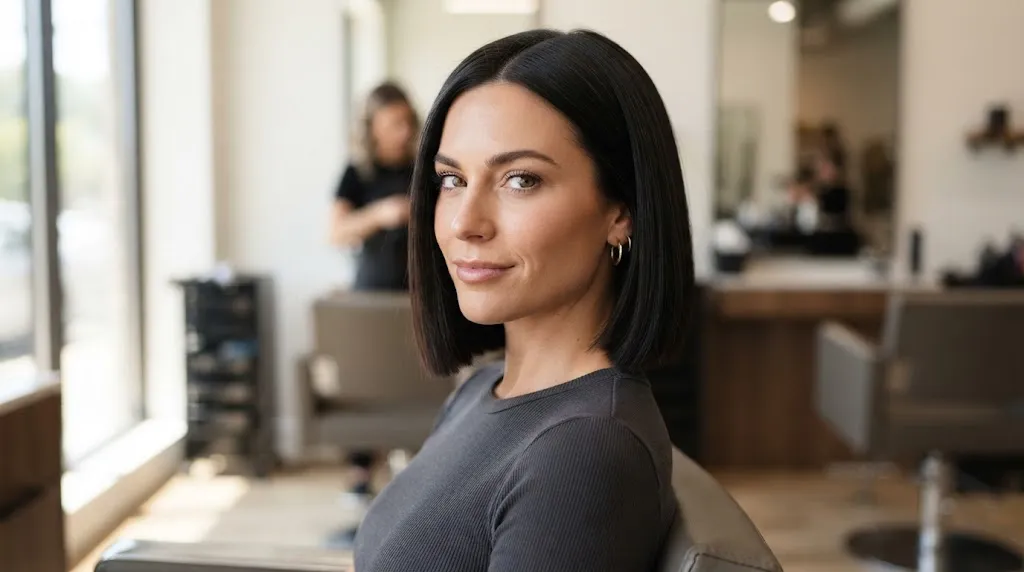
A classic bob has a clearly defined perimeter that usually falls between the jaw and neck, creating a balanced, recognizable shape.
Best length: Short to medium
Hair texture: Straight, wavy
Hair density: Fine to thick
Maintenance: Medium
Creates: A clean and controlled outline
Ask your stylist for: An even bob length with a defined perimeter and only the amount of layering needed for your texture.
French Bob
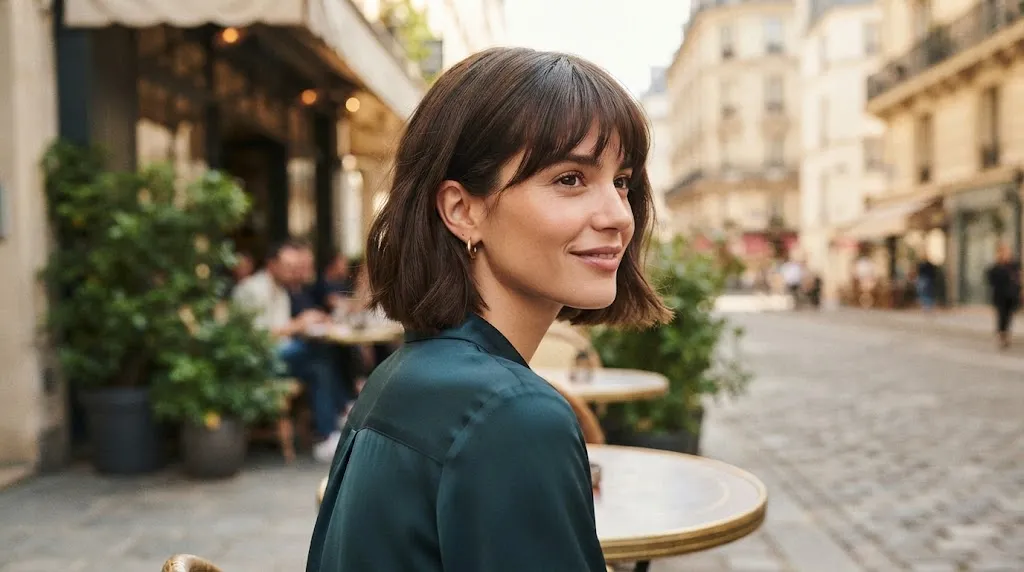
A French bob is generally shorter than a traditional bob, often sitting around the jaw or slightly above it and commonly paired with a soft fringe.
Best length: Short
Hair texture: Straight, wavy, softly curly
Hair density: Fine to medium
Maintenance: Medium
Creates: A compact shape with soft framing
Ask your stylist for: A jaw-length or slightly shorter bob with a relaxed perimeter and optional soft fringe.
Blunt Bob
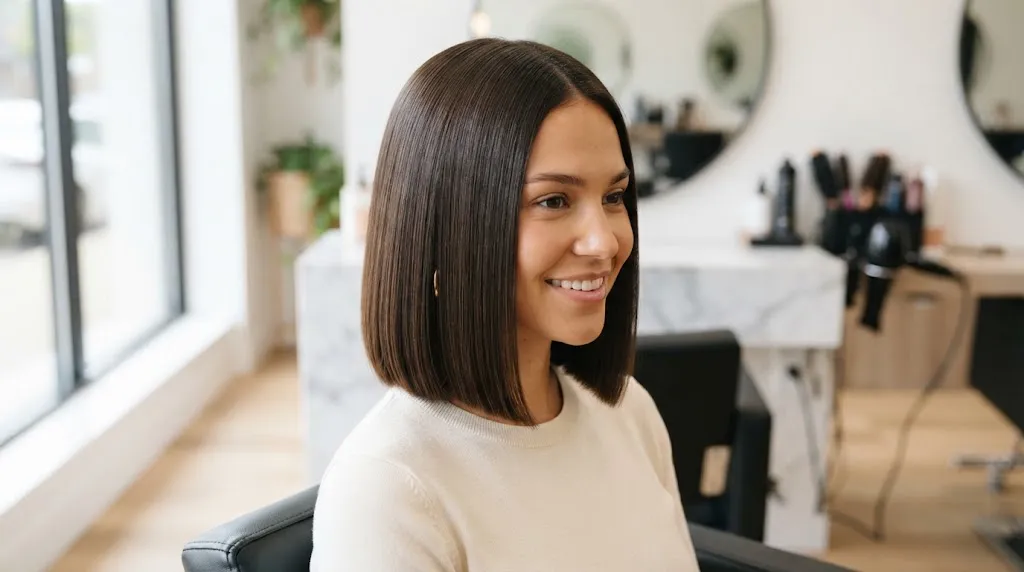
A blunt bob keeps the ends visually strong and even rather than relying on obvious layers through the perimeter.
Best length: Short to medium
Hair texture: Straight, slightly wavy
Hair density: Fine to medium
Maintenance: Medium
Creates: Definition and the appearance of a fuller baseline
Ask your stylist for: A one-length bob with a solid perimeter and minimal visible layering.
Layered Bob

A layered bob adds shorter sections within the shape to create more movement than a blunt or one-length bob.
Best length: Short to medium
Hair texture: Straight, wavy, curly
Hair density: Medium to thick
Maintenance: Medium
Creates: Movement, texture, and controlled volume
Ask your stylist for: A bob with layers placed to reduce bulk or encourage movement without losing the overall shape.
Asymmetrical Bob

An asymmetrical bob intentionally keeps one side or the front longer than another, creating a visibly uneven but structured silhouette.
Best length: Short to medium
Hair texture: Straight, wavy
Hair density: Fine to thick
Maintenance: Medium
Creates: Definition and directional framing
Ask your stylist for: A bob with a deliberate length difference while keeping the transition clean and balanced.
Short Shag
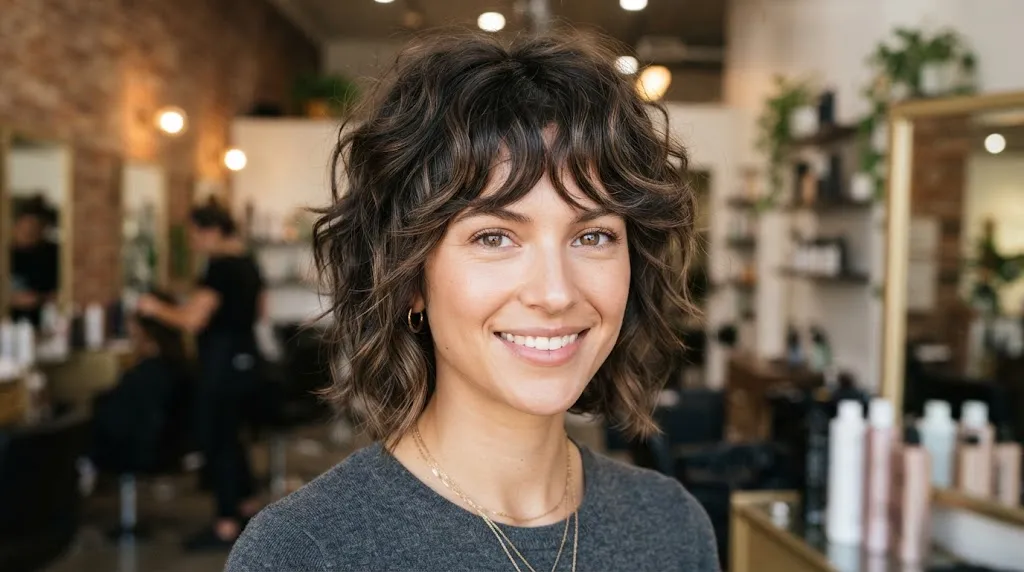
A short shag uses multiple textured layers and a less polished perimeter to create movement around the crown, sides, and fringe.
Best length: Short
Hair texture: Wavy, curly, straight with natural texture
Hair density: Medium to thick
Maintenance: Medium
Creates: Texture, movement, and crown volume
Ask your stylist for: Short, blended shag layers with texture around the crown and softer pieces around the face.
Medium-Length Haircuts for Women
Lob / Long Bob

A lob is a longer version of the bob that usually sits around the neck, collarbone, or shoulders while keeping a recognizable bob-like outline.
Best length: Medium
Hair texture: Straight, wavy, curly
Hair density: Fine to thick
Maintenance: Low–Medium
Creates: Versatility and a clean medium-length shape
Ask your stylist for: A longer bob that keeps the perimeter near the collarbone with layering adjusted to your texture.
Clavi Cut

A clavi cut finishes around the clavicle or collarbone, giving more length than a traditional bob while staying shorter than most long-layered cuts.
Best length: Medium
Hair texture: Straight, wavy
Hair density: Fine to thick
Maintenance: Low–Medium
Creates: Soft movement with a defined length
Ask your stylist for: A collarbone-length cut with subtle shaping around the front if you want more movement.
Midi Cut

A midi cut sits between a bob and long hair, generally around the shoulders or upper chest, with enough length for different styling options.
Best length: Medium
Hair texture: Straight, wavy, curly
Hair density: Fine to thick
Maintenance: Low–Medium
Creates: Balance and styling flexibility
Ask your stylist for: A medium-length shape that keeps enough weight at the ends while allowing movement through the lengths.
Medium Layers
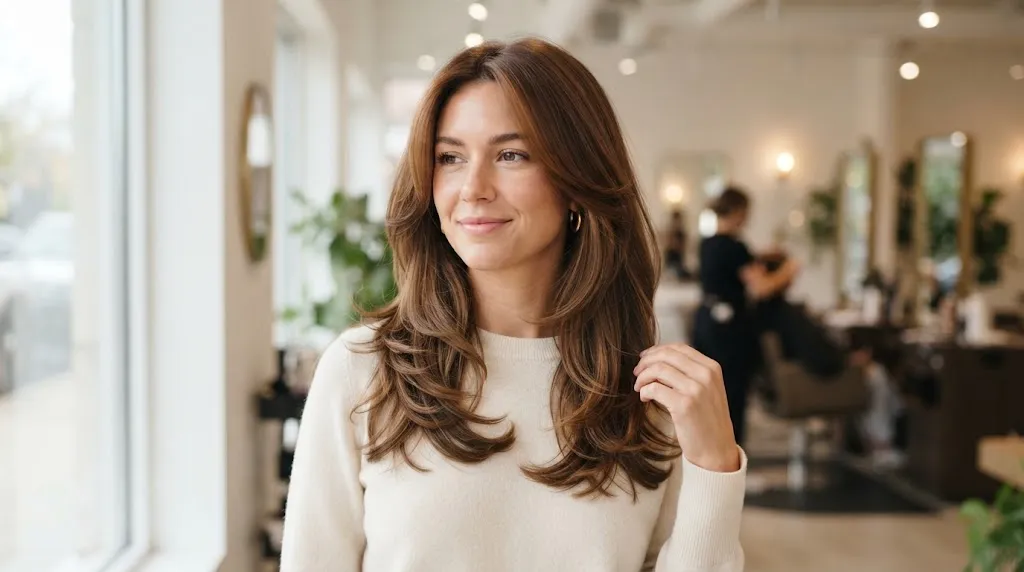
Medium layers break up a one-length shape by adding different lengths through the midsection and ends.
Best length: Medium
Hair texture: Straight, wavy, curly
Hair density: Medium to thick
Maintenance: Medium
Creates: Movement and controlled volume
Ask your stylist for: Layers positioned to create movement without removing more density than your hair can support.
Shoulder-Length Layers

This cut keeps the overall length close to the shoulders while using layers to reduce heaviness and add movement around the face and ends.
Best length: Medium
Hair texture: Straight, wavy, curly
Hair density: Medium to thick
Maintenance: Medium
Creates: Movement and softer framing
Ask your stylist for: Shoulder-length hair with blended layers that preserve enough weight through the perimeter.
Shag

A shag combines visible layers, texture, and a softer perimeter, usually with extra movement around the crown and face.
Best length: Medium
Hair texture: Wavy, curly, textured straight hair
Hair density: Medium to thick
Maintenance: Medium
Creates: Texture, volume, and movement
Ask your stylist for: Shaggy layers through the crown and lengths with face-framing pieces that suit your natural texture.
Wolf Cut

A wolf cut blends shag-like layers with a more noticeable contrast between shorter volume on top and longer hair toward the back.
Best length: Medium
Hair texture: Wavy, curly, textured straight hair
Hair density: Medium to thick
Maintenance: Medium
Creates: Crown volume, texture, and an intentionally undone shape
Ask your stylist for: Shorter textured layers around the crown that gradually connect into longer lengths below.
Face-Framing Layers
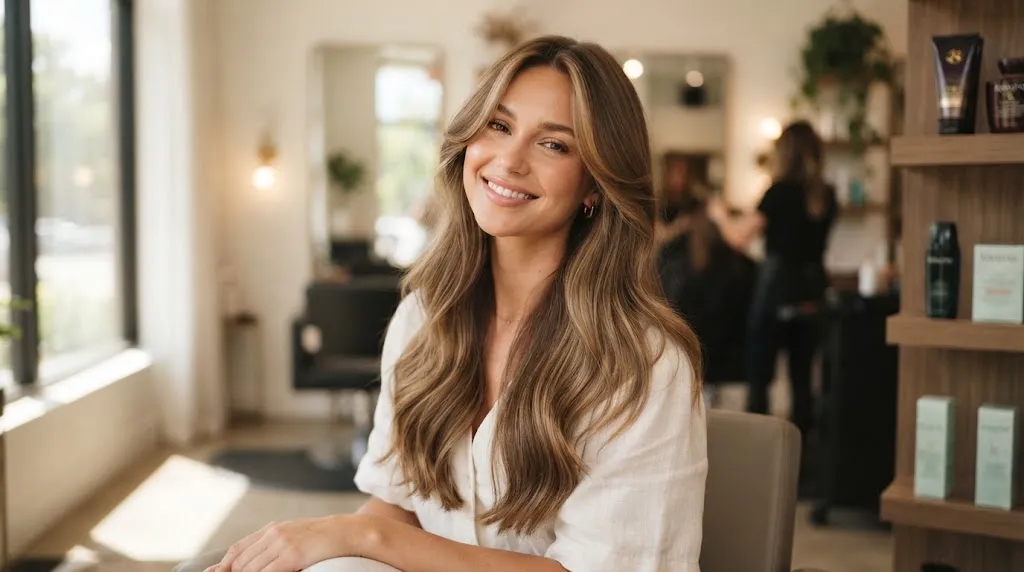
Face-framing layers use shorter pieces around the front while keeping more length through the rest of the haircut.
Best length: Medium
Hair texture: Straight, wavy, curly
Hair density: Fine to thick
Maintenance: Medium
Creates: Framing and movement around the face
Ask your stylist for: Front layers placed around the face while preserving your preferred overall length and density.
Long Haircuts for Women
Butterfly Cut
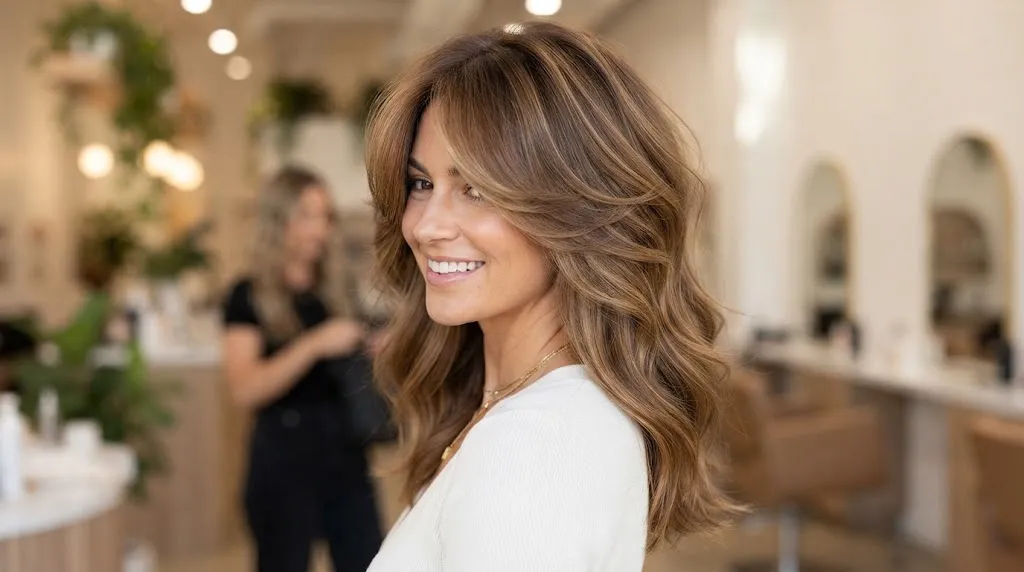
A butterfly cut combines shorter face-framing and upper layers with longer layers underneath, creating movement without giving up most of the overall length.
Best length: Medium to long
Hair texture: Straight, wavy
Hair density: Medium to thick
Maintenance: Medium
Creates: Volume, movement, and face framing
Ask your stylist for: Cascading layers with shorter pieces around the face that blend gradually into longer lengths.
Long Layers
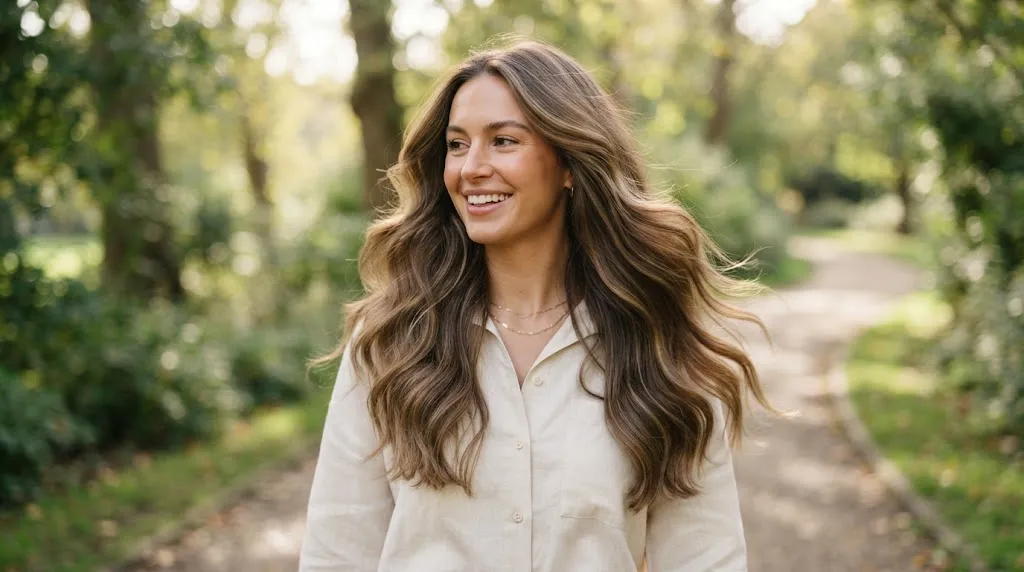
Long layers introduce movement through lengthy hair while keeping the shortest sections relatively long.
Best length: Long
Hair texture: Straight, wavy, curly
Hair density: Medium to thick
Maintenance: Low–Medium
Creates: Movement while preserving length
Ask your stylist for: Long, blended layers that remove excess weight without creating a heavily layered appearance.
U-Shaped Cut
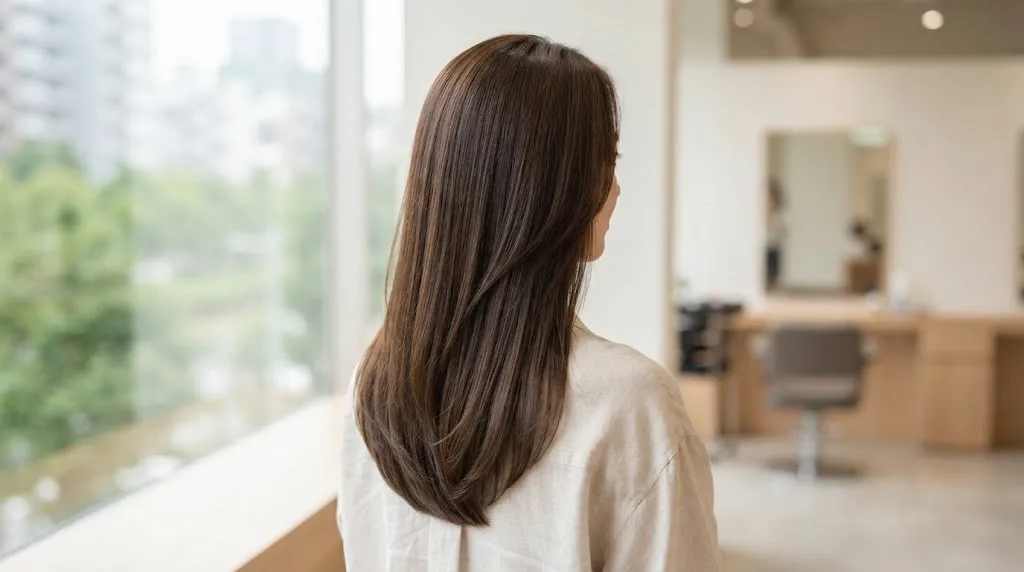
A U-shaped cut forms a softly rounded outline at the back, with the center remaining slightly longer than the sides.
Best length: Long
Hair texture: Straight, wavy
Hair density: Medium to thick
Maintenance: Low
Creates: A soft, rounded back shape
Ask your stylist for: A gentle U-shaped perimeter that keeps the center back longer without creating a sharp point.
V-Shaped Cut
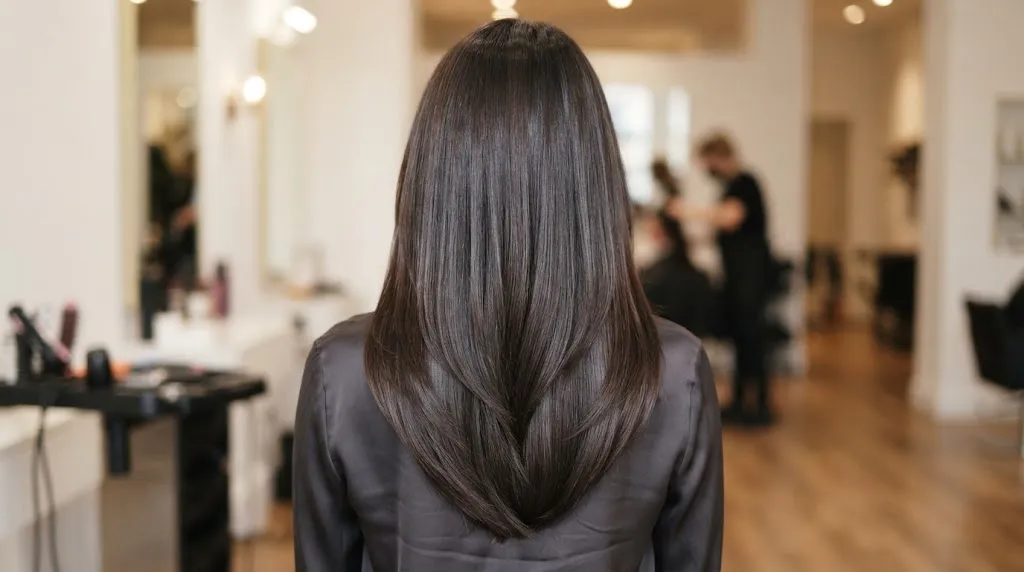
A V-shaped cut creates a more noticeable point at the center back, with the sides gradually becoming shorter toward the front.
Best length: Long
Hair texture: Straight, wavy
Hair density: Medium to thick
Maintenance: Low–Medium
Creates: Definition and a tapered back silhouette
Ask your stylist for: A clearly defined V-shaped perimeter while retaining your preferred overall length.
Feathered Layers
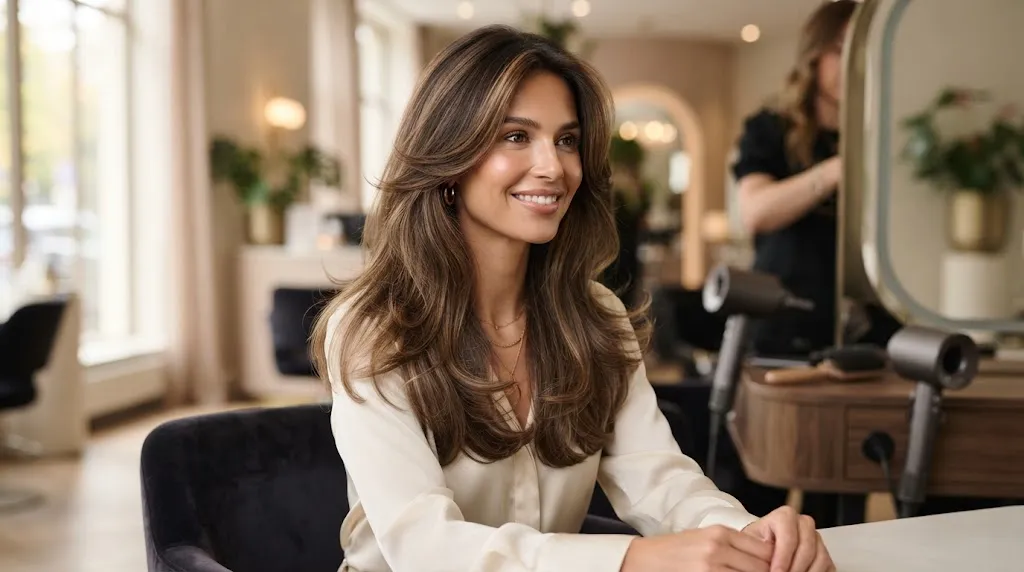
Feathered layers are cut and styled to create lighter, outward-moving sections rather than a heavy, solid shape.
Best length: Medium to long
Hair texture: Straight, wavy
Hair density: Medium to thick
Maintenance: Medium
Creates: Airy movement and softness
Ask your stylist for: Light, blended layers that can be styled away from the face for a feathered finish.
Long Shag

A long shag keeps substantial length while adding visible layering and texture through the crown, front, and lengths.
Best length: Long
Hair texture: Wavy, curly, textured straight hair
Hair density: Medium to thick
Maintenance: Medium
Creates: Texture, movement, and crown volume
Ask your stylist for: A long shag with layered crown volume and textured lengths while keeping the overall length intact.
Long Face-Framing Layers
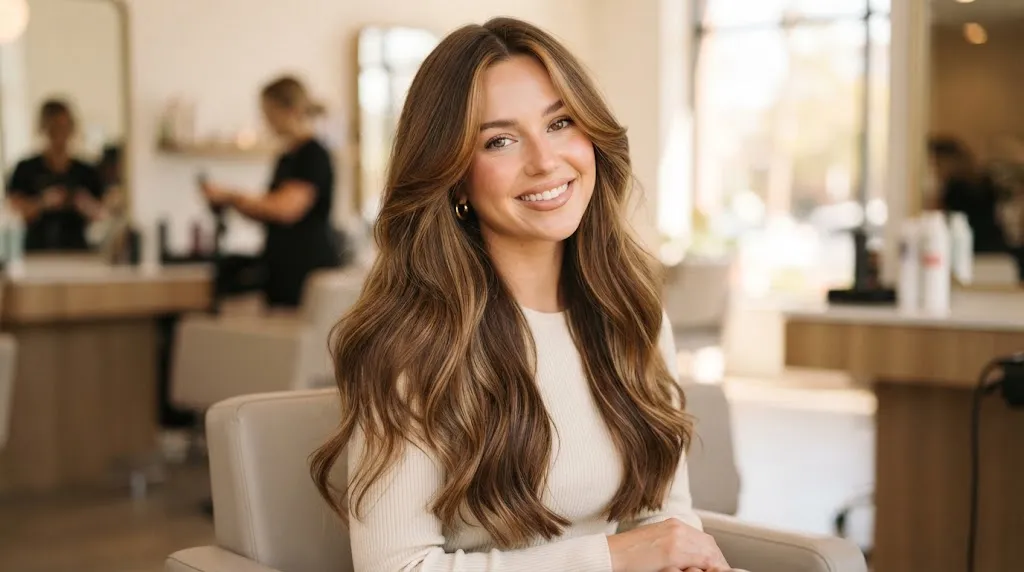
Long face-framing layers shorten only the front sections while leaving most of the back and overall length untouched.
Best length: Long
Hair texture: Straight, wavy, curly
Hair density: Fine to thick
Maintenance: Low–Medium
Creates: Soft framing without a major length change
Ask your stylist for: Front layers that begin at a flattering point and blend smoothly into your existing length.
Long Hair With Curtain Bangs

This style keeps long lengths through the back while adding a center-parted fringe that becomes longer toward each side of the face.
Best length: Long
Hair texture: Straight, wavy
Hair density: Fine to thick
Maintenance: Medium
Creates: Front framing while preserving long hair
Ask your stylist for: Curtain bangs that are shorter near the center and gradually blend into longer face-framing sections.
Haircuts With Bangs and Fringe
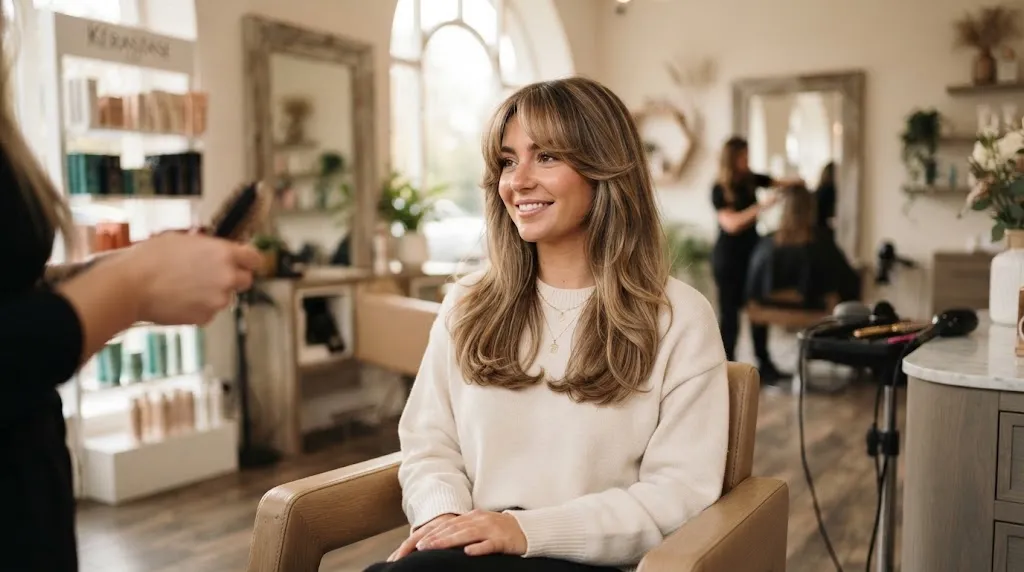
The main difference between fringe styles is the shape, length, and direction of the hair across the front. These photos make the distinctions easier to recognize without repeating the full haircut descriptions above.
Curtain Bangs
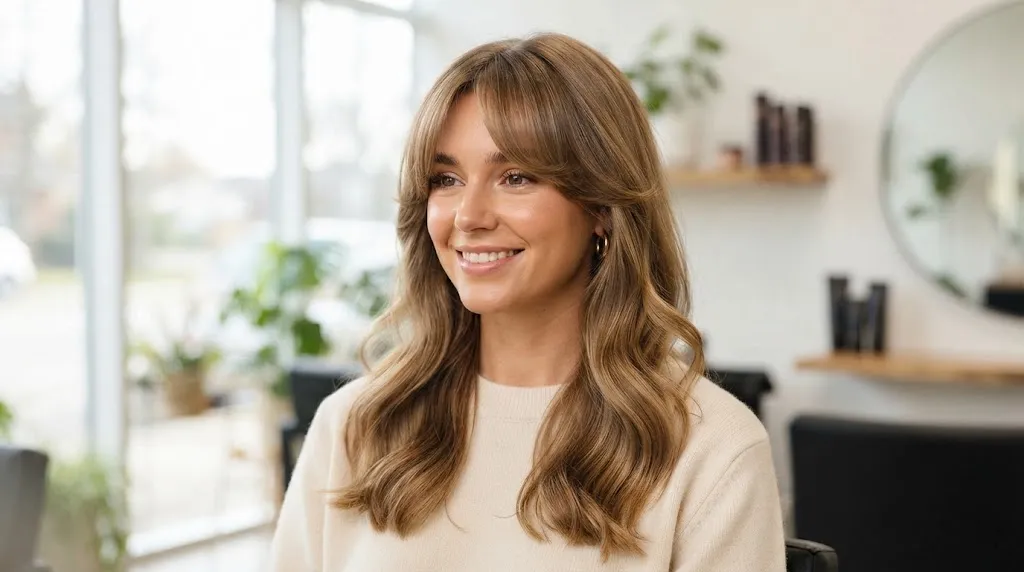
Parted near the center and shorter in the middle, then gradually longer toward the sides for a soft, open frame around the face.
Wispy Bangs

Light, separated strands create a softer and less solid fringe across the forehead.
Blunt Bangs

A stronger, more even line runs across the front, creating a clearly defined fringe shape.
Side-Swept Bangs
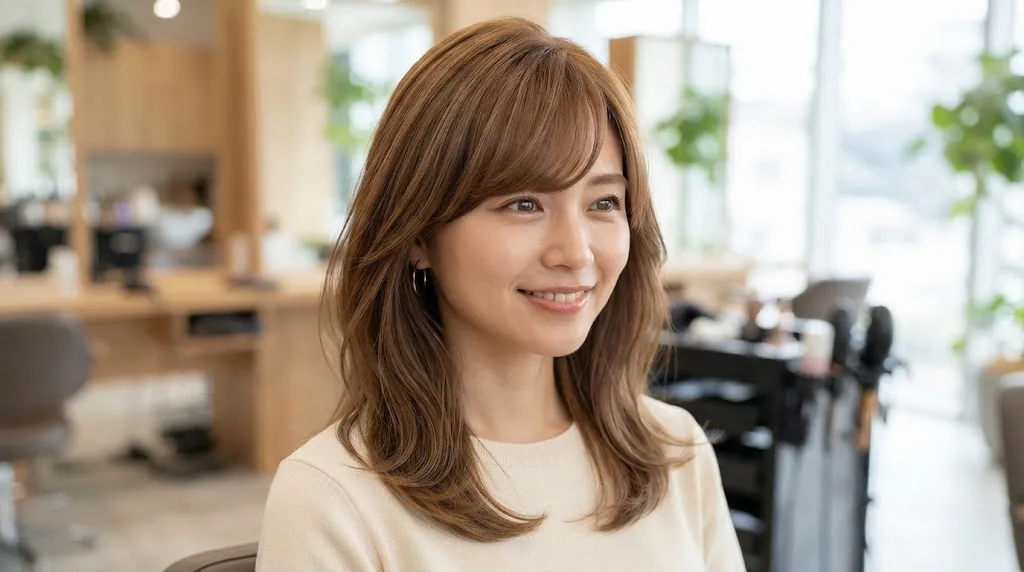
The fringe is directed diagonally across the forehead instead of falling evenly or opening from the center.
Micro Bangs

These very short bangs finish noticeably above the eyebrows, leaving more of the forehead visible.
Curly Bangs
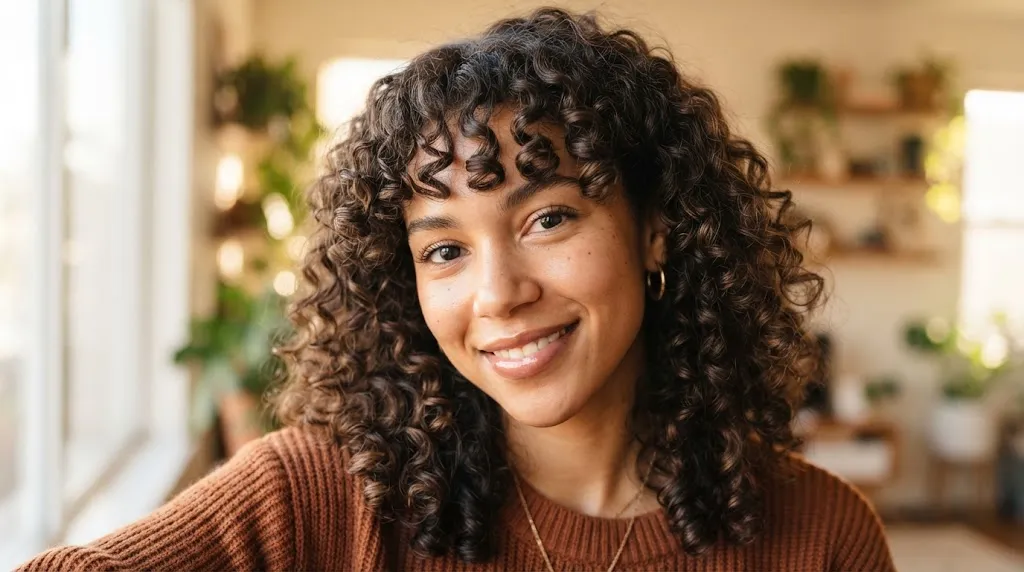
Curly bangs allow the natural curl pattern to form the fringe instead of straightening it into a uniform front line.
Hair Cutting Style Photos for Men With Names
Men’s haircuts are easiest to compare when the photo is paired with the correct style name and a clear description of its shape. The examples below focus on recognizable short, classic, tapered, and longer cuts, with practical notes you can use when discussing the reference with your barber.
Short and Classic Men's Haircuts

Buzz Cut

A buzz cut keeps the hair uniformly very short with clippers, creating a clean shape with little or no daily styling.
Hair texture: Straight, wavy, curly
Maintenance: Low
Main look: Very short and even
Ask your barber for: The clipper guard length you want all over, with your preferred neckline and edge finish.
Crew Cut
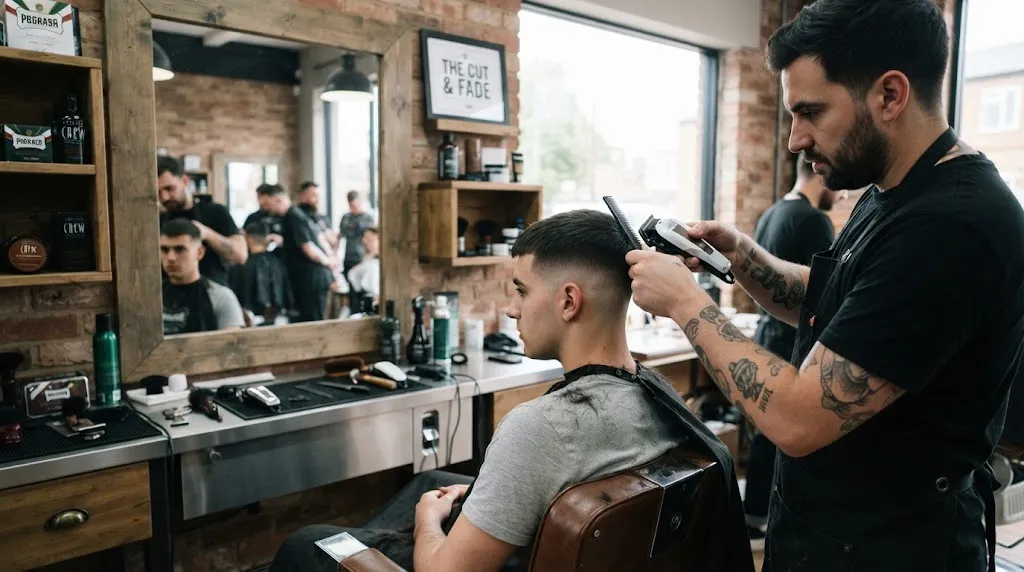
A crew cut keeps the top short but slightly longer than the sides, usually with enough length at the front to create subtle shape.
Hair texture: Straight, wavy, lightly curly
Maintenance: Low
Main look: Short, neat, and structured
Ask your barber for: Short tapered sides with a slightly longer top that gradually becomes shorter toward the crown.
French Crop
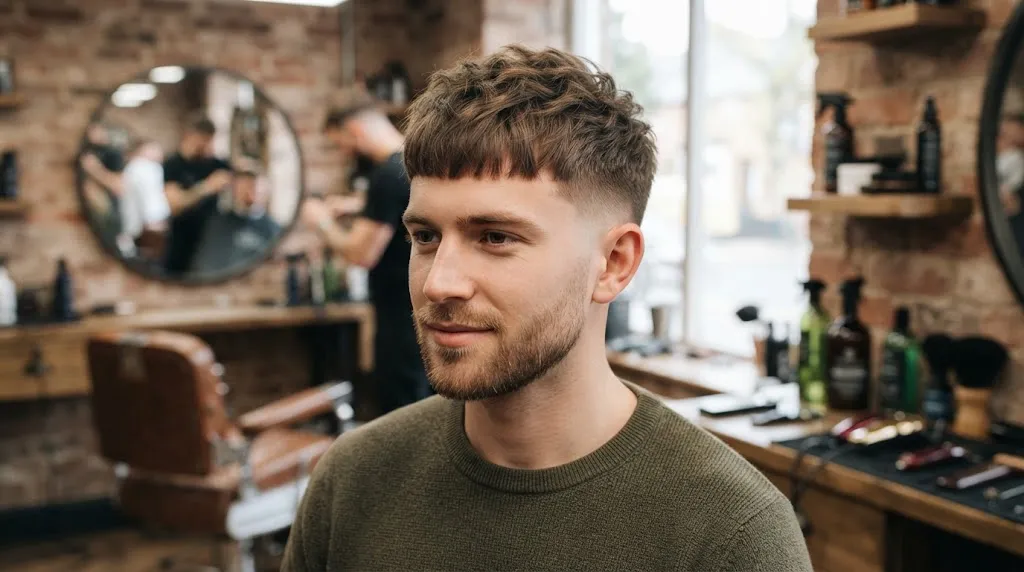
A French crop combines short sides with a textured top and a short fringe directed forward across the forehead.
Hair texture: Straight, wavy
Maintenance: Low–Medium
Main look: Compact top with a defined front fringe
Ask your barber for: Short sides, texture through the top, and a short forward fringe with the edge kept as soft or defined as you prefer.
Textured Crop

A textured crop uses uneven, separated texture through the short top rather than creating a smooth or heavily structured finish.
Hair texture: Straight, wavy, lightly curly
Maintenance: Low–Medium
Main look: Short with visible texture and movement
Ask your barber for: A short crop with point-cut or textured movement through the top instead of a solid, uniform finish.
Taper
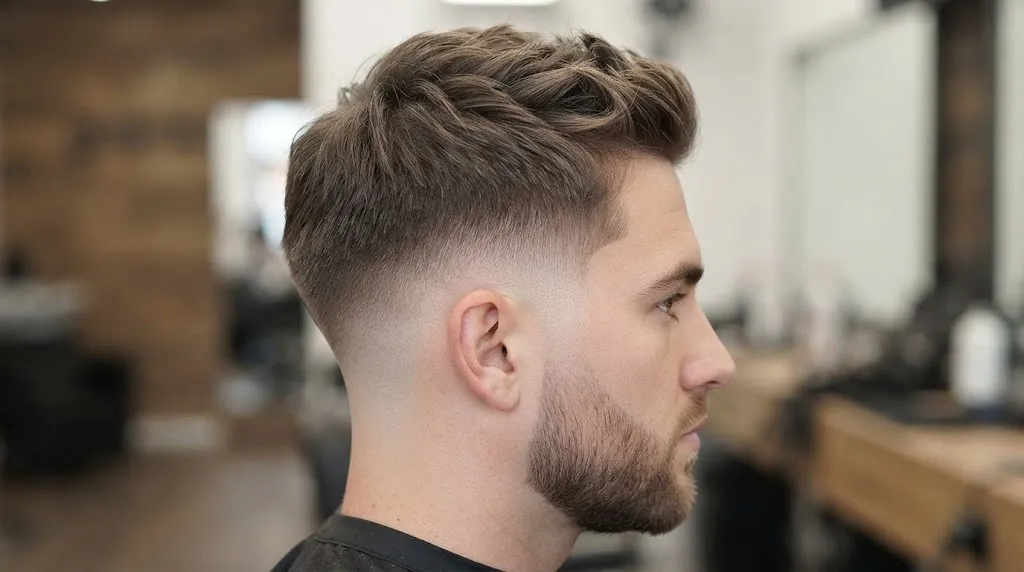
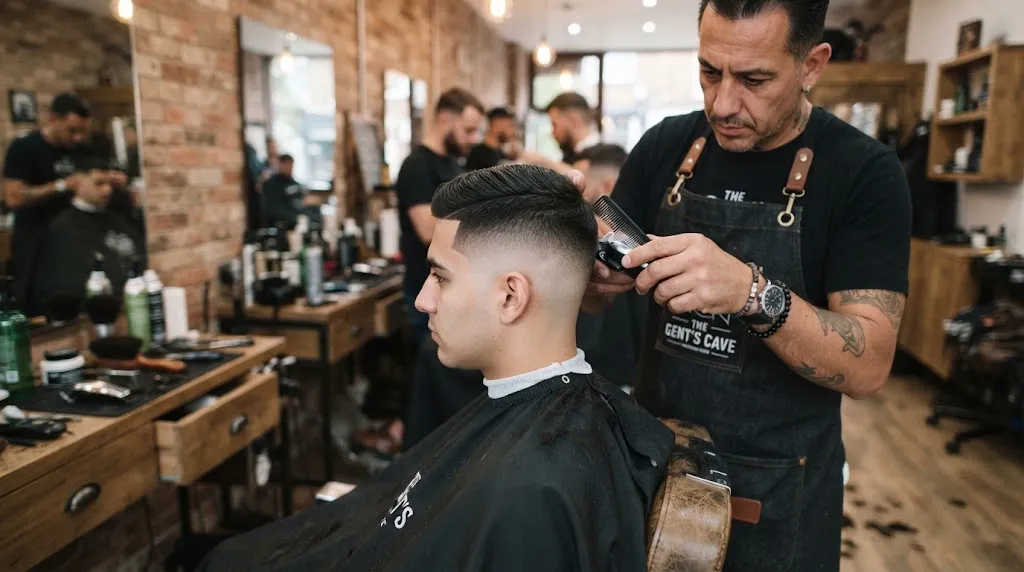
A taper gradually shortens the hair around the sides, sideburns, and neckline while usually leaving more visible length than a very close fade.
Hair texture: Straight, wavy, curly, coily
Maintenance: Low–Medium
Main look: Natural graduation around the edges
Ask your barber for: A gradual taper around the temples and neckline while keeping enough length through the sides to avoid an overly exposed finish.
Low Fade
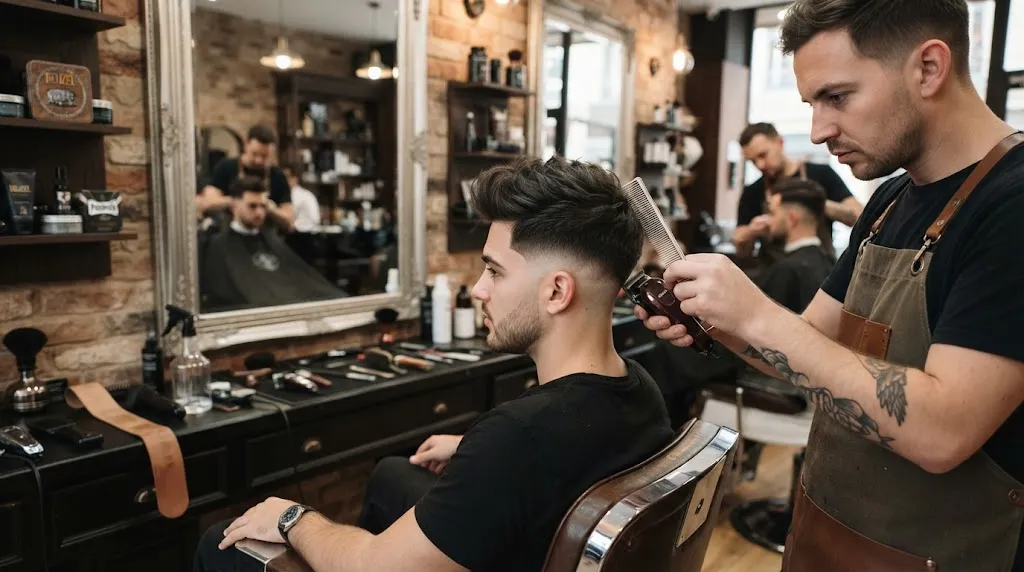
A low fade starts the shortest transition close to the ears and neckline, leaving more hair visible higher on the sides.
Hair texture: Straight, wavy, curly, coily
Maintenance: Medium
Main look: Subtle fade concentrated low on the head
Ask your barber for: A low fade beginning close to the ears with a smooth blend into the longer hair above.
Mid Fade
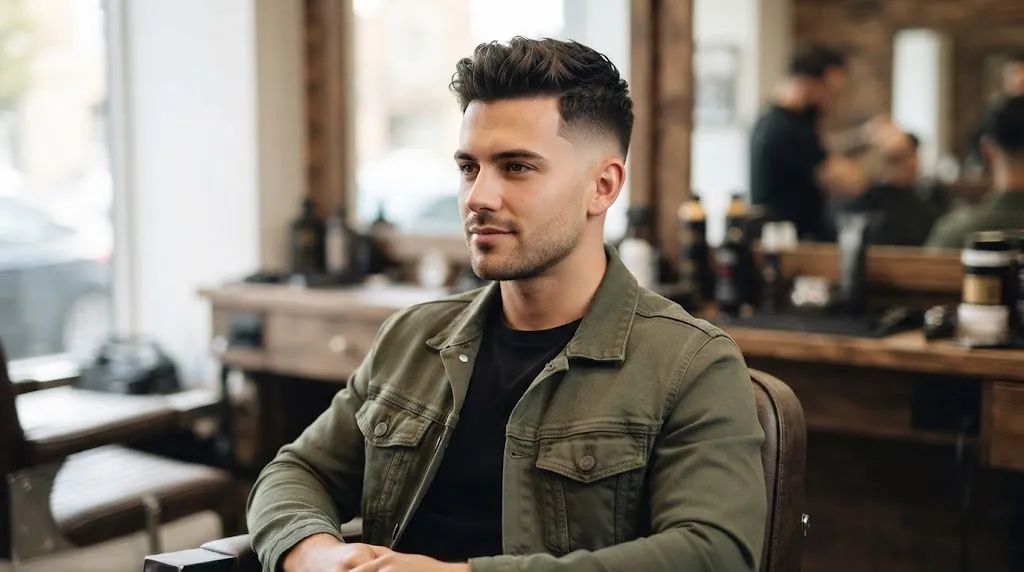
A mid fade begins its shortest transition around the middle of the sides, creating more visible contrast than a low fade.
Hair texture: Straight, wavy, curly, coily
Maintenance: Medium
Main look: Balanced contrast through the sides
Ask your barber for: A mid-level fade blended smoothly into your chosen top length without leaving visible weight lines.
High Fade
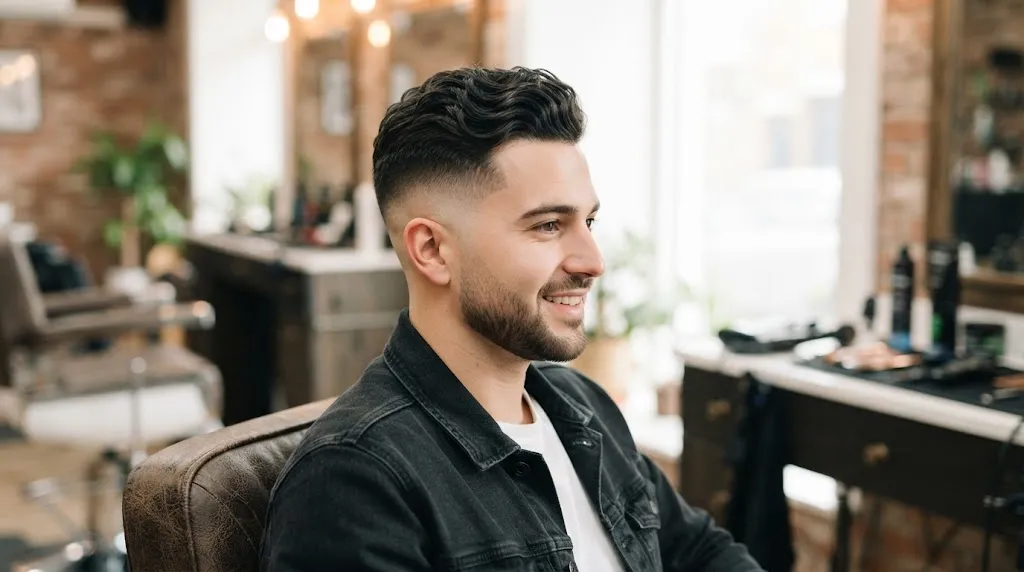
A high fade takes the short transition farther up the sides, leaving less side bulk and creating stronger contrast with the hair on top.
Hair texture: Straight, wavy, curly, coily
Maintenance: Medium–High
Main look: Strong contrast between the top and sides
Ask your barber for: A high fade with the transition starting above the temple area and blended cleanly into the top.
Undercut
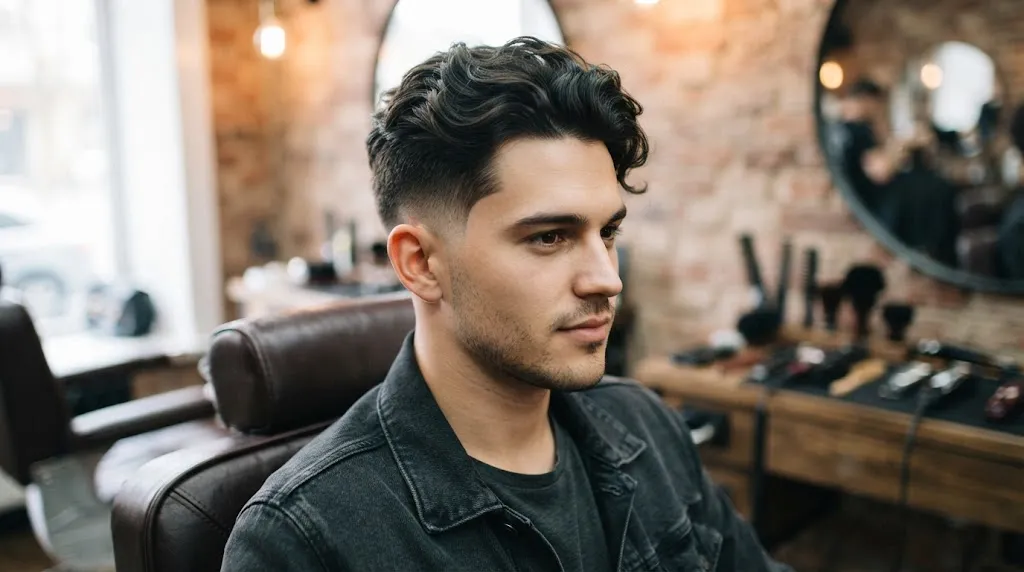
An undercut keeps the sides noticeably shorter than the top with less gradual blending between the two lengths than a traditional taper or fade.
Hair texture: Straight, wavy, curly
Maintenance: Medium
Main look: Clear separation between long top and short sides
Ask your barber for: Short sides with a deliberately disconnected or minimally blended transition into the longer top.
Side Part
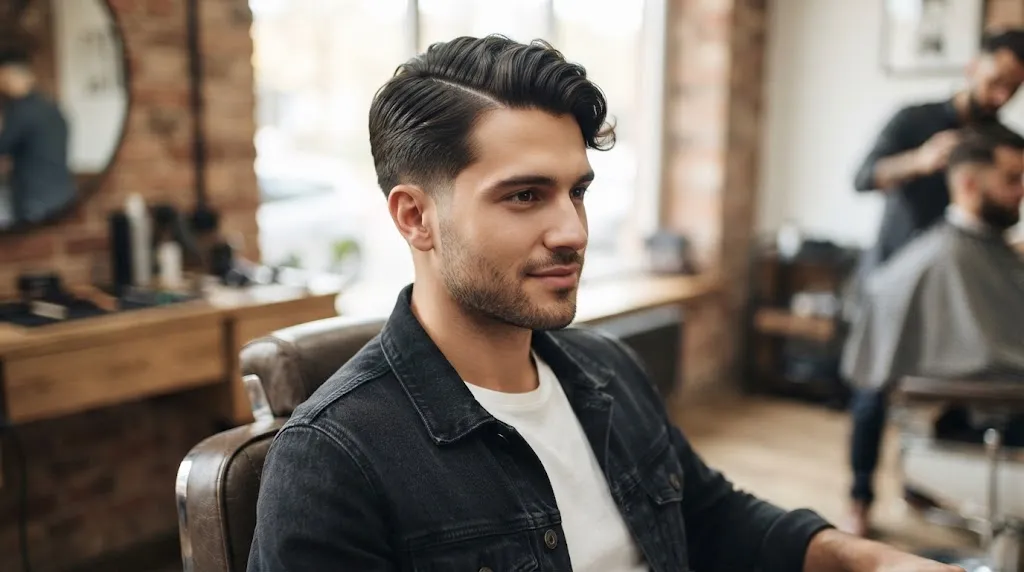
A side-part haircut keeps enough length on top to create a visible part, while the sides stay shorter and cleaner for a more structured silhouette.
Hair texture: Straight, wavy
Maintenance: Medium
Main look: Defined direction and classic shape
Ask your barber for: Enough top length to establish a natural side part with neatly graduated sides rather than removing too much weight near the parting.
Normal Slope Haircut
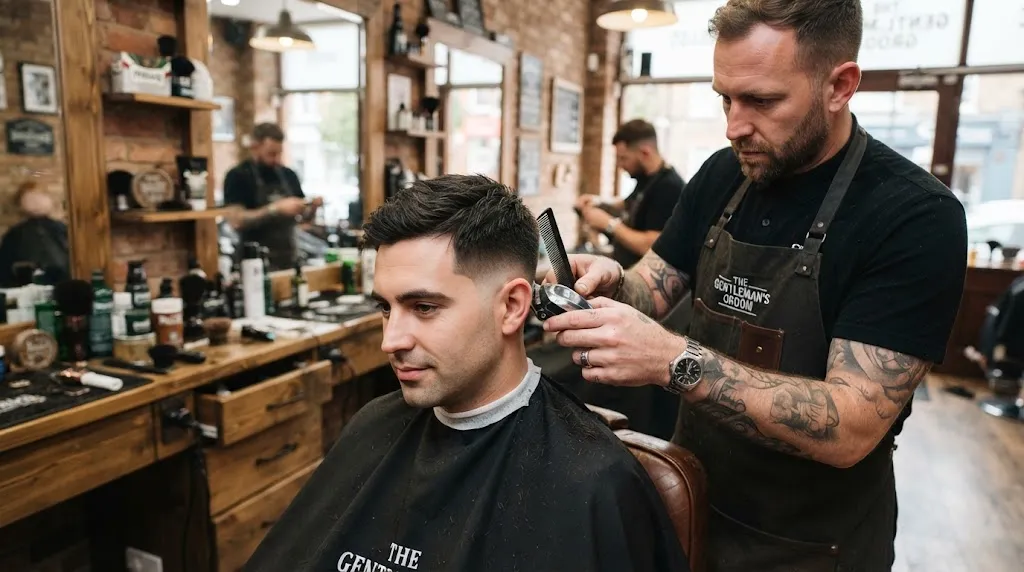
A normal slope haircut gradually reduces hair length from the upper sides toward the neckline, creating a softer and more natural transition than many sharply contrasted skin fades. It keeps visible weight through the sides while following the natural curve of the head.
Top length: Usually kept long enough to preserve the chosen shape, volume, or parting on top.
Side taper: The sides gradually become shorter as they move toward the ears and lower head.
Natural gradient: The transition remains soft rather than creating an obvious jump between long and very short hair.
Blending: Clipper guards and clipper-over-comb techniques can be used to remove visible lines between lengths.
Hair texture: Straight, wavy, curly
Maintenance: Low–Medium
Main look: Soft graduation with more natural side coverage
Ask your barber for: A gradual slope through the sides and back with a smooth blend toward the neckline while keeping more visible bulk than a close skin fade.
Normal Slope vs Fade
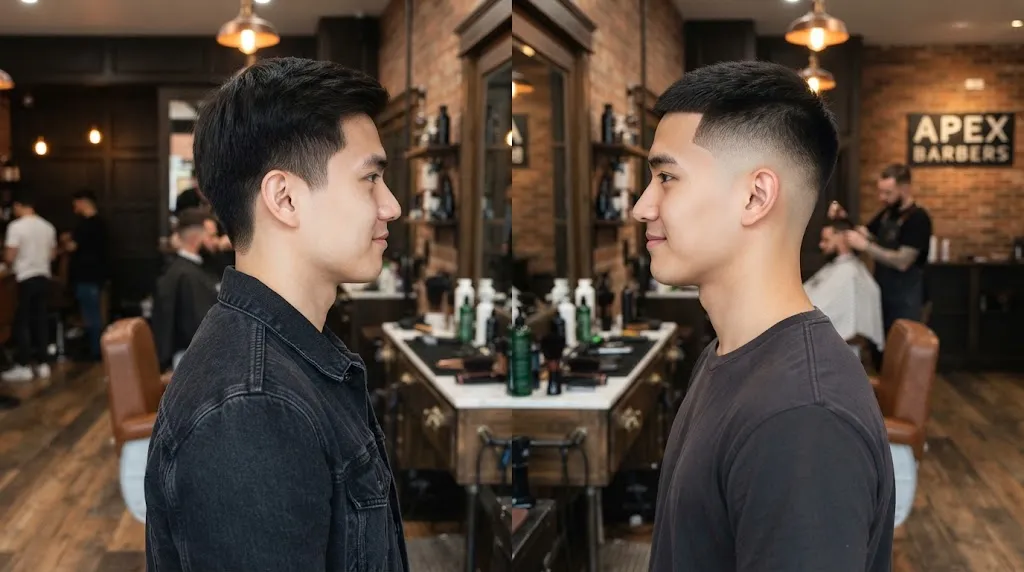
| Normal Slope | Fade |
|---|---|
| Softer transition | Often creates a sharper transition |
| Retains more visible side bulk | Can become extremely short toward the bottom |
| Natural-looking graduation | Creates stronger contrast |
| Follows the head shape gradually | Fade height determines where contrast begins |
A normal slope is useful when you want tidy, graduated sides without making the lower section look extremely short. If you want to compare slope heights, barber terminology, and more reference photos, see our Normal Slope Haircut guide.
Longer and Textured Men's Haircuts
Quiff
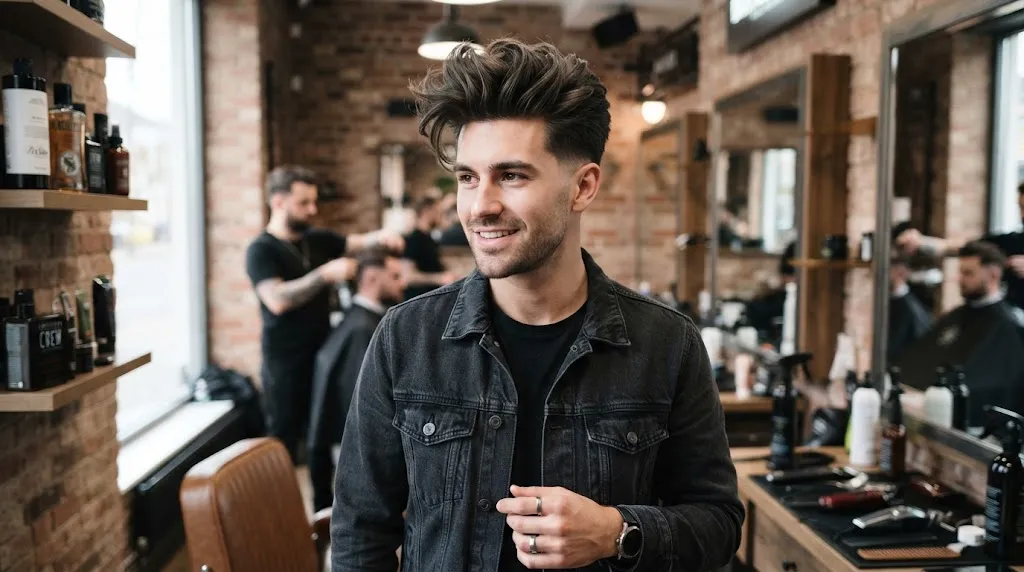
A quiff keeps noticeable length at the front and directs it upward and slightly backward, while the rest of the top becomes progressively more controlled.
Hair texture: Straight, wavy
Maintenance: Medium–High
Main look: Lift and height at the front
Ask your barber for: Enough front length to create visible lift, with the top and sides blended to support the shape without making it too heavy.
Pompadour
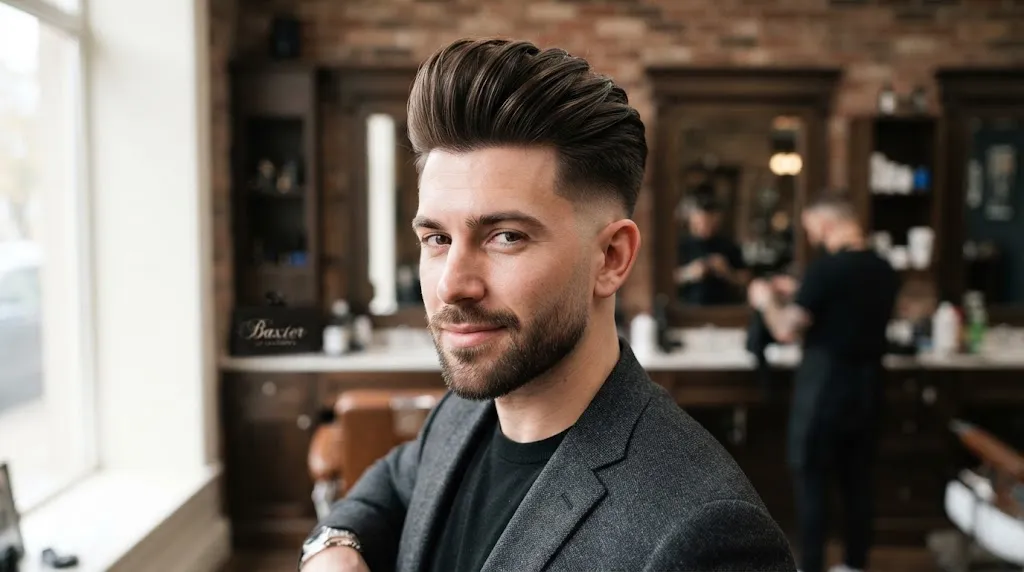
A pompadour creates greater height and volume through the front and upper top than a typical quiff, with the hair swept backward into a fuller silhouette.
Hair texture: Straight, wavy
Maintenance: High
Main look: High-volume swept-back shape
Ask your barber for: Extra length through the front and top with enough weight left to sweep backward while keeping the sides balanced with the overall volume.
Modern Mullet
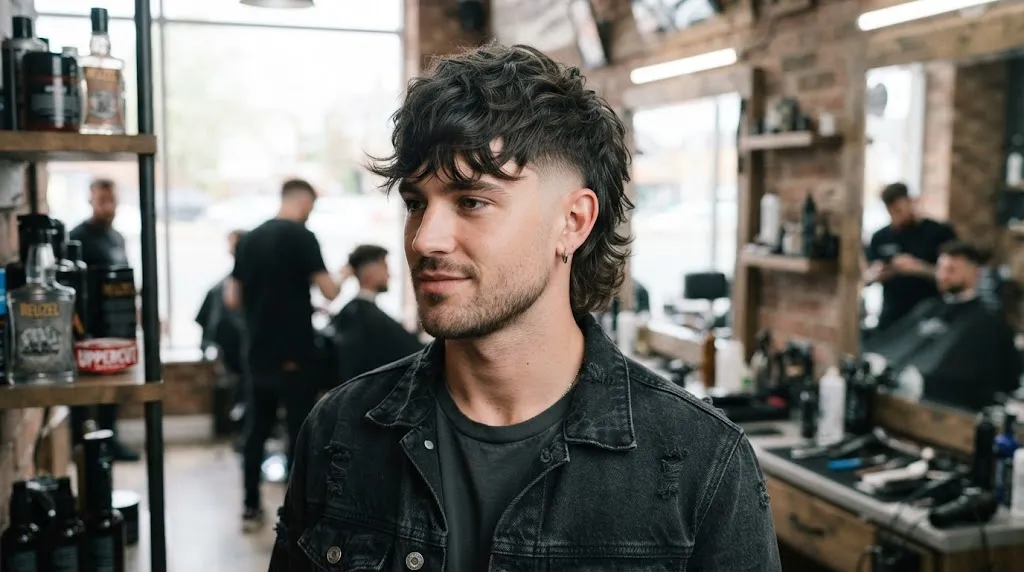
A modern mullet deliberately keeps more length at the back while the sides and front are shaped shorter, often with softer blending and texture than traditional versions.
Hair texture: Straight, wavy, curly
Maintenance: Medium
Main look: Shorter front and sides with noticeable back length
Ask your barber for: A clear length difference toward the back with textured transitions so the shape stays intentional rather than bulky.
Longer Textured Top

This cut keeps extra length through the top and uses texture to create separation and movement instead of a smooth, uniform finish.
Hair texture: Straight, wavy, curly
Maintenance: Medium
Main look: Movement and visible top texture
Ask your barber for: Keep workable length on top and add texture without removing so much weight that the hair loses its natural fullness.
Longer Natural Cut

A longer natural cut preserves more overall length through both the top and sides, allowing the natural direction, wave, or curl pattern to form much of the finished shape.
Hair texture: Wavy, curly, straight with natural movement
Maintenance: Medium
Main look: Fuller and less tightly clipped
Ask your barber for: Preserve the overall length and natural movement while removing excess bulk only where needed to keep the shape balanced
Curly Taper
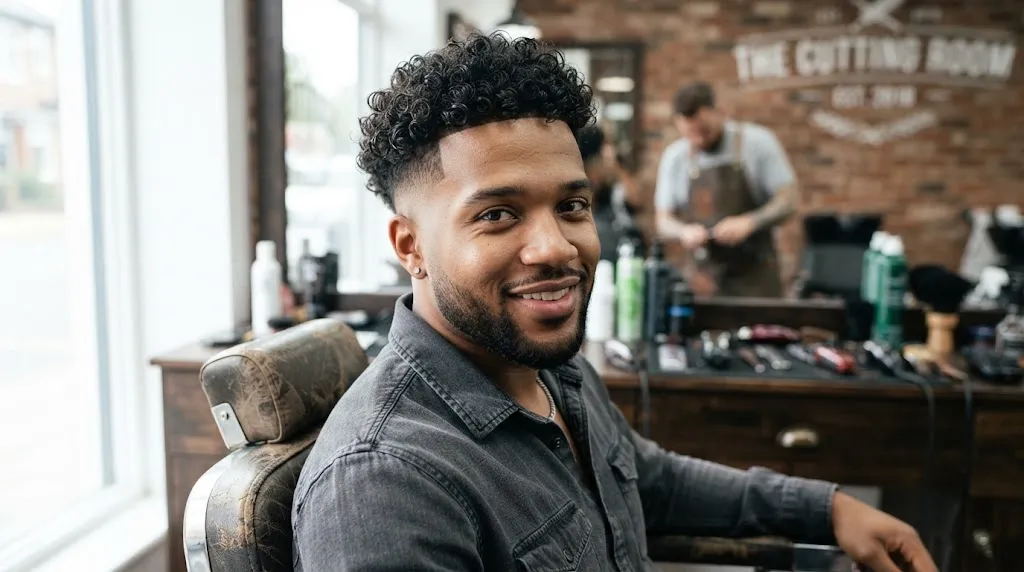
A curly taper keeps the natural curl pattern visible through the top and sides while gradually cleaning up only the temples, sideburns, and neckline.
Hair texture: Curly, coily
Maintenance: Low–Medium
Main look: Natural curls with cleaner edges
Ask your barber for: Preserve the curl length and shape while tapering the edges gradually rather than fading high into the curls.
Curly Hair
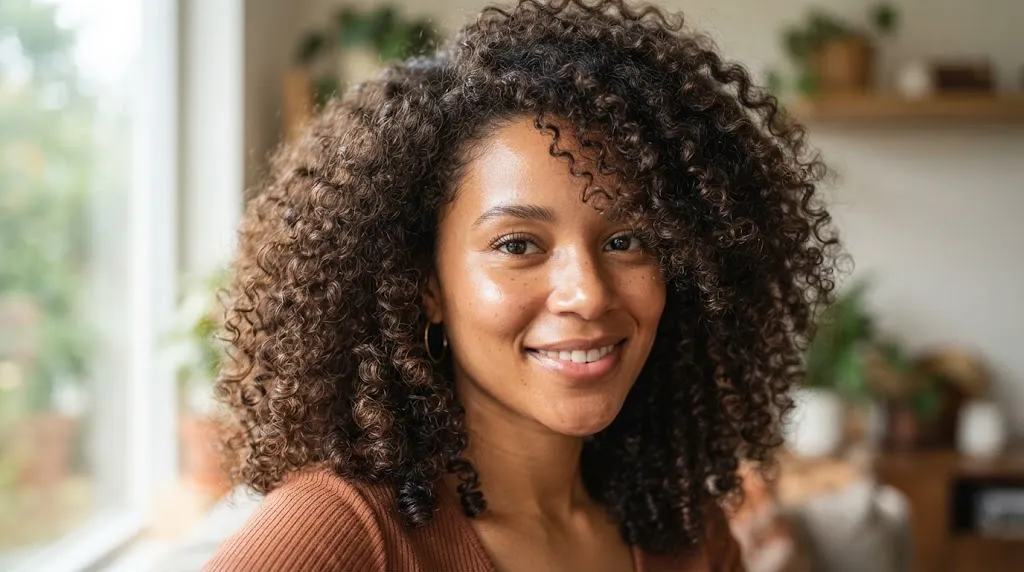
A curly taper keeps the natural curl pattern visible through the top and sides while gradually cleaning up only the temples, sideburns, and neckline.
Hair texture: Curly, coily
Maintenance: Low–Medium
Main look: Natural curls with cleaner edges
Ask your barber for: Preserve the curl length and shape while tapering the edges gradually rather than fading high into the curls.
Textured Fringe
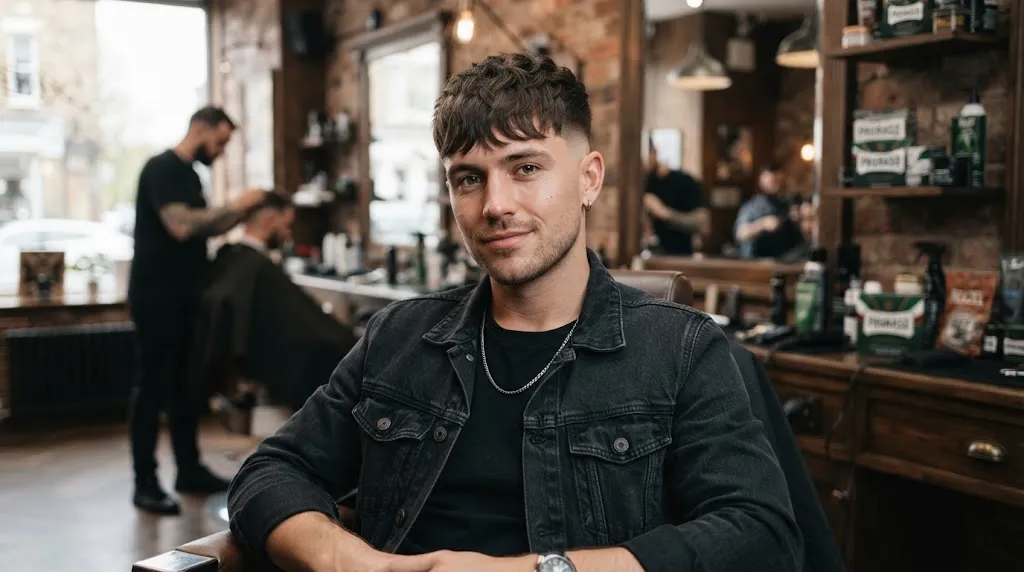
A textured fringe brings separated or uneven pieces forward over the forehead instead of creating the straighter, more compact front edge associated with a traditional French crop.
Hair texture: Straight, wavy, curly
Maintenance: Medium
Main look: Forward movement with a softer front shape
Ask your barber for: Keep enough front length for the fringe to fall naturally and add controlled texture so the pieces remain separated rather than forming a heavy line.
Hair Cutting Style Photos for Girls and Boys
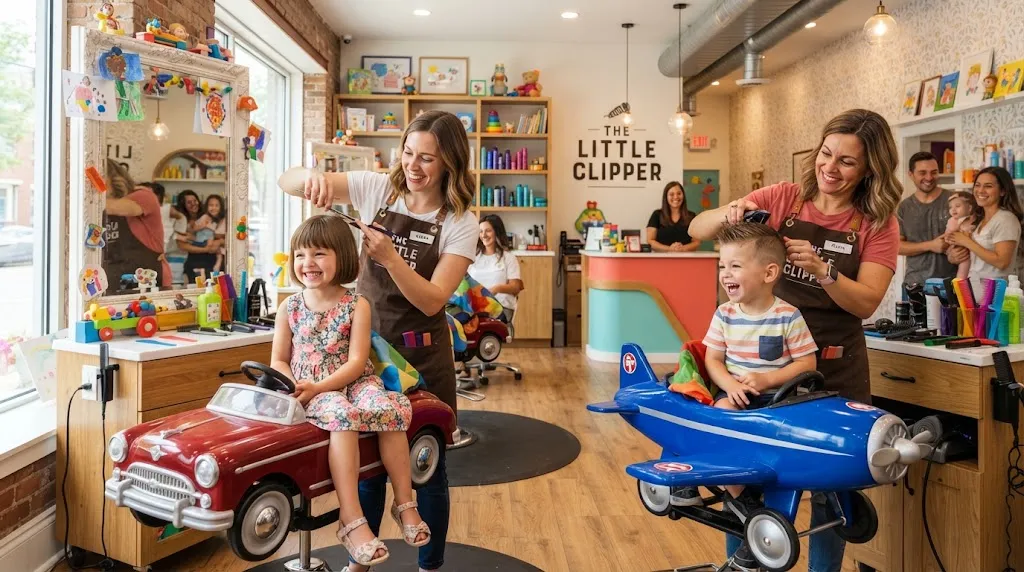
For girls and boys, the most useful haircut photo is one that matches the child or teen’s natural texture, current length, and realistic maintenance needs. The styles below are kept concise because several of these haircut shapes are already explained in detail earlier on this page.
Hair Cutting Style Photos for Girls
Long Layers
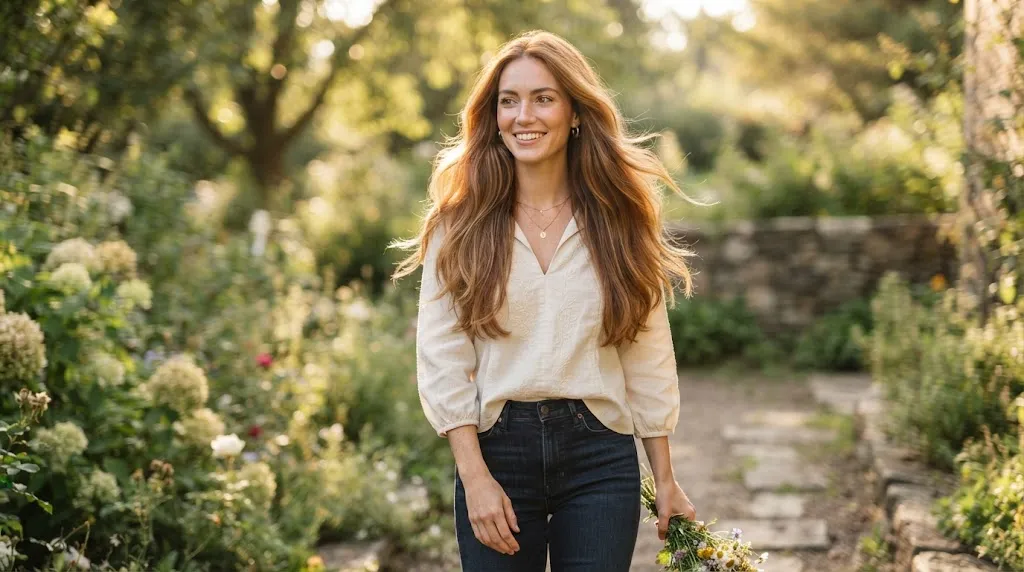
A useful option for keeping most of the existing length while adding movement. For younger clients, the amount of layering should be adjusted to the hair’s density so the ends do not become unnecessarily thin.
See: Long Layers above for the full haircut details.
U-Shaped Cut
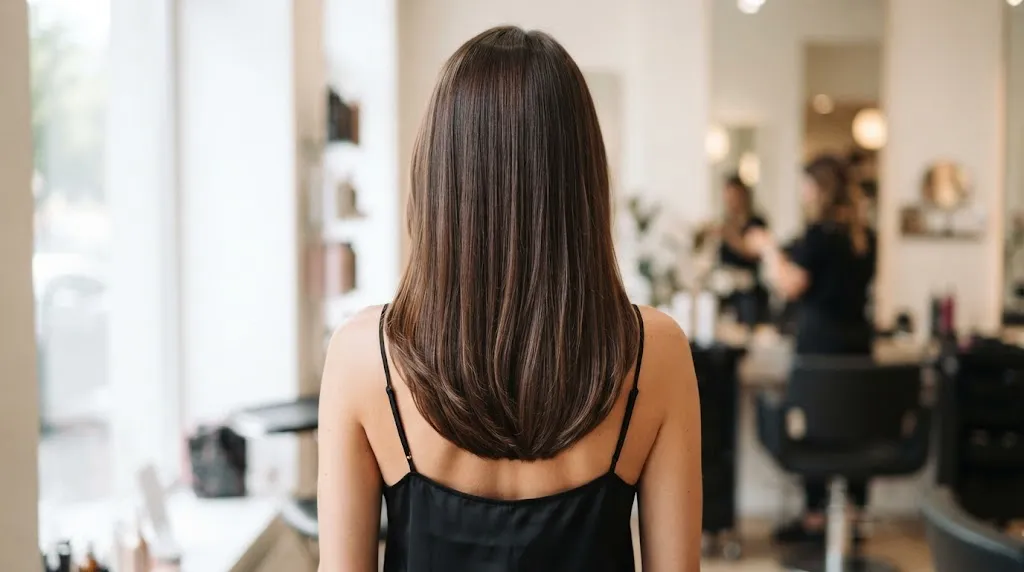
The rounded back perimeter works well when the goal is to keep long hair looking neat without adding extensive layering.
See: U-Shaped Cut above for the full visual definition and stylist instruction.
Shoulder-Length Layers

This length can provide movement while remaining practical for ponytails and other everyday styling. Layer placement should reflect the natural texture rather than copying the reference photo exactly.
See: Shoulder-Length Layers above for complete details.
Soft Face-Framing Layers

These layers shorten the front sections without requiring a major change to the overall length. Keeping the pieces soft and long can make the cut easier to grow out.
See: Face-Framing Layers above for the full haircut structure.
Curly Layers

Curly layers can help distribute volume and shape, but the finished dry length may sit noticeably higher than it appears while wet because of curl shrinkage.
Best reference: Choose a photo with a curl pattern reasonably similar to the wearer’s natural hair.
Hair Cutting Style Photos for Boys
Crew Cut
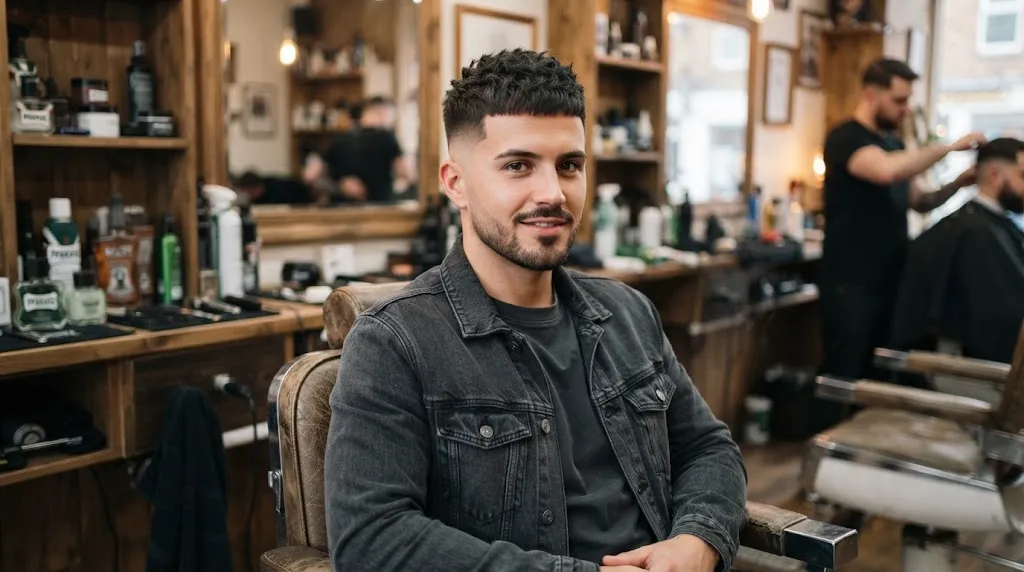
A practical short option that retains slightly more hair on top than on the sides. It works particularly well when minimal daily styling is preferred.
See: Crew Cut above for the full barber instruction.
Side-Swept Cut
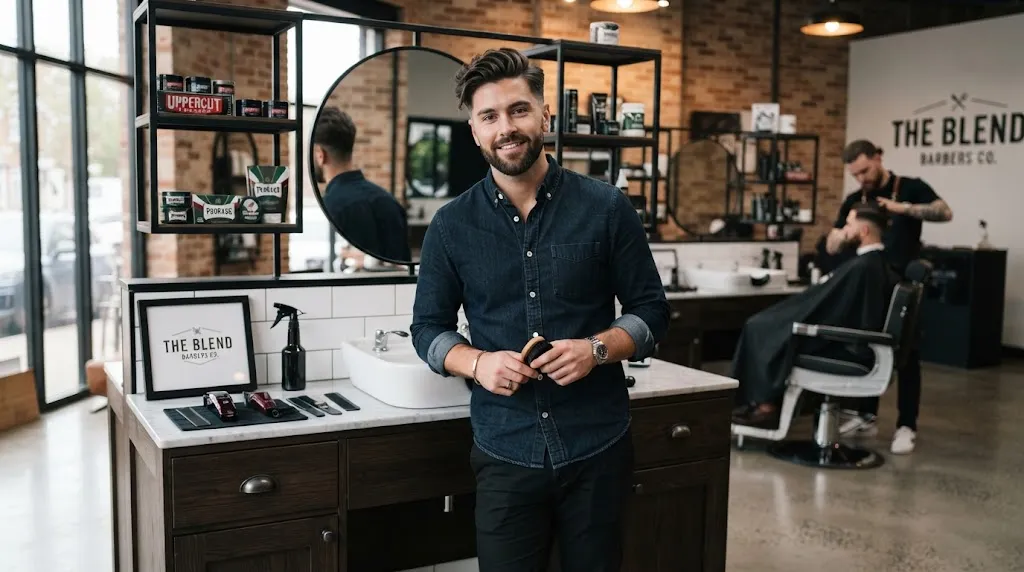
This style leaves enough front or top length for the hair to move naturally toward one side rather than being cut into a very short, fixed shape.
Useful for: Straight or wavy hair that already has a noticeable natural direction.
Curly Taper
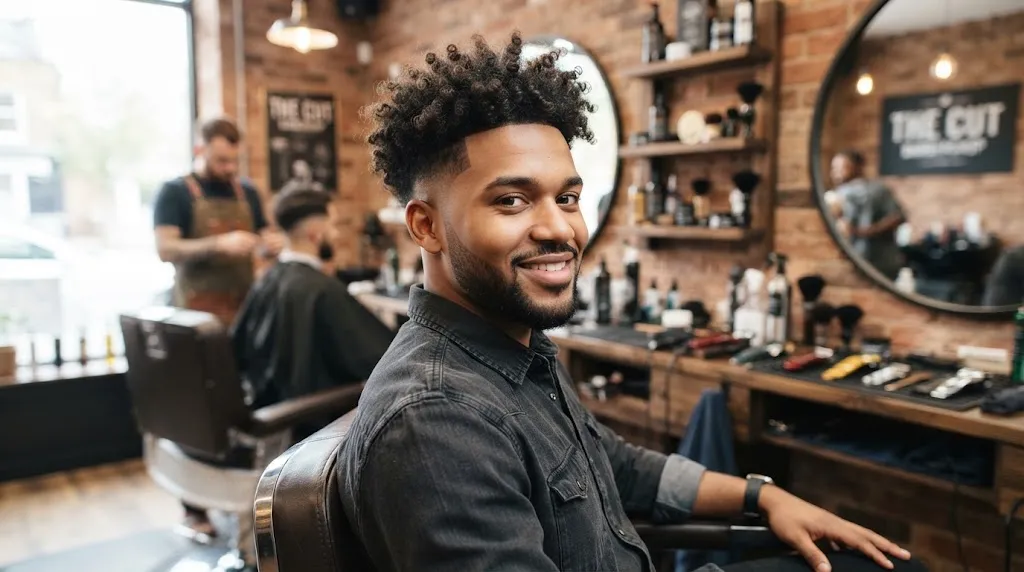
A curly taper preserves the visible curl pattern while cleaning the temples, sideburns, and neckline. The reference photo should show a similar curl pattern whenever possible because curl shape can significantly change the final silhouette.
See: Curly Taper above for complete texture and maintenance details.
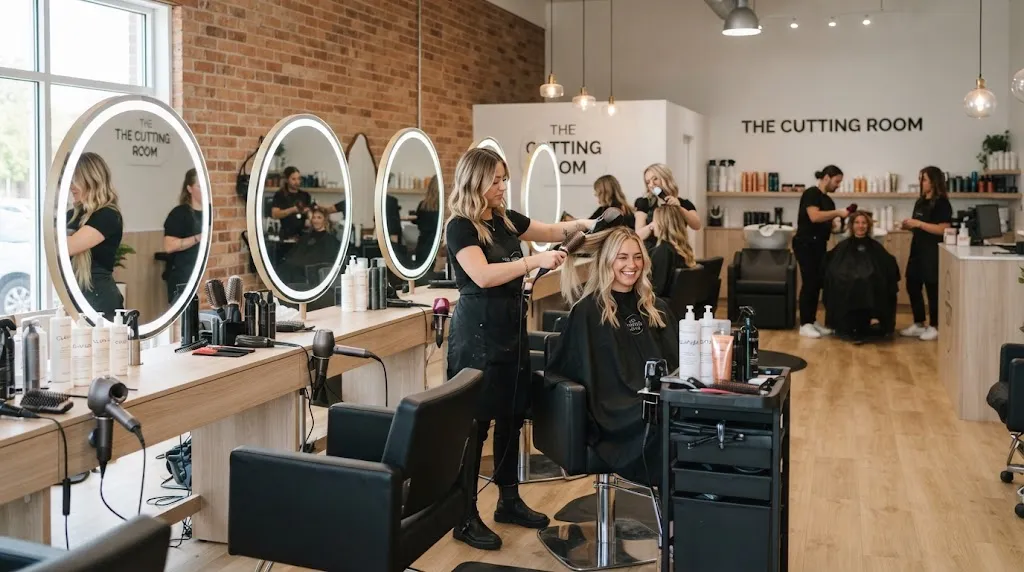
Simple Hair Cutting Style Photos
| Haircut | Best For | Daily Styling | Maintenance |
|---|---|---|---|
| Blunt Lob | Clean, simple medium-length shape | Low | Low–Medium |
| Long Layers | Keeping length with some movement | Low–Medium | Medium |
| Crew Cut | Short, practical men's or boys' hair | Very low | Low |
| Taper | Neat sides with a natural transition | Low | Medium |
| Shoulder Cut | Versatile everyday medium length | Low | Medium |
| Buzz Cut | Minimal daily styling | Very low | Low |
New Hair Cutting Style Photos and 2026 Haircut Trends
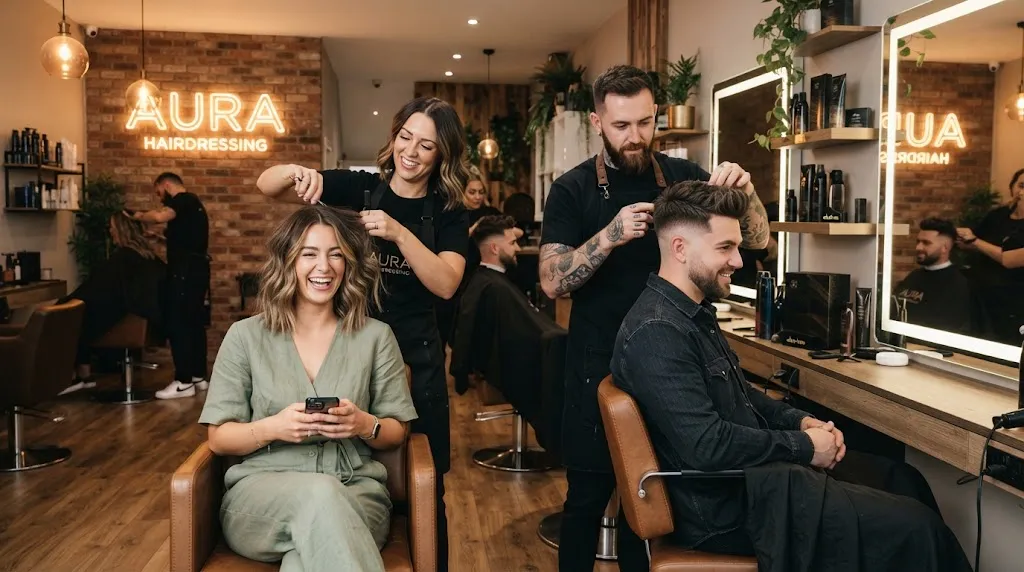
Haircut trends in 2026 are leaning toward softer shapes, visible movement, adaptable layers, and cuts that work with natural texture rather than requiring a heavily styled finish. Current trend coverage also shows renewed interest in updated bobs, layered medium lengths, longer face-framing cuts, and more relaxed men’s shapes.
Women's Haircut Trends for 2026
Soft Sculpted Bob

Haircut trends in 2026 are leaning toward softer shapes, visible movement, adaptable layers, and cuts that work with natural texture rather than requiring a heavily styled finish. Current trend coverage also shows renewed interest in updated bobs, layered medium lengths, longer face-framing cuts, and more relaxed men’s shapes.
Bixie
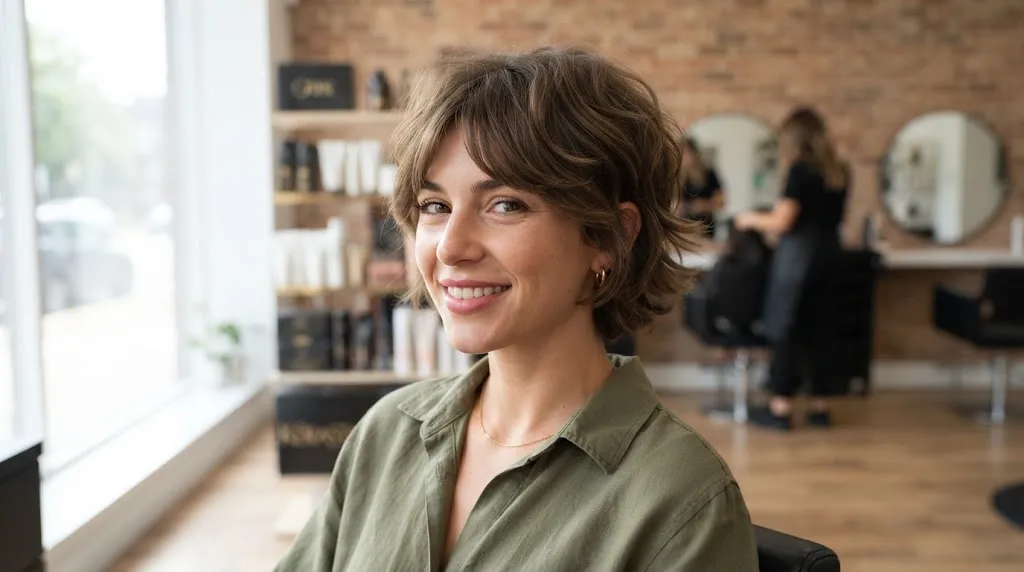
The bixie remains one of the strongest short-hair trends of 2026, combining pixie-like shortness with more perimeter length and movement. Current versions often look softer and less overly styled than traditional cropped cuts.
See: Bixie Cut above for the full haircut details.
Clavi Cut
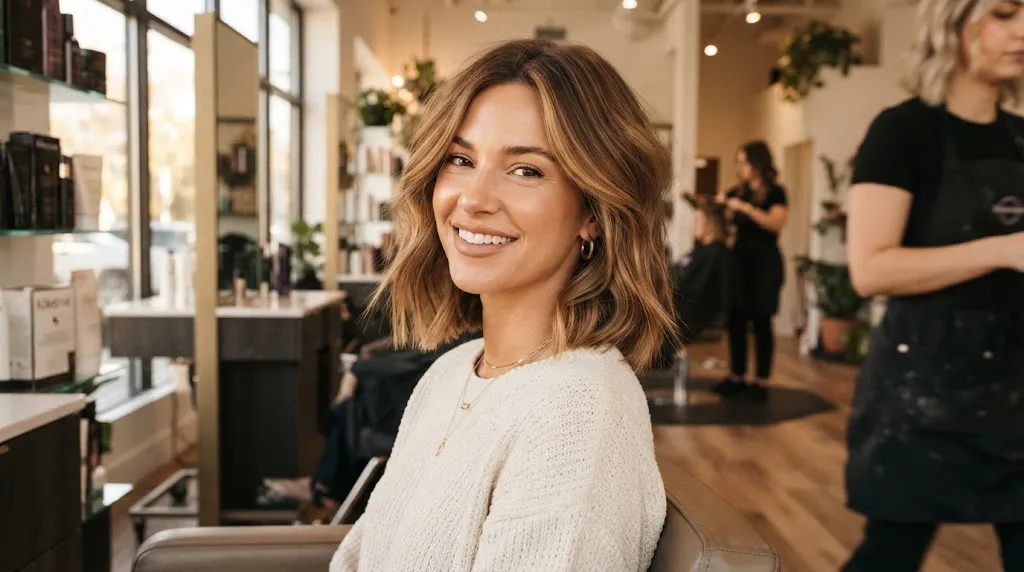
The clavi cut continues to appear as a current collarbone-length option, often paired with light layers and face-framing pieces instead of a completely blunt edge.
See: Clavi Cut above for the full visual definition.
Midi Cut

Shoulder-grazing midi lengths remain relevant because they sit between a traditional bob and long hair while preserving styling flexibility. Softer movement through the ends is a key part of the current look.
Airy and Face-Framing Layers
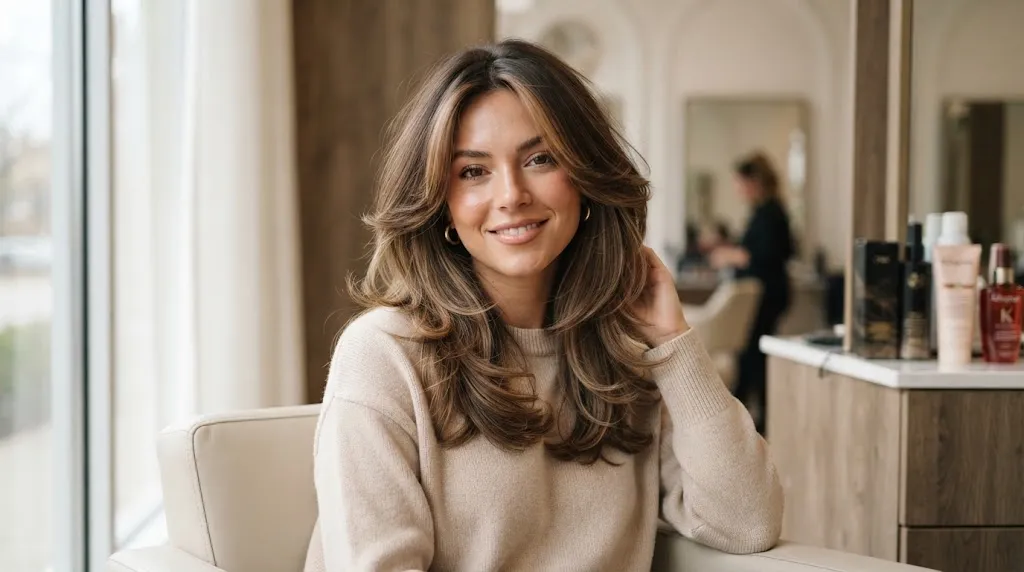
Current layered cuts are emphasizing lighter placement around the face and lengths rather than heavy, obvious steps. Recent 2026 trend coverage continues to feature soft face-framing layers as a way to give longer hair shape without removing most of the length.
Soft Shag and Wolf-Inspired Cuts
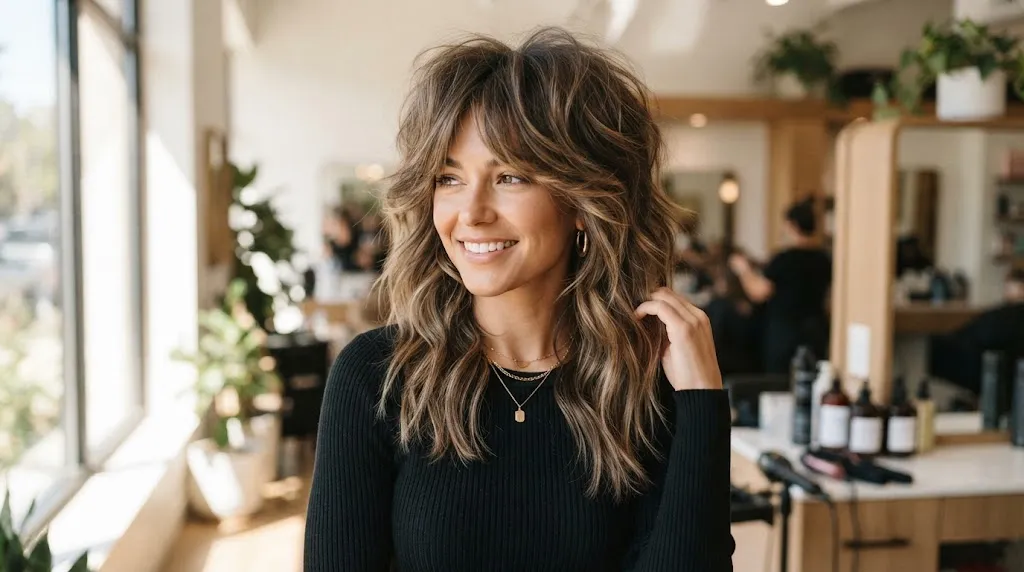
Shag and wolf-cut influences remain current, but many 2026 versions are softer, more blended, and less aggressively disconnected than earlier versions.
Are Layered Haircuts in Style for 2026?
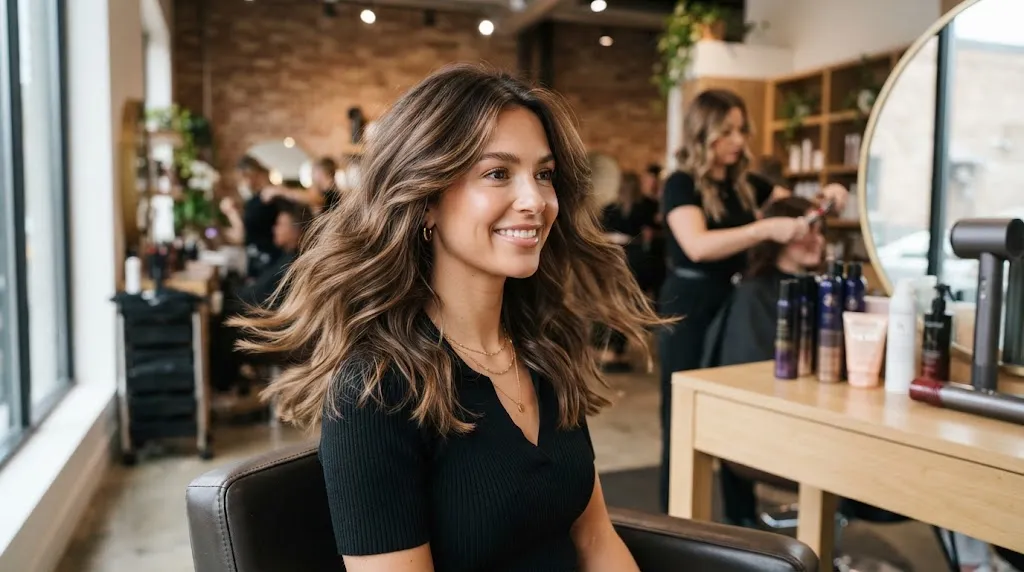
Yes. Layered haircuts remain strongly represented in 2026, but the current emphasis is on where the layers are placed and how naturally they connect to the overall shape rather than simply adding as many layers as possible.
Airy Layers
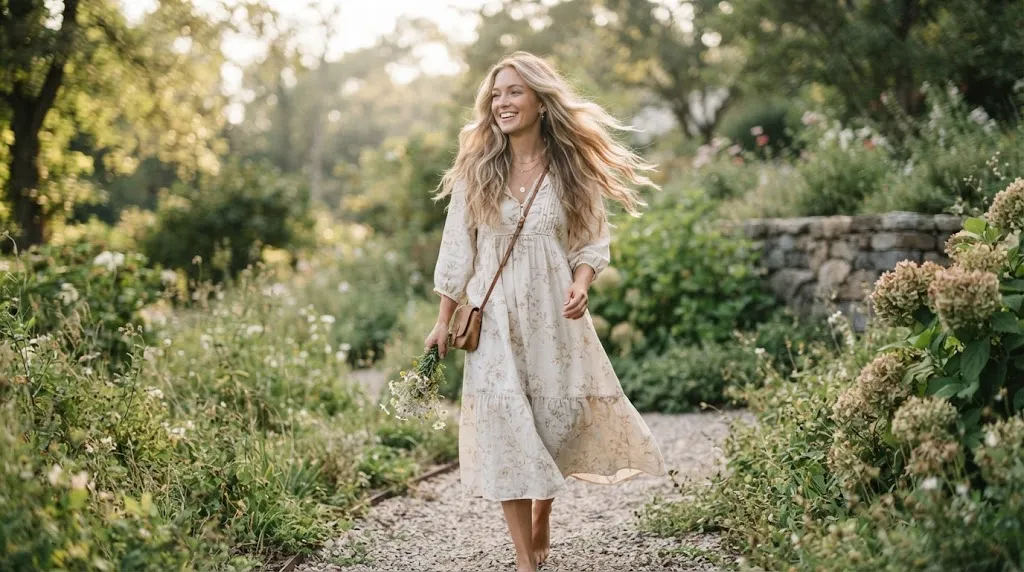
Light, blended layers create movement without making the haircut look heavily stepped.
Feathered Layers
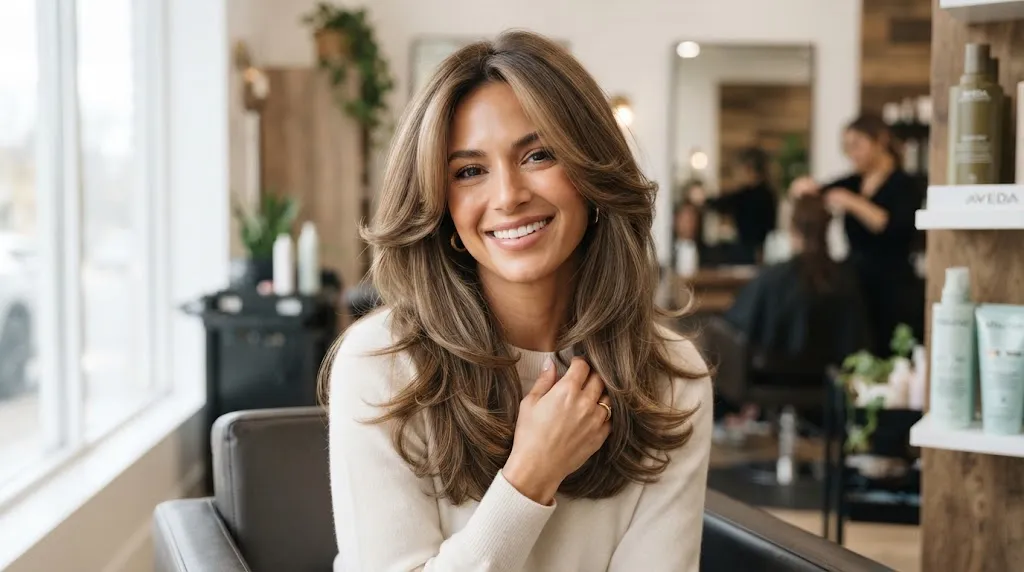
Feathered layers are appearing again with softer, outward movement and lighter face framing, reflecting the wider return of ’70s-influenced shapes.
Face-Framing Layers
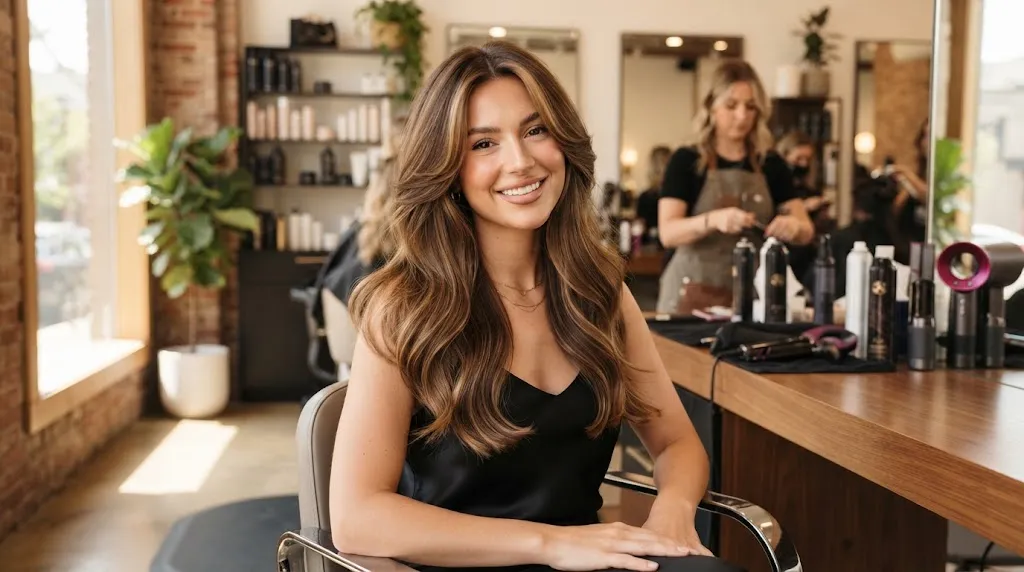
The current version focuses on strategically shorter front pieces that blend into the longer lengths instead of creating a separate, disconnected front section.
Cascading Long Layers
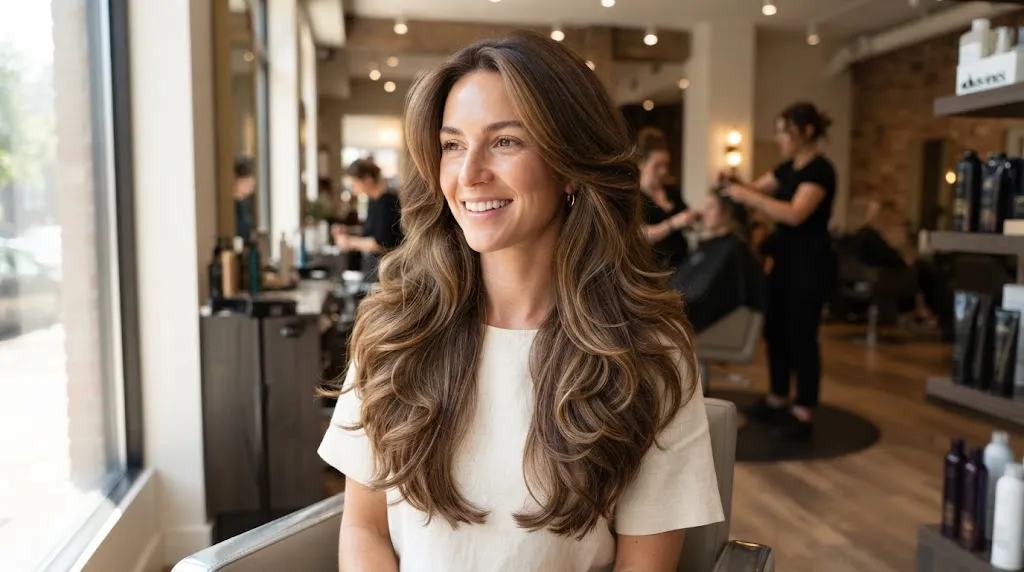
The current version focuses on strategically shorter front pieces that blend into the longer lengths instead of creating a separate, disconnected front section.
Trendy Medium-Length Haircuts for 2026
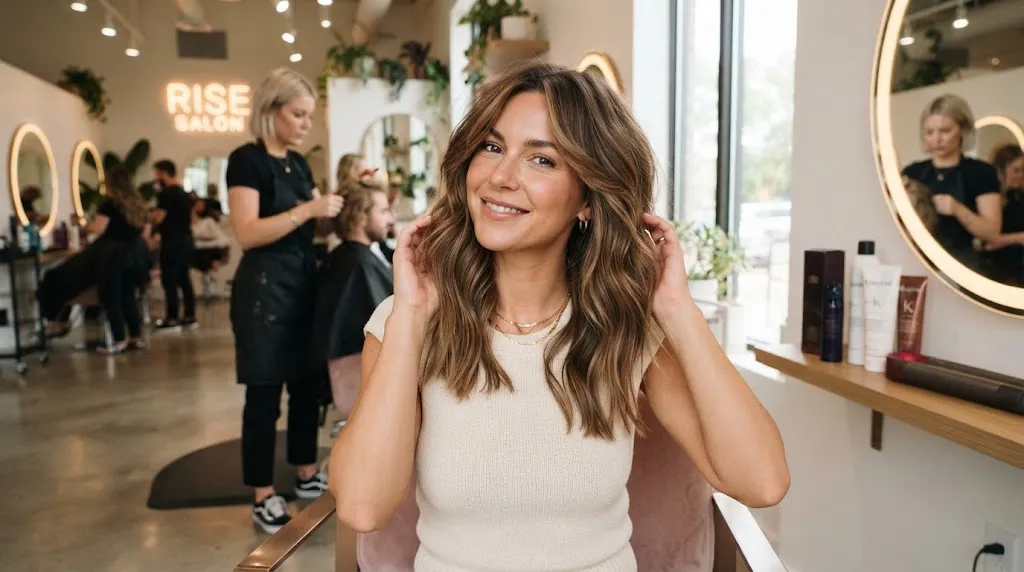
| 2026 Medium Haircut | What to Look for in the Photo |
|---|---|
| Clavi Cut | Collarbone length with light movement |
| Midi Cut | Shoulder-grazing, balanced shape |
| Lob | Longer bob outline with softer ends |
| Shoulder-Length Layers | Movement without losing the medium length |
| Soft Shag | Diffused layers with a less severe finish |
Trendy Long Haircuts for 2026
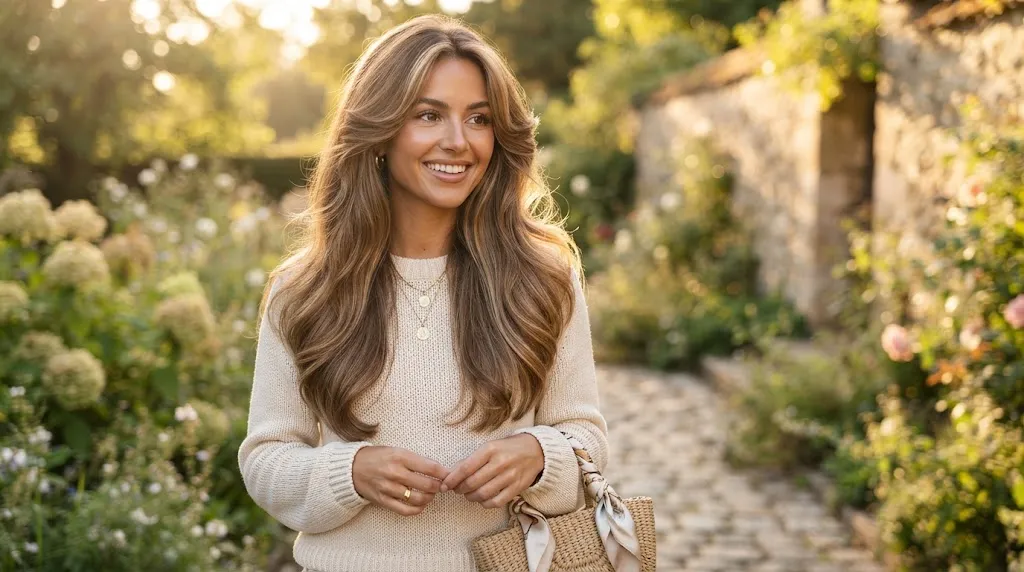
Long hair is also moving toward visible shape rather than one solid length. Current examples emphasize movement around the face, lighter layering, and volume without sacrificing the overall length.
Long Cascading Layers
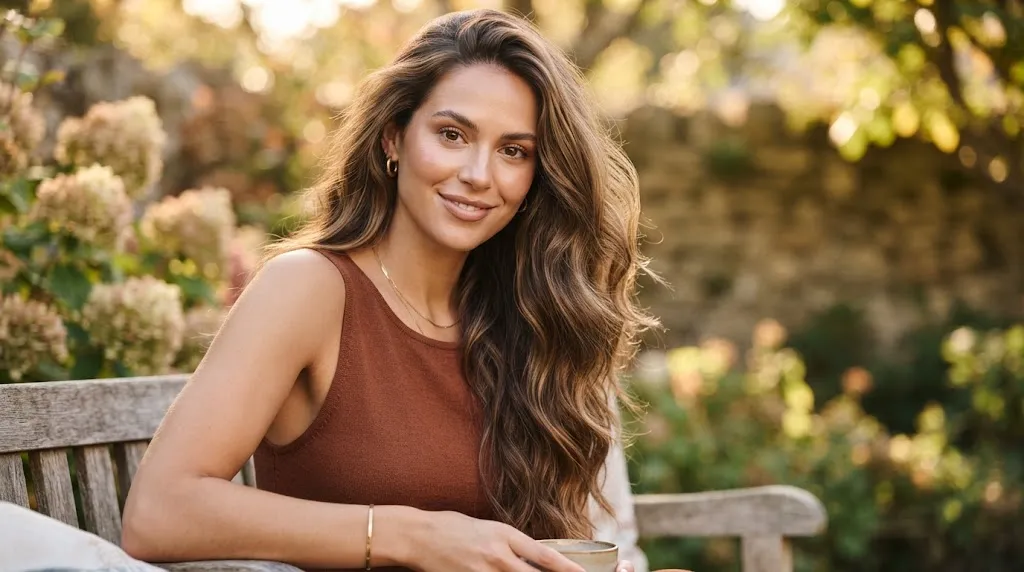
Look for long sections that blend gradually rather than short, disconnected layers.
Feathered Long Layers
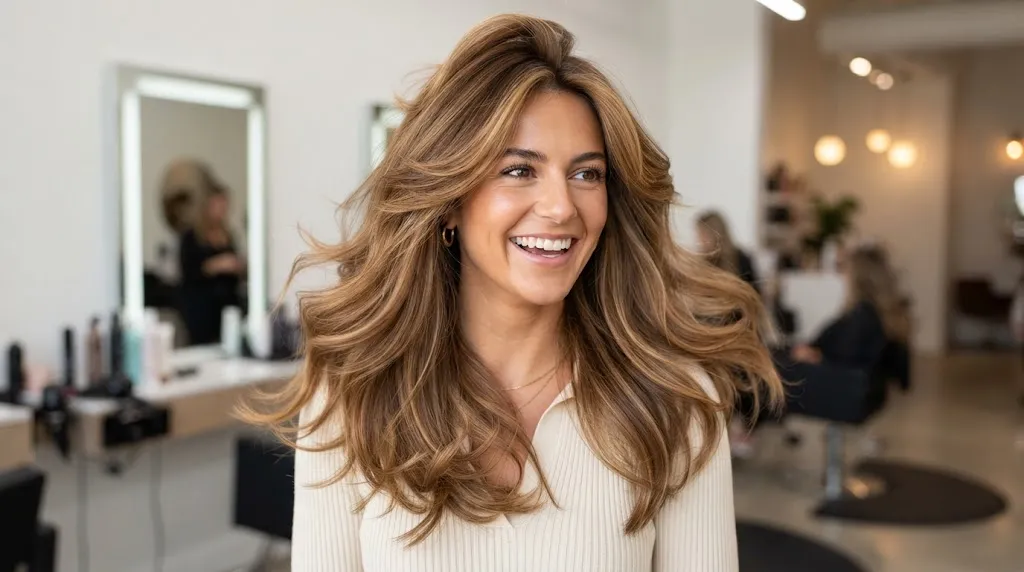
The modern feathered look keeps the overall length while creating softer outward movement around the face and upper lengths.
Face-Framing C-Style Layers
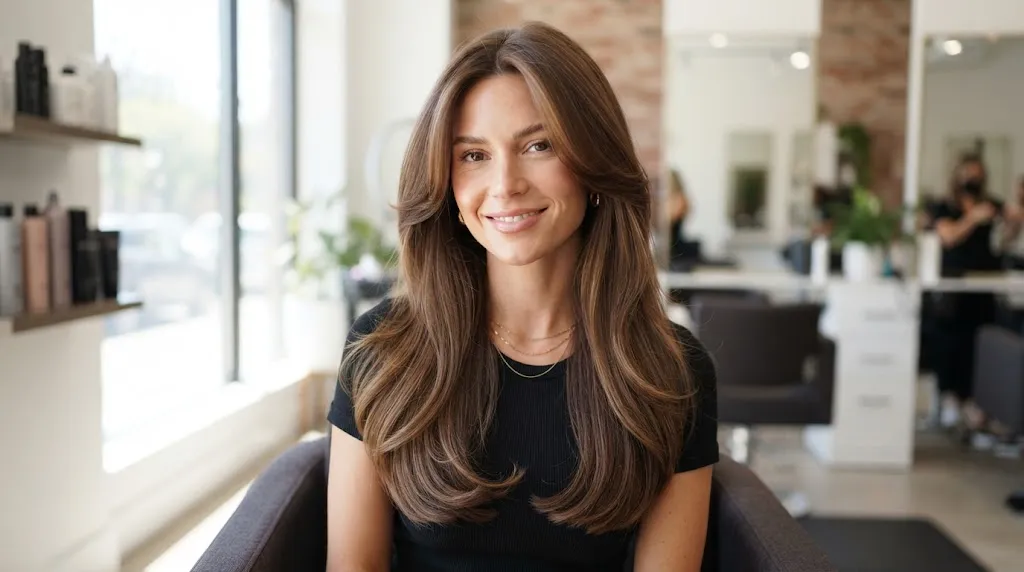
Curved face-framing layers are being used to create visible shape around the cheeks, jaw, and longer lengths. Recent variations include heart-shaped and C-inspired layering that curves inward around the face.
Butterfly-Style Layering
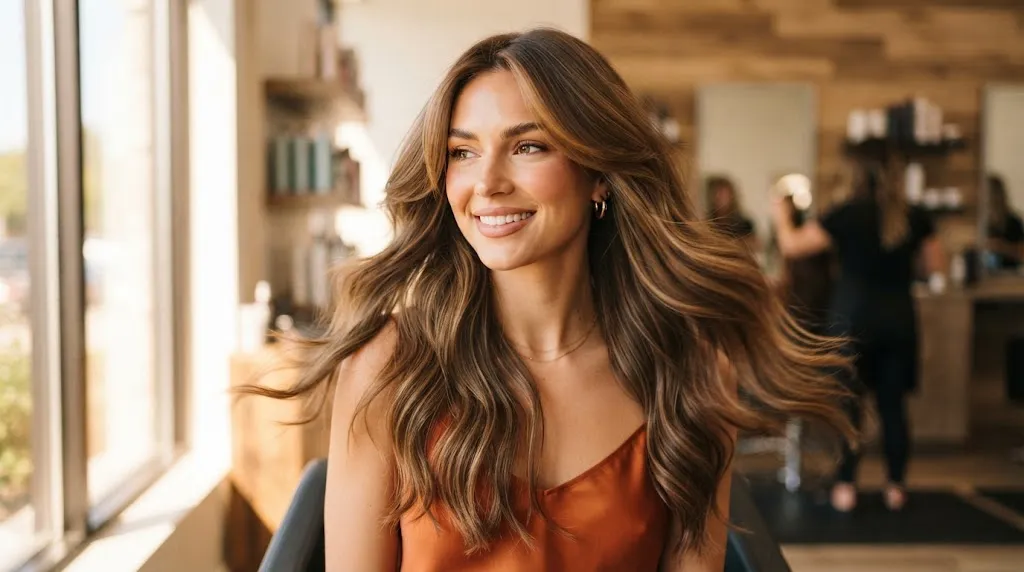
Butterfly-style layering remains useful when the goal is to create shorter movement around the face and upper hair while retaining long lower lengths.
See: Butterfly Cut above for the full haircut structure.
Long Shag Influence

The current long shag direction is generally softer and more blended, with movement concentrated through the crown and face instead of extremely disconnected layers.
Haircut Trends Making a Comeback
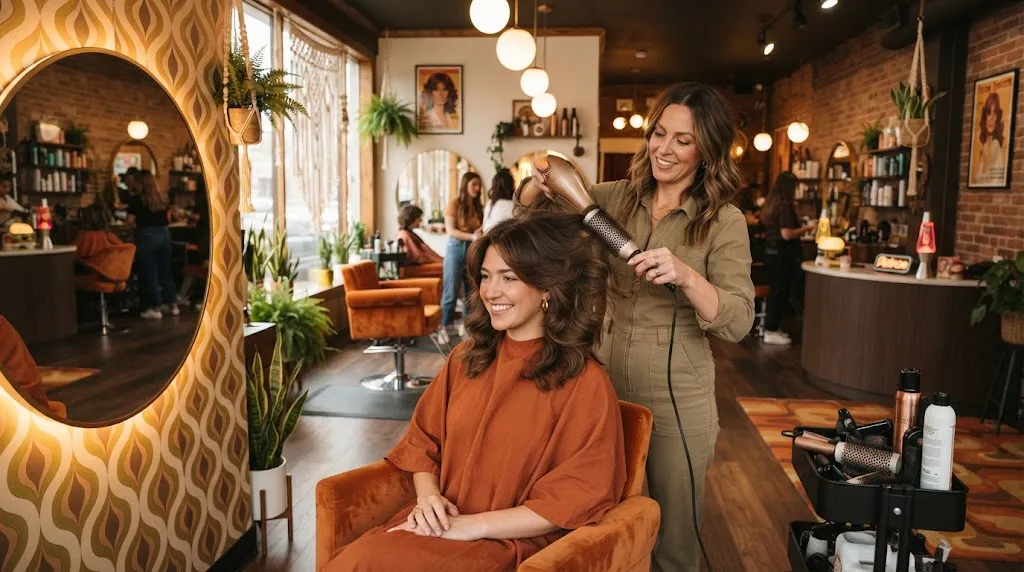
Several 2026 haircut directions draw from earlier decades, but the returning versions are usually softer and more wearable rather than exact recreations.
Feathered Layers
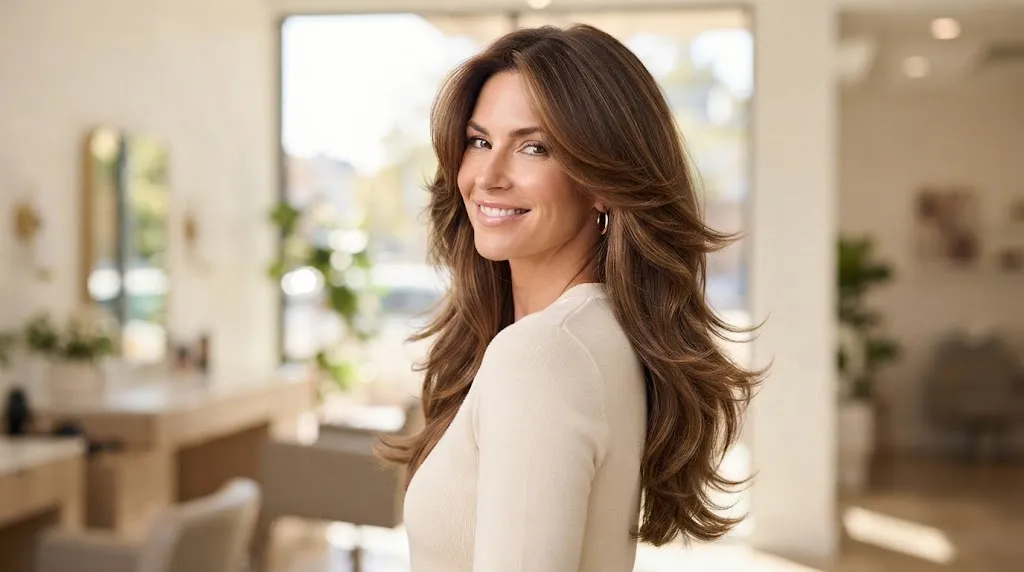
’70s-style feathering has returned through lighter, bouncy layers and face-framing movement.
Bixie-Type Short Cuts

The bob-pixie hybrid reflects the return of late-’90s and early-2000s short shapes, updated with softer texture and more flexible styling.
Shag and Wolf Influence

Shaggy shapes continue to return in more wearable forms, with blended face framing and softer transitions instead of an extremely disconnected silhouette.
Men's Haircut Trends for 2026
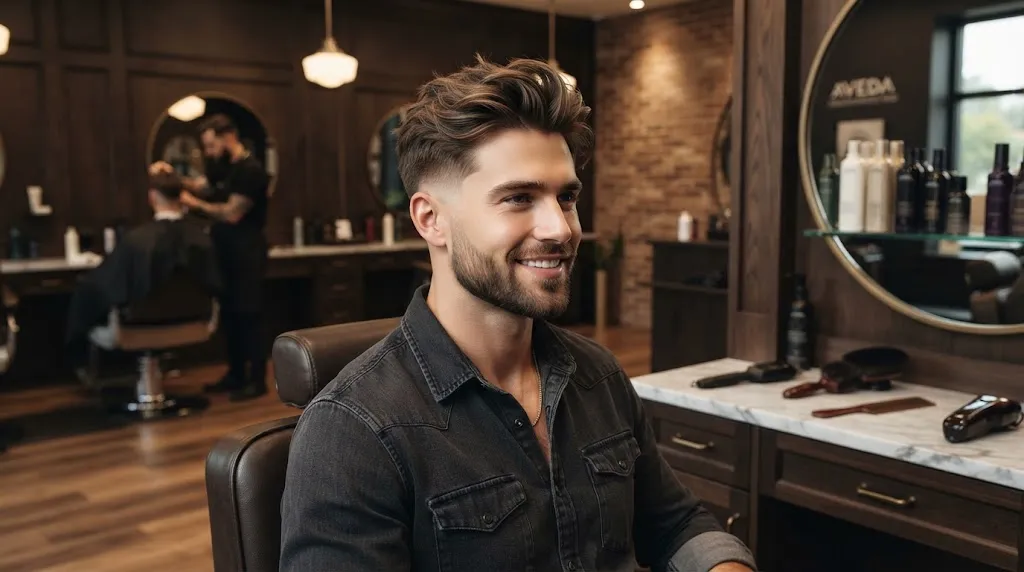
Men’s haircut trends in 2026 include both refined short cuts and a noticeable move toward fuller, softer, and longer shapes. Current expert coverage highlights tailored buzz cuts, modern short styles, softer mullets, and longer natural hair as important directions.
Tapers and Clean Graduated Sides
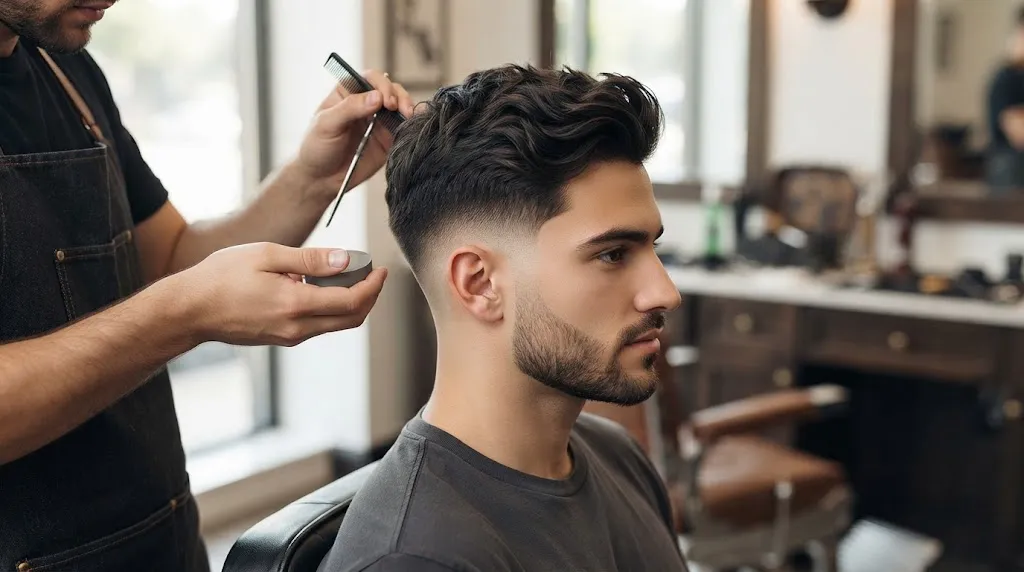
Tapers remain useful for men who want clean edges without removing as much side length as a very close fade. In current looks, the top can stay fuller and more natural.
See: Taper above for the complete barber instruction.
Textured Short Cuts
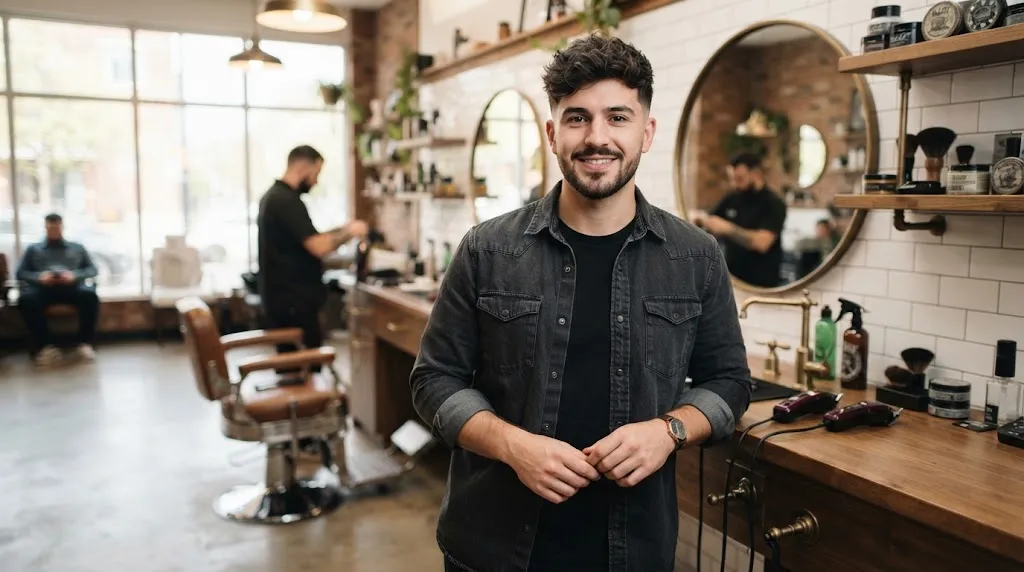
Short hair is still current, but texture and tailored shaping help prevent the cut from looking overly uniform. Modern crops and precision short cuts are being adapted to natural texture rather than relying on one fixed finish.
Clavi Cut
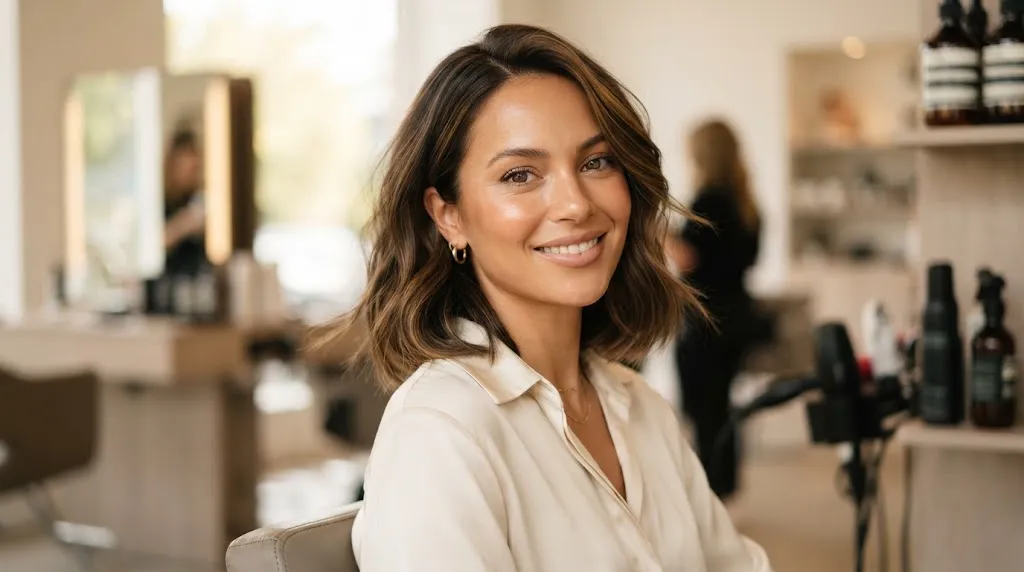
Yes. Layered haircuts remain strongly represented in 2026, but the current emphasis is on where the layers are placed and how naturally they connect to the overall shape rather than simply adding as many layers as possible.
Longer Textured Styles
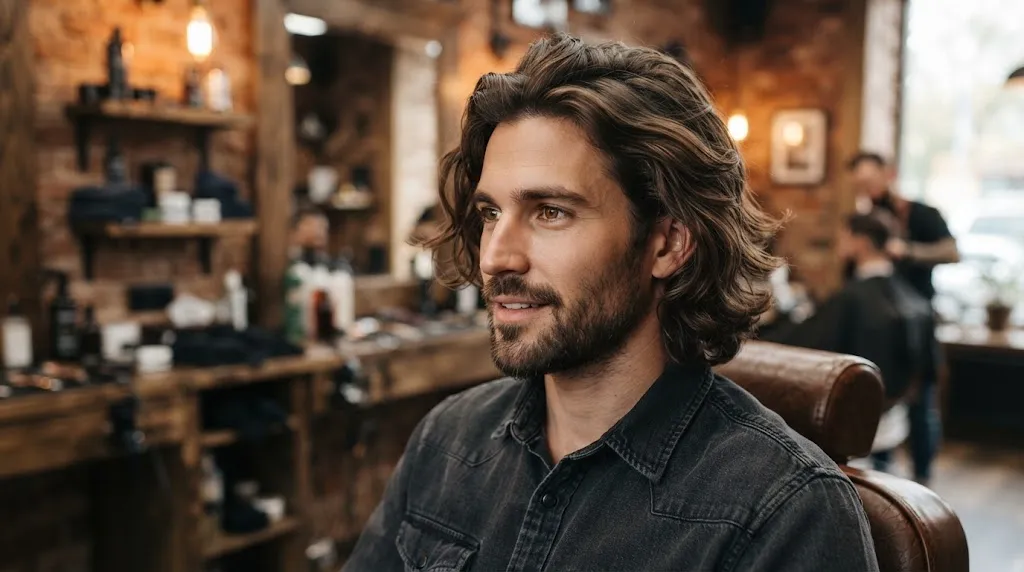
Longer hair has become a stronger men’s trend in 2026, particularly when the cut preserves natural texture while keeping enough shaping to avoid an unstructured grow-out.
How to Choose the Right Haircut From a Photo
A haircut photo is most useful when the reference has something in common with your own hair. Before choosing a cut, compare the desired length, natural texture, density, and maintenance needs instead of judging the finished look alone.
Start With the Length You Actually Want
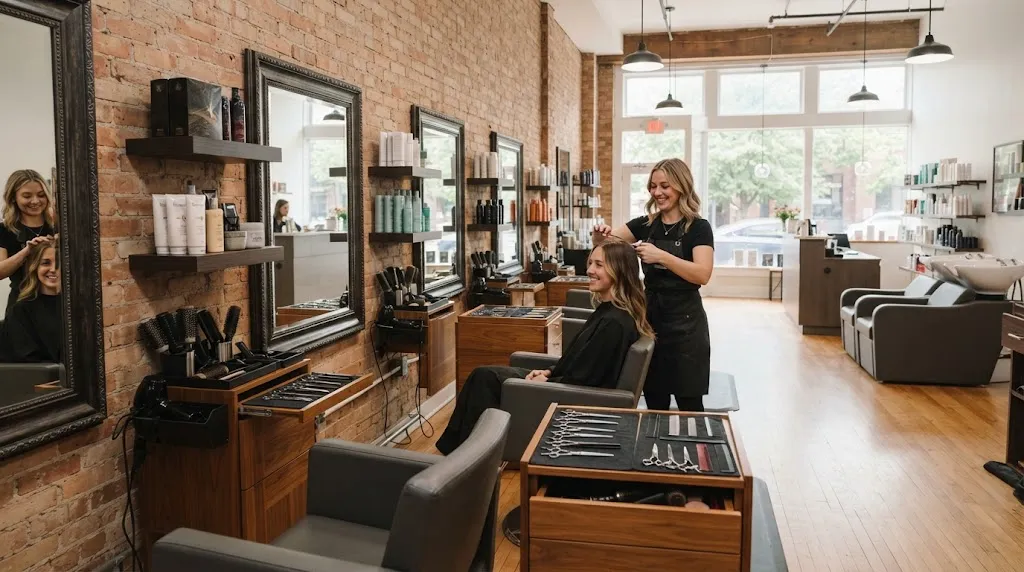
First decide how much length you are comfortable removing. If you want to keep most of your hair, focus on layers, perimeter shaping, or face-framing changes. For a moderate change, consider shoulder, collarbone, or medium-length cuts. If you are ready for a major change, compare shorter options only after considering their grow-out and trim requirements.
Compare the Photo With Your Natural Hair Texture
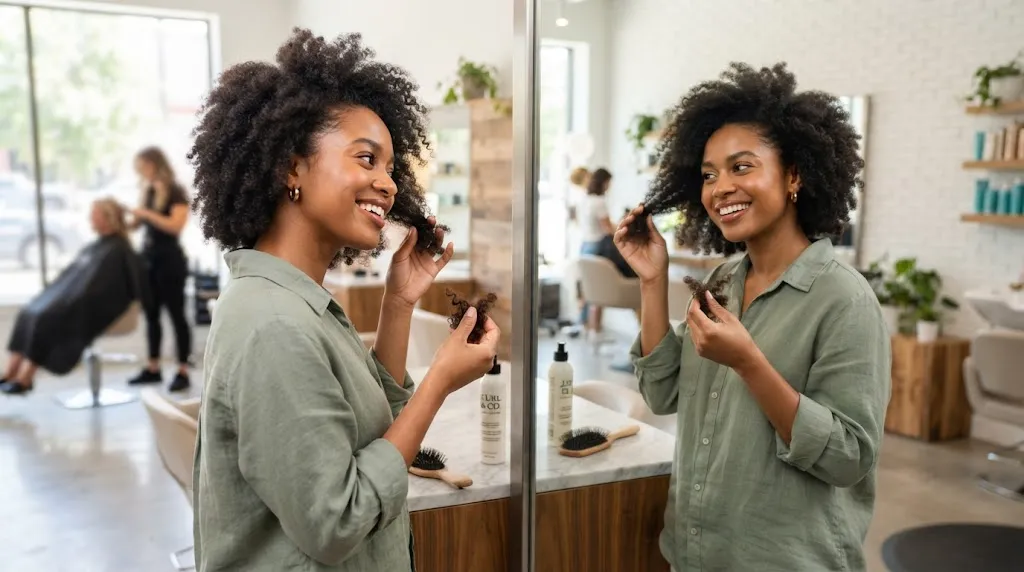
The same haircut shape does not fall identically on every hair texture.
- Straight hair: Usually shows perimeter lines, graduation, and layer placement clearly.
- Wavy hair: Adds natural movement that can soften a precise shape.
- Curly hair: Changes the visible length and creates more volume depending on the curl pattern.
- Coily hair: Shrinkage and density strongly affect the finished silhouette.
A reference with a texture similar to your own gives a more realistic idea of how the cut may behave.
Check Your Hair Density
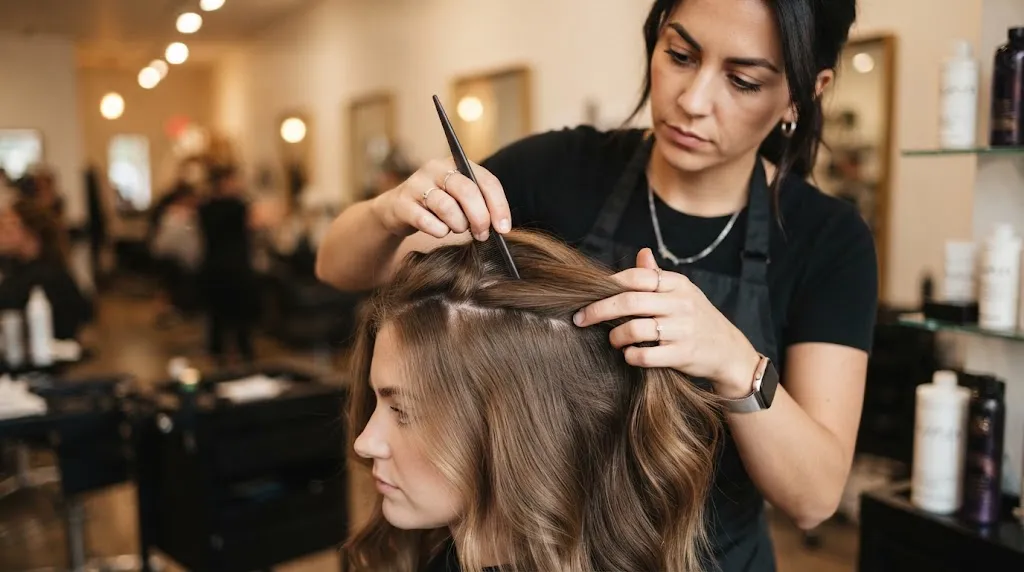
Hair density affects how much weight a stylist should remove and where layers should be placed.
Fine hair can lose visible fullness when too many short layers are added, so preserving weight around the perimeter is often important.
Medium-density hair generally provides more flexibility for layering because movement can be added without removing excessive fullness.
Thick or dense hair may benefit from carefully placed layers or internal weight removal to prevent excess bulk while maintaining the intended outer shape.
Instead of simply asking for “more layers,” discuss where you want movement and where you want to keep fullness.
Consider Face Proportions Without Treating Them as Rules

Face shape can help guide haircut placement, but it should not be the only reason for choosing a style.
- Round: Length, volume placement, and front pieces can change how width is visually distributed.
- Oval: Works with many proportions, so texture and maintenance often become more useful deciding factors.
- Square: Softer movement or stronger geometric lines create different effects around the jaw.
- Heart: Fringe and face-framing placement can change the balance between the forehead and lower face.
- Long or oblong: Overall length and vertical volume influence how elongated the finished shape appears.
Use face proportions as a reference point alongside hair texture, density, lifestyle, and personal preference rather than searching for one supposedly perfect haircut.
Check the Maintenance Before Choosing
Maintenance includes both daily styling and how frequently the haircut needs reshaping.
| Level | What It Usually Means |
|---|---|
| Low | Works largely with the natural hair pattern and needs little daily shaping |
| Medium | Benefits from some regular styling and periodic shape maintenance |
| High | Depends more heavily on styling, precise shaping, or frequent trims |
A haircut that looks simple in a finished reference can still require regular styling to recreate the same result.
What Makes a Haircut Flattering for Women Over 50?
There is no single haircut or hair length that is universally most flattering for women over 50, and no cut can guarantee making someone look “10 years younger.” A more useful approach is to consider how the shape works with the person’s texture, density, facial proportions, preferred volume, and maintenance routine.
Short, medium, and long hair can all work well. Movement around the face, balanced volume, a defined overall shape, and a length that works with the natural hair often matter more than age itself.
Common Haircut Problems Photos Don't Show You
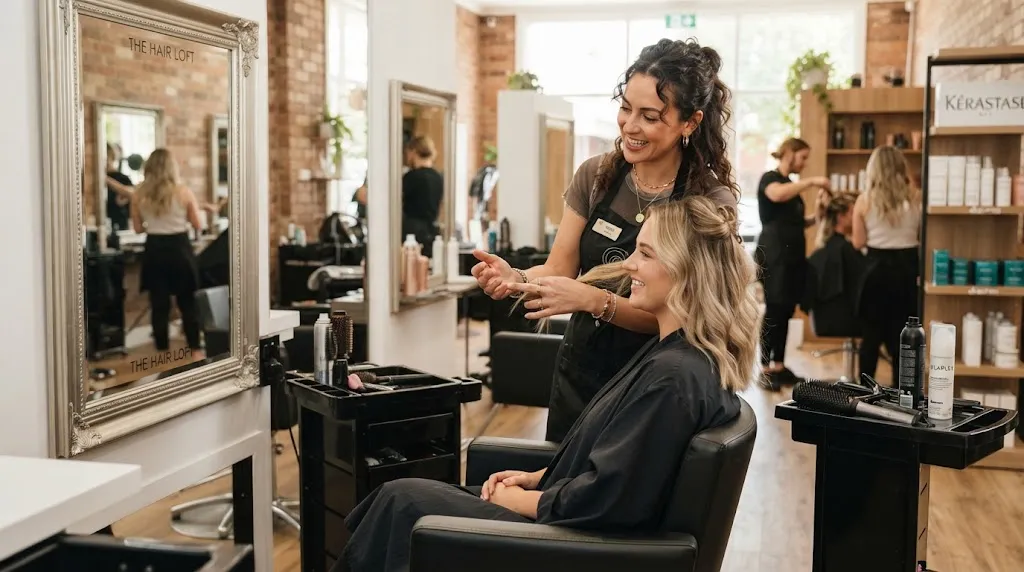
A finished haircut reference shows the result, but it does not always reveal the natural texture, density, growth pattern, styling work, or cutting adjustments behind it. Checking these factors before the appointment helps create more realistic expectations.
“I Love the Photo, but the Haircut Looks Different on Me”
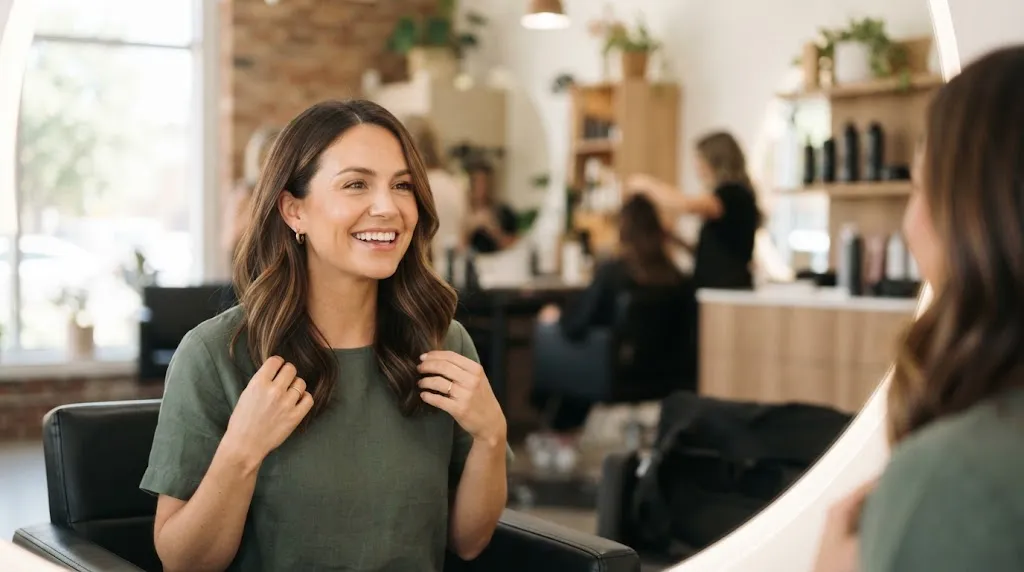
Two people can receive similar cutting patterns and still have noticeably different results. Natural texture, density, current length, hairline, growth direction, and styling all affect the final shape.
Use the reference to communicate the features you want rather than expecting an exact copy of another person’s hair.
“My Layers Made My Hair Look Too Flat”
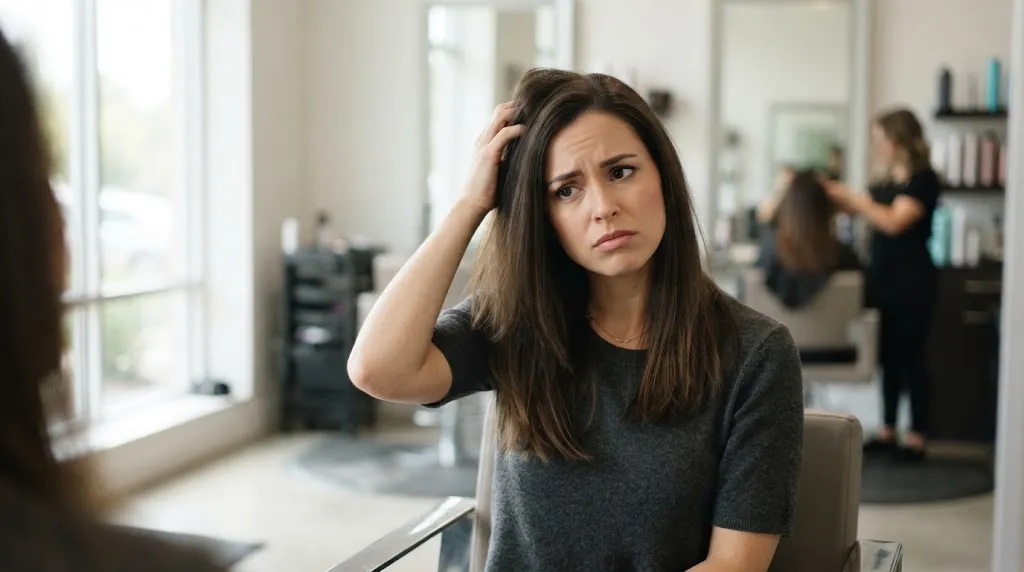
Layer placement affects how much visible weight remains in the hair. On some fine or lower-density hair, removing too much length from the upper sections can make the ends or overall shape appear thinner.
Tell your stylist where you want movement and where you want to preserve fullness instead of requesting layers without discussing their placement.
“My Thick Hair Gets Too Bulky Around the Sides”

Dense hair can build excess weight in specific areas even when the overall haircut length looks correct. Strategic layering, graduation, or internal weight removal can redistribute that bulk without automatically making the entire haircut shorter.
Show your stylist exactly where the shape feels too heavy so the adjustment can target that area.
“My Curly Hair Became Much Shorter After It Dried”
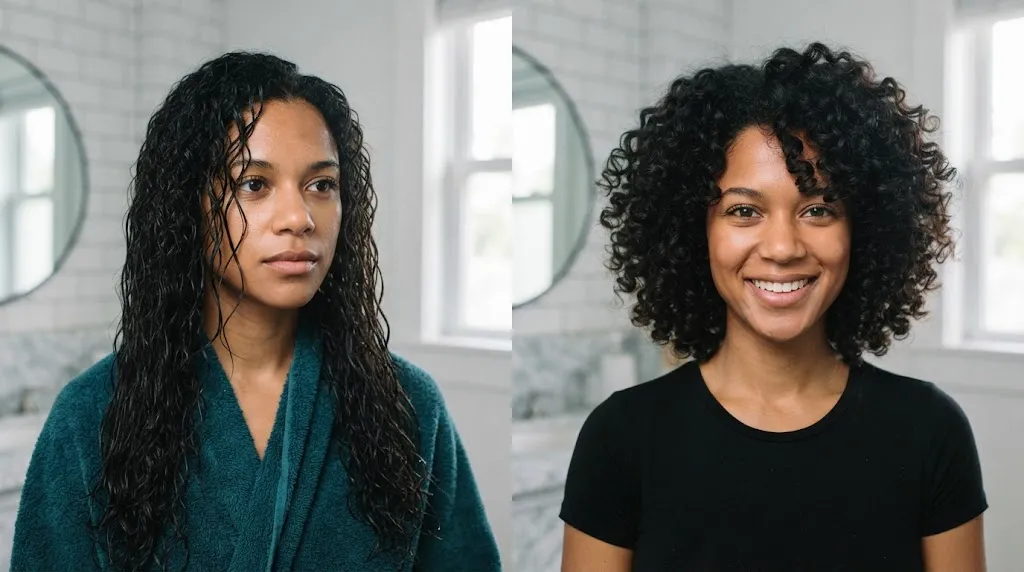
Curly and coily hair can contract as it dries, so the visible dry length may be considerably shorter than the stretched or wet length.
Discuss the desired dry finished length before cutting and use references with a similar curl pattern whenever possible.
“My Bangs Don't Sit Like the Reference Photo”
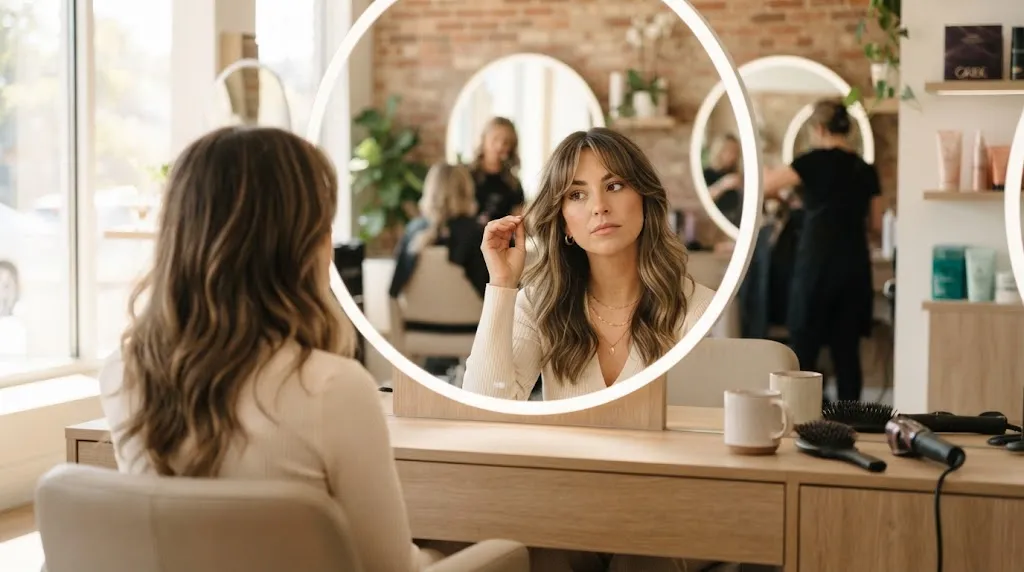
Bangs are strongly affected by the natural hairline, cowlicks, texture, growth direction, fringe length, and daily styling. A fringe that falls straight forward on one person may naturally separate or move sideways on another.
Ask how the chosen fringe shape will behave with your natural front growth pattern before deciding on the final length.
“The Front Looks Good, but I Don't Like the Back”
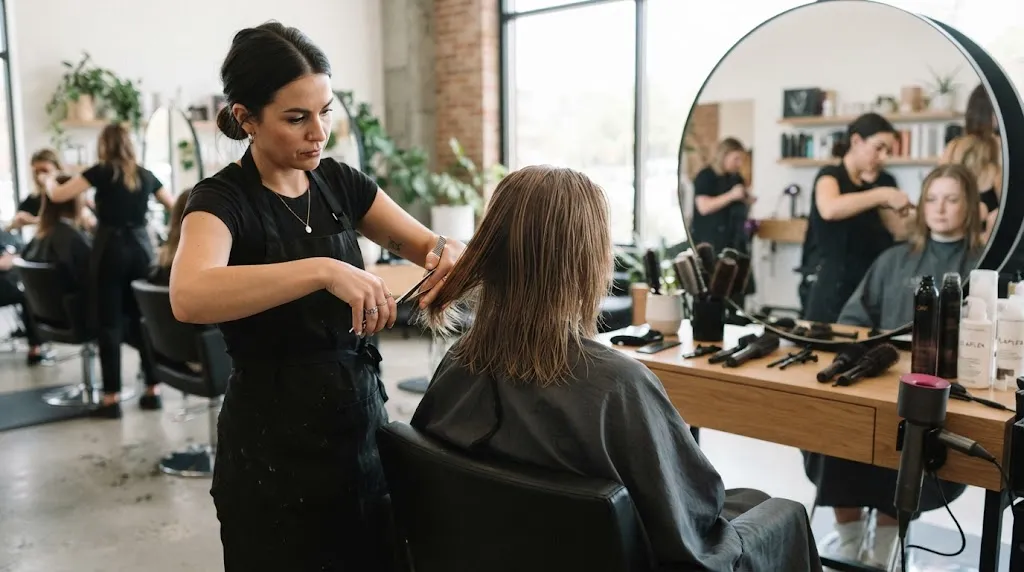
A front-facing reference does not show the full haircut structure. The back may have a rounded, blunt, tapered, graduated, U-shaped, V-shaped, or heavily layered finish that changes the entire silhouette.
Check front, side, and back views whenever the perimeter, neckline, graduation, or layering is important to your choice.
“I Want a New Haircut but Don't Want High Maintenance”

Choose according to the amount of styling and trim upkeep you realistically want to do, not simply according to which haircut looks simplest in a finished reference. Use the low-maintenance comparison earlier on this page to narrow down styles before choosing the final shape.
Similar Haircuts That Look Alike in Photos
Some haircut names are easy to confuse because they share similar lengths or layering. The quickest way to identify them is to focus on the feature that separates one shape from another.
Bob vs Lob

| Bob | Lob |
|---|
| Usually finishes around the jaw or neck | Extends farther toward the collarbone or shoulders |
| More compact silhouette | Longer and more flexible silhouette |
| Best identifying clue: Shorter perimeter | Best identifying clue: Bob-like shape at a longer length |
Pixie vs Bixie

| Pixie | Bixie |
|---|
| More closely cropped overall | Keeps noticeably more length around the sides and perimeter |
| Stronger short-cut shape | Sits between a pixie and bob |
| Best identifying clue: Cropped outline | Best identifying clue: Extra bob-like movement |
Shag vs Wolf Cut
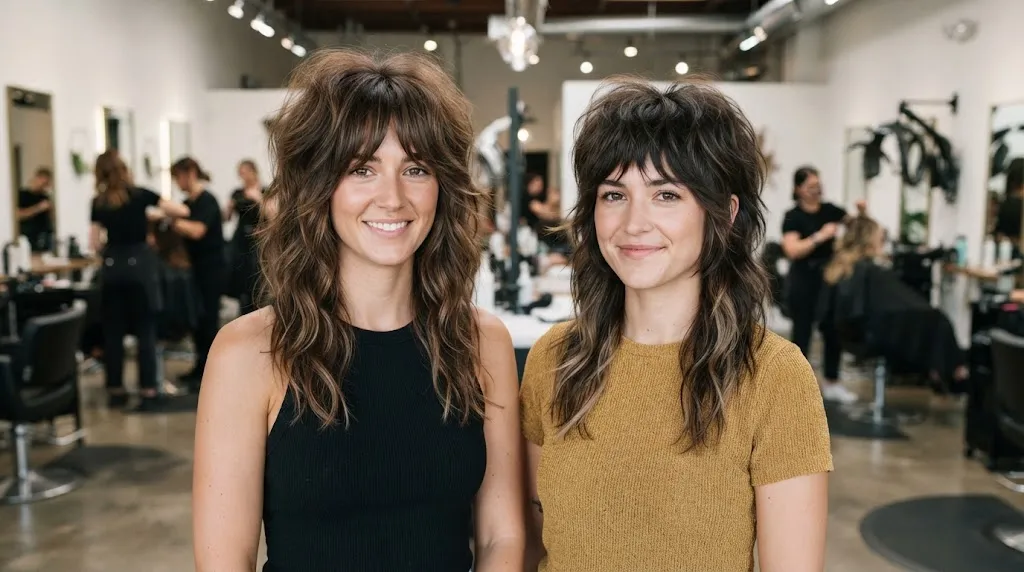
| Shag | Wolf Cut |
|---|
| Layers and texture are distributed throughout the shape | Usually has stronger contrast between shorter upper layers and longer lower sections |
| Can look softer and more blended | Often creates more obvious crown volume |
| Best identifying clue: All-over layered texture | Best identifying clue: Shorter top with longer lower length |
Taper vs Fade
| Taper | Fade |
|---|
| Shortening is concentrated around the edges and neckline | Shortening usually extends farther through the sides |
| Retains more visible hair | Can transition down to extremely short hair or skin |
| Best identifying clue: Natural edge graduation | Best identifying clue: Stronger side contrast |
Normal Slope vs Fade
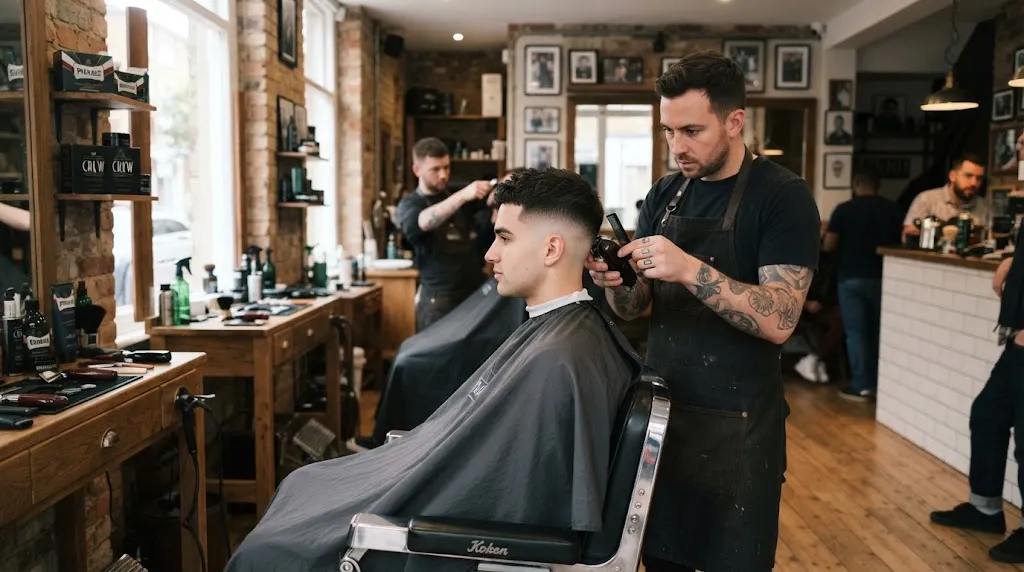
| Normal Slope | Fade |
|---|
| Gradual, softer reduction in length | More defined progression toward very short hair |
| Retains more side bulk | Often removes more lower-side bulk |
| Best identifying clue: Natural sloping silhouette | Best identifying clue: Clearly visible fade transition |
Layered Cut vs Butterfly Cut
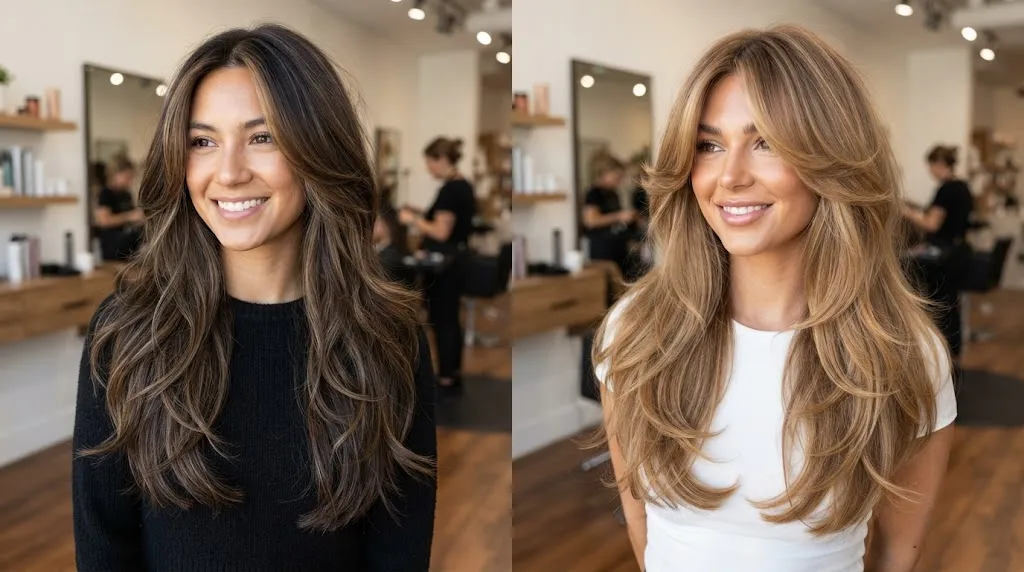
| Layered Cut | Butterfly Cut |
|---|
| Layers can be positioned throughout the haircut in many different ways | Uses a more recognizable combination of shorter upper and face-framing layers with longer lower lengths |
| Broad haircut category | Specific layered shape |
| Best identifying clue: General variation in lengths | Best identifying clue: Shorter framing layers flowing into long lengths |
What to Show and Tell Your Stylist or Barber
A reference works best when it starts a clear conversation rather than serving as an instruction to copy another person’s haircut exactly.
Choose a Photo With Similar Hair Texture
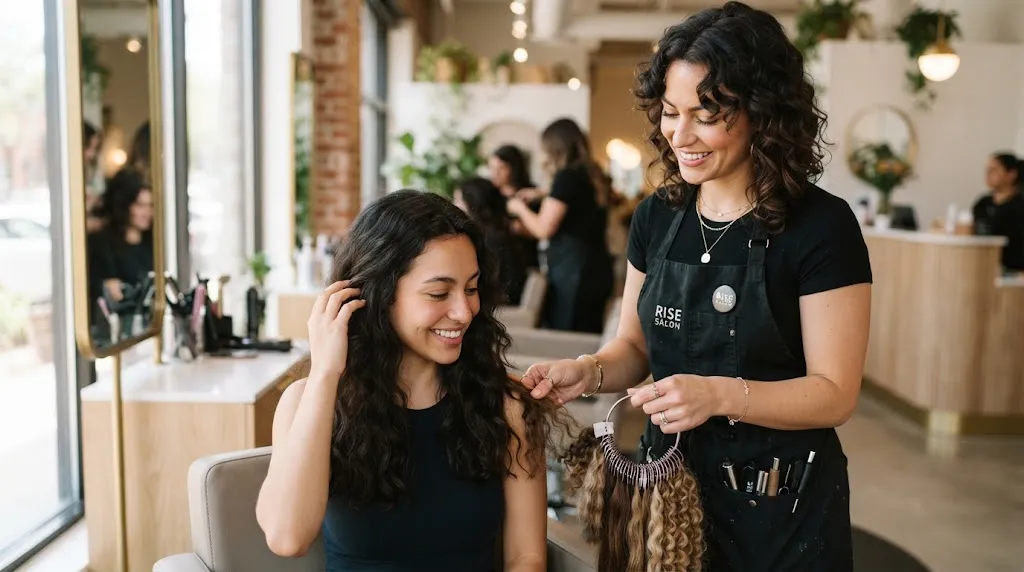
A reference with a texture close to your own gives the stylist or barber more useful information about how the desired shape should fall naturally.
If your hair is curly, for example, a straight-hair reference may show the desired overall length but give less useful information about shrinkage, volume, and curl distribution
Save Front, Side and Back Views
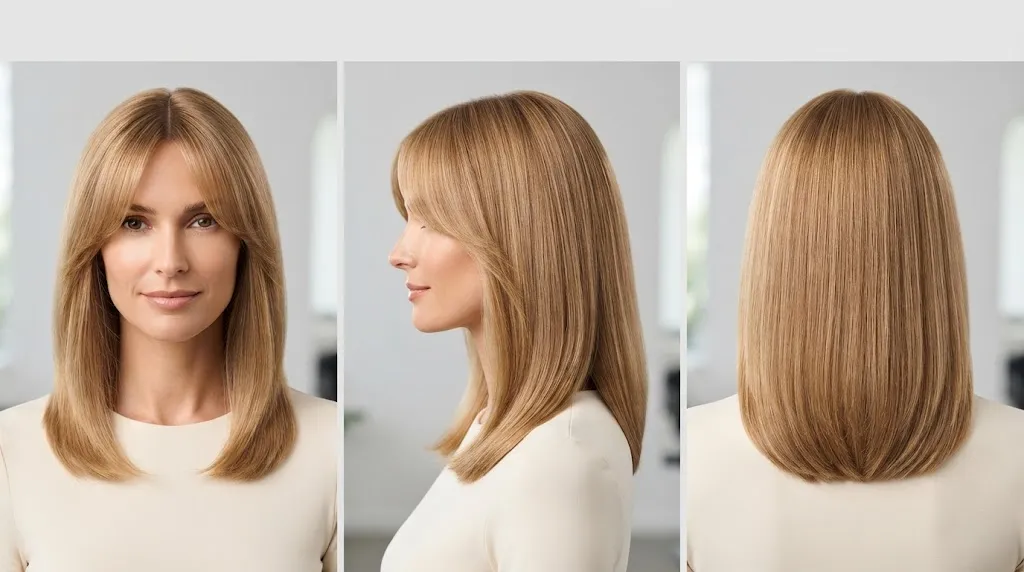
Different angles communicate different parts of a haircut.
The front shows fringe and face framing. The side reveals layers, graduation, and transitions. The back shows the perimeter, neckline, overall layering, and taper or slope shape.
When possible, use references showing more than one angle of the same or a very similar haircut.
Explain Which Part of the Photo You Actually Like
Instead of saying only “I want this haircut,” point out the specific details you want to keep:
- Overall length
- Layer placement
- Fringe shape
- Side shape
- Neckline
- Volume
- Texture
- Finished outline
Also mention anything in the reference you do not want. This makes the intended result much clearer.
Ask How the Cut Needs to Be Adapted to Your Hair
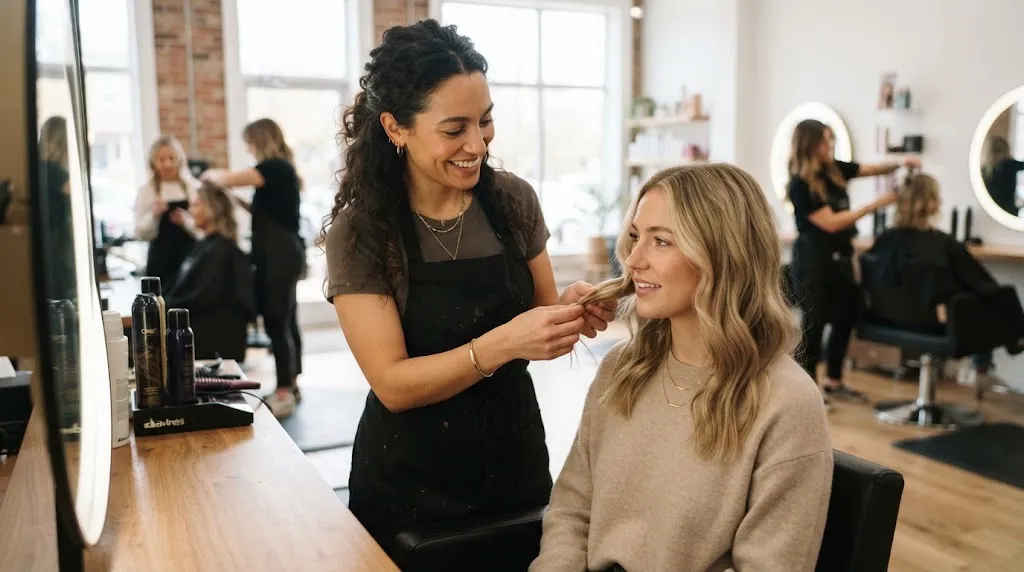
A good reference establishes the desired direction, but your natural hair determines how that direction should be adapted.
Ask how the proposed cut will change with your texture, density, growth pattern, current length, and preferred styling routine. The goal is to preserve the features you like while adjusting the construction to work with your own hair.
HD Hair Cutting Photos — Front, Side and Back Views
A clear haircut reference should make the shape easy to inspect from the angles that matter. Front, side, and back views reveal different details, so the most useful angle depends on which part of the haircut you are trying to identify or explain.
Front View
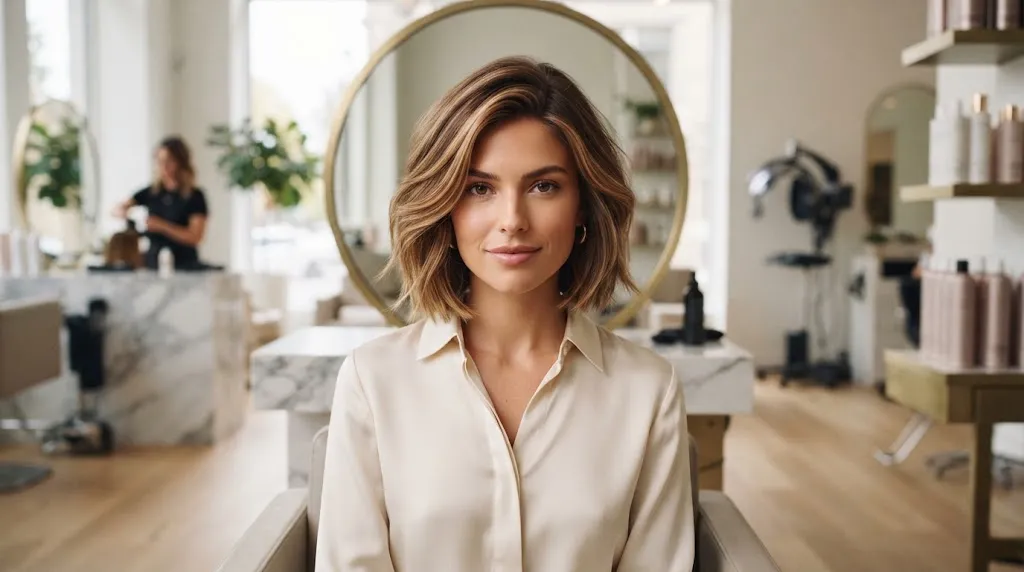
The front view is most useful for checking:
- Fringe or bangs
- Face-framing pieces
- Center or side parting
- Front length
- Volume around the face
- Overall facial proportions
Use this view when the main reason you like a haircut is how it shapes the area around the forehead, cheeks, or jaw.
Side View
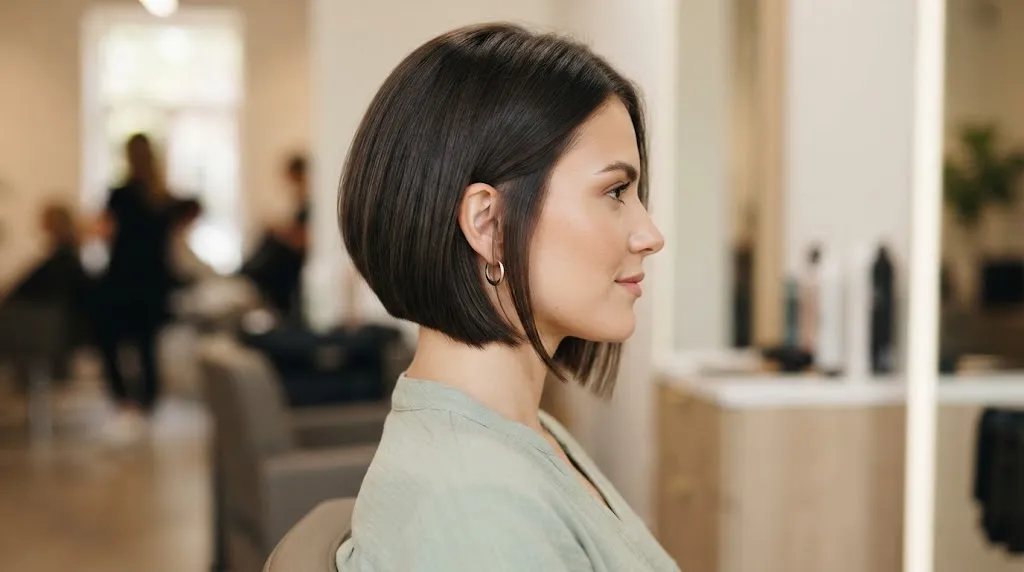
The side view is most useful for checking:
- Layer placement
- Graduation
- Crown volume
- Length changes
- Taper transitions
- Fade height
- Connection between the top and sides
This angle is especially useful for layered women’s cuts and men’s cuts where the side transition defines the style.
Back View
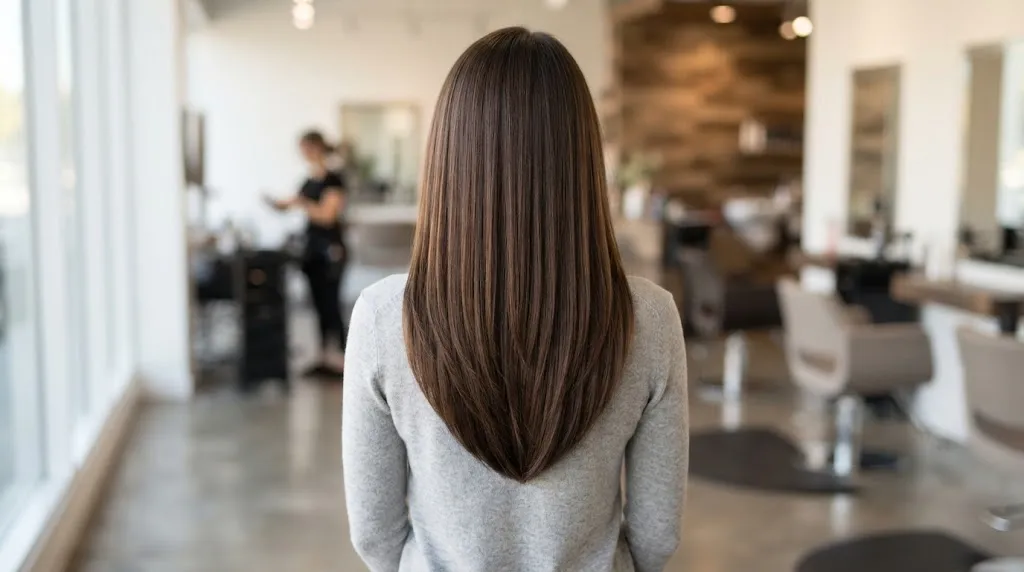
The back view is most useful for checking:
- Neckline shape
- Bob perimeter
- U-shaped or V-shaped outlines
- Back layering
- Taper or slope graduation
- Overall balance and symmetry
For cuts where the perimeter or neckline is a major part of the design, the back view is just as important as the front.
Choose Your Haircut Reference
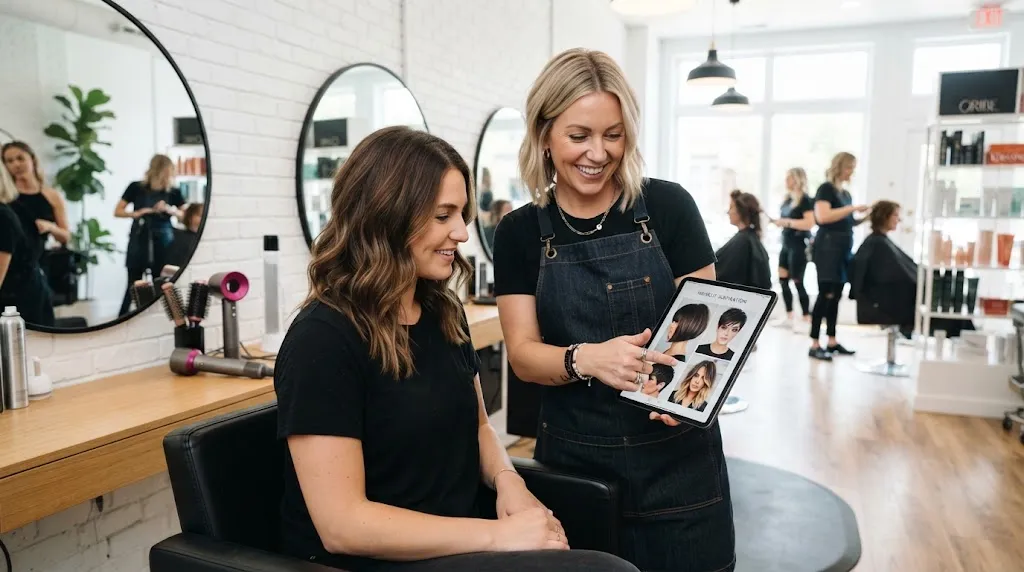
Start with the haircut name you like, compare its shape with your own texture and density, and check whether its maintenance level fits your routine. Save clear front, side, or back references when those angles contain details you want your stylist or barber to reproduce.
Use the reference as a starting point rather than expecting an exact copy. Discuss the length, layers, fringe, volume, neckline, and other details you want to keep, then ask how the haircut should be adjusted to work with your own hair.
Frequently Asked Questions
Explore More Haircut and Hairstyle Ideas
For more visual hairstyle references, browse our hair style picture collection. If the back shape or neckline is important to your choice, the back hair style guide provides additional ideas from that angle.
You can also narrow your search by hair type or length. Explore hairstyles for straight hair, compare medium haircuts for girls and haircuts for girls with long hair, or see the complete Normal Slope Haircut guide for that specific men’s cut.