
Long Face Hairstyles for Men: 25+ Best Cuts, Styling Tips & How to Choose 2026 Guide

Having a long or oblong face shape means your face length is noticeably greater than its width, often accompanied by a straight cheekline and a taller forehead or longer chin. The wrong haircut—like ultra-high top volume combined with skin-tight side fades—acts like an arrow pointing straight up and down, exaggerating your proportions and making your head look longer than it is.
The goal here isn’t to hide your features, but to create visual balance by adding side width, reducing vertical height, and breaking up the vertical line of your face.
In this guide, we’ll break down the mechanical principles of hair proportions for oblong faces, detail the specific haircuts that work best (and why), reveal exactly what to tell your barber in professional terminology, and cover the styles you need to avoid at all costs.
How to Know If You Have a Long Face Shape

Key Characteristics of a Long/Oblong Face

Before picking a haircut, you need to confirm your face structure. An oblong or long face shape has distinct proportions that set it apart from other bone structures:
Length Exceeds Width: The vertical measurement from your hairline to the tip of your chin is noticeably longer than the horizontal measurement across your cheekbones or jaw.
Uniform Width Line: Your forehead, cheekbones, and jawline are roughly equal in width, creating a straight, elongated silhouette along the sides of your face.
Soft or Rounded Jawline: Unlike a square face, an oblong face typically features a gently curved jawline rather than sharp, wide angles.
Prominent Forehead or Chin: You often have a taller forehead, an elongated chin, or both, which extends the overall vertical axis.
Quick Self-Check Method at Home

You don’t need digital scanners or specialized tools to measure your proportions. All you need is a flexible tape measure (or a piece of string and a standard ruler) and a mirror.
Measure Face Length: Place the start of the tape at the center of your top hairline and measure straight down over the nose to the tip of your chin. Note down this number.
Measure Forehead Width: Measure across the widest part of your forehead, halfway between your eyebrows and your top hairline.
Measure Cheekbone Width: Measure across your upper cheeks, starting from the outer corner of one eye across the bridge of your nose to the outer corner of the other eye.
Measure Jawline Width: Start at the base of your jaw (just below your earlobe) and measure along the bone to the center of your chin. Double this number for your total jawline width.
The Verdict: If your face length measurement is significantly larger than your cheekbone width (typically by 1.5 times or more), and your forehead, cheekbone, and jaw measurements are relatively similar, you have a long/oblong face shape.
Long Face vs Oval vs Rectangular — Telling Them Apart
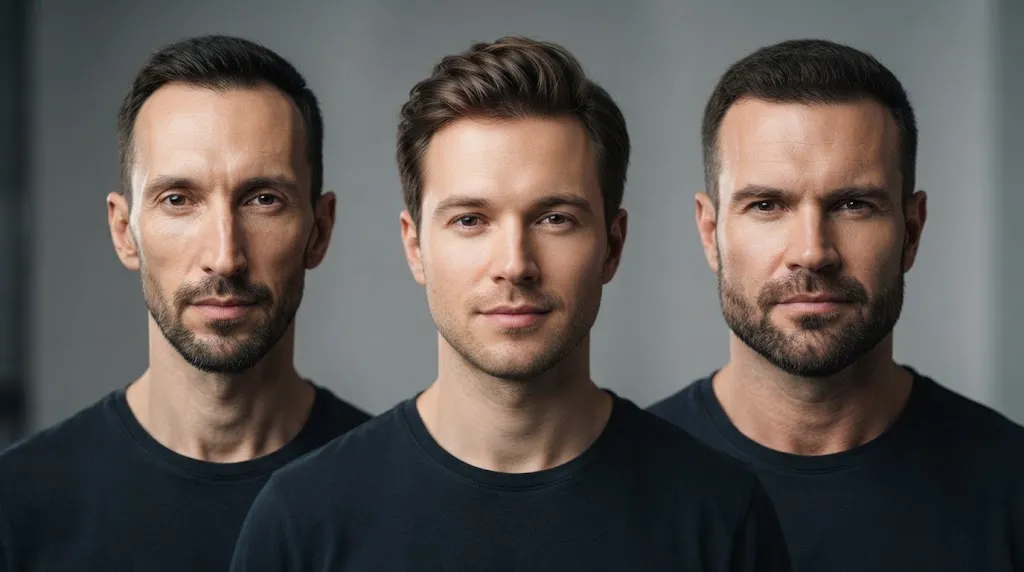
It is common to confuse a long face with an oval or rectangular shape because all three share an extended vertical profile. However, key structural differences dictate how hair should be cut:
| Feature | Long / Oblong Face | Oval Face | Rectangular Face |
|---|---|---|---|
| Length vs. Width | Significantly longer than wide | Slightly longer than wide | Significantly longer than wide |
| Jawline Shape | Softly rounded or straight | Gently curved and balanced | Sharp, wide, and angular |
| Cheekbone Alignment | Aligned with forehead and jaw | Slightly wider than forehead and jaw | Equal to a broad, sharp jaw |
| Key Styling Goal | Add lateral width, cover forehead | Versatile (most styles work) | Soften sharp jaw angles |
Oval faces feature balanced proportions where the width of the cheekbones is slightly greater than the forehead and jawline, tapering gently down to the chin without excessive length.
Rectangular faces match the length of an oblong face but possess a strong, boxy jawline with sharp 90-degree angles. If your jaw is distinctly wide and square, you have a rectangular shape, which requires different barbering techniques to balance.
Why These Haircuts Work — The Core Styling Principle

Add Width, Not Height

The fundamental physics of styling a long face comes down to balancing proportions. Because your vertical measurement is already dominant, any style that builds height on top—like a sky-high pompadour, vertical quiff, or high slick-back—acts as an extension of your face, drawing the viewer’s eye straight up and down.
To create the optical illusion of a shorter, broader oval, you must shift visual weight horizontally. This is achieved by retaining bulk along the sides of your head (around the parietal ridge) while keeping the top low to medium in height. By widening the silhouette at the temples and sides, you break the long line of the face and introduce immediate balance.
The Role of Fringes and Side Volume

Two key cut features do the heavy lifting for an oblong structure: forehead coverage and side density.
Fringes (Bangs): Bringing hair forward over the forehead visually truncates the face. Whether it’s a textured crop fringe, a side-swept fringe, or soft curtains, covering even an inch or two of your upper forehead instantly removes vertical real estate from your total facial length.
Side Volume: Keeping scissor-cut texture or low-tapered sides rather than high skin fades provides lateral structure. This side weight fills out narrower cheekbones and creates a fuller overall frame.
Mistakes That Make a Long Face Look Even Longer
Avoiding bad haircut mechanics is just as critical as choosing the right style. Steer clear of these common barbering traps:
High and Tight Fades / Skin Fades: Fading all the way up to the crown strips away all side width, leaving a tall, narrow block of hair sitting on top of a long head.
Excessive Top Volume: Spiking hair straight up or building tall pompadours adds unnecessary inches to your vertical profile.
Hard Center Parts on Slicked Hair: Slicking hair flat against the sides while parting it down the middle emphasizes symmetrical vertical lines, making the face look longer and narrower.
Long, Unkept Beards: Growing a long, pointed beard extends your chin downward, adding extra length directly to your jawline. Keep facial hair short, neat, or wide along the cheeks to complement your proportions.
Best Long Face Hairstyles for Men
For men with longer or oblong face shapes, the primary goal of any hairstyle is to create horizontal balance, soften sharp features, and avoid adding excessive height on top without width. Below is a detailed guide to 25 distinct hairstyles tailored for long face shapes.
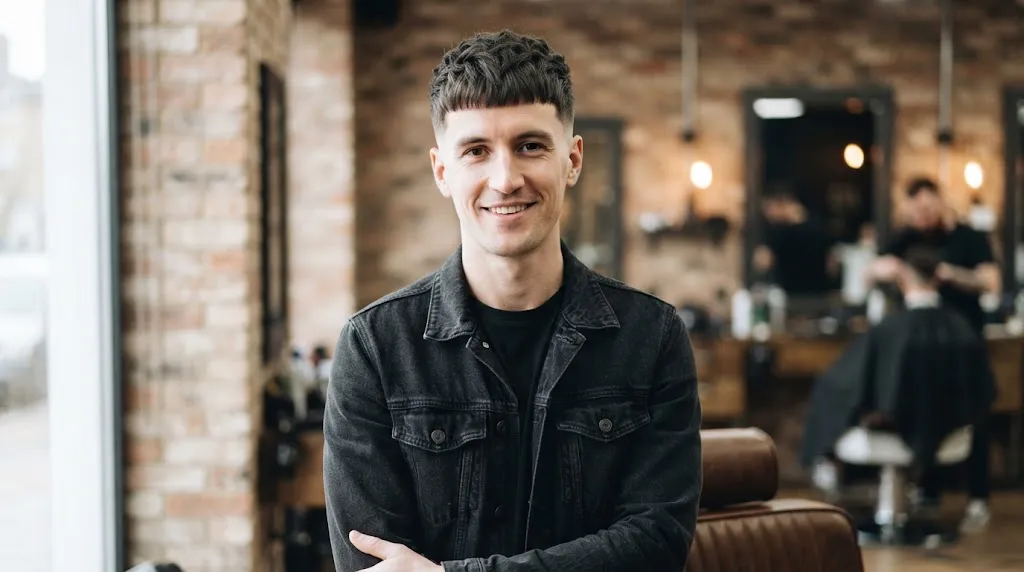
Textured Crop with Skin Fade
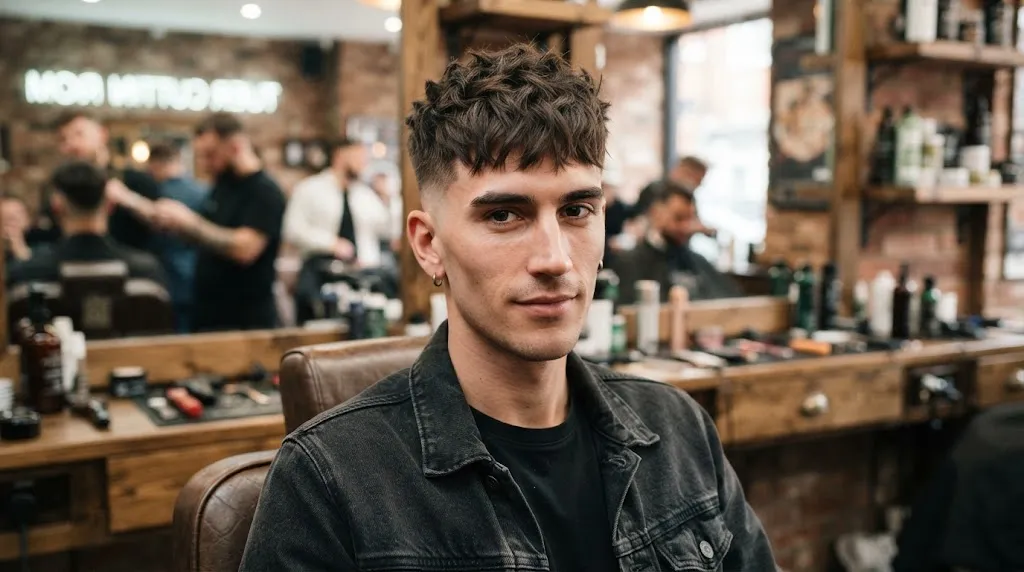
Description: A clean, cropped style with short, textured hair on top and tightly faded sides.
Why It Works: Horizontal fringe breaks the vertical length of the face, pulling attention across rather than up.
Barber Terminology: French crop with a high skin fade, blunt-cut textured fringe.
Maintenance Frequency: 2–3 weeks.
Slicked-Back Undercut
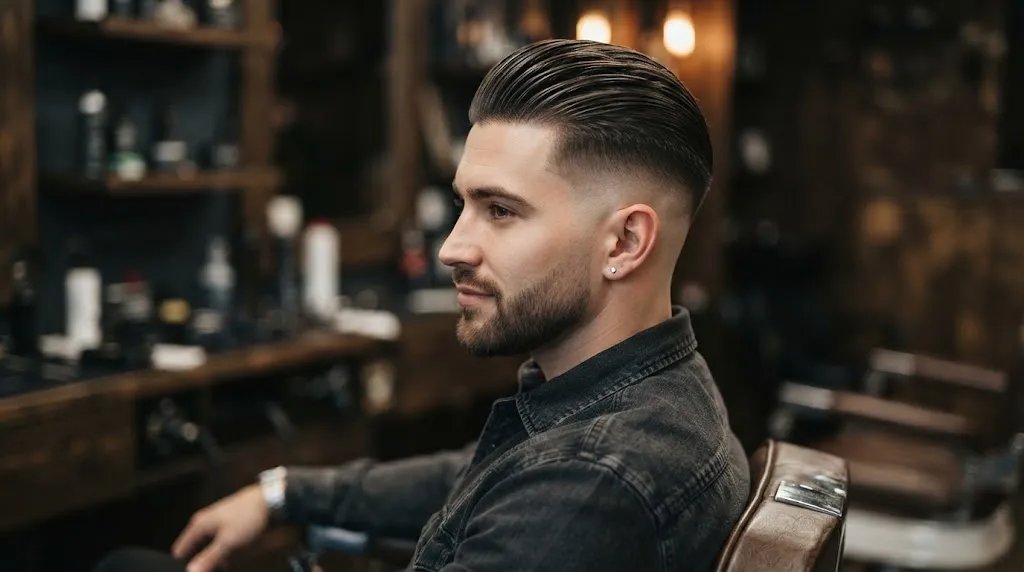
Description: Disconnected high sides with medium-length hair slicked back loosely.
Why It Works: Keeping the slick-back low and wide avoids adding vertical bulk while highlighting strong jawlines.
Barber Terminology: Disconnected undercut, low-shine pomade slick-back.
Maintenance Frequency: 3–4 weeks.
Long Fringe / Modern Quiff

Description: Forward-falling fringe that sweeps into a low-volume quiff.
Why It Works: Forehead coverage visually shortens a long face.
Barber Terminology: Modern quiff with forward-swept texture and tapered sides.
Maintenance Frequency: 3–4 weeks.
Crew Cut with Textured Top

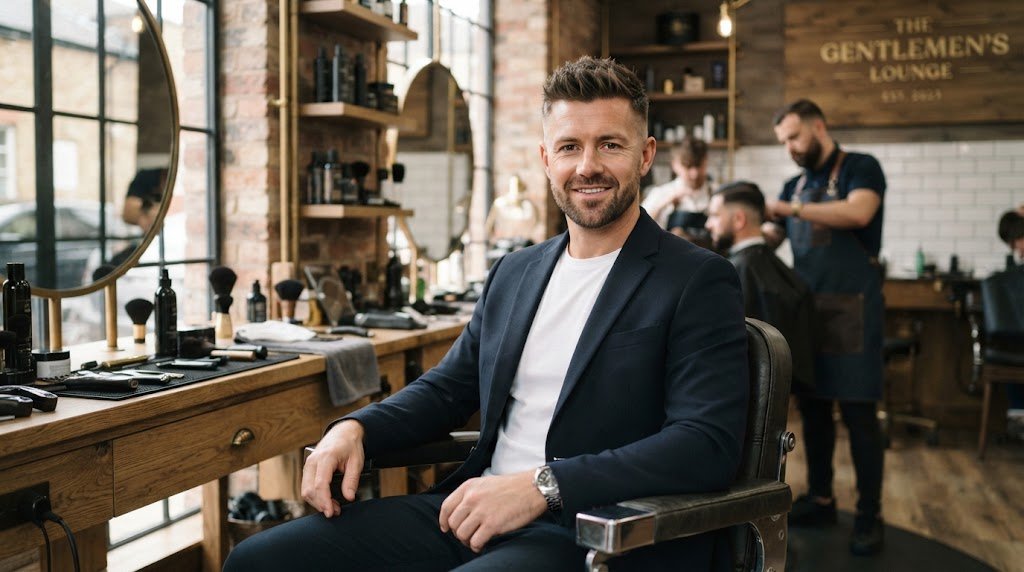
Description: Classic short side and back with slightly longer, textured hair on top.
Why It Works: Low-profile height keeps proportions balanced.
Barber Terminology: Classic crew cut, textured top, scissor-cut taper.
Maintenance Frequency: 2–3 weeks.
Mid-Length Textured Sweep with Fade
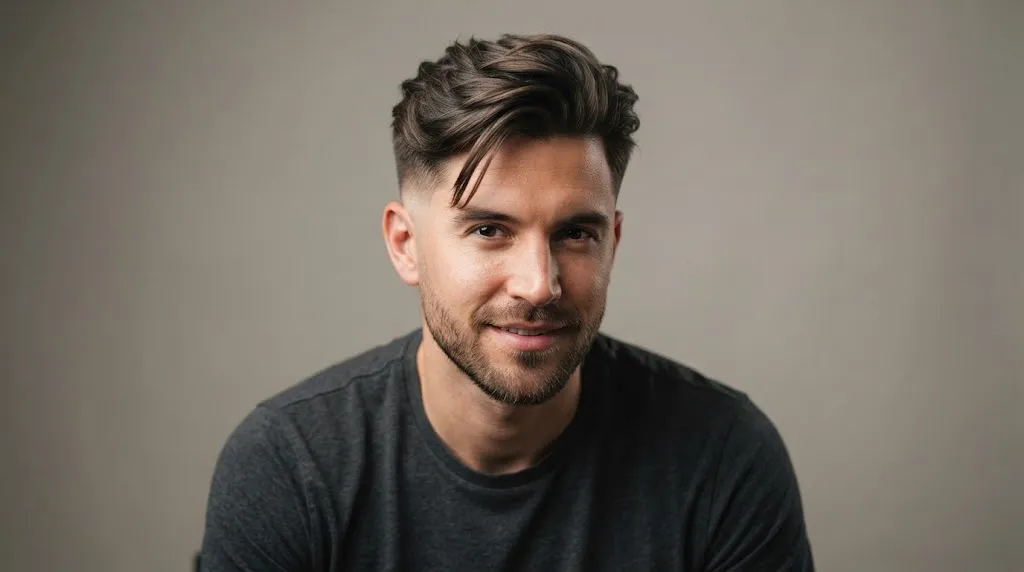
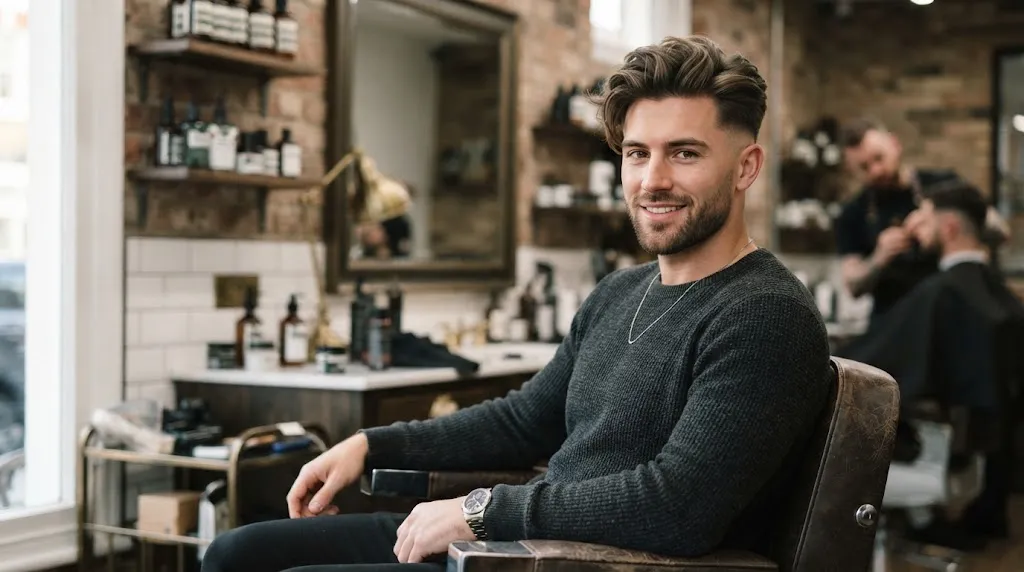
Description: Medium hair swept laterally across the forehead, paired with a soft fade.
Why It Works: Lateral movement adds perceived width to the upper face.
Barber Terminology: Mid-fade, side-swept textured crop.
Maintenance Frequency: 3–4 weeks.
Flat Top with Fade
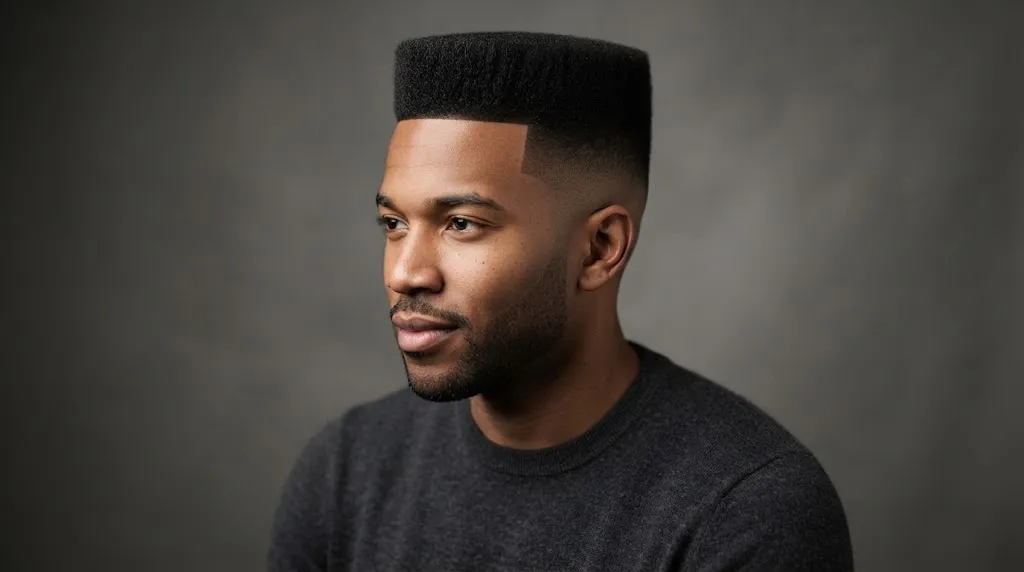
Description: Precision-cut boxy top with clean faded sides.
Why It Works: Structured horizontal lines across the top balance long proportions when kept at a moderate height.
Barber Terminology: Square flat top, mid-skin fade.
Maintenance Frequency: 2 weeks.
Textured Messy Top
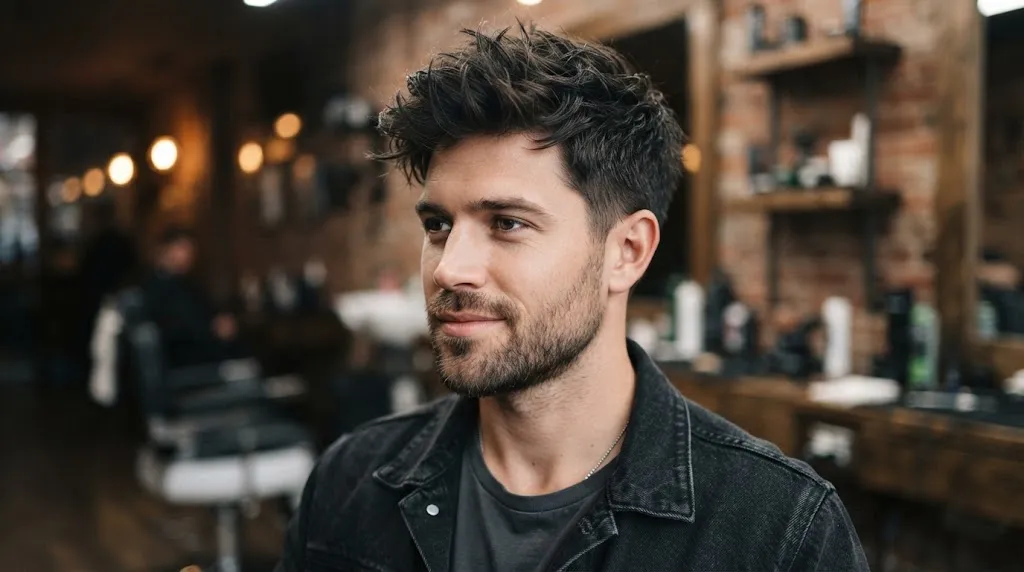
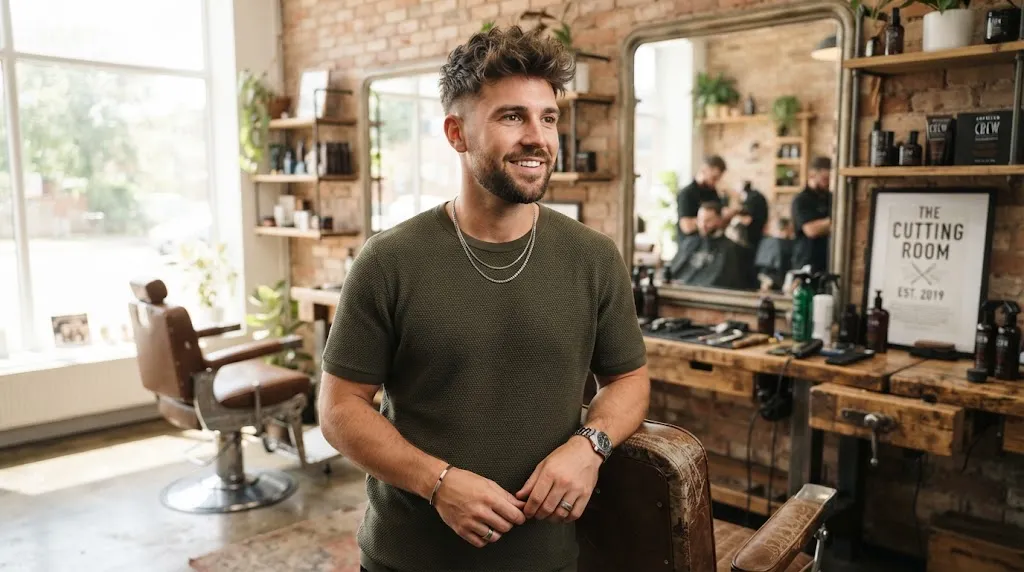
Description: Tousled, matte-finish top with controlled volume and short sides.
Why It Works: Casual, horizontal movement distracts from facial length.
Barber Terminology: Short back and sides, point-cut messy top.
Maintenance Frequency: 3–4 weeks.
Short Quiff with Hard Part

Description: Low-height front lift accompanied by a defined razor line.
Why It Works: Hard part creates a strong horizontal anchor line.
Barber Terminology: Low quiff, hard part, mid taper fade.
Maintenance Frequency: 2–3 weeks.
French Crop
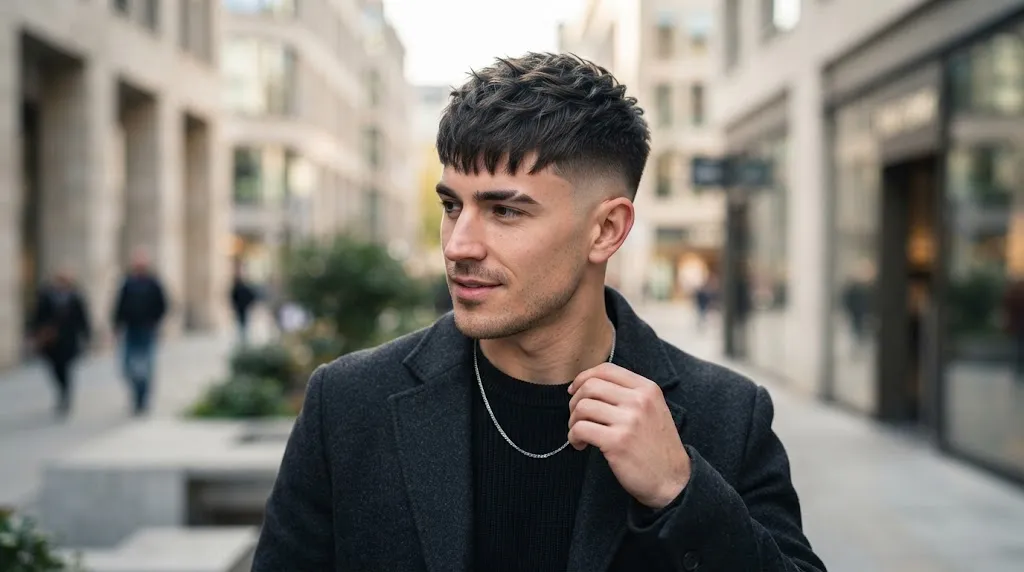
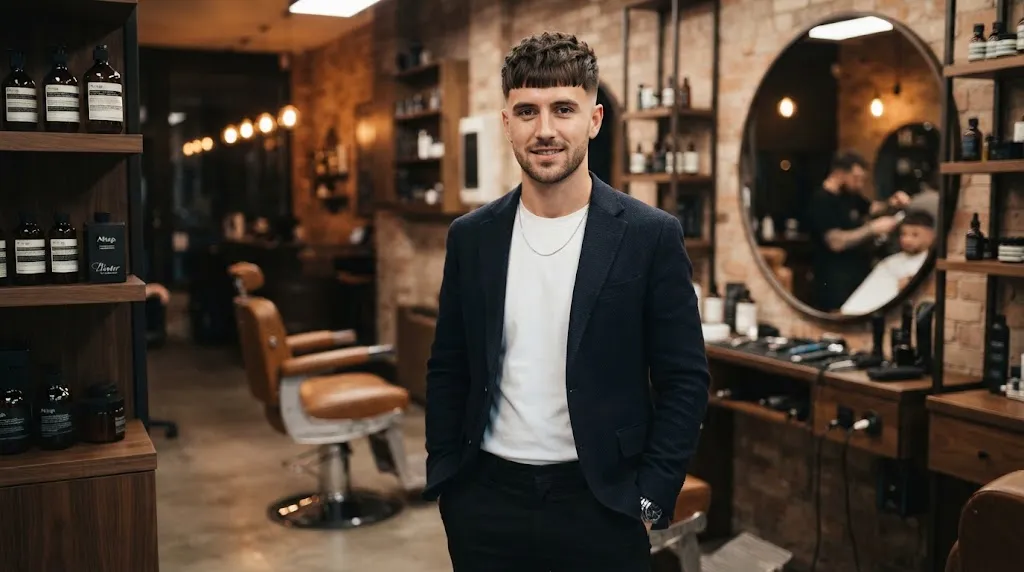
Description: Very short top with a flat, straight-cut fringe across the forehead.
Why It Works: The straight horizontal line cuts the forehead visually in half.
Barber Terminology: French crop, blunt fringe, low taper.
Maintenance Frequency: 3 weeks.
Caesar Cut

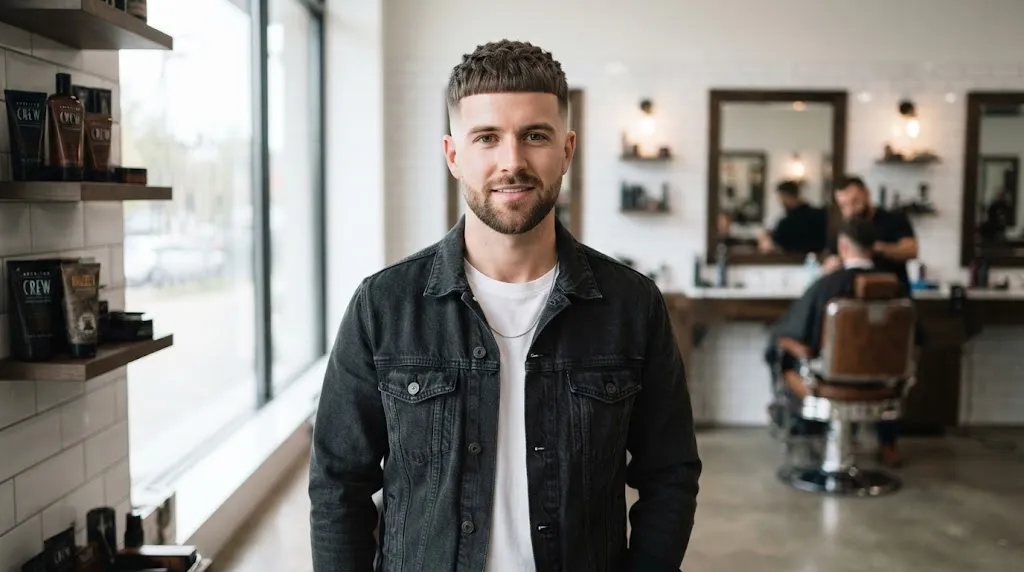
Description: Uniform short length around the head with a short, horizontal fringe.
Why It Works: Direct, forward alignment reduces visual height instantly.
Barber Terminology: Caesar cut, short forward fringe, uniform scissor cut.
Maintenance Frequency: 2–3 weeks.
Curtain Fringe


Description: Center- or slightly off-center-parted bang falling around cheekbone level.
Why It Works: Framing the sides adds natural width around the eyes and cheekbones.
Barber Terminology: 90s curtain bang, low-tapered sides, layered fringe.
Maintenance Frequency: 4–5 weeks.
Ivy League Cut
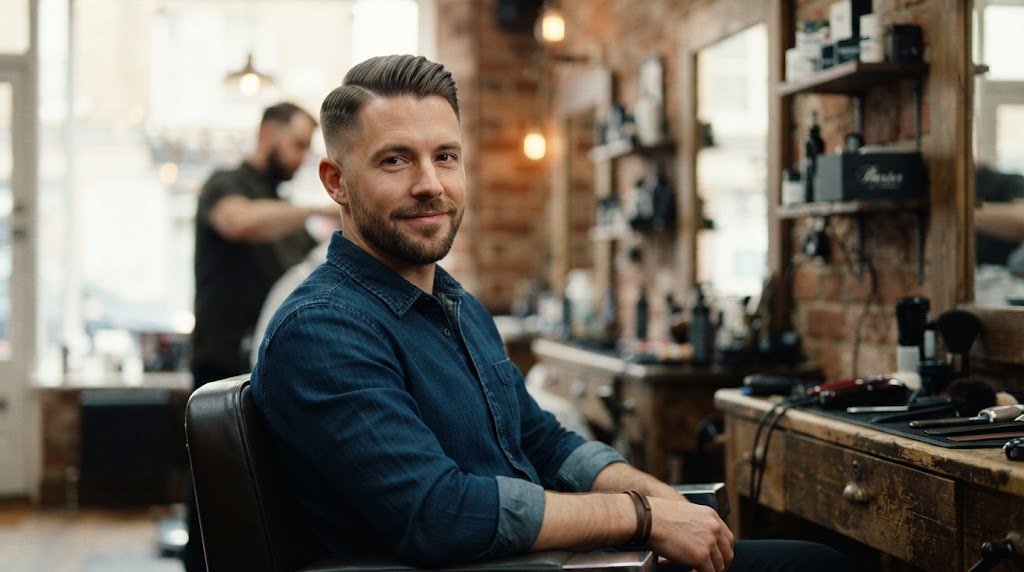

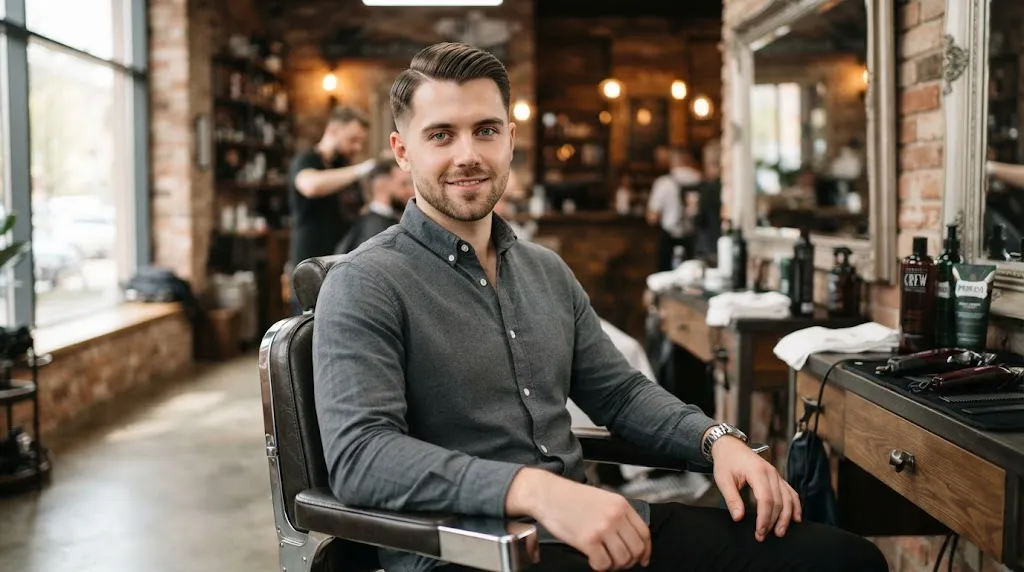
Description: Neat, preppy style with a side part and slight front sweep.
Why It Works: Classic side parting redirects visual attention horizontally across the brow.
Barber Terminology: Ivy League, side part taper, low volume top.
Maintenance Frequency: 3–4 weeks.
Wolf Cut


Description: Hybrid of a shag and mullet featuring heavy layering and side volume.
Why It Works: Adds texture and fullness along the jaw and neck, filling out a narrow shape.
Barber Terminology: Men’s wolf cut, heavy layer point-cutting, disconnected perimeter.
Maintenance Frequency: 6–8 weeks.
Shaggy Layers


Description: Medium-length, relaxed style with dynamic layered movement throughout.
Why It Works: Soft side volume balances vertical face length seamlessly.
Barber Terminology: Shag cut, razor-layered medium length.
Maintenance Frequency: 6 weeks.
Buzz Cut with Low Fade
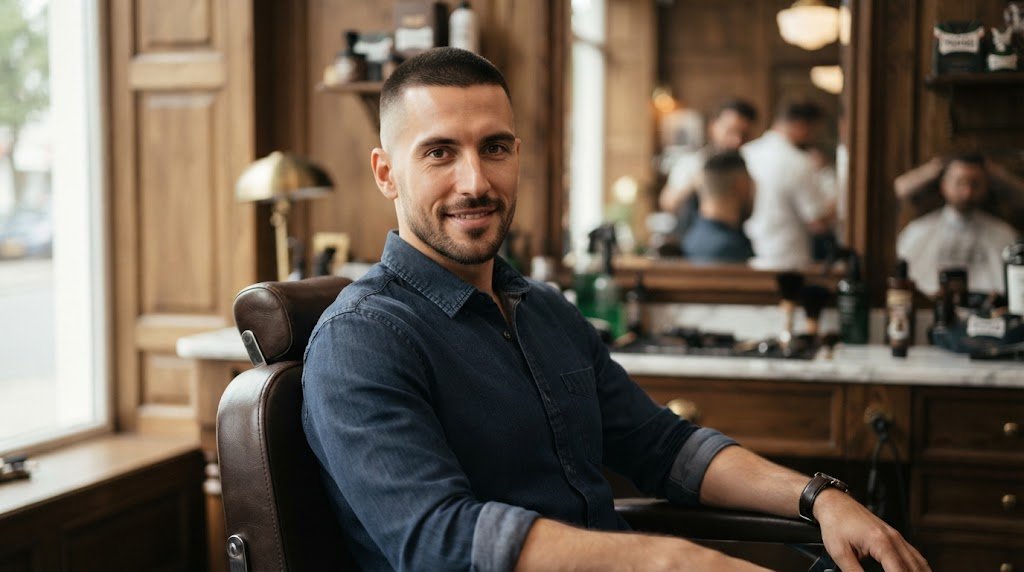

Description: Ultra-short, uniform cut hugging the skull closely.
Why It Works: By removing all top height, it reveals natural proportions without stretching them.
Barber Terminology: #2 guard on top, low skin fade.
Maintenance Frequency: 1–2 weeks.
Side Part with Volume


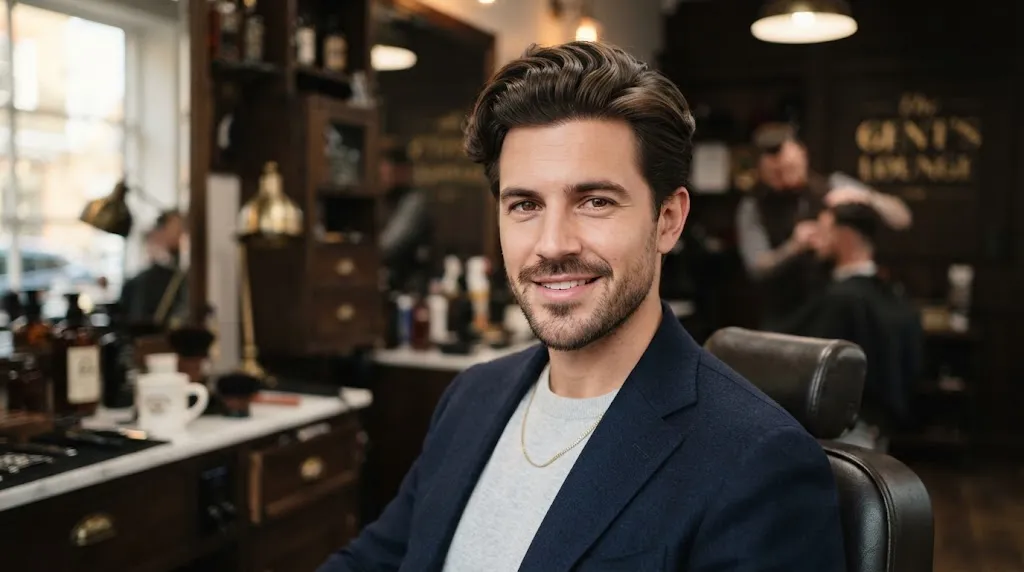
Description: Traditional comb-over with moderate width on the heavier side.
Why It Works: Asymmetry breaks up long vertical lines.
Barber Terminology: Classic taper, side part comb-over.
Maintenance Frequency: 3–4 weeks.
Textured Fringe Undercut
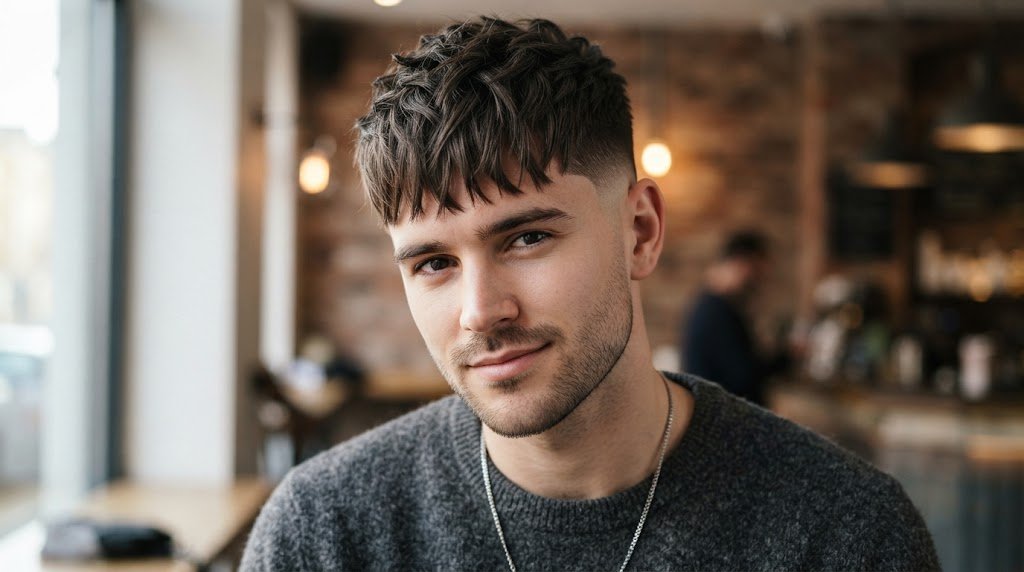
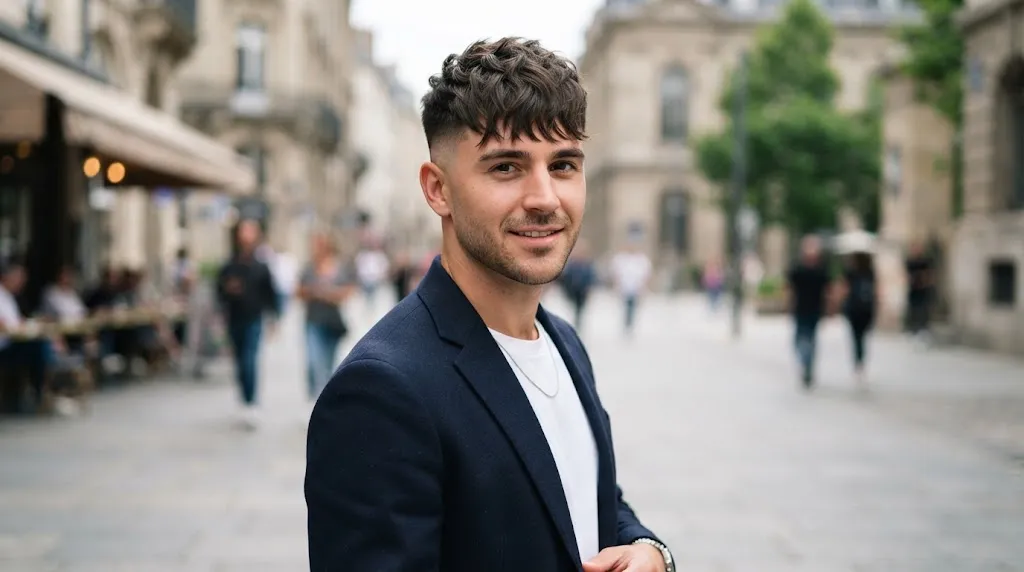
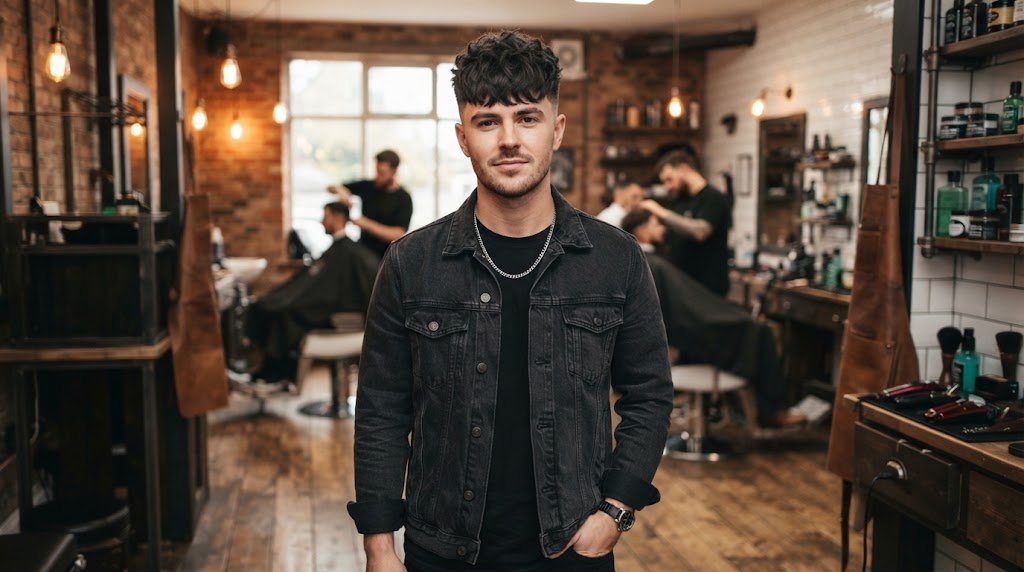
Description: Heavy forward fringe with buzzed or shaved sides.
Why It Works: Concentrates weight on the forehead, shortening the face.
Barber Terminology: Undercut with long, textured forward fringe.
Maintenance Frequency: 3 weeks.
Soft Mohawk Fade
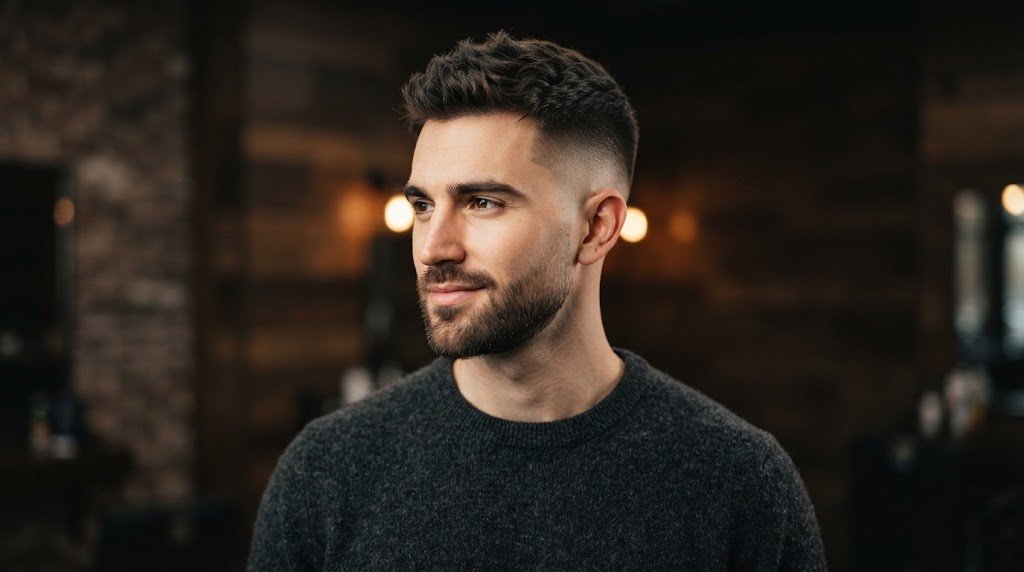
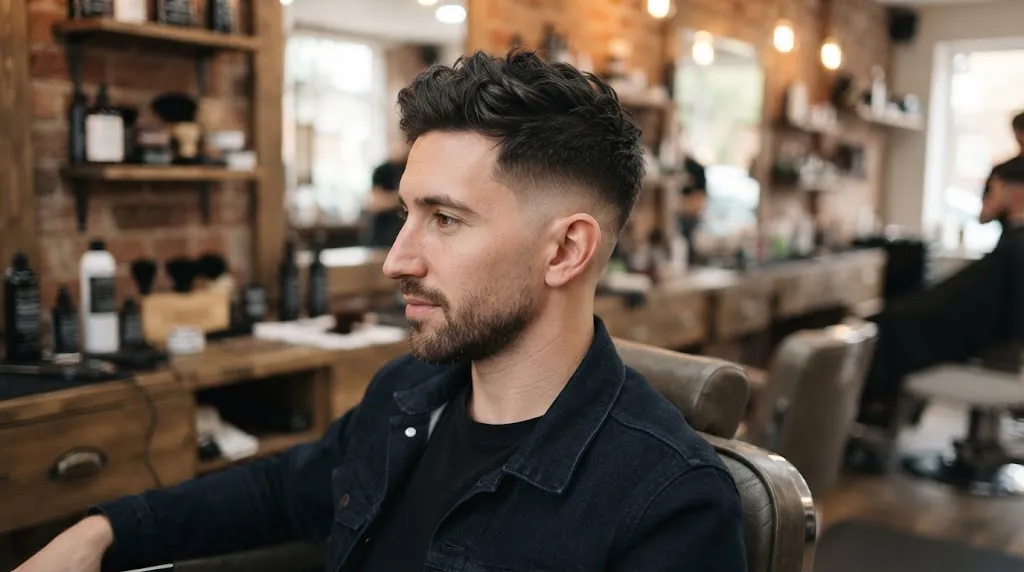
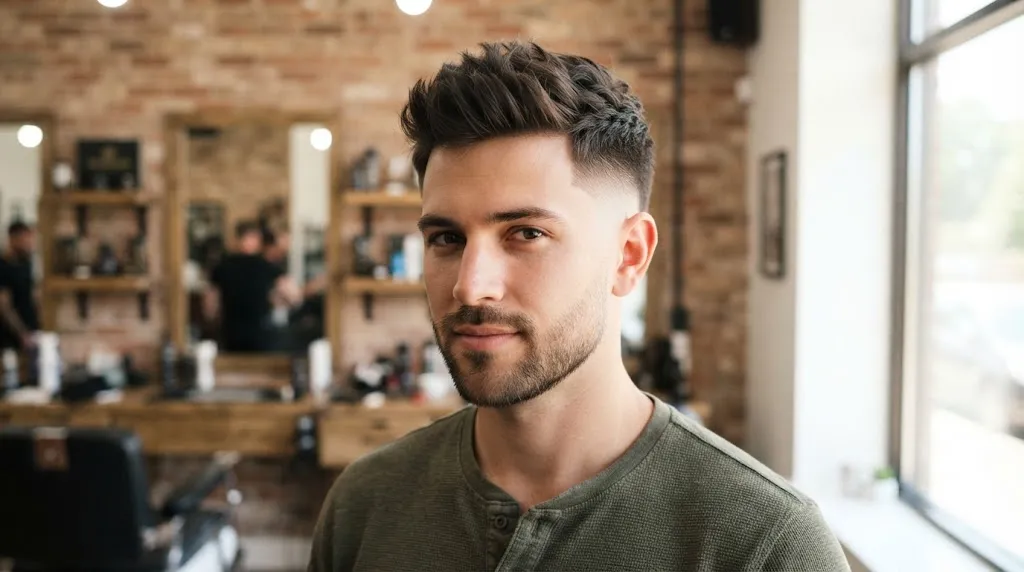
Description: Low-profile center strip tapered gently into the sides without extreme height.
Why It Works: Wide, low crest keeps vertical focus subdued.
Barber Terminology: Faux hawk fade, low-height texturized ridge.
Maintenance Frequency: 2–3 weeks.
Low Skin Fade Crop
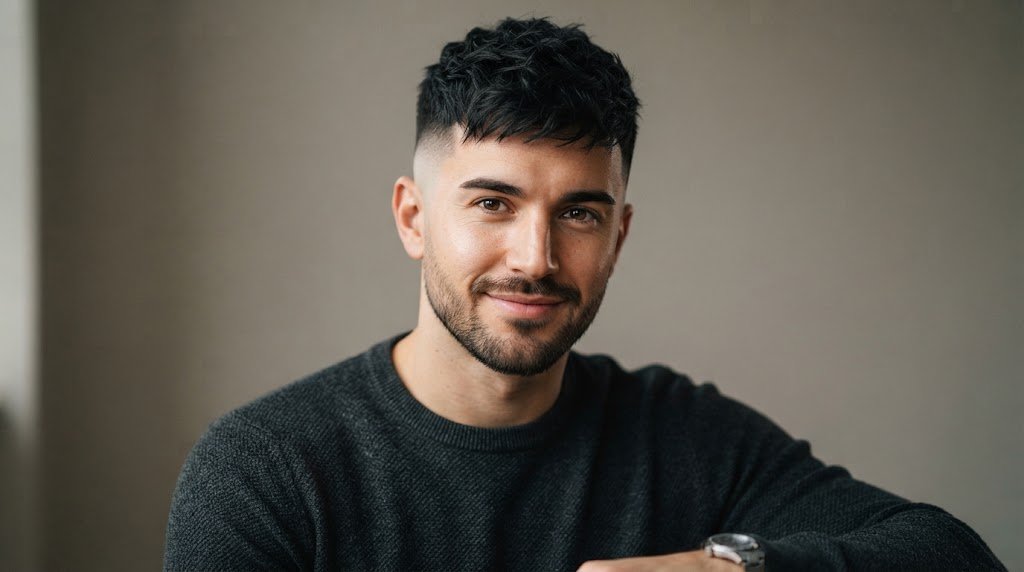

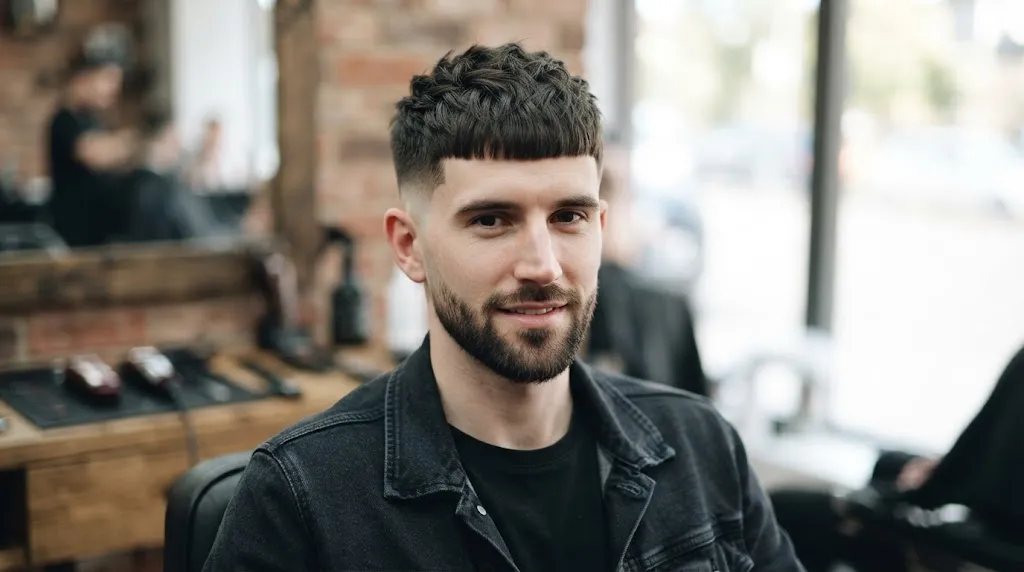
Description: Short top with a skin fade starting low near the ears.
Why It Works: Preserves hair density on the lower sides to broaden narrow faces.
Barber Terminology: Low skin drop fade, textured top.
Maintenance Frequency: 2 weeks.
Layered Mop Top


Description: Full-coverage forward layers landing around ear level.
Why It Works: Covers the forehead and widens the head profile.
Barber Terminology: Layered mop, scissor cut, textured perimeter.
Maintenance Frequency: 4–5 weeks.
Bro Flow (Wavy Medium Length)



Description: Medium hair brushed back and allowed to fall naturally behind ears.
Why It Works: Lateral wave sweep widens the mid-face region.
Barber Terminology: Medium scissor cut, texturized flow, low-taper neckline.
Maintenance Frequency: 6–8 weeks.
Shoulder-Length Flow


Description: Hair falling freely to or just past the shoulders.
Why It Works: Length past the chin draws the eye down and outwards, framing the neck rather than emphasizing face height.
Barber Terminology: Long layered cut, blunt perimeter.
Maintenance Frequency: 8–12 weeks.
Man Bun with Layers


Description: Medium-to-long hair tied back at mid-head height with loose framing pieces.
Why It Works: Positioning the bun at the back rather than high on the crown prevents extra vertical length.
Barber Terminology: Long hair trim, face-framing layers.
Maintenance Frequency: 8–10 weeks.
Long Slick Back

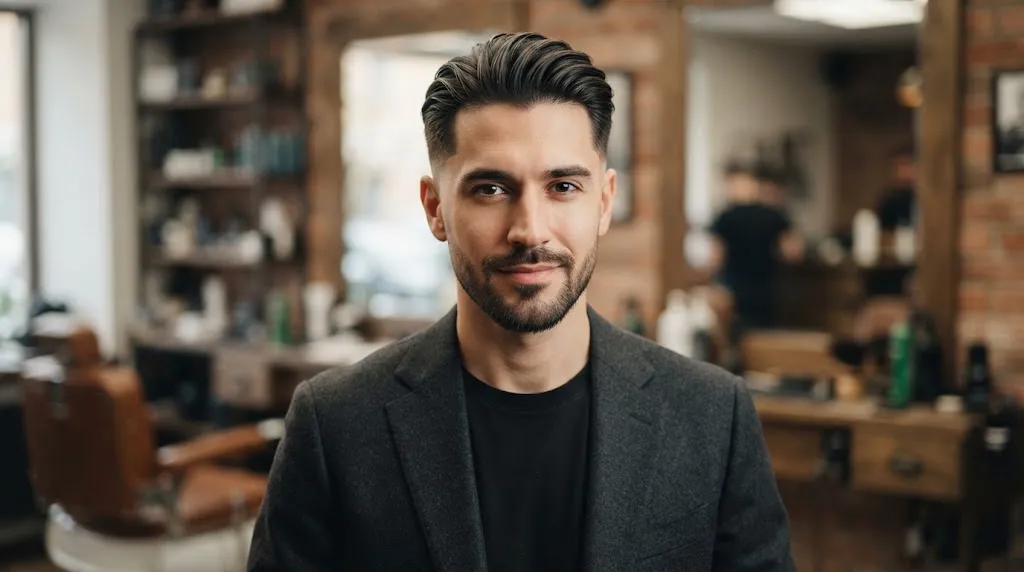

Description: Medium length pushed straight back with low, natural shine.
Why It Works: Tuck behind the ears expands the appearance of face width.
Barber Terminology: Scissor-cut medium length, slicked transition.
Maintenance Frequency: 5–6 weeks.
Tapered Fringe

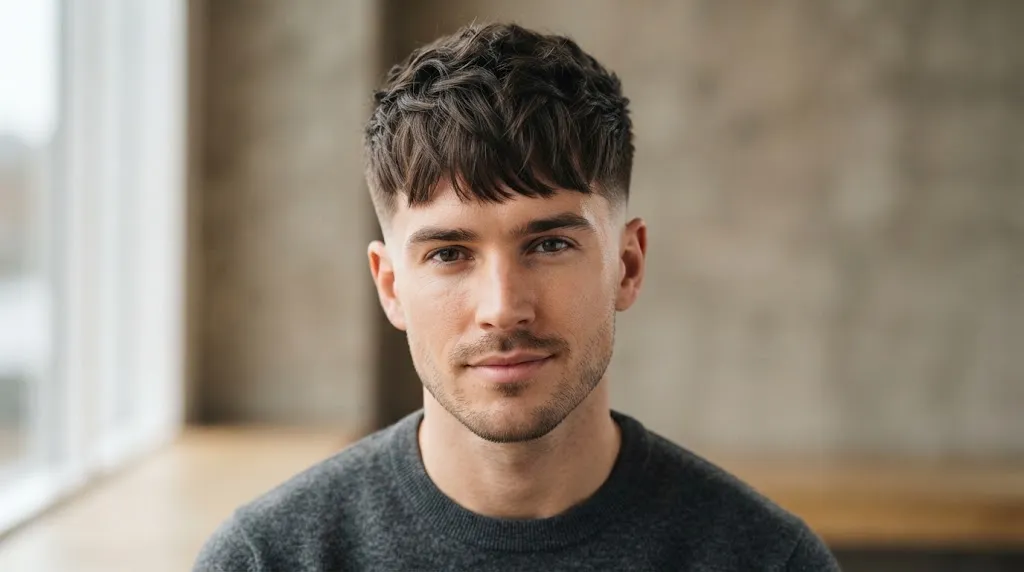
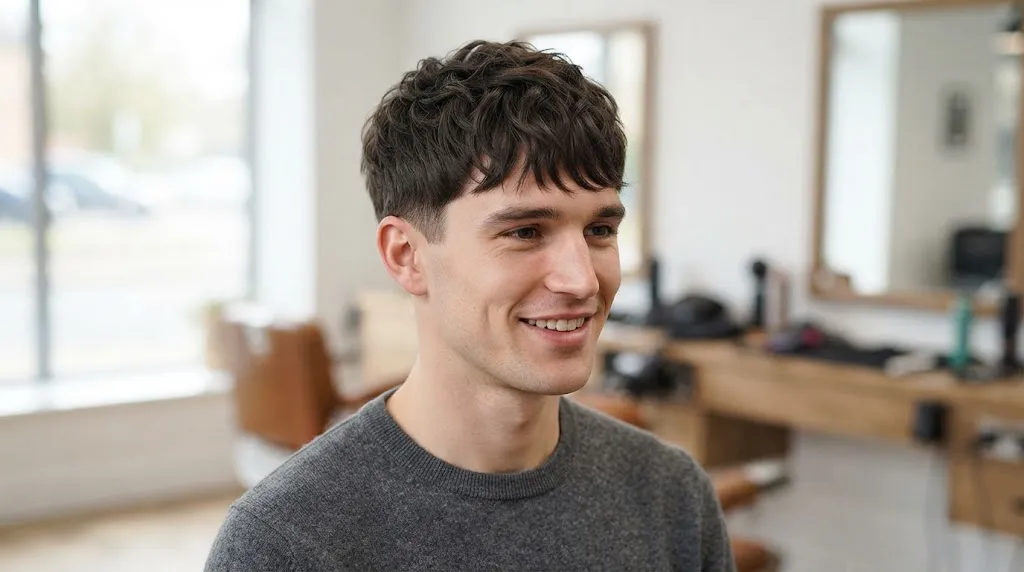
Description: Soft, textured front fringe tapering cleanly along the temples.
Why It Works: Blends temple width while concealing forehead height.
Barber Terminology: Temple taper, textured forward fringe.
Maintenance Frequency: 3–4 weeks.
Long Face Hairstyles by Hair Type
Straight Hair
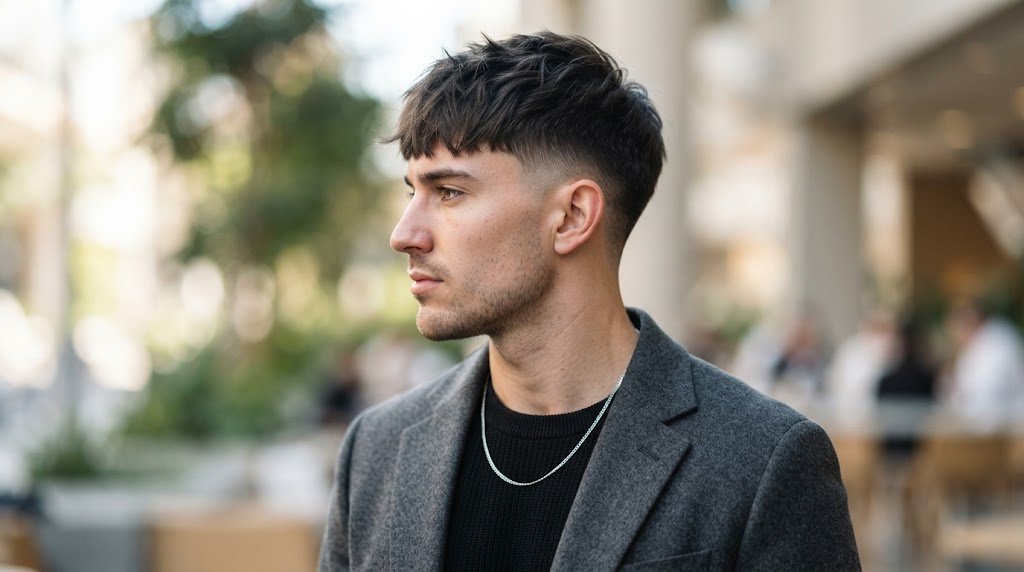
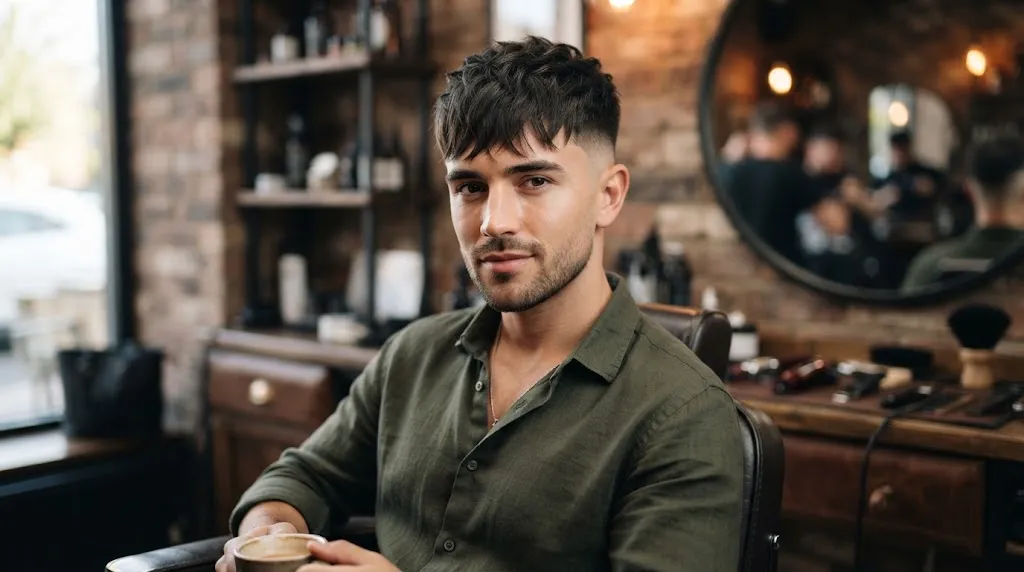

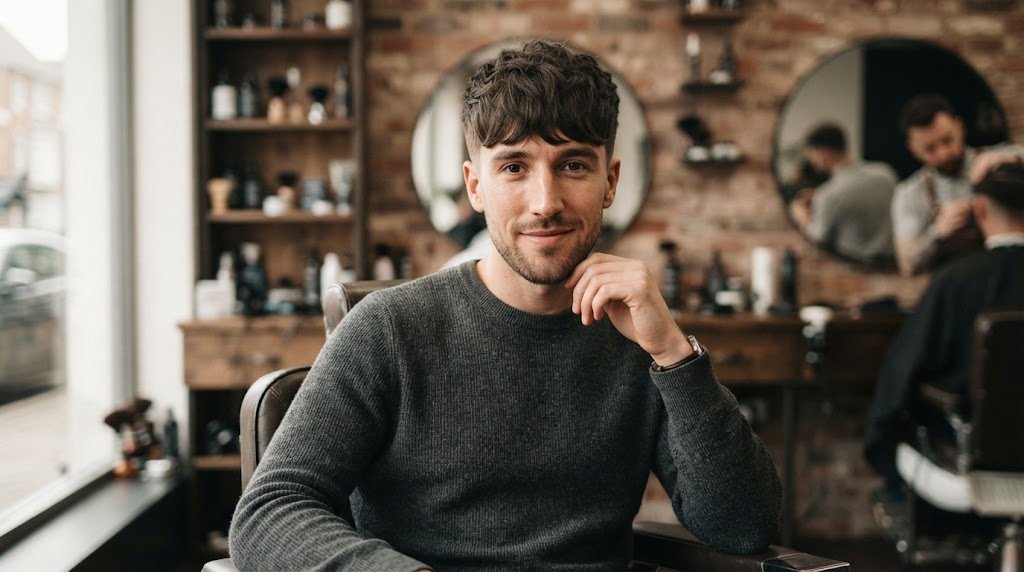
Straight hair naturally falls flat and lacks built-in lateral volume, which can accentuate vertical face length if not cut correctly. Without natural texture, straight strands tend to hang vertically, drawing the eye up and down.
Best Cut Strategy: Opt for a textured crop, French crop, or curtain fringe. Request heavy point-cutting or razor-layering on top to introduce artificial texture, allowing straight hair to lie forward over the forehead rather than slicking backward.
Styling & Product: Use a lightweight matte clay or texturizing sea salt spray. Blow-dry hair forward while scrunching with your fingers to create horizontal wave patterns and piecy fringe texture.
Barber Instruction: “Keep the sides at a low taper to preserve density around my temples, and point-cut the top aggressively so I can push the fringe forward for forehead coverage.”
Wavy Hair


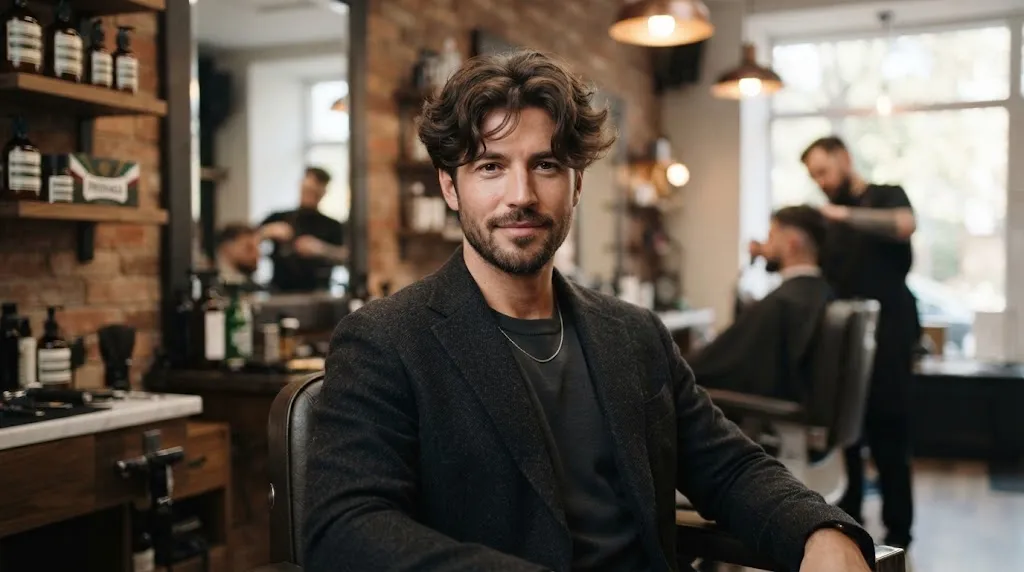
Wavy hair is naturally ideal for an oblong face. Its innate S-pattern bends outward, providing built-in horizontal width and soft texture that breaks up sharp, elongated facial lines without requiring excessive vertical height.
Best Cut Strategy: A bro flow, medium-length shaggy layers, or a side-parted sweep. Let the wave expand naturally along the sides of your head around the ears and temples to fill out narrow cheekbones.
Styling & Product: Apply a styling cream or lightweight mousse to damp hair and let it air-dry. Avoid high-hold pomades that weigh waves down into flat, vertical strands.
Barber Instruction: “Scissor-cut the sides and top to leave enough length for my natural wave to bend outward. Don’t take the sides too short or high.”
Curly Hair


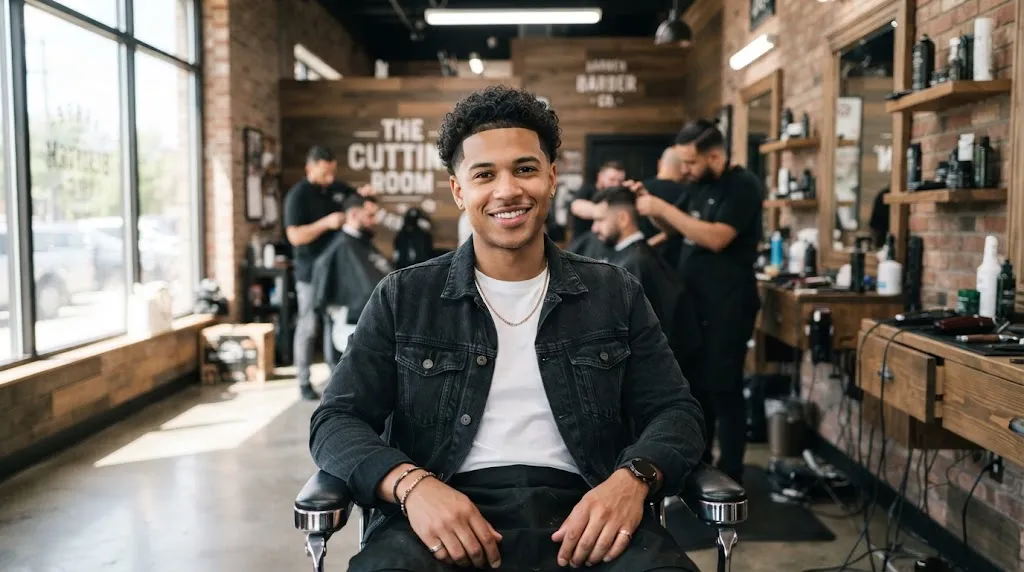
Tight or loose curls offer natural volume, but if grown purely upward, they will severely elongate a long face. The goal with curly hair is to direct the volume sideways and forward over the brow.
Best Cut Strategy: A curly fringe with a low taper, textured crop, or wolf cut. Keeping the curls cascading forward onto the forehead reduces upper facial height while lateral curl density builds side width.
Styling & Product: Use a hydrating curl cream or leave-in conditioner on damp hair. Diffuse or air-dry without touching to prevent frizz, and avoid stiff gels that freeze curls into tall vertical shapes.
Barber Instruction: “Give me a low taper on the sides to keep bulk around the parietal ridge, and leave the top longer so the curls fall forward onto my forehead as a fringe.”
Thick Hair

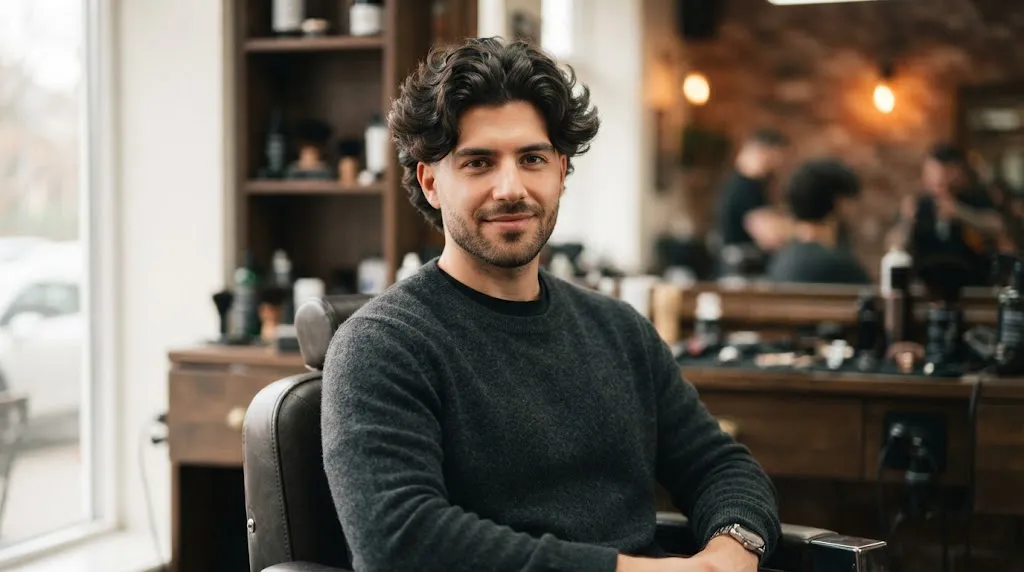
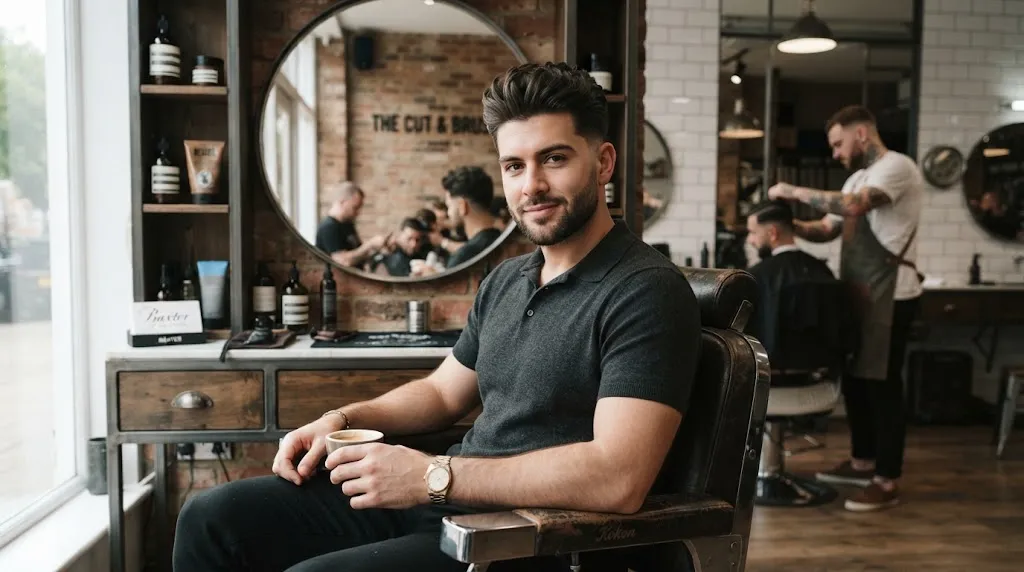
Thick hair has substantial natural density, making it easy to build side weight. However, if left unmanaged on top, its weight causes excess vertical bulk that inflates head height.
Best Cut Strategy: A textured fringe undercut, classic side part, or debulk-layered crop. The key is removing interior weight from the top while leaving enough perimeter density on the sides to frame the face horizontally.
Styling & Product: Work a small dab of matte paste or matte clay into towel-dried hair. Focus product on the mid-lengths to direct hair sideways or forward rather than straight up.
Barber Instruction: “Remove interior bulk on top using thinning shears or channel-cutting, but leave enough weight on the sides near the crown so it doesn’t look skin-tight.”
Thin/Fine Hair
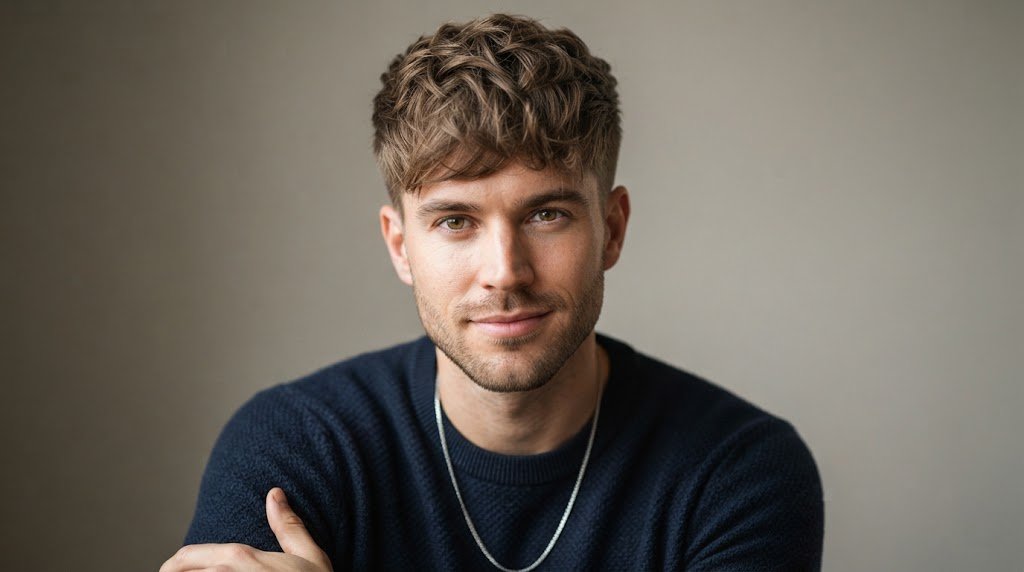

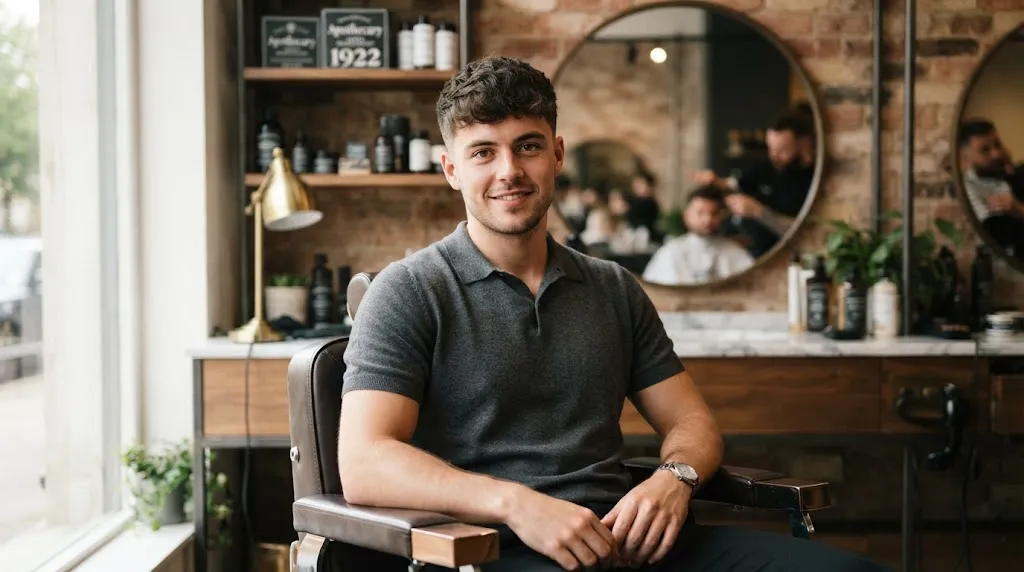
Fine or thinning hair can easily reveal the scalp and fall flat against the head, emphasizing narrow facial features. High fades on fine hair strip away crucial side silhouette, making the head appear narrower.
Best Cut Strategy: A short Caesar cut, blunt French crop, or low-profile crew cut. A straight-cut, blunt fringe makes fine hair appear thicker at the hairline while shortening forehead exposure.
Styling & Product: Apply volumizing dust (powder) or sea salt spray at the roots. Dust adds instant grip and visual density without weighing fine strands down like heavy waxes do.
Barber Instruction: “Keep the fringe cut blunt rather than overly feathered to build hairline density, and give me a low scissor taper on the sides to retain visual weight.”
Black/Coily Hair

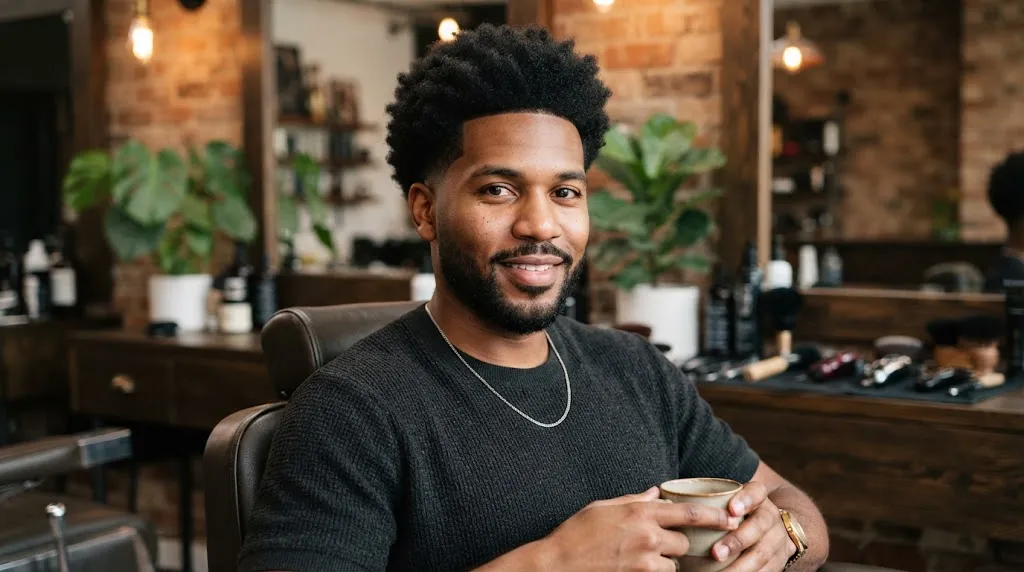
Coily and afro-textured hair (Type 4) possesses incredible structural integrity and natural volume. High-top fades, tall sponge twists, or sky-high frohawks will drastically extend a long face shape, whereas low-profile, wider shapes work brilliantly.
Best Cut Strategy: A low drop fade with short-to-medium twists, a tapered afro with width at the temples, or a low blowout taper. Keeping the top controlled while letting the sides retain shape creates a balanced, rounded perimeter.
Styling & Product: Hydrate daily with curl butter or shea-based leave-in. Use a twist sponge horizontally across the top to define coil clusters without picking hair straight up.
Barber Instruction: “Give me a low drop fade around the ears and neck only. Keep the top low-to-medium height, rounding off the corners to add width across my temples.”
Long Face Hairstyles by Length


Short Hairstyles for Long Face Men
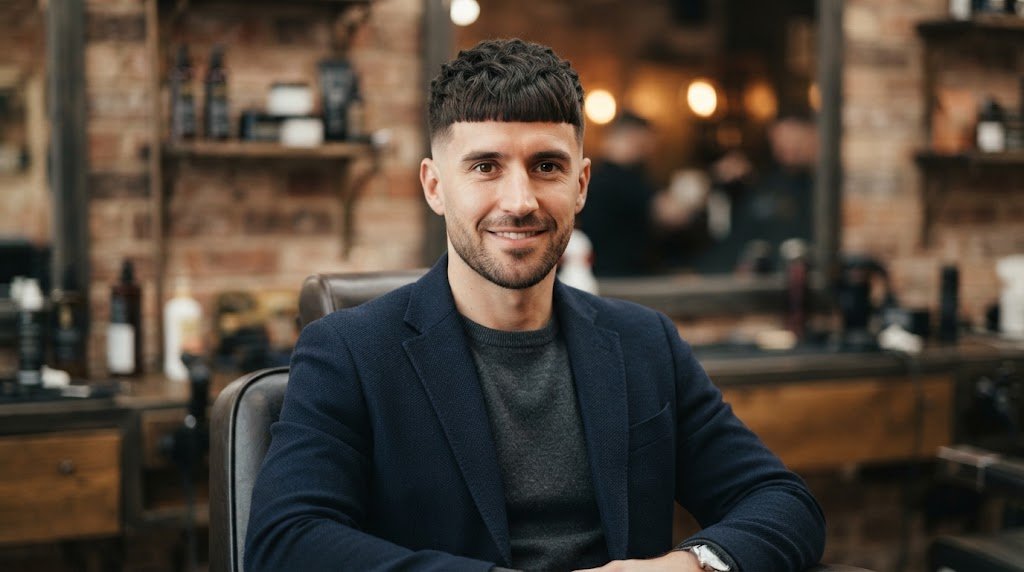
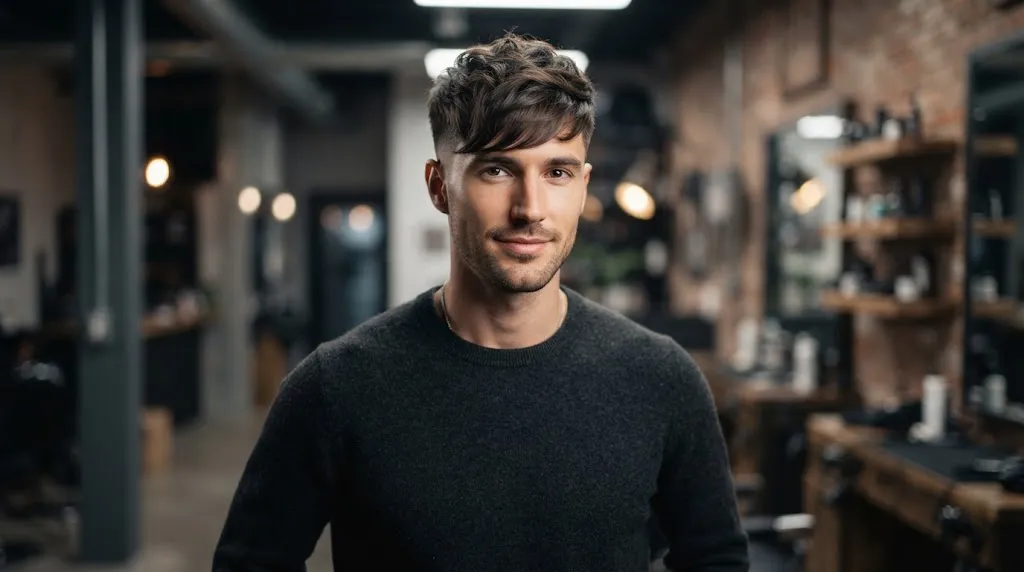
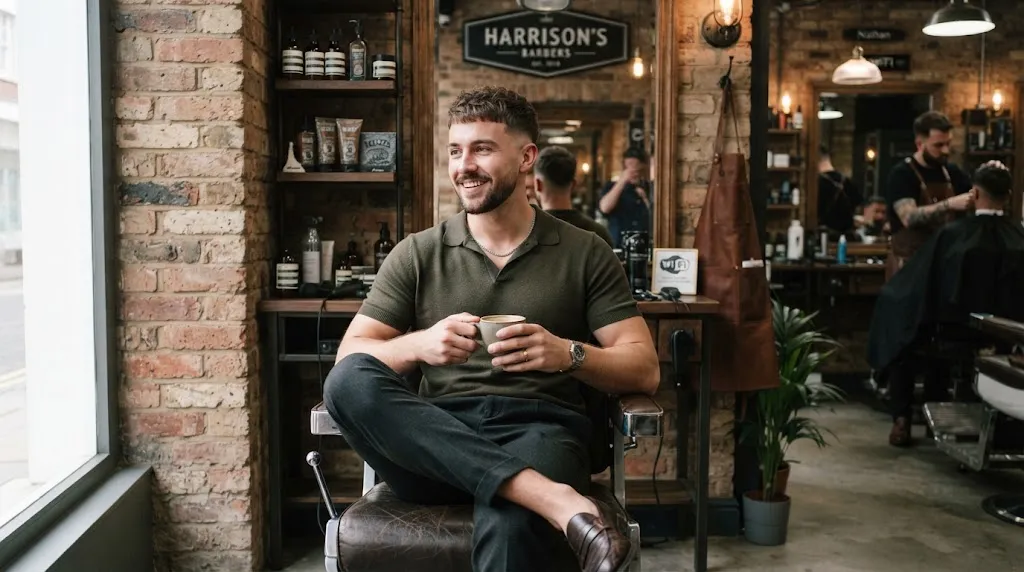
Short haircuts offer low maintenance and sharp lines, but they carry a high risk of elongating your features if too much height is added. The key to wearing short hair on an oblong face is keeping the top flat or forward-leaning while retaining enough density along the upper sides to avoid a narrow, vertical silhouette.
Top Styles: French Crop, Caesar Cut, Low Skin Fade Crop, and Short Crew Cut with Texture.
Key Barber Techniques: Request a low-to-mid taper rather than a high skin fade to preserve side bulk near your temples. Ask your barber to point-cut the top for forward texture rather than vertical lift, and keep the fringe cropped straight across or piecy.
Styling Strategy: Work a dime-sized amount of matte clay or styling paste into damp hair, pulling the top forward toward your forehead. Avoid high-shine pomades or spiking the hair upward, which adds unwanted vertical inches.
Medium-Length Hairstyles for Long Face Men


Medium hair (3 to 6 inches) is arguably the sweet spot for long face shapes. It provides enough length to create natural side volume, drape locks over the forehead, or sweep hair laterally across the face to break up long lines.
Top Styles: Curtain Fringe, Mid-Length Textured Sweep, Bro Flow, and Shaggy Layers.
Key Barber Techniques: Ask for scissor-cut layers throughout the sides and crown to encourage outward movement rather than downward drag. Request face-framing layers around the cheekbones to build lateral width where your face is naturally narrowest.
Styling Strategy: Apply a texturizing sea salt spray or lightweight grooming cream to damp hair. Blow-dry on low heat using a vent brush to direct the hair sideways or push curtains around your eyes. Let your natural wave or texture expand along the sides of your head.
Long Hairstyles for Long Face Men


Growing your hair past your jaw or down to your shoulders can either work exceptionally well or elongate your head further if left limp and flat. When styled correctly, long hair frames the neck and jawline, drawing visual focus outward and downward away from the length of your face.
Top Styles: Shoulder-Length Flow, Wolf Cut, Layered Mop Top, and Low-Set Man Bun with Framing Strands.
Key Barber/Stylist Techniques: Avoid blunt, single-length cuts that hang straight down like curtains on a narrow window. Ask for heavy point-cut layering starting at the cheekbone level to build texture and body around your mid-face and jaw.
Styling Strategy: Keep long hair hydrated using a leave-in conditioner or hair oil to prevent flat, lifeless strands. If tying your hair up, secure it at mid-head or nape level—never on top of the crown, as a high bun acts like an extra inch of vertical height. Leave loose layers out around your temples and ears to soften your profile.
Long Face Hairstyles for Boys and Teenagers

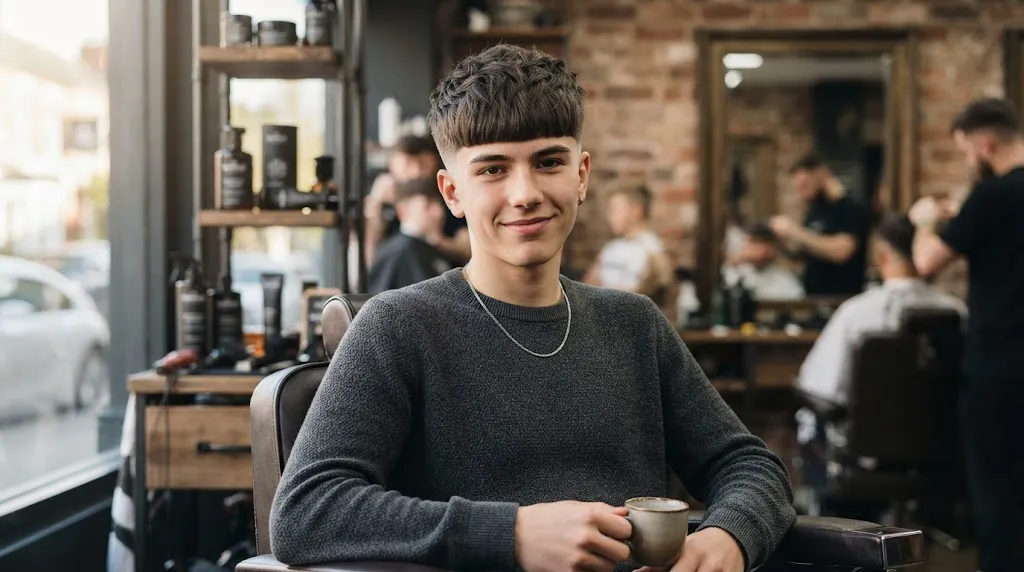
Age-Appropriate School/College Cuts



School dress codes and busy morning routines require cuts that balance style, ease, and facial symmetry. Teen boys with long face shapes often fall into the trap of asking for high skin fades with tall quiffs because they are trending, but this combination severely elongates the head.
Textured Fringe Crop: A forward-falling textured crop with a soft taper on the sides gives a modern, athletic look. The fringe covers the upper forehead to shorten the face, while keeping the hair within typical school hair length rules.
Modern Curtain Cut: For teens with slightly longer hair, a mid-part or slightly off-center curtain cut allows hair to fall naturally over the temples and cheekbones. This frames the face horizontally without needing constant product touch-ups during the school day.
Classic Side-Part Taper: A low-maintenance, clean option that works well for formal dress codes. By parting the hair to the side, you create an asymmetrical horizontal line that breaks up the long vertical plane of the face.
Low-Maintenance Options for Younger Guys



Younger guys need styles that look structured without needing a blow dryer, round brush, or heavy styling products before heading out the door.
Caesar or Short Crew Cut: Cut with a soft forward sweep, this short style stays neat all day. The short, straight-across fringe cuts off forehead exposure while keeping styling limited to a quick towel-dry and a dab of light paste.
Natural Texture Shag: Ideal for boys with wavy or curly hair. Keeping the hair cut with soft scissor layers all around lets the natural wave build bulk on the sides near the ears, filling out a narrow jawline effortlessly.
Low Taper Buzz Cut: If a boy prefers very short hair, avoid high skin fades. A #3 or #4 guard on top paired with a low taper at the hairline preserves side density while providing an effortless, roll-out-of-bed style.
Beard Styles That Complement a Long Face
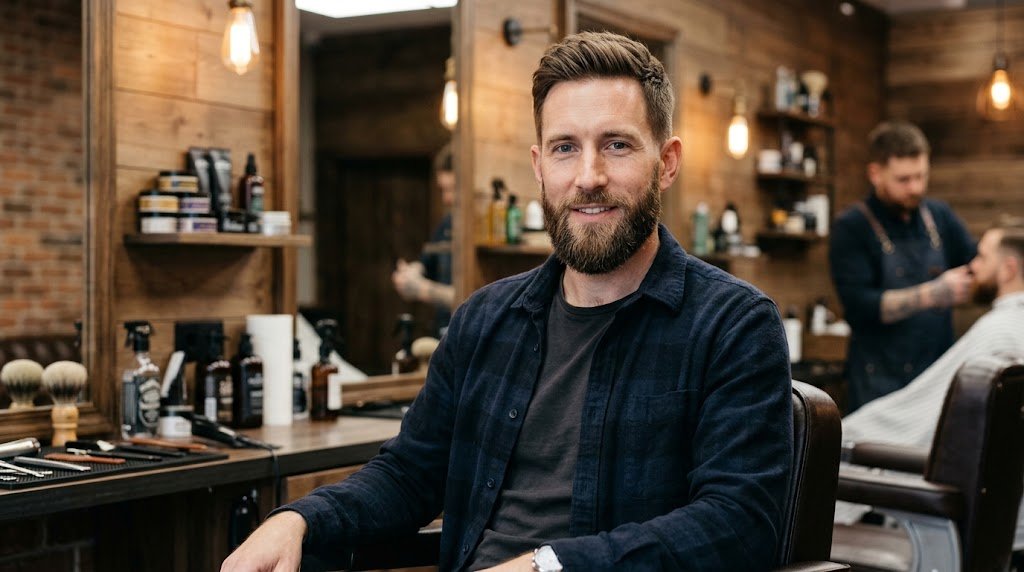

Best Beard Shapes for Balance
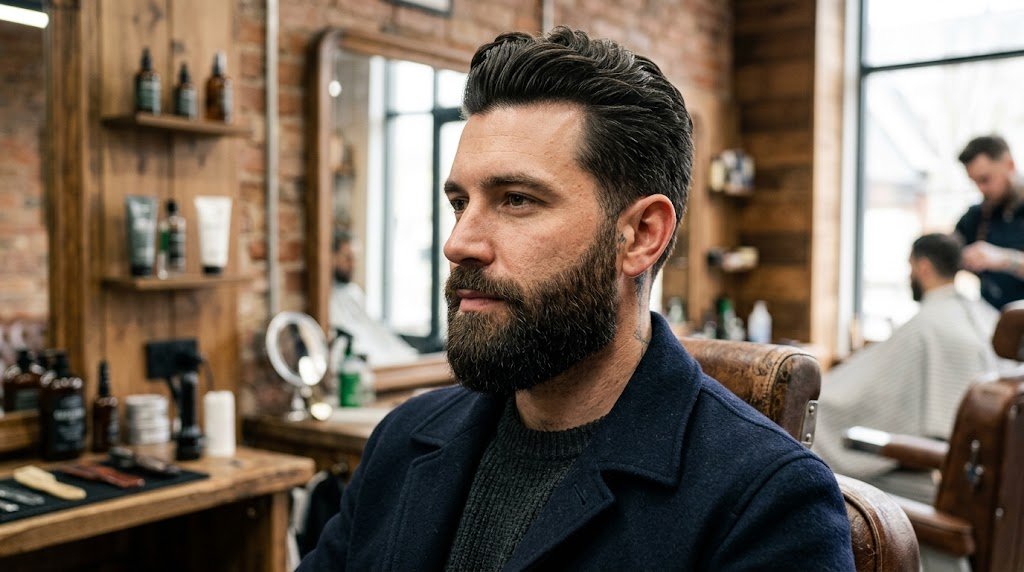

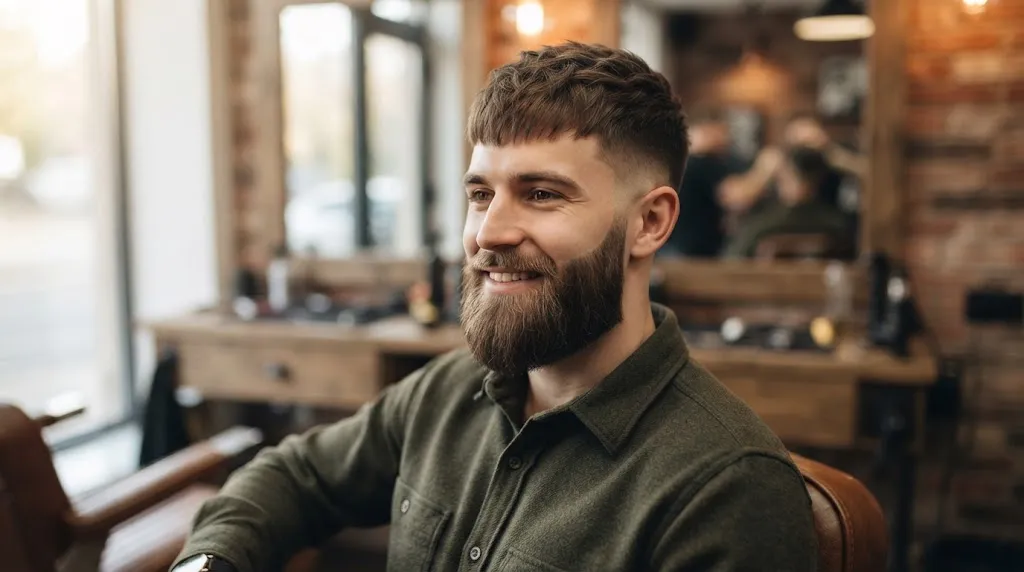
Facial hair is one of the most effective tools for rebalancing an oblong face shape, as it directly alters the bottom third of your silhouette. The primary rule when shaping a beard for a long face is to build width at the cheeks while keeping length minimal at the chin.
Heavy Stubble or Ducktail-Free Full Beard: A full beard grown out on the sides (cheeks and sideburns) and trimmed tight along the bottom shortens the face’s vertical profile while expanding its width.
Mutton Chops or Extended Goatee: Keeping sideburns and cheek hair thicker while leaving the chin low-profile redirects visual weight laterally.
Corporate Beard (Trimmed Short at Chin): Maintains a clean, professional outline with defined cheeklines and a close-cropped jawline to avoid adding inches to your chin.
Beard Styles to Avoid: Long, pointed beards (like a long Garibaldi, Goatee, or Van Dyke) act like an downward extension of your chin, drastically exaggerating face length.
Beard + Haircut Combinations That Work Together



To maximize facial harmony, your hairstyle and beard style must act as a coordinated system rather than two competing elements.
Textured Crop + Heavy Side-Heavy Stubble: The forward fringe of the crop cuts down forehead length from the top, while the side-heavy stubble widens the jaw from below.
Curtain Fringe + Trimmed Full Beard: Curtains add mid-face width around the cheekbones, while a neatly boxed beard adds structure to a narrow jawline.
Classic Side Part + Boxed Short Beard: A timeless combination where the side part creates a horizontal division across the forehead, complemented by a short, wide beard that squares off the bottom of the face.
Real Problems Men With Long Faces Actually Face

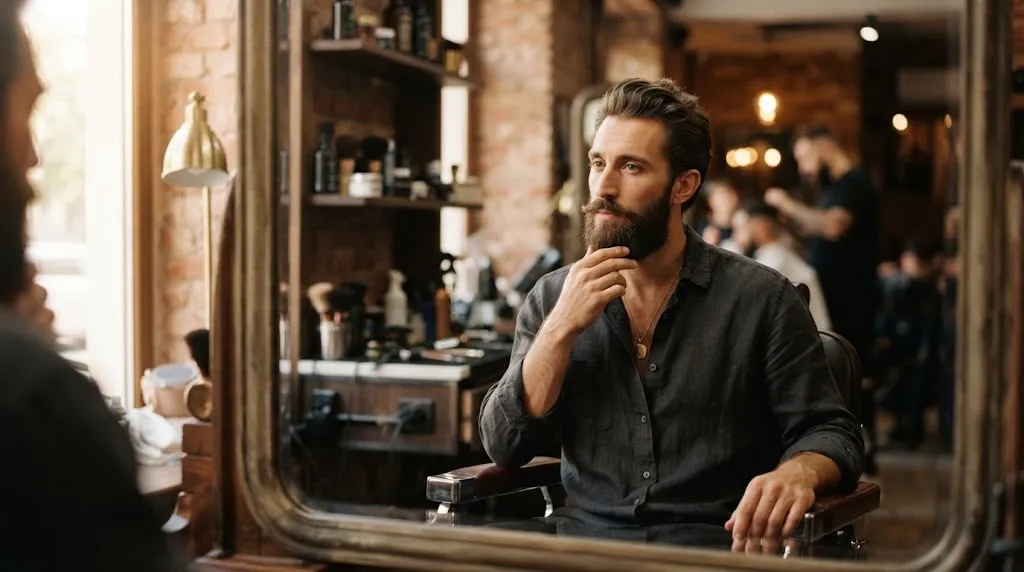
"Every Haircut Makes My Face Look Longer" — What's Going Wrong

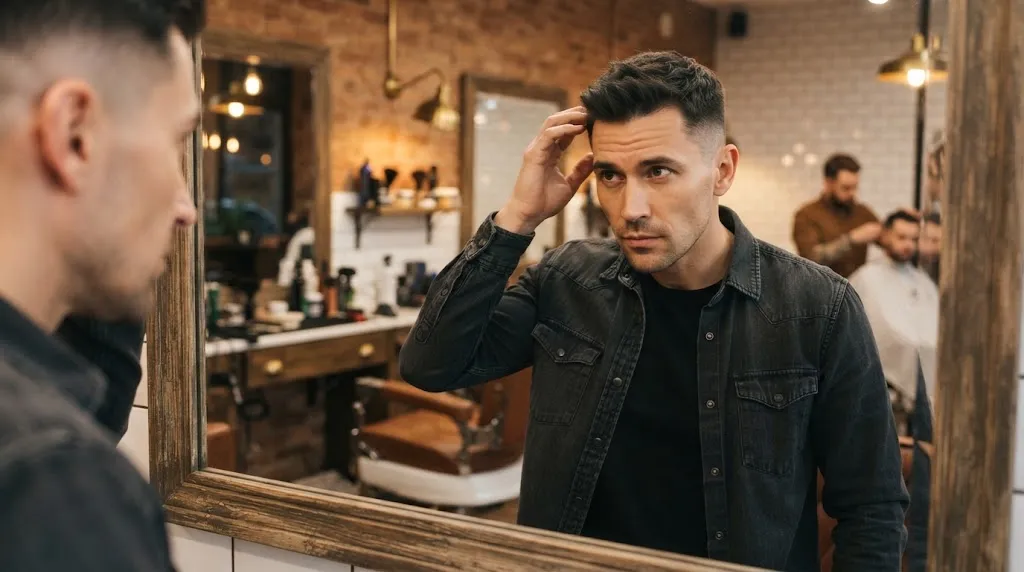
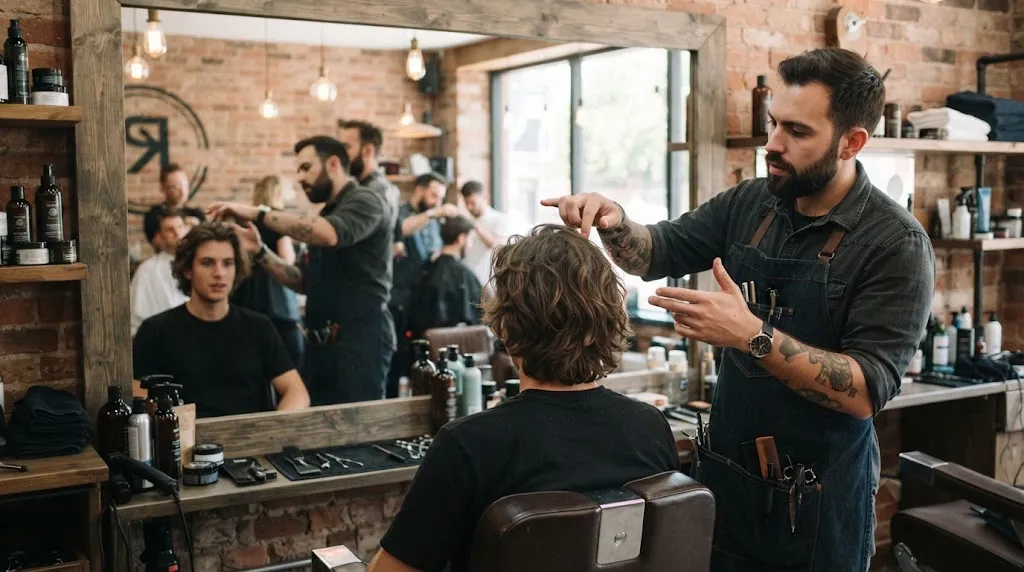
If every fresh haircut leaves you feeling like your face grew an extra inch, your barber is likely cutting your hair in vertical isolation rather than looking at your head shape as a whole. The most common technical error is stripping away side weight while stacking volume on top.
When a barber gives you a high skin fade combined with a tall, backward-swept quiff or pompadour, they are inadvertently creating a high-contrast vertical column. Your hair and face blur into one continuous, uninterrupted line. To break this cycle, you must actively request lower tapers, side-swept or forward-falling movement, and scissor-cut density along the parietal ridge.
If you want to view a full collection of cuts across all face shapes, textures, and genders before your next salon visit, consult our complete hairstyles & haircuts directory to find exact photo references.
Long Face + Glasses — Extra Styling Considerations



Eyewear acts as an artificial horizontal anchor right across the middle of your face, making glasses one of the absolute best accessories for an oblong head shape. However, pairing the wrong haircut with the wrong frames can throw off your proportions entirely.
Frame Selection: Choose wide, bold frames with strong horizontal bridge lines (such as thick acetate Wayfarers or square frames). Avoid small, narrow, or rimless round glasses, which leave the sides of your face bare and exaggerate vertical length.
Hairline Clearance: Avoid styles where a long, heavy fringe collides directly with the top of your frames, as this clutter can make your upper face look squished while leaving your lower face looking disproportionately long.
Side Burn & Temple Density: If your glasses arms sit tight against your skull, ensure your side hair isn’t buzzed down to the skin, which can make your frames look like they’re pinching your head. A clean taper around the ears leaves enough hair density at the temples to seamlessly absorb the frame arms.
Long Face + Thinning Hairline — What Actually Works


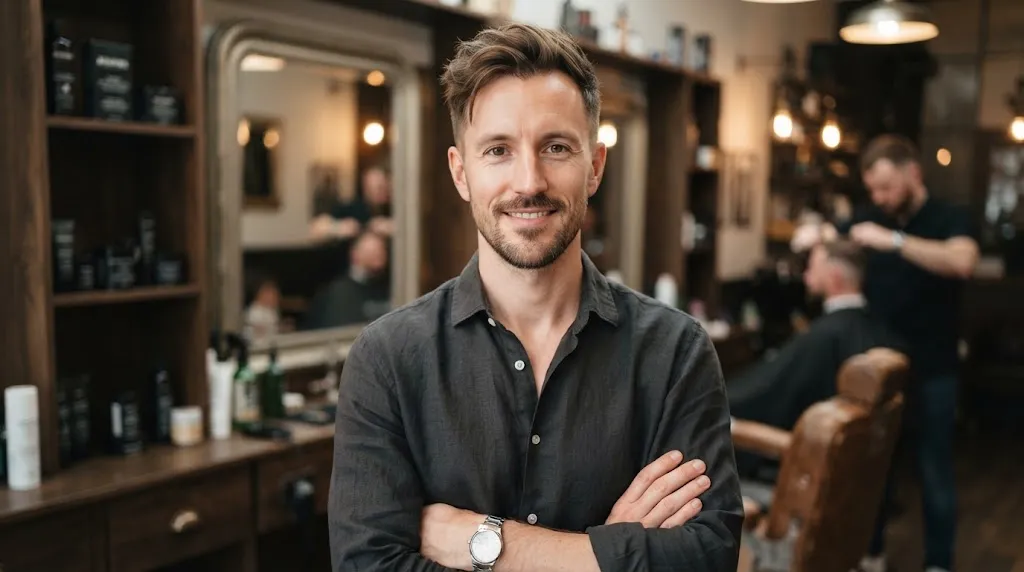
Receding temples or a high hairline combined with an already long face shape can feel like a double penalty: as the hairline moves back, it exposes even more forehead, adding vertical real estate.
Stop the Slick-Back: Slicking thinning hair straight back or trying to build a tall pompadour exposes your entire forehead and receding corners, instantly maximizing face length.
Opt for a Textured Forward Crop: A French crop or textured Caesar cut works wonders here. By pulling hair forward into a light, piecy fringe, you conceal the highest points of your forehead and disguise receding temples without relying on an obvious comb-over.
Embrace the Low-Taper Buzz: If thinning is advanced, do not be afraid to buzz it short. A low-profile buzz cut removes vertical hair height entirely, bringing the focus to your facial features and jawline rather than your forehead length.
When Your Barber Keeps Giving You the Same Generic Cut
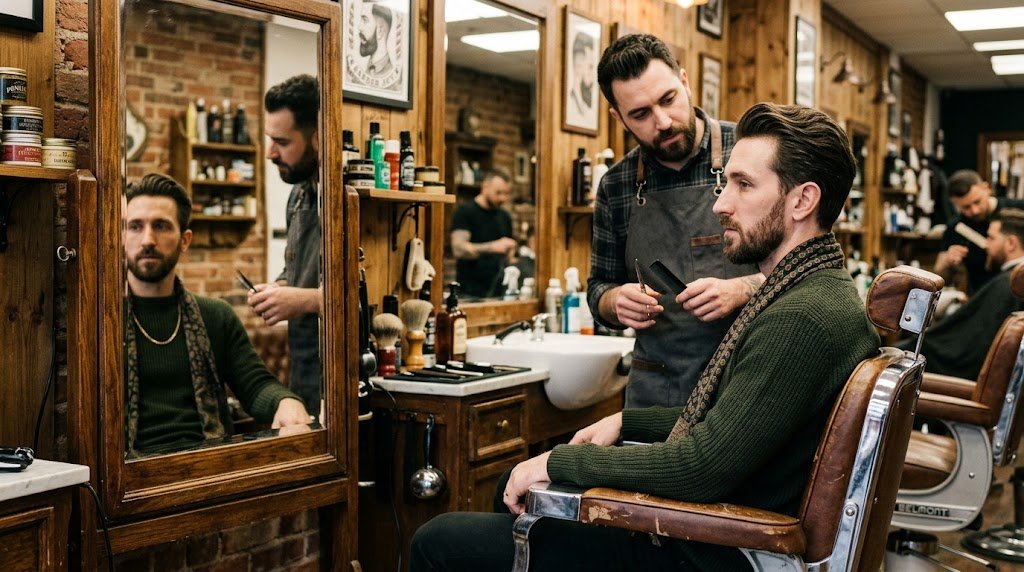
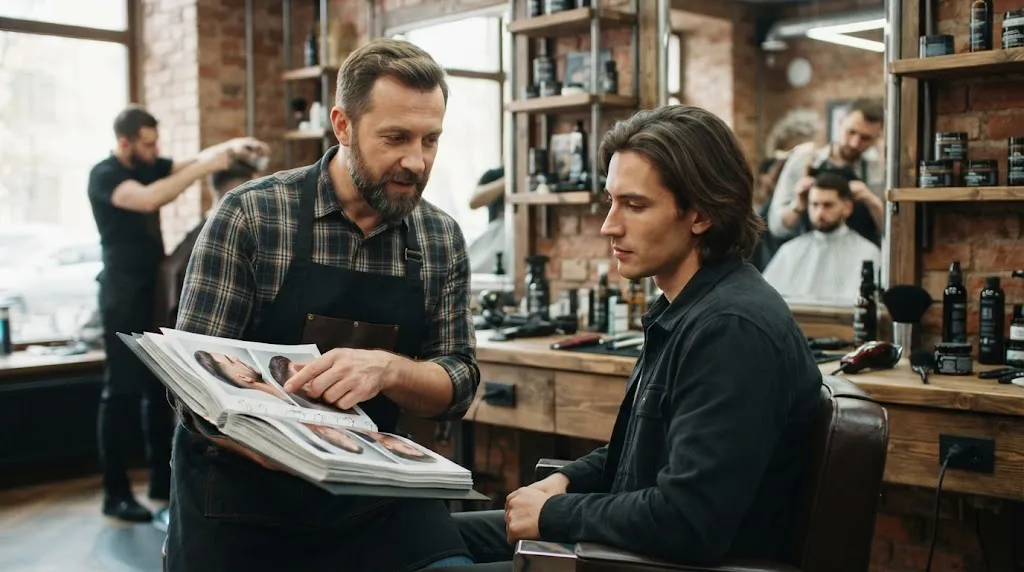
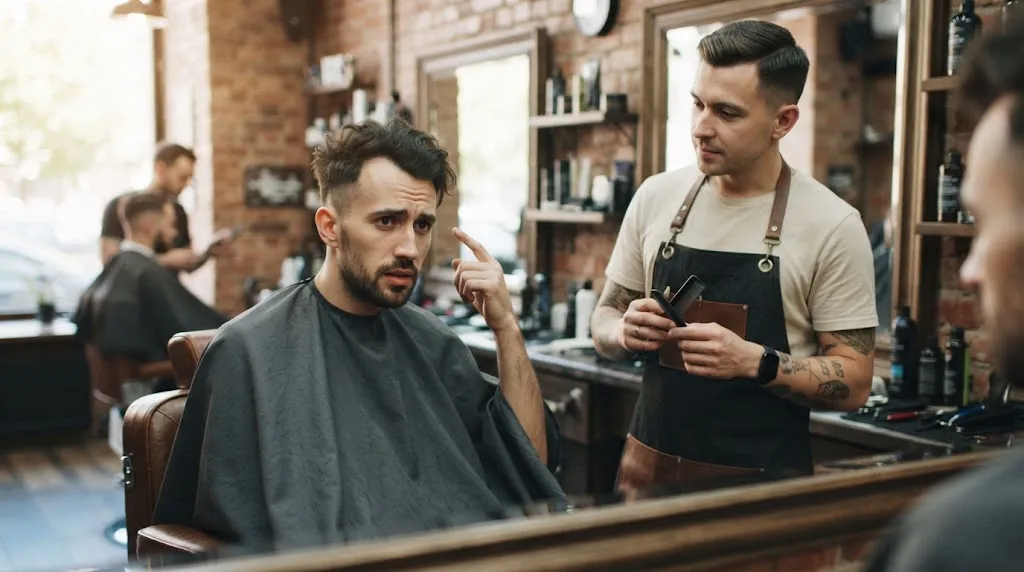
Most barbers default to standard, high-volume cuts like high skin fades with slicked tops because they are fast, modern, and popular. If you don’t speak up using specific barbering terminology, you’ll end up with the same assembly-line cut that accentuates your face length.
Bring concrete instructions to your next appointment instead of general requests:
Specify Fade Height: Do not just ask for a “fade.” Explicitly ask for a low taper or a low drop fade so the fade stays below the temple line.
Set Clear Top Limits: Tell your barber, “Keep the top height low to medium, and point-cut it so I can style it forward or to the side rather than straight up.”
Protect the Parietal Ridge: Point to the sides of your head near the upper corners and say, “Leave weight and density along the sides here to help widen my head profile.”
How to Style and Maintain These Haircuts
Right Products for Volume and Texture


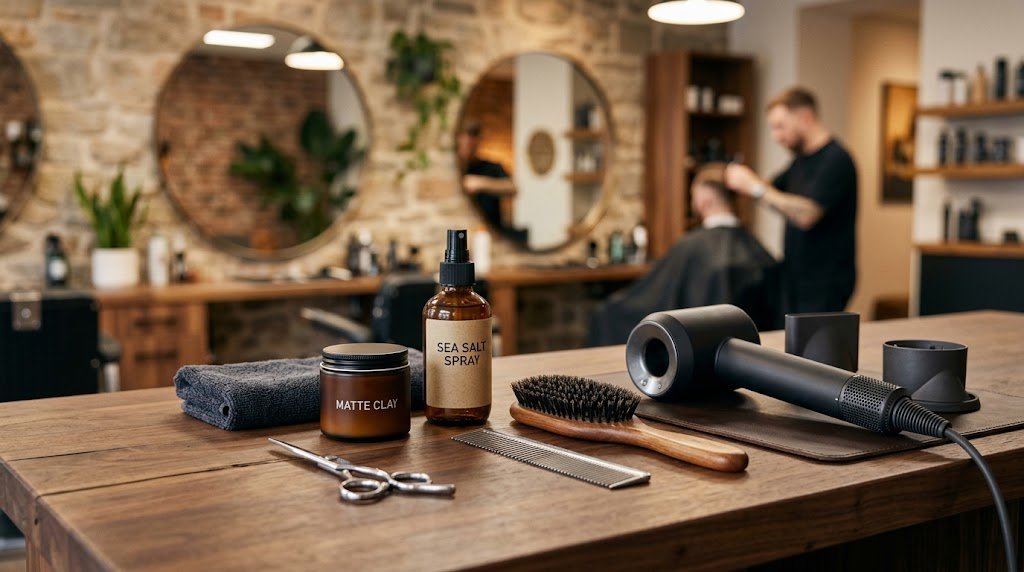
Using the right product is just as critical as getting the right cut. For a long face shape, your goal is to build matte texture and horizontal hold without adding greasy weight that drags hair flat or high-shine lift that spikes hair straight up.
Matte Clay or Paste: Ideal for short-to-medium styles like French crops, textured quiffs, and crew cuts. Clays provide a strong, pliable hold with zero shine, allowing you to build piecy, forward-falling texture that stays put without looking stiff.
Texturizing Sea Salt Spray: Perfect for wavy hair, curtain fringes, and medium-length sweeps. Spraying sea salt spray onto damp hair before blow-drying adds natural grip and expands the hair shaft, giving you effortless side volume and natural body.
Volumizing Texture Powder (Dust): Best for fine or thinning hair. A light dusting at the roots provides instant grit and lift along the sides or fringe without requiring heavy waxes that weigh strands down.
Grooming Cream or Leave-In Conditioner: Essential for longer styles, wavy bro flows, and curly hair. Creams keep curls defined and frizz-free, allowing your natural hair pattern to expand horizontally around your cheekbones and jaw.
Styling Techniques (Blow-Dry Direction, Parting)
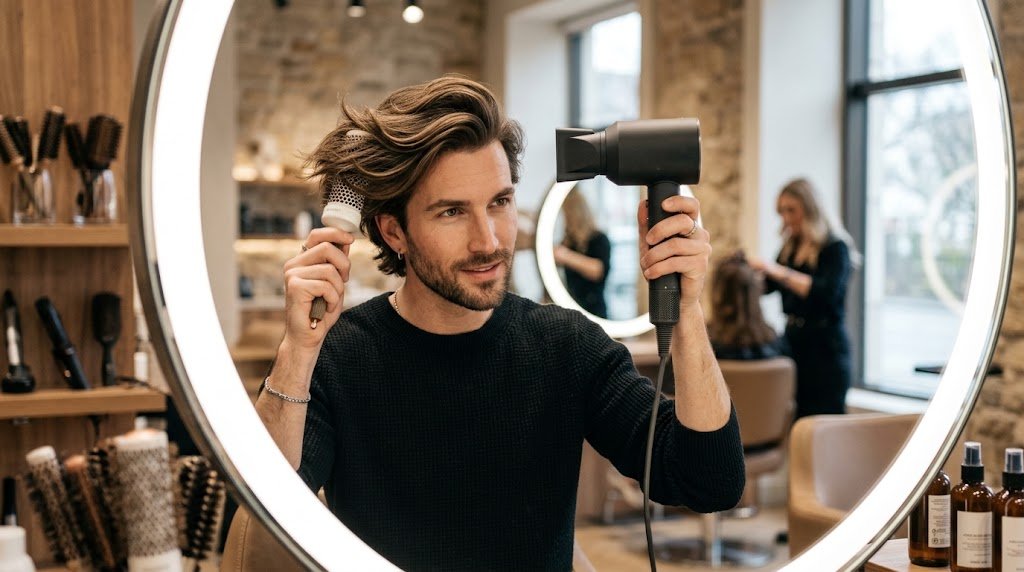
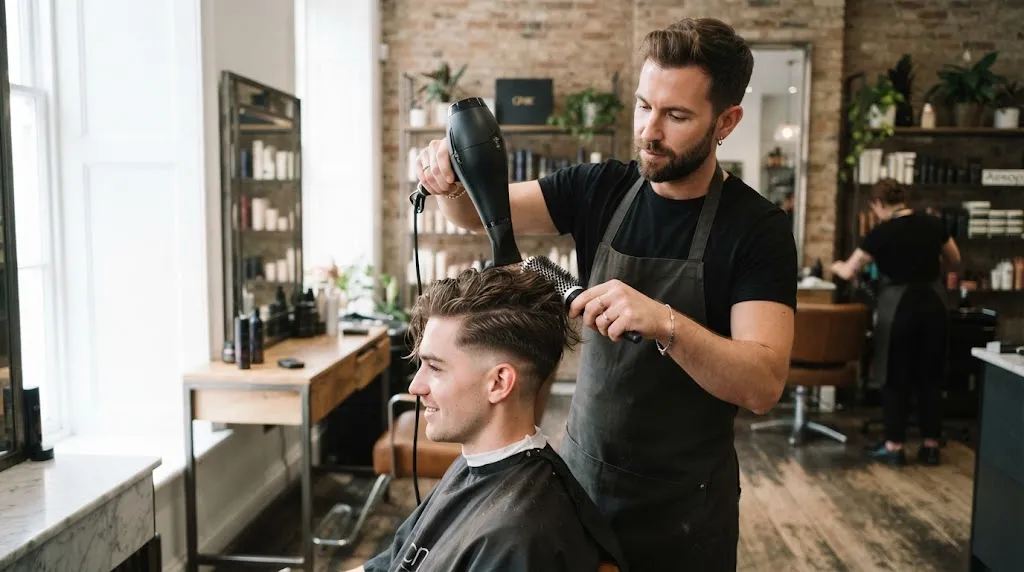
How you direct your hair during your morning routine determines whether your haircut widens or elongates your features.
Blow-Drying Forward and Diagonal: Always direct air flow from the crown forward toward your face, or diagonally across your forehead. Avoid drying hair straight up or backward from the hairline, which exposes your full forehead and adds vertical height.
Creating a Low, Asymmetrical Part: If you wear a side part, set it slightly lower on the side of your head rather than right along the crown curve. A lower side part breaks up symmetrical vertical lines and directs visual sweep across your brow.
Finger-Styling Over Brushing: Use your hands and fingers to scrunch and direct your hair rather than a tight round brush. Finger-styling preserves natural separation and horizontal texture, whereas round brushing creates high, rounded volume that stretches your face profile.
Trim Frequency by Style Type
Keeping your haircut at its optimal shape prevents sides from collapsing and top length from growing into tall, unmanageable bulk.
| Style Category | Example Cuts | Recommended Trim Frequency |
|---|---|---|
| Short & Precision Cuts | French Crop, Caesar Cut, Buzz Cut, Low Skin Fade | Every 2 to 3 weeks |
| Medium & Structured Cuts | Curtain Fringe, Ivy League, Side Part, Short Quiff | Every 3 to 4 weeks |
| Layered & Medium Flows | Bro Flow, Shaggy Layers, Wolf Cut | Every 5 to 6 weeks |
| Long Hairstyles | Shoulder-Length Flow, Layered Mop Top | Every 8 to 12 weeks |
How to Choose the Right Long Face Hairstyle for You
Factors to Consider (Hair Type, Lifestyle, Maintenance Time)

Choosing the best haircut for a long face comes down to matching your facial proportions with your daily routine and natural hair texture.
Natural Hair Type & Texture: Work with your hair rather than fighting it. If you have fine or straight hair, forward-swept textured crops or blunt fringes build density over your forehead without falling flat. If you have wavy or curly hair, leverage your natural lateral volume to widen your head profile at temple level.
Daily Maintenance Commitment: Be honest about how much time you want to spend in front of the mirror every morning. Styles like a Caesar cut or short French crop require less than two minutes with a dab of matte clay. Longer styles, curtain fringes, or textured quiffs demand five to ten minutes with a blow-dryer and styling products to keep volume directed horizontally.
Barbershop Visit Frequency: Short, faded crops need a touch-up every two to three weeks to keep the fringe sharp and the side tapers clean. If you prefer visiting the shop once every six to eight weeks, medium-length shaggy layers or a bro flow age much more gracefully as they grow out along the sides.
What to Tell Your Barber
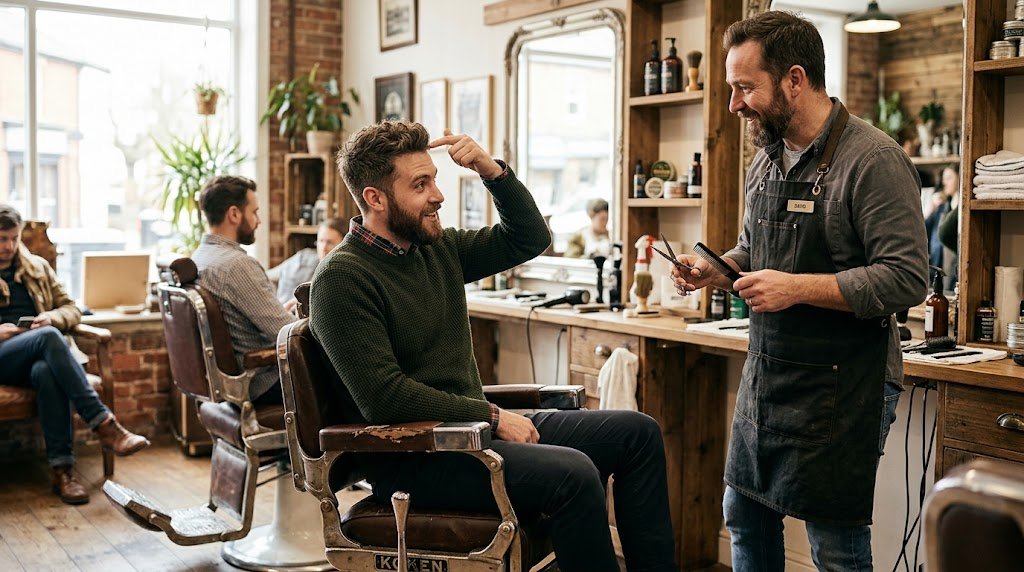
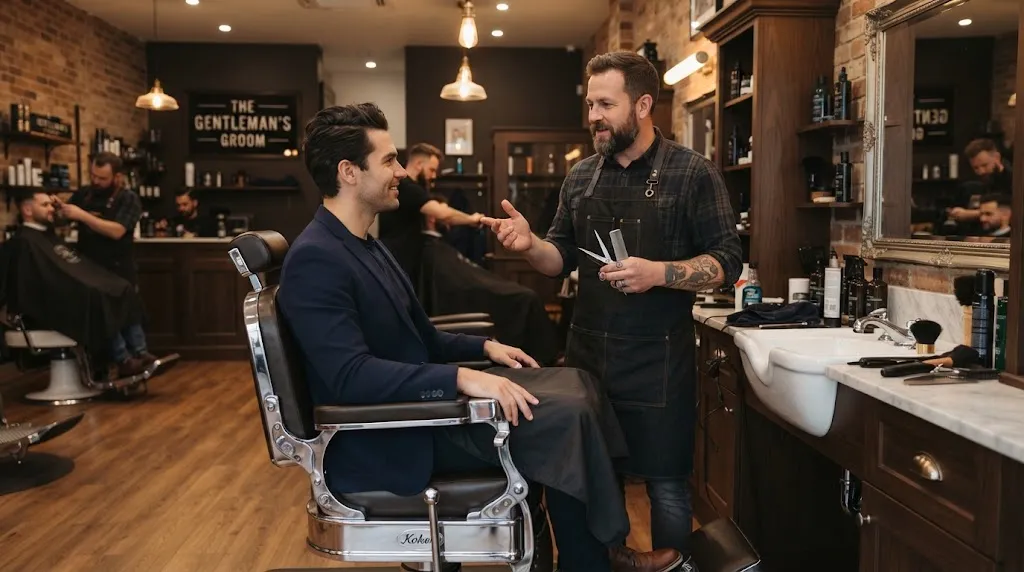
Barbers appreciate clear, technical directions over vague photo references. When you sit in the chair, use these specific phrasing guidelines to ensure your cut is tailored for an oblong face:
Specify Side Weight: “I want a low taper on the sides rather than a high skin fade. Leave enough weight along the parietal ridge to keep my head from looking too narrow.”
Set Top Height Boundaries: “Keep the height on top low to medium. I want to avoid high pompadours or vertical volume so my face doesn’t look longer.”
Define Fringe & Forward Movement: “Give me some textured fringe over the forehead to break up my vertical face length, and point-cut the top so I can sweep it forward or to the side.”
Frequently Asked Questions
What hair suits a long face for men?
Hairstyles that feature low-to-medium volume on top, forward-falling texture, and preserved density along the sides work best. Styles like the textured French crop, curtain fringe, low-taper crew cut, and medium-length bro flow excel because they cover parts of the forehead and add horizontal width across the cheekbones and temples.
Is long hair good for long faces?
Yes, provided it is cut with heavy layers starting around cheekbone or jaw level. Medium-to-long hair that falls past the chin draws visual weight outward toward your shoulders, balancing your facial proportions. However, limp, single-length long hair that hangs completely flat right next to your cheeks will accentuate vertical length, so keeping texture and body along the sides is essential.
Is long face shape attractive?
Absolutely. An oblong or long face shape is often associated with strong, elegant structure, prominent cheekbones, and high visual impact—traits shared by many prominent male actors and models (like Cillian Murphy and Adam Driver). The key to maximizing your looks isn't changing your face, but choosing a haircut that complements your natural proportions rather than over-stretching them.
What kind of hair looks best on a long face?
Wavy and curly hair textures are naturally suited for a long face because their natural bends expand outward, creating built-in side width. If you have straight hair, textured styles with forward-falling fringes or side-swept movement reproduce this horizontal width artificially through smart cutting techniques like point-cutting and razor-layering.
What hairstyles shorten a long face?
Styles with forward-falling fringes directly shorten the visual length of your face by concealing part of your forehead. Top picks include the French crop, Caesar cut, textured fringe undercut, and curtain bangs. These cuts physically cover the upper third of your facial canvas, making your overall face profile look instantly more compact.
How should I part my hair if I have a long face?
Opt for a deep side part or a slightly off-center part rather than a hard middle part on flat, slicked hair. A side part breaks up symmetrical vertical lines and directs the eye diagonally across your forehead, creating an asymmetrical horizontal sweep that distracts from facial length.
What makes a long face look shorter?
What is the rarest face shape?
The diamond face shape—characterized by high, wide cheekbones paired with a narrow forehead and a pointed chin—is widely considered the rarest face shape in men. Long or oblong face shapes are much more common, making up a significant portion of male bone structures worldwide.
Final Thoughts
Mastering a long face shape comes down to understanding simple geometric balance: always prioritize side width over top height. By keeping side density near your temples, avoiding sky-high volume, and letting fringes or textured layers break up your forehead line, you take full control of your proportions.
A great haircut shouldn’t feel like a compromise or a cover-up—it’s about highlighting your best features while framing your face naturally. Armed with the right barbering terminology and styling approach, you can step into any shop with confidence and get a cut that genuinely suits your structure every single time.