
Korean Front Hair Cut — Complete Guide

Korean front hair cuts rely on soft, textured layering around the face—such as see-through bangs, side-swept tendrils, and wispy curtain fringes—designed to soften facial features and add dimension without heavy bluntness. If you want more hairstyle inspiration, you can explore our complete hairstyles library to find looks tailored to your specific hair type and face shape.
Feathered Texturizing: Cutting techniques focus on vertical point-cutting and internal thinning shears to remove bulk, allowing the hair to fall in natural, airy clumps rather than a solid wall across the forehead.
Proportional Lengths: See-through bangs typically sit right at or just below the lash line, while longer side pieces (often called side burns or hime framing pieces) are cut at cheekbone or jaw level to contour bone structure.
Low-Commitment Maintenance: Unlike heavy western blunt bangs that require constant trimming to stay out of the eyes, wispy Korean styles blend seamlessly into longer layers as they grow out.
Heat Styling Integration: Daily styling requires a small round brush or heated barrel iron to create a distinct C-curve, ensuring the hair sweeps away from the eyes rather than falling flat against the forehead.
What Is a Korean Front Hair Cut?
Why It's Called "Korean" Bangs (PAA: "What is the Korean haircut called?")

Close-up front view of airy, see-through Korean bangs on a model, showing the delicate separation of strands and slight forehead visibility. The style is widely known globally as Korean bangs, though in South Korea, it is most commonly referred to as see-through bangs (シースルーバング or siseullu bangu). This cut earned its name from originating in the Seoul K-beauty scene, where stylists popularized a softer, lighter alternative to the heavy, blunt fringe dominant in Western aesthetics. Instead of a solid wall of hair covering the brow, this cut creates a diffused, feathered look that blends seamlessly into longer side tendrils, framing the face without weighing it down.
How It's Different from Regular Bangs

Side-by-side comparison angle showing the wispy, tapered density of Korean see-through bangs versus a thick, heavy traditional blunt fringe.
Traditional blunt bangs are cut densely across the forehead with high hair density pulled forward from deep within the crown, creating a heavy, solid line that sits right at the brow line. Korean front hair cuts utilize a much shallower triangle section from the scalp, isolating only a minimal amount of hair to keep the texture lightweight and translucent. While standard blunt bangs sit stiffly and require constant trimming to avoid poking into the eyes, Korean bangs rely on internal texturizing shears and point-cutting at a forty-five-degree angle to create soft, flexible movement. In high humidity, traditional heavy bangs tend to trap sweat and lock into a flat helmet-head shape, whereas the lighter density of a Korean cut allows air to circulate, maintaining separation and a natural airy sweep even when exposed to moisture.
Korean Front Hair Cut by Face Shape
Round Face

Creating balance on a round face requires drawing the eye downward rather than emphasizing width. Wispy, see-through bangs paired with long, chin-to-collarbone side tendrils achieve this by breaking up the circular perimeter of the face. When cutting the center fringe, keep the density low—only about an inch deep from the hairline—so skin shows through, preventing the forehead from looking boxed off. The side pieces should be point-cut at a steep 45-degree angle starting just below the cheekbones, which narrows the appearance of fuller cheeks. Avoid heavy, blunt-cut bangs that sit straight across the eyebrows, as horizontal lines physically and visually widen a round jawline and forehead.
Oval Face

An oval face structure accommodates nearly any variation of Korean bangs, though the goal here is to maintain natural proportions rather than correct them. A classic, airy see-through fringe paired with subtle, curved side whiskers highlights balanced cheekbones without overwhelming the features. When cutting, keep the central section just wide enough to cover the outer edges of the eyebrows, tapering smoothly into longer layers that rest right at the cheekbone level. This maintains the natural symmetry of the bone structure while adding a soft, textured frame. Steer clear of excessively heavy or ultra-short fringe styles that disrupt the natural vertical harmony typical of this face shape.
Square Face
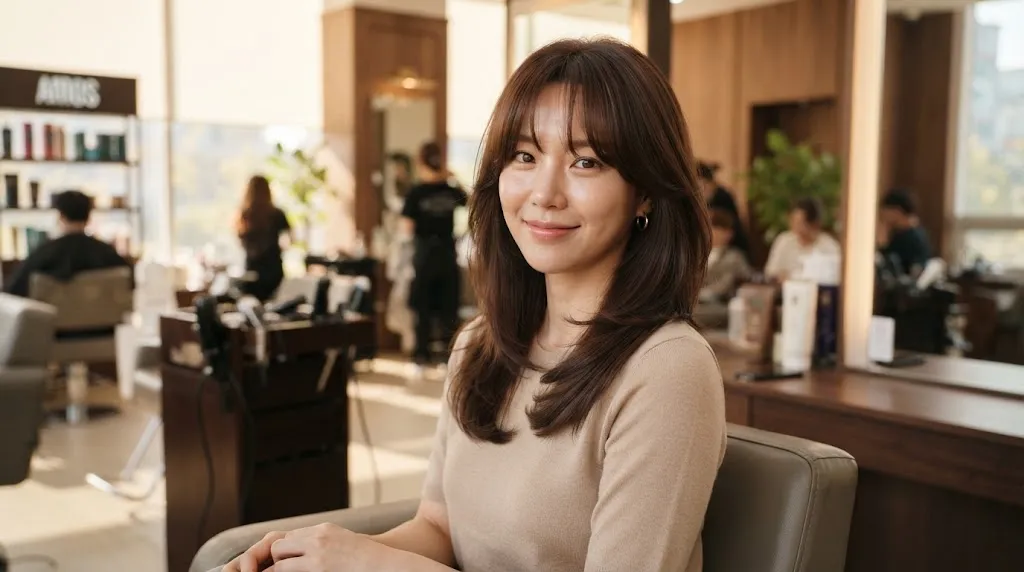
Soften strong, angular jawlines and broad temples by incorporating curved, cascading side pieces that redirect attention inward. A parted curtain fringe or a softly layered side-swept bang works exceptionally well because the diagonal lines break up sharp horizontal angles at the forehead and jaw. When cutting the outer edges, use deep point-cutting shears vertically to create a feathered, textured edge rather than a blunt line that mirrors the square jaw. The center of the fringe should be kept slightly longer near the temples, sweeping gracefully outward. Avoid stiff, blunt straight-across bangs that accentuate boxy structural lines and make the lower face appear harsher.
Heart Face

Balancing a heart-shaped face involves minimizing the width of a broader forehead while adding visual weight around a narrower, pointed chin. Wispy bangs that are slightly heavier at the temples and lighter in the exact center help disguise a wide brow line. When executing the cut, leave the outermost sections longer and style them to curve inward toward the cheekbones, filling in the hollow space above the jaw. This creates the illusion of a more uniform oval shape. Avoid heavy, voluminous crown-based bangs or severe straight lines that emphasize the broad upper third of the face while leaving the lower chin looking disproportionately sharp.
Korean Front Hair Cut by Hair Type
Straight

Straight hair handles Korean front cuts with absolute predictability, making it the easiest texture to keep looking sharp without a lot of daily effort. Because straight strands naturally fall downward, the challenge here isn’t managing cowlicks; it is preventing the hair from separating and looking piecey in a flat, stringy way. When cutting straight hair, texturizing shears must be used vertically rather than horizontally to soften the baseline so it doesn’t look like a rigid shelf.
On high-humidity days, straight hair tends to lose its internal bounce and hug the forehead too closely due to sweat and moisture. To combat this, prep the damp bangs with a lightweight volumizing mousse containing panthenol before rolling them on a large Velcro roller. This builds a memory curve that resists collapsing even when the air gets sticky.
Wavy

Wavy hair brings a natural, effortless movement to Korean front cuts, but it requires a strategic approach to cutting angles. Because waves shrink and spring up when dry, the hair must always be cut slightly longer than the target length while damp, factoring in a quarter-inch of spring-back. The weight line needs to be heavily point-cut to remove bulk so the natural wave pattern doesn’t puff out horizontally like a dome.
In humid conditions, wavy bangs are prone to frizzing and misbehaving at the temples. A humidity-blocking smoothing cream with a lightweight silicone base applied sparingly to the mid-lengths and ends keeps the wave pattern smooth without weighing down the root lift. Avoid using small round brushes during blow-drying, as this creates too tight of a curl; instead, use a paddle brush to direct the waves sideways into a soft, sweeping motion.
Curly
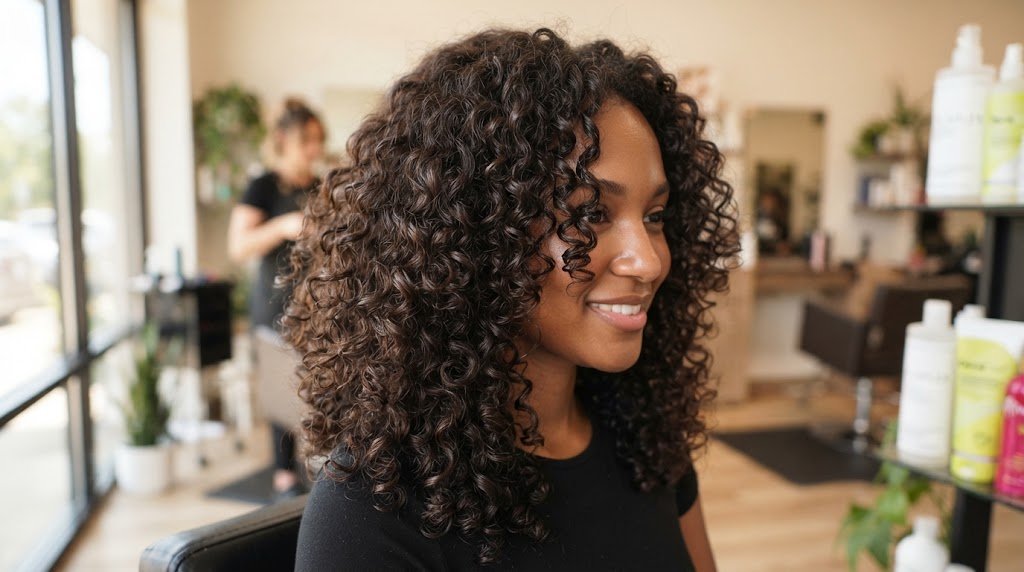
defined curls rather than a straight fringe.] Curly hair requires a dry-cutting technique for Korean front styles to accurately assess how each individual coil contracts. Cutting curly bangs wet is a recipe for ending up with a micro-fringe that sits too high above the eyebrows. The primary focus with curls is maintaining hydration and structural integrity; thinning shears should be avoided entirely to prevent frizz, and instead, internal weight removal is done strand by strand using shaping shears.
When freshly washed, curly bangs need a defining cream or fluid containing glycerin to lock in moisture and encourage clumped, uniform curl patterns. High humidity actually helps curly bangs blend better with the natural texture, but it can cause shrinkage at the root. To counteract this, clip the roots slightly upward while air-drying to preserve height around the forehead curve.
Thin vs Thick
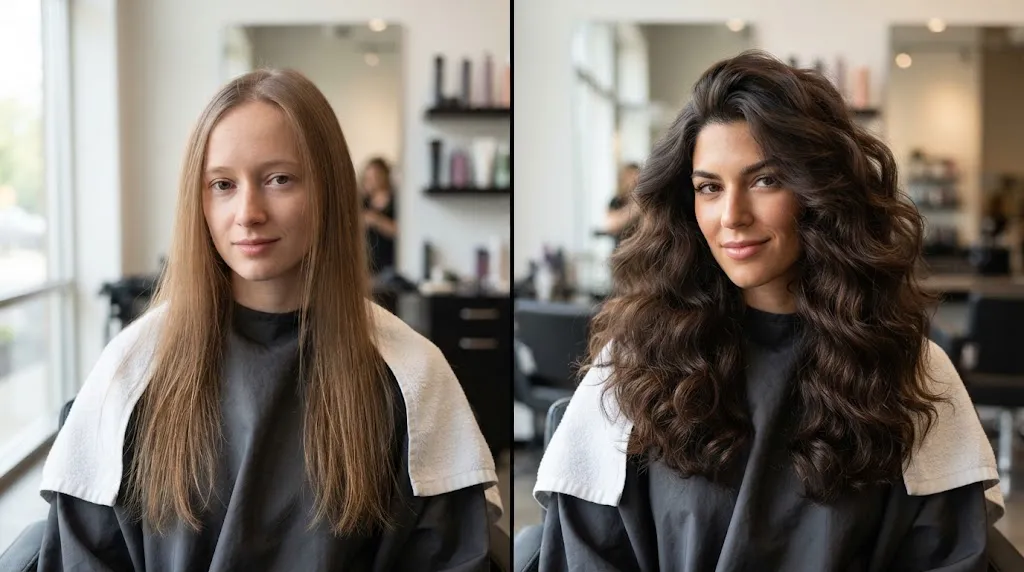
Thin hair and thick hair demand completely opposite cutting strategies to achieve the signature Korean fringe look. For thin hair, the sectioning must start deeper back from the crown—often an inch or more behind the hairline—to harvest enough density so the forehead doesn’t look exposed through sparse strands. Scissors should be kept parallel to the hair shafts to avoid over-thinning, and a lightweight sea salt spray provides the necessary grip to make thin hair look fuller.
Thick hair, on the other hand, requires a narrow, precise triangular section at the front, paired with aggressive internal slicing and channel cutting to hollow out heavy bulks. If thick hair is cut blunt, it will stick straight out from the forehead like an awning. Texturizing the interior layers allows thick bangs to curve inward toward the face smoothly, sitting flat and neat without requiring constant flat-iron intervention.
Korean Front Hair Cut for Women & Girls
Long Hair with Korean Bangs

Pairing long, heavy-textured lengths with translucent, feather-light bangs creates a striking contrast that prevents the style from looking weighed down. The core cutting technique relies on holding the front triangular section at a 90-degree elevation from the forehead and point-cutting vertically to establish soft, graduated edges rather than a blunt horizontal line. The central fringe should sit at eyelash length, while the adjacent side pieces (often called sideburn wisps or side flows) are cut on a diagonal downward slope ending right at the jawline.
This specific architecture works exceptionally well for round and heart face shapes because the vertical drop of long hair elongates the face while the sheer center fringe breaks up a heavy forehead. For fine, straight hair types, a light mist of volumizing mousse applied to the roots before a round-brush blow-dry prevents the bangs from sticking flat to the skin. Conversely, those with coarse or wavy textures will need to pass a small flat iron through the fringe at a slight inward curve, sealing it with a lightweight silica-free anti-frizz serum to combat mid-day humidity swelling.
Short Hair with Korean Bangs

Merging short crops like a chin-length bob or a layered pixie with Korean-style bangs requires a precise balance of perimeter weight and internal texture. The hair at the front is cut with slide-cutting shears at a 45-degree angle to ensure the ends taper naturally against the forehead instead of sticking straight out. The density must remain minimal—retaining only about a quarter inch of depth at the hairline—so the skin underneath remains visible through the strands.
Square and oval face shapes benefit greatly from this combination, as the shortness adds sharp definition to the jaw while the curved fringe softens hard angular features. When styling short cuts in the morning, misting the roots with water and blow-drying forward using a vent brush counteracts cowlicks that naturally push short bangs apart. Finish by pinching the very tips of the fringe with a dab of matte styling clay to lock in individual separation that holds up against wind and daily movement.
Korean Front Hair Cut for Men
Korean Bangs for Men
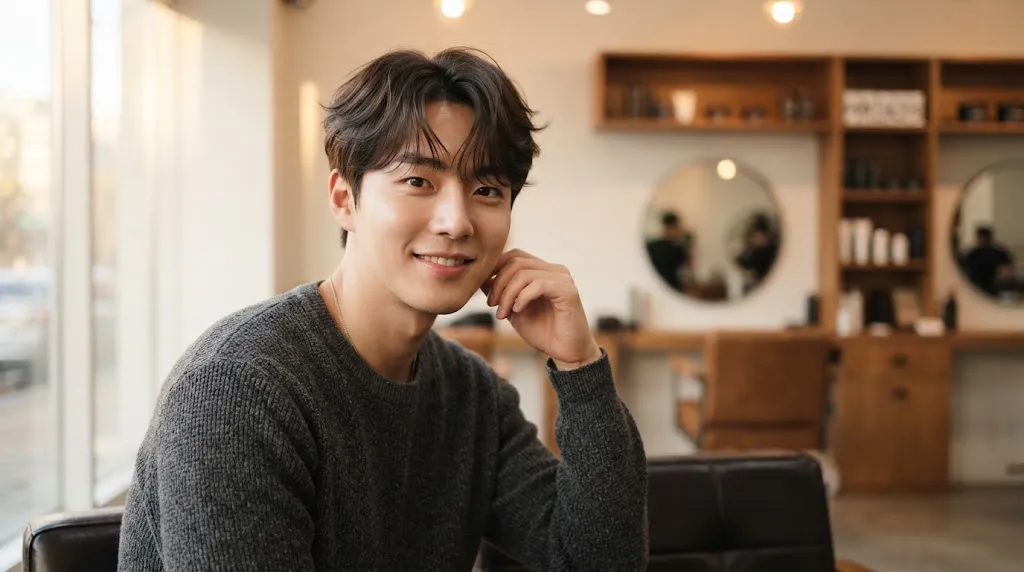
Korean bangs for men rely heavily on internal weight removal and point-cutting to prevent the fringe from looking blunt or heavy on the forehead. Instead of a straight chop across the brow line, the ends are texturized using vertical shear work, creating soft, separated strands that allow natural skin to peek through.
When dealing with high humidity, straight hair types often flatten out while wavy textures tend to frizz at the root line. To combat this in the salon chair, cut the fringe slightly damp with a razor to seal the cuticle, and advise clients to rough-dry their bangs downward using a narrow nozzle concentrator on a medium heat setting, finishing with a blast of cool air to lock the direction in place. Apply a pea-sized amount of water-based matte clay emulsified thoroughly between the palms, tapping it lightly onto the roots of the fringe first before pulling the fingers through the ends for a secure, touchable hold.
Korean Layered Haircut for Men
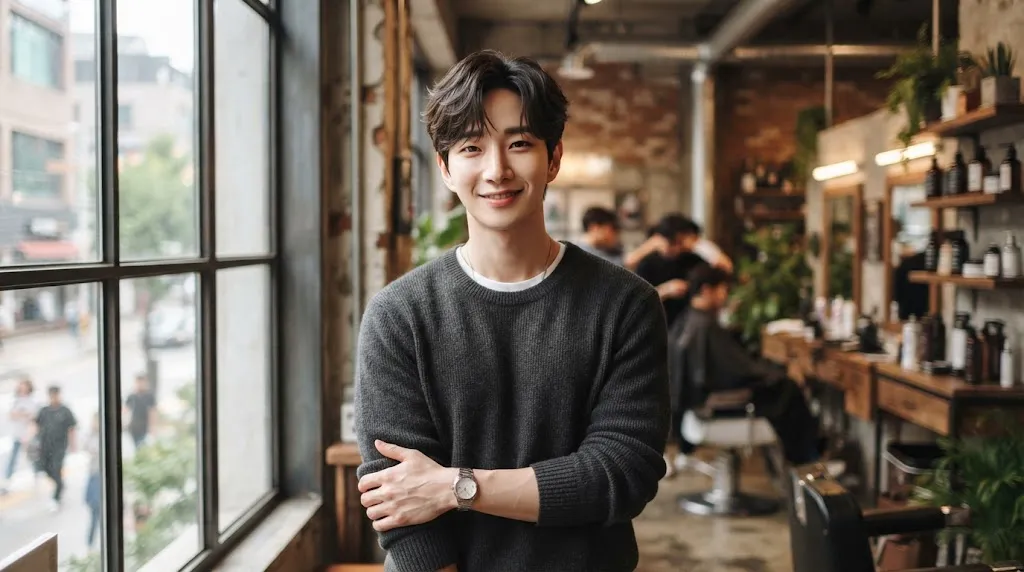
The Korean layered haircut for men centers on building height through the crown while keeping the sides closely tapered or cleanly blocked, creating a sharp silhouette that adds instant structure to soft jawlines. Achieving this shape requires elevating sections at a 90-degree angle from the head curve during cutting to establish movement, followed by slide-cutting through the mid-lengths to remove bulk without sacrificing density.
Hair types with strong natural cowlicks around the crown require deep chunking to break up the weight pattern so the layers fall forward smoothly without splitting. On fine hair, keep the layers longer and blunter at the tips to avoid a wispy, thinning appearance, using a texturizing powder dusted directly onto dry roots to swell the hair shaft and sustain volume throughout the day.
What Is a 2-Block Korean Haircut?
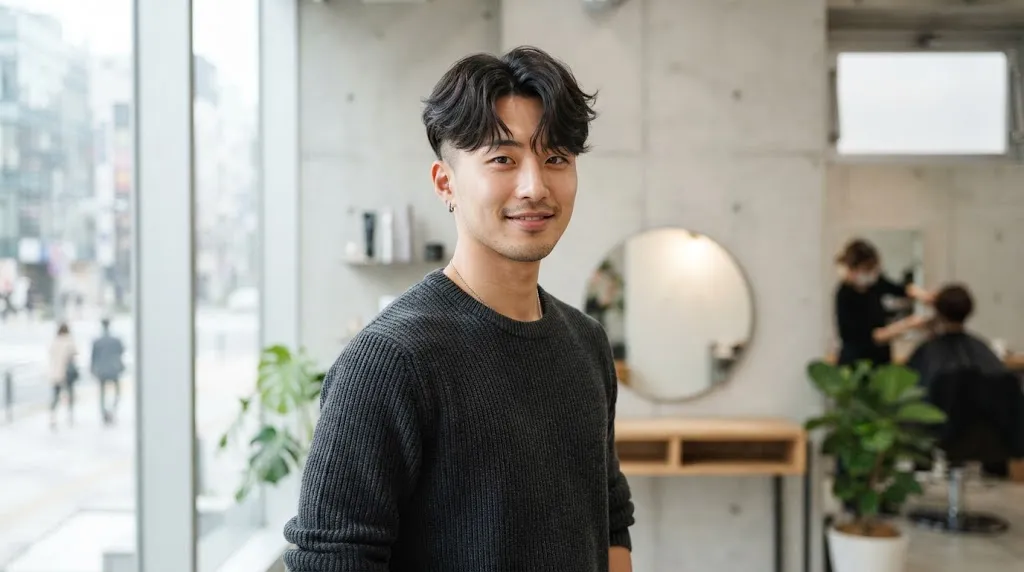
A 2-block Korean haircut is a modern style featuring disconnected lengths, where the back and sides are closely cropped or shaved while the top section is left significantly longer and allowed to fall over the shorter sides. This high-contrast architecture makes styling faster because the bulk of the hair management is concentrated purely on the top and fringe areas.
For clients exploring variations based on bone structure, tailored adaptations make a noticeable difference; those with fuller proportions often benefit from round face hairstyles for men to introduce vertical elongation, whereas individuals with narrower proportions can balance their features through long face hairstyles for male that emphasize width at the sides. Maintenance requires returning to the stylist every three to four weeks to clean up the undercut perimeter before the transition line loses its sharp definition.
16+ Korean Bangs Styles

Curtain Bangs — Step-by-Step
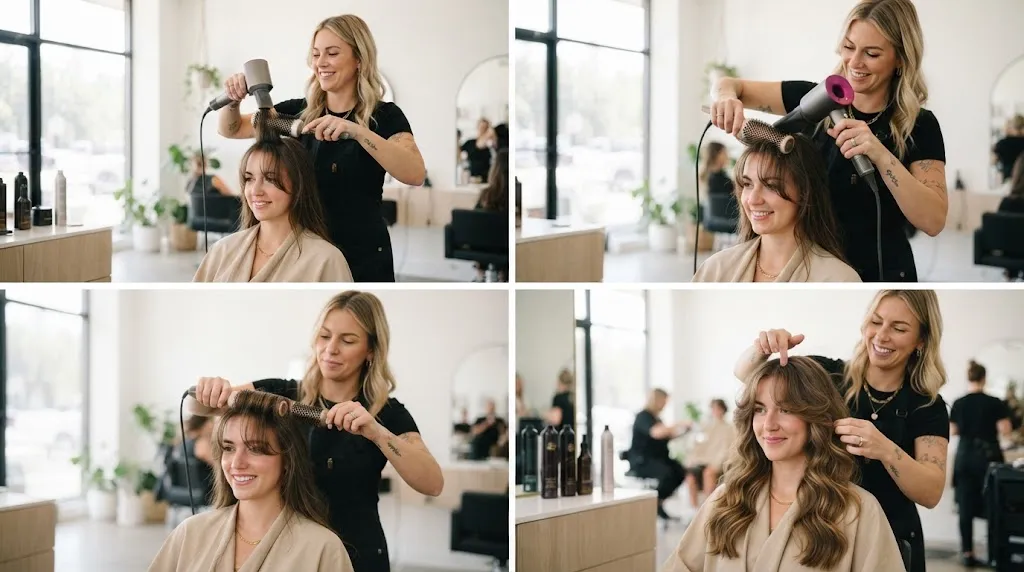
Achieving the signature Korean curtain bang requires cutting at a precise outward diagonal rather than a straight horizontal line to build a seamless transition into the longer lengths. Start with damp hair parted down the middle, isolate a triangular section extending back about two inches from the hairline, and elevate the hair forward at a 90-degree angle from the forehead before cutting downward from chin length to collarbone length.
https://www.pinterest.com/pin/curtain-bangs-tutorial
To style these daily, wrap the damp sections around a medium-round thermal brush, pull them forward and slightly upward to maximize root lift, and blast them with heat for five seconds before rolling backward away from the face. Finish by sweeping the ends outward with a flat iron while the hair is completely dry, setting the shape with a lightweight, flexible-hold mist rather than a heavy lacquer to maintain natural movement. In high humidity, prep the roots with a silica-based styling powder to prevent the center part from collapsing or separating under moisture.
How to Style Korean Bangs at Home
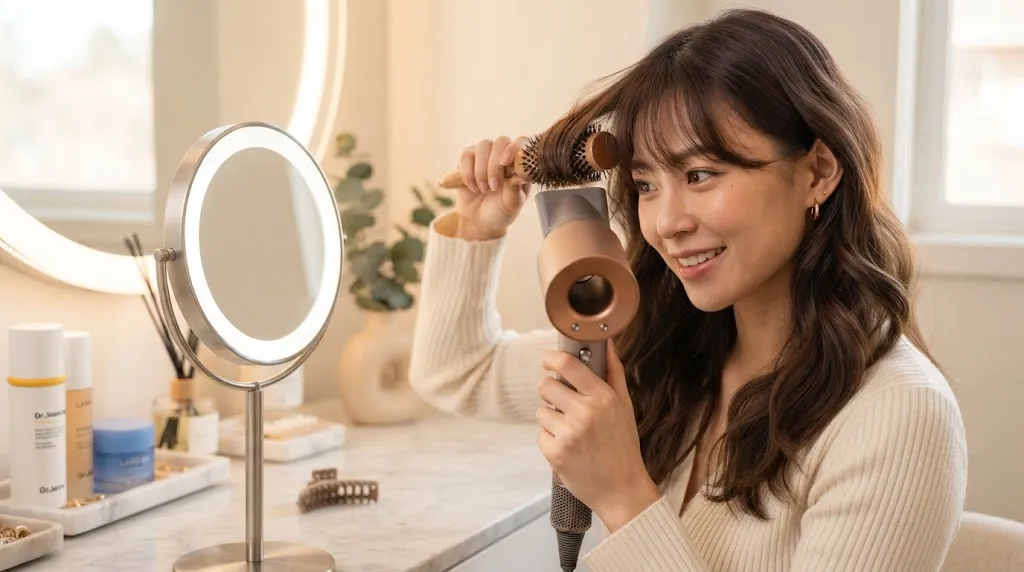
Achieving that signature airy, effortless curve at home requires the right tools, specific heat application, and precise control over tension. Follow this step-by-step technique using a small-barrel round brush and a variable-heat blow dryer fitted with a concentrator nozzle.
Prep damp hair immediately after washing: Never let bangs air-dry completely on their own, as they will dry with unpredictable cowlicks or flat patches. Mist them lightly with water until they are about 80 percent damp, then apply a pea-sized amount of lightweight, alcohol-free smoothing lotion or volume mousse directly from roots to ends.
Set the center section first: Take a small round brush (roughly 1 to 1.5 inches in diameter) and place it underneath the central section of your fringe right at the root area. Pull the hair upward and slightly forward away from your forehead, following the motion with your blow dryer set to medium heat and medium speed.
Create the C-curve shape: As you glide the brush down toward the ends, gently rotate the brush inward toward your face to form a soft, rounded C-shape. Keep the nozzle of the blow dryer pointed downward along the hair shaft to seal the cuticle and eliminate frizz.
Transition the side tendrils: For the longer side pieces or face-framing whisker hairs, place the round brush vertically or at a 45-degree angle. Roll the hair backward and outward away from your face while applying heat, which creates a seamless sweep that blends into the rest of your layers.
Set the style with cool air: Switch your blow dryer to the cool shot setting and hold the brush in place for five seconds inside the curved shape to lock the memory of the curl into the hair fibers.
Finish with a flexible hold: Shake the bangs out gently with your fingertips to break up the rigidity, then mist a tiny drop of flexible-hold hairspray onto the palms of your hands and lightly press them over the fringe to secure the shape against humidity without making the hair crunchy.
How To Cut Bangs At Home
Step-by-Step Korean Style Bangs Cutting Guide
Watch directly on the page to learn how to cut front bangs easily at home.
What to Say To Your Barber
Bringing a reference photo is only half the battle; stylists interpret images differently based on density and texture. Tell your stylist you want a disconnected, tapered fringe rather than a blunt-cut line if you are aiming for airy, see-through tendrils. Specify the exact drop point, such as starting the fringe an inch back from the natural hairline to build soft volume rather than a heavy, flat sweep straight off the crown.
Specify the texture technique by asking for vertical point-cutting with thinning shears concentrated strictly on the bottom third of the hair to remove bulk without creating blunt ledges. For side-swept transition pieces, instruct the stylist to razor-cut the outer edges at a 45-degree angle so the hair naturally tucks backward toward the cheekbones instead of falling straight into the eyes. Clarify whether you want your forehead skin visible through the hair, as requesting “transsee-through bangs” ensures the stylist leaves lighter density through the center while keeping the temple corners heavier to frame the face.
Maintenance, Trims & Real User Problems
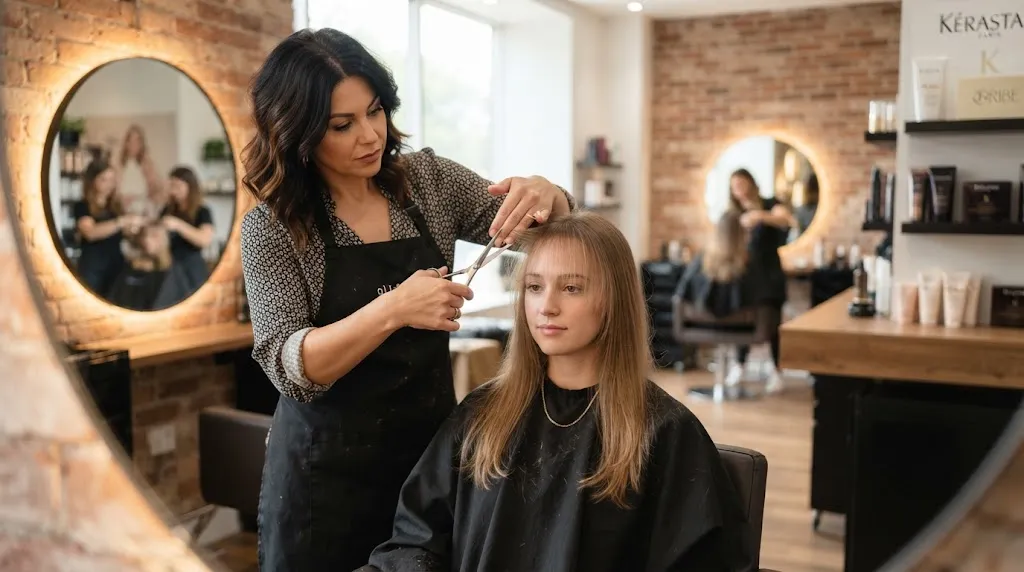
Managing Korean bangs requires daily attention because shorter hair loses its natural weight and succumbs instantly to scalp oils and ambient moisture. Wash just the fringe area over the bathroom sink every morning using a clarifying shampoo to reset the hair and strip away overnight oil transfer from the forehead, which prevents the strands from clumping together into heavy, separated spikes.
How Do I Trim My Korean Bangs at Home Without Ruining Them?

Trim your bangs exclusively when the hair is completely dry, because wet hair springs up significantly shorter once moisture evaporates. Comb the central triangle of hair straight down, isolate a half-inch section between your middle and index fingers, and cut vertically upward into the ends using hairdressing shears held at a 45-degree angle rather than cutting straight across horizontally.
How Do I Stop My Bangs from Splitting Down the Middle?

A stubborn cowlick right at the hairline forces bangs to part and expose the forehead no matter how you brush them. Fix this immediately after washing by taking a small flat brush and pulling the wet fringe firmly back and forth horizontally from left to right while aiming a downward-facing blowdryer airflow directly at the roots to break the directional growth pattern before setting them with a round roller.
How Do I Keep My Fringe from Getting Greasy and Clumpy in Humidity?
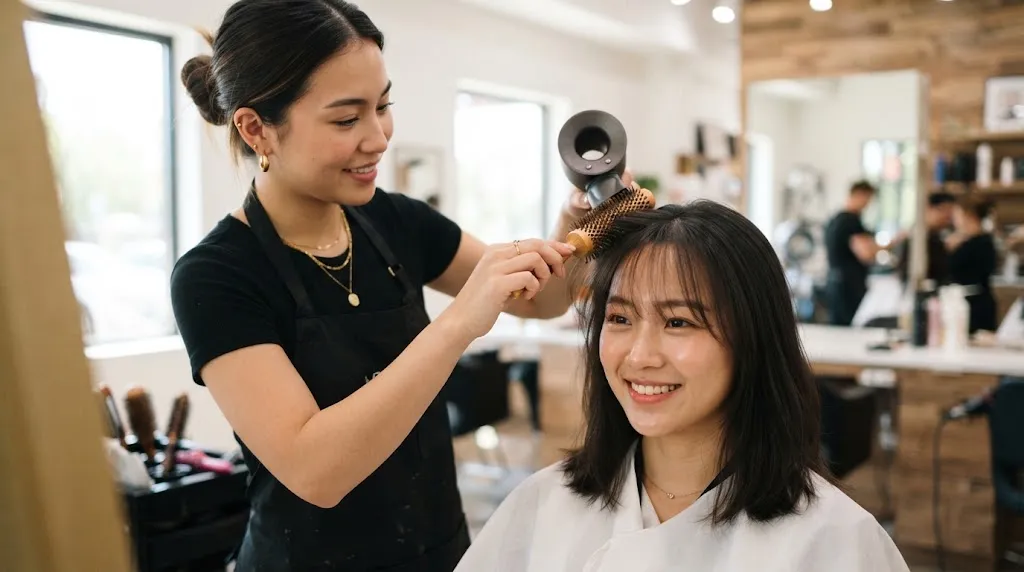
High humidity combined with natural facial sebum causes lightweight bangs to stick flat against the skin within hours. Dust a pinch of translucent loose setting powder or fine silica-based dry shampoo directly onto the roots along your hairline using a fluffy makeup brush to absorb sweat and oil before it melts into the hair shafts.
How Often Do I Need a Professional Trim to Maintain the Shape?
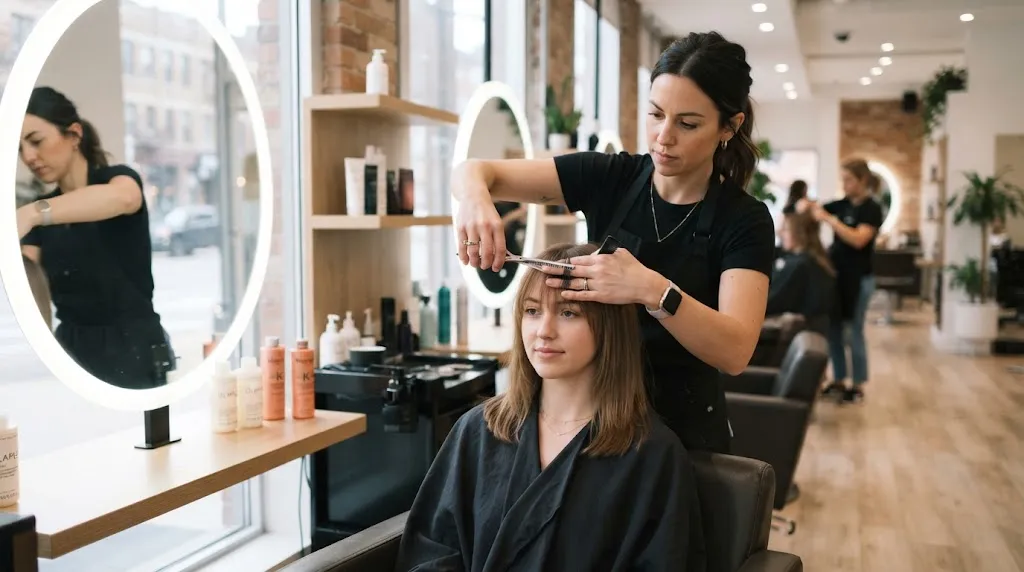
Book a quick shape-up every three to four weeks to keep the side-framing tendrils grazing the cheekbones correctly. Letting the fringe grow past the eyelash line forces you to constantly sweep them aside, altering how the style distributes weight around the eyes and temples.
Celebrity-Inspired Korean Bangs
Jennie's Haircut

Jennie’s signature front hair style relies on ultra-soft, face-framing tendrils that sit independently from the main length, usually cut to drop right at the cheekbone or jawline. To execute this in the chair, a stylist holds the front section straight out at a 90-degree elevation from the face, point-cutting vertically with shears held at a steep angle to eliminate blunt lines and create natural airiness. Styling this look requires a small round ceramic brush (around 28mm) and a directional blow-dryer nozzle; roll the front hair backward away from the face while applying heat for five seconds, then lock the shape by blasting it with the cool setting before releasing. In high humidity, fine hair types tend to lose this curved sweep quickly, so misting a lightweight, alcohol-free structuring spray onto your fingers—never directly onto the roots—and pinching the ends creates a flexible memory hold without collapsing fine strands.
BTS Haircut Styles
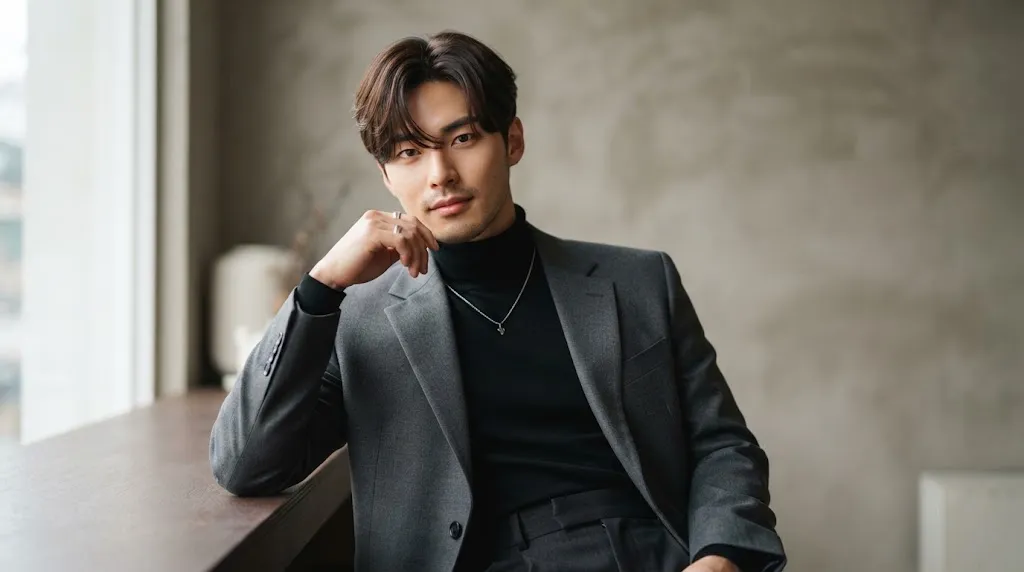
BTS-inspired fringe styles, particularly the classic curtain cut and the directional comma fringe, are built around strategic length manipulation where the center parting splits a fringe that drops past the outer edge of the eyebrows. When cutting this style, the hair is sectioned into a clean triangle from the apex of the head to the outer arches of the brows, then elevated forward and slide-cut downward so the interior layers support the outer sweep. To style the comma variation, wrap the damp front hair over a medium-sized round brush, direct the airflow downward to flatten any cowlicks at the root, and curve the tips inward toward the center of the forehead. Finish by working a pea-sized amount of matte texture clay between your palms, pressing it lightly through the mid-lengths to control flyaways while maintaining a touchable, non-greasy finish that holds its shape through a full day of movement.
The Gen Z Haircut Trend
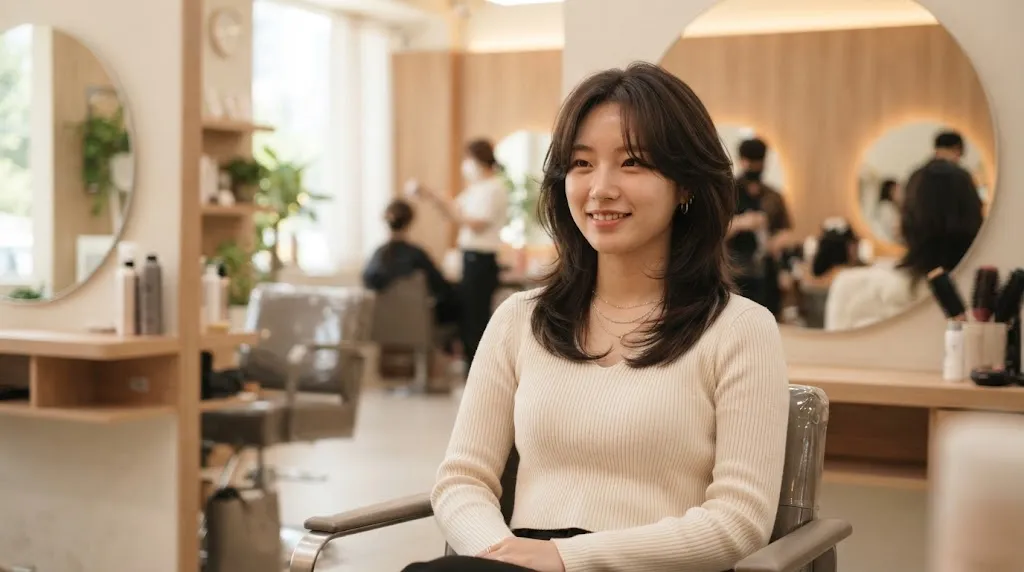
The modern Gen Z shift in Korean fringe styling leans away from heavy, uniform shapes and moves toward directional, razor-tapered side bangs that integrate sharply into a structured hush cut or airy medium layer. Salons achieve this by sectioning the perimeter diagonally and using a razor at a 45-degree angle to shred the weight line, ensuring the hair falls with intentional piece-y separation rather than a solid curtain. This specific geometric approach works exceptionally well for thick or coarse hair types that usually bulk up at the temples, because the heavy internal weight is hollowed out. Maintain the airy finish by applying a few drops of lightweight, silicone-free argan oil exclusively to the ends while the hair is damp, followed by a quick rough-dry using fingers to rake the fringe outward, creating a lived-in, character-driven silhouette that reacts gracefully to normal daily wear.
Hair Facts Worth Knowing
Kim Jong Un's Haircut
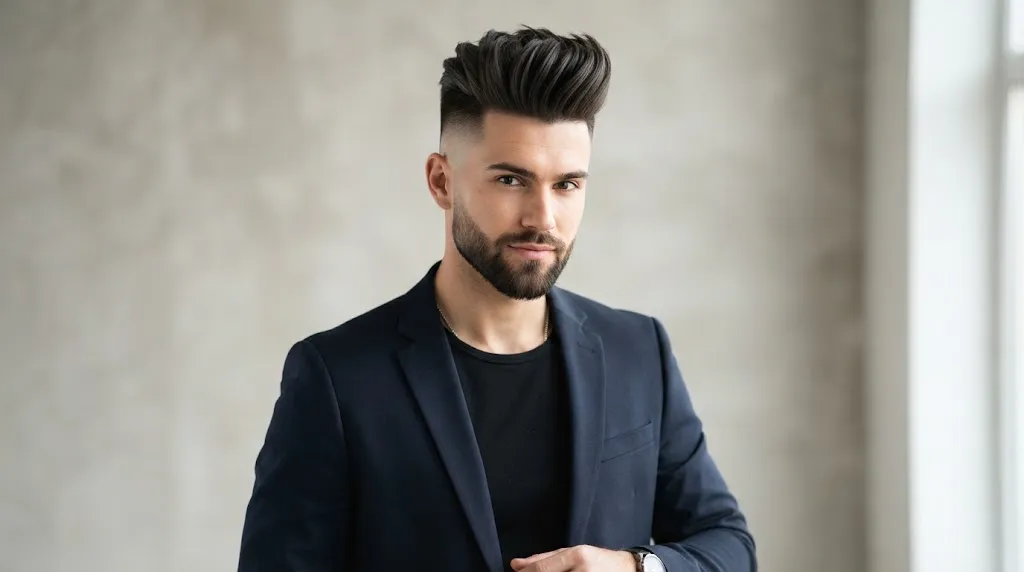
Officially referred to in North Korea as the “ambition” cut, this style features closely shaved sides and back paired with a heavily structured, long top swept upward and back. It gained mandatory traction as a state-promoted aesthetic, though its sharp geometric lines and heavy top volume draw clear inspiration from mid-century Western retro trends rather than traditional Korean styling.
The 3:2:1 Haircut Rule
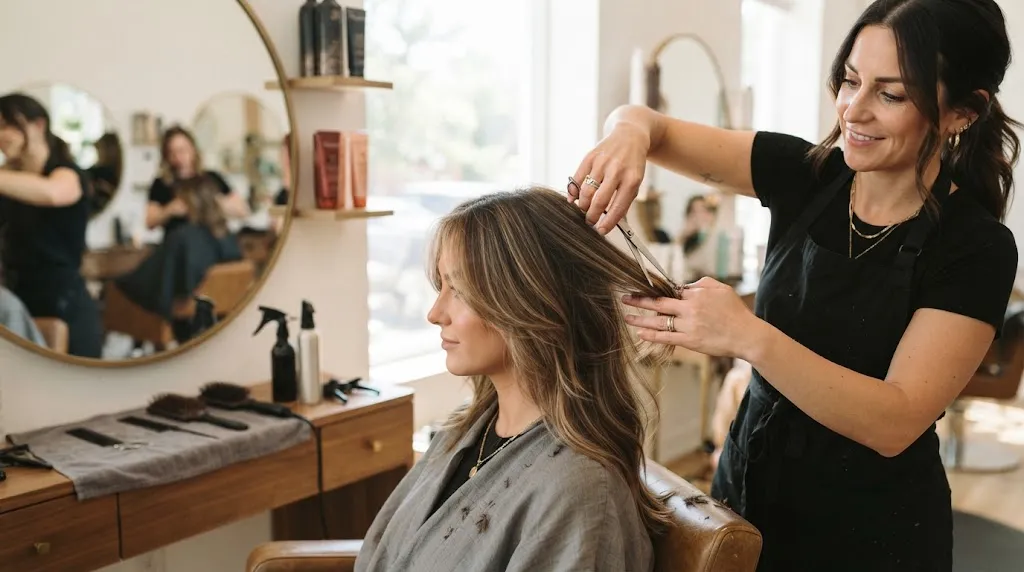
This professional drafting guideline structures precision haircuts by breaking down hair length, weight distribution, and layering ratios into a fixed numeric proportion. Stylists apply the 3:2:1 ratio to map out graduation zones—allocating three parts length to the base perimeter, two parts to the mid-shaft weight line, and one part to the top crown layering. This mathematical approach prevents heavy shelf lines in textured cuts, ensuring seamless weight removal and natural fall without requiring excessive thinning shears.
Korean Bangs vs. Regular Bangs vs. Curtain Bangs
| Feature | Korean Bangs (See-Through / Air Bangs) | Regular Bangs (Western Full Fringe) | Curtain Bangs |
|---|---|---|---|
| Density & Volume | Ultra-light, sparse, and translucent; allows skin to peek through. | Dense, heavy, and completely solid across the forehead. | Medium density, parted in the middle or slightly off-center. |
| Cutting Technique | Vertical point-cutting with thinning shears to taper ends to fine, airy points. | Blunt horizontal scissor lines creating a sharp, straight-across edge. | Angle-cut from shorter inner lengths to longer outer edges that sweep outward. |
| Ideal Hair Texture | Fine to medium straight or lightly wavy hair; thick hair requires heavy internal texturizing. | Straight, dense, or coarse hair that can hold a heavy horizontal line. | Versatile across most textures, including wavy, curly, and straight hair. |
| Face Shape Compatibility | Flattens long, square, and heart shapes by shortening the forehead visually. | Best for oval and long face shapes; can overwhelm round or square jaws. | Universally flattering; long variations slim round faces, while shorter versions balance long ones. |
| Maintenance & Styling | High daily upkeep; requires a thermal velcro roller or small round brush to maintain the signature forward curve. | Moderate upkeep; needs regular trims every 3 to 4 weeks to keep out of the eyes. | Low to moderate upkeep; easily tucked behind ears or blended into layers during grow-out phases. |
| Humidity Behavior | Prone to separating or flattening against the forehead when exposed to sweat or moisture. | Maintains block shape longer, but blunt edges can flip outward or frizz unevenly. | Retains general shape well, though outward flicks may loosen into soft waves. |
Popular Styles & Maintenance Q&A
What is a popular Korean haircut? ▼
How do I maintain Korean bangs between salon visits? ▼
Which Korean Front Hair Cut Suits You
Selecting the right front hair cut depends entirely on balancing your facial bone structure and your daily styling commitment. If you have a round face shape, choose see-through bangs with longer, face-framing side tendrils that create vertical lines to slim the jawline. For square or angular faces, heavy side-swept fringe softens sharp cheekbones and adds necessary curve.
Hair texture dictates your daily maintenance reality. Straight, fine hair handles airy bangs effortlessly with a quick thermal roller pass in the morning, while dense or wavy hair requires a light keratin smoothing treatment or daily flat iron work at a 45-degree angle to keep the fringe from puffing out in humidity. Commit to regular trims every three weeks if you prefer effortless movement over high-maintenance pinned-back days.
Explore More
If you're drawn to face-framing, precision-cut styles, our guide to round face hairstyles for men and long face hairstyles for men break down the same shape-matching principles for a masculine cut. For a cleaner, more structured take on fringe styling, the Japanese hairstyle guide for men and our roundup of haircuts for square faces are worth a look.
Women looking to adapt curtain bangs to their existing texture can check our guides on hairstyles for straight hair and light curly hairstyles, or browse medium hair styles for women for length pairings that work well with a fringe.
Parents styling a similar look for younger kids will find our Korean boy hairstyle guide useful.
For more inspiration, browse our full men's hairstyles, women's hairstyles, and boys' hairstyles collections.