
Simple Indian Hair Style: Easy Hairstyles for Everyday, Office, Saree & Weddings
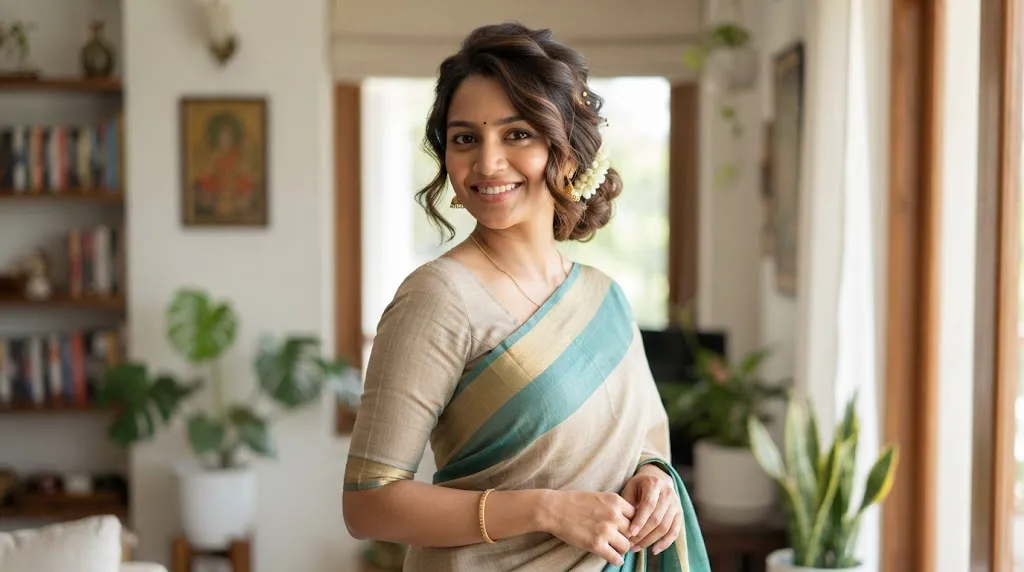
The best simple Indian hair styles are easy to create, comfortable to wear and flexible enough for everyday outfits, office wear, sarees and special occasions. A side-twist half updo is the most versatile option, while a low ponytail works when you need something quick and a sleek low bun gives a cleaner, more professional finish for work.
For short hair, pinned-back waves add shape without requiring extra length. A classic braid is one of the easiest heatless choices for medium or long hair, while a gajra bun gives a more traditional finish for sarees and festive outfits. For weddings or celebrations, half-up waves keep the hair polished while still leaving softness and movement around the face.
| What You Need | Best Hairstyle |
|---|---|
| Best all-rounder | Side-Twist Half Updo |
| Fastest everyday style | Low Ponytail |
| Best for office | Sleek Low Bun |
| Best for short hair | Pinned-Back Waves |
| Best heatless option | Classic Braid |
| Best traditional style | Gajra Bun |
| Best wedding guest style | Half-Up Waves |
Hero image placement: Add one labelled image directly below this quick-answer section showing the Side-Twist Half Updo, Low Ponytail, Sleek Low Bun, Pinned-Back Waves, Classic Braid, Gajra Bun and Half-Up Waves so readers can compare the styles visually before choosing one.
For more inspiration and length-based styling ideas, explore this hairstyles and haircuts directory to match your look.
Choose Your Hairstyle in 30 Seconds
| Hairstyle | Best For | Hair Length | Styling Time | Difficulty | Heat |
|---|---|---|---|---|---|
| Low Ponytail | Busy mornings, casual wear, kurta | Short-medium-long* | 2 minutes | Beginner | Heatless |
| Side-Twist Half Updo | Everyday wear, college, kurta, casual ethnic outfits | Short-long | 3–5 minutes | Beginner | Heatless |
| Sleek Low Bun | Office, formal meetings, saree | Medium-long | 5 minutes | Easy | Heatless |
| Pinned-Back Waves | Short hair, casual outings, saree | Short-medium | 3–5 minutes | Beginner | Optional |
| Classic Braid | Everyday wear, work, traditional outfits | Medium-long | 3–5 minutes | Beginner | Heatless |
| Fishtail Braid | Long hair, casual or festive looks | Medium-long | 5–10 minutes | Easy | Heatless |
| Gajra Bun | Saree, festivals, traditional occasions | Medium-long | 10 minutes | Easy | Optional |
| Half-Up Waves | Wedding guest, party, festive outfits | Medium-long | 8–10 minutes | Easy | Usually required |
| Braided Bun | Long days, humid weather, saree, festive wear | Medium-long | 5–10 minutes | Easy | Heatless |
Simple Everyday Indian Hairstyles
Everyday hairstyles should be quick, comfortable, easy to secure, and practical enough to wear for several hours. These styles work particularly well when you want your hair to look put together without spending much time on heat styling or complicated accessories.
Side-Twist Half Updo
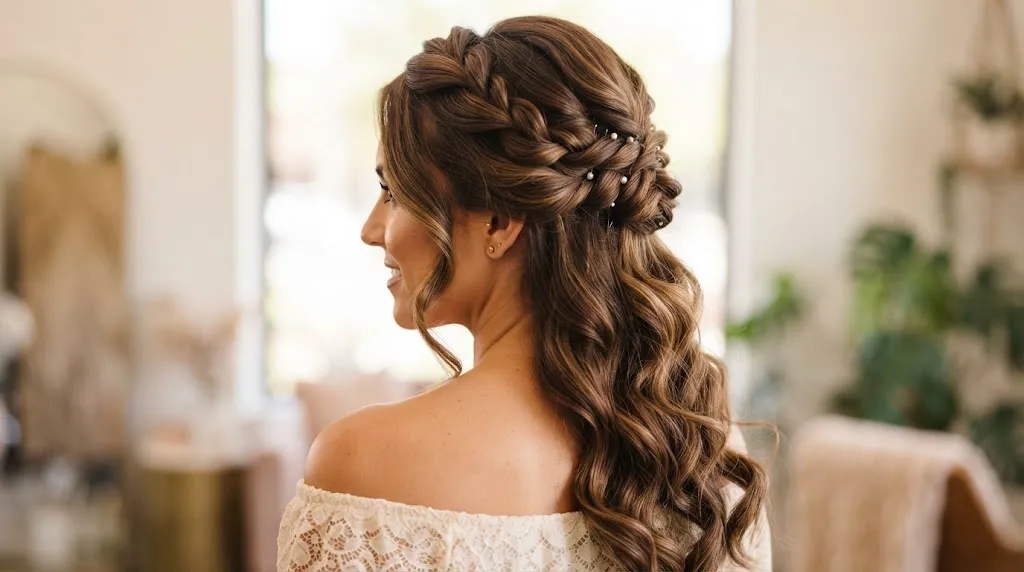
A side-twist half updo is one of the easiest simple Indian hairstyles because it keeps the front hair away from your face while leaving the rest of your hair open. It works with kurtas, casual ethnic outfits, college looks, and everyday Western clothing.
Best for: Everyday wear, college, kurta, casual traditional outfits
Hair length: Short, medium, or long hair
Hair type: Straight, wavy, or curly
Time: 3–5 minutes
Difficulty: Beginner
Heat: Not required
Tools: Comb and 2–4 bobby pins
How to Do a Side-Twist Half Updo
- Brush your hair and make a centre or side part.
- Take a small section of hair from one side near the front.
- Twist the section backward toward the crown.
- Gently loosen the outer edge of the twist if you want a little more volume.
- Secure it at the back with a hidden bobby pin.
- Repeat on the opposite side and leave the remaining hair open.
Stylist tip: If your hair is fine, avoid pulling the twists too tightly because a slightly loosened twist creates a fuller appearance. For short or layered hair, use smaller sections so shorter pieces are easier to secure.
Simple Low Ponytail
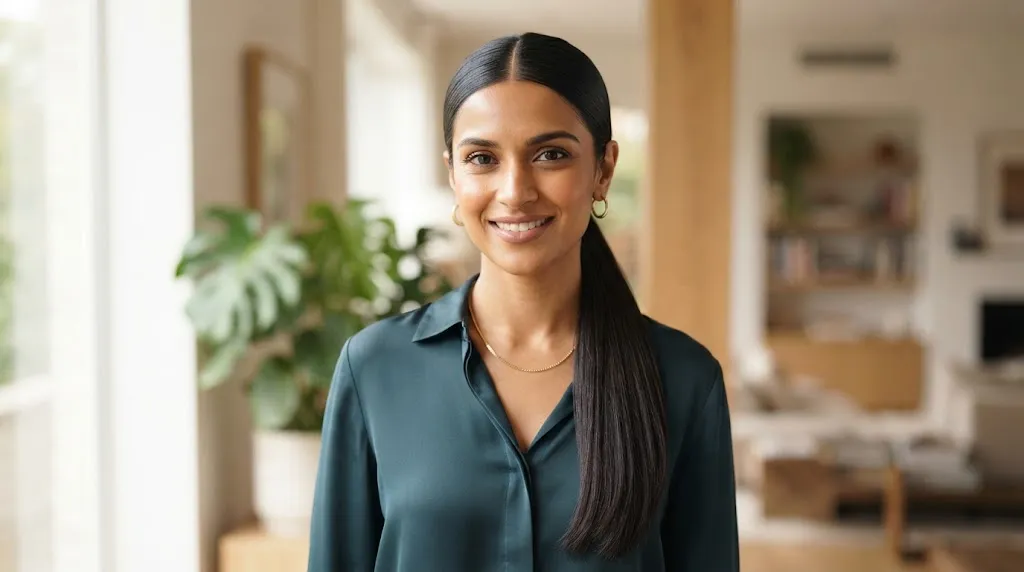
A low ponytail is one of the fastest everyday hairstyles for Indian women and can be finished in about two minutes. It works especially well with kurtas, casual clothing, and simple day-to-day outfits, and it can be adapted for straight, wavy, or curly hair.
Best for: Busy mornings, casual wear, college, everyday kurtas
Hair length: Hair long enough to reach the nape
Hair type: Straight, wavy, or curly
Time: About 2 minutes
Difficulty: Beginner
Heat: Not required
Tools: Comb and hair elastic
How to Do It
- Brush or finger-comb your hair toward the nape.
- Gather all the hair into a low ponytail.
- Secure it comfortably with an elastic.
- Smooth obvious flyaways with your hands or a small amount of light serum if needed.
- For a more polished finish, wrap a thin section of hair around the elastic and pin it underneath.
Polished-finish tip: Keep the ponytail at the nape rather than pulling it too high. A lower position usually gives the style a cleaner finish while remaining comfortable for everyday wear.
Half-Up Half-Down Hairstyle
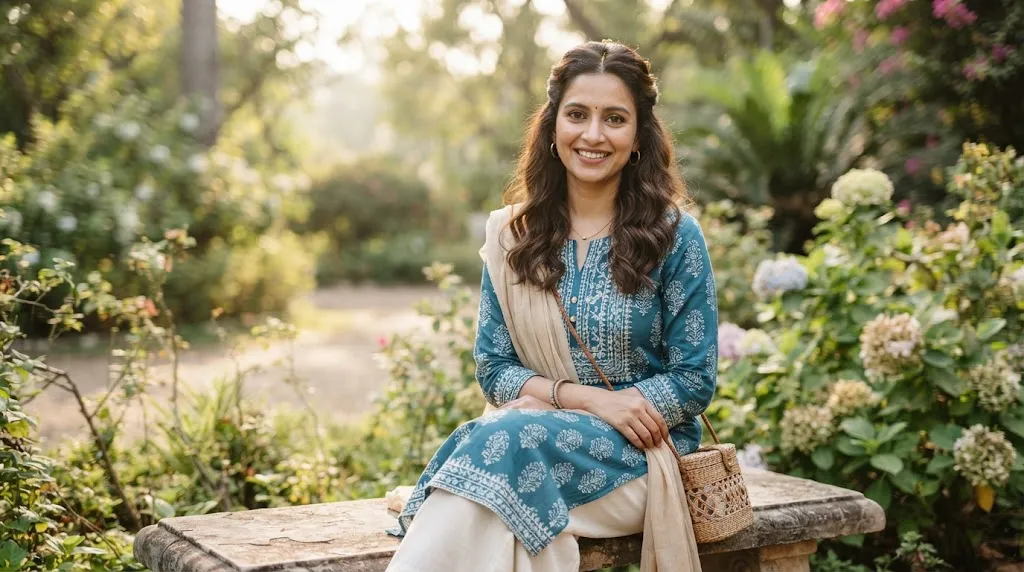
A half-up half-down hairstyle is a practical option when you want to keep hair away from your face without tying up the full length. It works particularly well with medium and long hair and pairs easily with casual kurtas, simple ethnic outfits, and everyday clothing.
Best for: Everyday wear, college, casual ethnic outfits
Hair length: Medium to long
Hair type: Straight, wavy, or curly
Time: 3–5 minutes
Difficulty: Beginner
Heat: Not required
Tools: Small elastic, clip, or bobby pins
How to Do It
- Take a section of hair from above each ear.
- Bring both sections toward the back of your head.
- Secure them with a small elastic, clip, or pins.
- Gently loosen the crown if you want more natural volume.
- Leave the remaining hair in its natural texture.
Stylist tip: Do not take too much hair into the upper section. Keeping some volume through the lower lengths prevents the hairstyle from looking flat.
Easy Side Braid
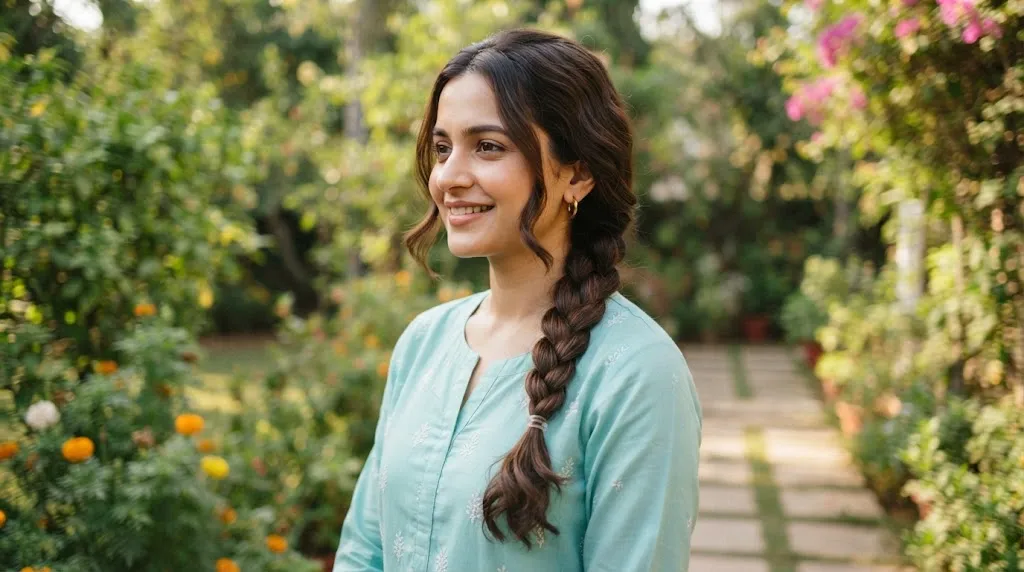
An easy side braid keeps medium or long hair controlled while still looking relaxed enough for everyday Indian outfits. It is useful for quick mornings, commuting, kurtas, and salwar suits, especially when you want a completely heatless hairstyle.
Best for: Quick mornings, commuting, kurta, salwar suit
Hair length: Medium to long
Hair type: Straight, wavy, or curly
Time: 3–5 minutes
Difficulty: Beginner
Heat: Not required
Tools: Hair elastic
How to Do It
- Bring all your hair over one shoulder.
- Divide it into three equal sections.
- Make a regular three-strand braid.
- Secure the end with an elastic.
- Leave it neat for a cleaner look or gently loosen each section for a softer finish.
Stylist tip: If you have layers, start the braid slightly lower instead of directly at the nape. This can help prevent shorter pieces from slipping out too quickly.
Simple Claw-Clip Twist
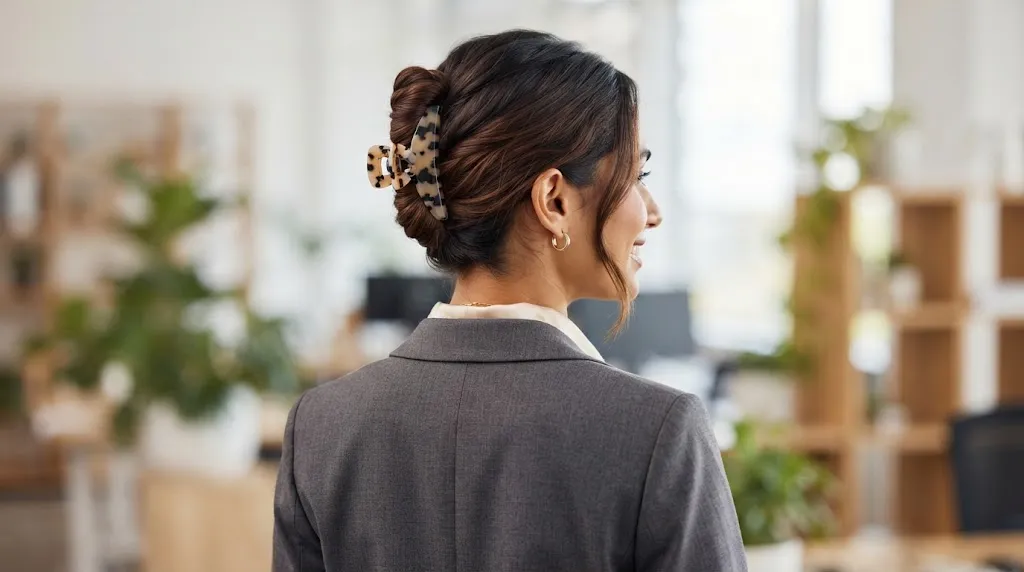
A claw-clip twist is ideal when you need to put medium or long hair up in under two minutes. It works well at home, while running errands, or in workplaces with a relaxed dress code.
Best for: Home, errands, casual work environments
Hair length: Medium to long
Hair type: Straight, wavy, or curly
Time: Under 2 minutes
Difficulty: Beginner
Heat: Not required
Tools: Medium or large claw clip
How to Do It
- Gather your hair at the back as if making a low ponytail.
- Twist the length upward against the back of your head.
- Fold or tuck the ends depending on your hair length.
- Secure the twist vertically with a claw clip.
Stylist tip: Choose a clip large and strong enough for your hair density. A small decorative clip may not securely hold thick or very long hair.
A claw-clip twist is convenient, but it is usually better suited to casual settings than highly formal offices.
Video — Quick Everyday Hairstyles
Prefer watching the techniques before trying them yourself? This video provides a visual demonstration of quick everyday hairstyle ideas that complement the simple styles above.
Simple Front Hairstyles for Indian Girls
Simple front hairstyles can change the overall look without restyling all of your hair. A soft front puff, side-swept section, two-side twist, or rope-braid headband can be paired with open hair, ponytails, braids, and half-up styles depending on your hair length and outfit.
Soft Front Puff
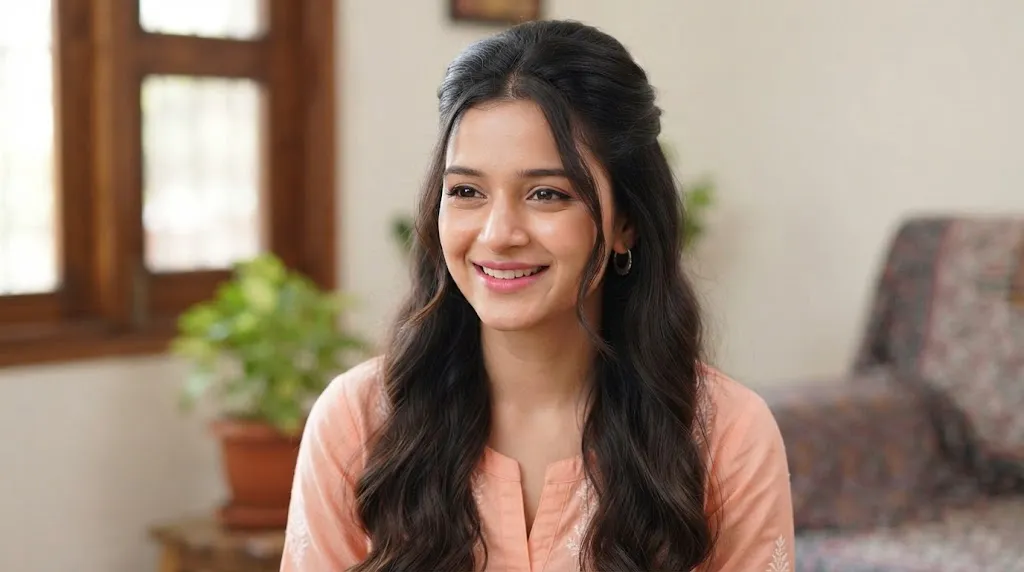
A soft front puff adds gentle height at the front while the rest of the hair can stay open or be tied into a ponytail, braid, or half-up hairstyle. Keep the volume subtle for everyday wear and slightly fuller for festive outfits.
Best for: Everyday wear, college, ponytails, braids, casual festive looks
Hair length: Short-medium-long, provided the front section is long enough to pin back
Hair type: Straight or wavy; curly hair can use its natural volume
Time: 2–3 minutes
Difficulty: Beginner
Heat: Not required
Tools: Comb and 1–2 bobby pins
How to Create a Soft Front Puff
- Separate a small section from the front of your hair.
- Lift it slightly upward and backward.
- Gently push the section forward to create soft height.
- Secure it near the crown with crossed bobby pins.
- Leave the remaining hair open or finish with a ponytail, braid, or half-up style.
Stylist tip: Avoid making the puff excessively high for everyday or office wear. A small amount of height usually looks more balanced and is easier to keep secure.
Side-Swept Front Hair
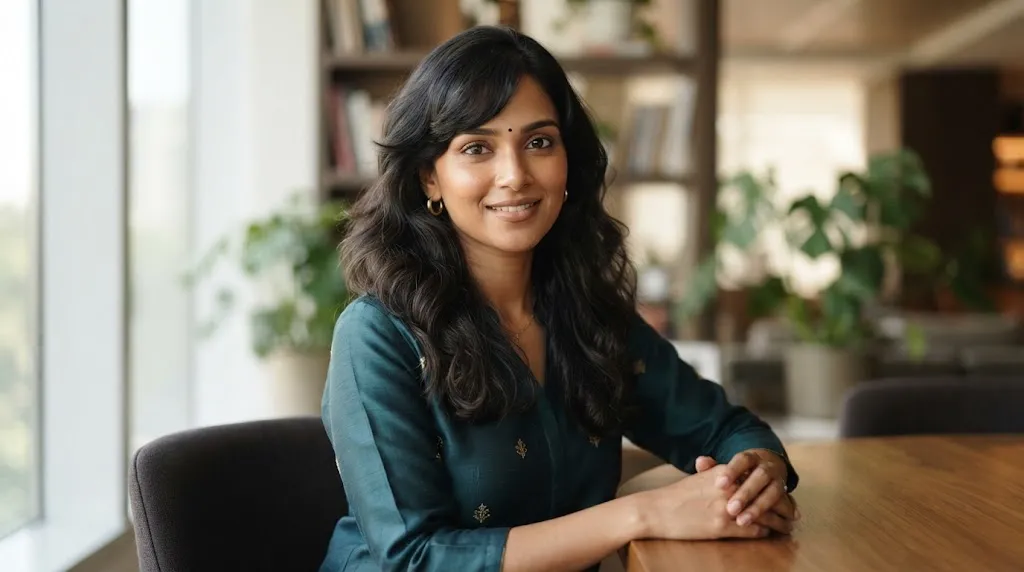
Side-swept front hair is one of the easiest ways to soften the front of a bob, lob, ponytail, bun, or open hairstyle. It works especially well when you want face-framing movement without adding braids, twists, or heavy accessories.
Best for: Everyday wear, short hair, open hairstyles, ponytails, buns
Hair length: Short to long
Hair type: Straight, wavy, or curly
Time: 1–3 minutes
Difficulty: Beginner
Heat: Optional
Tools: Comb; optional bobby pin
How to Style It
- Make a deeper side part.
- Sweep the larger front section diagonally across the forehead.
- Let it blend naturally into open hair or a ponytail.
- For a bun, tuck or pin the section softly near the side.
- Use a bobby pin only if the section repeatedly falls forward.
Stylist tip: With a bob or lob, avoid forcing very short front pieces behind the ear if they naturally fall forward. A softer side sweep usually looks cleaner than multiple visible pins.
Two-Side Front Twist
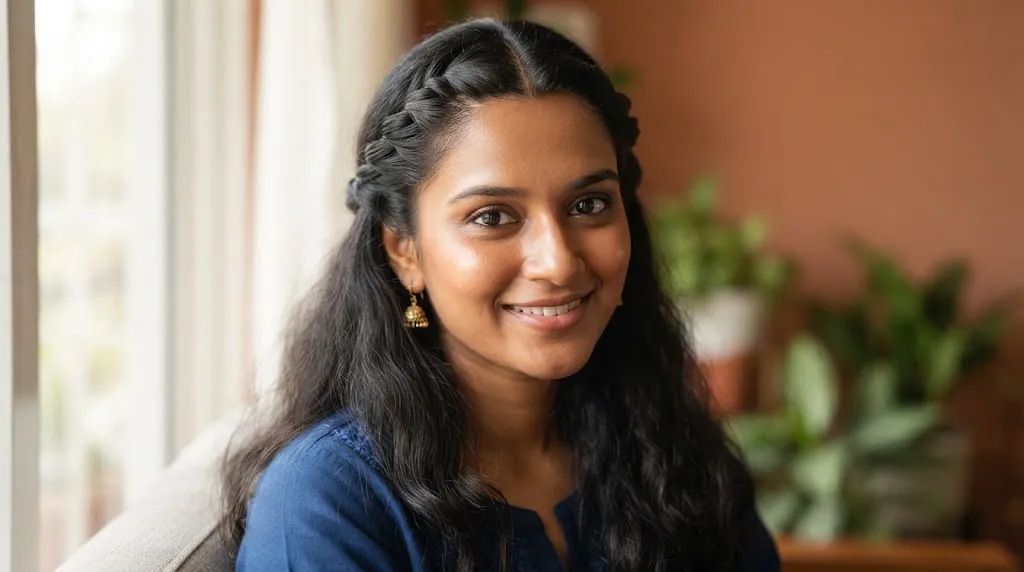
A two-side front twist keeps both sides of the face clear while adding detail at the front. It is the front-styling variation of the Side-Twist Half Updo explained earlier, so the full technique does not need to be repeated here.
Best for: Everyday wear, kurta, college, open hair
Hair length: Short to long
Hair type: Straight, wavy, or curly
Time: 3–5 minutes
Difficulty: Beginner
Heat: Not required
Tools: 2–4 bobby pins
Take a small front section from each side, twist both sections toward the crown, and secure them discreetly at the back. For fuller-looking twists, loosen the outer edges slightly after pinning.
Stylist tip: Take smaller sections if you have short layers. Large twists are more likely to loosen when several shorter pieces cannot reach the pinning point.
Rope-Braid Headband
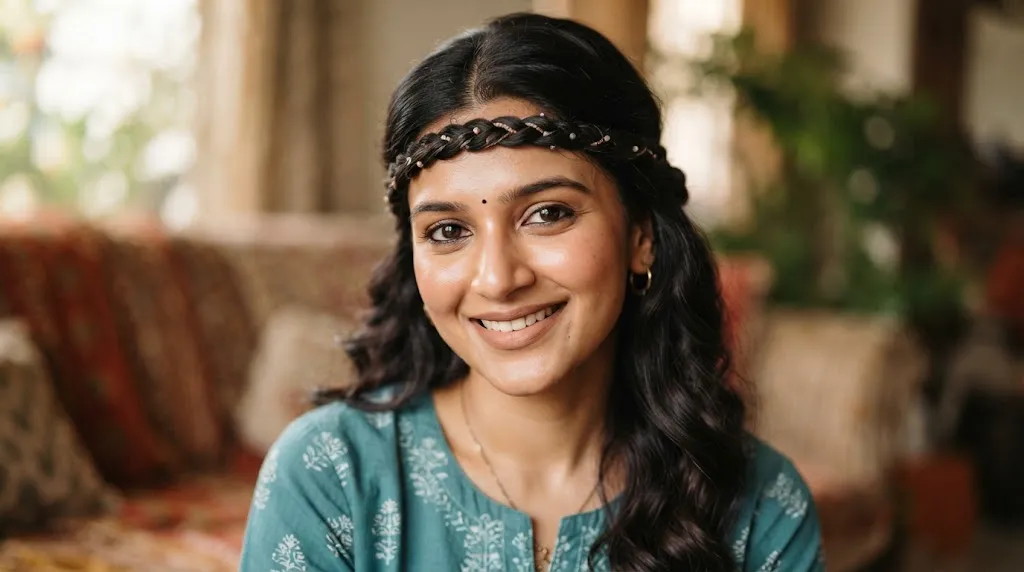
A rope-braid headband creates a braided effect across the front while keeping the remaining hair open. It works particularly well with medium and long hair and adds enough detail for a kurta or casual ethnic outfit without requiring heat styling.
Best for: Kurta, casual ethnic outfits, college, everyday styling
Hair length: Medium to long
Hair type: Straight, wavy, or curly
Time: 5 minutes
Difficulty: Easy
Heat: Not required
Tools: Small elastic and bobby pins
How to Do It
- Take a narrow section of hair from one side near the temple.
- Divide it into two smaller sections.
- Twist both sections individually in the same direction.
- Wrap them around each other in the opposite direction to form a rope braid.
- Bring the braid across or around the front like a headband.
- Pin the end underneath the surrounding hair.
Stylist tip: Keep the rope braid narrow for everyday styling. A thick braid can become the dominant feature of the hairstyle and look more festive than casual.
Simple Indian Hairstyles for Office and Working Women
The best Indian hairstyles for office and working women are quick to prepare, comfortable for several hours, and secure enough to stay neat through meetings and commuting. For formal workplaces, a sleek low bun or neat low ponytail gives the cleanest finish, while braids and twisted updos work well when stronger all-day hold is needed.
Sleek Low Bun

A sleek low bun is one of the most practical formal hairstyles for office wear because it keeps the hair controlled at the nape without adding unnecessary height or accessories. It pairs easily with a kurta, formal saree, blazer, shirt, or other Western workwear.
Best for: Office, formal meetings, saree, kurta, Western workwear
Hair length: Medium to long
Hair type: Straight, wavy, or curly with natural texture smoothed as much as desired
Time: About 5 minutes
Difficulty: Easy
Heat: Not required
Hold: Strong
Tools: Comb, hair elastic, 3–6 bobby pins or U-pins
How to Do a Sleek Low Bun
- Make a centre or side part and gather your hair at the nape.
- Secure it with an elastic to create a stable low ponytail.
- Twist the ponytail around its base.
- Tuck the ends underneath the bun.
- Secure the shape with pins.
- Smooth obvious flyaways without making the hairstyle uncomfortably tight.
For fine hair: Keep a little natural volume at the crown rather than flattening every strand. A light texture product can also improve grip.
For thick hair: Secure the ponytail base firmly before forming the bun and use U-pins where additional support is needed.
For layered hair: Short front or side layers may need separate hidden pins. If too much hair cannot reach the bun, a half-up or twisted style may be more practical.
Stylist tip: A secure base matters more than using a large number of pins. If the elastic is unstable, adding more pins usually does not solve the underlying problem.
Neat Low Ponytail

A neat low ponytail is the more polished office version of the everyday ponytail covered earlier. The basic technique is the same, but the finish should be cleaner and more controlled for professional settings.
Best for: Office, meetings, formal kurta, Western workwear
Hair length: Medium to long
Hair type: Straight, wavy, or curly
Time: 2–3 minutes
Difficulty: Beginner
Heat: Not required
Tools: Comb, elastic, optional bobby pin
For an office-ready finish:
- Keep the ponytail positioned low at the nape.
- Smooth the surface without pulling the roots painfully tight.
- Wrap a thin section of hair around the elastic to conceal it.
- Pin the wrapped section underneath.
- Control obvious flyaways around the parting and hairline.
Stylist tip: The goal is controlled rather than completely flat hair. Over-smoothing can remove natural volume and make the style feel tighter over a long workday.
Braided Low Ponytail
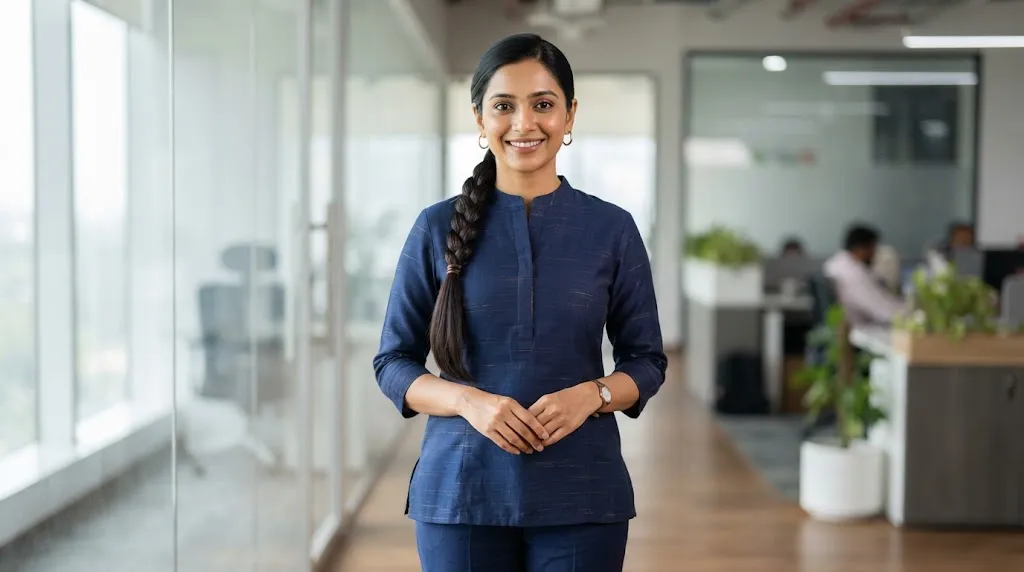
A braided low ponytail adds extra control to a regular ponytail, making it useful for long office days, commuting, and humid weather. Because the lengths are braided, they are less likely to become tangled or lose shape during the day.
Best for: Long workdays, commuting, humid weather, active offices
Hair length: Medium to long
Hair type: Straight, wavy, or curly
Time: 4–6 minutes
Difficulty: Beginner
Heat: Not required
Hold: Strong
Tools: Two hair elastics
How to Do It
- Create a neat low ponytail at the nape.
- Divide the ponytail into three sections.
- Make a regular braid through the length.
- Secure the end with a second elastic.
- Keep the braid firm for a polished office finish rather than pulling it very loose.
Stylist tip: This is a better option than open hair or loose waves when you know you will be commuting in humid or windy conditions.
Classic French Braid
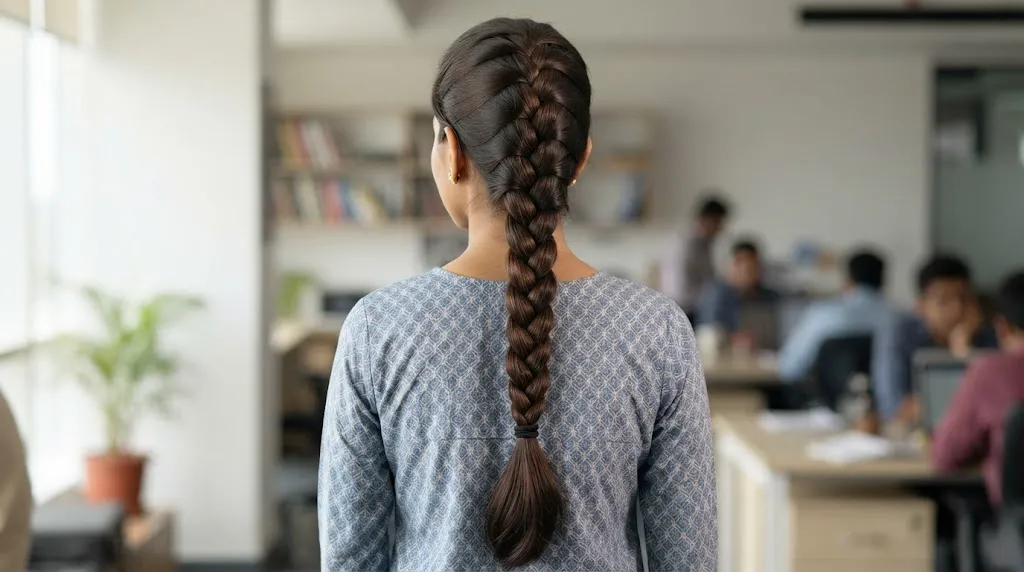
A classic French braid keeps the hair secured from the crown through the ends, making it useful for active workdays when a ponytail or loose hairstyle would need repeated adjustment.
Best for: Active workdays, commuting, long shifts, casual-to-smart office wear
Hair length: Medium to long
Hair type: Straight, wavy, or curly
Time: 5–10 minutes
Difficulty: Easy once familiar with the technique
Heat: Not required
Hold: Strong
Tools: Hair elastic
How to Do It
- Take a section of hair from the top centre of the head.
- Divide it into three sections.
- Begin a standard three-strand braid.
- Add a small amount of loose hair to each outer section before crossing it toward the centre.
- Continue adding hair until you reach the nape.
- Finish the remaining length as a standard braid and secure it.
Stylist tip: Keep the sections even rather than pulling them excessively tight. An evenly tensioned braid is usually more comfortable to wear for several hours.
Quick Twisted Work Updo
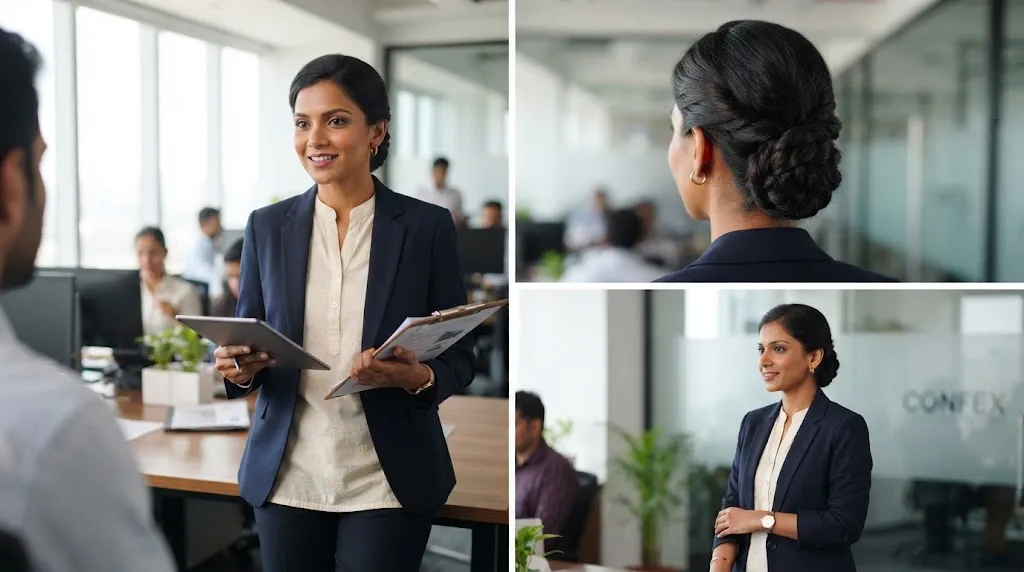
A quick twisted work updo is a useful alternative when you want the hair fully secured but do not want to create a traditional round bun. It works particularly well with medium and long hair and can create a neat formal finish in only a few minutes.
Best for: Formal workplace, meetings, medium and long hair
Hair length: Medium to long
Hair type: Straight or wavy; curly hair can retain some natural texture
Time: About 5 minutes
Difficulty: Easy
Heat: Not required
Hold: Medium to strong
Tools: Elastic and bobby pins
How to Do It
- Gather the hair into a low ponytail.
- Loosen the elastic slightly and create a small opening above it.
- Flip or twist the ponytail inward through the opening.
- Fold the remaining length upward toward the twist.
- Tuck the ends inside and secure them with hidden pins.
Stylist tip: If your hair is very thick, work with two smaller twisted sections rather than trying to tuck the full length into one narrow space.
Video — Quick Work Updo
If you prefer to watch the movement and pin placement before trying an office updo, use this video as a visual demonstration alongside the written instructions above.
Simple Indian Hairstyles for Short Hair
Short hair can work just as well with Indian outfits as longer hair. The key is choosing styles that suit the actual length of your bob, lob, or layers rather than trying to force the hair into a bun or braid it cannot securely hold.
Side-Twist Half-Up for Short Hair
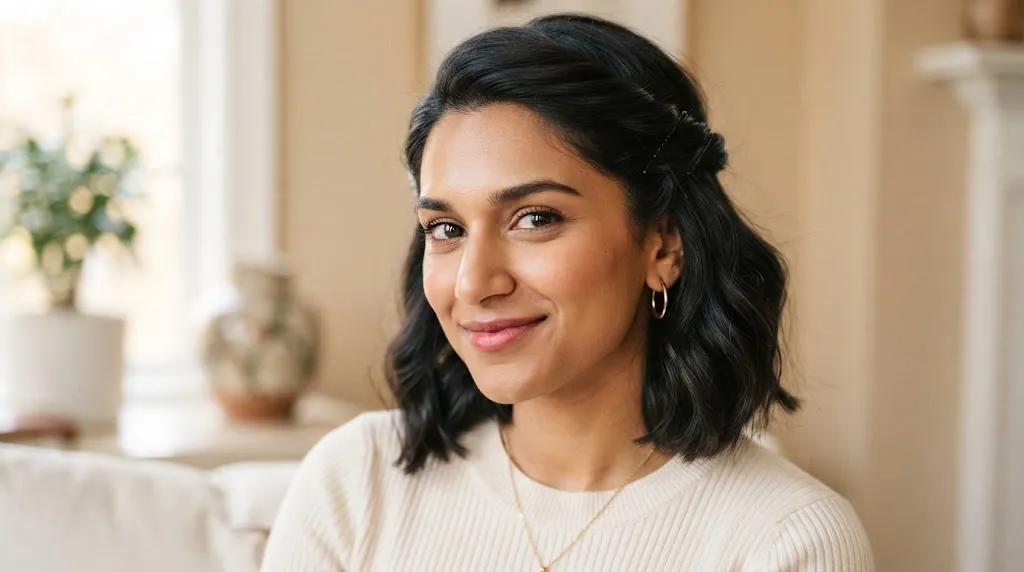
The side-twist half-up is especially useful for a bob or lob because only the front sections need to reach the back of the head. The full technique was covered earlier; for short hair, the main difference is taking smaller sections and pinning them closer to the sides instead of forcing them toward the centre of the crown.
Best for: Everyday wear, kurta, casual saree, college
Suitable length: Jaw-length bob to shoulder-length hair
Hair type: Straight, wavy, or curly
Time: 3–5 minutes
Difficulty: Beginner
Heat: Not required
Tools: 2–4 bobby pins
For a jaw-length bob, twist only the longer front pieces and pin them just behind the ear. With a chin-length bob or lob, the twists can reach farther toward the back. Shoulder-length layers usually allow the standard half-up version.
Stylist tip: Cross two bobby pins underneath the twist if short layers keep slipping out. Do not keep adding larger sections of hair—the shorter the cut, the smaller the twist should be.
Pinned-Back Short Hair
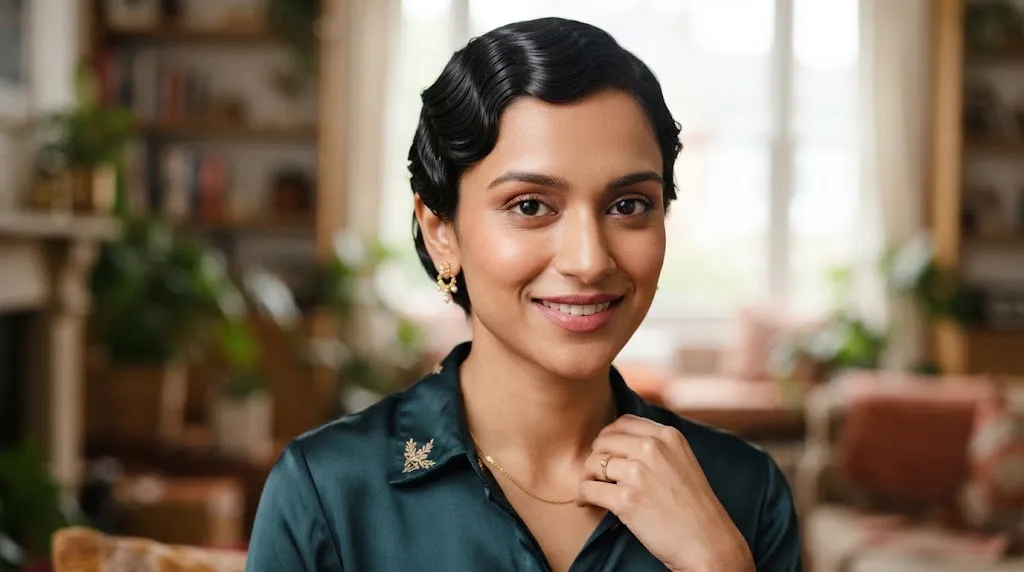
Pinned-back short hair is one of the easiest options for a bob or lob because it requires no braiding or complicated updo technique. Pinning one or both front sections away from the face creates a clean look that can work with office clothes, kurtas, and sarees.
Best for: Office, kurta, saree, everyday wear
Suitable length: Ear-length crop with longer front pieces, jaw-length bob, chin-length bob, or lob
Hair type: Straight, wavy, or curly
Time: 1–3 minutes
Difficulty: Beginner
Heat: Not required
Tools: 1–4 bobby pins or small decorative pins
How to Style It
- Make a centre or side part.
- Take a small section above one ear.
- Smooth or gently twist it backward.
- Pin it securely just above or behind the ear.
- Repeat on the other side if you want both sides pulled back.
For office wear, use hidden or simple pins. With a saree or kurta, a small pearl or decorative pin can add detail without overwhelming short hair.
Stylist tip: If your hair is only ear length, work with the longer front section rather than trying to pin the entire side back.
Side-Parted Soft Waves
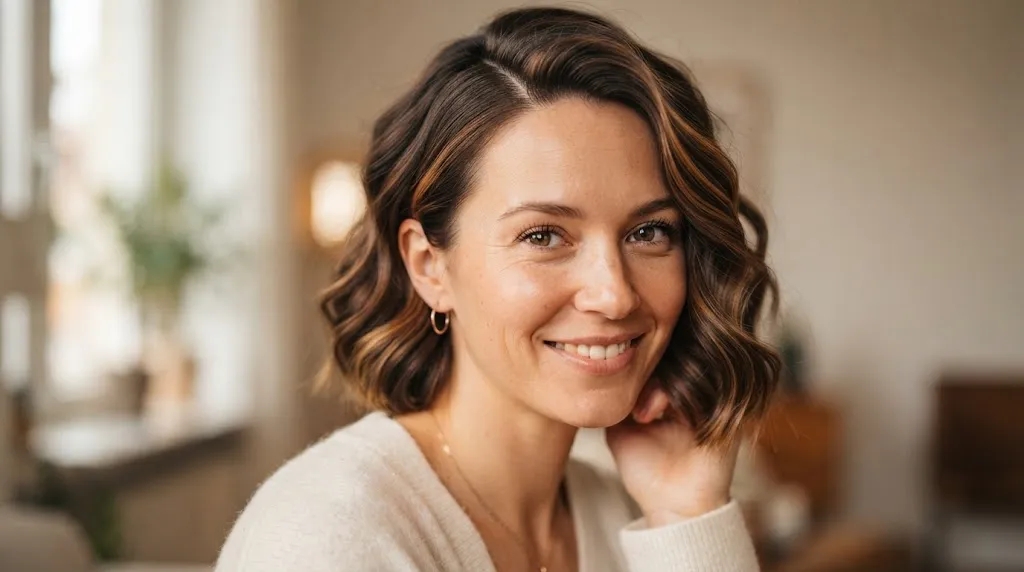
Side-parted soft waves add movement to short hair without requiring extra length. They work particularly well with a saree, party outfit, or wedding guest look and can be kept softer and more controlled for office wear.
[Place a real image of Side-Parted Soft Waves on short hair here]
Best for: Saree, party, wedding guest, dressier office look
Suitable length: Ear-length hair with enough top length, jaw-length bob, chin-length bob, or lob
Hair type: Straight or naturally wavy hair; curls can be shaped rather than re-curled
Time: 5–10 minutes
Difficulty: Easy
Heat: Optional
Tools: Comb; optional curling or waving tool
For naturally wavy hair, make a deep side part and shape the existing texture with your fingers. For straighter hair, create a few loose bends rather than tightly curling every section.
Stylist tip: Short hair can become overly rounded if every section is curled in the same direction. Keep the waves loose and vary them slightly for a softer finish.
Sleek Side-Parted Bob

A sleek side-parted bob is a simple option when the haircut itself already has a clean shape. It works especially well for formal offices and with modern sarees because it looks polished without needing a bun, braid, or heavy accessories.
Best for: Formal office, modern saree, evening event
Suitable length: Jaw-length, chin-length, or shoulder-skimming bob/lob
Hair type: Straight or softly wavy
Time: 2–5 minutes
Difficulty: Beginner
Heat: Optional
Tools: Comb and optional light smoothing product
Make a defined side part, smooth the hair into its natural shape, and tuck the shorter side behind the ear if it stays comfortably in place. With a saree, statement earrings can provide enough detail without adding several hair accessories.
Stylist tip: Do not flatten all the volume at the crown. A sleek finish should look controlled, not pressed tightly against the scalp.
Mini Front Braid
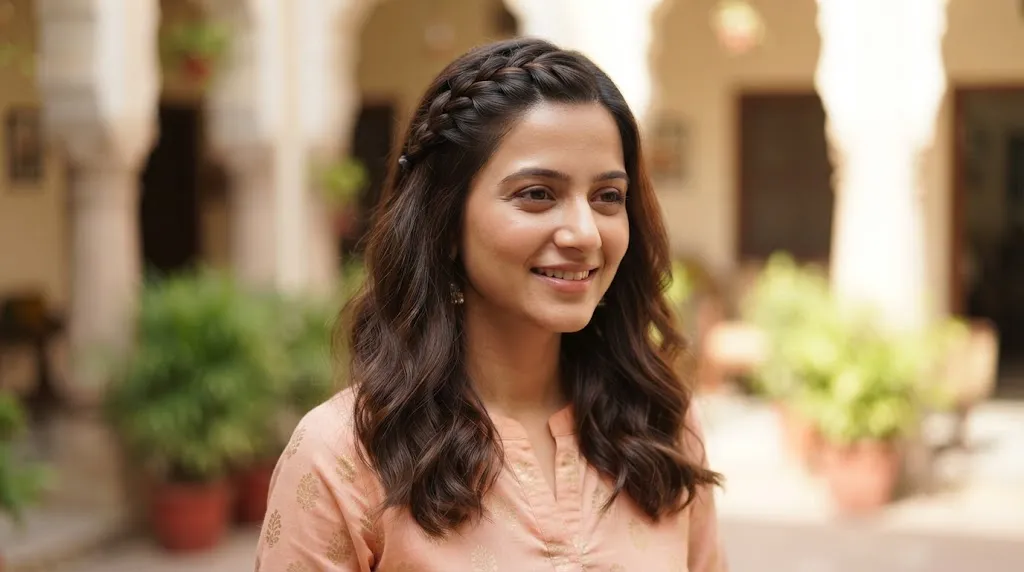
A mini front braid adds a festive detail to short or medium hair while leaving most of the length open. It pairs easily with a kurta or lehenga and is useful when the hair is too short for a full braid.
Best for: Kurta, lehenga, festive occasions
Suitable length: Chin-length bob to shoulder-length hair
Hair type: Straight, wavy, or curly
Time: 3–5 minutes
Difficulty: Easy
Heat: Not required
Tools: Small elastic or bobby pin
How to Do It
- Make a side or centre part.
- Take a narrow section from the front hairline.
- Create a small three-strand braid.
- Direct the braid toward the side of the head.
- Secure it discreetly underneath the surrounding hair.
Stylist tip: Keep the braid narrow on shorter hair. Taking too much hair can make the remaining open section look uneven.
Simple Indian Hairstyles for Medium and Long Hair
Medium and long hair gives you more room for braids and open styles without making the hairstyle complicated. For everyday or traditional wear, the most practical choices are a classic braid, fishtail braid, rope braid, or soft open waves.
Classic Indian Braid
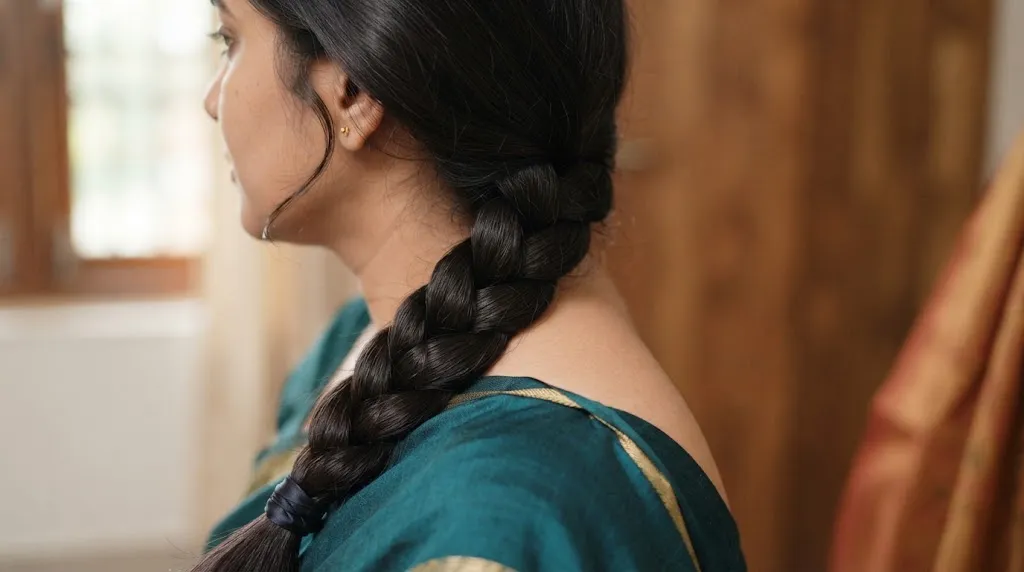
A classic three-strand braid is one of the most practical heatless hairstyles for medium and long Indian hair. It keeps the length controlled for everyday wear or office use and pairs naturally with a saree, kurta, or salwar suit.
Best for: Everyday wear, office, saree, salwar suit, traditional outfits
Hair length: Medium to long
Hair type: Straight, wavy, or curly
Time: 3–5 minutes
Difficulty: Beginner
Heat: Not required
Tools: Hair elastic
How to Do It
- Gather the hair at the back or over one shoulder.
- Divide it into three equal sections.
- Cross the right section over the middle.
- Cross the left section over the new middle section.
- Continue alternating until you reach the ends.
- Secure with an elastic.
For a neat office style, keep the braid evenly tensioned. For casual or traditional wear, gently loosen the outer edges if you prefer a softer finish.
Stylist tip: If your hair is layered, secure a low ponytail first and braid the length when you need maximum control.
Fishtail Braid
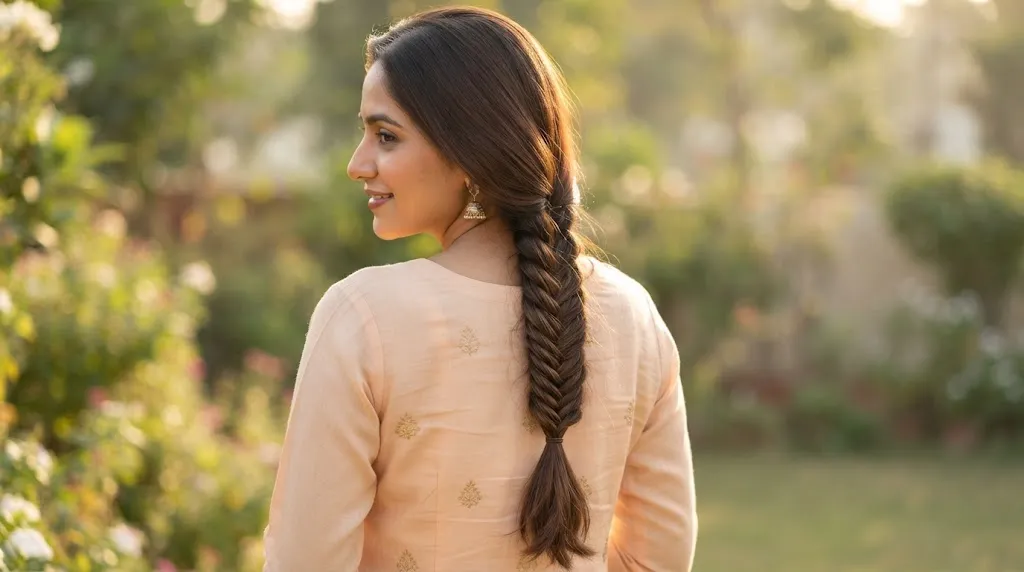
A fishtail braid gives long hair more texture than a regular three-strand braid without requiring heat. It takes slightly longer to create, making it better when you have a few extra minutes for a casual or festive look.
Best for: Long hair, casual outings, saree, festive outfits
Hair length: Medium-long to long
Hair type: Straight or wavy; curly hair can also be braided with a more textured finish
Time: 5–10 minutes
Difficulty: Easy to moderate
Heat: Not required
Tools: Hair elastic
How to Do It
- Divide the hair into two large sections.
- Take a thin strand from the outside of the left section.
- Cross it over and add it to the right section.
- Take a thin strand from the outside of the right section and cross it to the left.
- Repeat through the length.
- Secure the end with an elastic.
For a casual version, gently loosen the braid after securing it. For a festive finish, keep the upper section controlled and add a small accessory only if it suits the outfit.
Stylist tip: Smaller sections create a more detailed fishtail but take longer. Use slightly larger sections when speed matters.
Rope Braid
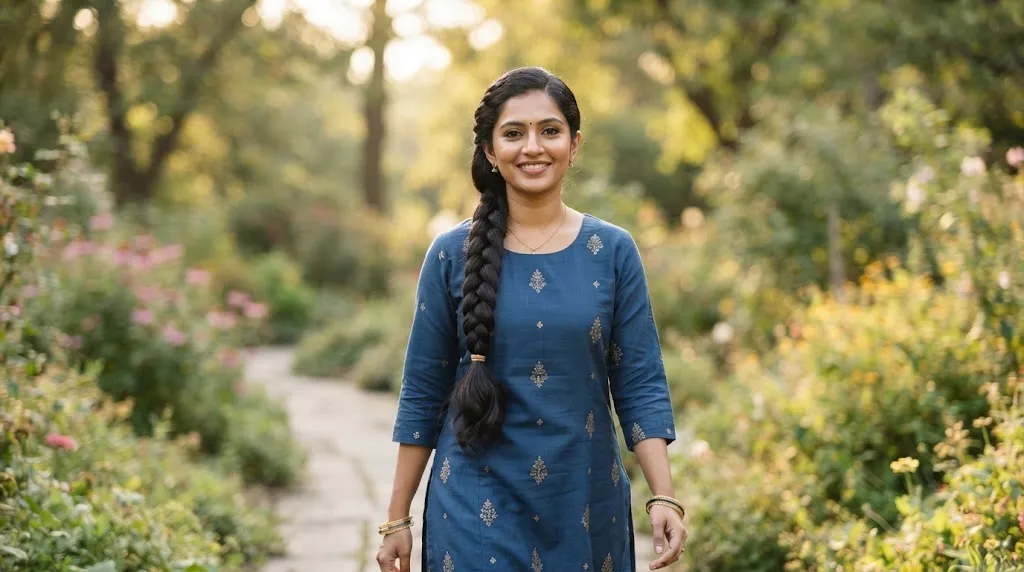
A rope braid is a quick two-section alternative to a traditional braid. It works well on medium and long hair and can be worn either as a side braid or from a low ponytail.
Best for: Everyday wear, kurta, casual traditional outfits
Hair length: Medium to long
Hair type: Straight, wavy, or curly
Time: 3–5 minutes
Difficulty: Beginner
Heat: Not required
Tools: One or two hair elastics
How to Do It
- Gather the hair into a low or side ponytail if you want a controlled base.
- Divide the length into two equal sections.
- Twist both sections individually in the same direction.
- Wrap the two sections around each other in the opposite direction.
- Secure the end with an elastic.
Side version: Bring all the hair over one shoulder before starting.
Ponytail version: Secure the low ponytail first, then rope-braid only the length.
Stylist tip: The opposite-direction wrapping is what keeps a rope braid from immediately untwisting.
Soft Open Waves
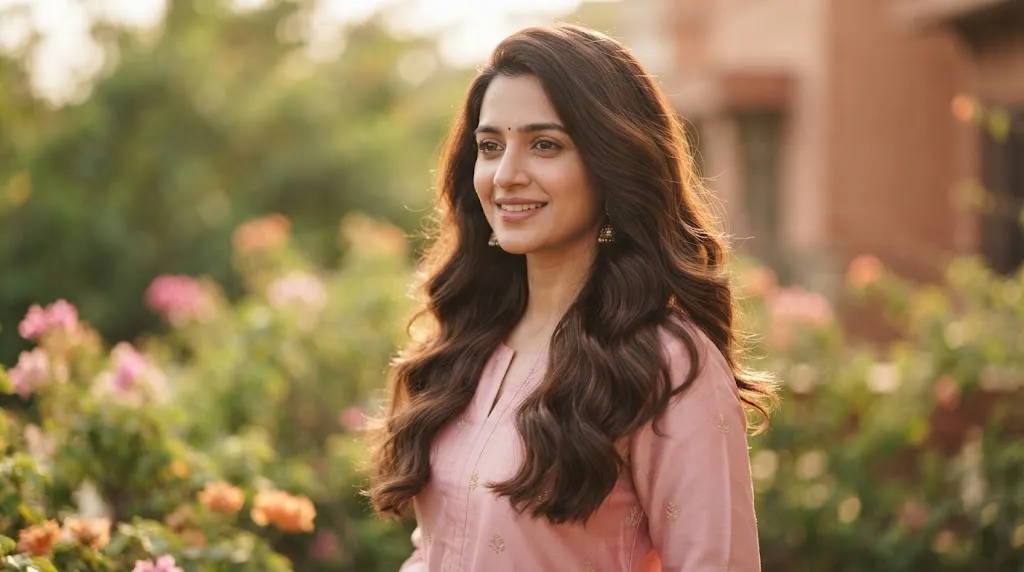
Soft open waves are a simple way to leave medium or long hair down while adding movement for a saree, party, or wedding guest look. They can be created with heat or prepared in advance using a heatless method.
Best for: Saree, wedding guest, party, festive outfits
Hair length: Medium to long
Hair type: Straight or wavy; naturally curly hair can retain its own texture
Time: About 10–15 minutes with heat; longer preparation for heatless methods
Difficulty: Easy
Heat: Optional
Tools: Optional curling/waving tool, or soft heatless curling method
Heat-Styled Option
Work through larger sections to create loose bends rather than tight curls. Use heat protectant before applying a hot tool.
Heatless Option
Twist or loosely braid slightly damp hair and allow it to dry fully before releasing it. The exact result will depend on your natural texture.
Humidity note: Open waves generally need more touch-ups than a braid or bun in humid weather. If you need the hairstyle to remain controlled for many hours, a secured style may be more practical.
Stylist tip: Avoid brushing finished waves aggressively. Separate them gently with your fingers to keep the movement without creating unnecessary frizz.
Video — Medium and Long Hair Hairstyles
For a visual demonstration of quick hairstyles on medium and long hair, watch this video alongside the styles above.
Simple Indian Hairstyles for Saree and Traditional Dress
A traditional outfit does not always need an elaborate hairstyle. For a saree, kurta, salwar suit, lehenga, or Anarkali, the best choice depends on how formal the outfit is and whether you want the hair to look simple, polished, or festive.
Classic Low Bun With Saree
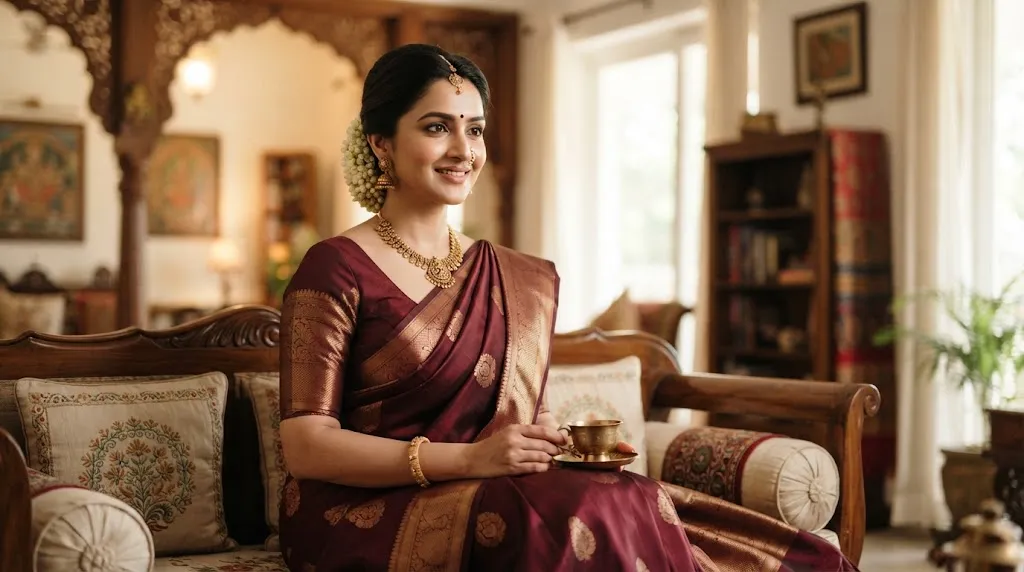
The classic low bun explained earlier also works naturally with a saree. The main difference is the finish: keep it plain for a clean everyday or formal look, or add subtle traditional detail for a festive occasion.
Best for: Saree, formal events, office saree, traditional occasions
Hair length: Medium to long
Hair type: Straight, wavy, or curly
Time: About 5 minutes once familiar with the bun technique
Heat: Not required
A centre part gives the bun a more symmetrical, traditional finish and leaves space for a maang tikka when appropriate. A side part creates a softer look and can work particularly well when you want some face-framing movement.
For a cotton saree or office saree, keep the bun simple. For a festive silk saree, flowers or a small decorative accessory can add enough detail without changing the entire hairstyle.
Stylist tip: If the saree, blouse, or jewellery is already elaborate, a cleaner bun often creates better balance than adding several hair accessories.
Gajra Bun
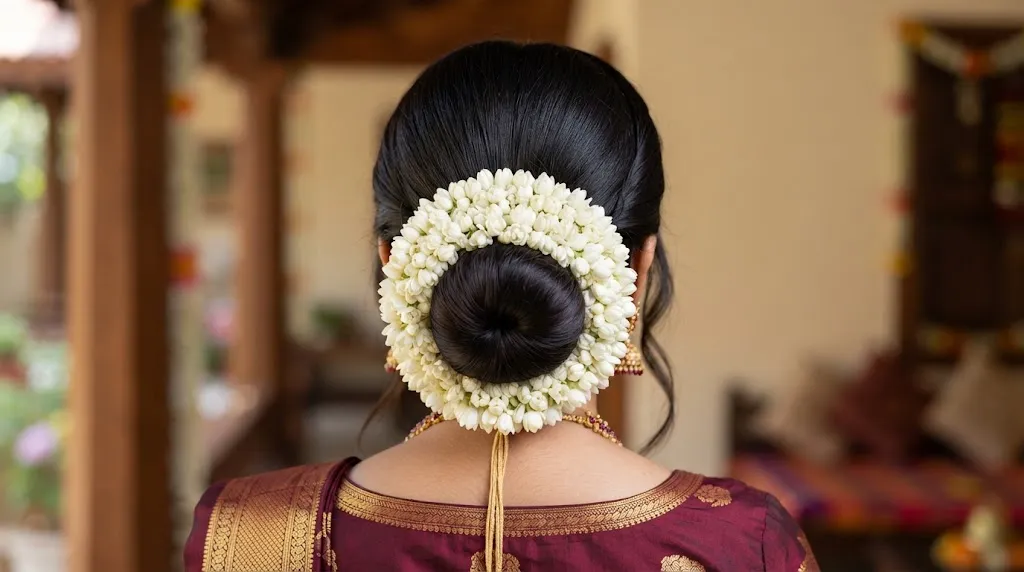
A gajra bun adds jasmine, mogra, or another suitable floral garland around a low bun, creating a traditional finish for sarees, lehengas, weddings, and festive occasions.
Best for: Saree, lehenga, wedding functions, festivals
Hair length: Medium to long
Hair type: Straight, wavy, or curly
Time: About 10 minutes
Difficulty: Easy
Heat: Not required
Tools: Elastic, bun pins/U-pins, gajra or fresh flowers
How to Secure the Flowers
- Create and secure the low bun first.
- Check that the bun feels stable before adding flowers.
- Position the gajra around the outer edge rather than placing all its weight on one point.
- Anchor it with a few U-pins at separate points around the bun.
- Check that the flowers do not interfere with any dupatta or pallu placement.
How to avoid a heavy bun: Use only enough floral decoration to frame the bun. A large, tightly packed gajra can pull on fine hair or make an already large bun uncomfortable.
Stylist tip: Secure the hairstyle first and treat the flowers as decoration. Do not rely on the gajra itself to hold the bun together.
Classic Braid With Traditional Dress
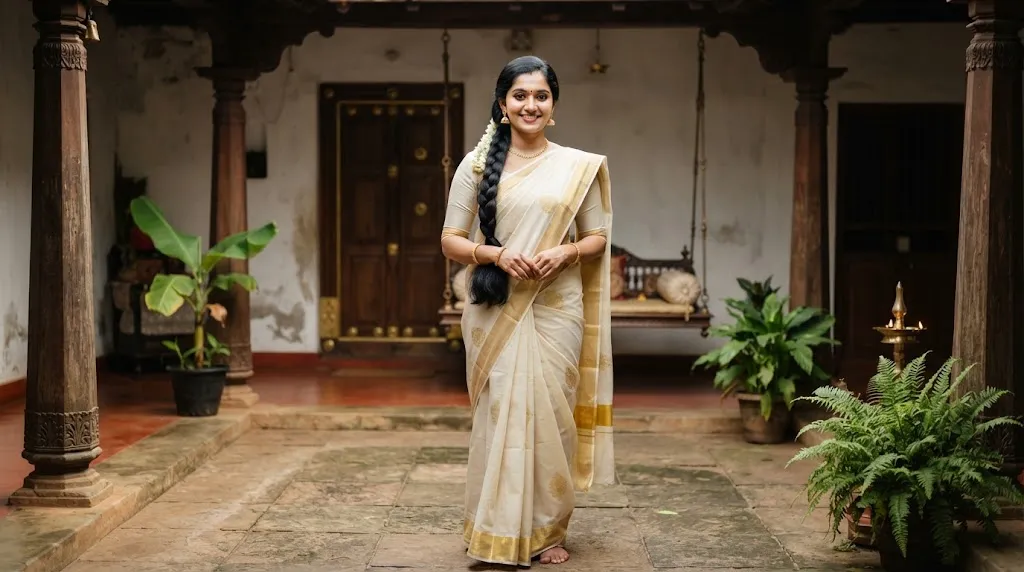
The classic braid covered earlier is one of the most versatile styles for traditional clothing. Rather than changing the braid technique, adjust the finish according to the outfit.
With a saree: Keep the braid sleek for a cleaner traditional look or soften it slightly for a relaxed finish.
With a salwar suit: A simple back or side braid keeps the style practical for everyday wear.
With a kurta: Keep accessories minimal for a casual look.
With a lehenga: A slightly fuller braid or a small amount of floral or decorative detail can make the same basic style feel more festive.
Stylist tip: Let the outfit determine how much decoration the braid needs. The hairstyle does not need jewellery or flowers simply because the clothing is traditional.
Half-Up Hairstyle With Kurta or Anarkali
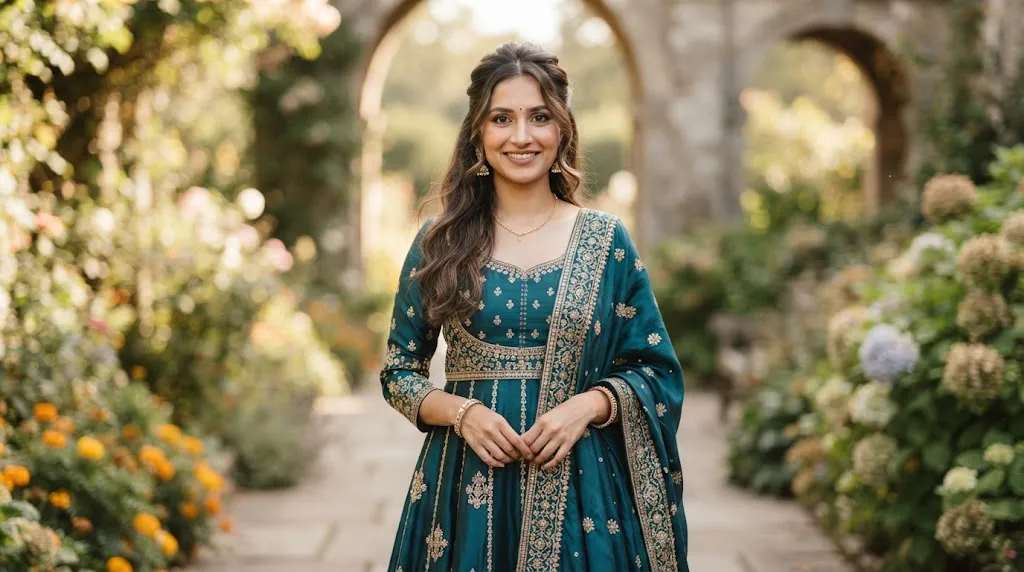
A half-up hairstyle keeps the face open while preserving movement through the lengths, making it an easy match for kurtas and Anarkalis. Use the basic half-up technique covered earlier and change only the finish.
Best for: Kurta, Anarkali, family gathering, casual festive event
Hair length: Medium to long
Hair type: Straight, wavy, or curly
Time: 3–5 minutes
Heat: Not required unless you choose to add waves
Leave a small amount of natural face-framing hair if it suits your cut rather than pulling every strand tightly backward. For a simple kurta, use a plain clip or hidden pins. For an Anarkali or festive outfit, one small decorative pin is usually enough.
Stylist tip: Avoid placing a large accessory directly at the crown if the outfit already has a heavily detailed neckline or dupatta.
Side Braid With Salwar Suit
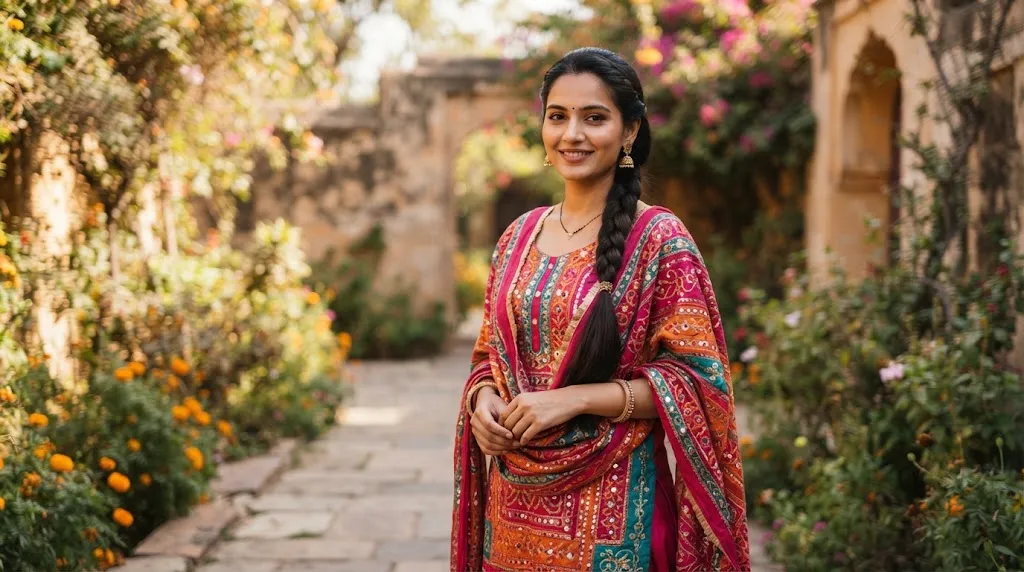
A side braid is a practical choice for everyday traditional wear because it keeps medium or long hair controlled while leaving the braid easy to reach and adjust during the day.
Best for: Salwar suit, kurta, everyday traditional wear
Hair length: Medium to long
Hair type: Straight, wavy, or curly
Time: 3–5 minutes
Difficulty: Beginner
Heat: Not required
Hold: Comfortable and secure
Tools: Hair elastic
Use the same three-strand side-braid method described earlier. For traditional everyday wear, keep the braid moderately secure rather than making it either extremely tight or deliberately messy.
Stylist tip: If you wear a dupatta over one shoulder, place the braid on the opposite side when that feels more comfortable and prevents the two from competing for the same space.
Simple Indian Hairstyles for Weddings and Festive Events
For weddings and festive events, a simple hairstyle should still feel polished enough for a saree, lehenga, jewellery, or dupatta. The most practical options are styles that add detail without becoming difficult to secure or uncomfortable to wear for several hours.
Twist-Back Chignon
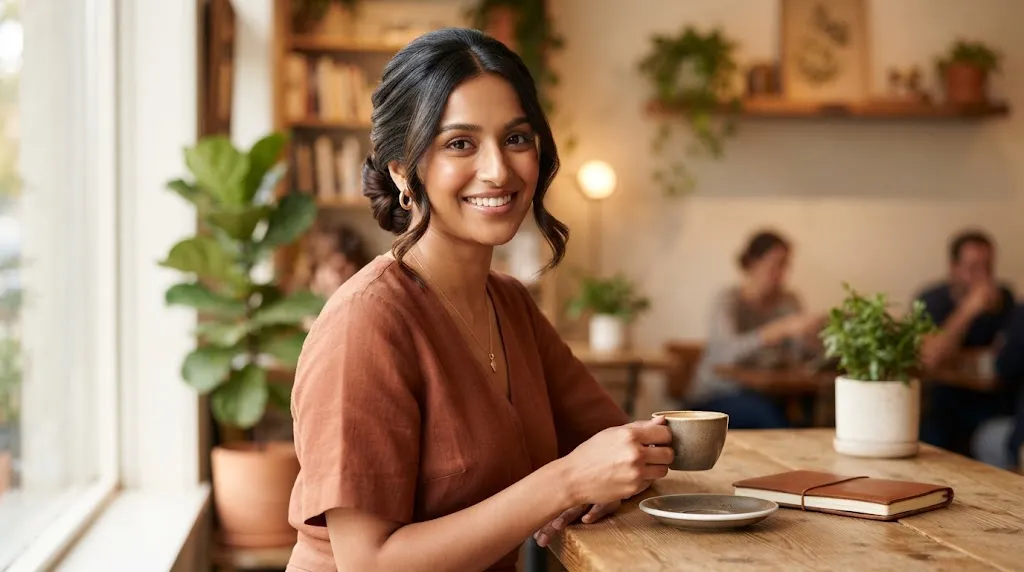
A twist-back chignon combines softly twisted front sections with a low tucked bun at the back. It is a useful wedding guest hairstyle for medium or layered hair because the front pieces can be secured separately instead of forcing every layer directly into the bun.
Best for: Wedding guest, festive saree, reception, family functions
Hair length: Medium to long
Hair type: Straight or wavy; curly hair can keep more natural texture
Time: 8–12 minutes
Difficulty: Easy to moderate
Heat: Not required
Tools: Elastic, bobby pins, or U-pins
How to Do It
- Leave a small section of hair free on each side of the front.
- Gather the remaining hair into a low ponytail.
- Fold or roll the ponytail inward to form a low chignon.
- Secure the chignon with hidden pins.
- Twist each front section backward.
- Cross the twists over the top of the chignon and pin the ends underneath.
For layered hair: Work with smaller front sections so shorter pieces stay inside the twists.
With a dupatta: Keep the chignon low enough that the hairstyle and dupatta pins do not need to occupy the same area of the crown.
Stylist tip: Secure the chignon before adding the front twists. The twists should decorate and soften the style, not carry the weight of the bun.
Half-Up Romantic Waves
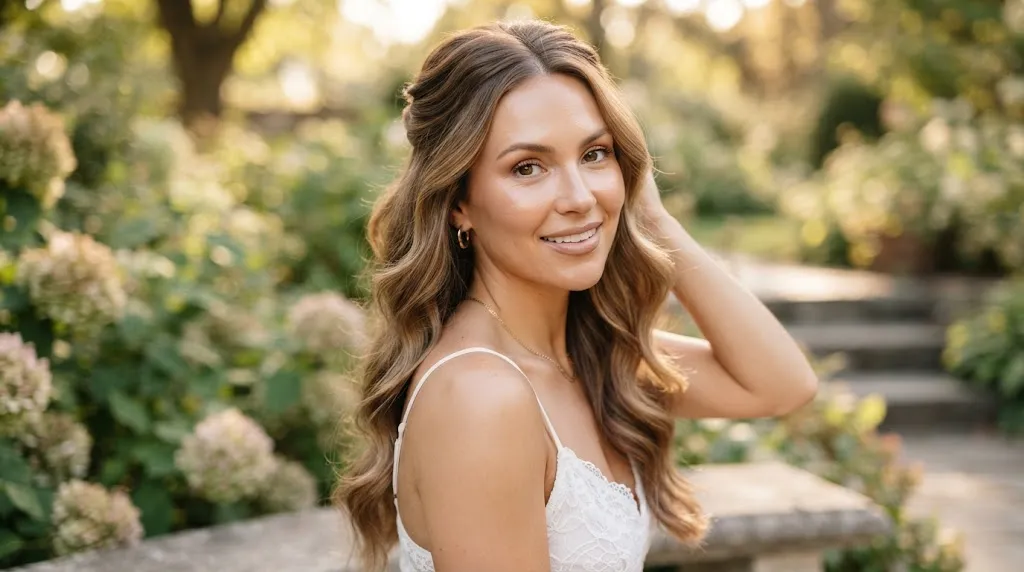
Half-up romantic waves keep the front and crown controlled while leaving movement through the lower lengths. This makes the style useful for mehendi, sangeet, receptions, wedding guest looks, and lehengas when you want open hair without having every strand around your face.
Best for: Mehendi, sangeet, reception, wedding guest, lehenga
Hair length: Medium to long
Hair type: Straight or wavy; naturally curly hair can use its existing texture
Time: 10–15 minutes
Difficulty: Easy
Heat: Optional
Tools: Pins or small elastic; optional curling/waving tool
Use the basic half-up technique covered earlier. For the festive variation, leave some natural face-framing pieces and add loose movement through the open lengths.
For straight hair, use a heat protectant before creating loose waves with a hot tool. If you prefer a heatless version, prepare the waves in advance using braids or another comfortable heatless method.
Stylist tip: If your outfit includes heavy earrings or a detailed neckline, keep the crown relatively simple. The hairstyle should frame the jewellery rather than compete with it.
Braided Bun With Flowers
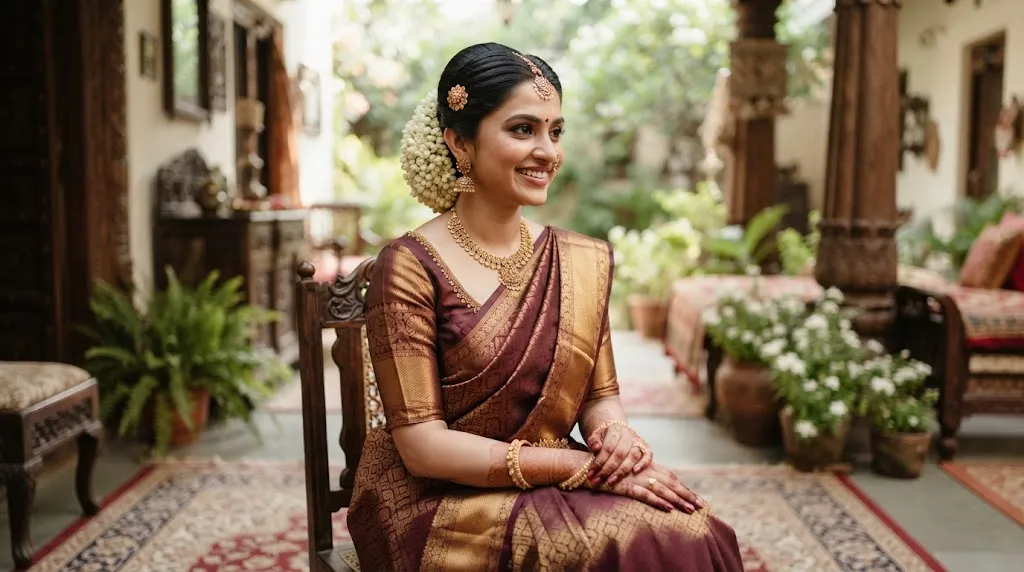
A braided bun with flowers is one of the more secure festive choices because most of the hair is contained inside the braid and bun. It works especially well when you need the style to hold through a long event or humid weather.
Best for: Saree, lehenga, festive events, long wedding functions
Hair length: Medium to long
Hair type: Straight, wavy, or curly
Time: 10–15 minutes
Difficulty: Easy to moderate
Heat: Not required
Hold: Strong
Tools: Hair elastic, U-pins/bobby pins, optional flowers
How to Do It
- Create a secure low ponytail.
- Braid the ponytail through the length.
- Wrap the braid around the base.
- Secure the bun with U-pins at several points.
- Add flowers only after the bun feels stable.
Humidity advantage: Because the hair is braided before being wrapped into the bun, the lengths are less exposed than they would be in open waves or loose curls.
Stylist tip: Keep fresh flowers around the outside of the bun rather than inserting too many pieces through its centre. This preserves the bun’s structure and reduces unnecessary weight.
Short Side-Parted Waves for Wedding Guests
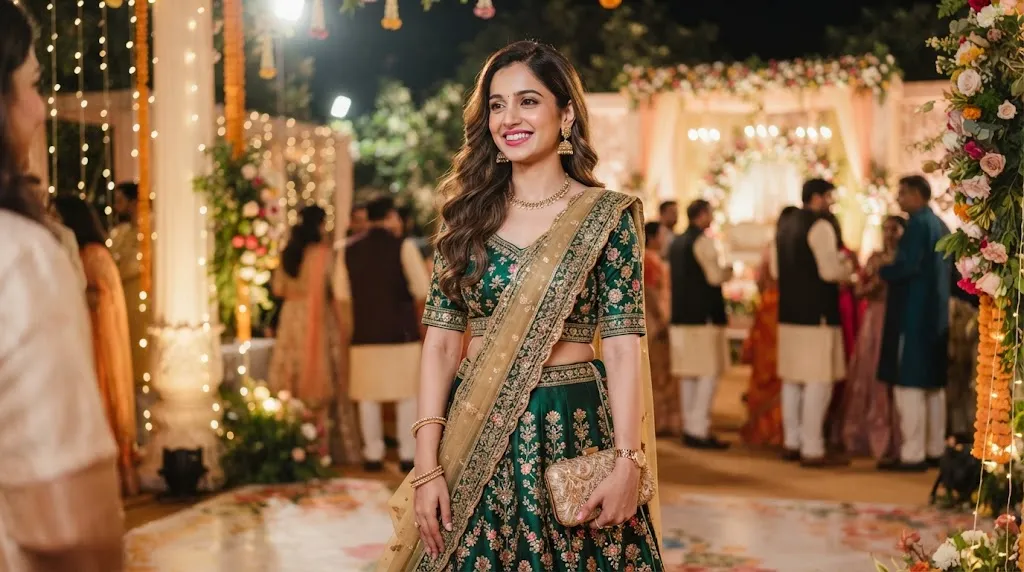
Short side-parted waves are a practical festive option for a bob or lob and show that Indian wedding hairstyles do not need to depend on long hair or extensions. The side part adds shape while the waves give the shorter cut enough movement for a dressier look.
Best for: Wedding guest, reception, saree, lehenga
Hair length: Jaw-length bob, chin-length bob, or lob
Hair type: Straight or wavy; curly hair can define its natural pattern instead
Time: 5–10 minutes
Difficulty: Easy
Heat: Optional
Tools: Comb; optional waving or curling tool
With a saree, keep the waves controlled and allow statement earrings or the blouse to provide most of the detail.
With a lehenga, slightly fuller waves can create a softer festive finish without requiring extra hair accessories.
Jewellery balance: If you are wearing large earrings, a deep side part with one side tucked behind the ear can keep the overall look from becoming visually crowded.
Stylist tip: Do not add a maang tikka, decorative clips, flowers, and statement earrings simply because the event is festive. One clear focal accessory is often enough with short hair.
Video — Indian Festive and Party Hairstyles
If you want to compare several festive hairstyle demonstrations before choosing one, this playlist provides visual examples for Indian party and occasion styling.
What Is a Traditional Indian Hairstyle?
A traditional Indian hairstyle is not one universal style. The term can refer to braids, buns, centre-parted styles, flowers, and hair jewellery worn according to a person’s outfit, occasion, and regional or family tradition. The same basic braid or bun can look very different depending on how it is finished and accessorised.
Classic Traditional Braid
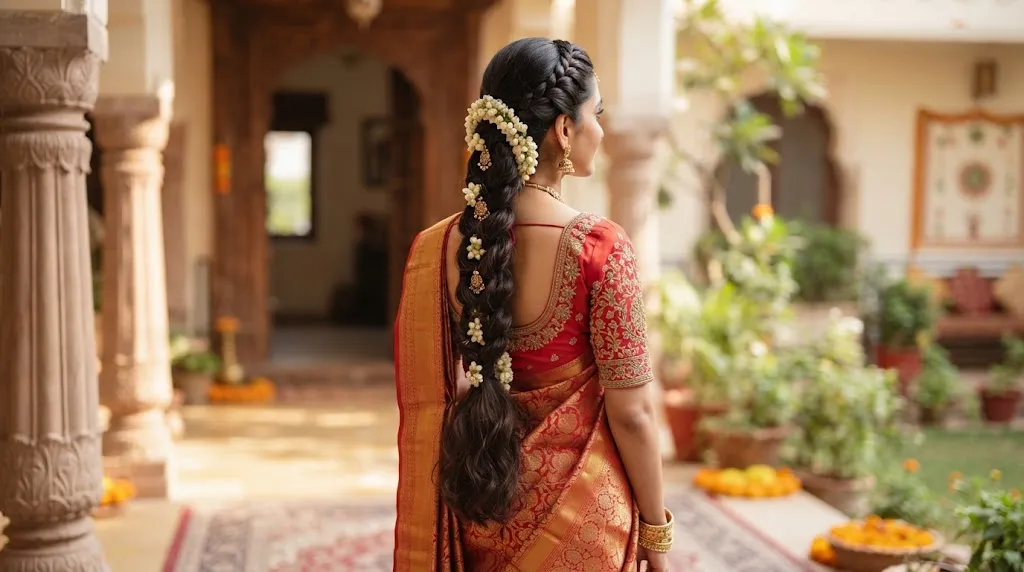
A classic braid is one of the most widely used traditional styling foundations because it keeps long hair controlled and can be worn simply or decorated for a formal event.
For everyday traditional wear, the braid can remain plain. For weddings or festivals, flowers or appropriate hair ornaments can be added according to the outfit and tradition.
The basic braid technique is already covered earlier, so it does not need to be repeated here.
Bun With Gajra or Jasmine
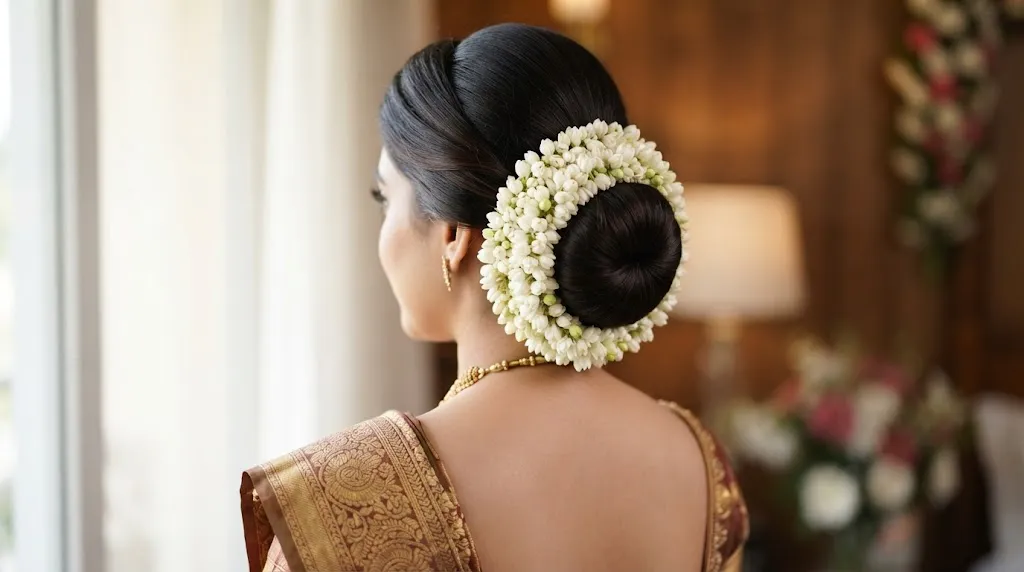
A low bun with gajra, jasmine, or mogra gives a basic bun a distinctly festive or ceremonial finish. It is commonly paired with sarees and traditional outfits, but the amount and placement of flowers can vary considerably.
The full Gajra Bun technique is covered in the saree and traditional-dress section above.
For a cleaner look, use the flowers to frame the bun rather than covering its entire shape.
Centre-Parted Bun With Maang Tikka
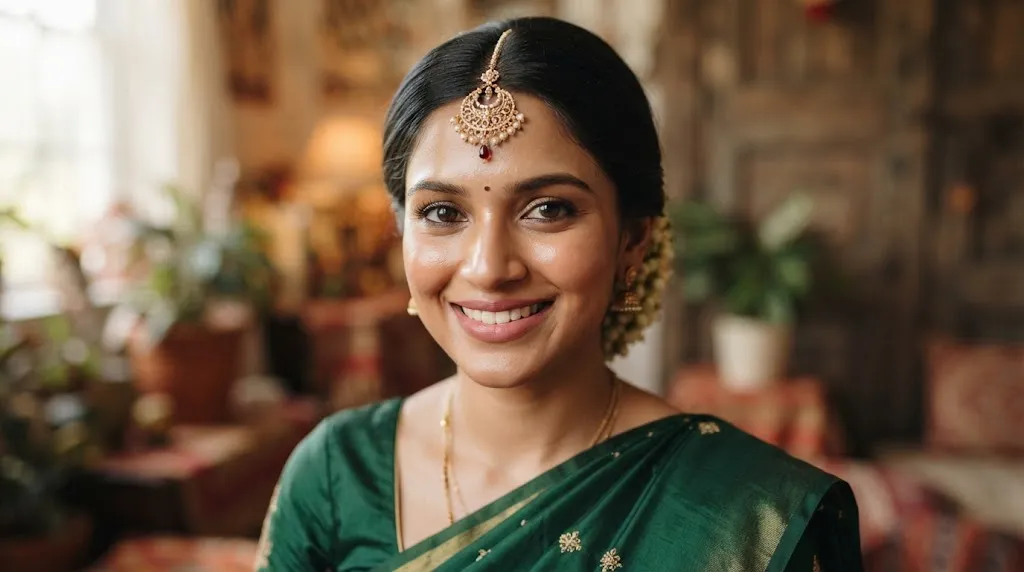
A centre-parted bun creates a symmetrical line from the forehead to the bun and can provide a natural placement for a maang tikka when the occasion and outfit call for one.
Keep the front smooth enough for the jewellery to sit securely, but avoid pulling the hair painfully tight. The bun itself can remain plain or be paired with flowers depending on how elaborate the rest of the outfit is.
Stylist tip: Secure the hairstyle before positioning the maang tikka. Hair jewellery should not be used to hold an unstable hairstyle together.
South Indian Decorated Braid

A South Indian decorated braid typically uses a long braid as the base and may include flowers or traditional braid ornaments depending on the specific regional, family, or ceremonial style.
This style is most practical on long hair or on a braid whose added length has been intentionally created for a ceremonial look. Decorative elements should be attached securely enough that their weight is distributed through the braid rather than concentrated on one small section of hair.
Cultural note: South Indian bridal and festive hair traditions are diverse. Do not present one braid decoration, flower arrangement, or ornament sequence as the single correct style for every South Indian community.
Best Simple Indian Hairstyles by Hair Type
The same hairstyle can behave very differently on fine, thick, straight, wavy, curly, or layered hair. Instead of forcing the hair into a texture it does not naturally have, choose a style that works with its density, grip, and movement, then make small adjustments where needed.
| Hair Type | Best Hairstyles | Useful Adjustment |
|---|---|---|
| Fine or thin | Half-up styles, low ponytail, textured bun | Add light grip and controlled volume |
| Thick | Braids, low bun, ponytail | Section the hair and use stronger pins or elastics |
| Straight | Sleek ponytail, bun, twists | Add light texture if sections keep slipping |
| Wavy | Half-up styles, braid, bun | Keep some natural movement |
| Curly | Half-up styles, textured bun, braid | Work with the curl pattern rather than automatically straightening |
| Layered | Half-up and pinned styles | Secure shorter pieces separately |
Fine or Thin Hair
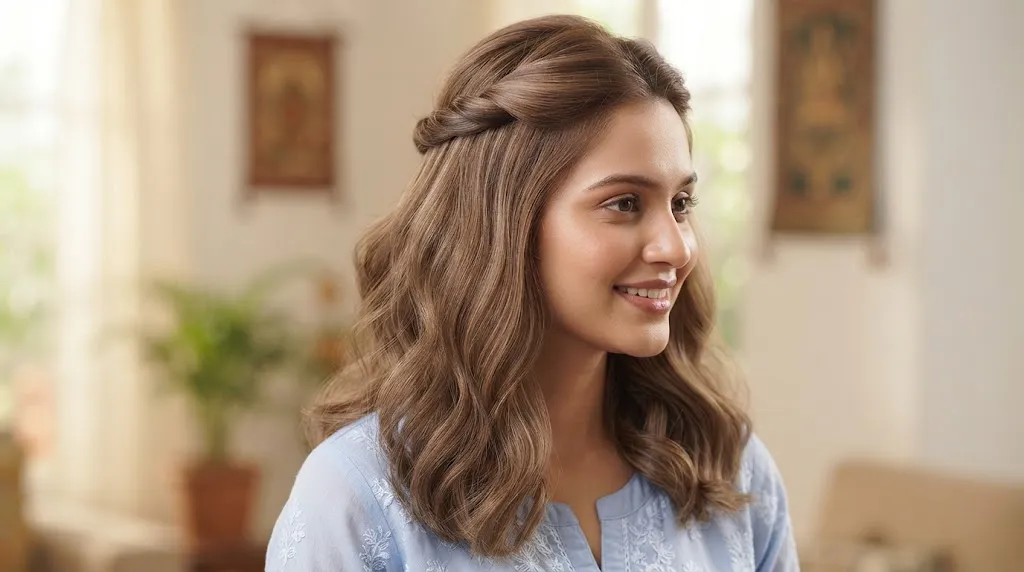
Fine or thin hair can look flatter when every section is pulled tightly against the scalp. Styles such as a half-up look, low ponytail, or lightly textured bun usually work better when you preserve some natural lift.
Useful adjustments:
- Keep a little volume at the crown.
- Use a light texture product only if additional grip is needed.
- Avoid loading the hairstyle with heavy accessories.
- Loosen twists or braids slightly after they are secure rather than pulling them apart before pinning.
Stylist tip: A smaller, well-positioned bun often looks more intentional than trying to create an oversized bun that your natural density cannot comfortably support.
Thick Hair
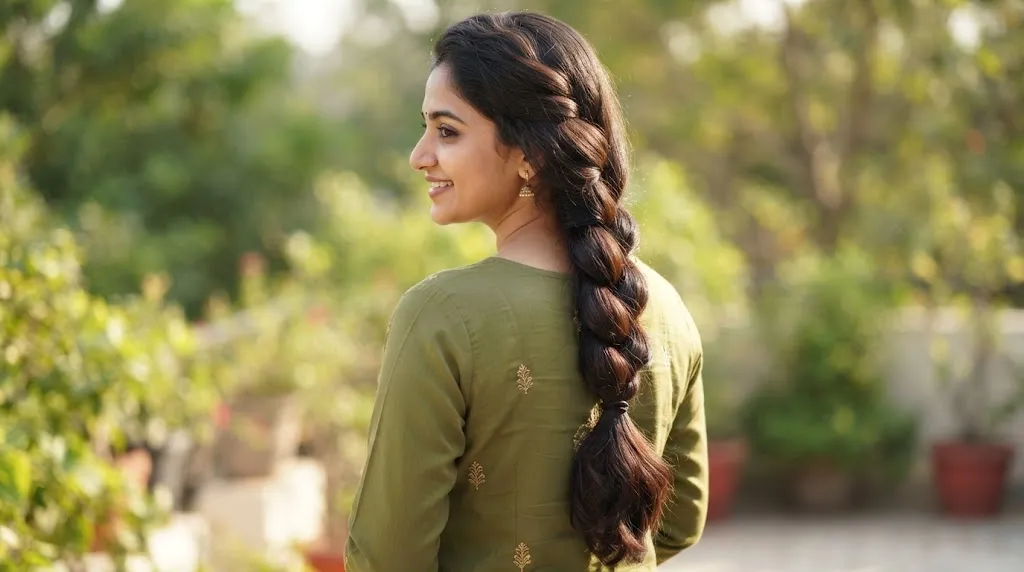
Thick hair gives braids and buns plenty of natural fullness, but its weight can cause clips, elastics, and pins to loosen if the base is not secure.
Useful adjustments:
- Divide very thick hair into smaller sections while styling.
- Use an elastic that can comfortably support the full ponytail.
- Build a secure ponytail base before creating a bun.
- Use U-pins or stronger pins where a large bun needs additional support.
- Avoid relying on one small decorative clip to hold all of the hair.
Stylist tip: If a heavy bun repeatedly drops, reducing the bun’s height and placing it closer to the nape can make the style more stable and comfortable.
Curly Hair
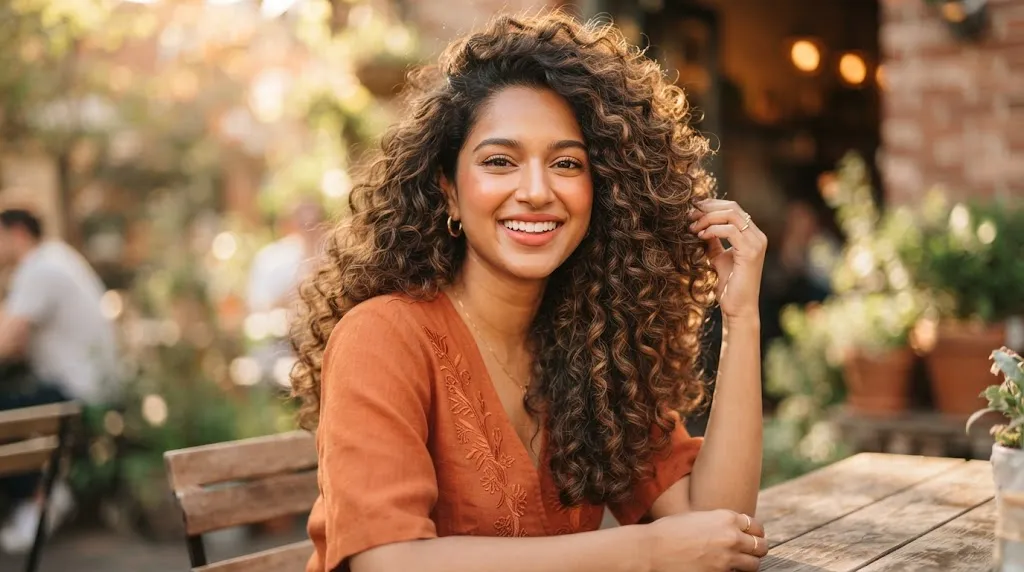
Curly hair does not need to be straightened before it can be styled into an Indian braid, bun, half-up look, or festive hairstyle. Keeping some of the natural curl pattern can add texture and reduce unnecessary heat styling.
Useful options include:
- curly half-up hairstyles
- textured low buns
- loose braids
- pinned-back curls
- side-parted natural curls for short hair
Use your fingers or a wide-tooth comb when you want to preserve curl definition rather than brushing the hair until the texture disappears.
Stylist tip: Smooth only the sections that genuinely need control. Leaving natural texture through the bun, braid, or open lengths can make the hairstyle easier to create and more comfortable to maintain.
Layered Hair
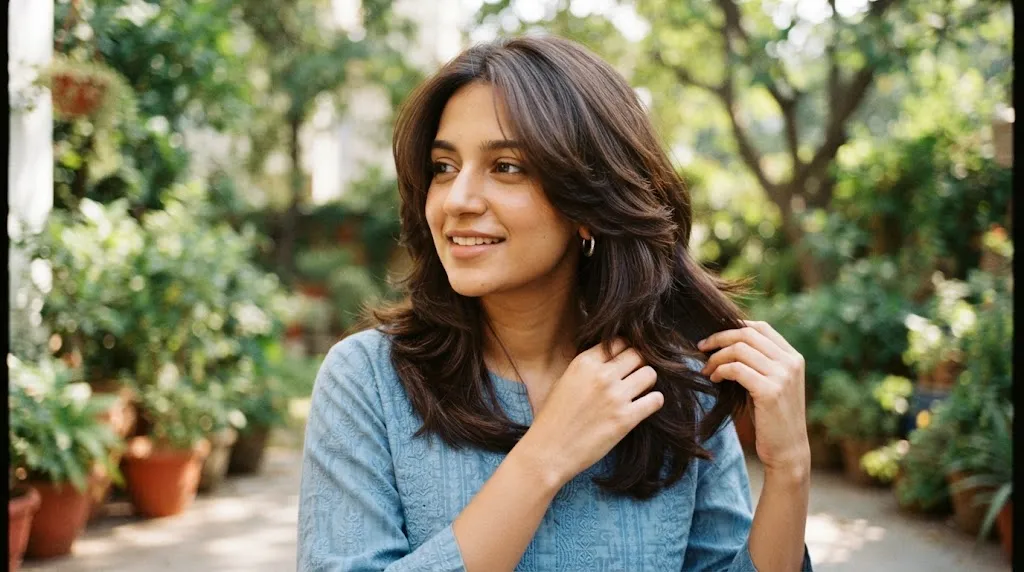
Layered hair often creates the biggest challenge around the front, sides, and braid edges, where shorter pieces may not reach the main elastic or pinning point.
Useful adjustments:
- Use smaller front twists.
- Pin shorter sections separately before building the main style.
- Start braids slightly lower if upper layers repeatedly slip out.
- Choose half-up styles when too many layers are too short for a full updo.
- Use visible face-framing pieces intentionally instead of repeatedly trying to hide pieces that cannot reach the back.
Stylist tip: If several layers are too short to reach a bun, changing to a half-up or pinned style is usually more practical than adding more and more pins to force the original hairstyle to work.
Real Problems With Simple Indian Hairstyles — and How to Fix Them
A hairstyle can look easy in a photo but behave differently once you try it on your own hair. Length, density, humidity, pins, and even a dupatta can affect how well a style holds. These practical fixes address the problems that most often make a simple hairstyle harder than it needs to be.
Short Layers Keep Slipping Out
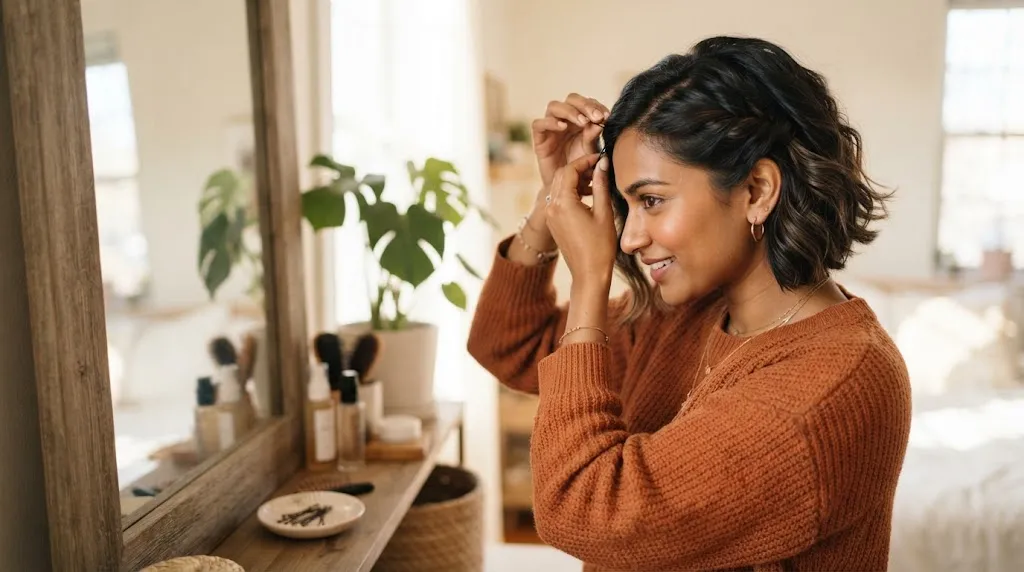
Short layers usually slip out because they cannot comfortably reach the main bun, braid, or ponytail.
Instead of forcing them back:
- Work with smaller front sections.
- Secure short pieces separately with hidden bobby pins.
- Insert pins underneath the outer layer of hair so they are less visible.
- Use a half-up style when too many layers are too short for a full updo.
- Allow intentional face-framing pieces to stay loose when they suit the hairstyle.
Practical fix: If the shortest layers repeatedly escape from a bun, switch to a half-up twist rather than adding more and more pins.
Fine Hair Makes the Bun Look Flat
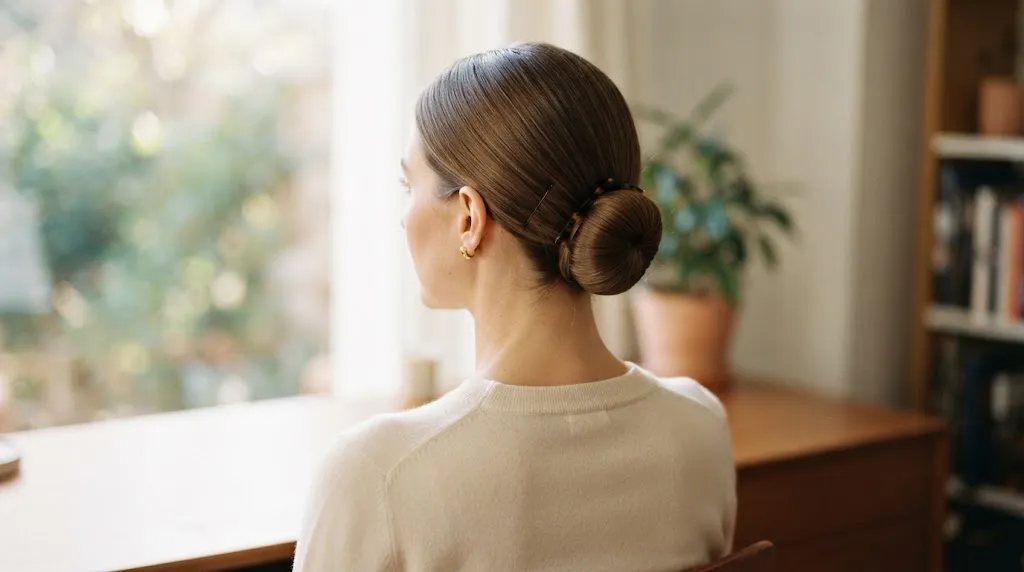
Fine hair can lose visible volume when it is pulled tightly into a bun. Trying to make the bun excessively large can also make the style look less natural.
To create a fuller finish:
- Keep a little natural volume at the crown.
- Use a light texture product only when extra grip is needed.
- Avoid flattening every section against the scalp.
- Position the bun slightly away from the scalp instead of compressing it tightly.
- Keep the bun proportionate to your natural hair density.
Practical fix: A smaller bun with gentle crown lift usually looks more balanced than an oversized bun that needs heavy padding or excessive pinning.
Thick Hair Makes Pins Come Loose
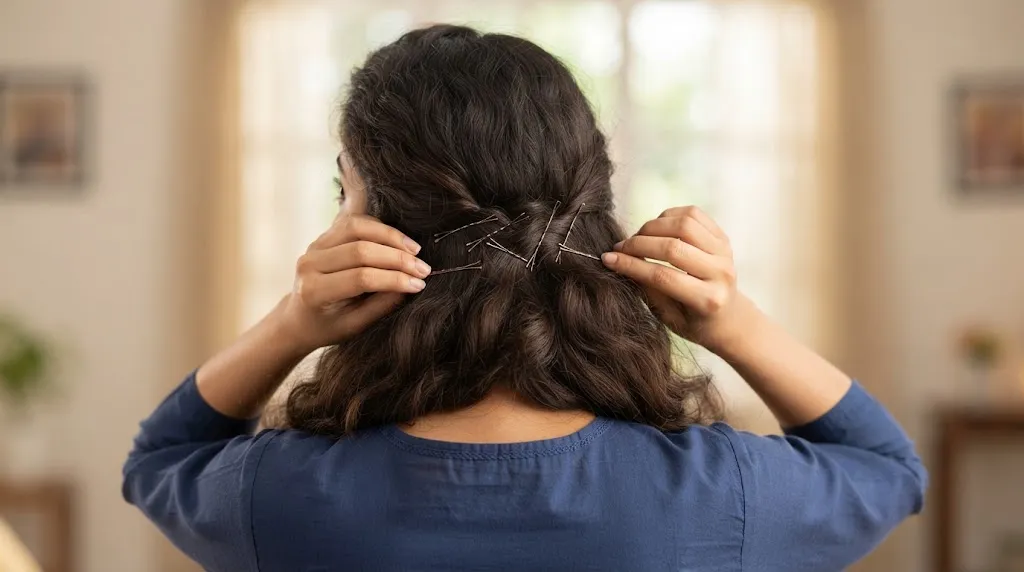
With thick hair, the problem is often weight, not a lack of pins. If the base is unstable, adding more bobby pins usually does not fix the hairstyle.
For better hold:
- Build a secure ponytail base first.
- Divide very thick hair into smaller sections.
- Form the bun or twist one section at a time.
- Use U-pins or stronger hairpins where more support is needed.
- Place the style closer to the nape if a high bun feels too heavy.
Practical fix: Secure the weight of the hair with an elastic before asking the pins to hold the shape.
Humidity Makes Hair Frizzy Quickly
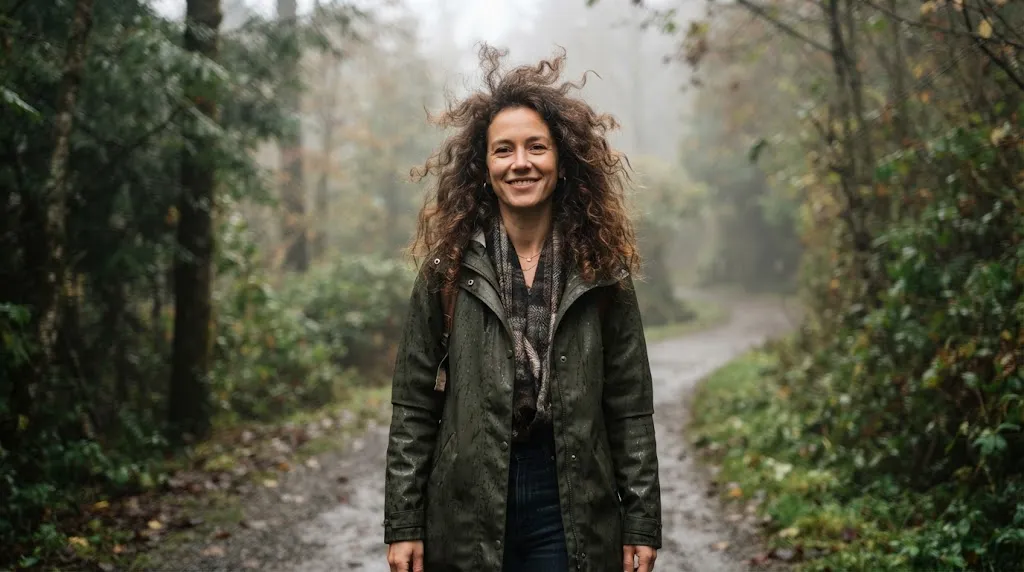
Loose hair and open waves expose more of the hair’s surface to humidity, so they generally need more touch-ups than secured styles.
For humid days, choose:
- Classic braid
- Braided bun
- Low bun
- Braided or secured ponytail
These styles keep more of the length controlled and reduce the amount of hair moving freely throughout the day.
If you still prefer open waves, expect some softening or frizz as the day goes on, especially during outdoor travel or long events.
Practical fix: On a humid day, choose the hairstyle based on how long you need it to stay neat—not only on how it looks immediately after styling.
Hairstyle Feels Too Tight After a Few Hours
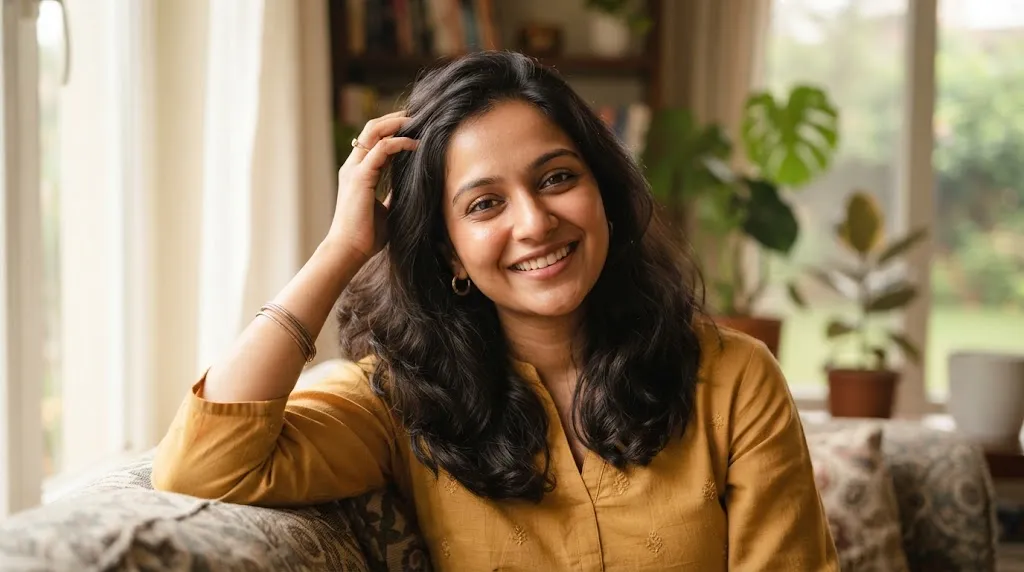
A bun, braid, or ponytail should feel secure without creating constant pulling at the scalp.
If the style becomes uncomfortable:
- Reduce the tension at the roots.
- Avoid repeatedly tightening the elastic.
- Place buns and ponytails slightly lower.
- Keep front sections softly controlled instead of pulling them straight back.
- Reposition pins that press directly against the scalp.
Practical fix: A lower bun or ponytail often distributes tension more comfortably than a tightly secured high style.
Dupatta or Saree Pallu Disturbs the Hairstyle
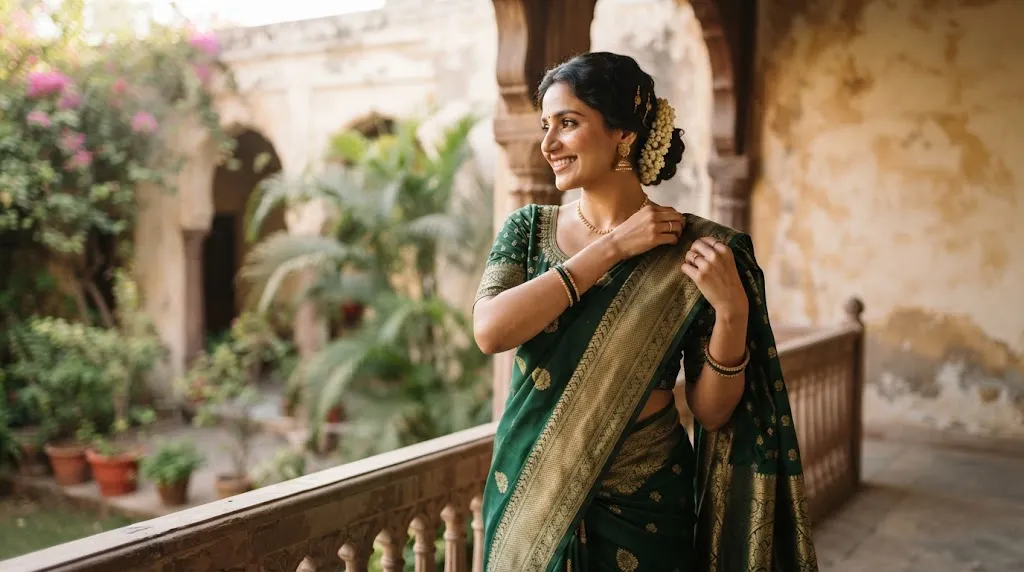
A dupatta or saree pallu can rub against loose hair, disturb pins, or compete for space with an updo—especially when both are secured near the crown or back of the head.
For a more stable combination:
- Prefer a low bun, braid, or other secured style.
- Decide where the dupatta or pallu will sit before finishing the hairstyle.
- Keep loose sections away from the main attachment area.
- Avoid placing decorative hairpins exactly where outfit pins need to go.
- Test the hairstyle with the full outfit before leaving for a long event.
Practical fix: Treat the hair and dupatta as one styling system. Planning their placement separately often creates unnecessary pinning conflicts.
Hairstyle Looks Good From the Front but Messy From the Back
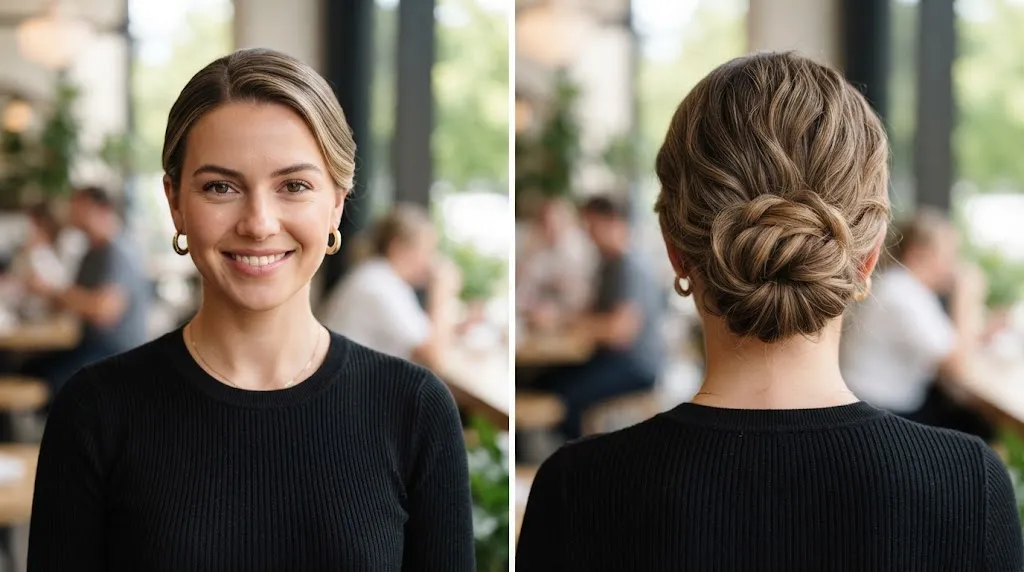
This commonly happens with buns, half-up styles, and pinned twists because you cannot see the back clearly while styling.
Before finishing:
- Check the back using a second mirror.
- Take a quick photo if the angle is difficult to see.
- Make sure sections are entering the bun or twist cleanly.
- Tuck visible ends underneath the hairstyle.
- Hide pins beneath the outer sections where possible.
Practical fix: Check the hairstyle from the front, side, and back, especially before a wedding, office event, or occasion where photographs are likely.
Bobby Pins Are Visible
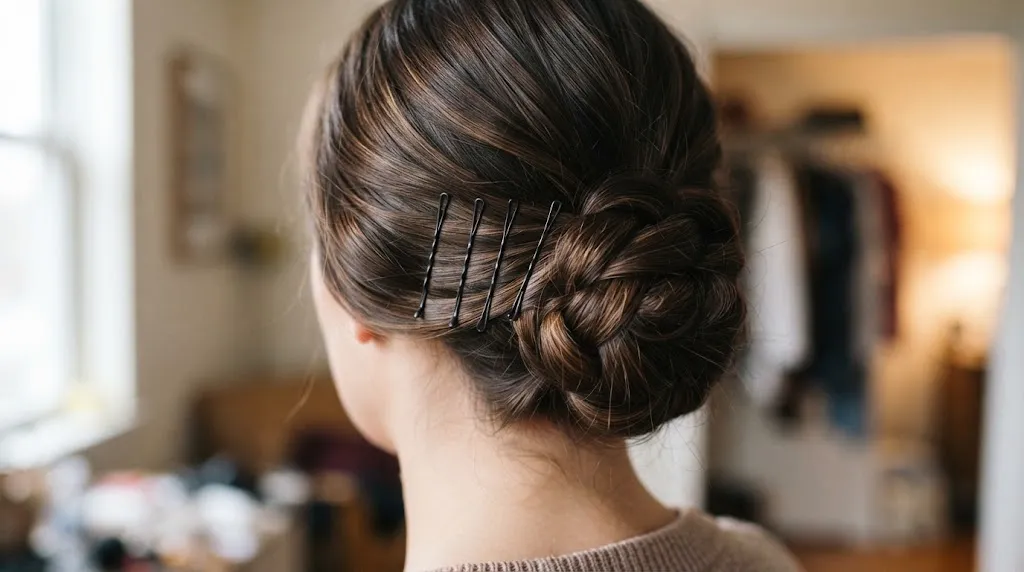
Visible bobby pins usually mean the pin has been placed across the surface rather than underneath the section it is supporting.
For cleaner pin placement:
- Insert the pin in the same general direction as the hair.
- Slide it underneath the outer section instead of laying it across the top.
- Use the pin to catch a small amount of the hairstyle and some stable hair underneath.
- Cross two hidden pins only when extra hold is genuinely needed.
- Avoid covering the hairstyle with multiple pins when one correctly placed pin will work.
Practical fix: Secure first, then lightly cover the pin with the surrounding hair rather than trying to push an exposed pin deeper after the style is finished.
Basic Tools for Simple Indian Hairstyles
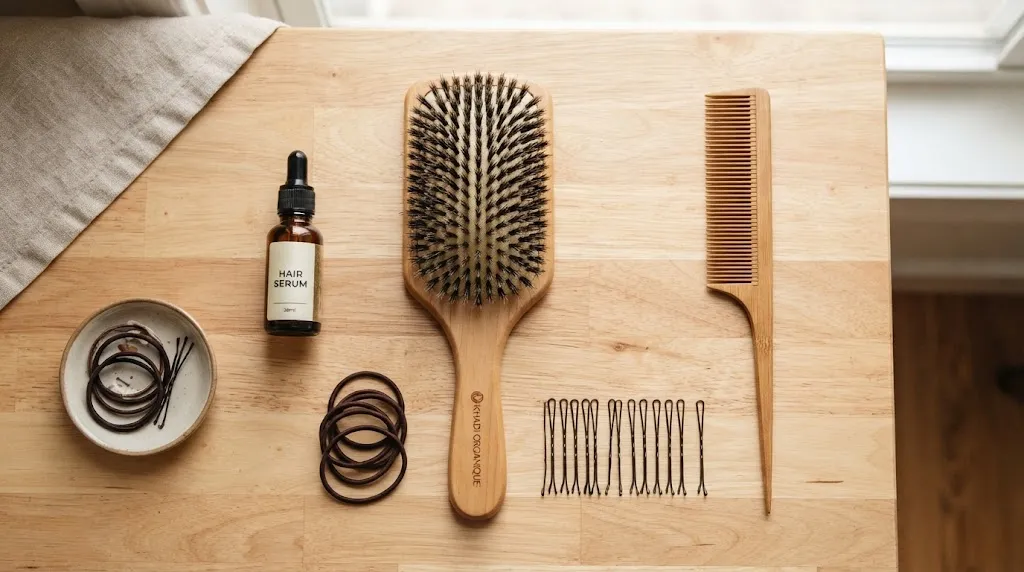
Most simple Indian hairstyles do not require a large styling kit. A few basic tools are enough for ponytails, braids, buns, twists, and half-up styles. Products and traditional accessories should remain optional unless the specific hairstyle genuinely needs them.
Essential Tools
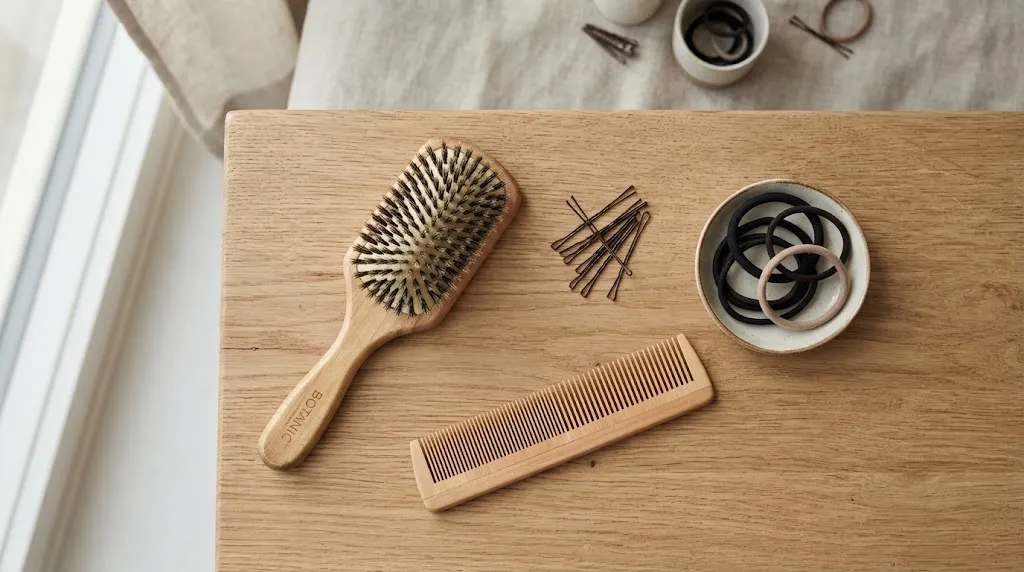
Hair Elastics
Useful for:
- ponytails
- braids
- bun bases
- half-up hairstyles
Choose an elastic that holds the hair securely without needing to be wrapped so tightly that it becomes uncomfortable.
Bobby Pins
Useful for:
- front twists
- short layers
- half-up styles
- hiding loose ends
- lightweight buns
Use the minimum number needed for secure placement.
U-Pins
Useful for:
- medium or large buns
- braided buns
- thick hair
- gajra buns
U-pins are especially useful when the goal is to support the shape of a bun rather than simply pin down one loose section.
Comb
A basic comb is enough for:
- centre or side parting
- smoothing sections
- separating front pieces
- preparing braids and buns
Avoid excessive combing when you want to preserve natural curls or waves.
Claw Clip
Useful for:
- quick twists
- casual updos
- medium or long hair
- home, errands, or relaxed workplaces
Choose the clip size according to hair density rather than appearance alone.
Optional Styling Products

These products can help, but they are not required for every hairstyle.
Heat Protectant
Use before:
- curling irons
- straighteners
- waving tools
- other direct heat styling
If the hairstyle is completely heatless, there is no reason to add this product simply because it appears on a styling checklist.
Light Serum
Useful when you need to:
- smooth obvious flyaways
- add a little slip to rough ends
- create a cleaner ponytail or bun finish
Use a small amount so fine hair does not become weighed down.
Texture Spray or Mousse
Useful for:
- fine or slippery hair
- increasing grip before twists or buns
- helping waves hold their shape
These are optional support products, not a requirement for simple styling.
Flexible Hairspray
Useful for:
- longer events
- flyaway control
- wedding or festive styles
- situations where the hairstyle needs extra hold
A flexible hold is usually more practical for simple hairstyles than making the hair rigid.
Optional Traditional Accessories
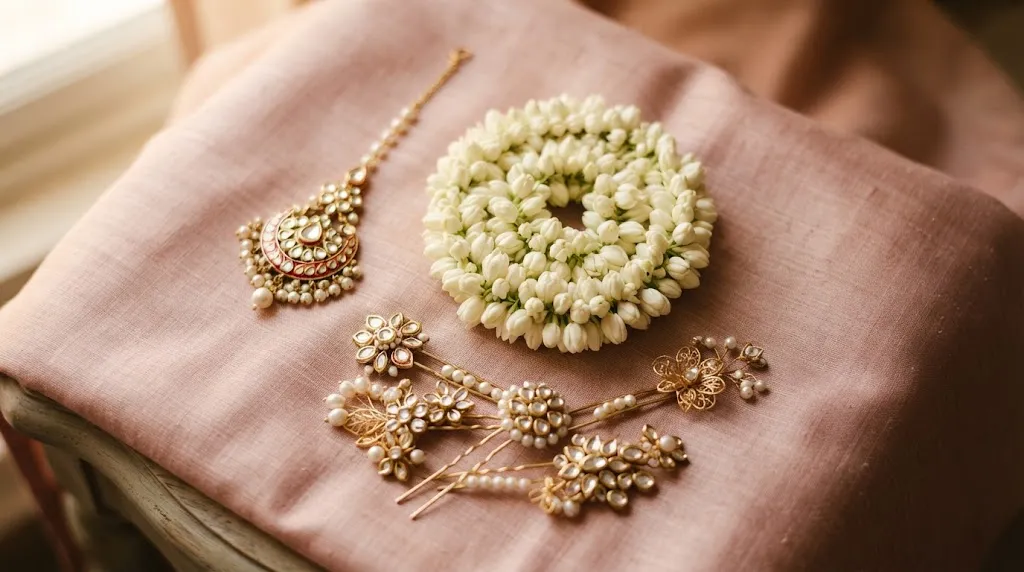
Traditional accessories can change a simple hairstyle into a more festive look, but they should complement the outfit rather than become mandatory additions.
Gajra
Works particularly well with:
- low buns
- traditional sarees
- festive events
- wedding functions
Secure the bun first, then attach the gajra separately.
Jasmine Flowers
Fresh jasmine or mogra can be used around a bun or as part of a traditional braid, depending on the outfit and occasion.
Keep the amount proportional to the hairstyle so the flowers do not make the style unnecessarily heavy.
Pearl Pins
Useful for:
- half-up styles
- festive buns
- braids
- wedding guest hairstyles
Use a few intentional placements instead of scattering pins across the entire hairstyle.
Decorative Pins
Useful for adding a small festive detail to:
- short pinned-back hair
- buns
- twists
- half-up hairstyles
They should decorate the hairstyle, not compensate for weak structural pinning.
Maang Tikka
Works best with hairstyles where the parting and front sections allow the jewellery to sit securely, such as a centre-parted bun or controlled half-up style.
Secure the hairstyle first, then position the maang tikka.
Simple rule: Start with the hairstyle. Add styling products only when the hair needs them, and add traditional accessories only when they improve the outfit and occasion.
Frequently Asked Questions
Final Hairstyle Selection
- Only 2 minutes: Low Ponytail
- Everyday all-rounder: Side-Twist Half Updo
- Formal office: Sleek Low Bun
- Short hair: Pinned-Back Waves
- Long hair: Classic or Fishtail Braid
- Saree: Classic Low Bun
- Traditional event: Gajra Bun
- Wedding guest: Half-Up Romantic Waves
- Humid day: Braided Bun
- Heatless styling: Classic Braid