
Normal Slope Haircut: Styles, Lengths, Face Shapes & Barber Guide

A normal slope haircut keeps the hair longer on top and gradually reduces the length toward the sides, back, and neckline, creating a smooth, natural transition rather than a sharp fade. This guide explains how the normal slope differs from other slope cuts, which versions work with different hair types and face shapes, and what to tell your barber for the result y want.
To explore how this cut fits into the complete spectrum of hair lengths, shapes, and textures, feel free to browse our main hairstyles & haircuts directory.
What Is a Normal Slope Haircut?
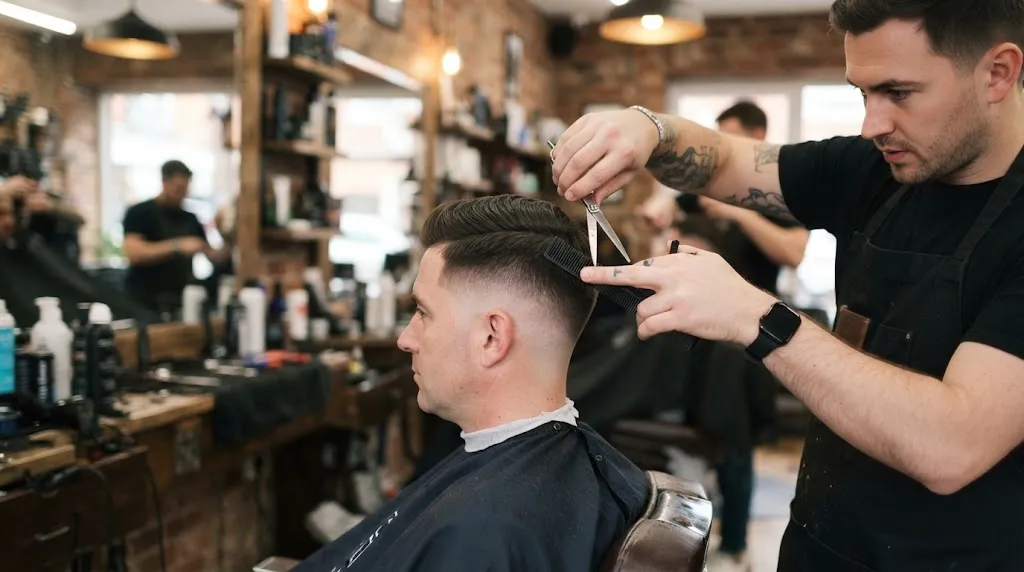
A normal slope haircut is a men’s haircut in which the hair stays longer on top and gradually becomes shorter toward the sides, back, and neckline. The transition is softer than a tight fade, leaving some natural weight through the sides while following the head’s shape for a balanced, easy-to-wear finish.
How a Normal Slope Haircut Is Shaped
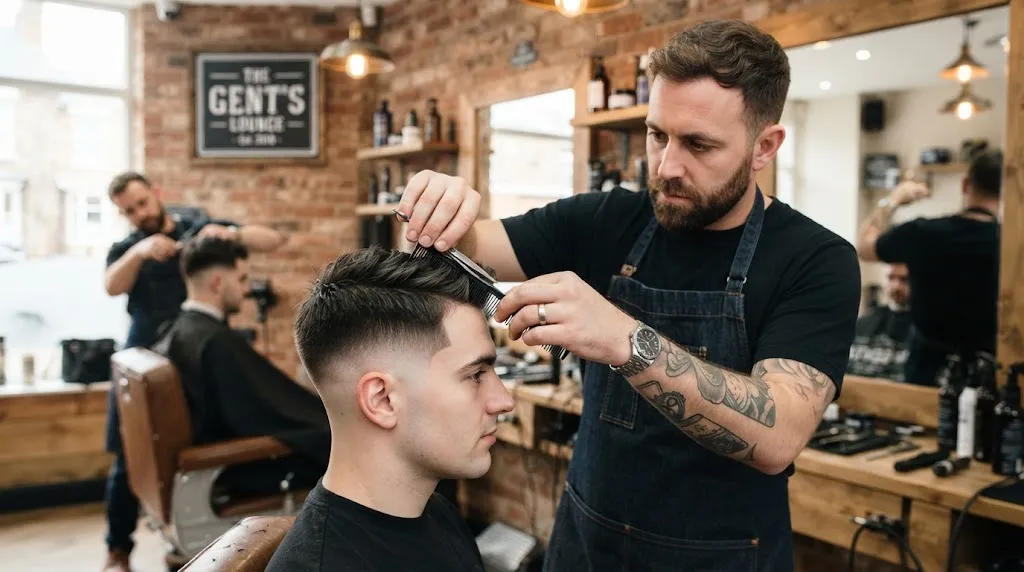
The defining feature of a normal slope is the gradual change in length rather than a sudden change between the top and sides. The top is kept longer according to the desired hairstyle, while the sides and back are progressively shortened as they move toward the lower neckline.
A well-shaped normal slope typically has:
- Longer hair on top for styling and shape.
- Gradually shorter sides and back rather than an abrupt transition.
- A softer blend that avoids the very tight appearance of a skin fade.
- A transition that follows the natural curve of the head, helping the haircut look balanced from different angles.
- More side weight than a fade, which gives the haircut a fuller and more natural silhouette.
The amount of length removed can be adjusted according to the person’s hair type, density, face shape, and preferred finish. That means a normal slope does not have to look identical on everyone.
Normal Slope vs High Slope vs Medium Slope vs Low Slope
| Type | Transition starts | Overall look | Contrast | Best suited for |
|---|---|---|---|---|
| Low slope | Lower on the sides/back | Soft and subtle | Low | Natural, low-maintenance styles |
| Normal/medium slope | Around the middle | Balanced and versatile | Moderate | Everyday, casual, and professional styles |
| High slope | Higher toward the temples | Sharper and more defined | High | Edgier styles with stronger contrast |
Normal Slope vs Fade vs Taper
| Feature | Normal Slope | Fade | Taper |
|---|---|---|---|
| Transition | Gradual across the sides/back | Tightly blended from shorter to longer | Usually focused around specific areas |
| Side bulk | Moderate | Less, depending on fade height | More natural |
| Scalp exposure | Usually lower | Can be higher, especially with a skin fade | Usually low |
| Visual sharpness | Balanced and natural | Clean and high-contrast | Subtle and understated |
| Maintenance | Moderate | Usually needs more frequent touch-ups | Generally easier to grow out |
| Choose it when | You want a natural slope with some side weight | You want a sharper, cleaner contrast | You want a subtle cleanup around the edges |
Normal Slope Haircut Styles for Men
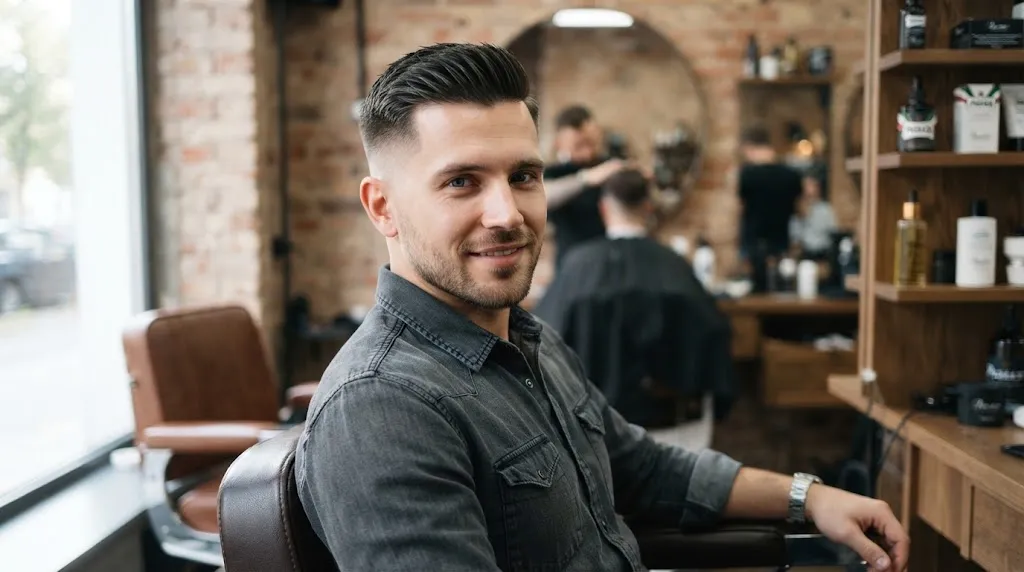
The best normal slope styles keep the defining feature of the cut—the gradual reduction from longer hair into shorter sides and back—while changing the top shape, parting, texture, or length. The right version depends on your hair texture and density, face shape, styling preference, and how much maintenance you are willing to do.
Classic Normal Slope Haircut
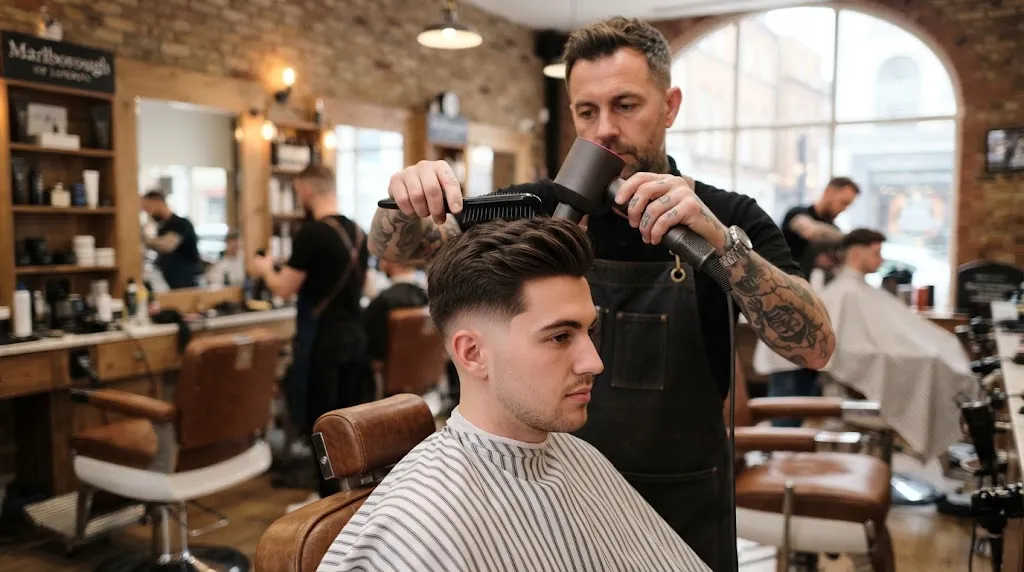
The classic normal slope keeps the top moderately long and lets the sides and back reduce gradually toward the neckline. It gives a clean, balanced silhouette without the stronger contrast of a high slope or tight fade.
Best for: Men who want one versatile haircut for everyday, office, and formal settings.
Face shape: Works particularly well with oval and balanced face shapes. For round faces, keeping some controlled height on top can help add visual length.
Hair type & density: Suitable for straight and wavy hair and adaptable to medium-to-thick density. Very fine hair may need a carefully chosen top length to avoid looking flat.
Maintenance: Moderate. Regular trims help preserve the slope and prevent the sides from becoming too bulky.
Styling: Comb the top naturally, add a light side direction, or use a small amount of styling product for a cleaner finish.
Why choose it: It is the most adaptable version when you want a recognizable slope without an extreme shape.
Possible limitation: It may look too conservative if you specifically want a very sharp, high-contrast haircut.
Normal Slope With Textured Top
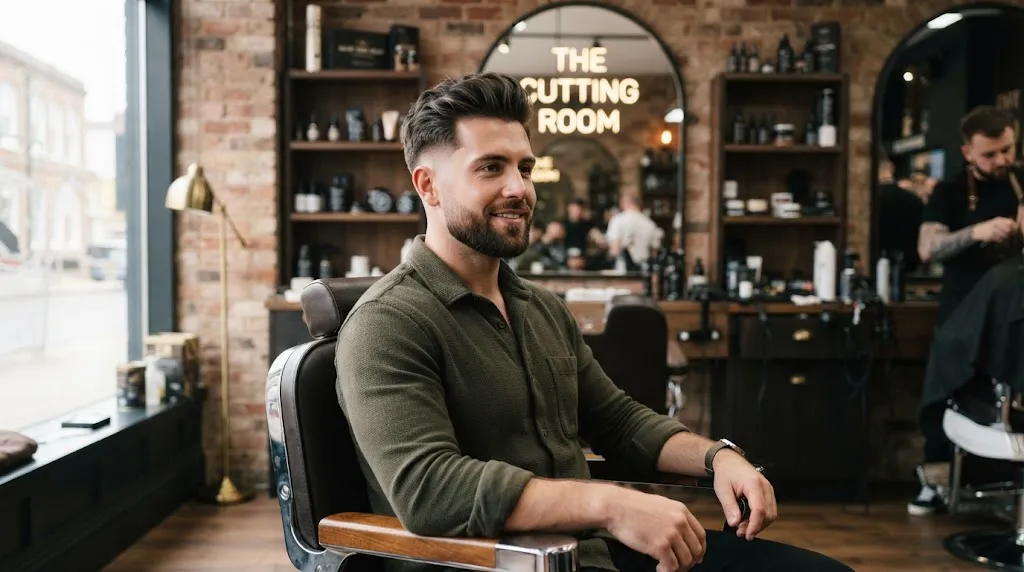
This version combines the gradual normal slope with a textured top. The sides remain controlled while the top is cut and styled to create separation and movement rather than a completely smooth finish.
Best for: Men who want a modern, relaxed appearance without making the sides extremely short.
Face shape: The amount of height and texture can be adjusted for different face shapes. Round faces generally benefit from controlled height rather than excessive width.
Hair type & density: Particularly useful for naturally wavy or thicker hair. Fine hair can also use light texture, but removing too much weight may make it appear thinner.
Maintenance: Moderate. The slope needs periodic trimming, while the textured top usually requires some daily styling.
Styling: Work a small amount of matte or low-shine styling product through the top, then separate the hair with your fingers instead of flattening it with a comb.
Why choose it: Texture gives the classic slope more movement while keeping the sides relatively natural.
Possible limitation: Thick or coarse hair may become bulky if the top and sides are not balanced properly.
Normal Slope With Side Part
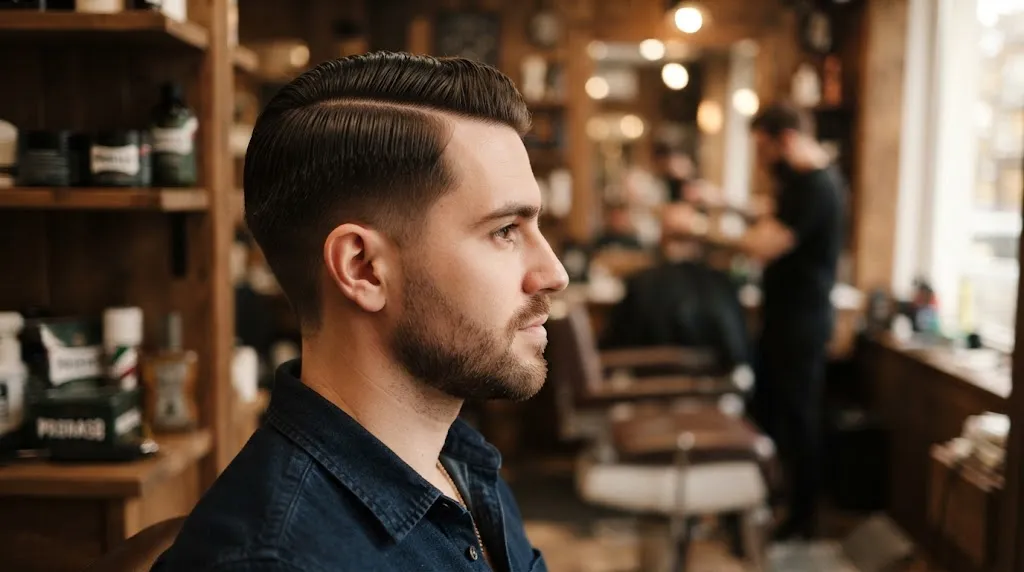
A side part gives the normal slope a more structured appearance. The top is directed toward one side while the gradual slope keeps the sides and back from looking overly tight.
Best for: Office, business, school, and formal settings where a neat but natural haircut is preferred.
Face shape: Adaptable to most face shapes. The parting position and amount of top volume can be adjusted to balance the face.
Hair type & density: Works especially well with straight or slightly wavy hair and medium-to-thick density.
Maintenance: Moderate. The haircut itself is manageable, but the part may need daily styling to stay defined.
Styling: Create the part while the hair is damp, then comb or blow-dry the top in the desired direction. Keep the finish natural or polished depending on the occasion.
Why choose it: It gives you a professional silhouette without turning the slope into a tight fade.
Possible limitation: A very defined part can expose differences in hair density or make the style harder to maintain if the hair naturally falls in another direction.
Normal Slope With Middle Part
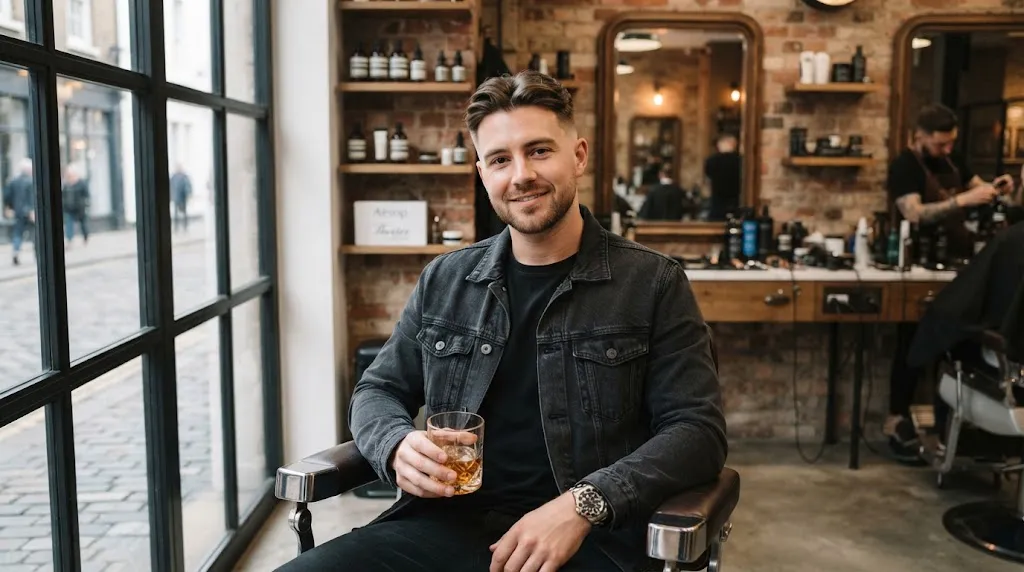
A middle-part version leaves more movement through the top and divides the hair around the center while the sides gradually shorten into the slope. It creates a softer, more relaxed appearance than a sharply defined side part.
Best for: Men who prefer flow, natural movement, and a less formal finish.
Face shape: Can work well with oval and longer face shapes. For round faces, excessive width at the sides should be controlled.
Hair type & density: Best suited to medium-length straight or wavy hair with enough density to maintain movement.
Maintenance: Moderate. The top needs enough length to fall naturally, while the slope still requires periodic reshaping.
Styling: Start with the natural center part and direct each side backward or slightly outward. Avoid overloading the hair with heavy product.
Why choose it: It combines the clean sides of a slope with a relaxed, flowy top.
Possible limitation: Very short or very fine hair may not have enough length or density to hold the middle-part shape naturally.
Normal Slope With Quiff
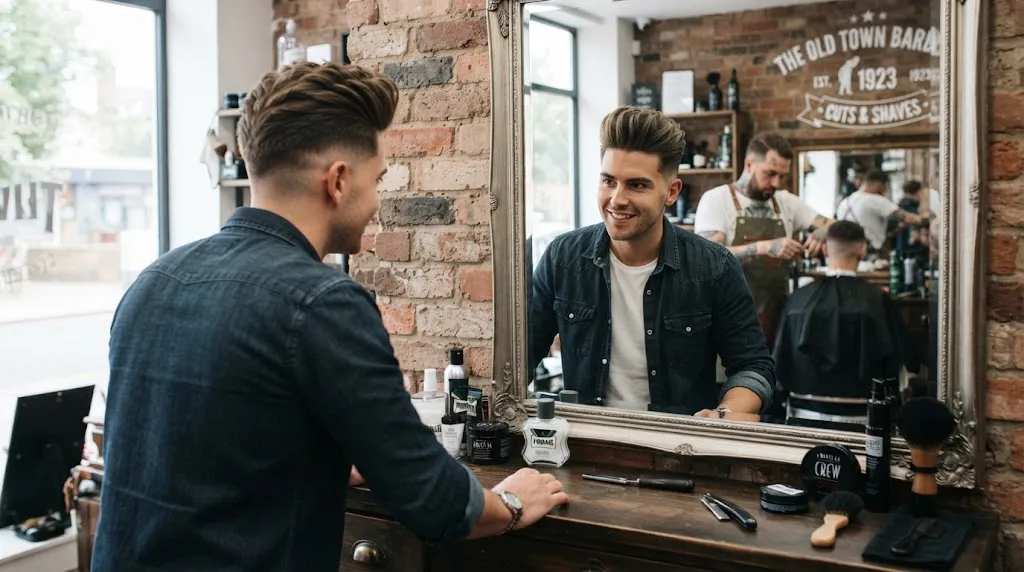
The quiff version keeps the normal slope through the sides and back while adding controlled height at the front. The result is sharper and more styled without requiring a high slope.
Best for: Men who want more volume and a noticeable front shape while keeping the sides balanced.
Face shape: Particularly useful for rounder faces when the added height is controlled. Very tall quiffs can make a long face appear longer.
Hair type & density: Works best with medium-to-thick hair. Fine hair can work with a lighter, less elevated quiff.
Maintenance: Moderate to high because the front usually needs daily styling.
Styling: Blow-dry the front upward and slightly back, then use a suitable styling product to hold the shape without making it excessively stiff.
Why choose it: It adds height and personality while preserving the softer normal-slope transition.
Possible limitation: The quiff may collapse quickly on very fine or heavy hair unless the cut and styling technique are adjusted.
Normal Slope With Fringe
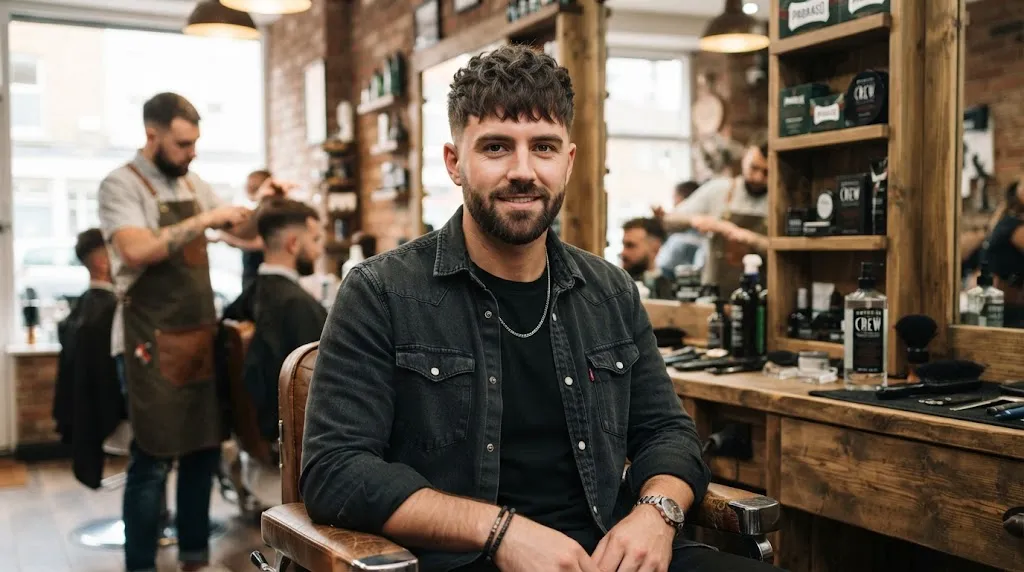
This style pairs the gradual slope with a fringe across the forehead. The fringe can be straight, slightly angled, or textured depending on the desired finish.
Best for: Men who want a softer, younger-looking variation or prefer some forehead coverage.
Face shape: A fringe can help visually shorten a longer face. For round faces, a textured or slightly lifted fringe can avoid adding excessive horizontal width.
Hair type & density: Straight and slightly wavy hair are easiest to manage. Fringe length should be adjusted according to density and natural growth direction.
Maintenance: Moderate. The fringe may need frequent shaping because even small changes in length can alter its appearance.
Styling: Keep it natural for an easy everyday look or add light texture for a more modern finish.
Why choose it: It changes the character of the normal slope without changing its fundamental side and back structure.
Possible limitation: A fringe can become difficult to manage if the hair has a strong cowlick or grows away from the forehead.
Normal Slope With Hard Part
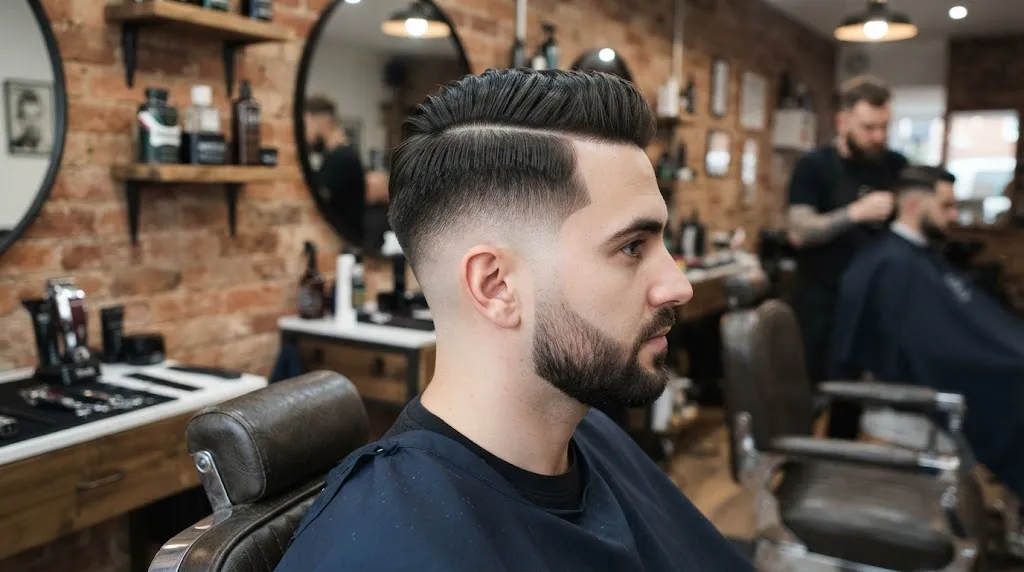
A hard part adds a deliberately defined line to the top while the sides maintain the gradual slope. It creates a more precise and structured version of the haircut.
Best for: Men who prefer a clearly defined, polished appearance.
Face shape: Adaptable, although the position of the hard part should complement the natural proportions of the face.
Hair type & density: Straight and medium-to-thick hair generally makes the line and styling easier to maintain.
Maintenance: Higher than a standard normal slope because the defined part loses its sharp appearance as the hair grows.
Styling: Comb the top away from the hard part and keep the direction clean. A controlled, low-shine finish usually emphasizes the structure.
Why choose it: It gives the normal slope a sharper focal point without requiring a high fade.
Possible limitation: The hard part is less forgiving during grow-out and may require more frequent barber visits.
Normal Slope With Ivy League

The Ivy League version combines the neat, slightly longer top of an Ivy League haircut with the gradual sides and back of a normal slope. It offers a conservative silhouette while retaining enough top length for styling.
Best for: Men who want a professional, timeless haircut that can move between casual and formal settings.
Face shape: Versatile, with the top length and side volume adjusted to suit individual proportions.
Hair type & density: Straight and wavy hair work particularly well. Medium density is easy to shape, while thick hair may need additional bulk control.
Maintenance: Moderate. The structured top and slope both benefit from regular trimming.
Styling: Comb the top slightly to the side or back for a polished appearance, or leave it more natural for everyday wear.
Why choose it: It is one of the easiest normal-slope combinations for a professional wardrobe and workplace setting.
Possible limitation: It may not provide enough visual edge for someone looking for a highly textured or dramatic haircut.
Short Normal Slope Haircut

The short normal slope keeps the top relatively compact while gradually reducing the sides and back. It provides the clean practicality of a short haircut without making the transition as aggressive as a high fade.
Best for: Men who want a simple, easy-to-manage haircut with a natural outline.
Face shape: Works across many face shapes, but the amount of side length should be adjusted to avoid adding unwanted width.
Hair type & density: Suitable for straight, wavy, and thicker hair. Shorter lengths can also make coarse hair easier to control.
Maintenance: Moderate. Although daily styling is minimal, the slope becomes less defined as the hair grows.
Styling: Usually requires little product. A small amount of matte product can add definition if desired.
Why choose it: It offers a practical everyday cut with less styling commitment than longer versions.
Possible limitation: The shorter top provides fewer styling options than a medium or longer version.
Normal Slope With Longer Top
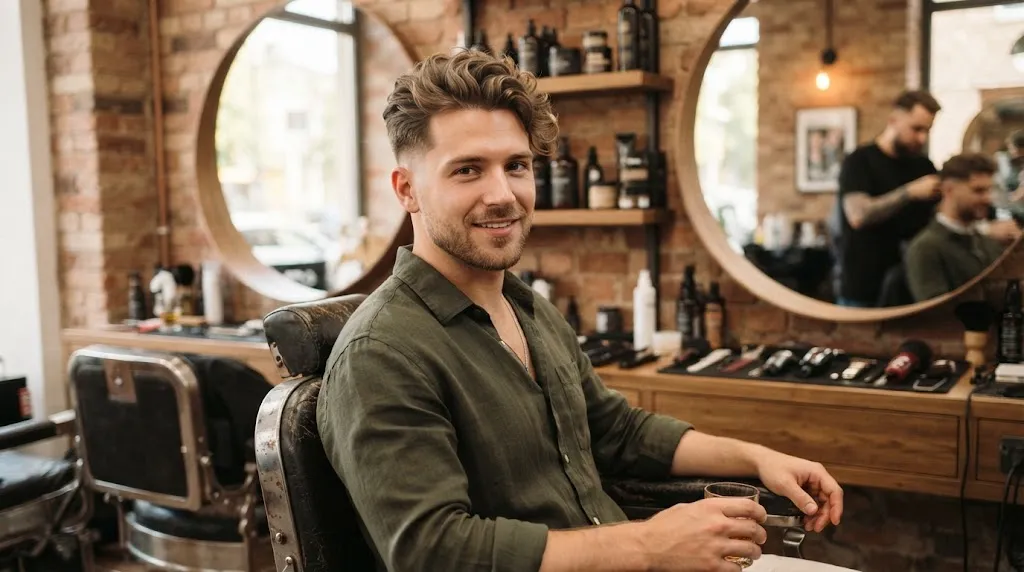
This variation preserves a noticeably longer top while keeping the sides and back in a normal gradual slope. The extra length allows several styling directions, including side-swept, textured, middle-part, and brushed-back looks.
Best for: Men who want versatility and prefer changing their hairstyle without changing the basic slope.
Face shape: The extra top length can be adjusted to add height, movement, or framing depending on face shape.
Hair type & density: Particularly suitable for medium-to-thick straight or wavy hair. Curly hair can also work when the length and slope are adapted to the curl pattern.
Maintenance: Moderate to high compared with a short normal slope because the longer top requires more styling and shaping.
Styling: Wear it naturally, sweep it to one side, create a middle part, add texture, or brush it back. The styling direction should work with the hair’s natural growth pattern.
Why choose it: It gives the greatest styling flexibility while preserving the normal-slope structure.
Possible limitation: More top length can make thick or coarse hair look bulky if the shape is not properly balanced with the sides.
Choosing Between These Styles
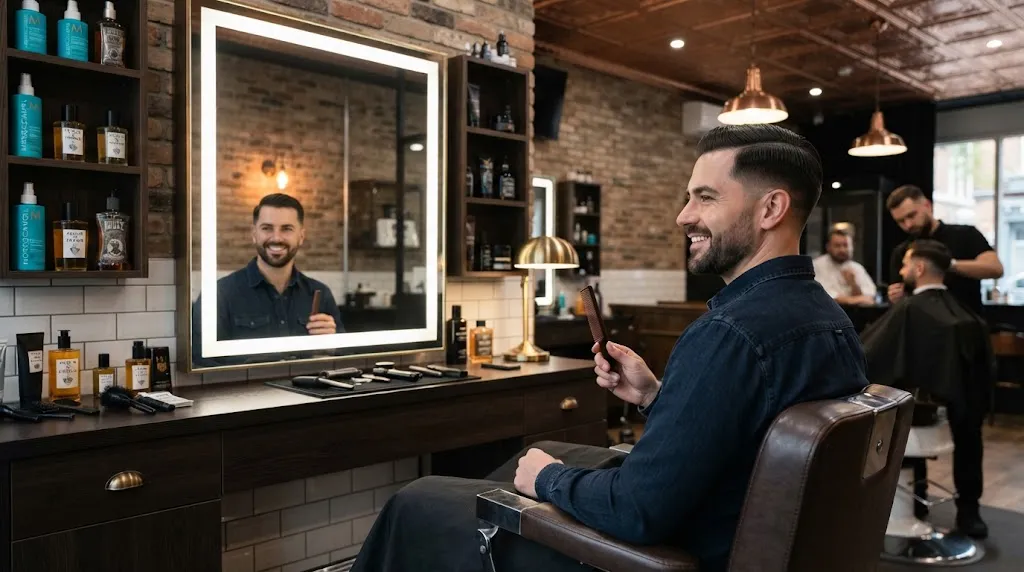
If you want the most versatile everyday option, the Classic Normal Slope is the safest starting point. Choose the Textured Top for movement, Side Part or Ivy League for a professional look, Middle Part for flow, Quiff for height, Fringe for forehead coverage, Hard Part for sharper definition, Short Slope for easier styling, or a Longer Top when styling flexibility matters most.
Which Normal Slope Haircut Is Right for You?
The best normal slope is not determined by the haircut name alone. Your hair texture, density, natural growth pattern, and desired amount of volume should determine how much length and weight your barber leaves on top and through the sides.
Normal Slope for Straight Hair
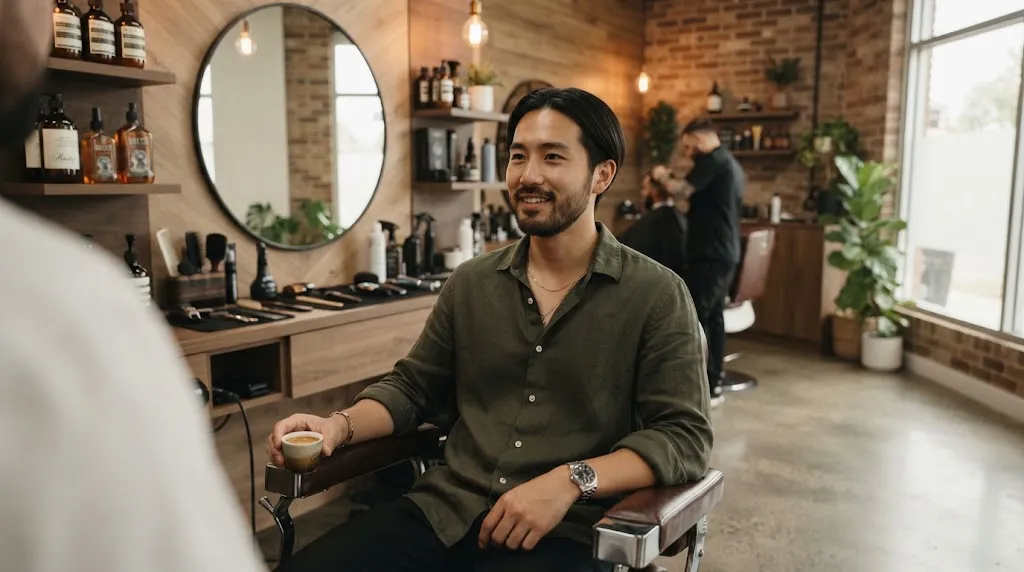
Straight hair makes the slope’s transition easy to see, so a clean, balanced blend usually works best. You can pair it with a side part, middle part, textured top, Ivy League, or longer top depending on your preferred look.
- Best choice: Classic, side-part, Ivy League, or textured normal slope.
- For fine straight hair: Keep enough length on top to create fullness rather than heavily thinning it.
- For thick straight hair: Remove excess bulk strategically while keeping the slope smooth.
- Avoid: An overly aggressive transition if you want a natural appearance.
Normal Slope for Wavy Hair
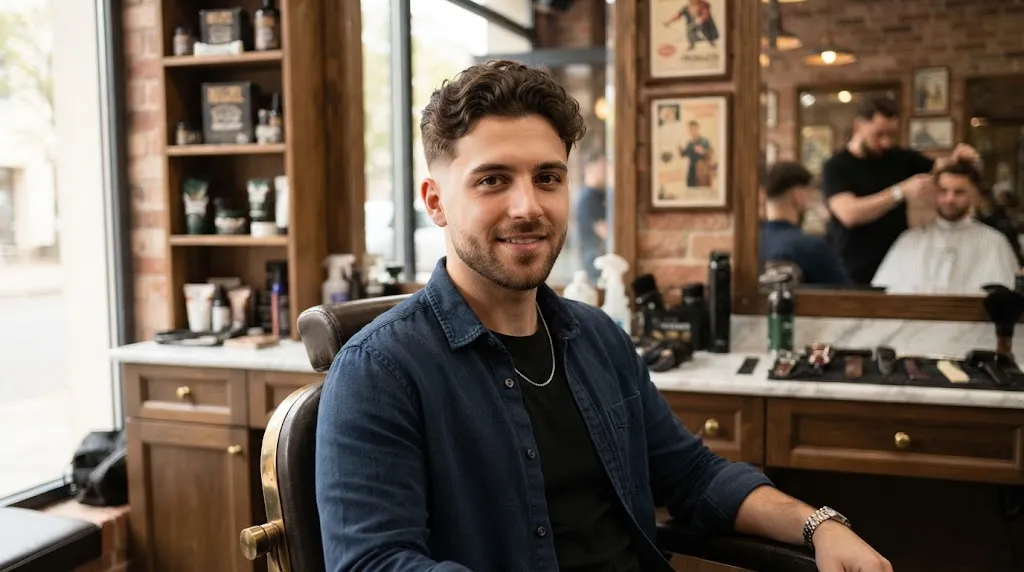
Wavy hair naturally adds movement to a normal slope and can make the transition look softer. The cut should work with the wave pattern instead of forcing the hair completely flat.
- Best choice: Textured top, longer top, middle part, or relaxed classic slope.
- For loose waves: Medium top length can provide natural movement without excessive styling.
- For stronger waves: Leave enough length for the wave pattern to form properly.
- Avoid: Removing too much weight from the sides if your hair expands as it dries.
Normal Slope for Curly Hair
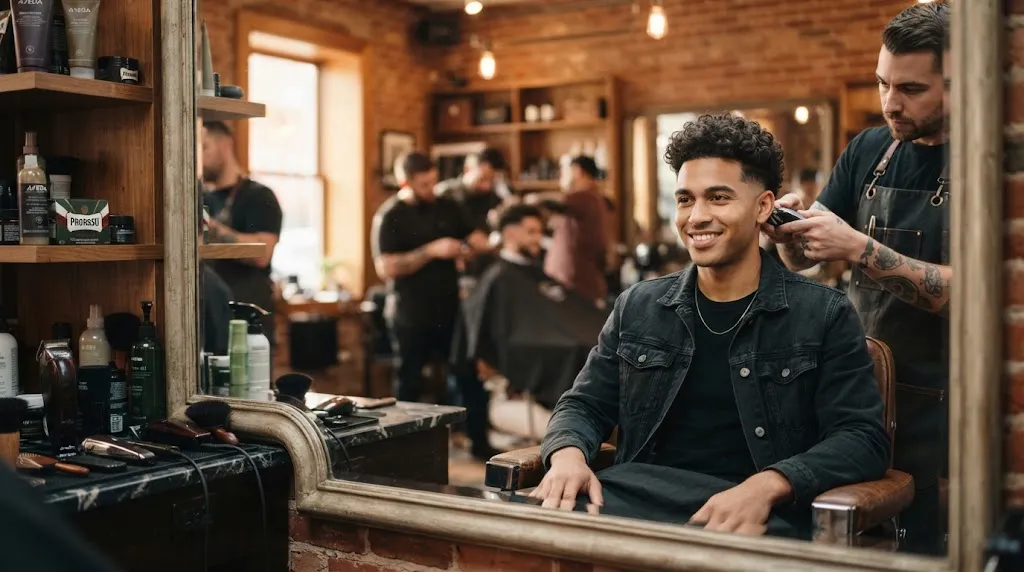
Curly hair needs more attention to how much length and weight are retained because curls can appear significantly shorter once dry. The normal slope should be adapted to the curl pattern rather than copied directly from a straight-hair reference.
- Best choice: A controlled normal slope with sufficient top length for the curls to retain their shape.
- For tighter curls: Keep the transition gradual and avoid creating an unnecessarily tight contrast.
- For looser curls: A textured or longer-top version can provide more styling flexibility.
- Important: Show your barber how your hair looks dry and naturally styled, not only when wet.
Normal Slope for Fine or Thin Hair

Fine or thin hair benefits from a normal slope that preserves visual fullness. Excessive thinning, very short sides, or too much separation can make the hair appear less dense.
- Best choice: Classic slope, Ivy League, side part, or a moderately textured top.
- Keep useful weight on the top instead of aggressively removing it.
- Controlled volume can make the hair look fuller.
- A softer transition can prevent an exaggerated contrast between the top and sides.
Avoid: Over-texturizing or heavily thinning the top when your goal is to create the appearance of more density.
Normal Slope for Thick or High-Density Hair
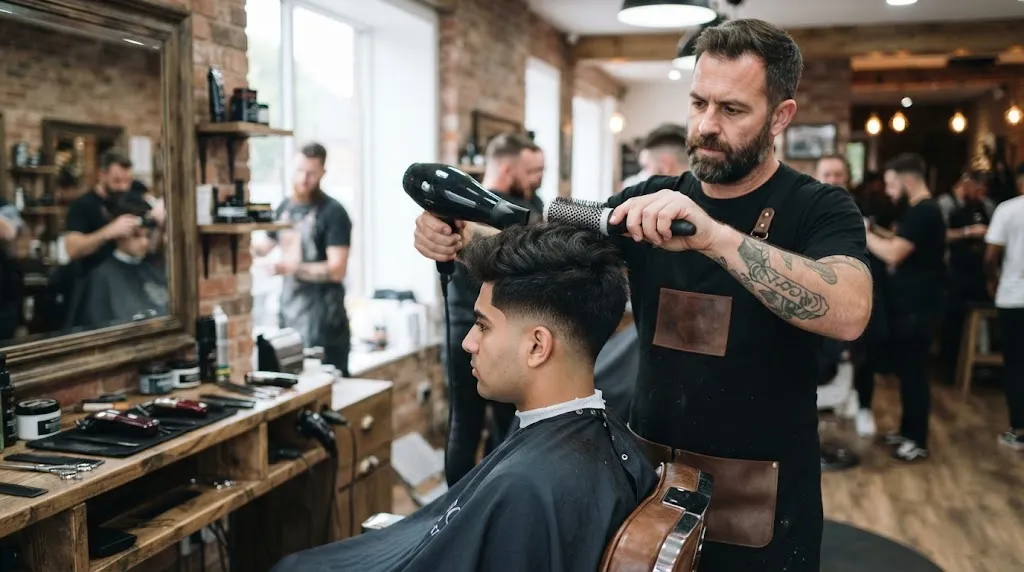
Thick hair gives you plenty of styling options, but uncontrolled weight can make the sides look wide or bulky. The barber should remove enough bulk to establish the slope while maintaining the natural structure of the haircut.
- Best choice: Textured top, side part, quiff, short slope, or classic slope.
- Reduce unnecessary bulk rather than simply making the sides extremely short.
- The top can retain more length because dense hair has enough volume to support different styles.
- A controlled texture can prevent the top from becoming too heavy.
Avoid: Leaving excessive weight around the sides and upper back if your hair naturally expands outward.
Normal Slope for Coarse Hair
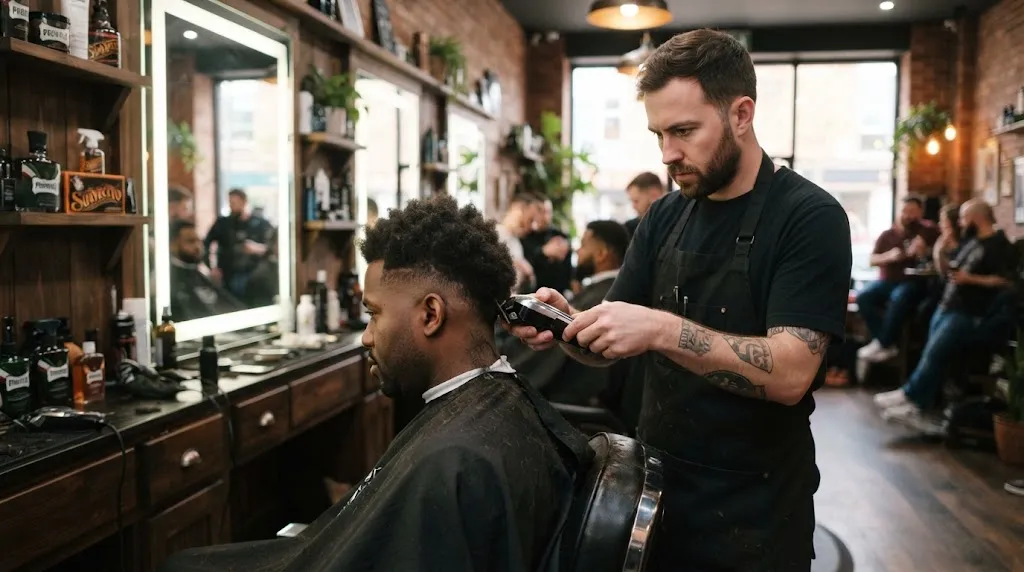
Coarse hair can hold shape well but may resist lying flat. A normal slope should account for the hair’s natural stiffness and direction of growth.
- Best choice: Short or classic normal slope with controlled top length.
- Keep the transition clean without creating an unnecessarily tight fade-like appearance.
- The top length should be chosen according to how the hair naturally sits.
- Light, strategic texturing can help manage bulk without destroying the haircut’s shape.
Avoid: A cut that relies on the hair lying completely flat if your natural texture does not behave that way.
Normal Slope for Low-Density Hair
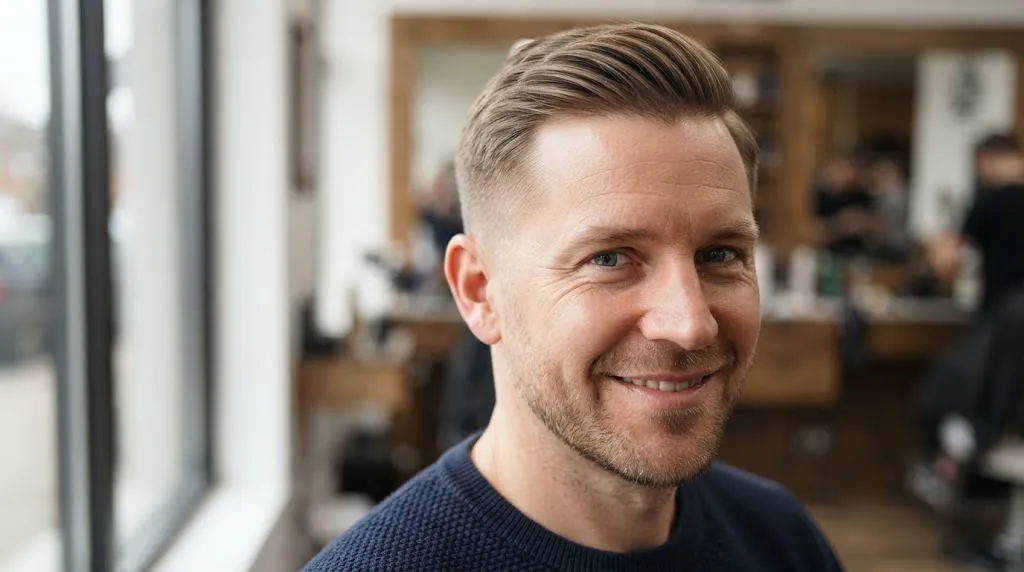
Low-density hair needs a slightly different approach from simply making everything shorter. The goal is to maintain a connected shape and avoid creating unnecessary scalp visibility.
- Best choice: Classic normal slope, Ivy League, or a moderate side-part style.
- Keep sufficient length where it helps create coverage.
- A softer slope can maintain more visual continuity between the top and sides.
- Styling the top in its natural growth direction can help avoid exposing unnecessary gaps.
Avoid: Extremely short sides combined with a heavily thinned top, as the contrast can make sparse areas more noticeable.
Quick decision rule: Choose your normal slope based on how your hair behaves naturally, not just how a reference haircut looks in a photograph. Fine or low-density hair generally benefits from preserving weight; thick or coarse hair may need controlled bulk removal; while wavy and curly hair need a slope adapted to their natural movement.
Normal Slope Haircut for Different Face Shapes
A normal slope can be adjusted to balance different face shapes by changing where the slope begins, how much volume remains on the sides, and how much height or length is kept on top. Instead of treating one slope as suitable for everyone, use your face shape to decide the overall proportions of the haircut.
Oval Face

An oval face is naturally balanced, so it can accommodate most normal-slope variations. The main goal is to preserve that balance rather than adding unnecessary width or height.
- Recommended slope: Classic, side-part, textured, or longer-top normal slope.
- Side volume: Moderate and controlled.
- Top volume: Low to moderate; extra height is optional.
- What to avoid: Excessive height or unusually heavy sides if they make the face look disproportionately long or wide.
Round Face
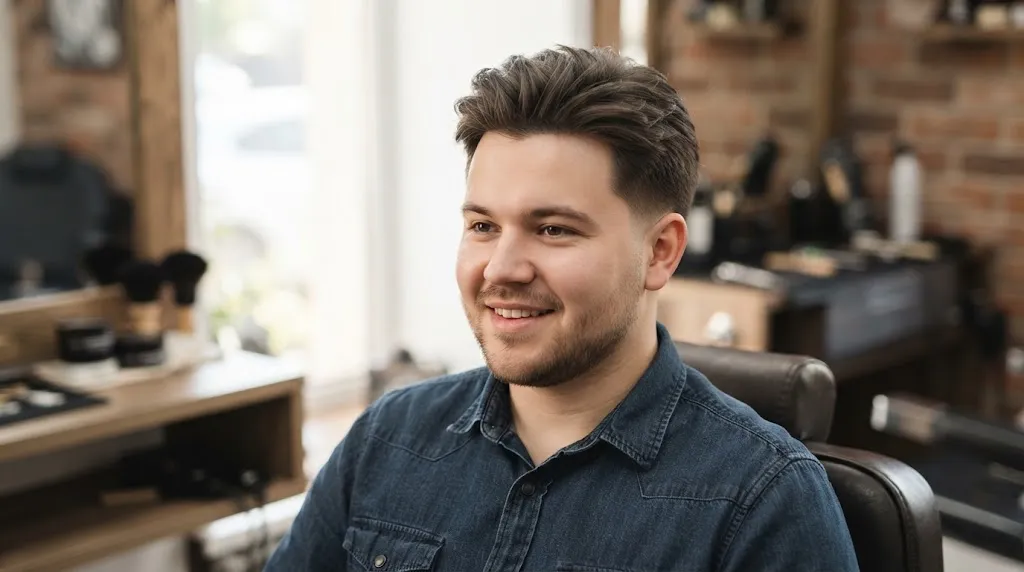
For a round face, the haircut should create some visual length without adding unnecessary width around the sides.
- Recommended slope: Normal slope with a moderately higher, controlled top.
- Side volume: Keep the sides relatively controlled rather than allowing them to expand outward.
- Top volume: Moderate height or upward styling can help elongate the overall appearance.
- What to avoid: Excessive side bulk, very wide silhouettes, or a completely flat top that emphasizes facial width.
Square or Angular Face

A square or angular face already has strong structural definition. A normal slope can either complement that structure with a clean shape or make it appear unnecessarily severe if the transition is too aggressive.
- Recommended slope: Classic or moderate normal slope with a softer transition.
- Side volume: Moderate; enough to maintain balance without creating excessive width.
- Top volume: Moderate and natural.
- What to avoid: An extremely high, tight transition if you do not want to emphasize the angular structure further.
Longer Face

With a longer face, the objective is generally to avoid adding excessive vertical height while maintaining enough side structure to balance the proportions.
- Recommended slope: Classic normal slope or a softer version with a moderate-length top.
- Side volume: Moderate; some natural side weight can help balance facial length.
- Top volume: Low to moderate rather than excessively tall.
- What to avoid: Very high-volume quiffs, excessive top height, or overly tight sides that make the face appear even longer.
Face Shape × Slope Height × Side Bulk
| Face shape | Recommended slope | Side volume | Top volume | What to avoid |
|---|---|---|---|---|
| Oval | Classic, normal, or textured | Moderate | Low–moderate | Excessive height or bulk |
| Round | Normal with controlled higher top | Low–moderate | Moderate | Wide sides and flat styling |
| Square/Angular | Classic, softer normal slope | Moderate | Moderate | Extremely tight/high contrast |
| Longer | Classic or softer normal slope | Moderate | Low–moderate | Excessive top height and very tight sides |
How to Tell Your Barber Exactly What You Want
The phrase “normal slope” alone may not be specific enough because barbers can interpret slope height, side length, and terminology differently. The safest approach is to describe the shape you want, the amount of length you want to retain, and what you specifically do not want.
What to Tell Your Barber

You can use this as a copy-ready request:
“I want a normal slope haircut with a gradual transition from the top toward the sides and back. Keep the top at [your preferred length], start the slope around [low/middle] on the sides, and leave some weight rather than making it look like a tight fade. Keep the sides balanced with my head shape, and finish the neckline naturally. I want the top styled as [textured/side part/middle part/quiff/etc.].”
If you do not want a fade, say so clearly:
“I want a softer normal slope, not a skin fade or very tight fade. Please keep some weight on the sides.”
If you want a sharper version, describe the desired contrast rather than simply saying “make it normal.”
Show Your Barber the Right Reference Photos

A reference photo is particularly useful when “normal slope” might be interpreted differently.
Ideally, show:
- Front view — demonstrates the overall top shape and front length.
- Side view — shows exactly where the slope begins and how much side bulk is retained.
- Back view — helps communicate the transition toward the neckline.
- Similar hair texture — straight, wavy, or curly hair can produce very different results from the same cut.
- Similar density — a style designed for thick hair may not translate directly to low-density hair.
- Similar face shape — useful for judging the proportions rather than simply copying the hairstyle.
The side and back views are especially important because a front-facing hairstyle photo may not show how the slope is actually constructed.
Should You Give a Haircut Number or Guard Number?

A guard number can help communicate how short a particular section should be, but a number alone does not completely describe a normal slope.
For example, saying “use a No. 2” does not tell the barber:
- Where the transition should begin.
- How gradually the length should increase.
- How much weight should remain above the shortest section.
- How the sides should connect with the top.
- How the neckline should be finished.
That is why guard number + desired shape + reference photo is generally clearer than giving a number by itself.
If you do not know the exact guard numbers, don’t guess. Explain the desired length and transition and let the barber determine the appropriate technique for your hair.
What NOT to Say to Your Barber
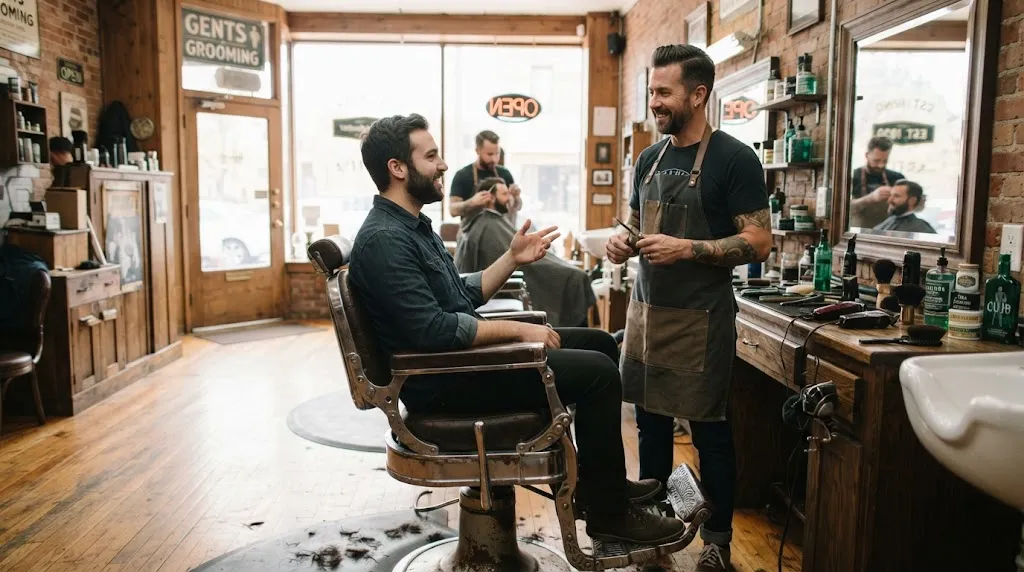
Vague instructions can produce a haircut that is technically neat but different from what you imagined.
Avoid relying only on statements such as:
- “Just give me a normal slope.”
- “Make the sides short.”
- “Use a number 2 everywhere.”
- “Make it like this photo.” — when the photo only shows the front.
- “Make it clean.”
- “Do whatever looks good.” — unless you genuinely want the barber to choose the shape.
Instead, specify slope height, top length, side weight, neckline finish, and desired top style, then show front, side, and back references when possible.
The key is not to memorize barber terminology. Communicate the shape you want clearly enough that your barber can reproduce it on your particular hair.
How a Normal Slope Haircut Is Cut
A normal slope is created by controlling the length from the top down through the sides and back, then blending those sections so the change is gradual rather than abrupt. The exact technique and clipper or scissor lengths should be adapted to the person’s hair texture, density, head shape, and desired finish.
Establish the Top Length
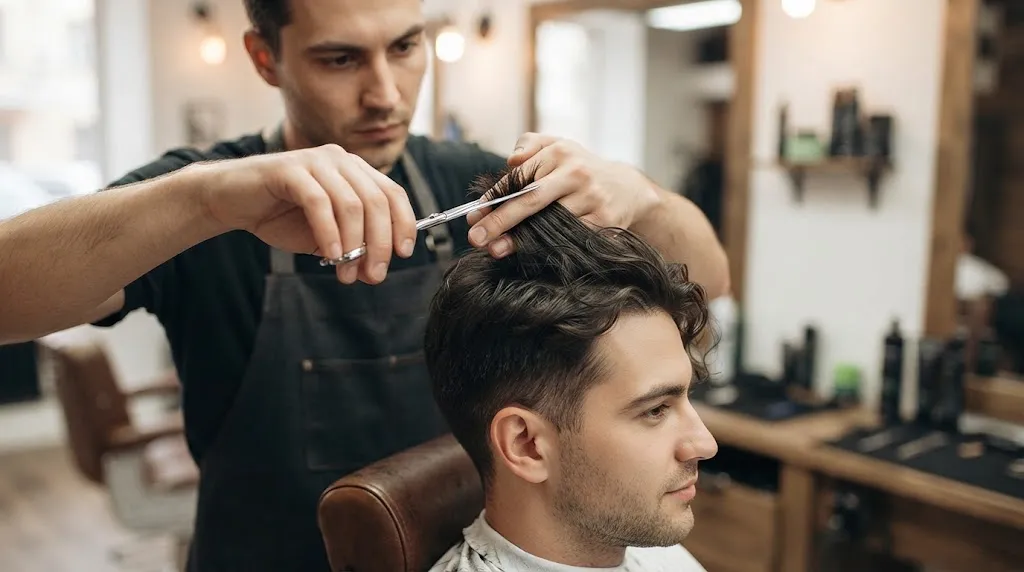
The process starts by deciding how much length should remain on top. The top length determines the final styling options, whether the goal is a natural finish, side part, textured top, or quiff.
The barber considers the existing length, hair density, natural growth direction, and the requested hairstyle before removing unnecessary length.
Set the Side Length
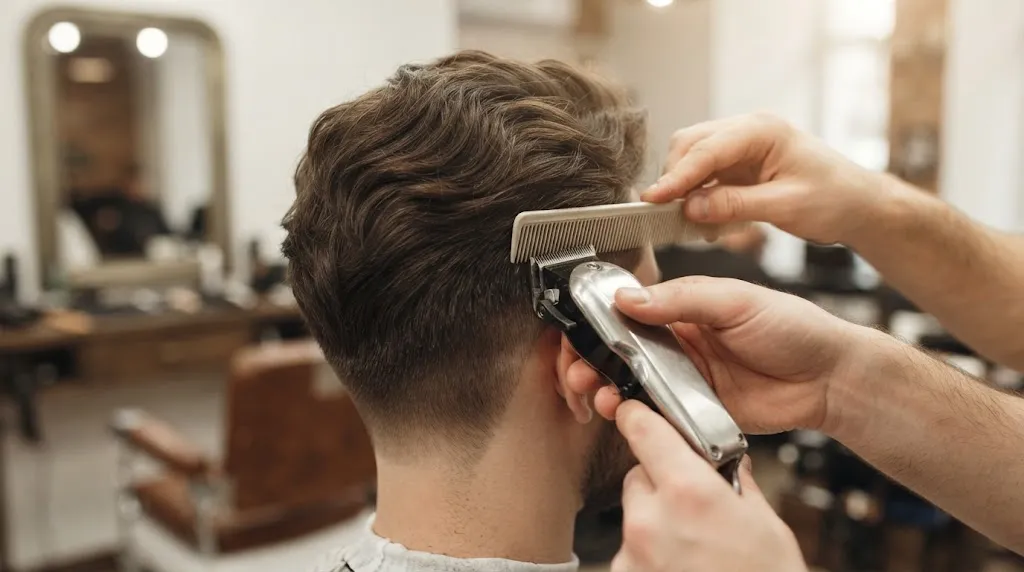
The sides are then shortened while retaining enough weight to create the characteristic softer appearance of a normal slope.
The desired side length should be discussed beforehand because “short sides” does not necessarily mean a fade. If you want a natural slope, tell your barber that you want some side weight retained rather than taking the sides extremely tight.
Create the Gradual Slope
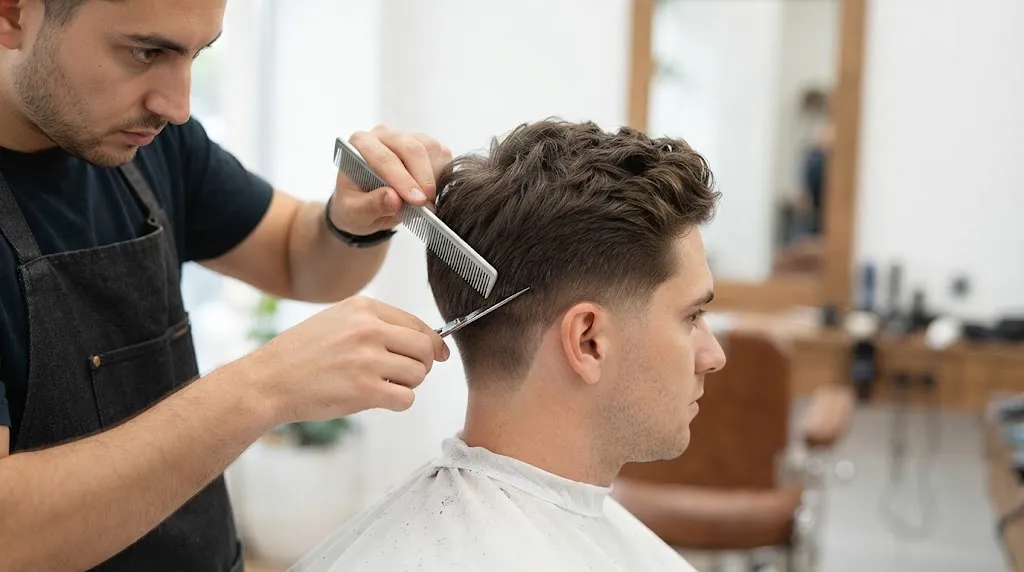
The defining step is establishing the progression from longer hair toward shorter hair.
Rather than creating one abrupt line, the barber gradually reduces the length as the haircut moves downward. The transition height can be adjusted according to whether you want a lower, balanced, or stronger slope.
The goal is a continuous change in length, not a visible step between sections.
Blend the Sides and Back
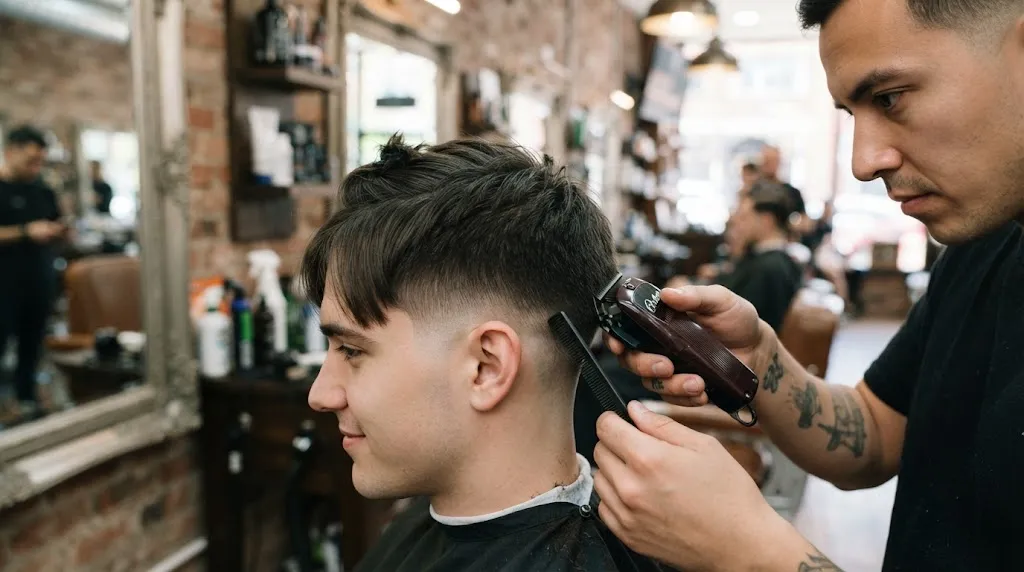
The sides and back are blended so that the different lengths flow into one another without obvious lines or disconnected areas.
Extra attention is needed around the areas where the head changes shape because excessive weight there can make the haircut appear rounded or bulky. The barber adjusts the blend according to the natural contour of the head.
Connect the Top to the Slope
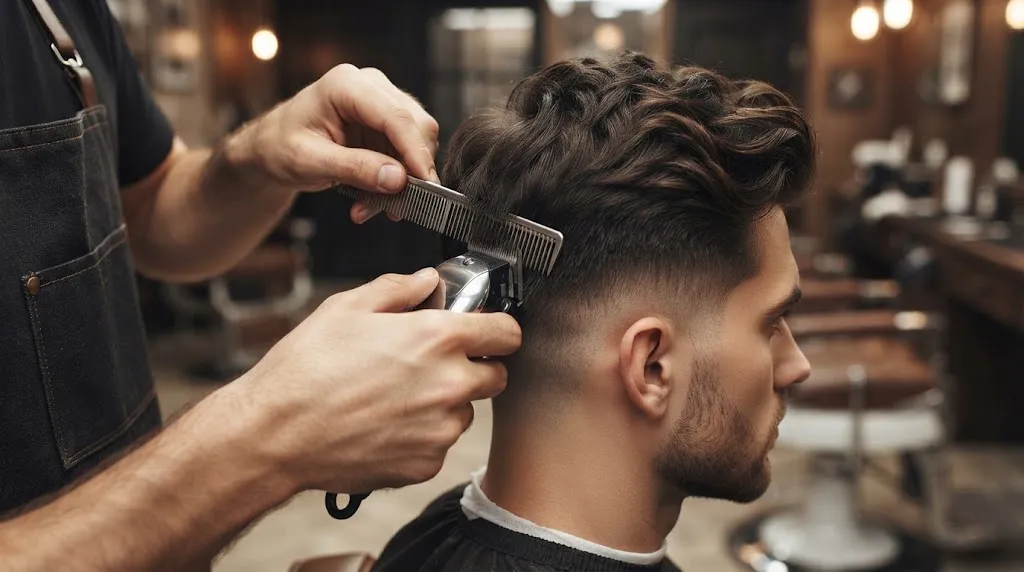
The top must connect naturally with the sloped sides and back. If too much weight remains at the connection point, the haircut can look disconnected; if too much is removed, the top can lose its intended shape.
The barber therefore checks the transition while preserving enough length and weight for the chosen top style.
Check the Shape From Front, Side and Back
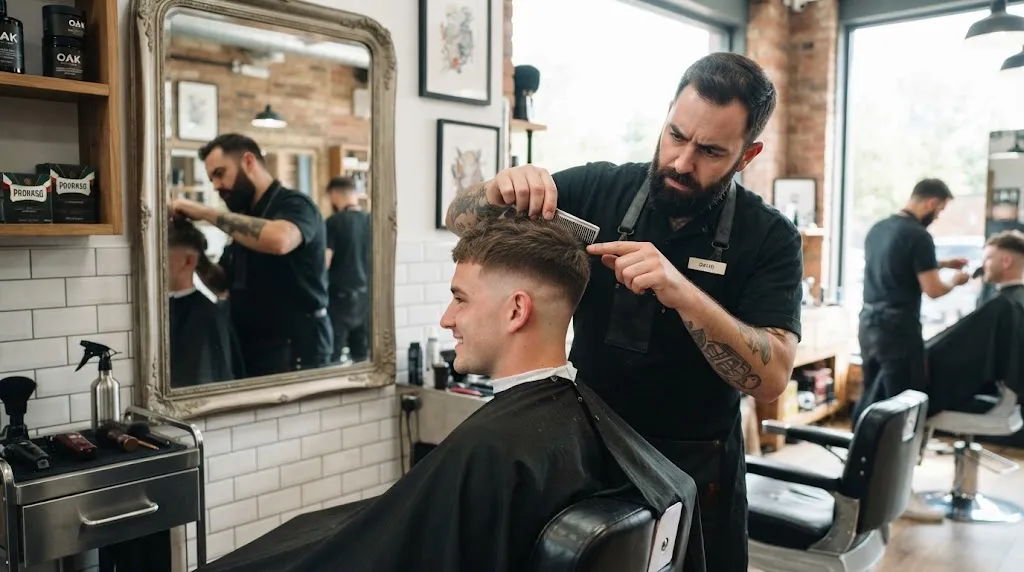
A slope can look correct from the front but appear uneven or too high from the side or back. A proper final check should therefore consider all three views.
The barber should check:
- Front: overall balance and top shape.
- Side: slope height, side bulk, and top-to-side connection.
- Back: symmetry, transition, and neckline shape.
- Both sides: whether the overall silhouette is balanced.
This is also the stage where unwanted weight, visible lines, or uneven transitions can be corrected.
Finish and Style the Hair
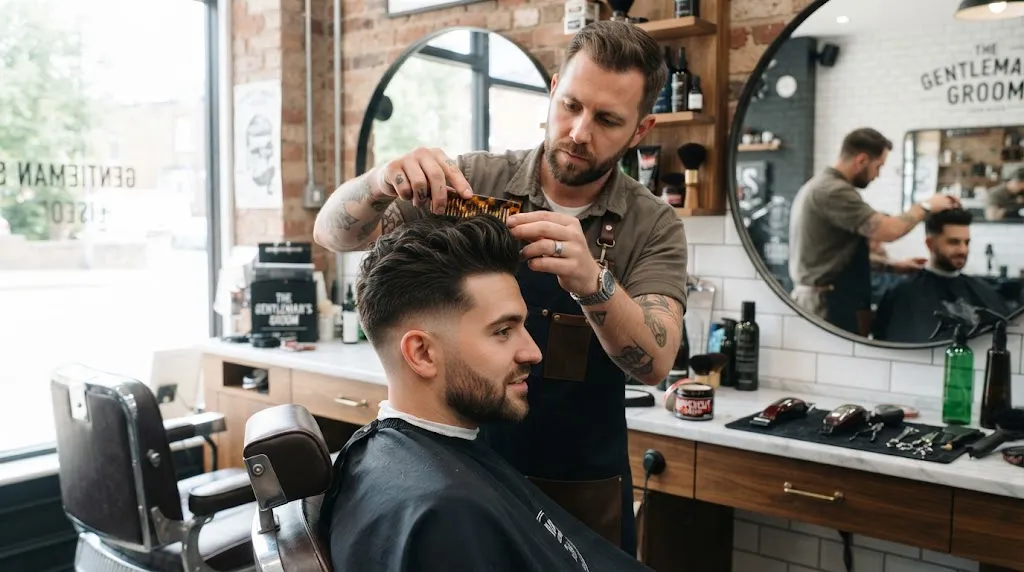
Once the shape is complete, the hair is dried and styled according to the desired finish. This final step helps reveal how the haircut actually sits when dry and whether the top has the intended direction and volume.
For example, the hair can be styled naturally, swept to one side, textured, brushed back, or lifted into a quiff depending on the top length.
Video Guide: See the Slope-Cutting Process
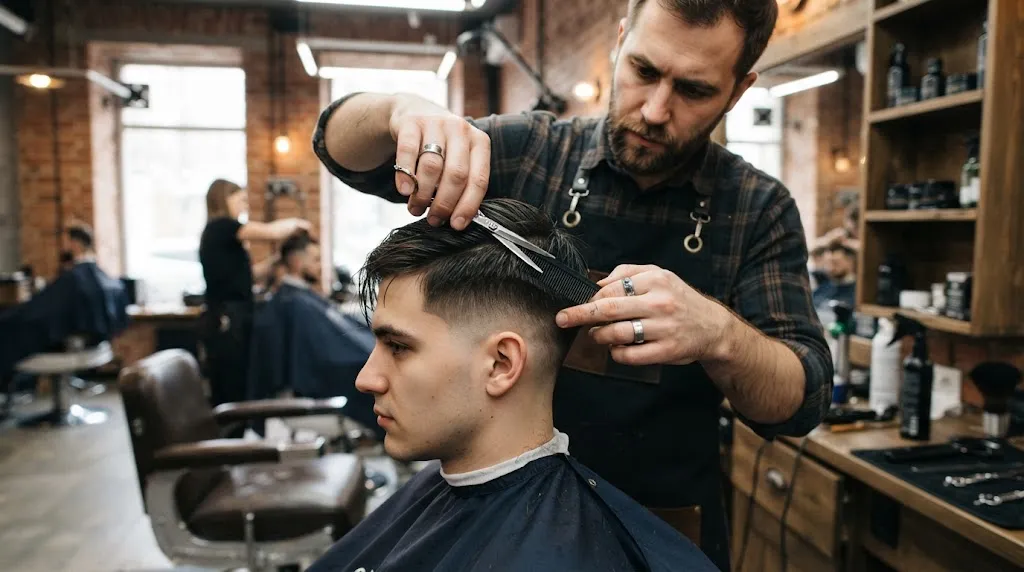
[Place the supplied haircut-process video here]
The video should sit directly after the cutting process so readers can visually compare the written steps with the actual progression of the haircut. Keep the video relevant to the normal-slope cutting or styling process rather than adding unrelated footage.
How to Style a Normal Slope Haircut
The normal slope is versatile because the gradual sides and back can support several different top styles. Your styling method should mainly depend on the top length, hair texture, density, and the level of hold or volume you want.
Natural Everyday Style

For an everyday look, work with the hair’s natural direction instead of forcing it into a rigid shape.
After drying, use a small amount of a lightweight styling product if needed and shape the top with your fingers or a comb. Keep the sides controlled so the natural slope remains visible.
Best for: Straight and wavy hair, especially when you want minimal daily styling.
Office or Professional Style

For a professional setting, keep the top controlled and the overall silhouette clean without making the slope excessively sharp.
A side-swept or neatly combed top works particularly well with the balanced structure of a normal slope. Avoid excessive texture or height if you want a conservative office appearance.
Best for: Classic, side-part, and Ivy League normal-slope variations.
Side-Parted Style
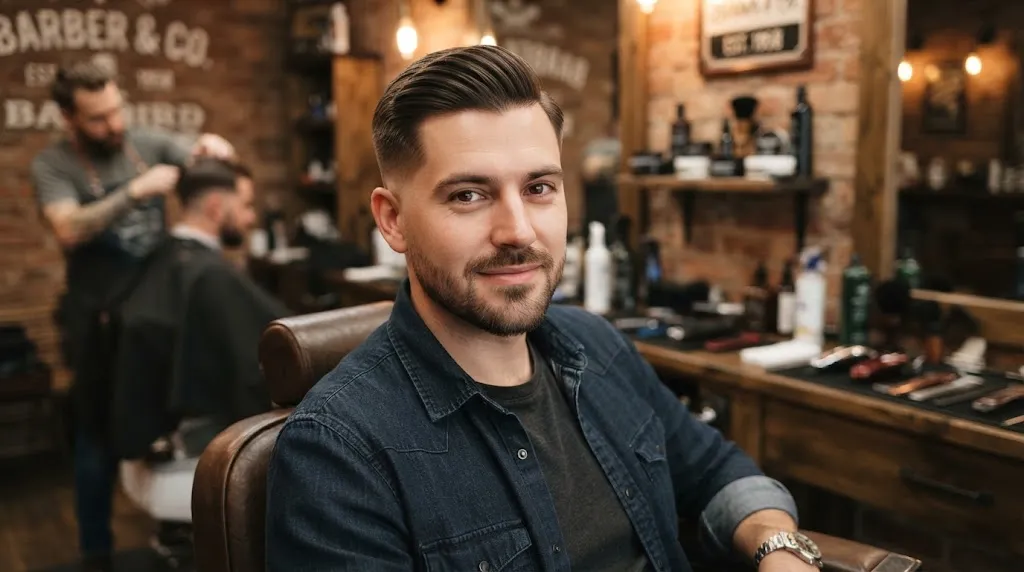
Create the part according to your natural growth direction, then direct the longer section across or slightly backward.
Use enough styling product to maintain the part without making the hair look overly stiff or greasy.
Best for: Straight and slightly wavy hair with enough top length to hold a defined direction.
Textured Style

Texture works by separating the top into smaller sections rather than flattening everything into one uniform shape.
Dry the hair while creating movement, then use a small amount of matte or low-shine styling product to define individual sections.
Best for: Medium-to-thick hair and naturally wavy textures.
Quiff Style

For a quiff, direct the front upward and slightly backward while drying it. Once the desired height is established, use a suitable styling product to maintain the shape.
Keep the height proportionate to your face shape. Excessive height can make a longer face appear longer, while controlled height can add useful structure to a rounder face.
Best for: Medium-to-thick hair with sufficient length at the front.
Messy/Casual Style

A messy finish should still have intentional shape. Instead of creating random volume, use your fingers to separate the top and allow some natural movement.
A light styling product can provide definition while keeping the finish flexible.
Best for: Wavy, textured, or medium-density hair.
Styling According to Hair Type

Straight hair: Focus on direction and controlled volume. A side part, natural finish, or textured top is usually easy to create.
Wavy hair: Work with the natural wave instead of brushing it completely flat. A textured or relaxed finish can emphasize the movement.
Curly hair: Allow the curls to form naturally and avoid styling techniques that unnecessarily disrupt the curl pattern. The top should have enough length to support the curls.
Fine hair: Avoid excessive product and heavy styling that can flatten the hair. Controlled volume and a lighter texture can help preserve a fuller appearance.
Thick hair: The main challenge is controlling excess bulk. Style the top according to its natural direction and avoid adding unnecessary volume if the hair already has substantial density.
Key styling principle: The goal is not to force every normal slope into the same hairstyle. The haircut provides the structure; your hair type, top length, and desired finish determine how that structure should be styled.
How to Maintain a Normal Slope Haircut
A normal slope stays balanced when the transition, side weight, and neckline are reshaped before the growing hair changes the original silhouette too much. Maintenance is not only about getting frequent trims; it is also about knowing how the slope changes as your hair grows and how to manage that change between barber visits.
How Often Should You Get a Trim?
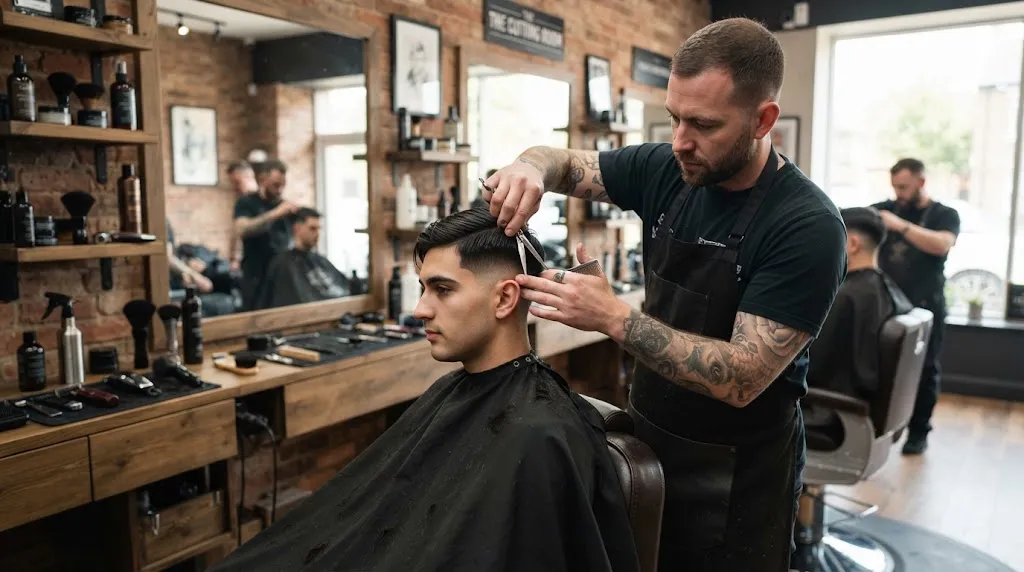
For a clearly defined normal slope, a trim every few weeks is a practical starting point, but the exact timing depends on how quickly your hair grows and how precise you want the haircut to remain.
You may need an earlier trim if:
- The sides begin looking noticeably wider.
- The slope becomes difficult to see.
- The neckline starts losing its shape.
- Your top-to-side proportions no longer look balanced.
If you prefer a more natural, grown-out appearance, you can wait longer between appointments.
What Happens as the Slope Grows Out?

As the hair grows, the shortest areas gain length first visually, while the previously longer sections continue to build weight. This gradually reduces the contrast that made the original slope visible.
Common changes include:
- The sides becoming fuller.
- The transition looking softer.
- The neckline becoming less defined.
- The top and sides appearing less separated.
- The haircut losing some of its original shape.
This does not necessarily mean the haircut has gone wrong. It simply means the original proportions have changed through growth.
How to Style It During the Grow-Out Stage
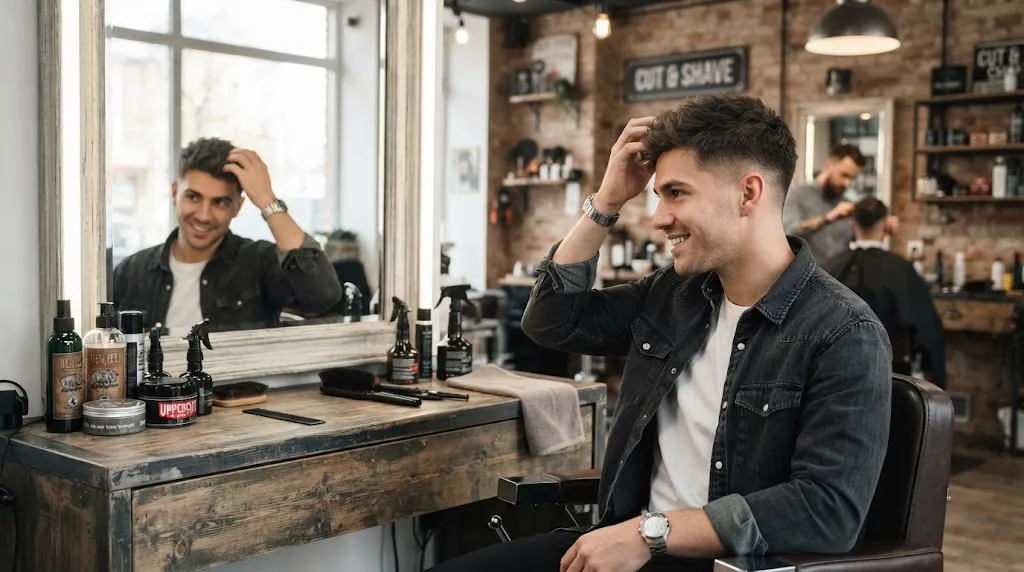
During grow-out, avoid trying to recreate the freshly cut shape by aggressively styling the sides.
Instead:
- Direct the top in its natural growth direction.
- Keep excessive side volume controlled.
- Use a light styling product when additional control is needed.
- Try a side-swept or textured finish if the original shape has softened.
- Allow the additional length to become part of the style if you are intentionally growing it out.
A slightly softer normal slope can still look intentional during this stage if the top and sides remain balanced.
When the Slope Needs Reshaping
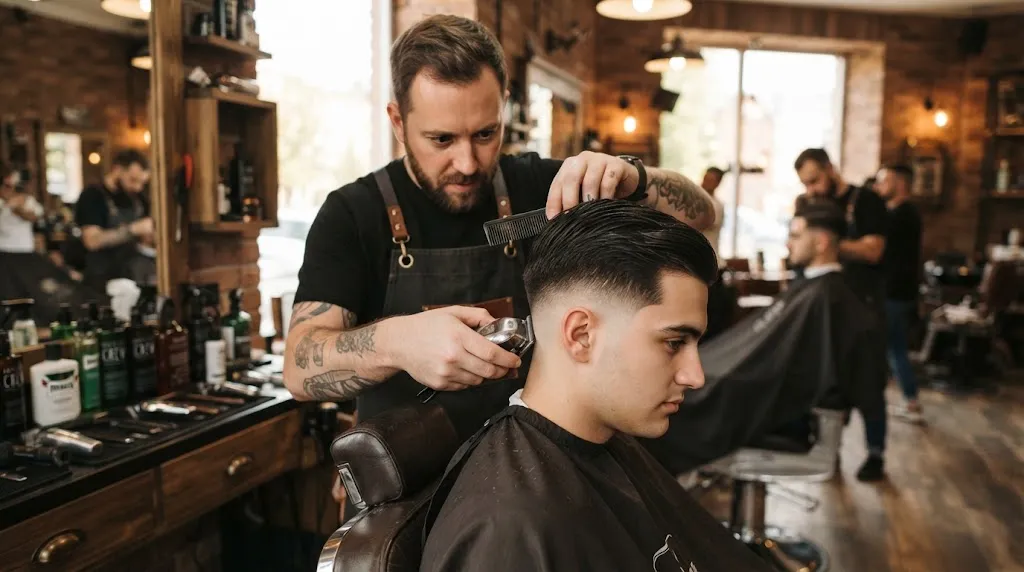
The slope generally needs reshaping when the gradual transition is no longer visually balanced.
Look for:
- A noticeable buildup of weight around the sides.
- An uneven transition between sections.
- A neckline that has become untidy.
- The top appearing disconnected because the surrounding hair has grown differently.
- A shape that no longer matches the original reference or styling goal.
When this happens, tell your barber that you want to restore the original slope rather than automatically converting it into a fade.
How to Keep the Sides From Looking Too Bulky
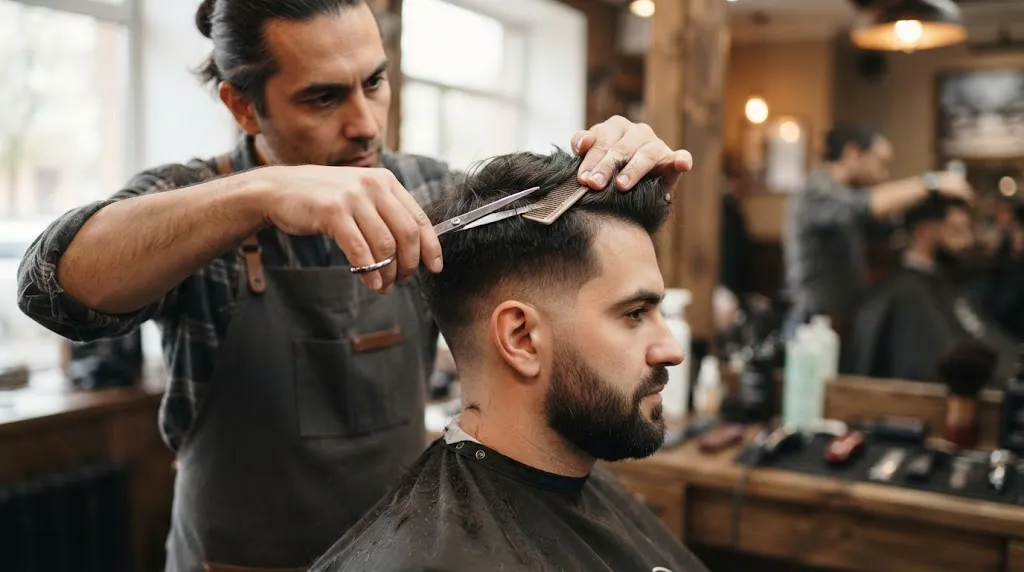
Side bulk is one of the most common issues during normal-slope grow-out. The solution is not automatically to cut the sides extremely short.
Ask your barber to:
- Remove excess weight where it is actually building up.
- Preserve the gradual transition.
- Keep enough side length to maintain the normal-slope appearance.
- Check the silhouette from the side as well as the front.
- Avoid creating an unnecessarily tight fade just to reduce bulk.
The correct amount of side weight depends heavily on your hair density and natural growth pattern.
Common Normal Slope Haircut Problems & How to Fix Them
A normal slope can look very different from what you requested when the transition height, side weight, top length, or reference image is misunderstood. The solutions below focus on identifying the actual problem and communicating the correction clearly to your barber.
The Slope Was Cut Too High
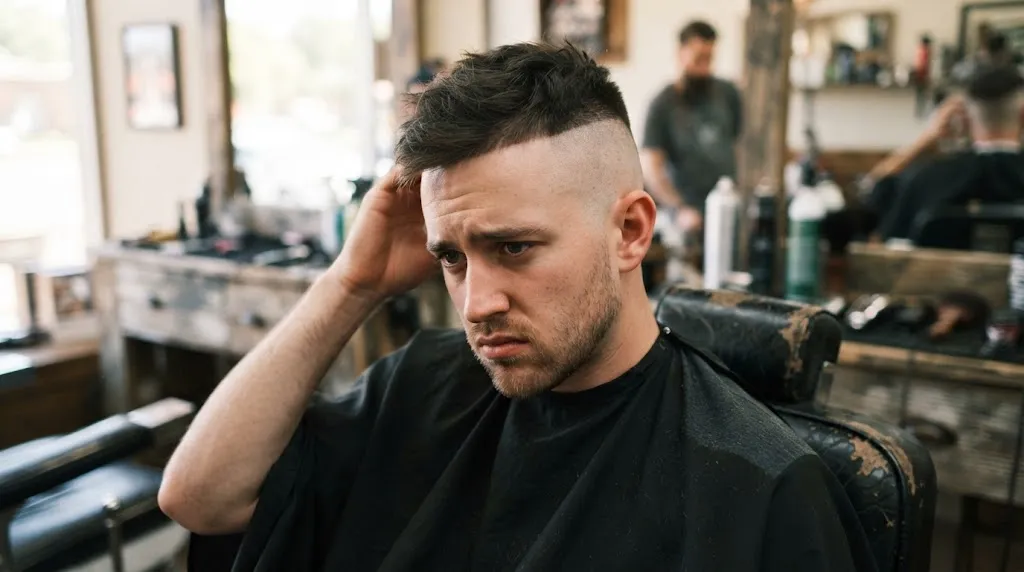
Problem: The transition starts much higher than you expected, creating more contrast and making the haircut resemble a high slope or fade.
Likely reason: “Normal slope” was interpreted differently, or the desired transition height was never clearly specified.
Correction: Explain where you wanted the transition to begin and ask the barber to retain more length below that point. If the hair has already been cut too short, the immediate correction may be limited; allowing it to grow before reshaping can produce a better result.
Prevention: Show a side-view reference and explicitly say, “I want the slope to start around this height, not higher.”
The Sides Look Too Round or Bulky
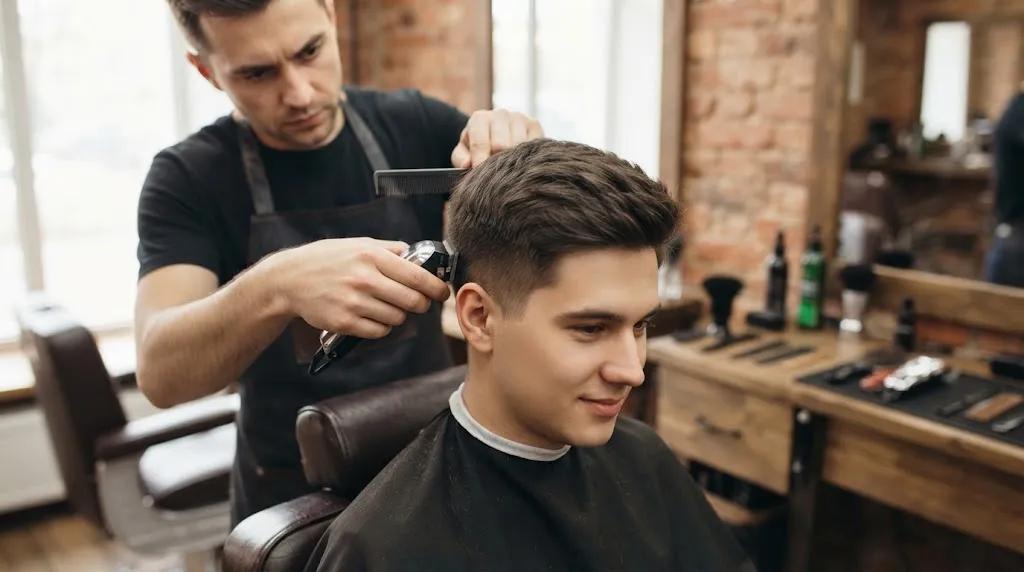
Problem: The sides expand outward and make the head appear wider.
Likely reason: Too much weight has accumulated around the widest part of the head, particularly with thick or coarse hair.
Correction: Ask the barber to remove excess bulk while maintaining the gradual slope instead of simply creating a tighter fade.
Prevention: Tell the barber how much side weight you want retained and show a side profile of the desired shape.
The Sides Were Cut Too Short
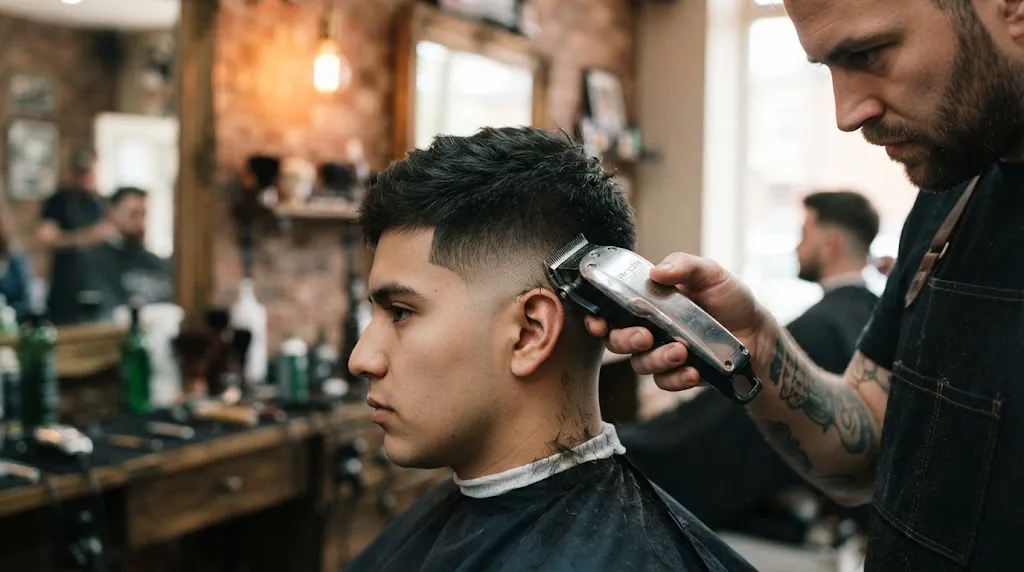
Problem: The sides look much tighter than a normal slope should, increasing contrast and potentially making the haircut resemble a fade.
Likely reason: A clipper guard or fade technique was used more aggressively than intended.
Correction: There is no immediate way to restore hair that has already been cut. Let the sides grow and explain that you want more retained weight at the next appointment.
Prevention: State clearly that you want a gradual normal slope rather than very short or skin-tight sides.
Too Much Scalp Is Showing
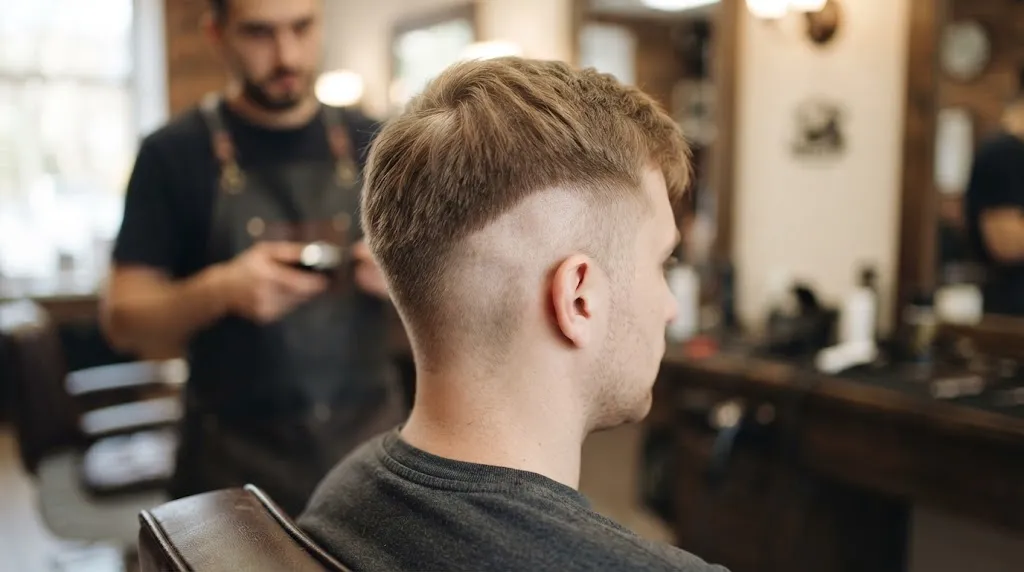
Problem: The sides expose more scalp than you wanted.
Likely reason: The shortest section was cut too close, or the transition was made too aggressive for your hair density.
Correction: Allow the area to grow before reshaping and request a softer, longer transition next time.
Prevention: If scalp visibility is a concern, communicate that you want more coverage and side weight rather than relying only on a guard number.
The Slope Looks Uneven
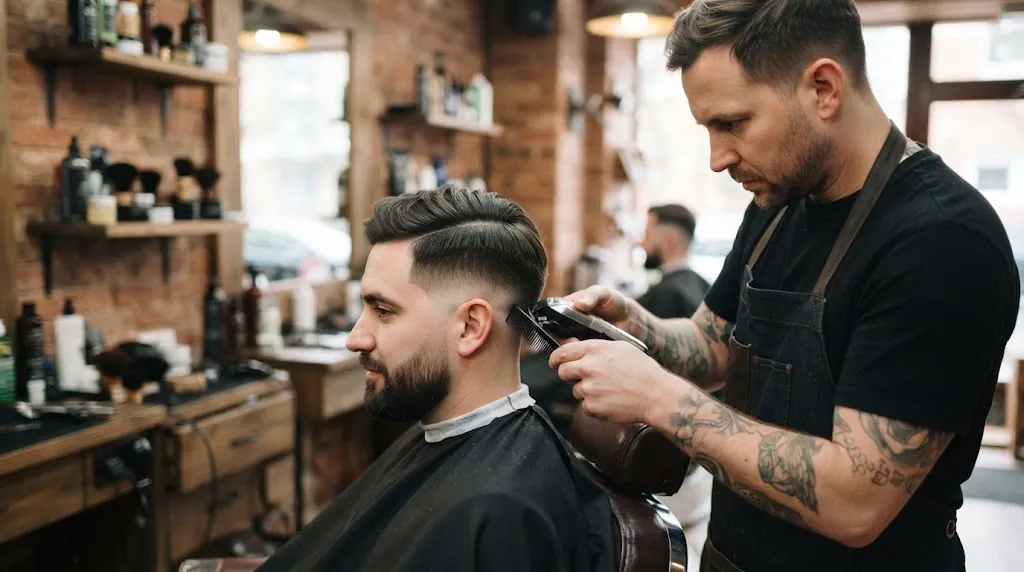
Problem: One side appears higher, heavier, or differently blended from the other.
Likely reason: Uneven growth patterns, head shape, or inconsistent blending can affect the finished silhouette.
Correction: Have the barber compare both sides from the same viewing angle and correct the heavier or higher section while preserving the overall shape.
Prevention: Check the haircut from the front, both sides, and the back before leaving the barber.
The Top Looks Disconnected From the Sides
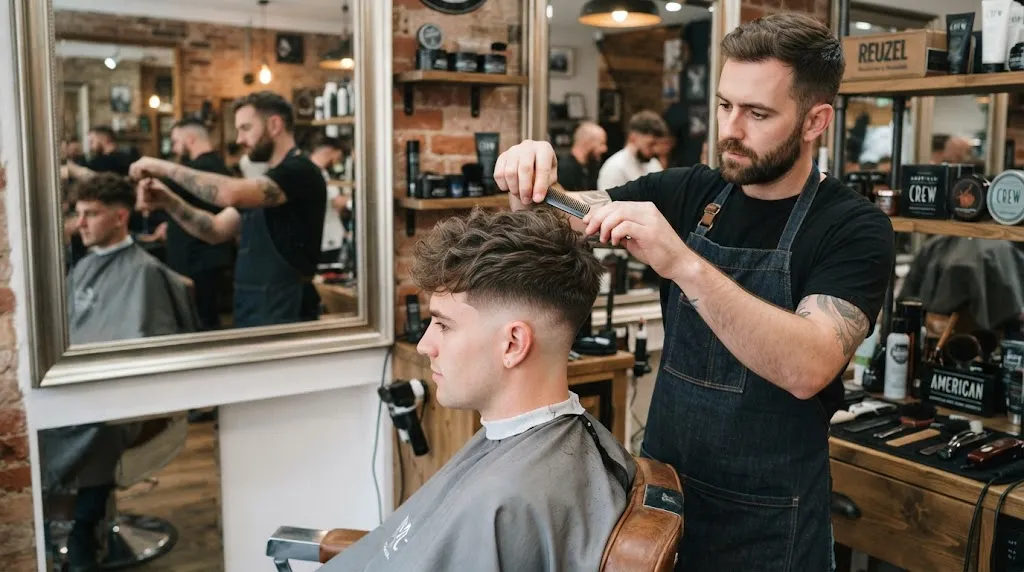
Problem: There is a visible jump between the longer top and the shorter sides rather than a continuous transition.
Likely reason: The connection area was not blended sufficiently, or too much weight was left at the transition point.
Correction: Ask the barber to soften the connection while keeping the intended top length.
Prevention: Explain that you want the top connected smoothly into the slope, not simply separated from it.
The Haircut Looks Different From the Reference Photo
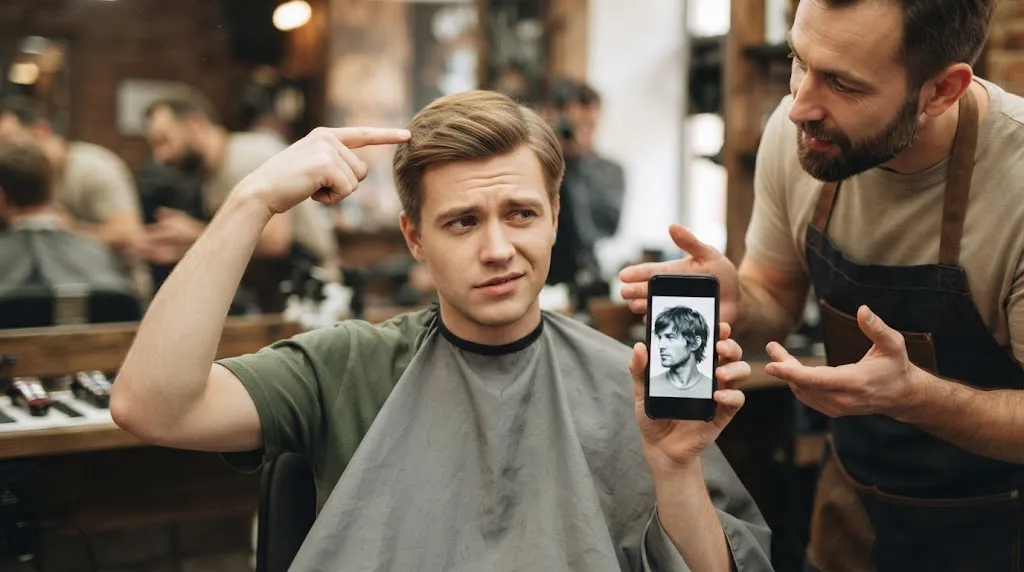
Problem: The finished haircut has the same general name but a noticeably different shape.
Likely reason: The reference may show a different slope height, hair density, texture, face shape, or styling method.
Correction: Identify the specific difference rather than saying only, “It doesn’t look like the picture.” For example, explain that the sides are too tight, the slope is too high, or the top is too short.
Prevention: Use reference photos showing front, side, and back views, ideally with hair texture and density similar to yours.
The Slope Looks Good From the Front but Wrong From the Side
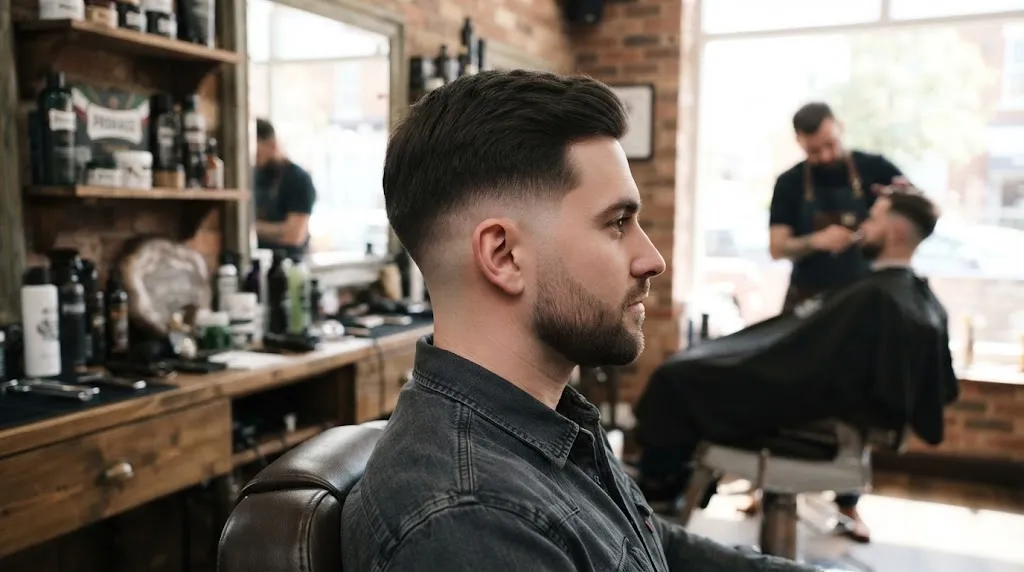
Problem: The front view looks correct, but the side profile appears too high, too rounded, too flat, or disconnected.
Likely reason: The front photo does not show the transition height or side bulk clearly enough.
Correction: Have the barber assess the side silhouette and adjust the transition or excess weight where necessary.
Prevention: Never rely exclusively on a front-facing reference. A clear side profile is essential for communicating a slope haircut.
The Haircut Becomes Difficult to Manage During Grow-Out
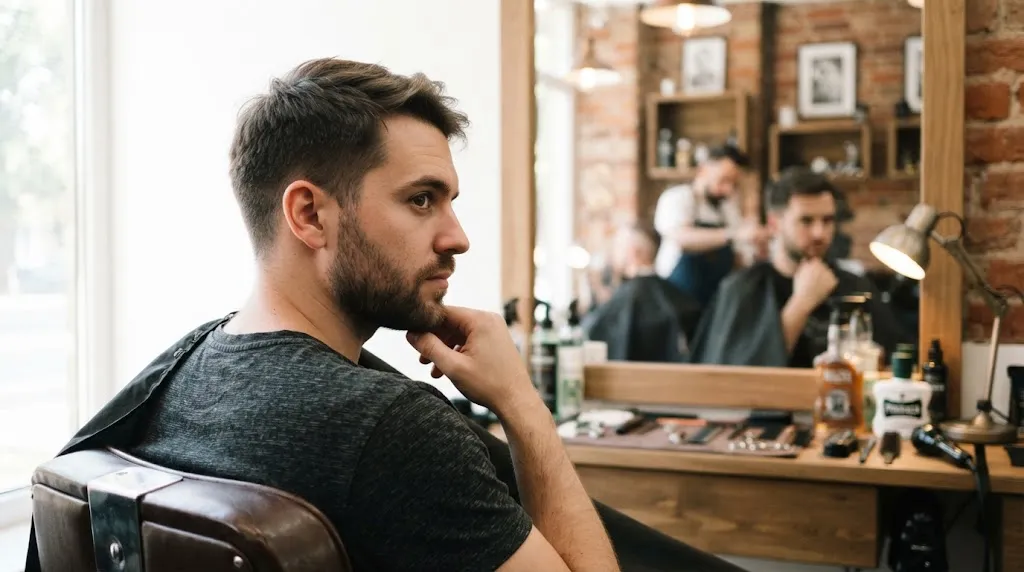
Problem: The sides become bulky while the top still looks relatively controlled.
Likely reason: Different sections have grown at different visual rates, changing the original proportions.
Correction: Have only the areas that have become excessively heavy reshaped rather than cutting the entire haircut dramatically shorter.
Prevention: Decide before the haircut whether you want to maintain the slope regularly or intentionally grow it into a longer style.
The Barber Gives You a Fade Instead of a Normal Slope
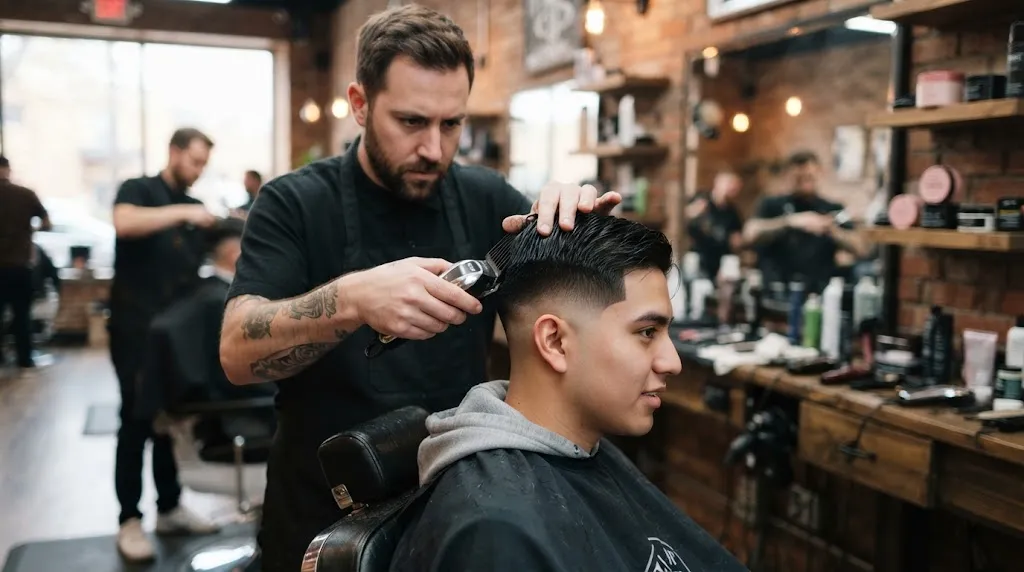
Problem: The sides are much tighter and the scalp is more visible than you wanted.
Likely reason: The terms “slope,” “taper,” and “fade” can be interpreted differently, particularly when the desired side length has not been explained.
Correction: If possible, explain that you want a gradual slope with retained side weight and no skin-tight fade. If the haircut is already too short, allow it to grow before attempting to restore the intended shape.
Prevention: Do not communicate only the haircut name. Specify the transition height, minimum side length, amount of retained weight, and desired finish, and use a side-view reference.
Real-world rule: If the haircut matters to you, communicate the shape, not just the name. “Normal slope” tells the barber the general direction; the transition height, side weight, top length, and reference photos tell them what your version should actually look like.
Normal Slope Haircut Mistakes to Avoid
Choosing the right normal slope is not only about the haircut name. The final result also depends on your hair characteristics, the height of the transition, how much weight is left on the sides, and how clearly you communicate the desired shape to your barber.
Choosing a Reference With a Different Hair Type

A reference photo is most useful when the person’s hair is reasonably similar to yours.
Straight, wavy, curly, fine, and thick hair can produce different results from the same haircut structure. A style that looks smooth and controlled on straight hair may appear fuller or more textured on thick or wavy hair.
Better approach: Choose a reference with a similar hair type, density, and approximate top length. Then tell your barber what you like about the shape rather than expecting the photo to be reproduced exactly.
Choosing the Wrong Slope Height
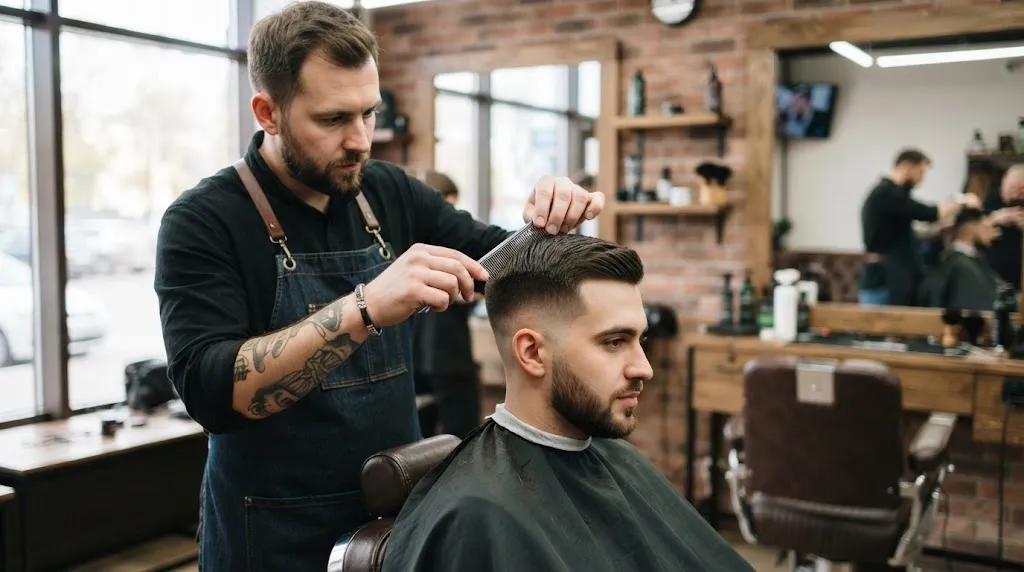
The height of the slope strongly affects the overall appearance.
A lower transition generally leaves more side weight and produces a softer appearance, while a higher transition creates more contrast and can make the haircut look closer to a high slope.
Avoid: Choosing a reference simply because you like the hairstyle on top without checking where the transition begins.
Better approach: Use a clear side-view photo and point out the approximate height you want.
Removing Too Much Side Weight
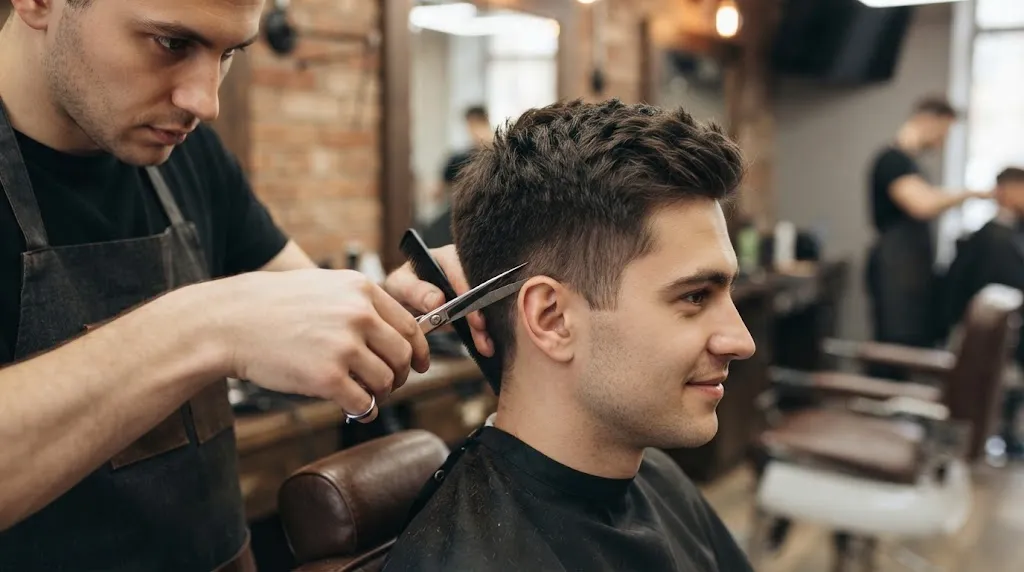
Taking too much weight away from the sides can change a normal slope into a much tighter haircut.
This is especially important if you want a softer, natural appearance or have a face shape that benefits from some side balance.
Better approach: Tell your barber how much side bulk you want to retain and ask for the sides to remain connected to the gradual slope.
Asking for a Number Instead of a Shape
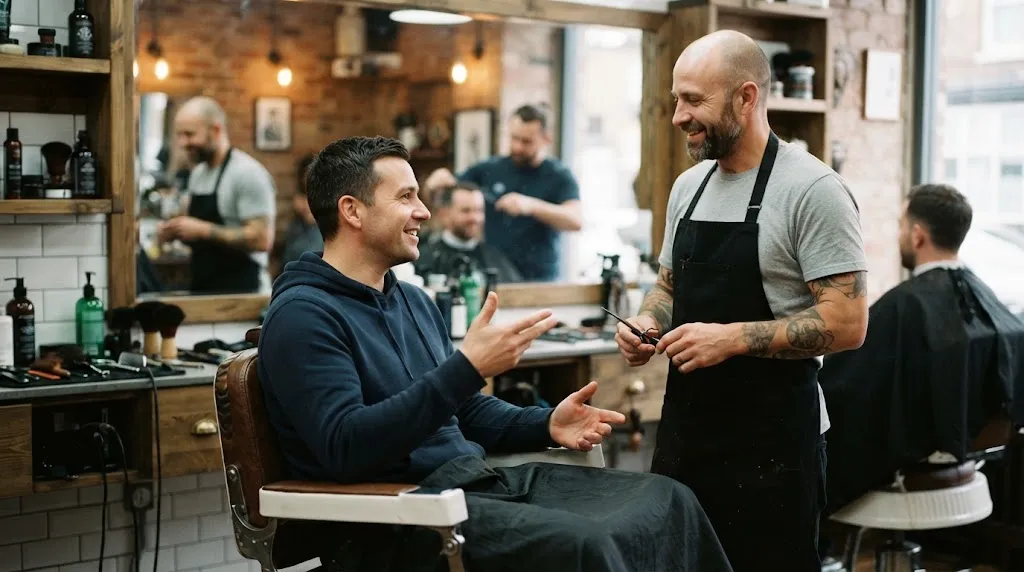
A guard number can describe one cutting length, but it does not describe the complete shape of a normal slope.
The finished result also depends on:
- Where the transition begins
- How the lengths are graduated
- How much weight remains
- How the top connects to the sides
- How the neckline is finished
Better approach: Give your barber the desired shape + transition height + top length + side-weight preference, then use guard numbers only as supporting information.
Ignoring Front, Side and Back Views

A haircut can look correct from the front while being too high, too bulky, or poorly connected from the side.
Before choosing a reference, check all available views:
- Front: overall top length and styling
- Side: slope height, side bulk, and transition
- Back: nape shape and how the slope finishes
This gives your barber much more information than a single front-facing photograph.
Choosing a Style That Conflicts With Your Maintenance Preference

A normal slope can be adapted for different maintenance preferences, but a sharper, more defined version generally requires more frequent reshaping than a softer, grown-out version.
If you prefer minimal barber visits, avoid choosing a reference that depends on extremely precise sides and a highly defined transition.
Better approach: Tell your barber how often you realistically want to get a haircut. The slope can then be shaped around your actual maintenance routine.
Normal Slope Haircut vs Other Popular Styles
| Style | Transition | Side bulk | Contrast | Maintenance | Overall look |
|---|---|---|---|---|---|
| Normal slope | Gradual | Moderate | Moderate | Moderate | Natural/balanced |
| Low slope | Softer/lower | More | Low | Lower | Subtle |
| High slope | Higher | Less | Higher | Higher | Sharper |
| Fade | Tighter blend | Less | Higher | Higher | Clean/sharp |
| Taper | Localized taper | More | Lower | Moderate | Natural |
Normal Slope Haircut Photos & Visual Guide
The visual section should help the reader understand the shape of the haircut, rather than simply provide a large collection of similar photographs. Each image should have a clear purpose and, where possible, a short caption explaining what the reader should notice.
Front View
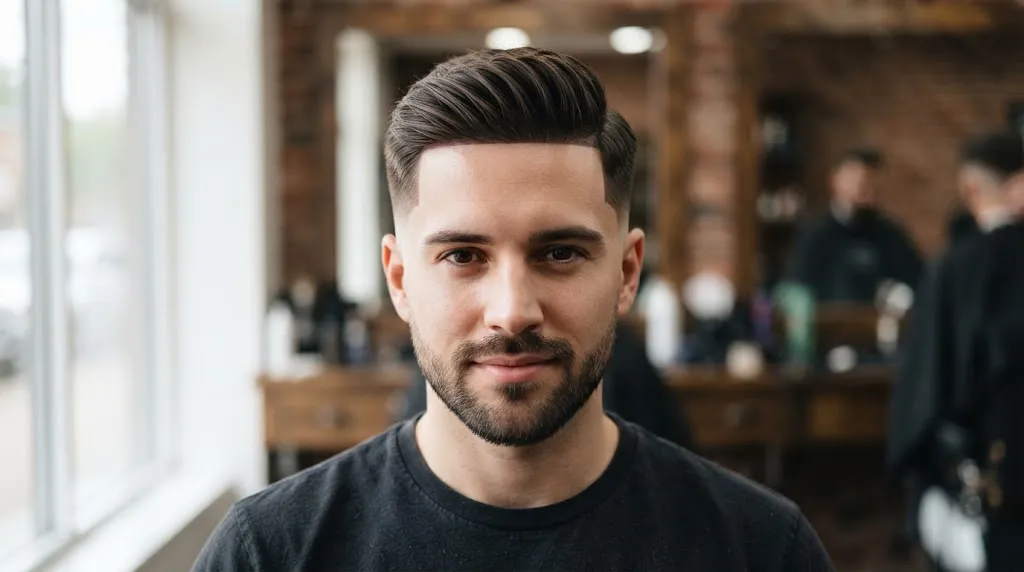
A front-view image should show the relationship between the top, sides, and overall silhouette.
What to look for: Does the top length and styling balance the amount of side volume?
Side View
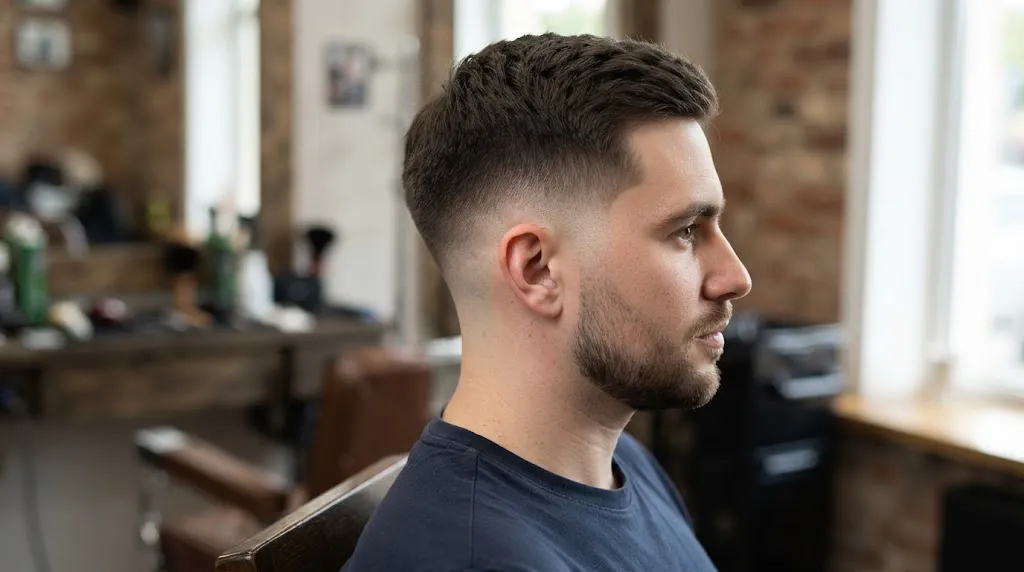
The side view is the most useful reference for understanding a slope.
What to look for: Where does the transition begin, how gradually does the length decrease, and how much weight remains around the sides?
Back View
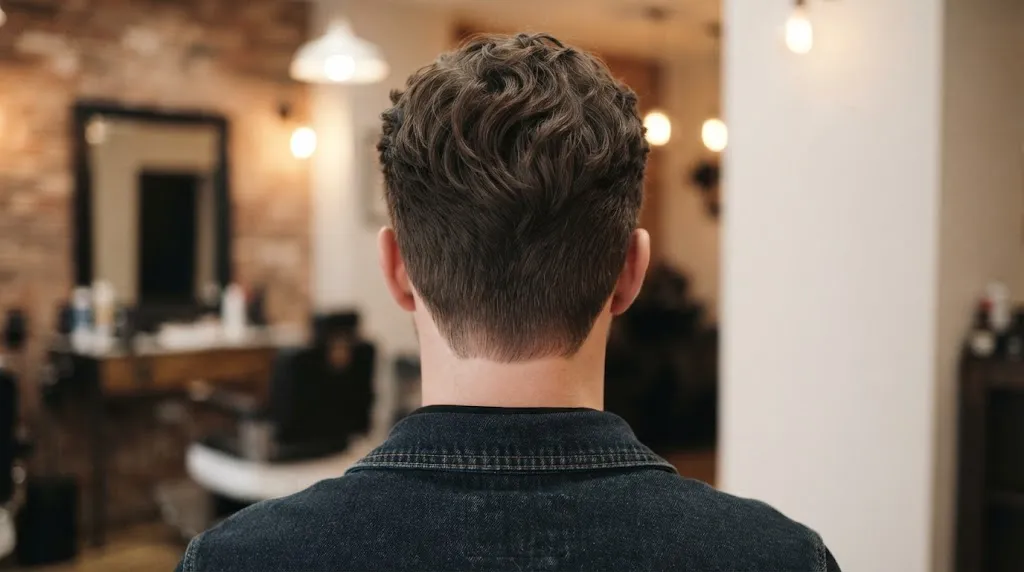
A back-view image helps show how the slope continues toward the nape.
What to look for: Is the transition smooth and balanced rather than abruptly changing into a tight fade?
Different Hair Types

Showing the same general normal-slope structure on different hair types can set realistic expectations.
Useful examples include:
- Straight hair: clearer, smoother transition
- Wavy hair: more natural movement and texture
- Curly hair: greater volume and a different visual transition
- Fine hair: less natural side bulk
- Thick hair: more weight that may need controlled removal
The purpose of these visuals is not to suggest that one version works identically for everyone. It is to help the reader compare shape, density, texture, and expected result before showing the reference to a barber.
Normal Slope Haircut Video Guide
Normal Slope Haircut Video Guide
These videos demonstrate different aspects of a normal slope haircut, from understanding the slope shape to seeing the haircut and finished styling in practice.
Video — Understanding the Slope Shape
Watch how the hair transitions gradually from the longer top toward the shorter sides and back, creating the characteristic slope rather than the tighter contrast associated with a fade.
Video — Haircut / Barber Demonstration
This demonstration helps you see how the barber creates the transition and shapes the sides and back of the haircut.
Video — Styling / Finished Look
Use this example to see how a slope haircut looks after styling and how the finished shape can be worn as part of an everyday hairstyle.
Additional Social Video Example
This Instagram example provides another visual reference for the slope shape and finished haircut.
Add Your Heading Text Here
Frequently Asked Questions About Normal Slope Haircuts
What Is a Normal Slope Haircut?
A normal slope haircut uses a gradual transition from longer hair on top to shorter hair toward the sides and back. Compared with a tighter fade, it generally retains more side weight and creates a softer, more natural-looking transition.
What Is a Medium Slope Haircut?
A medium slope generally describes a transition positioned between a low and high slope. However, “medium,” “mid,” and sometimes “normal” can overlap in barber terminology, so specifying the desired transition height and side shape is more reliable than relying on the name alone.
Who Looks Good With a Slope Haircut?
A slope can be adapted to different face shapes, hair textures, and densities. The better question is which slope height, top length, and amount of side weight work with your particular features and styling preference.
What Does 1, 2, 3, 4, 5 Mean in Haircuts?
These numbers usually refer to clipper guard sizes and therefore indicate a particular cutting length. They do not, by themselves, describe the complete shape or transition of a normal slope. Tell your barber the desired shape and transition as well as any preferred guard length.
What Does the 3:2:1 Haircut Rule Mean?
The 3:2:1 rule is a haircut-length guideline referring to progressively shorter lengths across different sections of the haircut. Because terminology and application can vary between barbers, it should not be treated as a universal definition of a normal slope. If using the rule as a reference, clarify exactly which sections and lengths you mean.
Are Fades Out of Style in 2026?
Fades remain a widely used haircut technique, but whether a fade is right for you depends on the look and maintenance level you want. If you prefer more side weight and a softer transition, a normal slope may better match that goal.
What Haircut Makes a Man Look Younger?
There is no single haircut that makes every man look younger. A style that suits the person's face shape, hair density, texture, and natural growth pattern generally produces a more balanced result than choosing a haircut solely because it is described as “younger-looking.”
What Is the Difference Between a Normal Slope and a Fade?
A normal slope generally emphasizes a gradual transition while retaining more side weight. A fade creates a tighter, more blended reduction in length and can expose considerably more scalp depending on the fade type and starting point.
Is a Normal Slope Good for Straight Hair?
Yes. Straight hair can show the gradual slope clearly and can be styled in several ways, including natural, side-parted, textured, or more polished finishes. The ideal amount of side weight depends on the hair's density and the desired silhouette.