
Indian Style Front Hair Cut — Complete Guide
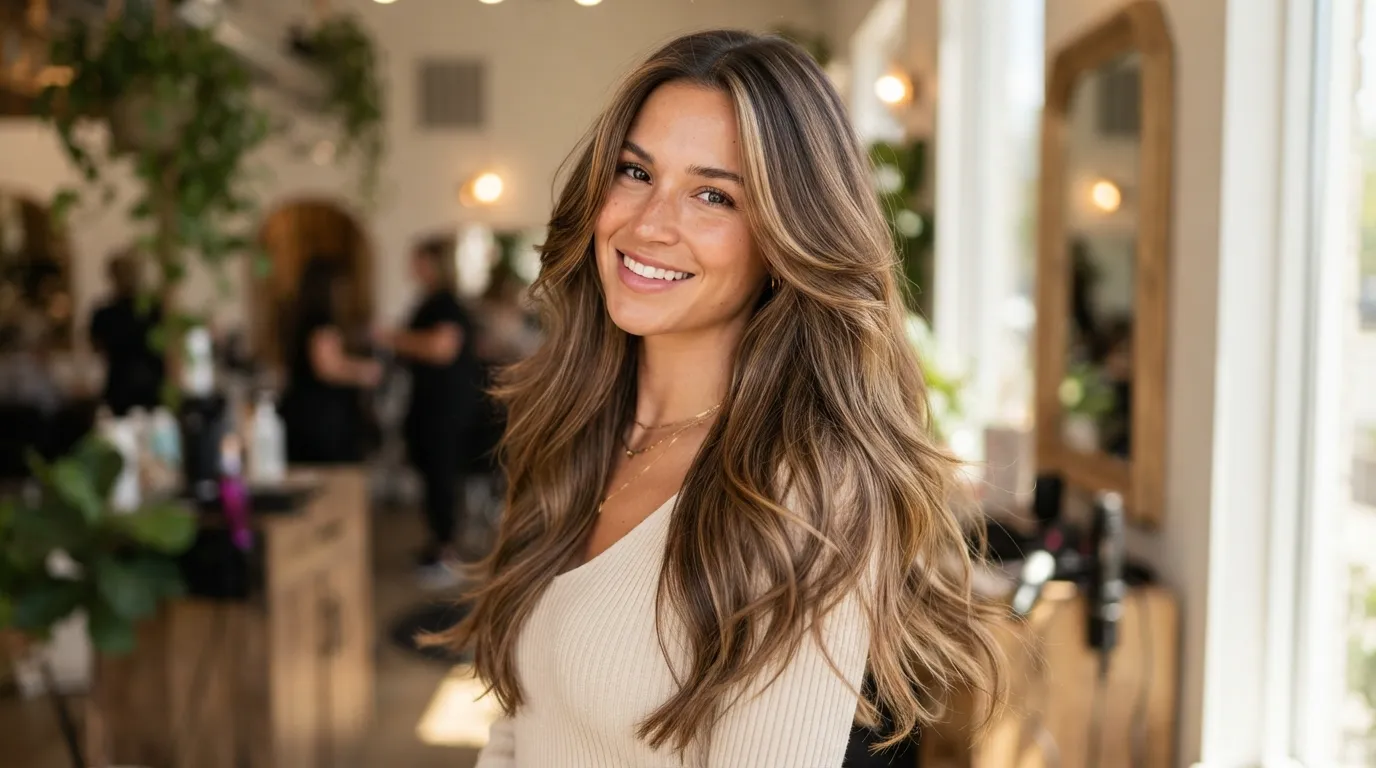
The Indian style front hair cut balances soft, face-framing layers around the cheeks and jawline with dense length in the back. Unlike classic Western fringe cuts that thin out the perimeter, an indian cut keeps the base dense enough to support traditional styling—like thick braids, heavy bun bases, or deep side partitions—while giving long tresses natural movement around the collarbones.
Whether you want a dramatic curtain fringe or soft feathering starting at the chin, framing the front changes your look without sacrificing length.
Popular Variations for Long Tresses
Curtain Bangs with Soft Layers: Cut at a sharp diagonal starting from the cheekbones down toward the collarbone. Works best on straight or relaxed hair to create a classic front layer cut for long hair indian aesthetic.
Feathered Chin-Framing Steps: Soft, backward-swept layers starting right at the chin. Ideal for controlling heavy, coarse hair while keeping the density of a long hair cut for girls indian preference.
Deep Side-Swept Front Fringe: A angled section starting from an off-center part that flows smoothly into the rest of the length. Matches traditional saree and lehenga drape styles where hair is pulled over one shoulder.
For a comprehensive overview of styles, techniques, and textures, explore our main hairstyles & haircuts directory.
Styling and Cut Considerations by Hair Texture
| Hair Texture | Ideal Front Cutting Technique | Styling Tool Recommendation | Maintenance Level |
|---|---|---|---|
| Straight & Fine | Point-cutting at a 45-degree angle to build subtle volume around cheekbones | Medium round brush and light setting spray | Trims every 6–8 weeks |
| Wavy & Medium Density | Slide-cutting starting below the chin to avoid bulk near the ears | Blow-dryer nozzle attachment with a wide paddle brush | Trims every 8–10 weeks |
| Thick & Coarse | Deep texturizing through the interior front sections to lighten weight | Wide barrel curling wand or large heated rollers | Trims every 10–12 weeks |
Execution Details That Prevent Common Mistakes
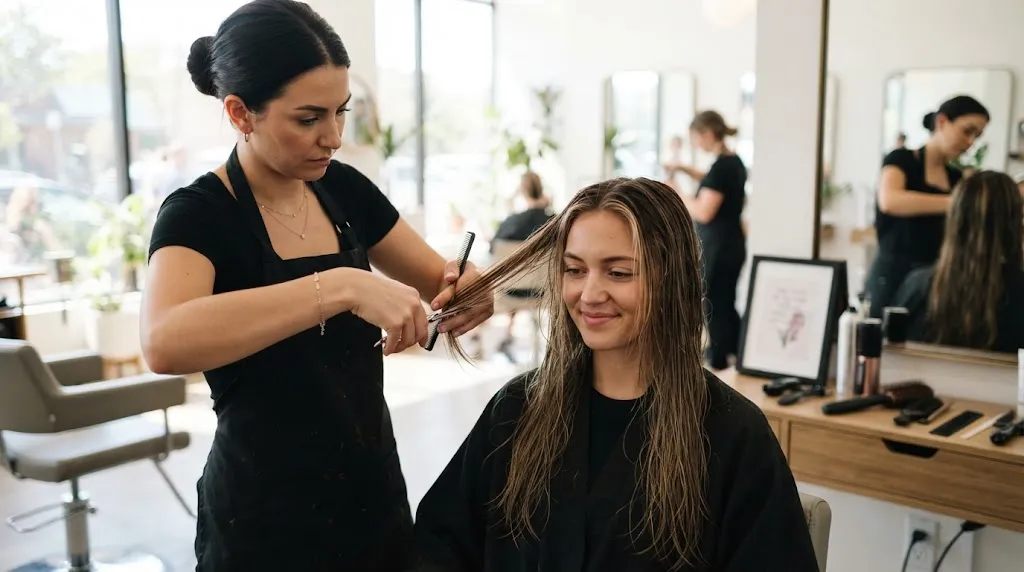
When shaping a front hair cut indian style for long hair, the angle of the shear dictates how the hair sits against your jawline.
Avoid cutting shorter than the nose bridge when wet: Indian hair textures tend to spring up 0.5 to 1 inch once fully dry and styled.
Keep the apex triangle small: Pulling too much hair from the crown into the front section thins out the back, making braids look sparse at the ends.
Check the flow while tied back: Ensure the shortest layer reaches comfortably into a low ponytail or can be pinned back cleanly with bobby pins for formal wear.
What Is an Indian Style Front Hair Cut?
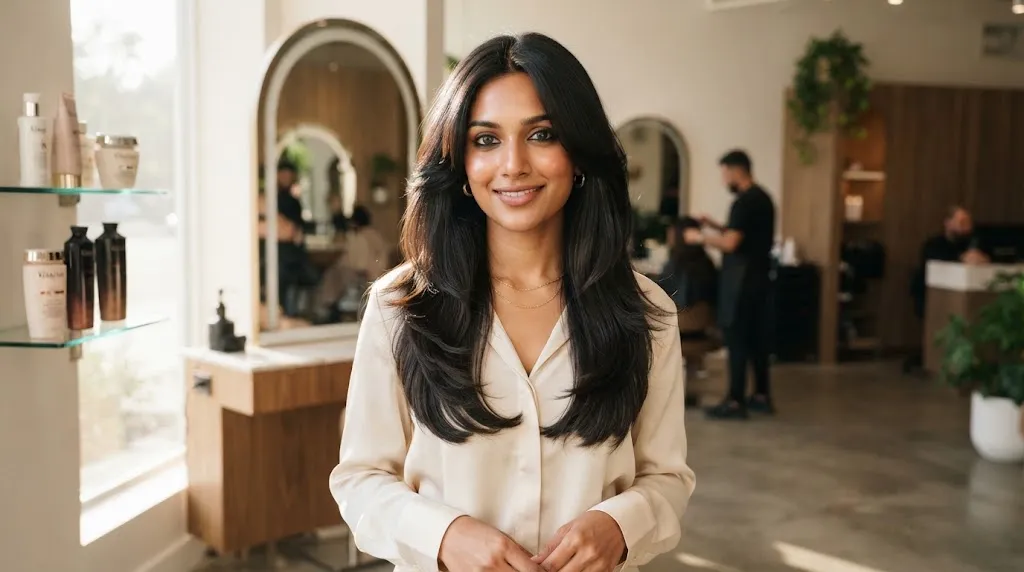
An Indian Style Front Hair Cut is a specialized face-framing technique designed specifically for dense, long hair. Unlike blunt Western bangs or short bob cuts that drastically reduce overall length, an indian cut focuses purely on shaping the front sections—starting from the cheekbones, chin, or jawline—while leaving the back length completely untouched and full.Precision front layer trimming technique. Source: CareyHope / Getty Images
This cut is ideal if you want to add bounce, soft movement, and instant volume around your face without losing your heavy length. A well-crafted front hair cut indian style for long hair gives you the flexibility to wear your hair open with soft curtain layers, drape it over one shoulder with a saree or lehenga, or pin the front pieces back cleanly when tying traditional braids and updos.
If you are looking for a front layer cut for long hair indian girls prefer—one that works naturally with thick or wavy textures, enhances your jawline, and adapts effortlessly to both casual outfits and ethnic wear—this guide covers every variation, face shape match, and salon tip you need to know.
10 Best Indian Style Front Hair Cuts
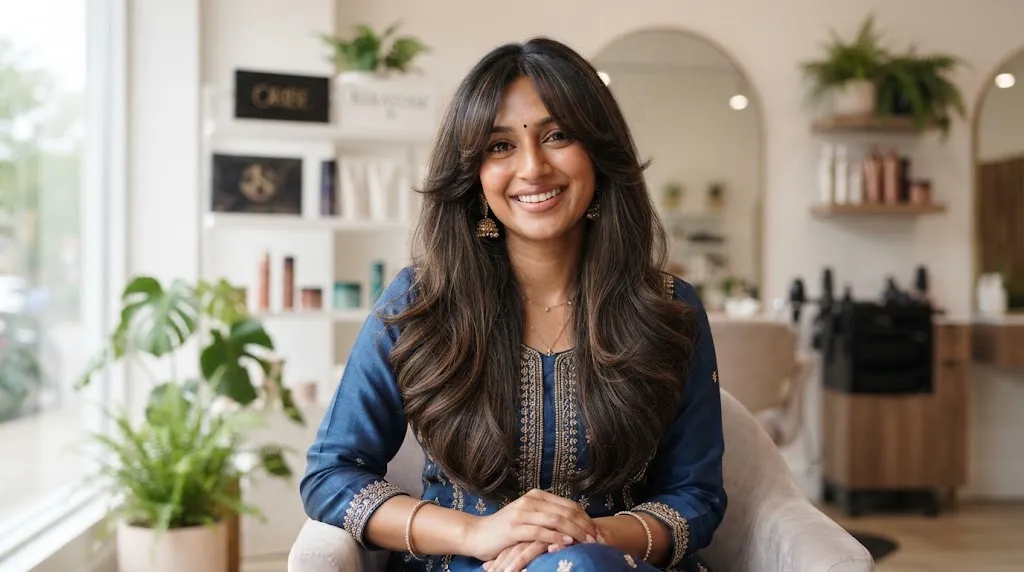
Round: Long, seamless layers starting at or below the collarbone pull the eye downward to elongate the face. Pair these with curtain bangs or a side-swept fringe that hits right at the cheekbones to cut the visual width of the mid-face. Avoid chin-length, blunt horizontal layers that make the face look wider.
Oval: Oval faces can carry almost any cut, but long face-framing layers with a soft, texturized baseline prevent the length from dragging down your features. A full, piecey fringe or eyebrow-grazing curtain bangs highlight the eyes and cheekbones without interrupting natural balance.
Heart: Balance a wider forehead and a narrower chin using long layers that begin around the jawline. Soft, cascading layers add volume lower down, filling out the space around the narrowest part of the face. Pair this with a wispy, arched fringe or cheek-grazing curtain bangs to soften the upper third.
Square: Soften a strong, angular jawline by choosing long, cascading layers that start slightly above the jaw, finished with soft, feather-trimmed ends. Subtle, sweeping curtain bangs help diffuse sharp angles, while stark, blunt cuts should generally be avoided to keep from boxiness.
Curtain Bangs
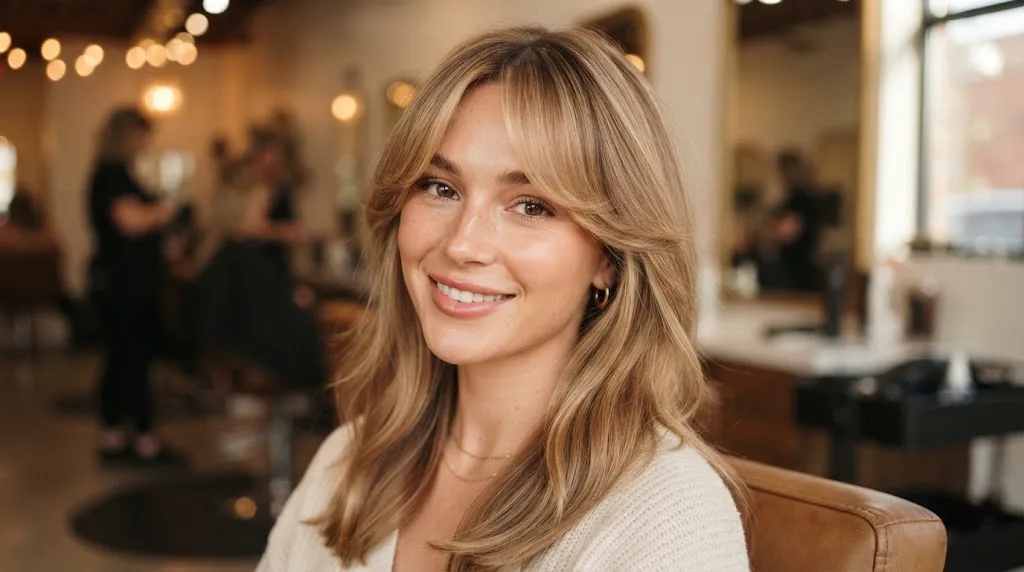
Curtain bangs part down the middle or slightly off-center, sweeping outward to frame the eyes and cheekbones like a curtain drawn back from a window. They are cut shorter near the center of the forehead and taper longer toward the jawline.
Best Face Shapes: Oval, Round, and Heart-shaped faces.
Hair Texture Match: Straight to soft wavy hair; requires blow-drying outward with a medium round brush.
Styling Tip: Twist the front sections away from your face with a blow-dryer concentrated at the roots to get that smooth, sweeping arc.
Feathered Front Layers
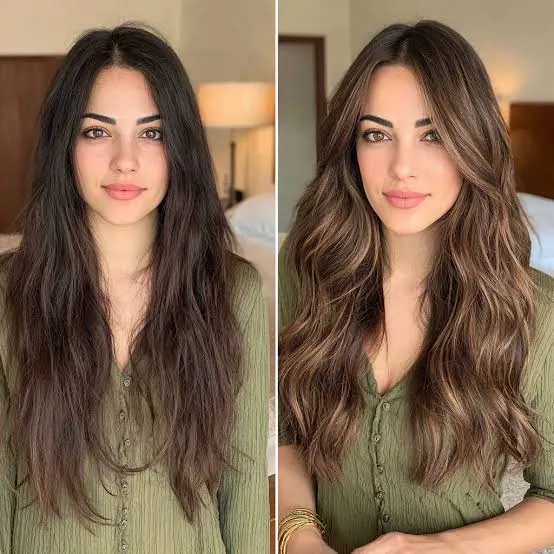
Feathering uses vertical point-cutting to create soft, weightless ends that curl backward away from the face. This classic front layer cut for long hair indian setups softens broad jawlines without reducing overall length in the back.
Best Face Shapes: Square, Rectangle, and Diamond faces.
Hair Texture Match: Medium to thick straight or wavy hair.
Styling Tip: Apply a lightweight smoothing cream to damp hair, then flick the ends backward using a large-barrel curling wand or paddle brush.
Side-Swept Fringe
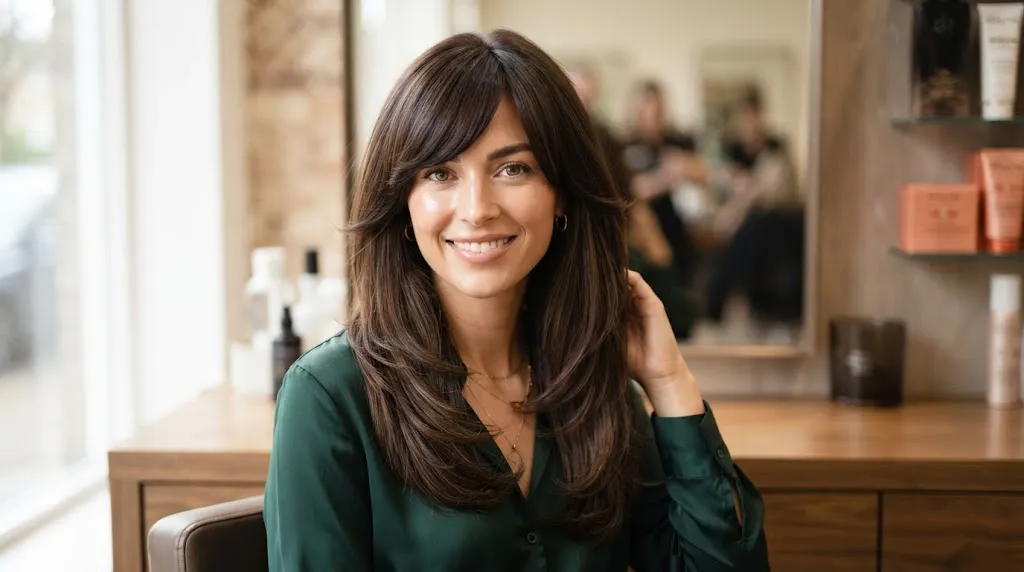
A deep angled fringe pulled from a crisp side part, cascading diagonally across the forehead to rest right along the opposite cheekbone. It creates a sleek, asymmetrical focal point that pairs effortlessly with traditional ethnic wear.
Best Face Shapes: Round, Heart, and Long/Oblong faces.
Hair Texture Match: Naturally straight or chemically relaxed hair.
Styling Tip: Blow-dry the fringe in the opposite direction of where you plan to wear it to create natural root lift and volume before sweeping it into place.
Blunt Front Bangs
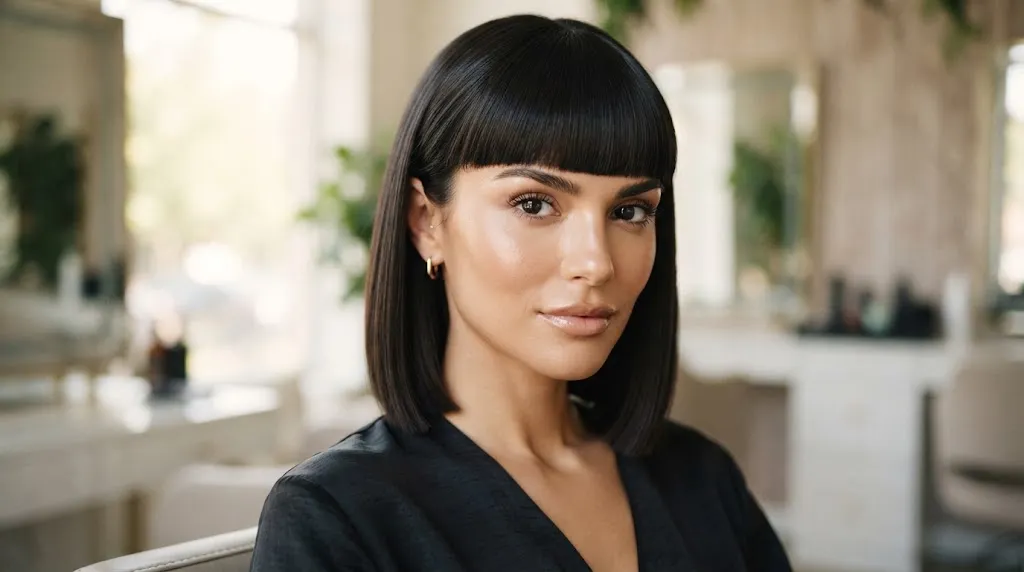
Blunt bangs are cut in a clean, straight horizontal line right at or just below the eyebrow. This is a high-impact indian cut variation that pulls maximum focus to your eyes and cheekbones while leaving the rest of your long hair flowing down the back.
Best Face Shapes: Oval and Long/Oblong faces (helps shorten longer facial proportions).
Hair Texture Match: Fine to medium straight hair.
Styling Tip: Run a flat iron straight down through the bangs on low heat, then lightly mist with a flexible-hold hairspray to keep humidity from curling the ends.
Wispy Soft Fringe

A lightweight, delicate fringe with intentional gaps that allow your forehead to show through. Unlike dense blunt bangs, a wispy fringe requires very little hair from the crown, keeping your main length dense for braids and updos.
Best Face Shapes: All face shapes, especially small or delicate facial features.
Hair Texture Match: Fine or medium hair; great for anyone hesitant to commit to heavy bangs.
Styling Tip: Avoid heavy oils or serums on wispy bangs—they can make the thin strands look piecey or greasy by mid-day. Stick to dry shampoo at the roots.
Layered Front Cut for Long Hair
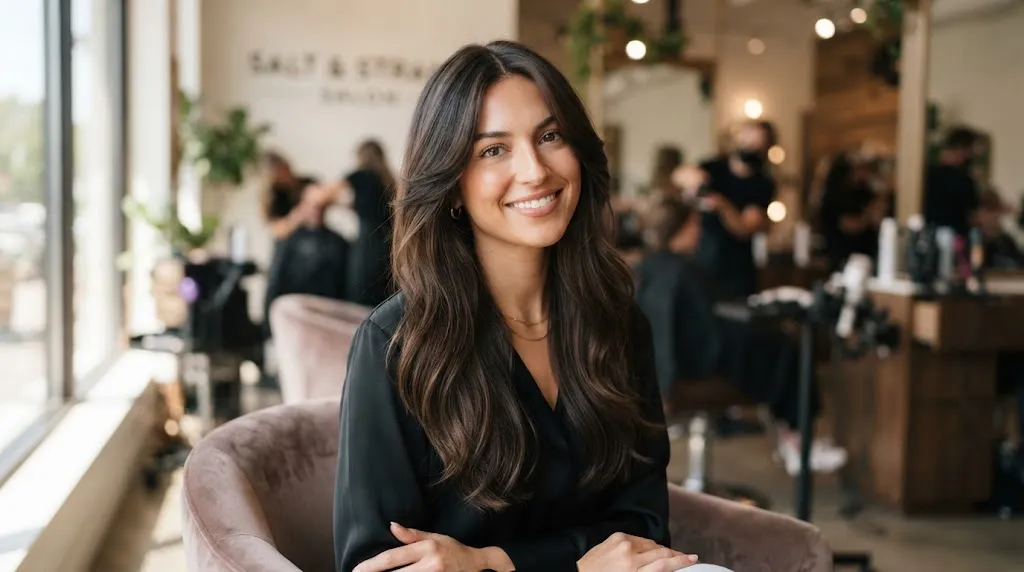
A staple front hair cut indian style for long hair request at salons. This technique creates a continuous cascade of steps starting right below the chin and blending seamlessly into your back length, building natural body through the front.
Best Face Shapes: Oval, Round, and Square faces.
Hair Texture Match: Coarse, thick, or heavy Indian hair textures that feel flat without movement.
Styling Tip: Wrap sections around a heated round brush directed inward toward your neck for a polished, face-hugging curve.
Asymmetrical Front Layers

This style features uneven lengths cut deliberately across the front—one side sits shorter at the cheekbone while the opposite side glides smoothly down past the collarbone. It offers a modern, edgy twist on traditional long hairstyles.
Best Face Shapes: Oval and Heart-shaped faces.
Hair Texture Match: Smooth, straight hair that emphasizes crisp line definition.
Styling Tip: Use a flat iron with a heat protection spray to keep the sharp line contrast looking precise and frizz-free.
Textured Front Bangs

Textured bangs are cut using heavy vertical shear work (point-cutting) to break up straight lines, giving the fringe choppy, modern ends. It adds dynamic movement and controls bulk across thick Indian hair.
Best Face Shapes: Round, Square, and Oval faces.
Hair Texture Match: Naturally wavy or thick hair textures.
Styling Tip: Work a pea-sized amount of texturizing pomade between your fingertips and pinch the ends of the bangs to accentuate the piecey look.
Shaggy Front Layers

Inspired by modern shag cuts, this style incorporates razor-cut or heavily sliced front layers starting from the mid-forehead down to the collarbone. It removes weight from the sides while amplifying crown lift.
Best Face Shapes: Diamond and Oval faces.
Hair Texture Match: Wavy or messy textured hair looking for low-maintenance styling.
Styling Tip: Air-dry with a sea salt spray or texturizing mousse, scrunching the front sections upward to encourage natural movement.
Center-Parted Face-Framing Layers

A clean center partition with symmetrical layers that begin right at the chin line and sweep down along the neck. It draws an elegant, vertical line down the center of your face, making it a popular long hair cut for girls indian choice for wedding and festive styling.
Best Face Shapes: Oval, Round, and Heart faces.
Hair Texture Match: Medium to thick straight, wavy, or blowout-styled hair.
Styling Tip: Set the center part while hair is soaking wet, then blow-dry each front section downward and away from your chin using a large round barrel brush.
Best Front Hair Cut According to Face Shape

Matching your Indian style front hair cut to your specific face shape ensures your features are balanced rather than overwhelmed. Because Indian hair textures often carry high density, the start point and angle of your front layers make all the difference in softening your jawline or lengthening your silhouette.
Round Face
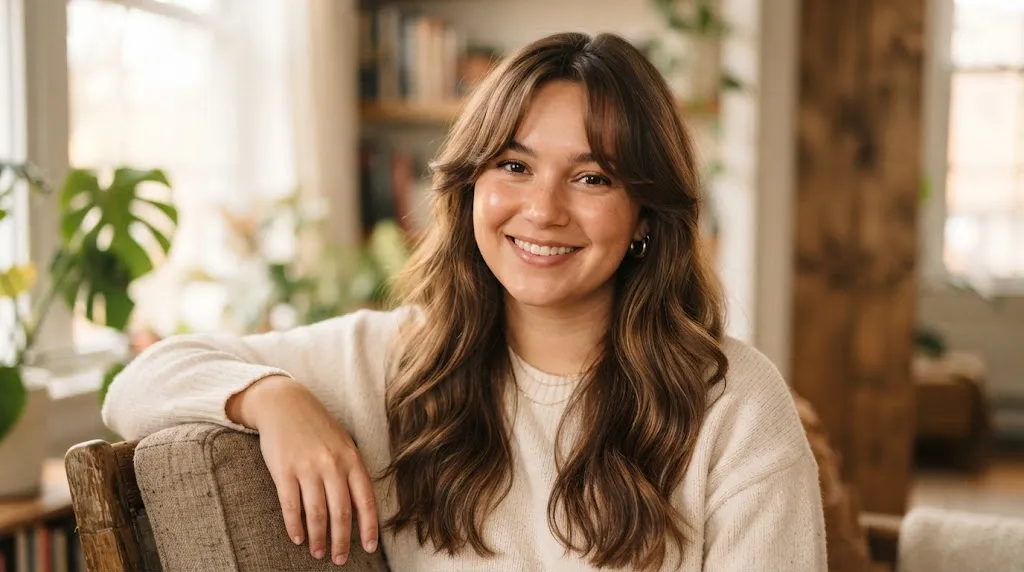
Best Front Cuts: Long curtain bangs starting at the chin, deep side-swept fringe, or angled cascading layers.
Why It Works: Round faces have equal width and length with softer cheekbones. Keeping the shortest front layer at or below the chin draws the eyes downward, creating a slimming, vertical illusion.
Styling Tip: Avoid short, straight-across blunt bangs or chin-length cuts that end right at the widest part of your cheeks, as these add unwanted horizontal width.
Oval Face
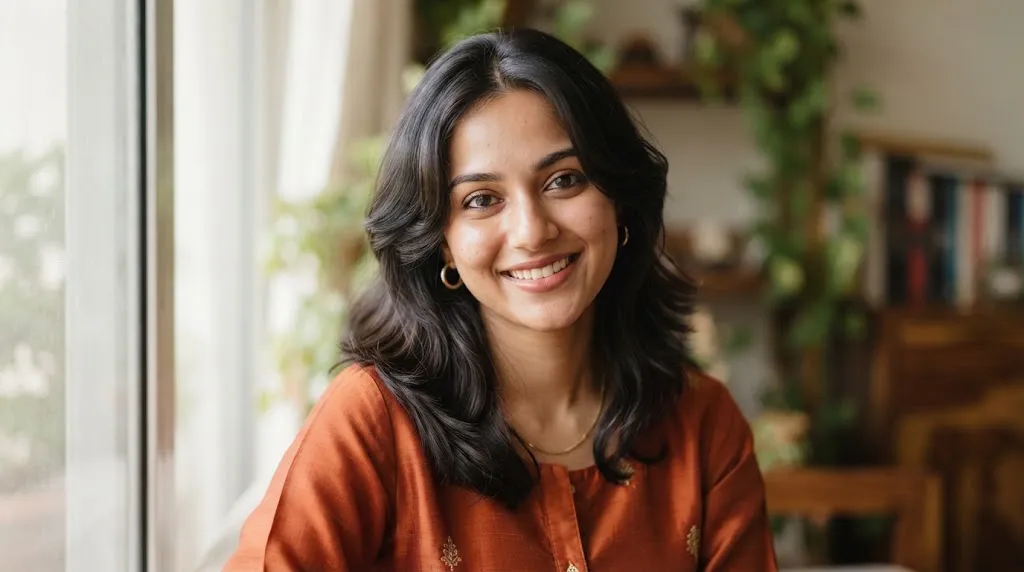
Best Front Cuts: Full blunt bangs, wispy soft fringe, curtain bangs, or center-parted face-framing layers.
Why It Works: Oval is the most versatile face shape with naturally balanced proportions. Virtually any front hair cut indian style for long hair works seamlessly without altering your facial symmetry.
Styling Tip: Experiment with brow-grazing blunt bangs or bold curtain layers to highlight your cheekbones while leaving your back length thick for styling.
Halo/Round Layered Cut
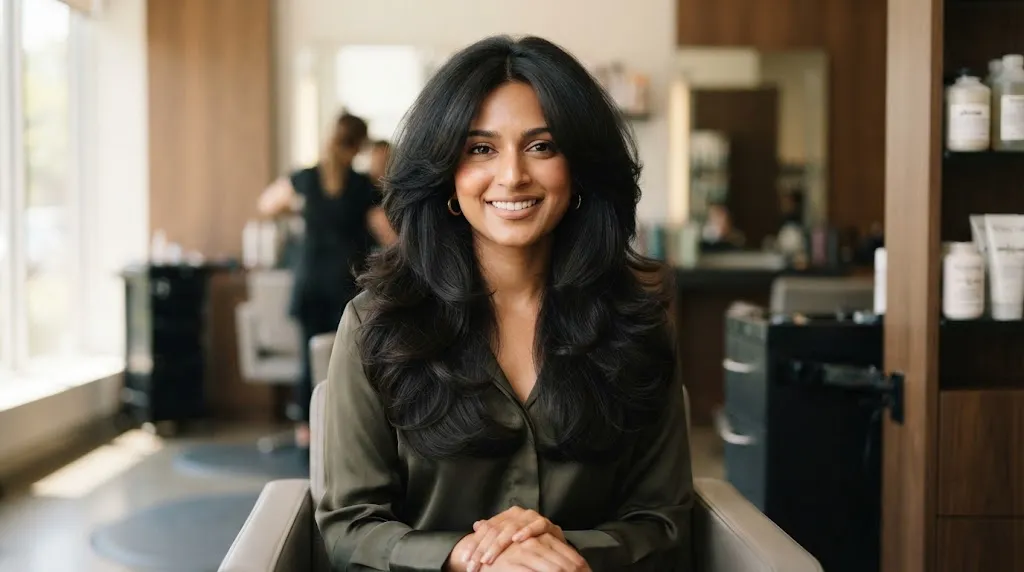
The halo or rounded cut features soft, circular layering around the head that creates a spherical silhouette. The layers curve inward toward the face and jawline, producing a soft, framed profile.
What to ask your stylist: “I’d like rounded, continuous layers cut in a circular shape around my head to build soft height and body around the cheeks.”
Best for: Square, diamond, and heart face shapes; works beautifully on wavy or soft curly textures.
Styling & Maintenance Tip: Work a texturizing foam into damp hair and use a medium round brush to turn the ends inward all around the head. Schedule maintenance every 8 weeks.
Square Face
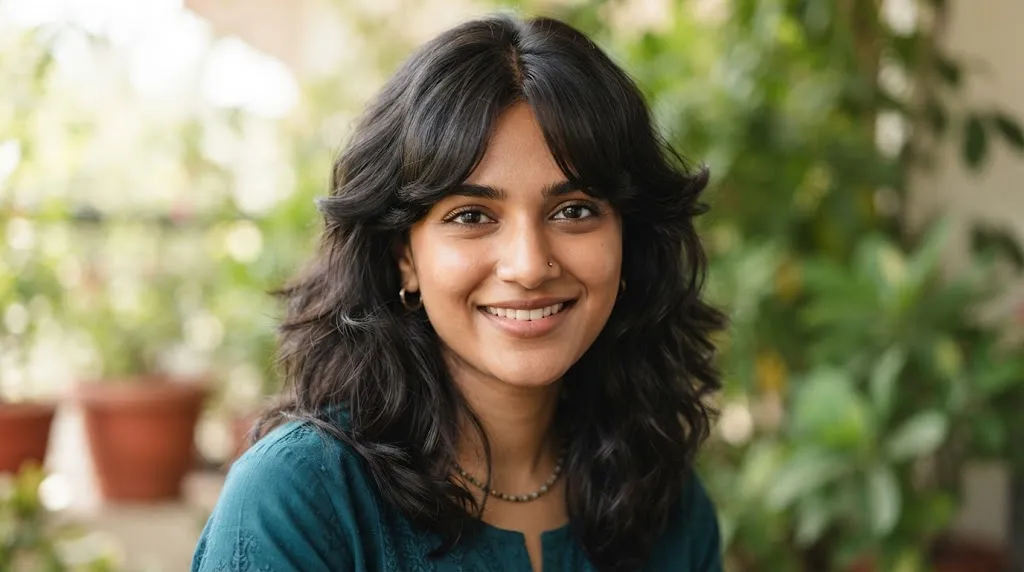
Best Front Cuts: Feathered front layers, soft textured bangs, or wispy curtain layers starting at the cheekbones.
Why It Works: Square faces feature a strong, defined jawline and a broad forehead. Feathered, backward-swept ends break up sharp angles and soften the perimeter around your jaw.
Styling Tip: Steer clear of harsh, heavy blunt cuts that end directly at the jawline. Instead, ask for soft point-cutting along the ends to keep edges light and airy.
Heart-Shaped Face

Best Front Cuts: Side-swept fringe, chin-length layered steps, or wispy curtain bangs.
Why It Works: Heart shapes have a wider forehead and a narrower, pointed chin. A side-swept fringe cuts diagonally across the forehead to reduce width, while chin-level layers add fullness around the lower half of your face.
Styling Tip: Style your front layers with an inward curl using a round brush to add volume right at the narrowest point of your chin.
Long Face
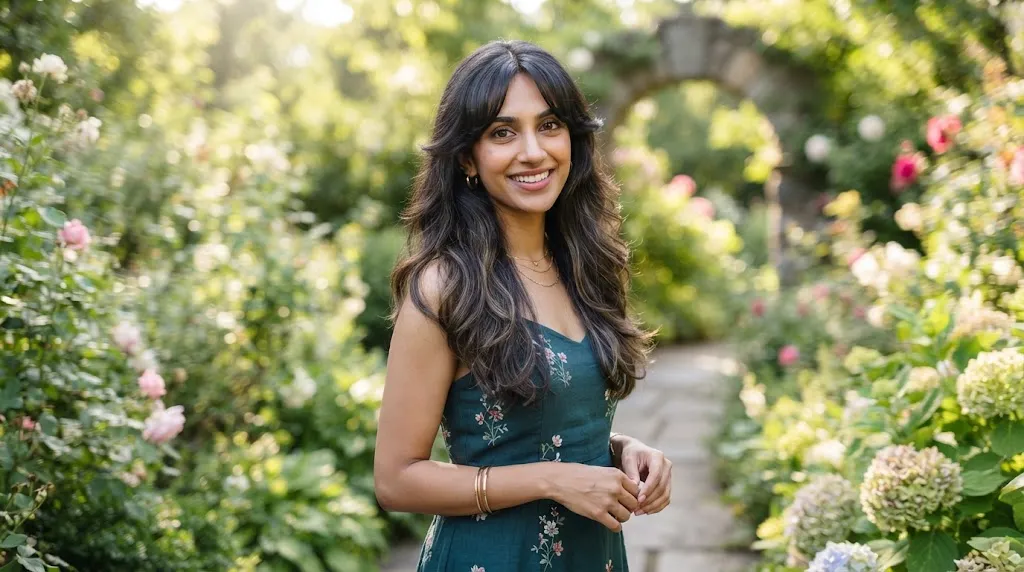
Best Front Cuts: Dense blunt front bangs, wide-sweeping curtain bangs, or cheek-length textured layers.
Why It Works: Long or oblong faces have a greater vertical length than width. A full front fringe covers the forehead and visually shortens the face, while cheek-length layers add horizontal width and balance.
Styling Tip: Avoid long, center-parted layers that hang straight down past the collarbones without volume, as this pulls the face down and makes it look longer.
Best Front Hair Cut According to Hair Type

While your face shape decides where your front layers should start, your hair texture dictates how those layers will actually sit without daily heat styling. Indian hair naturally spans a wide spectrum—from ultra-dense straight strands to coarse waves and tight curls. Choosing the right cutting technique for your hair type prevents unwanted puffiness, awkward sprouting, or flat front sections.
Straight Hair

Best Cutting Technique: Sharp slide-cutting, dense curtain bangs, or precision blunt fringe.
Behavior & Challenges: Straight Indian hair often lies flat at the roots and can look limp if cut in long, heavy blocks. However, it displays crisp, clean lines better than any other texture.
Styling Approach: Ask for subtle point-cutting along the edges of your front layer cut for long hair indian style. This creates micro-texture that catches the air and builds natural lift at the cheekbones without needing constant curling.
Wavy Hair

Best Cutting Technique: Long cascading steps, feathered cheek-framing layers, or soft curtain bangs.
Behavior & Challenges: Wavy hair (Type 2A to 2C) has natural S-bends that shorten when dry. If your stylist cuts front layers while your hair is soaking wet without accounting for wave shrinkage, the layers can end up sitting way higher than planned.
Styling Approach: Request that your front section be cut slightly longer than your target length, or shaped while 80% dry. A front hair cut indian style for long hair on wavy textures looks best when layered seamlessly so the natural bend flips outward away from the face.
Curly Hair

Best Cutting Technique: Dry-cut wispy layers, long chin-length framing, or elongated side-swept front pieces.
Behavior & Challenges: Curly Indian hair (Type 3A and above) expands horizontally. Traditional straight-across bangs or thick, short front layers can create a “triangle effect” or spring up into tight ringlets on the forehead.
Styling Approach: Never get a wet blunt front cut on curly hair. Ensure your stylist uses a dry-cutting method, shaping each curl ringlet individually around your jawline so the layers frame your face naturally when dry and un-stretched.
Front Layer Cut for Long Hair (Indian Style)
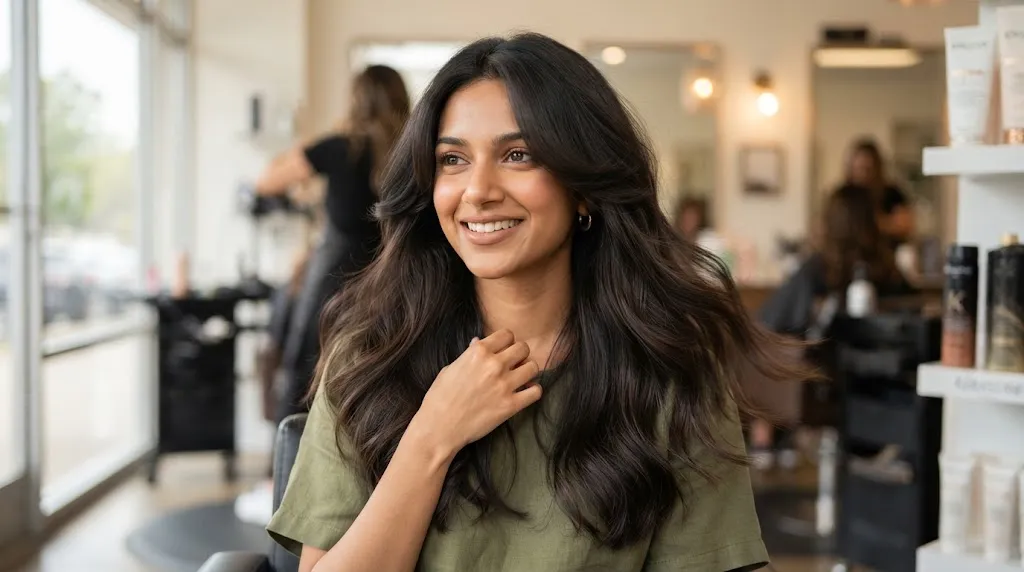
A front layer cut for long hair indian preferences is engineered to give your front profile a stylish, structured change without reducing an inch of length from the back. Long Indian hair is known for its natural weight and density; without strategic front layering, it can drag down your features and flatten volume at the roots.
By focusing the scissors strictly on the front 20% of your hair, this technique removes excess weight around the face while preserving the heavy perimeter needed for traditional braids and ethnic styling.
Key Techniques for Long Hair Front Layers
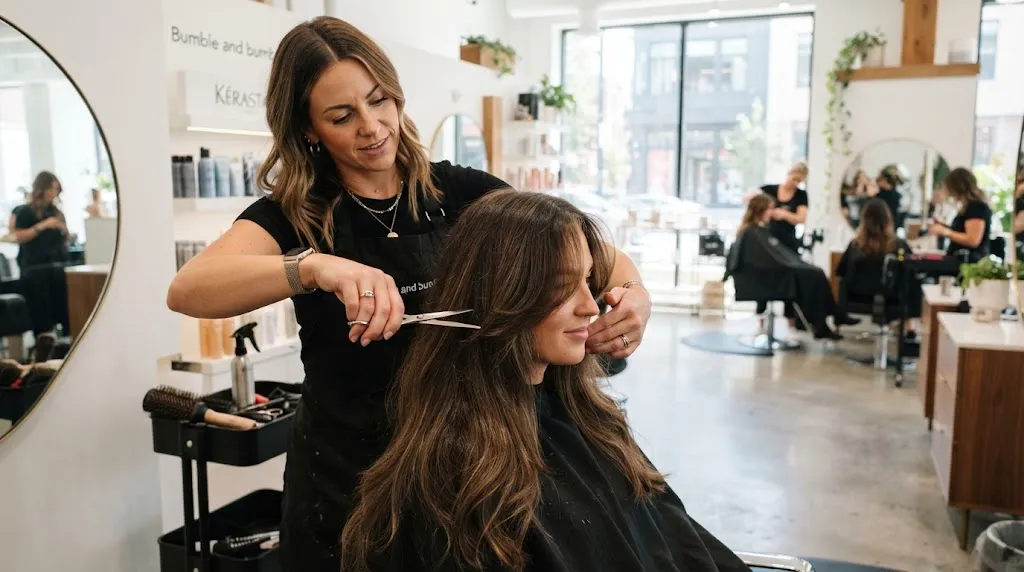
The Chin-to-Collarbone Slide: Layers begin right below the chin line and cascade smoothly down to the collarbone. This creates a soft, continuous contour that hugs your jawline without looking choppy.
Weight Reduction Through Slicing: Instead of cutting straight across, your stylist slides open shears down the interior sections of your front hair. This thins out heavy bulk near the ears so your front layers drape softly instead of standing out sideways.
Seamless Back Blending: The longest front layer is seamlessly angled back into your main length. When viewed from the side, there are no harsh “steps”—just a fluid, sloping edge from your chin to your lower back.
Styling Long Front Layers for Indian Outfits
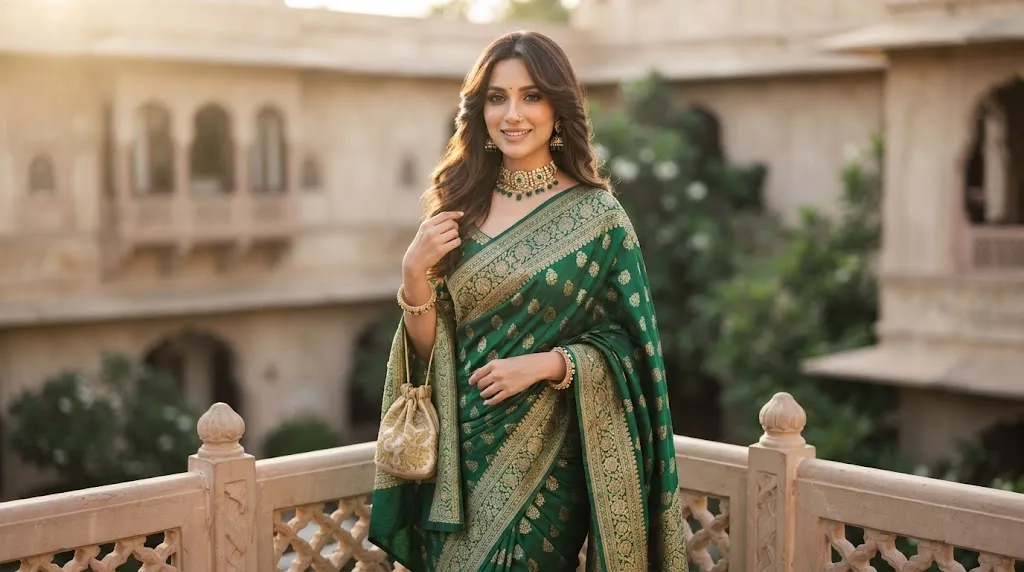
Open Saree & Lehenga Drapes: Sweep your front layers over one shoulder while letting the long back length hang down. The short front pieces frame your neckline and jewelry, while the back remains full and dramatic.
Low Ponytails & Buns: Pull your main length into a sleek low ponytail or festive bun, but pull out the shortest front layers around your temples and ears. Curl them inward using a round brush or curling iron for an effortless face-framing accent.
Half-Up Hairstyles: Secure the top half of your hair at the crown with a clip or pins, allowing the shortest long hair cut for girls indian layers to rest freely around your cheeks for an instant face-lifting effect.
Front Hair Cut Styles According to the Occasion
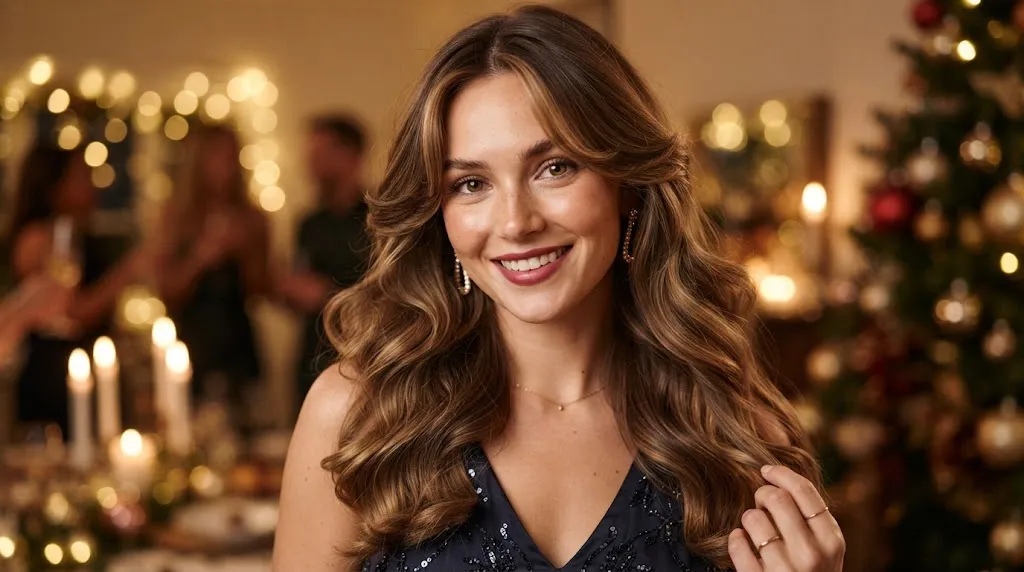
An Indian style front hair cut offers exceptional versatility, allowing you to easily adapt your look to fit daily routines, modern parties, or grand festive celebrations. By adjusting how you set and position your front layers, you can seamlessly transition from a sleek professional appearance to an elaborate bridal design.
Daily/Office Wear

Best Front Styling: Soft, tucked-behind-the-ear layers or a gentle side sweep.
How to Style: For a quick morning routine, blow-dry your front layers with a medium round brush away from your face for a clean, professional finish. If you need to keep hair completely out of your face, tuck the shortest pieces neatly behind your ears or secure them with subtle bobby pins.
Why It Works: It maintains a neat, polished appearance while ensuring your front layer cut for long hair indian style stays low-maintenance throughout the workday.
Party Look
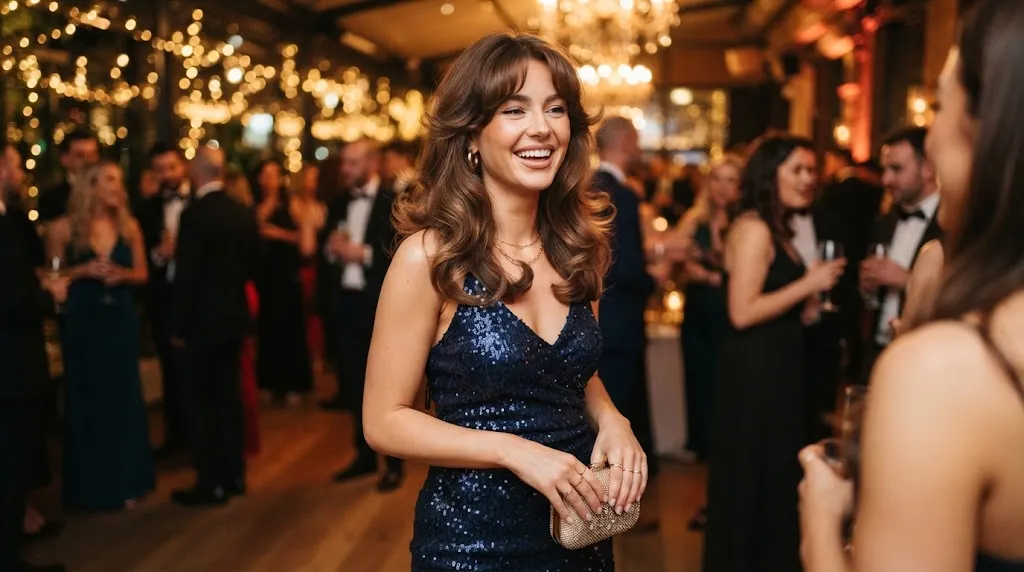
Best Front Styling: Voluminous curtain bangs, bouncy outward flicks, or defined beach waves.
How to Style: Wrap your front framing sections around a large-barrel curling iron angled away from your cheeks. Once set, apply a light texturizing spray and gently comb through with your fingers to create effortless, bouncy volume that frames your eyes and cheekbones.
Why It Works: Dynamic movement in the front catches the light and adds a glamorous, modern edge to Western party dresses, jumpsuits, or evening gowns.
Bridal Front Hairstyle
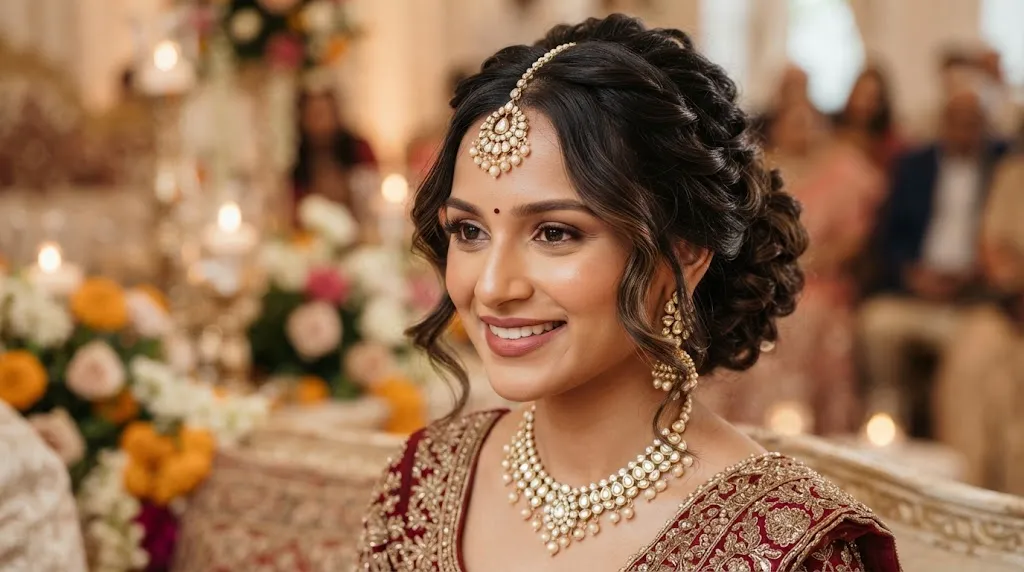
Best Front Styling: Structured crown-pouf with soft framing tendrils, intricate front twists, or symmetrical center-parted waves.
How to Style: Set a crisp center part for your maang tikka, then curl the shortest front pieces into delicate face-hugging tendrils. Alternatively, incorporate the front layers into a softly teased crown braid or side twist before securing the back into a dense bridal bun.
Why It Works: Preserving soft front pieces softens the overall structured look of heavy traditional bridal dupattas and statement jewelry, ensuring your face remains beautifully framed from every camera angle.
Look with Saree/Salwar Suit
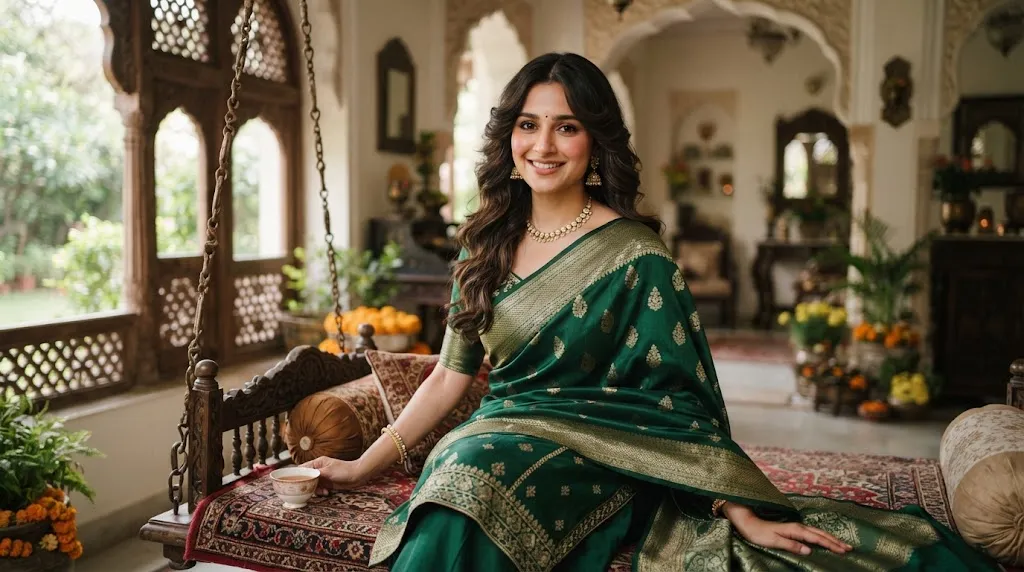
Best Front Styling: Deep side-swept fringe or classic chin-length inward curls.
How to Style: Create a deep side partition, sweeping the front layers smoothly across your forehead and letting them cascade gracefully down one cheek. Blow-dry the ends turning inward toward your chin to perfectly complement the drape of a saree pallu or dupatta.
Why It Works: A classic front hair cut indian style for long hair balances the asymmetric drape of traditional attire, adding timeless elegance to ethnic wear for festivals, family functions, and weddings.
Real Problems That Come with a Front Hair Cut
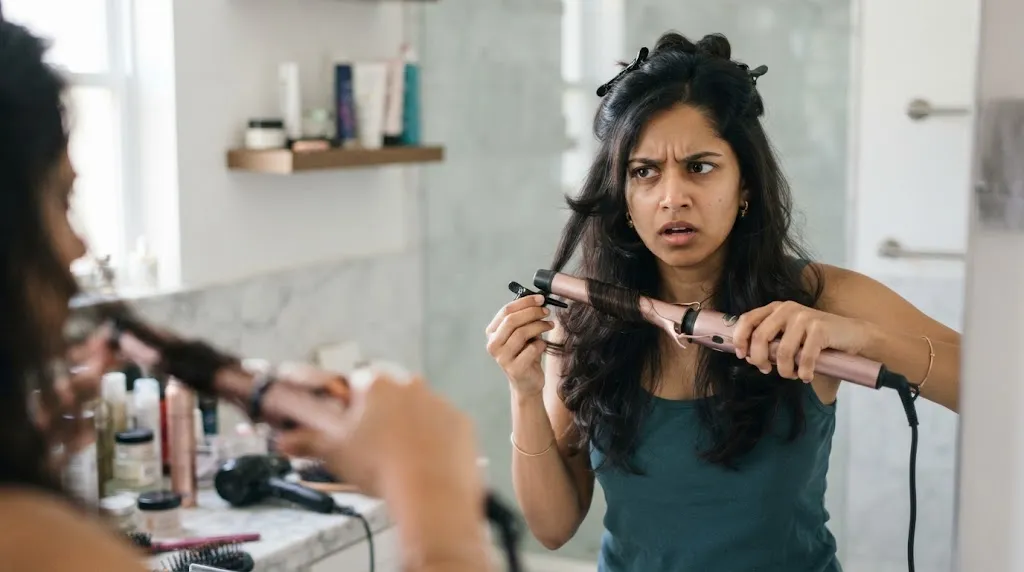
Getting a front cut looks great in the salon mirror, but day-to-day maintenance on Indian hair textures comes with specific real-world challenges. Here is how to fix the most common issues:
Front Hair Flatting Out / Lacking Lift: Dense Indian hair can drag down front layers within hours.
Solution: Blow-dry your front layers in the opposite direction of where you normally wear them while wet. Once 90% dry, flip them back into place for instant root lift without backcombing.
Monsoon Frizz & Humidity Expansion: Moisture in the air makes cut edges swell, losing their sleek shape.
Solution: Apply a pea-sized amount of a silicone-based serum to wet front ends before drying. Avoid water-based leave-in conditioners during monsoon months as they attract ambient humidity.
Stubborn Cowlicks (Hair Growing in Different Directions): Front hairline cowlicks can cause bangs or curtain layers to split awkwardly down the middle.
Solution: Direct a hair dryer with a narrow concentrator nozzle straight down onto the root of the cowlick while brushing the hair rapidly back and forth in an X-pattern.
The Awkward Growing-Out Stage: As front layers reach eye level, they become difficult to manage open.
Solution: Transition your cut into curtain layers by parting down the center and blowing the ends outward away from your cheeks, or blend them into low side braids.
Fine or Thin Hair Looking Sparse: Thin hair cut into heavy front bangs can make the rest of your hair look flat and skimpy.
Solution: Stick to a light wispy fringe or chin-length face-framing steps rather than full, thick bangs. Keep the apex triangle (the section of hair pulled forward from the crown) as small as possible.
Oily Scalp Causing Bangs to Stick: Forehead oils quickly transfer to short front hair, making layers look limp and greasy by mid-day.
Solution: Keep a travel-sized dry shampoo in your bag. Lightly spray the underside of your front layers (the side touching your forehead) right after styling to act as a barrier against skin oils.
How to Ask for a Front Cut at the Salon — Step-by-Step
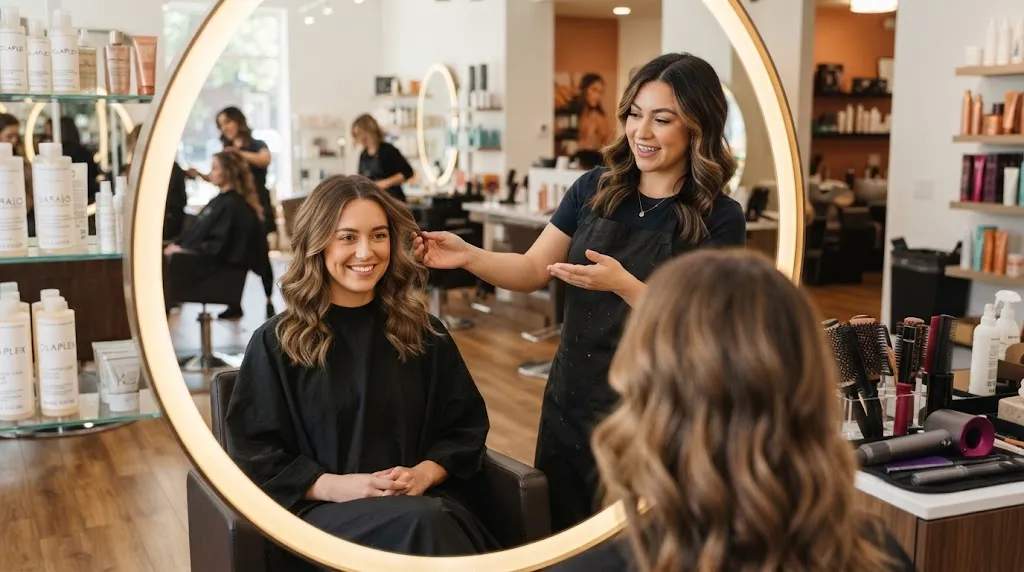
Communicating effectively with your hairstylist prevents the dreaded “too short” or “too thin” outcome. Follow these exact steps during your appointment:
Arrive with Your Natural Texture: Wear your hair down in its natural state (or as you usually style it). This allows your stylist to see where your natural waves, growth patterns, and cowlicks sit.
Establish the Starting Point First: Show your stylist exactly where you want the shortest piece to land—whether at the cheekbones, nose bridge, or chin—before any shears touch your hair.
Specify Hair Density: Remind your stylist to take a narrow front triangle from the crown. Explicitly state: “I want face-framing in the front, but I want to keep maximum density in the back for braiding.”
Request Dry Check for Length: Ask your stylist to cut the initial front line slightly longer when wet, then perform the final trim and texturizing once the hair is fully blow-dried to account for natural shrinkage.
Ask for Point-Cutting on the Ends: Request that the ends be soft point-cut rather than cut straight across in a blunt line, ensuring a smooth blend into your main length.
Tips for Styling Your Front Hair at Home
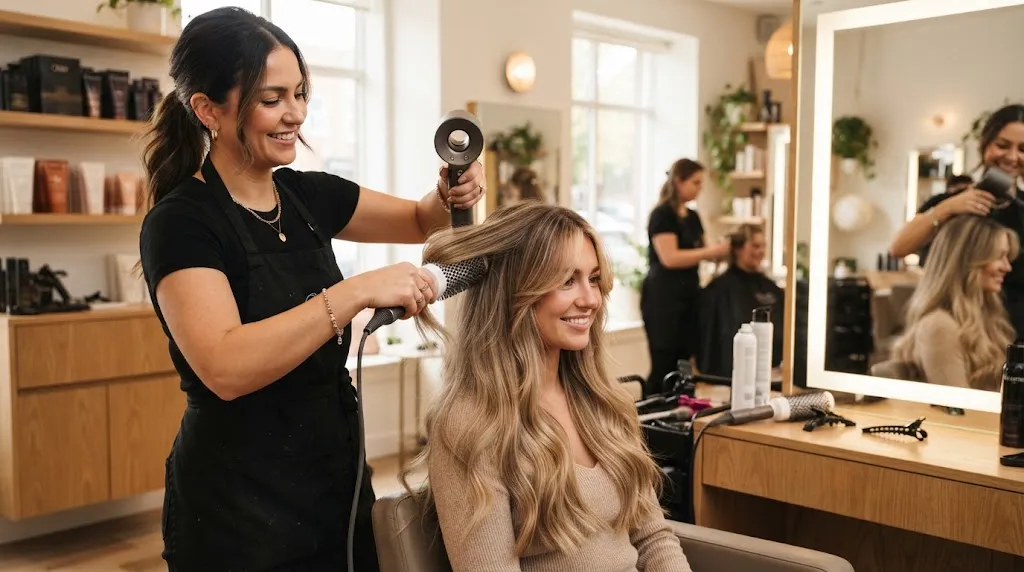
Maintaining your salon-fresh look at home doesn’t require hours in front of the mirror. Master these quick daily techniques:
Style the Front Section First: Wash and style your front layers immediately after showering. Because the front hair is shorter and thinner, it air-dries much faster than the back; if left to dry naturally, it will freeze in its natural shape.
Use the Right Barrel Size: Use a small-to-medium (25mm–32mm) round brush for short bangs, and a large (45mm+) round brush for chin-length or curtain layers to avoid creating tight, outdated ringlets.
Blow-Dry Outward for Curtain Layers: Wrap curtain layers over a round brush, direct the heat down the hair shaft, and pull the brush straight back toward the crown of your head before releasing.
Cool-Shot setting: Always hit your front layers with the “Cool Shot” button on your hair dryer for 5 seconds while the hair is still wrapped around the brush. This sets the shape and locks in shine for the rest of the day.
Front Hair Cut Maintenance Tips
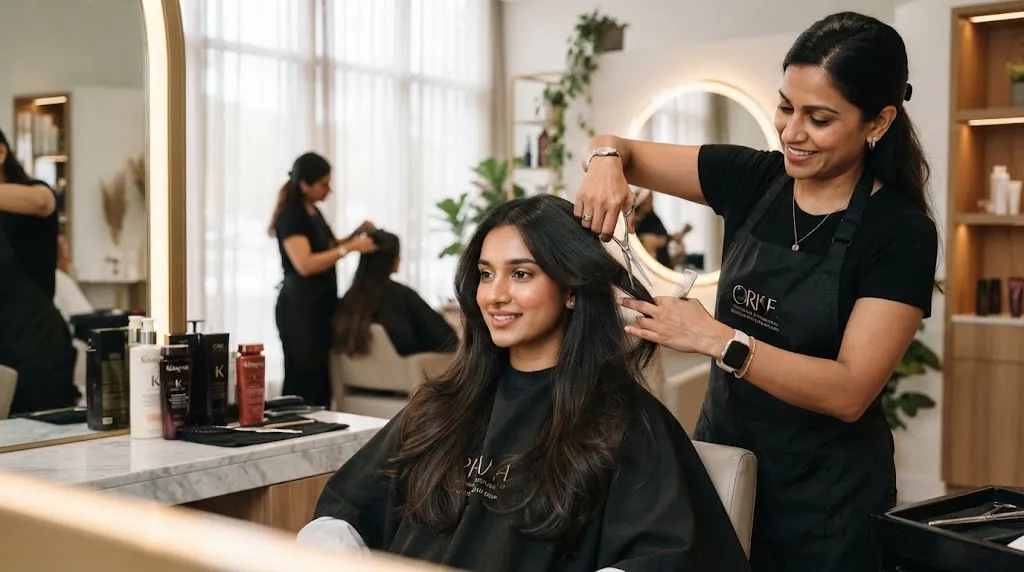
Keeping an indian cut looking sharp requires a distinct routine from the rest of your long hair. Because front sections are styled more frequently and sit directly against your skin, they require target-specific upkeep:
Schedule Trims Every 4 to 6 Weeks: Front layers lose their structured drape faster than back layers. A quick 10-minute “fringe-only” salon visit keeps curtain bangs or chin steps from overlapping your eyes without removing length from the back.
Targeted Hydration on the Ends: Front hair ends are exposed to direct heat styling from round brushes and flat irons. Apply a tiny drop of lightweight hair oil or leave-in conditioner strictly to the lower 2 inches of your front layers—never near the scalp.
Wash the Front Section Separately: If your scalp gets oily between full wash days, tie back your long hair and wash only the front section in the sink using a mild shampoo. It takes 3 minutes to wash and dry, instantly restoring volume.
Protect Against Facial Skincare: Heavy night creams, sunscreens, and oils from your forehead absorb into front layers while you sleep. Pin your front hair back with flat, creaseless clips or wear a silk bonnet to prevent product buildup and break-outs along your hairline.
Common Mistakes People Make with a Front Cut
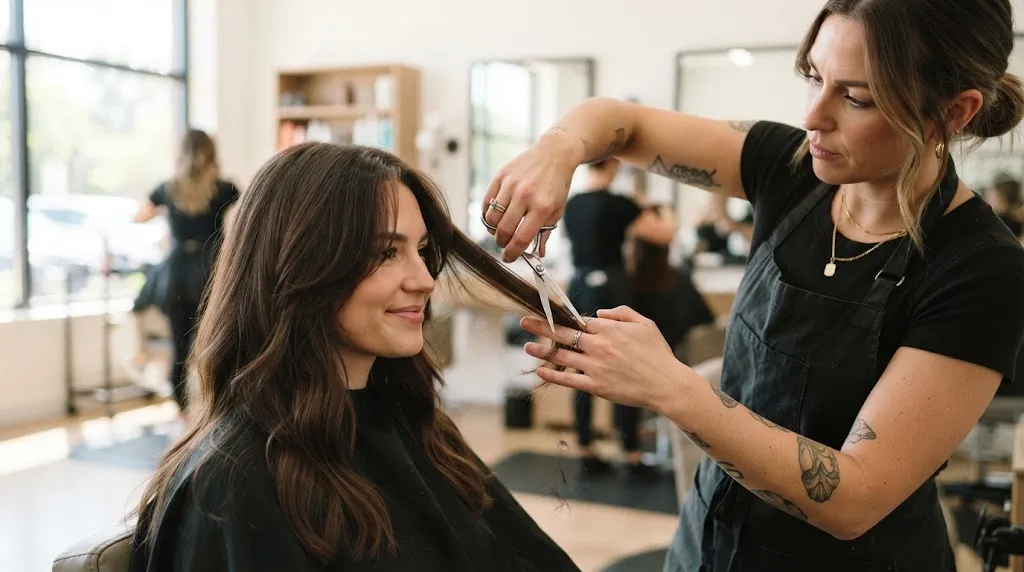
Avoiding critical errors during the cutting process saves you months of waiting for misplaced layers to grow out:
Cutting Too Short When Wet: Indian hair textures have a higher density and natural bounce than fine Western textures. Cutting bangs or layers to eyebrow level while wet often results in them springing up an inch higher once fully dry.
Taking Too Wide of a Triangle Section: Pulling hair from too far back near the ears thins out your main length. A proper front hair cut indian style for long hair uses a narrow triangular partition starting no further than 2 inches back from your front hairline.
Over-Thinning Coarse Hair with Thinning Shears: Using thinning shears too aggressively on thick or coarse Indian hair creates short, spiky interior hairs that push the top layers up, causing unwanted puffiness.
Ignoring Natural Partings: Forcing a center curtain bang on a natural deep side part (or vice versa) causes the hair to split unnaturally. Your cut must align with how your hair naturally falls when wet.
Cutting Straight Across: Requesting a flat horizontal line around the cheeks creates a blocky, dated look. Front layers should always be angled or point-cut to blend smoothly into the lower lengths.
Front Hair Cut vs Full Fringe — Which One Is Better?
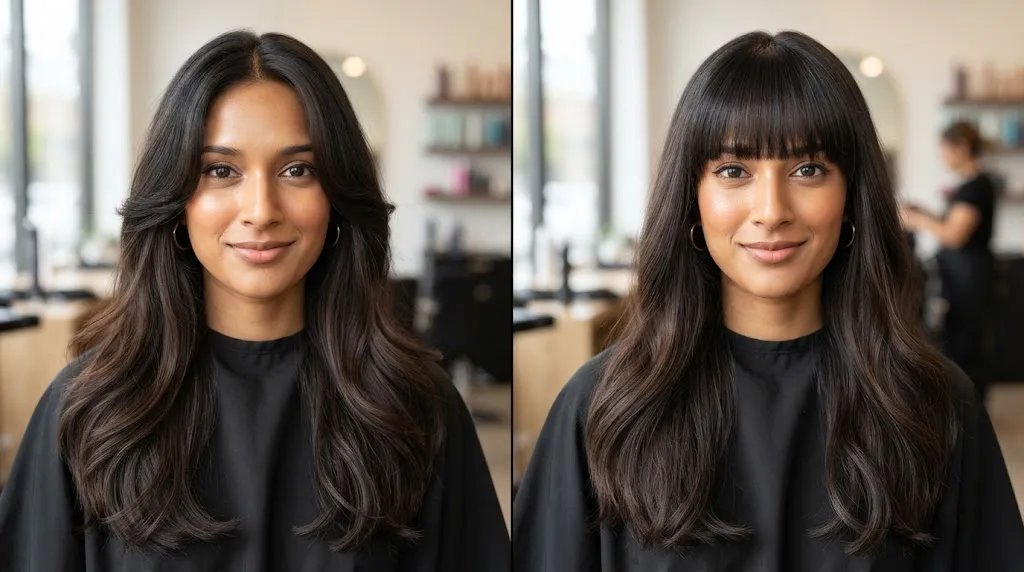
Deciding between a front layer cut and a traditional full fringe comes down to styling flexibility, hair density, and how often you wear traditional Indian outfits.
| Feature | Front Hair Cut (Layered/Curtain) | Full Fringe (Blunt/Wispy Bangs) |
|---|---|---|
| Length Retained | Preserves full length and density throughout | Takes away density from the main crown section |
| Versatility | Easy to pin back into braids, updos, or side sweeps | Difficult to hide; stays across the forehead |
| Maintenance | Low to medium (trims every 8–10 weeks) | High (trims every 3–4 weeks) |
| Ethnic Styling | Pairs naturally with sarees, lehengas, and maang tikkas | Can clash with heavy forehead jewelry or dupattas |
| Best For | Thick, heavy, wavy, or long hair | Straight, fine to medium-density hair |
Frequently Asked Questions
Which cut is best for front hair? +
The best cut for front hair depends on your face shape, but curtain bangs and chin-length face-framing layers are the most versatile options. They accentuate cheekbones and jawlines without committing to high-maintenance forehead bangs, and they blend seamlessly into both loose hairstyles and tied-up braids.
Which haircut is best for Indian hair? +
A front layer cut for long hair indian preferences combined with subtle U-shaped or V-shaped layers in the back is ideal for Indian hair. This combination removes excess weight from around the face and prevents flat roots, while preserving the thick perimeter needed for traditional styling and heavy drapes.
How do I part my front hair attractively? +
Part your hair by aligning the part with key facial landmarks. A center part works best for symmetrical face framing and maang tikka placement during festive events. An off-center or deep side part (aligned with the arch of your eyebrow) creates natural root lift and complements round or square face shapes.
What haircuts look good on Indians? +
Long cascading layers, feathered step cuts, deep side-swept fringes, and curtain bangs look exceptionally flattering on Indian hair textures. These styles work with the hair's natural wave and density, adding movement without making the hair look thin or frizzy.