50+ Best Hairstyles for Women Over 60 in 2026
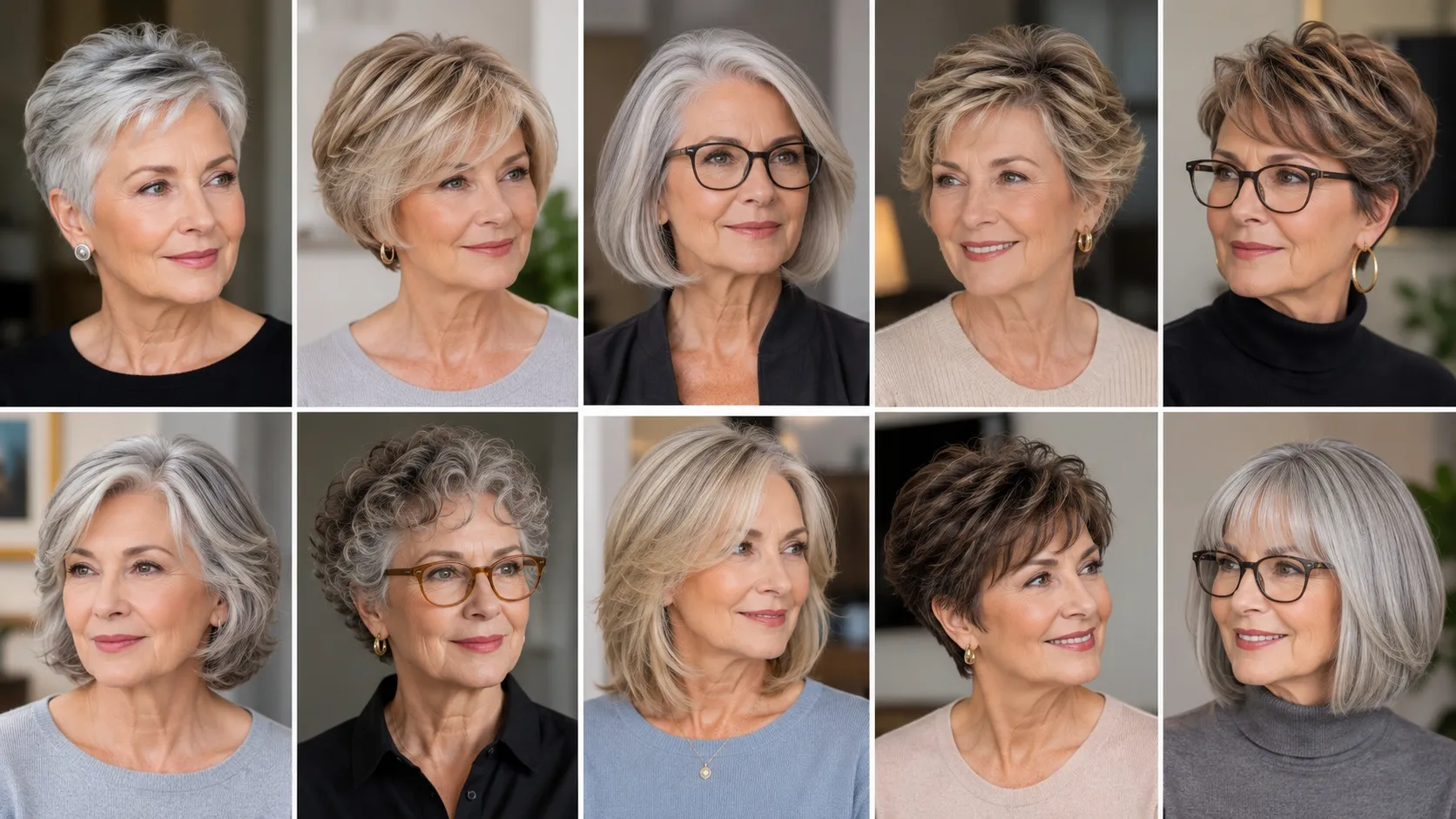
Finding a haircut that makes you feel confident and comfortable becomes a top priority in your 60s. As hair changes texture and loses volume with age, you need a practical, low-maintenance cut that flatters your features.
This guide covers the best hairstyles for over 60s — wash-and-wear cuts, styles for thin or thick hair, and looks that work with glasses. Each section includes styling tips, maintenance timelines, and face-shape guidance drawn from what stylists see working again and again in the chair.
What Makes a Hairstyle Flattering After 60?
The most flattering hairstyle combines soft, face-framing layers with subtle crown volume to counteract natural thinning. A length between the jawline and shoulders creates a youthful frame that enhances your jawline and neckline.
According to Emma Carter, a licensed cosmetologist with over 12 years of experience, the biggest mistake she sees is clients clinging to a cut from their 30s out of habit. Low-maintenance, textured cuts that work with your natural hair pattern — instead of fighting it — usually end up saving significant daily styling time.
Short Hairstyles for Women Over 60
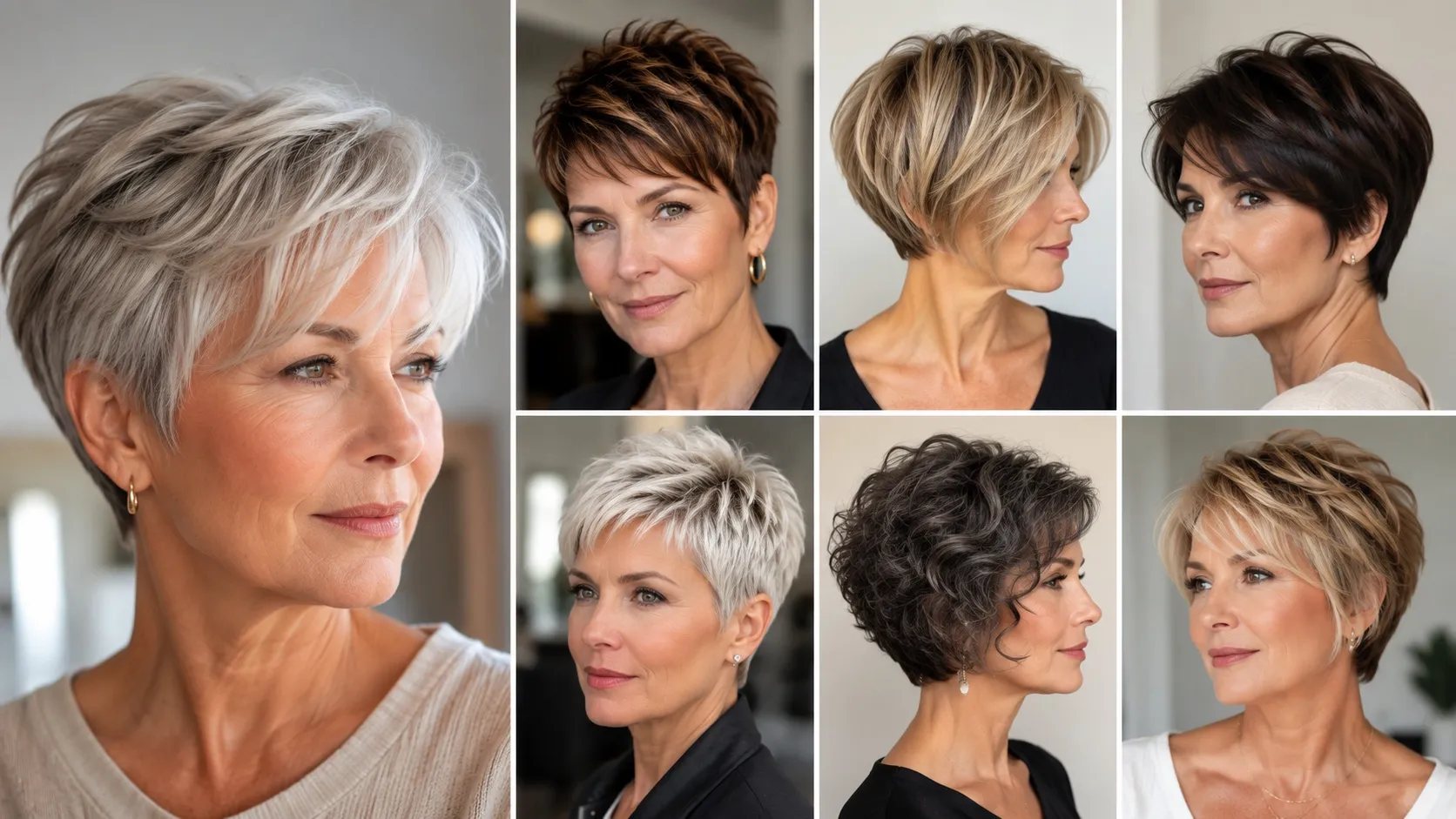
Short hair instantly adds volume and simplifies your daily routine as hair changes texture with age. The right short style depends on your face shape, hair thickness, and how much styling time you want to spend.
Pixie Cuts
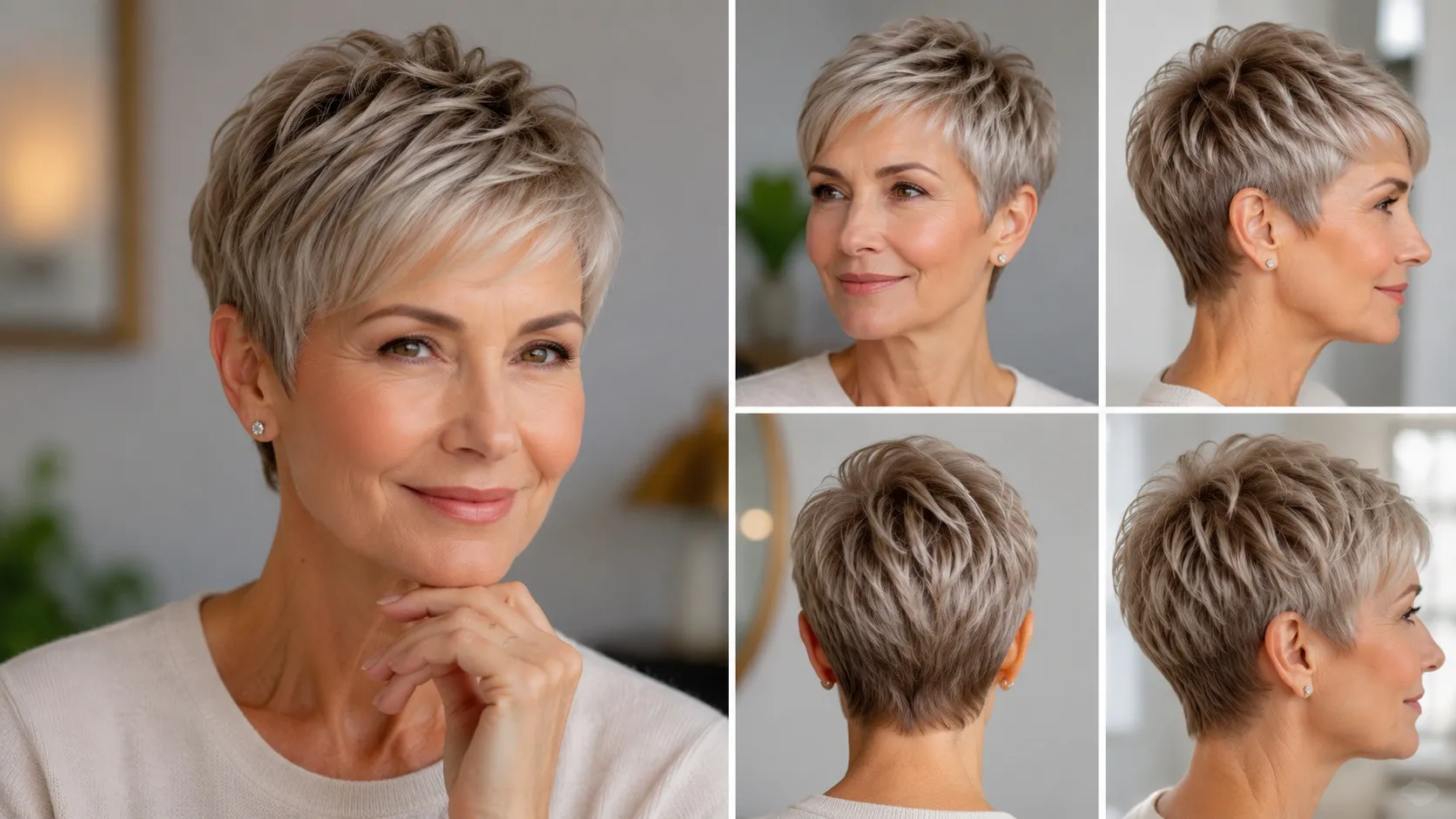
A lot of women resist the pixie at first, worried it’ll look too severe — but on fine or thinning hair, it usually does the opposite. Removing length stops hair from lying flat against the scalp, which instantly creates an illusion of thickness. It suits oval, square, or heart-shaped faces particularly well.
Plan on a trim every 4-6 weeks to keep the shape clean. Styling is genuinely quick: a dime-sized amount of cream worked through with your fingers, then air-dry or a fast blast of the dryer — under five minutes, most mornings.
Short Curly Crops
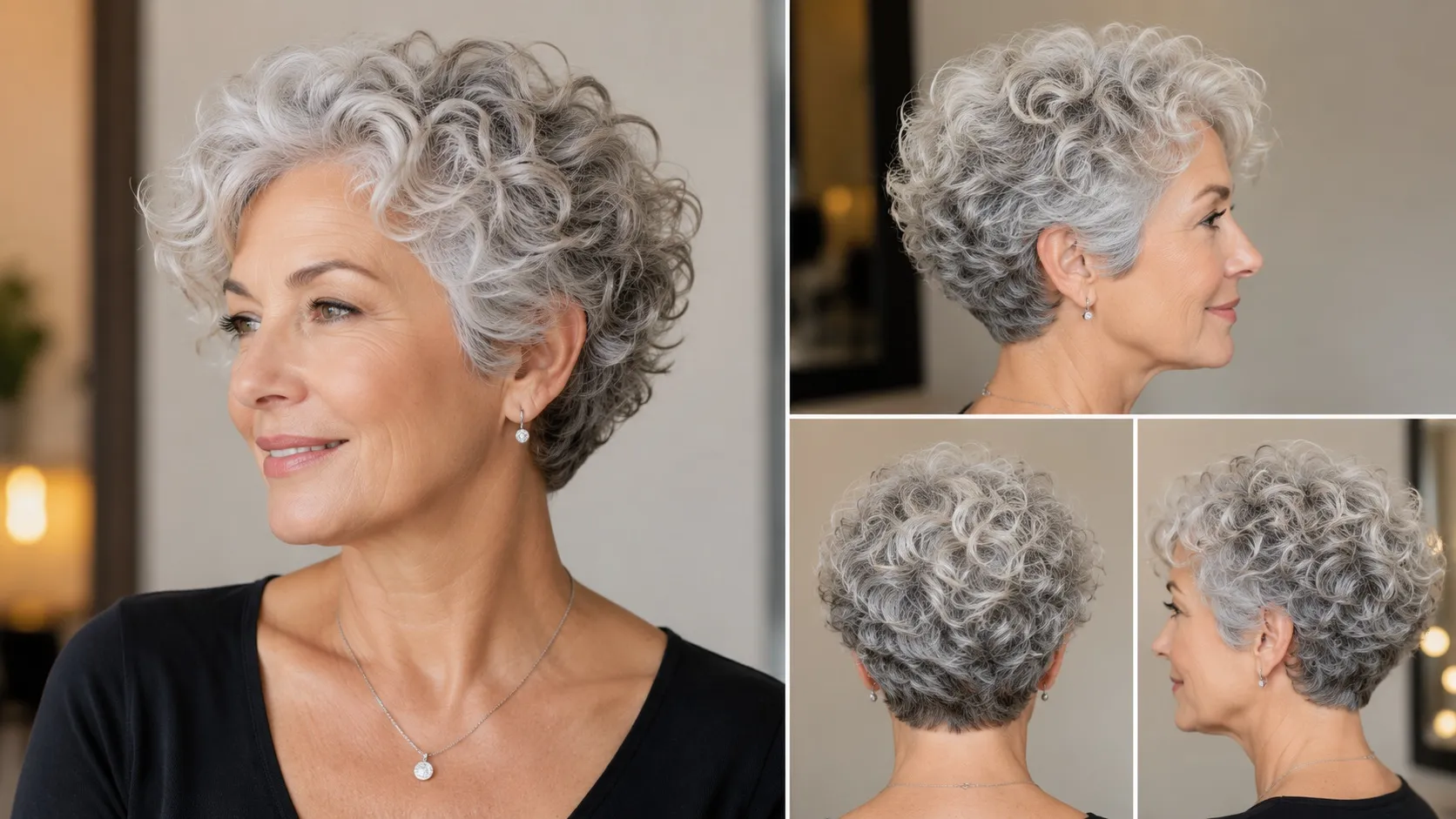
This is a favorite among stylists for coarse, brittle, or grey/white hair because it removes the weight that drags thin curls down, letting the natural bounce come back.
- Best for: Round, oval, or pear-shaped faces
- Maintenance: Shape-up every 6-8 weeks
- Daily styling: ~5 minutes — scrunch curl-defining mousse into wet hair and let it air dry
Short Wash-and-Wear Bobs
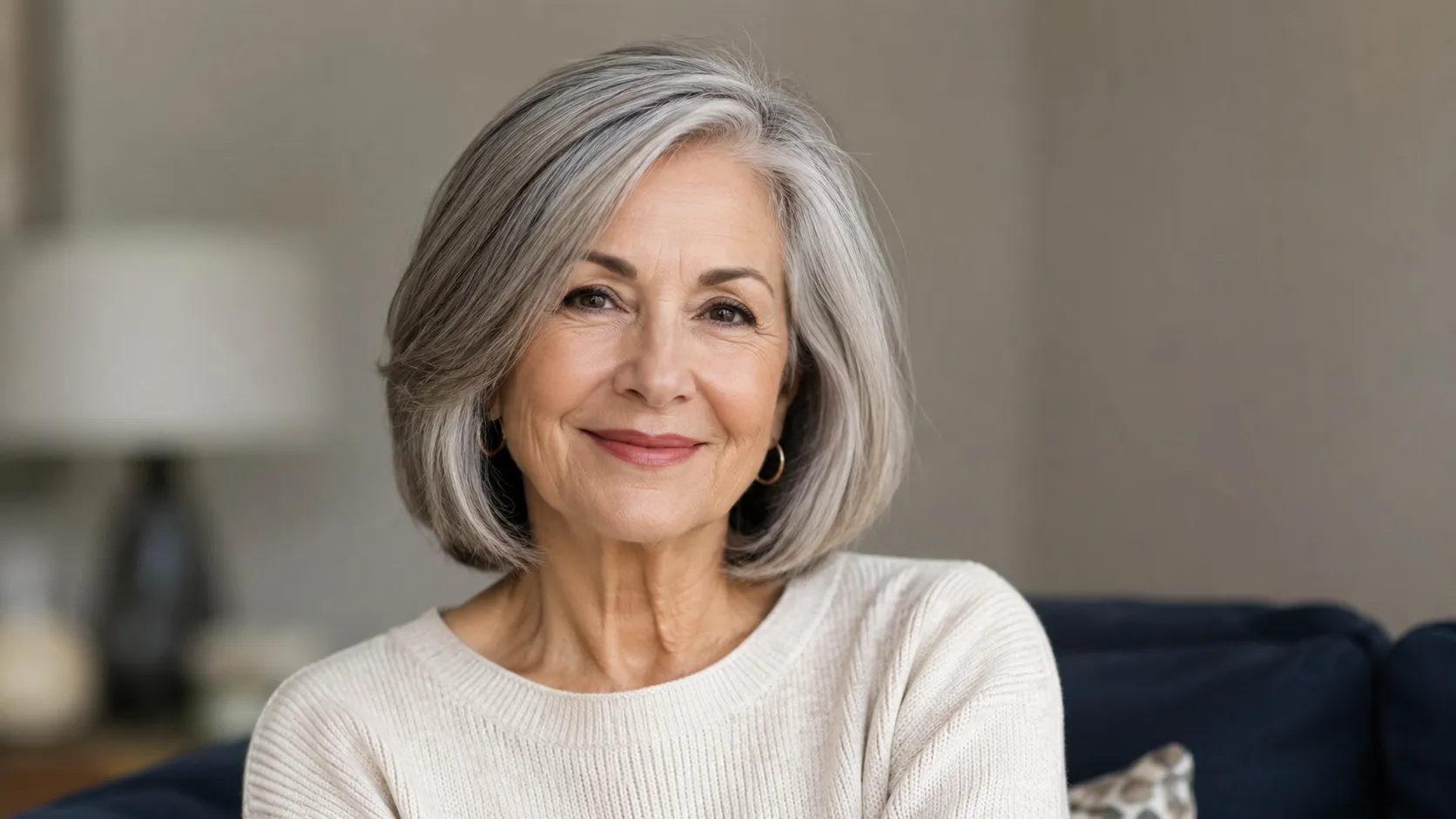
If your hair is medium-to-thick and you want something polished without committing to pixie-length shortness, the wash-and-wear bob is the go-to. A good stylist angles the edges so hair naturally cups inward after just a wash and air-dry — no round brush required unless you want extra lift. Suits rectangular and oval faces especially well, and needs a cut roughly every 6-8 weeks.
Medium-Length Hairstyles for Women Over 60
Medium cuts, falling between jawline and collarbone, are the most commonly recommended solution for women who find long hair drags their features down but short crops feel too exposing.
Layered Lob (Long Bob)
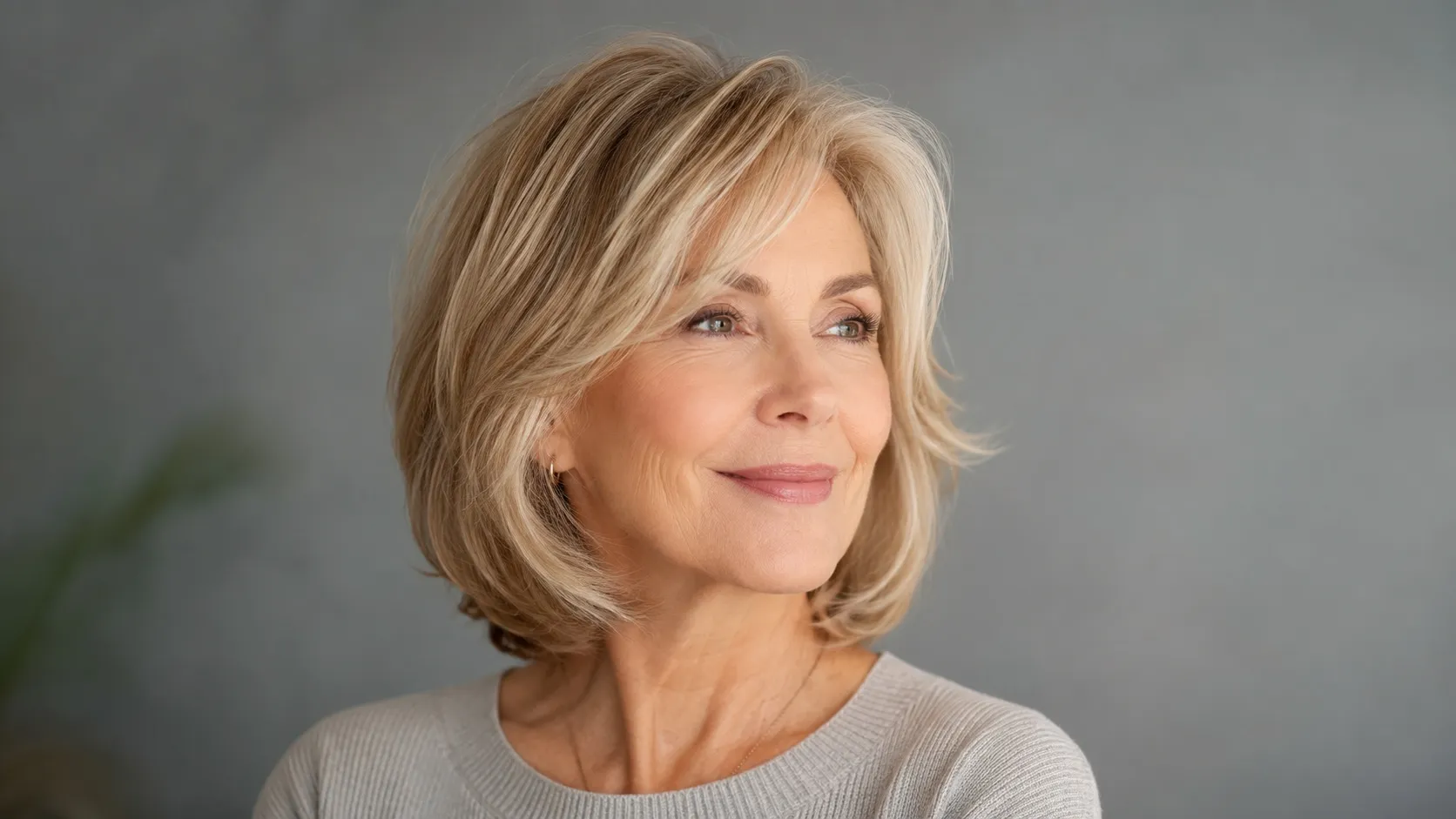
Interior layering removes weight from the bottom and shifts volume upward to the cheekbones, which is exactly what fine or thinning hair needs to look lifted rather than flat.
- Best for: Oval, round, and heart-shaped faces
- Maintenance: Trim every 6-8 weeks
- Daily styling: 10-15 minutes — volumizing mousse on damp roots, blow-dry with a round ceramic brush at a 90° angle
Shoulder-Length Shag
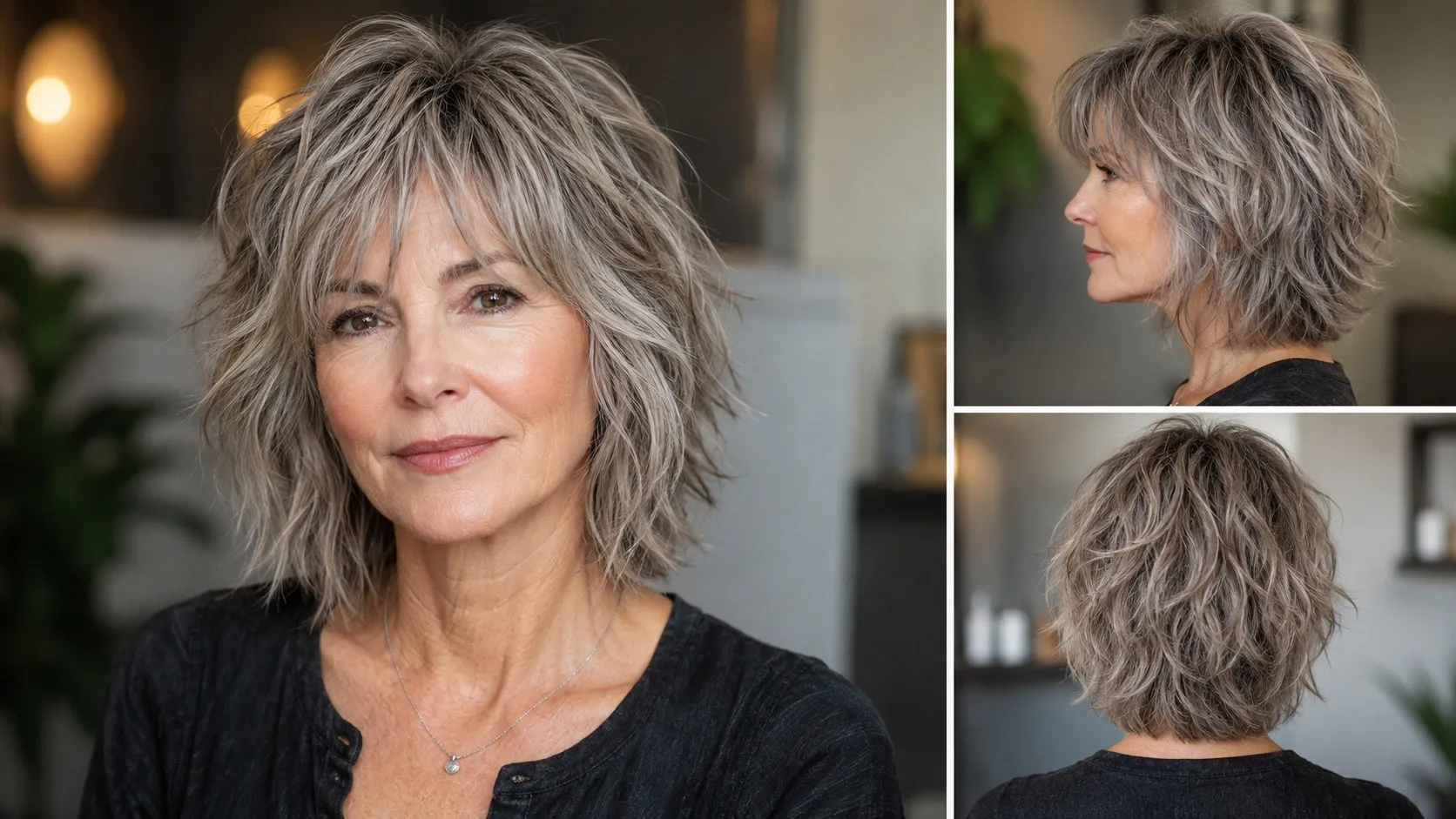
The modern shag is a fantastic, low-maintenance choice if you have natural waves or thick hair. It relies on choppy, deliberate layers throughout the canopy of the hair to create texture and eliminate bulk. Because it embraces your hair’s natural pattern, it is a true wash-and-wear haircut for over 60 that avoids a stiff, over-styled look.
Best Face Shapes: Square, oblong, and diamond faces, as the textured sides soften a strong jawline.
Styling Routine: Work a dime-sized amount of curl cream or leave-in conditioner through damp strands. Attach a diffuser nozzle to your blow-dryer and dry on a low-heat, low-speed setting without touching the hair too much. Alternatively, let it air-dry completely for a textured finish.
Maintenance: Daily styling takes under 5 minutes. The layers grow out seamlessly, meaning you only need a shape-up every 8 to 10 weeks.
Medium Length with Side-Swept Bangs
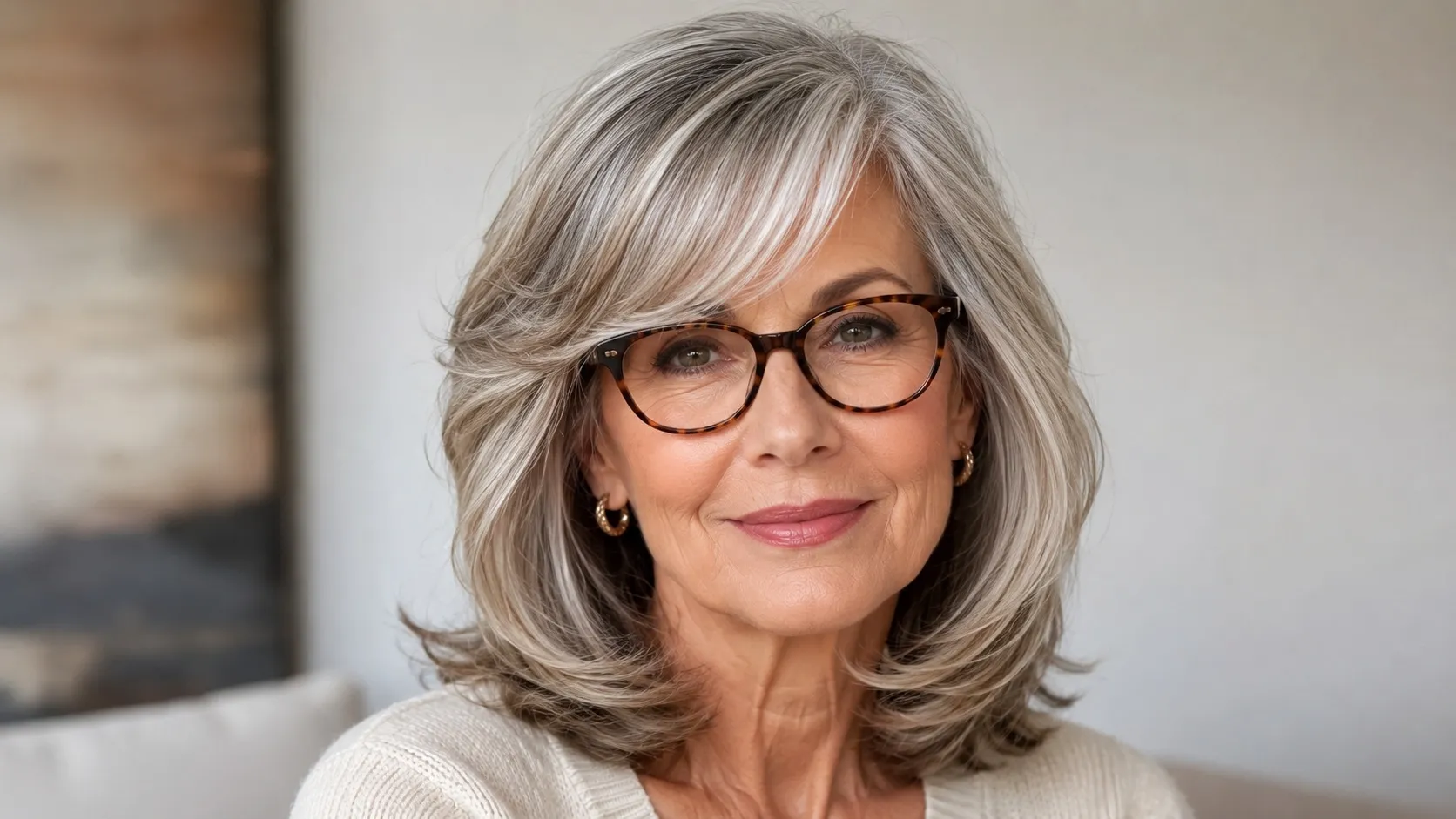
A soft, diagonal bang draws the eye upward to the brows and cheekbones — softer than a straight-across fringe, and it plays nicely with glasses instead of fighting the frames.
- Best for: Heart, oval, and long face shapes
- Maintenance: Cut every 7 weeks; quick fringe trim between visits
- Daily styling: ~10 minutes — blow-dry bangs first while wet, sweeping side to side
Long Hairstyles for Women Over 60
The idea that women over 60 must cut their hair short is outdated — long hair works well if it’s healthy, hydrated, and has a defined shape. Regular trims every six to eight weeks eliminate splitting ends that sap volume.
Long Layers with Curtain Bangs
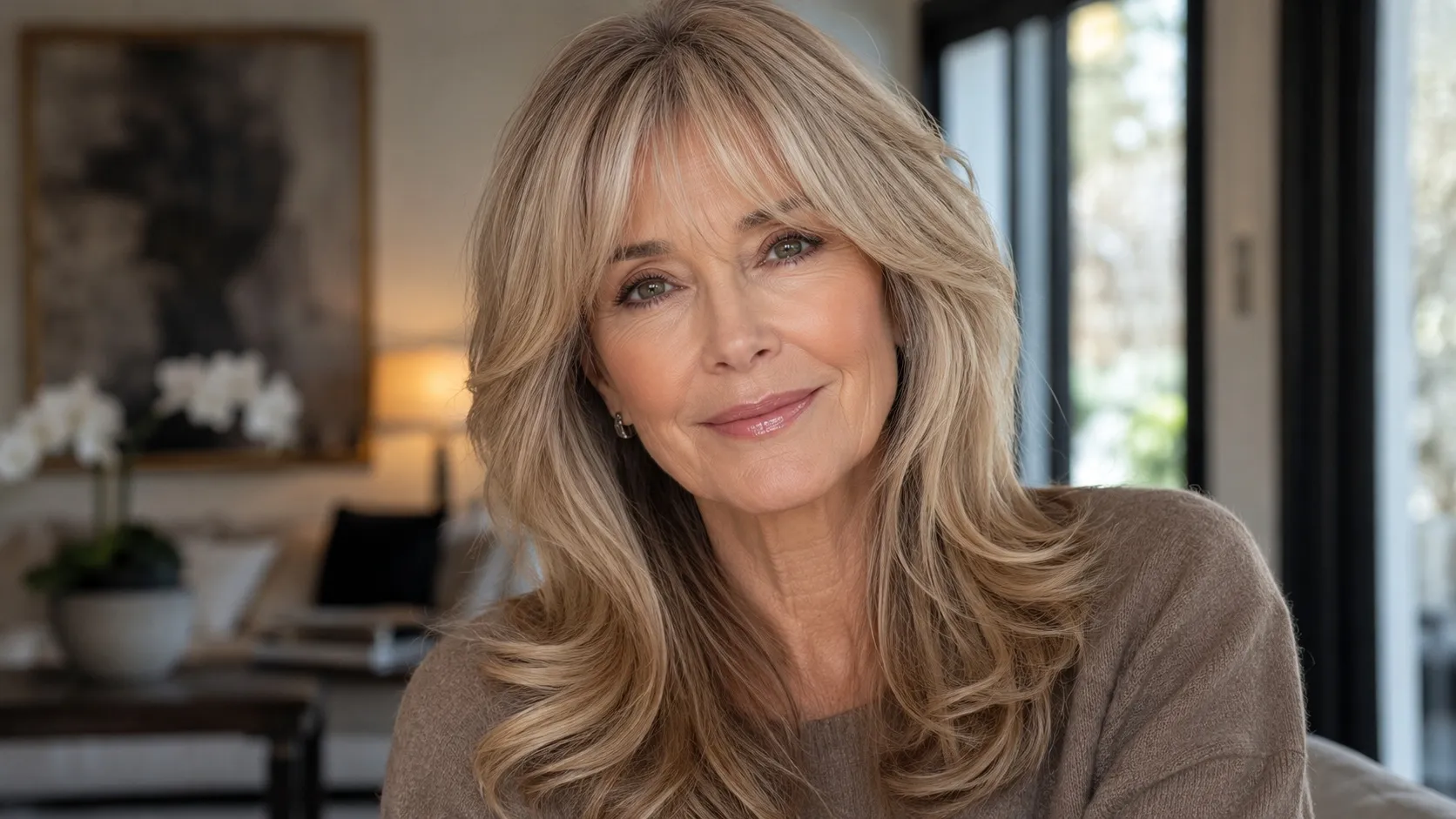
This is one of the more requested long styles for a reason: the layers keep hair from weighing down your features, and curtain bangs frame the eyes and cheekbones almost like a built-in filter. On thinner hair, the shorter front pieces do a convincing job of creating the illusion of density.
- Best for: Most face shapes, especially those wanting a softer frame
- Maintenance: Trim every 6-8 weeks
- Daily styling: ~10 minutes — quarter-sized volumizing mousse on damp hair, blow out with a large round ceramic brush
The Polished Low Updo
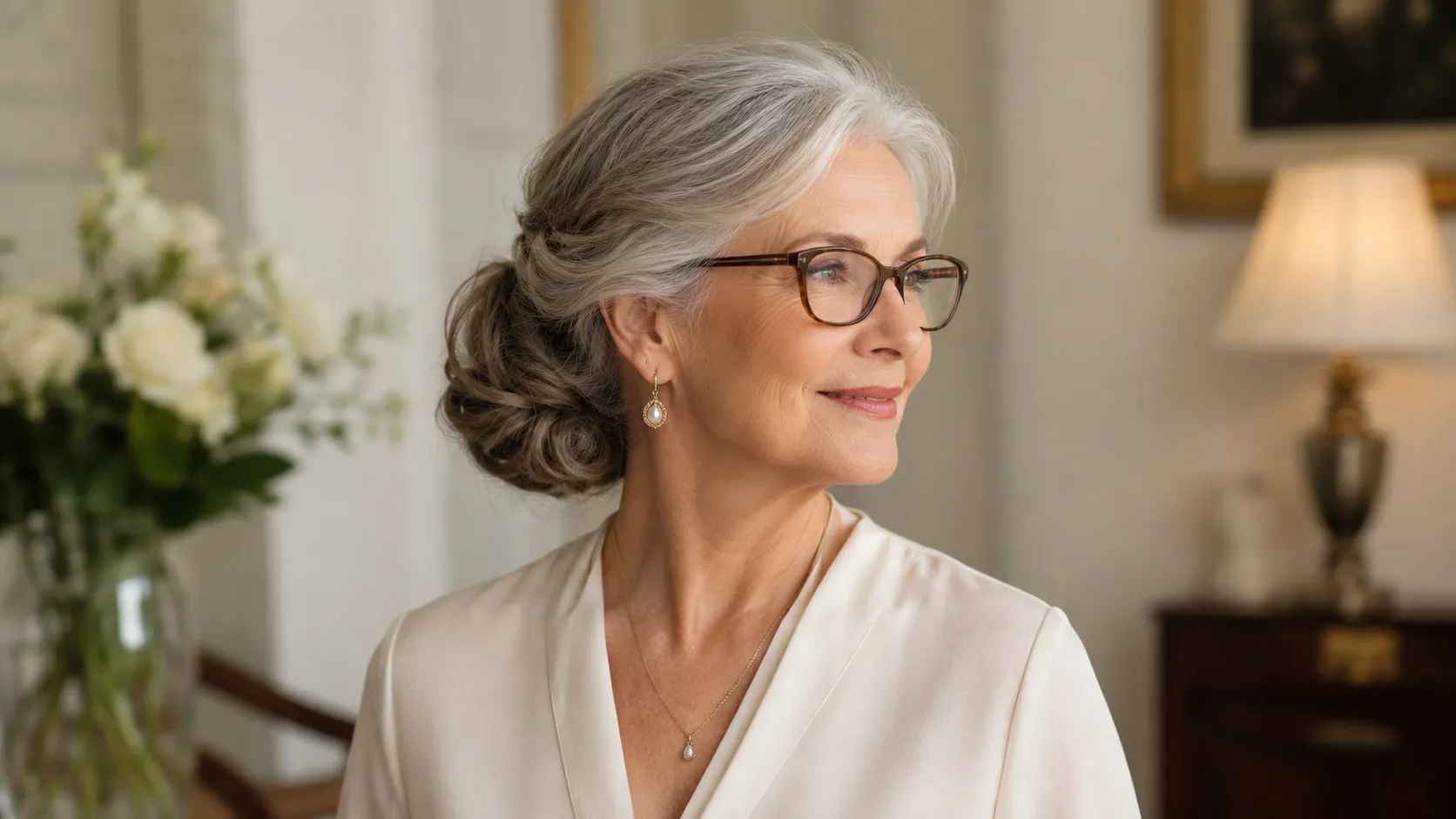
For anyone who loves long hair but doesn’t want to deal with it every day, the low updo is hard to beat. Gather hair into a loose ponytail at the nape, twist into a soft chignon, and secure with U-shaped hairpins rather than tight elastics, which tend to cause breakage over time. It’s a favorite for glasses-wearers too, since it clears the sides so frames stand out instead of getting tangled in loose strands. Takes under three minutes once you’ve got the twist down.
Hairstyles for Thin or Fine Hair Over 60
A drop in estrogen naturally causes hair strands to thin as growth cycles slow. Stylists usually approach this by building the illusion of thickness rather than trying to add real volume, which fine hair can’t hold onto for long anyway.
The instinct is often to keep growing it out to “have more hair,” but that’s usually the mistake — length weighs fine hair down and exposes the scalp. A chin-length blunt bob or structured pixie works better, and asking for blunt perimeter lines instead of feathered ends makes a bigger visual difference than most people expect; solid edges simply read as denser.
- Styling routine: Dime-sized root-lift spray at the crown, blow-dry with a ceramic round brush lifting straight up at 90°, finish with dry texturizing spray instead of heavy hairspray
Hairstyles for Thick Hair Over 60
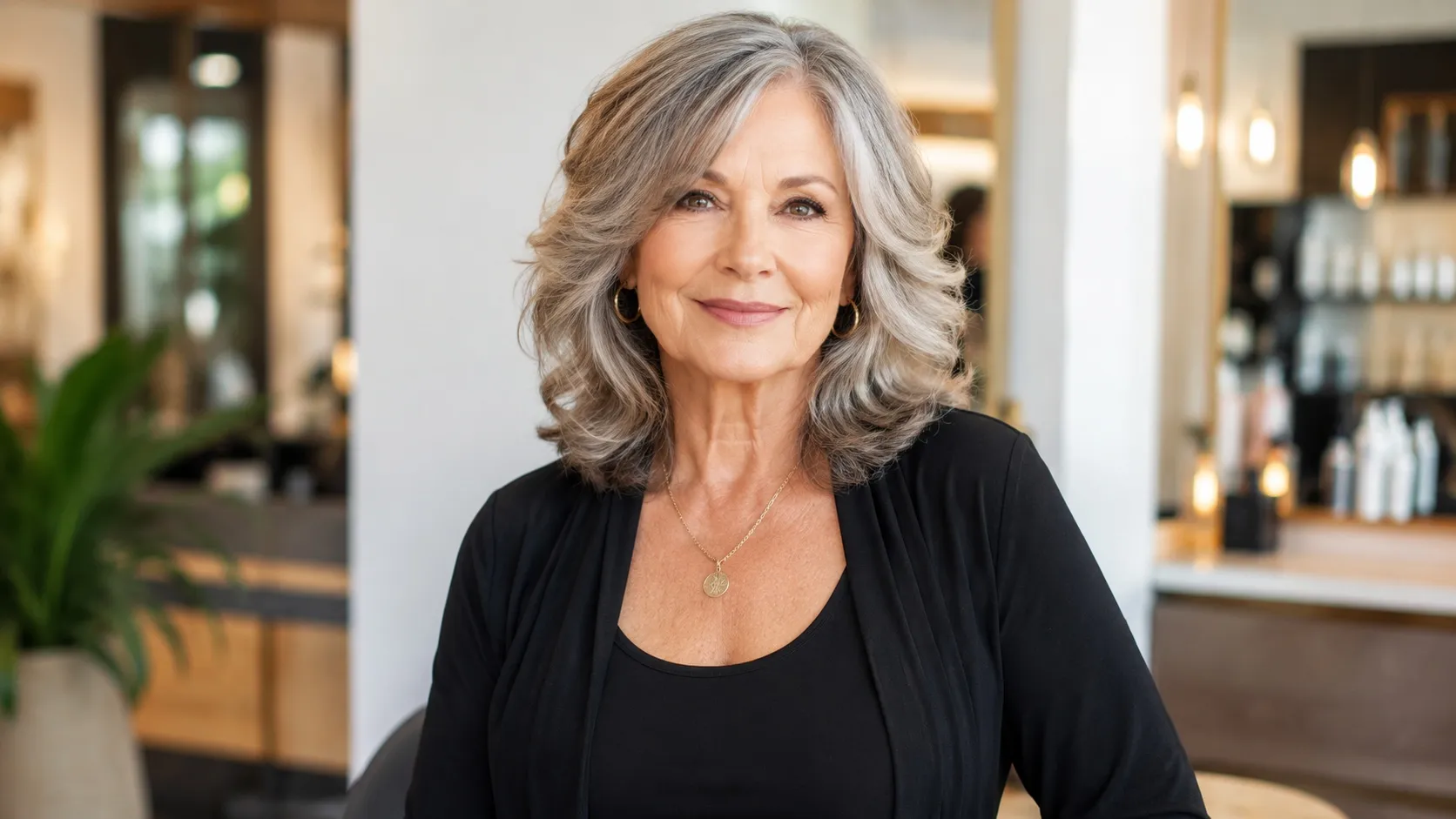
Thick hair needs the opposite treatment from fine hair — interior layering to remove weight without leaving the ends frizzy or unruly.
- Best cuts: Long pixie with point-cut layers, or a shoulder-skimming shag
- Ask your stylist for: Slide-cutting techniques on the mid-lengths so hair lies flat and moves naturally
- Styling routine: Lightweight smoothing cream on damp hair to control volume and frizz as it air-dries
Hairstyles for Women Over 60 Who Wear Glasses
Hair and glasses need to work together, not compete for space on your face. Barbers and stylists who work with a lot of glasses-wearing clients tend to steer people away from heavy straight-across bangs or dense forward layers, since both overwhelm the face against thick or bold frames.
A side-swept fringe breaks up the horizontal line of your glasses and softens the forehead. Layered cuts work well too, especially when the shortest layers skim just below the jawline or cheekbone — enough to frame the face without catching on the hinges. And the simplest trick of all is the ear-tuck: a little light texturizing around the ears so hair tucks back easily, which instantly showcases the frames instead of pushing them forward.
Curly and Wavy Hairstyles for Women Over 60
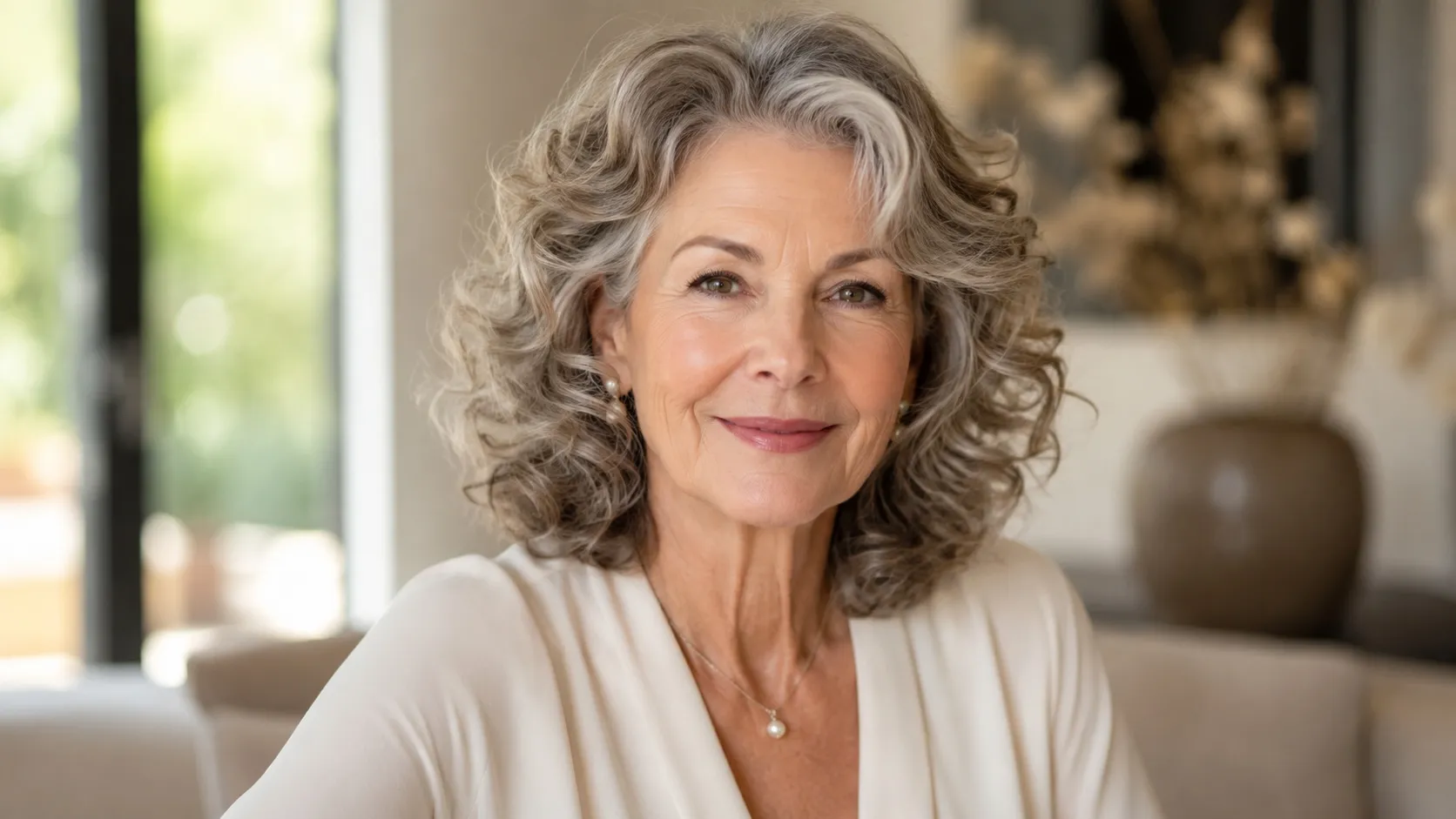
Embracing natural texture is one of the easiest ways to cut daily styling time — natural bend and bounce provide built-in volume that straight hair often lacks.
Natural Curl Styles
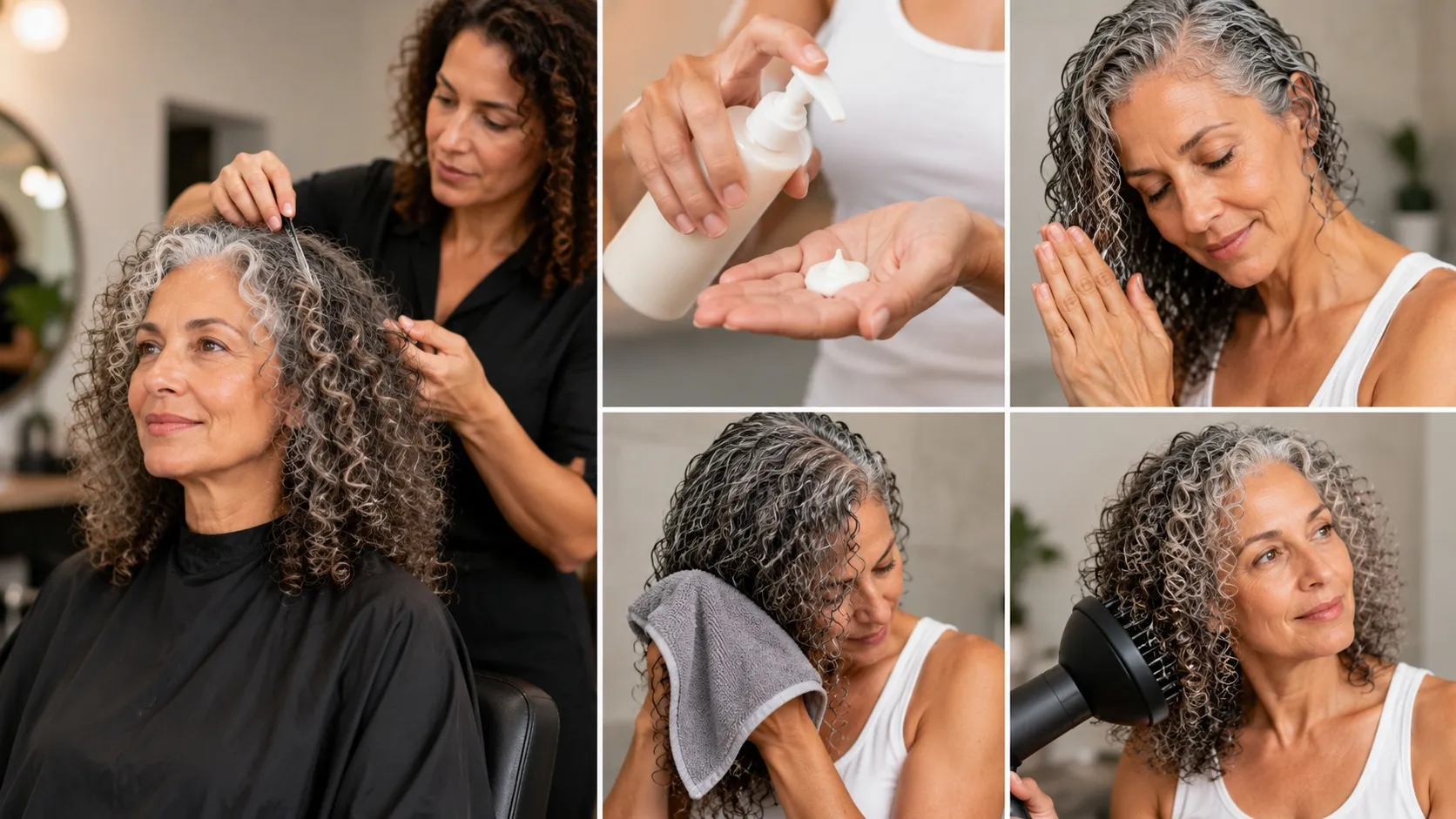
Gray or thinning curls tend to get more porous and prone to frizz, so working with a stylist who cuts curls dry (rather than wet) makes a real difference in how balanced the shape ends up looking — it avoids the dreaded “triangle” effect.
- Styling routine: Lightweight moisture-rich cream or mousse applied with a “praying hands” motion to soaking wet hair; scrunch out excess water with a microfiber cloth instead of a towel; air-dry or diffuse on low heat
Wash-and-Wear Curly Cuts
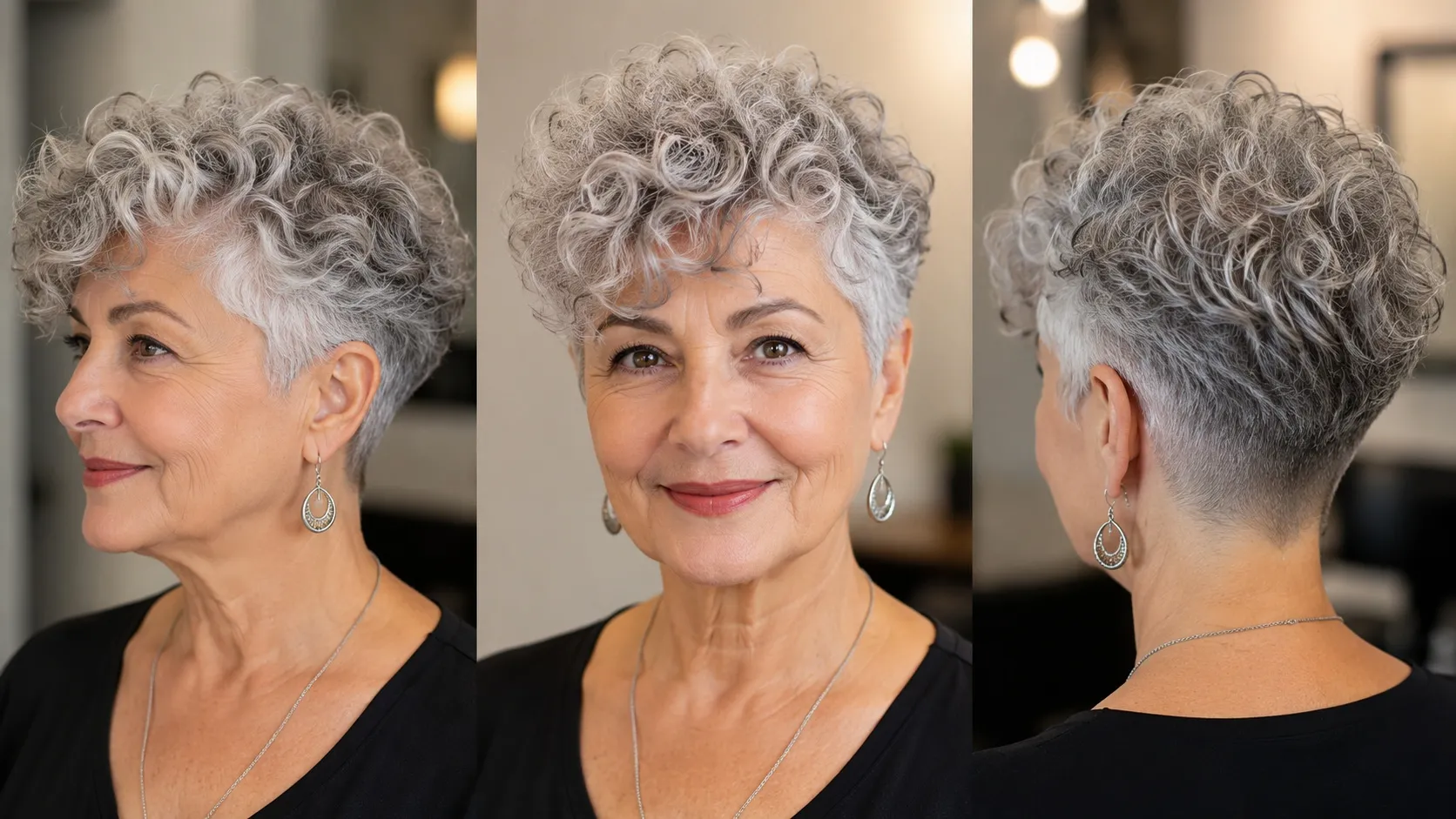
A stacked curly pixie or closely cropped tapered cut is engineered to fall into place right out of the shower — sides and back cropped shorter, more length on top so curls cascade forward on their own. Emma Carter notes that most of her clients with this cut are out the door in under five minutes: mist with leave-in conditioner, scrunch, done.
How to Choose the Right Hairstyle for Your Face Shape After 60
Your face shape changes as collagen decreases and skin elasticity shifts. A cut that flattered you at 30 might create unwanted shadows today — this is something stylists watch for constantly with returning clients.
Round Face Shapes
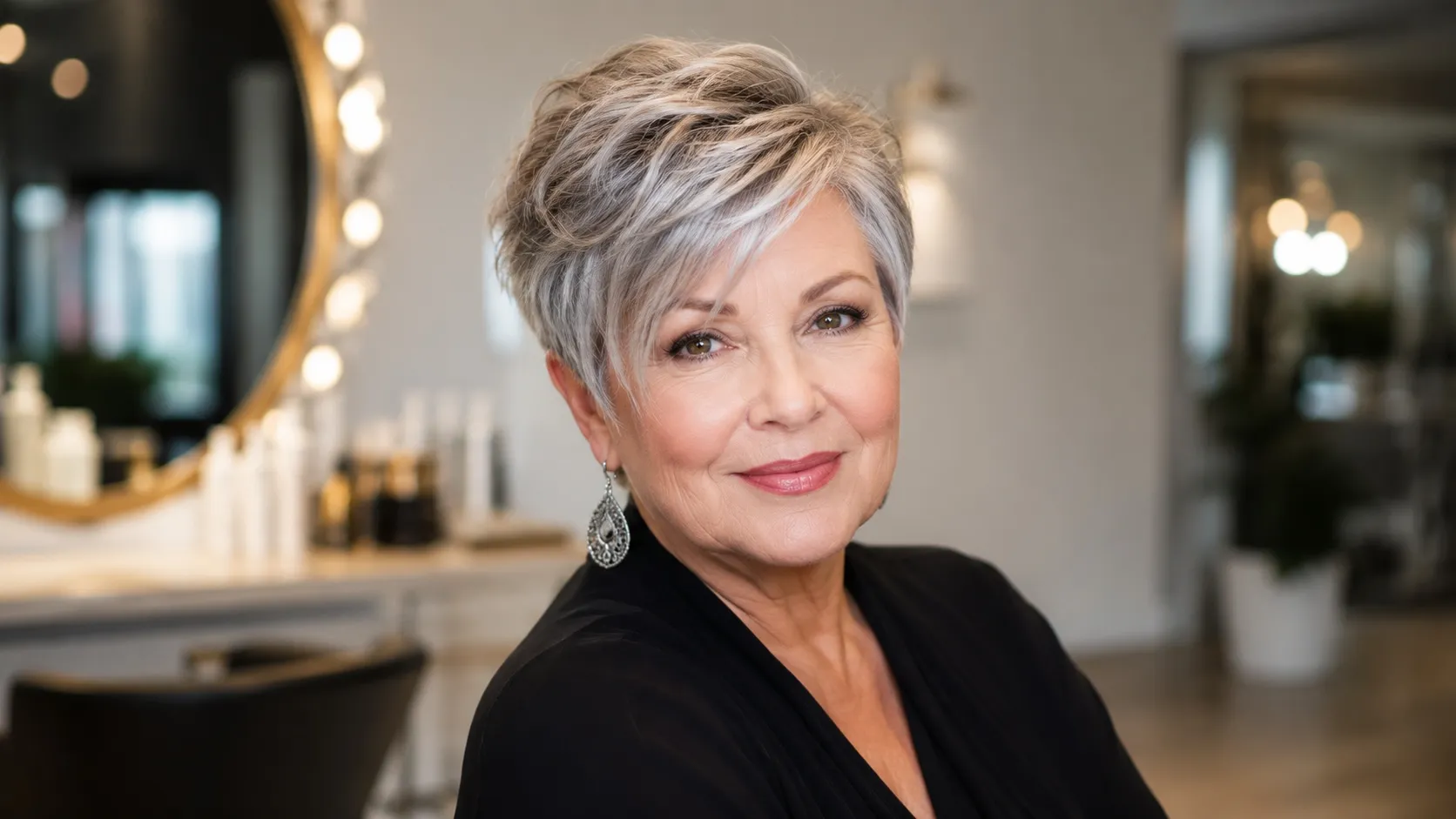
- Goal: Create the illusion of length, minimize fullness around the cheeks
- Recommended: Asymmetrical pixie, graduated bob hitting just below the jawline
- Avoid: Blunt chin-length cuts, full heavy bangs
Oval Face Shapes
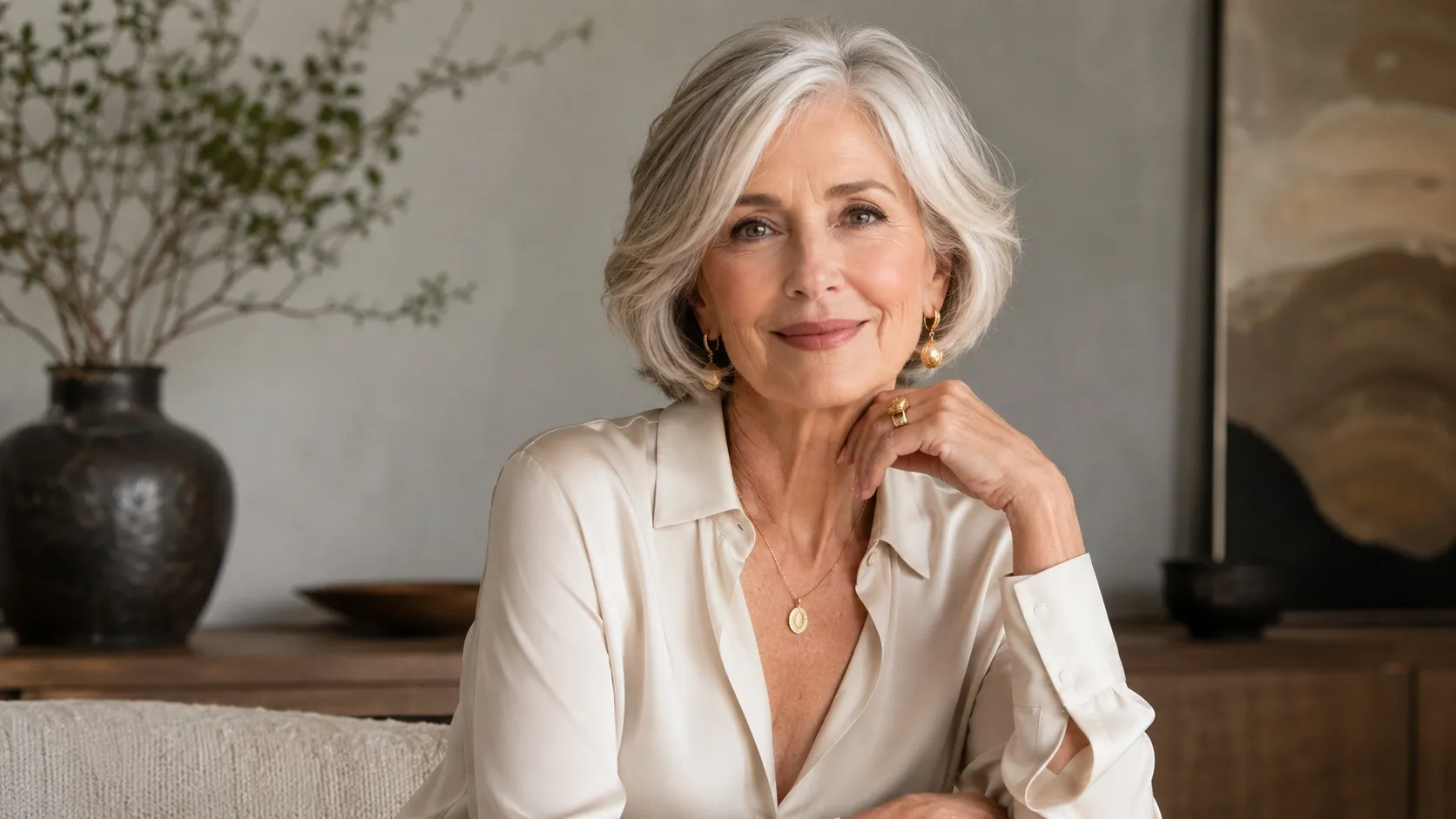
Oval is the shape most stylists consider the easiest to work with — almost any length or texture suits it, so the real advice is to lean into your natural hair texture rather than fight it. A textured lob or sleek tapered crop with layers around the cheekbones or jawline highlights bone structure nicely. The one pitfall: too much height at the very top can make the face look unnecessarily long.
Square Face Shapes
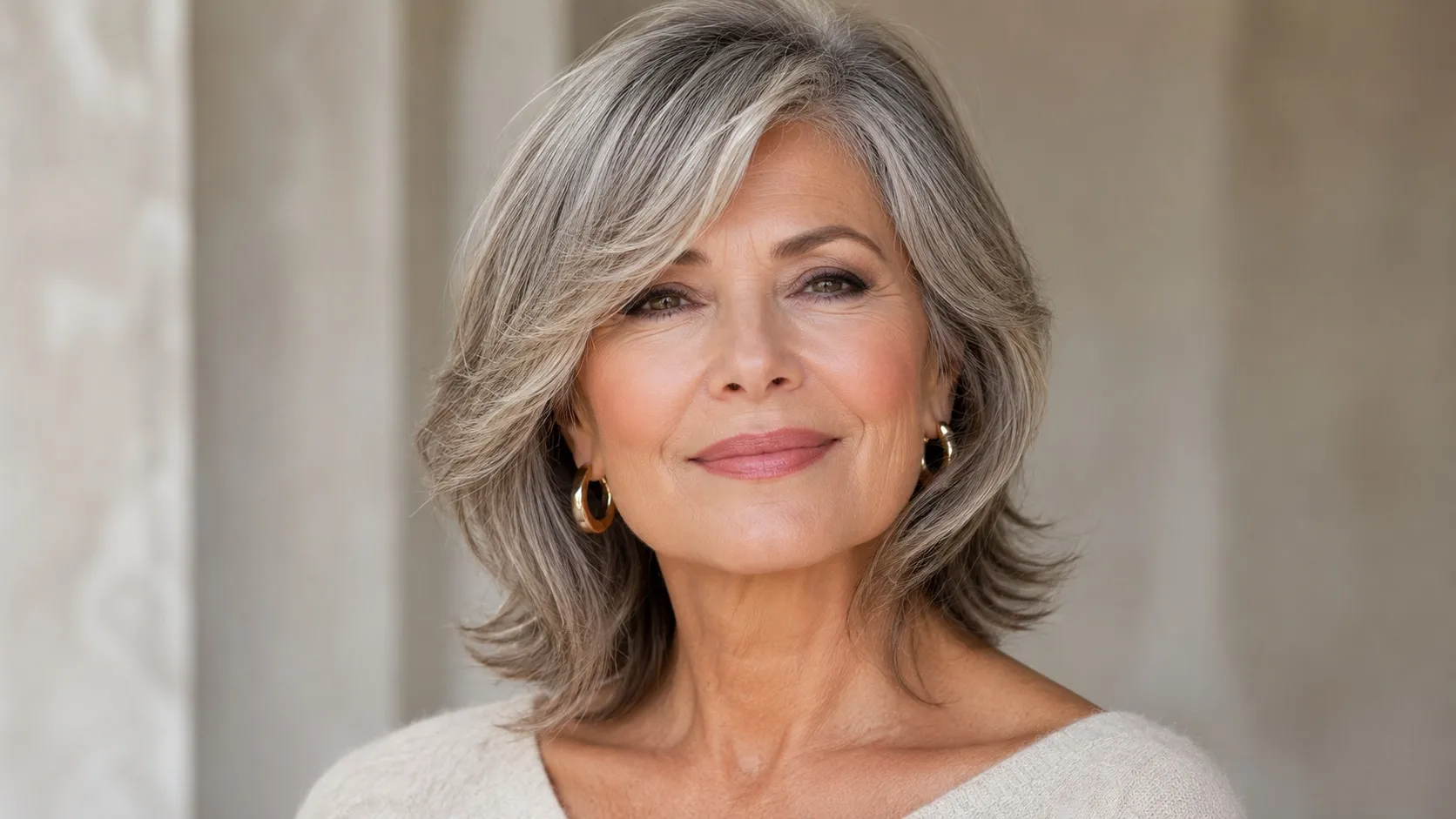
- Goal: Soften a strong, angular jawline with motion and rounded edges
- Recommended: Medium-length cut with face-framing layers, side-swept fringe, wispy razor-cut ends
- Avoid: Bone-straight styles, sharp geometric cuts, blunt bangs
Heart Face Shapes
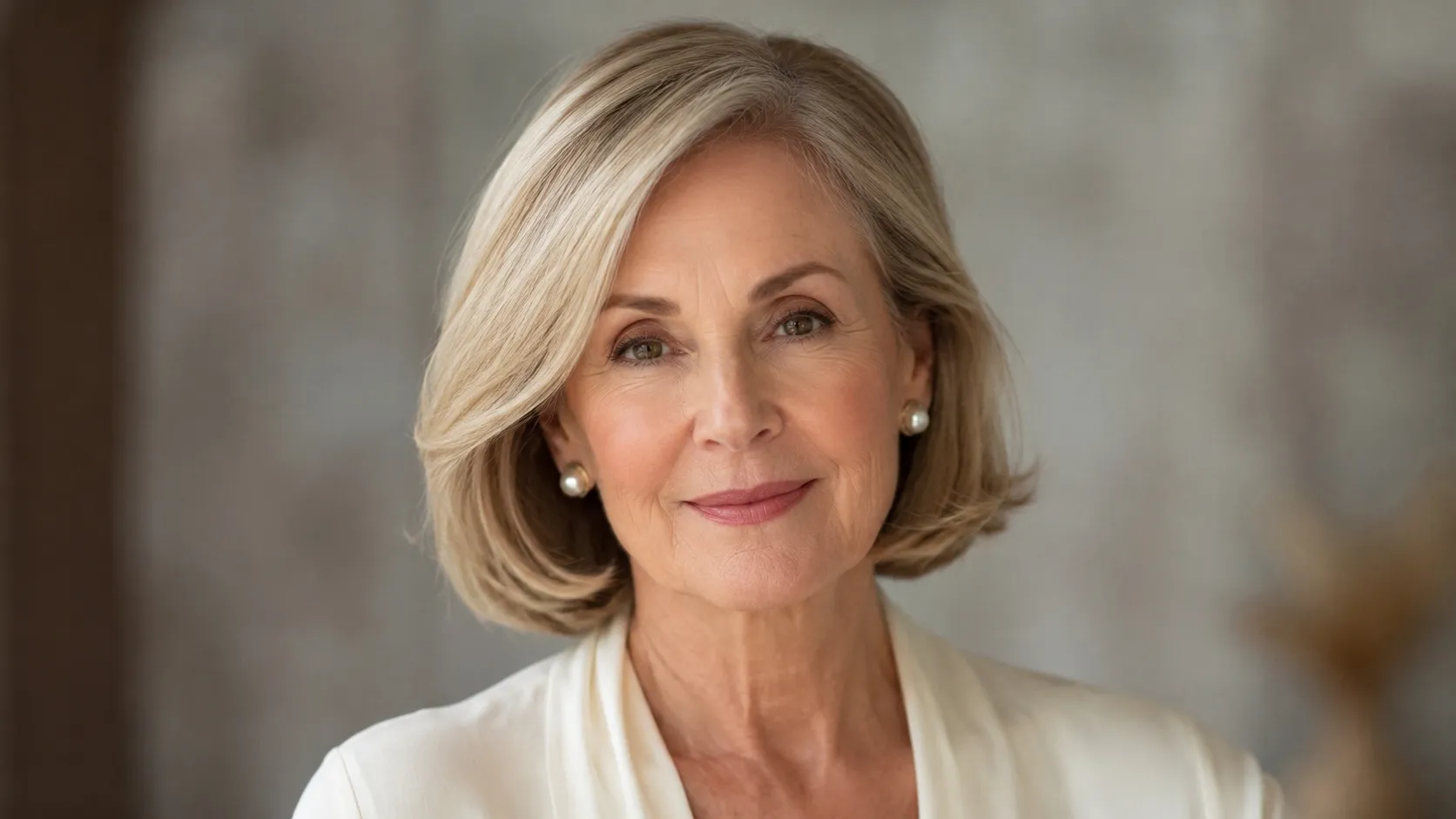
Heart-shaped faces are wider up top and narrow at the chin, so the goal is adding visual width lower down to balance things out. A chin-length bob or medium cut with flipped-out ends fills in the space around the jaw nicely, and side-parted styles help minimize a broad forehead. Skip high-volume crown styling or tight, slicked-back sides — both make the top look heavier than it needs to.
What is the most flattering hairstyle for a 70-year-old woman?
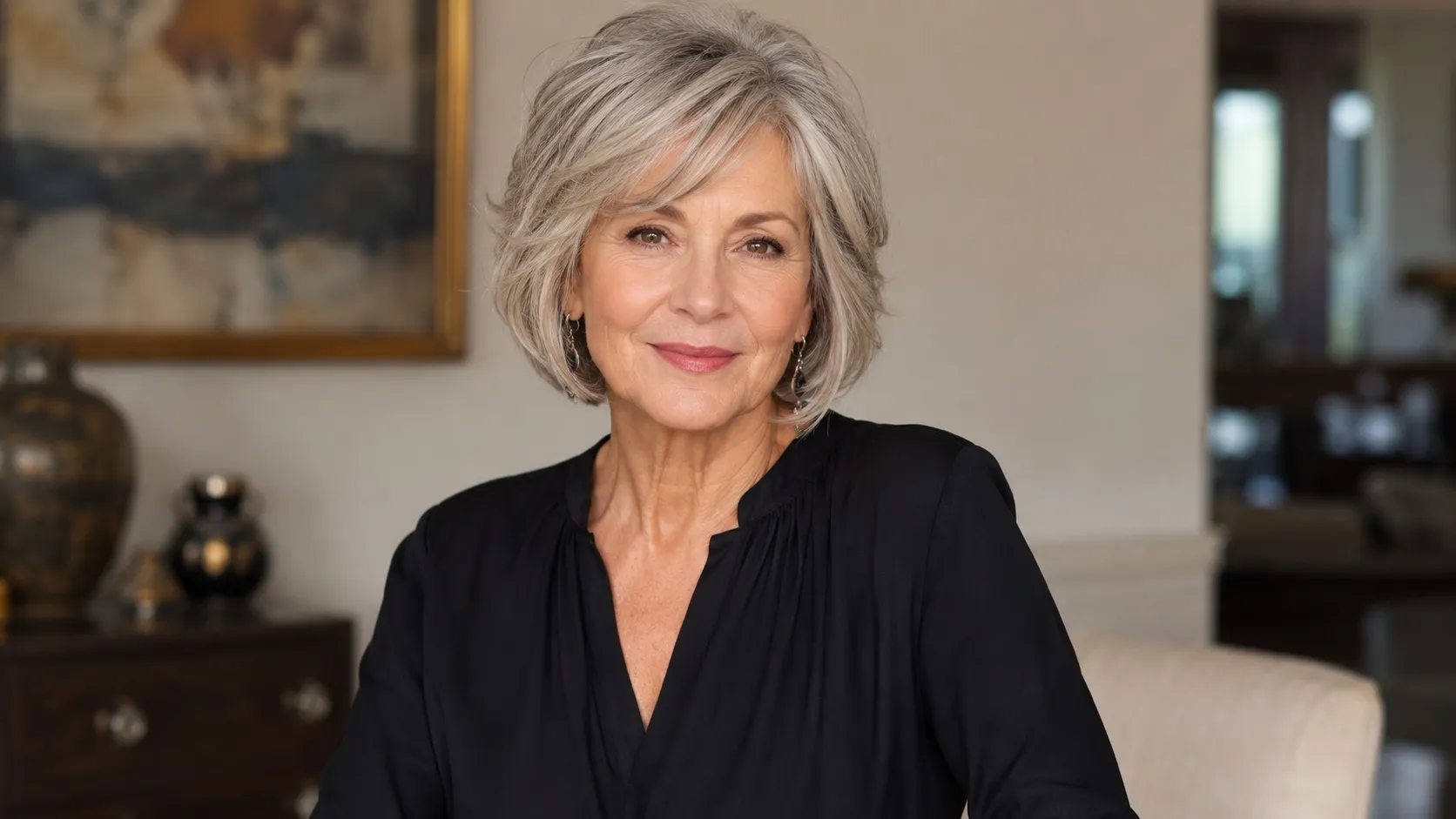
The most flattering hairstyle is a soft, textured bob that ends right at the chin or skimming the collarbone. This length frames the face beautifully and draws the eye upward, naturally lifting your features. Adding light, face-framing layers helps create movement, preventing the hair from looking heavy or weighed down around the jawline.
Real Questions Women Over 60 Are Asking About Hairstyles
A soft, textured bob ending at the chin or collarbone frames the face and draws the eye upward. Light, face-framing layers add movement and prevent heaviness around the jawline.
Tailored pixies, stacked bobs, and soft shoulder-length shags prioritize ease of styling and work with natural texture, cutting down time spent with hot tools. The common thread stylists point to: a cut with built-in structure that holds its shape between salon visits, so you're not fighting it every morning.
Medium lengths offer the versatility of long hair with the lift of a shorter cut, hiding neck lines while allowing texturizing sprays and soft waves — without the high maintenance.
A multi-layered pixie or textured lob blends different tones together well, since the varied lengths catch the light and make the contrast between your natural base and new silver strands look intentional rather than something to hide.
Ditch blunt, one-length cuts for a medium-length style with wispy, point-cut layers. This builds instant crown volume and works especially well for thin hair looking to add fullness — keep the edges soft and piecey rather than stiff.
Finding Your Best Hairstyle After 60
The right cut comes down to your current hair texture, face shape, and how much daily styling time you actually want to spend. Choose a style that complements your natural wave, curl, or straight pattern instead of forcing it into something else.
Bring two or three reference photos to your salon visit so your stylist has a clear starting point to customize the length and layers for you.