
Hairstyles for Curly Hair Men: The Complete Guide By Curl Type, Length & Face Shape
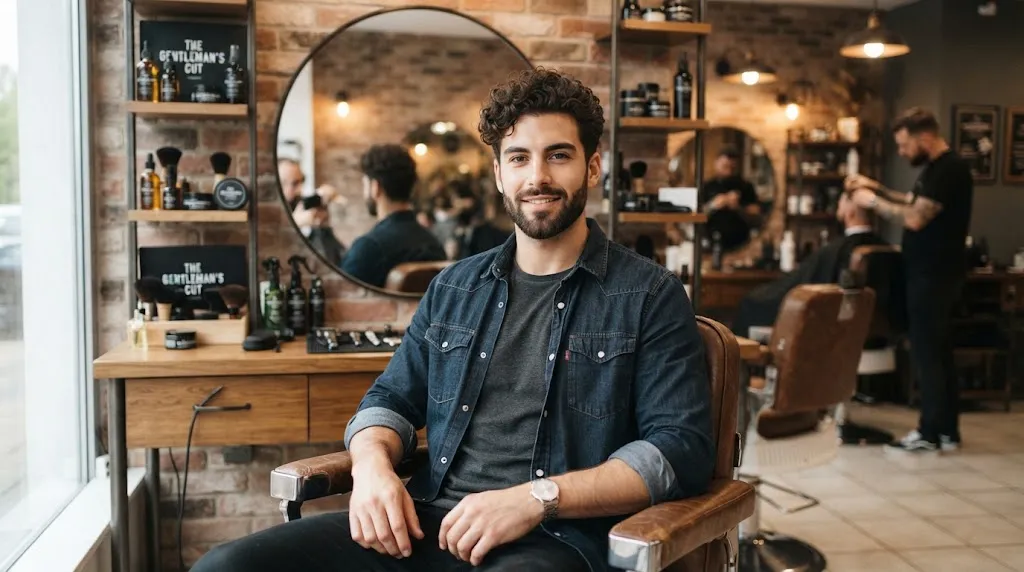
Curly hair requires a completely different approach than straight hair because the spiral shape of the strand prevents natural scalp oils from traveling down the shaft, leaving it inherently drier, more prone to frizz, and responsive to weight rather than tension. This guide breaks down the best cuts, lengths, and daily styling techniques specifically engineered to work with your natural texture, face shape, and lifestyle.
For a broader look at cuts across every texture and length, explore our main hairstyles & haircuts directory.
Curl Type Chart — 2A to 4C Explained Simply

Curls are categorized by pattern density and shape, ranging from loose waves to tight coils.
Type 2A: Fine, loose S-waves that lie close to the head. Very little volume at the roots; easily weighed down by heavy products.
Type 2B: Deeper S-shaped waves that start mid-shaft. Prone to slight frizz and requires light hold to keep shape.
Type 2C: Defined, wide S-waves with subtle spiral formation. Thick, coarse texture that easily loses moisture and turns frizzy.
Type 3A: Wide, loose ringlets about the circumference of sidewalk chalk. Springs up when dry and holds natural shine well.
Type 3B: Tighter ringlets about the thickness of a Sharpie marker. High volume, distinct bounce, and susceptible to shrinkage up to 30%.
Type 3C: Dense, corkscrew curls sized like a standard pencil. Tight structure, high density, and prone to dryness and tangle.
Type 4A: S-shaped coils packed into tight ringlets about the width of a crochet needle. High moisture needs and up to 50% shrinkage.
Type 4B: Z-shaped patterns that sharp-turn rather than curl into a ringlet. Less visible curl definition without styling products; dense and fragile.
Type 4C: Extremely tight, densely packed Z-pattern or zig-zag coils with no natural ringlet shape without product. Experiences 70% or more shrinkage.
How to Identify Your Curl Type at Home (Quick Test)

You cannot accurately test your curl type on dry, styled, or towel-rubbed hair. You need to observe how your hair behaves fully saturated without any product interference.
Wash thoroughly. Use a simple clarifying shampoo to remove all product buildup, silicons, and oils that alter your natural pattern. Skip conditioner for this test.
Squeeze out excess water. Gently press water out with a microfiber towel or cotton t-shirt. Do not rub or scrub the hair.
Shake your head. Let the strands drop naturally into their default formation.
Observe individual strands. Look closely at a group of wet strands near the crown:
If it curves gently back and forth, you are in the Type 2 family.
If it forms a clear, round spiral or ringlet, you are in the Type 3 family.
If it forms sharp, tight angles, zig-zags, or miniature coils, you are in the Type 4 family.
Let it air-dry completely. Note how much the length shortens compared to when wet—this reveals your shrinkage rate, which goes hand-in-hand with your curl family.
Why Curl Type Changes Which Haircut Will Work for You

Haircuts rely on weight distribution, and different curl types handle weight completely differently.
A loose Type 2 wave needs strategic long layers to create body; if you cut it too short, the weight holding the wave disappears, and the hair sticks straight up or lays completely flat.
Conversely, Type 3 curls expand outward as they get shorter. A classic uniform layer cut on a Type 3 head often creates an unflattering pyramid shape because the top compresses while the sides push out. These curls require interior texturizing—removing weight from the inside without cutting short layers on top.
Type 4 hair operates almost entirely on density and structural volume rather than fall. A fade or tapered haircut on Type 4 hair relies heavily on clean lines and precise shaping because the tight Z-pattern holds its own structure against gravity. If a barber cuts Type 4 hair using techniques intended for Type 2 waves (like wet point-cutting), the shape collapses the second it dries and shrinks.
Best Curly Hairstyles for Men — Short Length
Curly Crop / Textured Crop
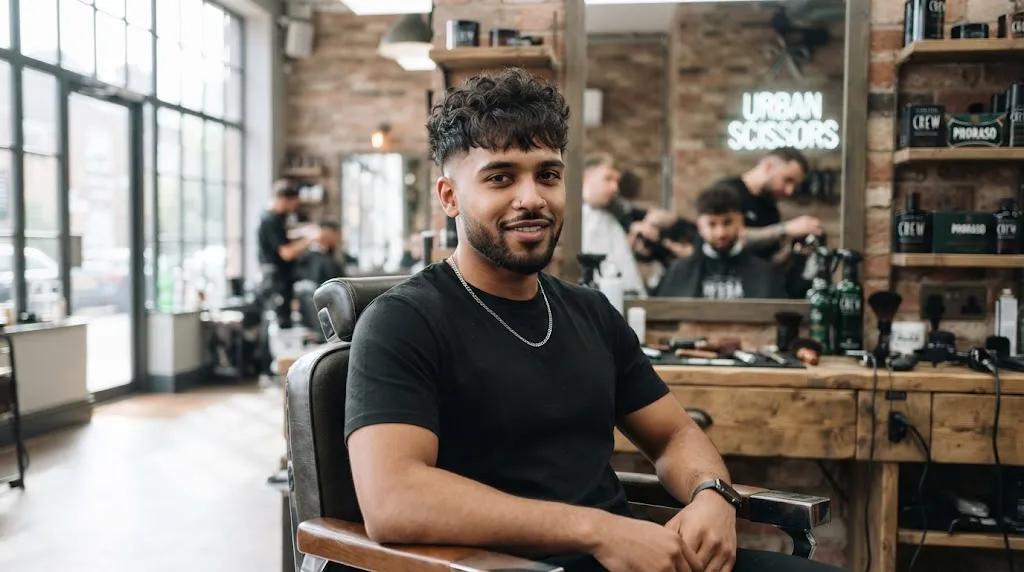
A short haircut featuring cropped sides with slightly longer, textured curls on top that are pushed forward into a blunt or jagged fringe.
Suits: Type 2B to 3B curls; works exceptionally well on oval, square, and heart-shaped faces by balancing high forehead lines.
Styling Steps:
Start with damp hair straight out of the shower.
Work a nickel-sized dab of matte curl paste or light clay between your palms.
Rake the product through from crown to front, pushing the curls forward over your forehead.
Scrunch the tips slightly with your fingers to define individual curl clusters, then let air dry.
Maintenance Note: Requires a side trim every 2–3 weeks to keep the high-and-tight contrast sharp, though the top grows out gracefully.
Curly Fade
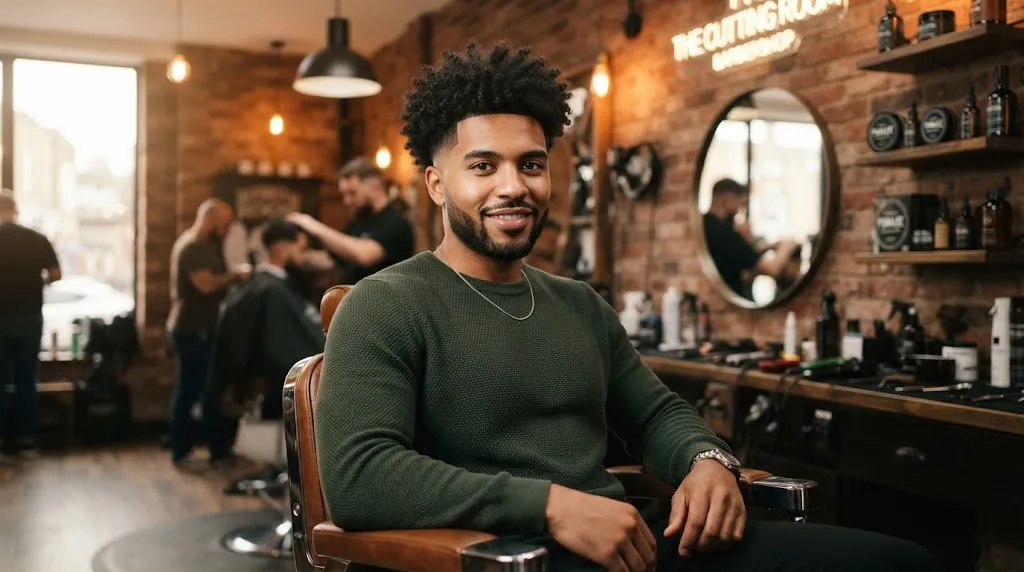
A classic cut that blends short, tapered sides seamlessly up into a dense bed of natural curls on the crown.
Suits: Type 3A to 4C curls; fits round, oval, and square face shapes by adding vertical height to elongate the profile.
Styling Steps:
Apply a small amount of leave-in curl cream to clean, damp hair.
Distribute the product evenly on top using a wide-tooth comb or your fingers, avoiding the faded sides.
Pinch small sections of the top hair to clump the curls together into clean groups.
Allow the top to air dry without touching it to prevent frizz along the fade boundary.
Maintenance Note: High-maintenance on the sides; skin or mid-fades require touch-ups every 10–14 days to avoid a fuzzy hairline.
Curly Undercut
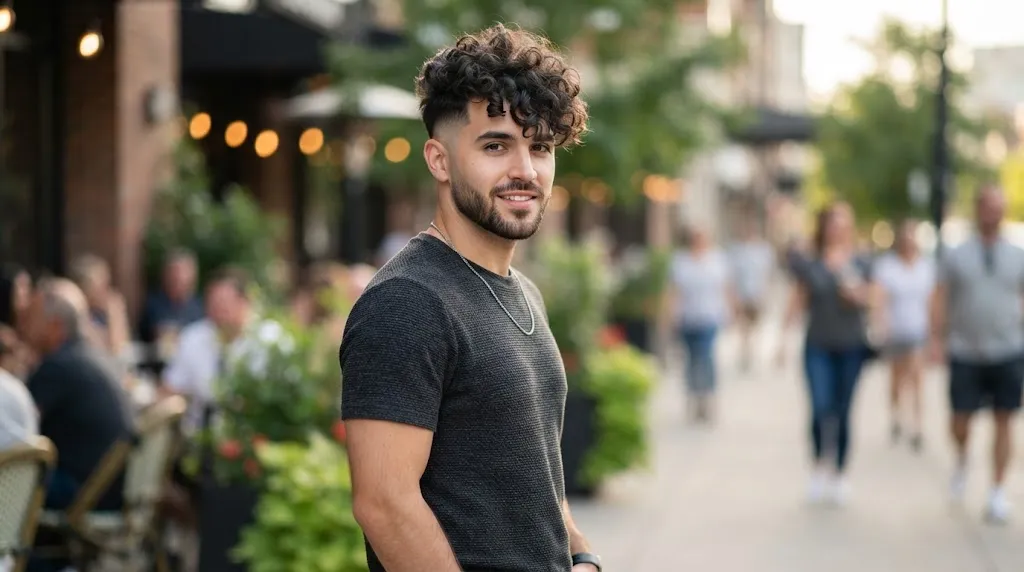
A high-contrast style where the sides and back are clipped to a single short length or faded high, leaving a distinct disconnect with long curls on top.
Suits: Type 2C to 4A curls; best for square, diamond, and oval faces that can handle sharp geometric lines.
Styling Steps:
Towel-blot top hair until damp, leaving the buzz-cut sides completely dry.
Coat your hands with a hydrating curl mousse or medium-hold styling lotion.
Work the product thoroughly from roots to ends on top, lifting hair upward for volume.
Let the top fall naturally over the disconnect line, scrunching gently to set the curl pattern.
Maintenance Note: Heavy top hair can flop or separate unnaturally if it gets too long, requiring a top trim every 5–6 weeks alongside regular side maintenance.
Buzz Cut with Texture
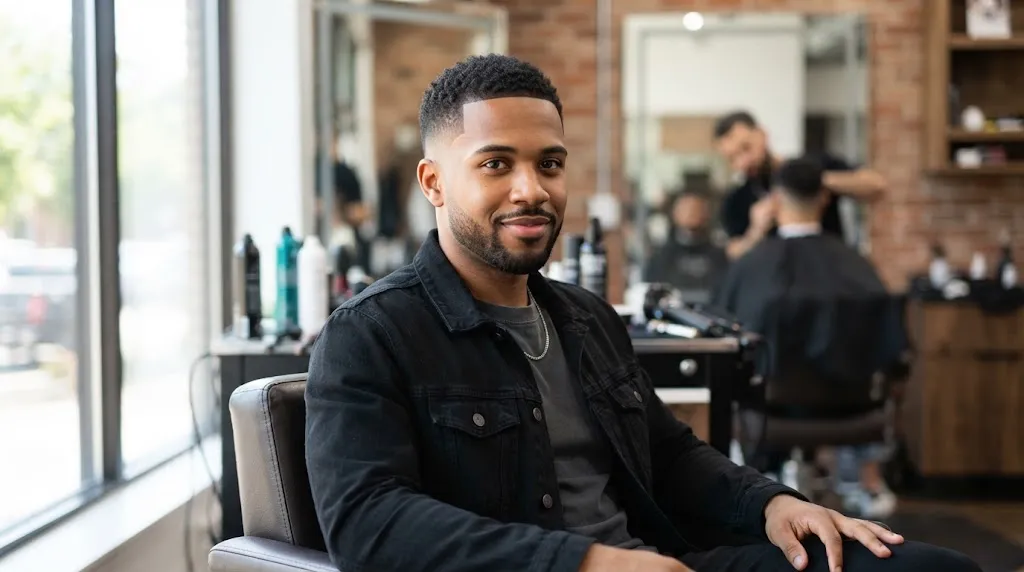
A ultra-short cut clipped close to the head that leaves just enough length on top for the natural coil or wave pattern to show.
Suits: Type 3C to 4C coils; ideal for strong jawlines, oval, and square face shapes.
Styling Steps:
Dampen hair slightly with a quick mist of water.
Rub 2–3 drops of natural hair oil or a thumbnail-sized amount of butter across your hands.
Smooth the product over the top using firm, downward strokes or small circular motions with a curl sponge.
Let it absorb to maintain scalp hydration and subtle pattern shine.
Maintenance Note: Zero daily styling effort, but you will need a self-trim or quick barber visit every 7–10 days to keep the uniform short length.
Curly Crew Cut

A refined classic featuring a slight taper on the sides and back with curls trimmed short near the crown and left slightly longer at the front hairline.
Suits: Type 2A to 3C curls; highly versatile style that flatters almost all face shapes, particularly round and oval faces.
Styling Steps:
Work with damp, towel-dried hair.
Apply a small pea-sized amount of light-hold curl cream evenly throughout the top.
Push the front curls slightly up and back or to the side using your fingertips to create a soft, natural sweep.
Air dry to allow the short curls to set without stiffening.
Maintenance Note: Very low-friction daily style, but requires a trim every 3–4 weeks to prevent the front from losing its structured lift.
Best Curly Hairstyles for Men — Medium Length
Curly Quiff
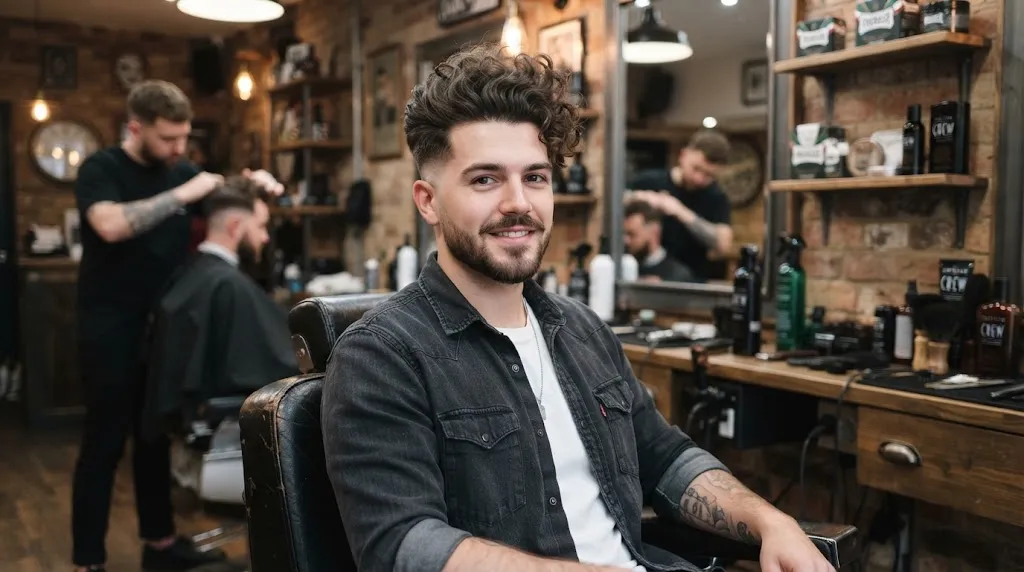
A high-volume cut featuring short, faded sides and longer curls at the crown brushed upward and back away from the forehead.
Suits: Type 2B to 3B curls; ideally suited for round, oval, and square face shapes needing extra height on top.
Styling Steps:
Start with damp, clean hair directly after towel-drying.
Rake a quarter-sized amount of medium-hold curl cream from roots to ends at the front of your head.
Attach a diffuser to your blow dryer, set it to medium heat, and lift the front curls upward while drying.
Scrunch a pea-sized dab of light pomade through the ends to lock in the height and eliminate flyaways.
Maintenance Note: Requires a blow dryer for proper root lift every morning, plus a barber trim every 3 weeks to prevent the sides from overriding the quiff.
Curly Pompadour
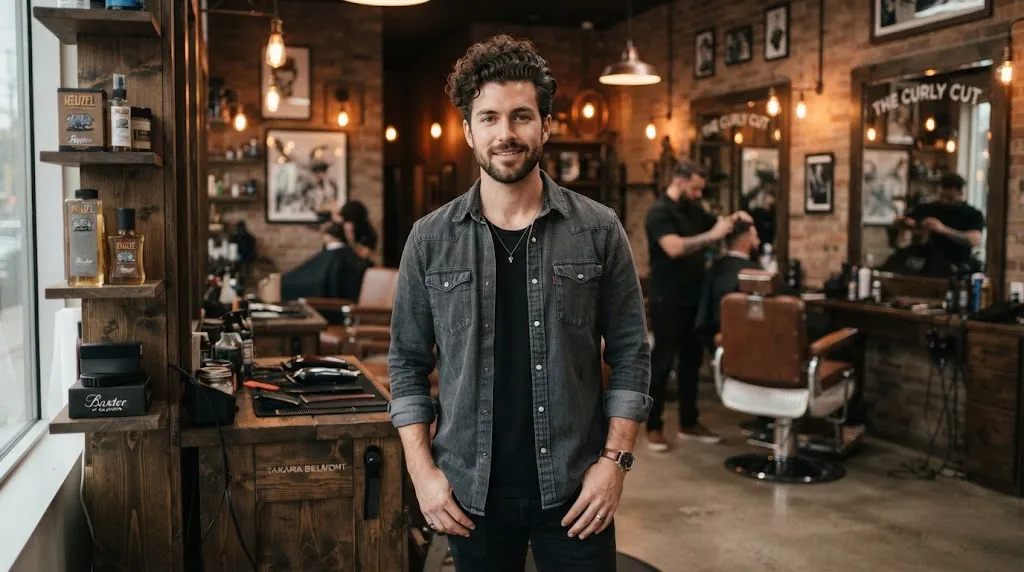
A bold, sculpted look where medium-length curls are swept up and over the head from the hairline to create a smooth, rounded crest.
Suits: Type 2A to 3A waves and loose ringlets; flatters round and oval faces by extending facial proportions upward.
Styling Steps:
Work a generous amount of hydrating mousse through soaking-wet top hair.
Use a wide-tooth comb to direct all top hair straight back, lifting the front section at a 90-degree angle from the scalp.
Diffusers-dry the hair from underneath to set the sweeping curve without breaking the curl clumps.
Finish with a light glaze of flexible-hold hair gel worked gently over the top surface for shine and structure.
Maintenance Note: High daily effort; requires disciplined blow-drying, product layering, and touch-ups every 3–4 weeks to control growth at the crown.
Curly/Wavy Mullet

A retro-inspired shape featuring cropped or faded sides, short top curls, and an extended tail of length flowing down the nape of the neck.
Suits: Type 2B to 4A curls; fits oval, heart, and diamond face shapes by balancing sharp jawlines with rear length.
Styling Steps:
Mist damp hair with a salt spray or light curl-activating liquid from roots to ends.
Apply a nickel-sized portion of leave-in conditioner to the back length to keep the ends hydrated and defined.
Scrunch the back section upward toward the neck with your hands to amplify natural bounce.
Allow the hair to completely air-dry without touching or brushing it.
Maintenance Note: Unforgiving if the sides grow out too far; demands side touch-ups every 2 weeks, though the back can go months without a trim.
Korean Perm (Mash Perm)

A forward-swept, rounded bowl-style crop with soft, textured curls framing the forehead, often created on straight hair via a textured salon perm or styled naturally on loose curls.
Suits: Type 2A to 3A soft curls; perfect for long, oval, and heart face shapes by covering high foreheads and adding width.
Styling Steps:
Apply a light curl-enhancing lotion to damp hair.
Comb all top and fringe hair forward toward your brows using a wide-tooth comb.
Gently squeeze individual curl clumps forward with your fingers to encourage natural S-pattern bends over the forehead.
Let air dry or blow dry on low airflow with a diffuser facing downward.
Maintenance Note: The heavy fringe requires precise weight removal inside the cut every 4 weeks so it does not collapse into a blocky helmet.
Side-Parted Curls

A structured medium style where curls are split along a deep or natural side line, creating a clean balance of asymmetry and texture.
Suits: Type 2B to 3C curls; suits round, square, and oval faces by interrupting facial symmetry with an angular line.
Styling Steps:
Locate your natural side part using a tail comb while hair is dripping wet.
Coat your palms in a lightweight curl-defining cream with glycerin.
Smooth hair down on the narrow side of the part and lift the hair on the wider side away from the scalp.
Scrunch both sides lightly to restore curl bounce, then let air dry thoroughly.
Maintenance Note: Easy daily maintenance, but requires regular interior texturizing every 4–5 weeks so the heavy side does not drag down the shape.
Curly Shag

A heavily layered, disheveled cut with choppy ends, long sideburns, and a loose fringe that frames the cheekbones and neck.
Suits: Type 2A to 3C curls; flatters oblong, square, and oval faces by adding texture along the sides of the cheeks.
Styling Steps:
Work a generous amount of moisturizing curl mousse through wet hair from scalp to ends.
Tilt your head sideways and scrunch the layers upward to activate natural volume and pattern definition.
Diffuser-dry on medium heat, flipping your head upside down halfway through for maximum root lift.
Pinch individual face-framing layers with a touch of lightweight paste to accentuate raw texture.
Maintenance Note: High growing-out potential; can easily last 8–10 weeks between trims because messy, organic growth is part of the aesthetic.
Best Curly Hairstyles for Men — Long Length
Long Curls with Centre Part

A relaxed, shoulder-length style split down the middle, allowing heavy ringlets or waves to cascade naturally down both sides of the face.
Suits: Type 2C to 3C curls; best for square, diamond, and oval faces that benefit from vertical framing.
Styling Steps:
Part clean, wet hair cleanly down the center using your fingers.
Rake a quarter-sized blend of leave-in conditioner and hydrating curl gel through the full length of your hair.
Shake your head gently from side to side to let curls separate into their natural clumping pattern.
Air dry completely without touching the hair, then gently scrunch out the firm gel cast once 100% dry.
Maintenance Note: Demands high daily moisture care and split-end trims every 10–12 weeks to prevent triangle-head flare at the shoulders
Man Bun with Curls

A functional style where long curls are pulled back smoothly or loosely tied into a secure knot at the crown or occipital bone.
Suits: Type 3A to 4C curls; flatters strong, defined jawlines and oval, square, or heart face shapes.
Styling Steps:
Apply 2–3 drops of hair oil to dry or slightly damp hair to tame perimeter flyaways.
Gather hair back using your hands (avoid brushes to prevent breaking curl clumps) to your desired height.
Loop a fabric hair tie around the hair twice, pulling it half-way through on the final loop to form a soft bun.
Pull out 1–2 loose curls around the temples or ears to soften the perimeter.
Maintenance Note: Zero barber visits needed for length, but tying it too tightly can cause traction alopecia along the frontal hairline over time.
Long Curly Undercut

A dramatic long style featuring shaved or faded lower sides and back, capped by shoulder-length curls that hang loosely over the shaved disconnect.
Suits: Type 3A to 4B curls; ideal for thick, dense hair and round or square faces that need bulk removed from the sides.
Styling Steps:
Dampen the long top section while leaving the shaved under-layers dry.
Work a rich curl smoothie or heavy cream from mid-shaft to ends across the top length.
Allow top curls to fall naturally over the shaved sides.
Air dry completely to preserve clean definition against the buzz-cut line underneath.
Maintenance Note: Requires shaving the undercut every 2 weeks to keep the high-contrast look clean, while the top can grow untrimmed for months.
Curly Bob

A chin- or jaw-length cut where long curls are shaped evenly around the head, producing a dense, full silhouette with heavy perimeter weight.
Suits: Type 3A to 4A curls; best for heart, diamond, and oval face shapes that look balanced with width near the jawline.
Styling Steps:
Apply a heavy-moisture leave-in conditioner to soaking-wet hair in the shower.
Layer a medium-hold curl gel over top using “praying hands” technique to coat all strands evenly.
Microfiber-towel scrunch excess moisture from the bottom up.
Air-dry or diffuse on low speed, then cup and scrunch curls upward to break the stiffness once dry.
Maintenance Note: Susceptible to heavy knotting at the nape; requires daily detangling during washing and a perimeter trim every 8 weeks.
Top Knot with Curly Undercut

An edgy hybrid style where long top curls are swept into a tight, high knot right at the crown, highlighting clean shaved sides beneath.
Suits: Type 3B to 4C coils; works great on square, oval, and angular face shapes.
Styling Steps:
Mist top hair with water and apply a small dab of edge-control gel along the hairline perimeter.
Gather all top hair tightly to the highest point of your crown using a fine-tooth comb along the edges only.
Secure the hair firmly with an elastic band, wrapping the loose coil ends around the base to form a compact knot.
Smooth down short perimeter hairs with your thumb.
Maintenance Note: High barber upkeep; requires side taper touch-ups every 10–14 days to keep the fade line looking razor-sharp against the top knot.
Curly Hairstyles for Boys & Young Men
Easy-Maintenance Curly Cuts for Boys

When cutting a young boy’s curls, high-effort daily styling is out of the question. You want a cut that relies on structural weight rather than product layers to look neat.
Mid Taper Fade with Short Top: Keeping the sides cleanly faded around the ears and nape prevents the hair from looking unkempt as it grows, while leaving 1.5 to 2 inches of length on top lets natural ringlets form without tangling.
Low-Maintenance Crop: A short forward-swept crop on top with a subtle scissor-taper on the sides works well for active kids. It requires no blow-drying or complex product application—just a quick morning wet-down.
Uniform Scissor Cut: Best for loose Type 2 waves. Cutting the entire head to a balanced, moderate length creates an easy wash-and-go shape that grows out evenly for weeks without looking neglected.
Curly Styles for School / Everyday Wear

School mornings demand styles that take less than two minutes, withstand sports or physical activity, and remain presentable throughout the day.
The Textured French Crop: A practical option for Type 3 ringlets. The sides are kept neat with a mid-skin fade, while the top curls hang softly over the forehead. A quick scrunch with water and a drop of leave-in conditioner in the morning keeps it frizz-free all day.
Low Fade with Soft Top Length: Keeps the hair off the ears and collar—adhering to most school dress codes—while leaving enough room on top for Type 3 or Type 4 curls to showcase natural texture without puffing outward.
Controlled Afro-Taper: Ideal for Type 4 coils. A low taper at the temples and neck keeps the perimeter clean and structured, while the top retains a compact, rounded shape that needs only a quick hydrated sponge-rub or oil application before school.
How to Handle a Boy's First Curly Haircut (Parent-to-Barber Tips)
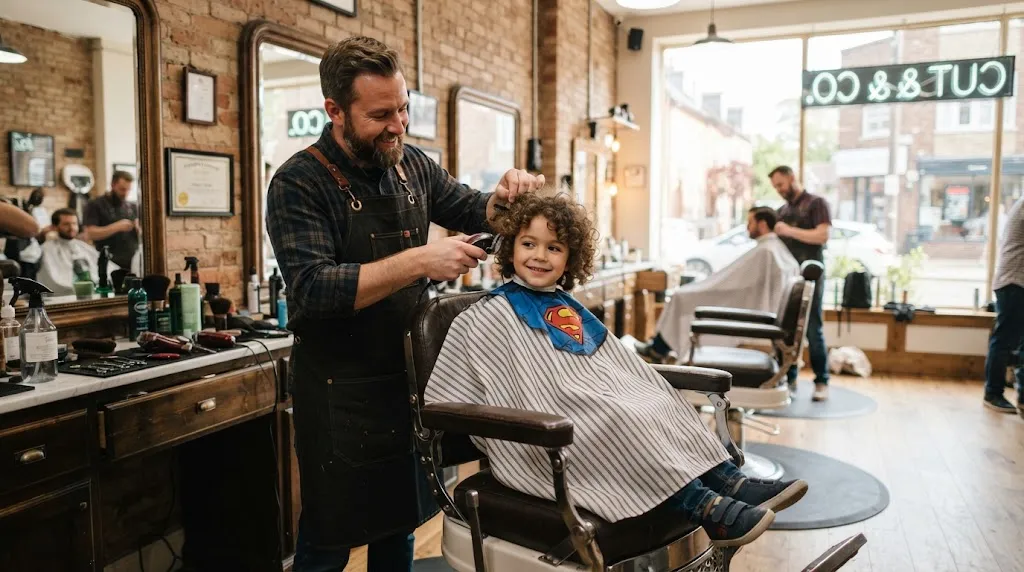
Cutting a child’s curls for the first time requires clear communication with the barber to avoid stripping away the natural pattern or creating a harsh, boxy shape.
Ask for a Dry Cut First: Curly hair shrinks significantly as it dries. Ask the barber to assess and cut the hair while dry or only lightly damp so you both see the actual finished length in real-time.
Specify “No Thinning Shears”: Barbers often reach for thinning or texturizing shears to reduce bulk. On a boy’s curly hair, this creates short internal hairs that push through the top, resulting in permanent frizz until it grows back out.
Request Point-Cutting Instead: Ask the barber to cut individual curl clumps at an angle using standard shears to remove weight without ruining the curl definition.
Bring Reference Photos of Similar Curl Types: Do not show the barber a picture of loose Type 2 waves if the child has tight Type 4 coils. Match the model’s hair texture to the child’s actual pattern.
Formal & Professional Curly Hairstyles
Slicked-Back Curls
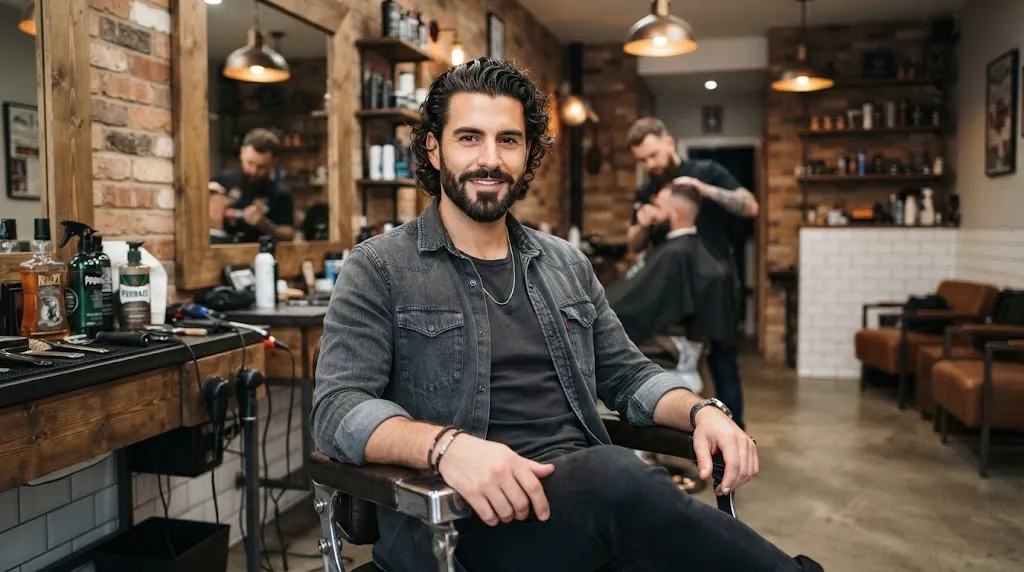
A refined, high-shine formal style where medium-length curls are combed back away from the forehead and temples into a sleek, controlled shape.
Suits: Type 2B to 3B curls; ideally suited for oval, square, and heart-shaped faces with clear hairline features.
Styling Steps:
Start with wet hair directly out of the shower.
Work a generous portion of high-hold, water-based pomade or firm-hold gel through the hair from root to tip.
Use a wide-tooth comb to rake all hair directly back over the crown, keeping the sides flat against the head.
Gently press the top with your palm to encourage waves to lie flat while preserving natural texture.
Maintenance Note: Requires a firm product application every time; if the gel cast breaks during the day, individual curls will spring back out of place.
Classic Side Part for Curly Hair

A timeless, professional look featuring a crisp, defined parting line that separates a clean, low-volume top from tapered sides.
Suits: Type 2A to 3B curls; universally flattering across all face shapes, particularly round and oval faces seeking structure.
Styling Steps:
Identify your natural parting line on damp hair using a fine-tooth comb.
Apply a medium-hold styling cream with high shine evenly across both sides of the part.
Comb the smaller side down and back toward the ear; comb the larger side up and slightly over to build controlled volume.
Allow the hair to set naturally without touching it to keep the parting line sharp and defined.
Maintenance Note: Easy daily routine, but requires a barber visit every 3 weeks to keep the side perimeter short enough to prevent volume build-up.
Neat, Tapered Curly Styles for the Office

A conservative, highly professional haircut where the sides and back are neatly tapered down to the skin or neck line, leaving a short, uniform layer of curls on top.
Suits: Type 2C to 4C curls; fits all face shapes and conforms strictly to traditional corporate workplace grooming standards.
Styling Steps:
Apply a light, non-greasy leave-in conditioner or hydrating curl balm to damp hair.
Work the product in using your fingers, flattening the tapered sides downward toward the ears.
Gently pat down the top curls to minimize excess height while retaining a clean, uniform texture.
Let air dry for a low-shine, natural finish that remains neat throughout the workday.
Maintenance Note: Requires routine side and neck tapers every 2 weeks to ensure the perimeter remains sharp and executive-ready.
Everyday Styling Tips
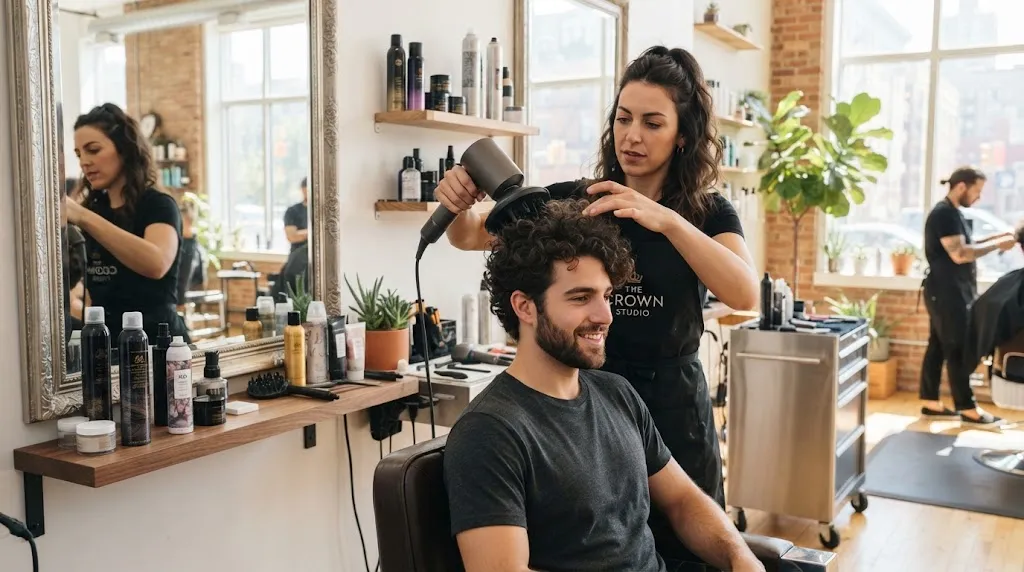
The secret to making long layers look like you just walked out of a salon comes down to air direction and product placement. Because layered cuts remove weight while adding movement, heavy styling creams or applying products directly to your roots will collapse the shape instantly.
Prep on Damp Hair: Spray a lightweight leave-in conditioner or a heat protectant spray from mid-lengths to ends. If you have fine hair, opt for a volumizing mousse at the roots; for thick or coarse textures, a light smoothing lotion works best to control frizz without weighing down the ends.
Rough-Dry First: Flip your head upside down and blow-dry until your hair is about 80% dry. This lifts the roots naturally and creates base volume before you start shaping the layers.
Master the Round Brush Direction: Use a medium-to-large ceramic round brush. Pull sections upward and away from your face, wrapping the ends around the brush. Angle the nozzle of your blow dryer downward to seal the hair cuticle, which adds incredible shine and keeps the layers crisp.
Set with Cool Air: Once a section is dry around the brush, hit it with your blow dryer’s cool shot button for 5 to 10 seconds before releasing. This sets the bend in the layers so your blowout lasts all day.
Enhance Texture: Once dry, rake a tiny, pea-sized drop of hair oil or a texturizing finishing spray through the ends. This separates the individual layers, making the dimension and movement visually pop.
How to Choose the Right Curly Hairstyle for Your Face Shape

Picking a haircut that aligns with your face shape prevents your curls from creating unwanted proportion issues, like adding excess width to a round face or stretching out an oblong profile.
Oval, Round, Square, Heart, Diamond, Rectangular — Quick Reference Table
| Face Shape | Natural Characteristics | What Curls Should Do | Best Hairstyle Choices | Styles to Avoid |
|---|---|---|---|---|
| Oval | Balanced proportions, slightly narrower jaw than forehead | Maintain natural symmetry; almost any length works | Curly Crop, Quiff, Long Centre Part, Side Part | Extreme top height without side volume |
| Round | Equal width and length, soft jawline, fuller cheeks | Add vertical height on top while keeping the sides short | Curly Fade, Curly Pompadour, High-top Taper | Rounded Afro, chin-length Curly Bob |
| Square | Wide, angular jawline, sharp cheekbones, broad forehead | Soften sharp angles or emphasize strong jaw structure | Textured Crop, Curly Undercut, Long Curls | Boxy, squared-off haircuts |
| Heart | Broad forehead, high cheekbones, pointed narrow chin | Add width around the jawline to balance the forehead | Korean Mash Perm, Chin-length Bob, Curly Shag | High Quiffs, tight side fades with zero top weight |
| Diamond | Narrow forehead and jaw, widest at the cheekbones | Fill out the forehead and chin while keeping sides low-profile | Side-Parted Curls, Curly Crop with Fringe, Medium Shag | Slicked-back styles, high volume directly at temples |
| Rectangular | Face is noticeably longer than it is wide, sharp jawline | Add side width and volume while keeping top height minimal | Curly Fringe/Crop, Medium Side-Part, Shoulder Length Curls | Sky-high Quiffs, Tall Pompadours, Skin Fades |
The Right Curly Hair Care Routine (Step-by-Step)
Washing — How Often, What to Use, What to Avoid
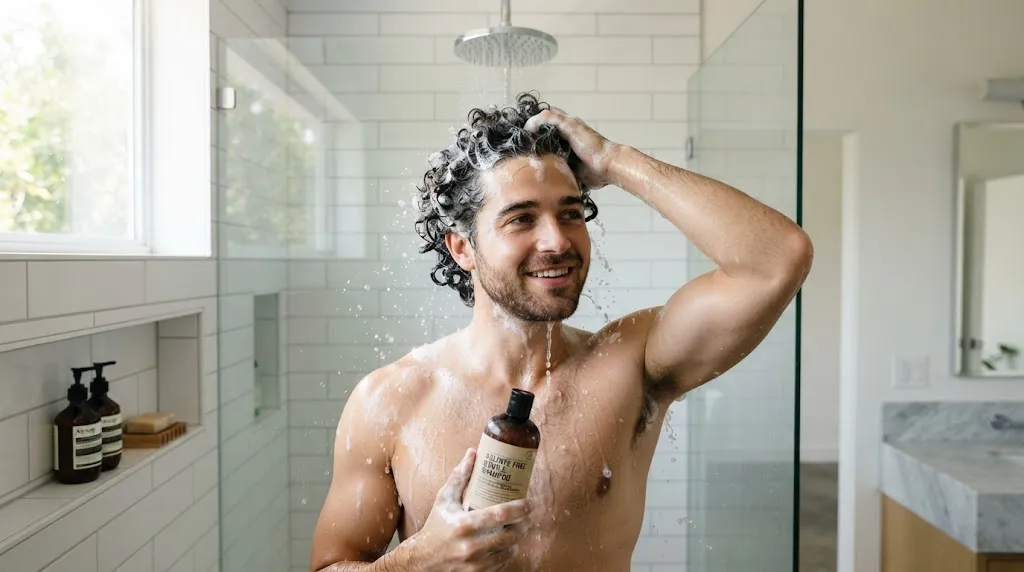
Washing curly hair too frequently strips away natural sebum, leading to instant frizz, breakage, and loss of curl clump integrity.
Frequency: Wash 1–2 times per week for Type 2 and 3 curls; once every 7–10 days for Type 4 coils. If you exercise daily, rinse with plain lukewarm water in between wash days.
What to Use: A gentle, sulfate-free shampoo or a co-wash (conditioning cleanser). Look for hydrating base ingredients like aloe vera, glycerin, or coconut water.
What to Avoid: Harsh sulfates (like Sodium Lauryl Sulfate), which strip moisture like dish soap, and drying alcohols that leave strands brittle. Avoid hot water—rinse with lukewarm or cool water to seal the hair cuticles.
Conditioning & Deep Conditioning
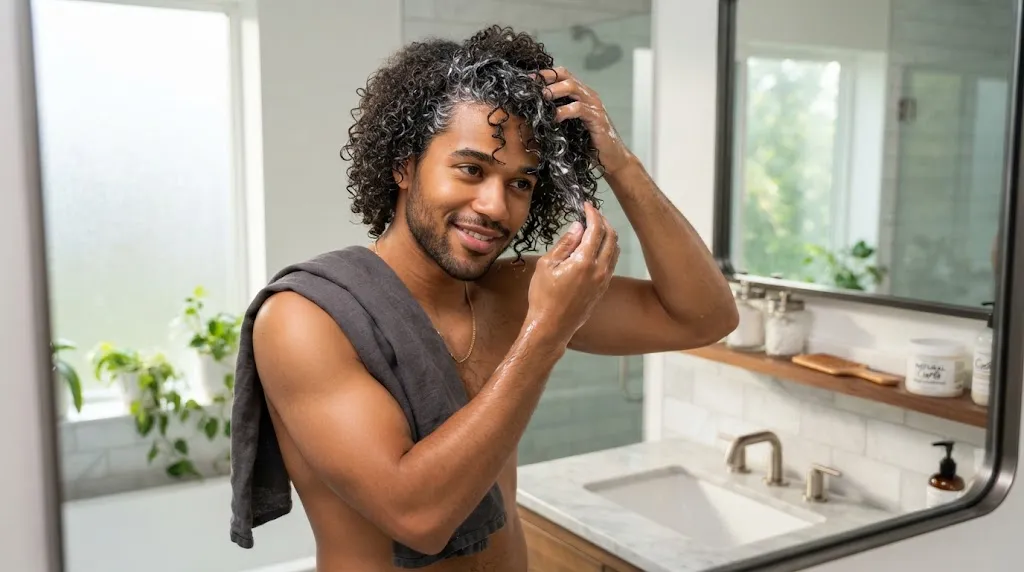
Conditioner restores the moisture lost during cleansing, lubricates the hair shaft to prevent tangles, and smooths the outer cuticlelayer.
Regular Conditioning: Apply a generous amount of silicone-free conditioner after every wash. Rake it through the mid-lengths and ends using your fingers or a wide-tooth comb to detangle while hair is fully slippery. Rinse thoroughly with cool water.
Deep Conditioning: Use a rich, protein- or moisture-focused deep conditioner once every two weeks. Apply from roots to tips on damp hair after washing, leave it on for 15–20 minutes, then rinse out completely.
Detangling Rule: Never brush or comb dry curly hair. Only detangle wet hair coated in conditioner to prevent snapping the strands.
Drying Without Frizz (Towel/T-Shirt/Diffuser Method)
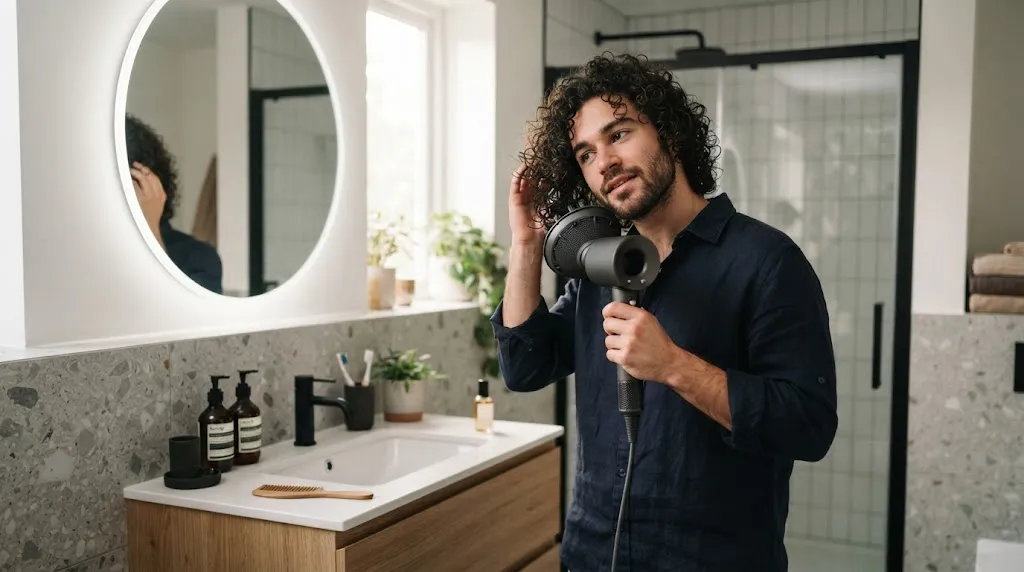
Standard terrycloth towels act like sandpaper on wet curls, roughing up the cuticle layer and creating immediate frizz before you even apply product.
Ditch Standard Towels: Use a 100% cotton t-shirt or a high-absorbency microfiber towel to gently cup and squeeze excess water upward toward the scalp. Never rub or scrub your head.
Air-Drying (Patience Method): After applying styling products, do not touch your hair while it dries. Touching wet or damp curls breaks the product cast and separates the clumps into frizz.
Diffuser Method (Volume & Speed): Attach a diffuser head to your blow dryer. Set it to low heat and medium airflow. Cup sections of hair into the diffuser bowl, lift upward toward your scalp, hold for 10–15 seconds, and repeat across your head until 80–90% dry.
Applying Product Correctly (Damp Hair, Right Order, Right Amount)

Product application technique matters just as much as the product itself. Applying product to dry or semi-dry hair leads to patchy distribution and flake formation.
Timing: Apply products to dripping-wet or soaking-damp hair straight out of the shower. The water acts as the vehicle that distributes the product evenly.
The Order (LOC/LCO Method):
Leave-in Conditioner or Cream (Base): A nickel-to-quarter-sized amount to lock in foundational hydration.
Oil or Butter (Middle/End): A few drops to seal in moisture (best for Type 3C–4C).
Gel or Mousse (Top Layer): A nickel-sized amount to form a protective cast that holds the curl shape as it dries.
Application Technique: Rub the product between your hands, then apply using “praying hands” (smoothing palms down the length of the hair) followed by gentle upward scrunching to activate the curl pattern.
Sleeping With Curls (Silk Pillowcase / Pineapple Method)

Tossing and turning on a standard cotton pillowcase absorbs moisture out of your hair and causes heavy friction that ruins your curls overnight.
Silk or Satin Pillowcase: Switch to a 100% mulberry silk or satin pillowcase. The smooth surface allows curls to glide without friction or moisture loss.
The Pineapple Method (Medium to Long Hair): Gather all your curls loose at the very top of your crown using a soft satin scrunchie. Loop it once so it does not indent the hair. This prevents you from sleeping directly on the body of your curls.
Satin Bonnet or Durag (Short to Medium / Type 4 Hair): Cover short-to-medium curls or tight coils with a satin bonnet or durag overnight to keep the sides laid flat and preserve definition.
Refreshing Curls on Day 2–3

You do not need to rewash your hair every morning to bring crushed or flattened curls back to life.
Fill a spray bottle with lukewarm water and add 1 teaspoon of leave-in conditioner. Shake well.
Mist the flat or frizzy areas lightly until damp—do not soak the hair completely.
Smooth a pea-sized amount of light curl cream or mousse over frizzy sections, gently twisting individual flattened curls around your index finger to reform their shape.
Scrunch gently and let air-dry for 5–10 minutes.
5 Curly Hair Mistakes Men Keep Making
Wrong Shampoo (Sulphates Stripping Natural Curl)

Using harsh, sulphate-heavy shampoos strips away the natural oils your scalp produces to keep curls hydrated. Because curl structures make it difficult for natural oils to travel down the hair shaft, sulphates dry out the ends almost instantly, turning natural ringlets into a coarse, uncontrollable mass of frizz. Switch to a sulphate-free formula or a hydrating co-wash that cleanses without stripping essential moisture.
Skipping Conditioner
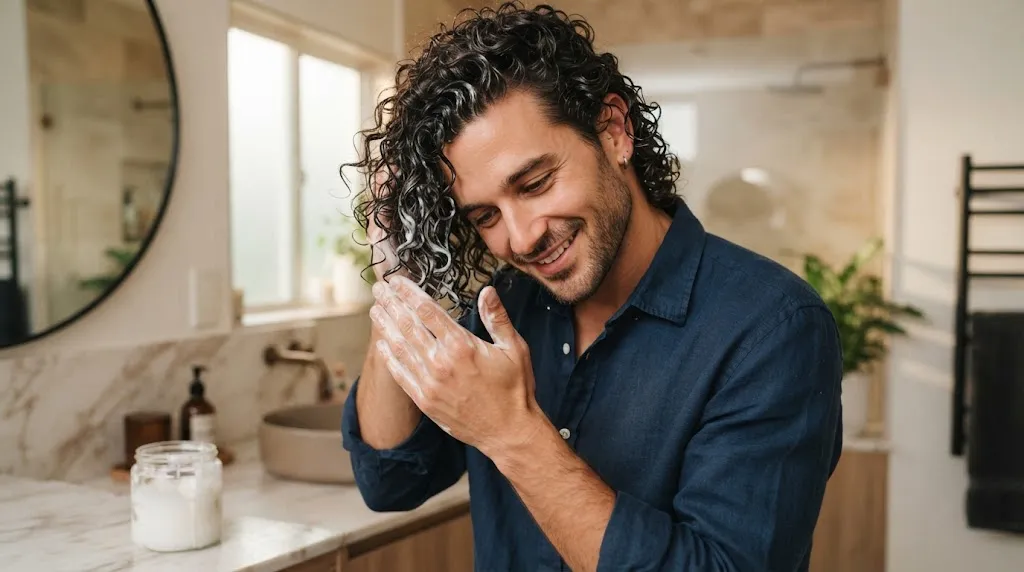
Treating conditioner as an optional step is the fastest way to ruin your curl definition. Shampoo opens the hair cuticle to remove dirt, but conditioner is what seals that cuticle back down, trapping water inside the hair shaft. Without it, your strands remain porous, dry, and prone to severe friction breakage every time you comb or style them.
Rough Towel-Drying

Vigorously rubbing a standard cotton terrycloth towel back and forth across wet hair roughs up the outer cuticle layer and snaps delicate curl clusters apart. This creates instant frizz before you even start styling. Squeeze excess water out gently using a microfiber towel or an old cotton t-shirt instead of scrubbing your head.
Brushing Dry Curls

Running a standard hairbrush or fine-tooth comb through dry curly hair instantly rips apart natural curl clumps, turning defined ringlets into a puffy, voluminous triangle. Once your hair dries, keep all brushes away from it. Only detangle when wet and thoroughly coated with conditioner, using a wide-tooth comb or your fingers.
Using the Wrong Hold Product (Matte/High-Hold Flattening Curls)

Heavy matte clays, thick pomades, and high-hold wax products are designed for straight hair that needs structural stiffness. When applied to curls, these heavy formulas weigh down the natural bounce, cause individual strands to clump into greasy spikes, or leave a white, flaky residue. Stick to lightweight curl creams, hydrating mousses, or flexible-hold gels.
Real Problems Curly-Haired Men Actually Deal With
"My Barber Doesn't Know How to Cut Curly Hair" — What to Do
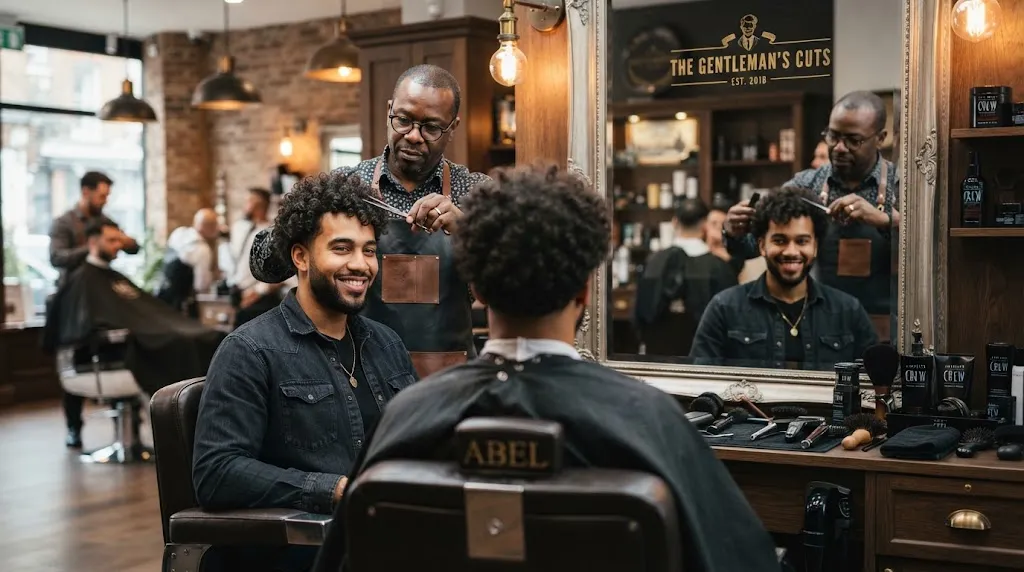
Walking out of a shop with a boxy, lopsided haircut happens when a barber treats curly hair like straight hair—pulling it tight with a comb and cutting it wet without accounting for shrinkage.
Tell your barber explicitly before they touch your hair: “Please cut my hair dry or only lightly damp so we can see the actual length and curl pattern,” and “Please do not use thinning shears or texturizing razors on top—point-cut standard shears only.” If they push back or do not understand why thinning shears ruin curl structure, find a stylist who specializes in textured or dry-cutting techniques.
Humidity Ruining Your Curls — Fixes That Actually Work

When the air is humid, dry curls act like sponges, absorbing moisture from the atmosphere and causing the hair shaft to swell and frizz out.
The fix isn’t more cream—it’s creating a water-resistant seal. Apply a medium-to-strong-hold curl gel over your hydrating leave-in conditioner while your hair is still soaking wet. As it dries, the gel forms a hard protective cast (a “crunchy” layer) that blocks atmospheric moisture from penetrating the hair. Once completely dry, gently scrunch your hair with a few drops of hair oil to break the hard cast, leaving soft, defined curls that resist humidity all day.
Curls Look Different Every Day — Why, and How to Get Consistency

Inconsistent curls usually come down to three variables: varying water levels when applying product, uneven product distribution, or sleeping directly on unprotected hair.
To lock in consistency, establish a repeatable application baseline. Apply your styling products on soaking-wet hair straight out of the shower every time—never wait until it is halfway dry. Use a wide-tooth comb to rake the product through so every strand gets an equal layer, and cover your hair with a satin durag or sleep on a silk pillowcase overnight to preserve the pattern until morning.
Thinning/Receding Hairline with Curly Hair — Styling Around It
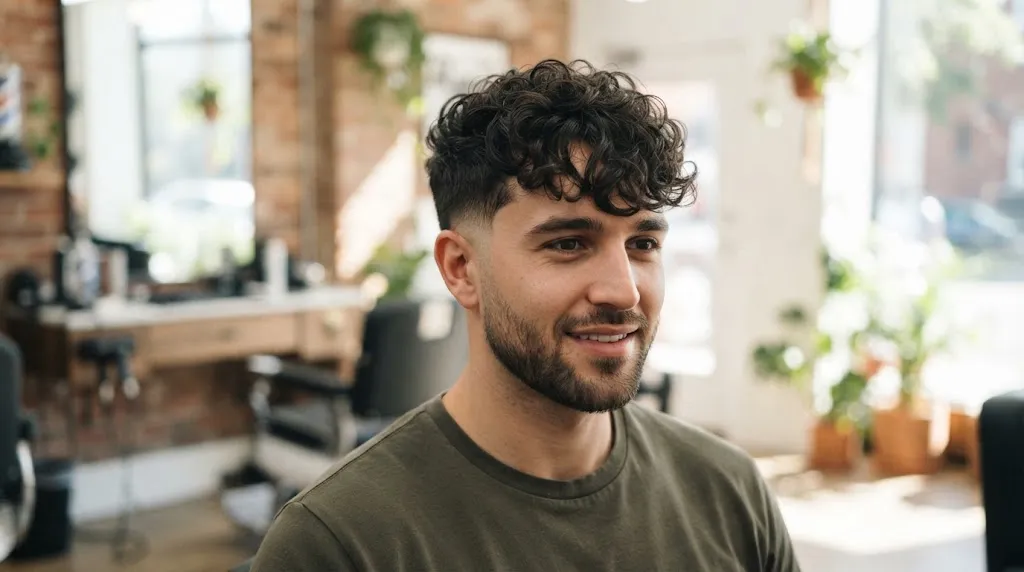
A receding hairline or thinning crown feels tricky with curls because pulling hair back exposes the temples, while letting it grow too heavy pulls the hair down and highlights sparse areas on top.
Avoid slicked-back styles or tight man-buns, which place tension on the hairline (traction alopecia) and draw attention to deep corners. Opt for a short-to-medium Curly French Crop or a Textured Fade where the curls are pushed forward and styled loosely over the forehead. The natural texture and volume of forward-swept curls cover temple recession far better than straight hair ever could, while short tapered sides keep the overall silhouette neat and balanced.
What to Tell Your Barber (Script You Can Use)
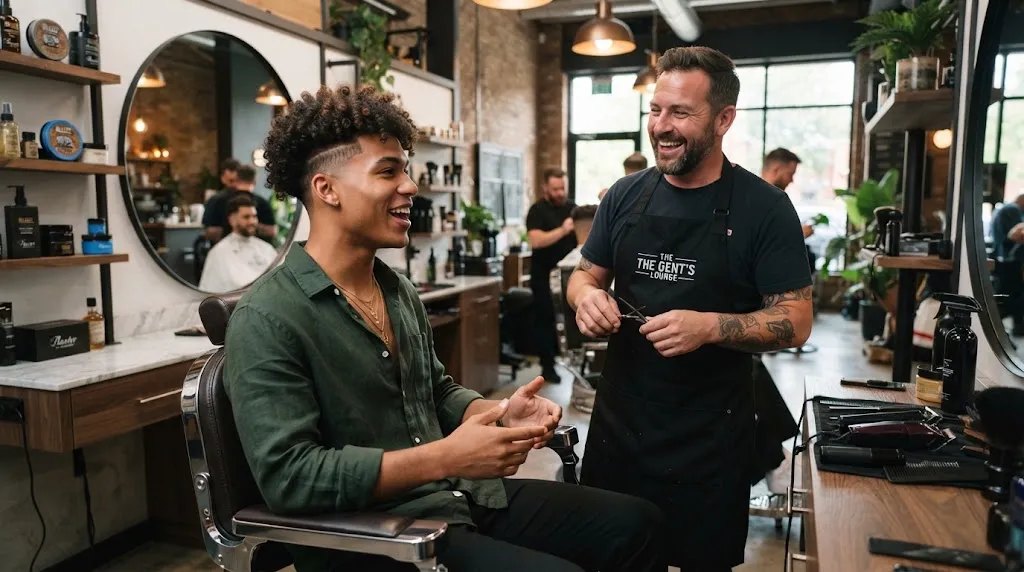
Most bad curly haircuts happen because barbers treat curls like straight hair—stretching them out wet and cutting in straight lines. Use this exact script when you sit in the chair so your barber understands how to handle your specific texture.
“I want to keep my natural curl shape, so please cut my hair dry or only lightly damp.”
Why this matters: Curly hair stretches when wet and springs up significantly as it dries. Cutting it dry ensures you and the barber see the actual finished length and shape in real time, preventing accidental over-cutting.
“Please do not use thinning shears, texturizing razors, or a razor comb on top.”
Why this matters: Thinning shears and razors shred individual curl strands at varying lengths. This creates short, internal hairs that push through the top of your hair, leading to permanent frizz and fuzzy separation until it grows back out.
“Use point-cutting with standard shears to remove weight inside the curls.”
Why this matters: Point-cutting cuts into the hair at an angle rather than straight across. This removes bulk from dense areas while allowing the curl clumps to sit together cleanly without losing their natural shape.
“Keep the bulk off the sides, but leave enough length on top so the curls can complete at least one full rotation.”
Why this matters: If a curl is cut mid-loop, it loses its ability to spring into a ringlet or wave, causing it to stick straight out sideways. Leaving enough length allows the curl to form its natural shape.
“Please do not blow-dry my hair straight or comb it out dry at the end.”
Why this matters: Raking a comb through dry curls or rough-drying with a standard nozzle destroys your pattern and turns your hair into a puffy cloud before you even leave the shop.
Products That Actually Work for Curly Hair (Ingredients to Look For)
Understanding the ingredient list on a bottle matters far more than the marketing claims on the front label. Curls require structural hydration and film-forming sealants to maintain shape and control frizz.
Ingredients Curly Hair Needs

Shea Butter: A dense, nutrient-rich lipid that creates a protective barrier around the hair shaft. It seals in moisture, smoothes the outer cuticle layer, and prevents thick Type 3C to 4C coils from drying out.
Glycerin: A powerful humectant that pulls moisture from the air directly into the hair shaft. It keeps waves and ringlets soft, flexible, and springy throughout the day.
Panthenol (Pro-Vitamin B5): A lightweight compound that penetrates the hair cortex to bind moisture inside, adding natural elasticity, strength, and subtle shine without weighing down fine waves.
Hydrolysed Proteins (Silk, Keratin, Wheat, Rice): Broken-down protein fragments that temporarily attach to gaps in damaged hair cuticles. They rebuild structural integrity, improve curl bounce, and help high-porosity hair hold onto moisture.
Ingredients to Avoid

Sulphates (Sodium Lauryl Sulphate, Sodium Laureth Sulphate): Harsh chemical surfactants found in standard shampoos. They strip away 100% of your scalp’s natural sebum and structural moisture, leaving curls dry, brittle, and frizzy.
Drying Alcohols (Isopropyl Alcohol, Propanol, Alcohol Denat): Fast-evaporating alcohols often used in cheap gels and hairsprays to speed up drying time. They wick water directly out of the hair shaft, causing severe long-term dryness and breakage.
Heavy Silicones (Dimethicone, Cyclopentasiloxane): Non-water-soluble synthetic polymers that coat the hair to create artificial shine. Over time, they form an impenetrable barrier that blocks moisture from entering, requiring harsh sulphate shampoos to wash out.
The Best & Worst Curly Hairstyles to Get in 2026
Channel: Feel Good With Ali
Curly Hair Advice & Styling Tips
YouTube Video Reference
The BEST Curly Haircuts for Men
Channel: TheSalonGuy
Frequently Asked Questions
The best haircut depends on your curl pattern and how much time you want to spend styling it every morning. For short length and low effort, a Curly Fade or Textured Crop keeps the sides clean while letting your natural pattern shine on top. For medium length, a Curly Quiff or Side Part provides structure and volume. If you have tight Type 4 coils, a Taper Fade or Buzz Cut with Texture holds a clean geometric shape with minimal daily hassle.
Hair types are categorized from 1 to 4 based on the shape of the strand and pattern density:
- Type 1: Completely straight hair with zero natural curl or wave pattern.
- Type 2: Wavy hair ranging from subtle S-bends (2A) to defined, thick S-waves (2C).
- Type 3: True curly hair ranging from loose chalk-sized ringlets (3A) to tight pencil-sized corkscrews (3C).
- Type 4: Coily hair with dense S-pattern coils (4A) or sharp, tight Z-patterns (4B/4C) that experience heavy shrinkage.
The 3-2-1 rule is a clipper guard blending guideline barbers use to create a smooth, fail-safe taper or fade. The barber uses a #3 guard near the top/crown, a #2 guard along the middle sections of the sides, and a #1 guard around the bottom perimeter, ears, and neckline. This creates a clean, gradual transition that keeps bulk off the sides while preserving length on top.
Yes. Curly hair offers natural volume, movement, and texture that straight hair simply cannot replicate without heavy styling. What makes curly hair attractive isn't just the pattern itself, but how well-hydrated and shaped it is. A well-maintained curly haircut that suits your face shape projects confidence and effortless style.
The seven-day rule suggests that fresh haircuts—especially short tapers, fades, or significant length cuts—look their absolute best roughly one week after leaving the barber chair. During these first seven days, the harsh lines soften slightly, the scalp adjusts to the exposed length, and your natural oils return to give the hair a softer, more natural fall. If you have a major event, book your haircut one week in advance.
The 3-inch rule is a barbering threshold for short-to-medium men's haircuts. It states that keeping at least 3 inches of length on the top of your head provides enough hair weight for your natural curl pattern to complete at least one full loop or wave. Cutting top curls shorter than 3 inches can cause them to stick straight out sideways or lose their shape unless you opt for a ultra-short crop or high fade.