
Groom Hairstyles for Men: Best Wedding & Groom Haircuts for 2026
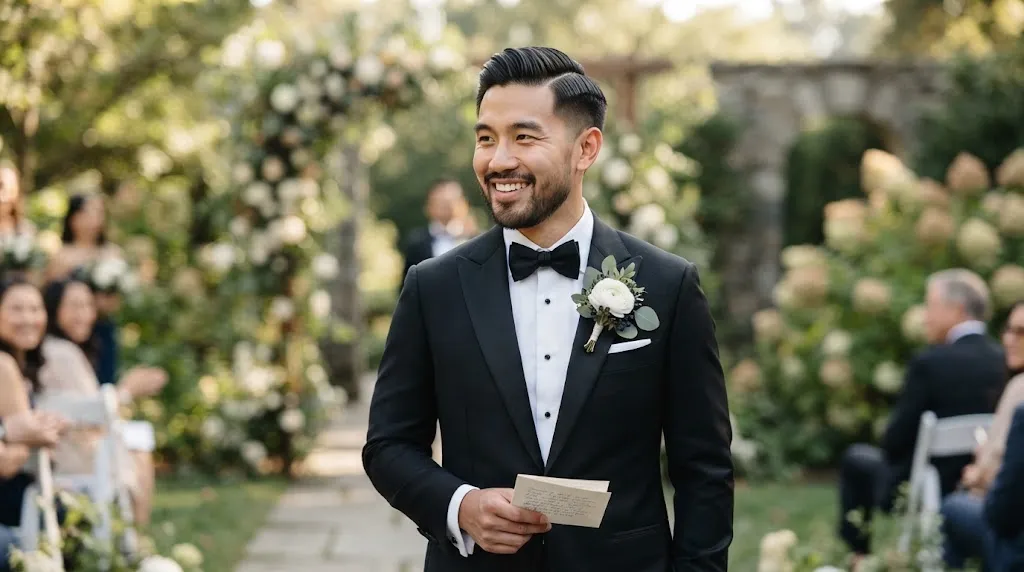
This guide covers groom hairstyles by hair type, hair length, face shape, beard, wedding style, maintenance, and desired look, so you can compare suitable options before your wedding day. Each style focuses on the haircut, how to style it, and how well it works for a groom.
For more inspiration, explore our comprehensive hairstyles and haircuts directory.
Which Groom Hairstyle Is Right for You?
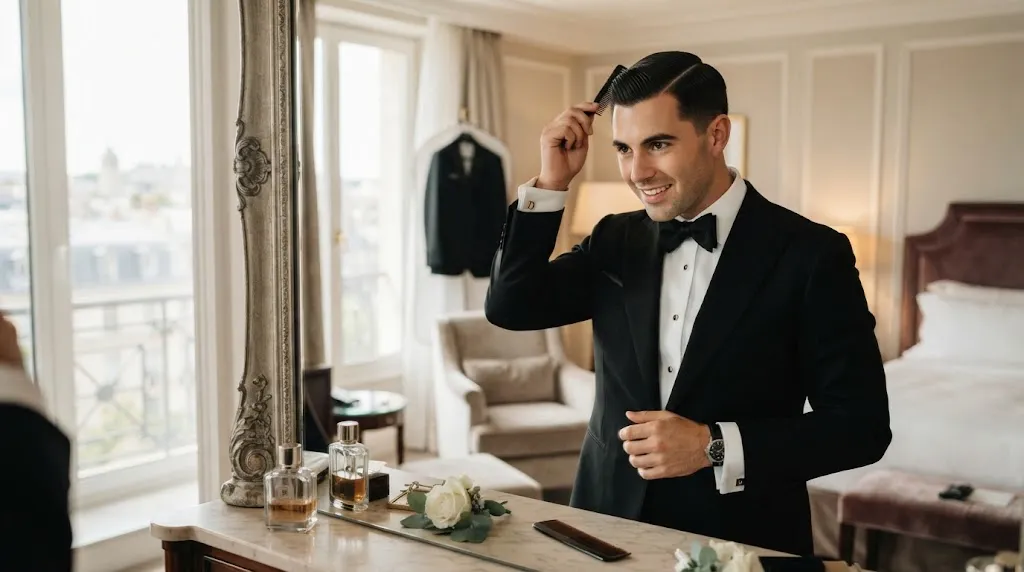
The right groom hairstyle depends mainly on your hair type, hair length, face shape, beard, wedding style, maintenance needs, and the look you want on your wedding day. Use the comparison below to quickly narrow down the most suitable options.
Best Groom Hairstyles at a Glance
| Groom Style | Best For | Hair Type | Face Shape | Maintenance | Overall Look |
|---|---|---|---|---|---|
| Classic Side Part | Formal and traditional weddings | Straight, Wavy | Most face shapes | Low–Medium | Classic & Refined |
| Textured Quiff | Modern and stylish grooms | Thick, Straight, Wavy | Oval, Square | Medium | Modern & Voluminous |
| Slick Back | Formal or luxury wedding looks | Straight, Thick | Oval, Oblong | Medium | Polished & Sophisticated |
| Low Fade + Texture | Contemporary wedding styles | Most hair types | Most face shapes | Medium | Clean & Modern |
| Long Groom Hairstyle | Grooms keeping longer hair | Straight, Wavy | Oval, Oblong | Medium | Romantic & Relaxed |
How to Choose the Best Groom Hairstyle
The best groom hairstyle is not simply the most popular cut. It should work with your natural hair, face shape, beard, wedding setting, and the amount of styling you can realistically manage on the wedding day. Use the criteria below to narrow your options before choosing a specific haircut.
Choose Based on Your Hair Type

Straight hair: Straight hair works well with structured styles such as side parts, slick backs, pompadours, tapers, and textured crops. The main consideration is whether the hair has enough natural density to hold the desired shape.
Wavy hair: Wavy hair can add natural movement to side-swept styles, textured quiffs, longer cuts, and relaxed groom hairstyles. Avoid overworking the natural wave if the goal is a softer, effortless finish.
Curly hair: Curly hair can be shaped into a defined groom style without removing its natural texture. A controlled curly top, tapered sides, or longer curly style can work well when the curl pattern is considered during the cut.
Thick hair: Thick hair provides volume for quiffs, pompadours, textured tops, and longer styles. Strategic removal of excess bulk can make the finished hairstyle easier to control.
Fine or thin hair: Styles that create texture and controlled volume can make fine hair appear fuller. Excessively long or heavily slicked styles may emphasize areas where density is lower.
Receding hairline: A receding hairline does not automatically rule out a groom hairstyle. Short textured crops, side-swept styles, and carefully shaped fringes can work with the hairline rather than trying to conceal it unnaturally.
Choose Based on Hair Length
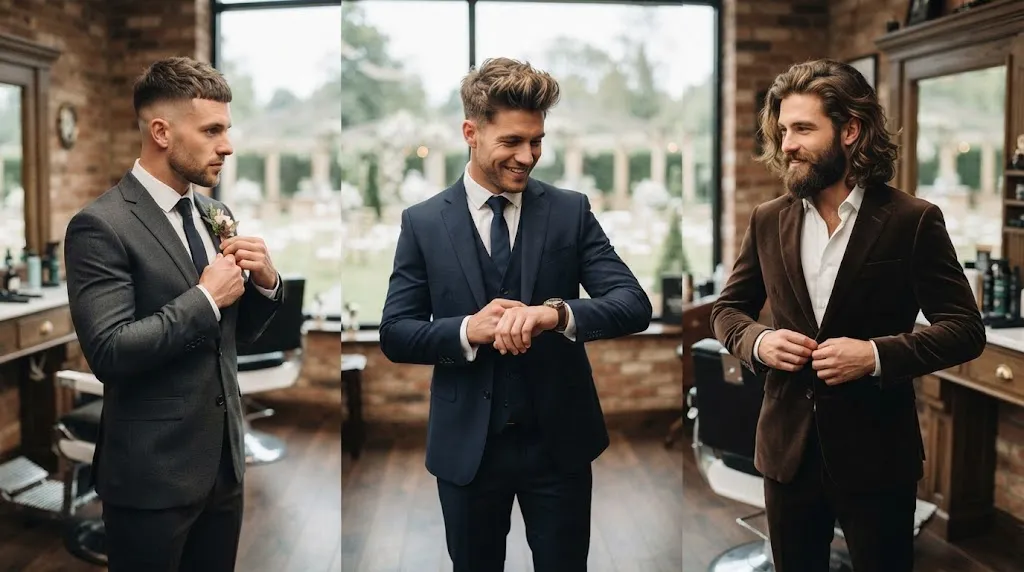
Short hair: Best when you want a clean, controlled style with relatively simple wedding-day styling. Tapers, fades, textured crops, and short side parts are practical choices.
Medium hair: Gives you more flexibility for quiffs, side-swept styles, textured looks, slick backs, and longer fringes while still being manageable.
Long hair: Allows for a more relaxed or distinctive groom look. Long hair needs enough preparation and control to remain intentional throughout the ceremony, photographs, and reception.
Choose Based on Face Shape
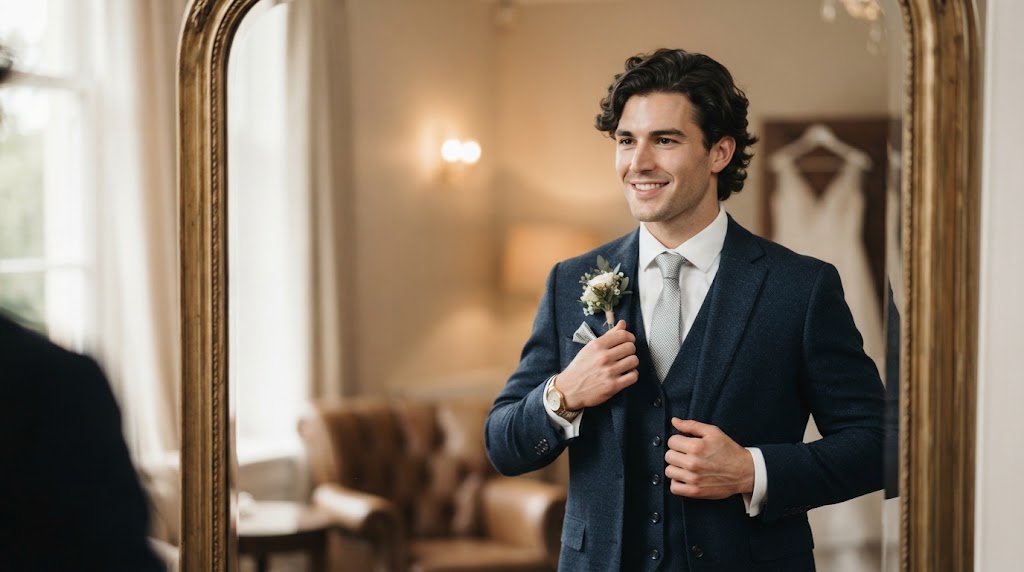
Oval: Most groom hairstyles can work with an oval face. Choose according to your hair type and preferred level of volume rather than trying to correct the face shape.
Round: Added height and controlled volume on top can visually lengthen the face. Tapered or shorter sides can also create a cleaner outline.
Square: Structured cuts can complement a naturally defined jawline. Textured tops, side parts, quiffs, and clean tapers are versatile options.
Oblong or long: Avoid excessive height if you do not want to make the face appear longer. Moderate volume and styles with some width or movement can create better balance.
Heart: Balanced volume and softer framing around the forehead can complement a wider upper face and narrower chin.
Diamond: Styles that add controlled fullness around the forehead or sides can help balance prominent cheekbones and a narrower forehead and jaw.
Choose Based on Beard Style
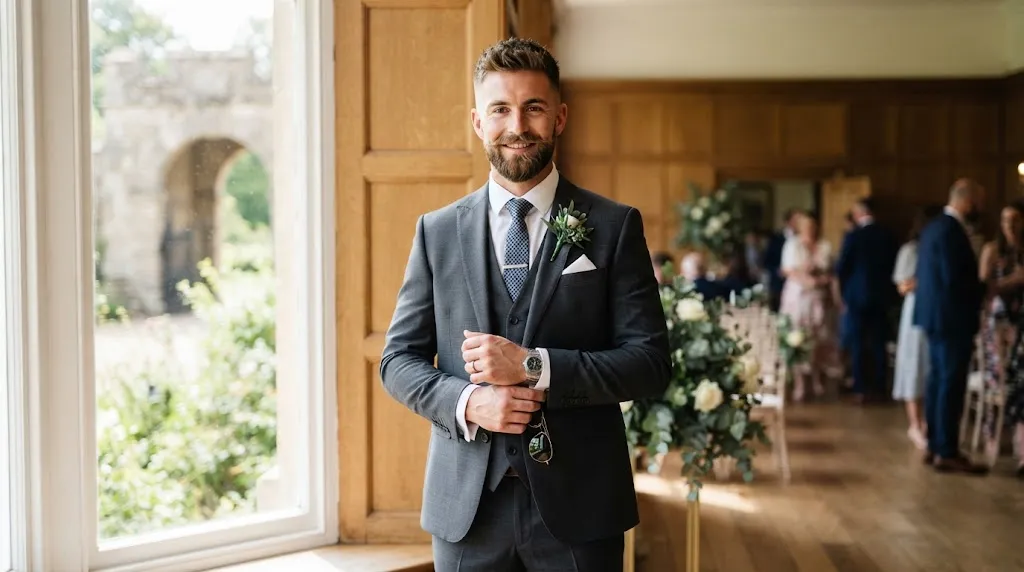
Clean-shaven: A clean-shaven look pairs particularly well with precise, polished hairstyles such as side parts, slick backs, and classic tapers.
Light stubble: Light stubble adds definition without overpowering the hairstyle and works with both classic and contemporary groom cuts.
Short beard: A short, shaped beard can balance textured tops, fades, tapers, and side-swept hairstyles.
Full beard: A fuller beard creates a stronger visual element, so the haircut should have enough structure to keep the overall appearance balanced rather than overly heavy.
Choose Based on Wedding Style
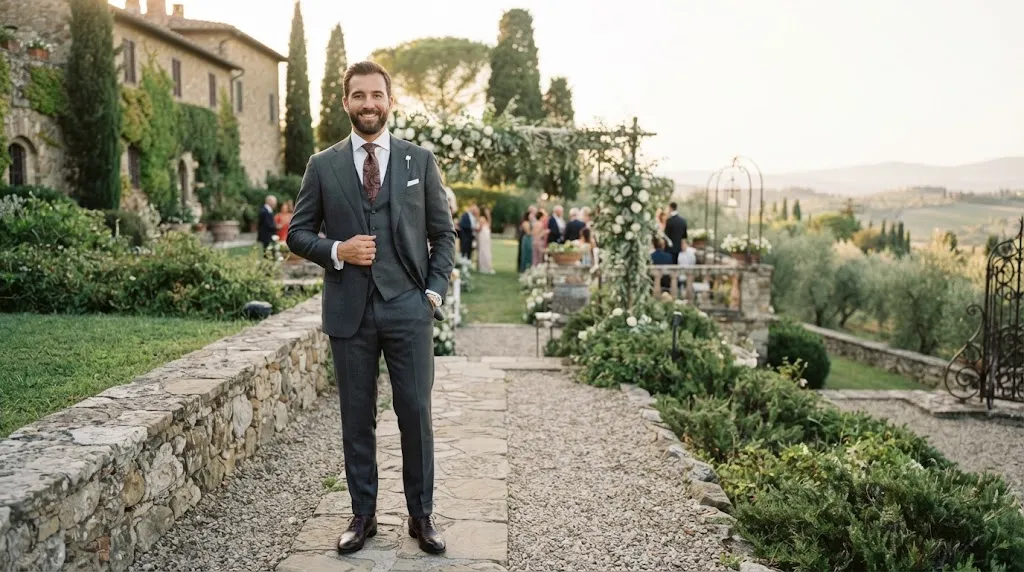
Traditional or formal wedding: Classic side parts, pompadours, slick backs, and classic tapers suit a polished, timeless appearance.
Modern wedding: Textured quiffs, fades, textured crops, and contemporary taper styles provide a sharper modern finish.
Outdoor or garden wedding: Natural texture and flexible styles can be more practical than highly rigid hairstyles, particularly when wind or changing conditions are possible.
Summer or humid wedding: Choose a style that can tolerate moisture and does not depend entirely on a perfectly smooth finish. Controlled texture and shorter sides can make maintenance easier.
Black-tie or luxury wedding: Highly polished styles such as a slick back, classic side part, or refined pompadour can complement a formal dress code.
Choose Based on Maintenance
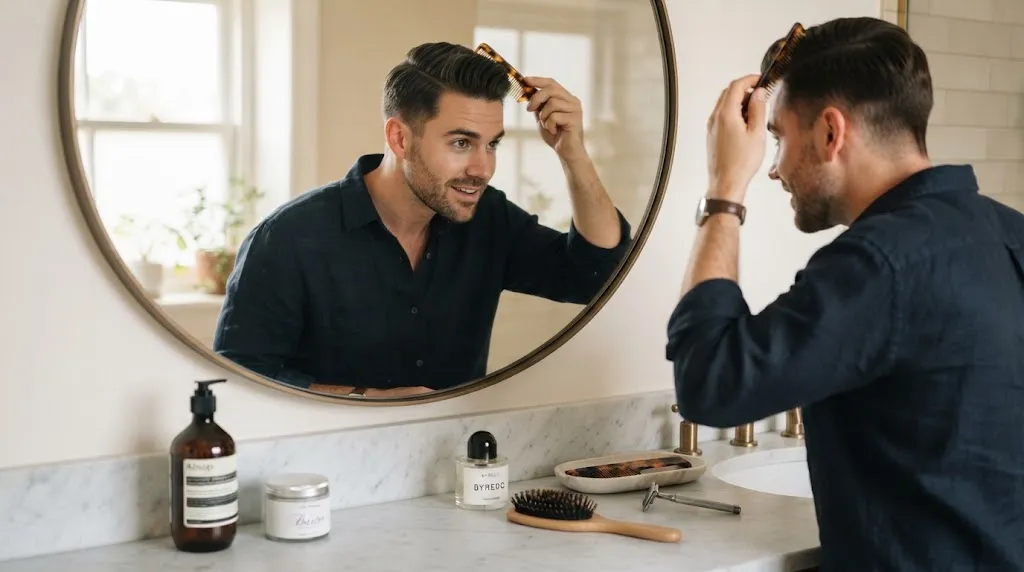
Low-maintenance: Choose a haircut that keeps its shape with minimal styling, such as a classic taper, short textured crop, or simple side part.
Medium-maintenance: Quiffs, textured tops, fades, and side-swept styles generally require some product and styling time to achieve their intended finish.
High-maintenance: Highly polished slick backs, large pompadours, and longer styles may require more preparation, product, touch-ups, and control throughout the wedding day.
The best choice is the style that satisfies all of your main requirements at once. If your hair type naturally supports the cut, the length suits your preferred styling, the shape complements your face and beard, and the maintenance level fits your wedding day, the hairstyle is more likely to look consistent from the ceremony through the final photographs.
Best Groom Hairstyles for Men in 2026
This section brings the decision criteria into specific hairstyle choices. Each style should be evaluated using the same practical framework so you can compare options without having to search for information elsewhere.
Classic Side Part Groom Hairstyle
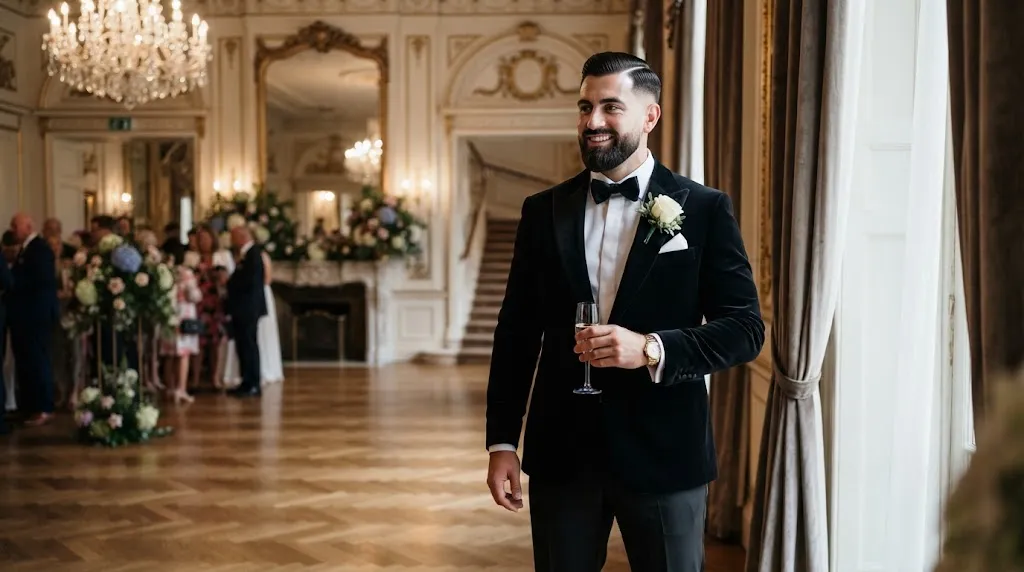
What it is: A traditional hairstyle with a defined side part and controlled volume, usually combined with tapered or neatly trimmed sides.
Best for: Formal, traditional, and timeless wedding looks.
Face shapes: Works particularly well for oval, square, and many oblong face shapes when the amount of height is controlled.
Hair types: Best suited to straight and wavy hair with enough density to hold the part.
Beard pairing: Works with clean-shaven faces, light stubble, short beards, and neatly shaped fuller beards.
Maintenance: Low to medium.
Wedding suitability: Excellent for formal ceremonies, traditional weddings, and classic suits or sherwanis.
How to style: Create a clean side part, apply a small amount of styling product, direct the top into place, and finish with enough hold to maintain the shape without making the hair look stiff.
Why choose it: It offers a polished appearance without relying heavily on a short-lived trend.
Possible limitation: A very defined part may require regular styling and may be less forgiving if the hair naturally separates in another direction.
Textured Quiff Groom Hairstyle
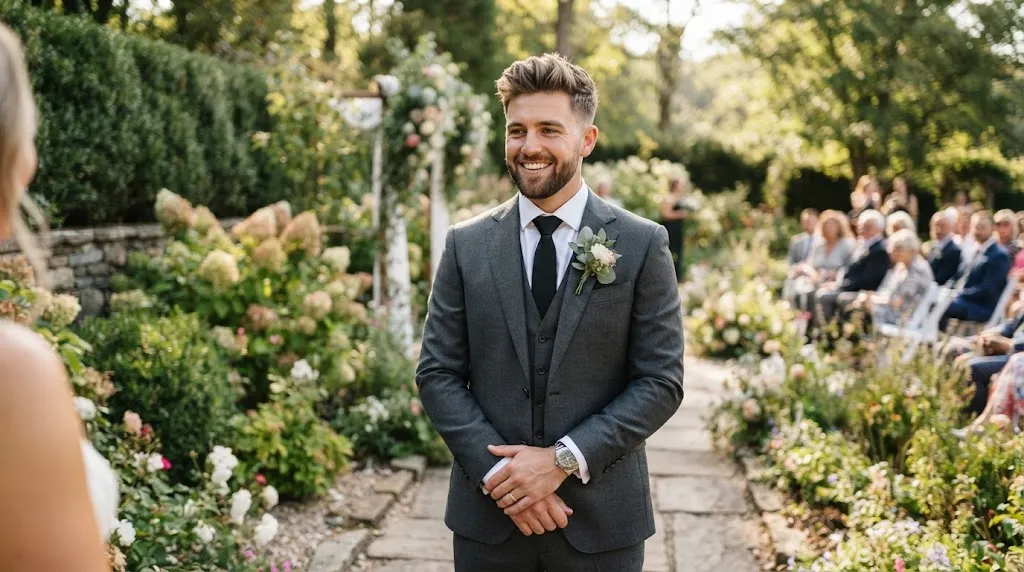
What it is: A quiff with noticeable height at the front combined with texture rather than a completely smooth finish.
Best for: Modern grooms who want volume and a contemporary appearance.
Face shapes: Particularly suitable for oval and square faces; the amount of height should be adjusted for longer face shapes.
Hair types: Works best with thick, straight, or wavy hair.
Beard pairing: Pairs well with light stubble and short or medium-length beards.
Maintenance: Medium.
Wedding suitability: Strong choice for modern weddings and contemporary formalwear.
How to style: Build volume at the front, direct the hair upward and slightly back, then use a matte or natural-finish product to separate the texture.
Why choose it: It gives a fuller, more dimensional appearance while remaining formal enough for wedding photographs.
Possible limitation: Fine hair may require additional preparation to maintain the height, while very humid conditions can reduce volume.
Classic Pompadour
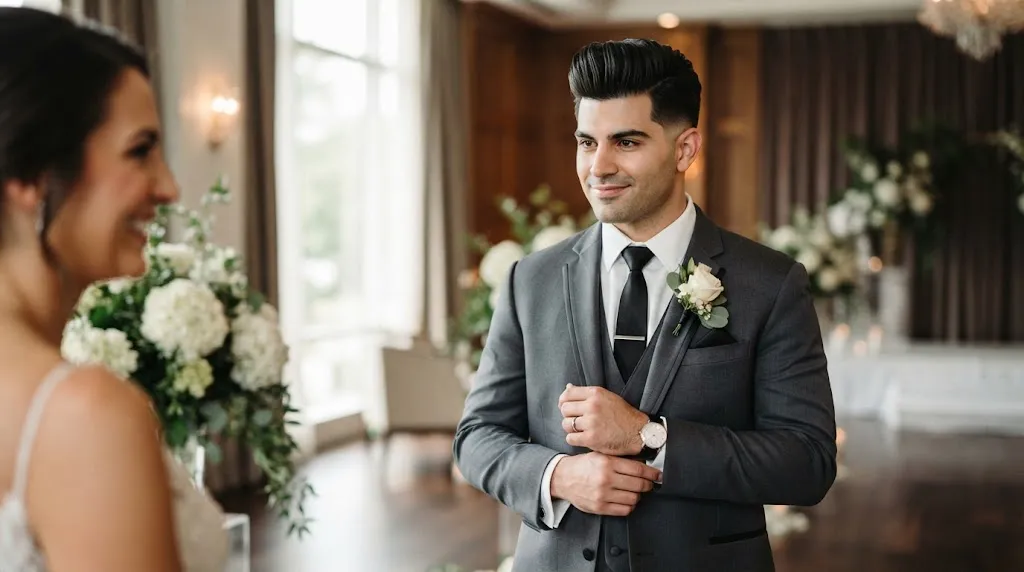
What it is: A structured hairstyle characterized by significant volume at the front and hair swept upward and backward.
Best for: Grooms wanting a statement-making classic look.
Face shapes: Oval and square faces generally accommodate the added height well.
Hair types: Best with thick, straight, or manageable wavy hair.
Beard pairing: Works with clean-shaven looks, stubble, and structured beards.
Maintenance: Medium to high.
Wedding suitability: Particularly effective for formal, traditional, or luxury wedding settings.
How to style: Blow-dry the front upward, shape the volume backward, and secure the structure with an appropriate styling product.
Why choose it: It creates strong volume and a distinctly formal silhouette.
Possible limitation: The height requires more preparation and may need touch-ups during a long wedding event.
Slick Back Groom Hairstyle
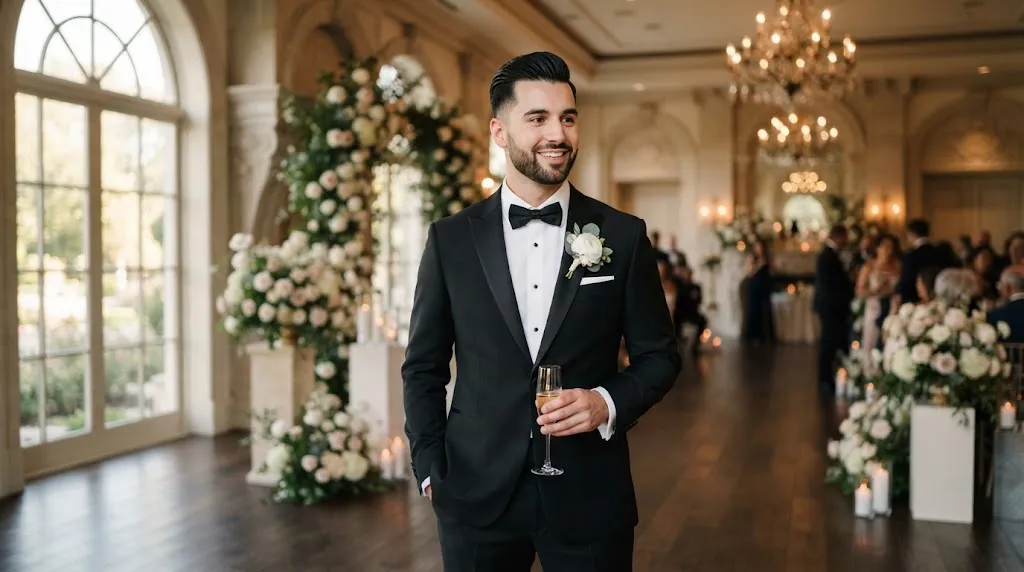
What it is: Hair directed smoothly backward from the forehead, creating a clean and controlled finish.
Best for: Formal, luxury, and sharply tailored wedding looks.
Face shapes: Especially effective on oval faces; the amount of slickness and volume can be adjusted for other shapes.
Hair types: Straight and thick hair is easiest to manage, although suitable wavy hair can also be controlled.
Beard pairing: Works particularly well with clean-shaven faces, stubble, and neatly maintained beards.
Maintenance: Medium.
Wedding suitability: Excellent for black-tie and polished formal weddings.
How to style: Apply product through damp or dry hair, comb the hair backward, and refine the sides and front for a consistent finish.
Why choose it: It creates a sophisticated appearance with a strong, clean outline.
Possible limitation: Heavy product or excessive slickness can make fine hair appear flatter or emphasize scalp visibility.
Side-Swept Groom Hairstyle
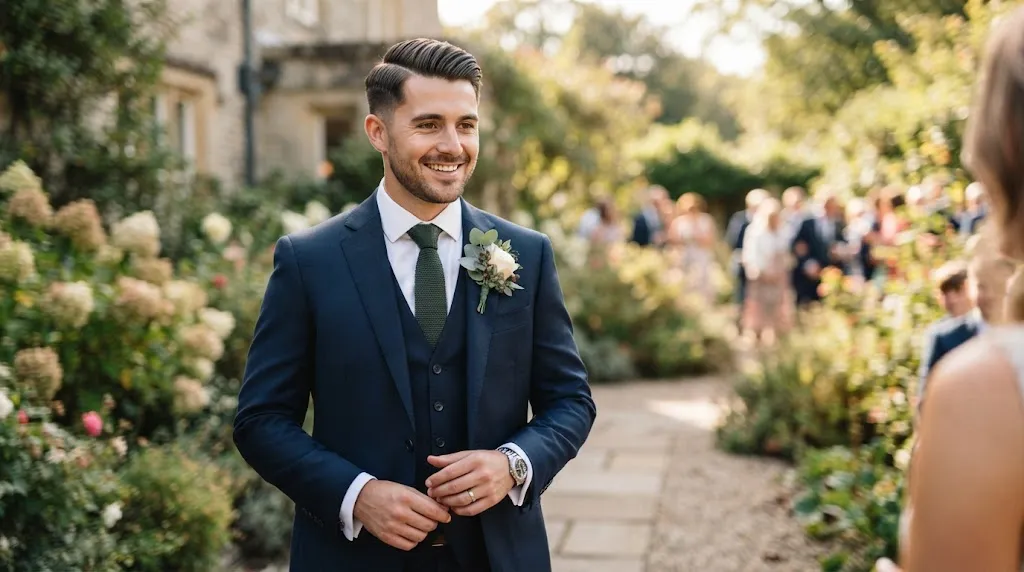
What it is: Hair is directed naturally to one side with softer movement than a sharply defined side part.
Best for: Grooms who want a polished style without an overly rigid finish.
Face shapes: Versatile across oval, square, round, and heart-shaped faces when volume is adjusted appropriately.
Hair types: Straight and wavy hair work particularly well.
Beard pairing: Complements clean-shaven faces, stubble, and short beards.
Maintenance: Low to medium.
Wedding suitability: Suitable for both traditional and modern wedding settings.
How to style: Apply lightweight styling product, sweep the hair to one side, and preserve some natural movement.
Why choose it: It provides a refined look while remaining softer and more natural than a heavily structured style.
Possible limitation: Very fine hair may lose its direction without adequate hold.
Textured Crop for Grooms
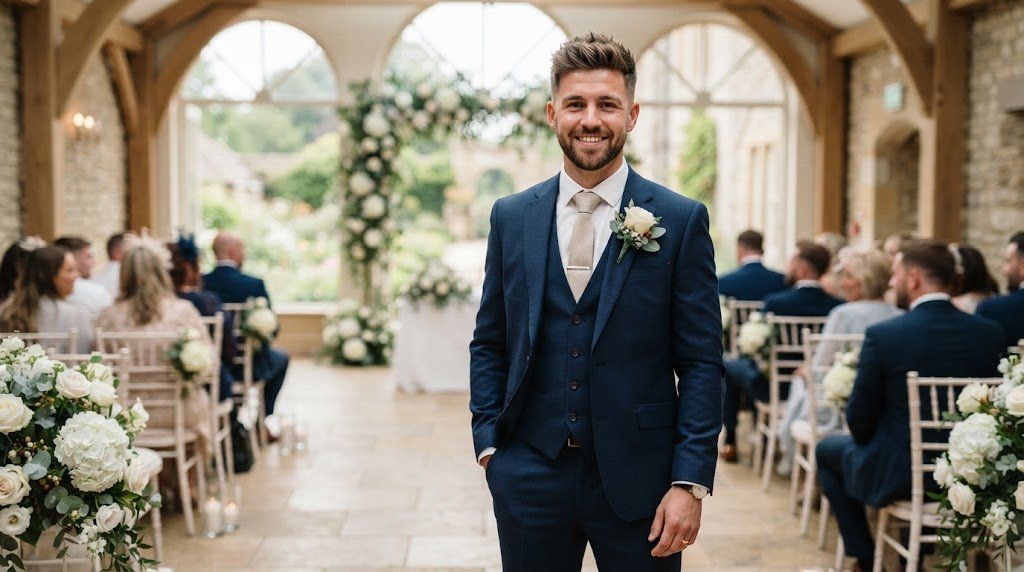
What it is: A shorter haircut with a textured top and relatively compact shape.
Best for: Grooms who prioritize practicality and a clean contemporary finish.
Face shapes: Particularly versatile for oval, square, and round faces.
Hair types: Works across many straight, wavy, thick, and moderately fine hair types.
Beard pairing: Pairs naturally with stubble and short beards.
Maintenance: Low to medium.
Wedding suitability: Good for modern, minimalist, and less formal weddings.
How to style: Work a small amount of matte product through the top and separate the texture with the fingers.
Why choose it: It requires less styling than high-volume hairstyles while still looking intentional.
Possible limitation: It provides less flexibility if you want substantial volume or a longer, traditional silhouette.
Low Fade With Textured Top
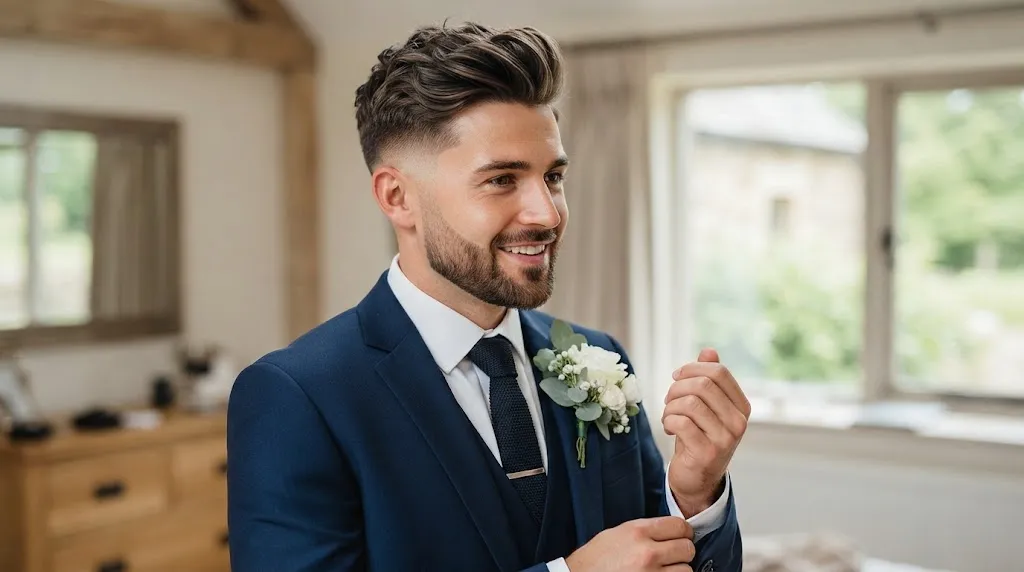
What it is: A low fade gradually reduces the hair around the lower sides and back while leaving a textured top.
Best for: Contemporary grooms who want clean sides without an extremely exposed fade.
Face shapes: Suitable for most face shapes when the top length and volume are customized.
Hair types: Works with most hair types, including straight, wavy, and curly textures.
Beard pairing: Particularly effective with stubble or a short beard because the fade can transition naturally toward the facial hair.
Maintenance: Medium.
Wedding suitability: Excellent for modern and contemporary weddings.
How to style: Add texture to the top using a suitable product while keeping the faded sides neat.
Why choose it: It combines a clean outline with enough top length for personalization.
Possible limitation: The fade loses its sharp appearance as it grows, so timing the haircut before the wedding matters.
Mid Fade Groom Hairstyle
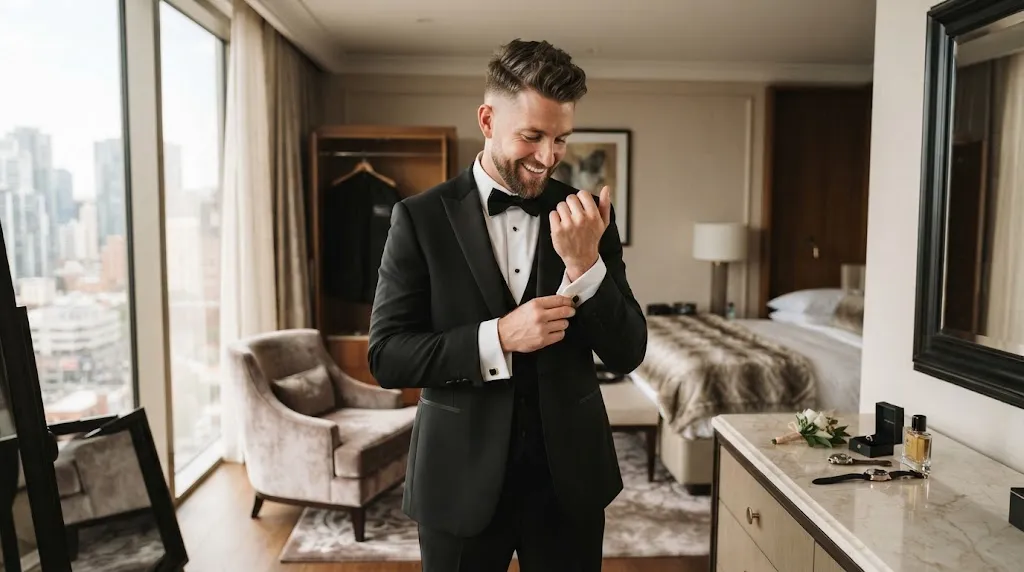
What it is: A fade that begins higher on the sides than a low fade, creating a more noticeable contrast between the top and sides.
Best for: Grooms who prefer a sharper contemporary haircut.
Face shapes: Versatile, although the height of the fade should be adjusted to the individual’s proportions.
Hair types: Suitable for straight, wavy, curly, and thick hair.
Beard pairing: Works well with stubble and short or medium beards.
Maintenance: Medium.
Wedding suitability: Best suited to modern or fashion-forward wedding styles.
How to style: Keep the top controlled with texture, volume, or a side-swept finish depending on the desired look.
Why choose it: It creates a distinct, clean contrast without requiring a skin-level fade.
Possible limitation: The stronger contrast can make the haircut look more noticeable as it grows out.
Taper Fade Groom Hairstyle
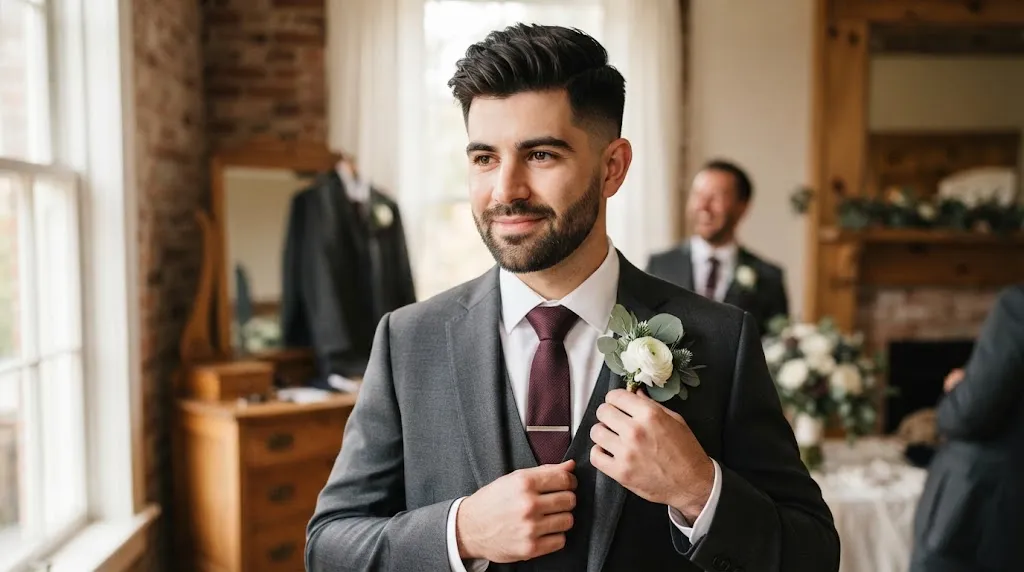
What it is: A gradual reduction of hair around the sideburns and neckline while retaining more hair on the sides than a stronger fade.
Best for: Grooms who want a clean haircut with a more natural transition.
Face shapes: Works well across most face shapes.
Hair types: Suitable for straight, wavy, curly, and thick hair.
Beard pairing: Especially useful when you want the haircut and beard to transition cleanly.
Maintenance: Low to medium.
Wedding suitability: Versatile enough for traditional, modern, and semi-formal weddings.
How to style: Style the top according to its length—side-swept, textured, quiffed, or naturally controlled.
Why choose it: It provides a neat appearance without making the sides look excessively bare.
Possible limitation: It offers less dramatic contrast than a high or mid fade.
Classic Taper Haircut for Groom
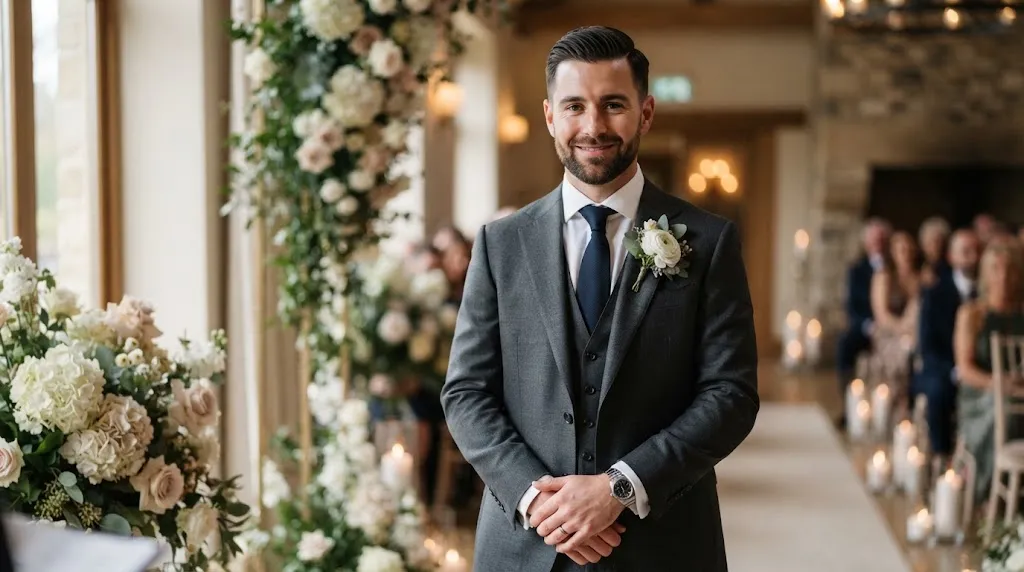
What it is: A traditional haircut where the sides and back gradually become shorter while maintaining a natural amount of hair.
Best for: Grooms seeking a timeless and conservative appearance.
Face shapes: Suitable for most face shapes.
Hair types: Works across straight and wavy textures and can be adapted to other hair types.
Beard pairing: Flexible with clean-shaven, stubble, and short-beard looks.
Maintenance: Low.
Wedding suitability: Excellent for traditional and formal ceremonies.
How to style: Use a small amount of product to control the top while retaining a natural finish.
Why choose it: It remains neat without depending on a highly defined fade.
Possible limitation: It may feel too understated for a groom looking for a highly contemporary or dramatic haircut.
Undercut Groom Hairstyle
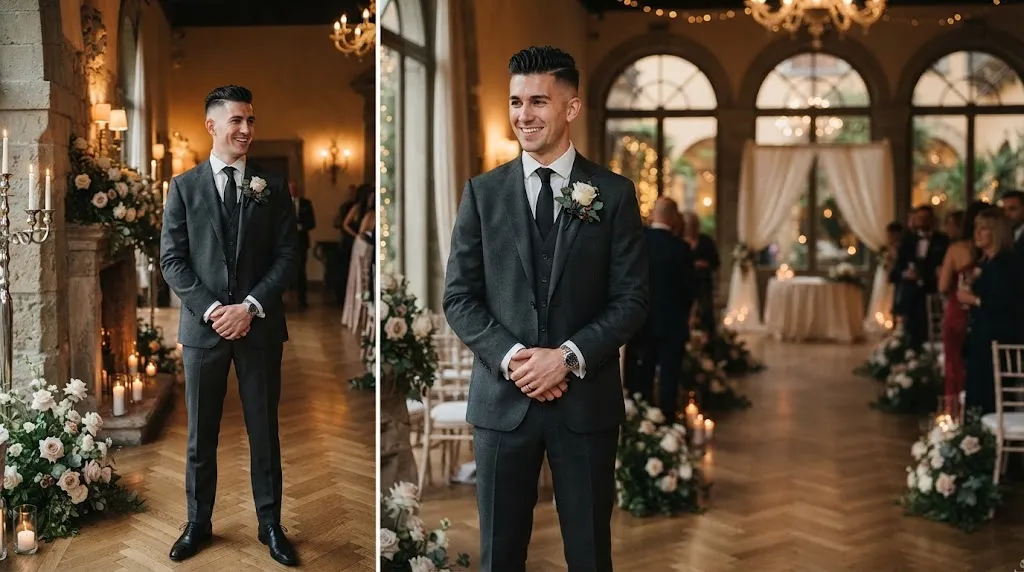
What it is: A hairstyle where the top remains noticeably longer while the sides and back are cut much shorter, creating a strong separation.
Best for: Grooms who want a bold, defined hairstyle.
Face shapes: Works particularly well when the top length and volume are balanced with the face.
Hair types: Best suited to straight or thick hair that can hold the longer top.
Beard pairing: Works well with structured stubble or beards.
Maintenance: Medium to high.
Wedding suitability: Best for modern, fashion-forward, or distinctive wedding looks.
How to style: Direct the longer top backward, sideways, or into a textured finish depending on the desired appearance.
Why choose it: The strong contrast makes the hairstyle visually distinctive.
Possible limitation: The separation between the top and sides can be less forgiving as the haircut grows out.
Messy/Textured Groom Hairstyle
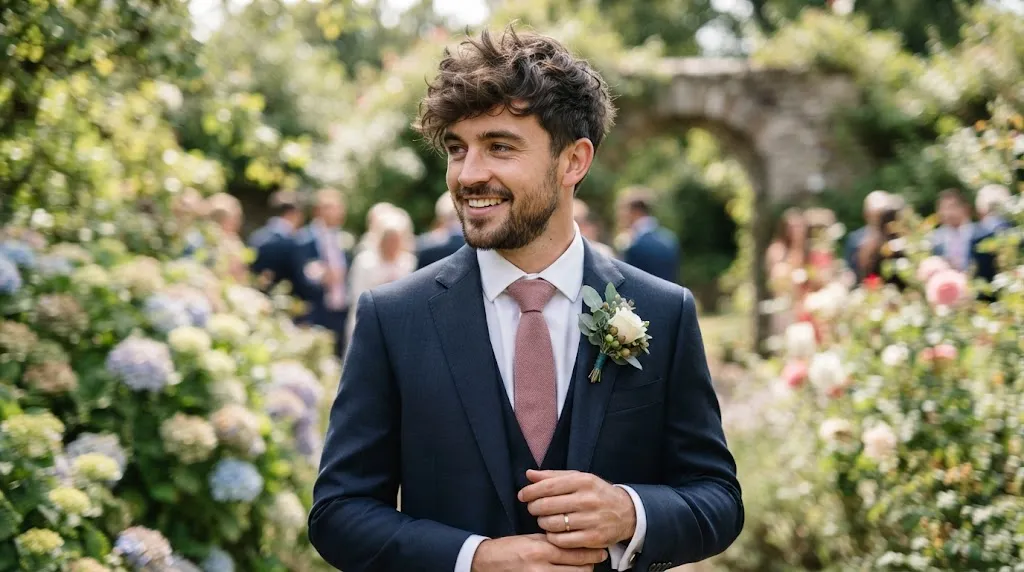
What it is: A deliberately textured style with movement and separation rather than a perfectly controlled finish.
Best for: Grooms who prefer a relaxed, modern appearance.
Face shapes: Highly adaptable when volume and texture are adjusted to the face.
Hair types: Particularly effective on wavy and thick hair, but can be created on straight hair with suitable styling.
Beard pairing: Works well with stubble and short beards.
Maintenance: Medium.
Wedding suitability: Particularly suitable for outdoor, garden, rustic, or relaxed modern weddings.
How to style: Apply a lightweight or matte product and shape the hair with the fingers to preserve natural-looking movement.
Why choose it: It looks less rigid and can work with the hair’s natural texture.
Possible limitation: “Messy” should still be controlled; too little structure can look unfinished in formal wedding photographs.
Curly Groom Hairstyle
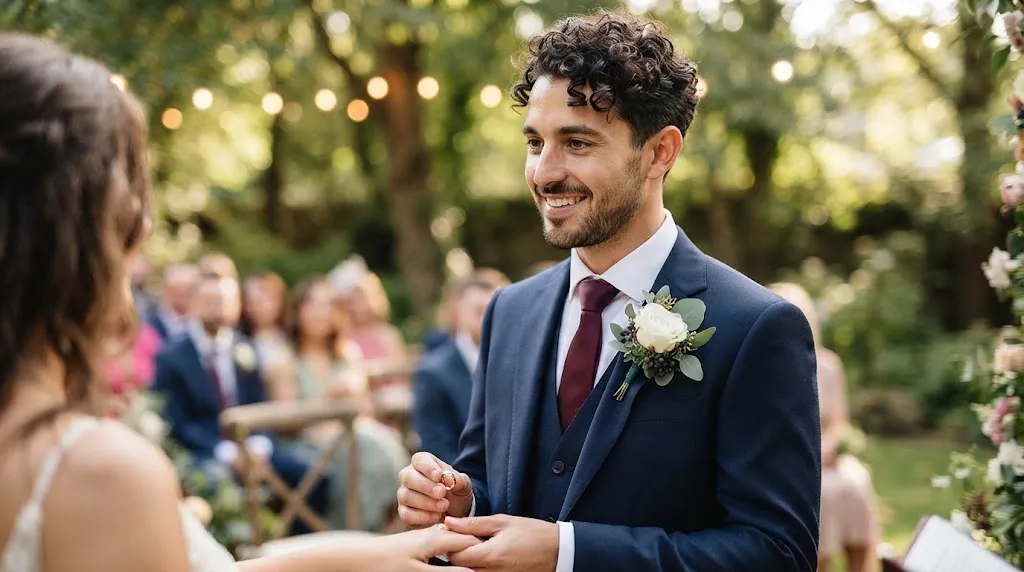
What it is: A wedding hairstyle that preserves and defines the natural curl pattern while controlling the overall shape.
Best for: Grooms who want their natural curls to remain the defining feature of their look.
Face shapes: Can suit most face shapes when the curl volume and sides are balanced.
Hair types: Naturally curly or coily hair.
Beard pairing: Works with clean-shaven faces, stubble, and short or fuller beards depending on the overall shape.
Maintenance: Medium.
Wedding suitability: Suitable for both formal and modern weddings when the curls are well-defined and controlled.
How to style: Use curl-compatible styling products, define the curls without excessive manipulation, and allow the hair to set before the event.
Why choose it: It works with natural texture instead of forcing curly hair into a completely different structure.
Possible limitation: Humidity can change curl definition and volume, so the final style should allow for natural movement.
Long Hair Groom Hairstyle
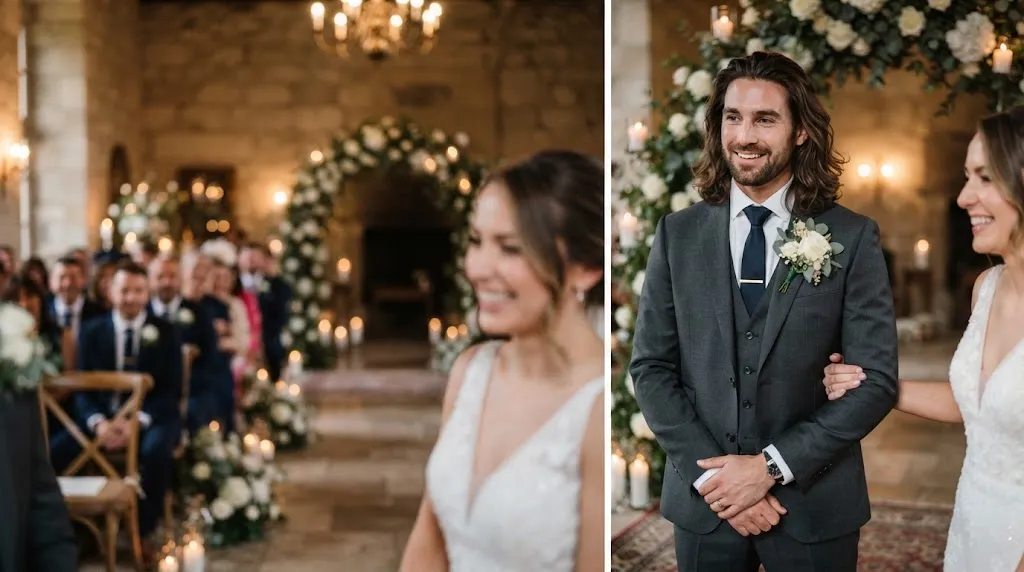
What it is: A groom style that keeps substantial length and uses natural movement, controlled waves, or a polished pulled-back finish.
Best for: Grooms who already wear long hair and want to maintain their established look.
Face shapes: Particularly adaptable to oval and oblong faces, with volume placement adjusted for facial proportions.
Hair types: Straight and wavy hair are especially easy to shape, although long curly hair can also work.
Beard pairing: Can be paired with clean-shaven, stubble, or fuller beard styles depending on the desired balance.
Maintenance: Medium.
Wedding suitability: Works especially well for relaxed, outdoor, bohemian, or distinctive wedding styles.
How to style: Prepare the hair in advance, control flyaways, and choose whether to leave it loose, sweep it back, or tie it into a controlled style.
Why choose it: It allows the groom to retain his personal appearance instead of cutting the hair solely for the wedding.
Possible limitation: Long hair generally requires more preparation and can be affected by humidity, wind, or prolonged wear.
Groom Hairstyle With Curtain or Long Fringe
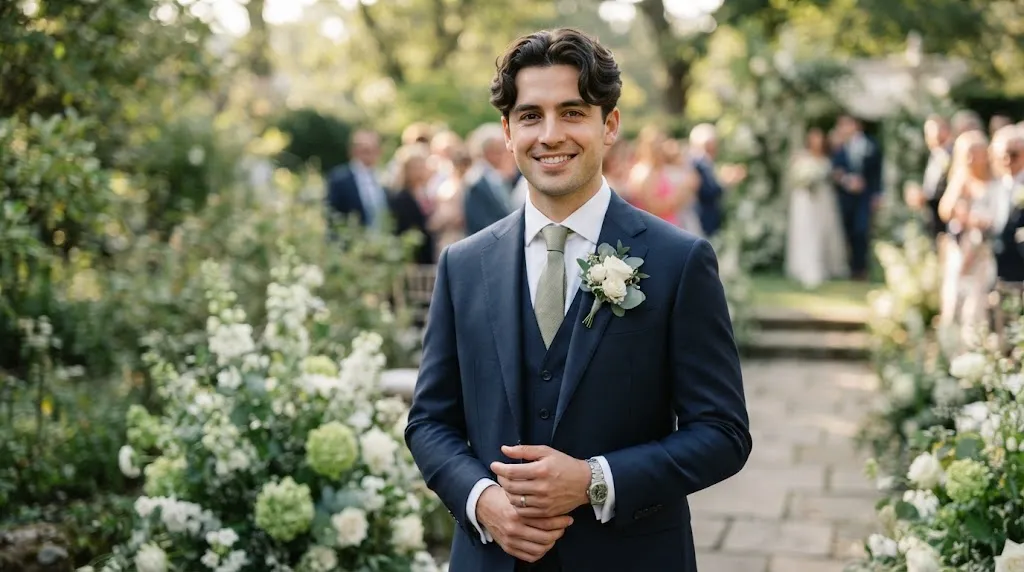
What it is: A medium or longer top styled with a center or slightly off-center split, allowing the front sections to frame the face.
Best for: Grooms wanting a softer, contemporary hairstyle with visible length around the forehead.
Face shapes: Particularly useful for balancing round, heart, and square faces when the fringe length is customized.
Hair types: Straight and wavy hair work especially well.
Beard pairing: Looks natural with clean-shaven faces, stubble, and short beards.
Maintenance: Medium.
Wedding suitability: Best suited to modern, relaxed, and fashion-forward weddings.
How to style: Create the part while the hair is damp, direct each side away from the center, and use lightweight product to maintain separation and movement.
Why choose it: The longer front creates natural face framing and gives a softer alternative to highly structured groom hairstyles.
Possible limitation: A long fringe may require regular adjustment during the wedding and can fall forward in humid or windy conditions.
Best Groom Hairstyles by Face Shape
Face shape hairstyle ka final decision nahi hota, lekin yeh volume, height, sides aur fringe ki placement choose karne mein help karta hai. Apni face shape ke liye neeche diye gaye options ko starting point samjhein, phir hair type aur wedding style ke saath match karein.
Best Groom Hairstyles for Round Face
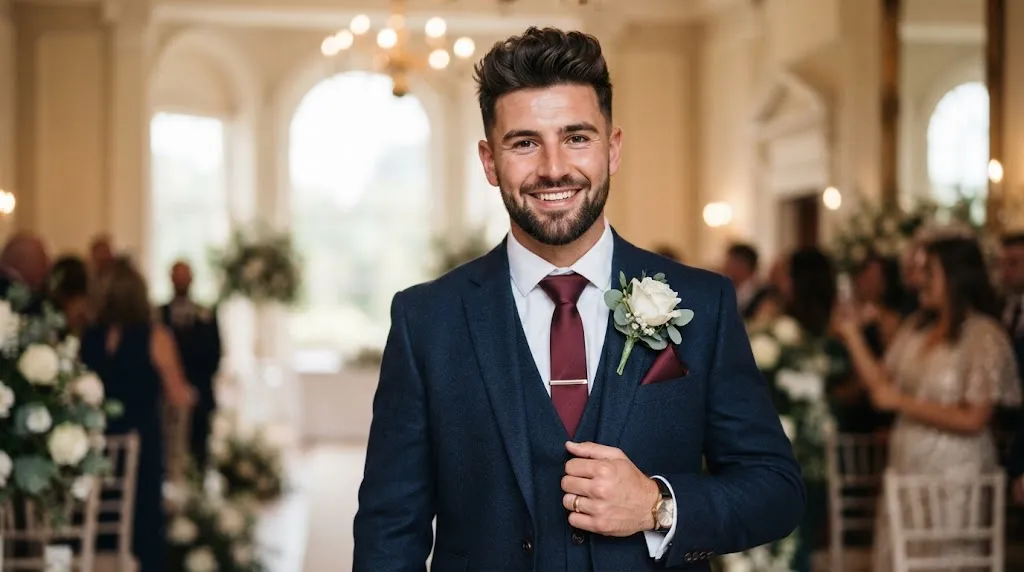
Best choices: Textured Quiff, Classic Side Part, Low Fade With Textured Top, Taper Fade, aur Groom Hairstyle With Curtain or Long Fringe.
Round faces mein length aur width relatively balanced hoti hai, isliye controlled height on top aur cleaner sides face ko visually more defined bana sakte hain. Side part aur quiff mein excessive width create kiye baghair top par volume rakhna useful hota hai.
Styles to approach carefully: Very wide, flat hairstyles ya sides par excessive volume face ko visually broader bana sakte hain. A very heavy fringe bhi forehead ko chhota dikhakar overall proportions ko compress kar sakti hai.
Why the proportions work: Top par moderate height face ko vertically longer appearance de sakti hai, jabke tighter sides unnecessary width ko reduce karte hain. Agar fringe choose kar rahe hain, to uski length aur direction ko face ke proportions ke according adjust karna better hai.
Best Groom Hairstyles for Oval Face
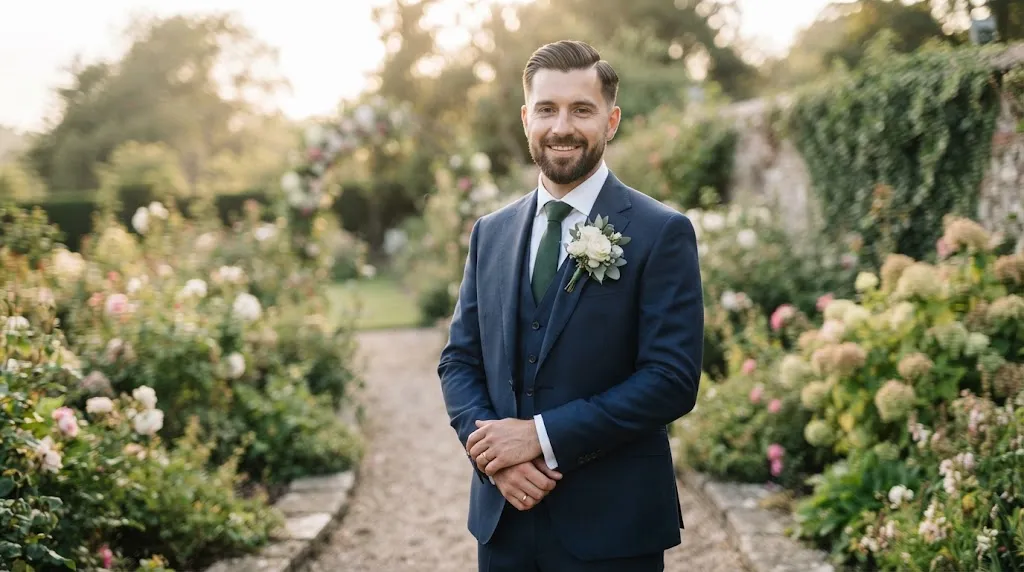
Best choices: Classic Side Part, Slick Back, Textured Quiff, Classic Pompadour, Side-Swept Hairstyle, Taper Fade, aur Long Hair Groom Hairstyle.
Oval face generally balanced proportions rakhta hai, isliye hairstyle choose karte waqt face ko “correct” karne ke bajaye hair texture, density aur personal style ko priority di ja sakti hai.
Styles to approach carefully: Kisi specific hairstyle ko strictly avoid karna zaroori nahi, lekin excessive height ya excessive length tab reconsider karein agar woh overall facial proportions ko unnecessarily change kar rahi ho.
Why the proportions work: Balanced facial proportions different combinations of volume, length and side structure ko accommodate karte hain. Isi wajah se oval face mein hairstyle selection comparatively flexible hota hai.
Best Groom Hairstyles for Square Face
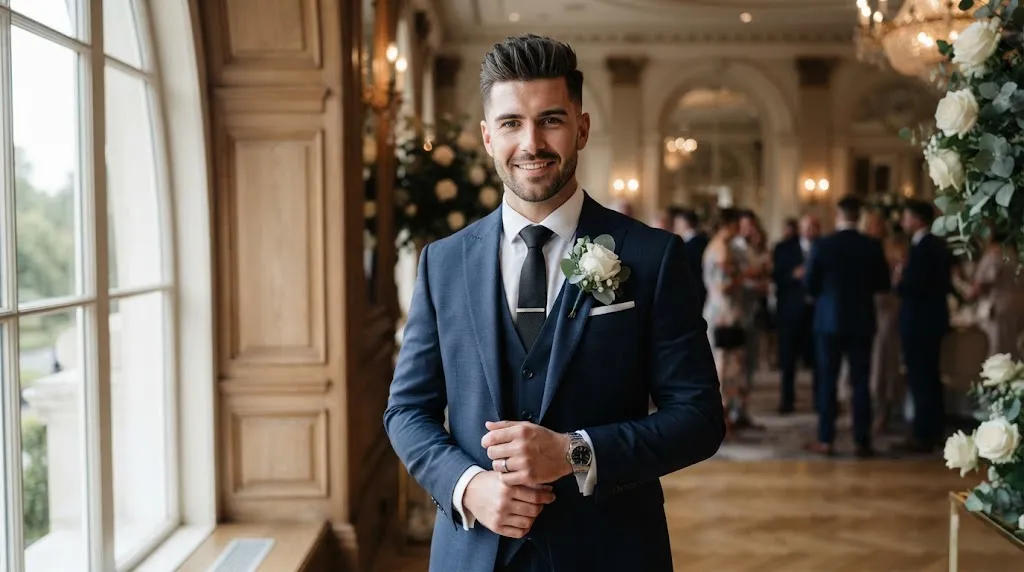
Best choices: Textured Quiff, Classic Side Part, Slick Back, Textured Crop, Low Fade With Textured Top, Classic Taper, aur Side-Swept Hairstyle.
Square faces mein defined jawline aur relatively strong facial structure hoti hai. Structured hairstyles is natural definition ke saath easily work kar sakte hain, while texture overall look ko softer bana sakti hai.
Styles to approach carefully: Agar aap already strong facial angles ko soften karna chahte hain, to extremely rigid, boxy styling ya excessive sharpness har case mein ideal nahi ho sakti.
Why the proportions work: Controlled structure face ki natural geometry ko complement karti hai. Textured top ya softer side-swept movement strong jawline ke saath contrast create kar sakta hai without making the hairstyle look disconnected.
Best Groom Hairstyles for Long/Oblong Face
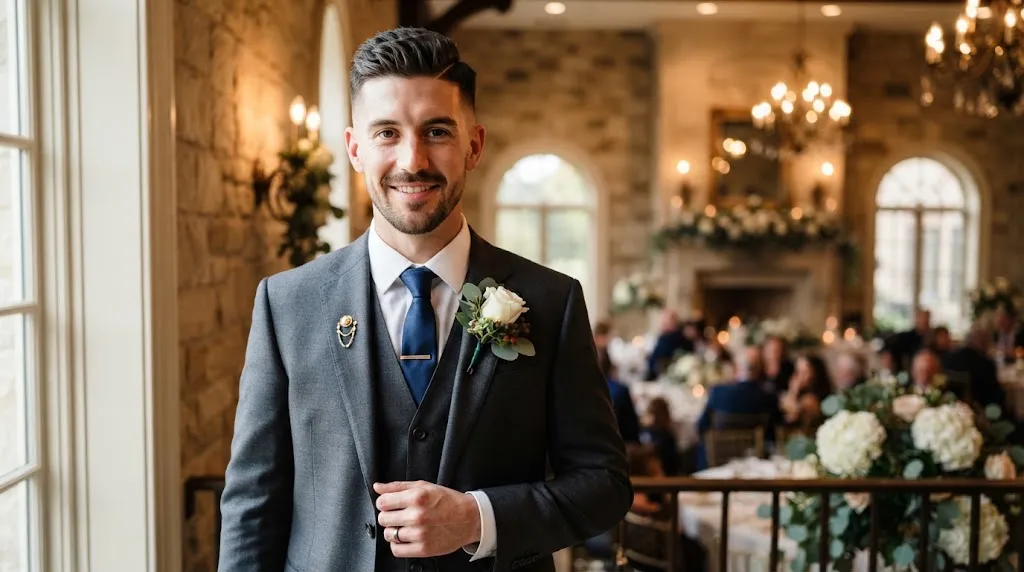
Best choices: Side-Swept Groom Hairstyle, Classic Side Part with moderate height, Textured Crop, Classic Taper, Messy/Textured Groom Hairstyle, aur styles with controlled side volume.
Long or oblong faces mein primary goal usually additional vertical length create karna nahi hota. Moderate top height aur some width around the sides can create a more balanced appearance.
Styles to approach carefully: Very tall pompadours, extremely high quiffs, ya excessive slicked-back height face ko visually longer bana sakti hai. Very tight sides combined with substantial top height bhi proportions ko exaggerate kar sakti hai.
Why the proportions work: Moderate volume face ke vertical emphasis ko control karta hai, while some movement or width around the sides can provide visual balance.
Best Groom Hairstyles for Heart-Shaped Face
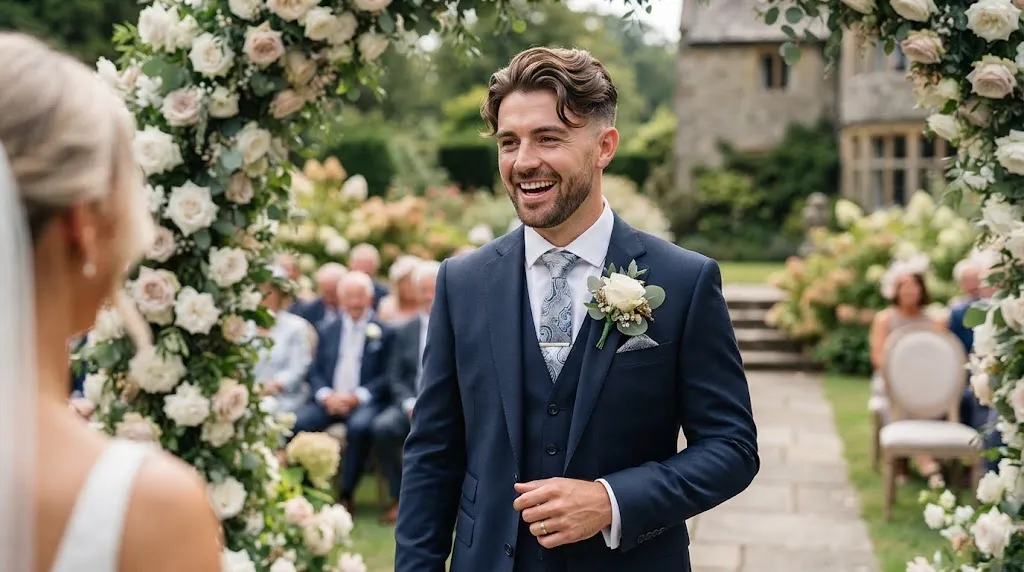
Best choices: Side-Swept Hairstyle, Groom Hairstyle With Curtain or Long Fringe, Textured Crop, Classic Side Part, Messy/Textured Hairstyle, aur medium-length styles with controlled forehead framing.
Heart-shaped faces mein forehead comparatively wider aur chin narrower ho sakti hai. Isliye hairstyle ka front aur sides carefully balance karna useful hota hai.
Styles to approach carefully: Excessive height directly at the front can draw more attention to a wider forehead. Extremely tight sides combined with a very high top may also increase the contrast between the upper and lower face.
Why the proportions work: Softer movement around the forehead and controlled volume can distribute visual weight more evenly. A longer fringe or side-swept finish can also provide natural framing without hiding the face completely.
Best Groom Hairstyles for Diamond Face
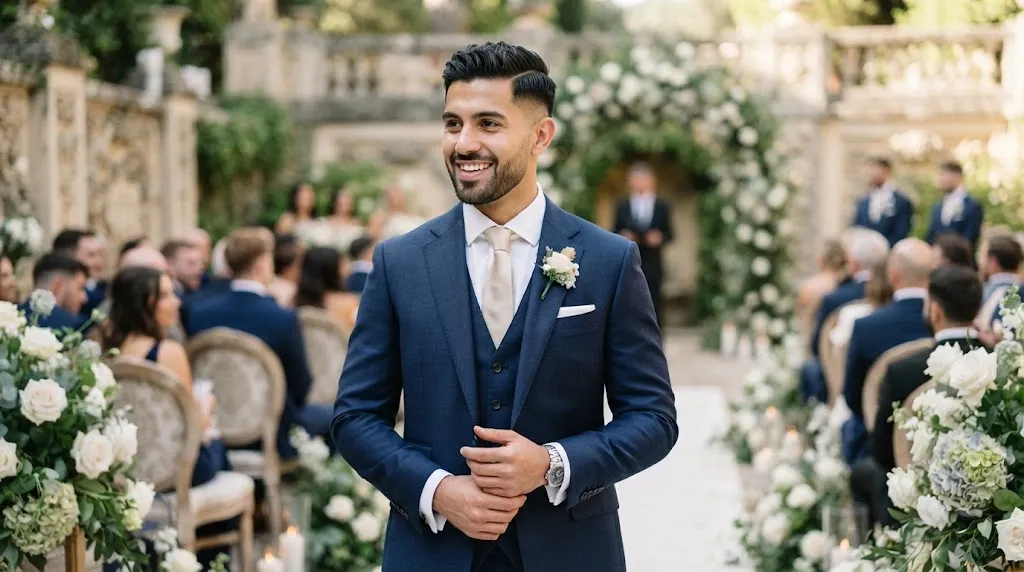
Best choices: Side-Swept Hairstyle, Textured Quiff with controlled volume, Classic Side Part, Curtain or Long Fringe, Messy/Textured Hairstyle, aur medium-length styles that retain some fullness.
Diamond-shaped faces often have prominent cheekbones with a narrower forehead and jaw. The hairstyle can therefore be used to introduce controlled fullness around areas that need visual balance.
Styles to approach carefully: Extremely tight sides with little volume anywhere else can make prominent cheekbones appear more pronounced. Very narrow, flat hairstyles may also provide less balance.
Why the proportions work: Some controlled fullness around the forehead or sides can soften the transition between the cheekbones and the narrower upper and lower portions of the face. The goal is balance rather than hiding the natural facial structure.
Best Groom Hairstyles by Hair Type
Hair type often matters more than a trend because it determines how naturally a hairstyle will hold, how much styling it needs, and how it behaves during a long wedding day. Choose a haircut that works with your natural texture and density, rather than forcing the hair into a shape it does not easily maintain.
Groom Hairstyles for Straight Hair
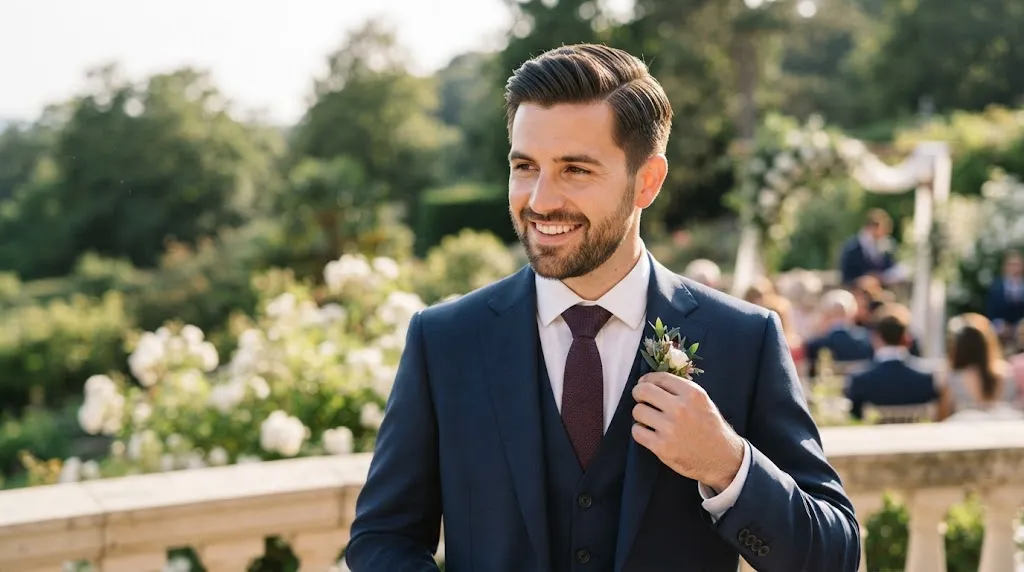
Straight hair is naturally suited to hairstyles that depend on direction and clean structure. Classic Side Parts, Slick Backs, Pompadours, Textured Crops, Tapers, and Undercuts can all work when the length and density support the desired shape.
For a softer wedding look, a Side-Swept style can introduce movement without requiring a highly rigid finish. If the hair is very straight and fine, avoid assuming that longer or heavily slicked styles will automatically look fuller; controlled texture may be more effective.
Best approach: Choose the hairstyle according to density first, then decide how much volume or structure you want.
Groom Hairstyles for Wavy Hair
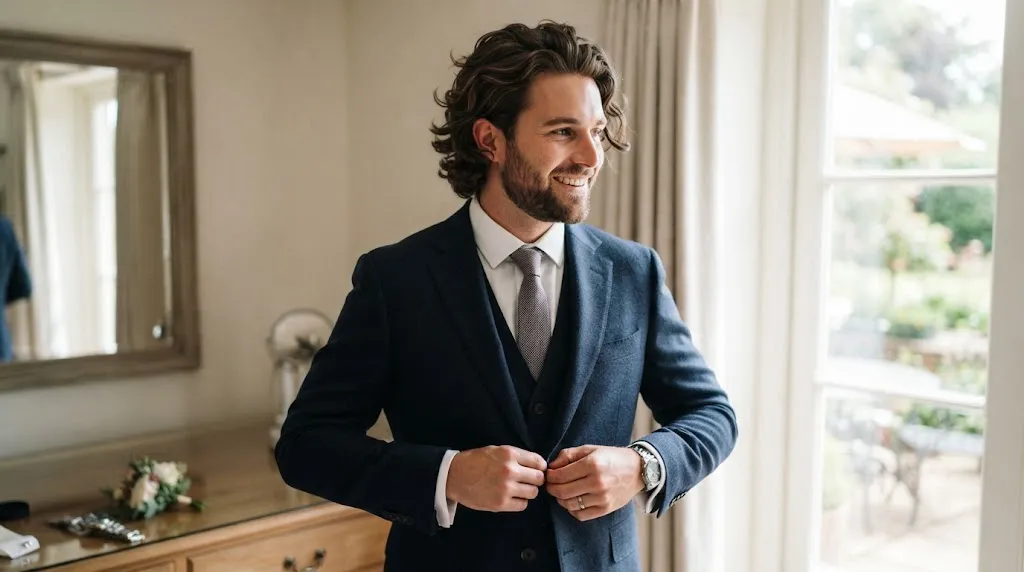
Wavy hair already provides natural movement, which can make textured quiffs, side-swept styles, longer hairstyles, and relaxed textured cuts look less forced.
The main styling goal should be definition and control rather than eliminating every wave. Over-brushing or excessive product can remove the natural movement that makes the hairstyle distinctive.
Best approach: Keep enough length for the natural wave to form, while shaping the sides and top so the overall silhouette remains intentional for photographs.
Groom Hairstyles for Curly Hair
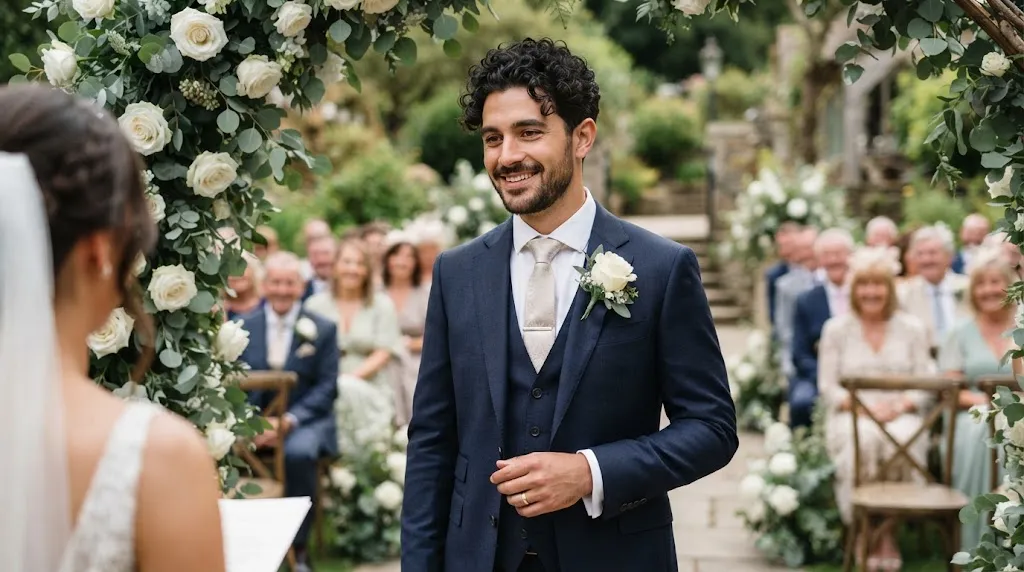
Curly hair does not need to be straightened to create a formal groom hairstyle. A controlled curly top, tapered sides, or longer curly style can preserve the natural curl pattern while giving the haircut a defined shape.
The most important consideration is how the curls behave at their actual dry length. Cutting curly hair based only on its wet appearance can produce a different final result after the curls contract.
Best approach: Choose a shape that respects the curl pattern and decide in advance whether you want defined curls, controlled volume, or a longer natural finish.
Groom Hairstyles for Thick Hair
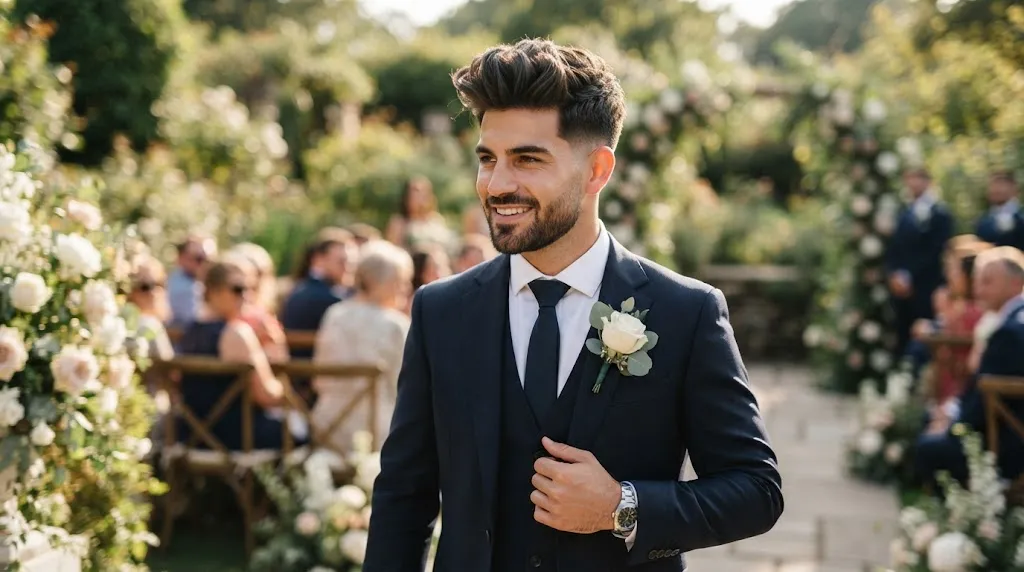
Thick hair provides natural density and volume, which makes it suitable for Quiffs, Pompadours, Textured Tops, longer hairstyles, and structured side parts.
The challenge is usually not creating volume but controlling excess bulk. If too much weight remains around the sides or top, the hairstyle can become difficult to shape and may look wider than intended.
Best approach: Ask the barber to manage bulk strategically while preserving enough density to create the hairstyle you actually want.
Groom Hairstyles for Fine or Thin Hair
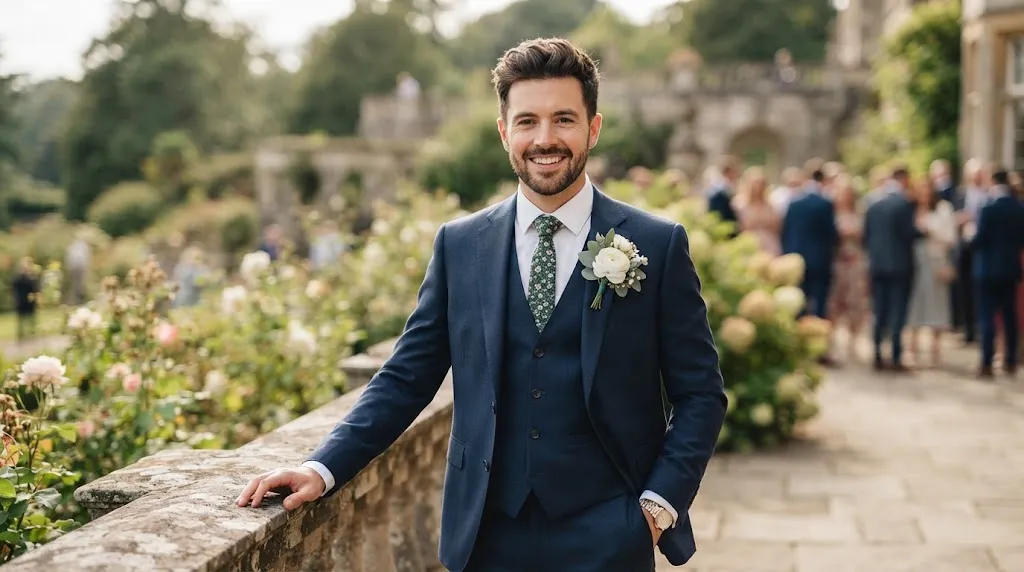
Fine or thin hair benefits from hairstyles that create controlled texture and avoid unnecessary weight. Textured Crops, Side-Swept styles, shorter Quiffs, and appropriately shaped Tapers can work well depending on the available density.
A common mistake is using too much product or forcing a very slick finish. Heavy product can flatten fine hair and make the scalp more visible.
Best approach: Use the hair’s existing density to create texture and direction rather than promising artificial fullness.
Groom Hairstyles for Receding Hairlines
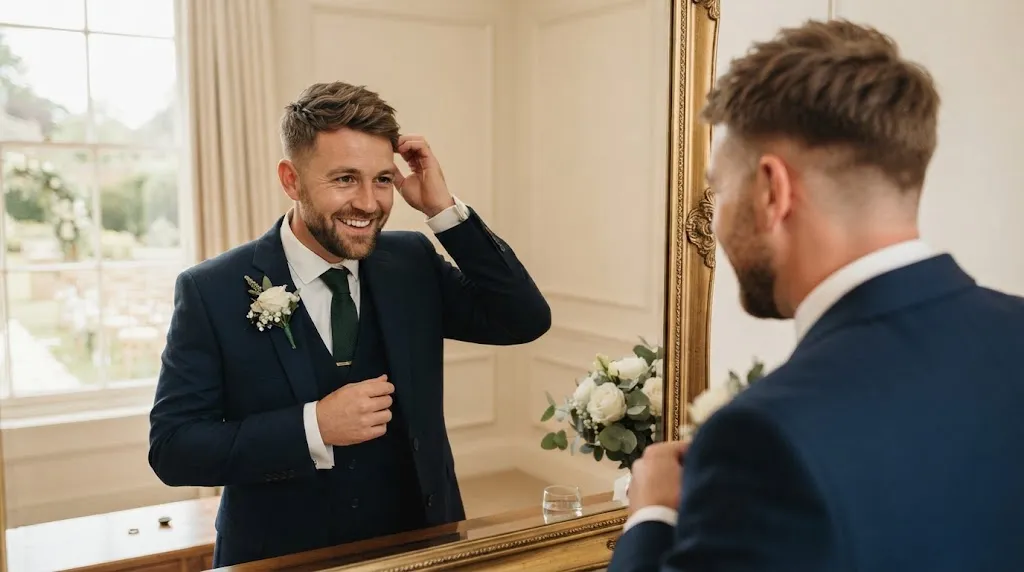
A receding hairline does not mean you need to hide the hairline completely. The better approach is to choose a hairstyle that works with the current hairline and creates a deliberate overall shape.
Textured Crops, Side-Swept styles, controlled fringes, and some shorter tapered cuts can be practical choices. The right option depends on the pattern and extent of recession, as well as hair density elsewhere on the head.
Styles to approach carefully: Very slicked-back styles can expose more of the hairline, while an overly long fringe can become difficult to control and may look unnatural if it is being used only to cover recession.
Best approach: Be realistic about the hairline, choose a shape that looks intentional from multiple angles, and tell the barber exactly how you want the front to sit.
Important: No hairstyle can guarantee that hair loss or recession will be completely hidden. The goal is a flattering, controlled haircut—not a promise that the hairline will disappear.
Best Groom Hairstyles With Beard
Hair and beard should be treated as one visual combination rather than two completely separate styling decisions. The right pairing depends on contrast, density, length and overall shape. A highly structured haircut does not always require an equally heavy beard; sometimes reducing beard bulk creates a cleaner wedding-day appearance.
Groom Hairstyle With Short Beard
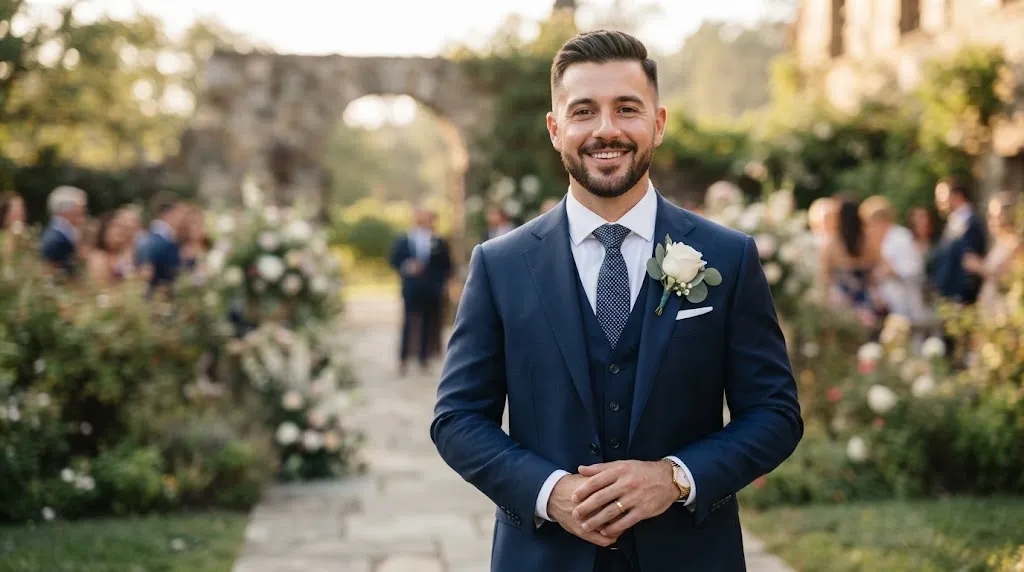
A short, neatly shaped beard works well with structured and contemporary groom hairstyles such as Textured Quiffs, Low Fades, Mid Fades, Tapers, Side Parts, and Side-Swept styles.
The key is keeping the transition between the haircut and beard clean. If the haircut is already highly detailed, a controlled short beard can provide definition without competing for attention.
Best approach: Keep the beard outline clean and match its overall fullness to the density of the hairstyle.
Groom Hairstyle With Stubble
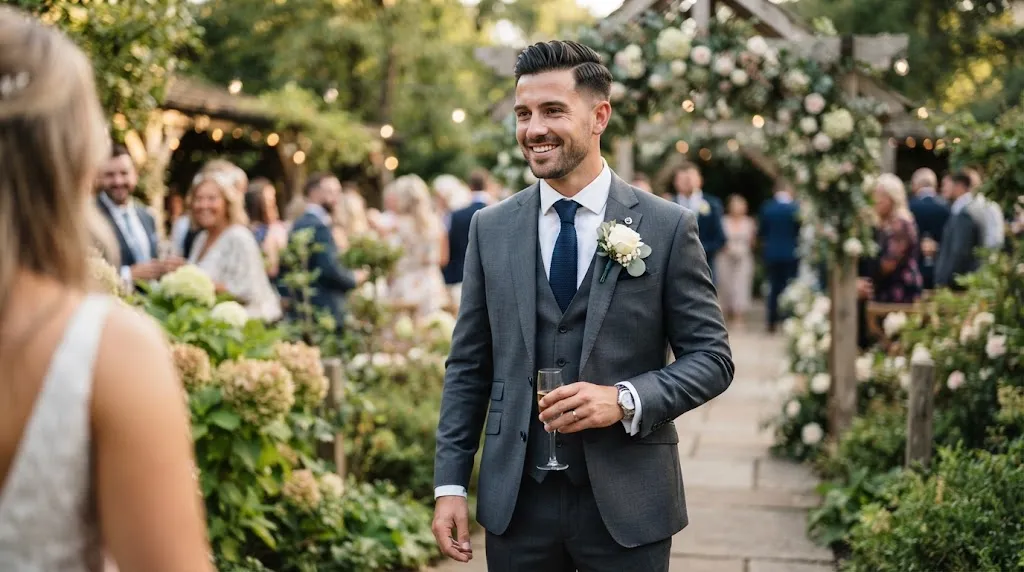
Stubble is one of the easiest beard options to combine with different groom hairstyles because it adds facial definition without creating substantial visual weight.
It can work with Classic Side Parts, Textured Crops, Quiffs, Slick Backs, Tapers, and modern fade-based styles.
Best approach: Use stubble when you want some beard definition but still want the hairstyle to remain the main feature. Keep the neckline and cheek area tidy so the stubble looks intentional rather than unfinished.
Groom Hairstyle With Full Beard
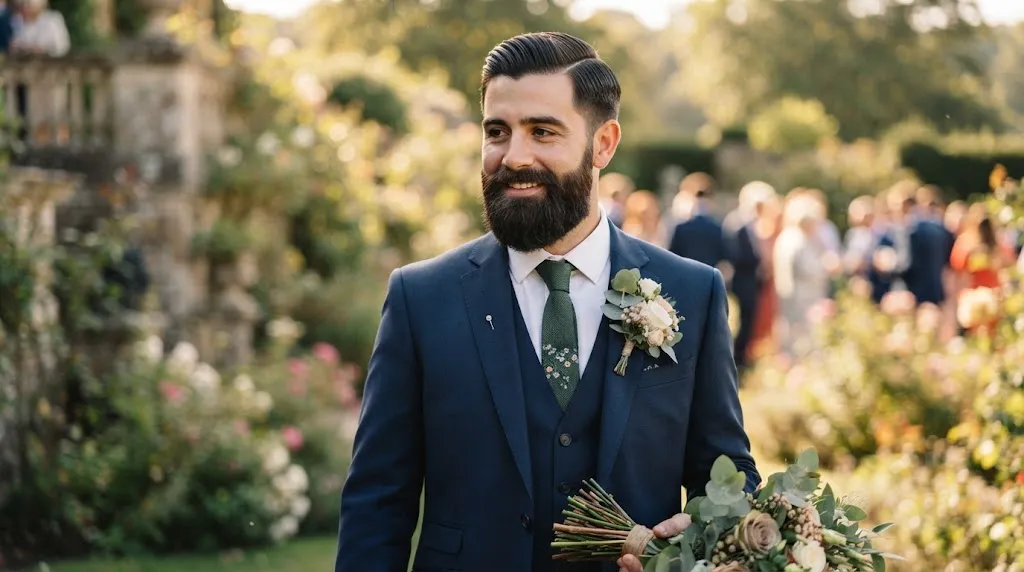
A full beard creates more visual weight around the lower face, so the haircut should have enough structure to balance it.
Textured tops, Classic Side Parts, Slick Backs, Tapers, and some longer hairstyles can work well with fuller beards. The important factor is proportion: a very heavy beard combined with excessive hair volume can make the entire look feel crowded.
Best approach: If the beard is substantial, keep its shape deliberate and avoid adding unnecessary bulk to both the sides of the haircut and the beard at the same time.
Clean-Shaven Groom Hairstyles
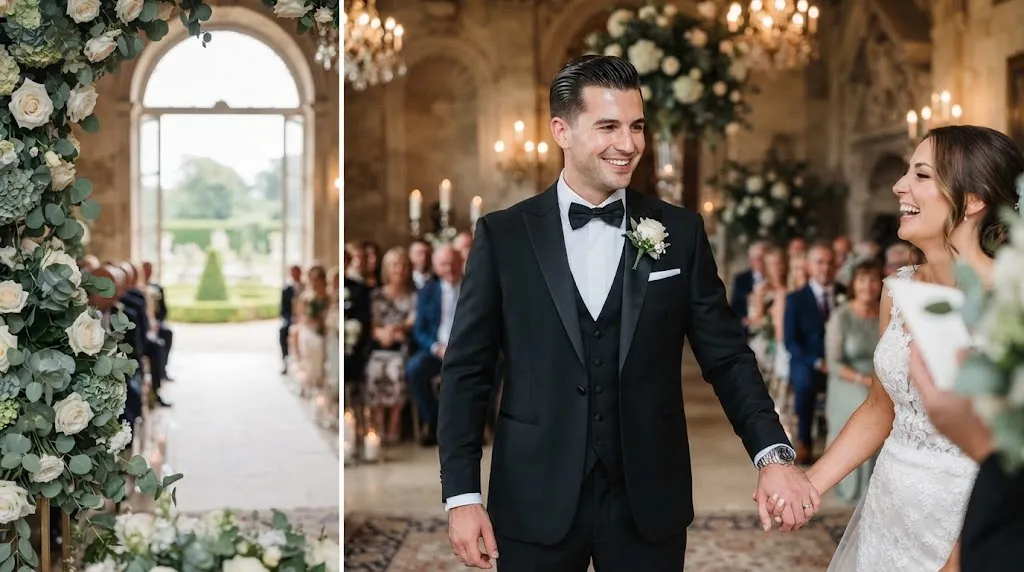
Clean-shaven grooming creates a lighter, more open appearance around the face. This makes it especially easy to showcase precise hairstyles such as Classic Side Parts, Slick Backs, Pompadours, Tapers, and polished contemporary cuts.
Clean-shaven does not automatically mean the hairstyle should be more formal. It can also work with textured or modern cuts when the overall wedding style is relaxed.
Best approach: Let the haircut provide the main structure and use clean facial grooming to maintain a sharp, uncluttered appearance.
How to Match Hair and Beard Without Looking Overstyled
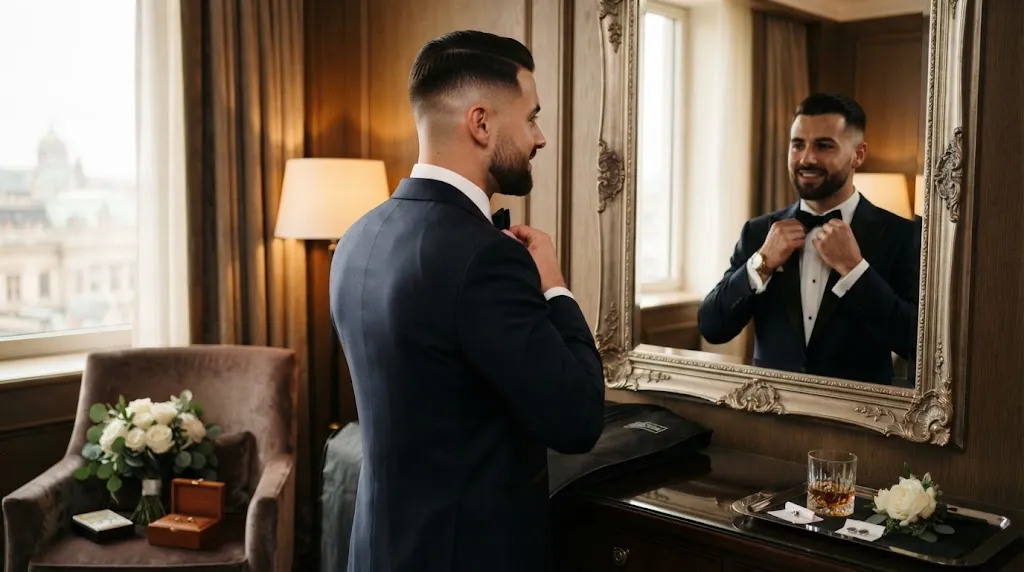
The easiest way to avoid an overstyled appearance is to balance the amount of structure rather than making every element equally sharp.
- Structured haircut + full beard: Keep the beard shape controlled but avoid excessive detailing everywhere.
- Fade or taper + short beard: A clean transition can connect the haircut and facial hair naturally.
- Textured hairstyle + stubble: The lighter beard allows the natural texture of the hair to remain the focal point.
- Long hairstyle + full beard: Keep both lengths intentional and maintain the beard outline so the overall look does not become visually heavy.
- Classic hairstyle + clean shave: This creates a polished combination without requiring multiple strong styling elements.
For the wedding day, the best hair-and-beard combination is usually the one that looks balanced from the front, side, and three-quarter angles. Check those angles during your trial rather than judging the combination only from a straight-on mirror view.
Most importantly, do not choose a beard style simply because it is popular. Match the beard’s length and shape to your facial proportions, haircut, natural growth pattern, and the level of grooming you can realistically maintain throughout the wedding.
Groom Hairstyles for Different Wedding Styles
Classic & Traditional Wedding
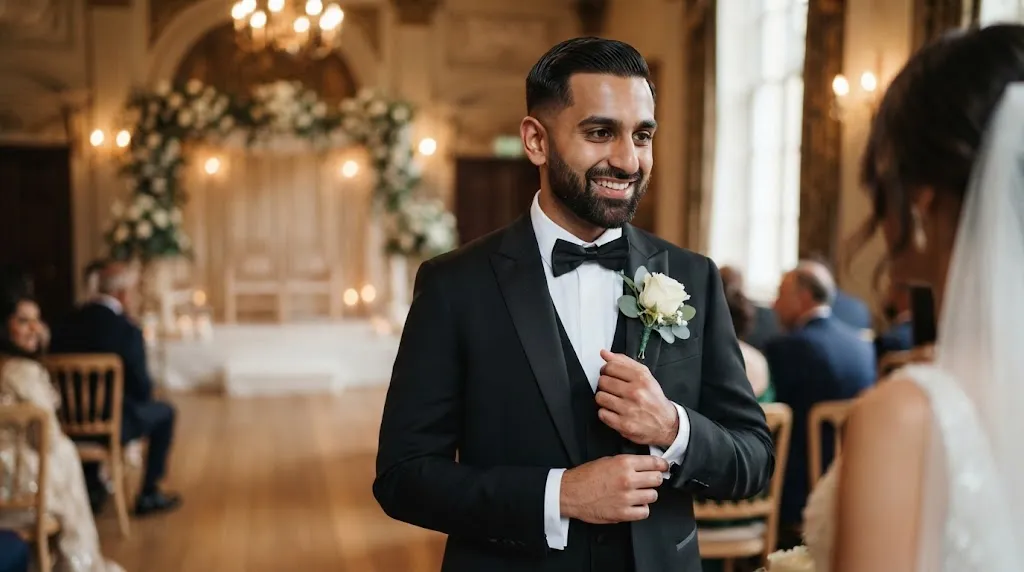
For a classic or traditional wedding, groom hairstyles usually work best when they look polished without appearing overly styled. A classic side part, side-swept style, classic taper, or neatly styled slick back can complement formal traditional clothing and a structured wedding setting.
Choose a controlled shape with clean sides and enough length on top to create definition. If you are wearing a traditional outfit with a more formal silhouette, avoid a hairstyle that looks deliberately messy or heavily textured unless it suits your overall look.
Best approach: Keep the shape neat, use moderate hold, and make sure the hairstyle still looks natural from the front and side.
Modern Wedding
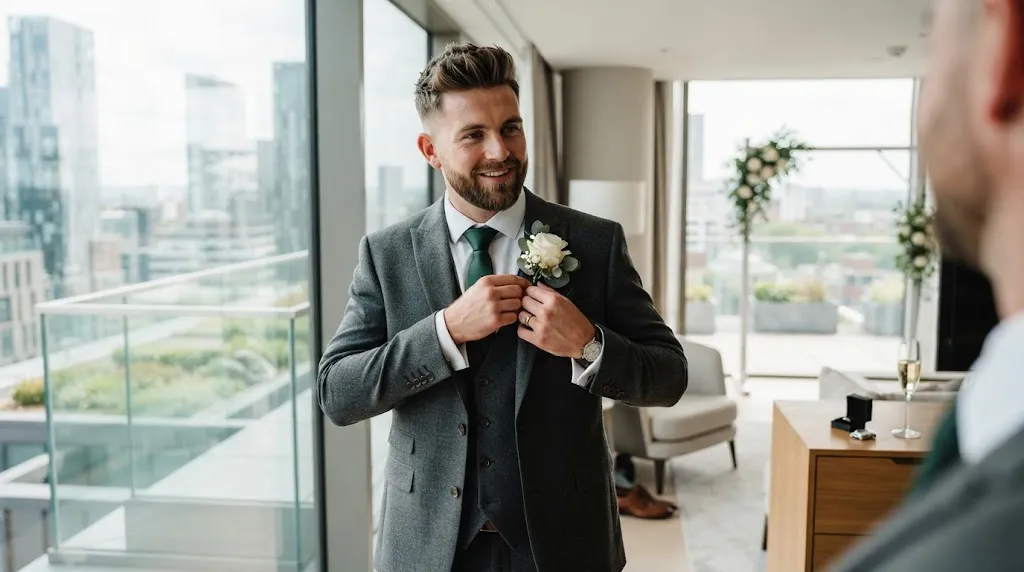
Modern weddings give you more freedom to use texture, volume and contemporary cuts. Textured quiffs, low fades with textured tops, modern tapers, textured crops and relaxed side-swept styles can work particularly well.
The key is balance. A modern haircut should look intentional rather than excessively complicated. If your outfit is already detailed, a cleaner hairstyle may create a better overall appearance. If your clothing is simple, controlled texture or volume can add visual interest.
Best approach: Choose a hairstyle that reflects your normal appearance but has a cleaner, more refined finish for the wedding.
Outdoor/Garden Wedding
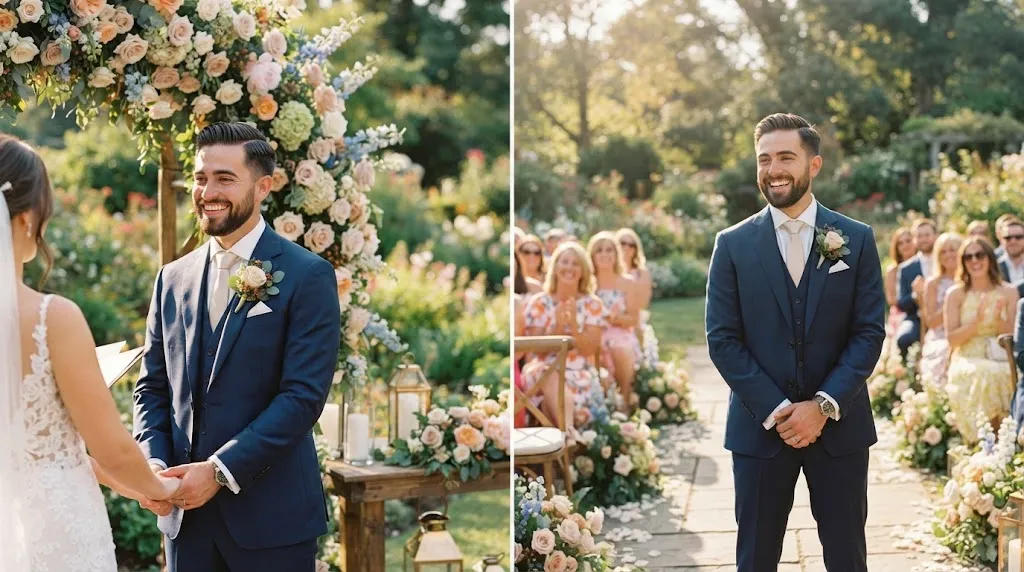
Outdoor weddings introduce conditions that can quickly affect a hairstyle, including wind, humidity, heat and movement. For this reason, hairstyles that depend on extremely precise positioning or very high volume may require more maintenance throughout the day.
A textured crop, classic taper, textured quiff, side-swept style or naturally wavy hairstyle can be practical choices because small amounts of movement are less noticeable.
Use enough styling product to maintain the shape without making the hair stiff. A hairstyle that still looks good after a little movement is often more practical than one that only looks perfect when every strand is in place.
Best approach: Prioritize shape and controlled texture over fragile, highly sculpted volume.
Formal or Black-Tie Wedding
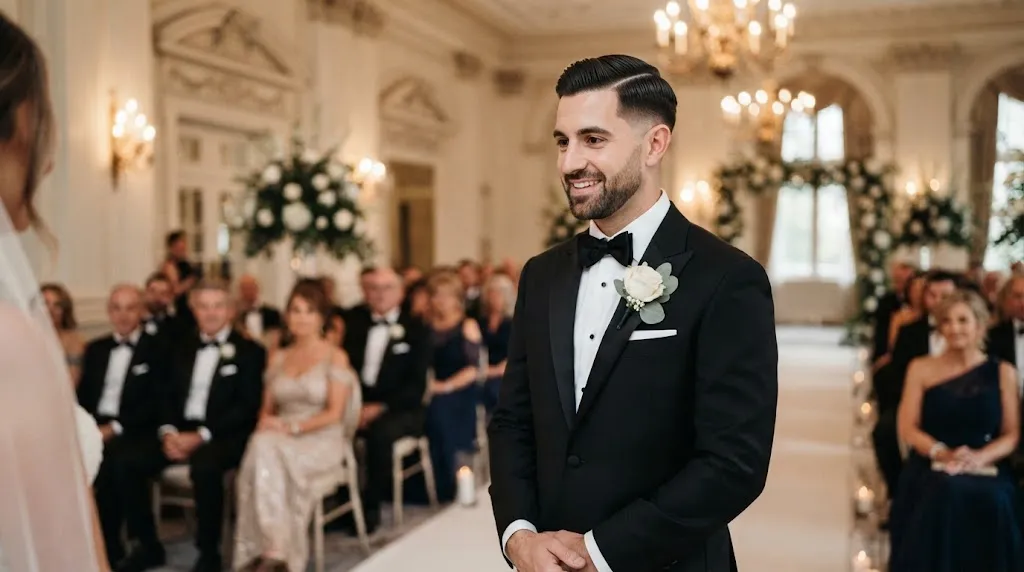
A black-tie wedding generally calls for a highly polished appearance. Slick backs, classic side parts, refined pompadours and clean tapered hairstyles can complement formal suits and tuxedos.
Hair should look intentional from every angle because formal photography often captures close-up portraits as well as full-length shots. Avoid excessive product that creates an overly wet appearance unless that finish is specifically part of the desired style.
Best approach: Focus on clean lines, controlled volume and a finish that looks polished under both natural and artificial lighting.
Summer & Humid-Weather Wedding
Heat and humidity can change how hair behaves, particularly if it is thick, wavy, curly or naturally prone to frizz. A hairstyle that requires constant restyling may become inconvenient during a long wedding day.
For humid conditions, consider a shorter textured style, taper with controlled length, side-swept haircut or naturally textured hairstyle that does not depend entirely on perfect smoothness.
The goal is not to eliminate every sign of natural movement. Instead, choose a style whose shape remains attractive when the hair gains a little texture or loses some volume.
Best approach: Test the hairstyle in conditions similar to the wedding environment and use a product that provides the required hold without making the hair excessively heavy.
Groom Hairstyles That Actually Hold Up on Wedding Day
How Long Before the Wedding Should You Get a Haircut?
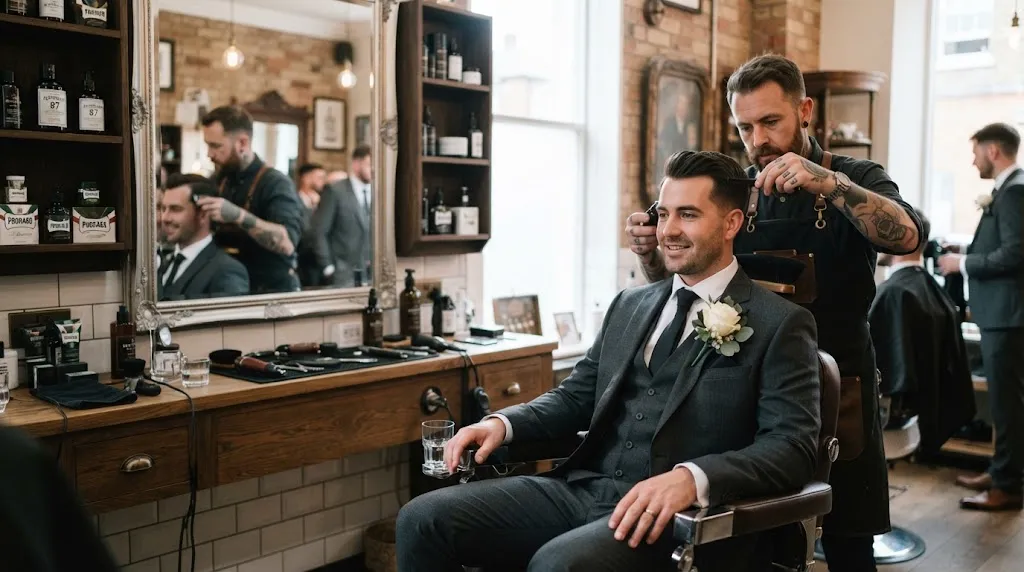
The safest timing depends on how your haircut normally settles. A very fresh haircut can sometimes look sharper or shorter than expected immediately after leaving the barber.
For most groom hairstyles, having the final haircut a few days before the wedding gives the hair some time to settle while keeping the shape fresh. If you regularly wear a very short fade or taper and know exactly how it looks immediately after a cut, your preferred timing may be different.
Do not experiment with a completely new haircut immediately before the ceremony. Your wedding haircut should ideally be a style you have already tested.
How to Test Your Hairstyle Before Wedding Day
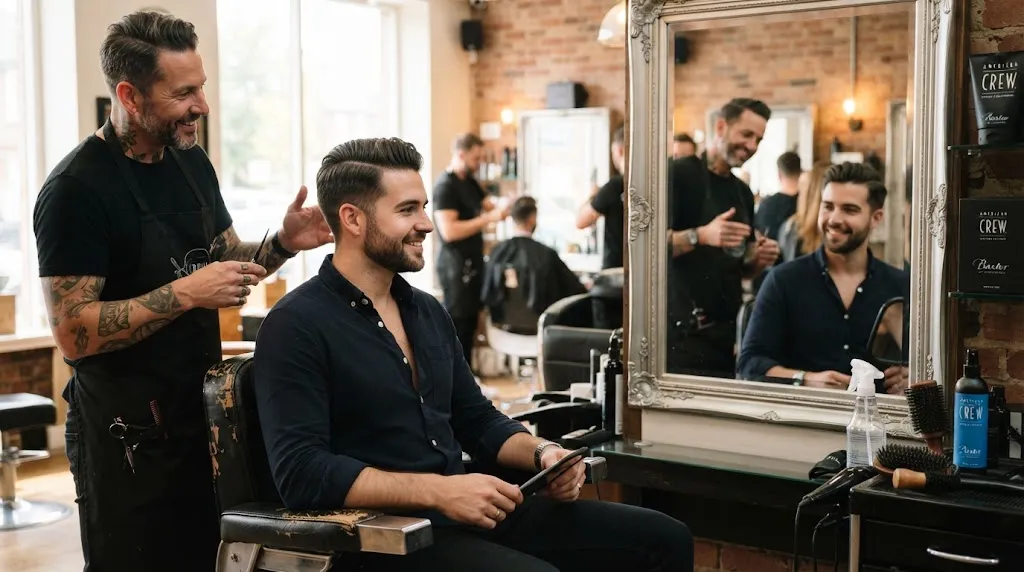
A wedding hairstyle should be tested before the actual day, especially if you are changing your usual look.
Ask your barber or stylist to create the intended shape and then check it in:
- Natural daylight
- Indoor lighting
- Front-facing photos
- Side-profile photos
- Short videos
- Different levels of movement
Wear it for several hours if possible. This helps reveal whether the hairstyle becomes flat, greasy, frizzy or difficult to manage later in the day.
A reference photo can show the desired shape, but your own hair density, texture, length and hairline determine how closely that style can actually be reproduced.
How to Keep Hair in Place During Photos
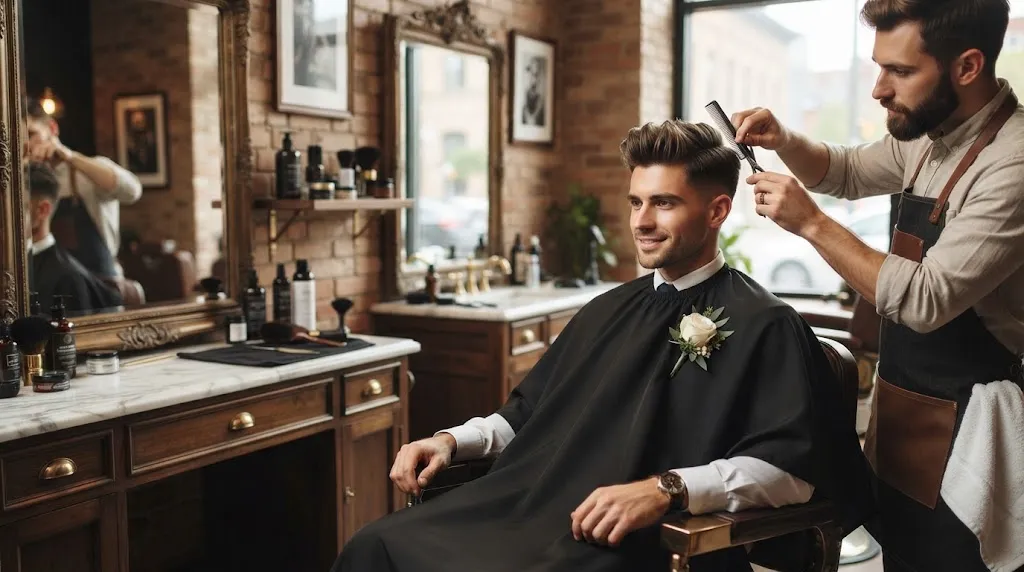
Wedding photography involves movement, different lighting conditions and repeated changes in position. The best approach is to start with a hairstyle that naturally holds its structure rather than relying on excessive product.
Use enough styling product to control the hair and distribute it evenly instead of concentrating too much product in one area. Before important photographs, a quick check with a comb or fingers can restore the shape without completely restyling it.
If the hairstyle depends on volume, avoid repeatedly touching the roots because excessive handling can reduce the shape and transfer natural oils to the hair.
What to Do if Your Hair Loses Volume
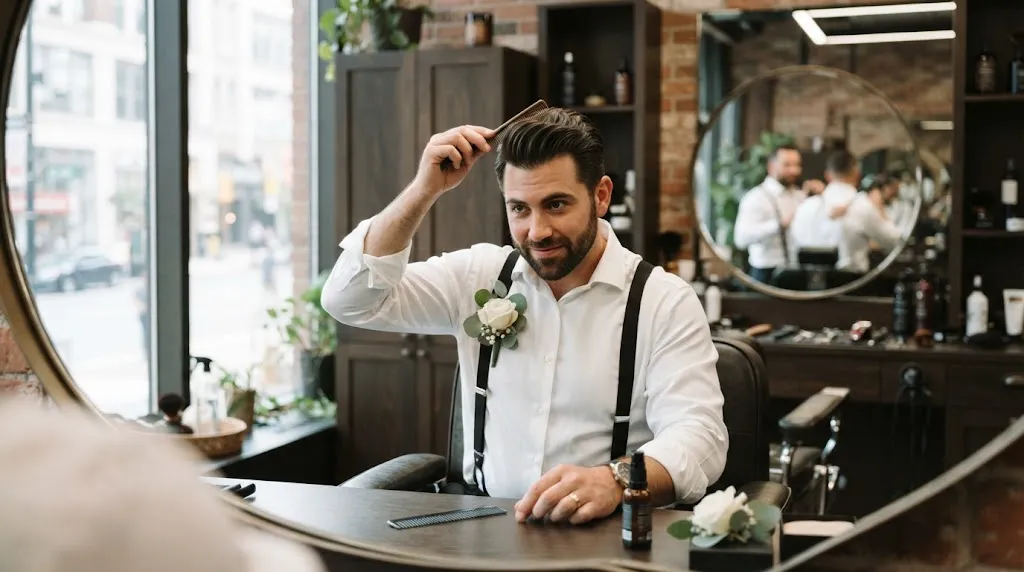
If your hair becomes flat, first identify why. Heat, sweat, excess product and repeated touching can all reduce volume.
Instead of immediately adding more product, gently reshape the hair with your fingers or comb. If you have access to your styling tools, rework the roots rather than coating the entire hairstyle with additional product.
For future styling, use less heavy product at the roots and build volume gradually. Fine hair generally benefits from lightweight styling, while thicker hair may require stronger control.
How to Handle Humidity, Sweat and Wind
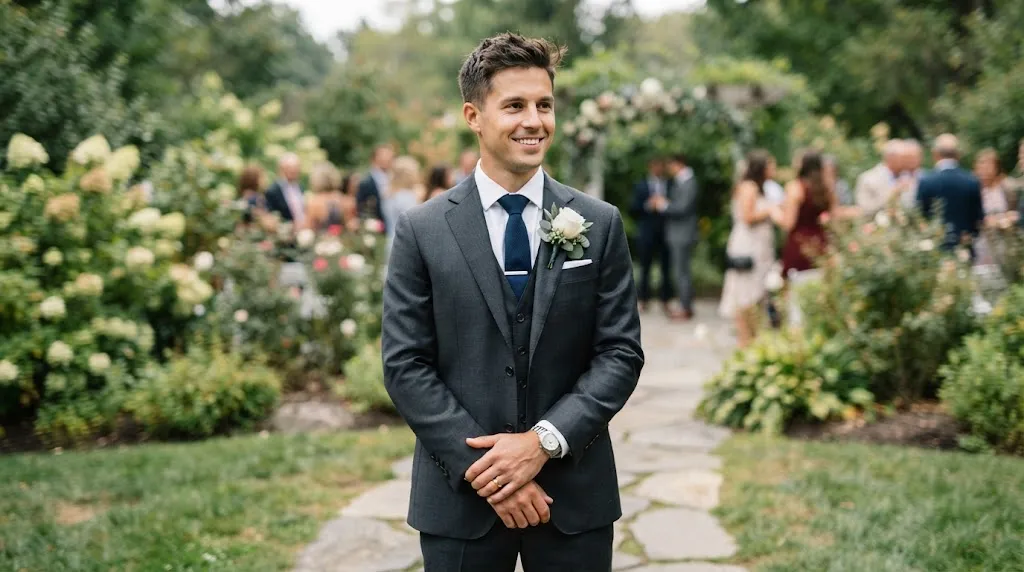
You cannot completely control outdoor weather, so your hairstyle should be selected with realistic conditions in mind.
For humidity, choose a style that does not depend on perfectly smooth strands. For wind, avoid extremely loose or delicate shapes that collapse easily. For sweat and heat, excessive product can make the hair feel heavy or greasy.
Most importantly, do not keep adding product every time the hairstyle moves. Small adjustments are often better than repeatedly layering styling products.
What Not to Change on the Wedding Morning
Avoid making major changes to your haircut, hair length, styling method or product routine on the wedding morning.
Do not:
Try an untested hairstyle
Ask for a dramatically shorter haircut
Use a completely new styling product without testing it
Apply excessive product to compensate for low volume
Copy a reference style without considering your own hair texture
Make major changes because the hair looks slightly different during the first few minutes of styling
The wedding morning should be about reproducing a hairstyle you have already tested—not experimenting with a new one.
Real Groom Hair Problems & How to Fix Them
My Hair Looks Flat After Styling
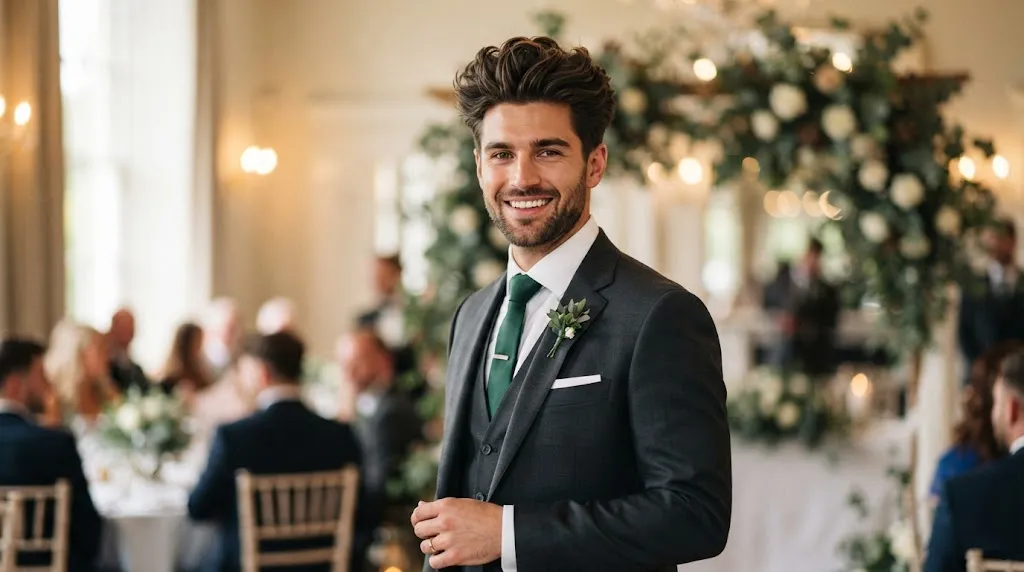
Flat hair can result from excessive product, heavy products, insufficient root volume or hair that is too long to support the intended shape.
Start by reducing the amount of product rather than adding more. If volume is important, create it during the initial styling process and concentrate control where it is needed.
If your hair repeatedly falls flat despite proper styling, the haircut itself may not provide the structure required for the look. Discuss the desired amount of volume and top length with your barber before the wedding.
My Hair Gets Frizzy During the Wedding
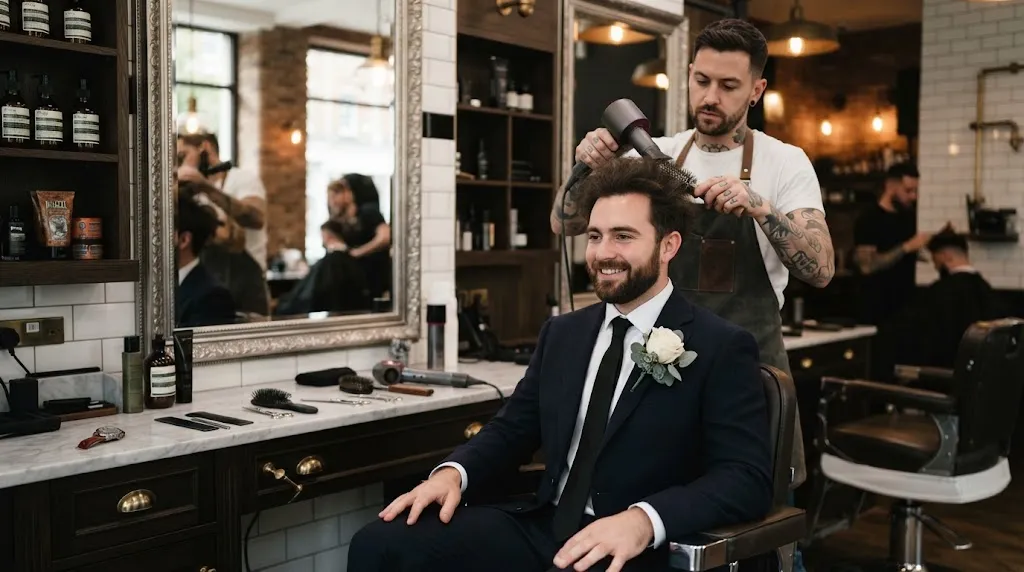
Humidity, sweat and natural hair texture can make frizz more noticeable during a long event. Trying to flatten every strand with large amounts of product can leave the hairstyle heavy or greasy.
Instead, choose a hairstyle that works with your natural texture. Apply your styling product evenly and avoid repeatedly touching the hair throughout the day.
For curly or wavy hair, controlled natural texture can often look better and remain more stable than trying to force the hair completely straight.
My Hair Is Too Thick to Stay in Shape
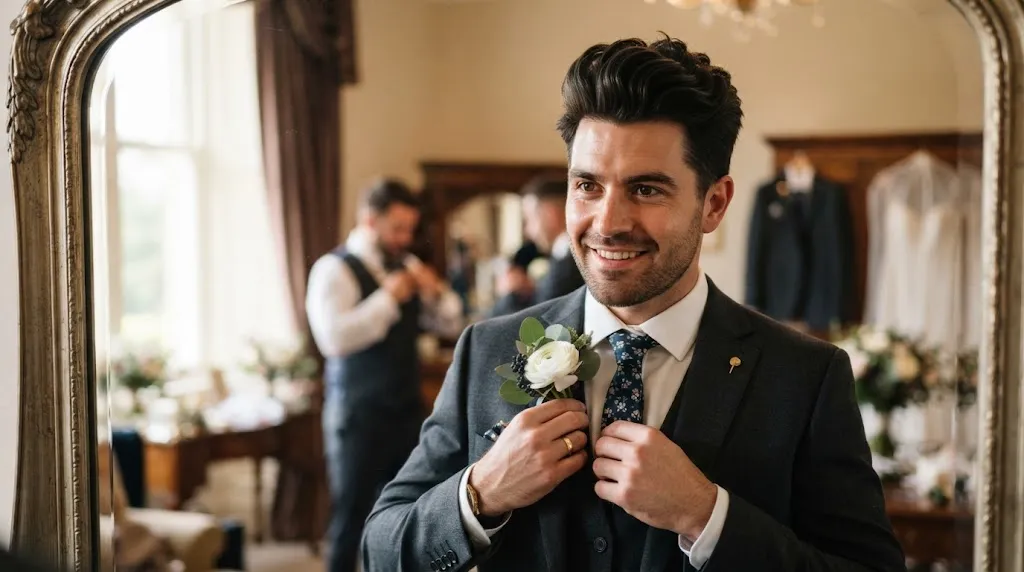
Thick hair can have plenty of volume but still be difficult to control. If too much bulk remains in the wrong areas, the hairstyle may expand instead of maintaining its intended shape.
The solution often begins with the haircut. Ask your barber to remove unnecessary bulk while preserving enough length for the desired hairstyle.
Styling should then focus on controlling the direction and shape of the hair rather than simply adding more product.
My Hair Is Thin and the Scalp Shows
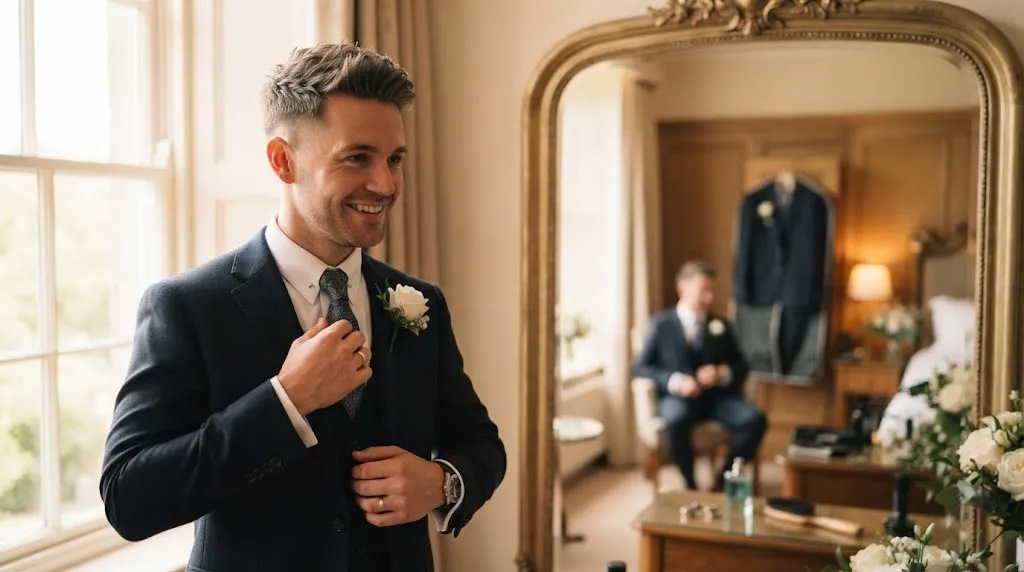
Fine or thin hair requires realistic styling expectations. A haircut cannot permanently change hair density, and no hairstyle can guarantee that the scalp will be completely invisible.
However, the right length, direction and styling technique can create a fuller-looking shape. Excessively long hair may separate and expose more scalp, while controlled texture can provide additional visual dimension.
Avoid heavy, greasy products that cause fine strands to clump together.
My Hairline Is Receding
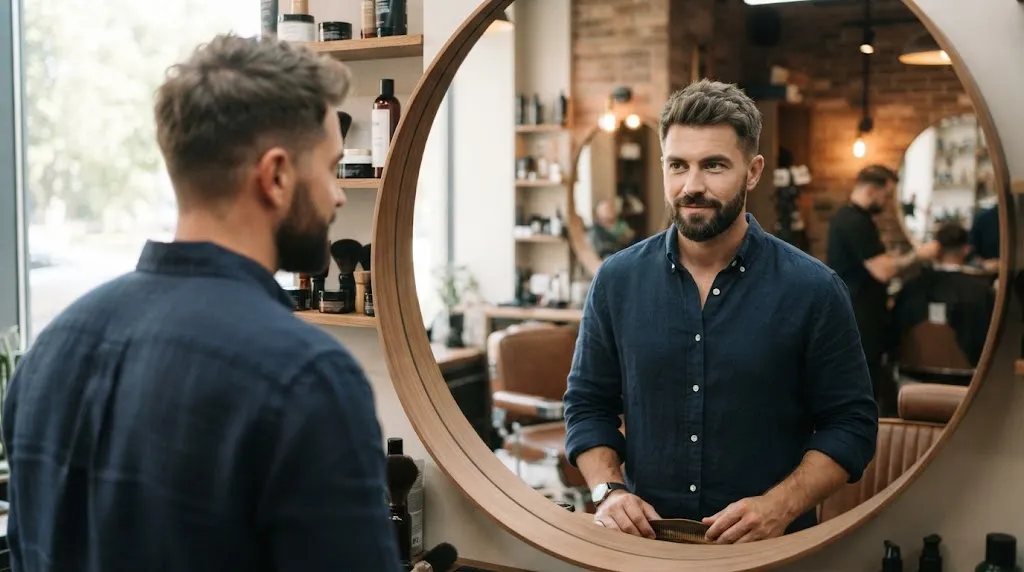
A receding hairline does not mean you have to abandon groom hairstyles. The most useful approach is to select a haircut that works with your current hairline rather than trying to force complete coverage.
Textured crops, controlled side-swept styles and shorter structured cuts can be practical options. Your barber can also adjust the front length and direction according to the pattern of your hairline.
Avoid choosing a hairstyle solely because it looks good on someone with a different hairline or hair density.
My Hairstyle Looks Good at Home but Bad in Photos
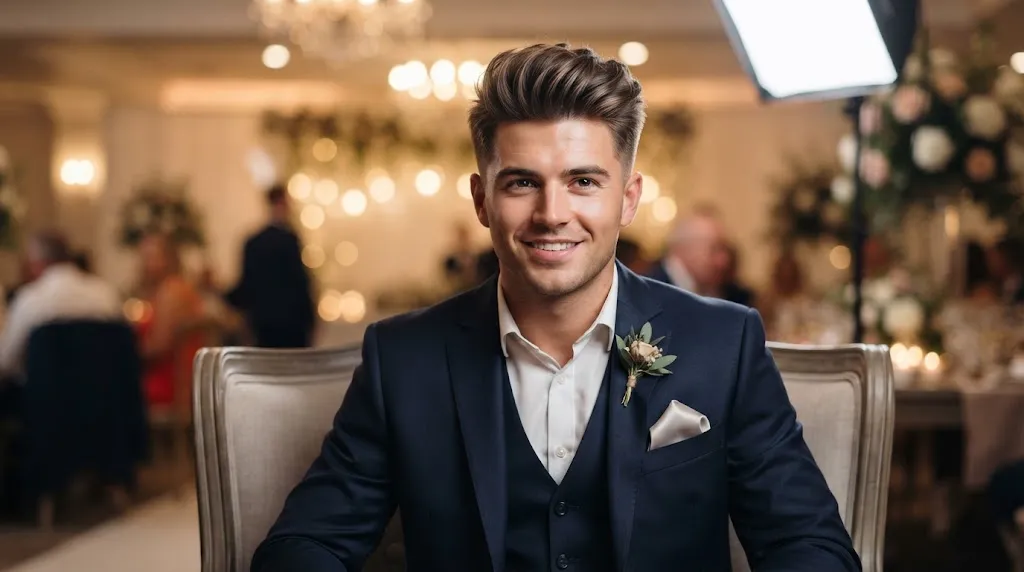
Hair can look different in photographs because of lighting, camera angle, shadows and the way volume appears from different perspectives.
Before the wedding, photograph the hairstyle from the front, both sides and at a slight angle. Check it in the type of lighting likely to be present at the venue.
If a hairstyle only looks good from one angle, it may not be the best choice for a wedding where you will be photographed throughout the day.
My Hair Doesn't Hold for the Whole Wedding
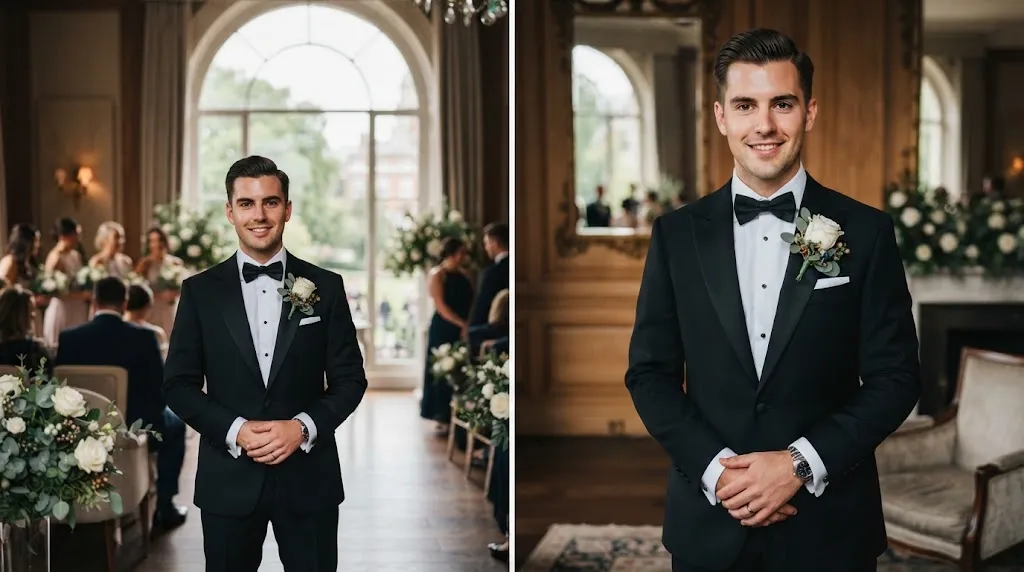
If your hairstyle collapses after a few hours, adding more product is not always the answer. The problem may be the haircut, styling technique, product weight or environmental conditions.
Test the hairstyle for several hours before the wedding. Note when it begins losing shape and whether the problem is caused by heat, movement, sweat or excess product.
Then adjust the haircut or styling method rather than waiting until the wedding day to discover the problem.
My Hairstyle Looks Too Shiny or Greasy
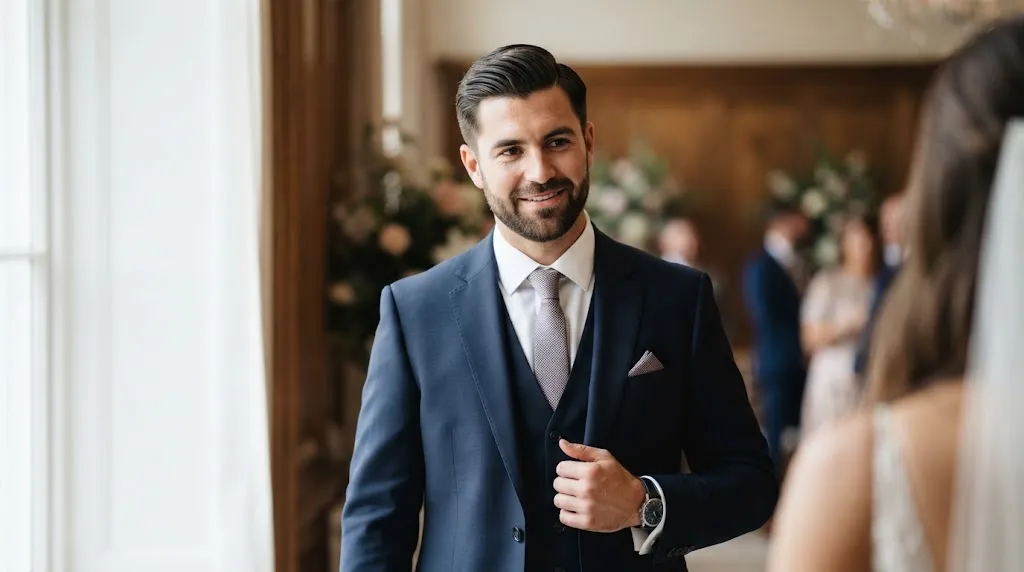
An overly shiny finish usually comes from using more product than necessary or choosing a product with a stronger shine than the intended look requires.
Start with a smaller amount and distribute it thoroughly. Add more only if additional control is actually needed.
For a natural groom hairstyle, the goal is usually controlled hair rather than visibly overloaded hair.
My Haircut Looks Too Short After the Barber
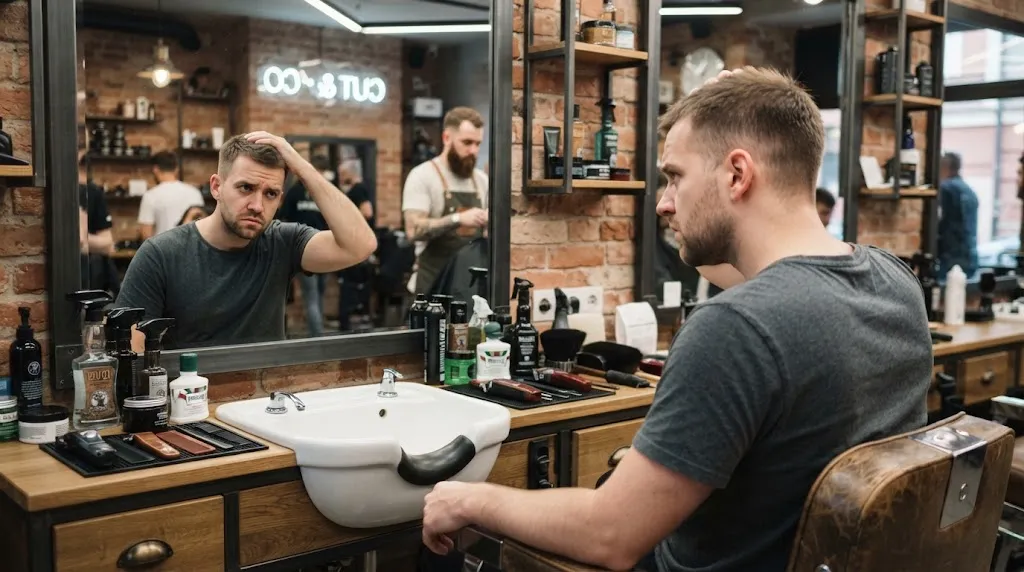
Hair can appear shorter immediately after cutting, especially with fades, tapers and textured short styles. This is another reason to avoid an unfamiliar haircut immediately before the wedding.
Show your barber the exact amount of length you want to retain and communicate how you normally style your hair.
If the haircut is already shorter than expected, do not try to compensate with excessive product. Work with the available length and choose a simple style that suits the new shape.
My Hair Doesn't Match My Beard
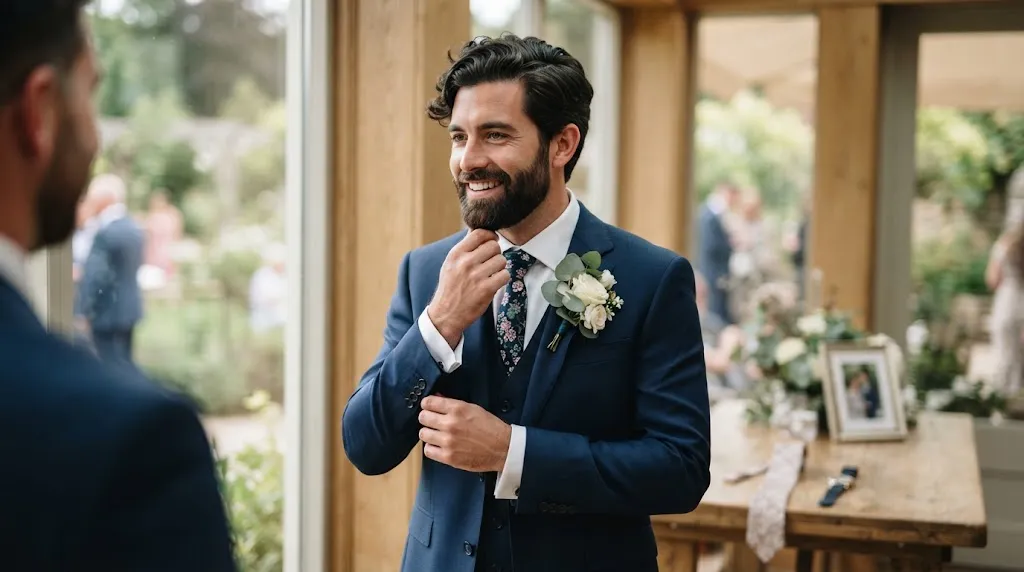
Hair and beard do not need to be identical in length, but they should look intentional together.
A heavily structured hairstyle can pair well with a neatly shaped beard, while a relaxed textured hairstyle may suit short stubble or a naturally maintained beard.
Pay attention to the transition between the sideburns and beard. A clean connection and consistent overall shape can make the combination look more balanced without making it appear overly groomed.
My Hair Looks Different From the Reference Photo
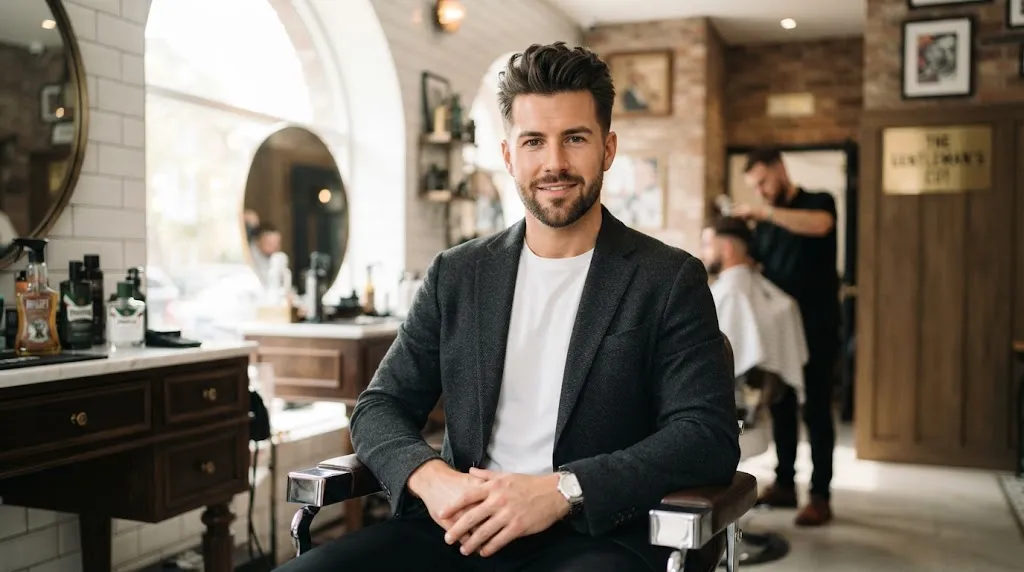
A reference photograph shows the hairstyle on a particular person’s hair—not a guaranteed result for everyone.
Differences in hair density, texture, length, hairline, face shape and styling technique can significantly change the final appearance.
Instead of asking your barber to copy every detail, use the reference photo to communicate the shape, length, volume and overall finish you want. Your barber can then adapt those elements to your own hair.
That approach usually produces a more realistic result than trying to reproduce a hairstyle that depends on completely different hair characteristics.
Groom Haircut vs Groom Hairstyle: What's the Difference?
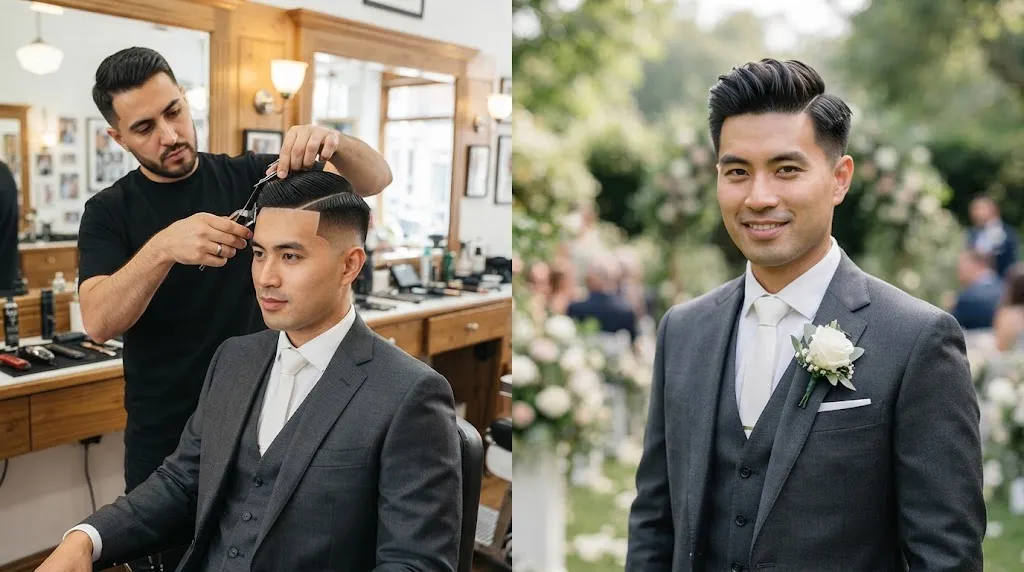
A groom haircut is the actual cut and structure created by the barber, while a groom hairstyle is the finished look created by arranging and styling that hair. The haircut determines the length, shape, taper or fade; styling determines how that cut looks on the wedding day.
For example, a groom can have a classic taper haircut and wear it as a side part, side-swept style or textured finish. The cut stays the foundation, while the styling changes the final appearance.
This distinction matters when planning a wedding look. When showing a reference photo to your barber, identify whether you want the cut, the styling finish, or both. That makes it easier to communicate exactly what you want and avoids expecting a styling finish to look identical when the underlying haircut is different.
Groom Haircut Rules: 3:2:1 and Other Common Terms
What Is the 3:2:1 Haircut Rule?
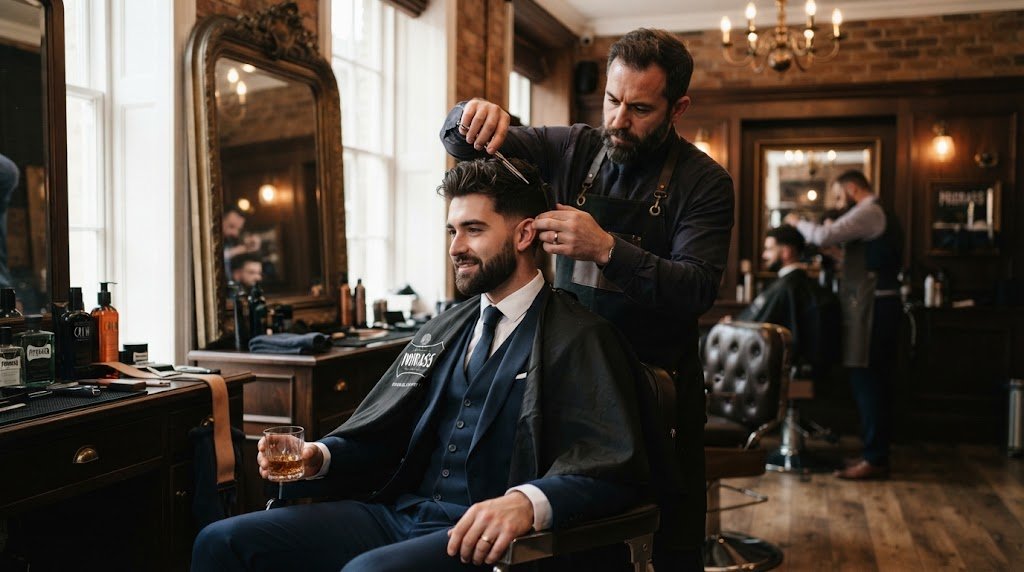
The 3:2:1 haircut rule is commonly used to describe a progressively shorter clipper length, with the numbers referring to guard sizes used from longer to shorter areas. In a typical interpretation, a No. 3 guard leaves more length, No. 2 creates a shorter section, and No. 1 creates the shortest section.
However, 3:2:1 is not a universal haircut standard. Barbers may interpret or adapt the sequence differently depending on the desired taper, fade, head shape and amount of bulk.
For a wedding haircut, the important point is not simply asking for “3:2:1.” Tell your barber where you want each length, how much length you want to keep on top, and whether you want a taper, fade or softer transition.
Is the 3:2:1 Rule Right for Every Groom?
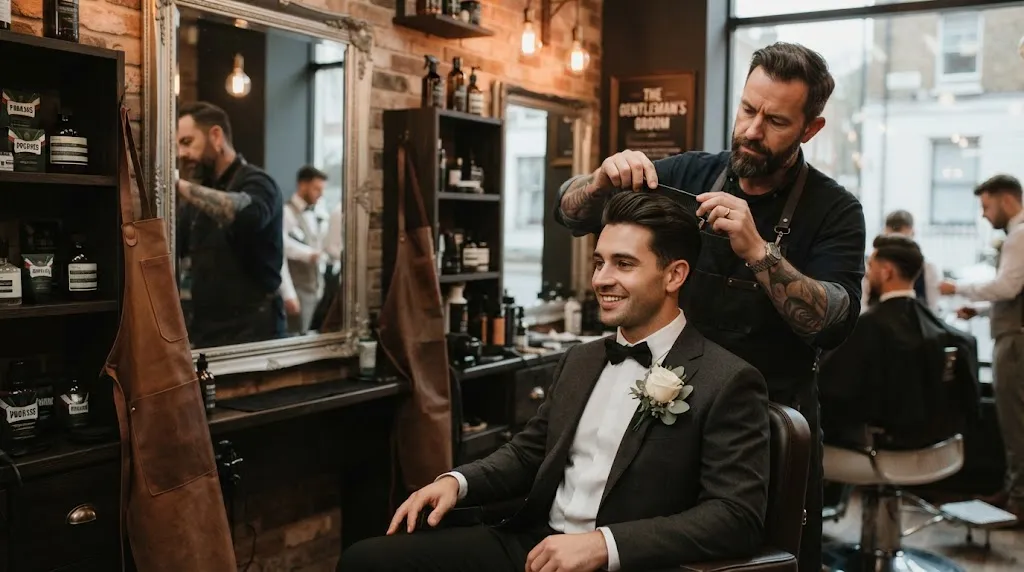
No. A 3:2:1 progression is only one way to structure the sides and back.
Your best haircut depends on your hair density, texture, head shape, hairline and desired finish. Someone with thick hair may need more bulk removed, while someone with fine hair may benefit from retaining more visual density.
For a wedding, choose the length progression based on the finished hairstyle you want rather than selecting a guard sequence simply because it is popular.
How Fade, Taper and Slope Differ
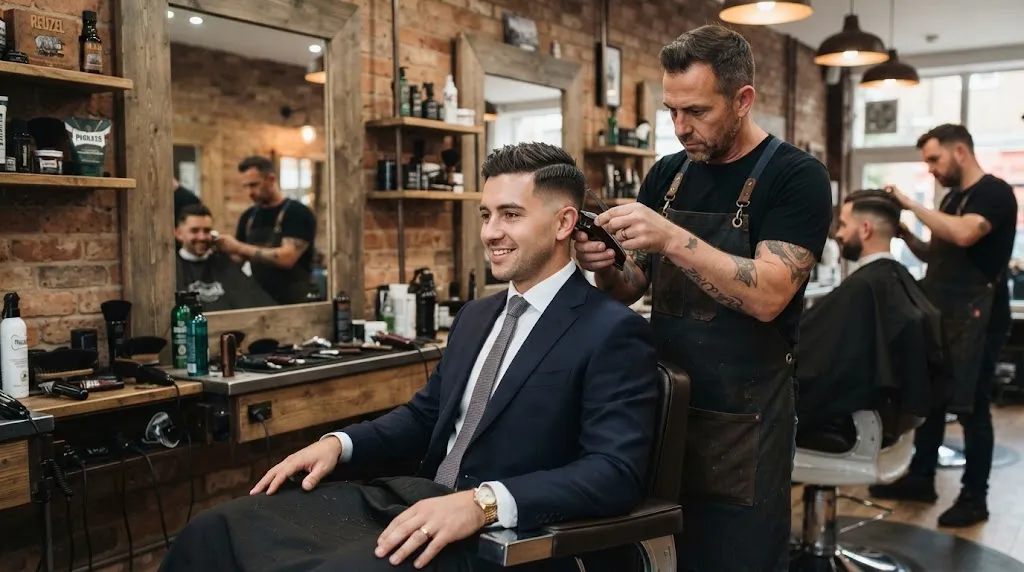
Although these terms are sometimes used interchangeably, they describe different approaches to reducing hair length.
- Fade: The sides and back transition from very short hair into longer hair, with the transition usually more visibly graduated.
- Taper: Hair gradually becomes shorter around specific areas such as the sideburns and neckline while generally retaining more length elsewhere.
- Slope: A softer, gradual reduction in length that creates a natural flow rather than necessarily producing the tight appearance associated with a fade.
The exact result depends on the barber’s technique and the requested length. When booking a wedding haircut, a reference photo can help communicate the intended transition more accurately than the term alone.
What Is a Normal Slope Haircut?
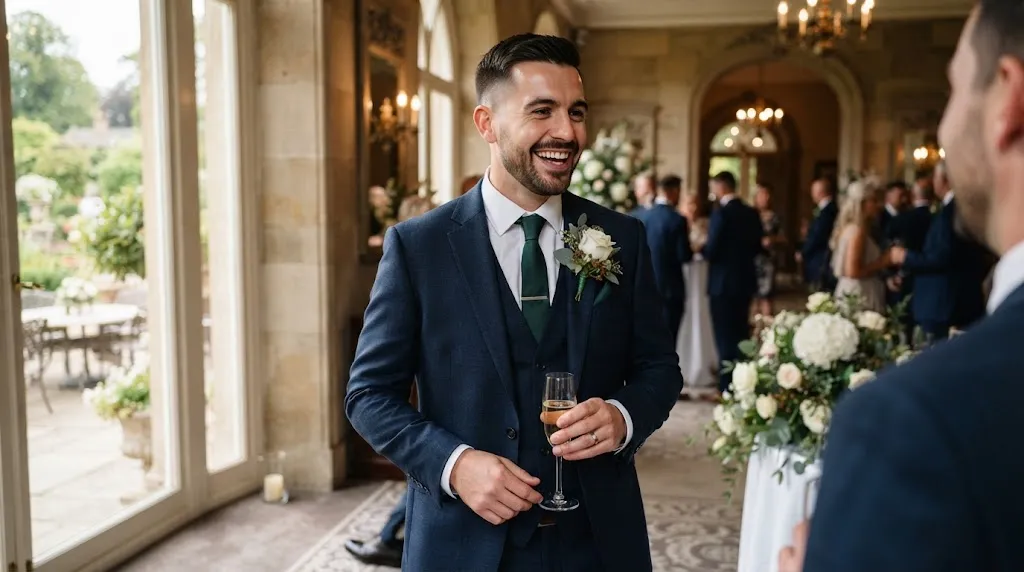
A normal slope haircut is a gradual reduction in hair length from the longer upper sections toward the shorter lower sections of the sides and back. Instead of creating an aggressively short transition, it generally maintains more bulk and produces a softer, natural-looking progression.
The top can be left longer and styled separately, while the sides are blended progressively toward the neckline. This makes the haircut suitable for grooms who want a clean appearance without an extremely tight fade.
The final result depends on how much length the barber leaves at each section and how smoothly the transitions are blended.
Normal Slope vs Fade vs Taper
| Haircut | Main Characteristic | Overall Effect | Best When |
|---|---|---|---|
| Normal Slope | Softer gradual reduction | Natural and balanced | You want a less aggressive transition |
| Fade | More pronounced graduated transition | Clean and contemporary | You want sharper contrast on the sides |
| Taper | Shortening concentrated around sideburns/neckline | Classic and subtle | You want to retain more overall hair |
How to Style a Groom Hairstyle
Step 1 — Start With the Right Hair Condition
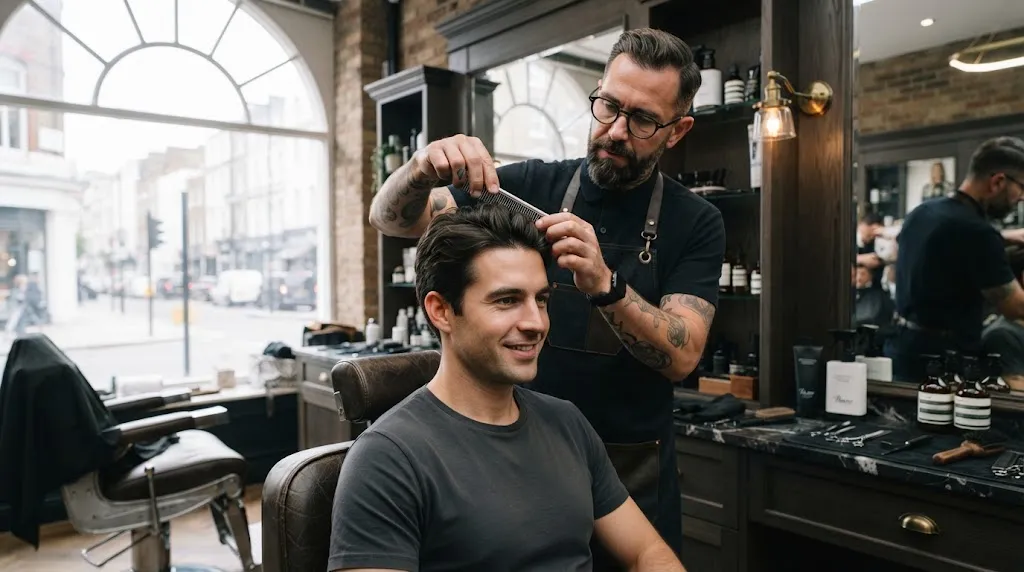
Start with clean hair that is suitable for the hairstyle you are creating. Hair that is excessively oily or coated with old styling product may not hold or shape as expected.
After washing, remove excess water gently and leave the hair slightly damp if you plan to blow-dry it into shape.
Do not automatically wash the hair immediately before styling if your usual routine produces better results with a little natural texture or grip. The wedding hairstyle should follow a routine you have already tested.
Step 2 — Apply the Right Amount of Product
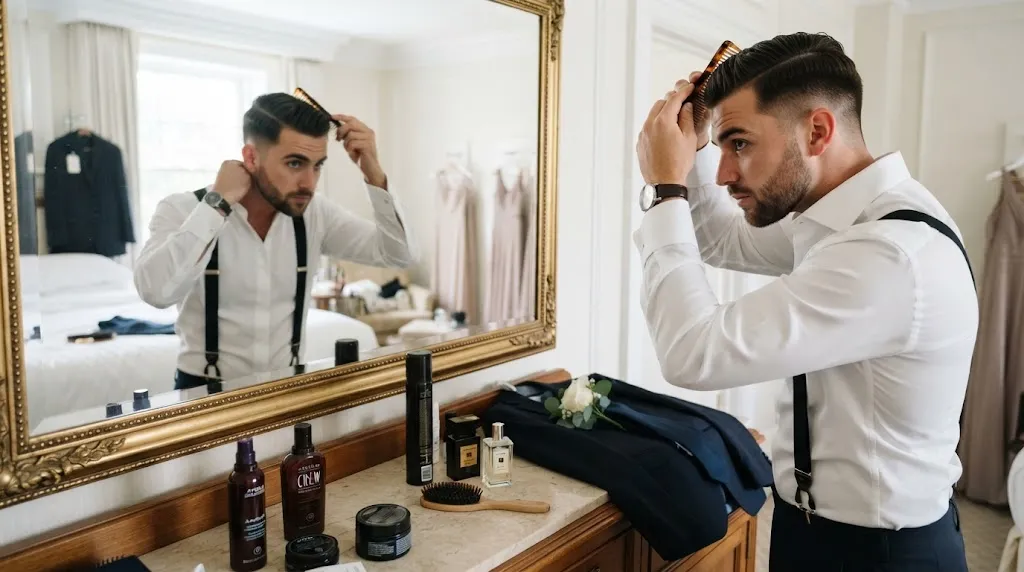
Use styling product according to your hair type and the finish you want.
Fine hair generally needs less weight, while thick or difficult-to-control hair may require more control. Spread the product evenly through the hair rather than placing a large amount in one spot.
Start with a small amount and add more only when necessary. Too much product can make hair look greasy, flatten volume or make the hairstyle difficult to reshape.
Step 3 — Blow-Dry for Direction and Volume
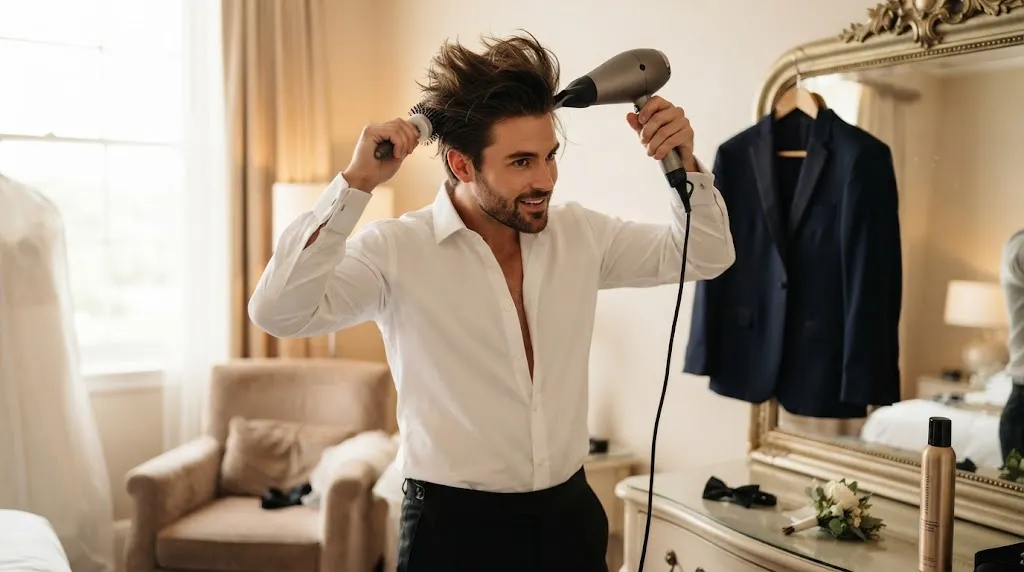
Blow-drying is useful when you need to establish direction, lift or volume before applying the final finish.
Direct the airflow in the direction you want the hair to sit. For styles such as quiffs or side-swept looks, lift the roots while drying to create the foundation for volume.
For a smoother style, guide the hair in the intended direction rather than randomly moving the dryer around the head.
The goal is to create the shape with airflow first, then use styling product to refine and hold it.
Step 4 — Shape the Hairstyle

Once the hair has the basic direction and volume, shape the finished hairstyle using your fingers or a comb.
A comb can create cleaner definition for a side part or slicker finish, while fingers can preserve separation and texture in a more relaxed hairstyle.
Check the hairstyle from the front and both sides. A wedding hairstyle should look intentional from multiple angles because photographs will capture more than just the front view.
Step 5 — Finish for Hold
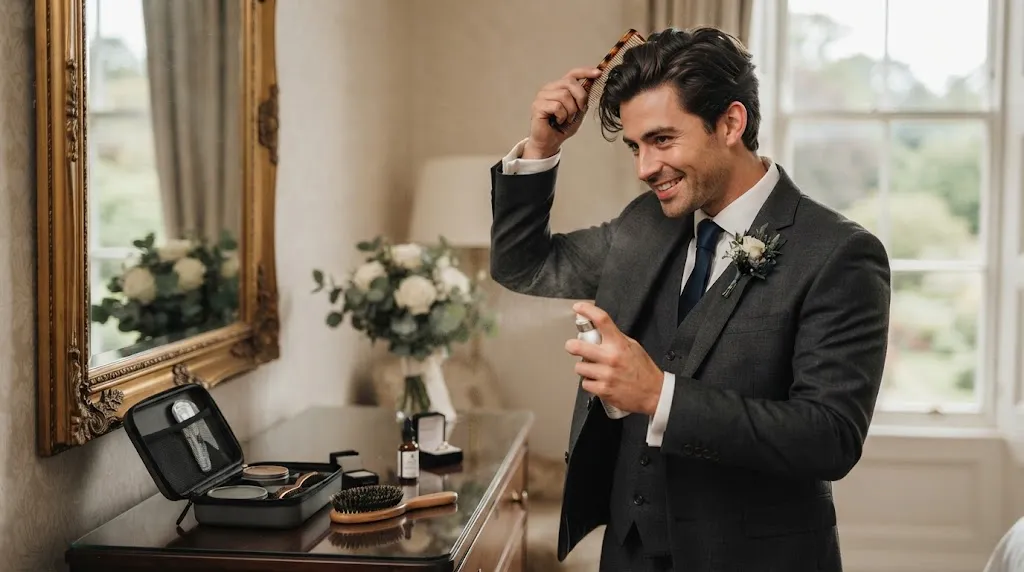
Once the desired shape is achieved, use the minimum amount of finishing product needed to maintain it.
The right finish depends on the hairstyle. A polished formal style may need stronger control, while a textured or naturally wavy look may work better with flexible hold.
Avoid making the hair excessively stiff unless that is specifically the intended look. A hairstyle that has some flexibility is often easier to adjust during a long wedding day.
How Much Product Should You Use?
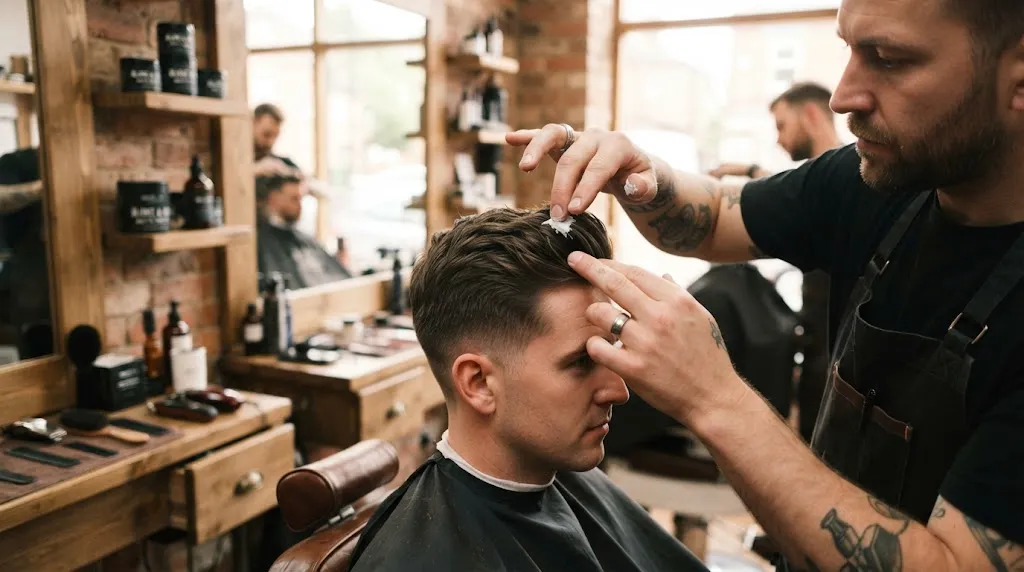
There is no single amount that works for every groom. Product quantity depends on hair length, density, texture, product strength and the desired finish.
A practical approach is:
- Start with a small amount.
- Spread it evenly between your hands.
- Apply it through the hair rather than concentrating it in one area.
- Shape the hairstyle.
- Add a little more only if the hair genuinely needs additional control.
If the hair immediately becomes heavy, greasy or flat, you have probably used more product than the hairstyle requires.
For the wedding day, the best styling routine is one you have tested beforehand and know your hair can tolerate for several hours.
Groom Hairstyle Comparison: Which One Should You Choose?
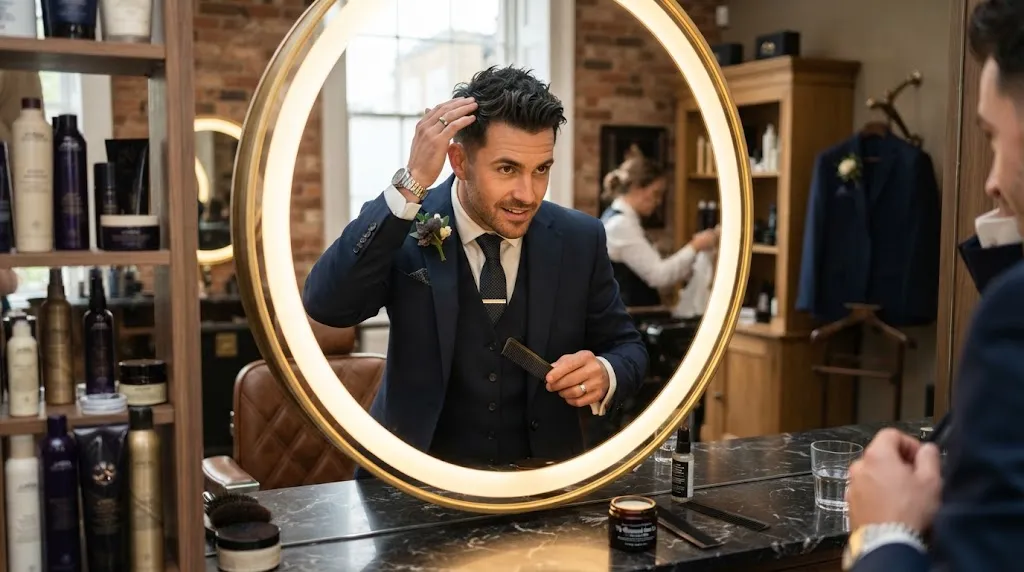
There is no single best groom hairstyle for every man. The right choice depends on the combination of hair type, face shape, beard, maintenance needs and wedding style already discussed above. Use this table as the final selection shortcut rather than reading another full description of every hairstyle.
| Hairstyle | Hair Type | Face Shape | Beard | Maintenance | Wedding Style |
|---|---|---|---|---|---|
| Classic Side Part | Straight, wavy | Most shapes | Clean-shaven, stubble, short beard | Low–Medium | Traditional, formal |
| Textured Quiff | Thick, straight, wavy | Oval, square | Stubble, short beard | Medium | Modern, contemporary |
| Slick Back | Straight, thick | Oval, square | Clean-shaven, stubble, beard | Medium | Formal, black-tie |
| Low Fade + Textured Top | Most hair types | Most shapes | Stubble, short beard | Medium | Modern, outdoor |
| Classic Taper | Straight, wavy, thick | Most shapes | Clean-shaven, stubble, beard | Low–Medium | Traditional, formal |
| Textured Crop | Straight, wavy, fine/thin | Oval, round, square | Stubble, short beard | Low–Medium | Modern, outdoor |
| Curly Groom Hairstyle | Curly, coily | Oval, round, square | Stubble, short or full beard | Medium | Modern, outdoor, relaxed |
| Long Groom Hairstyle | Straight, wavy | Oval, oblong | Clean-shaven, stubble, beard | Medium–High | Romantic, outdoor, modern |
Frequently Asked Questions About Groom Hairstyles
For a groom-focused selection, five versatile options are:
- Classic Side Part — suitable for formal and traditional weddings.
- Textured Quiff — adds volume and a modern finish.
- Slick Back — works well for polished formal looks.
- Classic Taper — offers a clean appearance without an aggressive fade.
- Low Fade With Textured Top — a contemporary option with more visible texture.
The best choice depends on how each style works with your own hair rather than popularity alone.
For most grooms, getting the final haircut a few days before the wedding gives the cut time to settle while keeping the shape fresh. Avoid making a major haircut or style change on the wedding morning unless you have already tested exactly how it looks and behaves.
If your haircut is very short or you normally need more time for the shape to settle, your barber may recommend adjusting the timing accordingly.
The best hairstyle is one that creates a balanced transition between the hair, sideburns and beard. Classic side parts, textured quiffs, tapers and slick backs can all work with facial hair when the proportions are coordinated.
The beard does not need to be the same length or style as the haircut; the overall combination should simply look intentional.
Grooms with round faces can consider styles that create some height or vertical direction on top, such as a textured quiff, side-swept style or appropriately structured top with a taper or fade.
The goal is to create balanced proportions rather than trying to completely change the appearance of the face.